-
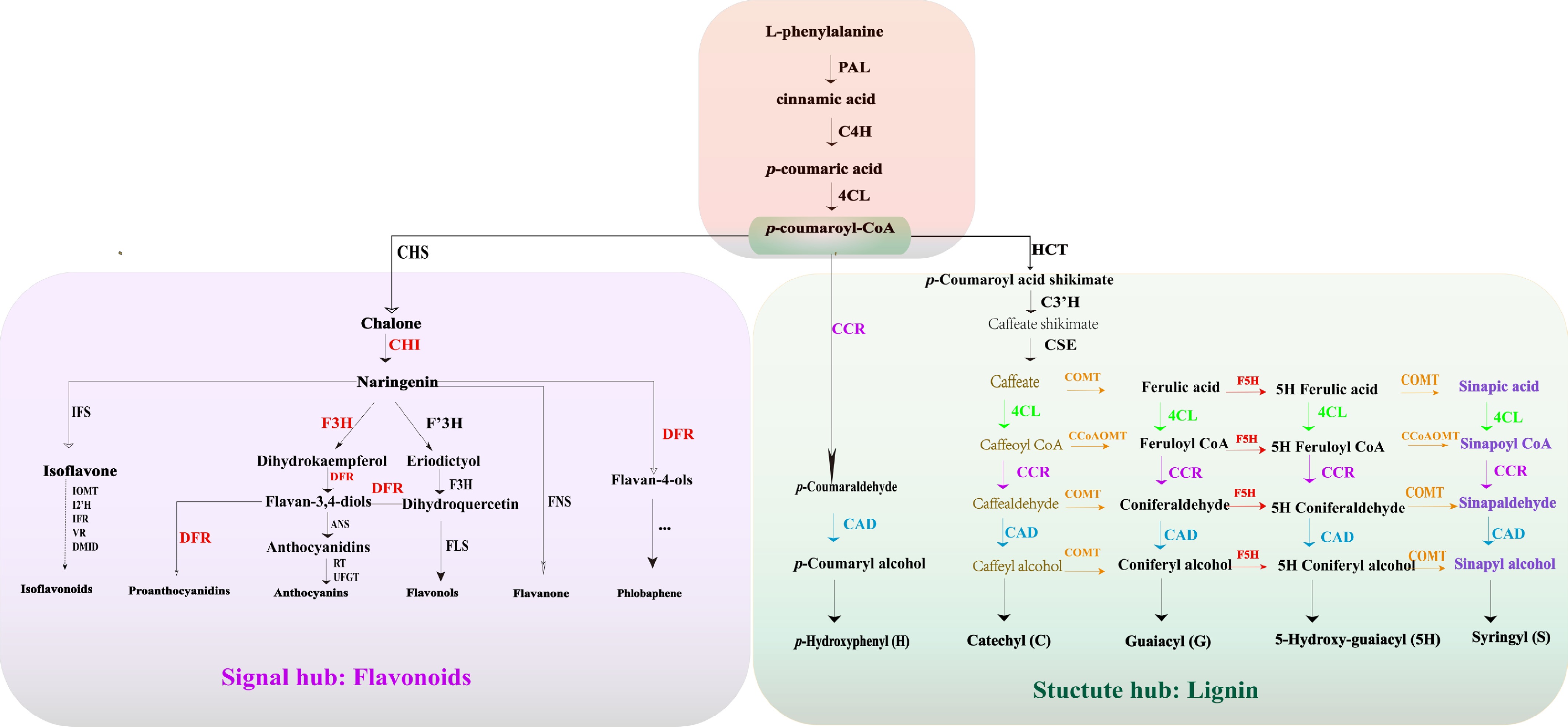
Figure 1.
Structure–signal dual-hub model of phenylpropanoid metabolism.
-
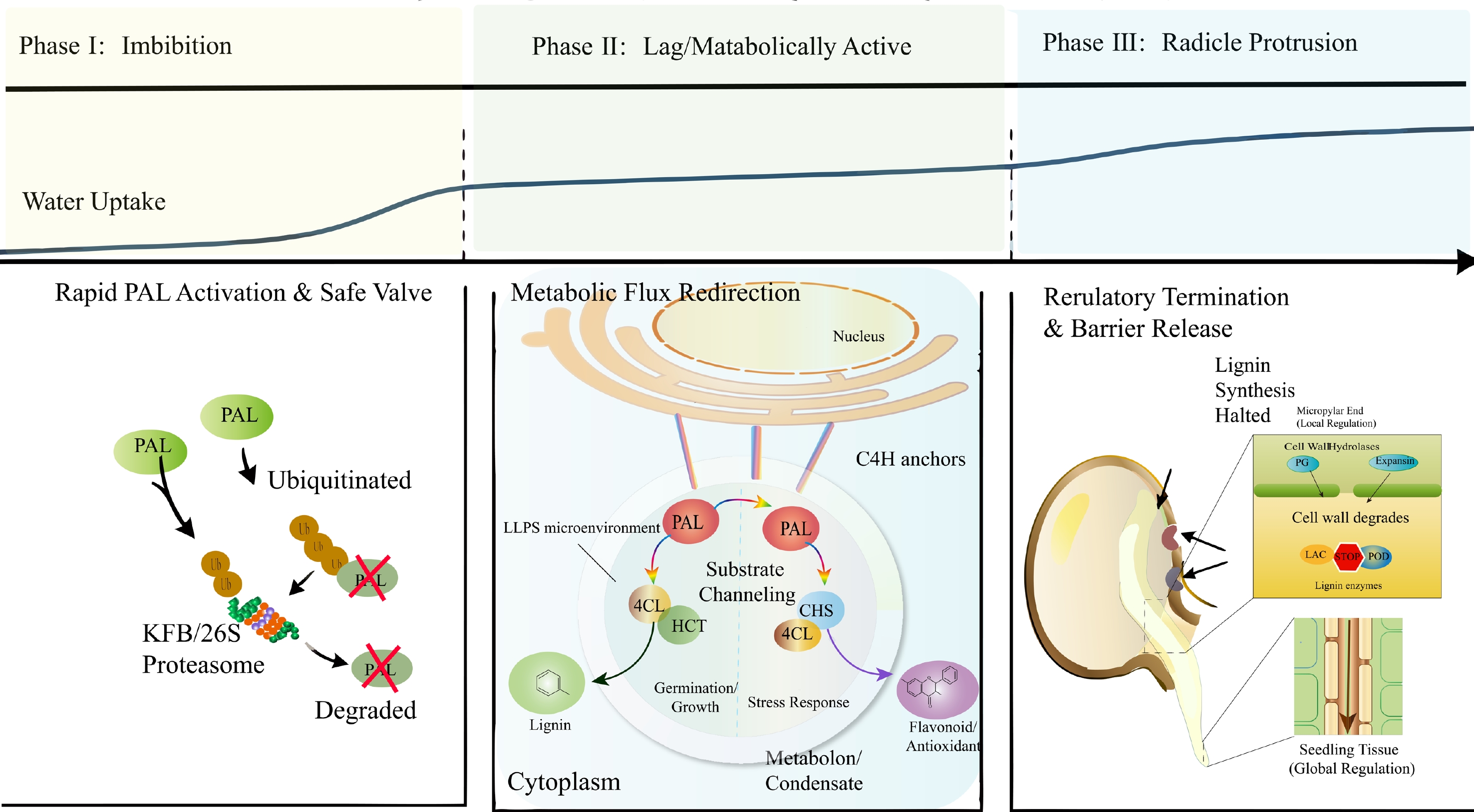
Figure 2.
Spatiotemporal cascade regulation of phenylpropanoid metabolism during seed germination. Phase I (imbibition stage): initiation of the switch mechanism occurs. Phase II (stagnation/metabolically active stage): metabolic flux redirection (MFR) occurs. Phase III (radicle emergence stage): radicle emergence-associated regulated cell wall loosening occurs.
-
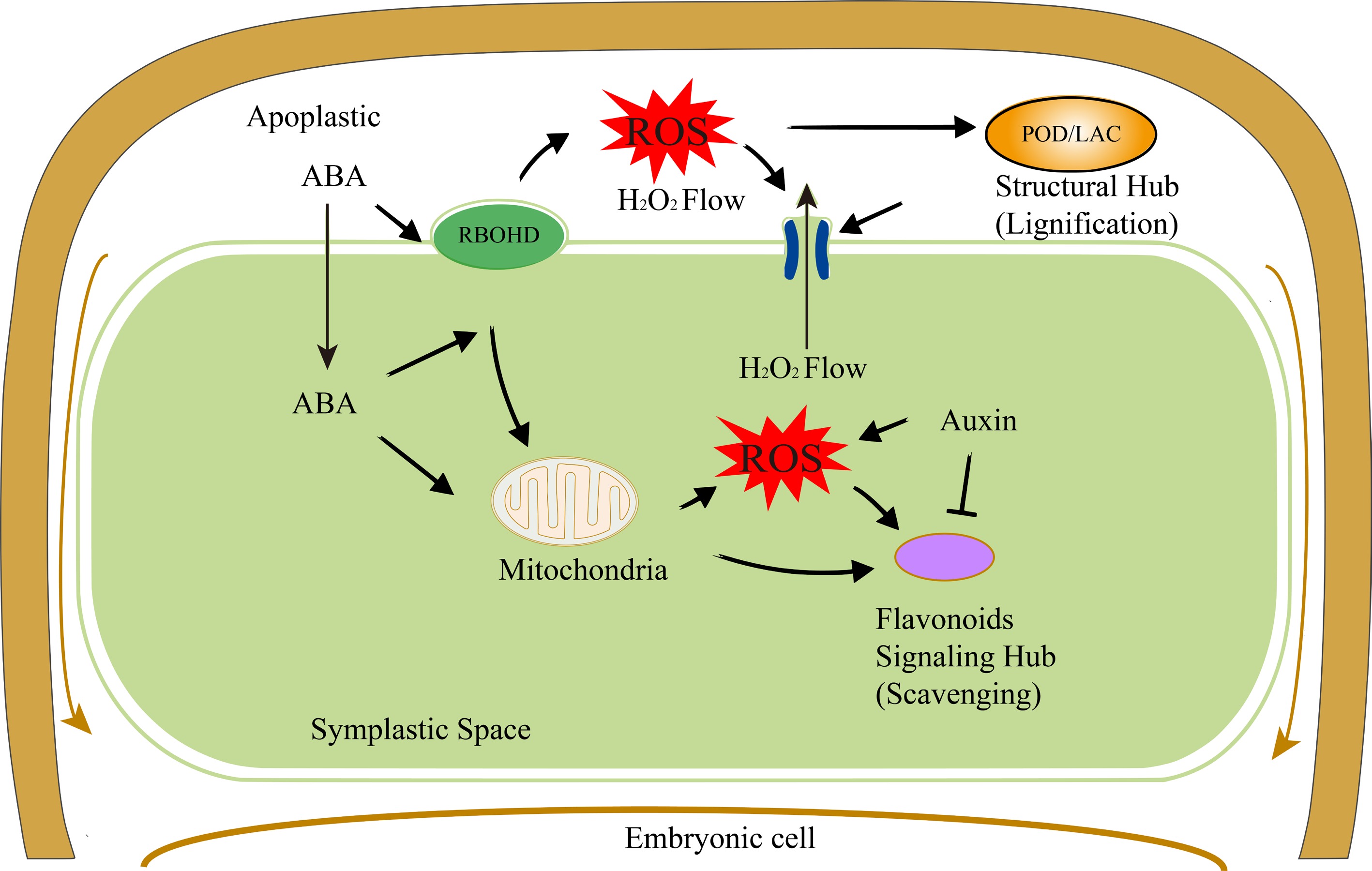
Figure 3.
Compartmentalized flow and hub interactions of ROS in seed cells. Structural hubs primarily operate in the apoplastic space. The signal hub (flavonoids) functions within the symplastic space.
-
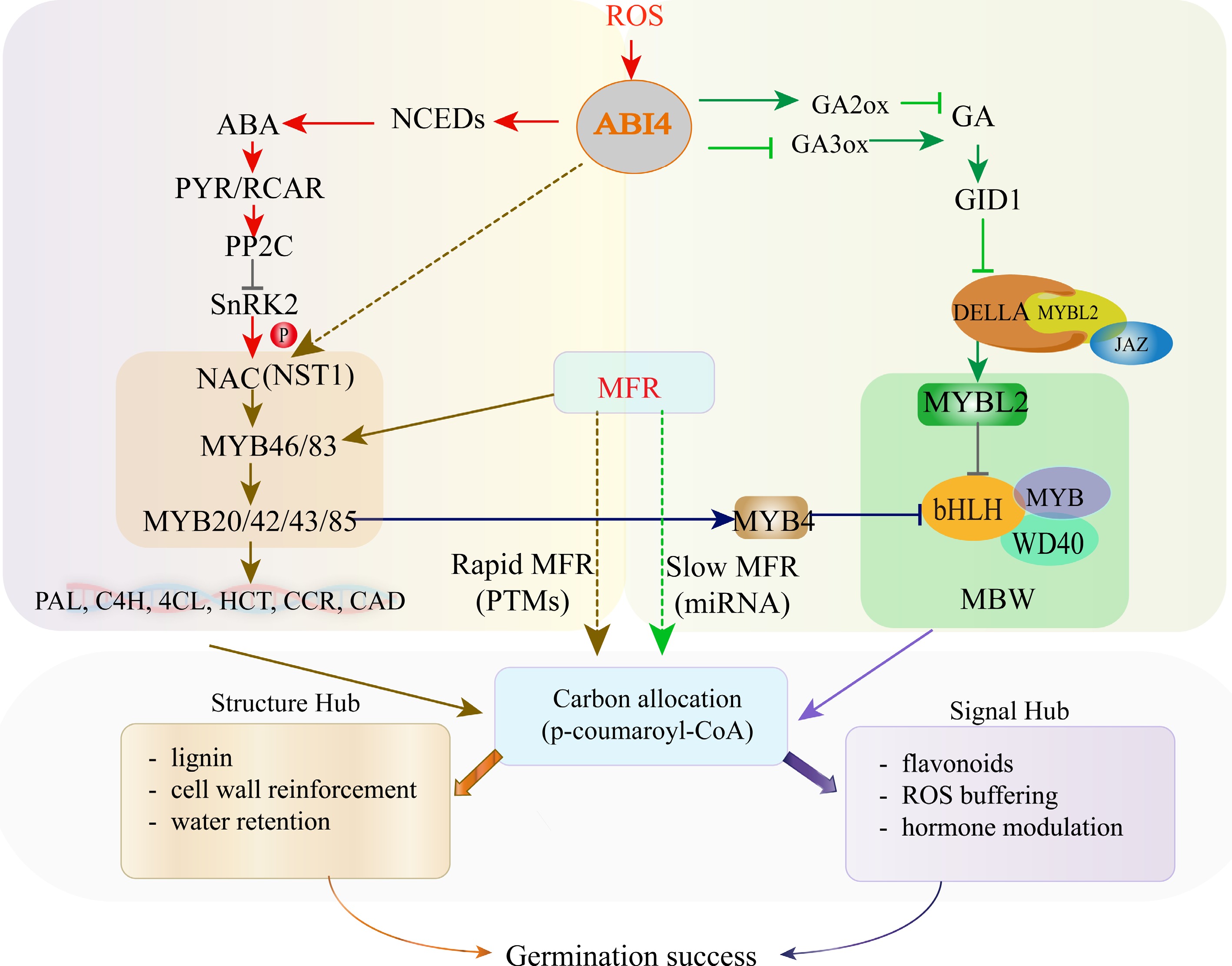
Figure 4.
Multilayer regulation of carbon allocation between lignin and flavonoid branches. The ABA–lignin axis: ABA triggers the PYR/RCAR-PP2C-SnRK2 cascade, leading to the phosphorylation of NST1. This activates the NAC-MYB46/83 regulators, which induce third-tier MYBs to drive the expression of lignin biosynthesis genes. The GA–flavonoid axis: GA promotes the degradation of DELLA proteins, releasing MYBL2 to inhibit the MBW complex, thereby fine-tuning flavonoid accumulation. Cross-regulation: Transcriptional repressors, such as MYB4 and MYBL2, provide negative feedback to balance the flux between the two hubs. Rapid MFR is further fine-tuned by PTMs, whereas slow MFR is stabilized by miRNAs and epigenetic modifications. The proposed carbon allocation relationships are conceptual and may differ substantially depending on the species, developmental stage, and environmental context.
-
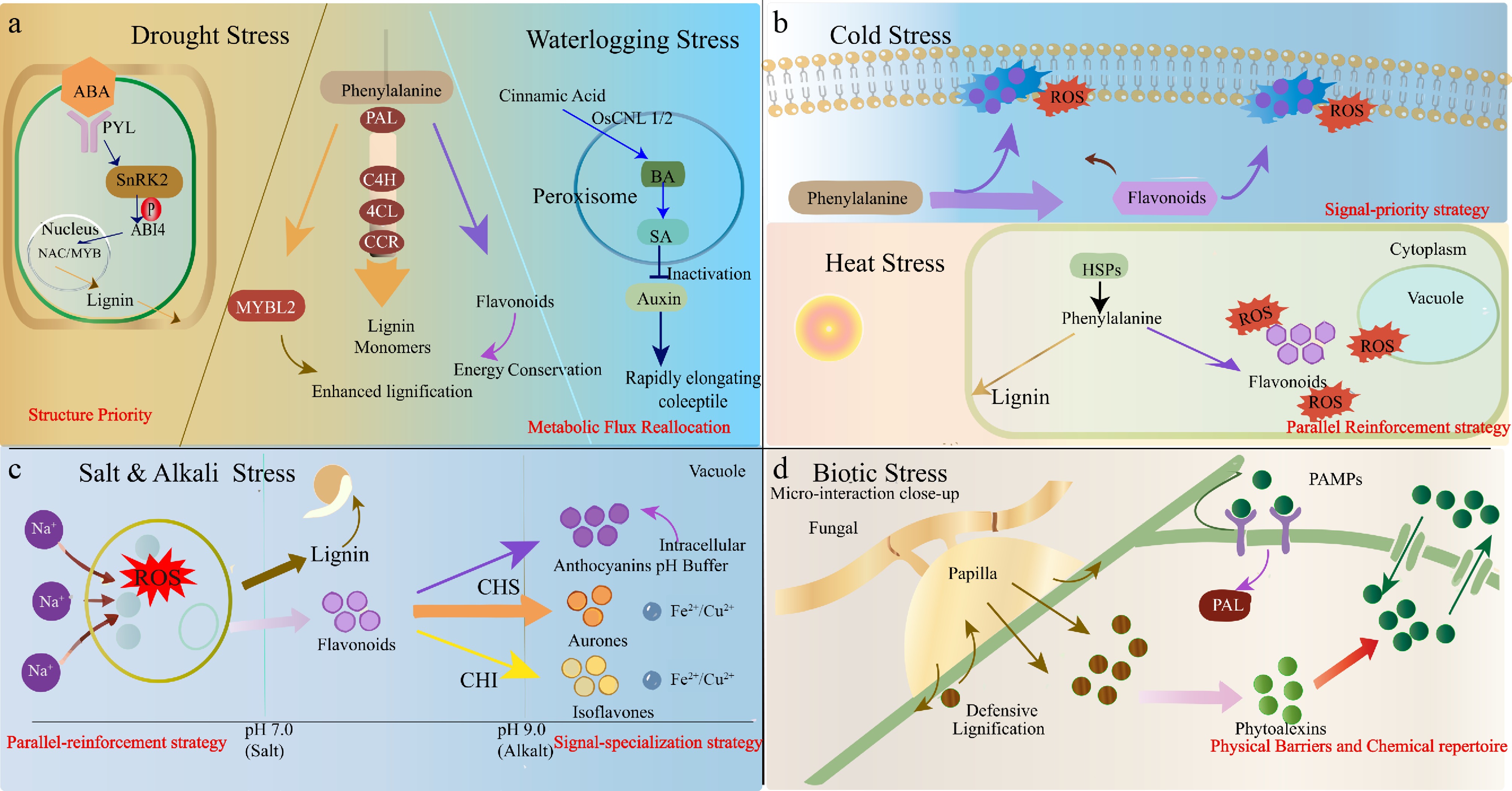
Figure 5.
Metabolic flux strategies of seeds in response to multiple biotic and abiotic stresses. (a) Structure priority (drought) vs. upstream reallocation (waterlogging). Under drought, ABA prioritizes lignin synthesis for water retention. Under flooding, rice redirects flux upstream at cinnamic acid via OsCNL1/2 to produce SA, inactivating auxin to promote rapid coleoptile elongation. (b) Signal priority (cold) vs. parallel reinforcement (heat). Cold stress triggers flavonoid accumulation to protect membranes and scavenge ROS. Heat stress requires simultaneous activation of both hubs to prevent structural collapse and manage thermal ROS bursts. (c) Parallel reinforcement (salt) vs. signal specialization (alkali). Salt stress induces lignification to block Na+ entry while producing flavonoids for ionic ROS buffering. High pH (alkali) shifts flux toward specialized signals like isoflavones and aurones. (d) Dual-defense (biotic stress). Pathogen attack triggers defensive lignification to create physical barriers (papillae) while simultaneously synthesizing phytoalexins (e.g., flavonoids and stilbenes) to chemically poison invaders.
Figures
(5)
Tables
(0)