-
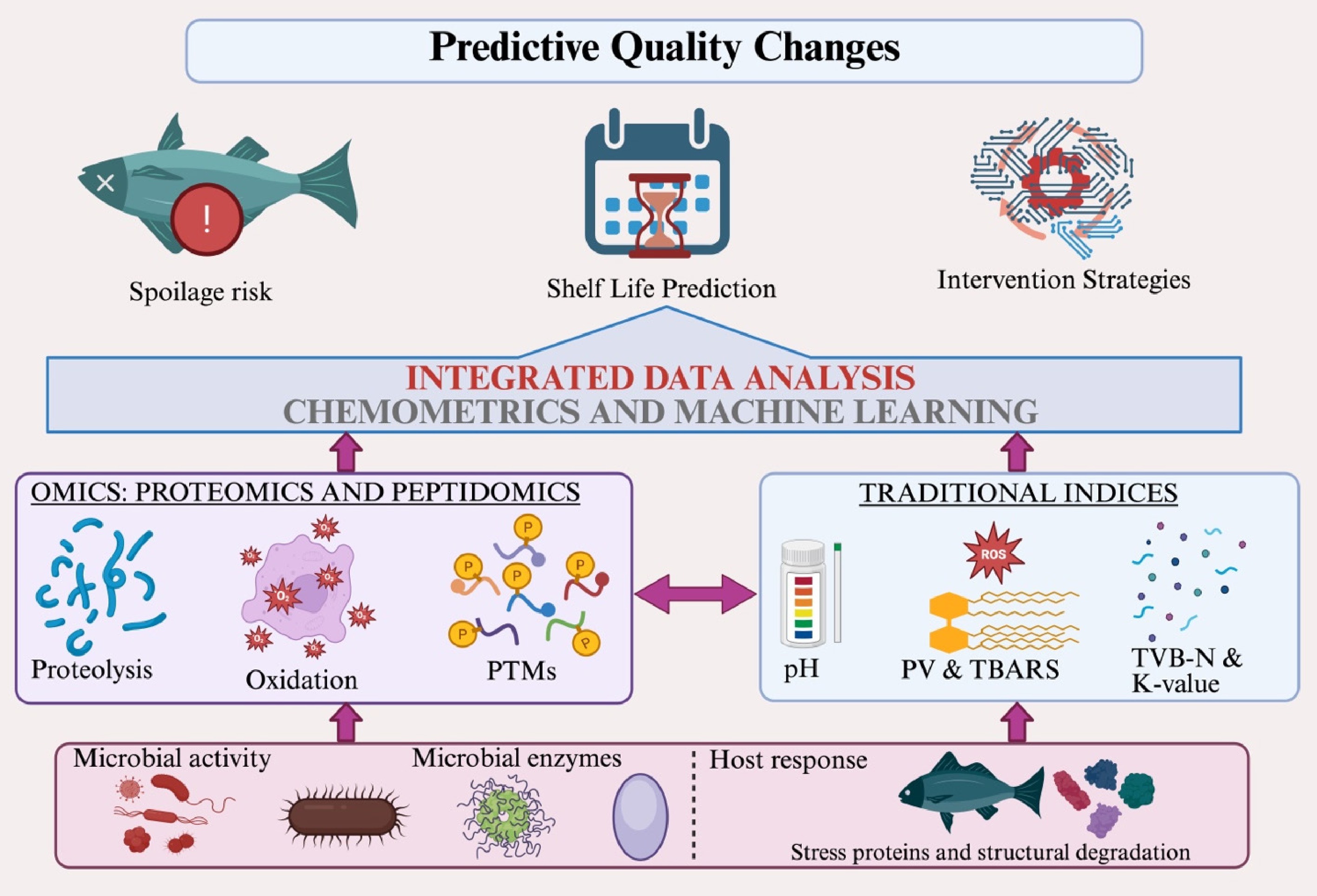
Figure 1.
Integrating omics and conventional indices for predictive shelf-life assessment (created in Biorender).
-
Food matrix/case study Traditional indices used Representative protein or peptide biomarker(s) How early or valuable relative to conventional indices Interpretation for replacement vs integration Ref. Turbot (Scophthalmus maximus), chilled postmortem storage QIM, pH, K-value, TVB-N, TVC Phosphoglucomutase-1, pyruvate kinase, kinesin-1 heavy chain, troponin T, desmin-like protein, actin. Protein abundance changes were significantly correlated with QIM, K-value, TVB-N, and TVC. Strong case for pathway-linked freshness markers, but still species- and storage-specific. [16] Sea bass (Lateolabrax japonicus), ice storage TVB-N, TVC, sulfhydryl and carbonyl content Structural proteins, metabolic enzymes, protein-turnover proteins; calpain-linked degradation patterns, PGK1 After 8 d, TVB-N, TVC, and carbonyl content increased; 708 DAPs were identified, and treatment delayed protein degradation. Shows that proteomics can explain textural and biochemical changes, but markers require targeted validation. [17] Pork, storage at −2, 4, 10, and 25 °C Color, pH, TVB-N, TVC Peptide MVHMASKE Peptide intensity correlated with basic freshness indicators and showed ROC-based discrimination of fresh, accelerated-spoilage, and spoiled states. Promising peptide marker across temperatures; still needs multi-site commercial validation. [18] Pork exudate during storage Fresh vs spoiled classification; conventional spoilage context LDB3, EEF1A1, AMPD1, NEB, GYG1, NDUFA4, myoglobin Shared DAPs in exudates distinguished fresh from spoiled pork under different storage temperatures. Exudate sampling is practical and less destructive, but translation requires simple targeted assays. [19] Mandarin fish (Siniperca chuatsi), refrigerated storage pH, water-holding capacity, color, texture, MFI Beta-enolase, phosphoglycerate kinase 1, triosephosphate isomerase B, hemoglobin subunits, cytoskeletal proteins Day 5 refrigeration was identified as a critical quality-change point; 66 DEPs were linked to endogenous enzyme-mediated proteolysis and glycolysis/gluconeogenesis. Useful for mechanistic prediction of texture deterioration; not yet a regulatory marker set. [20] Shewanella putrefaciens in chilled spoiled bigeye tuna model TVB-N, TMA, extracellular protease activity, protein degradation Cysteine desulfurase IscS, sulfite reductase, ATP-dependent protease ATPase subunit HslU, S-ribosylhomocysteine lyase Higher-spoilage strain produced more TVB-N and TMA and showed upregulated spoilage-related proteins. Useful for microbial mechanism and spoilage-risk modeling rather than direct product-level freshness replacement. [21] Table 1.
Comparative value of conventional freshness indices and representative protein/peptide biomarkers in food quality assessment.
Figures
(1)
Tables
(1)