-
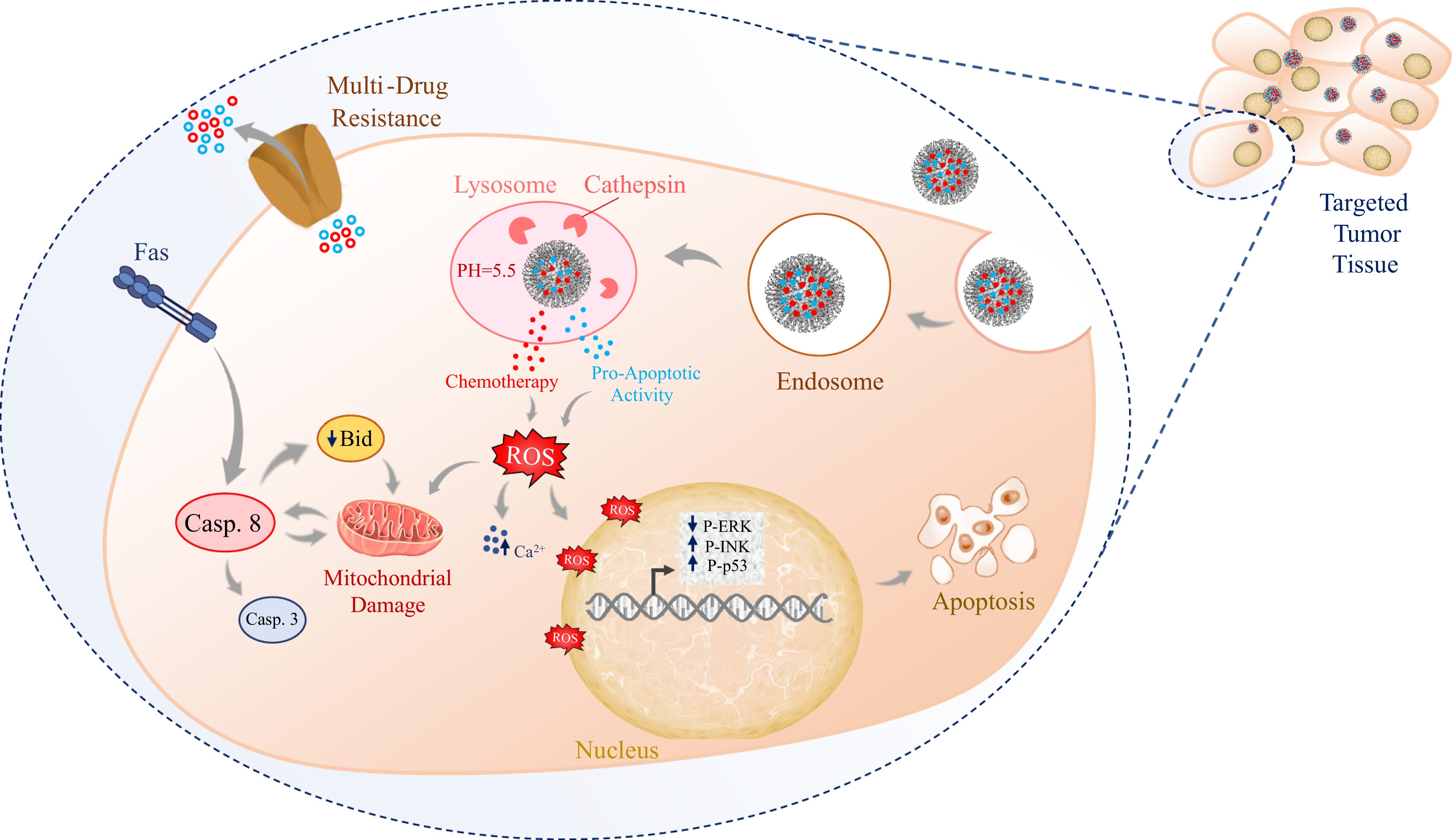
Figure 1.
The diagram depicts the sequential process by which targeted nanoparticles are delivered to tumor cells to induce apoptosis with optimal efficacy. Initially, nanoparticles penetrate the cell via endocytosis, circumventing MDR channels. Once inside the cell, the nanoparticles engage key caspase cascade elements, initiating apoptotic signaling pathways. This interaction promotes the production of ROS within the apoptosis pathway, further amplifying cellular death. The nanoparticles ultimately trigger apoptosis in tumor cells through precise targeting and efficient delivery. This highlights the potential of nanoparticle-based drug delivery systems to counteract drug resistance mechanisms, thereby improving the effectiveness of cancer therapies. Reactive oxygen species (ROS), caspase-8 (Casp. 8), caspase-3 (Casp. 3), extracellular signal-regulated kinase (ERK), c-Jun N-terminal kinase (JNK), tumor protein p53 (P53), and multi-drug resistance (MDR).
-
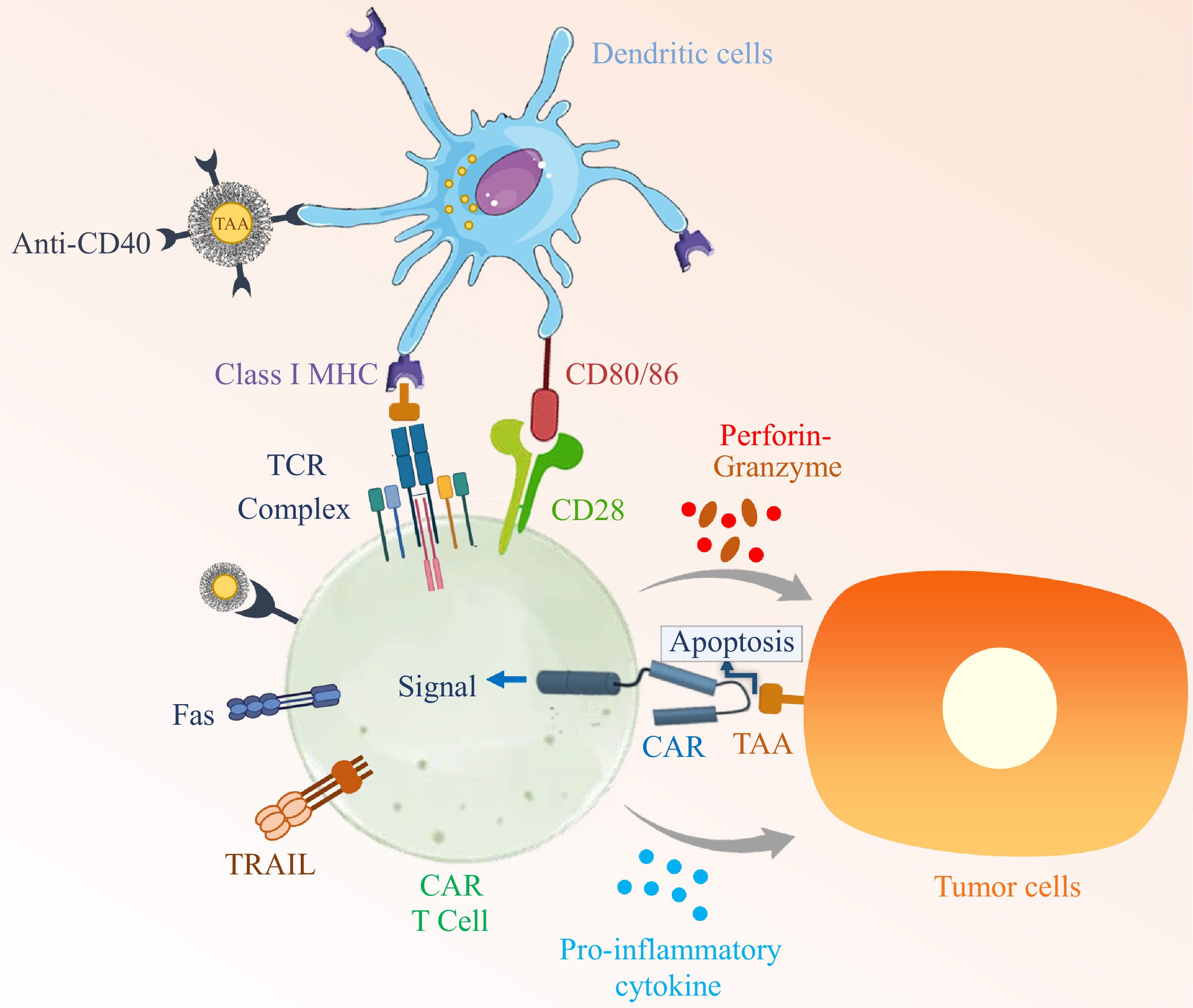
Figure 2.
The diagram illustrates the enhanced delivery of DC stimulatory molecules via nanoparticles, facilitating the activation of APCs or TAAs within the tumor-draining lymph nodes. This mechanism can amplify the cytotoxic potential of nanotechnology-assisted ACT, exemplified by CAR-T cells. The figure shows that DCs interact with nanoparticles through their receptors, initiating CAR-T-cell activation via class I and additional receptors. CAR-T cells, in turn, recognize and bind to tumor cells via a specific receptor, leading to their destruction through the release of perforin and granzyme. Chimeric antigen receptor (CAR), tumor-associated antigens (TAA), major histocompatibility complex class I (Class I MHC), T cell receptor (TCR), and TNF-related apoptosis-inducing ligand (TRAIL).
-
Nano-drug delivery system Key characteristics Liposomes Extracellular vehicles Nanoemulsions Dendrimers Inorganic NPs Carbon quantum dots Solid lipid NPs General Nanosized carriers are
designed to improve
drug solubility, stability, and delivery to target sites.Biocompatible, versatile in drug loading Natural origin, involved in cell communication Enhances solubility, stable formulation Highly branched,
precise drug deliveryTargets specific cells, encapsulates poorly soluble drugs Bright fluorescence for imaging, biocompatible Solid at room temperature, controlled release Targeting ability Ability to deliver drugs specifically to tumor sites, increasing efficacy and minimizing side effects. Active or passive targeting Targeting based on cellular recognition and uptake Passive targeting Active targeting
through specific
surface ligandsHighly precise targeting mechanisms Surface modification
for targetingCan be engineered for targeted release Formulation
stabilityPhysical stability of NPs
under physiological
conditions, preventing
early release or degradation
of the drug.Stable in biological fluids Stability influenced
by lipid bilayerThermodynamically stable Stable due to dendritic architecture Good stability, but may require matrix
stabilizersStable and resistant to photobleaching Stability influenced by lipid matrix composition Encapsulation
abilityAbility to encapsulate a
variety of therapeutic agents, including hydrophilic and hydrophobic drugs.High encapsulation efficiency Encapsulates
proteins, RNA,
DNAExcellent for poorly soluble drugs High versatility in
drug loadingCapable of carrying various compounds, including genes Effective for small molecules and drugs Good encapsulation of hydrophobic and hydrophilic drugs Therapeutic applications Use in targeted therapy,
imaging, and combination treatments for enhanced effectiveness against cancer.Chemotherapy, vaccine delivery Delivering proteins, biomolecules, and drugs Delivery of lipophilic pharmaceuticals Gene therapy, immunotherapeutics Imaging, photothermal therapy, combination therapy Bioimaging, drug delivery Chemotherapy, anti-inflammatory agents, local anesthetics Synthesis methods Various techniques for NP preparation impact their size, shape, and stability. Thin film hydration, reversed-phase evaporation Isolation from biological sources, synthetic methods High-energy emulsification, microfluidics Divergent/convergent synthesis methods Chemical vapor deposition, sol-gel, coprecipitation Hydrothermal
synthesis, chemical oxidationHigh shear mixing, solvent evaporation Size range The size of NPs influences
their biological behavior and interaction with cells.50–500 nm 50–1,000 nm 100 –1,000 nm 1–10 nm 5–100 nm 2–10 nm 50–1,000 nm Surface modifications Modifying NP surfaces to improve biocompatibility and target specificity. PEGylation,
targeting ligandsNatural surface proteins, engineered ligands Surfactants for stability Surface
functionalization
with peptidesCoatings to enhance stability and targeting Surface polymerization, functional groups PEGylation, lipid coating Biocompatibility The compatibility of NPs with biological systems influences
their safety and efficacy.Generally, high biocompatibility Biocompatible, derived from cells Varies depending on the emulsifier High, but depends
on surface groupsCan vary; gold and
silica are often biocompatibleGenerally, high,
minimal toxicityHigh biocompatibility, ideal for drug delivery Regulatory considerations Regulations surrounding the approval and use of NPs in clinical settings. FDA-compliant
for certain formulationsGrowing interest in regulation Evolving regulations
for emulsion productsFDA guidance for dendrimer
applicationsMust meet safety and efficacy standards Emerging guidelines
for nanomaterialsRegulatory scrutiny similar to liposomes Future directions Potential advancements and innovations in NP technology
for improved cancer
treatment.Personalized
medicine
applicationsUse in targeted therapies and diagnostics Increasing applications in cosmetics Expanding to include immune modulation Development of multifunctional NPs Advances in imaging applications Enhanced targeting and formulation improvements Table 1.
Summary of types of NPs and their key characteristics.
-
Approach Tumor model(s) Key outcome(s) Ref. Delivery of TAAs to APCs OVA-expressing melanoma, thymoma, T-cell lymphoma, colon adenocarcinoma - Efficient internalization of TAAs by dendritic cells (DCs).
- Potent cellular and humoral immune responses.
- Enhanced immune response of tumor-specific T cells against antigens.
- Tumor growth slowed down.[246,247] Delivery of adjuvants to
TDLNs (Tumor-Draining Lymph Nodes)Melanoma, B-cell lymphoma - Efficient internalization of adjuvants by dendritic cells.
- Strong cellular and humoral immune responses.
- Reduction in tumor size.
- Prolonged survival time.
- Immune stimulation of DCs through TLR-ligand modulation.[248,249] Codelivery of antigen and adjuvant Melanoma, OVA-expressing - Immune responses from both CD4 and CD8 T cells.
- Strong CD8 T-cell response independent of additional stimuli.
- Production of INF-gamma.
- Balanced antibody response (IgG1 and IgG2).
- Reduced regulatory T-cell count, enhancing vaccine effectiveness.
- Vigorous production of antigen-specific cytotoxic T lymphocytes (CTLs).[250,251] Table 2.
Utilizing NPs to promote antitumor immune reactions.
-
Tumor type NPs type NPs feature Key advancements Ref. Breast cancer (MCF-7) Oleic acid-Fe3O4 NPs (OA-Fe3O4) incorporated into PLA-PEG-PLA copolymer (BMNPs/EPPT/drug) - Spherical morphology (179–203 nm)
- Magnetic
- Drug-loaded
- pH-sensitive release
- Targeted delivery via EPPT peptides- Increased drug release at lower pH
- Enhanced in vitro cytotoxicity (lower IC₅₀)
- Selective interaction with breast cancer receptors
- Significant tumor volume reduction in vivo.[310] HER-2-positive breast cancer Generation 5 poly(amidoamine) dendrimers conjugated with gold NPs, chelated gadolinium, and anti-HER-2 antibody - Bimodal imaging (CT and MRI)
- HER-2 specific targeting
- Encapsulated gold NPs
- Gadolinium for MRI- Enhanced MRI signal intensity (~20%)
- Improved CT resolution and contrast (2-fold)
- Specific targeting and internalization in HER-2 positive cells
- Potential for early detection and therapeutic monitoring.[311] HER2-positive breast cancer cRGD-modified RBC membrane-coated multidrug nanocomplexes - Coated with red blood cell membrane (RBCm)
- Cyclic Arg-Gly-Asp (cRGD) modification for targeting
- Combinational delivery of Polo-like kinase 1 siRNA (siPlk1) and neratinib
- Enhanced drug stability and tumor accumulation- Overcomes challenges of in vivo codelivery of oligonucleotide drugs and chemotherapy agents
- Combination therapy significantly improved antitumor efficacy in HER2-positive breast cancer, both in vitro and in vivo.[312] Breast cancer Biologically produced Gold NPs (AuNPs) - Round AuNPs (13 ± 1.3 nm)
- Zeta potential of −35.8 ± 1.3 mV
- Conjugated with multiple cargoes (Paclitaxel, Transferrin, and
anti-miR-135b)- Multicargo delivery system with effective tumor targeting
- Higher in vitro cytotoxicity
- Enhanced tumor-specific toxicity
- Suppression of miR-135b expression
- Superior to current drug carriers.[313] Breast cancer Polymeric siRNA NPs (PRNs) - NPs (50–200 nm) made using rolling circle transcription (RCT)
- Coated with biopolymers
(PLL, PLG, HA)- Size- and surface-tuned PRNs improve systemic delivery and anticancer effects
- HA-layered NPs (~200 nm) exhibit the best targeting and therapeutic efficacy due to CD44 receptor targeting.[314] Breast cancer Lipid-substituted polyethyleneimine (PEI) polymers (lipopolymers) - siRNA/lipopolymer nanocomplexes
- Optimized with anionic additives (phosphate buffer and N-Lauroylsarcosine Sodium Salt) for gene silencing- Achieved > 80% gene silencing and > 70% cell killing with minimal cytotoxicity in MDA-MB-231 breast cancer cells
- > 95% cell uptake
- Persistent effects for at least 6 d.[315] Lung cancer (NSCLC) Superparamagnetic iron oxide NPs (SPIONs) combined with Exos derived from NSCLC cells - Dual-targeting system using SPIONs for magnetic targeting
- Exos for homing and targeted delivery
- Doxorubicin (DOX) loaded for tumor suppression- Developed a 'dual-targeting' drug delivery platform
- Exosome-SPIONs loaded with DOX provide optimal tumor tissue delivery
- Effective tumor suppression in NSCLC models
- Reduced toxicity to normal tissues.[316] Lung cancer (EGFR-mutant, PC-9 cells) Silk peptide NPs (CUR/ERL@SP) - Dual-drug coloaded (curcumin and erlotinib)
- 150 nm in size
- Enhanced cell internalization- Codelivery of curcumin and erlotinib enhances drug efficiency
- Improved cellular uptake
- Downregulation of EGFR and proteins involved in tumor invasion
- More effective therapeutic strategy for EGFR-mutant lung cancer.[317] Lung cancer (A549 cells) Paclitaxel-loaded PLGA NPs (AM@PTX-NPs) - A549 cell membrane biomimetic NPs
- 10.90% drug loading efficiency
- Spherical shape- A549 cell membrane camouflaged NPs significantly enhanced targeting
- Tumor growth inhibition: 73% vs 37.39% for unmodified PTX-NPs
- Improved strategy for targeted cancer treatment.[318] Lung cancer (A549 cells) Collagenase-loaded AcMD nanostructured microparticles (MPs) - Hollow, corrugated morphology
- Median volume diameters:
2.58 ± 1.35 to 3.01 ± 0.68 µm
- MMAD: 1.93 ± 0.06 to 2.80 ± 0.10 µm
- FPF: 68.02 ± 6.86% to 69.62 ± 2.01%
- Enzymatic stability: 89.5 ± 6.7%- Collagenase-loaded microparticles improved nanoparticle penetration into tumor spheroids (A549/MRC-5 coculture)
- Enhanced delivery of therapeutic NPs
- ECM-modulation for better intratumoral penetration.[319] Lung cancer (A549 cells) Niosomes containing gold NPs (Nio-AuNPs) - Hydrodynamic diameter of AuNPs: 38.85 ± 0.85 nm
- Nio-AuNPs diameter: 127.8 ± 2.92 nm
- Spherical shape (confirmed by TEM and FE-SEM)- Combination of Nio-AuNPs with X-ray radiation (XRT) showed a synergistic effect
- Increased cytotoxicity and apoptosis induction in A549 cells
- Superior to XRT or AuNPs alone.[320] Metastatic prostate cancer (PCa) Au/Mn nanodots-luteinizing hormone-releasing hormone (AMNDs-LHRH) nanosystem - Multimode imaging (FL/CT/MR)
- Targeted drug delivery
- Photothermal therapy
- Fluorescence-guided surgery- Targeting GnRH-R positive PCa and metastases for accurate preoperative CT/MR diagnosis
- Fluorescence visualization for surgery
- Improved photothermal therapy for metastatic PCa
- Enhanced diagnostic accuracy and therapeutic effect.[321] Bone metastatic prostate cancer (PCa) Au/Gd nanodots - Multimode imaging (optical and X-ray)
- Good biocompatibility
- High biosafety- High-precision detection of metastatic prostate cancer
- Complementary multimode imaging for accurate diagnosis and treatment guidance
- Enhanced biosafety and biocompatibility in vitro and in vivo.[322] Colorectal cancer Functionalized mesoporous silica NPs (MSN-NH2 and MSN-COOH) - Spherical shape
- Mesoporous structure
- pH-responsive drug release
- Surface functionalization with amino (positive charge) and carboxyl groups (negative charge)- Controlled release of doxorubicin at physiological pH (7.4) to reduce systemic toxicity
- Enhanced drug release at acidic pH (5.5), targeting TME
- Improved therapeutic efficacy by exploiting pH-sensitive drug release.[323] Colon cancer Poly(lactide-co-glycolide)-block-poly(ethylene glycol)-carboxylic acid endcap NPs (PLGA-PEG-COOH NPs) - CASIN encapsulated in PLGA-PEG-COOH NPs
- Targeted delivery system
- Improved bioavailability
- Reduced drug elimination- Development of a nanoparticle-based delivery system for CASIN
- Overcomes rapid drug elimination and low bioavailability
- Enables targeted inhibition of Cdc42 in colon cancer.[324] Colorectal cancer Salmonella membrane-coated bacilliform gold nanorods (SM-AuNRs) - Gold nanorods coated with Salmonella membrane proteins
- Mimics Salmonella morphology and surface
- Targeted tumor cell internalization
- Mucus barrier penetration- Development of biomimetic SM-AuNRs for enhanced tumor targeting and penetration
- Superior photothermal and chemotherapeutic effects for colorectal cancer treatment.[325] Colorectal cancer GOx@FeNPs (glucose oxidase-loaded iron NPs) - Dual-targeted NPs with cRGD peptide and anisamide (AA)
- Combines photothermal therapy (PTT), ferroptosis, immune checkpoint blockade (αPD-L1), and MRI- Combination of PTT, ferroptosis, and αPD-L1 blockade for enhanced CRC treatment
- Dual-targeting (cRGD and AA) improves tumor targeting
- Induces immunogenic cell death (ICD) and enhances immune response
- Achieves over 90% tumor inhibition
- MRI capability for integrated diagnosis and therapy.[326] Colorectal cancer Hyaluronidase-responsive MSN-HA/DOX, DOX/SLN-PEG-Biotin, Galactosylated chitosan-functionalized MSNs - Functionalized mesoporous silica NPs (MSNs)
- Surface modifications with hyaluronic acid (HA), polyethylene glycol (PEG), biotin, and galactosylated chitosan
- Dual-stimulus release (hyaluronidase-responsive)- Enhanced tumor inhibition via dual-stimulus release and biotin-targeting for CRC cells
- Controlled release through asialoglycoprotein receptors
- Significant in vitro and in vivo efficacy improvements over conventional chemotherapy.[327] Gastrointestinal cancer Poly(lactic-co-glycolic acid) (PLGA)-based NPs Biodegradable, biocompatible, and tunable properties such as the ratio of PLA to PGA, molecular weight, crystallinity, and preparation process - Diagnosis
- Chemotherapy
- Radiotherapy
- Novel treatments like immunotherapy, gene therapy, and photothermal therapy[328] Gastric cancer pH-responsive NPs with TPGS-conjugated fucoidan - pH-responsive
- Targeted delivery to P-selectin protein- Demonstrated enhanced antigastric tumor efficacy
- Reduced expression of malignant proteins
- Promising clinical therapeutic potential[329] Gastric and colon cancer Glucose oxidase-loaded manganese-based mesoporous silica NPs (MSN@Mn-GOx) - Solid spheres (~100 nm)
- Fenton-like properties
- pH-responsive (stronger at pH 6.0)
- Zeta potential: -35 mV- Enhanced ROS production
- Inhibition of gastric and colon cancer cell proliferation
- MRI-based tumor imaging enhancement
- Potential therapeutic option for gastric cancer[330] Gastric cancer Arginine-chitosan and fucoidan NPs - Protects postbiotic (SGMNL-133) from gastric acid degradation
- Facilitates mucus penetration
- Enhances interaction with cancer cells- Successful isolation and optimization of GMNL-133 (SGMNL-133) to inhibit gastric cancer cell proliferation
- Development of NP formulation to improve in vivo delivery of SGMNL-133
- Enhanced anti-gastric tumor efficacy and reduced tissue inflammation.[331] Pancreatic adenocarcinoma AuNPs (Gold NPs) - Coated with hyaluronic acid and oleic acid (HAOA-AuNPs)
- Coated with bombesin peptides (BBN-AuNPs)
- Spherical shape
- Size: 83 ± 20 nm (HAOA-AuNPs)
- Size: 49 ± 12 nm (BBN-AuNPs)- Significant reduction in cell viability when combined with Radiation Therapy (RT)
- Improved therapeutic effect when RT was combined with AuNPs
- AuNPs at different concentrations (200-400 μM for HAOA-AuNPs, 50-200 μM for BBN-AuNPs) showed varying reductions in cell viability (up to 37%)
- RT + AuNPs combination showed up to a 26% reduction in viability at 72 h postirradiation[332] Pancreatic cancer (MIAPaCa-2 and PANC-1 cell lines) Titanium dioxide NPs
(H2O2-modified)- Modified with hydrogen peroxide
- Used in combination with ultrasound-stimulated microbubbles (USMB) and X-rays- USMB + X-rays showed a significant radiation enhancement effect and increased ROS in MIAPaCa-2 cells
- No enhancement effect observed in PANC-1 cells
- USMB did not improve nanoparticle-induced radiosensitization in either cell line when combined[333] Pancreatic adenocarcinoma AuNPs (Gold NPs) - Coated with hyaluronic acid and oleic acid (HAOA-AuNPs)
- Coated with bombesin peptides (BBN-AuNPs)
- Spherical shape
- Size: 83 ± 20 nm (HAOA-AuNPs)
- Size: 49 ± 12 nm (BBN-AuNPs)- Significant reduction in cell viability when combined with Radiation Therapy (RT)
- RT + AuNPs showed up to 37% reduction in cell viability
- Combination of RT and AuNPs led to improved therapeutic efficacy, with up to 26% reduction in cell viability at 72 h postirradiation
- Improved effect observed with both HAOA-AuNPs and BBN-AuNPs compared to RT alone[334] Pancreatic cancer (PANC-1 cell line) Silver NPs (AgNPs) - Functionalized with IgG molecules
- NIR light absorption (808 nm, 2 W)
- Used for photothermal therapy- Photo-excitation of IgG-functionalized silver NPs induced dysfunction in the Golgi apparatus
- Activated caspase-3 apoptotic pathway, leading to cellular apoptosis
- Demonstrated as a potential novel therapy for pancreatic cancer via photothermal treatment using a laser[335] Pancreatic cancer Gelatin-based NPs - Fabricated via radiation-induced crosslinking
- Size: 5–20 nm
- Labeled with 64Cu
- Negative surface potential- Developed as a novel imaging agent for PET
- In vivo evaluation showed accumulation of NPs in pancreatic tumors
- 64Cu-labeled gelatin NPs show promise for next-generation PET imaging in pancreatic cancer[336] Pancreatic cancer Hyaluronic acid (HA)-displaying NPs - Composed of positively charged chitosan (CS)
- Complexed with small interfering RNA (siRNA)
- Two formulations: low molecular weight (LMW) CS and high molecular weight (HMW) CS- Targeted siRNA therapy to downregulate HIF-1α and enhance treatment outcomes
- Both LMW and HMW CS formulations showed an ability to knock down HIF-1α in vitro and in vivo
- LMW CS showed faster uptake kinetics, while HMW CS was more effective in gene knockdown
- Potential to enhance treatment in the hypoxic TME, a characteristic of pancreatic cancer[337] Ovarian cancer Polymeric-based NPs siRNA delivery, serum stability enhancement, targeted delivery - Developing polymeric NPs for siRNA delivery to target specific genes involved in OC prognosis and overcoming chemo-resistance. [338] Ovarian cancer Honokiol (HK)-based polyprodrug NPs - Glutathione (GSH)-sensitive HK polyprodrug
- Conjugated with EpCAM-specific aptamer and polyethylene glycol (PEG)
- High drug loading and GSH-responsive drug release- Developed a GSH-sensitive HK polyprodrug for targeted ovarian cancer therapy
- A/P-PHK NP40 (aptamer-modified and PEG-modified prodrug) showed the highest targeting ability for EpCAM-overexpressing ovarian cancer cells
- Exhibited enhanced cell growth inhibition compared to free HK and control HK NPs
- Novel strategy for improving the delivery and targeting of HK in ovarian cancer treatment[339] Ovarian cancer Arsenic-manganese complex NPs (ATO-Mn) - Arsenic trioxide (ATO) and manganese (Mn2+) complexed in NPs
- pH-sensitive release of arsenic (As3+) and manganese (Mn2+) ions
- SKOV3 cell membrane-encapsulated NPs for homologous targeting
- Glucose oxidase-based starvation therapy
- MR imaging for real-time ATO dose distribution monitoring- Achieved synergistic effects combining starvation therapy, chemodynamic therapy, and chemotherapy
- ATO and Mn2+ release triggered by tumor acidity,
generating reactive oxygen species (ROS) through
Fenton-like reaction
- Improved biocompatibility and therapeutic efficacy compared to free ATO administration
- Self-enhanced chemodynamic therapy with glucose oxidase supporting H2O2 restoration and reducing cellular acidity
- Innovative approach for multimodal diagnosis and treatment of ovarian cancer[340] Ovarian Cancer HA@PFG NPs - Cisplatin prodrug (Pt-COOH)
- Fe3+ and natural polyphenols (Gossypol)
- Stable structure
- Controllable drug release behavior
- High drug loading capacity
- pH-sensitive release at tumor sites
- Ferroptosis promotion- Combined MRI imaging with cisplatin-based chemotherapy for improved diagnosis and therapy
- Synergistic effect of Pt-COOH (chemotherapy) and Gossypol (pro-apoptotic) for tumor cell killing
- Fe3+ release at tumor sites facilitates ferroptosis and MRI imaging of ovarian cancer
- Improved therapeutic efficacy in patient-derived tumor xenograft (PDX) model
- Ameliorated OC symptoms through IL-6 signaling
pathways[341] Hepatocellular carcinoma - Solid lipid NPs (SLN)
- PEGylated galactose-conjugated SLN (GAL-SSLN)- Targeted delivery
- Enhanced cytotoxicity
- Apoptosis induction
- Improved pharmacokinetics- GAL-SSLN demonstrated superior targeting and therapeutic efficacy compared to traditional Sorafenib-loaded SLN in HCC.
- Enhanced liver-specific drug delivery and efficacy.[342] Hepatocellular carcinoma Nano Zinc Oxide (nZnO) - Aged nZnO with physicochemical transformation
- Investigated for promotional effects on liver cancer progression- Studied the promotional effects of aged nano zinc oxide (nZnO) on HCC cell progression (HepG2)
- Focused on the impact of long-term exposure to subtoxic doses of NPs
- Explored how NMs, specifically nZnO, may influence liver cancer progression, highlighting the challenges in assessing chronic exposure to NPs[343] Hepatocellular carcinoma Inorganic NPs - Accumulate in the liver due to EPR effect
- Enhanced accumulation in HCC tumors with leaky vasculature- Explored the use of inorganic NPs in liver cancer therapy, leveraging their ability to accumulate in HCC tumors through the EPR effect
- Identified the potential of inorganic NPs to overcome the challenge of liver accumulation and enhance therapeutic effects in HCC treatment
- Highlighted the use of low- and high-LET radiation from the same radionuclide for enhanced treatment strategies in HCC[344] Liver cancer Silica NPs (DOX-loaded) - Loaded with doxorubicin (DOX) and MRI contrast agent
- Coated with pH-responsive and tumor cell-targeting polymers
- Targeted delivery with controlled drug release in acidic environments- Achieved integrated diagnostic and therapeutic strategy for liver cancer
- pH-responsive polymer coating enables controlled release of DOX in the tumor's acidic environment
- Inhibited autophagic flux by targeting the autophagy‒lysosome pathway and regulating TFEB nuclear translocation
- Promoted tumor cell death and enhanced therapeutic efficacy in liver cancer treatment[345] Hepatocellular carcinoma siCD24-Lenvatinib-MnO@PLAP nanomedicine - Incorporates manganese oxide (MnO), lenvatinib (Len), and siRNA against CD24 (siCD24)
- Micelles composed of methoxypolyethylene glycol (mPEG), poly-L-lysine (PLLys), and polyasparagyl (PAsp(PIP)) triblock copolymer
- Responsive to TME (TME)
- MRI contrast agent (Mn2+)- Synergistic effect of siCD24 and lenvatinib reduces CSC stemness and enhances therapeutic efficacy
- Inhibited CD24 expression and HIF-1α, reducing drug resistance in CSCs
- Improved lenvatinib therapy for HCC with enhanced tumor-targeting and reduced stem cell resistance
- In situ production of Mn2+ for MRI monitoring of therapeutic progress[346] Hepatoblastoma Vincristine-loaded polycaprolactone NPs with carbon dots (Vin@PCL-CDs) - Carbon dots encapsulated with vincristine sulfate
- Polycaprolactone (PCL) biodegradable NPs
- Spherical, uniformly sized
(~200 nm)
- Excellent colloidal stability- Improved vincristine pharmacokinetics and targeted delivery to liver cancer cells
- Prolonged release of both vincristine and carbon dots, enhancing the therapeutic effect
- Enhanced cancer cell inhibition and targeted delivery compared to free vincristine
- Carbon dots enabled bioimaging with clear fluorescence, not cytotoxic, offering potential in imaging and cancer research[347] Kidney cancer ICG-PEG45 (Indocyanine Green conjugated with PEG) - Renal-tubule-secreted near-infrared-emitting fluorophore
- Effluxed via P-glycoprotein transporter in normal tissues
- Retained in cancerous tissues with low P-glycoprotein expression- Enhanced kidney cancer targeting through renal tubular secretion
- Hyperfluorescence imaging for better detection and visualization of tumors.[348] Renal cell carcinoma ZnPP@G-PP NPs (ZnPP@PLGA-PFP NPs) - Sound-sensitive, multifunctional nanoplatform
- Sonosensitizer (ZnPP) loaded in NPs
- G250-targeting ligand for tumor specificity
- Encapsulation efficiency and good stability
- Multimodal imaging (PA/US) capabilities- Designed for targeted sonodynamic therapy (SDT) and multimodal imaging
- Effective tumor targeting via G250 ligand
- LIFU (low-intensity focused ultrasound) irradiation enhances 1O2 production, improving the SDT effect
- In vitro and in vivo studies showed significant therapeutic effects with effective tumor penetration and suppression
- Real-time diagnostic and therapeutic monitoring with PA/US imaging
- Excellent biocompatibility and therapeutic potential for RCC treatment[349] Bladder cancer Silver NPs (AgNPs) - Biogenic synthesis from Fusarium sp.
- Dose- and time-dependent cytotoxicity
- Induces apoptosis
- Inhibits cell migration and proliferation- AgNPs demonstrated antitumoral activity in NMIBC models
- Tumor regression (57.13%) and benign lesions observed in animal studies
- Potential as a cost-effective alternative for bladder cancer treatment[350] Bladder cancer PAMAM-modified Mesoporous Silica NPs (MSNPs) - Modified with poly(amidoamine) (PAMAM) dendrimers
- Mucoadhesive properties
- Controlled drug release triggered by acidic pH- PAMAM-modified MSNPs exhibited enhanced mucoadhesion, particularly with two-generation PAMAM
- Sustained doxorubicin release
- Demonstrates potential as a mucoadhesive drug delivery system to improve bladder cancer chemotherapy.[351] Bladder cancer Lipid-coated Mesoporous Silica NPs (Silicasomes) - Combination of cisplatin (chemotherapy) and tirofiban (antiplatelet agent)
- TME-targeted
- Prevents LVI formation and enhances drug delivery- Developed a nanodrug that targets the TME, combining chemotherapy and antiplatelet therapy
- Silicasomes enable targeted delivery and synergistic treatment
- Inhibition of platelet function to prevent LVI formation, reduce metastasis, and enhance cisplatin efficacy
- Demonstrated improved antitumor activity without significant adverse effects, offering a promising strategy for bladder cancer treatment[352] Bladder cancer CTMF NPs (Cascading Transformative Multifunctional Nanotransformer) - Composed of CuS NPs (photothermal agent)
- Encapsulated perfluoro-15-crown-5-ether (PFCE, 19F MRI agent)
- Coated with Mn2+-polyphenol shell (signal quencher and therapeutic agent)
- TME-activatable
- Dual imaging (19F MRI and photoacoustic) for tumor tracking- Stepwise morphologic transformation to enhance drug penetration and overcome transport barriers
- TME-activatable, zero-background 19F MRI for tumor imaging and ratiometric photoacoustic imaging for guidance
- Polyphenol-enhanced cell adhesion and in situ generation of quinones for efficient tumor targeting and internalization
- Laser-triggered decomposition, oxidative stress amplification, and mitochondrial damage leading to cuproptosis and immunogenic cell death
- Synergistic tumor therapy, providing a versatile, precise, and efficient bladder cancer treatment strategy with imaging-guided capabilities[353] Bladder Cancer Iron oxide nanoparticle coated with hyaluronic acid (HA) - HA coating for mucosa penetration
- DBCO for bioorthogonal reaction with azide receptor on bladder cancer cells
- Labeled with 177Lu for internal irradiation
- Magnetic resonance imaging (MRI) for targeted imaging- Multifunctional nanodrug that integrates mucosa penetration, targeting, and internal irradiation for bladder cancer therapy
- Facilitates bladder cancer downstaging and bladder-preserving therapy
- Improved cellular internalization through bioorthogonal reaction
- Targeted MRI for visualizing both nonmuscle-invasive and muscle-invasive bladder cancer
- Demonstrated inhibition of metastasis and potential for preserving the bladder during treatment[354] Bladder Cancer Wrinkled silica NPs (WSNs) - WSNs used as microreactors for multiplex miRNA analysis
- Conjugated with S9.6 antibody for DNA/miRNA duplex binding
- ssDNA labeled with quantum dots (QDs) for miRNA identification
- Fluorescence-based detection- Enables multiplex miRNA detection without enzymes or nucleic acid amplification
- Achieves high sensitivity (down to 5 fM) and wide dynamic range (six orders of magnitude)
- High specificity to distinguish single-base mutation sequences
- Effective for clinical serum specimen analysis, improving the accuracy and reliability of BC diagnosis[355] Non-Muscle Invasive Bladder Cancer Sodium Chloride NPs
(NaCl-NPs)- Intravesical instillation of NaCl-NPs for local treatment
- No systemic or local toxicity at high doses
- Treatment administered posttransurethral resection of bladder tumors (TURBT)- Safe and effective alternative to traditional therapies (e.g., BCG, intravesical chemotherapy)
- 2.55-fold reduction in tumor development compared to saline, similar to gemcitabine
- Improved overall survival (70% at 60 d vs 40% for saline group)
- Potential for safer, more tolerable treatment regimens to prevent recurrence of NMIBC[356] Bladder Cancer (Drug-resistant) Doxorubicin (DOX)/COOH-mesoporous silica nanoparticle (MSN)/Polyethylenimine (PEI)/Nucleic acid chimeras - COOH-mesoporous silica NPs (MSN) with PEI coating
- Controlled drug release for over 48 h
- Targeted delivery of DOX and siRNA- DOX/MSN/Chimera significantly inhibits PI3K expression and promotes apoptosis in drug-resistant bladder cancer cells
- Reduces tumor volume in vivo
- Improved reduction in chemotherapy-induced toxicity to normal tissues
- Potential for personalized and targeted therapy for drug-resistant bladder cancer[357] Bladder Cancer Lipid-Polymer hybrid NPs (LPHNP) loaded with Solasonine (SS) and Solamargine (SM) - Average size: 130 nm
- Polydispersity index: 0.22
- Positive zeta potential (indicating chitosan coating)
- High encapsulation efficiency (91.08% for SS, 88.35% for SM)
- Mucoadhesive properties- Nanoencapsulated SS/SM showed enhanced anticancer effects compared to free SS/SM, with twofold lower IC50 in 3D bladder cancer cell culture
- In vivo antitumoral effect with significant reduction in bladder volume
- High encapsulation efficiency and stability
- Identified systemic toxicity and liver damage at high doses, suggesting the need for further safety evaluations[358] Table 3.
Some recent advancements in nanoparticle-based imaging and targeted drug delivery for solid tumor types.
Figures
(2)
Tables
(3)