-
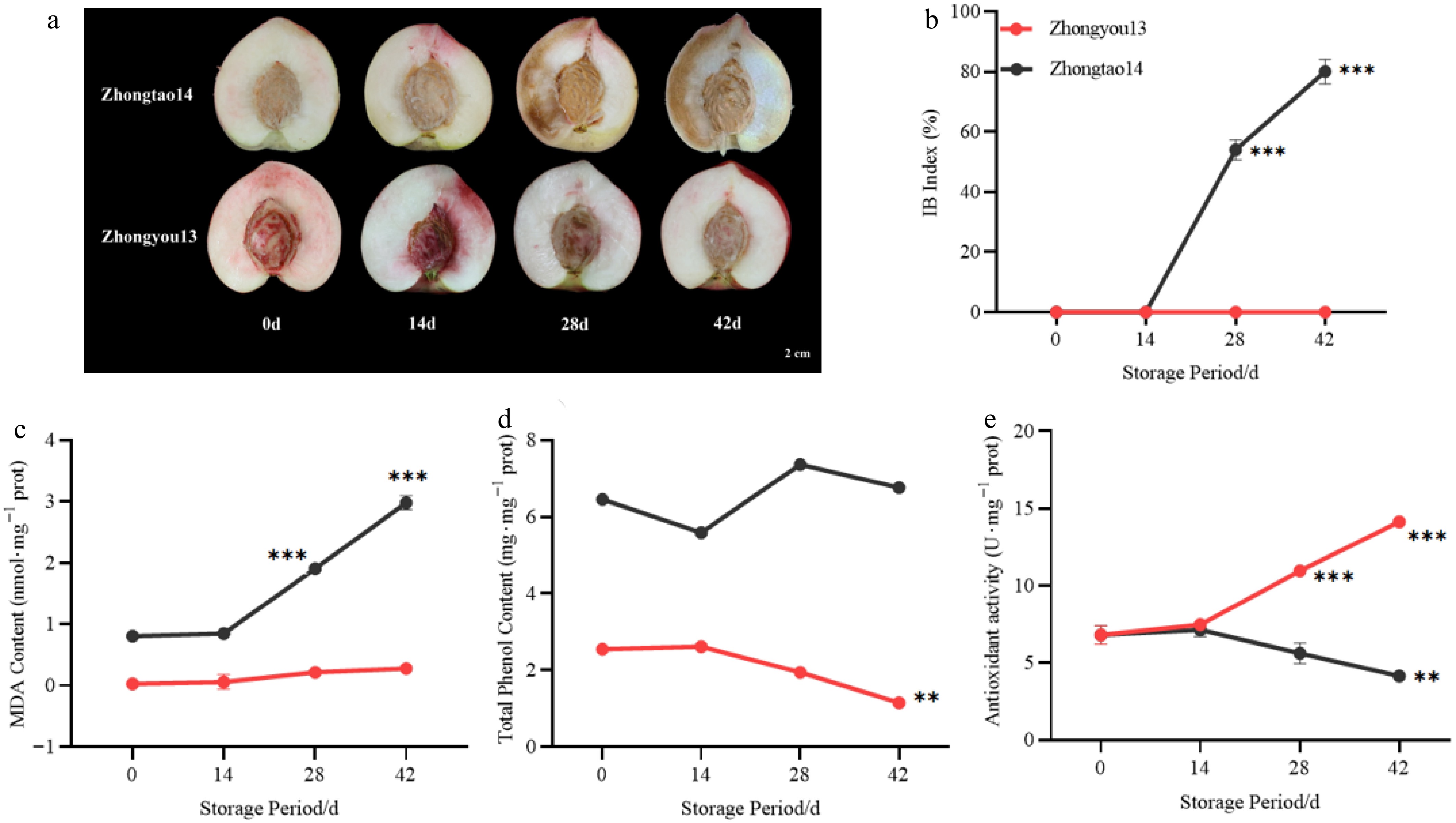
Figure 1.
Phenotypic characteristics, MDA content, total phenol content, and antioxidant activity in different peach cultivars. (a) Internal browning symptoms in two different peach cultivars. Scale bar = 2 cm, (b) IB index, (c) MDA content, (d) antioxidant activity, and (e) total phenol content. Error bars indicate the means ± standard error (SE) from three biological replicates. * indicates significant differences between the control (0 d) and the different cold storage treatment timepoints (14, 28, and 42 d) based on Student’s t-tests (* p < 0.05, ** p < 0.01, *** p < 0.001).
-
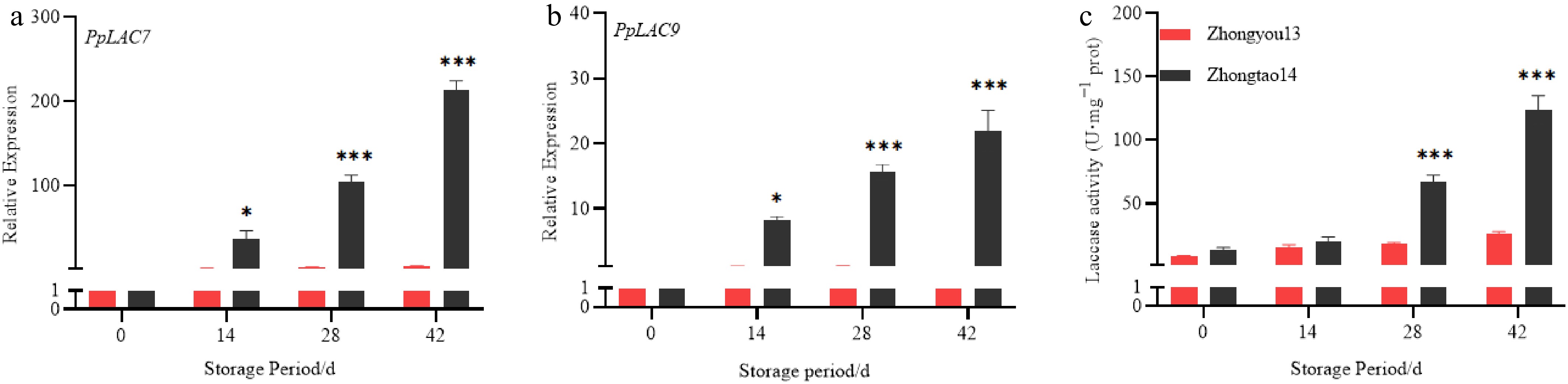
Figure 2.
Effect of relative expression of LAC family genes and LAC activity in different peach cultivars. (a) Analysis of the relative expression of PpLAC7, (b) PpLAC9, and (c) LAC activity. Error bars indicate the means ± SE from three biological replicates. * indicates significant differences between the control (0 d) and the different cold storage treatment timepoints (14, 28, and 42 d) based on Student's t-tests (* p < 0.05, ** p < 0.01, *** p < 0.001).
-
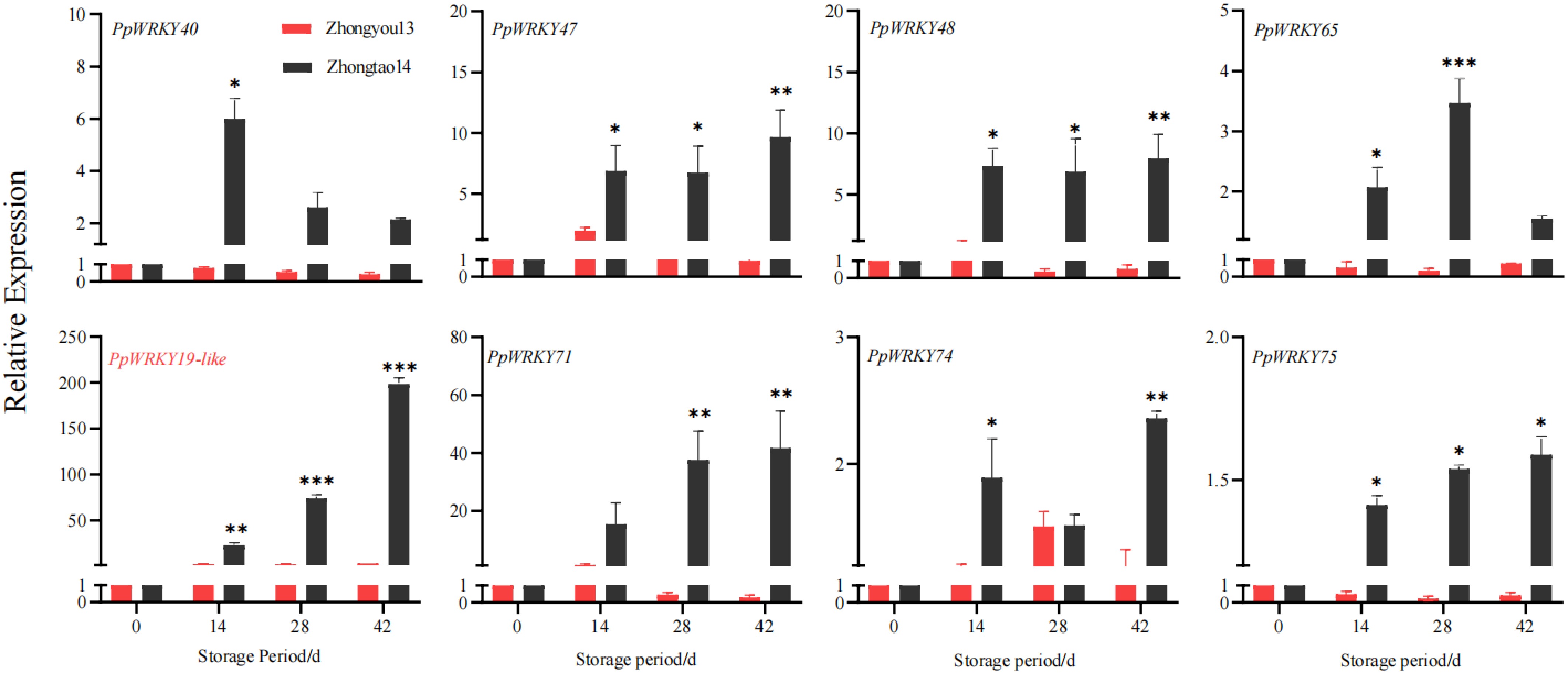
Figure 3.
Relative expression of WRKY TFs in different peach cultivars during cold storage. Error bars indicate the means ± SE from three biological replicates. * indicates significant differences between the control (0 d) and the different cold storage treatment timepoints (14, 28, and 42 d) based on Student’s t-tests (* p < 0.05, ** p < 0.01, *** p < 0.001).
-
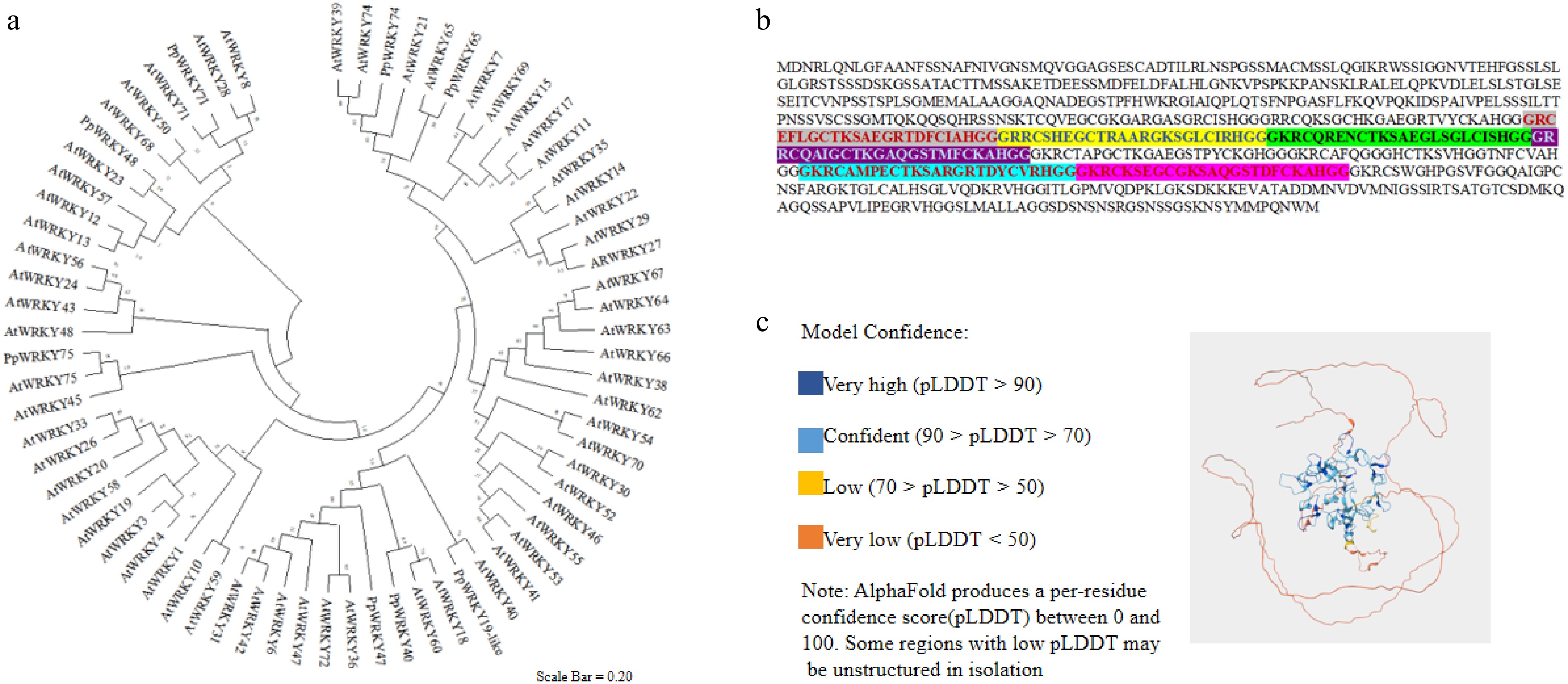
Figure 4.
Sequence features of PpWRKY19-like and its protein. (a) A rooted neighbor joining phylogenetic tree relating to PpWRKY TFs in Arabidopsis thaliana. (b) The deduced amino acid sequence of PpWRKY19-like. The colored sequences are the C2H2 zinc finger domains. (c) A hypothetical three-dimensional (3D) structural model of WRKY19-like as predicted by the AlphaFold model.
-
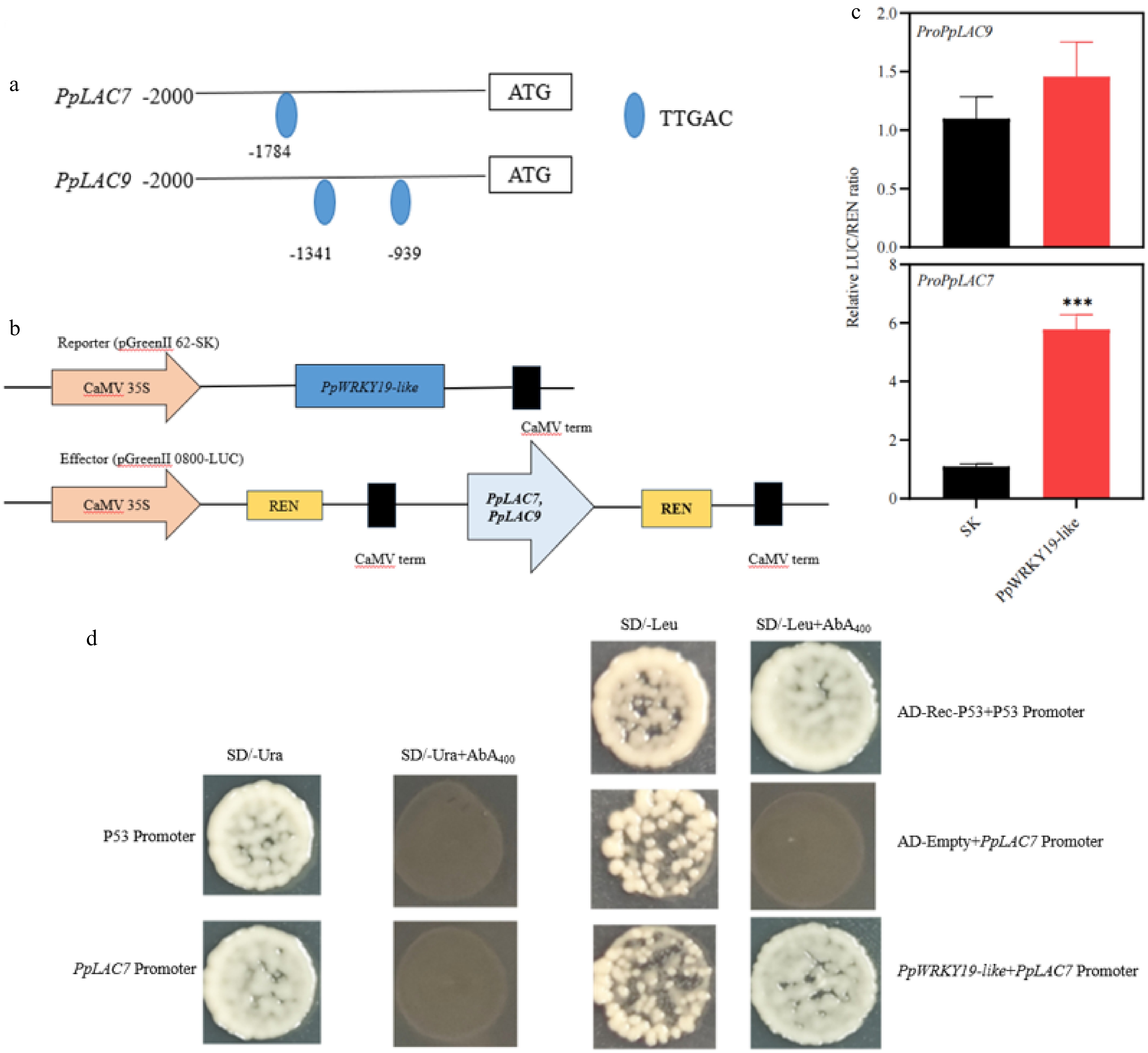
Figure 5.
PpWRKY19-like binds to the PpLAC7 promoter. (a) Binding sites in PpLAC7 and the PpLAC9 promoter. (b) Reporter and effector vectors applied in the dual luciferase assay. (c) The fluorescence ratio of LUC/REN for the empty vector (SK) combined with the promoter, standardized to 1. (d) Examination of the interaction between PpWRKY19-like and the PpLAC7 promoter using the Y1H assay. Autoactivation of the PpLAC7 promoter was assessed on SD medium without Ura, supplemented with 400 ng mL−1 Aureobasidin A (SD/−Ura+AbA400). The interaction was evaluated on SD medium lacking Leu with 400 ng mL−1 AbA (SD/−Leu+AbA400). Positive control: p53 and its promoter; negative control: the AD empty vector + PpLAC7 promoter. Error bars represent the mean ± SE from three replicates. * indicates significant differences between the SK (control) and the PpWRKY19-like (treatment) based on Student’s t-tests (* p < 0.05, ** p < 0.01, *** p < 0.001).
-
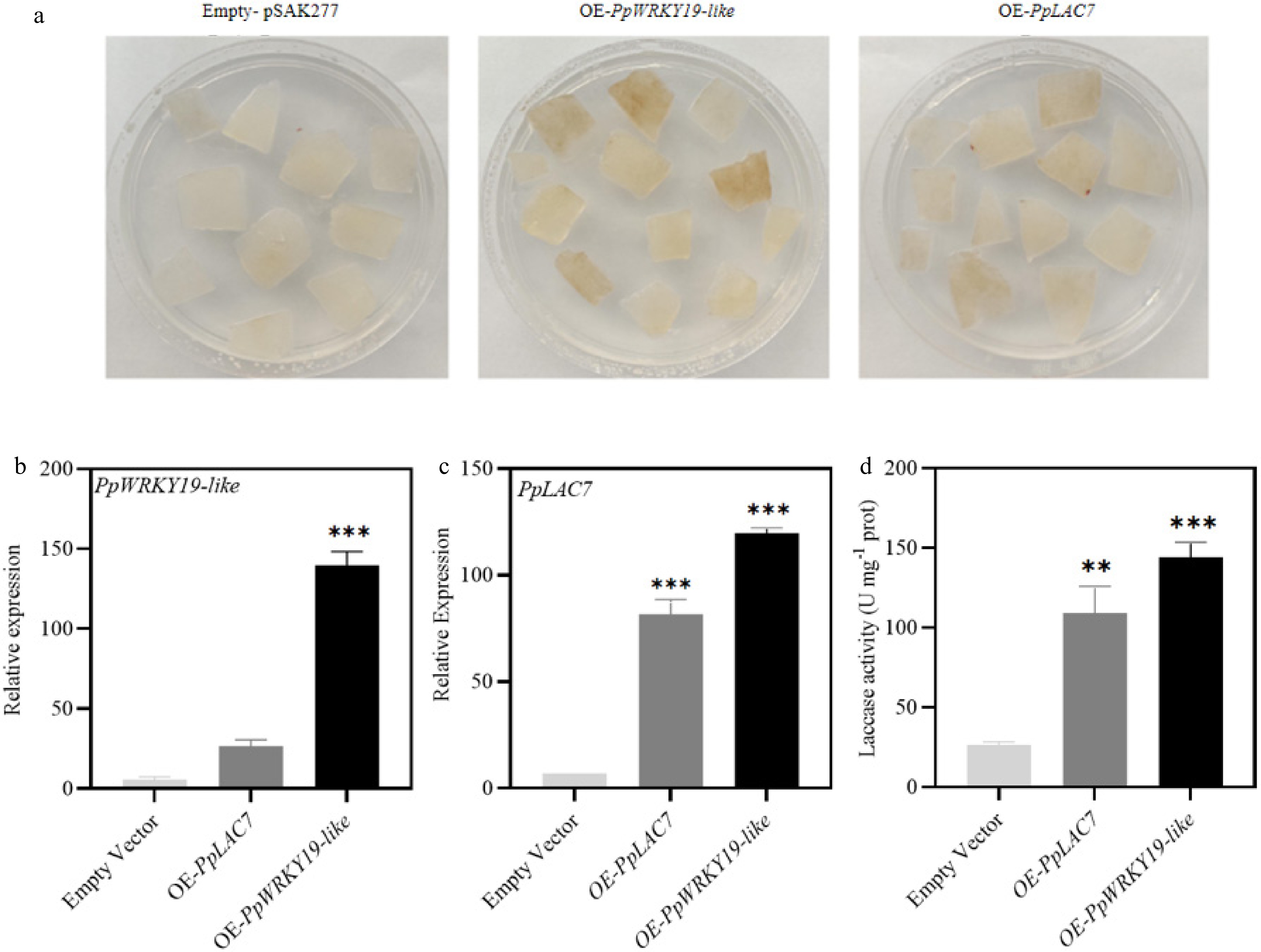
Figure 6.
Functional verification of PpWRKY19-like and PpLAC7 in peach flesh. (a) Peach flesh showing the incidence of browning in OE-PpWRKY19-like and OE-PpLAC7 samples after three days of infiltration. Relative expression of (b) PpWRKY19-like, (c) PpLAC7, and (d) LAC activity in OE-PpWRKY19-like and OE-PpLAC7 compared with the empty vector (pSAK277). Error bars represent the mean ± SE from three replicates. * indicates significant differences between the control (empty vector) and treatments (OE-PpLAC7 and OE-PpWRKY19-like) based on Student’s t-tests (* p < 0.05, ** p < 0.01, *** p < 0.001).
-
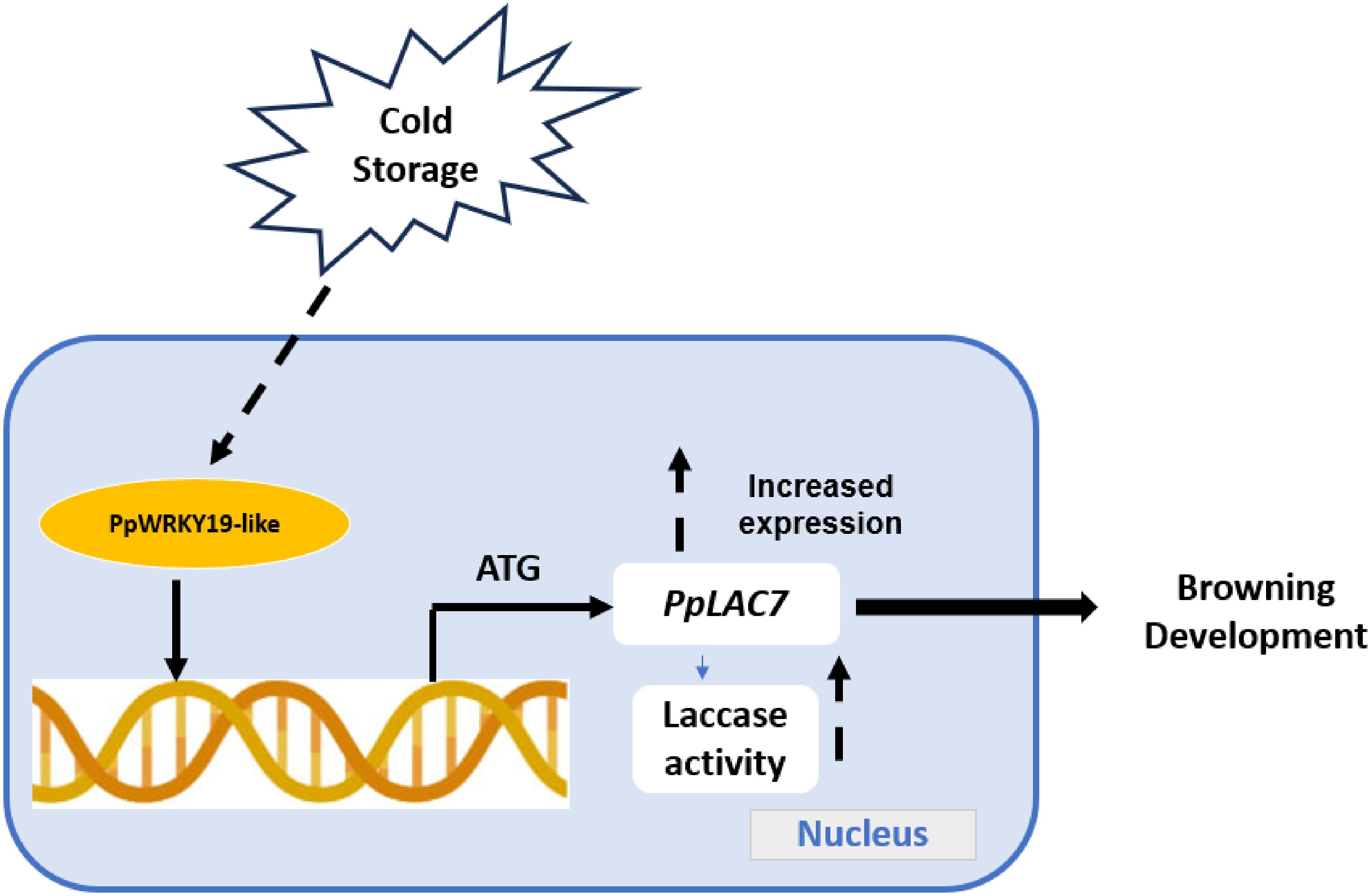
Figure 7.
A proposed model of how PpWRKY19-like regulates the expression of PpLAC7 to promote the development of browning in peaches during cold storage.
Figures
(7)
Tables
(0)