-
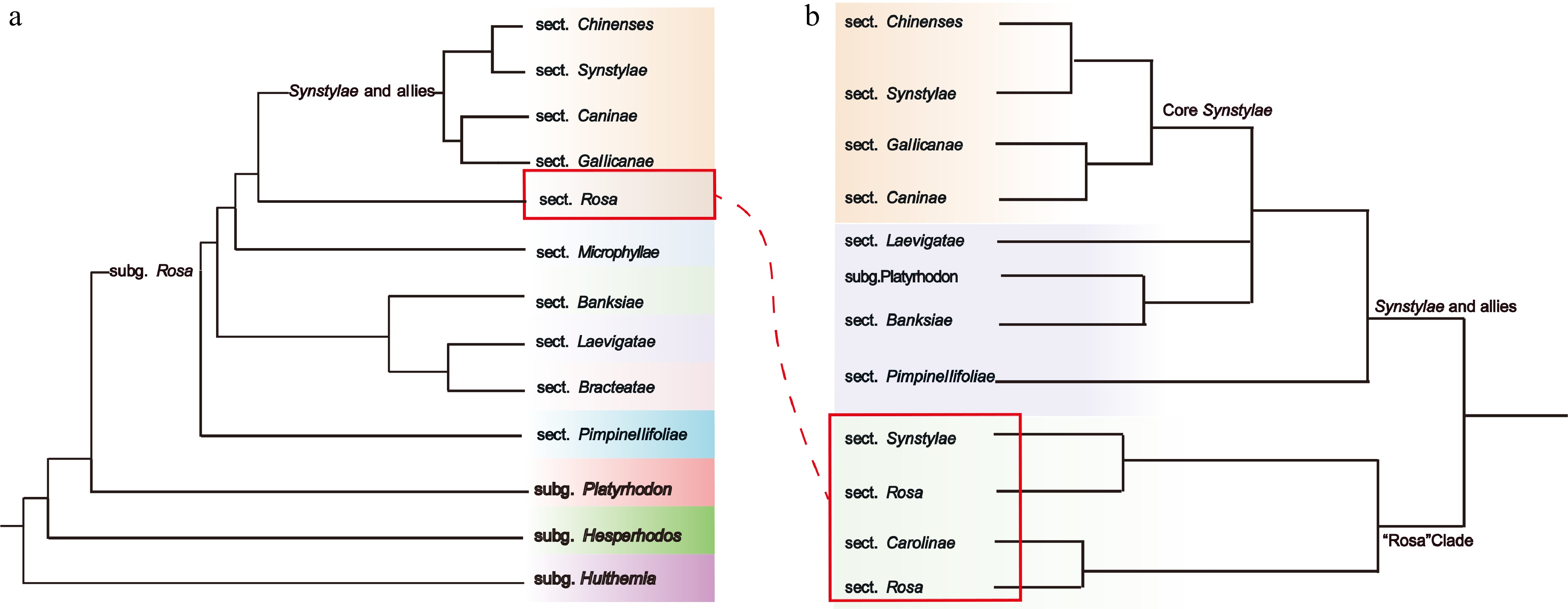
Figure 1.
Simplified nuclear and plastid phylogenies of major lineages in the genus Rosa.
-
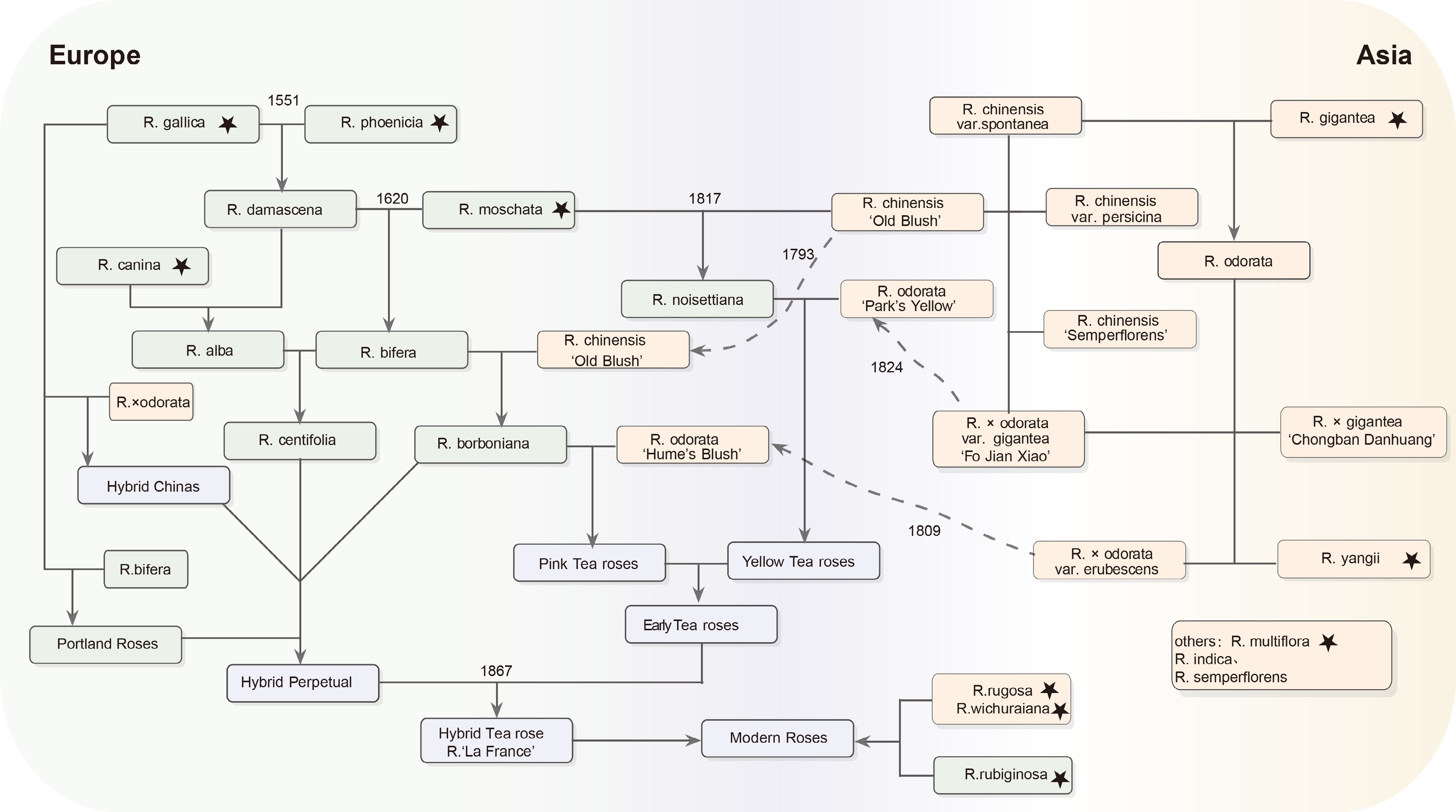
Figure 2.
Domestication and breeding history of modern roses.
-
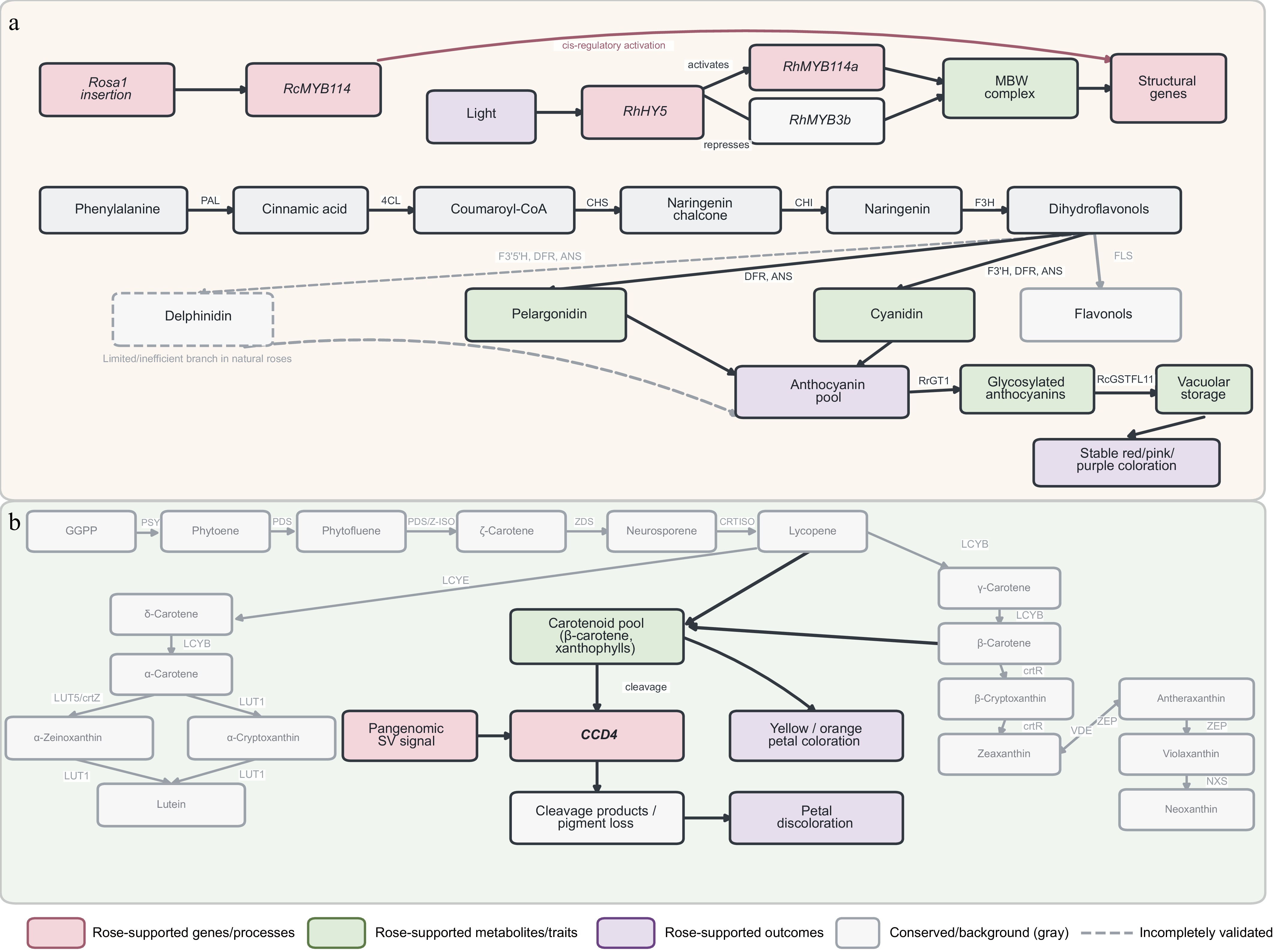
Figure 3.
Major pathways and regulatory mechanisms of rose petal pigmentation.
-
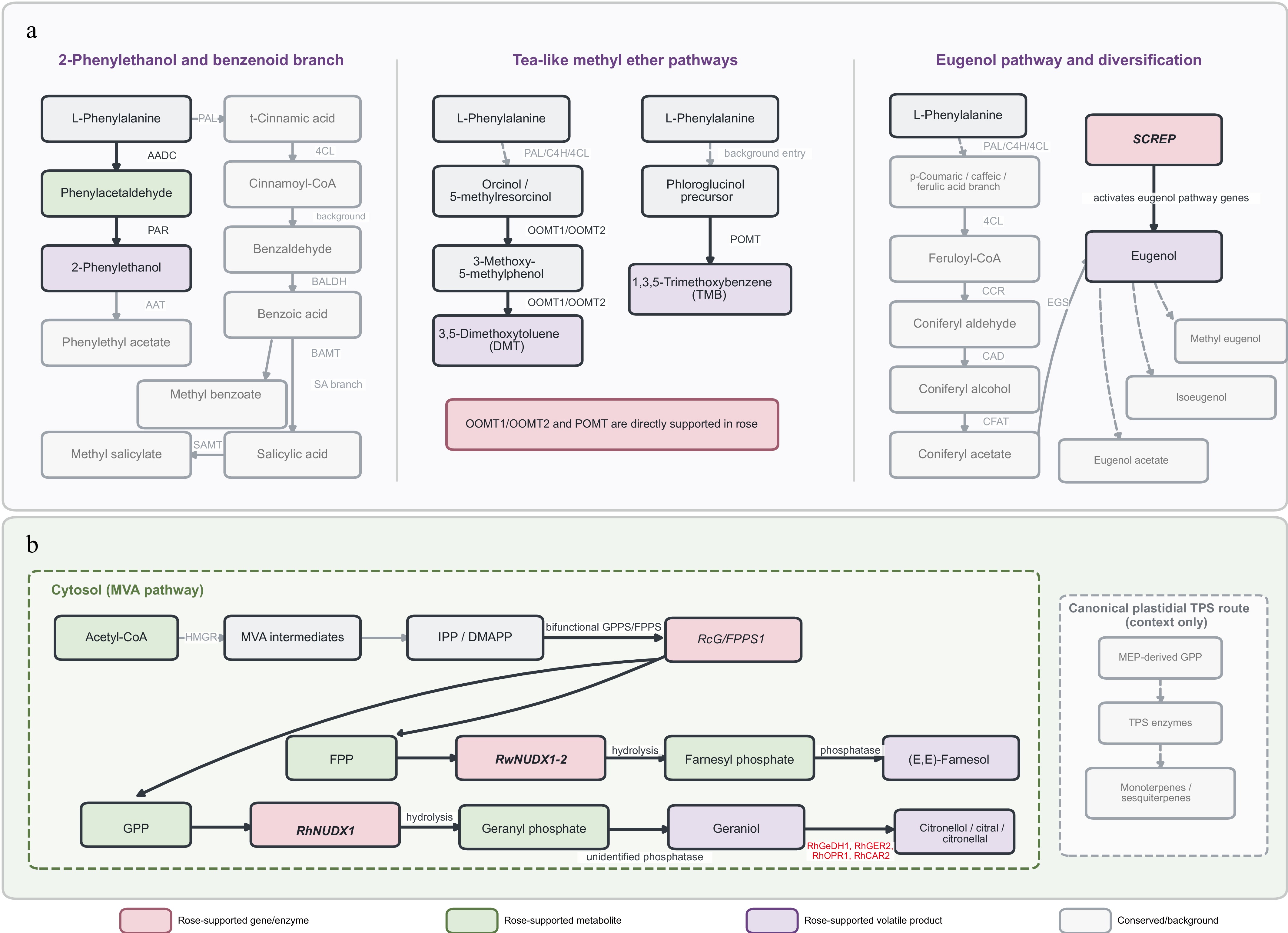
Figure 4.
Major biosynthetic pathways of rose floral scent.
-
Species/accession Ploidy Genome assembly BUSCO completeness Ref. Rosa multiflora Diploid (2x) Draft scaffold-level genome 88.40% [81] R. chinensis 'Old Blush' Diploid (2x) Chromosome-level high-quality genome 93.50% [7] R. chinensis 'Old Blush' (HapOB) Doubled haploid (2x) Chromosome-level reference genome 95.00% [8] R. rugosa Diploid (2x) Chromosome-level high-quality genome 93.20% [59] R. chinensis 'Chilong Hanzhu' Diploid (2x) Haplotype-resolved chromosome-level genome 98.40% [82] R. sterilis Diploid (2x) Haplotype-resolved chromosome-level genome 98.60% [84] R. roxburghii Diploid (2x) Chromosome-level genome assemblies 98.3%; 91.7% [9,84] R. hybrida 'Samantha' Tetraploid (4x) Haplotype-resolved chromosome-level genome 98.70% [11] R. laevigata Diploid (2x) Chromosome-level high-quality genome 98.90% [83] R. hugonis Diploid (2x) Chromosome-level high-quality genome 98.60% [10] R. persica Diploid (2x) Telomere-to-telomere, phased and gap-free genome 98.90% [1] Table 1.
Representative genomic resources available for the genus Rosa.
-
Trait Gene/locus or module Main function or evidence Ref. Flower color Rosa1–RcMYB114 A transposable element-like insertion upstream of RcMYB114 alters its transcription and promotes red petal coloration. [100] Flower color RhHY5–RhMYB114a–RhMYB3b A light-responsive module that balances positive and negative regulation of anthocyanin biosynthesis. [101] Flower color RrGT1; RcMYB75–RcGSTFL11 RrGT1 promotes anthocyanin glycosylation and accumulation, whereas the RcMYB75–RcGSTFL11 module coordinates anthocyanin biosynthesis and transport in rose. [103,105] Flower color CCD4 homolog and associated structural variation Pangenomic structural variation links carotenoid cleavage to petal discoloration. [87] Floral architecture RhAG Reduced expression and low-temperature-associated DNA hypermethylation weaken C-class function and increase petal number. [109] Floral architecture RcAP2; RhCUC3 Regulate stamen-derived petal number and floral organ identity, including temperature-responsive petaloidy. [110,111] Floral architecture RhMYB17–RhAP2/RhAP2L Promotes stamen-to-petal transformation under low-temperature conditions. [112] Floral architecture RcAG2; RcFUL Associated with homeotic floral organ conversion and flower-shape change in 'Viridiflora'. [113,114] Petal size RhRR1–RhSCL28 A cytokinin-responsive module that promotes cell division and petal enlargement. [115] Recurrent flowering KSN/TFL1-related flowering control A central flowering-repressor pathway and associated flowering-time loci that support early selection for recurrent flowering. [7,136] Floral scent AADC/PAR Sequential conversion of L-phenylalanine to phenylacetaldehyde and then to
2-phenylethanol.[121] Floral scent OOMT1/OOMT2; POMT Biosynthesis of 3,5-dimethoxytoluene and 1,3,5-trimethoxybenzene associated with tea-like scent. [122,123] Floral scent RcG/FPPS1–RhNUDX1 Cytosolic MVA-derived GPP supply and non-canonical geraniol biosynthesis. [3,124] Floral scent RwNUDX1-2 Conversion of FPP to farnesyl phosphate supports (E,E)-farnesol biosynthesis. [125] Floral scent SCREP A de novo-originated gene that regulates eugenol biosynthesis and rose scent diversification. [126] Table 2.
Representative genes, loci, and regulatory modules associated with major ornamental traits in roses.
-
Disease Gene/locus or QTL Main function or evidence Ref. Black spot Rdr1 A major chromosome 1 resistance locus containing a complex cluster of TIR–NBS–LRR genes. [137] Black spot Rdr2–Rdr4 Additional major resistance loci identified in diverse diploid and tetraploid genetic backgrounds. [93,138] Black spot Resistance QTLs Multi-parental mapping detected resistance regions on several linkage groups, including QTLs overlapping known Rdr loci. [139] Powdery mildew Rpp1 A dominant race-specific resistance gene; molecular mapping and SCAR markers support marker-assisted selection. [140,141] Powdery mildew Resistance QTLs Pathotype- and environment-dependent QTLs have been identified in diploid and tetraploid rose populations. [142−148] Powdery mildew RhMLO1/RhMLO2 Susceptibility genes required for infection; silencing RhMLO1 enhances resistance to powdery mildew. [149−151] Table 3.
Representative genes, loci, and QTLs associated with black spot and powdery mildew resistance in roses.
Figures
(4)
Tables
(3)