-
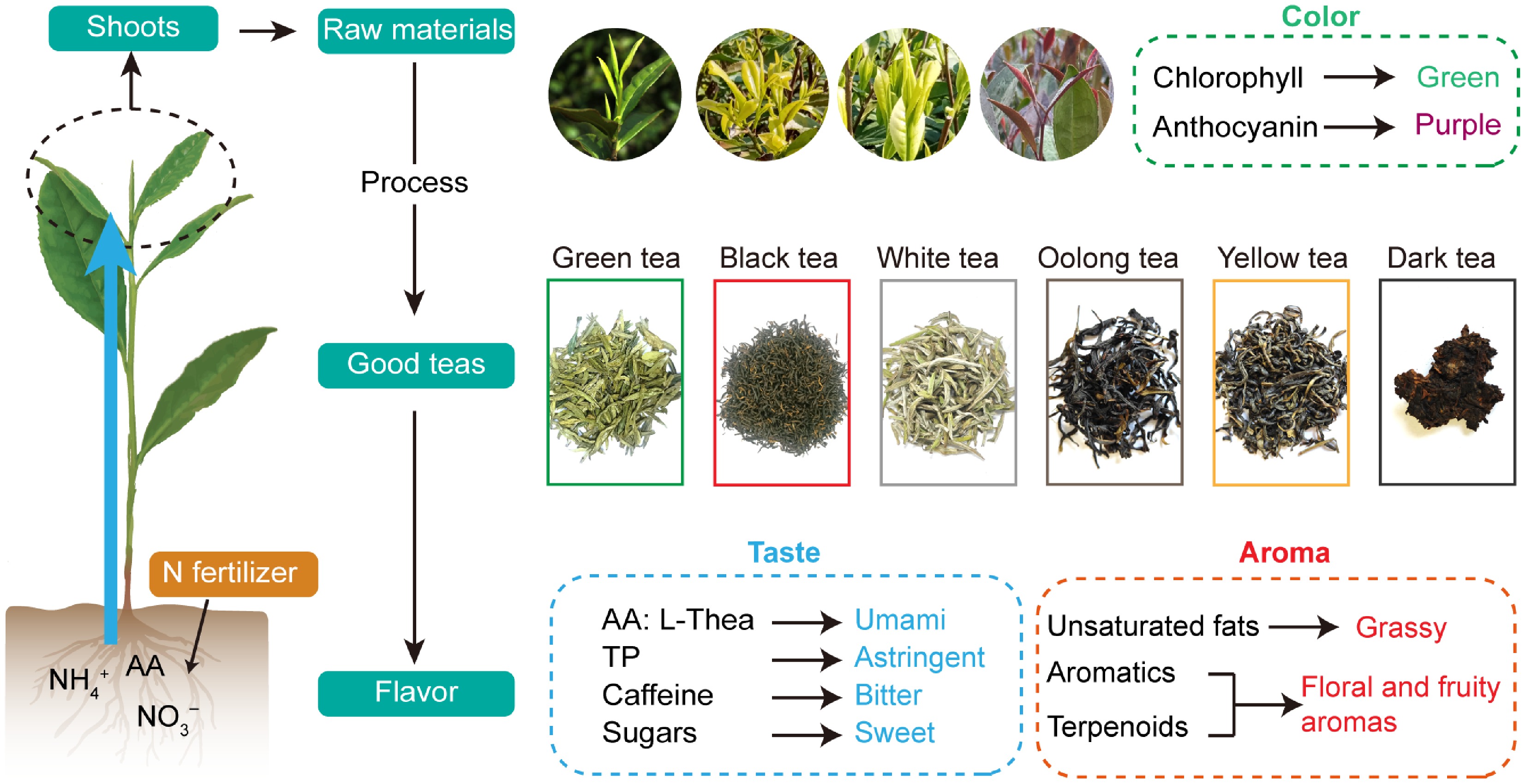
Figure 1.
N application levels and forms regulate the secondary metabolites in fresh tea shoots and dictate tea sensory quality. N application levels and forms (e.g., NH4+, NO3−, amino acids) directly shape the metabolic profile of new tea plant shoots, with the balance of key metabolites determining their processing suitability for specific tea types. These metabolites collectively define tea flavor: theanine imparts umami and sweetness, catechins contribute bitterness and astringency, caffeine enhances a bitter aftertaste, and diverse volatile compounds form a complex aroma profile. Abbreviations: AA, amino acids; TP, tea polyphenols.
-
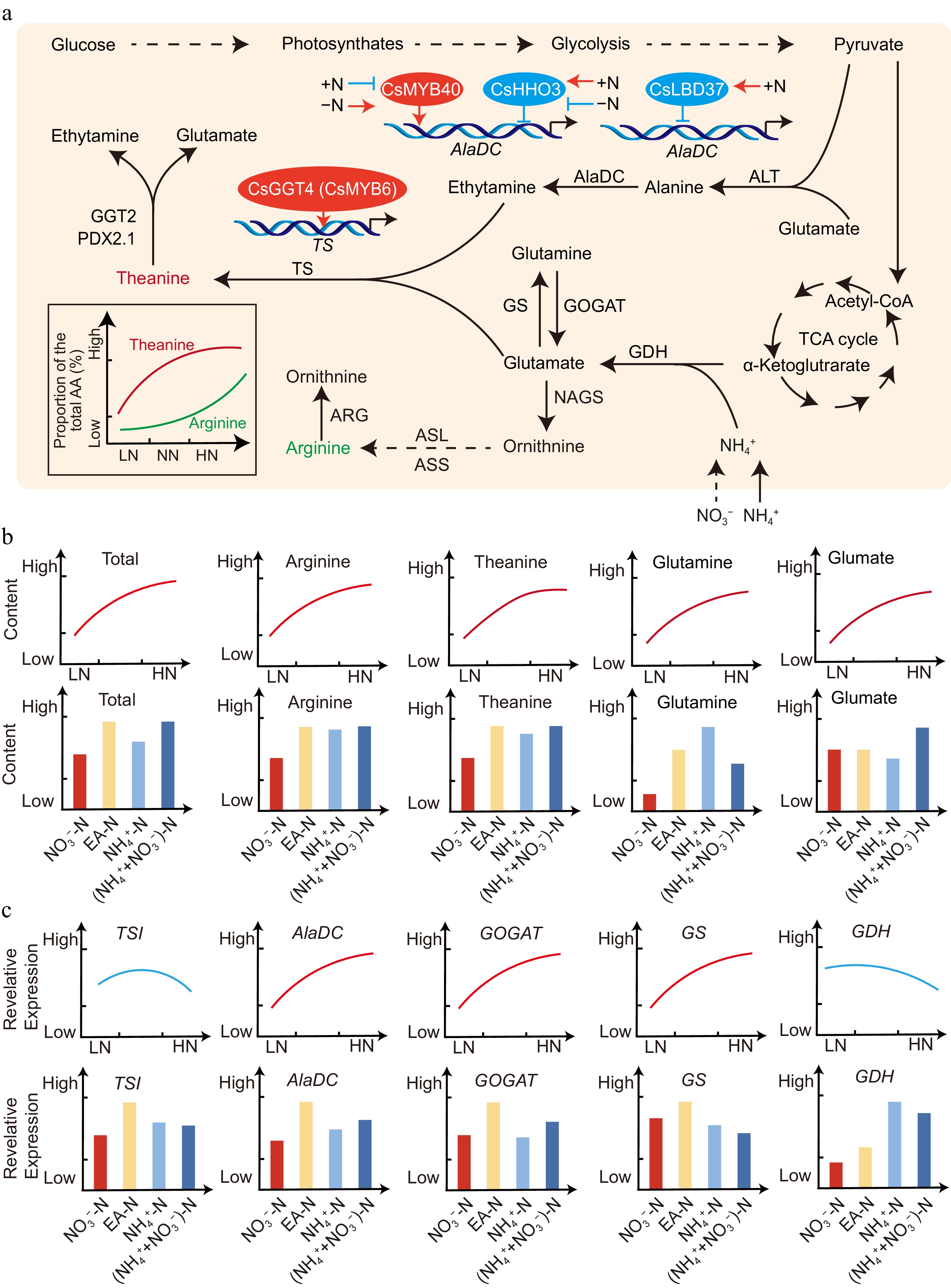
Figure 2.
N regulates amino acid biosynthesis and accumulation in tea plants. Different N levels, and forms, regulate the biosynthesis and subsequent accumulation of amino acids. The proportion of arginine to total amino acids in tea increased significantly with increasing N application, while theanine decreased. In addition, theanine accumulation is regulated at the transcriptional level. CsHHO3 and CsLBD37 inhibited CsAlaDC expression under high N, and CsMYB40 induced CsAlaDC expression under low N[16−19]. (a) Amino acid content under different N levels and forms; (b) relative expression under different N levels and forms, and (c) N regulates amino acids accumulation. Abbreviations: HN, high N level; LN, low N level; NN, normal N level.
-
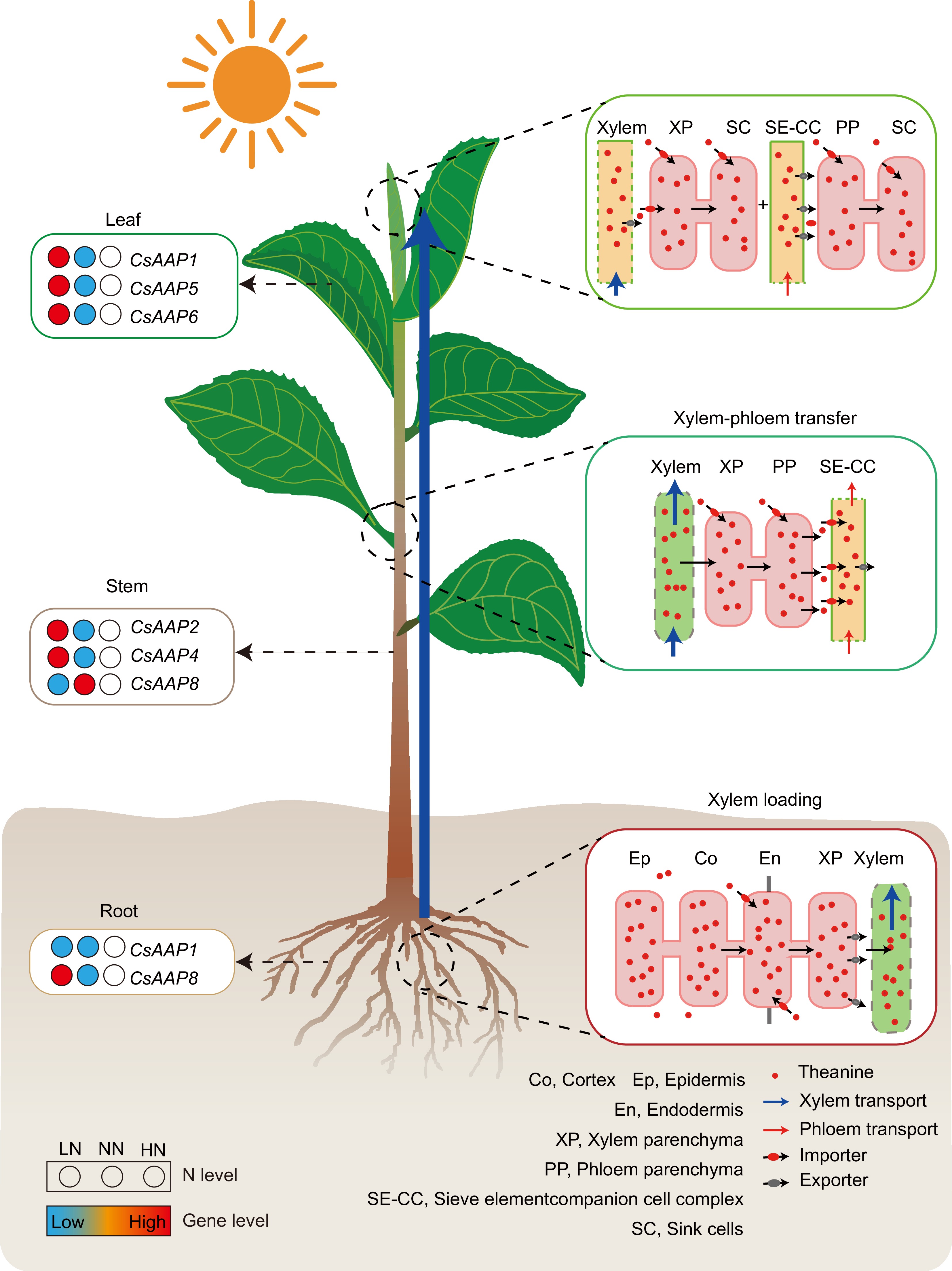
Figure 3.
N regulates theanine transport. The theanine transport pathway in tea plants proceeds sequentially through xylem loading, xylem-to-phloem transfer, and phloem unloading into the apoplasmic space adjacent to the sieve element-companion cell complex, followed by final delivery to new shoots. The expression profiles of specific amino acid transporters (CsAAPs) are annotated for each cell type using a color gradient (blue: low expression; red: high expression), highlighting their regulatory roles in mediating these xylem loading, xylem-to-phloem transfer, and phloem unloading steps under varying N levels[22,32,33]. Abbreviations: HN, high N level; LN, low N level; NN, normal N level.
-
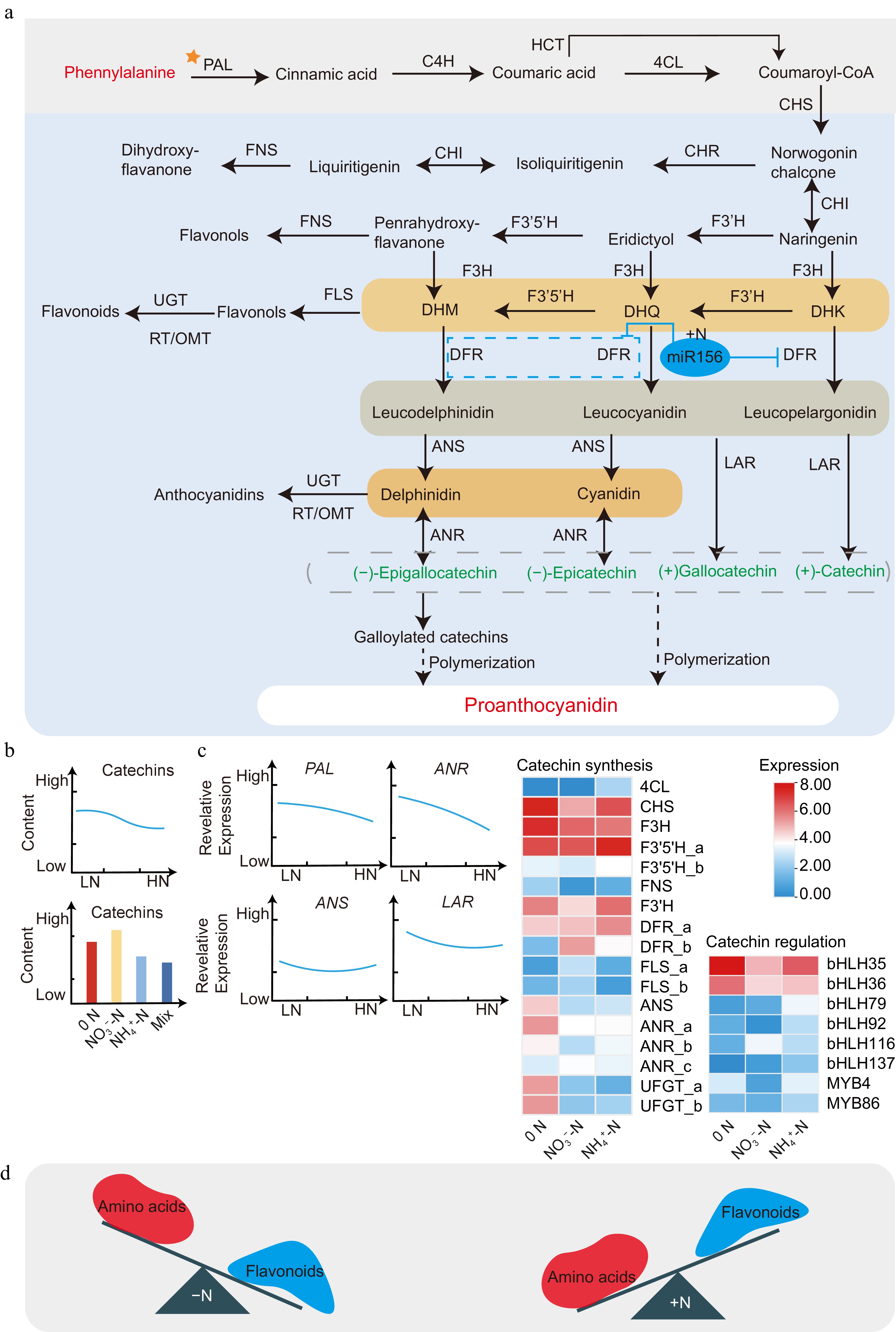
Figure 4.
N regulates catechins biosynthesis and accumulation in tea shoots. The deficiency of N and the presence of NO3−−N stimulate the biosynthesis and accumulation of catechins. Flavonoids and amino acids accumulate antagonistically in tea plants: low N promotes the accumulation of flavonoids and inhibits the accumulation of amino acids; high N promotes the accumulation of amino acids and inhibits the accumulation of flavonoids. (a) Catechins biosynthetic pathway; (b) catechins content under different N levels and forms; (c) relative expression under different N levels and forms; (d) N regulates flavonoids and amino acid accumulation[32,40,46−48]. Abbreviations: Phenylalanine ammonia lyase (PAL), Cinnamic acid 4-hydroxylase (C4H), 4-coumarate: CoA ligase (4CL), Chalcone synthase (CHS), Chalcone reductase (CHR), Chalcone isomerase (CHI), Flavone synthase (FNS), Flavonoid 8-hydroxylase (F8H), Flavanone 4-reductase (FNR), Flavanone 3-hydroxylase (F3H), Flavanone 3’-hydroxylase (F3’H), Flavanone 3’,5’-hydroxylase (F3’5’H), Dihydrokaempferol (DHK), Dihydroquercetin (DHQ), Dihydromyricetin (DHM), Flavonol synthase (FLS), Dihydroflavonol 4-reductase (DFR), Anthocyanidin synthase (ANS), UDP-glucose flavonoid 3-O-glucosyltransferase (UFGT), O-methyl transferases (OMT), Leucoanthocyanidin reductase (LAR), Anthocyanidin reductase (ANR). HN, high N level; LN, low N level; NN, normal N level.
-
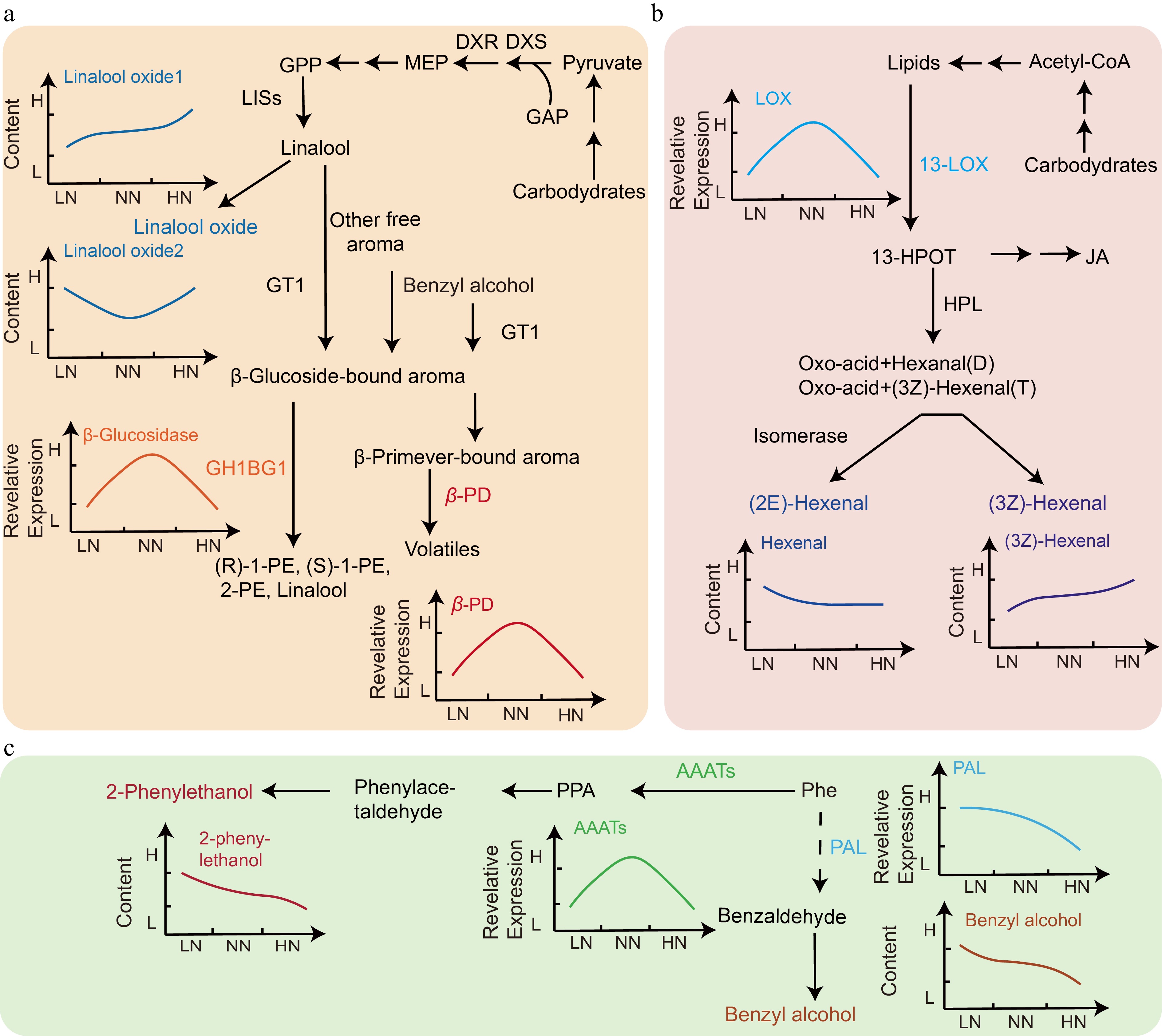
Figure 5.
N regulates the biosynthesis and accumulation of VOCs in tea plants and their effects on tea aroma. N deficiency or excessive N inhibits the accumulation of tea aroma compounds. (a) MEP pathway; (b) LOX pathway; (c) L-Phe pathway; (d) N forms and levels regulate VOCs accumulation in tea plants and their effects on tea aroma. In (d), the up and down arrows represent increases and decreases in aroma compound contents, respectively[32,78−80]. Abbreviations: GPP, geranyl diphosphate; LISs, linalool synthases; GT, glycosyltransferase; β-PD, β-Primeverosidase; PE, phenylethanol; LOX, lipoxygenase; HPL, hydroperoxide lyase; AAATs, aromatic amino acid aminotransferases; PPA, phenylpyruvic acid. HN, high N level; LN, low N level; NN, normal N level.
Figures
(5)
Tables
(0)