-
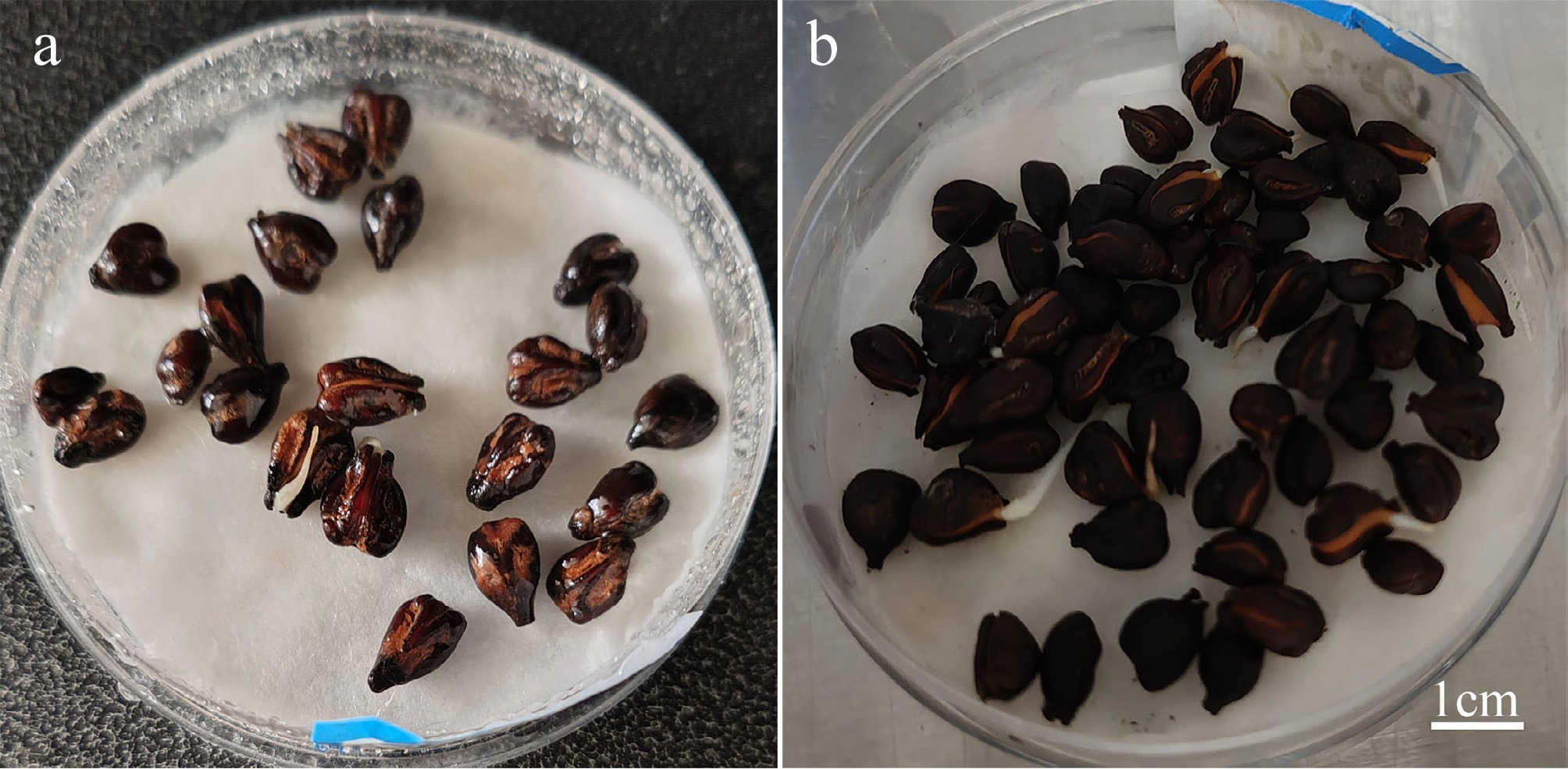
Figure 1.
Morphological stages of radicle emergence during germination of grape hybrid seeds. (a) Initial radicle protrusion stage. (b) Optimal sowing stage. Scale bars: 1 cm.
-
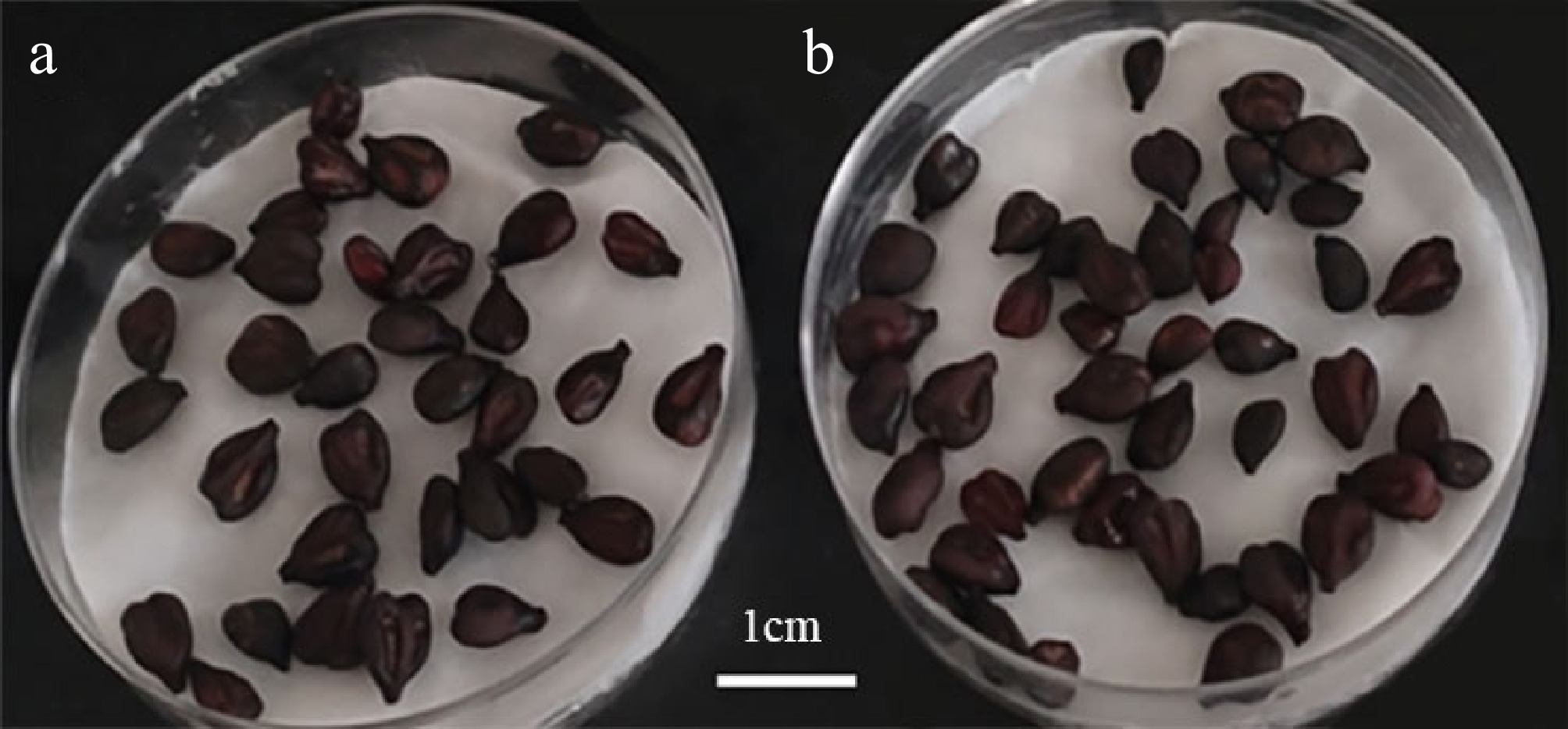
Figure 2.
Seed germination morphology of 'Shine Muscat' × 'Romantic Beauty' under different GA3 concentrations. (a) 0.1 g/L GA3 group. (b) 0.3 g/L GA3 group. Scale bars: 1 cm.
-
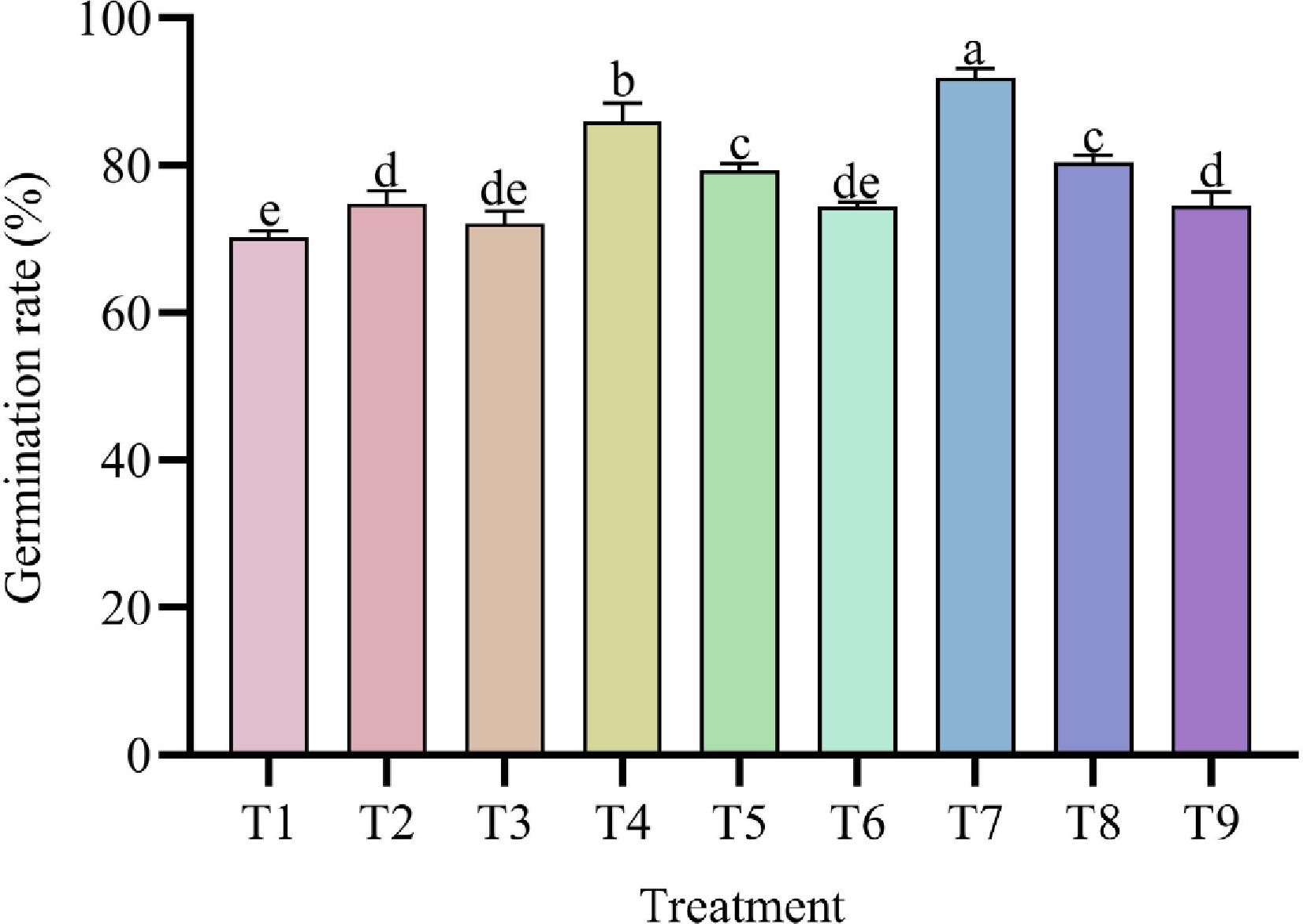
Figure 3.
Effects of different orthogonal treatments on germination rate of self-pollinated 'Shine Muscat' seeds. Different lowercase letters above columns indicate significant differences among treatments (p < 0.05). Data are mean ± SD, n = 3.
-
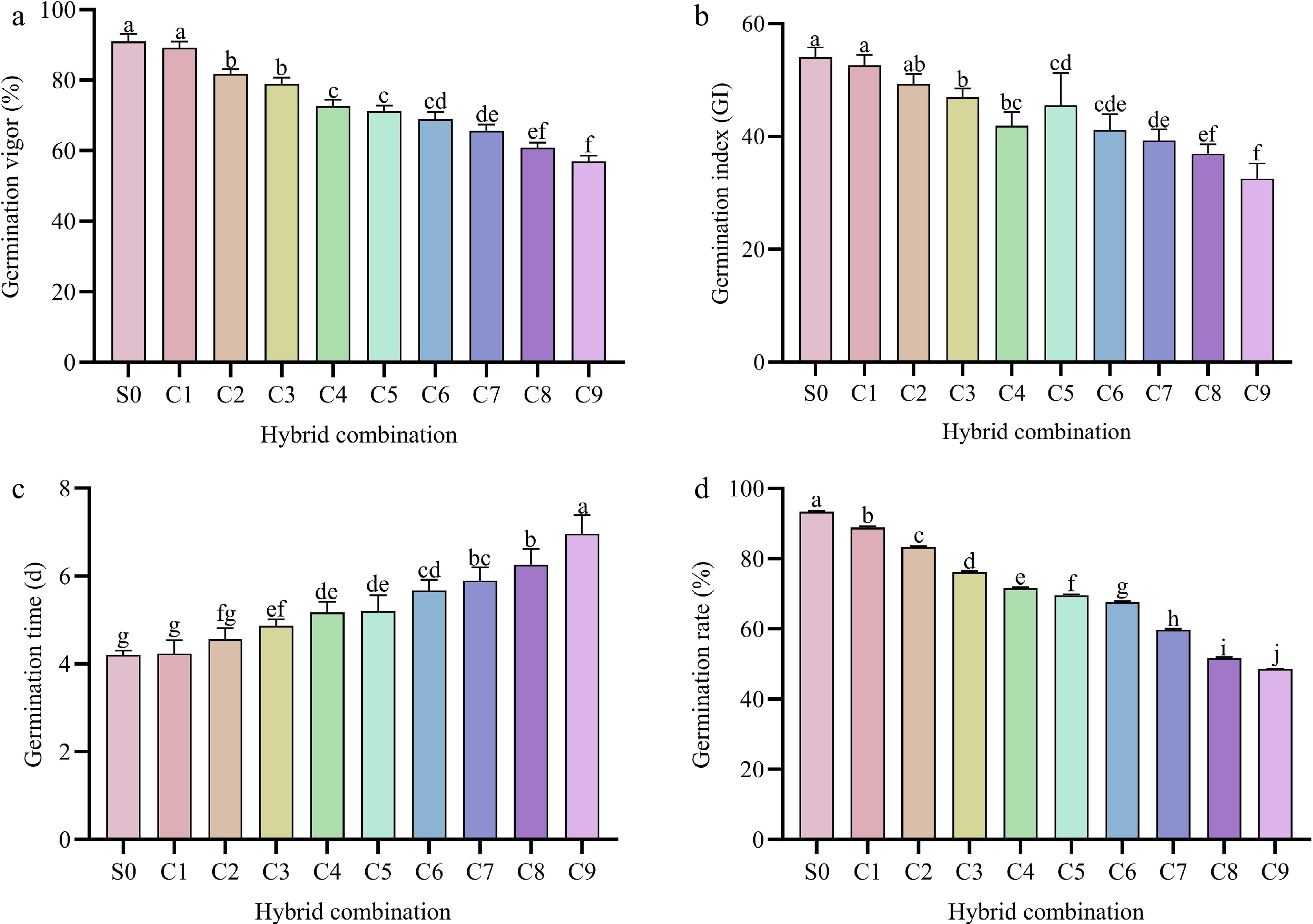
Figure 4.
Effects of paternal genotype on germination characteristics of 'Shine Muscat' hybrid seeds. (a) Germination vigor. (b) Final germination rate. (c) Germination index. (d) Mean germination time. S0 represents the self-pollinated control; C1–C9 represent different hybrid combinations. Different lowercase letters indicate significant differences among combinations. Lowercase letters denote significant differences across all entries including the self-pollinated S0 control (p < 0.05); n = 3.
-
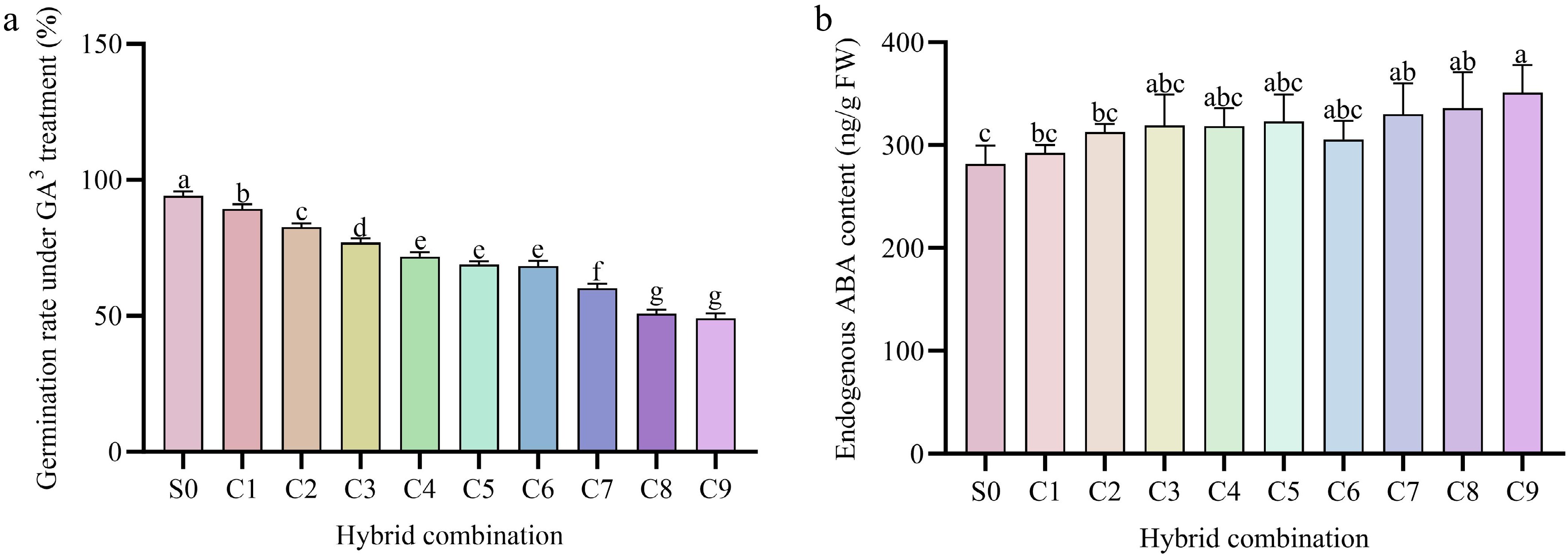
Figure 5.
Multi-stage average ABA content across germination and its correlation with final germination rate. (a) Multi-stage average endogenous ABA content of different hybrid combinations, calculated from five consecutive sampling stages (dry seed, 24 h soaking, 48 h incubation, initial radicle protrusion, optimal sowing stage). Each group includes three biological replicates (50 seeds pooled per replicate) and three technical replicates. Different lowercase letters indicate significant differences (p < 0.05); (b) Pearson correlation between multi-stage average ABA content and final germination rate (n = 10, r = −0.892, p < 0.001).
-
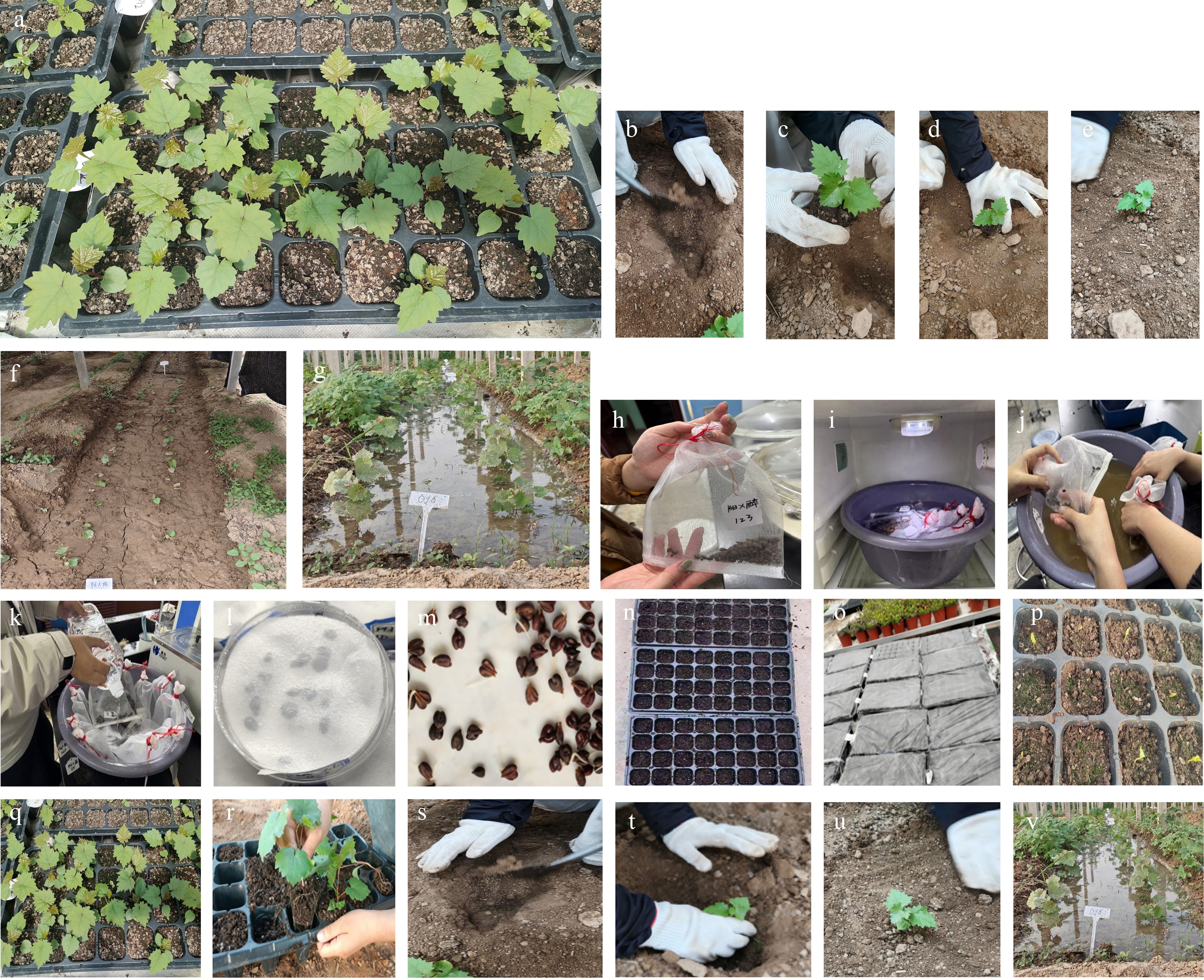
Figure 6.
Integrated full-cycle standardized technical system for seedling production of 'Shine Muscat' hybrid grape seeds: (a) Selection of qualified seedlings. (b) Seedling lifting with intact root balls. (c) Hole digging. (d) Field planting. (e) Soil backfilling. (f) Root watering immediately after transplanting. (g) Post-transplant moisture management. (h)–(m) Seed treatment and germination induction stage. (n)–(p) Sowing and seedling raising stage. (q)–(v) Seedling transplanting and field management stage.
-
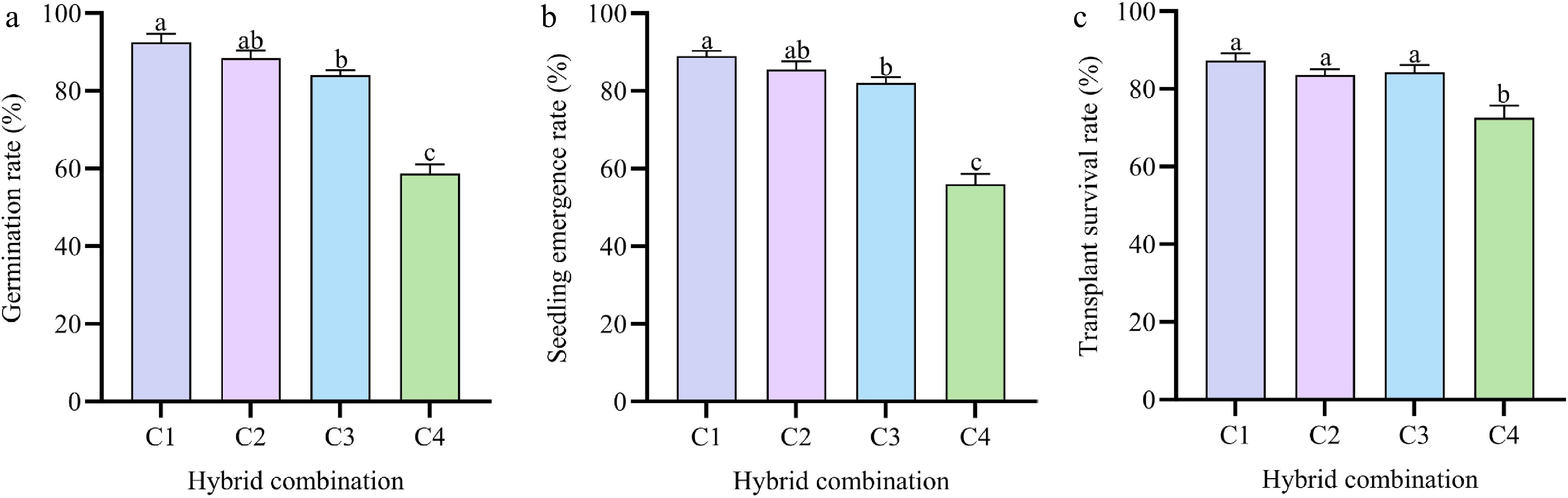
Figure 7.
Repeatability validation of key seedling establishment metrics in the standardized technical system across genetically diverse grape hybrid combinations. (a) Germination rate. (b) Seedling emergence rate. (c) Transplant survival rate. C1–C4 represent hybrid combinations with different germination vigor. Different lowercase letters indicate significant differences among combinations (p < 0.05), n = 3.
-
Hybrid combination T2 treatment T4 treatment T7 treatment C1 76.4 ± 3.1 b 82.7 ± 2.8 b 88.8 ± 2.4 a C2 70.2 ± 2.9 b 78.5 ± 3.2 b 85.3 ± 2.7 a C3 68.7 ± 3.3 b 75.4 ± 2.9 b 82.6 ± 3.1 a C4 58.3 ± 2.8 b 64.2 ± 3.0 b 70.5 ± 2.6 a C5 55.7 ± 3.2 b 61.8 ± 2.7 b 68.3 ± 2.9 a C6 53.2 ± 2.7 b 59.4 ± 3.1 b 65.7 ± 3.0 a C7 51.6 ± 3.0 b 57.3 ± 2.8 b 63.2 ± 2.7 a C8 49.8 ± 2.9 b 55.2 ± 3.2 b 60.4 ± 2.8 a C9 40.2 ± 2.6 b 45.7 ± 2.9 b 48.5 ± 2.8 a Different lowercase letters in the same row indicate significant differences among treatments (p < 0.05). Data are mean ± SD, n = 3. Table 1.
Germination rate of different hybrid combinations under the top three treatments from the orthogonal experiment (%).
Figures
(7)
Tables
(1)