-
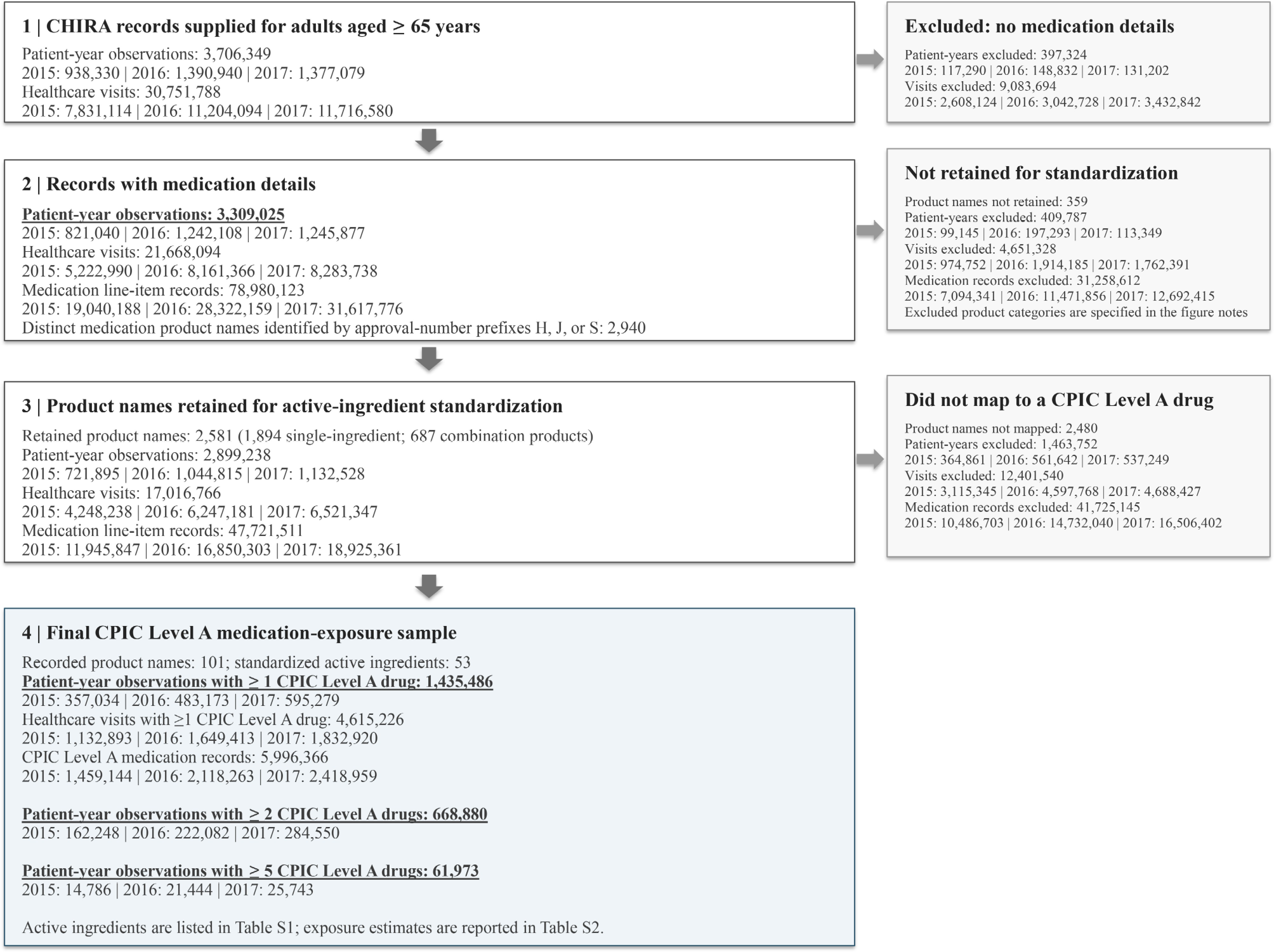
Figure 1.
Selection of patient-year observations and medication records from CHIRA. Notes: Medication products were identified using Chinese drug approval-number prefixes H (chemical medicines), J (imported drugs), and S (biopharmaceuticals). The 359 excluded distinct product names comprised topical or other locally applied preparations; vaccines and immunological products; blood- or tissue-derived products; diagnostic reagents; radiopharmaceutical diagnostic agents or labeling precursors; parenteral nutrition and nutritional-support preparations; infusion fluids, replacement fluids, or nutrient products; disinfectants; and entries whose medication identity could not be reliably determined. CHIRA was sampled each year independently; pooled counts represent patient-year observations, not unique individuals across years. Province was complete in the analytic sample, and no exact duplicate medication line-item records were identified. Product-name counts refer to distinct names, not claims.
-
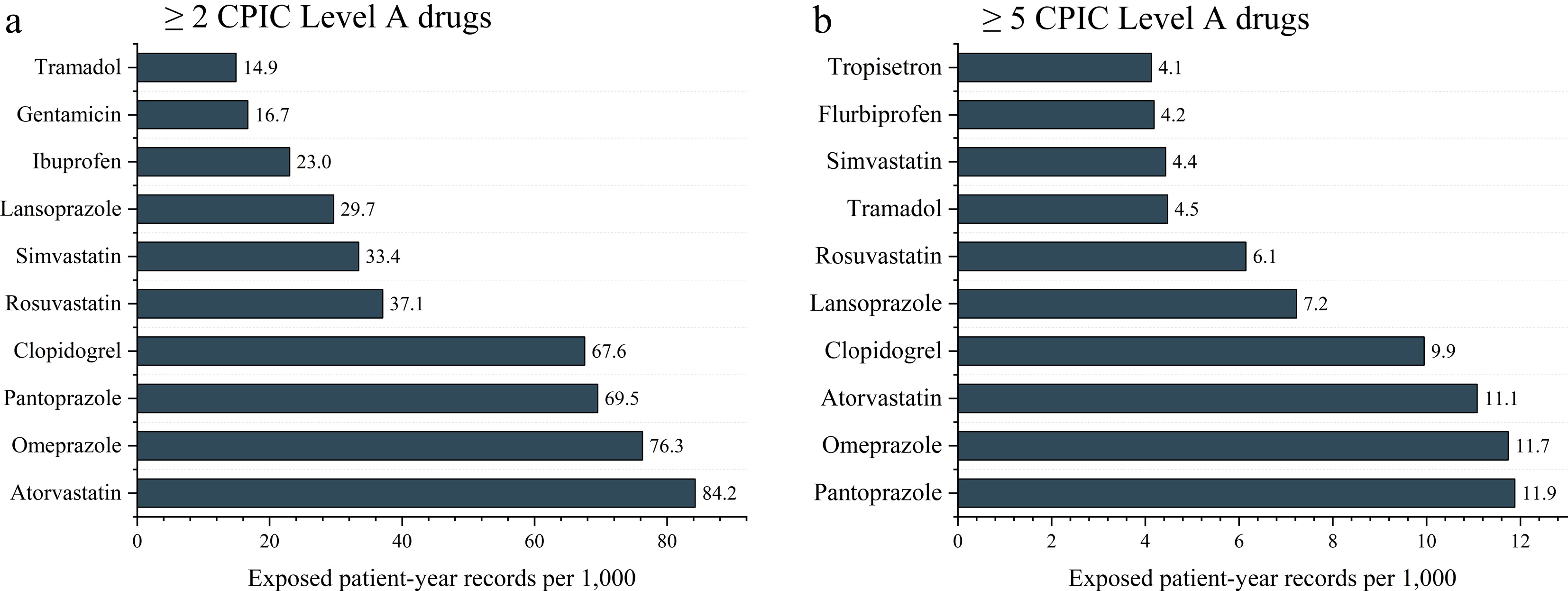
Figure 2.
Unweighted observed prevalence (per 1,000 older-adult patient-year records) of exposure to the ten most frequent CPIC Level A medications in the CHIRA samples. (a) ≥ 2-drug threshold. (b) ≥ 5-drug threshold. CPIC, Clinical Pharmacogenetics Implementation Consortium.
-
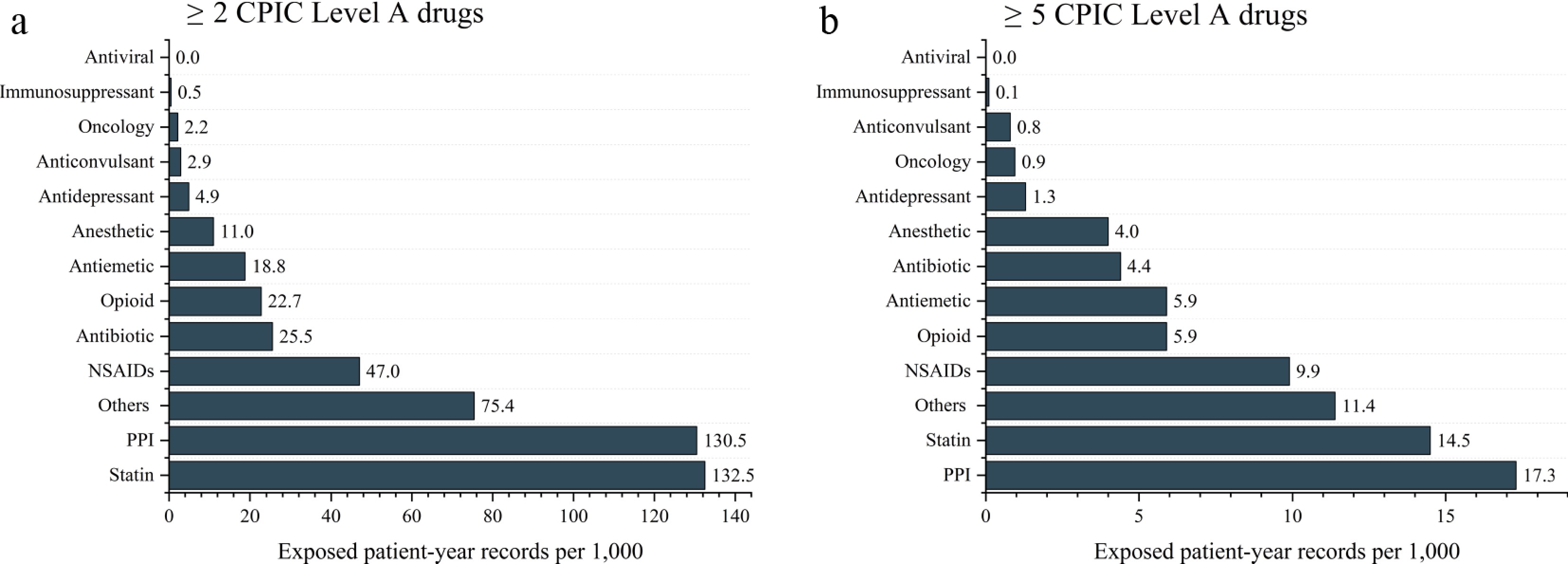
Figure 3.
Unweighted observed prevalence (per 1,000 older-adult patient-year records) of exposure to CPIC Level A medications, grouped by therapeutic class, derived from the CHIRA samples. (a) Results for the ≥ 2-drug threshold. (b) Results for the ≥ 5-drug threshold. The 'Others' category includes anticoagulants, antifungals, antileprotic drugs, antimalarial drugs, antiplatelet agents, antihypertensives, gout medications, and muscle relaxants. Abbreviations: CPIC, Clinical Pharmacogenetics Implementation Consortium; NSAID, non-steroidal anti-inflammatory drug; PPI, proton pump inhibitor.
-
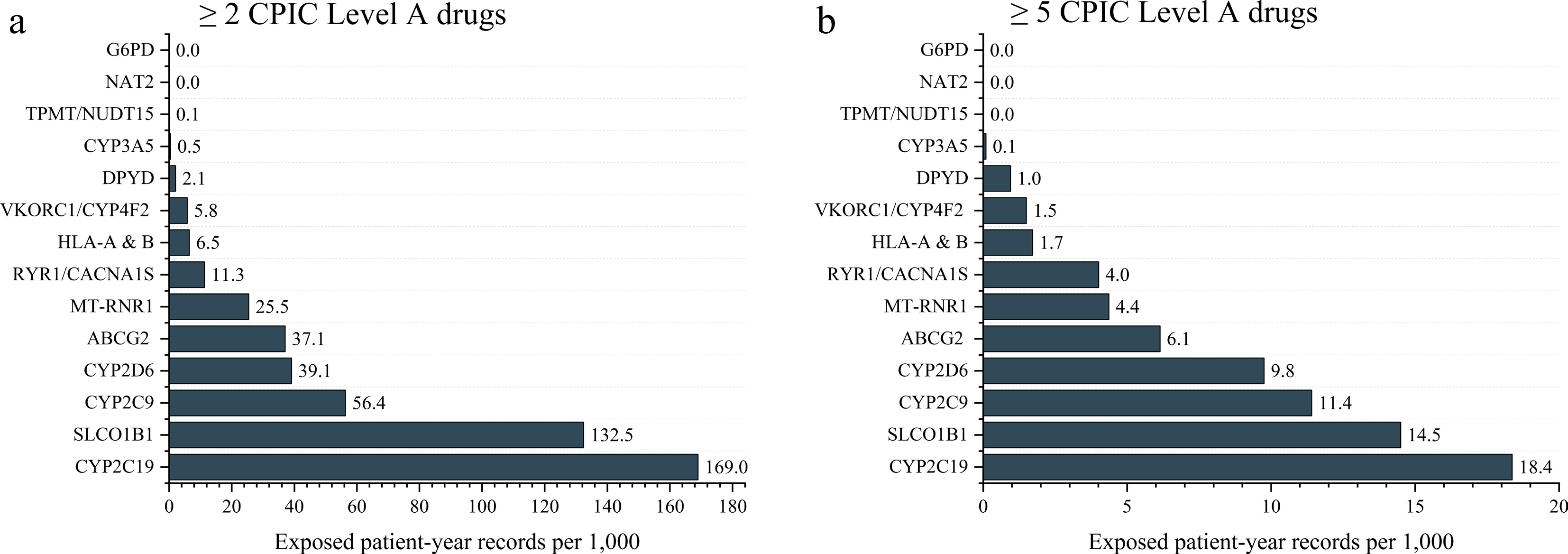
Figure 4.
Unweighted observed prevalence (per 1,000 older-adult patient-year records) of exposure to CPIC Level A medications, grouped by pharmacogene, from the CHIRA samples. (a) Results for the ≥ 2-drug threshold. (b) Results for the ≥ 5-drug threshold. Abbreviation: CPIC, Clinical Pharmacogenetics Implementation Consortium. Gene symbols follow the nomenclature standards of the Human Genome Organization Gene Nomenclature Committee.
-
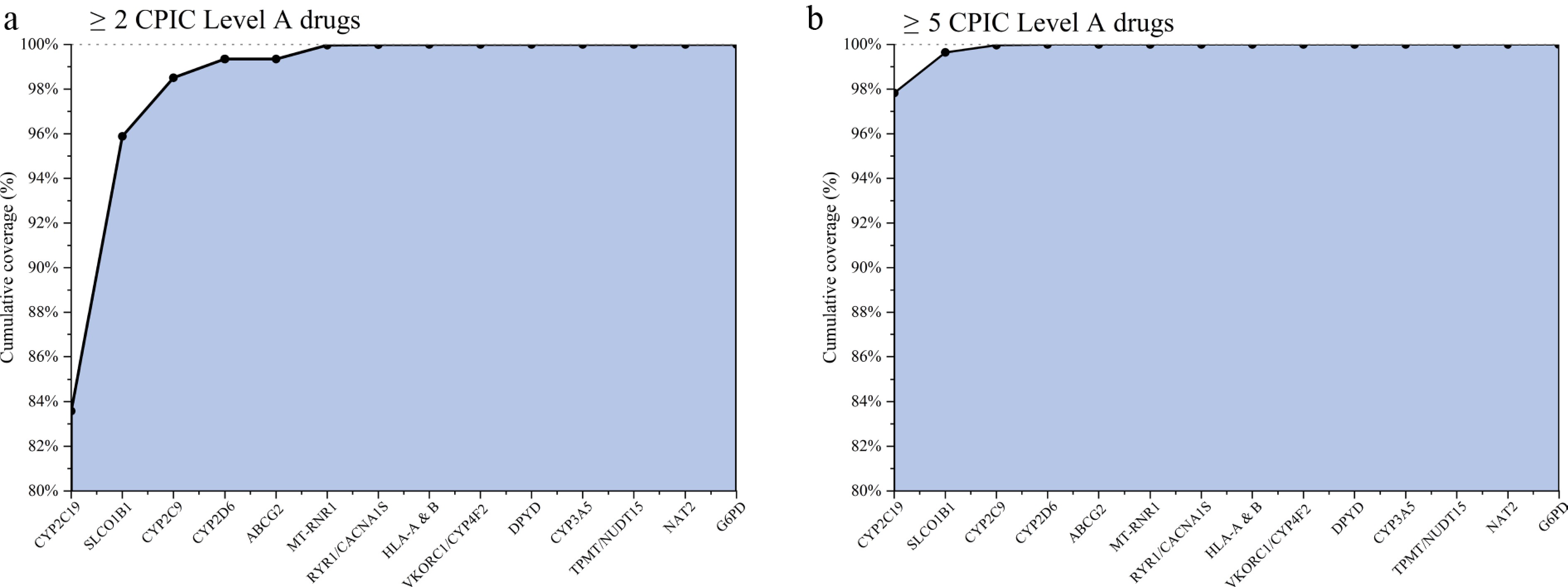
Figure 5.
Rank-ordered incremental pharmacogene coverage of annual multi-exposed patient-year records from the CHIRA samples. Pharmacogenes were added in descending order of exposure prevalence; this cross-sectional measurement does not reflect cumulative exposure over time. (a) Results for the ≥ 2-drug threshold. (b) Results for the ≥ 5-drug threshold. Gene symbols follow the nomenclature standards of the Human Genome Organization (HUGO) Gene Nomenclature Committee.
-
Model of test chargesb Charges Notes Overall charges (1) Single gene testing CYP2C19 (*2, *3, *17) CNY 400 × 1 + CNY 200 × (3–1) = CNY 800 3 loci CNY 2,800 (~US $ {\$} $ SLCO1B1 (c.521T>C, c.388A>G) CNY 400 × 1 + CNY 200 × (2–1) = CNY 600 2 loci CYP2C9 (*2, *3, *5, *6, *8, *11) CNY 400 × 1 + CNY 200 × (6–1) = CNY 1,400 6 loci (2) Multiple panel testing CYP2C19 (*2, *3, *17),
SLCO1B1 (c.521T>C, c.388A>G),
CYP2C9 (*2, *3, *5, *6, *8, *11)CNY 400 × 1 + CNY 200 × (11–1) = CNY 2,200 11 loci, up to a maximum of CNY 2,200 CNY 2,200 (~US $ {\$} $ a MINIMUM gene/allele panel includes CYP2C19 (*2, *3, *17), SLCO1B1 (c.521T>C, c.388A>G), CYP2C9 (*2, *3, *5, *6, *8, *11), total 11 loci[28−30]. b PGx medical testing pricing model (Zhejiang Province): capped per-locus pricing. A base fee of CNY 400 (~US $ {\$} $ $ {\$} $ $ {\$} $ Table 1.
Comparison of costs between single-gene testing and multi-gene panel testing under the capped per-locus pricing modela.
Figures
(5)
Tables
(1)