-
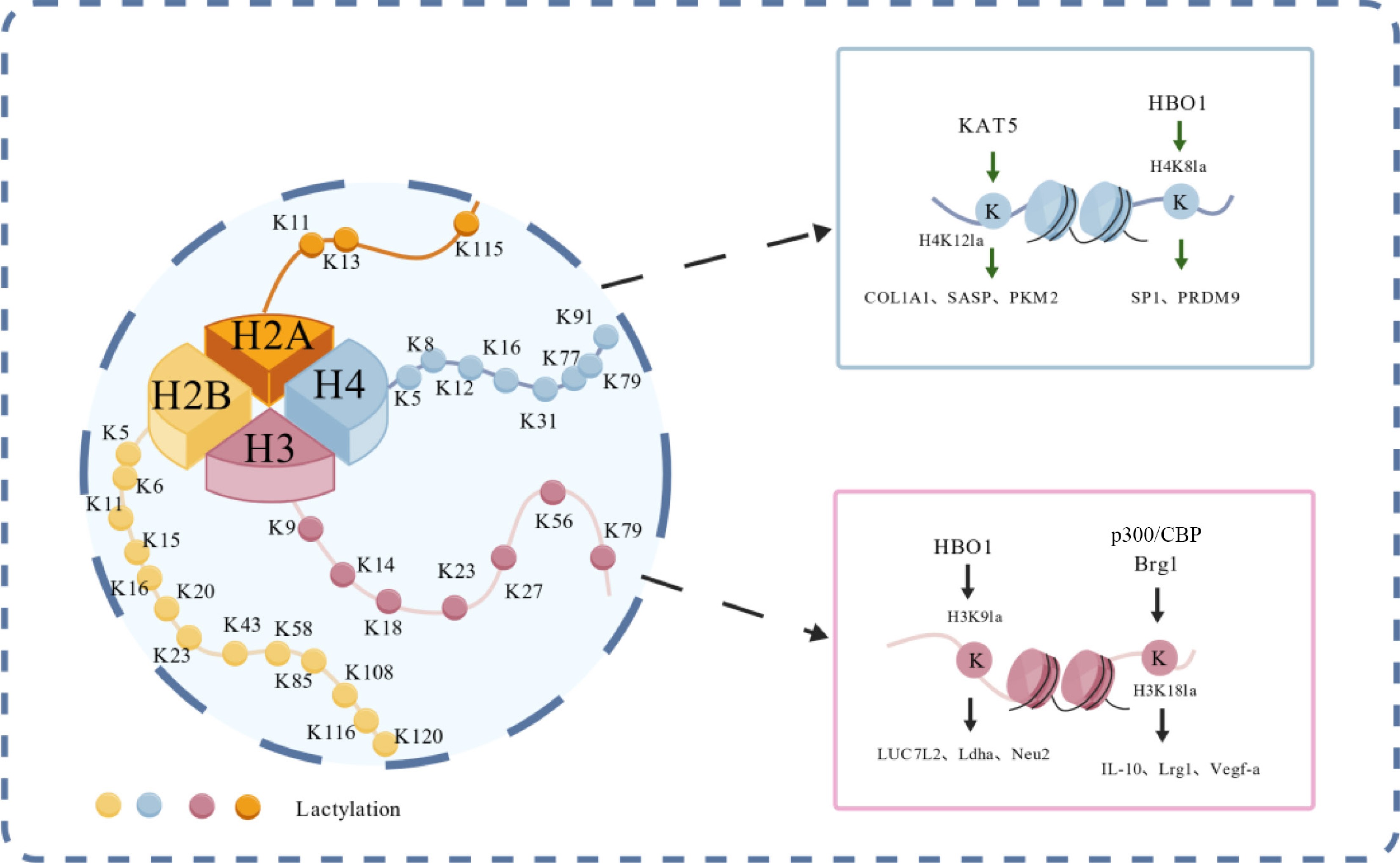
Figure 1.
Summary of histone lactylation modification sites, and a summary of reported histone lactylation sites including H2A, H2B, H3, and H4. A brief introduction was given on the lactylation of the K9/K18 sites of H3 and the K12/K18 sites of H4. The figure was created with BioGDP.com[20].
-
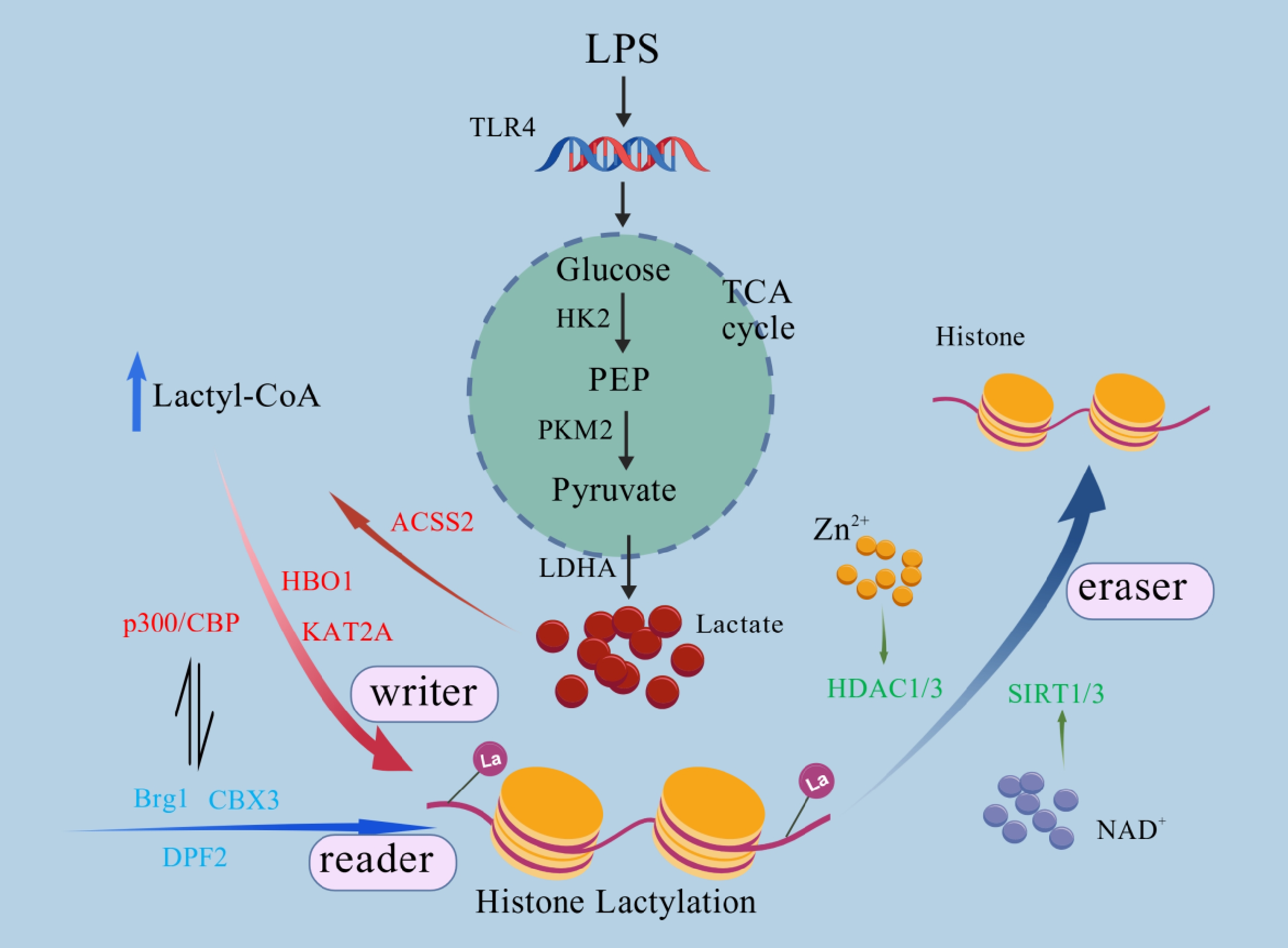
Figure 2.
The potential mechanism of histone lactylation in innate immunity. The metabolic regulation mechanism of lipopolysaccharide (LPS)-mediated histone lactylation activation of the toll-like receptor 4 (TLR4) pathway by LPS can induce the Warburg effect, promote glycolysis, and produce lactic acid in large quantities through the hexokinase 2 (HK2), pyruvate kinase M2 (PKM2), and lactate dehydrogenase A (LDHA) pathways. Nucleated lactic acid is converted into lactic acid coenzyme A by Acyl-CoA Synthetase Short Chain Family Member 2 (ACSS2), which mediates histone lactylation under the mediation of modified writing and reader proteins. However, Zn2+ and NAD+ can activate HDAC1/3 and SIRT1/3 to remove the milk acylation modification and jointly regulate the dynamic reversible equilibrium of the modification. The figure was created with BioGDP.com[20].
-
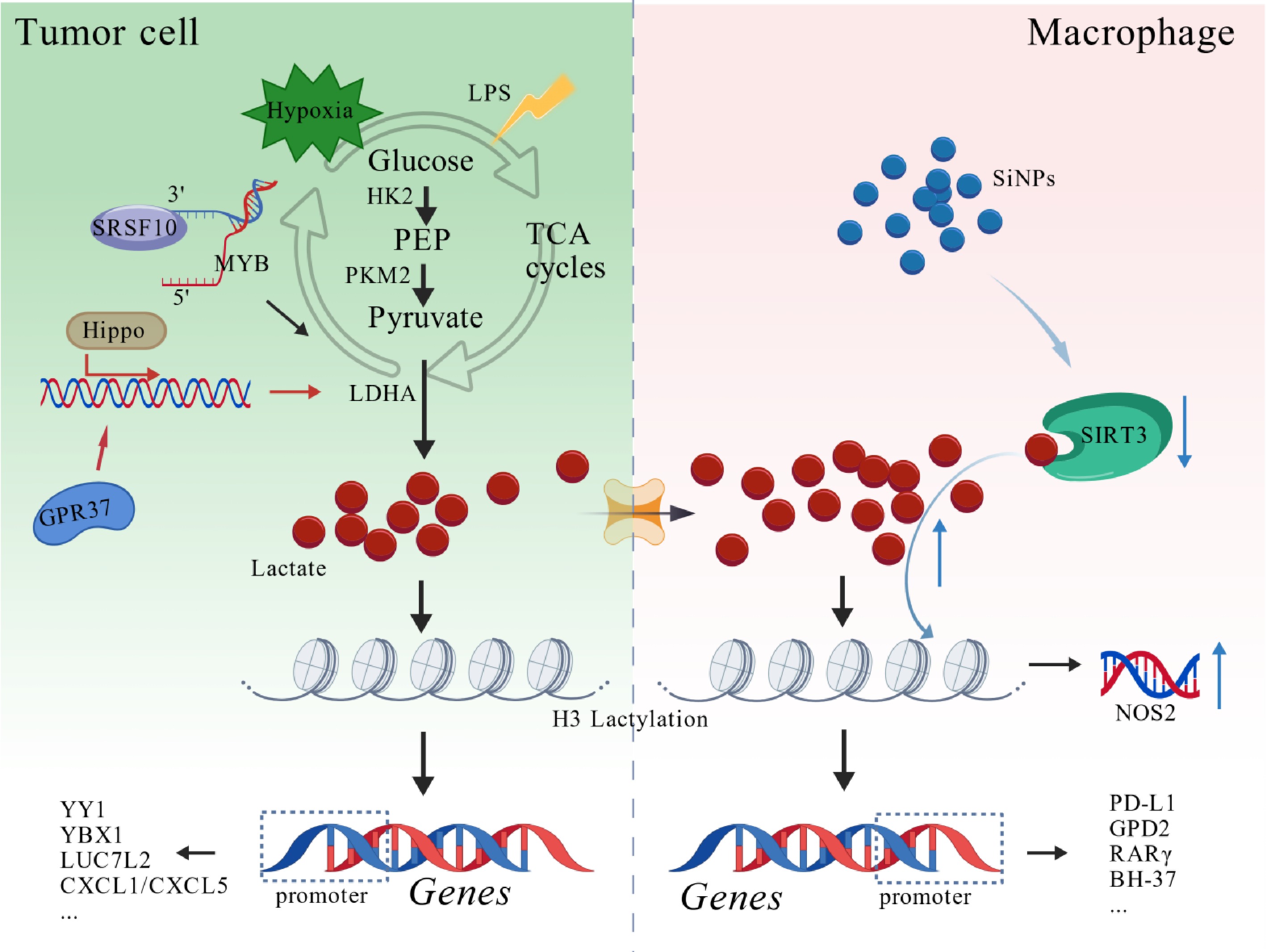
Figure 3.
H3 lactylation: a bridge between metabolism and epigenetics. In a tumor microenvironment stimulated by hypoxia or LPS, serine-and arginine-rich splicing factor 10 (SRSF10)-MYB and G protein-coupled receptor 37 (GPR37)/Hippo pathway activation can upregulate LDHA, promote lactic acid production and histone lactylation, and activate target gene transcription. Tumor-derived lactic acid can enter macrophages, induce lactylation, and drive gene transcription. Silica nanoparticles can inhibit SIRT3 activity in macrophages, lead to the accumulation of H3 lactylation, activate Nitric Oxide Synthase 2 (NOS2), amplify pro-inflammatory reactions, and mediate the polarization of M1 macrophages and the process of pulmonary fibrosis. The figure was created with BioGDP.com[20].
-
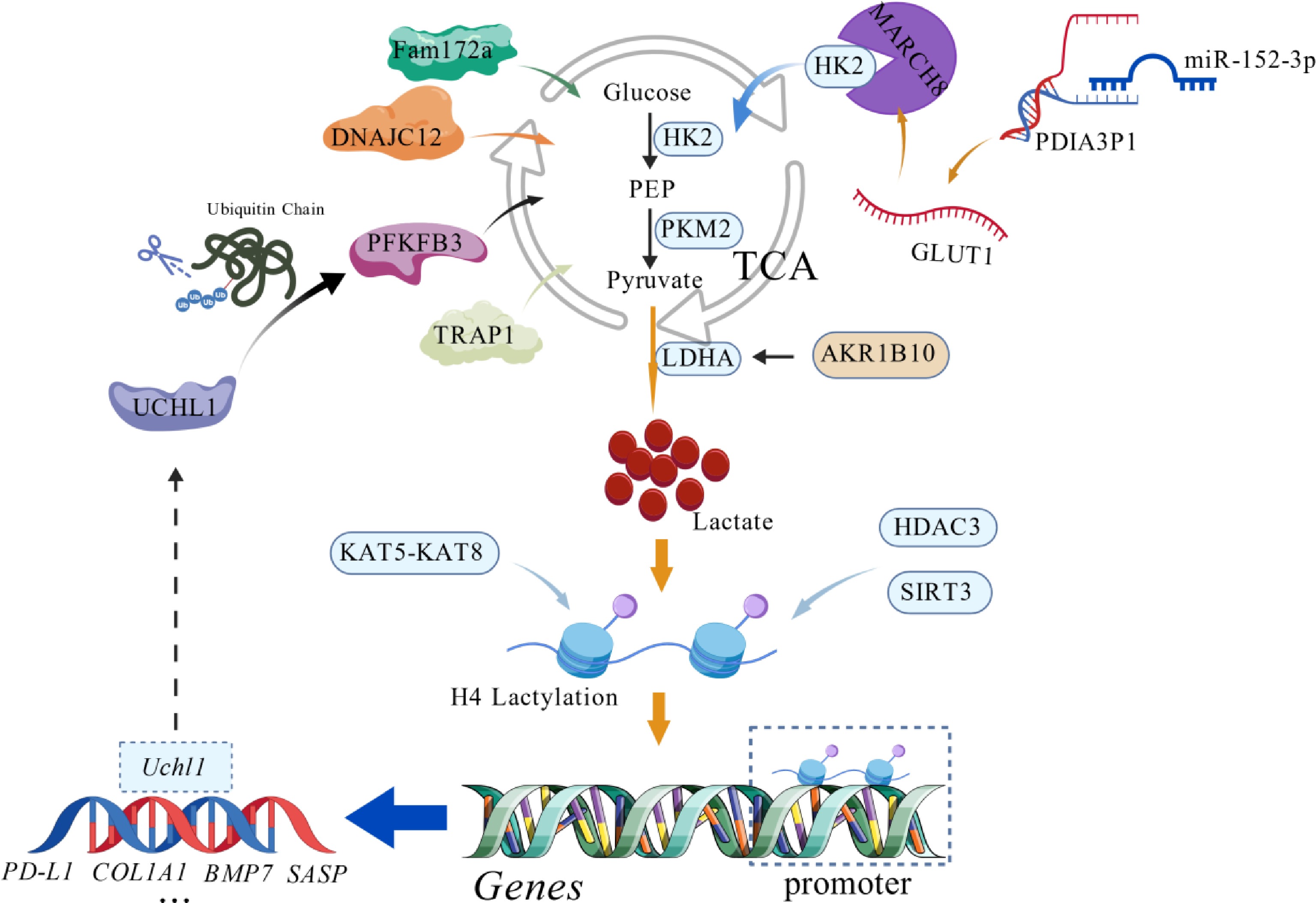
Figure 4.
H4 lactylation: a bridge between metabolism and epigenetics. Synergistic regulation of H4 lactylation by multiple molecular pathways. Family with sequence similarity 172, member A (Fam172a), DNAJC12, and tumor necrosis factor receptor-associated protein 1 (TRAP1) indirectly regulate lactic acid production by regulating glycolysis, while Aldo-keto reductase family 1 B10 (AKR1B10) directly promotes lactic acid accumulation by activating LDHA, thus regulating gene lactylation. Protein disulfide isomerase A family 3 pseudogene 1 (PDIA3P1) competitively adsorbs microRNA-152-3p (miR-152-3p), stabilizes glucose transporter 1 GLUT1 and HK2, strengthens glycolysis, and improves the level of lactylation. Ubiquitin carboxy-terminal hydrolase L1 (UCHL1) can stabilize 6-phosphofructo-2-kinase/fructose-2,6-diphosphatase 3 (PFKFB3) to promote lactic acid production and H4K8la modification, and is positively activated by lactylation, forming an amplification loop. Lysine acetyltransferase 5 (KAT5) and lysine acetyltransferase 8 (KAT8) positively promoted lactylation, while HDAC3/SIRT3 negatively inhibited modification, maintaining its dynamic balance together. The figure was created with BioGDP.com[20].
-
Histone Lactylation sites Species H2A K11, K13, K115 Human K11, K115 Mouse H2B K5, K11, K15, K16, K20, K23, K43, K58, K85,
K108, K116, K120Human K5, K11, K15, K16, K20, K58, K85, K108 Mouse H3 K9, K18, K23, K27, K79 Human K14, K18, K23, K27, K56 Mouse H4 K5, K8, K12, K16, K31, K77, K79, K91 Human K8, K12, K31, K77, K79, K91 Mouse Table 1.
Summary of histone lactylation sites in humans and mice.
Figures
(4)
Tables
(1)