-
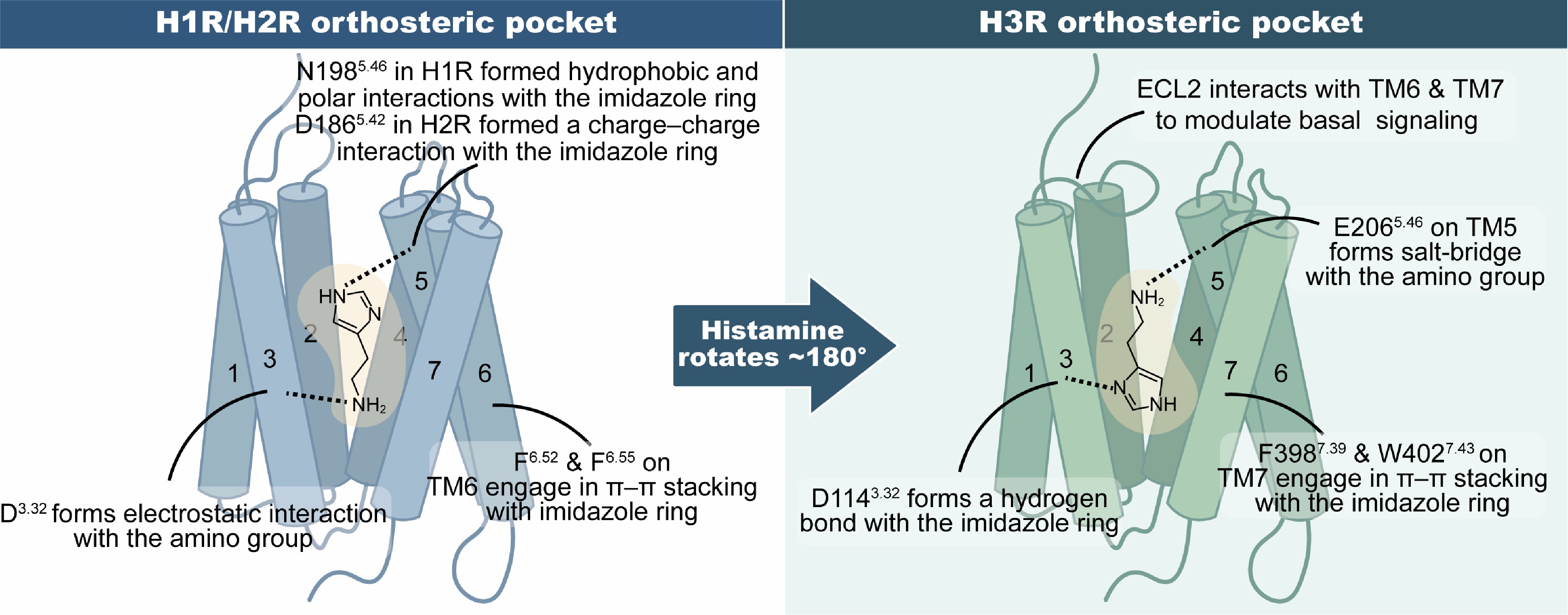
Figure 1.
Schematic diagram showing the structural differences in the orthosteric pocket of H1R/H2R/H3R.
-
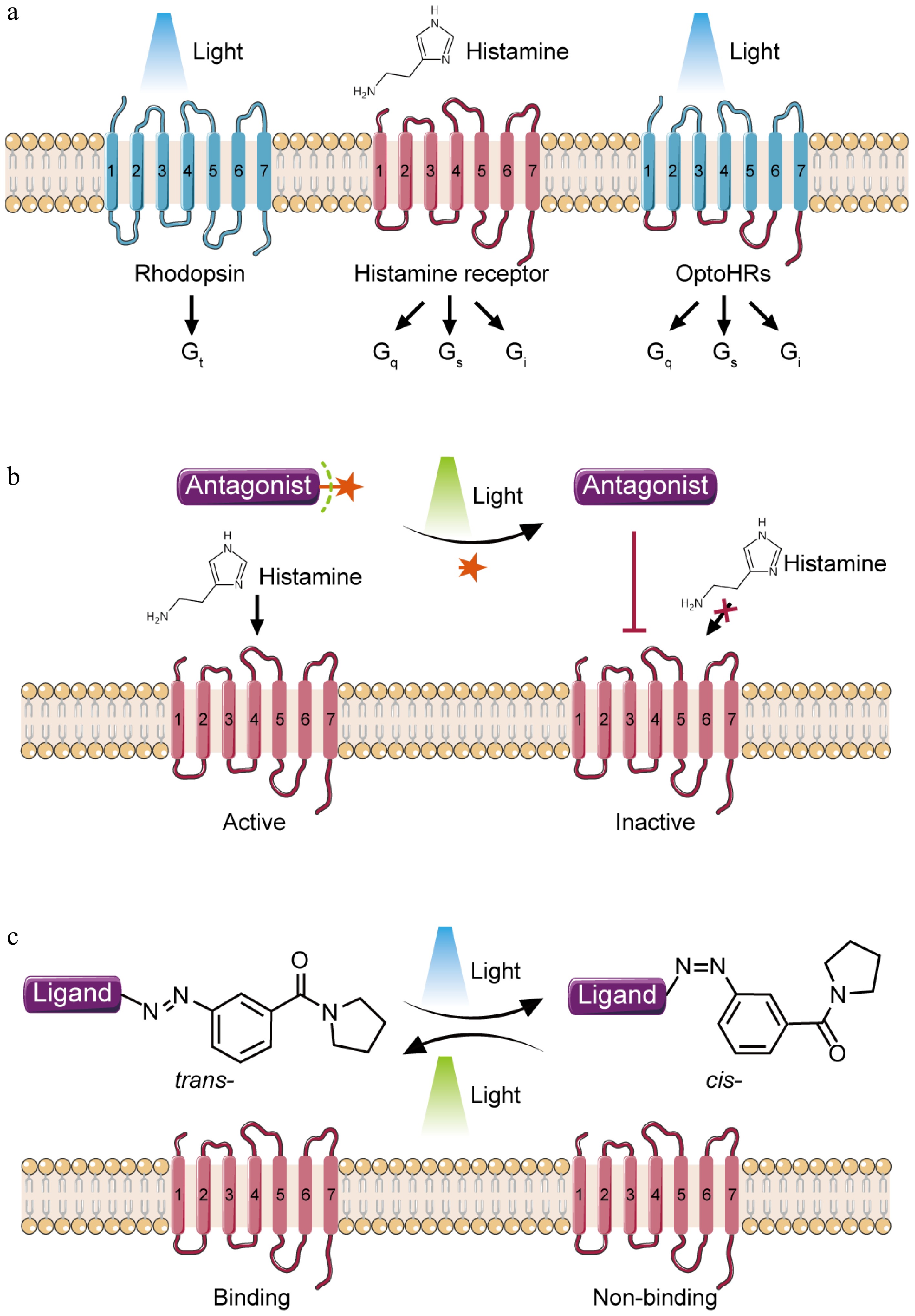
Figure 2.
Schematic diagram showing optogenetic tools for histamine receptor regulation. (a) OptoXRs; (b) Photocaging ligands; (c) Photoswitchable ligands.
-
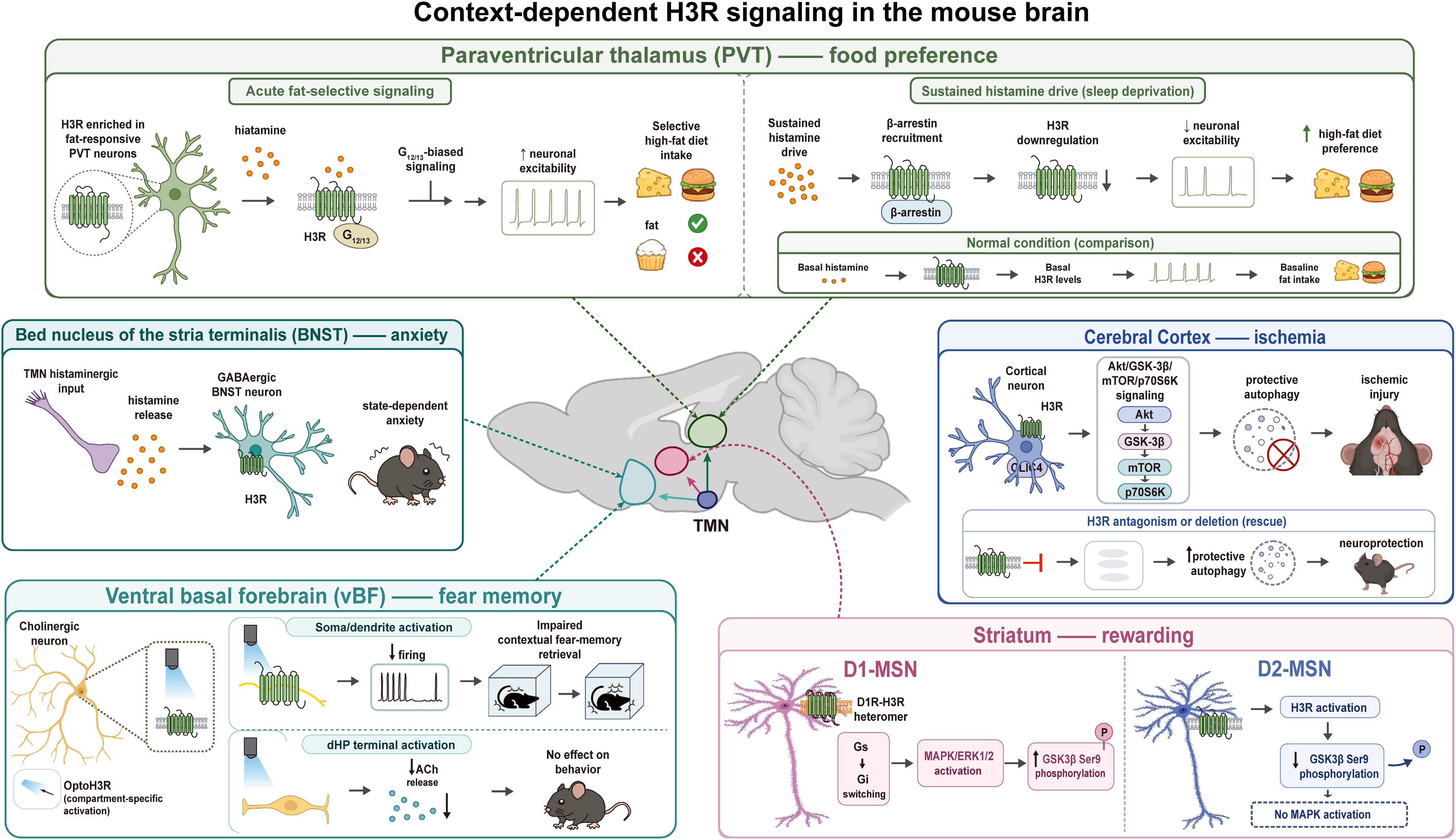
Figure 3.
Schematic diagram showing recent advances in the functional heterogeneity of H3R. H3R signaling is context-dependent, shaped by pathological state (ischemia promotes pro-death CLIC4 complexes), subcellular compartment (somatic vs terminal pools in cholinergic neurons), cell type (D1- vs D2-MSN heteromers redirect G-protein bias), circuit state (TMN-BNST projection gated by stress), and activation history (acute G12/13 excitation vs chronic β-arrestin-mediated downregulation in PVT feeding neurons). These interacting dimensions can yield opposing behavioral outcomes from the same receptor. Thus, H3R should be viewed as a family of context-defined signaling states rather than a uniform target, explaining why global modulation has limited efficacy.
-
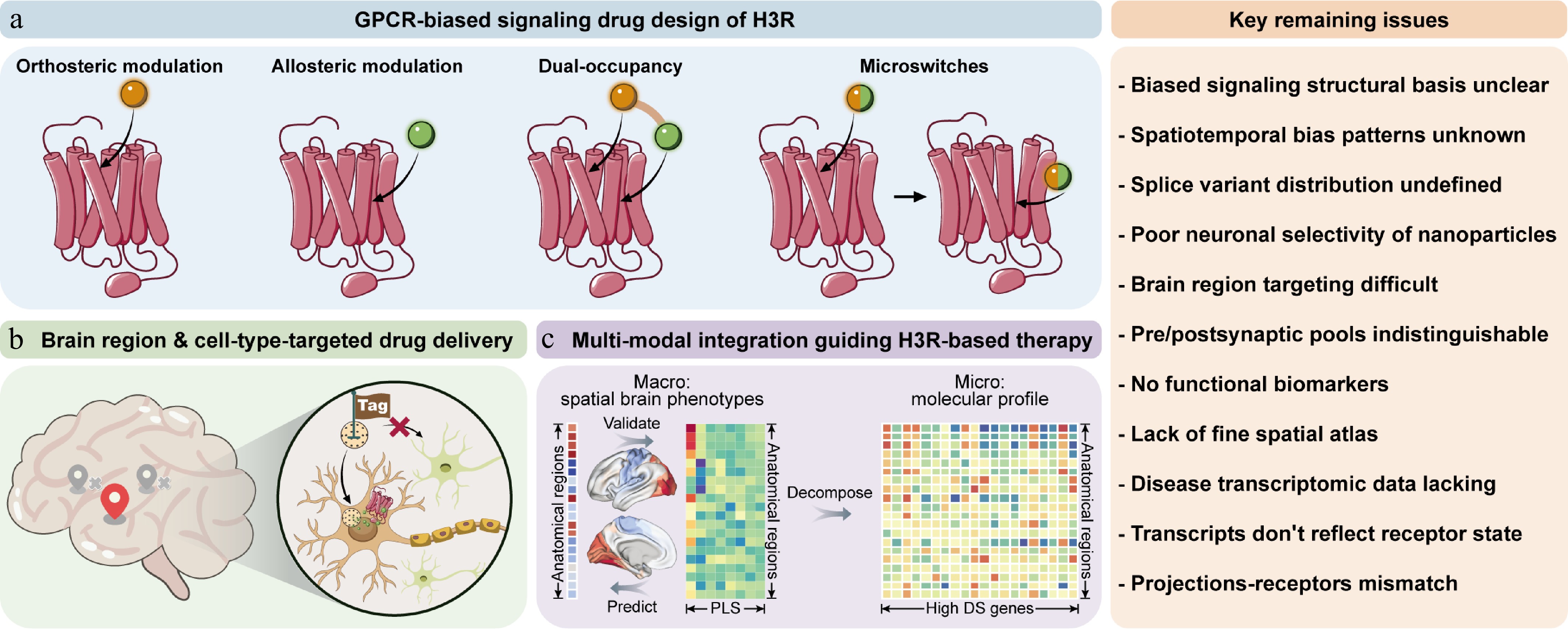
Figure 4.
Schematic diagram showing key remaining issues about spatiotemporal regulation of H3R. (a) GPCR-biased signaling drug design of H3R. (b) Brain region and cell-type-targeted drug delivery. (c) Multi-modal integration guiding H3R-based therapy.
-
Compound Company Intended indication Highest phase/outcome Possible spatiotemporal mismatch source ABT-288 Abbott Cognitive impairment associated with schizophrenia Phase II, insufficient clinical efficacy Splice variant, pre- vs postsynaptic localization, brain region/circuit, disease state, biased signaling GSK189254 GlaxoSmithKline Alzheimer's disease Phase II, insufficient clinical efficacy GSK239512 GlaxoSmithKline Alzheimer's disease Phase II, insufficient clinical efficacy MK-0249 Merck Alzheimer's disease Phase II, insufficient clinical efficacy MK-3134 Merck Alzheimer's disease, dementia Phase II, insufficient clinical efficacy PF-03654746 Pfizer Attention-deficit/hyperactivity disorder (ADHD) Phase II, insufficient clinical efficacy Pitolisant (BF2.649) Bioprojet Narcolepsy Approved Table 1.
Summary of major H3R clinical compounds, outcomes, and possible spatiotemporal mismatch.
-
Extrapolated evidence
(other GPCRs/CNS delivery systems)Corresponding H3R development Strategy/tool Source of evidence Strategy/tool Status Optogenetic and photopharmacological tools OptoXR chimeric platform General GPCR optogenetic platform (rhodopsin-GPCR chimera) OptoH3R Direct H3R evidence: validated in vitro and in vivo (ERK activation, β-arrestin internalization, fear memory, and anxiety circuits) Photocaged ligand VUF25549, H1R antagonist desloratadine modified with BODIPY cage N/A Not yet developed for H3R Azobenzene photoswitch design strategy General GPCR photopharmacology approach VUF14862/
VUF14738Direct H3R evidence: validated by GIRK current electrophysiology GPCR-biased signaling drug design G-protein-biased agonist,
Oliceridine (TRV130)μ-opioid receptor, clinically approved N/A Not yet developed for H3R κOR G-protein-biased agonist κ-opioid receptor, preclinical N/A Not yet developed for H3R Gi-biased ago-allosteric modulator, CB-05 CB1 receptor, preclinical N/A Not yet developed for H3R bitopic ligand, C6 guano μ-opioid receptor, preclinical N/A Not yet developed for H3R bivalent ligand, 6'-GNTI δOR-κOR heterodimer, preclinical N/A Not yet developed for H3R GPCR-biased signaling drug design Microswitch/intracellular interface remodeling, FUB example CB1 receptor structural data (Cryo-EM/X-ray) N/A Inactive- and Gi-coupled H3R structures are available, but conformational determinants of G-protein vs β-arrestin bias have
not been characterizedBrain region and cell-type-targeted drug delivery RVG29-functionalized nanoparticles nAChR/GABA receptor targeting, Alzheimer's disease model N/A Not yet developed for H3R Adenosine-ligand nanoparticles Adenosine receptor on astrocytes, TBI model N/A Not yet developed for H3R PAMAM dendrimers Intrinsic tropism for microglia/macrophages (non-receptor-mediated) N/A Not yet developed for H3R Table 2.
Summary of spatiotemporal targeting strategies: extrapolated evidence vs corresponding H3R development.
Figures
(4)
Tables
(2)