-
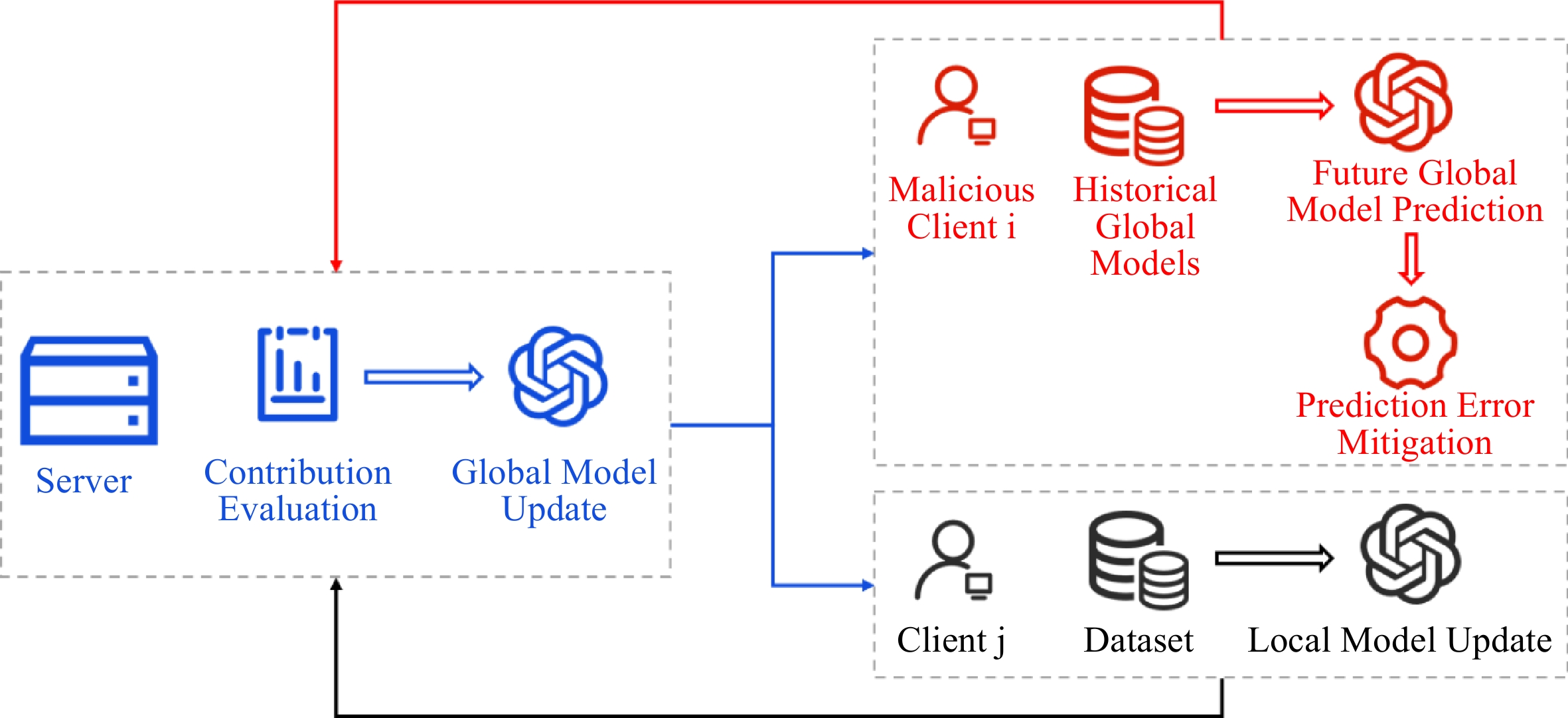
Figure 1.
Workflow of contribution-evaluation poisoning attack in federated learning.
-
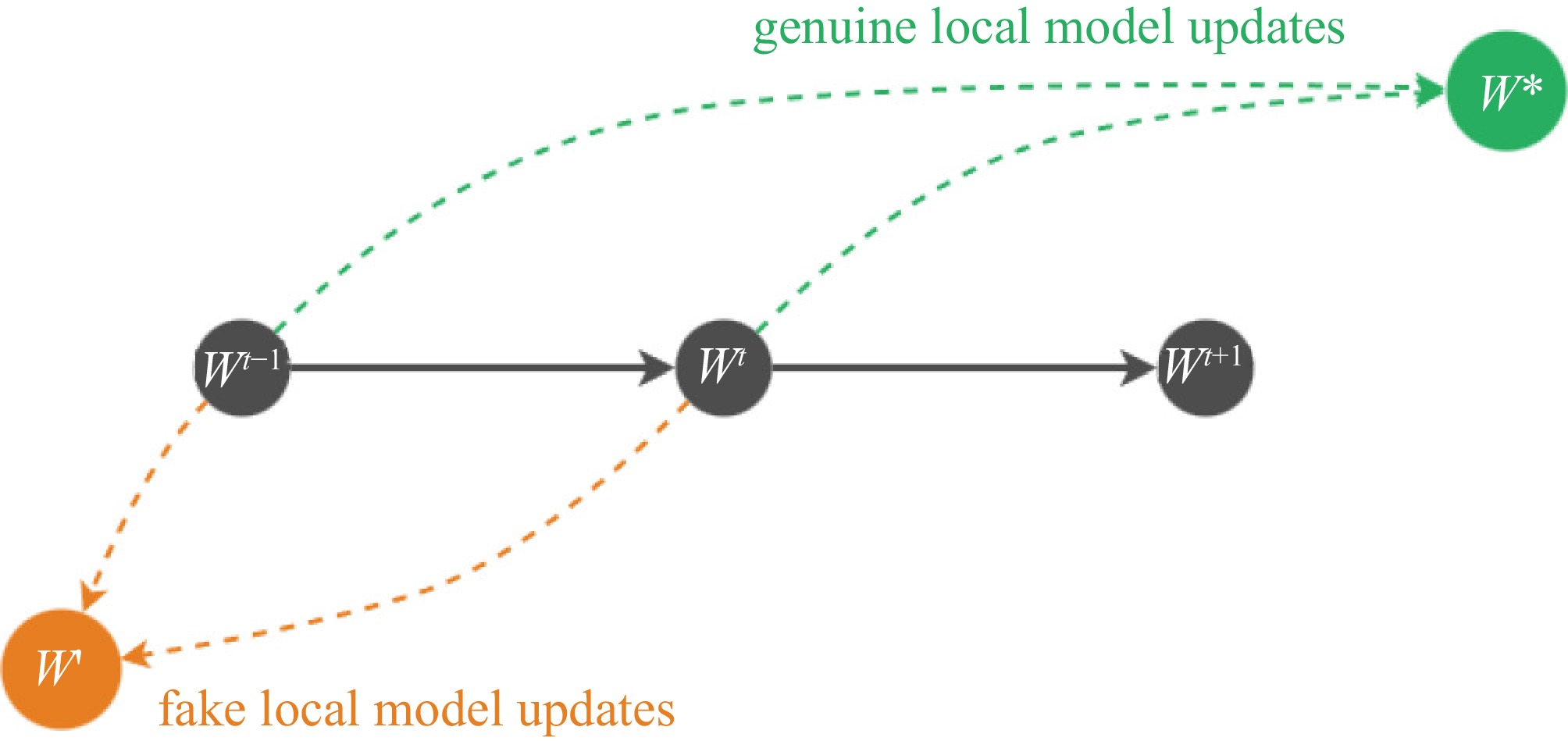
Figure 2.
Workflow of fake-client-based model poisoning attack in federated learning.
-
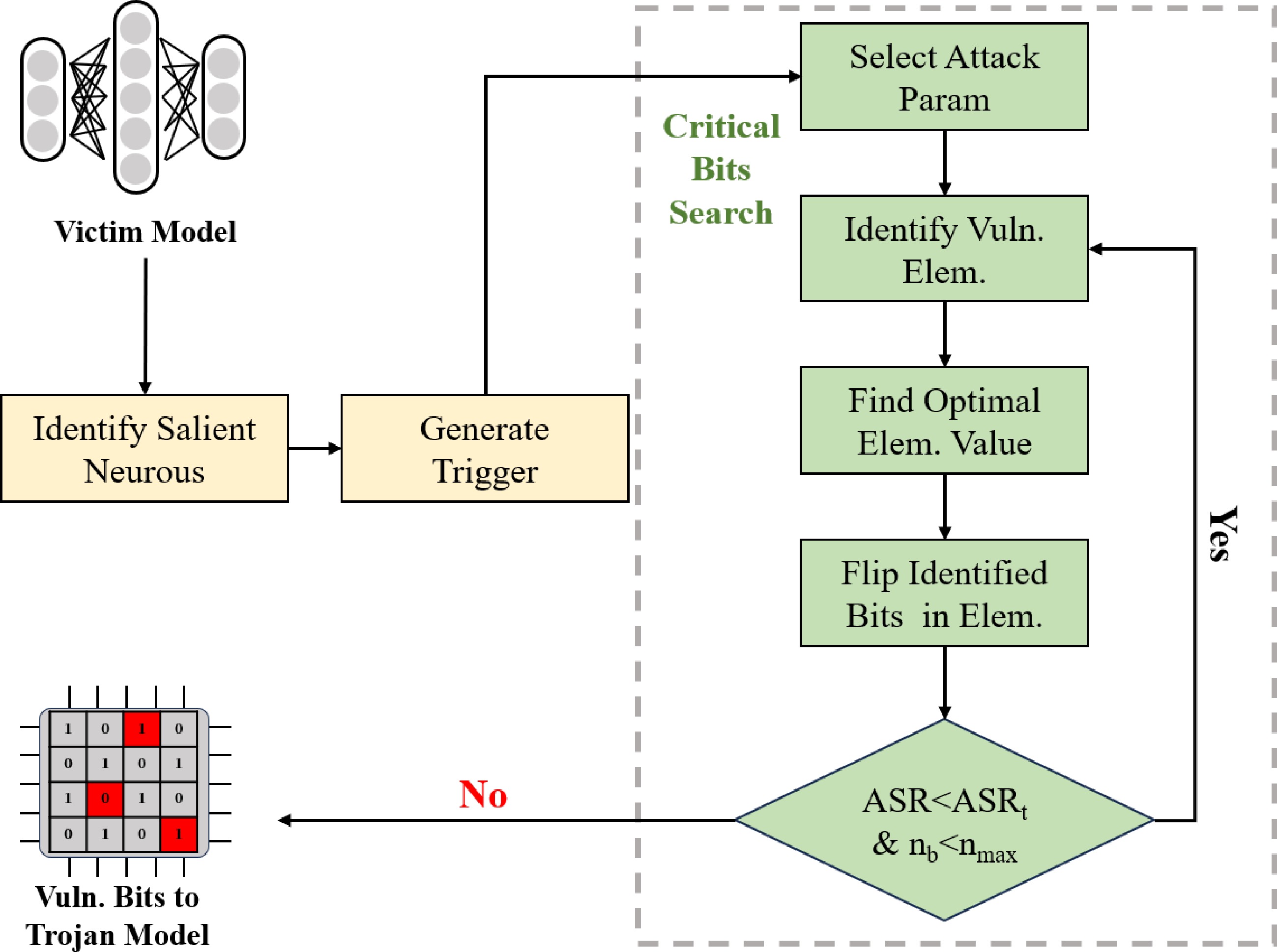
Figure 3.
ProFlip workflow.
-
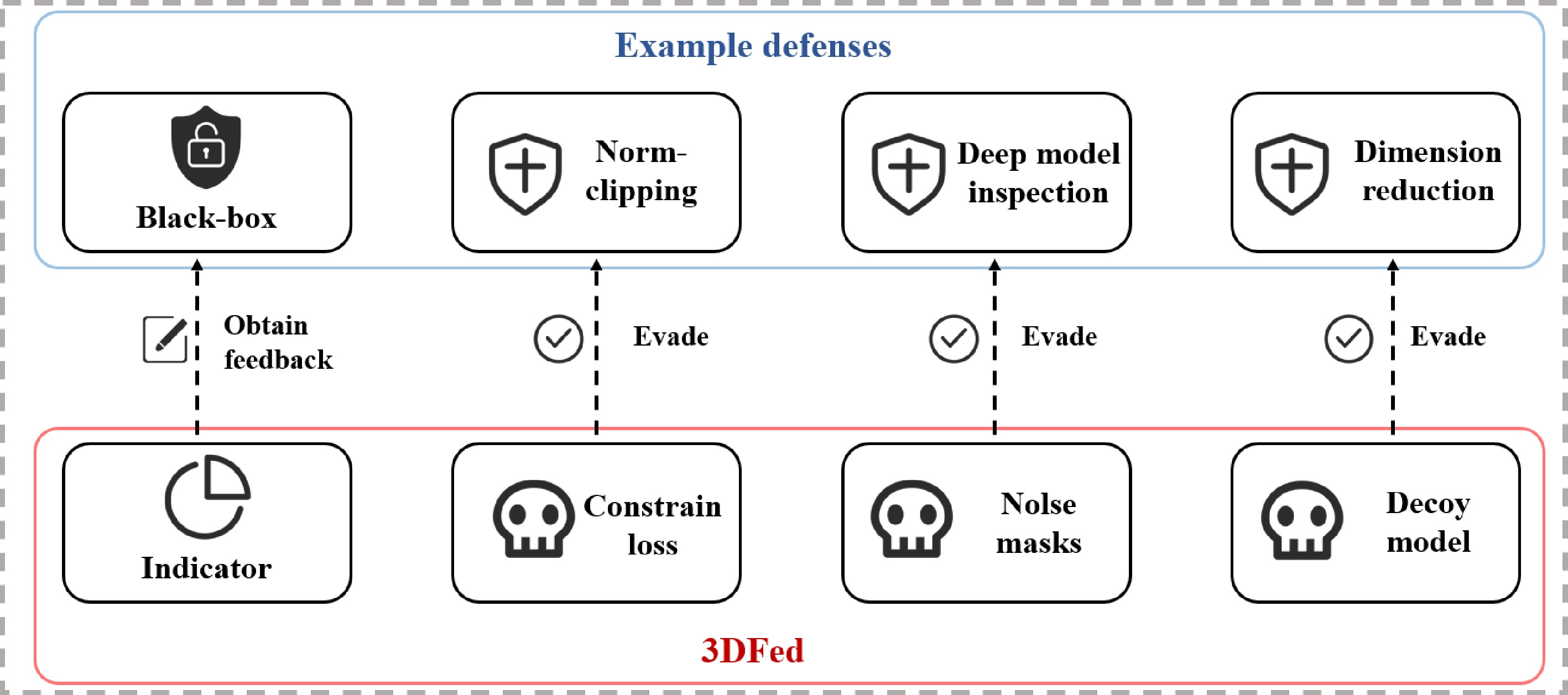
Figure 4.
Overview of 3DFed framework.
-
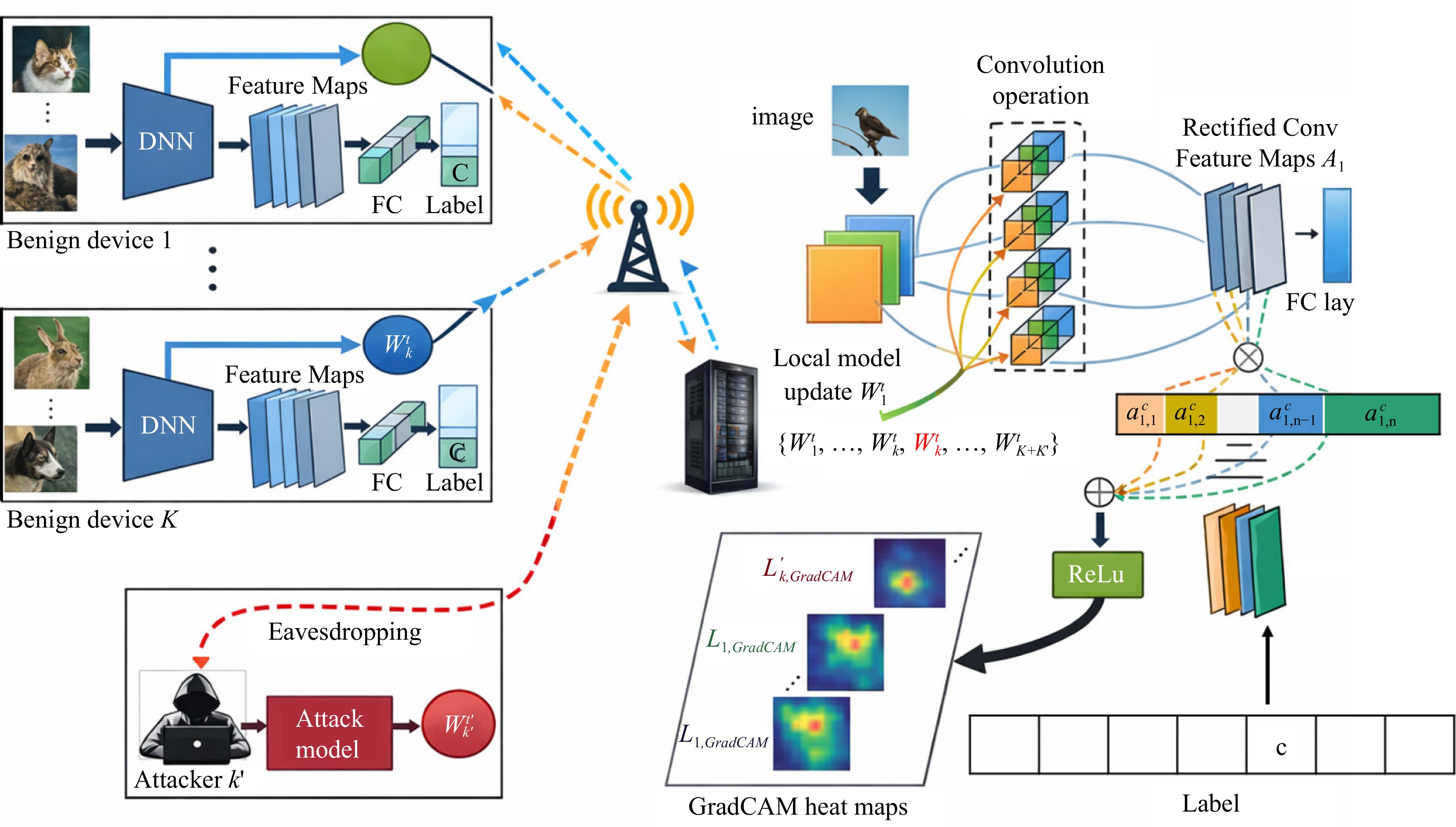
Figure 5.
System model of GCAMA.
-
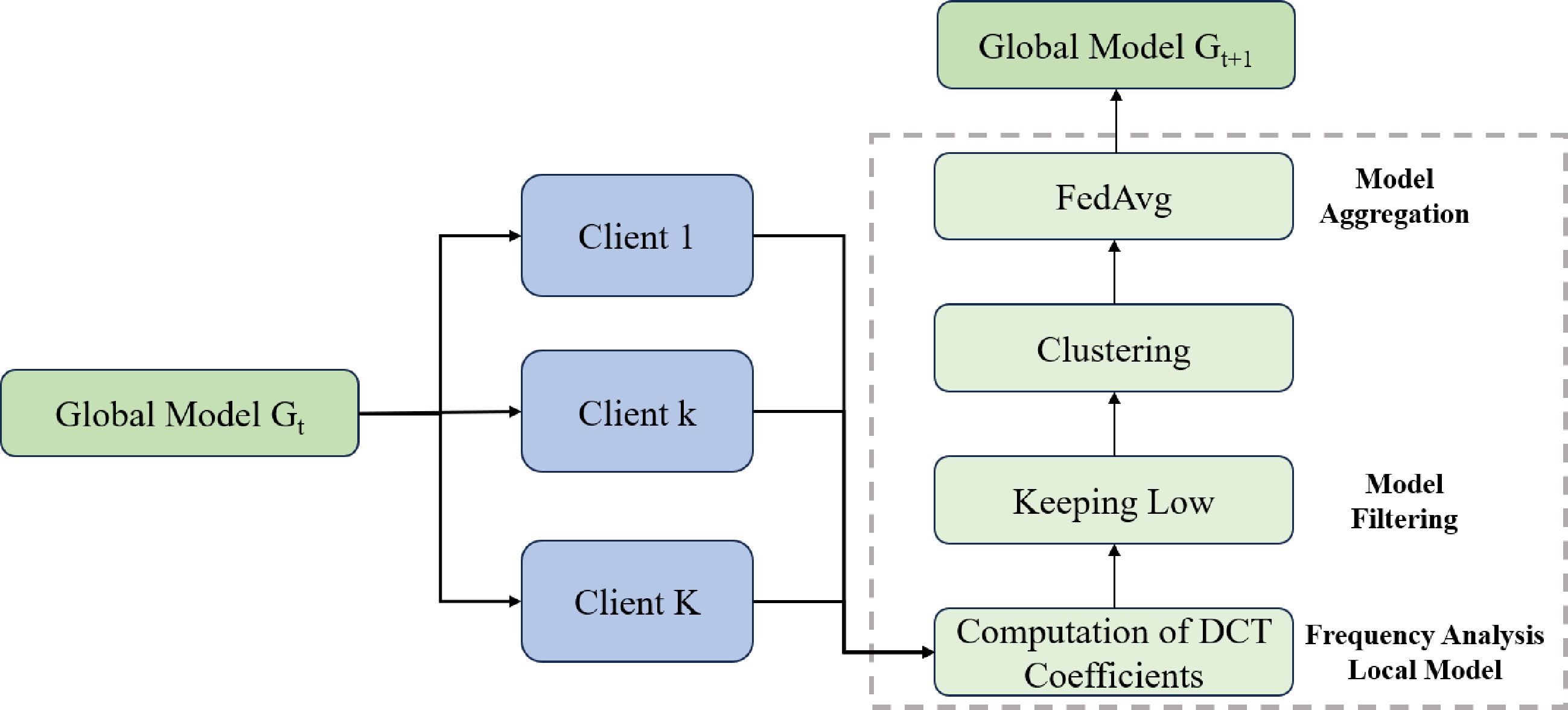
Figure 6.
System overview of FreqFed.
-
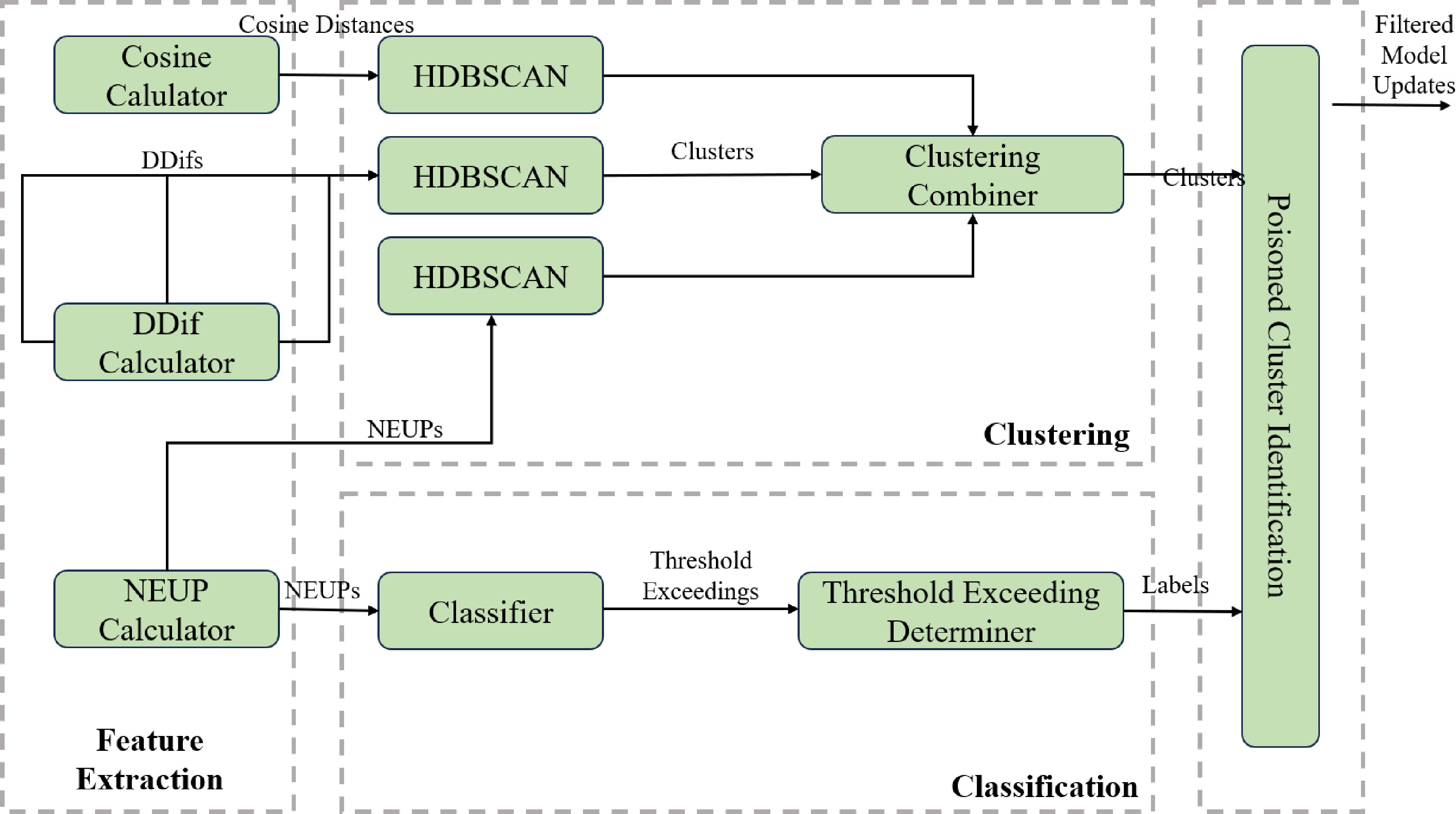
Figure 7.
Filtering layer of DeepSight.
-
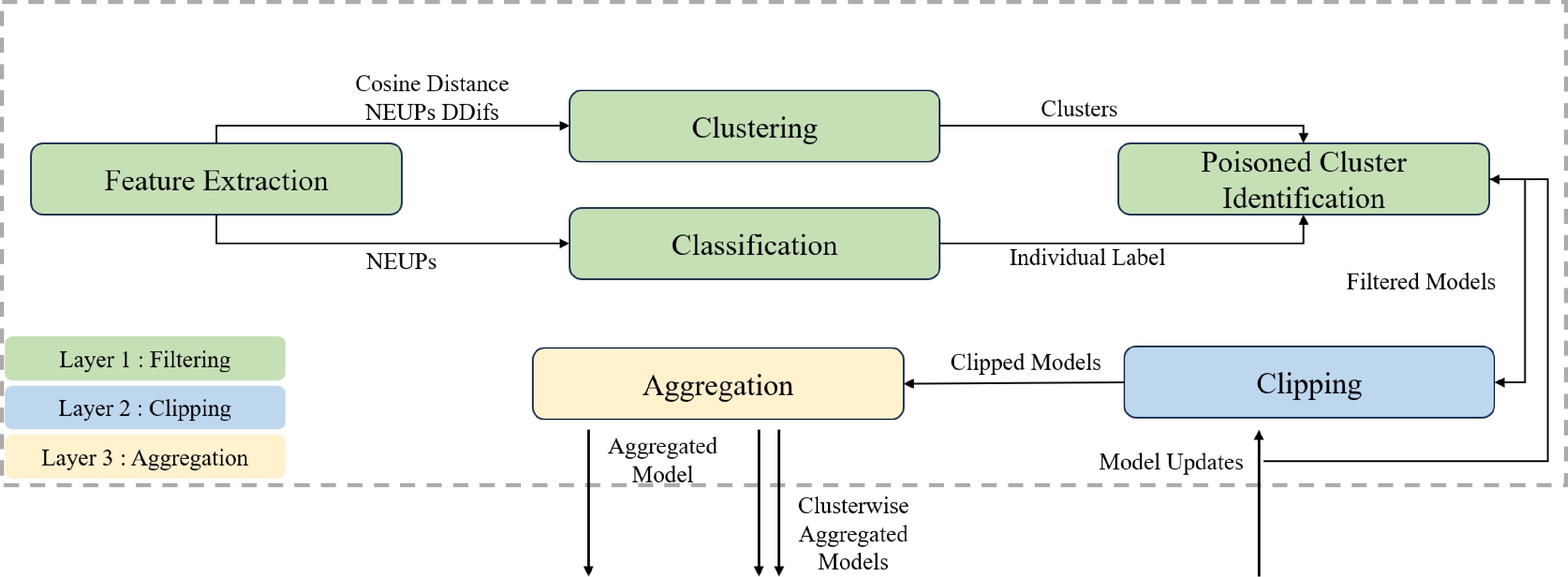
Figure 8.
Structure of DeepSight.
-
Symbol Description $t$ Communication round in federated learning. $i,k$ Client index. $K$ Total number of clients. $m$ Number of malicious clients or fake clients, depending on the context. $w^t$ $W_t$ $G_t$ Global model at round $t$ $w_i^t$ $W_i^t$ Local model or local update submitted by client $i$ $\Delta_i^t$ $g_i^t$ Local model update or gradient update of client $i$ ${\cal{A}}(\cdot)$ $\Lambda(\cdot)$ Aggregation rule or aggregation process. $s$ Attack direction or estimated benign update direction. $S$ Context-dependent symbol; it may denote an output event set in DP definitions or a clipping bound in DP-SGD. $\epsilon,\delta$ Differential privacy parameters. $\sigma$ Gaussian noise scale or noise multiplier. $\lambda,\tau,\beta$ Method-specific control parameters. ASR Attack success rate. MTA Main task accuracy. Table 1.
Frequently used notation in this survey.
-
Category Byzantine attacks Backdoor attacks Objective Global performance degradation Hidden malicious functionality Target Training and aggregation Inference behavior Specificity Untargeted Targeted Attack means Malicious model updates Poisoned data or updates Clean accuracy Severely affected Largely preserved Stealthiness Low High Activation Always active Trigger-based Threat type Availability and robustness Integrity and trustworthiness Table 2.
Comparison of Byzantine and backdoor attacks in federated learning.
-
Attack Mechanism Stealthiness ACE Predict global update, disguise contribution High OPT Reverse optimization vs aggregation rules Moderate MPAF Large-scale fake clients push base model Moderate PF Flip critical bits in deployed model High 3DF Multi-objective optimization + noise masks Very high ACE: contribution evaluation poisoning; OPT: optimization-based poisoning; MPAF: fake-client poisoning; PF: ProFlip bit-flip backdoor; 3DF: adaptive backdoor. Table 3.
Comparison of poisoning attack methods in FL.
-
Category Defense strategy Attack type Key limitation Robust aggregation Median, trimmed mean Byzantine Ineffective against backdoors Update filtering Similarity/anomaly detection Byzantine Adaptive attacks Backdoor detection Trigger inference Backdoor Trigger dependency Backdoor mitigation Fine-tuning, unlearning Backdoor Extra computation Hybrid defense Joint filtering and mitigation Both Increased complexity Table 4.
Comparison of defense mechanisms against poisoning attacks in federated learning.
-
Defense Mechanism Limitation RA Robust aggregation (median, trimmed mean) Ineffective against backdoors UF Update filtering (similarity/anomaly detection) Vulnerable to adaptive attacks BD Backdoor detection (trigger inference) Depends on trigger knowledge BM Backdoor mitigation (fine-tuning, unlearning) Extra computation cost HD Hybrid defense (joint filtering + mitigation) Increased complexity RA: robust aggregation; UF: update filtering; BD: backdoor detection; BM: backdoor mitigation; HD: hybrid defense. Table 5.
Comparison of defense strategies in FL.
Figures
(8)
Tables
(5)