-
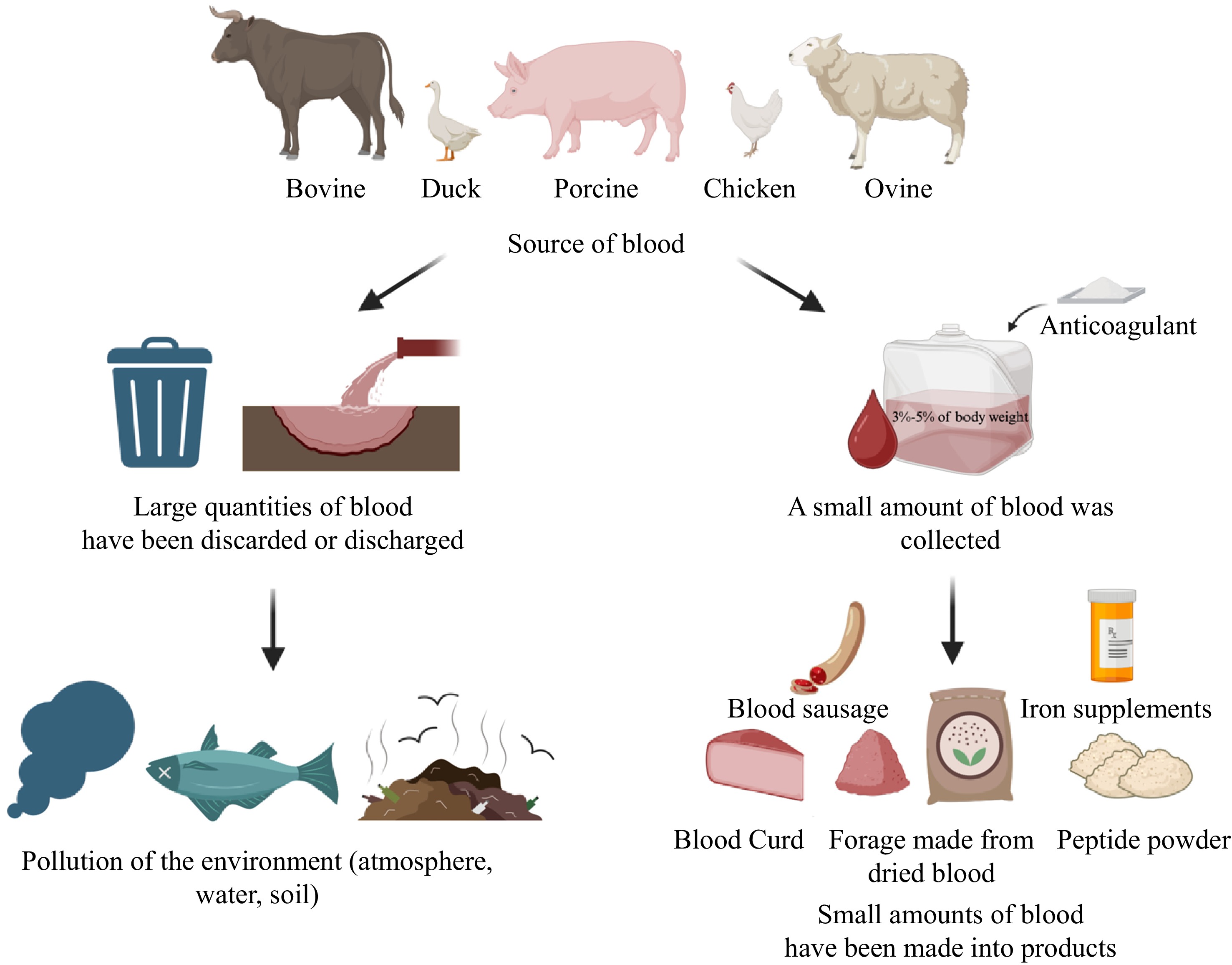
Figure 1.
Current situation of animal blood utilization.
-
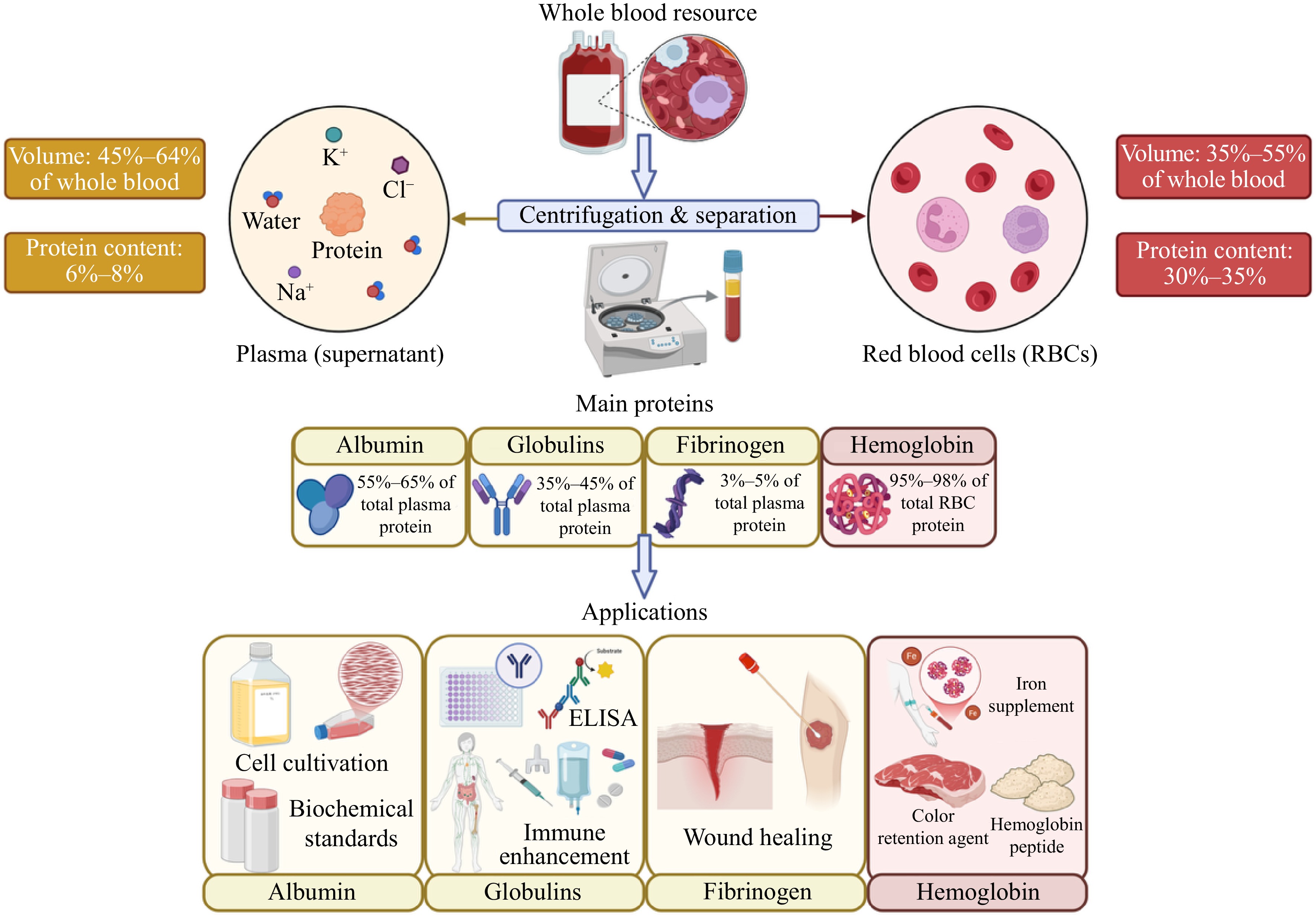
Figure 2.
Composition of proteins in the blood and their applications.
-
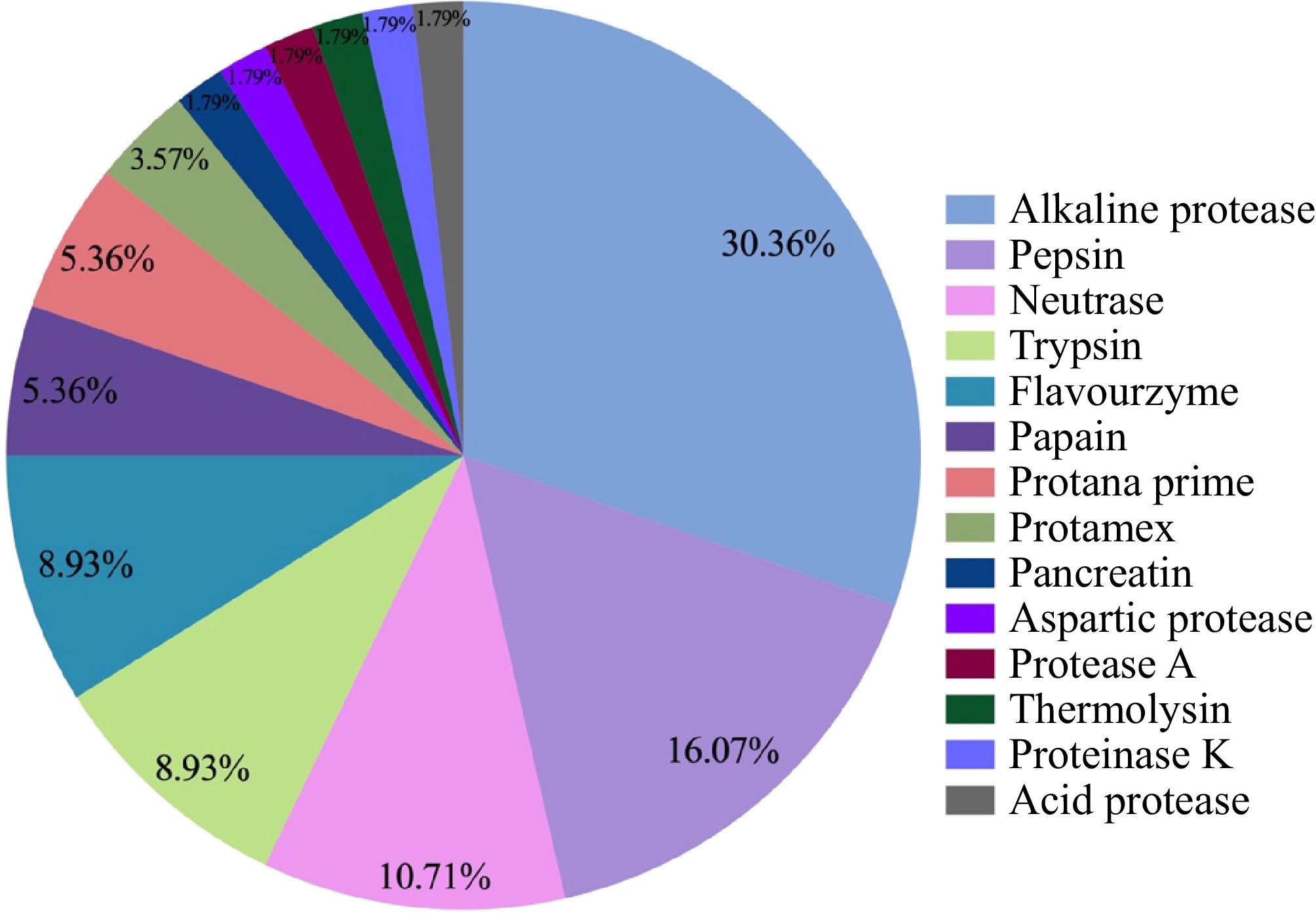
Figure 3.
Percentage distribution of proteases from different sources used in the preparation of BBAPs (2020–2025). Note: Percentages were calculated based on the frequency of protease usage reported in the collected studies. For studies employing multiple proteases, each protease was counted separately.
-
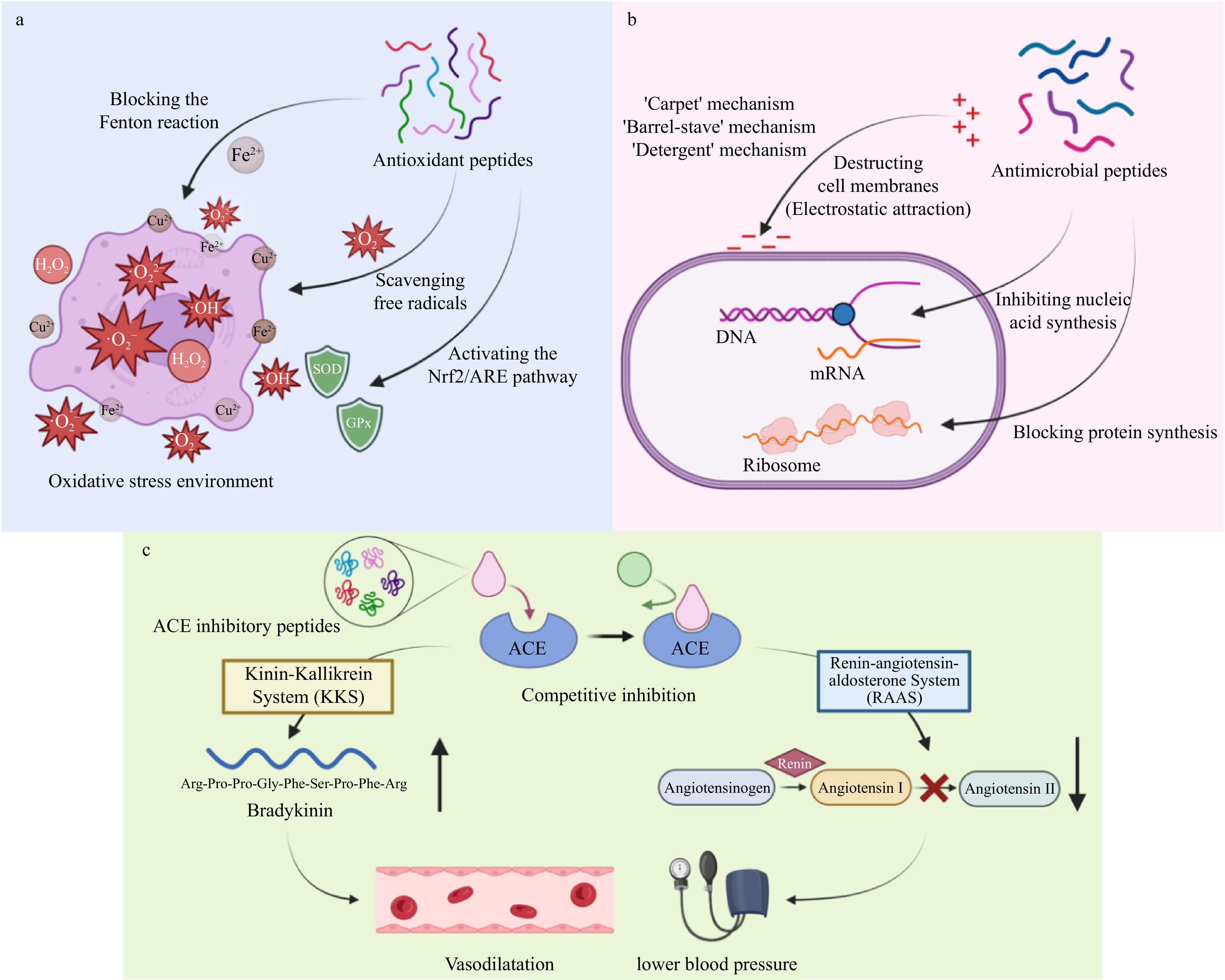
Figure 4.
Mechanisms of antioxidant, antimicrobial, and ACE-inhibitory activities of BAPs. (a) Antioxidant peptides mitigate oxidative stress by blocking the Fenton reaction, scavenging reactive oxygen species (ROS), and activating endogenous antioxidant defense pathways such as Nrf2/ARE. These actions enhance the activities of antioxidant enzymes, including superoxide dismutase (SOD) and glutathione peroxidase (GPx). (b) Antimicrobial peptides (AMPs) exert bactericidal effects primarily by disrupting microbial cell membranes through 'carpet', 'barrel-stave', and 'detergent-like' mechanisms driven by electrostatic interactions. AMPs can also penetrate cells to inhibit nucleic acid synthesis and block protein translation. (c) ACE-inhibitory peptides competitively bind to ACE, suppressing the renin–angiotensin–aldosterone system (RAAS) and reducing the production of angiotensin II. Concurrently, they enhance bradykinin levels via the kallikrein–kinin system (KKS), promoting vasodilation and resulting in reduced blood pressure.
-
Blood fraction Animal source Preparation Sequence (MW) Antioxidant capacity Model and effects Ref. Plasma Duck Pretreatment, 65.5 °C, 10 min; Alcalase 2.4 L, pH 10, 65.5 °C, 6 h, 0.3% (w/w); UF, GFC, RP-HPLC Protein hydrolysate DPPH radical scavenging ability: 64.26%; superoxide anion radical scavenging ability: 21.42%; ABTS radical scavenging ability: 71.79 µM TE/g (1.0 mg/mL) None [39] LDGP (400.43 Da) Fe2+ chelating ability: 7.92%; ABTS radical scavenging ability: 89.62 µM TE/g; reducing power: 0.24; DPPH radical scavenging ability: 36.31% (0.5 mg/mL) TGVGTK (561.63 Da) Fe2+ chelating ability: 1.66%; ABTS radical scavenging ability: 189.74 µM TE/g; reducing power: 0.15; DPPH radical scavenging ability: 36.52% (0.5 mg/mL) EVGK (431.48 Da) Fe2+ chelating ability: 16.35%; ABTS radical scavenging ability: 13.52 µM TE/g; reducing power: 0.06; DPPH radical scavenging ability: 26.63% (0.5 mg/mL) RCLQ (260.14 Da) Fe2+ chelating ability: 10.25%; ABTS radical scavenging ability: 274.83 µM TE/g; reducing power: 0.62; DPPH radical scavenging ability: 95.12% (0.5 mg/mL) LHDVK (610.71 Da) Fe2+ chelating ability: 4.42%; ABTS radical scavenging ability: 27.48 µM TE/g; reducing power: 0.09; DPPH radical scavenging ability: 68.98% (0.5 mg/mL) KLGA (387.47 Da) Fe2+ chelating ability: 8.79%; ABTS radical scavenging ability: 106.48 µM TE/g; reducing power: 0.15; DPPH radical scavenging ability: 35.96% (0.5 mg/mL) AGGYPAG (527.57 Da) Fe2+ chelating ability: 11.5%; ABTS radical scavenging ability: 42.12 µM TE/g; reducing power: 0.08; DPPH radical scavenging ability: 88.39% (0.5 mg/mL) Porcine Pretreatment, 95 °C, 15 min; alkaline protease, pH 8, 55 °C, 5 h, 2% (w/v); GFC, RP-HPLC EDEQKFWGK Hydroxyl radical scavenging ability: 32.19%, 37.20% (simulated digestion); ABTS radical scavenging ability: 92.93%; DPPH radical scavenging ability: 26.76%, 58.81% (simulated digestion) H2O2-induced HepG2 cells; increased SOD, CAT, GSH-Px activities; decreased intracellular ROS levels; decreased MDA content [40] Alkaline protease, pH 8, 50 °C, 6 h, 2% (w/v); GFC, RP-HPLC Protein hydrolysate Hydroxyl radical scavenging ability: 76.27% higher than glutathione; ABTS radical scavenging ability: 3.35% higher than glutathione; DPPH radical scavenging ability: 241.89% higher than glutathione None [34] YDQLPEPRKPIE Hydroxyl radical scavenging ability; ABTS radical scavenging ability; DPPH radical scavenging ability; antioxidant activity increased (simulated digestion) H2O2-induced HepG2 cells; increased SOD, CAT, GSH-Px activities; decreased intracellular ROS levels; decreased MDA content Alkaline protease, pH 8, 55 °C, 5 h, 2% (w/v); GFC, RP-HPLC Protein hydrolysate Hydroxyl radical scavenging ability: 48.56%; ABTS radical scavenging ability: 93.24%; DPPH radical scavenging ability: 86.79% (1 mg/mL) None [41] WVRQAPGKGL Hydroxyl radical scavenging ability: 35.25%, 40.91% (simulated digestion); ABTS radical scavenging ability: 93.09%, 92.96% (simulated digestion); DPPH radical scavenging ability: 25.72%, 55.84% (simulated digestion) (1 mg/mL) H2O2-induced HepG2 cells; increased SOD, CAT, GSH-Px activities; decreased intracellular ROS levels; decreased MDA content VEGPKFV Hydroxyl radical scavenging ability: 8.82%; ABTS radical scavenging ability: 26.42%; DPPH radical scavenging ability: 17.19% (1 mg/mL) None LFPPSSEE Hydroxyl radical scavenging ability: 13.92%; ABTS radical scavenging ability: 27.07%; DPPH radical scavenging ability: 13.72% (1 mg/mL) Ovine Alkaline protease, pH 8, 55 °C, 4 h, 0.3% (w/v); GFC, IEC, RP-HPLC Protein hydrolysate ABTS radical scavenging ability: 90.25%; superoxide radical scavenging ability: 24.56%; DPPH radical scavenging ability: 44.78% (1 mg/mL) None [42] WEEPAM
(761.85 Da)ABTS radical scavenging ability (IC50): 0.14, 0.10 mg/mL (simulated digestion); superoxide radical scavenging ability (IC50): 1.16, 0.98 mg/mL (simulated digestion); DPPH radical scavenging ability (IC50): 0.51, 0.43 mg/mL (simulated digestion) H2O2-induced Caco-2 cells; increased SOD, CAT, GSH-Px activities; decreased intracellular ROS levels; decreased MDA content SLHFME (762.87 Da) ABTS radical scavenging ability (IC50): 0.28, 0.30 mg/mL (simulated digestion); superoxide radical scavenging ability (IC50): 1.18, 1.43 mg/mL (simulated digestion); DPPH radical scavenging ability (IC50): 0.58, 0.91 mg/mL (simulated digestion) None HCTTFMI
(852.03 Da)ABTS radical scavenging ability (IC50): 0.47, 0.78 mg/mL (simulated digestion); superoxide radical scavenging ability (IC50): 1.84, 2.13 mg/mL (simulated digestion); DPPH radical scavenging ability (IC50): 0.81, 1.56 mg/mL (simulated digestion) Equine Lactococcus lactis, pH 6, 35 °C, 60 h,
3.5% (w/v); acidic protease, pH 3.5,
40 °C, 4 h; GFC, IEC, RP-HPLCProtein hydrolysate DPPH radical scavenging ability (IC50): 5.31 mg/mL; hydroxyl radical scavenging ability (IC50): 6.72 mg/mL; superoxide anion radical scavenging ability (IC50):
2.47 mg/mL; Fe2+ chelating ability (IC50): 2.98 mg/mLNone [35] GTMVGC
(567.69 Da)DPPH radical scavenging ability (IC50): 0.630, 1.62 mg/mL (simulated digestion); hydroxyl radical scavenging ability (IC50): 1.66, 2.95 mg/mL (simulated digestion) FGMTST (662.88 Da) DPPH radical scavenging ability (IC50): 0.773, 1.727 mg/mL (simulated digestion); hydroxyl radical scavenging ability (IC50): 1.47, 2.43 mg/mL (simulated digestion) VGYHSHF
(847.01 Da)DPPH radical scavenging ability (IC50): 0.957, 1.390 mg/mL (simulated digestion); hydroxyl radical scavenging ability (IC50): 1.26, 2.39 mg/mL (simulated digestion) ALSPFFKE
(939.18 Da)DPPH radical scavenging ability (IC50): 0.180, 0.190 mg/mL (simulated digestion); hydroxyl radical scavenging ability (IC50): 0.98, 1.01 mg/mL (simulated digestion) H2O2-induced Caco-2 cells; increased SOD, CAT, GSH-Px activities; decreased MDA content Blood cells Goose Pretreatment, 50 °C, 5 min; alkaline
protease, pH 10, 50 °C, 5 h; UF, nanoliposomal entrapmentProtein hydrolysate DPPH radical scavenging ability: 63.98%; reducing power: 0.278 None [43] Protein hydrolysate-loaded nanoliposomes DPPH radical scavenging ability: 70.5%; reducing power: 0.287 Bovine Flavourzyme, pH 7.5, 50 °C, 130 min; Alcalase, pH 9, 40 °C, 60 min; UF, GFC, RP-HPLC Protein hydrolysate ABTS radical scavenging ability (IC50): 0.16 mg/mL; DPPH radical scavenging ability (IC50): 5.59 mg/mL; hydroxyl radical scavenging ability (IC50): 2.10 mg/mL None [44] GFAGDDAPRA (975.44 Da) ABTS radical scavenging ability: 95.70% (0.5 mg/mL); DPPH radical scavenging ability: 33.67% (1 mg/mL); hydroxyl radical scavenging ability: 24.38% SGPGIHVR
(821.45 Da)ABTS radical scavenging ability: 84.25% (0.5 mg/mL); DPPH radical scavenging ability: 39.55% (1 mg/mL); hydroxyl radical scavenging ability: 21.54% APSADAPM
(758.33 Da)ABTS radical scavenging ability: 86.89% (0.5 mg/mL); DPPH radical scavenging ability: 50.28% (1 mg/mL); hydroxyl radical scavenging ability: 27.35% TQRFFESF
(1060.50 Da)ABTS radical scavenging ability: 93.20% (0.5 mg/mL); DPPH radical scavenging ability: 36.95% (1 mg/mL); hydroxyl radical scavenging ability: 22.72% HVDPENFKLL
(1210. 63 Da)ABTS radical scavenging ability: 89.52% (0.5 mg/mL); DPPH radical scavenging ability: 35.12% (1 mg/mL); hydroxyl radical scavenging ability: 20.47% Chicken Papain, pH 6, 40 °C, 4 h, 8,669.45 U/g;
UF, GFC, RP-HPLCAEDKKLIQ
(944.54 Da)DPPH radical scavenging ability: 65.21%; ABTS radical scavenging ability: 4.814% (0.4 mg/mL) None [45] APAPAAK
(625.36 Da)DPPH radical scavenging ability; ABTS radical scavenging ability LSDLHAHKL (1033.57 Da) DPPH radical scavenging ability; ABTS radical scavenging ability LSNLHAYNL (1044.54 Da) DPPH radical scavenging ability; ABTS radical scavenging ability Poultry Pepsin, pH 5, 23 °C, 24 h, 1:50 (w/w,
based on substrate protein); UPLCProtein hydrolysate Relative antioxidant activity (β-carotene bleaching method): 71.1 mM (20 mg/mL); DPPH radical scavenging ability: 708.85 mM (20 mg/mL); ABTS radical scavenging ability (IC50): 2.6 mg/mL; Total antioxidant capacity: 1,956 ± 85 μM (40 mg/mL) None [46] Blood meal Porcine Protamex, pH 7.8, 55 °C, 8 h, 7.5% (w/w, based on substrate protein) Protein hydrolysate DPPH radical scavenging ability (IC50): 3.52 mg/mL; Fe2+ chelating ability (IC50): 1.31 mg/mL; Fe3+ reducing power ability (EC0.5): 11.18 mg/mL None [3] Alcalase, pH 8.5, 60 °C, 8 hr, 7.5% (w/w, based on substrate protein) Protein hydrolysate DPPH radical scavenging ability (IC50): 3.56 mg/mL; Fe2+ chelating ability (IC50): 0.42 mg/mL; Fe3+ reducing power ability (EC0.5): 15.55 mg/mL Papain, pH 8, 55 °C, 8 h, 7.5% (w/w, based
on substrate protein)Protein hydrolysate DPPH radical scavenging ability (IC50): 6.73 mg/mL; Fe2+ chelating ability (IC50): 1.46 mg/mL; Fe3+ reducing power ability (EC0.5): 17.73 mg/mL Ficin, pH 9, 55 °C, 8 h, 7.5% (w/w, based on substrate protein) Protein hydrolysate DPPH radical scavenging ability (IC50): 19.50 mg/mL; Fe2+ chelating ability (IC50): 1.46 mg/mL; Fe3+ reducing power ability (EC0.5): 10.02 mg/mL PEM (the mixture of trypsin and chymotrypsin), pH 9.0, 50 °C, 8 h, 7.5%
(w/w, based on substrate protein)Protein hydrolysate DPPH radical scavenging ability (IC50): 5.24 mg/mL; Fe2+ chelating ability (IC50): 0.78 mg/mL; Fe3+ reducing power ability (EC0.5): 14.14 mg/mL Trypsin, pH 8.5, 50 °C, 8 h, 7.5% (w/w,
based on substrate protein)Protein hydrolysate DPPH radical scavenging ability (IC50): 5.17 mg/mL; Fe2+ chelating ability (IC50): 0.27 mg/mL; Fe3+ reducing power ability (EC0.5): 10.00 mg/mL Velvet antler Pepsin, pH 1.5, 37 °C, 2 h, 2% (w/w); Pancreatin, pH 7.5, 37 °C, 4 h, 4% (w/w);
UF, GFCProtein hydrolysate DPPH radical scavenging ability: 55.29%; ABTS radical scavenging ability: 95.77%; hydroxyl radical scavenging ability: 32.99%; Fe2+ chelating ability: 35.83%; LOX inhibitory ability: 21.13%; XOD inhibitory ability: 35.37%; tyrosinase inhibitory ability: 45.64% (1.0 mg/mL) None [47] LKECCDKPV DPPH radical scavenging ability: 89.55%; ABTS radical scavenging ability: 99.91% (1.0 mg/mL) FPH Hydroxyl radical scavenging ability: 52.50% (1.0 mg/mL) LFP Hydroxyl radical scavenging ability: 51.66% (1.0 mg/mL) Bovine Enzyme extracts (Bacillus subtilis fermented soybean meal), pH 9, 60 °C,
3 h, 1:1 (w/w)Protein hydrolysate DPPH radical scavenging ability: 9.956 mg AA Eq/g protein None [48] Deer Alkaline protease and flavor protease (1:2), pH 8.5, 55 °C, 4 h, 6,000 U/g Protein hydrolysate HTBPA None Premature ovarian failure induced by D-galactose in mice; increase: SOD, Bcl-2, Nrf2, HO-1; decrease: MDA, Keap1, Bax, Caspase-3 [49] Tuna Alcalase, 37 °C, 12 h, 5% (w/v) Protein hydrolysate HTBP DPPH radical scavenging ability; Ferric-reducing antioxidant power (FRAP) H2O2-induced C2C12 cells; increase: Bcl-2; decrease: NO, ROS, cell apoptosis, NF-κB, Bax, Caspase-3, pAkt/Akt, pERK/ERK, p-p38/p38 [50] Trypsin, 37 °C, 12 h, 5% (w/v) Protein hydrolysate DPPH radical scavenging ability; FRAP Pepsin, 37 °C, 12 h, 5% (w/v) Protein hydrolysate DPPH radical scavenging ability; FRAP None Whole blood Tuna Alcalase, pH 7, 60 °C, 180 min, 2.81 g enzyme/100 g substrate protein Protein hydrolysate DPPH radical scavenging ability (IC50): 1.16 mg/mL; ABTS radical scavenging ability (IC50): 0.84 mg/mL; Fe3+ reducing power ability: 0.28 mmol FeSO4/g None [51] Neutrase, pH 7, 50 °C, 180 min, 2.89 g enzyme/100 g substrate protein Protein hydrolysate DPPH radical scavenging ability (IC50): 0.84 mg/mL; ABTS radical scavenging ability (IC50): 1.07 mg/mL; Fe3+ reducing power ability: 0.65 mmol FeSO4/g Neutrase, pH 7, 50 °C, 180 min, 2.89 g enzyme/100 g substrate protein; UF Protein hydrolysate fraction (< 1 kDa) DPPH radical scavenging ability (IC50): 6 mg/mL; ABTS radical scavenging ability (IC50): 0.13 mg/mL; Fe3+ reducing power ability: 0.70 mmol FeSO4/g Flavourzyme, pH 7, 50 °C, 180 min,
2.87 g enzyme/100 g substrate proteinProtein hydrolysate DPPH radical scavenging ability (IC50): 1.60 mg/mL; ABTS radical scavenging ability (IC50): 1.40 mg/mL; Fe3+ reducing power ability: 0.31 mmol FeSO4/g Porcine Cynara cardunculus enzymes, pH 5.2,
52 °C, 4 h, 4% (w/w); MF, 2nd NFProtein hydrolysate fraction FNF (< 3 kDa) ABTS radical scavenging ability: 911.81 μmol TE/g dry basis; oxygen radical absorbance capacity: 532.82 μmol TE/g dry basis None [21] Alcalase 4.0 L, 65 °C, 2 h, 2% (v/v); Flavourzyme 1,000 L, 55 °C, stay overnight, 10 mg/g porcine blood; ProtanaTM Prime,
55 °C, stay overnight, 5% (v/v)Protein hydrolysate AFPP ABTS radical scavenging ability: 95.26 μmol TE/mL None [8] Alcalase 4.0 L, 65 °C, 2 h, 2% (v/v); Protamex®, 55 °C, stay overnight,
2 mg/g porcine blood; Protana™ Prime, 55°C, stay overnight, 5% (v/v)Protein hydrolysate APPP ABTS radical scavenging ability: 80.46 μmol TE/mL Alcalase 4.0 L, 65 °C, 2 h, 2% (v/v); Protana™ Prime, 55 °C, stay overnight, 5% (v/v) Protein hydrolysate APP2 ABTS radical scavenging ability: 75.79 μmol TE/mL Lumbrokinase, pH 7.8, 37 °C, 6 h Protein hydrolysate ABTS radical scavenging ability: 77.85% (1,000 µg/mL); DPPH radical scavenging ability: 56.52% (1,000 µg/mL) None [20] Bovine Neutrase, pH 7, 50 °C, 4 h; UF, SEC IWAGK ABTS radical scavenging ability (IC50): 0.28 mg/mL;
FRAP (IC50): 0.63 mg/mL; Metal chelating ability (IC50):
2.40 mg/mLNone [7] Duck Pretreatment, 90 °C, 30 min; Neutrase,
pH 7, 50 °C, 4 h, 5% (w/w)WMHVR (727.95 Da) ABTS radical scavenging ability (IC50): 0.47 mg/mL None [11] YAHVR (644.79 Da) ABTS radical scavenging ability (IC50): 0.82 mg/mL MPFKY (684.91 Da) ABTS radical scavenging ability (IC50): 0.87 mg/mL PDDPR (598.66 Da) ABTS radical scavenging ability (IC50): 0.58 mg/mL NKVHF (643.81 Da) ABTS radical scavenging ability (IC50): 0.31 mg/mL UF, ultrafiltration; GFC, gel filtration chromatography; RP-HPLC, reversed-phase high-performance liquid chromatography; HPLC, high-performance liquid chromatography; IEC, ion exchange chromatography; UPLC, ultra-performance liquid chromatography; FPLC, fast protein liquid chromatography; MF, microfiltration; NF, nanofiltration; SEC, size exclusion chromatography; SOD, superoxide dismutase; CAT, catalase; GSH-Px, glutathione peroxidase; MDA, malondialdehyde. A, alanine; C, cysteine; D, aspartic acid; E, glutamic acid; F, phenylalanine; G, glycine; H, histidine; I, isoleucine; K, lysine; L, leucine; M, methionine; N, asparagine; P, proline; T, threonine; V, valine; W, tryptophan; Y, tyrosine. Table 1.
Antioxidant peptides derived from blood discovered from 2020 to 2025.
-
Blood fraction Source Preparation Sequence (MW) MIC Target Ref. Plasma Chicken Pretreatment, 65.5 °C, 10 min; Alcalase 2.4 L, pH 9.6, 65.5 °C, 6 h, 4% (w/w); SEC, RPC, nanoLC-MS/MS VSDH (384.4 Da) 0.5 mM (Bacillus cereus, Staphylococcus aureus) Against Gram-positive bacteria [62] CCCPKAF (645.8 Da) 0.25 mM (Bacillus cereus) Blood cell Porcine Pepsin, pH 2, 37 °C, 180 min, 1:11 (mol/mol); RP-UPLC-MS/MS Protein hydrolysate 0.62 mg/mL (Listeria ivanovii);
0.31 mg/mL (Rhodotorula mucilaginosa)Against Gram-positive bacteria and fungi [66] Pepsin, pH 3, 37 °C, 180 min, 1:11 (mol/mol); RP-UPLC-MS/MS Protein hydrolysate MIC = 1.25 mg/mL, MFC =
2.49 mg/mL (Mucor racemosus)Against fungi Pepsin, pH 3, 23 °C, 30 min, 1:11 (mol/mol); RP-UPLC-MS/MS Protein hydrolysate 2.9 mg/mL (Saccharomyces boulardii); 2.5 mg/mL (Candida guilliermondii); 0.3 mg/mL (Rhodotorula mucilaginosa);
0.1 mg/mL (Paecilomyces spp.)Against fungi [63] FRLLGNVIVVV
(1,227.766 Da)0.16 mM (Rhodotorula mucilaginosa); 0.63 mM (Paecilomyces spp.) Against fungi Pepsin, pH 3, 23 °C, 3 h, 1:15 (mol/mol); RP-UPLC-MS/MS Protein hydrolysate 0.6-5.0 mg/mL (Listeria monocytogenes) Against Gram-positive bacteria [67] Pepsin, pH 3, 23 °C, 30 min; RP-UPLC-MS/MS FQKVVAGVANALAHKYH (1,853.16 Da) 0.039 mM (Rhodotorula mucilaginosa); 0.009 mM (Paecilomyces spp.) Against fungi [65] Pepsin, pH 3, 37 °C, 3 h; RP-UPLC-MS/MS QKVVAGVANALAHKYH (1,705.98 Da) 0.078 mM (Rhodotorula mucilaginosa); 0.078 mM (Paecilomyces spp.) Bovine Pepsin, pH 2/3, 37 °C, 180 min, 1:11 (mol/mol); RP-UPLC-MS/MS Protein hydrolysate 1.25 mg/mL (Listeria ivanovii);
1.25 mg/mL (Rhodotorula mucilaginosa)Against Gram-positive bacteria and fungi [66] Crocodylus siamensis Pepsin, pH 2, 37 °C, 8 h, 1% (w/w); RP-UPLC-MS/MS; rationally modify QAIHNEKVQAHGKKVL peptide variants IL15.3 MIC = 4–12 μg/mL, MBC = 6–
25 μg/mL (Staphylococcus epidermidis, Escherichia coli)Against Gram-positive and Gram-negative bacteria [61] Chicken Pepsin, pH 3, 23 °C, 24 h, 2% (w/w); LC-MS/MS Protein hydrolysate 1.25 mg/mL (Kocuria rhizophilia); 10 mg/mL (Staphylococcus aureus, Escherichia coli, Micrococcus luteus); 20 mg/mL (Salmonella enterica, Listeria innocua) Against Gram-positive and Gram-negative bacteria [46] RPC, reverse-phase chromatography; RP-UPLC-MS/MS, reversed-phase ultrahigh-performance liquid chromatography with tandem mass spectrometry. Table 2.
Antimicrobial peptides derived from blood discovered from 2020 to 2025.
-
Blood fraction Animal source Preparation Sequence (MW) ACE inhibitory activity Model and effects Ref. Plasma Porcine Pepsin, pH 2, 37 °C, 2 h, 0.4% (w/v); trypsin, pH 7.5, 37 °C,
2 h, 0.4% (w/v); UF, GFC,
RP-HPLCWGHGNPHV (903.42 Da) IC50: 15.33 μM None [69] YTFPFH (811.38 Da) IC50: 24.12 μM Alkaline protease, pH 8, 50 °C, 5 h, 0.2% (w/v); GFC, RP-HPLC IFPPKPKDTL 76.59%, 88.53% (simulated digestion) (1 mg/mL) Spontaneously hypertensive rats (SHR); 30 mg/kg dose, 6 h, systolic blood pressure (SBP) and diastolic blood pressure (DBP) decreased by approximately 33.33% [68] Alkaline protease, pH 8, 55 °C, 5 h, 0.2% (w/v); GFC, RP-HPLC WVRQAPGKGL 91.64%, 103.28% (simulated digestion) (1 mg/mL) SHR; 30 mg/kg dose, 6 h, systolic blood pressure (SBP) and diastolic blood pressure (DBP) decreased by approximately 33.33% [41] Muscovy duck Pretreatment, 65.5 °C, 10 min; alkaline protease, pH 10.5,
65 °C, 5.85 h, 2,500 U/g; UF, GFC, RP-HPLCProtein hydrolysate fraction (< 3 kDa) 66.97% (1 mg/mL) None [70] Protein hydrolysate fraction (> 3 kDa) 37.08% (1 mg/mL) VALSSLRP (841.50 Da) 91.67% (1 mg/mL); IC50: 0.039 mg/mL QFQPGFSSS (983.44 Da) 40.91% (1 mg/mL) TTPSYVAFTDTER
(1486.69 Da)26.71% (1 mg/mL) STGEAFVQFASQEIAEK (1840.88 Da) 1.57% (1 mg/mL) NPDDITNEEYGEFYK (1832.77 Da) 2.81% (1 mg/mL) Duck Aspartic protease, pH 3, 50 °C,
9 h, 1,000 U/gProtein hydrolysate 97.88% (0.1 mg/mL); IC50: 0.039 mg/mL None [24] Blood cell Chicken Alcalase 2.4 L, pH 9.6, 51.1 °C, 6 h, 4% (w/w); UF Protein hydrolysate IC50: 0.341 mg/mL SHR; 600 mg/kg dose,
6 h, SBP decreased by
−57.7 mmHg[71] Protein hydrolysate fraction BCH-I (> 30 kDa) IC50: 0.323 mg/mL None Protein hydrolysate fraction BCH-II (1-30 kDa) IC50: 0.259 mg/mL Protein hydrolysate fraction BCH-III (< 1 kDa) IC50: 0.138 mg/mL, 0.113 mg/mL (simulated digestion) SHR; 100 mg/kg dose,
6 h, SBP decreased by
−70.9 mmHgPorcine Pepsin, pH 2, 37 °C, 2 h, 0.4% (w/v); trypsin, pH 7.5, 37 °C,
2 h, 0.4% (w/v); UF, GFC,
RP-HPLCTPYPCV (678.82 Da) IC50: 2.58 μM None [69] VVYPWR (819.45 Da) IC50: 5.22 μM FLCT (482.61 Da) IC50: 6.53 μM Duck Aspartic protease, pH 3, 50 °C,
6 h, 1,000 U/gProtein hydrolysate 52.88% (0.1 mg/mL); IC50: 0.105 mg/mL None [24] Whole blood Tuna Alcalase, pH 7, 60 °C, 180 min, 2.81% (w/w, based on substrate protein) Protein hydrolysate IC50: 0.26 mg/mL None [51] Neutrase, pH 7, 50 °C, 180 min, 2.89% (w/w, based on substrate protein) Protein hydrolysate IC50: 0.28 mg/mL Neutrase, pH 7, 50 °C, 180 min, 2.89% (w/w, based on substrate protein) Protein hydrolysate fraction (< 1 kDa) IC50: 0.37 mg/mL Flavourzyme, pH 7, 50 °C,
180 min, 2.87% (w/w, based on substrate protein)Protein hydrolysate IC50: 0.19 mg/mL Porcine Cynara cardunculus enzymes, pH 5.2, 52 °C, 4 h, 4% (w/w); MF, 2nd NF Protein hydrolysate fraction (< 3 kDa) 28.51 μg/mL None [21] LVVVPWTQRF (1,309 Da) None Lumbrokinase, pH 7.8, 37 °C, 6 h Protein hydrolysate 86.21% (1,000 μg/mL) [20] Duck Pretreatment, 90 °C, 30 min; neutrase, pH 7, 50 °C, 4 h, 5% (w/w) WMHVR (727.95 Da) IC50: 0.27 mg/mL None [11] YAHVR (644.79 Da) IC50: 1.32 mg/mL MPFKY (684.91 Da) IC50: 4.69 mg/mL PDDPR (598.66 Da) IC50: 1.38 mg/mL NKVHF (643.81 Da) IC50: 5.15 mg/mL Table 3.
ACE-inhibitory peptides derived from blood discovered from 2020 to 2025.
-
Bioactivity Source Preparation Sequence (MW) Products and their activities Model and effects Ref. Metal chelating activity Porcine blood cell Protease A, pH 6.8, 50 °C, 4 h, 0.5% (w/w); peptide (16 mg/mL), FeSO4·7H2O (8 mg/mL), VC
(1 mg/mL), 37 °C, 1 h; five times the volume of anhydrous ethanol (precipitate)VDEVGGEA; VDEVGGE; DEVGGE Peptide-iron chelate
(HHb-iron)Mice: increase the level of iron in the blood and promote the absorption and storage of iron in the duodenum [75] INT407 cells, increase the iron absorption of cells Chicken blood cell Alcalase 2.5 L, 50 °C, 8 h, 0.1% (w/v); UF; peptide: CaCl2 = 8:1, pH 7.8, 50 °C, 60 min; nine times the volume of anhydrous ethanol (precipitate) Protein hydrolysate fraction (< 3 kDa) Peptide-calcium chelate (CP-Ca)-calcium binding activity: 77.54%; calcium content: 73.27 mg/g None [76] Duck blood cell Papain, pH 6.8, 50 °C, 4 h; thermolysin, pH 8, 50 °C, 4 h; peptide (12 mg/mL), FeCl2·4H2O, pH 5, 50 °C; nine times the volume of anhydrous ethanol (precipitate); UF, GFC Protein hydrolysate fraction F-4 (< 1 kDa) Peptide-iron chelate
(< 1 kDa)- iron-chelating activity: 93.24%None [77] Anticancer activity Bovine blood cell Trypsin, pH 8.2, 37 °C, 72 h; MALDI-TOF-MS; liposome encapsulation LLVVYPWTQR
(1275.1 Da)Pep-liposomes 4T1 breast cancer cells: enhances the cytotoxic effect on 4T1 breast cancer cells [78] Anti-fatigue activity Red deer blood meal Mixed enzymes (Papain, Neutral protease, Alcalase, and Flavourzyme), 50 °C, 6 h, 80 mg enzymes/15 g blood meal; HPLC Protein hydrolysate None Mice: extend swimming duration, increase liver glycogen reserves, reduce blood urea nitrogen and muscle lactic acid levels [9] Hypoglycemic activity Chicken blood Alcalase, 55 °C, 2 h, 2% (w/w); Protana Prime, 55 °C, 16 h, 5% (w/w); RP-HPLC Protein hydrolysate AP DPP-IV inhibitory activity: 60.55% (10 mg/mL) None [79] GPF (319.39 Da) DPP-IV inhibitory activity: IC50 = 0.94 mM IGL (301.43 Da) DPP-IV inhibitory activity: IC50 = 2.22 mM GGGW (375.44 Da) DPP-IV inhibitory activity: IC50 = 2.73 mM Donkey blood Proteinase K, pH 8, 65 °C,
189 min, 400 U/g; UF, GFCProtein hydrolysate DPP-IV inhibitory activity: 53.44% (2 mg/mL) None [10] Protein hydrolysate fraction (< 3 kDa) DPP-IV inhibitory activity: IC50 = 1.95 mM Type 2 diabetic mice: lower blood sugar, improve glucose tolerance, repair damage to liver and pancreatic tissues, and regulate gut microbiota Porcine blood Alcalase 4.0 L, 65 °C, 2 h, 2% (v/v); Protamex®, 55 °C, stay overnight, 2 mg/g porcine blood; ProtanaTM Prime, 55 °C, stay overnight, 5% (v/v) Protein hydrolysate APPP DPP-IV inhibitory activity: 43.02% (20 mg/mL) None [8] Alcalase 4.0 L, 65 °C, 2 h, 2% (v/v); ProtanaTM Prime, 55 °C, stay overnight, 5% (v/v) Protein hydrolysate APP2 Neprilysin inhibitory activity: 79.39%
(20 mg/mL)Table 4.
Other active peptides derived from blood discovered from 2020 to 2025.
Figures
(4)
Tables
(4)