-
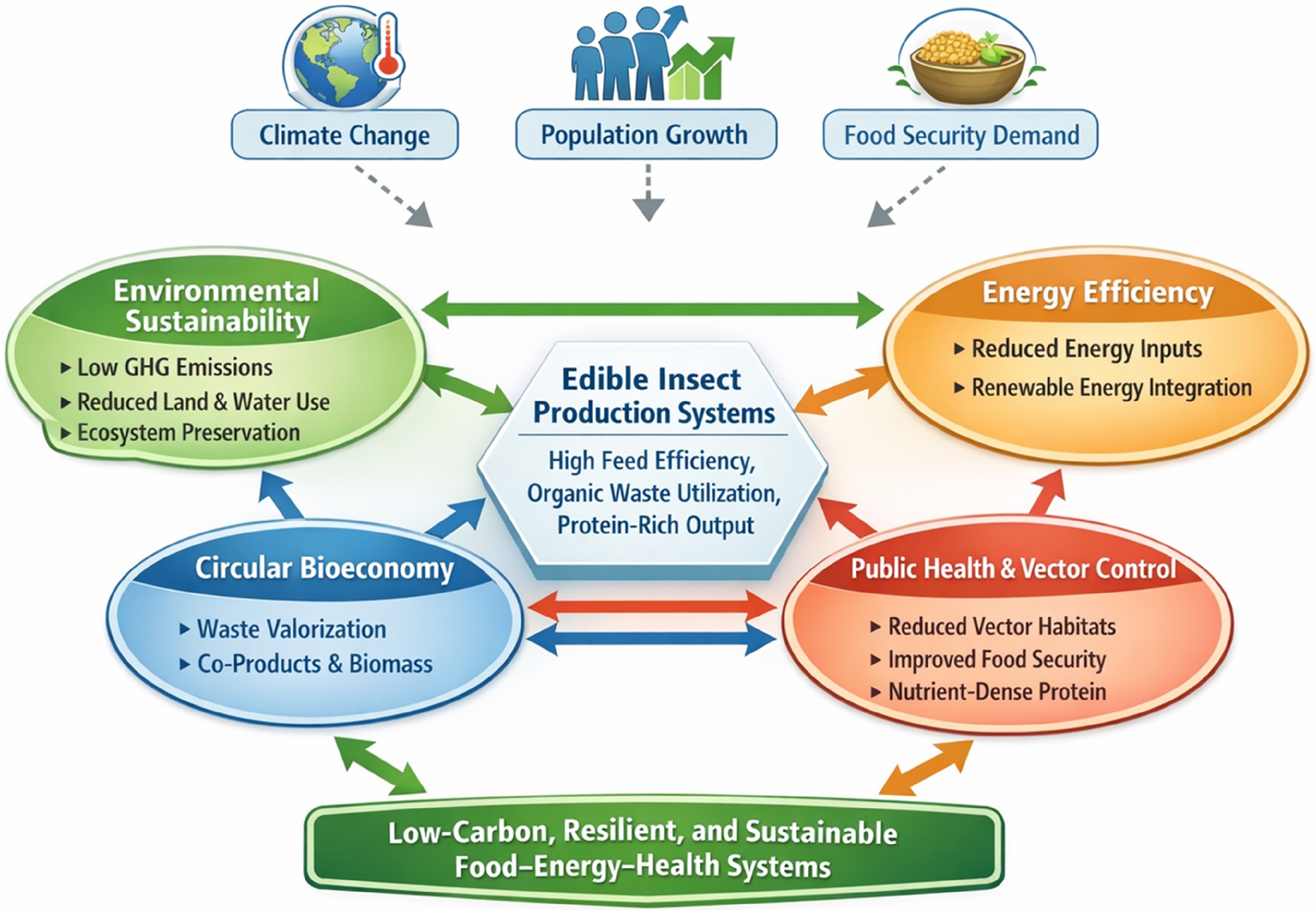
Figure 1.
Conceptual framework illustrating the integration of edible insect production within sustainable energy–food–health systems.
-
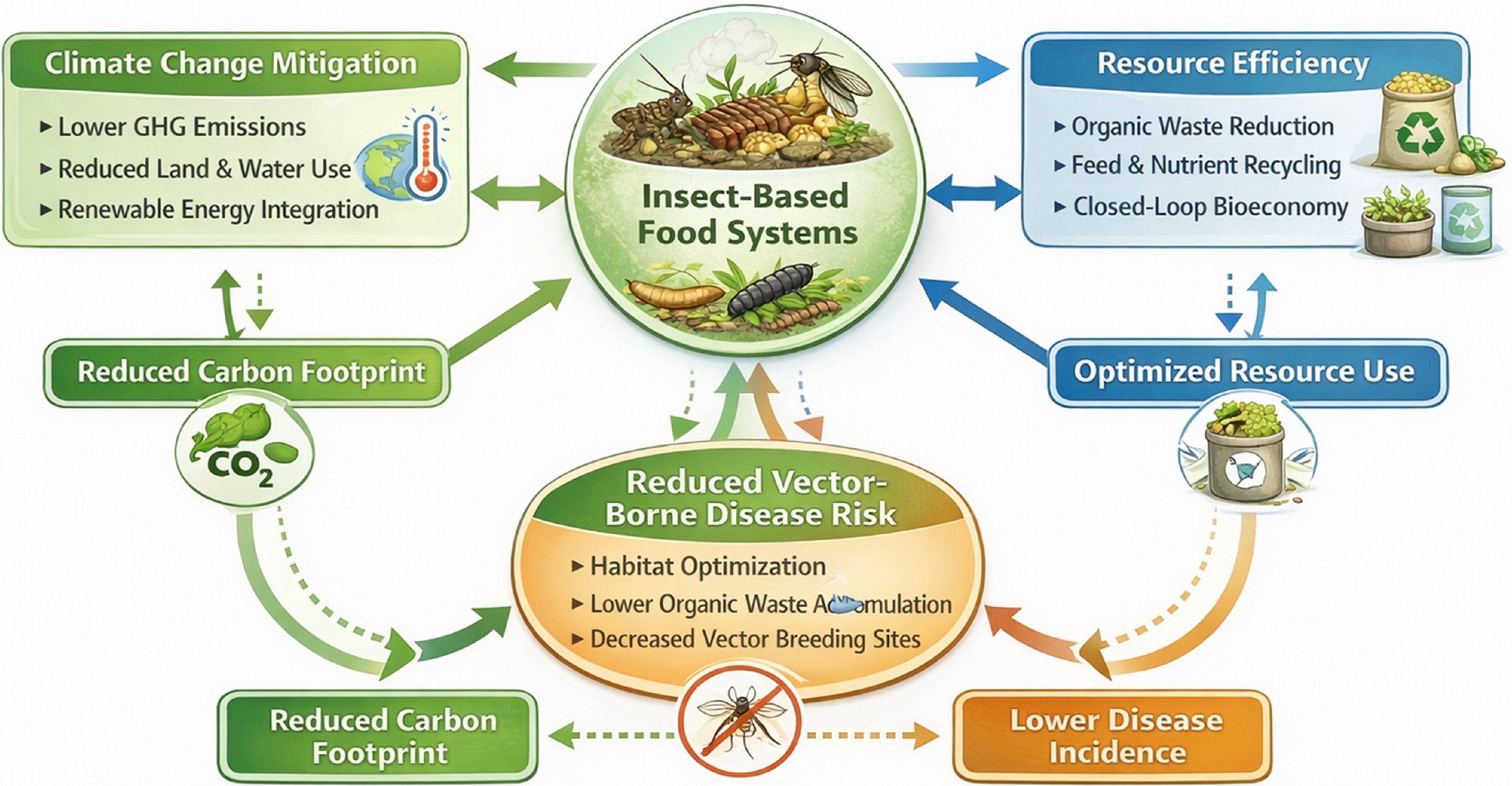
Figure 2.
Pathways linking insect-based food systems to climate change mitigation, resource efficiency, and reduced vector-borne disease risk.
-
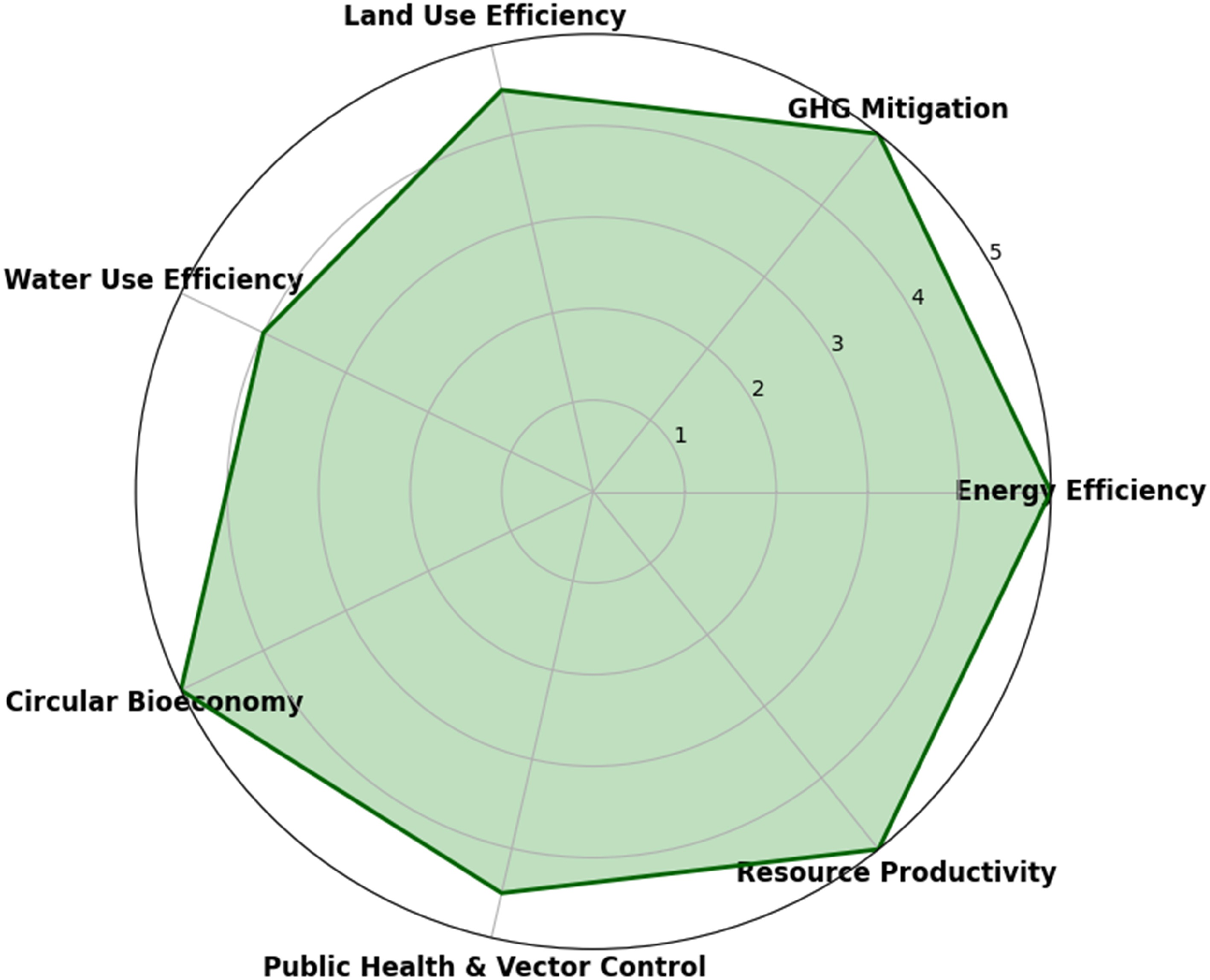
Figure 3.
Sustainability performance radar of edible insect production systems.
-
Indicator Edible insects* Beef cattle Pigs Poultry Key references Feed conversion ratio (kg feed/kg protein) 1.2–2.0 6–10 3–5 2–3 [5,35,49] Water use (L/kg protein) 1,000–3,000 15,000–20,000 6,000–8,000 4,000–5,000 [5,50] Land use (m²/kg protein) 2–5 50–200 10–20 5–10 [5,8,50] GHG emissions (kg CO2-eq/kg protein) 2–6 50–60 7–12 6–10 [49,50,58] Energy demand (MJ/kg protein) 20–35 100–120 30–50 25–35 [8,50] Production cycle (days) 30–60 400–600 150–200 40–60 [35,41] Circular bioeconomy integration High Low Low–moderate Moderate [52,56] Organic waste valorization potential High Limited Limited Limited [52,56] * Representative edible insect species include T. molitor, H. illucens, and A. domesticus. Values represent approximate ranges synthesized from published LCA and sustainability studies and may vary according to the production system, geographical location, feed substrate, and methodological assumptions. Table 1.
Comparison of selected sustainability indicators between edible insect and conventional livestock production systems.
-
Sustainability domain Indicator Representative value/observation Sustainability implication Environmental sustainability GHG emissions 2–6 kg CO2-eq/kg protein Reduced climate impact compared with conventional livestock Environmental sustainability Land use 2–5 m²/kg protein Lower pressure on land resources and biodiversity Environmental sustainability Water use 1,000–3,000 L/kg protein Improved resilience in water-limited regions Energy efficiency Feed conversion ratio 1.2–2.0 kg feed/kg protein Efficient conversion of feed into edible biomass Energy efficiency Energy demand 20–35 MJ/kg protein Reduced energy requirements across the production chain Energy efficiency Renewable energy compatibility High Potential integration with solar-, biogas-, and waste-to-energy systems Circular bioeconomy Organic waste utilization High utilization of agro-industrial by-products Supports resource recovery and waste reduction Circular bioeconomy Frass generation Valuable by-product for soil amendment Enhances nutrient recycling and soil fertility Circular bioeconomy Biomass valorization Production of chitin, protein, lipids, and bio-based products Promotes circular production systems Public health and food security Nutritional quality High-quality protein and essential micronutrients Supports dietary diversity and food security Public health and food security Waste management improvement Reduced accumulation of organic residues May contribute to improved environmental hygiene Public health and ecosystem resilience Habitat management More controlled production environments Potential indirect influence on vector breeding conditions† † Current evidence regarding vector-borne disease mitigation is primarily indirect and based on environmental management, habitat modification, and ecological sustainability studies rather than direct epidemiological investigations. Values and observations are synthesized from representative studies included in this review and may vary according to the insect species, production systems, feed substrates, geographical conditions, and methodological assumptions. Table 2.
Sustainability indicators and potential contributions of edible insect production systems.
Figures
(3)
Tables
(2)