-
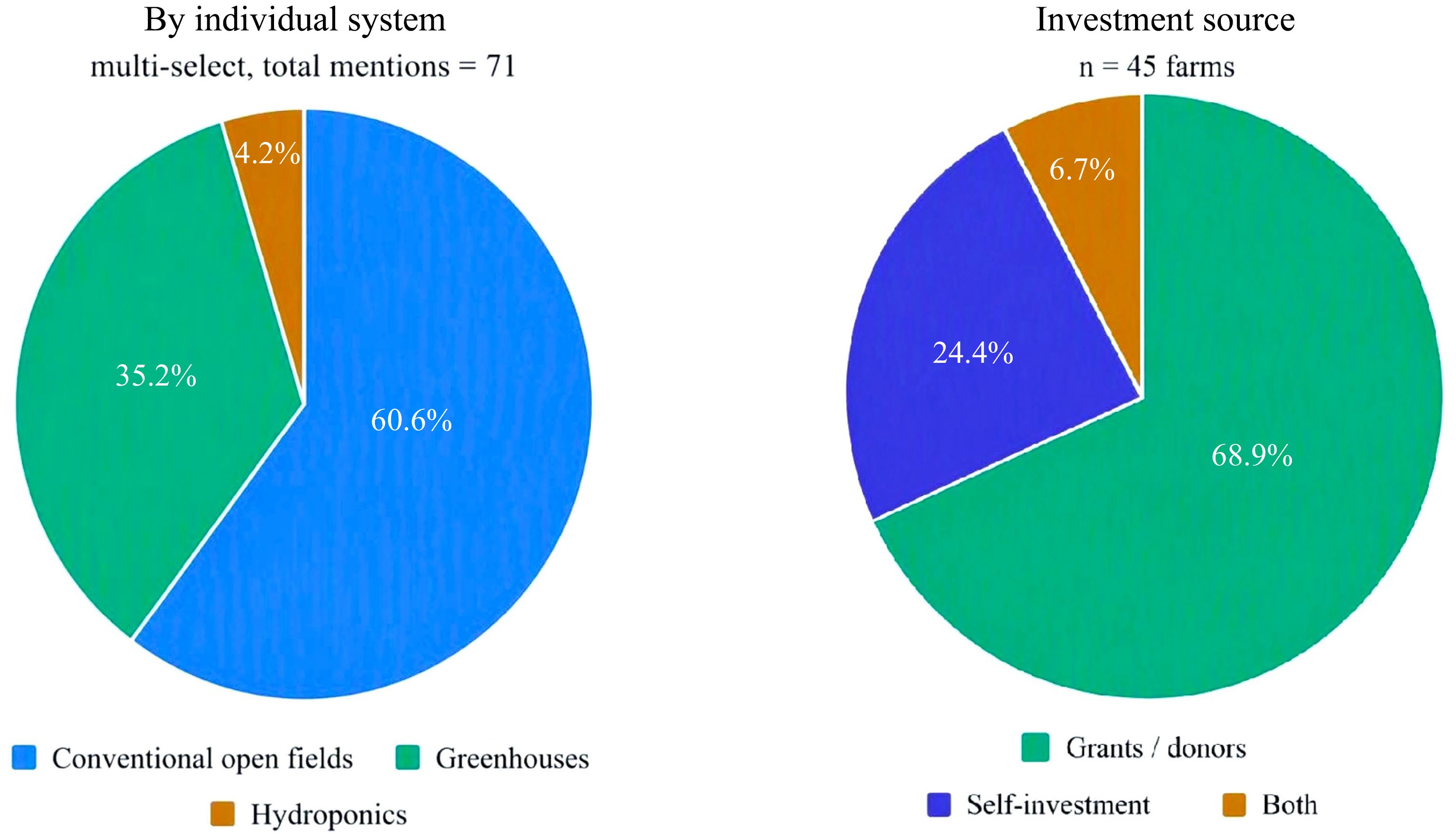
Figure 1.
Profile of farmers selected for the field visits who reported using non-conventional irrigation scheduling techniques.
-
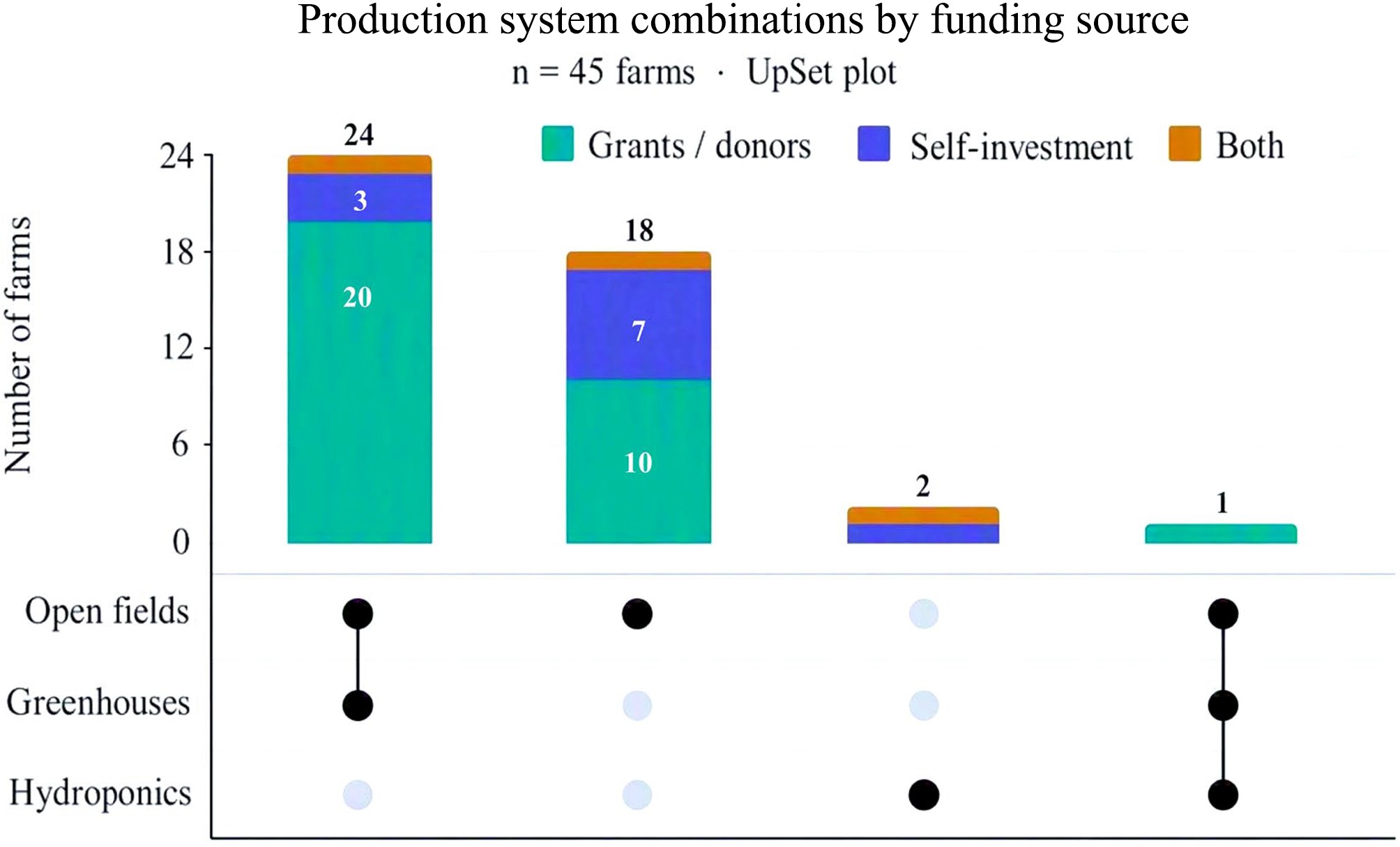
Figure 2.
Investment sources for farmers using different farming systems. (Unlabeled column blocks have a count of one).
-
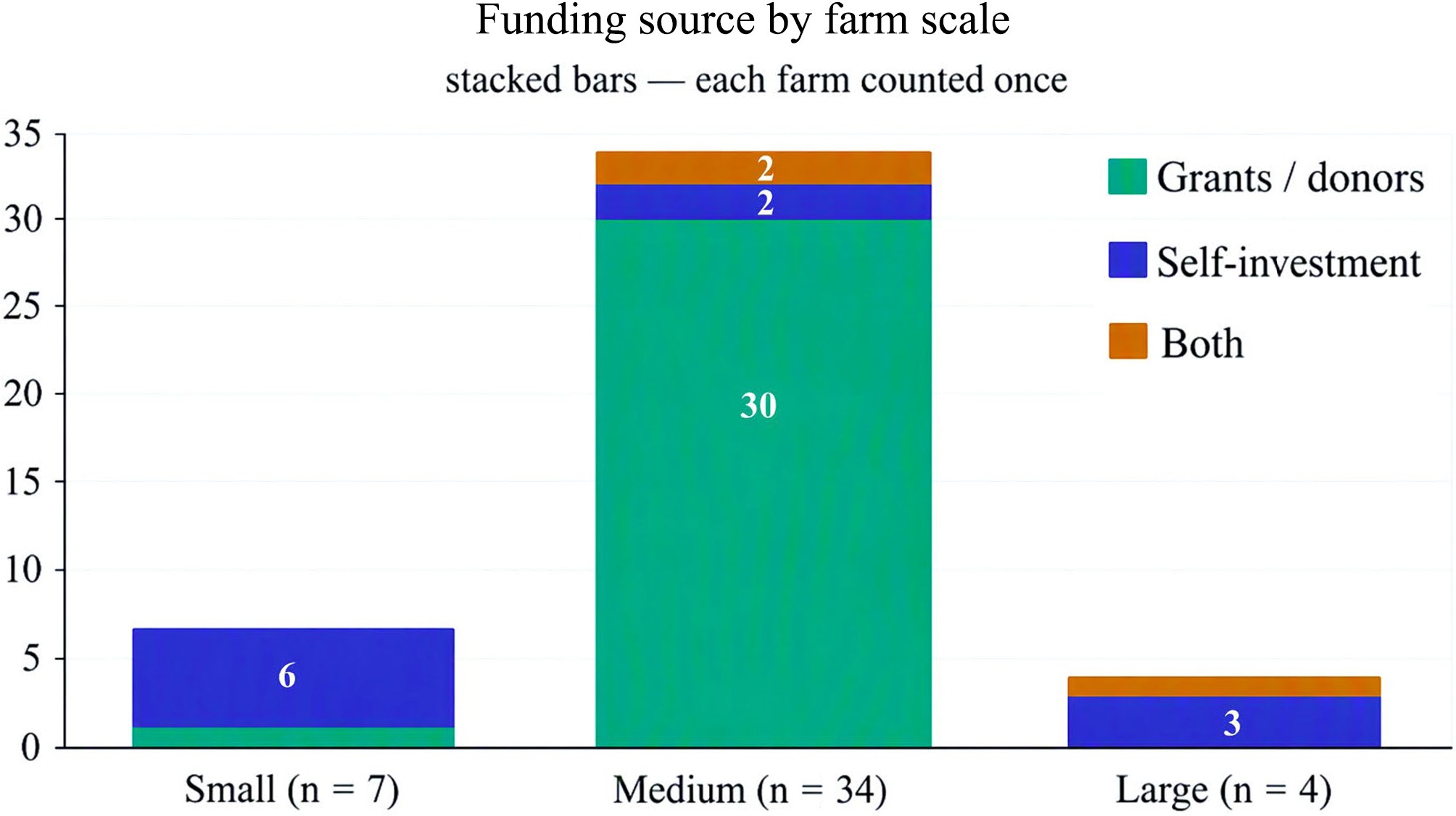
Figure 3.
Investment sources for farmers with different farm sizes/scales (Unlabeled column blocks have a count of one). Small: < 30 du, Medium: 30−100 du, Large: > 100 du (1 Dunnum 'du' = 0.1 ha).
-
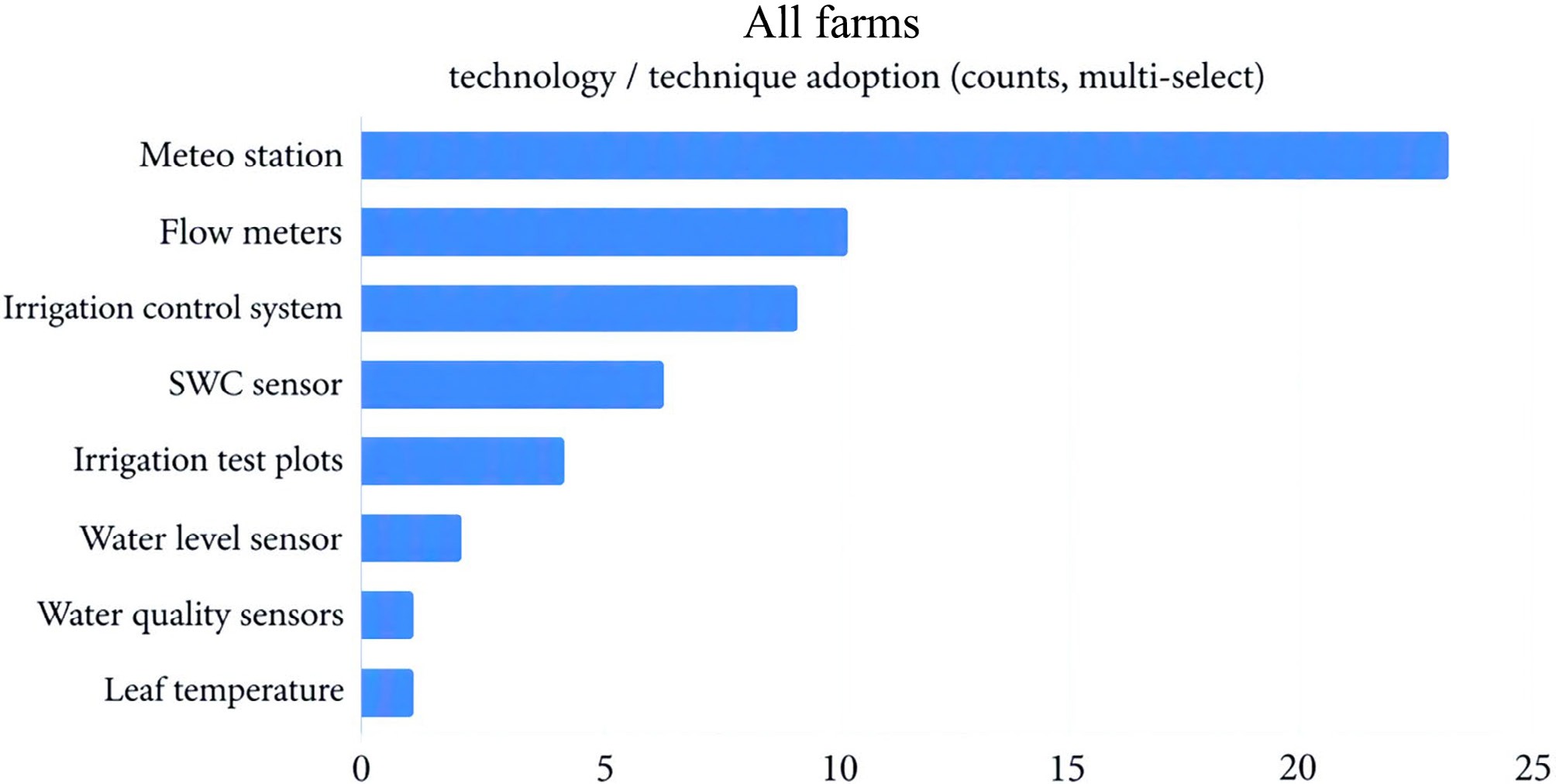
Figure 4.
Technology choices amongst surveyed farmers. SWC: soil water content.
-
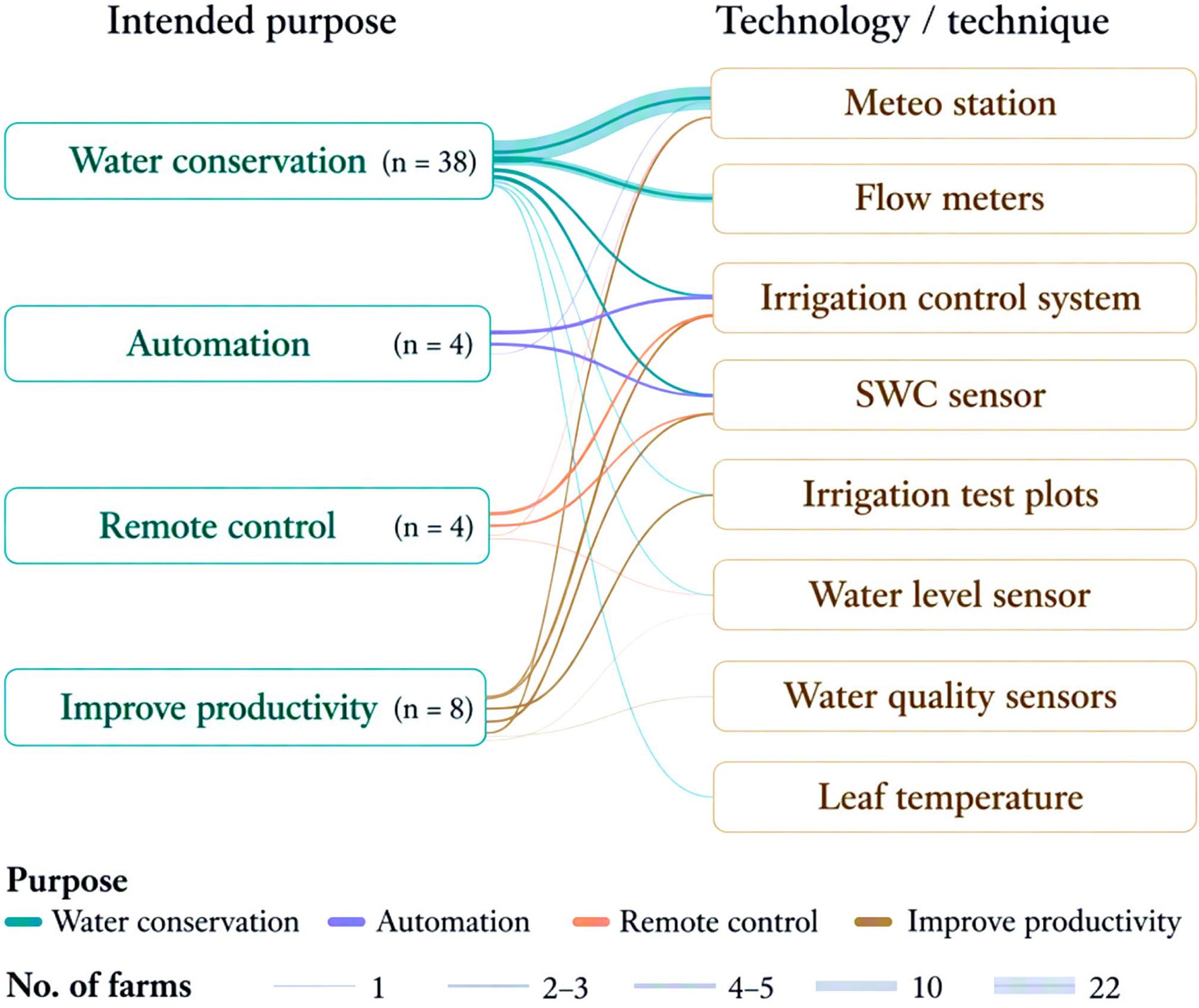
Figure 5.
Intended purpose and technology choices amongst surveyed farmers. SWC: soil water content.
-
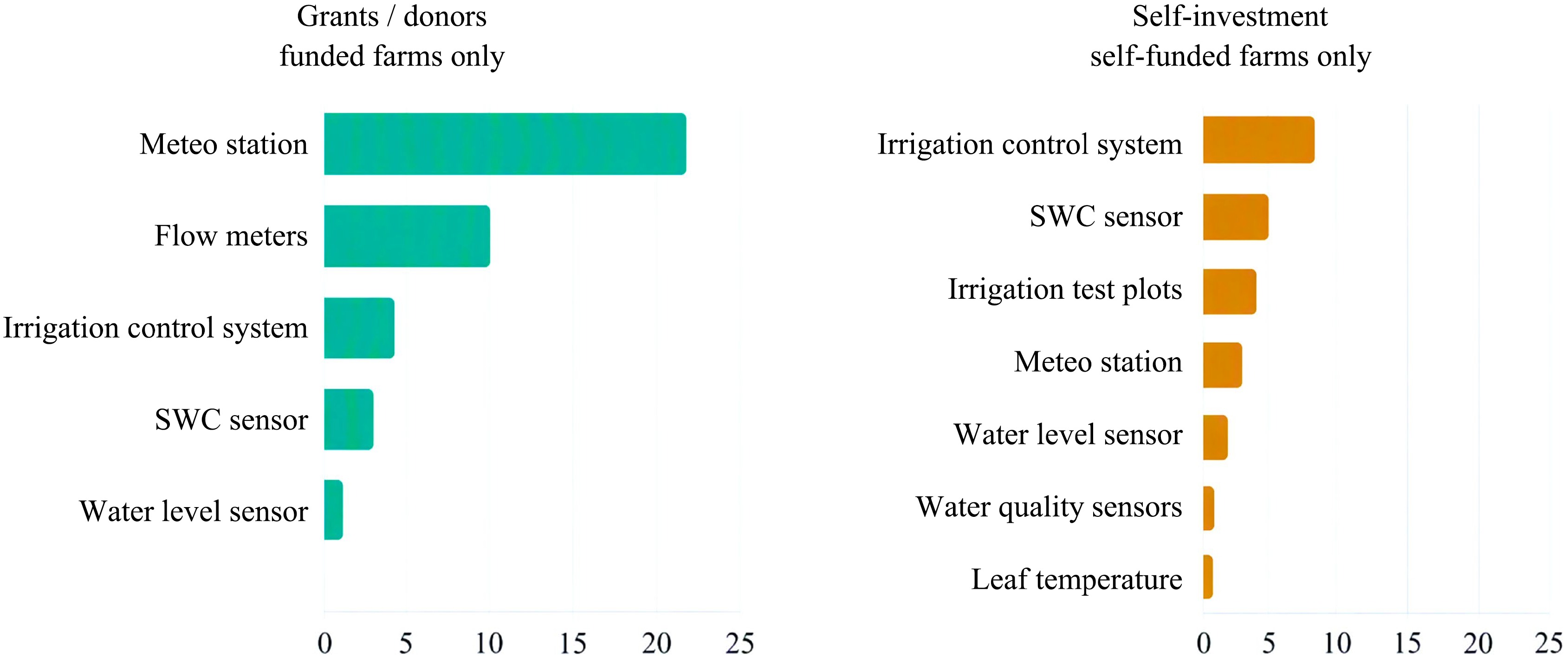
Figure 6.
Technology choices between farmers who received funding grants and those who self-invested. SWC: soil water content.
-
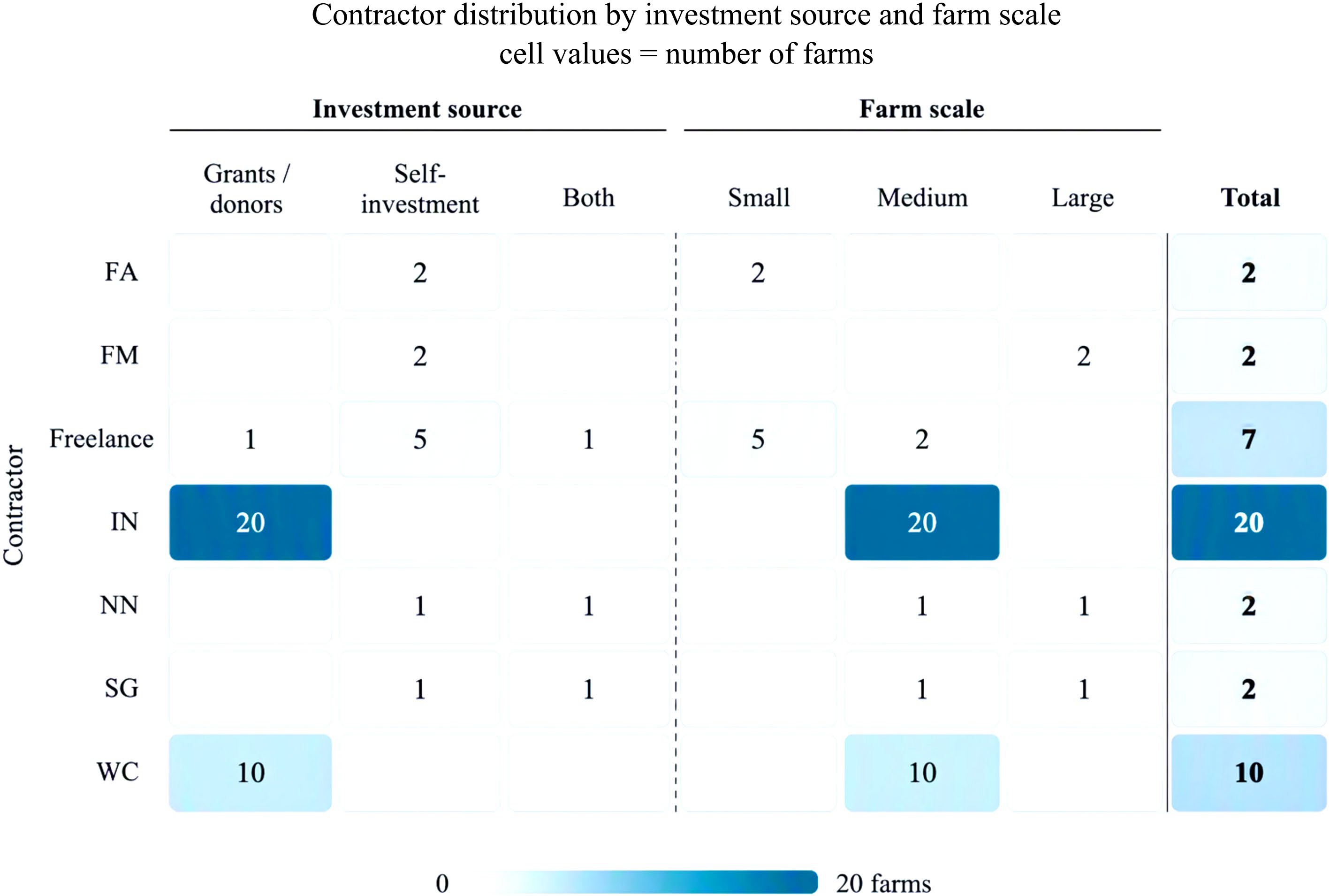
Figure 7.
Distribution of contractors across grant-funded and self-invested farms and farm size.
-
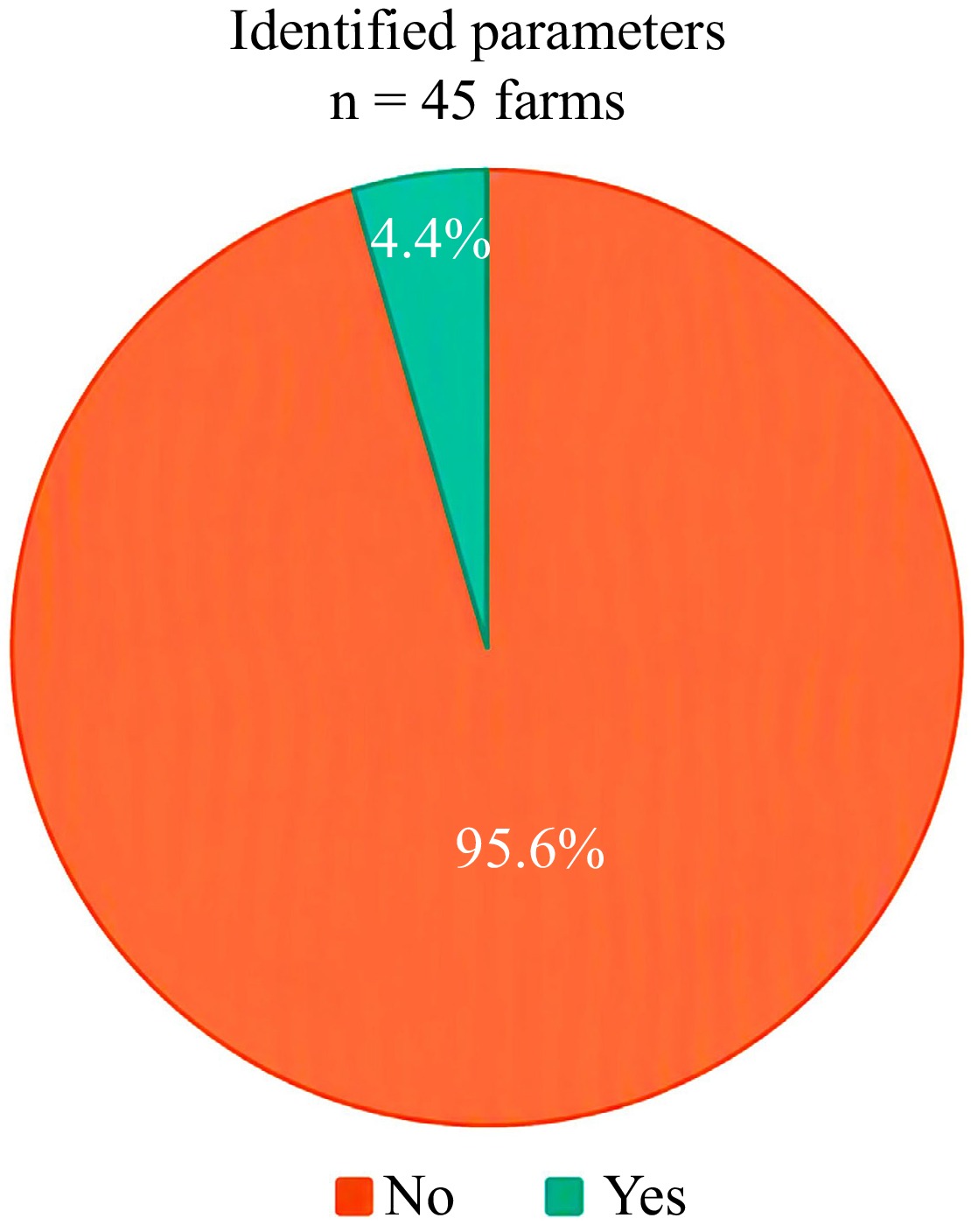
Figure 8.
The number of farm sites where proper parameters for applying feedback mechanisms in irrigation scheduling were observed.
-
Technology Contribution to irrigation scheduling Meteorological station Provides weather data (ETo, rainfall, temperature) to calculate crop water demand and adjust schedules, thus minimizing non-beneficial water Flow meters Monitors water volume applied for each plot, enabling comparison against target doses and detecting over/under-irrigation Irrigation control system Automates irrigation triggering and scheduling based on pre-set rules or sensor inputs and helps avoid human error SWC sensor Measures soil water content to trigger irrigation when thresholds are crossed and confirm adequate refill without exceeding the soil's capacity to retain water, thus minimizing loss of water to gravity Irrigation test plots Calibrates scheduling parameters by comparing irrigation treatments under field conditions Water level sensor Monitors water reservoir levels to inform available supply and volume of water supplied per irrigation event; can also help prevent pump failure Leaf temperature Indicates crop water stress in real time, enabling demand-based irrigation triggering and minimizing water consumption SWC: Soil water content. Table 1.
Contribution of different technologies and techniques to irrigation scheduling for water conservation.
-
Technology Feedback parameter Meteorological stations Kc or any coefficient that relates ET or temperature to crop water needs, irrigation amount, time needed, etc SWC sensors FC (in any unit), or any reference value related to soil or irrigation thresholds as trigger or stopping points or indications of too high moisture content Leaf temperature A threshold canopy or leaf temperature value (absolute or relative to air temperature) used to detect crop heat/water stress and trigger irrigation, such as a stress index or a temperature difference (Tc – Ta) Water level/
flow meterA minimum or maximum water level threshold in a reservoir or canal, or a target flow rate/cumulative volume used to trigger, stop, or ration irrigation events Water quality sensor (in hydroponic systems) Target ranges for EC (electrical conductivity), pH, or nutrient concentration that trigger adjustments to irrigation frequency, solution dilution, or system flushing to maintain optimal root-zone conditions SWC: Soil water content; ET: Evapotranspiration; FC: Field capacity. Table 2.
Feedback parameters considered as 'sound integration' for different technology options in this study.
Figures
(8)
Tables
(2)