-
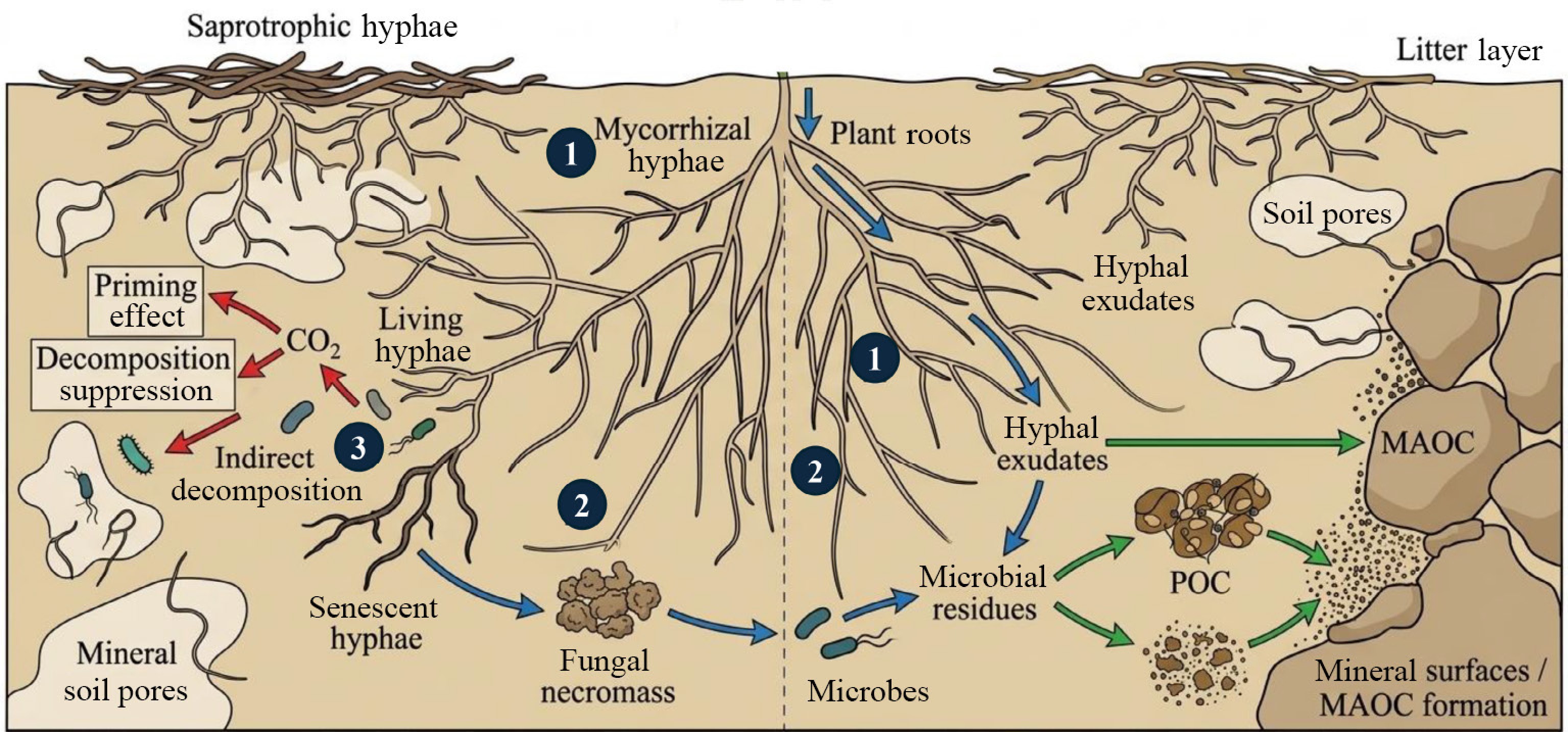
Figure 1.
Hyphal pathways of the formation of SOC. Mycorrhizal hyphae redistribute recently fixed plant carbon from the rhizosphere to distant mineral microsites. Living hyphae release exudates, form biomass, and interact with saprotrophic fungi and other microbes. Upon senescence, hyphal necromass can be decomposed, incorporated into particulate organic matter or stabilized as mineral-associated organic matter. The balance among input, respiration, and stabilization depends on the fungal guild, soil mineralogy, nutrient availability and climate. The image depicts the full pathway of hyphal carbon input, microbial transformation, formation of particulate organic carbon, and stabilization of MAOC, separating two pathways: direct carbon input from living hyphae and indirect microbial regulation.
-
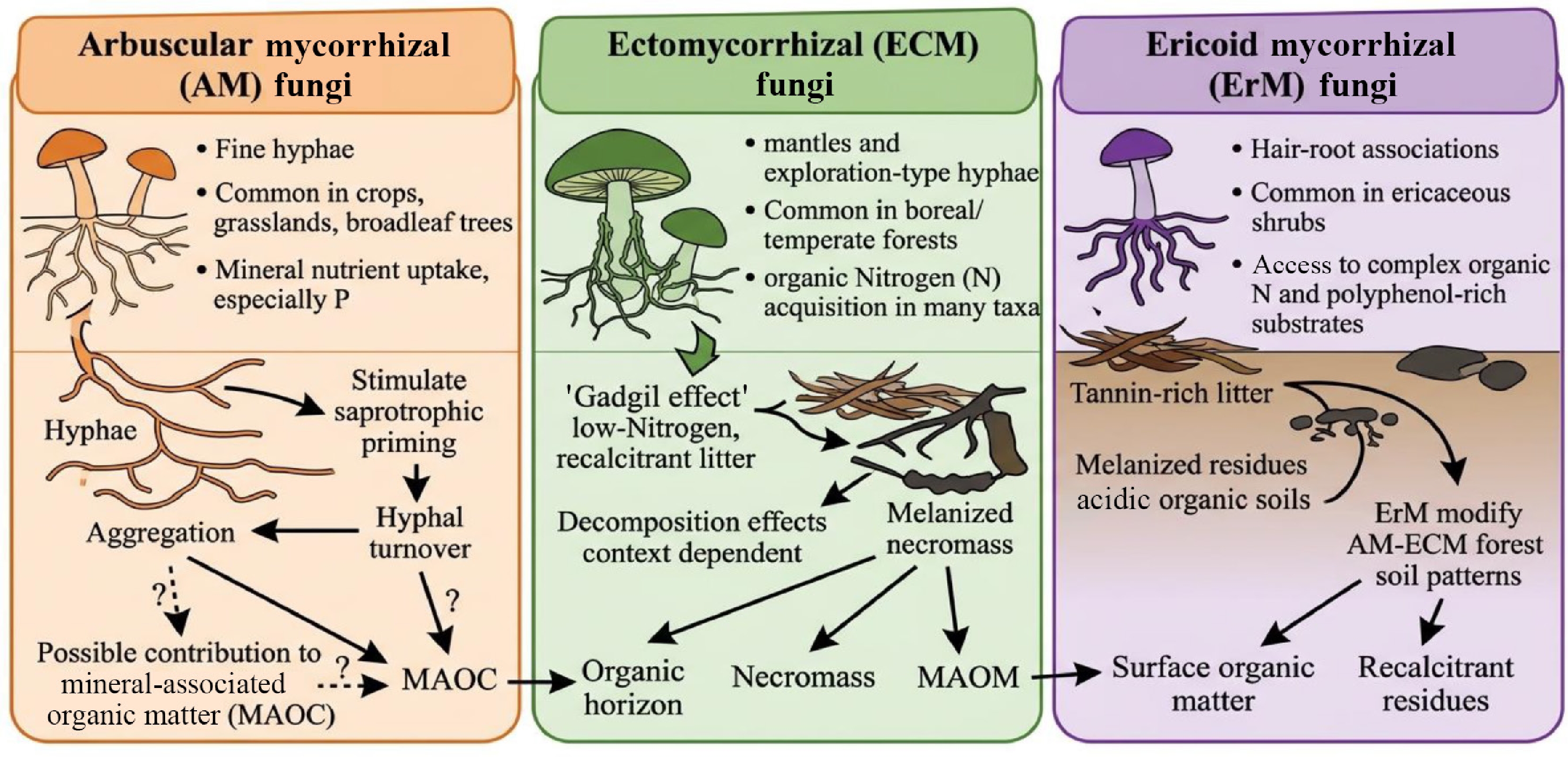
Figure 2.
Contrasting mechanisms by which AM, ECM, and ErM fungi regulate SOC. Mycorrhizal guilds differ in their hyphal traits, nutrient acquisition, and interactions with decomposers. AM fungi mainly influence SOC through plant productivity, aggregation, hyphal turnover, and priming. ECM fungi can either suppress or stimulate decomposition depending on nitrogen availability, litter quality, and fungal traits, and melanized necromass may contribute to persistent SOC. ErM fungi combine enzymatic access to complex organic substrates with the tannin-rich host litter and chemically resistant residues, strongly influencing surface SOC and modifying trees' mycorrhizal effects.
-
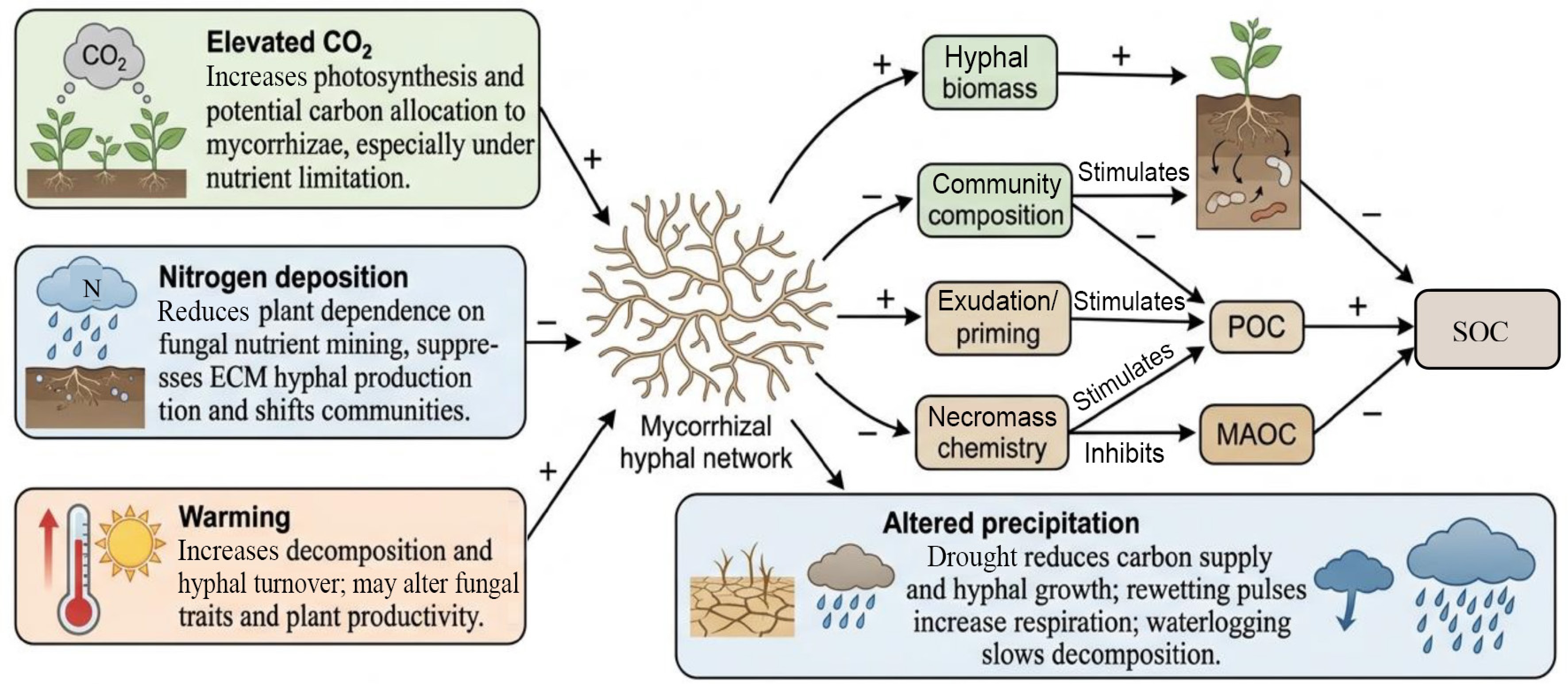
Figure 3.
Climate change-related drivers alter mycorrhizal carbon allocation, hyphal traits, and SOC stabilization pathways. Global climate change modifies SOC through direct effects on plants, fungi, and the soil's physical conditions. Elevated CO2 may enhance mycorrhizal carbon fluxes where nutrients limit plant growth, whereas nitrogen deposition often reduces hosts' carbon allocation to nutrient-foraging mycelium. Warming and altered precipitation affect hyphal growth, decomposition, necromass turnover, and stabilization. The net SOC feedback depends on the balance among increased carbon input, microbial respiration and physical or mineral protection. All four global change drivers rarely act independently in natural ecosystems; their combined nonadditive effects jointly reshape hyphal traits and the ultimate net SOC balance.
Figures
(3)
Tables
(0)