-
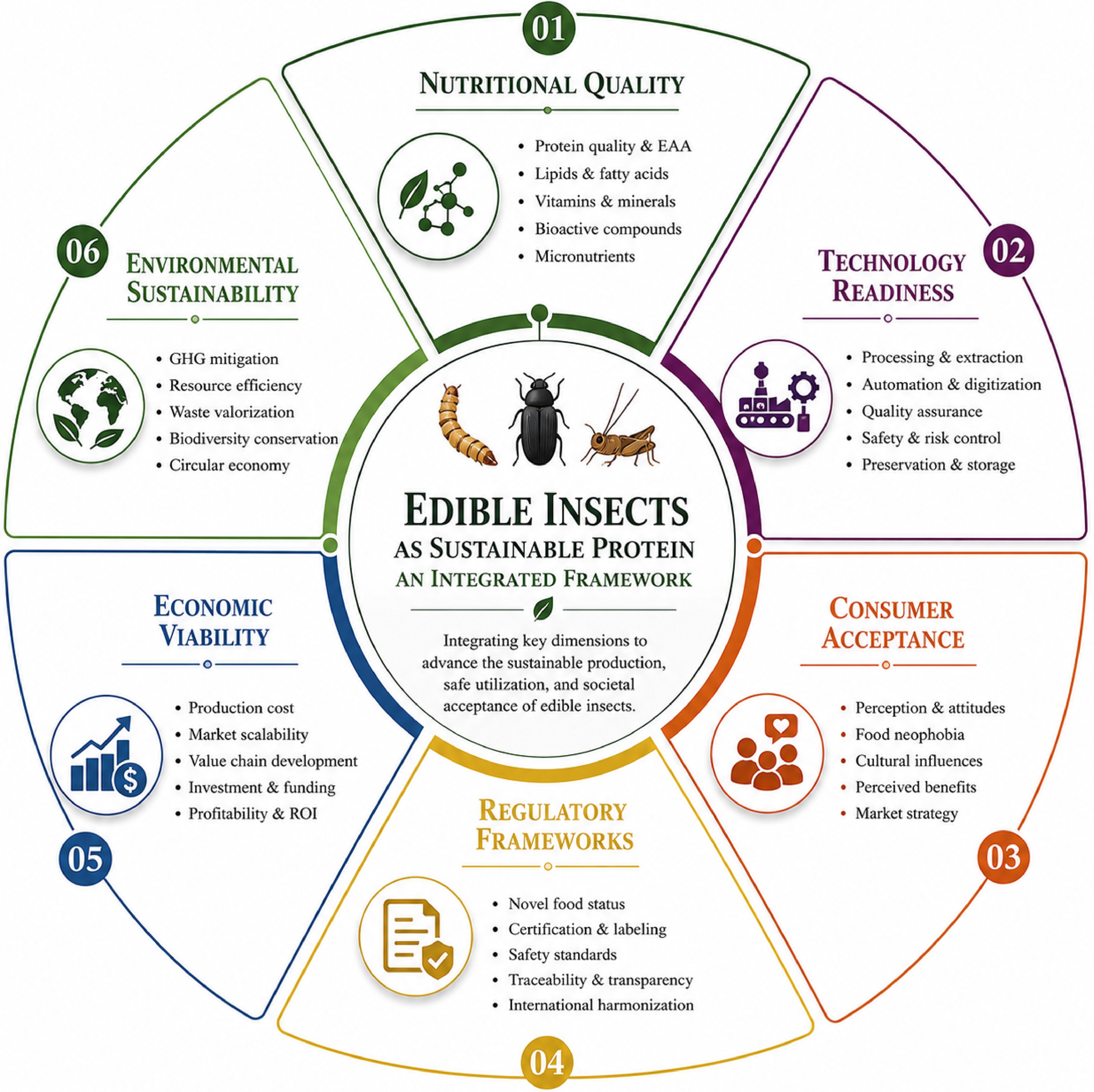
Figure 1.
Integrated six-dimensional framework applied in this review to synthesize the nutritional, environmental, economic, regulatory, sociocultural, and technological determinants of EI valorization, in place of treating these as independent bodies of literature.
-
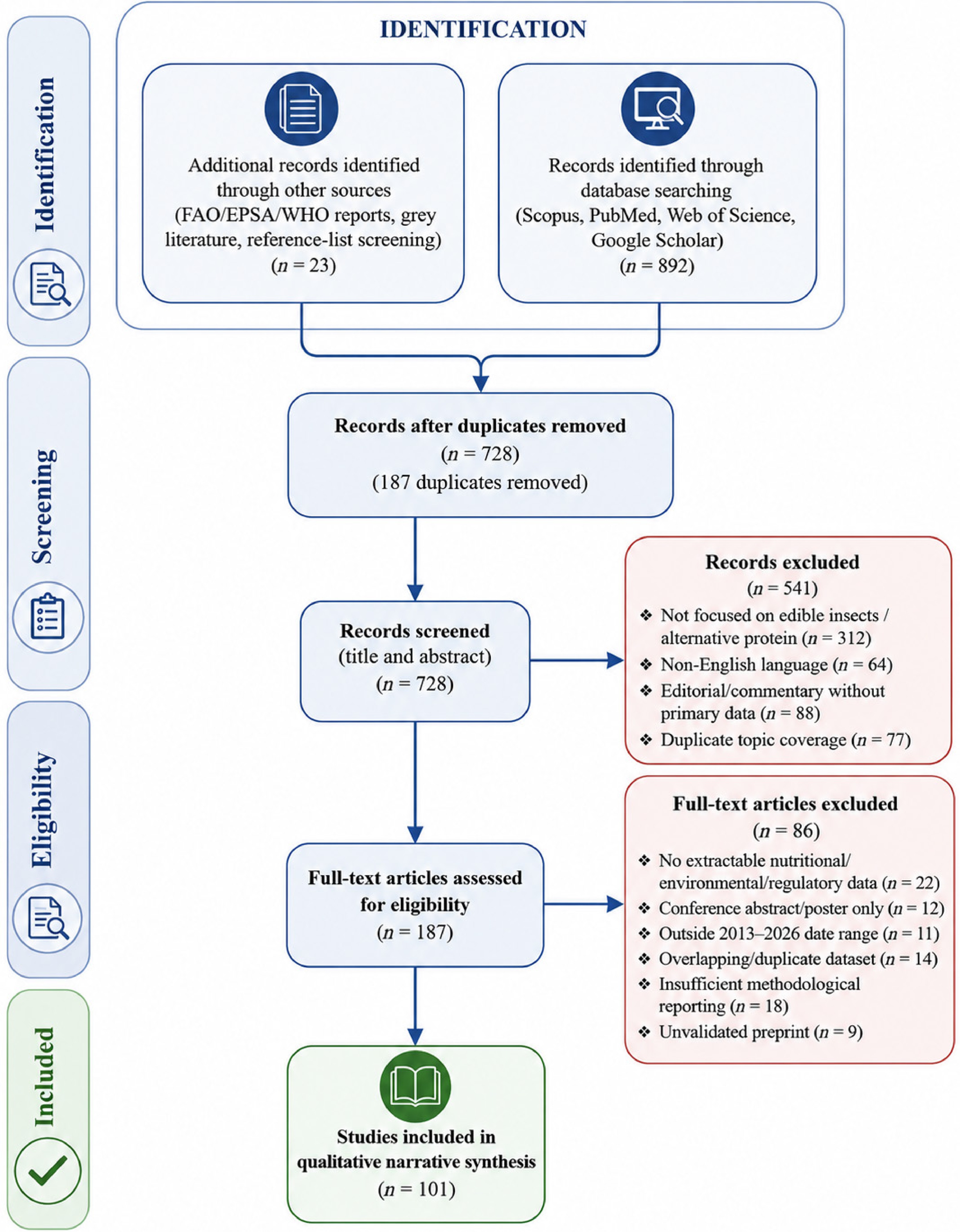
Figure 2.
PRISMA flow diagram summarizing the literature search.
-
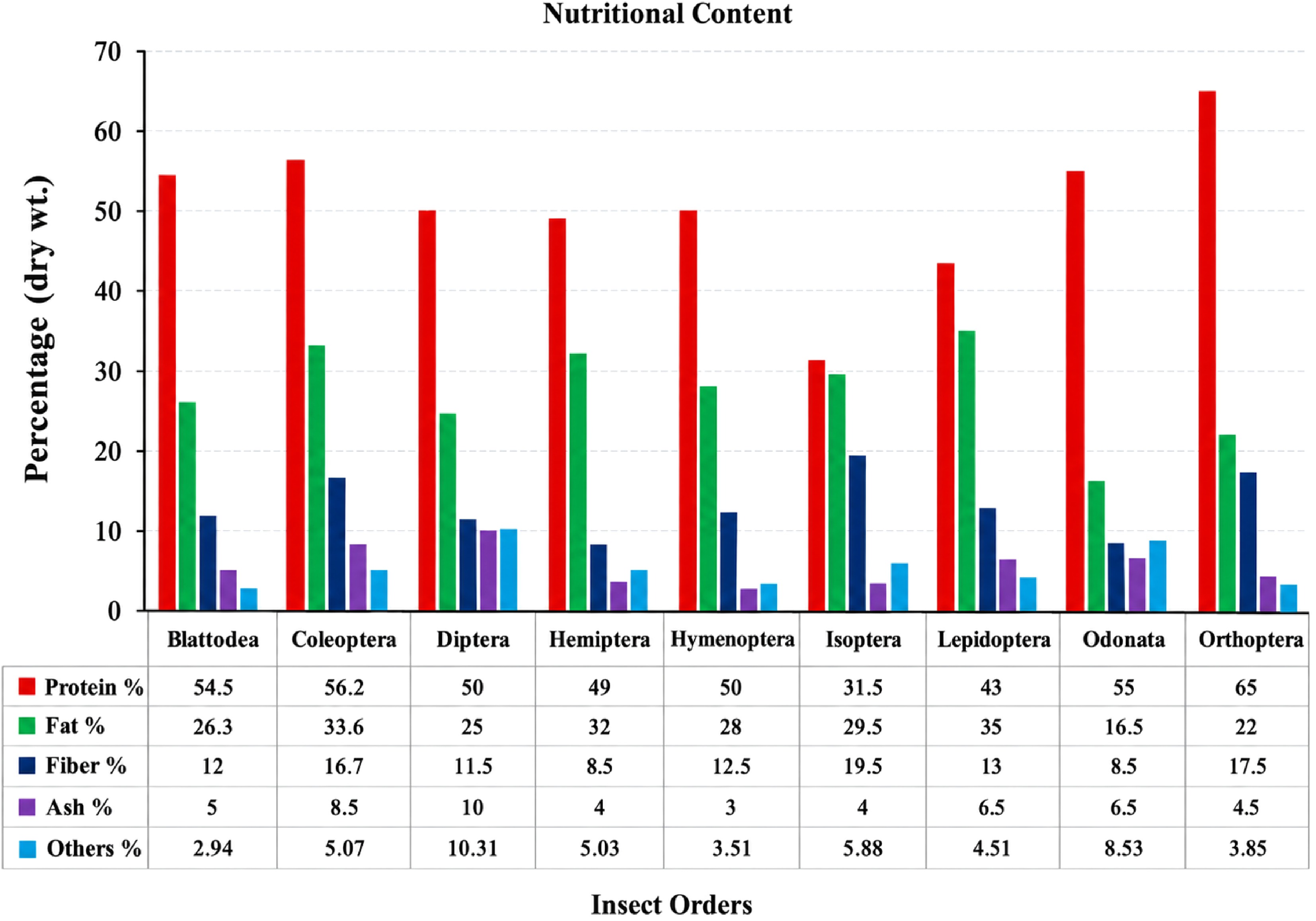
Figure 3.
A comparison of nutritional value (dry weight basis) of different insect among orders.
-
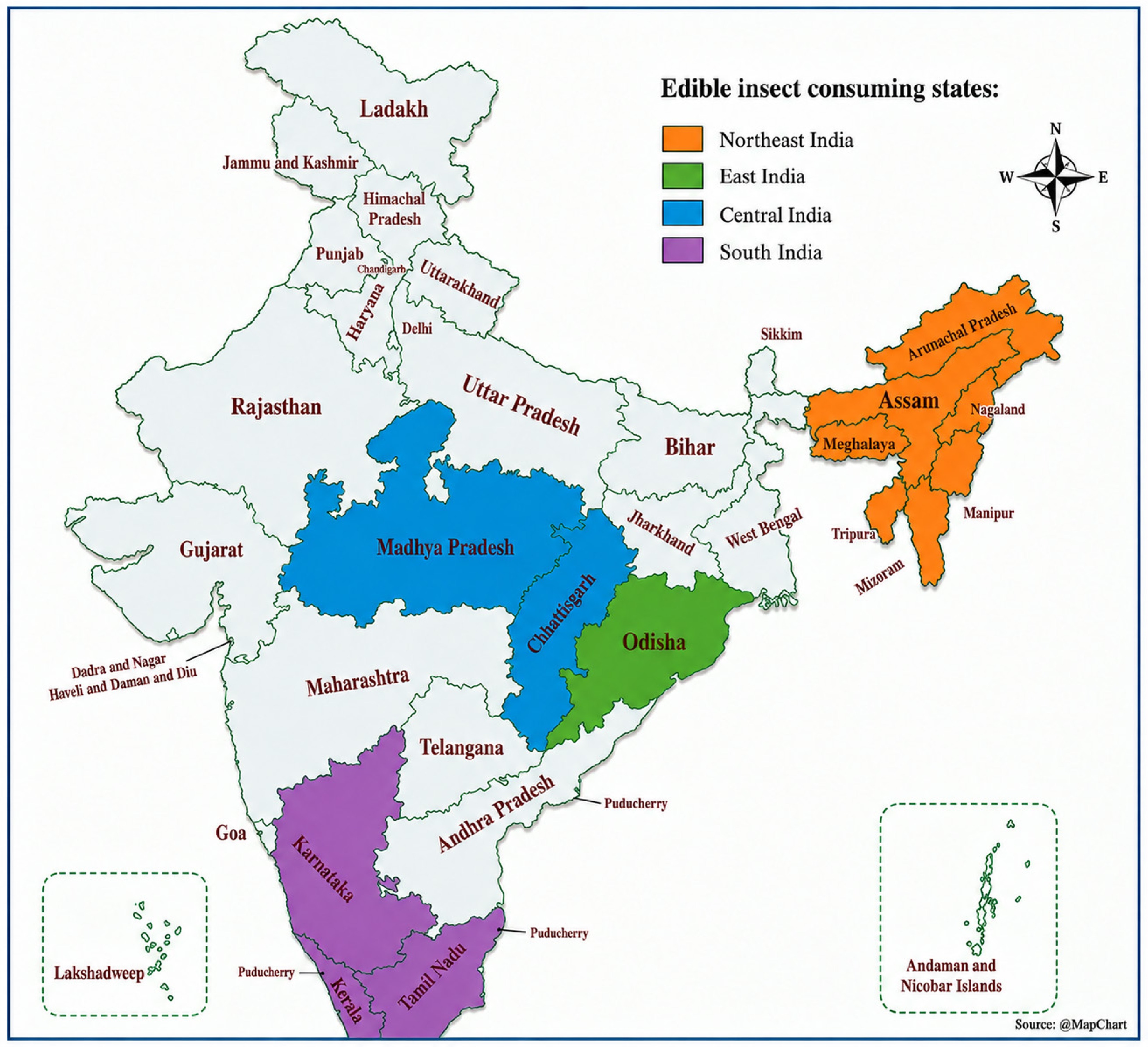
Figure 4.
EIs consuming states in India. Base map sourced from
www.mapchart.net/india.html . -
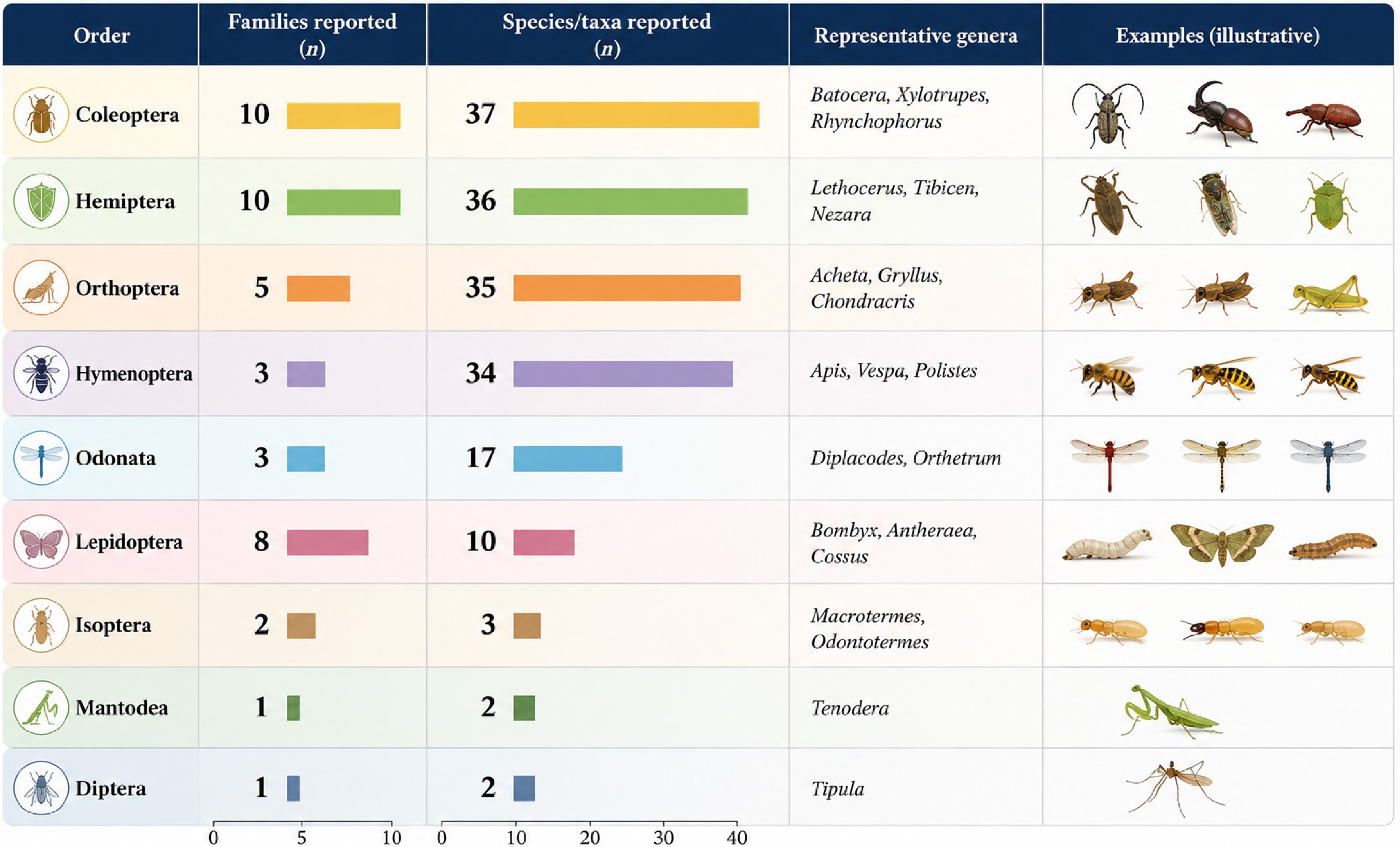
Figure 5.
Diversity of EI orders reported as human food in India.
-
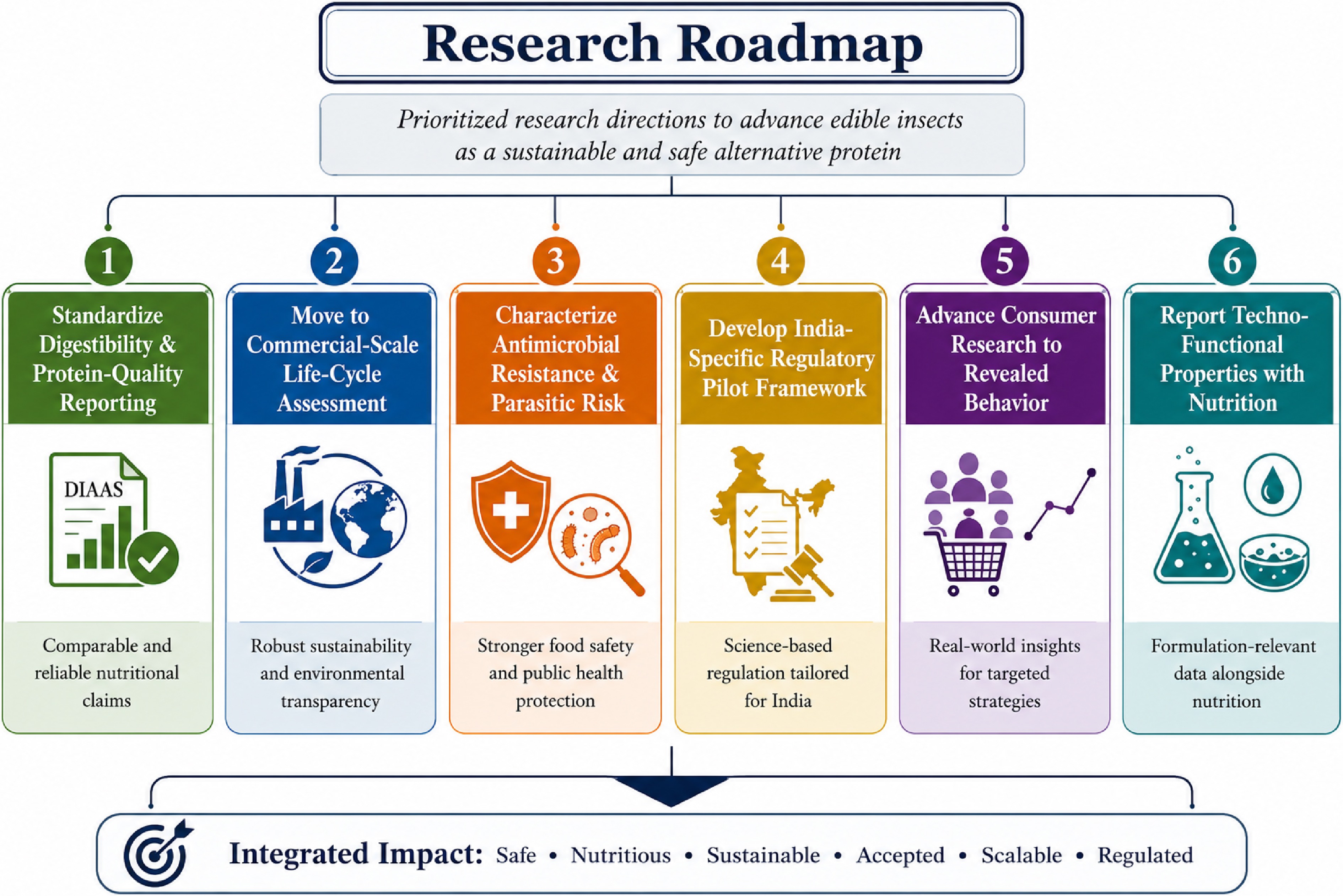
Figure 6.
Integrated research roadmap identifying six priority areas for advancing EIs as safe, sustainable, nutritionally valuable, and commercially viable alternative proteins.
-
Sources Common name Protein
(g/100 g wt.)Mode of consumption Edible stage Insects Cricket 13−20 Raw Adult Locusts 14−18 Grasshopper 13−21 Termites 13−28 Silkworm 10−17 Caterpillar Caterpillar 9−28 Larvae Yellow mealworm 24−25 Cattle Beef 22−27 Adult Reptile Turtles 20−24 Cooked Fish Salmon 20.5 Raw Cod 28.5 Catfish 17−28 Crustaceans Lobster 19−20 Prawn 20−21 Shrimps 18−21 Molluscs Mussels 9−12 Clams 12−15 Oysters 10 UNICEF/UN review sources[26]. Table 1.
Comparison of average protein content among different animal groups and insects.
-
Insect species Stage used Crude protein (%) Crude fat (%) Crude fiber (%) Ash (%) Animal-feed application Ref. Hermetia illucens (Black soldier fly) Larvae 30−35 25−30 7−10 9−11 Poultry, shrimp, aquaculture [60,61] Hermetia illucens (Black soldier fly) Larvae meal 45−55 10−20 10−15 10−12 Poultry, aquaculture, fisheries [62,63] Musca domestica (House fly) Maggot 43−47 20−25 6−8 6−7 Poultry, fish, small ruminants [64,65] Tenebrio molitor (Mealworm) Whole larvae 45−55 20−35 6−10 4−6 Poultry, aquaculture [66] Tenebrio molitor (Mealworm) Low-fat mealworm 45−50 8−12 8−12 4−5 Lower-fat poultry and aqua feeds [67] Acheta domesticus (House cricket) Powder 55−75 6−10 5−8 4−6 Poultry, fish, pet feed [68] Chorthippus oxya (Grasshopper) Adults 45−60 10−18 4−8 4−6 Poultry, small ruminants, aquaculture [69] Bombyx mori (Silkworm pupae) Pupae 45−55 20−30 4−6 4−6 Poultry, fish, livestock [70] Table 2.
Commercially available insect species used as animal feed in India.
Figures
(6)
Tables
(2)