-
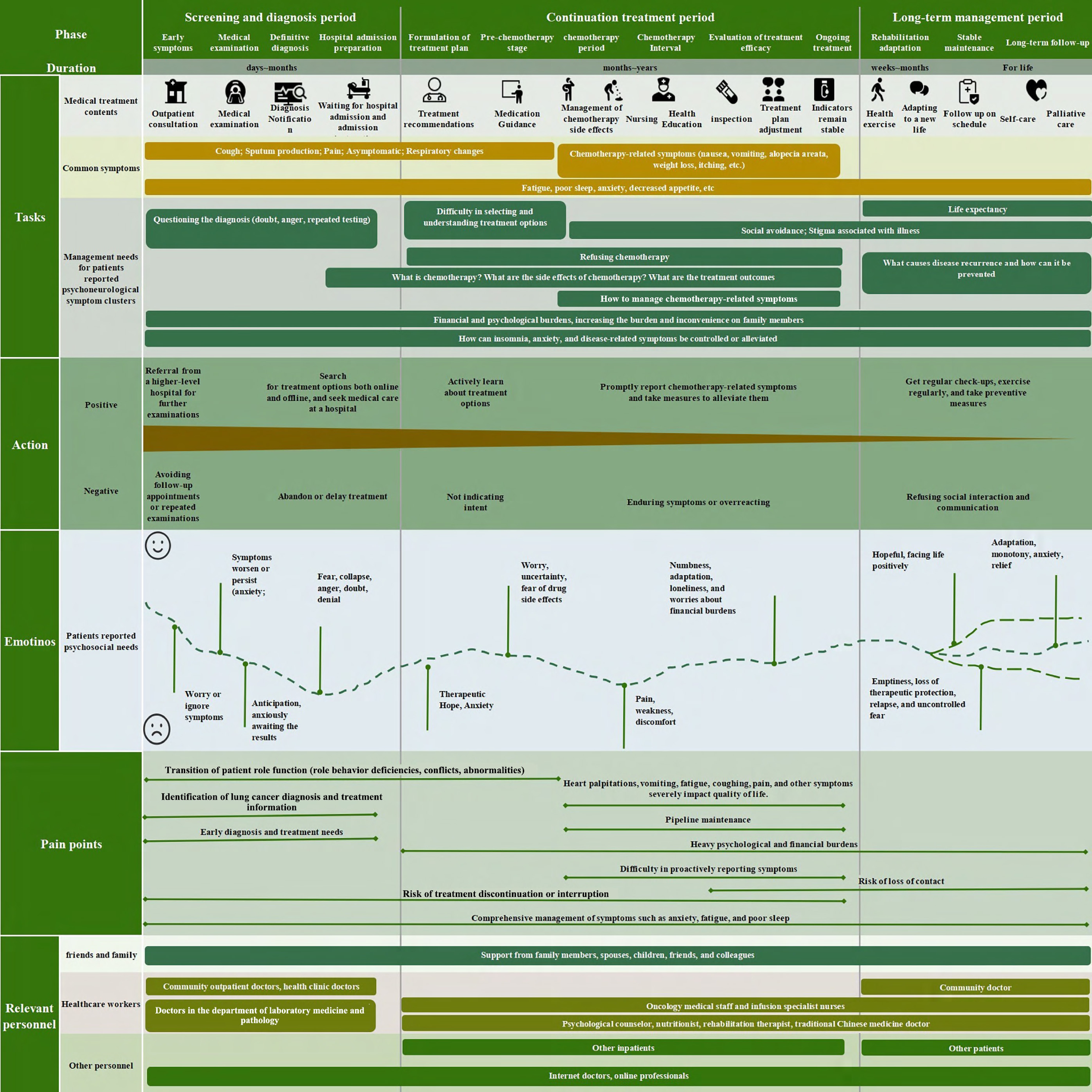
Figure 1.
The journey map of patients with lung cancer undergoing chemotherapy.
-
Main Questions Experiences of psychoneurological symptom clusters in lung cancer patients undergoing chemotherapy 1. Could you briefly share with us how you first noticed your physical discomfort and got diagnosed?
2. When the doctor recommended chemotherapy, how much did you know about it?
3. Regarding chemotherapy, what worried you the most?
4. During your most recent chemotherapy session and immediately after, how did you feel physically and emotionally?
5. Could you describe your energy level, sleep quality, and emotional state at that time?
6. When these uncomfortable symptoms appeared, what did you do to make yourself feel a bit better?
7. During your recovery at home, how were your energy levels, sleep, and emotional state?
8. Have you tried managing them?
9. How did your family or friends help you cope with fatigue, sleep, and emotional issues?
10. What kind of support did doctors and nurses provide throughout the process?Table 1.
Interview guide.
-
Variables Groups n (%) Gender Female
Male3 (14.3%)
18 (85.7%)Age (years) 45–60
61–75
76–906 (28.6%)
9 (42.9%)
6 (28.6%)Educational level Primary or below
Junior or senior high school
College or above11 (52.4%)
9 (42.9%)
1 (4.8%)Place residence Rural
Urban7 (33.3%)
14 (66.7%)Number of chemotherapy sessions 1 to < 3
3 to < 5
5–77 (33.3%)
8 (38.1%)
6 (28.6%)Tumour stage III 5 (23.8%) IV 16 (76.2%) Chemotherapy type Adjuvant chemotherapy 3 (14.3%) Palliative chemotherapy 18 (85.7%) Employment status Unemployed 21 (100%) Table 2.
Characteristics of the participants (n = 21).
Figures
(1)
Tables
(2)