-
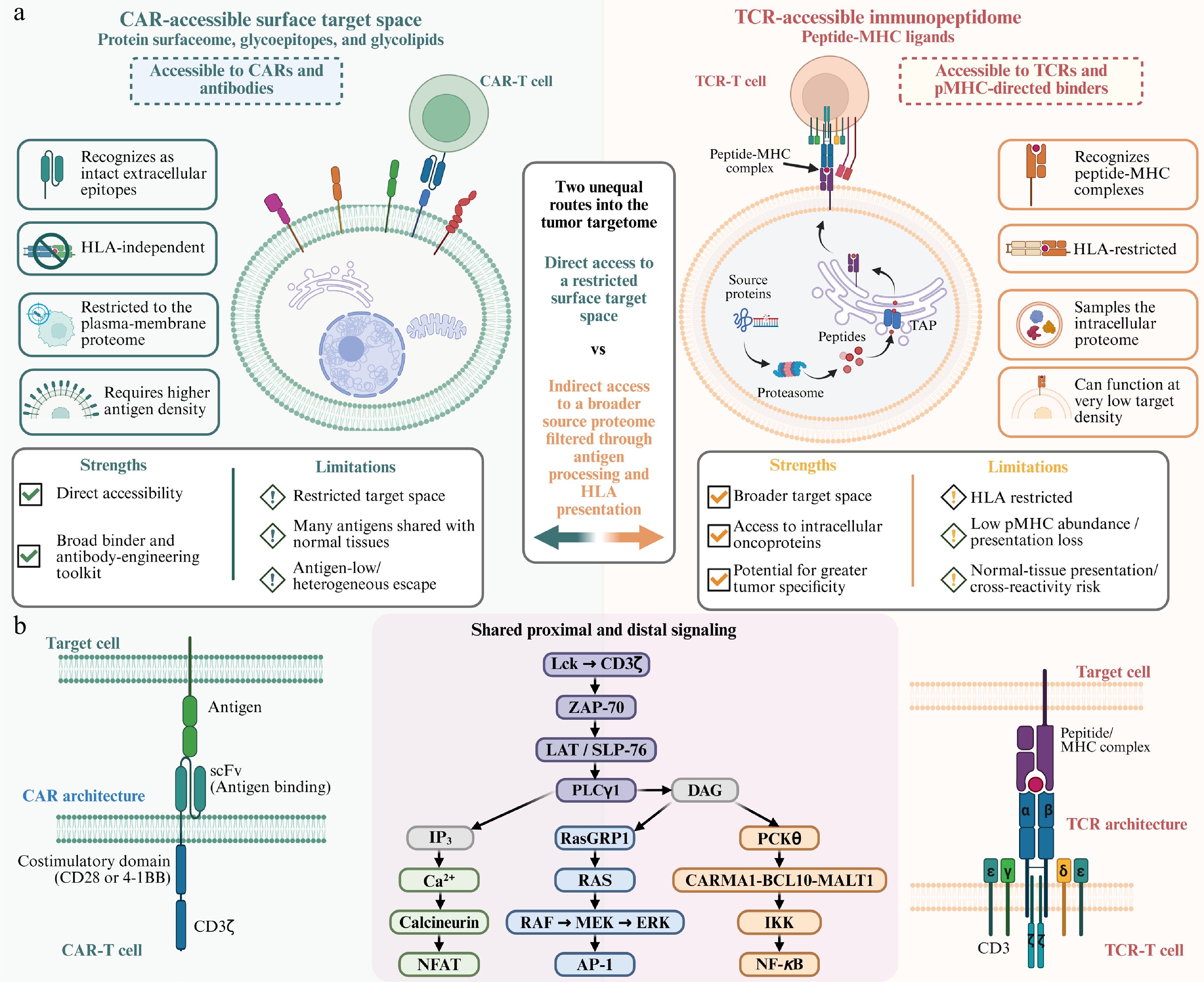
Figure 1.
Complementary target spaces and receptor architectures of CAR-T and TCR-T cells. (a) Conventional CARs directly recognize intact extracellular epitopes, surface proteins, glycoepitopes, and glycolipids, independently of HLA, but are confined to the plasma-membrane proteome, generally require relatively high antigen density, and face escape through antigen loss or low antigen density. TCRs recognize peptide-MHC complexes generated from a much broader source proteome through antigen processing and MHC presentation, reaching intracellularly derived oncoproteins at very low ligand density, at the cost of HLA restriction, low pMHC abundance, presentation loss, and cross-reactivity risk. (b) A CAR fuses recognition and signaling into a single chain (scFv, hinge and transmembrane segment, one costimulatory domain, and CD3ζ), whereas the TCR distributes these functions across the αβ heterodimer and the associated CD3γε, CD3δε, and CD3ζζ modules. Both nonetheless converge on the same signaling machinery: Lck-mediated phosphorylation of CD3ζ ITAMs, ZAP-70, the LAT/SLP-76 signalosome, and PLCγ1, whose products IP3 and DAG drive the Ca2+-calcineurin-NFAT, RasGRP1-RAS-ERK-AP-1, and PKCθ-CBM-IKK-NF-κB pathways.
-
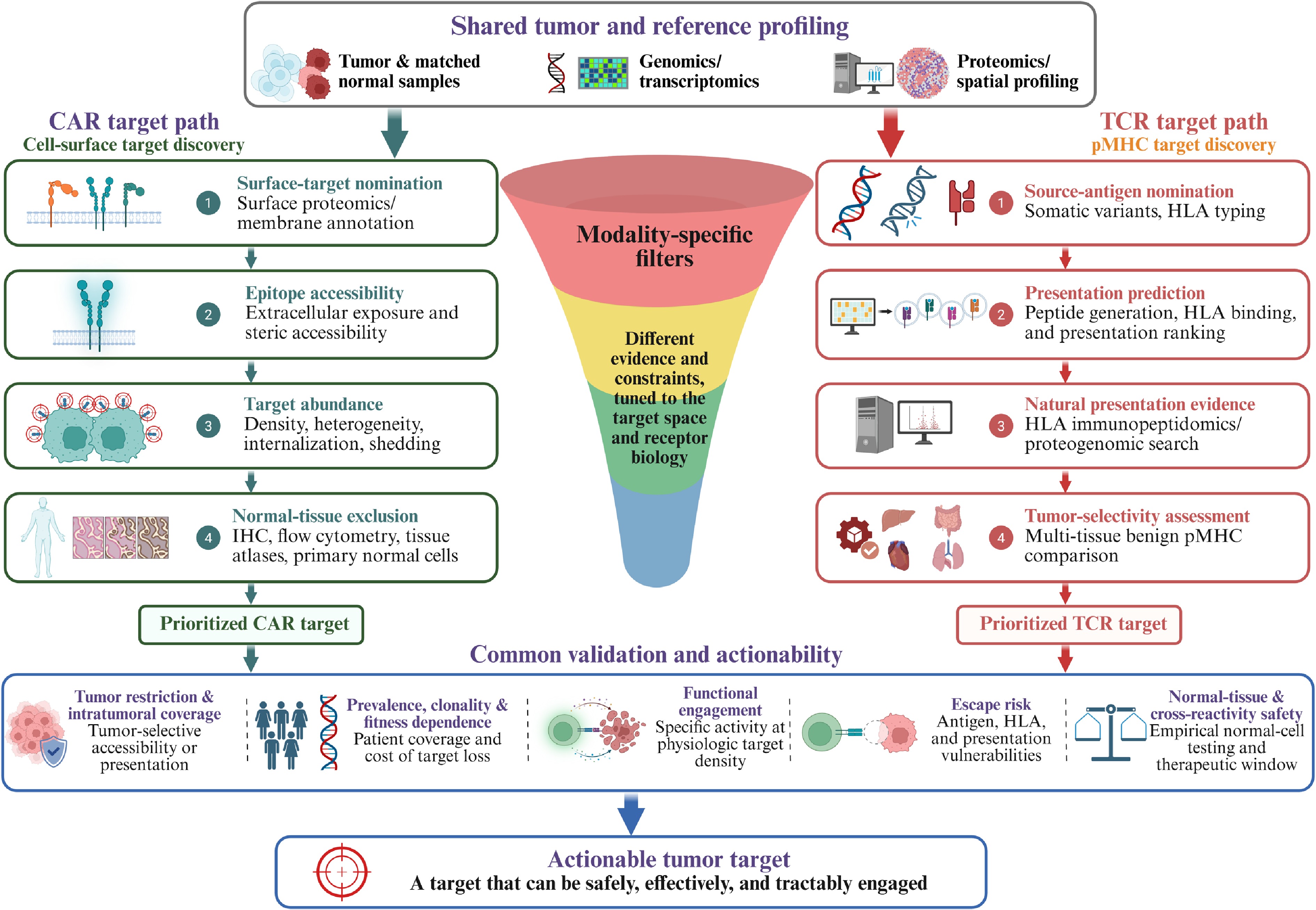
Figure 2.
Modality-specific discovery and validation of actionable tumor targets. Shared molecular profiling feeds distinct CAR and TCR target-discovery pipelines: CAR candidates are filtered for surface accessibility, density, heterogeneity, target behavior, and normal-tissue expression, whereas TCR candidates are evaluated for HLA context, predicted and natural pMHC presentation, and tumor selectivity. Both pathways converge on tumor coverage, prevalence and fitness dependence, functional activity, escape risk, and normal-tissue and cross-reactivity safety.
-
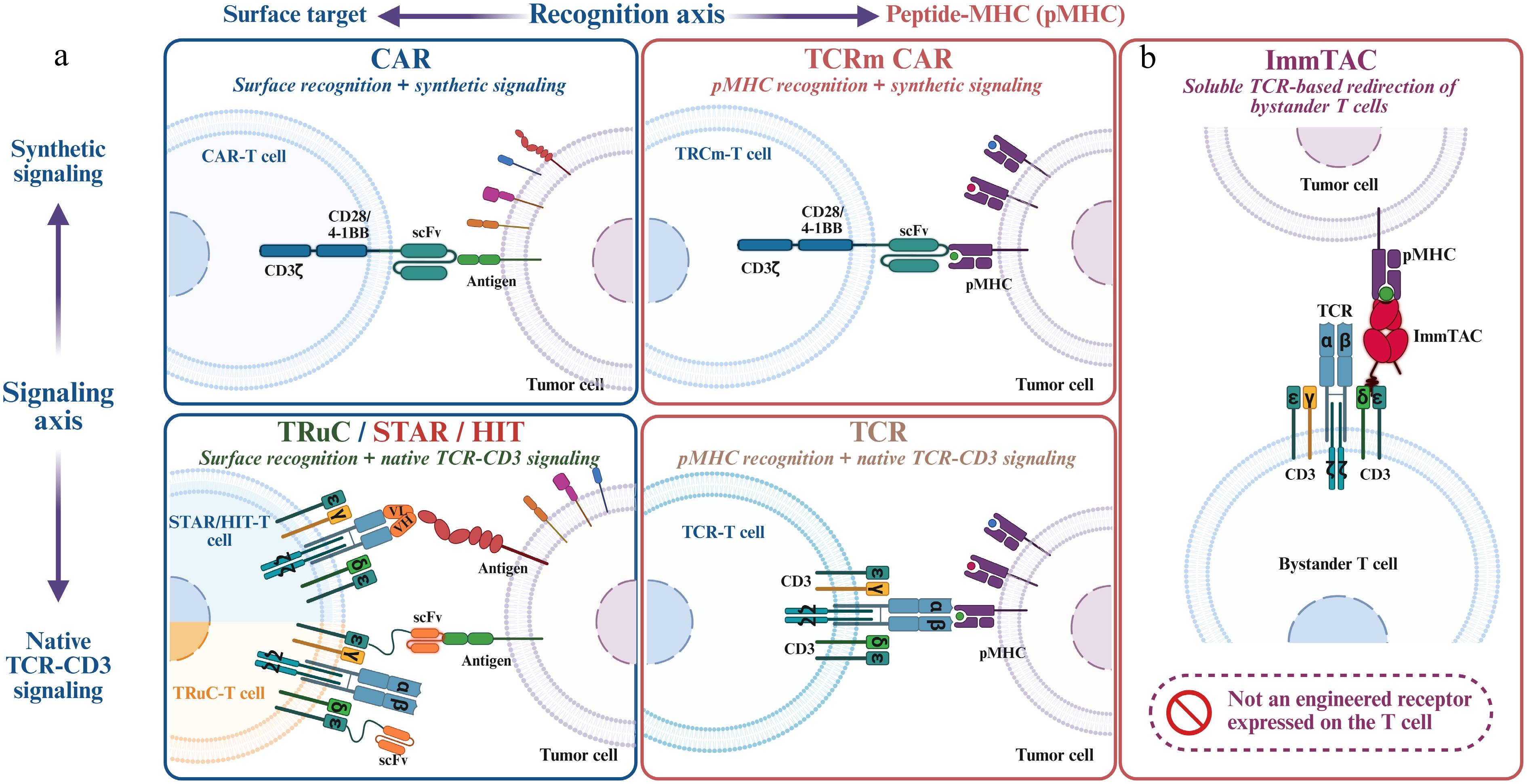
Figure 3.
Recognition-signaling design space of engineered T-cell platforms. (a) Conventional CARs combine surface-antigen recognition with synthetic signaling, whereas TCRs recognize pMHC through the native TCR-CD3 complex. TCR-mimic CARs and TRuC/STAR/HIT receptors occupy the two hybrid combinations. (b) While ImmTACs represent a soluble pMHC-directed format that recruits endogenous T cells through CD3.
-
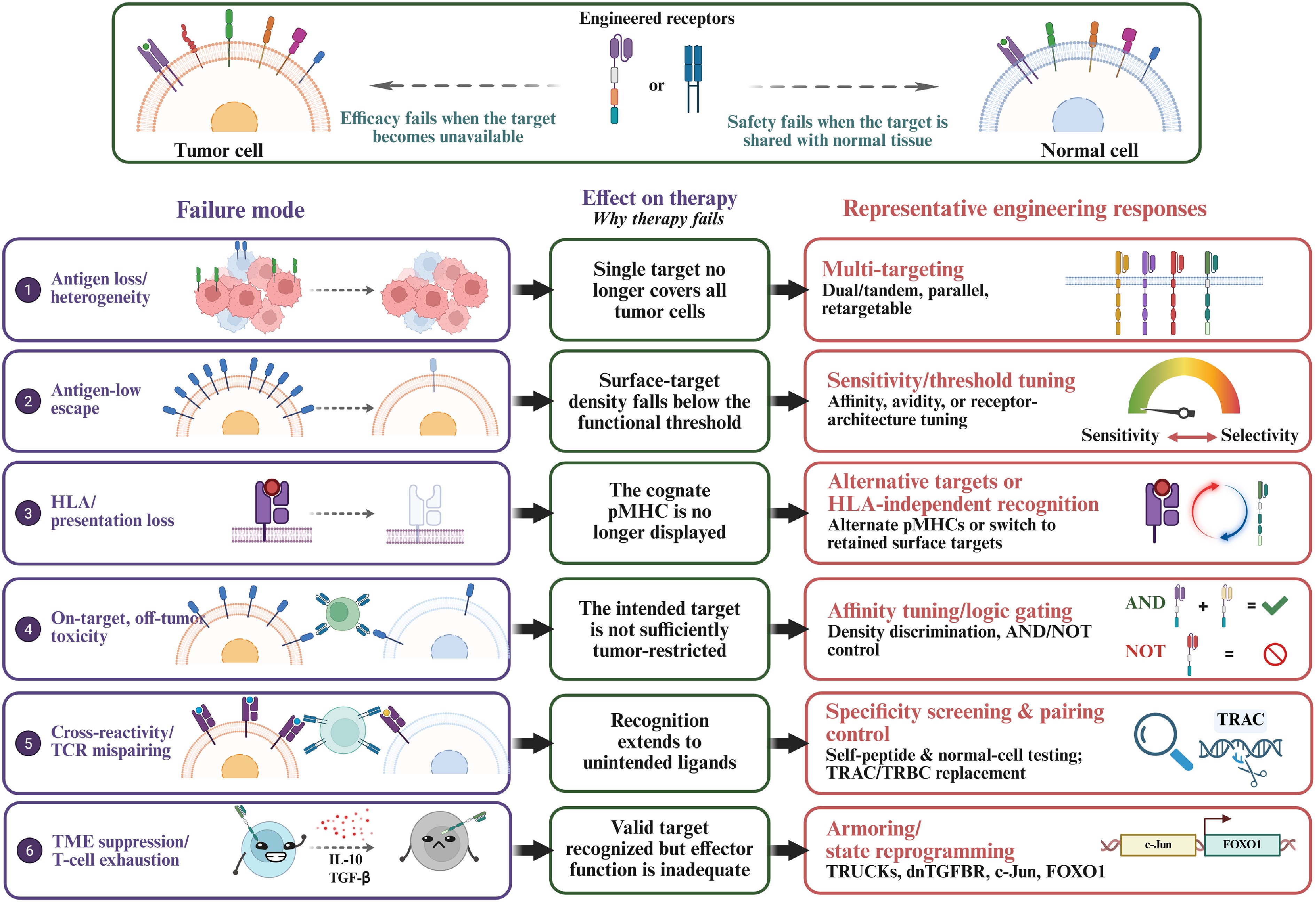
Figure 4.
Target- and effector-centered failure modes and representative engineering responses. Antigen loss or low density, impaired HLA or antigen presentation, normal-tissue target expression, receptor cross-reactivity or TCR mispairing, and tumor-microenvironment-driven dysfunction can compromise efficacy or safety. Multi-antigen targeting, threshold tuning, alternative recognition strategies, logic gating, specificity and pairing control, and armoring or cell-state reprogramming may mitigate these vulnerabilities, although no strategy is universally effective or free of trade-offs.
-
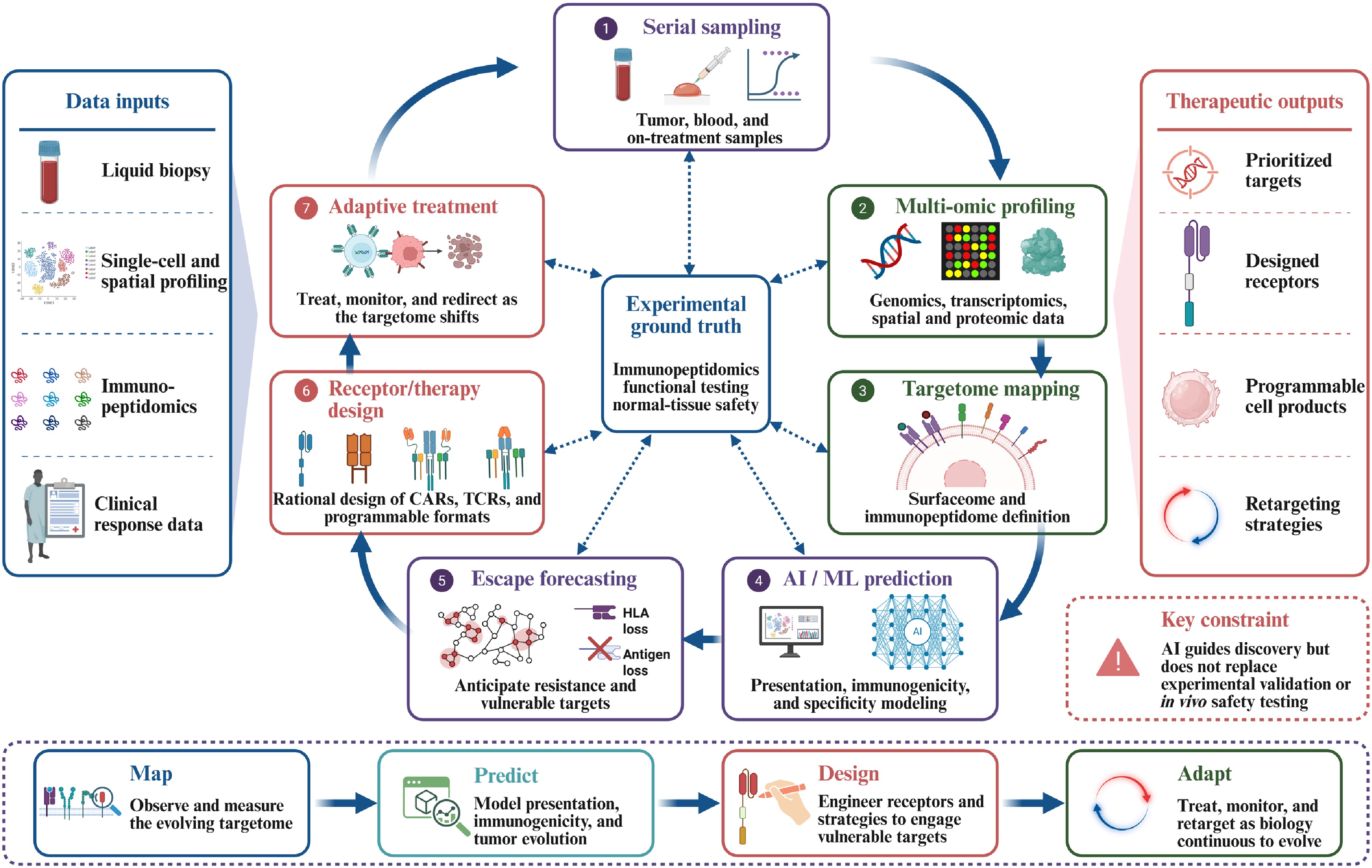
Figure 5.
AI-assisted adaptive targetome workflow. Serial sampling and multi-omic profiling enable repeated mapping of the evolving tumor targetome. Computational prediction and escape forecasting guide target and receptor prioritization, while immunopeptidomic, functional, cross-reactivity, and normal-tissue validation provide experimental ground truth. These outputs inform receptor design and adaptive treatment, but computational models do not replace experimental safety testing.
-
Platform Recognition module Signaling route Targetome face/
HLA contextLigand-density profile Representative example Principal limitation Second-generation
CARAntibody-derived binder, usually an scFv or VHH[6,44] Synthetic endodomain with one costimulatory domain plus CD3ζ
(3 ITAMs)[6,44]Surface proteins, glycoepitopes, or glycolipids; HLA-independent Often hundreds to thousands of molecules per cell; construct-dependent[26,27] Seven FDA-approved CD19/BCMA products; satri-cel (CLDN18.2) approved in China in 2026[11−13,22−24] Antigen-low escape; limited safe surface targets; on-target, off-tumor toxicity TCR-T (native or engineered) Native or engineered αβ TCR variable domains Native TCR-CD3 complex (10 ITAMs); co-receptor support when applicable[47,55] Intracellularly derived peptides displayed as pMHC; usually restricted to one HLA allele or narrow allele family Generally lower than for conventional CARs; highly context-dependent[28,55] Afami-cel (MAGE-A4) approved; anzu-cel (PRAME) in phase 3[20,21,23] HLA or presentation loss; low pMHC abundance;
cross-reactivity; introduced-chain mispairing[61,62,94,114,115]TCR-mimic CAR/pMHC-directed CAR Antibody-derived or designed binder to a defined peptide-HLA complex Synthetic CAR endodomain Intracellularly derived peptides displayed as pMHC; HLA-restricted Low pMHC density is a major challenge; binder- and architecture-dependent NY-ESO-1/HLA-A*02 TCR-like CAR, preclinical[160] Combines HLA restriction and pMHC cross-reactivity risk with CAR density thresholds pMHC-directed bispecific (TCRm/
MANAbody)pHLA-directed binder linked to an anti-CD3 arm Crosslinks CD3 on endogenous polyclonal T cells Intracellularly derived peptides displayed as pMHC; HLA-restricted Can redirect killing at very low pMHC abundance in preclinical systems TP53 R175H/HLA-A*02 and mutant RAS/HLA-A*03 bispecifics, preclinical[95,96] HLA restriction; repeated dosing; pMHC specificity and cross-reactivity require rigorous validation Surface-recognizing TCR-CD3 receptors (TRuC, STAR, HIT) TRuC: binder fused to TCR/CD3; STAR/HIT: antibody variable domains paired with TCR constant regions[98−100] Native TCR-CD3 machinery Surface antigens; HLA-independent Lower thresholds than matched CARs in selected studies; not a universal class property[100] Gavo-cel (mesothelin TRuC), phase 1/2[101] Still surface-restricted; limited clinical validation; target- and construct-specific therapeutic window ImmTAC (soluble TCR x anti-CD3) Affinity-enhanced soluble TCR linked to anti-CD3[102] Crosslinks CD3 on endogenous polyclonal T cells Intracellularly derived peptides displayed as pMHC; HLA-restricted High-affinity pHLA binding stabilizes engagement of low-density targets Tebentafusp (gp100/HLA-A*02:01), FDA approved with overall-survival benefit[103,104] HLA restriction; affinity-related specificity risk; repeated dosing; no living-cell persistence or memory Surface-directed CD3 bispecific (BiTE/TCE) Binder to a surface antigen linked to anti-CD3 Crosslinks CD3 on endogenous polyclonal T cells[161−163] Surface antigens; HLA-independent Depends on antigen density, geometry, avidity, and dosing Blinatumomab (CD19), teclistamab (BCMA), and talquetamab (GPRC5D)[161−163] Repeated dosing; CRS; surface restriction; no self-renewing cellular persistence Soluble T-cell engagers are included as mechanistic comparators rather than adoptive cell therapies. "HLA-independent" refers to receptor recognition, not to the source or manufacture of the effector cell. Table 1.
The receptor spectrum for engaging the tumor targetome.
-
Antigen class Representative targets Face/receptor of choice Tumor specificity Shareability Target display/
availabilityFitness dependence Clinical/translational benchmark Lineage-associated TAA—
hematologicCD19, BCMA, CD20, CD22, CD30 Surface/CAR Low High High Low Seven FDA-approved products across B-ALL, lymphoma, and myeloma[11−13]; CD22 CAR-T active after CD19 failure[59]; CD20/CD19 bispecific[164] and CD30 CAR-T active in lymphoma[165] Overexpressed or lineage-associated TAA—solid tumors HER2, EGFR, mesothelin, glypican-3, PSMA, CEA, CLDN18.2 Surface/CAR Low-moderate High Variable/
moderate-highLow-moderate Satri-cel (CLDN18.2): first positive randomized solid-tumor CAR-T trial and first solid-tumor CAR-T approval[19,22−24] Tumor-associated glycoforms/post-translational epitopes Tn-MUC1, TAG-72, MHC-bound phosphopeptides Surface/CAR or TCE; pMHC/TCR Moderate-high Moderate Variable Low Tn-MUC1 CAR-T cells-controlled adenocarcinoma xenografts; clinical development remains early; tumor-restricted MHC-bound phosphopeptides identified by mass spectrometry[78−80] Glycolipid antigens GD2 Surface/CAR Moderate High High Low-moderate Clinical responses and neurologic improvement have been reported in H3K27M-mutant diffuse midline glioma[81,166,167] Emerging solid-tumor surface targets B7−H3 (CD276), TROP2, CDH17, CD70 Surface/CAR Low-moderate High Moderate-high Low-moderate B7−H3 CAR-T tolerable in DIPG; CDH17 CAR-T spared normal intestine (epitope sequestered at tight junctions); CD70 CAR-T gave a multiyear complete response in ccRCC; TROP2 preclinical[168−172] Stress-induced ligands NKG2D ligands (MICA/B, ULBP1−6) Surface/NKG2D-based CAR Moderate High Variable Low-moderate First-in-human NKG2D-CAR T cells were safe but showed limited expansion and persistence; shedding of soluble ligand limits surface display[173] Cancer-stem-cell-associated antigen CD133 Surface/CAR Low-moderate Moderate Variable/low Variable Phase 1 CART-133 achieved disease control in advanced CD133-positive tumors, with cytopenias consistent with on-target activity in normal progenitors[174] Lineage antigen presented as pMHC gp100, MART-1, tyrosinase, WT1 Intracellular/
TCR or soluble TCRLow-moderate High Moderate Low Tebentafusp (gp100) approved with overall-survival benefit; early MART-1 and gp100 TCR-T trials produced on-target melanocyte toxicity[103,104] Cancer-testis/
cancer-germline antigenNY-ESO-1, MAGE-A4, PRAME Intracellular/
TCRHigh Moderate-high Moderate/
variableLow NY-ESO-1 regressions; afami-cel (MAGE-A4) approved; anzu-cel (PRAME) in the phase 3 SUPRAME trial[20,21,23,65,66] Public neoantigen KRAS G12D, TP53 R175H, selected PIK3CA hotspots Intracellular/
TCR or TCRmHigh Moderate Low Variable; potentially high for clonal drivers Clinical regressions after targeting KRAS G12D and recurrent TP53 neoantigens[38,71,72] Private neoantigen Patient-specific somatic mutations Intracellular/
TCR or TILHigh Low Low Variable/
unknownMost neoantigens recognized in gastrointestinal cancers were patient-specific[69,70] Oncoviral antigen HPV E6/E7; EBV LMP/EBNA; HBV-derived antigens; MCPyV T antigens Intracellular/
TCR or virus-specific T cellsHigh, with exceptions Moderate-high Low-moderate Moderate-high HPV E7 TCR-T responses in metastatic epithelial cancers; EBV-specific T cells in EBV-associated lymphoma[73,175] Cryptic/
non-canonical antigenPeptides from noncoding ORFs, retained introns, alternative frames, and aberrant splicing Intracellular/
TCR or TCRmVariable; potentially high Low-moderate Low Unknown Tumor-restricted cryptic antigens and unannotated-ORF-derived HLA peptides identified by proteogenomics[39,88,90] Unselected targetome (TIL) Polyclonal, patient-specific; not defined in advance Intracellular/native TCR High (patient-specific) Not applicable Variable/
unknownVariable/
unknownLifileucel approved in melanoma; randomized phase 3 progression-free survival benefit vs ipilimumab[7,8,63] Scoring key: High = broadly favorable within the class; Moderate = context-dependent; Low = generally limiting. 'Shareability' denotes whether a receptor design can be reused across patients, not whether the cell product itself is off-the-shelf. 'Target display' combines surface abundance for CAR targets with pMHC abundance for TCR targets. Most clinical TCR programs are MHC class I-restricted, but MHC class II adds an additional target space for engineered CD4+ T cells. Table 2.
Classes of targetable tumor antigens evaluated across four translational axes.
-
Agent (trade name) Target Targetome face Receptor/therapeutic format Indication or development population Regulatory/development status Approved products Blinatumomab (Blincyto) CD19 Surface CD19 x CD3 bispecific engager B-cell acute lymphoblastic leukemia FDA approved, 2014[161] Tisagenlecleucel (Kymriah) CD19 Surface Second-generation CAR (4-1BB) Pediatric/young-adult B-ALL; DLBCL; follicular lymphoma FDA approved, 2017[176] Axicabtagene ciloleucel (Yescarta) CD19 Surface Second-generation CAR (CD28) Large B-cell lymphoma; follicular lymphoma FDA approved, 2017[177] Brexucabtagene autoleucel (Tecartus) CD19 Surface Second-generation CAR (CD28) Adult mantle cell lymphoma and B-cell precursor ALL FDA approved, 2020[178] Lisocabtagene maraleucel (Breyanzi) CD19 Surface Second-generation CAR (4-1BB); defined CD4:CD8 composition LBCL, CLL/SLL, FL, MCL, and MZL FDA approved, 2021; MZL added in 2025[179,180] Idecabtagene vicleucel (Abecma) BCMA Surface Second-generation CAR (4-1BB) Relapsed/refractory multiple myeloma FDA approved, 2021[88] Tebentafusp (Kimmtrak) gp100 peptide/
HLA-A*02:01Intracellular via pMHC ImmTAC: affinity-enhanced soluble TCR x anti-CD3 HLA-A*02:01-positive unresectable or metastatic uveal melanoma FDA approved, 2022—
first approved soluble TCR-based therapeutic[103,104]Ciltacabtagene autoleucel (Carvykti) BCMA Surface Second-generation CAR (4-1BB); bivalent VHH binder Relapsed/refractory multiple myeloma FDA approved, 2022[12] Teclistamab (Tecvayli) BCMA Surface BCMA x CD3 bispecific engager Relapsed/refractory multiple myeloma FDA accelerated approval, 2022[162] Talquetamab (Talvey) GPRC5D Surface GPRC5D x CD3 bispecific engager Relapsed/refractory multiple myeloma FDA accelerated approval, 2023[163] Lifileucel (Amtagvi) Polyclonal; specificities not predefined Mainly
pMHC-mediatedAutologous tumor-infiltrating lymphocytes; not receptor-engineered Previously treated unresectable or metastatic melanoma FDA accelerated approval, 2024—first approved TIL therapy[7,8] Afamitresgene autoleucel (Tecelra) MAGE-A4/
HLA-A*02
familyIntracellular via pMHC Affinity-enhanced TCR-T Patients with previously treated unresectable or metastatic synovial sarcoma meeting HLA and MAGE-A4 companion-diagnostic criteria FDA accelerated approval, 2024; pediatric label expansion in 2026[20,21] Obecabtagene autoleucel (Aucatzyl) CD19 Surface Second-generation CAR (4-1BB); fast off-rate binder Adult relapsed/refractory B-cell precursor ALL FDA approved, 2024[13] Satricabtagene autoleucel (satri-cel; CT041) CLDN18.2 Surface Second-generation CAR (CD28) CLDN18.2-positive, HER2-negative advanced gastric/GEJ adenocarcinoma after at least two prior lines China NMPA approved, June 2026—first approved CAR-T for a solid tumor[22] Selected investigational programs Anzutresgene autoleucel (anzu-cel; IMA203) PRAME/HLA-A*02:01 Intracellular via pMHC Autologous TCR-T without CD8 co-transduction Previously treated unresectable or metastatic cutaneous melanoma Recruiting randomized phase 3 SUPRAME[23] IMA203CD8 (GEN2) PRAME/HLA-A*02:01 Intracellular via pMHC Autologous TCR-T co-transduced with CD8αβ PRAME-positive recurrent/refractory solid tumors Recruiting phase 1/2; distinct from anzu-cel[181] Lifileucel is included as a regulatory benchmark for polyclonal adoptive T-cell therapy but is not a private-neoantigen-selected or receptor-engineered product. All approved receptor-defined pMHC-targeting products listed here—tebentafusp and afami-cel—are HLA-A*02-restricted; lifileucel is a polyclonal TIL product whose antigen specificities and restricting HLA alleles are not predefined. The success of afami-cel and satri-cel reflects target selection together with biomarker selection, receptor design, manufacturing, and clinical context. Table 3.
Selected approved and investigational T-cell therapies and mechanistically relevant T-cell-redirecting comparators.
Figures
(5)
Tables
(3)