-
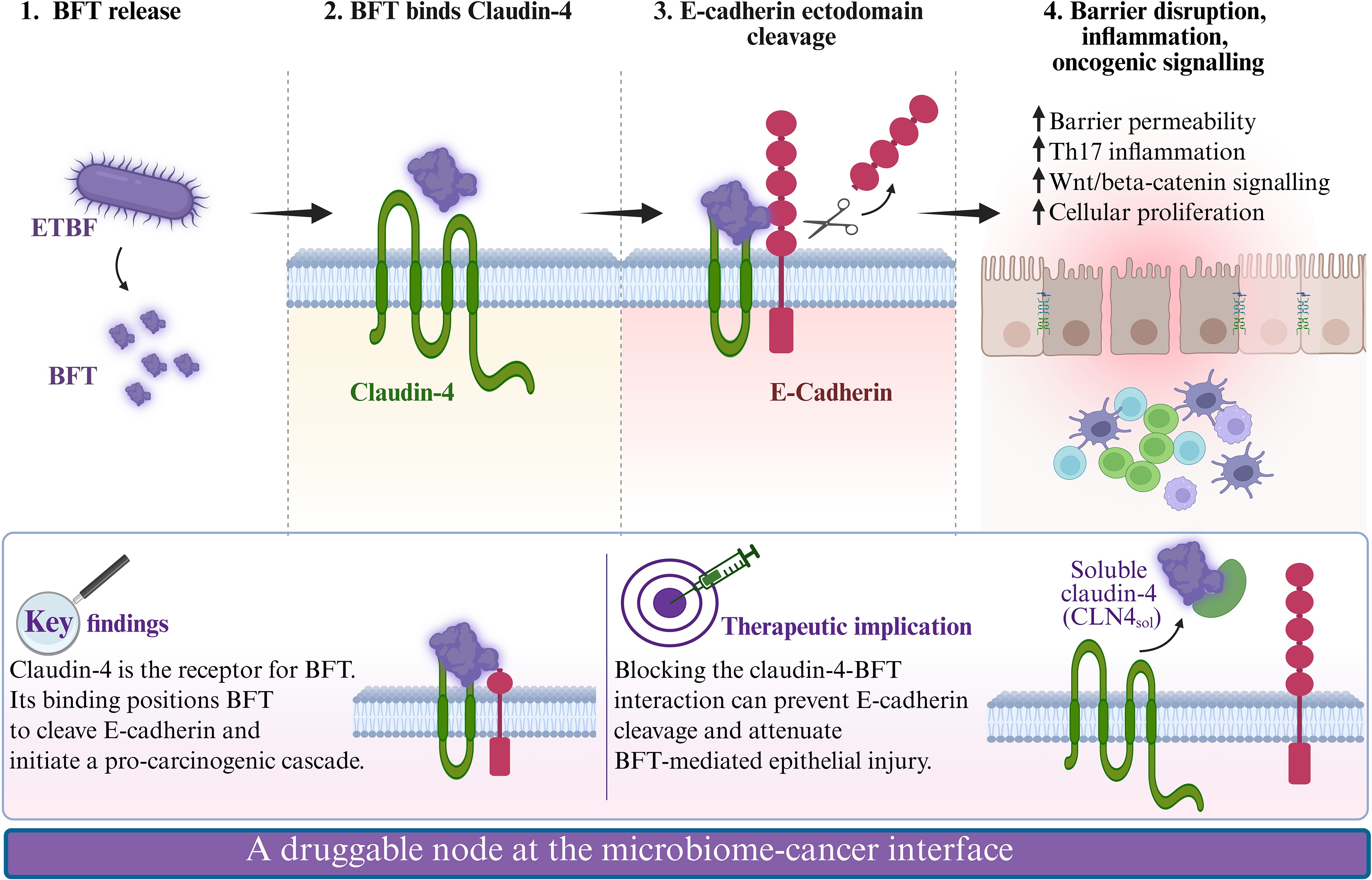
Figure 1.
Claudin-4 is the receptor that enables B. fragilis toxin to cleave E-cadherin and drive colorectal oncogenesis. (1) Enterotoxigenic B. fragilis (ETBF) secretes the metalloprotease B. fragilis toxin (BFT; fragilysin). (2) BFT binds claudin-4 on colonic epithelial cells, positioning its active site at the membrane. (3) This directs BFT to a membrane-proximal but otherwise inaccessible cleavage site in the E-cadherin ectodomain, releasing the soluble E-cadherin ectodomain. (4) Loss of E-cadherin adhesion disrupts barrier integrity and drives a pro-carcinogenic cascade of increased permeability, Th17 inflammation, Wnt/β-catenin activation and proliferation. Blocking the claudin-4–BFT interaction with the soluble claudin-4 analogue (CLN4sol), prevents E-cadherin cleavage and attenuates BFT-mediated epithelial injury, marking the interface as a druggable node at the microbiome–cancer interface. Created in BioRender.
https://BioRender.com/ibajvho -
Area Current evidence Knowledge gap Translational/future opportunity BFT receptor biology Claudin-4 is the primary epithelial receptor for BFT; claudin-3 provides partial functional redundancy The structural basis of native BFT/claudin-4 recognition remains unresolved Structural definition of the interaction could guide selective inhibitors E-cadherin cleavage Claudin-4 positions BFT to access a membrane-proximal E-cadherin cleavage site The full repertoire of BFT substrates remains unclear Define additional claudin-4-dependent epithelial substrates Epithelial barrier injury BFT-mediated E-cadherin cleavage promotes epithelial shedding and barrier disruption The consequences of chronic/repeated toxin exposure remain poorly defined Long-term organoid and chronic colonisation models Inflammation and oncogenic signalling ETBF/BFT is associated with Th17 inflammation, Wnt/β-catenin activation and epithelial proliferation The contribution of the claudin-4/BFT axis to tumour initiation versus progression is unresolved Genetically engineered and tumour-prone in vivo models Claudin-4 in CRC Claudin-4 expression is dysregulated in colorectal cancer Whether tumour-associated changes in claudin-4 alter susceptibility to BFT is unknown Patient-derived tissues/organoids and molecular stratification Therapeutic blockade Soluble CLN4sol reduces BFT-mediated epithelial injury in an acute murine model Long-term efficacy, selectivity and safety have not been established Interface-selective antibodies, peptides or soluble receptor mimetics Safety Claudin-4 has important physiological epithelial barrier functions Systemic blockade could disrupt normal tight junction biology Selective blockade of BFT binding without interfering with physiological claudin-4 Precision prevention ETBF is associated with colorectal neoplasia and represents a potentially identifiable microbial risk factor Appropriate patient populations and predictive biomarkers remain undefined Integrate stool ETBF/BFT profiling with tissue biomarkers and CRC surveillance BFT, B. fragilis toxin; CLN4sol, soluble claudin-4 analogue; CRC, colorectal cancer; ETBF, enterotoxigenic B. fragilis. Table 1.
From claudin-4 receptors' discovery to therapeutic translation: current evidence, knowledge gaps and future priorities.
Figures
(1)
Tables
(1)