-
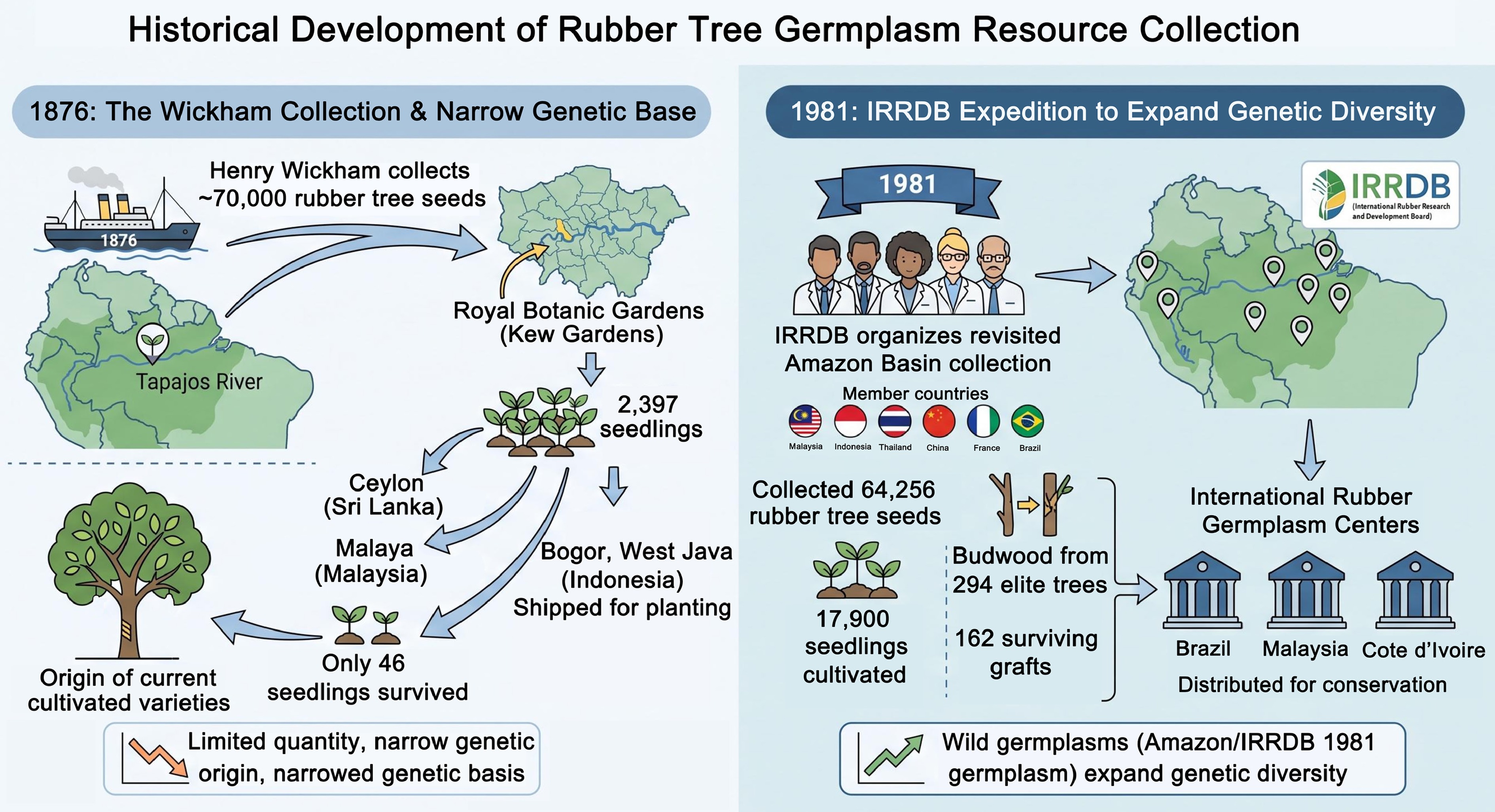
Figure 1.
Genetic origins of cultivated and wild rubber tree germplasm. The Wickham collection introduced in 1876 consisted of a limited number of accessions with a narrow genetic background, yet it became the major source of most modern cultivated rubber tree varieties (left panel). In contrast, the IRRDB collection established in 1981 included a much larger number of predominantly wild accessions, substantially expanding the genetic diversity available for rubber tree research and breeding (right panel).
-
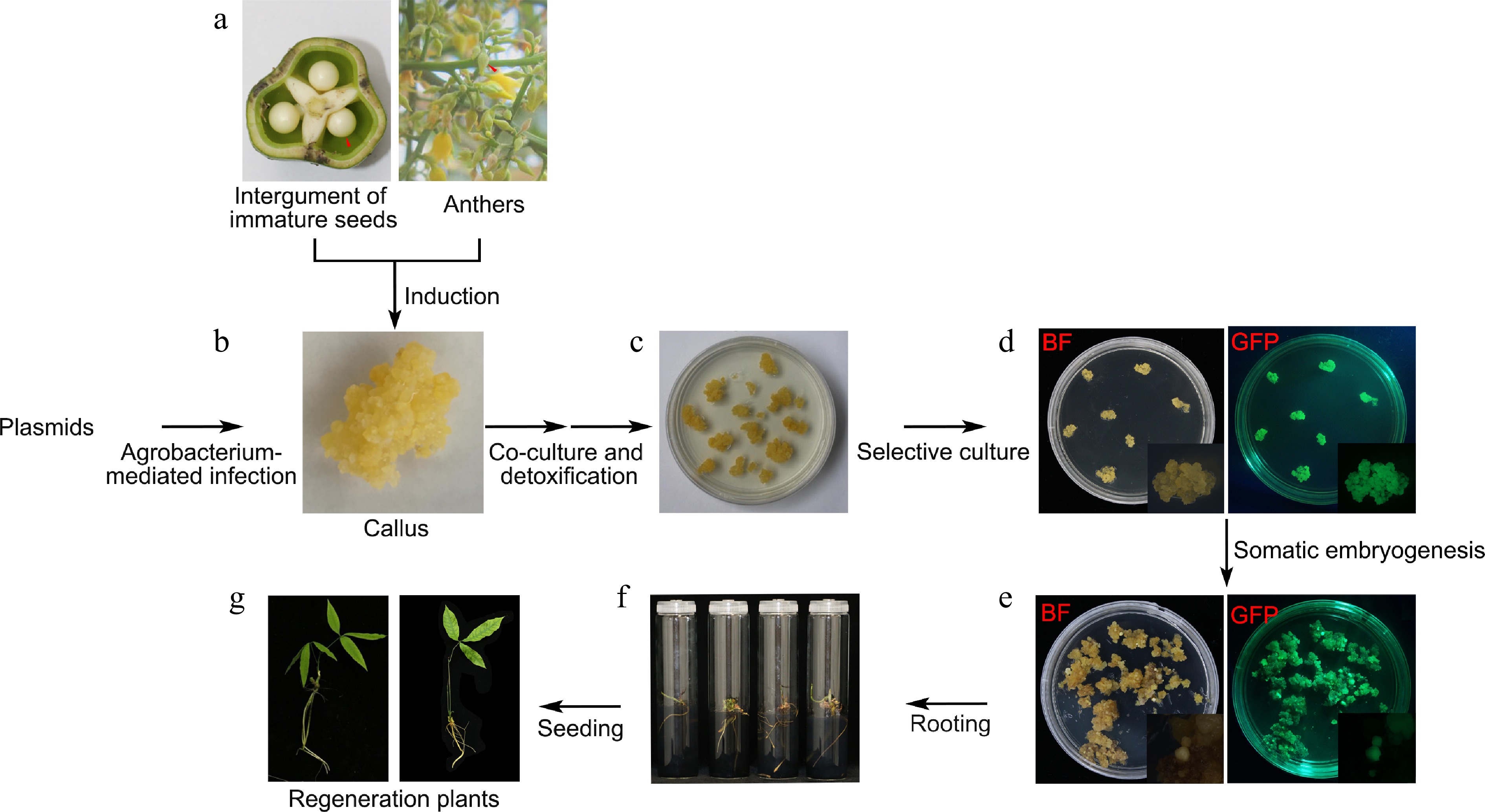
Figure 2.
Agrobacterium mediated transgenic processes in rubber tree. Inner integuments or anthers of rubber tree were used as explants to induce friable callus, which was then co-cultivated with (a)–(c) Agrobacterium. Transgenic homozygous positive calli were subsequently selected by monitoring (d) GFP signal and paromomycin resistance, and these selected calli were further subjected to (e)–(g) somatic embryogenesis, rooting, and seedling development, ultimately yielding transgenic plants.
-
Variety/line Genome size (Gb) Gene number Length of N50 (Mb) Ref. RRIM600 2.15 68,955 0.00297 [39] Reyan73397 1.47 43,792 1.28 [40] RRIM600 1.55 84,440 0.06724 [41] BPM24 1.26 43,868 0.0968 [42] GT1 1.47 44,187 0.1527 [43] MT/VB/25A57/8 1.72 35,318 3.51 [44] CATAS8-79 1.58 38,595 11.21 [45] Reyan73397 1.49 42,897 2.24 [46] CATAS8-79 1.52 42,386 1.33 [46] RRIM600 1.54 43,594 2.54 [46] XJA868 1.56 43,994 2.59 [46] XJA968 1.54 43,565 2.02 [46] Hbe 1.57 46,095 2.72 [46] Hp 1.58 43,481 2.26 [46] Hn 1.57 44,138 2.13 [46] Reyan73397 1.56 38,635 93.6 [47] Hbe: H. benthamiana; Hn: H. nitida; Hp: H. pauciflora; XJ: wild accession of rubber tree. Table 1.
Comparison of genome assembly quality of different rubber trees.
Figures
(2)
Tables
(1)