-
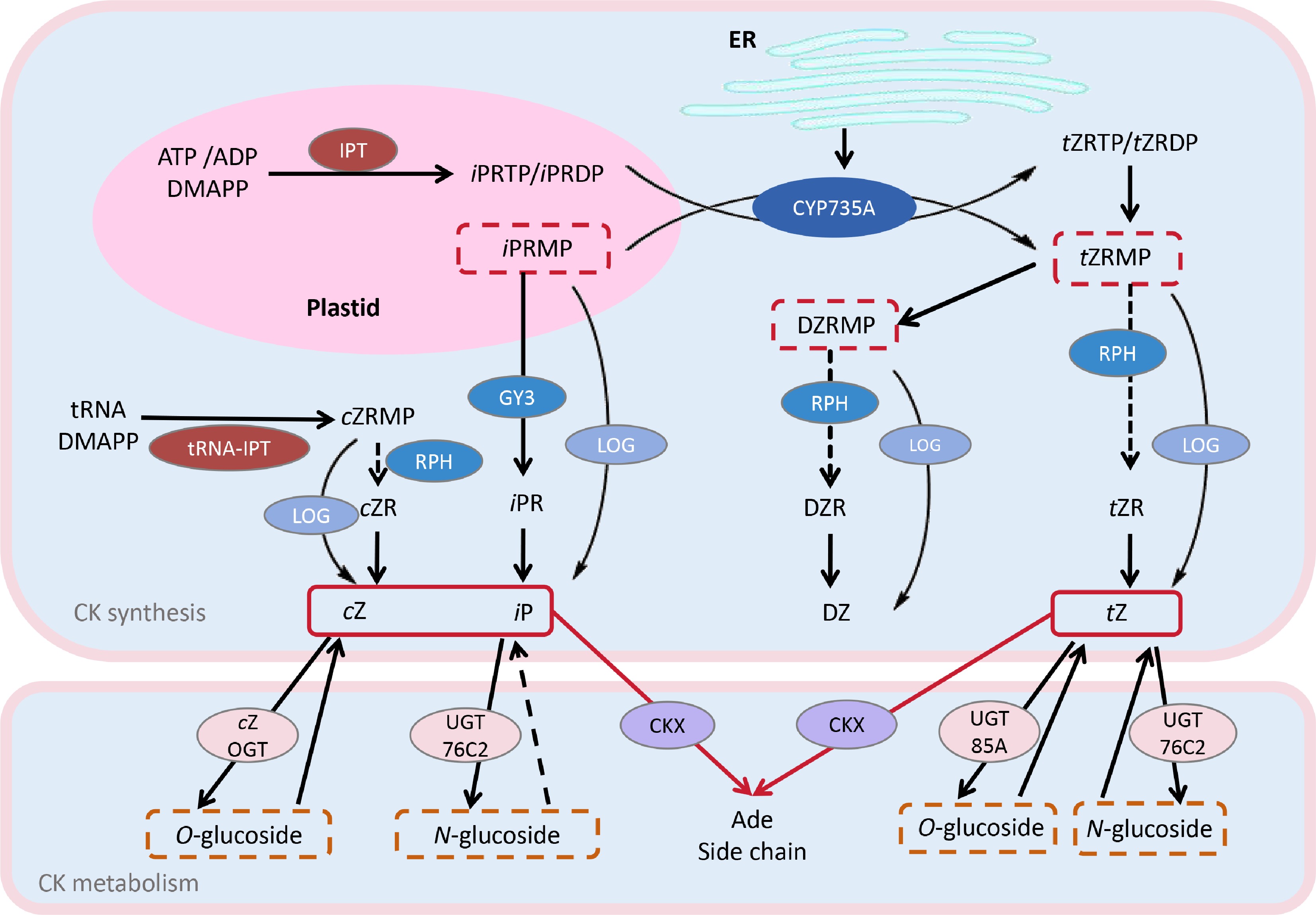
Figure 1.
Overview of cytokinin biosynthesis and metabolism in Arabidopsis. In the de novo pathway, IPTs catalyze the transfer of an isopentenyl group from DMAPP to ATP or ADP, generating iP-type nucleotide precursors (iPRTP and iPRDP). In Arabidopsis, this initial step is predominantly associated with plastid-localized IPTs. The resultant iP-type nucleotides enter the isopentenyl ribonucleotide monophosphate (iPRMP) pool and are either directly converted to active iP by LOG phosphoribohydrolases or hydroxylated by ER-associated CYP735A enzymes to yield tZ-type nucleotides (tZRTP, tZRDP, tZRMP), which are subsequently activated by LOG to form tZ. In parallel, tRNA-IPTs prenylate specific tRNAs using DMAPP; subsequent tRNA turnover is the primary source of cZ-type CKs. Active cytokinin free bases, including iP, tZ, cZ, and DZ, are further inactivated through O-glucosylation or N-glucosylation by UDP-glycosyltransferases (UGTs), or irreversibly degraded by CKXs into adenine and side-chain products. Solid arrows indicate established metabolic conversions, whereas dashed arrows indicate proposed or less well-defined routes. Plastid and endoplasmic reticulum (ER) compartments are indicated according to the reported subcellular localization of the corresponding biosynthetic enzymes.
-
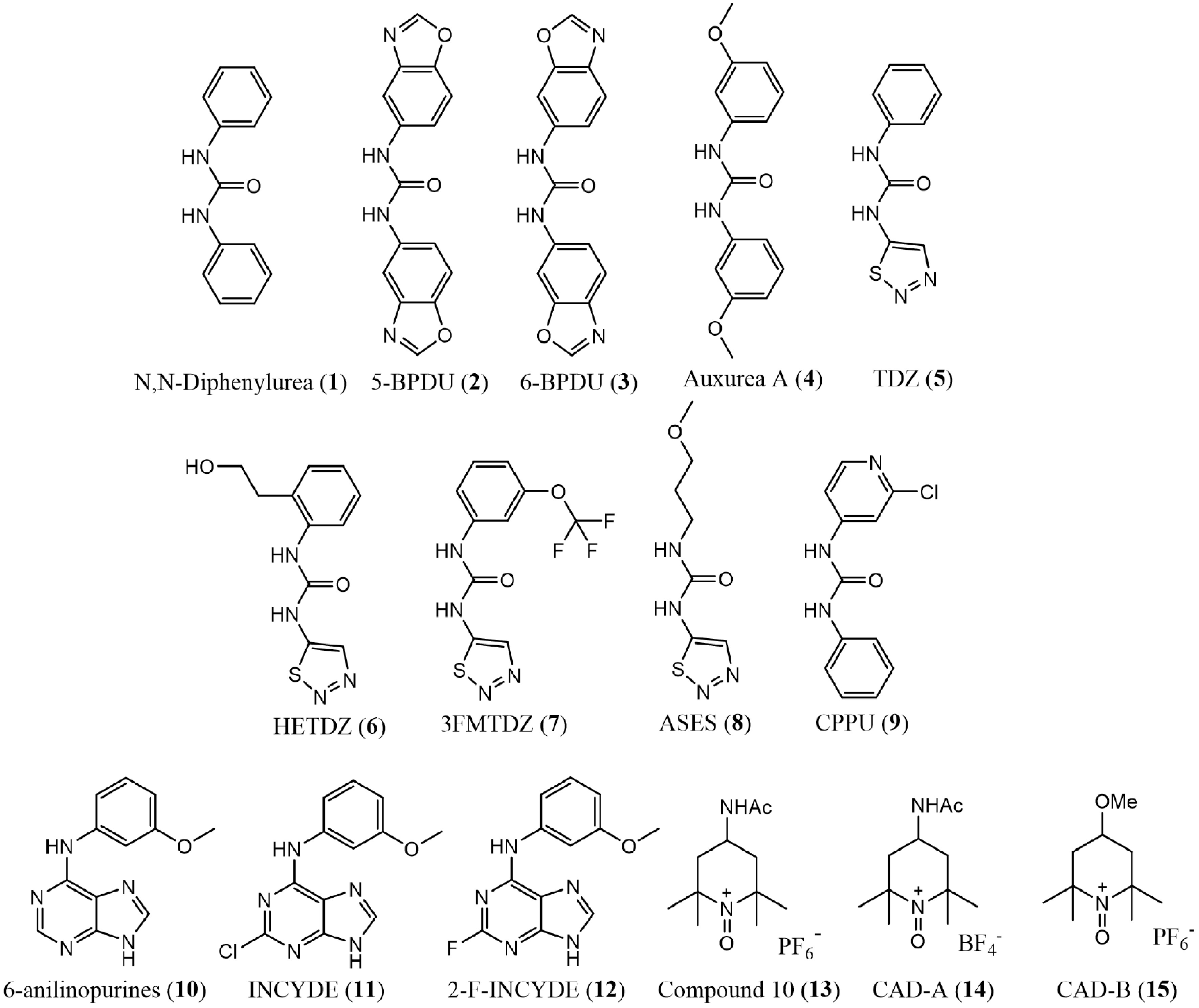
Figure 2.
Available chemical tool structures for investigating cytokinin metabolism in plants. Compounds 1–3 are diphenylurea derivatives that primarily inhibit cytokinin oxidase/dehydrogenase (CKX). Compound 4, which shares the same diphenylurea backbone, competitively inhibits GH3 enzymes by occupying the auxin-binding pocket. Compounds 5–8 are classified as thiadiazole-type CKX inhibitors; several of these compounds exhibit weak CK receptor agonism, thus possessing intrinsic cytokinin activity. Compound 9 is a compound that delays endogenous CK catabolism by suppressing CKX expression. Compounds 10–12 are adenine-type modulators, with INCYDE in this group exhibiting strong CKX inhibition and binding to AHK receptors, while structural optimization may further enhance its selectivity toward CKX. Compounds 13–15 function as CK scavenger reagents. Rather than targeting enzymes in the cytokinin pathway, these compounds modulate endogenous cytokinin abundance through two mechanisms: directly modifying the N6-isopentenyladenosine (i6A) moiety, which is identical to that of endogenous iP-type cytokinins, and mimicking CKX activity. The CAS numbers and PubChem CIDs of all compounds are summarized in Table 1 for reference.
-
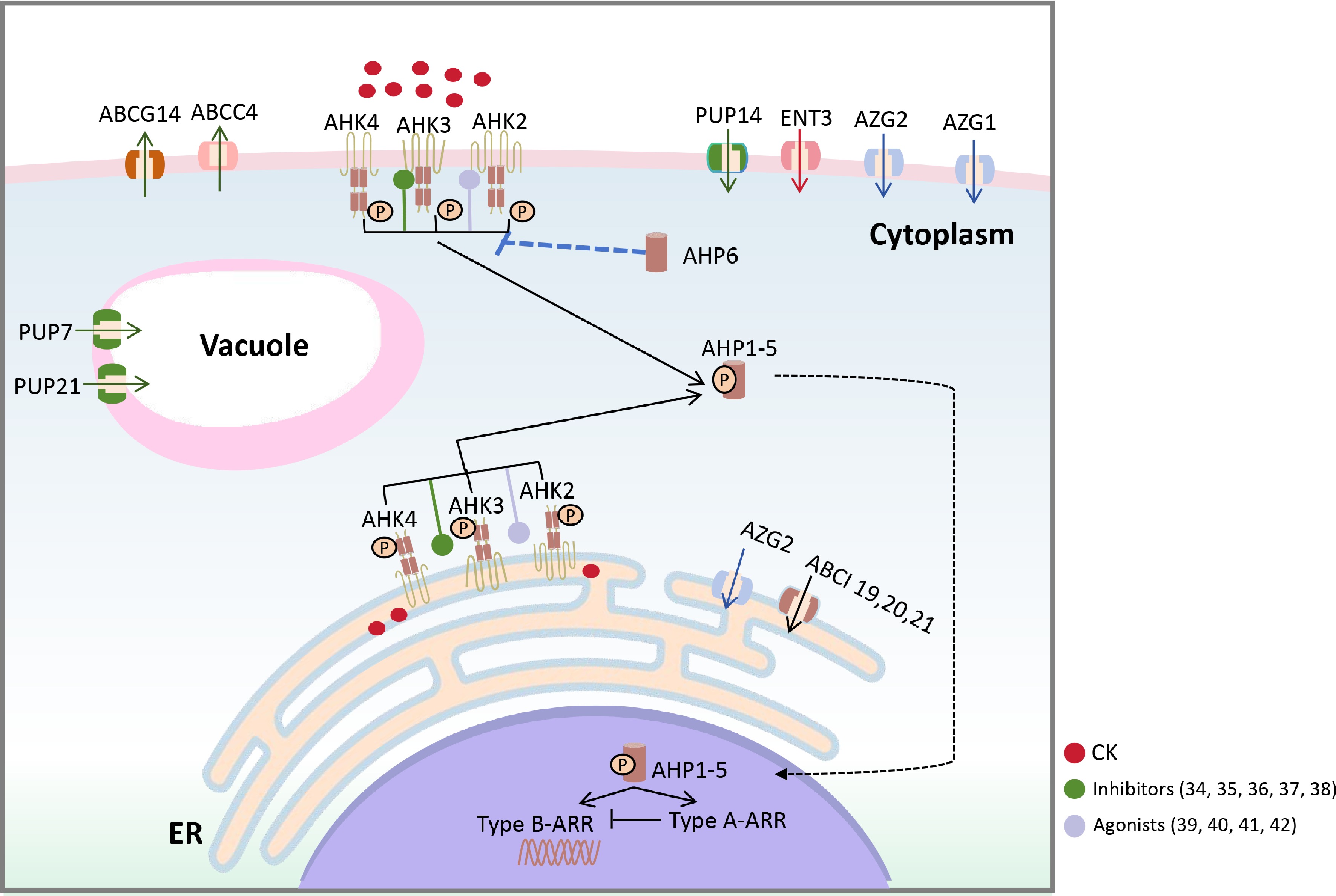
Figure 3.
Schematic representation of cytokinin signaling and transport. The perception and signal transduction of CK are mediated by membrane-localized histidine kinase receptors (AHK2, AHK3, and AHK4/CRE1) situated on the plasma membrane and ER. Upon the binding of CK, these receptors activate histidine phosphotransfer proteins (AHP1–AHP5), which then translocate into the nucleus to regulate type-B and type-A response regulators (ARRs). Various transporter families work in concert to maintain CK homeostasis. A comprehensive description of these processes is available in the preceding sections.
-
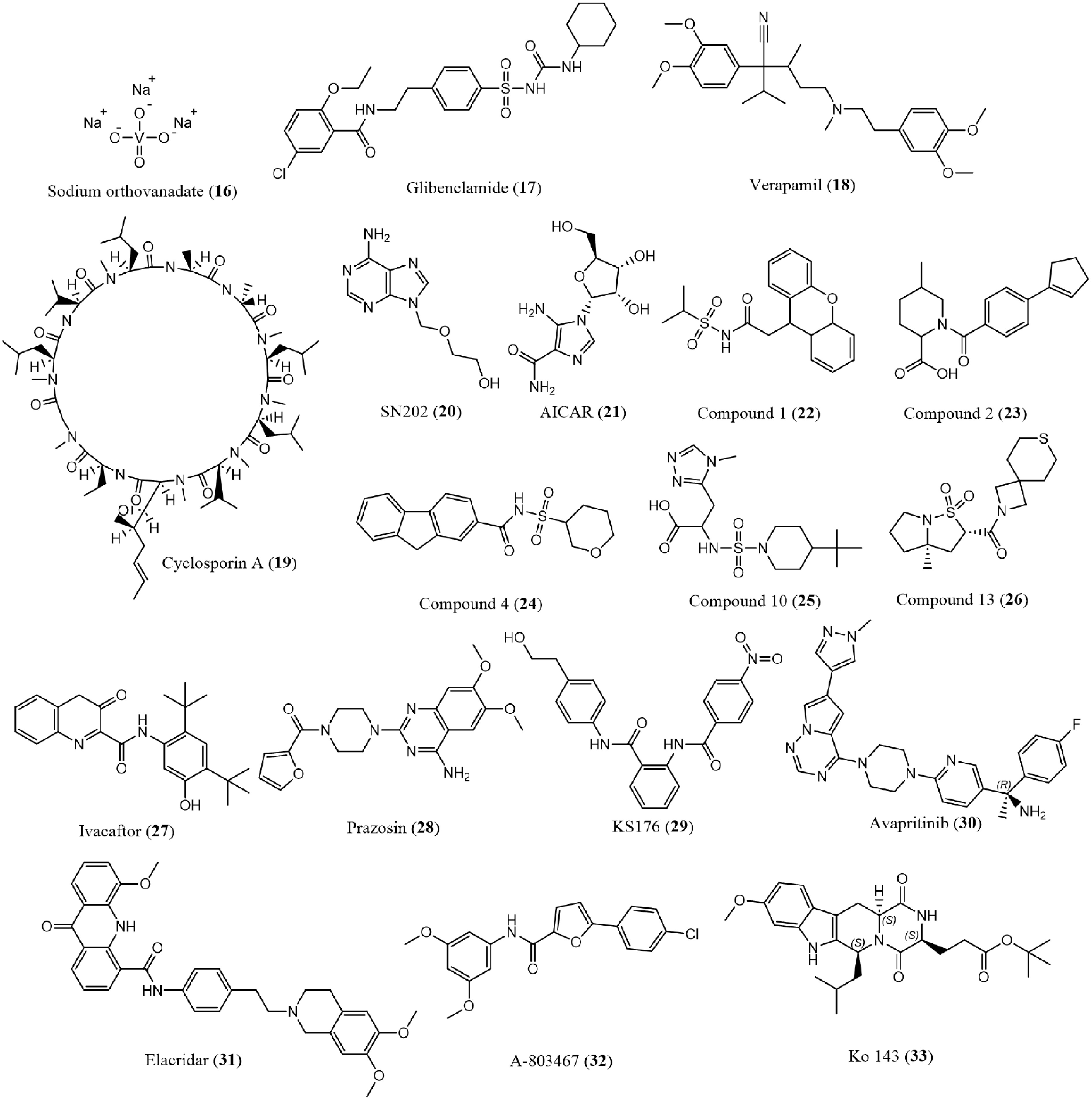
Figure 4.
Available chemical tool structures for investigating cytokinin transport in plants. Detailed descriptions of these modulators are provided in the section on CK transport regulation. Numerical identifiers in parentheses correspond to the bolded compound numbers in the text and those listed in Table 2. All aforementioned modulators (compounds 16–33) have also been reported in studies on mammalian ABC transporters. Among these compounds, compounds 16–19 have been reported to act as chemical modulators of diverse plant ABC transporters. Compounds 20–27 target the NBD, whereas compounds 28–33 target the TMD. We further compiled the target sites of these modulators across both mammalian and plant systems. All relevant information is summarized in Table 2, which lists the corresponding CAS Registry Numbers for detailed reference and retrieval.
-
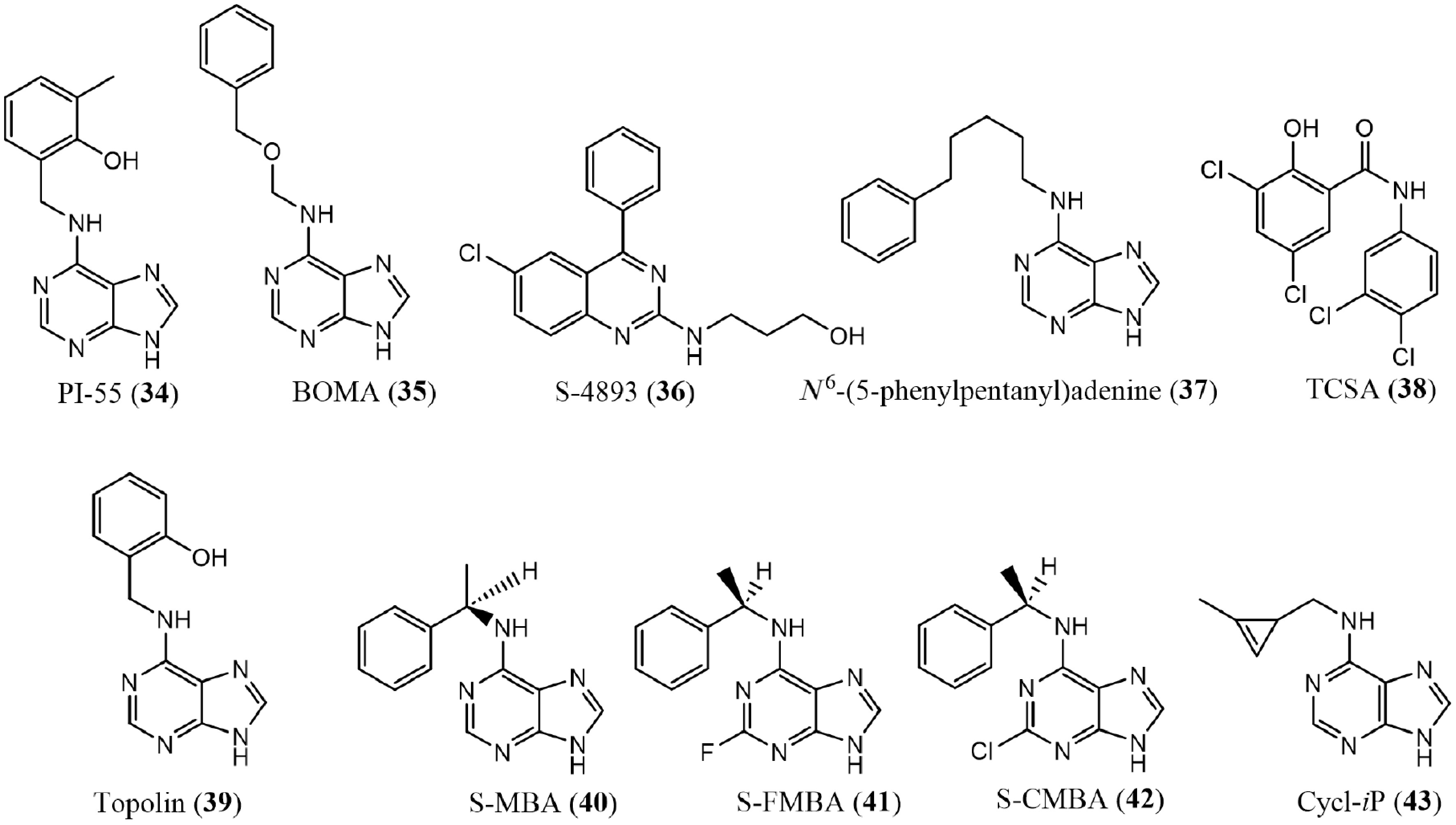
Figure 5.
Available chemical tool structures for investigating cytokinin signaling in plants. These modulators are described in detail in the section on CK signal transduction. The numbers in parentheses correspond to the bolded compound identifiers found in the text and in Table 3. Compounds 34 and 35 serve as competitive antagonists of AHK targeting the extracellular CHASE domain and competing with cytokinins for ligand binding. In contrast, Compounds 36 and 37 function as non-competitive antagonists; specifically, S-4893 has been reported to bind to a non-canonical pocket of AHK, while N6-(5-phenylpentyl)adenine is proposed to engage a previously unrecognized allosteric site. Compound 38 acts as a signal transduction inhibitor. Although its precise mechanism of action remains elusive, it is hypothesized that it exerts its activity by targeting the intracellular histidine kinase domain, thereby antagonizing AHK autophosphorylation. Compounds 39–42 are all receptor agonists of AHK, differing from one another in their structural features. Additionally, Compound 43 has been previously reported as a CK analog. Detailed information on all these modulators, including CAS numbers and PubChem CIDs, is provided in Table 3 for further inquiry and retrieval.
-
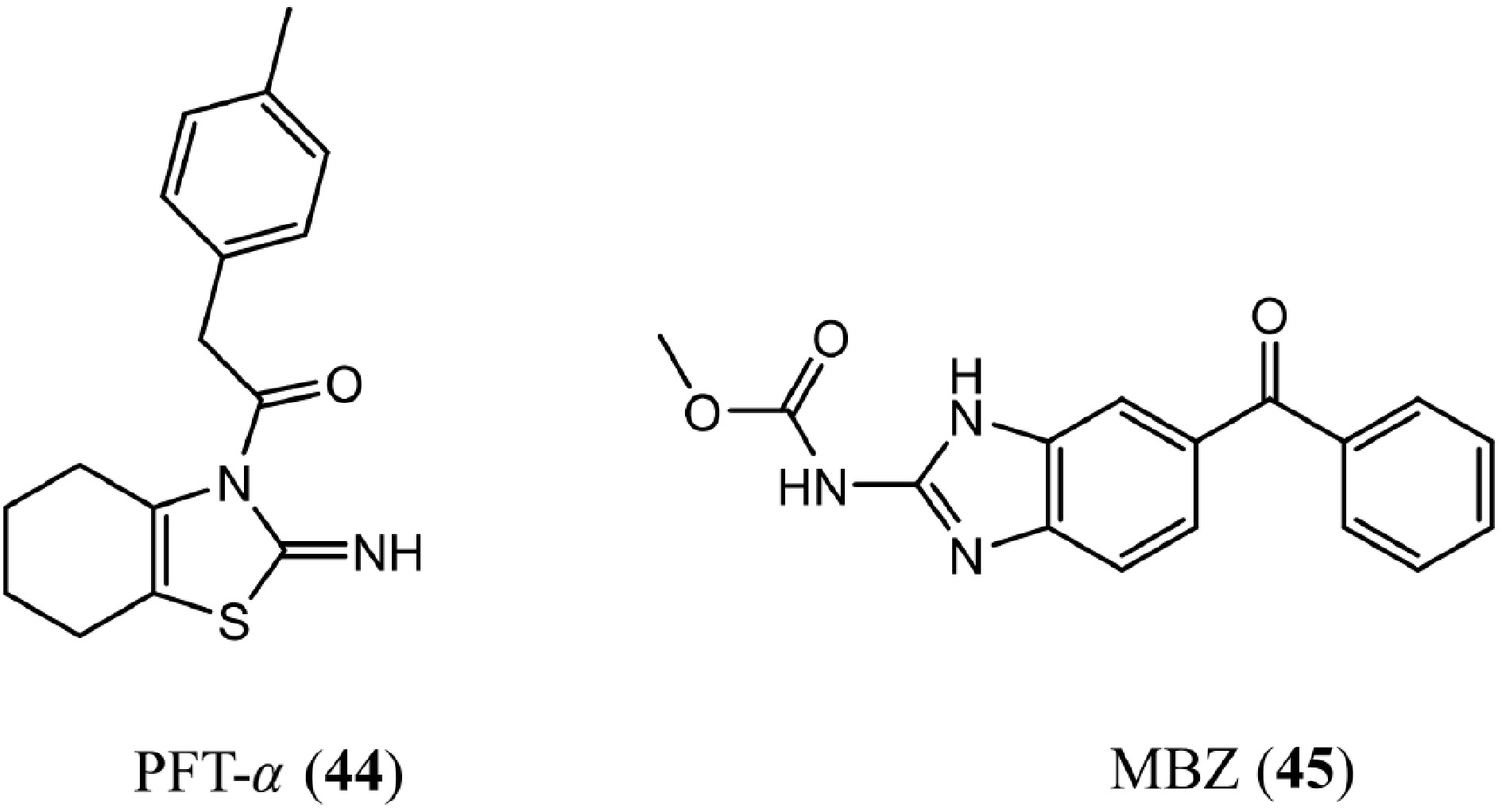
Figure 6.
Two chemical regulators targeting ETR1 and CTR1 in ethylene signaling. These modulators are described in detail in the section on CK signal transduction. Numbers in parentheses correspond to the bolded compound identifiers in the text.
-
ID Compound name Identification Description Ref. 1 N,N-Diphenylurea 102-07-8 CKX inhibitor [16] 2 1,3-di(benzo[d]oxazol-5-yl)urea (5-BDPU) PubChem CID 102147930 CKX inhibitor [17] 3 1,3-di(benzo[d]oxazol-6-yl)urea (6-BDPU) PubChem CID 102147931 CKX inhibitor [17] 4 1,3-bis(3-methoxyphenyl)urea (Auxurea A) 16460-28-9 GH3 inhibitor [18] 5 Thidiazuron (TDZ) 51707-55-2 CKX inhibitor [19] 6 1-[2-(2-hydroxyethyl)phenyl]-3-(1,2,3-thiadiazol-5-yl)urea (HETDZ) 2454498-77-0 CKX inhibitor [19] 7 1-[1,2,3]thiadiazol-5-yl-3-(3-trifluo romethoxy-phenyl)urea (3FMTDZ) 2454498-76-9 CKX inhibitor [19] 8 1-(2-methoxy-ethyl)-3-1,2,3-thiadiazol-5-yl-urea (ASES) N.A. CKX inhibitor [20] 9 N-(3-chloro-pyridin-4-yl)-N-phenylurea (CPPU) 68157-60-8 CKX inhibitor [23] 10 6-anilinopurines 6296-91-9 CKX inhibitor [24] 11 2-chloro-6-(3-methoxyphenyl)aminopurine (INCYDE) 190654-89-8 CKX inhibitor [24] 12 2-fluoro-6-(3-methoxyphenyl)aminopurine. (2-F-INCYDE) 1089014-47-0 CKX inhibitor [24] 13 Compound 10 N.A. Deisopentylation [31] 14 CAD-A N.A. Cytokinin scavenger [32] 15 CAD-B N.A. Cytokinin scavenger [32] Numerical identifiers in parentheses correspond to the bolded compound numbers in the text and to those shown in Fig. 2. N.A., not applicable. Table 1.
Available chemical tool information for investigating cytokinin metabolism in plants.
-
ID Compound name Identification Direct target
in animalsDirect target
in plantsRef. 16 Sodium orthovanadate 13721-39-6 − ABCG36, ABCG48 [41] 17 Glibenclamide 10238-21-8 MRP1/hABCC1 ABCC4 [43] 18 Verapamil 52-53-9 P-gp/hABCB1 ABCG40 [44] 19 Cyclosporin A 59865-13-3 PGP1 ABCB1 [45] 20 SN202 31383-66-1 P-gp/hABCB1 − [48] 21 AICAR 38183-45-8 P-gp/hABCB1 − [48] 22 Compound 1 − P-gp/hABCB1 − [49] 23 Compound 2 − P-gp/hABCB1 − [49] 24 Compound 4 − P-gp/hABCB1 − [49] 25 Compound 10 − P-gp/hABCB1 − [49] 26 Compound 13 − P-gp/hABCB1 − [49] 27 Ivacaftor 873054-44-5 MDR3/ABCB4 − [50] 28 Prazosin 19237-84-4 P-gp/hABCB1 − [51] 29 KS176 1253452-78-6 hABCG2 − [52] 30 Avapritinib 1703793-34-3 hABCG2/hABCB1 − [53] 31 Elacridar 143664-11-3 hABCG2/hABCB1 − [54] 32 A-803467 944261-79-4 hABCG2 − [55] 33 Ko 143 461054-93-3 hABCG2/hABCB1/
hABCC1− [56] Detailed descriptions of these regulators are provided in the section on CK transportation and its potential. Numerical identifiers in parentheses correspond to the bolded compound numbers in the text and to those shown in Fig. 4. Table 2.
Available chemical tool information for investigating ABC transporters.
-
ID Compound name Identification Description Ref. 34 6-(2-Hydroxy-3-methylbenzylamino)purine (PI-55) 1122579-42-3 CRE1/AHK4 inhibitor [70] 35 N-((benzyloxy)methyl)-9H-purin-6-amine (BOMA) 1357291-96-3 CRE1/AHK4 inhibitor [71] 36 N-(3-Hydroxypropyl)-6-chloro-4-phenylquinazolin-2-amine (S-4893) 51443-54-0 CRE1/AHK4 inhibitor [72] 37 N6-(5-phenylpentan-1-yl)adenine PubChem CID 154390047 CRE1/AHK4 inhibitor [73] 38 3,5-dichloro-N-(3,4-dichlorophenyl)-2-hydroxybenzamide (TCSA) 1154-59-2 AHK3/CRE1/AHK4 inhibitor [74] 39 6-(2-Hydroxybenzylamino)purine (Topolin) 20366-83-0 CRE1/AHK4 agonist [75] 40 N-(1-phenylethyl)-9H-purin-6-amine (S-MBA) 55553-54-3 AHK3 agonist [76] 41 2-fluoro-N-(1-phenylethyl)-9H-purin-6-amine (S-FMBA) 3082493-88-4 AHK3 agonist [76] 42 2-chloro-N-(1-phenylethyl)-9H-purin-6-amine (S-CMBA) 1212416-09-5 AHK3 agonist [76] 43 Cycl-iP N.A. Cytokinin analog [32] The chemical modulators listed in this table are described in detail in the section: Cytokinin signal transduction and its chemical regulation. The numerical identifiers in parentheses correspond to the bolded compound numbers in the text and to the structures presented in Fig. 5. N.A., not applicable. Table 3.
Available chemical tool information for investigating cytokinin signaling in plants.
Figures
(6)
Tables
(3)