










-
Hemp (Cannabis sativa L. subsp. Sativa) plants originate from the same species, and their external appearance is not completely different. Historically, it was grown mainly in Central and Southeast Asia, including India and China[1,2]. Hemp (Cannabis sativa L.) has gained significant global attention due to its wide range of industrial, agricultural, and medicinal applications. In particular, the resurgence of interest in medicinal hemp is primarily driven by the presence of bioactive compounds known as phytocannabinoids, including cannabidiol (CBD), cannabidiolic acid (CBDA), and tetrahydrocannabinol (THC), which exhibit substantial therapeutic potential[3−5]. Among these, CBD and its acidic precursor CBDA are of particular importance due to their non-psychoactive properties and increasing demand in the pharmaceutical and nutraceutical industries. The accumulation of cannabinoids in hemp is strongly influenced by environmental conditions such as light intensity, temperature, nutrient availability, and cultivation practices, which significantly affect both plant growth and cannabinoid biosynthesis[6]. Variations in nitrogen supply and photoperiod have been shown to influence biomass accumulation as well as cannabinoid concentration, highlighting the importance of optimizing cultivation conditions for targeted production outcomes[7].
It has been found that hemp extracts can be used to treat various symptoms, including cancer pain, muscle spasms, spasticity due to multiple sclerosis, treatment of chronic pain, and chemotherapy-induced nausea and vomiting[8]. These strains that are commonly used in medicine and are currently grown in Thailand are imported from abroad or called 'foreign species' that have undergone development; the strain was improved before it was imported to be planted in Thailand[9]. These improved strains have the characteristics of Cannabis indica strains, also known as indica-dominant hybrid strains. They usually have a short, bushy trunk, and height when fully grown is approximately 180 cm. The leaves are wide, short, and dark green[10]. In recent years, controlled environment agriculture, particularly greenhouse-based cultivation systems, has emerged as a promising approach for medicinal hemp production. These systems enable precise regulation of microclimatic factors such as temperature, humidity, light, and carbon dioxide concentration, thereby enhancing crop productivity and consistency in cannabinoid profiles. Compared to open-field cultivation, greenhouse systems can improve yield per unit area and allow for multiple production cycles; however, they also involve higher operational costs and require optimized management strategies to achieve economic feasibility[3,6].
Plant density and container size are key agronomic factors that influence resource utilization, plant architecture, and yield performance in greenhouse cultivation systems. Variations in spacing affect light interception, canopy development, and intra-specific competition, while pot size determines root development, nutrient uptake, and overall plant growth. Previous studies have indicated that such factors can significantly alter biomass production and resource allocation, although their direct effects on cannabinoid concentration remain less clearly understood[11]. Consequently, optimizing these parameters is critical for improving both quantitative yield and qualitative traits in hemp cultivation. Despite the growing body of research, there remains a lack of comprehensive studies that simultaneously evaluate growth performance, yield, and cannabinoid composition across different hemp cultivars under varying cultivation conditions. In particular, limited information is available on how planting density and pot size interact to influence cannabinoid accumulation and biomass production in greenhouse systems[12,13]. Addressing this gap is essential for developing efficient cultivation strategies tailored to specific production goals, such as maximizing CBD yield or total biomass.
Despite increasing interest in medicinal hemp cultivation, limited information is available on how cultivation density and root-zone volume interact to influence plant growth, yield performance, and cannabinoid production under controlled greenhouse conditions. We hypothesized that: (i) cultivation density and pot size would significantly affect vegetative growth, biomass yield, and cannabinoid accumulation; and (ii) hemp cultivars would exhibit distinct physiological and phytochemical responses to these cultivation factors. Therefore, this study aimed to evaluate the effects of plant spacing and pot size on growth performance, yield attributes, and cannabinoid composition in two medicinal hemp cultivars, AC/DC and Charlotte's Angel, cultivated under greenhouse conditions. By integrating agronomic, yield, and phytochemical assessments, the study seeks to identify cultivar-specific cultivation strategies and provide evidence-based recommendations for optimizing medicinal hemp production in controlled-environment systems.
-
The research was conducted at Arankan Company, located in Doem Bang Nang Buat District, Suphan Buri Province, Thailand. The company holds a cultivation license issued by the Food and Drug Administration (FDA). Laboratory analyses were performed at Central Laboratory (Thailand) Company Limited, located in Samut Sakhon Province, Thailand, which is accredited under ISO/IEC 17025 standards.
Hemp varieties
-
The hemp strains selected for this study were obtained from the catalogue of a licensed hemp seed importer in Thailand. These strains were chosen based on their certified cannabinoid profiles, specifically Total THC levels below 1% and total CBD levels above 10%, making them suitable for medicinal and industrial hemp research under Thai regulations. The selected strains were: (1) Charlotte's Angel, certified with total THC < 1% and total CBD > 10%; (2) AC/DC, certified with total THC < 1% and total CBD > 10%.
Nutrient preparation for hemp and cultivation conditions
-
Hemp cultivation was conducted under a controlled and scientifically optimized management system. Nutrient supply was regulated based on essential macro- and micronutrient requirements at different growth stages. Soil fertility was maintained through balanced fertilizer application, adapted from a hydroponic nutrient formulation, along with controlled irrigation practices. An organic cultivation approach integrated with pest management strategies was implemented to ensure plant health and enhance yield and quality. The improved hydroponic fertilizer formula is shown in Table 1.
Table 1. The improved hydroponic fertilizer formula.
Solution Type of fertilizer Fertilizer formula Amount used to dissolve in water/10 L A 1. Calcium nitrate (Ca[NO3]•4H2O) 15-0-0 1,200 g 2. Chelated iron (DTPA7%) or DTPA at 50 g + EDTA at 25 g 75 g B 1. Potassium dihydrogen phosphate (KH2PO4) 0-52-34 300 g 2. Potassium nitrate (KNO3) 13-0-46 700 g 3. Magnesium sulfate (MgSO4•7H2O) 500 g 4. Tres-spray 50 g 5. Librel manganese (Mn-EDTA 3%) 10 g 6. Sodium molybdate (Mo-EDTA 39.5%) 1 g 7. Nickel sulfate (Ni-22.3%) 0.5 g Greenhouse environmental conditions were maintained within optimal ranges to support vegetative growth, floral development, and cannabinoid biosynthesis in medicinal hemp. Light intensity was regulated between 500 µmol·m−2·s−1 using supplemental LED lighting, with a 16-h photoperiod during the vegetative stage and a 12-h photoperiod during flowering[14]. Air temperature was maintained at 26 ± 2 °C during the day and 18 ± 2 °C at night, which has been shown to optimize photosynthesis and secondary metabolite accumulation[15]. Relative humidity (RH) was controlled within 60% ± 12%, with lower humidity levels applied during the flowering stage to minimize the risk of fungal infections and improve inflorescence quality[16]. Adequate ventilation and air circulation were ensured to maintain uniform microclimatic conditions and prevent moisture accumulation. These controlled environmental parameters are critical for reducing variability and ensuring consistent yield and cannabinoid profiles under greenhouse cultivation systems.
A 100 L nutrient solution (1:100) was prepared by initially filling the tank with 50 L of water. Solution A (0.5 g) was dissolved in 500 mL of water and added to the tank, followed by 500 mL of solution B with continuous stirring. The volume was then adjusted to 100 L with water and thoroughly mixed. Solutions A and B were added separately to prevent nutrient precipitation.
Seedling production
-
High-quality hemp seeds were selected based on physical characteristics, including intact seed coats, absence of defects, and a dark brown, mottled appearance indicative of maturity[17]. Seeds were soaked in water for 16−20 h to assess viability, after which viable seeds were germinated in a moist medium under dark conditions for 24−48 h until radicle emergence. Germinated seeds were then transplanted into soil at a depth of approximately 0.5 cm with the taproot oriented downward. Seedlings were maintained under a 16−18-h photoperiod to support early growth[18]. During the seedling stage, environmental conditions were carefully controlled to minimize stress and prevent fungal contamination, particularly under high humidity, by ensuring adequate drainage and aeration[19].
Experimental design
-
The experiment was conducted at Aran Farm Co., Ltd, located in Doem Bang Nang Buat District, Suphan Buri Province, Thailand, within a 420 m2 greenhouse facility (14 m × 30 m) equipped with an evaporative cooling system. The study evaluated two high-CBD and low-THC hemp cultivars, namely Charlotte's Angel (Table 2; Fig. 1) and AC/DC (Table 2), with 72 plants cultivated for each strain. The experiment was designed to investigate the effects of different plant spacing treatments and growing medium volumes on hemp growth performance under controlled environmental conditions. Throughout the cultivation period, environmental parameters including temperature, relative humidity, light intensity, and irrigation were maintained uniformly to minimize external variability and ensure that the observed responses were primarily associated with the tested treatments. The study aimed to determine the influence of planting space and substrate volume on growth rate, plant morphology, biomass accumulation, and yield characteristics. The findings are expected to provide valuable insights for optimizing hemp cultivation practices in controlled greenhouse production systems.
Table 2. Experimental design for Charlotte's Angel hemp cultivar under different pot sizes and plant spacing treatments.
Pot size (L)* 20 L 40 L 60 L Plant spacing (m)* 0.5 m 1 m 1.5 m 0.5 m 1 m 1.5 m 0.5 m 1 m 1.5 m Number of plants (two replications per treatment) 4 × 2 4 × 2 4 × 2 4 × 2 4 × 2 4 × 2 4 × 2 4 × 2 4 × 2 Total sample size 72 plants * L, liter; m, meter. 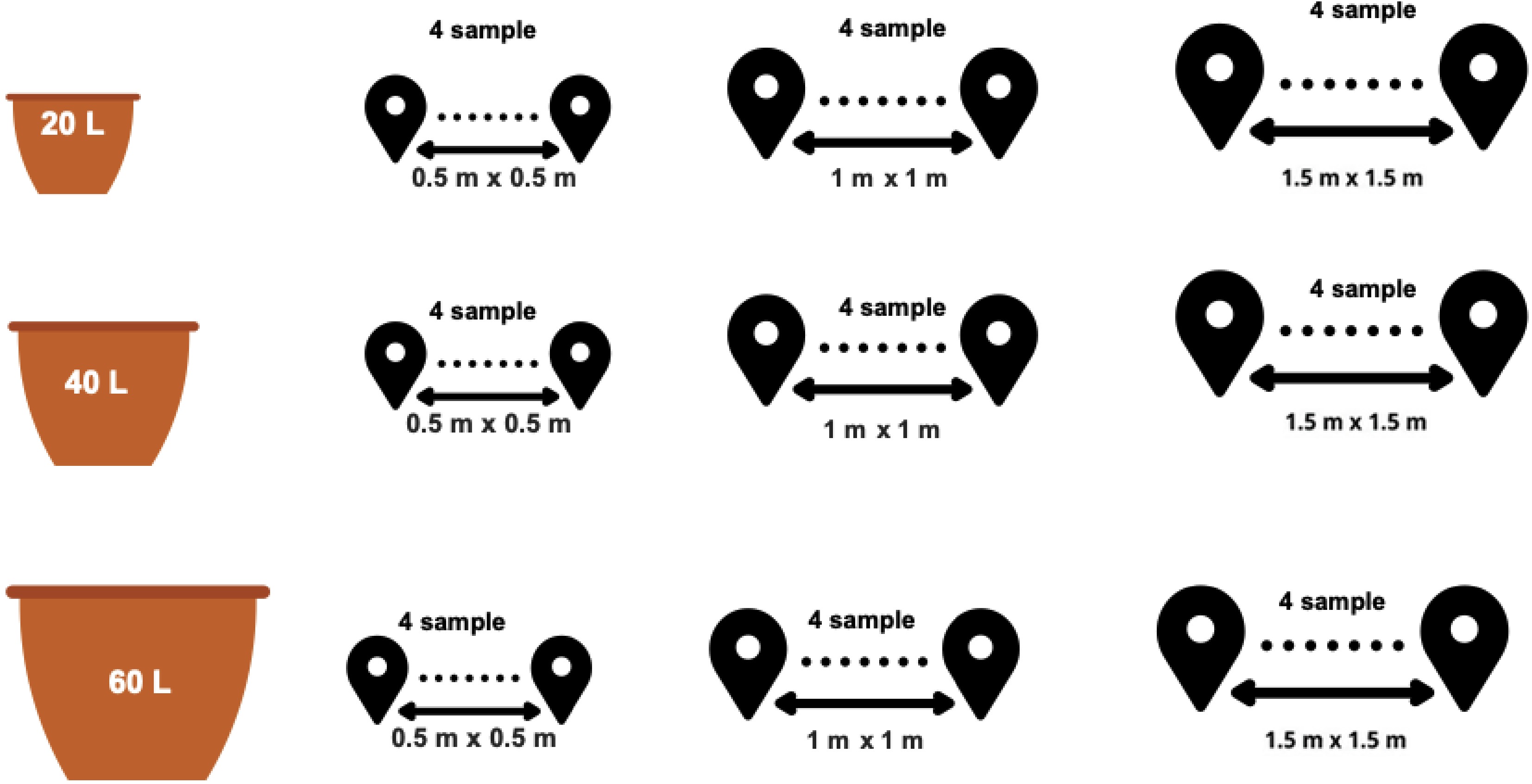
Figure 1.
Experimental design layout used for both hemp cultivars under different pot sizes and plant spacing treatments.
Growth and yield
-
Growth parameters were recorded at regular intervals throughout the cultivation period, including plant height, canopy width, and overall vegetative development. Yield-related parameters included the fresh and dry weights of inflorescences collected at harvest. All measurements were obtained using standard agronomic methods and appropriate measuring tools. Data collection was conducted from the flowering stage through to harvest in order to evaluate the effects of the different treatments on plant growth, biomass accumulation, and flower yield. In addition to yield per plant, fresh and dry inflorescence yields were standardized on a unit area basis to facilitate agronomic comparisons among different plant spacing treatments. Yield per unit area was calculated by dividing the yield per plant by the planting area occupied by each plant, which was determined based on the square of the plant spacing distance (Table 3).
Table 3. Experimental design for the AC/DC hemp strain under different pot sizes and plant spacing treatments.
Pot size (L)* 20 L 40 L 60 L Plant spacing (m)* 0.5 m 1 m 1.5 m 0.5 m 1 m 1.5 m 0.5 m 1 m 1.5 m Number of plants (two replications per treatment) 4 × 2 4 × 2 4 × 2 4 × 2 4 × 2 4 × 2 4 × 2 4 × 2 4 × 2 Total sample size 72 plants * L, liter; m, meter. Analysis of bioactive substances
Cannabinoid content analysis
-
The primary objective of this study was to quantify and characterize cannabinoid concentrations in female hemp inflorescences. Sample collection was conducted following the protocol described by Hammond & Mahlberg[20], with inflorescence samples collected from plants beginning at 90 d after planting until harvest at 120 d. The collected samples were analyzed at Central Laboratory (Thailand) Co., Ltd., located in Samut Sakhon Province, an ISO/IEC 17025-accredited analytical laboratory. Cannabinoid profiling was performed using gas chromatography (GC) to determine the concentrations of tetrahydrocannabinol (THC), cannabidiol (CBD), tetrahydrocannabinolic acid (THCA), and cannabidiolic acid (CBDA).
Statistical analysis
-
Data were analyzed using a factorial analysis of variance (ANOVA) approach. The experiment was structured as a 2 × 3 × 3 factorial arrangement consisting of two hemp cultivars (AC/DC and Charlotte's Angel), three pot sizes (20, 40, and 60 L), and three plant spacing levels (0.5, 1.0, and 1.5 m). The statistical model included the main effects of cultivar, pot size, and plant spacing, as well as all two-way and three-way interaction effects.
The following model was used:
$ {Y}_{ijkl}=\mu +{C}_{i}+{P}_{j}+{S}_{k}+(CP{)}_{ij}+(CS{)}_{ik}+(PS{)}_{jk}+(CPS{)}_{ijk}+{\varepsilon }_{ijkl} $ where, Yijkl represents the observed response variable,
$\mu $ Plant height, canopy width, fresh inflorescence weight, and dry inflorescence weight were analyzed separately. Before ANOVA, data were checked for normality and homogeneity of variance using the Shapiro–Wilk test and Levene's test, respectively. When ANOVA indicated significant effects at p < 0.05, treatment means were separated using Tukey's honest significant difference (HSD) test. Results are presented as mean ± standard deviation. Statistical analyses were performed using SPSS v26.0, and differences were considered statistically significant at p < 0.05.
-
The factorial ANOVA demonstrated that strain, pot size, and plant spacing significantly affected the growth and yield parameters of hemp plants. Significant interaction effects were also observed between strain × pot size and strain × plant spacing, indicating that the response of each cultivar varied according to the cultivation conditions applied. This study evaluated the performance and efficiency of hemp cultivation systems using black plastic containers with volumes of 20, 40, and 60 L. A standardized growing medium specifically formulated for hemp cultivation was used throughout the experiment. The substrate composition consisted of 40% coconut coir, 15% vermicast, 15% raw rice hulls, 10% perlite, 15% composted chicken manure, 5% bone meal, and a small proportion of rice husk ash. This formulation was designed to provide balanced nutrient availability, adequate aeration, and efficient water retention to support optimal plant growth. Before cultivation, randomly collected substrate samples were analyzed for nutrient composition and heavy metal contamination, which are critical quality and safety parameters for medical hemp production. The analysis confirmed sufficient levels of phosphorus (P), potassium (K), calcium (Ca), and magnesium (Mg), which are essential for supporting plant growth and reproductive development throughout the cultivation cycle. However, nitrogen (N) deficiency was detected, which is consistent with the high nitrogen demand of hemp during the vegetative growth stage. To correct this limitation, supplemental nitrogen fertilizer was applied, as presented in Table 4. By varying pot size while maintaining a uniform growing medium composition, the experiment effectively isolated the influence of container volume on root development, nutrient uptake efficiency, water-holding capacity, and overall plant productivity. This controlled experimental approach provides valuable insights into the optimization of medical hemp cultivation systems, particularly in balancing plant yield and product quality under greenhouse conditions.
Table 4. Results of nutrient analysis in planting materials.
pH Total nitrogen (N) Total phosphorus (P2O5) Total potassium (K2O) Calcium (Ca) Magnesium (Mg) 8.5 0.8% 1.2% 0.19% 2.1% 0.19% Heavy metal analysis in the soil of the hemp plantation
-
Heavy metal analysis of the cultivation substrate revealed concentrations that were well below the regulatory safety limits, as presented in Table 5. The results confirmed that the soil and growing medium were suitable for medical hemp cultivation and posed no significant risk of heavy metal contamination. Maintaining low levels of toxic elements is essential for ensuring the safety, quality, and purity of hemp products intended for medicinal applications.
Table 5. Heavy metal concentrations detected in the soil of the hemp plantation.
Heavy metals Standard values (mg·kg−1) Detected values (mg·kg−1) Arsenic < 6.0 0.873 Cadmium < 67 0.044 Chromium < 17.5 10.278 Lead < 400 1.647 Mercury < 22 < 0.018 Copper < 2,920 25.571 Chemical profile analysis results
-
Statistical comparison of cannabinoid content between cultivars indicated significant differences in CBDA and total cannabinoid concentration (p < 0.05), with Charlotte's Angel exhibiting higher values than AC/DC (Table 6; Fig. 2). Analysis of the cannabinoid composition of the Charlotte's Angel and AC/DC hemp strains revealed notable differences between the two cultivars. Charlotte's Angel exhibited substantially higher concentrations of major cannabinoids compared with AC/DC, including CBDA (10.97% vs 5.10%), CBD (0.68% vs 0%), THCA (0.39% vs 0.18%), and Δ9-THC (0.04% vs 0%). The total cannabinoid content was considerably greater in Charlotte's Angel (12.09%) than in AC/DC (5.49%), as presented in Table 6. These findings indicate that Charlotte's Angel possesses a superior cannabinoid production capacity under the cultivation conditions used in this study, suggesting its greater suitability for medical hemp applications requiring elevated cannabinoid content and enhanced phytochemical potency. Although cannabinoid composition was primarily evaluated at the cultivar level, plant density may indirectly influence cannabinoid uniformity through its effects on plant microclimate and resource availability. Higher plant density (closer spacing) can lead to increased competition for light, nutrients, and airflow, potentially introducing variability in plant physiological responses and secondary metabolite production. In contrast, wider spacing may promote more uniform plant development and stable cannabinoid expression due to reduced competition and improved environmental conditions around individual plants. While the present study did not quantify cannabinoid variation across all individual plants within each treatment, the observed trends suggest that plant density could play a role in influencing phytochemical consistency, which warrants further investigation.
Table 6. Results of the analysis of bioactive compounds in hemp inflorescence samples.
Compounds Species Charlotte's Angel AC/DC Delta 9-tetrahydrocannabinolic acid (THCA) 0.39% 0.18% Delta 9-tetrahydrocannabinol (delta 9-THC) 0.04% ND Cannabidiolic acid (CBDA) 10.97% 5.10% Cannabidiol (CBD) 0.68% ND Delta 8-tetrahydrocannabinol (delta 8-THC) ND ND Cannabinol (CBN) ND ND Cannabigerolic acid (CBGA) ND ND Cannabigerol (CBG) ND ND Tetrahydrocannabivarint (THCV) ND ND Cannabidivarin (CBDV) ND 0.04% Cannabichromene (CBC) ND ND Total potential THC ** 0.39% 0.16% Total potential CBD ** 10.31 4.64 Total Cannabinoids * 12.09 5.49 Note: Total potential THC (**) was calculated as THC + (THCA × 0.877), while total potential CBD (**) was calculated as CBD + (CBDA × 0.877). Total cannabinoids (*) were calculated as the sum of the quantified cannabinoids. 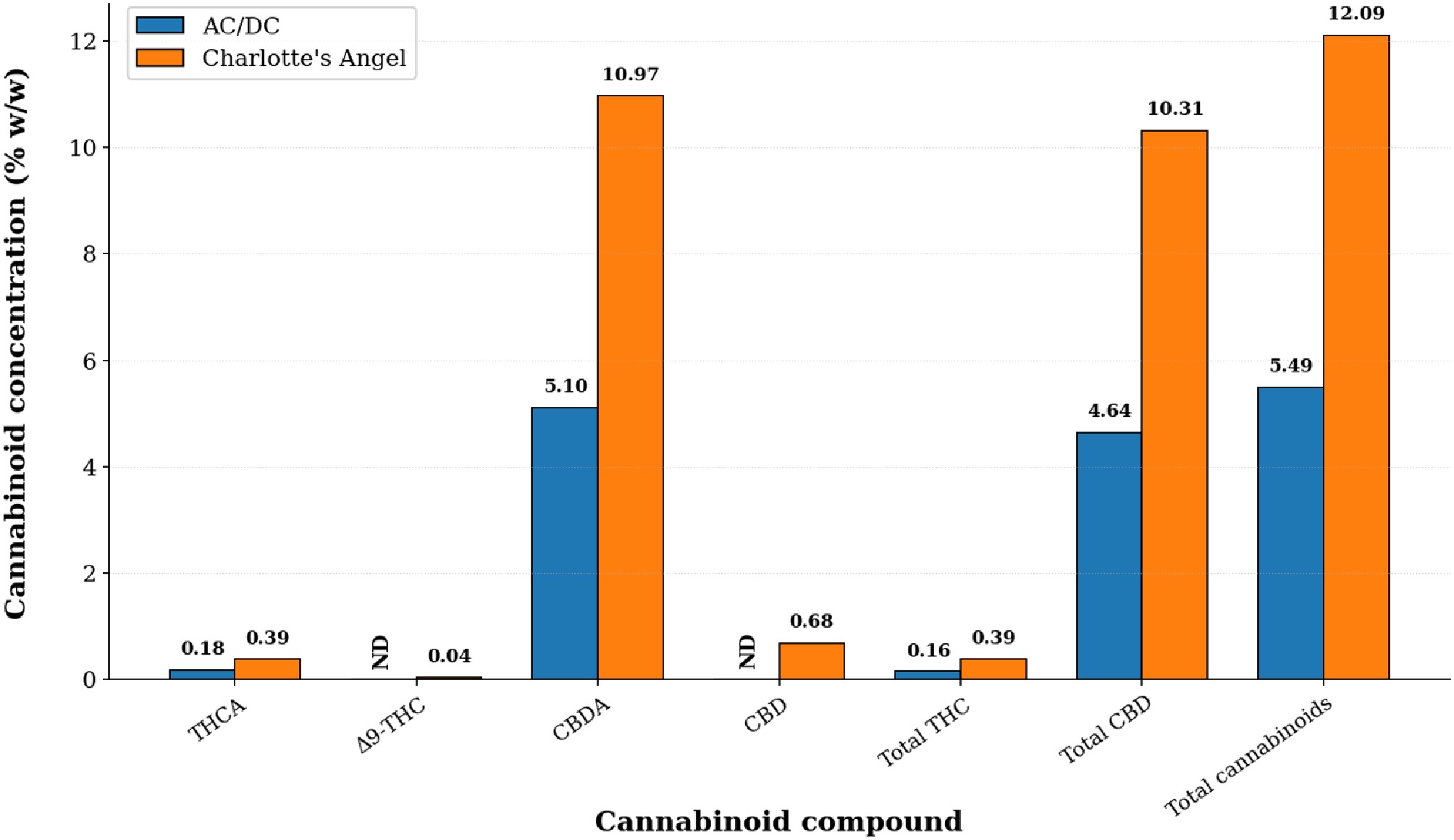
Figure 2.
Cannabinoid profile comparison between the two hemp strains, AC/DC and Charlotte's Angel.
Percentage values are expressed as % (w/w), representing the percentage ratio of the analyte weight to the total product weight. 'ND' indicates that the compound concentration was below the analytical method detection limit.
In addition to differences in mean cannabinoid concentrations, variability across treatments is a critical factor for medicinal applications. Charlotte's Angel exhibited higher cannabinoid concentrations than AC/DC under the cultivation conditions evaluated, particularly for CBDA and total CBD content, indicating a favorable cannabinoid profile under the conditions evaluated. In contrast, AC/DC showed lower overall cannabinoid concentrations with greater relative variability in minor compounds, suggesting a less stable chemical profile under varying agronomic conditions. The consistency observed in Charlotte's Angel is particularly important for pharmaceutical and medicinal applications, where uniformity in active compound concentration is essential for dosage standardization and product reliability. These findings indicate that while both cultivars respond to cultivation conditions, Charlotte's Angel demonstrates greater suitability for medicinal use due to its higher and more stable cannabinoid content. Future studies should investigate cannabinoid stability across cultivation treatments.
Plant growth
-
The factorial ANOVA revealed that cultivar and plant spacing significantly influenced plant height and canopy width (p < 0.05), whereas pot size had a comparatively smaller effect. A significant interaction between cultivar and plant spacing was observed, indicating that the growth response of each strain varied depending on spacing conditions. AC/DC (Tables 7 and 8; Figs 3 and 4) consistently exhibited significantly greater plant height and canopy width than Charlotte's Angel across most treatment combinations (p < 0.05). Wider spacing (1.0–1.5 m) significantly enhanced plant growth compared to closer spacing (0.5 m), suggesting reduced inter-plant competition for light and nutrients. In contrast, pot size did not produce a consistent significant effect on growth parameters across treatments. These findings indicate that plant spacing plays a more critical role than container volume in determining vegetative growth, with cultivar-specific responses influencing optimal cultivation strategies. These findings were supported by significant interaction effects (p < 0.05), suggesting that the optimal pot size and spacing differed between cultivars.
Table 7. Results of growth parameter analysis for the AC/DC hemp strain.
Groups Pot
size (L)Plant
spacing (m)Height (cm) Width (cm) AC1 60 1.5 174.25 ± 30.69a 131.63 ± 18.86a,b AC2 40 1.5 145.25 ± 17.56a,b,c,d 121.50 ± 11.05a,b,c AC3 20 1.5 151.50 ± 24.03a,b,c 127.25 ± 14.07a,b AC4 60 1.0 139.38 ± 20.07b,c,d 129.00 ± 17.53a,b AC5 40 1.0 119.38 ± 12.78a 113.13 ± 8.64b,c, AC6 20 1.0 163.00 ± 5.81a,b 135.50 ± 10.34a AC7 60 0.5 162.50 ± 4.89a 129.00 ± 4.80a,b AC8 40 0.5 165.88 ± 8.94a,b 135.00 ± 14.56a,b AC9 20 0.5 127.00 ± 15.51c,d 103.50 ± 11.52c Note: Values are expressed as mean ± SD (n = 8). Data were analyzed using factorial ANOVA followed by Tukey's HSD test for mean separation. Different lowercase letters within a column indicate statistically significant differences among treatment combinations at p < 0.05. Table 8. Results of growth analysis of Charlotte's Angel strains.
Groups Pot size
(L)Plant
spacing (m)Height (cm) Width (cm) CA1 60 1.5 101.75 ± 10.86a 102.75 ± 15.99a,b CA2 40 1.5 105.75 ± 17.32a 107.38 ± 24.18a CA3 20 1.5 122.63 ± 13.78a 112.13 ± 14.44a CA4 60 1.0 96.88 ± 15.85a 93.25 ± 17.61a,b CA5 40 1.0 108.00 ± 15.63a 109.00 ± 13.55a CA6 20 1.0 103.75 ± 22.17a 98.63 ± 14.61a,b CA7 60 0.5 103.13 ± 8.40a 108.75 ± 17.42a CA8 40 0.5 107.38 ± 23.82a 98.13 ± 15.93a,b CA9 20 0.5 108.25 ± 10.17a 87.75 ± 12.30b Note: Values are expressed as mean ± SD (n = 8). Data were analyzed using factorial ANOVA followed by Tukey's HSD test for mean separation. Different lowercase letters within a column indicate statistically significant differences among treatment combinations at p < 0.05. 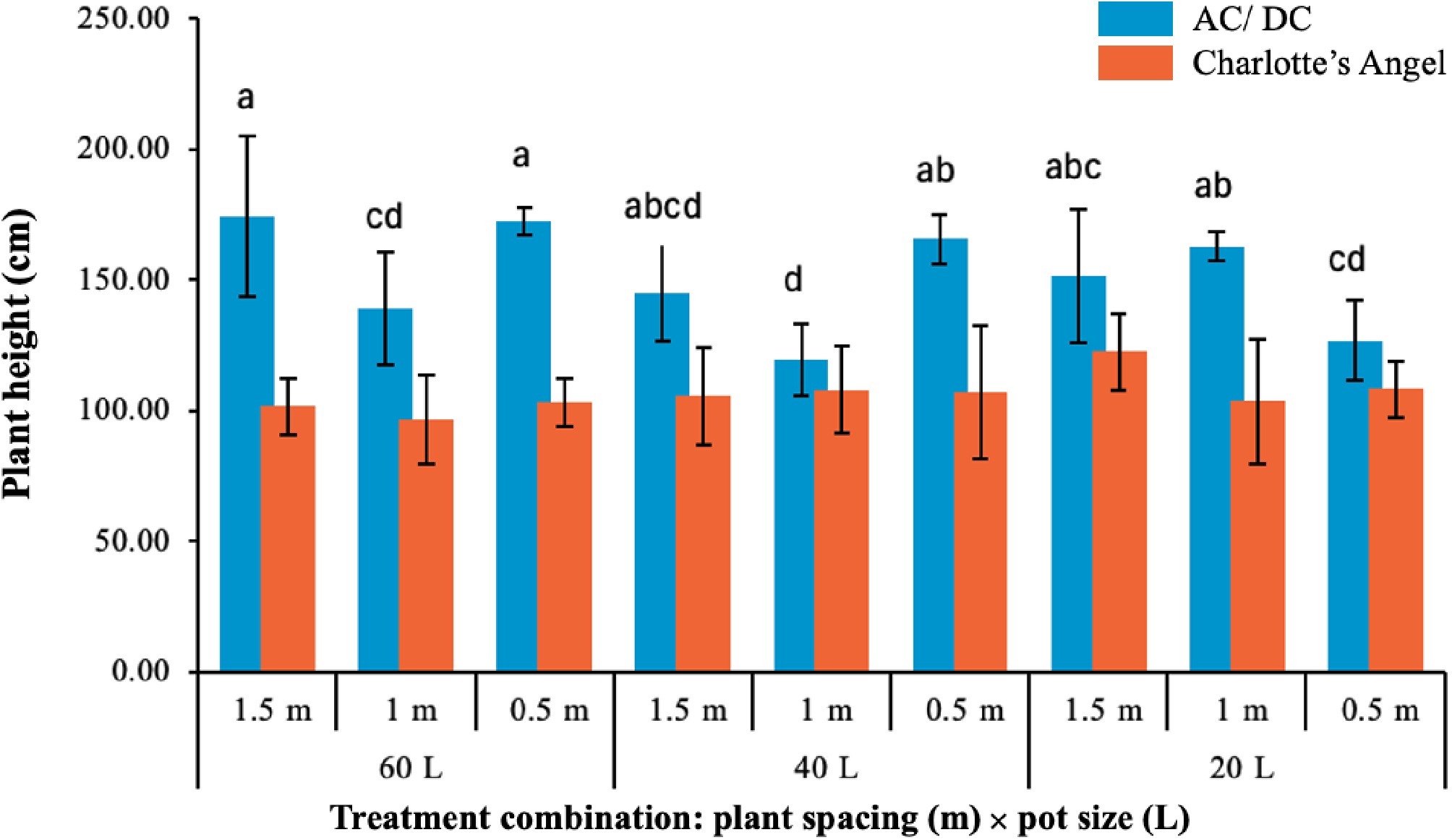
Figure 3.
Plant height of AC/DC and Charlotte's Angel under different pot size and plant spacing treatments. Values are presented as mean ± standard deviation (n = 8). Different lowercase letters indicate statistically significant differences among treatments based on Tukey's HSD test at p < 0.05.
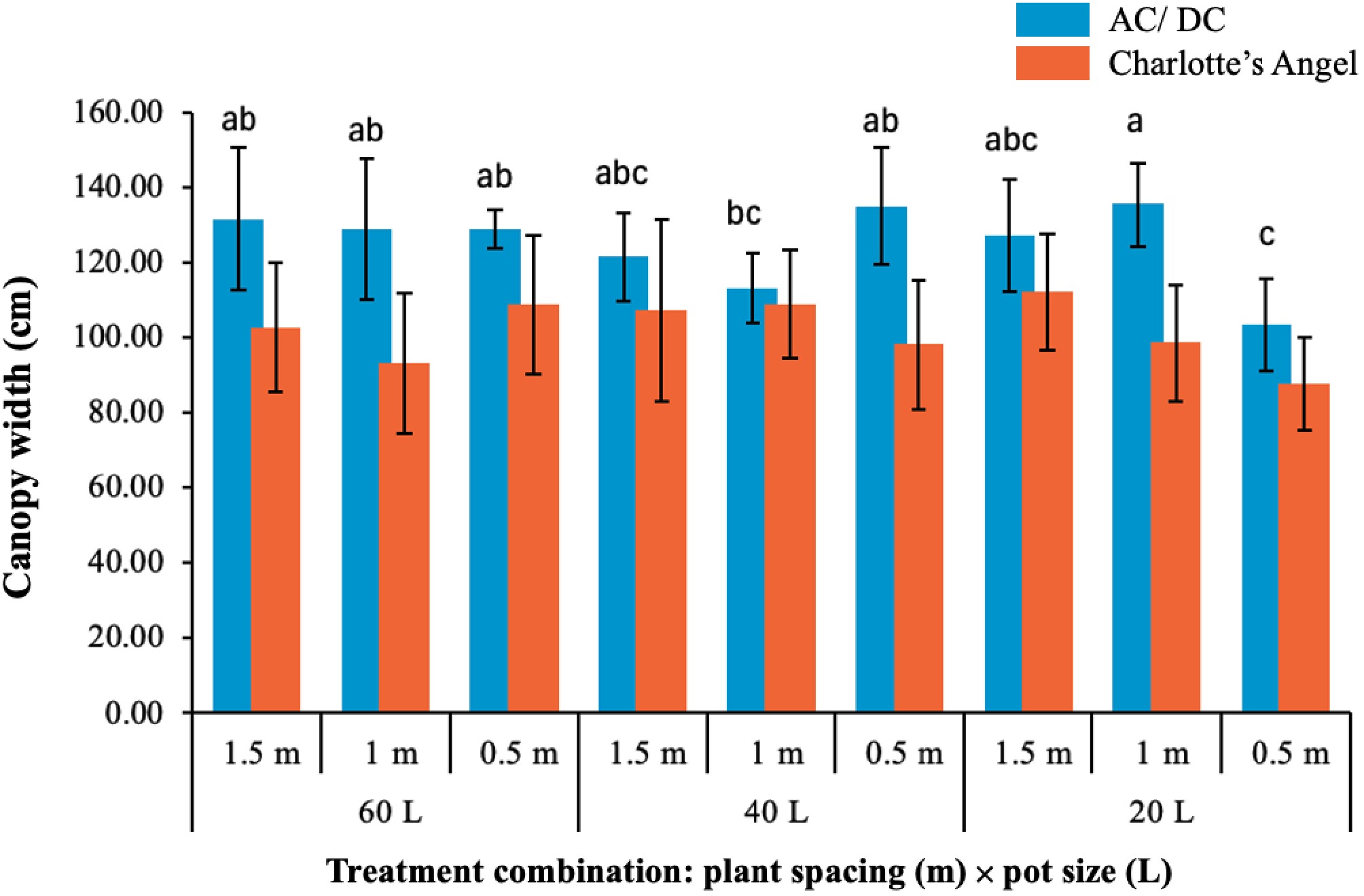
Figure 4.
Canopy width of AC/DC and Charlotte's Angel under different pot sizes and plant spacing treatments. Values are presented as mean ± standard deviation (n = 8). Different lowercase letters indicate statistically significant differences at p < 0.05.
Overall, plant spacing emerged as the dominant factor influencing vegetative growth, with wider spacing consistently promoting greater height and canopy expansion across both cultivars. While AC/DC exhibited a stronger growth response, Charlotte's Angel maintained more compact and stable growth across treatments, indicating distinct morphological strategies between the two strains. These growth patterns can be attributed to resource competition mechanisms associated with plant spacing and container volume. At closer spacing, increased canopy overlap reduces light penetration within the plant canopy, limiting photosynthetic efficiency and restricting vertical and lateral growth. Simultaneously, higher plant density intensifies competition for soil nutrients and water, particularly nitrogen, which is critical for vegetative development. In contrast, wider spacing reduces competition for both aboveground and belowground resources, allowing improved light interception and more efficient nutrient uptake, thereby promoting enhanced plant growth. These findings demonstrate that plant development in hemp is strongly regulated by interactions between spatial arrangement and resource availability.
Weight analysis
-
Significant effects of cultivar, pot size, and plant spacing on fresh and dry inflorescence yield were observed (p < 0.05). In addition, significant interaction effects between cultivar × pot size and cultivar × spacing indicated that yield responses differed between the two hemp strains under varying cultivation conditions. AC/DC produced significantly higher fresh inflorescence (Tables 9 and 10; Figs 5 and 6) yields than Charlotte's Angel under optimal conditions, particularly at 20 L pot size and 1.0 m spacing (p < 0.05). However, Charlotte's Angel exhibited relatively higher variability in dry yield, with its maximum performance observed under moderate spacing conditions. Reduced spacing (0.5 m) significantly decreased yield per plant, likely due to increased competition, whereas moderate spacing (1.0 m) optimized yield outcomes for both cultivars. These results highlight the importance of balancing plant density and resource availability to maximize productivity. These findings were supported by significant interaction effects (p < 0.05), suggesting that the optimal pot size and spacing differed between cultivars.
Table 9. Results of fresh and dry inflorescence weight analysis for the AC/DC hemp strain.
Groups Pot size (L) Plant
spacing (m)Fresh flower
weight (kg)Dry flower
weight (kg)AC1 60 1.5 0.73 ± 0.31a,b 0.27 ± 0.08a,b,c AC2 40 1.5 0.90 ± 0.25a,b 0.28 ± 0.07a,b,c AC3 20 1.5 0.70 ± 0.20a,b 0.21 ± 0.06a,b,c AC4 60 1.0 0.75 ± 0.15a,b 0.23 ± 0.05a,b,c,d AC5 40 1.0 0.76 ± 0.32a,b 0.21 ± 0.12a,b,c,d AC6 20 1.0 1.07 ± 0.38a 0.32 ± 0.11a AC7 60 0.5 0.61 ± 0.20b 0.20 ± 0.06b,c,d AC8 40 0.5 0.82 ± 0.25a,b 0.13 ± 0.08d AC9 20 0.5 0.74 ± 0.25a,b 0.22 ± 0.08a,b,c,d Note: Values are expressed as mean ± SD (n = 8). Data were analyzed using factorial ANOVA followed by Tukey's HSD test for mean separation. Different lowercase letters within a column indicate statistically significant differences among treatment combinations at p < 0.05. Table 10. Results of weight analysis of fresh and dry inflorescences of Charlotte's Angel.
Groups Pot size (L) Plant spacing (m) Fresh flower weight (kg) Dry flower weight (kg) CA1 60 1.5 0.70 ± 0.22a,b 0.20 ± 0.06a,b CA2 40 1.5 0.70 ± 0.21a,b 0.30 ± 0.08a CA3 20 1.5 0.69 ± 0.27a,b 0.32 ± 0.09a,b CA4 60 1.0 0.69 ± 0.23a,b 0.29 ± 0.09a,b CA5 40 1.0 0.88 ± 0.24a,b 0.23 ± 0.11a,b CA6 20 1.0 0.73 ± 0.25a 0.49 ± 0.19a CA7 60 0.5 0.53 ± 0.16b 0.30 ± 0.08a,b CA8 40 0.5 0.86 ± 0.19a,b 0.18 ± 0.08b CA9 20 0.5 0.81 ± 0.29a,b 0.28 ± 0.13a,b Note: Values are expressed as mean ± SD (n = 8). Data were analyzed using factorial ANOVA followed by Tukey's HSD test for mean separation. Different lowercase letters within a column indicate statistically significant differences among treatment combinations at p < 0.05. 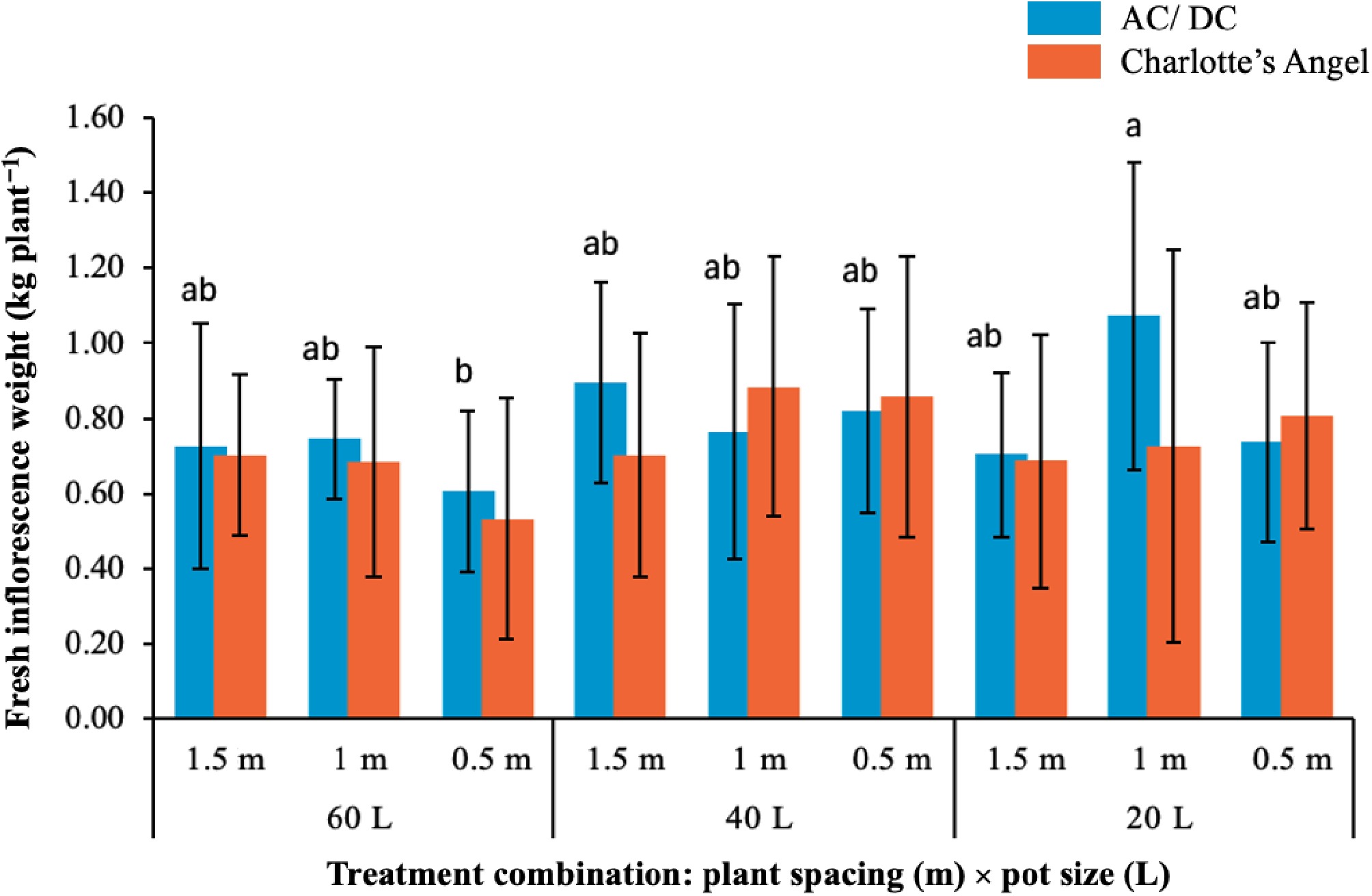
Figure 5.
Fresh inflorescence yield of AC/DC and Charlotte's Angel across treatment combinations. Values are presented as mean ± SD (n = 8). Different lowercase letters indicate statistically significant differences at p < 0.05.
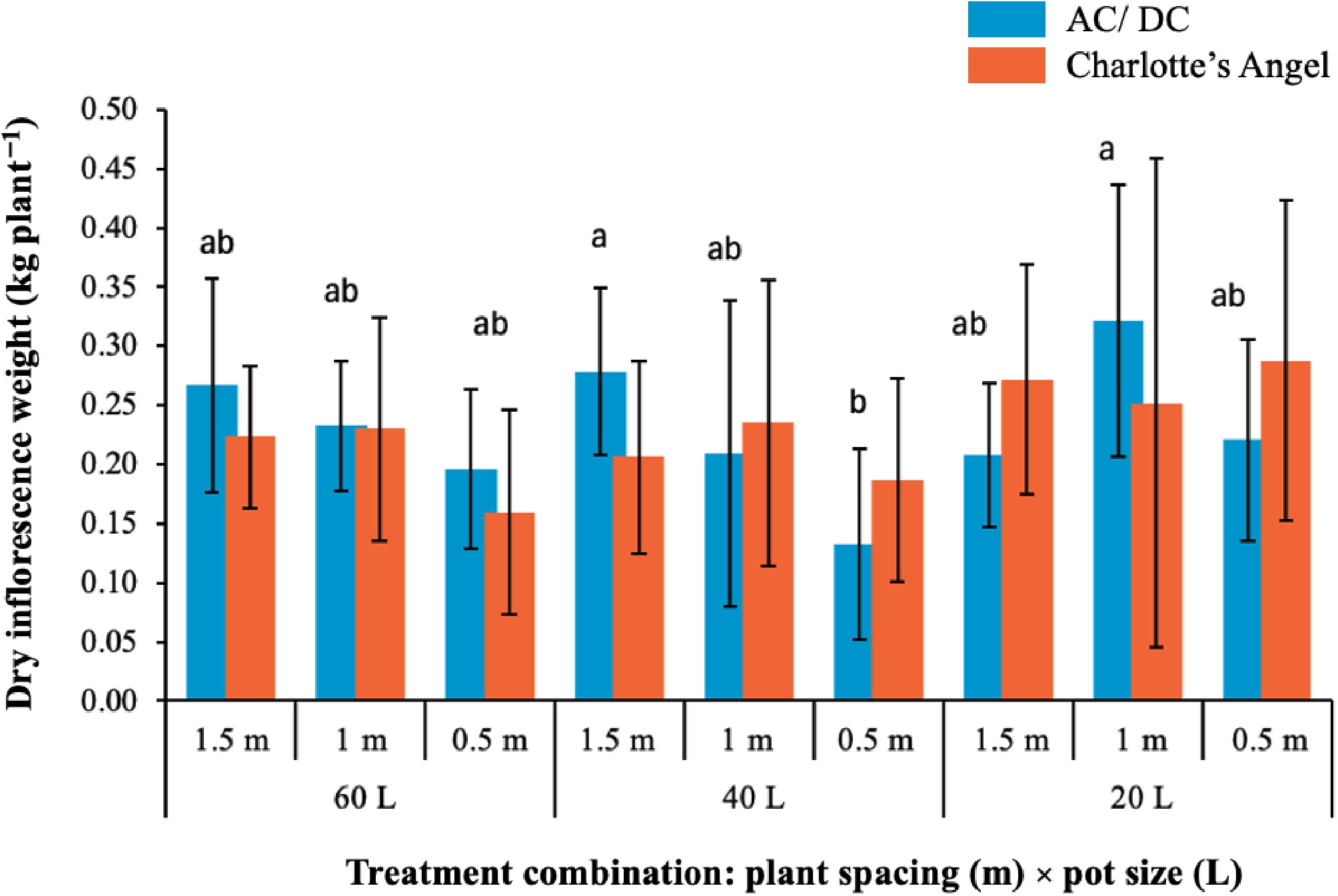
Figure 6.
Dry inflorescence yield of AC/DC and Charlotte's Angel across treatment combinations. Values are presented as mean ± SD (n = 8). Different lowercase letters indicate statistically significant differences at p < 0.05.
A clear trend was observed in which moderate spacing (1.0 m) combined with smaller to medium pot sizes (20–40 L) optimized yield performance. AC/DC demonstrated superior fresh biomass production, whereas Charlotte's Angel showed relatively higher efficiency in dry flower accumulation under specific conditions. These findings highlight a trade-off between biomass production and consistency in yield across cultivars.
Yield per unit area
-
To enable agronomic comparison across planting densities, yield was standardized per unit area (kg·m−2) (Table 11) based on plant spacing. When expressed on an area basis, closer spacing treatments resulted in substantially higher productivity despite lower or moderate yield per plant.
Table 11. Yield per unit area.
Treatment AC/DC
fresh (kg·m−2)AC/DC
dry (kg·m−2)Charlotte
fresh (kg·m−2)Charlotte
dry (kg·m−2)1.5 m; 60 L 0.32 0.12 0.31 0.09 1.5 m; 40 L 0.40 0.12 0.31 0.13 1.5 m; 20 L 0.31 0.09 0.31 0.14 1.0 m; 60 L 0.75 0.23 0.69 0.29 1.0 m; 40 L 0.76 0.21 0.88 0.32 1.0 m; 20 L 1.07 0.32 0.73 0.49 0.5 m; 60 L 2.44 0.80 2.12 1.20 0.5 m; 40 L 3.28 0.52 3.44 1.40 0.5 m; 20 L 2.96 0.88 3.24 1.12 For AC/DC, the highest fresh yield per unit area was observed at 0.5 m spacing with 40 L pots (3.28 kg·m−2), while the highest dry yield per unit area was recorded at 0.5 m spacing with 20 L pots (0.88 kg·m−2). For Charlotte's Angel, maximum fresh and dry yields per unit area were achieved at 0.5 m spacing with 40 L pots (3.44 and 1.40 kg·m−2, respectively). These results indicate that although wider spacing promotes individual plant growth, closer spacing significantly enhances productivity per unit area. However, higher plant density may introduce trade-offs related to plant competition, airflow, and cannabinoid consistency, which should be considered in commercial cultivation systems.
Integrated analysis of growth, yield, and cannabinoid response
-
Integrating the results across growth, yield, and cannabinoid profiles reveals distinct cultivation strategies for each cultivar. AC/DC exhibited superior vegetative growth and biomass production, particularly under moderate spacing and smaller pot sizes, making it suitable for applications focused on bulk yield. In contrast, Charlotte's Angel consistently produced higher cannabinoid concentrations, especially CBDA and total CBD, indicating its suitability for medicinal applications requiring high phytochemical quality. Across both cultivars, plant spacing emerged as a key determinant of performance, influencing both growth and yield outcomes. Wider spacing improved vegetative development, while moderate spacing optimized yield per plant. However, increased density may enhance yield per unit area at the cost of uniformity and cannabinoid consistency. These results highlight the importance of aligning cultivation practices with production goals, balancing biomass yield, plant architecture, and cannabinoid quality.
-
Soil analysis revealed a pH value of 8.5, indicating alkaline conditions that may reduce the solubility and availability of micronutrients such as iron (Fe) and manganese (Mn), thereby limiting nutrient uptake efficiency. Therefore, soil acidification is recommended to improve nutrient availability and optimize hemp growth. Nitrogen content was measured at 0.8%, which is considered deficient for hemp cultivation and requires supplementation due to the crop's high nitrogen demand during vegetative development. In contrast, phosphorus (P), potassium (K), calcium (Ca), and magnesium (Mg) levels were within adequate ranges to support plant growth and development. According to Saloner & Bernstein[21], a nitrogen concentration of approximately 160 mg·L−1 is optimal for medical hemp during the vegetative stage, as it supports both physiological activity and structural development. Insufficient nitrogen supply can reduce plant growth and biomass accumulation, whereas excessive nitrogen application may lead to toxicity and nutrient imbalance. Therefore, precise nitrogen management is essential to maintain effective mineral uptake and normal plant function. Heavy metal analysis indicated that the concentrations of toxic elements in the cultivation substrate were well below regulatory threshold values, confirming the safety and suitability of the growing medium for medical hemp production. These findings are consistent with the studies by Singh et al.[22] and Placido & Lee[23], who reported that hemp can accumulate heavy metals when cultivated in contaminated soils, emphasizing the importance of pre-cultivation soil assessment.
Cannabinoid analysis demonstrated that Charlotte's Angel produced higher concentrations of cannabinoids, particularly CBDA and CBD, compared with AC/DC. Nevertheless, both cultivars maintained low THCA and Δ9-THC levels within the legal limits established for industrial hemp production. Similar variations in cannabinoid accumulation among hemp cultivars grown under controlled environments were previously reported by Kosmakova et al.[24]. Furthermore, studies by Danziger & Bernstein[25] and Boulard et al.[26] demonstrated that optimized light intensity under climate-controlled greenhouse conditions significantly enhances cannabinoid yield and product quality. Pot size and plant spacing significantly influenced the growth and productivity of both hemp cultivars. AC/DC performed optimally in 20 L pots with 1 m spacing, whereas Charlotte's Angel achieved superior performance in 40 L pots with spacing distances ranging from 0.5 to 1.0 m. Similar findings were reported by Caplan et al.[15], who observed that plants grown in 11 L containers produced significantly greater yields than those cultivated in 6.5 L containers. Increased planting density in 60 L treatments enhanced yield per unit area, consistent with previous findings[27,28].
Similarly, Danziger & Bernstein[29] reported that increasing plant density from 1 to 2 plants·m−2 reduced yield per individual plant but increased total yield per cultivation area by approximately 28%–44%. However, greater planting density also increased cannabinoid variability due to altered microclimatic conditions within the canopy, as supported by the findings of Khorshidi et al.[30] and El-Zaeddi et al.[31]. In agreement with these observations, Campiglia et al.[32] reported higher inflorescence yields at increased planting densities, while Backer et al.[33] suggested that planting densities not exceeding 12 plants·m−2 are optimal for maximizing yield per unit area. Morphological analysis showed that AC/DC produced greater plant height and canopy width than Charlotte's Angel under all cultivation conditions, with higher variability in vegetative growth observed particularly in AC/DC. In contrast, the more compact growth habit of Charlotte's Angel may provide advantages for space-limited cultivation systems. Although AC/DC exhibited stronger vegetative growth, Charlotte's Angel consistently produced higher inflorescence yields. Plant spacing between 1.0 and 1.5 m significantly improved growth and yield compared with 0.5-m spacing, likely due to reduced competition for light, nutrients, and water, as well as improved air circulation within the canopy[29,34].
Results indicate that cultivation management practices, particularly nitrogen supplementation, pot size, and plant spacing, play critical roles in determining hemp growth performance, cannabinoid accumulation, and inflorescence productivity under controlled greenhouse conditions. The observed effects of plant spacing and pot size on growth and yield can be explained by fundamental plant physiological and resource competition mechanisms. At closer spacing (0.5 m), plants experience increased competition for light, leading to canopy shading and reduced photosynthetic efficiency, particularly in lower leaves. This limits carbon assimilation and biomass accumulation. In contrast, wider spacing (1.0–1.5 m) improves light interception and canopy exposure, enhancing photosynthetic activity and promoting vegetative growth. Belowground, restricted root volume in smaller pots and higher plant density intensifies competition for nutrients and water, reducing nutrient uptake efficiency and limiting growth potential. Larger pots and wider spacing provide greater root expansion, improving access to nitrogen and other essential nutrients, which are critical for biomass production and secondary metabolite synthesis. Additionally, plant density influences the greenhouse microclimate; higher density increases humidity and reduces airflow, potentially affecting transpiration, stomatal conductance, and metabolic stability. These combined effects explain the trade-off observed between individual plant performance and overall yield per unit area under different cultivation densities.
-
This study demonstrated that cultivar selection, plant spacing, and pot size significantly influence the growth, yield, and cannabinoid characteristics of medicinal hemp cultivated under greenhouse conditions. Soil analysis indicated that improving nitrogen availability and reducing alkalinity are important considerations for optimizing plant performance and cannabinoid production. Among the two cultivars evaluated, Charlotte's Angel exhibited substantially greater CBD and total cannabinoid accumulation, whereas AC/DC produced superior vegetative growth and biomass yield. Plant spacing had a stronger influence on growth and productivity than pot size, with wider spacing promoting plant development and closer spacing enhancing yield per unit area. Moderate spacing (approximately 1.0 m) provided a practical balance between resource-use efficiency and plant performance. Under the conditions of this study, 20 L pots with 1.0 m spacing for AC/DC and 40 L pots with 1.0 m spacing for Charlotte's Angel were associated with favorable production outcomes. These findings provide useful guidance for greenhouse-based medicinal hemp cultivation, enabling growers to align cultivar selection and management practices with specific production goals. However, further studies are needed to validate cannabinoid responses across cultivation treatments, production cycles, and environmental conditions.
-
The authors confirm their contributions to the paper as follows: conceptualization: Sokuma A, Chatsungnoen T, Bhuyar P; methodology: Sokuma A, Bhuyar P; investigation, validation, and data curation: Sokuma A, Chatsungnoen T, Susawaengsup C, Bhuyar P; formal analysis: Sokuma A, Chatsungnoen T, Bhuyar P; writing – original draft and writing – review & editing: Sokuma A, Chatsungnoen T, Susawaengsup C, Tongkoom K, Bhuyar P. All authors reviewed the results and approved the final version of the manuscript.
-
All data generated or analyzed during this study are included in this published article. Additional information is available from the corresponding authors upon reasonable request.
-
The authors declare that they have no conflict of interest.
- Copyright: © 2026 by the author(s). Published by Maximum Academic Press, Fayetteville, GA. This article is an open access article distributed under Creative Commons Attribution License (CC BY 4.0), visit https://creativecommons.org/licenses/by/4.0/.
-
About this article
Cite this article
Sokuma A, Chatsungnoen T, Susawaengsup C, Tongkoom K, Bhuyar P. 2026. Optimizing cultivation density to enhance yield and cannabinoid consistency in medicinal hemp cultivars AC/DC and Charlotte's Angel under greenhouse conditions. Circular Agricultural Systems 6: e023 doi: 10.48130/cas-0026-0023 

Optimizing cultivation density to enhance yield and cannabinoid consistency in medicinal hemp cultivars AC/DC and Charlotte's Angel under greenhouse conditions
- Received: 22 March 2026
- Revised: 05 July 2026
- Accepted: 08 July 2026
- Published online: 28 September 2026
Abstract: Medicinal hemp cultivation under controlled greenhouse environments requires optimized agronomic management to maximize biomass yield while maintaining cannabinoid consistency. The present study evaluated the effects of cultivation density and pot size on the growth, yield, and cannabinoid composition of two medicinal hemp cultivars, AC/DC and Charlotte's Angel, grown under evaporative cooling greenhouse conditions in Thailand. A factorial experiment consisting of two cultivars, three pot sizes (20, 40, and 60 L), and three plant spacing treatments (0.5, 1.0, and 1.5 m) was conducted under controlled environmental conditions. Soil nutrient and heavy metal analyses confirmed suitable cultivation conditions, although nitrogen deficiency and alkaline pH were identified as potential limiting factors. Cannabinoid profiling revealed significant cultivar-dependent differences, with Charlotte's Angel producing substantially higher CBDA, total CBD, and total cannabinoid concentrations than AC/DC, indicating superior phytochemical stability and suitability for medicinal applications. In contrast, AC/DC exhibited significantly greater plant height, canopy width, and fresh biomass production across most treatments. Plant spacing significantly influenced vegetative growth and yield, with wider spacing promoting plant development, whereas closer spacing increased per-unit productivity. The highest fresh yield per unit area was achieved at 0.5 m spacing with 40 L pots for both cultivars, reaching 3.28 kg·m−2 in AC/DC and 3.44 kg·m−2 in Charlotte's Angel. Moderate spacing (1.0 m) combined with 20–40 L pots optimized individual plant yield and cannabinoid consistency. The results demonstrate distinct cultivar-specific cultivation strategies, where AC/DC is more suitable for biomass-oriented production and Charlotte's Angel for high-quality cannabinoid production. These findings provide practical insights for optimizing greenhouse-based medicinal hemp cultivation through balanced management of plant density, container volume, and phytochemical quality.
-
Key words:
- Hemp /
- Medicinal hemp /
- Cultivation density /
- Cannabinoid consistency /
- Greenhouse cultivation /
- CBD /
- Biomass yield