











-
Amaranthus cruentus is one of the ancient vegetables that is widely cultivated in humid tropical regions[1]. It is planted for commercial purposes in Nigeria and Central and South American countries where it originated[1]. Its leaves are rich in essential minerals and vitamins crucial for strong growth and human development[2]. Moreover, the Amaranthus cruentus seeds and leaves are very rich in tocopherols—a cancer-preventive agent[3], and flavonoids—an antioxidant that prevents cellular damage caused by radicals generated by the human body[4]. Its leaves are sources of protein in the poultry feed[5]. The addition of 10% Amaranthus cruentus leafy parts to a poultry diet is appropriate for promoting improved performance traits[5]. Research on diets made with amaranth has shown therapeutic benefits, including improved iron absorption, raised food consumption, and enhanced animal growth[6]. The largest producers of Amaranthus cruentus include India, Germany, and China[7], while production has drastically reduced in South-western Nigeria in the past 10 years[8]. This was due to many factors, including the effects of climate change, and competition with other vegetable crops. In addition, Amaranthus cruentus production has been affected by poor soil productivity caused by poor soil nutrient availability, necessitating the application of nutrient-rich organic fertilizer as a strategy to replenish soil nutrients and increase amaranth production.
For maximum yields of Amaranthus cruentus, nitrogen-rich soils are necessary to promote vegetative development[9]. Nitrogen controls chlorophyll synthesis and the effectiveness of photosynthesis, which is attributed to 26%–41% of crop output[10]. However, the majority of South-western Nigeria soils lack nitrogen, which restricts Amaranthus cruentus output[8,11]. Recently, Birhanu et al.[12] have reported the deleterious effects of lack of nitrogen in the soil on the seed and leaf yield of amaranth. The application of 0 kg N/ha resulted in lower production of seeds and number of leaves after the experiment. Also, a reduced leaf area was recorded, and the 7-day harvest period was also significantly affected. Nitrogenous chemical fertilizers were typically applied to the soil to supply and maintain soil nitrogen contents to sustain ideal soil fertility requirements and increase biomass output in leafy vegetables. Unfortunately, most farmers in developing nations like Nigeria lack access to and are unable to purchase chemical fertilizers[13]. Moreover, the ceaseless application of chemical fertilizers to the soil contributes to the reduction in the amount of soil organic matter (SOM) and the deterioration of the soil structural quality[14,15]. The excessive use of chemical fertilizers also results in hardened soil, decreased soil productivity, and contamination of water and soil, all of which pose environmental risks[14,15]. In addition, frequent application of chemical fertilizers changes the pH of the soil, attracts more pests, reduces beneficial organisms in the soil, and leads to crust formation[16,17]. The danger of disease due to heavy metal ingestion and the reduction of the calorific and palatability value of the crops are also great[16,17]. Due to these, attention has been shifted to the production of organic fertilizer through the transformation of bio-wastes into compost.
Various bio-wastes could be used to produce compost, but the most common and readily available bio-wastes are agro-waste and animal waste. Each year, agricultural sectors generate a significant amount of waste including post-harvest wastes and agricultural process residues[18,19]. Likewise, a significant proportion of organic waste is generated by animal waste from the poultry sector[19,20]. These agricultural wastes have formed a major source of soil and water pollution. Due to a lack of technology to process the wastes in Nigeria, farmers frequently pile and burn these wastes, which results in the production of harmful gases, like carbon monoxide (CO), nitrous oxide (N2O), and volatile organic compounds (VOCs) that harm individuals and the natural world[21−24]. Current studies are moving towards environmentally conscious and economically viable alternatives in response to increasing worries about the loss of natural resources occasioned by surging waste generation and accumulation[25]. By recycling organic wastes, it is feasible to create new, potential organic fertilizers to meet the requirement for fertilizers for crop development on a worldwide scale. Furthermore, bio-wastes provide varieties of bioactive substances and minerals for crop growth and development[26].
Nigeria generates more than 32 million tonnes of solid waste every year. A significant part of these are agricultural wastes, and agro-industrial wastes consist of sawdust and poultry litter. It was projected that this will be more than 107 million tonnes in the year 2050[19,27]. Getting rid of these wastes is a major problem. The wastes are usually burned or used for landfilling because many of them are underutilized. However, sawdust and poultry litter contain higher percentages of organic matter and are rich in essential plant nutrients like nitrogen, phosphorus, and potassium[28,29]. About 80 to 130 Tg N are found in poultry litter each year, which is equivalent to or greater than the entire globe's highest annual fertilizer consumption[30]. The world's population is soaring quickly, necessitating the adoption of effective management techniques for food production[31]. These essential plant nutrients could be recovered through composting to enhance food production. The application of compost is seen as a potential tactic for improving crop yields[32]. Composting sawdust and poultry manure for 30 d increased the nitrogen and pH of the stable compost[33], which is a great advantage for agronomy. Earlier studies[34,35] have also demonstrated that incorporating compost from various bio-wastes into soil improved soil fertility (particularly Nitrogen) as well as crop yields.
Although there are several studies that have reported the benefits of compost on crops, limited studies have combined compost production, maturity and stability analysis, and agronomic value of the compost in a single study for sustainable Amaranthus cruentus production. Furthermore, past studies have mainly focused on assessing compost as a soil organic enrichment, lacking methodical relating compost maturity to crop response using strong statistical analysis. Therefore, the research gap covered in this study lies in the combination of waste valorization and Amaranthus cruentus production via turning sawdust and poultry litter into organic fertilizer. This was followed by a thorough statistical assessment of its performance on the Amaranthus cruentus crop. Another gap filled by this study was the application of robust statistical methods, including regression modeling, two-way ANOVA, and effect size analysis to quantify both the significance and magnitude of compost effects on plant growth. Overall, the study also adds to sustainable agriculture by showing an eco- friendly method for turning abundant agricultural wastes into high-quality organic fertilizer while at the same time providing scientifically validated recommendations for compost application that enhance Amaranthus cruentus productivity and reduce dependence on inorganic fertilizers. Therefore, the aim of this study was to investigate the growth and yield of Amaranthus cruentus in the soil mixed with varying proportion of sawdust-poultry litter compost, while the objectives were to; (i) evaluate the physicochemical properties of compost produced from the mixture of sawdust and poultry litter at initial C/N ratio of 25:1; and (ii) analyse the effect of varying proportion of compost on Amaranthus cruentus growth parameters using statistical tools.
-
This research work was carried out at the University of Ilorin, Kwara State, Nigeria. Ilorin is located in the Savanna zone of Nigeria and has two major seasons: wet and dry seasons. The end of March marks the commencement of the rainy season, which lasts until October. The remaining months of the year are mainly dry. It is usually hotter during the dry season, which begins in November and ends in March. The highest daily mean temperature of about 35.9 oC is usually recorded in March, while the lowest daily mean temperature of 19.0 oC is usually recorded in the month of January. The relative humidity in Ilorin differs by month; the highest relative humidity was measured between the months of May and November, ranging from 95.9% to 91.7%, while the lowest relative humidity was measured between December and February, ranging from 36.0% to 26.6%. The yearly rainfall was between 1,200 and 1,500 mm, with the highest rainfall recorded between the months of July and September[36].
Composting process
-
The composting experiment was performed at the Department of Agricultural and Biosystems Engineering, University of Ilorin, Ilorin. The sawdust was collected from a sawmill in Ilorin where it was dumped in an open space, and the poultry litter was collected from a poultry farm operating a battery cage system in Ilorin. The physical and chemical properties of both materials were measured. Different masses of the two materials were measured using an equation described by Trautmann & Krasny[37], considering their initial physicochemical properties to obtain the required initial C/N ratio of 25:1. The sawdust and poultry litter were thoroughly mixed using a shovel, after which they were loaded into a 100 L drum that was perforated on the body with holes of 5 mm diameter for aeration. Temperature was monitored every day by inserting a long probe compost thermometer into the compost, and values were recorded manually. pH was measured using a pH meter, electrical conductivity (EC) was measured using a EC meter[38], moisture content (MC) was measured by oven drying at 105 oC to a constant weight, nitrogen content (NC) was measured by using the Kjeldahl technique as described by Bremner[39], carbon content (CC) was measured using volumetric potassium dichromate method, and C/N ratio by finding the ratio of carbon to nitrogen. All these parameters were measured at 4-day intervals using standard procedures. The composting process lasted for 32 d to obtain stable compost.
Phytotoxicity of the stable compost
-
Germination index (GI) was used to measure the phytotoxicity of the final compost. Fifty grammes of the stable compost were measured and air-dried for 24 h, after which it was mixed with distilled water in a ratio of 1:10 and stirred for 30 min. The mixture was then sieved using a fine sieve to separate any solid particles and obtain compost extract, which was then used to germinate tomato seeds.
Ten tomato seeds were wrapped in a Whatman No. 4 Filter paper that was moistened with compost extract and were kept in a laboratory till the seeds germinated after 7 d. The number of seeds germinated was counted manually, and the GI of the seeds was determined using the relationship as expressed by Zucconi et al.[40] and Tiquia & Tam[41] in Eq. (1).
$ GI=100\times\dfrac{G\sum\nolimits_{i=1}^nL_{ai}}{G\sum\nolimits_{i=1}^mL_{ck}} $ (1) where, GI is the germination index, G is the total number of germinated seeds, ck is the total number of seeds in control, Lai is the length of the radicle of individual germinated treated seed, Lck is the length of the radicle of individual seed in control, n is the number of germinated seed planted in compost extract, and m is the number of seed in the control.
Soil treatment and crop management experiment
-
The residual experiment was conducted at the Pavilion of the Department of Agronomy, Faculty of Agriculture, University of Ilorin, Ilorin, from September to November 2023. Soil samples were randomly collected from the top 0–30 cm depth of farm locations in Ilorin. The textural classes of the soils were determined using the hydrometer method[42]. Based on the field Amaranthus cruentus requirement, compost was added to soil samples at different proportions (2%, 4%, 6%, 8%, 10%, 12%, 14%, 16%, 18%, and 20%). The control experiments were also set up (soil without compost). After mixing, the soil-compost mixtures were loaded into 15 L plastic pots and gently compacted to achieve the desired bulk density (1.32 kg/m3). The plastic pots were drilled at the bottom to allow for drainage in case of excessive irrigation. The holes were 5 mm in diameter, with five holes drilled per bucket. The Amaranthus cruentus seeds were purchased from the National Horticultural Research Institute, Ibadan, Nigeria, and were first raised in the nursery for 2 weeks before being transplanted into the plastic pots. Each plastic pot contained two Amaranthus cruentus plants. Each of the experiments was replicated three times, and the plastic pots were laid out in a Randomized Complete Block Design (RCBD) to reduce variability and minimize environmental influence across the experimental area.
Data collection on growth and yield of Amaranthus cruentus started three weeks after planting. Plant height was measured manually using a meter rule starting from the base to the tip of the main shoot. The number of leaves was obtained by counting, whereas stem diameter was measured using a Vernier caliper.
Statistical analysis
-
Data obtained were subjected to descriptive statistical analysis using Microsoft Excel (2016). Assumptions of normality and homogeneity of variance using the Shapiro-Wilk test and Levene's test were carried out, and a two-way analysis of variance was used to test the treatment effect for each of the growth parameters, considering both treatment (compost level) and block (replicate) effects using IBM SPSS Statistics (v27). Tests of significant differences in means, where treatment effects were significant, were statistically compared using Tukey's HSD test at a 5% significance level for post-hoc comparison to identify significant differences among the treatments (compost level). Furthermore, curve estimation analysis was carried out to check the response trends of plant height, number of leaves, stem diameter, and leaf area across the treatments. Linear regression and quadratic regression were both fitted, and the best-fit model was evaluated based on the coefficient of determination (R2) values and the model significance. Partial eta squared (η2) was used to evaluate the compost effect size.
Null Hypothesis (H0): there is no significant difference in the mean of plant height, stem diameter, and number of leaves of Amaranthus cruentus crop planted in the soils treated with different proportions of compost.
Alternative hypothesis (H1): there is a significant difference in the mean of plant height, stem diameter, and number of leaves of Amaranthus cruentus crop planted in the soils treated with different proportions of compost.
-
Figure 1 shows the change in electrical conductivity, total nitrogen, and pH of the compost mixture during the composting process, and Fig. 2 shows the change in moisture content, carbon content, and C/N ratio of the mixture during the composting experiment. The electrical conductivity and nitrogen content of the mixture increased throughout the composting period from an initial value of 1.6 to a final value of 2.5 dS/m, and from 2.21% to 2.26%. The increase in electrical conductivity was due to the biodegradation of sawdust and poultry litter that released salt into the mixture, while the increase in nitrogen content was due to the degradation of carbon compounds and complex nitrogen compounds into simple ammonium compounds. Similar observations were reported by Bello et al.[43,44]. Also, pH recorded an increased value during the composting process from an initial value of 5.2 to a final value of 6.8 due to the production of ammonium ion NH4+ and humic substances[44] and the production of acids, especially –COOH and C6H5OH groups[44−46].
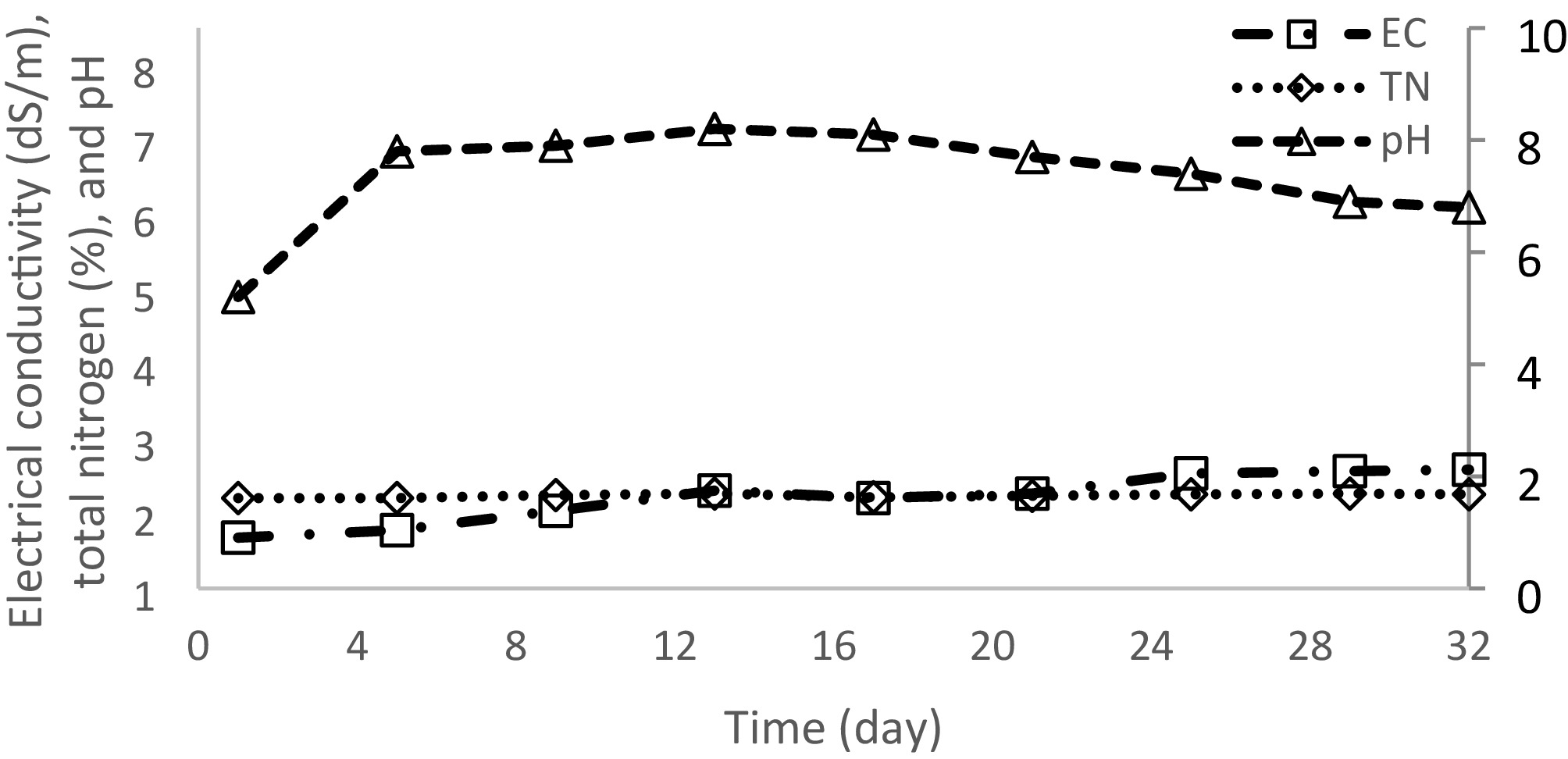
Figure 1.
Changes in electrical conductivity, total nitrogen, and pH during the composting process.
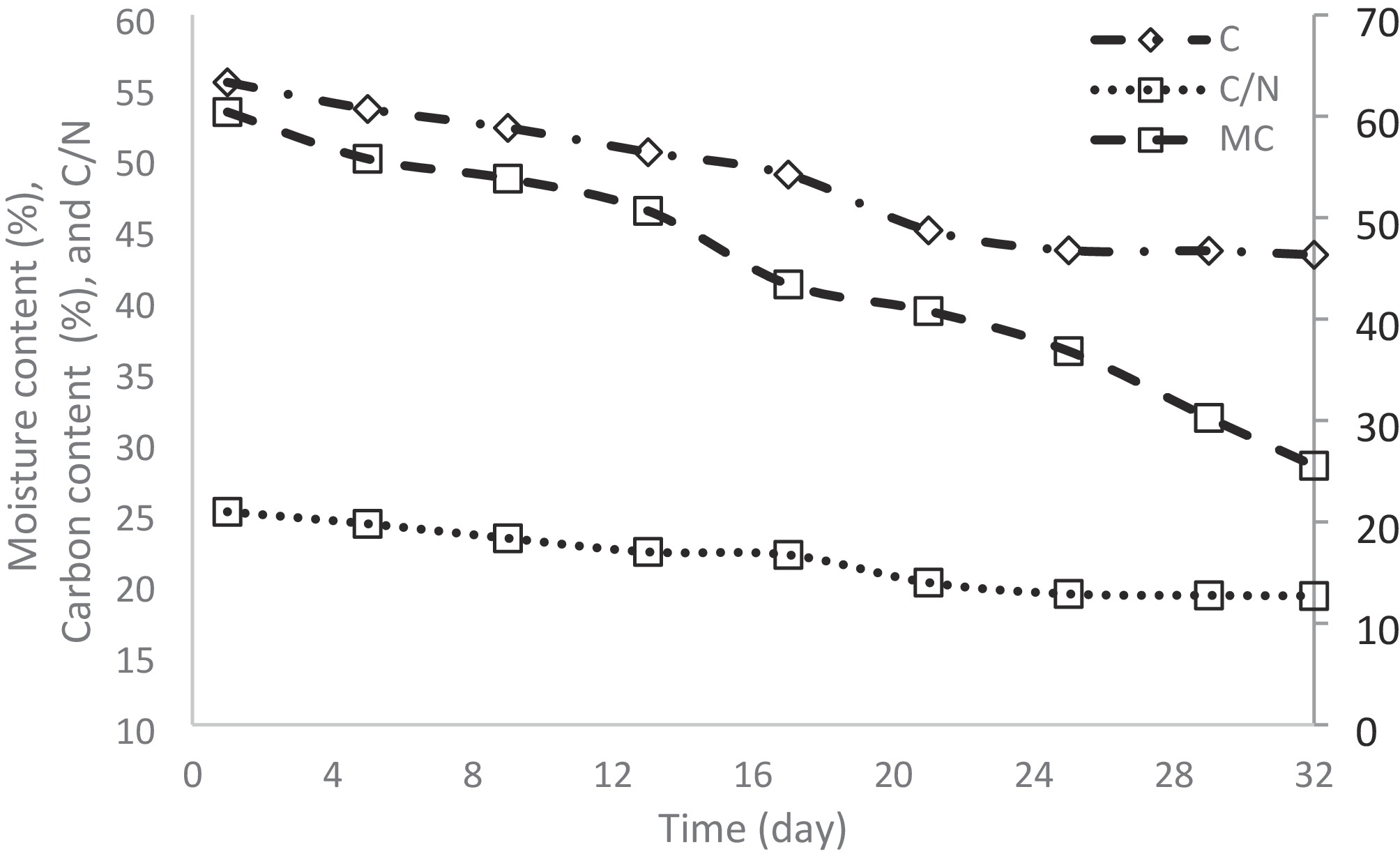
Figure 2.
Changes in moisture content, carbon content, and C/N ratio during composting process.
The moisture content decreased throughout the composting period, and the carbon content and C/N ratio also recorded a decreasing pattern throughout the composting process (Fig. 2). The decrease in moisture content was due to the high temperature recorded during the composting process, turning frequency, evaporation, and the consumption of moisture by the microorganisms present in the compost mixture. A similar observation was reported by previous studies[47−50].
Compost quality assessment
-
Table 1 shows the final physicochemical properties of the compost. All the values were the average of the three replicates and are within the acceptable values of the agronomic standard for stable compost. The table shows that the final compost contains nitrogen adequate to sustain plants[51]; the pH and the electrical conductivity (EC) were also within the agronomic standard range that can sustain plants in the soil, as established by Nigeria Earthcare compost production and WHO[52]. The phytotoxicity test (GI, 120%) showed that the compost was stabilized and is safe to use as a soil amendment.
Table 1. Physicochemical properties of the final compost.
Physicochemical properties Values pH 6.8 ± 0.321 EC (mS/cm) 2.59 ± 0.061 C/N ratio 10.24 ± 0.5 Total nitrogen (%) 2.15 ± 0.023 Carbon (%) 22.02 ± 0.3 Loose bulk density 0.231 ± 0.12 Moisture content (%) 25.54 ± 0.012 Germination index (%) 120 Parametric analysis of the amaranthus growth parameters
Test of homogeneity
-
Table 2 shows the normality and homogeneity test results. The Shapiro-Wilk's p-value were greater than the assumed (0.05) p-value; this confirmed the normality of the plant growth parameters measured in this study and paved the way for using Levene's homogeneity of variance test. The Levene's test results were also shown in Table 2; only two variances of the parameters showed homogeneity (Plant height and Number of leaves), while stem diameter was recorded borderline marginally unequal. This means that the p-value for stem diameter was close to the assumed p-value (0.07 vs 0.05), therefore, the assumption of homegeneity of variance does not hold for the stem diameter value. To substantiate the preset condition of homogeneity of variances and normality necessary for parametric analysis, stem diameter values were therefore log-transformed to stabilize the variance. This conversion was requisite because of surges in variances with increasing treatment level, as shown by the Levene's test results. Furthermore, subsequent to log transformation of the data, Levene's test results revealed that the hypothesis of homogeneity of variances was satisfied (p > 0.05). Moreover, the ANOVA test conducted on the stem diameter and number of leaves demonstrated significant differences among the treatment levels.
Table 2. Shapiro-Wilk normality and Levene's homogeneity statistics test results.
Parameters Shapiro-Wilk W Shapiro-Wilk p-value Normality Levene's F Levene's p-value Homogeneity of variance Plant height 0.897 0.167 Normal 1.067 0.388 Homogeneous Number of leaf 0.964 0.820 Normal 0.778 0.491 Homogeneous Stem diameter 0.960 0.778 Normal 4.005 0.062 Borderline (marginally unequal) Analysis of variance (ANOVA)
-
Table 3 shows the two-way ANOVA results conducted on the data. Significant effects (p < 0.001) were recorded at each compost level for all the plant growth parameters measured. However, for the block effect, no significant effect (p > 0.05) was recorded for the replication, showing little difference between replicate plots. The significant effects recorded by ANOVA imply improvement in the growth parameters of Amaranthus due to the addition of compost. Majorly, increasing the percentage of compost applied within the range of 16%–20% led to higher plant heights, increased number of leaves, and increased stem diameter. These increases were due to the presence of nutrients in the compost applied to the soil and improved soil structure by the compost. However, the diminishing effects beyond 16% may indicate nutrient saturation or other limiting factors, aligning with previous findings that moderate compost rates are optimal for leafy vegetable growth.
Table 3. Two-way analysis of variance results (RCBD).
Parameter Source F-value p-value Significance Plant height Compost 126.4 < 0.001 Significant Block 0.91 0.42 NS Number of leaves Compost 198.5 < 0.001 Significant Block 1.11 0.36 NS Stem diameter Compost 217.2 < 0.001 Significant Block 0.79 0.46 NS NS = Not significant. Testing of hypothesis
-
The two-way analysis of variance (ANOVA) performed on the mean of the measured plant growth parameters showed FC values greater than FT. Therefore, the null hypothesis (H0), which stated that there is no significant difference among the means of plant height, stem diameter, and number of leaves of Amaranthus cruentus grown in the soils treated with different compost application rates was rejected, and the alternative hypothesis (H1) was accepted. This shows that application of compost to soil significantly enhanced Amaranthus cruentus growth parameters. However, the p-value calculated for block was higher (p > 0.05), showing that the block effect is not significant.
Partial eta squared
-
Table 4 shows the partial eta squared (η2) results of the plant's growth parameters evaluated from the two-way ANOVA result; Table 5 shows the summary of linear regression of plant height (cm), stem diameter (mm), of Amaranthus cruentus soil-compost contents, and Table 6 shows the summary of statistical analysis performed. Partial eta squared describes the magnitude of the effects of the treatment (compost) on the growth parameters. All the growth parameters recorded very large effect sizes, showing that compost level was a significant factor that determined the growth performance of the amaranths. Plant height (0.96) and stem diameter (0.98) responded significantly to compost treatments, implying these parameters are extremely sensitive indicators of soil amendment with organic compost. Moreover, the significant effect sizes accentuate the practical pertinence of compost application in sustainable agriculture. It suggests that fortifying soil with compost made from a mixture of sawdust and poultry litter appreciably improves plant growth performance, undoubtedly alleviating the need for mineral fertilizers. Furthermore, since stem diameter and plant height are frequently used as preliminary signs of plant health and yield potential, their vigorous response to compost makes them especially beneficial for farm management.
Table 4. Partial eta squared results.
Growth parameter Partial eta squared (η²) Effect size interpretation Plant height 0.96 Large Number of leaves 0.94 Large Stem diameter 0.98 Large Table 5. Summary of linear regression of plant height (cm) and stem diameter (mm) of Amaranthus cruentus soil-compost contents.
Dependent variable Independent variable Slope Intercept R2 Plant height (cm) Compost content 3.067 46.53 0.99 Stem diameter (mm) Compost content 0.029 0.391 0.99 Number of Leaves Compost content 2.327 18.54 0.99 Table 6. Summary of statistical analysis performed.
Response variable Statistical test Purpose of analysis Significance level Plant height Shapiro–Wilk test Assess normality of data α = 0.05 Number of leaves Shapiro–Wilk test Assess normality of data α = 0.05 Stem diameter Shapiro–Wilk test Assess normality of data α = 0.05 Plant height, number of leaves, stem diameter Levene's test Assess homogeneity of variances α = 0.05 Stem diameter Log transformation Stabilize variance before ANOVA because the homogeneity assumption was marginally violated — Plant height Two-way ANOVA (Treatment × Block) Determine the effects of compost application rate and block (replicate) α = 0.05 Number of leaves Two-way ANOVA (Treatment × Block) Determine the effects of compost application rate and block (replicate) α = 0.05 Stem diameter Two-way ANOVA (Treatment × Block) Determine the effects of compost application rate and block (replicate) α = 0.05 Significant ANOVA results Tukey's HSD Separate treatment means α = 0.05 Plant height vs compost rate Linear and quadratic regression Evaluate the relationship between compost application rate and plant height p < 0.05 Number of leaves vs compost rate Linear and quadratic regression Evaluate the relationship between compost application rate and leaf production p < 0.05 Stem diameter vs compost rate Linear and quadratic regression Evaluate the relationship between compost application rate and stem diameter p < 0.05 Plant height, number of leaves, stem diameter Partial eta squared (η²) Quantify the magnitude of compost treatment effects Cohen's guidelines -
Figure 3 shows the effects of different soil-compost mixtures on the plant heights of Amaranthus cruentus planted on the three soil samples in the 6th week after transplanting. The plants' height increased steadily and significantly (p ≤ 0.05) throughout the experimental period in all three soil samples. The results indicated that treatment with 20% compost had the highest mean value of plant height than among other mixtures, while the control recorded the lowest mean value. All ten levels of soil-compost treatment significantly (p ≤ 0.05) differed in their effect on plant height, with the highest and lowest mean values of 131 and 11.23 cm for Amaranthus cruentus planted on loamy soil, 114.3 and 16.33 cm for Amaranthus cruentus planted on the sandy soil, and 124.9 and 14.43 cm for Amaranthus cruentus planted on loamy soil, respectively. The coefficient of determination (R2) ranged from 91.80% to 99.10%.
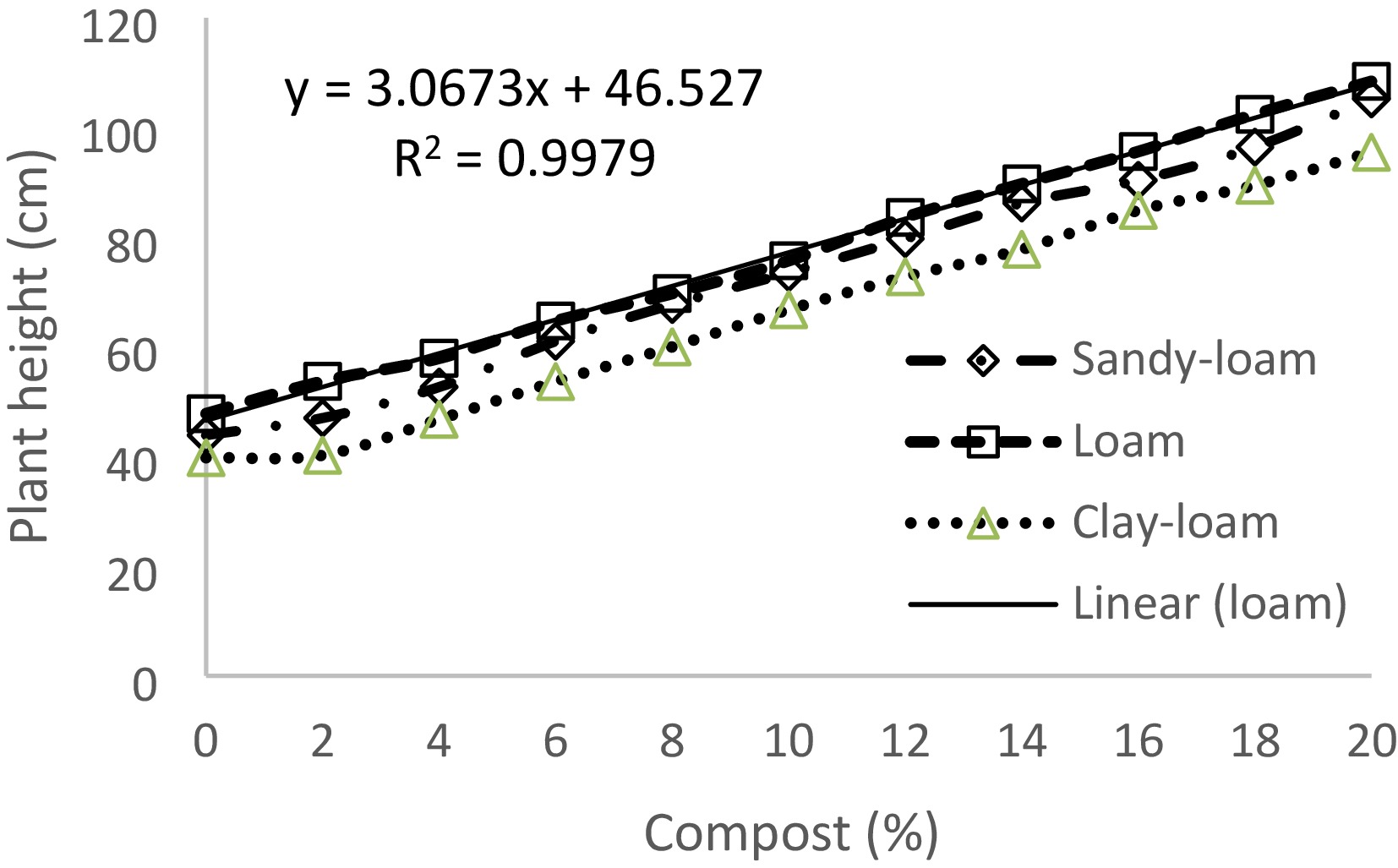
Figure 3.
Plant height in relation to soil-compost content at 6 weeks after transplanting.
Soil treated with 20% compost recorded the highest significant difference (p ≤ 0.05) in all the treatments across the three soil types and throughout the planting period, while the lowest significant difference (p ≤ 0.05) was observed in the control (soil without compost). The significant difference recorded in the treatments with 20% compost was attributed to higher nutrient levels. This result proves that the treated soil samples have enough Nitrogen to encourage grain Amaranthus cruentus's growth into foliage. Hence, farmers who are interested in producing Amaranthus cruentus with better leaves could apply 20% of compost.
Effects of different percentages of compost on stem diameter
-
The effects of varying proportions of compost on plant stem diameter measured at the 6th week after transplanting for the three soil samples is shown in Fig. 4. Amaranthus cruentus grown on compost-treated soils showed significantly (p ≤ 0.05) higher stem diameter compared to the control (non-compost-treated). The 20% compost showed higher stem diameter across the three soil types used in the study compared to other treatments. However, the lowest stem diameter among plants treated with compost was observed in plants that received 2% treatment. The increase in stem diameter of Amaranthus cruentus planted in compost-treated soil was due to the availability of nutrients for good plant development. A linear relationship was established between soil compost content and stem diameter, and the coefficient of determination (R2) ranged between 98.45% and 99.54%.
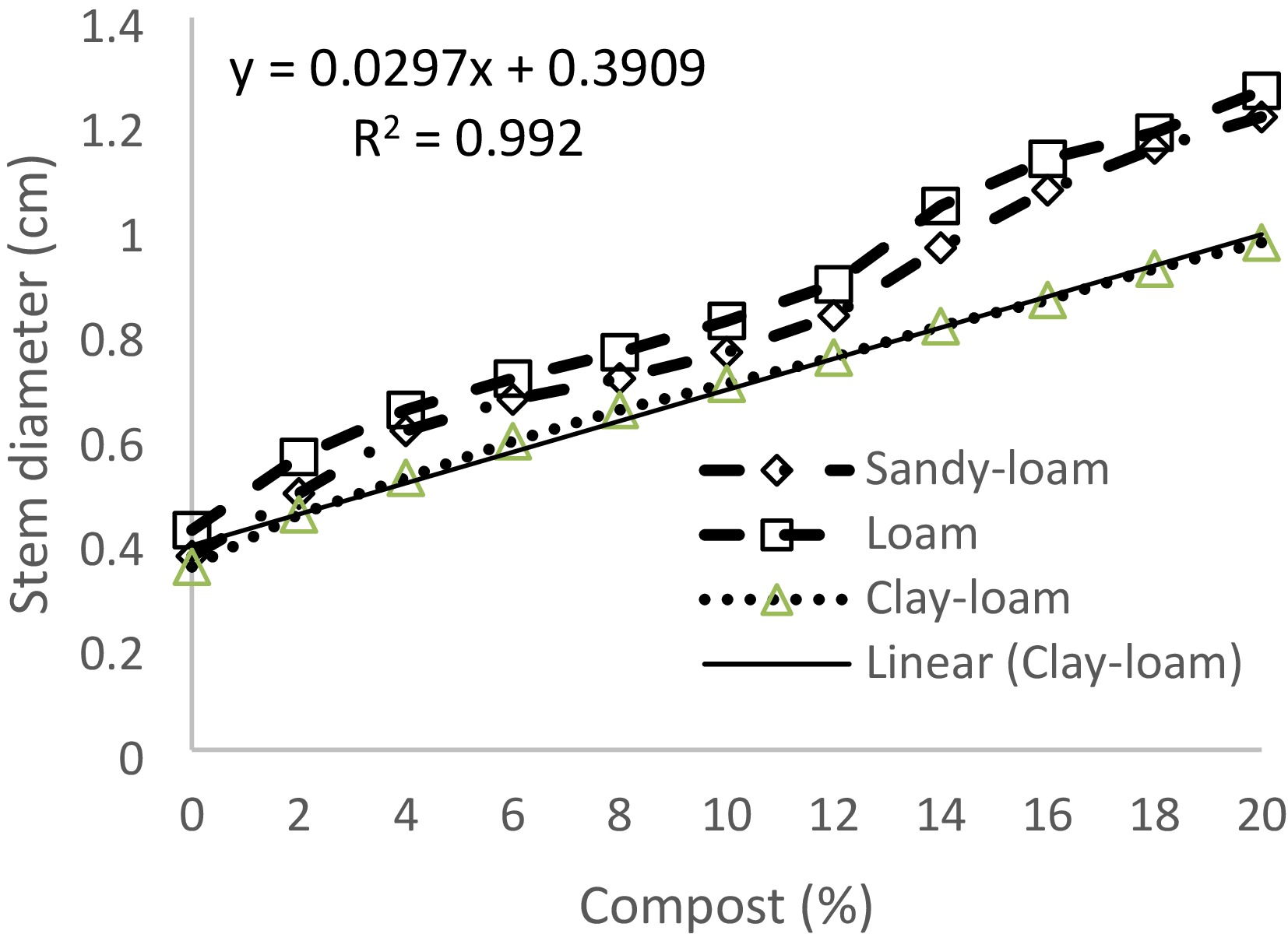
Figure 4.
Plant stem diameter in relation to soil-compost mixture at 6 weeks after transplanting.
The average stem diameter of the Amaranthus cruentus recorded at the 6th week after transplanting varied between 1.36, 0.96, and 1.19 cm for loam, sand-loam, and clay-loam soil, respectively. These values were higher than those of the control experiment, which were 0.85 cm for loam, 0.68 cm for clay-loam, and 0.84 cm for sand-loam, respectively. This result was in line with the results of Lyu et al.[53], Ebido et al.[54], Gani et al.[55], and Manono[56], who reported that stem diameter increased with increased application of compost to the soil as compared with the control experiment. The increase in stem diameter was attributed to the fact that compost contained nutrients in adequate proportions for the development of the plant stem diameter.
Effect of different percentages of compost on number of leaves
-
Figure 5 shows the effect of the soil-compost mixture on the number of leaves recorded by each plant in each of the treatments across the three soil types at six weeks after transplanting. Table 5 shows the summary of the linear regression of plant height (cm), and stem diameter (mm) of Amaranthus cruentus soil-compost contents, and Table 6 shows the summary of statistical analysis performed on the plant growth parameters measured. The results indicated significant (p ≤ 0.05) differences in the number of leaves produced by Amaranthus cruentus due to the varying proportions of compost. In addition, a linear relationship was established between the soil-compost content and the number of leaves per plant, with coefficients of determination (R2) ranging between 99.74% and 99.73%. The treatment with 20% compost recorded the highest average number of leaves, whereas the treatment with 2% compost recorded the lowest number of leaves among plants treated with compost across the three soil types. The average number of leaves of Amaranthus cruentus treated with different proportions of compost increased with increasing compost application rate. This improvement in leaf production may be associated with the release and mineralization of nutrients from the compost, which increases the availability of essential nutrients required for vegetative growth. Organic amendments can supply nutrients through the mineralization of their organic constituents, thereby improving nutrient availability to plants[57]. A similar result was reported by Oviasogie et al.[58], who observed that the growth and yield of Amaranthus cruentus were influenced by poultry manure rate and variety in the Sudan Savanna of Nigeria. Oviasogie et al.[58] attributed the significant increase in the number of leaves to increased soil nutrient availability, which enhanced the growth of Amaranthus cruentus.
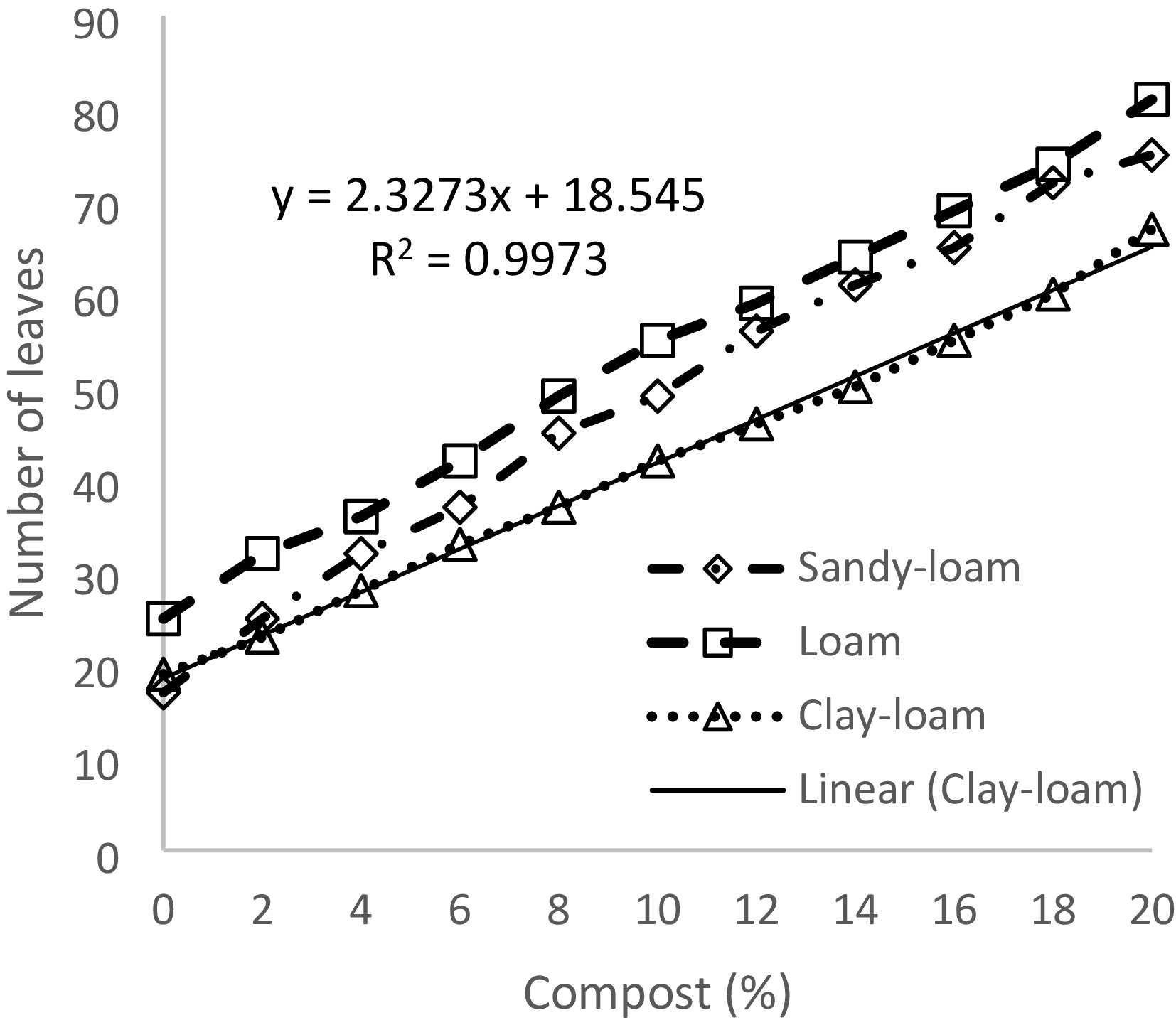
Figure 5.
Number of leaves in relation to soil-compost content at 6 weeks after transplanting.
The highest number of leaves recorded by the 20% compost treatment may be attributed to the higher proportion of compost in the treatment, which enhanced plant growth and leaf production[59]. Dada et al.[60]reported that increasing the proportion of compost in compost–soil mixtures significantly increased the number of leaves of Amaranthus cruentus compared with the un-amended soil control. Nutrient availability, particularly nitrogen, plays an important role in determining vegetative development and leaf production. Birhanu et al.[12]reported that increasing nitrogen application significantly increased the number of leaves per Amaranthus cruentus plant, attributing the response to the role of nitrogen in promoting leaf growth through cell division and elongation. Nitrogen is also an essential constituent of chlorophyll, amino acids, proteins, and nucleic acids; consequently, inadequate nitrogen supply can restrict photosynthetic capacity and vegetative growth. The positive effect of compost on the growth of Amaranthus cruentus is further supported by Dada et al.[60], who reported that compost supplied sufficient nutrients to improve the growth, fresh shoot yield, and dry matter yield of Amaranthus cruentus grown on nutrient-deficient soil. Similarly, the study by Akanbi & Togun[61] on the maize-stover compost experiment showed that compost application significantly affected the number of leaves, plant height, stem girth, leaf area, and dry matter of Amaranthus cruentus.
-
This study showed that composting at an initial C/N ratio of 25:1 effectively turned sawdust and poultry litter into compost rich in nutrients, which is good for agricultural production. Steady decreases in moisture content, carbon content, and C/N ratio, along with increases in pH, electrical conductivity, and total nitrogen, confirmed successful stabilization and maturity of the compost. As a result, the mature compost met the agronomic quality needed and showed no toxic effects. It also shows its suitability for soil application. The results of mixing different proportions of sawdust-poultry litter compost for cultivating Amaranthus cruentus crops show that plant height, stem diameter, and number of leaves were significantly improved by different proportions of sawdust-poultry litter compost treatments. Statistical analyses revealed that compost application was the principal factor that influenced plant growth, accounting for very large effect sizes (η2 = 0.94–0.98). Linear relationships (Table 5) were established between the plant parameters measured and soil compost contents. Among the evaluated treatments, the 20% compost application consistently produced the highest vegetative growth. Overall, the results establish sawdust–poultry litter composting as an effective waste valorization strategy that converts problematic agricultural residues into a high-quality organic fertilizer capable of improving crop productivity while reducing environmental pollution associated with waste disposal. This study provides evidence that optimized compost application can contribute to sustainable horticultural production and reduce dependence on inorganic fertilizers. Future studies should validate the optimum application rate under field conditions across different soil types and growing seasons and assess the long-term effects of repeated compost application on soil health, nutrient dynamics, and crop productivity.
-
The authors confirm contribution to the paper as follows: study conception and design: Bello H; data collection: Bello H; analysis and interpretation of results: Bello H; draft manuscript preparation: Ojo OI; manuscript revision: Ojo OI. All authors reviewed the results and approved the final version of the manuscript.
-
The datasets generated and/or analyzed in the current study are available from the corresponding author upon reasonable request.
-
The authors declare that they have no conflict of interest.
- Copyright: © 2026 by the author(s). Published by Maximum Academic Press, Fayetteville, GA. This article is an open access article distributed under Creative Commons Attribution License (CC BY 4.0), visit https://creativecommons.org/licenses/by/4.0/.
-
About this article
Cite this article
Bello H, Issac Oluwaropo O. 2026. Valorization of sawdust and poultry litter through composting: compost quality and agronomic performance for sustainable Amaranthus production. Circular Agricultural Systems 6: e030 doi: 10.48130/cas-0026-0028 

Valorization of sawdust and poultry litter through composting: compost quality and agronomic performance for sustainable Amaranthus production
- Received: 29 November 2025
- Revised: 27 August 2026
- Accepted: 28 August 2026
- Published online: 02 November 2026
Abstract: Agricultural waste products, if left untreated, could cause environmental issues and health challenges. However, sawdust and poultry litter are rich in macro- and micro-nutrients and, when properly composted, could provide an opportunity to improve low-fertility soils. The compost produced from a mixture of sawdust and poultry litter at an initial C/N ratio of 25:1 was mixed with each soil sample at application rates of 2%, 4%, 6%, 8%, 10%, 12%, 14%, 16%, 18%, and 20% (w/w), with a control (0%). The different soil-compost mixtures were then used to cultivate Amaranthus cruentus in 15 L buckets laid out in a randomized complete block design with three replications. Plant height, stem diameter, and number of leaves were monitored at 7-day intervals for 3 months to assess the influence of compost on Amaranthus cruentus. The results were subjected to parametric statistical analysis, comprising analysis of variance (ANOVA) and regression modeling to assess the effects of compost treatment on crop performance. A significant increase in temperature was observed during the thermophilic phase of composting. Throughout the composting process, moisture content and carbon content progressively decreased, whereas total nitrogen increased. The results also show significant effects on Amaranthus cruentus growth parameters with increasing the proportion of compost, up to a maximum level of performance. The study shows that sawdust-poultry litter compost could act as a feasible amendment for sustainable horticultural practices, advocating both waste valorization and crop productivity.