












-
Lung cancer is one of the most common malignancies worldwide and remains a major cause of cancer-related morbidity and mortality[1]. Recent epidemiological data indicate that the age-standardised incidence rate of lung cancer in China was 42.9 per 100,000, with approximately 1.18 million new cases and more than 0.74 million deaths reported annually[2,3]. The 5-year relative survival rate of lung cancer remains low at 28.7% overall; it is higher among women (39.3%) than among men[4]. Lung cancer is broadly classified into small-cell lung cancer (SCLC) and non-small-cell lung cancer (NSCLC), with NSCLC accounting for more than 80% of cases[5]. Notably, only 17.3% of lung cancers in China were diagnosed at Stage I[6], indicating that a substantial proportion of patients are diagnosed beyond the early stage. Patients with advanced lung cancer are therefore a particularly vulnerable population, as they often experience substantial symptom burden and face ongoing challenges associated with disease progression, prognosis, and prolonged treatment[7,8]. Compared with patients with early-stage disease who may undergo potentially curative treatment, those with advanced disease often require prolonged systemic treatment and ongoing disease management[7].
The management of advanced lung cancer may require systemic and multimodal treatment, including radiotherapy, chemotherapy, targeted therapy, and immunotherapy[7,9,10]. Although systemic treatments have evolved substantially alongside advances in precision medicine, chemotherapy remains an important component of lung cancer treatment across multiple settings, including adjuvant therapy, concurrent chemoradiotherapy, combination regimens for advanced disease, and salvage treatment after the development of therapeutic resistance. Patients undergoing chemotherapy therefore remain an important population for research into symptom management. The complex and potentially prolonged nature of treatment may expose patients to substantial and evolving physical and psychological challenges throughout the treatment's trajectory.
Previous studies have shown that patients with lung cancer receiving chemotherapy frequently experience fatigue, anxiety, depression, and sleep disturbances throughout treatment[11,12]. Prior studies have reported variability in these symptoms across different chemotherapy cycles[13−15]. These debilitating symptoms can substantially impair physical functioning and emotional well-being but are often under-recognised and inadequately managed. Importantly, these symptoms may also co-occur and interact with one another rather than occur independently. The co-occurrence and interrelatedness of multiple symptoms are conceptualised as a symptom cluster (SC). Dodd et al.[16] initially defined an SC as three or more concurrent and related symptoms that need not share a common aetiology. Miaskowski et al.[17] proposed that symptoms within a cluster should have a common underlying aetiology, whereas Kim et al.[18] suggested that an SC may comprise two or more symptoms. Nevertheless, there is no standardised definition or nomenclature for SCs, and their constituent symptoms may overlap across different clusters[19,20]. In patients with advanced lung cancer, fatigue, anxiety, depression and sleep disturbances have been examined collectively as psychoneurological symptoms within a cluster. Recent studies in cancer populations, including patients with lung cancer, further underscore the clinical relevance of this symptom domain[12,21].
Accordingly, this study focused on fatigue, anxiety, depression, and sleep disturbances as the psychoneurological symptom domain of interest, because these symptoms have been frequently reported to co-occur and are clinically relevant in patients with advanced lung cancer[12,21]. In this study, the term "psychoneurological symptom cluster" refers to the co-occurrence of two or more of these psychoneurological symptoms rather than the simultaneous presence of all four. These symptoms were explored through participants' narratives rather than quantitatively measured or statistically clustered. Although previous cross-sectional and longitudinal studies have characterised the prevalence, co-occurrence, and temporal variation of these symptoms[11,13−15], less is known about how patients experience and manage them as interrelated, evolving phenomena across the chemotherapy journey. In particular, the temporal context of symptom changes, patients' perceived challenges and needs, and potential intervention opportunities across different treatment stages remain insufficiently understood. Recent evidence has further shown that patients with advanced cancer may experience multiple symptoms with distinct trajectories of symptom burden over time[8]. Thus, although previous studies have primarily addressed which symptoms patients experience and how symptom burden changes over time, they provide less insight into how patients perceive and respond to these symptoms, and how they navigate their management across specific treatment events and stages.
A patient journey map is a patient-centred visual instrument designed to represent patients' experiences throughout the healthcare process. It depicts the patient's journey over time, including the treatment process, experiences, challenges, facilitators, and areas for improvement[22]. In the context of advanced lung cancer, a patient journey map can provide a temporal framework for integrating patients' psychoneurological symptom experiences alongside key treatment events and changing symptom management needs across different stages of chemotherapy. This approach may reveal stage-specific challenges and unmet needs that may be overlooked when psychoneurological symptoms are examined as individual outcomes or at a single time point. Therefore, this study aimed to construct a patient journey map for patients with advanced lung cancer undergoing chemotherapy. The objectives were to describe their experiences of psychoneurological symptoms and symptom management across treatment stages, identify stage-specific pain points and unmet needs, and explore potential opportunities for supportive care.
-
This study was approved by the Ethics Review Committee of the School of Medicine, Yangzhou University (Approval No. YXYLL-2025-165). All participants provided written informed consent. All study data were anonymised and stored securely under coded identifiers and are accessible only to authorised personnel. No personally identifiable information was disclosed. Participants were informed that they could withdraw from the study at any time and that, if they did so, their data would be excluded from the final analysis.
Study design
-
A qualitative descriptive design was used, and the study was conducted and reported in accordance with the Consolidated Criteria for Reporting Qualitative Research (COREQ)[23] (Supplementary File 1).
Participant recruitment
-
This study was conducted in the oncology department of a tertiary general hospital in Jiangsu Province, China. To capture diverse patient experiences, participants were purposively recruited from the oncology ward with consideration of their gender, age, educational level, and treatment stage. Potentially eligible participants were identified by screening their electronic medical records. Eligible patients were informed about the study and invited to participate. Recruitment continued until data saturation, defined as the point at which no new themes emerged from the interview data[24].
Inclusion and exclusion criteria
-
The inclusion criteria were as follows: (1) being aged 18 years or older; (2) having pathologically and/or cytologically confirmed primary Stage III–IV lung cancer; (3) having received chemotherapy; and (4) being conscious, aware of the diagnosis, able to communicate independently, and having provided written informed consent. The exclusion criteria were as follows: (1) another primary malignant tumour; (2) severe cognitive impairment, dementia, schizophrenia, or another condition that precluded participation; and (3) severe comorbidities affecting major organ systems.
Data collection
-
Based on a literature review and expert consultation, a semistructured interview guide was developed. Prior to formal data collection, two pilot interviews were conducted to refine the interview guide (Table 1) and evaluate the clarity of the interview procedures. The research team conducted face-to-face semistructured interviews from December 2025 to March 2026. Interviews were conducted in hospital wards or designated meeting rooms, according to the participants' preferences. All interviews were conducted jointly by two researchers, Liu Zhengshan (MSc student, female) and Ma Xinyue (MSc student, female), both of whom had received formal training in qualitative research methods. Participants were assigned codes (N1–N21) according to their interview order to preserve anonymity. In a quiet setting, one researcher conducted and audio-recorded each interview, using probing, follow-up, and clarifying questions when necessary. The second researcher observed and recorded the participants' nonverbal expressions and behaviours, including facial expressions and body language. Each interview lasted approximately 20–40 min.
Table 1. Interview guide.
Main Questions Experiences of psychoneurological symptom clusters in lung cancer patients undergoing chemotherapy 1. Could you briefly share with us how you first noticed your physical discomfort and got diagnosed?
2. When the doctor recommended chemotherapy, how much did you know about it?
3. Regarding chemotherapy, what worried you the most?
4. During your most recent chemotherapy session and immediately after, how did you feel physically and emotionally?
5. Could you describe your energy level, sleep quality, and emotional state at that time?
6. When these uncomfortable symptoms appeared, what did you do to make yourself feel a bit better?
7. During your recovery at home, how were your energy levels, sleep, and emotional state?
8. Have you tried managing them?
9. How did your family or friends help you cope with fatigue, sleep, and emotional issues?
10. What kind of support did doctors and nurses provide throughout the process?Data analysis
-
Interview recordings were transcribed verbatim within 24 h, and any uncertainties were clarified with the participants to ensure accuracy. Two researchers independently analysed the transcripts in NVivo 15 (Lumivero, Doncaster, Australia), following Colaizzi's seven-step phenomenological method: (1) repeatedly reading the transcripts, (2) extracting significant statements, (3) formulating meanings and coding them inductively, (4) organising codes into thematic categories, (5) developing detailed descriptions of the themes, (6) identifying common patterns and refining the themes, and (7) returning the findings to the participants for validation[25]. In this study, psychoneurological symptoms were explored with particular attention to fatigue, anxiety, depression, and sleep disturbances, in line with previous research on patients with advanced lung cancer[12]. These symptoms were explored through the participants' interview narratives rather than identified using a predefined quantitative SC measure. Given the qualitative design and the lack of standardised criteria for identifying SCs, no predefined symptom count threshold or statistical clustering procedure was applied. After completing their independent analyses, the two researchers compared their results, and discrepancies were resolved through team discussions until a consensus was reached.
After the phenomenological analysis, the identified themes were examined within the temporal context of the participants' treatment experiences to develop the patient journey map. First, the research team reviewed the occurrence and evolution of themes across participants' treatment experiences and identified recurring transition points that represented major changes in the patients' symptom experiences, challenges, and care needs. Based on these temporal patterns, three major stages were established: screening and diagnosis, continuation of treatment, and long-term management. Second, the themes and subthemes within each stage were mapped to five experiential dimensions: tasks, emotions, pain points, actions, and relevant personnel. The evolving framework was repeatedly compared with the participants' narratives, and the relationships among the stages, dimensions, themes, and subthemes were refined until consensus was reached. The final patient journey map was produced using Microsoft PowerPoint 2021 (Microsoft Corporation, Redmond, WA, USA). A detailed coding tree showing the hierarchical relationships among codes, subthemes, themes, stages, and the journey map's dimensions is provided in the Supplementary File 2.
-
In total, 24 interviews were conducted with 21 participants. Eighteen participants were interviewed once, whereas three (N2, N8, and N9) were interviewed twice to ensure data completeness. The sample comprised 3 women and 18 men aged 48–81 years (mean age: 66.8 years). Eleven participants had primary education or less, nine had completed secondary education (including junior or senior high school and technical secondary school), and one had attained a university degree or higher. Five participants had Stage III disease and sixteen had Stage IV disease. Three received adjuvant chemotherapy and eighteen received palliative chemotherapy. Seven participants lived in rural areas and fourteen in urban areas. Seven had received one to three chemotherapy cycles, eight had received three to five cycles, and six had received five to seven cycles. All participants were retired or unemployed (Table 2). Tumour stage and chemotherapy type were treated as contextual characteristics when interpreting the themes; however, the small sample and limited representation of some subgroups precluded meaningful subgroup comparisons.
Table 2. Characteristics of the participants (n = 21).
Variables Groups n (%) Gender Female
Male3 (14.3%)
18 (85.7%)Age (years) 45–60
61–75
76–906 (28.6%)
9 (42.9%)
6 (28.6%)Educational level Primary or below
Junior or senior high school
College or above11 (52.4%)
9 (42.9%)
1 (4.8%)Place residence Rural
Urban7 (33.3%)
14 (66.7%)Number of chemotherapy sessions 1 to < 3
3 to < 5
5–77 (33.3%)
8 (38.1%)
6 (28.6%)Tumour stage III 5 (23.8%) IV 16 (76.2%) Chemotherapy type Adjuvant chemotherapy 3 (14.3%) Palliative chemotherapy 18 (85.7%) Employment status Unemployed 21 (100%) Patients' experiences
-
Interview data were systematically analysed to develop a patient journey map for patients with lung cancer undergoing chemotherapy. The horizontal axis represents three stages of the treatment trajectory: screening and diagnosis, continuation of treatment, and long-term management. Within each stage, the findings were organised into five dimensions: tasks, emotions, pain points, actions, and relevant personnel (Fig. 1). These interconnected stages reflected the evolving and multidimensional experiences of patients throughout the treatment trajectory. The following sections present the participants' experiences, emotional responses, actions, and pain points at each stage.
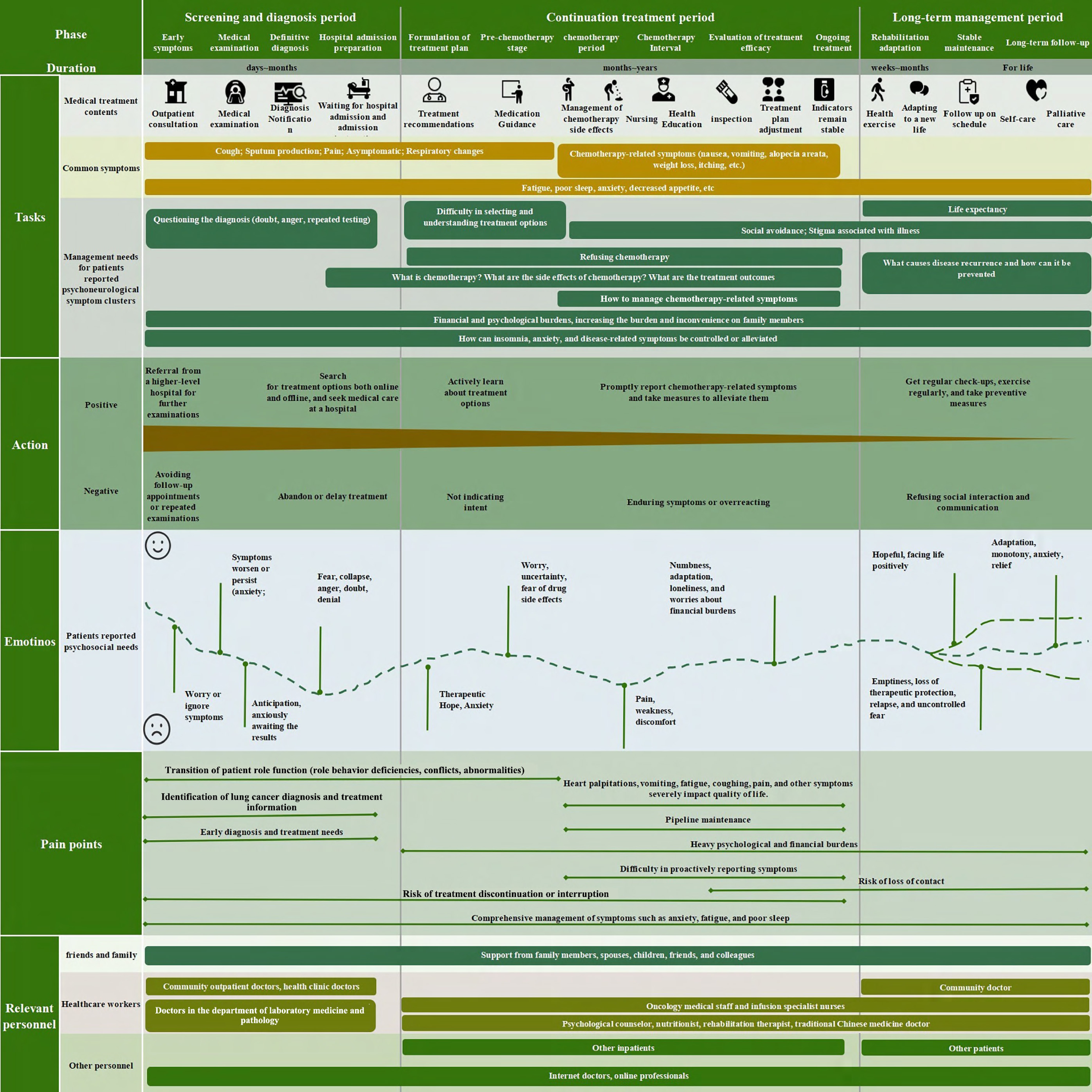
Figure 1.
The journey map of patients with lung cancer undergoing chemotherapy.
Screening and diagnosis phase
Tasks
-
(1) Most patients initially experienced nonspecific physical symptoms, including cough, chest or back pain, and fatigue. They generally attempted to manage the symptoms themselves or sought care from primary healthcare institutions. However, because the symptoms were often mild and attributed to common conditions, such as a cold or chronic bronchitis, patients and healthcare professionals did not always recognise them as possible signs of lung disease, thereby delaying diagnosis. N1: "I thought it was just a persistent cold. After 8–10 d of intravenous treatment without improvement, I decided to go to the hospital for a lung examination." N4: "I initially had a cough and sputum production, and it was only identified after I went to the hospital for an examination." N9: "I had been experiencing persistent body pain and fatigue for quite some time, which prompted me to seek medical evaluation."
Emotions
-
(1) Persistent anxiety and sleep disturbances. Anxiety persisted throughout the disease trajectory and was expressed primarily through persistent illness-related concerns and sleep disturbance. Most participants reported substantial sleep disturbance, including difficulty initiating sleep, frequent nocturnal awakenings, and shortened sleep duration. N1: "I feel restless and unable to sleep at night." N3: "I sleep only about 4–5 h a day. My sleep is shallow, and I wake up four or five times during the night. It improves slightly after taking estazolam before bedtime." N4: "I am unable to sleep at night and only fall asleep during the day when I am extremely exhausted." N5: "I am unable to sleep at night, managing only 4–5 h of sleep per day, with several awakenings during the night."
(2) Feelings of guilt and increased psychological burden. Some participants reported intense guilt when lung cancer was suspected, accompanied by heightened psychological distress arising from their perceived inability to fulfil family roles. N4: "We have a son and a daughter-in-law, and our grandson needs to attend school. Now that I am ill, I am unable to help with anything." N7: "Because I also have diabetes, my meals need to be specially prepared at home and delivered to the hospital, which places an additional burden on my family." N9: "My spouse has been traveling back and forth between home and the hospital to take care of me."
(3) Denial and scepticism about the diagnosis. A minority of participants expressed denial and scepticism about the preliminary examination results. They reported difficulty accepting a diagnosis of lung cancer and questioned the accuracy of the findings. This response was often linked to the absence of obvious symptoms early in the disease course. N8: "At that time, I did not feel particularly unwell. When the physical examination results came out, I was shocked. Lung cancer? I simply could not believe it." N12: "My previous health check-ups had always been normal. A pulmonary nodule was later detected, followed by an inconclusive computed tomography (CT) scan, a contrast-enhanced CT, and finally a biopsy. The report ultimately confirmed lung cancer."
Pain points
-
(1) Limited awareness of early symptoms contributing to delayed diagnosis. The nonspecific nature of early lung cancer symptoms, combined with the patients' limited disease awareness, often led participants to overlook early warning signs. In addition, limited diagnostic resources and awareness of early lung cancer screening in primary healthcare institutions may have contributed further to delays in disease detection and diagnosis. N3: "Abnormalities were first identified during a routine health examination at a township health center. Subsequent CT scanning and bronchoscopy at another hospital confirmed the diagnosis of lung cancer." N7: "I sought medical care due to vascular embolism, and it was during that visit that a lung abnormality was identified." N13: "I was working normally when my health check-up report indicated an issue with my lungs. Initially, I did not pay much attention, but a later examination revealed the severity of the condition."
(2) Prolonged waiting times for diagnostic results exacerbated anxiety. During the diagnostic phase, patients underwent multiple examinations, each involving a waiting period. Diagnostic uncertainty sustained the patients' anxiety and worry, which were intensified by prolonged waiting times. Participants N3 and N12 likewise described multiple tests and extended waits before receiving a definitive diagnosis. N4: "I visited several hospitals. Initially, I underwent magnetic resonance imaging at a traditional Chinese medicine hospital. Later, I went to other hospitals for multiple examinations, which eventually led to the diagnosis of lung cancer."
(3) Lack of standardised diagnostic and treatment guidance contributing to the patients' confusion. Most patients had relatively low educational attainment and limited medical knowledge, which made it difficult for them to understand the purpose and clinical significance of various diagnostic procedures. In addition, limited professional support and individualised guidance further contributed to the patients' confusion and passivity while seeking care and undergoing examinations. N4: "The treatment plan is determined by the doctor. I don't know how many times it needs to be done; he said it depends on the situation." N14: "This treatment plan is definitely for our benefit. Only a good doctor can guide our treatment. The doctor said this medication would be more effective, so we chose it. Our own opinions don't really matter."
Continuation of treatment phase
Tasks
-
(1) Understanding and accepting chemotherapy treatment plans. Soon after diagnosis, when chemotherapy was recommended, some participants had a limited understanding of, and expressed resistance to, this treatment. They therefore wanted detailed information about the chemotherapy regimen, including the specific agents used, dosages, treatment schedule, and potential side effects, before deciding whether to proceed with treatment. N1: "The doctor did not discuss the treatment in detail and did not tell me the full truth. I asked the nurse, but she did not provide much information either." N2: "I have some understanding of chemotherapy, but to a certain extent, I still feel resistant to it." N3: "The doctor was concerned that, as an older patient, I might not be able to cope psychologically, so not much information was shared with me. There was also limited guidance on how to manage chemotherapy-related side effects."
(2) Managing chemotherapy-related symptoms and psychoneurological SCs. Most patients experienced a range of chemotherapy-related symptoms, including nausea, vomiting, patchy alopecia, lower limb numbness, fatigue, and decreased appetite. Psychoneurological symptoms, particularly sleep disturbances and anxiety, also persisted throughout treatment. N1: "After chemotherapy, I experienced hair loss, nausea, increasing irritability, insomnia, and a weight loss of 30 kilograms." N2: "If fatigue were rated on a scale of 0 to 10, I would rate my fatigue during chemotherapy as 7." N3: "After taking the medication, I developed numbness in my hands and pain in both knee joints."
(3) Attending regular follow-up and evaluating treatment effectiveness. Between chemotherapy cycles, patients typically returned home for recovery. Their main tasks included self-managing symptoms such as fatigue, nausea, vomiting, anxiety, and sleep disturbances and maintaining healthy routines and dietary habits to support subsequent chemotherapy cycles. In addition, patients attended regular hospital follow-up throughout treatment for imaging and tumour marker testing to evaluate the treatment's effectiveness and enable timely adjustment of the treatment regimens. N1: "At home, I go to bed early and occasionally take walks." N2: "When my appetite is poor, I consult a nutritionist to adjust my diet." N4: "After meals at home, I engage in outdoor activities such as running, as well as farming and operating a tractor."
Emotions
-
(1) Fear of chemotherapy and potential adverse effects. At this stage, fear was the most prominent emotional response, driven primarily by uncertainty about chemotherapy and its possible adverse effects. Information obtained from other patients or online sources about severe chemotherapy-related adverse effects, such as hair loss, severe nausea and vomiting, and bone marrow suppression, further intensified this fear. N2: "We still feel resistant to chemotherapy." N3: "Although chemotherapy is effective against this disease, it does not distinguish between normal and abnormal cells, causing considerable harm to the body."
(2) Helplessness and treatment-related despair. During chemotherapy, the accumulation of physical discomfort and persistent psychoneurological symptoms contributed to feelings of helplessness and despair among some patients. Some participants expressed thoughts of discontinuing treatment. N1: "This illness cannot be cured; I may have to live with the tumour." N2: "After chemotherapy, there is hardly any quality of life." N4: "I only plan to undergo four cycles of chemotherapy. If there is no improvement afterward and my body cannot tolerate it, I would rather not continue living."
(3) Transient hope following perceived treatment effectiveness. When chemotherapy was perceived to be effective and tumour progression was controlled, patients experienced temporary feelings of hope and relief. These positive emotional responses were associated with a greater willingness to continue treatment. N4: "I have completed one cycle of chemotherapy, and the effect has been quite good. I no longer have a cough, and my back pain has resolved." N11: "I had been experiencing persistent fatigue, but it has improved somewhat after treatment." N13: "After treatment, I feel much better physically."
Pain points
-
(1) Insufficient understanding of chemotherapy and symptom management potentially compromised treatment adherence. Most participants had relatively limited educational attainment and lacked systematic knowledge regarding chemotherapy and psychoneurological symptom management. As a result, they were often unable to accurately recognise or appropriately manage treatment-related symptoms such as fatigue and anxiety. Some also adopted potentially inappropriate coping strategies, which may have compromised treatment adherence. N15: "After chemotherapy, if a rash occurs, it usually subsides in a little over a week." N16: "I hope the side effects of the medication could be explained more clearly so that we can better understand them." N17: "At present, we still know very little about chemotherapy. When it's cool in the morning, my mouth feels dry. Drinking more water helps; if I drink enough, the dryness goes away."
(2) Difficulties with proactive symptom reporting and delayed intervention. Participants were often unaware of the importance of timely symptom reporting to healthcare professionals. Some patients chose to tolerate symptoms because they were concerned that reporting them could disrupt their chemotherapy regimen. In addition, limited opportunities for communication between healthcare providers and patients impeded the recognition of subtle changes in psychoneurological symptoms, potentially delaying intervention. N1: "After prolonged chemotherapy, I experienced nausea and vomiting, gradually became irritable, and had difficulty sleeping. However, I usually suppressed my emotions and endured these symptoms silently." N3: "I only informed the nurse when the pain became unbearable." N4: "During the first two to three days after treatment, my physical condition was poor, and I felt unsteady when walking. After another two to three days, my sense of taste gradually returned, and I was able to eat more."
(3) Financial burden and psychological distress. The substantial economic burden associated with cancer treatment placed considerable psychological strain on the patients and their families. The costs of chemotherapy drugs, diagnostic examinations, and nursing care were substantial, particularly for patients from rural areas and low-income households. Concerns about treatment-related expenses frequently heightened anxiety and depression. N1: "This chemotherapy treatment is quite expensive." N2: "The poor quality of life is largely due to the financial burden. Out-of-pocket costs are high, and currently most expenses are not covered, making them unaffordable." N4: "I truly have no money left. I worked hard in the countryside my whole life to save this money, only to end up with this illness. Even rural medical insurance cannot fully cover the costs."
(4) Limited continuity of psychological support and professional nursing guidance. Hospital nursing care focused primarily on physical symptom management during chemotherapy, with little targeted psychological support for the patients' anxiety and depression. Between chemotherapy cycles after discharge, patients and their families had limited access to continuing professional nursing support and therefore managed their symptoms largely without guidance. N19: "Doctors and nurses provided limited guidance on diet; my family adjusted my meals based on my condition and preferences." N20: "The advice from healthcare providers was mainly to eat more and worry less." N21: "Doctors and nurses rarely offered guidance on symptom management; after discharge, there was little follow-up or support."
Long-term management phase
Tasks
-
(1) Long-term self-management of persistent psychoneurological symptoms. After completing chemotherapy, most patients continued to experience persistent symptoms, such as mild to moderate fatigue, sleep disturbances, and intermittent anxiety. Long-term self-management therefore became part of their daily lives and included regular routines, appropriate physical activity, and strategies for emotional regulation. N15: "Doctors and nurses mainly emphasized drinking more water to facilitate drug metabolism." N16: "I hope the hospital could provide more guidance on post-discharge care and precautions." N21: "They did not explain how to alleviate the side effects of chemotherapy. After returning home, we had to manage them on our own."
(2) Regular follow-up and surveillance for disease recurrence. Regular follow-up and clinical reassessment were important components of post-treatment care. Participants returned to the hospital periodically, as recommended by their physicians, for imaging, tumour marker testing and other clinical assessments to monitor disease status and detect possible recurrence. N16: "I have been receiving treatment and undergoing follow-up examinations since my lung cancer diagnosis in 2018." N21: "I have been attending annual follow-up examinations."
(3) Adapting daily life and social roles. Participants adjusted their daily lives to their physical condition by reintegrating into family life, engaging in appropriate social activities, and avoiding overexertion and sources of emotional distress. N5: "When I am at home, I go running and walking every day." N9: "At home, we usually adjust our diet according to our own needs."
Emotions
-
(1) Mild but persistent anxiety related to fear of disease recurrence. Participants continued to experience mild but persistent anxiety, which was primarily related to a fear of disease recurrence and constituted an important psychological burden during this stage. Many became highly attentive to bodily changes; even minor discomfort could trigger concern about recurrence, heighten anxiety, and impair sleep. Some participants reported seeking medical evaluation as soon as they experienced minor symptoms, such as cough or chest pain, because of concerns about cancer recurrence. N19: "I feel that my body is not as strong as it was before chemotherapy. Now I feel weak, and my muscle mass has decreased." N21: "Chemotherapy can be quite harmful to the kidneys. I have been constantly worried that my kidney function may not recover well."
(2) Adaptation and psychological adjustment. After living with the disease and managing symptoms over an extended period, some patients gradually came to terms with their illness, adopted a more adaptive outlook, and achieved greater psychological stability. They placed greater emphasis on quality of life and time with family and reported fewer negative emotions. N15: "I adjust my diet and actively take vitamins and protein supplements." N20: "Now, I focus on eating well and worrying less each day."
(3) Depression in the context of disease progression. A small proportion of participants with progressive disease described feelings of despair and depression, along with worsening psychoneurological symptoms. N18: "The effect of chemotherapy was perceived as suboptimal. More than 20 d after its completion, I still experienced significant weakness in speaking and walking, accompanied by irritability." N21: "Although I go to bed at 10.00 p.m., I still require medication to fall asleep."
Pain points
-
(1) Limited effectiveness of long-term management for persistent psychoneurological symptoms. Persistent psychoneurological symptoms were difficult to relieve fully through self-management. Most participants continued to experience fatigue, sleep disturbance, and other chronic symptoms but lacked individualised, long-term management plans from healthcare professionals. Their self-management strategies were limited and insufficiently tailored to their needs, which may have contributed to suboptimal symptom control. N7: "My sleep is not restful; I usually rest during the day when I feel fatigued." N21: "Even after taking sleep medication, I still wake up around 2:00 a.m."
(2) Fear of disease recurrence, healthcare-seeking behaviour, and psychological distress. Fear of disease recurrence was associated with increased healthcare-seeking behaviour and heightened psychological distress. Concerns about recurrence heightened the participants' sensitivity to bodily changes and prompted greater healthcare use, including frequent hospital visits and repeated examinations. These behaviours were also associated with additional financial burden and psychological distress. N3: "Since the onset of the illness, I have felt that my life is hanging by a thread. I am not proficient with smartphones and lack digital literacy, which prevented me from accessing my test reports promptly." N21: "I often experience abdominal distension after eating small amounts of food and feel that my urination is abnormal."
(3) Challenges in maintaining follow-up care and timely detection of disease recurrence. Difficulties maintaining follow-up care compromised the timely monitoring of disease recurrence. Some patients, particularly those from rural areas or with limited access to transportation, reported difficulties adhering to recommended follow-up and re-examination schedules because of financial constraints and logistical barriers. Such barriers may hinder the timely detection of disease recurrence and subsequent treatment planning. N5: "I don't really feel like talking about this with others. When they do bring it up, they usually try to be considerate of my feelings." N21: "It's better to hold on to life than to seek a dignified death. You live one day at a time—if you can't make it through a day, then that's it."
-
Using a patient-centred qualitative approach, this study explored how patients with advanced lung cancer experienced and managed psychoneurological symptoms during chemotherapy and used their treatment trajectories to construct a patient journey map. The map systematically synthesised patients' needs, pain points, and emotional experiences across treatment stages. Rather than treating symptom management as a series of assessments at discrete time points, the patient journey map contextualises symptom experiences within patients' evolving treatment tasks, emotional responses, pain points, and care needs across the treatment trajectory[22,26]. This stage-specific perspective complements previous cross-sectional and longitudinal studies by illustrating how patients experience and manage psychoneurological symptoms within different treatment contexts. This whole-trajectory perspective is consistent with symptom management frameworks that emphasise the dynamic interaction among symptom experience, symptom management strategies, and outcomes, thereby providing a conceptual basis for stage-specific symptom management strategies[27]. The findings indicate that although fatigue, anxiety, depression, and sleep disturbances may persist throughout treatment, their perceived triggers, associated concerns, and management needs vary across treatment stages. These stage-specific patterns may be particularly salient for patients with advanced lung cancer, who often experience substantial symptom burden and ongoing supportive care needs across a prolonged disease and treatment trajectory[28,29]. Treatment-related symptoms may also change dynamically, with individual symptoms following distinct trajectories as the treatment progresses[28,30].
During screening and diagnosis, patients may initially experience mild physical symptoms such as fatigue, cough and sputum production; however, these are often overlooked or attributed to a common cold. When diagnosis is protracted or symptoms persist, patients may become frustrated and anxious because of diagnostic uncertainty, with anxiety and sleep disturbances sometimes described in this context. In the continuation of treatment phase, the patients' concerns initially focus on whether they are receiving an appropriate treatment regimen after diagnosis. As adverse effects emerge, these concerns shift towards the treatment's tolerability, expectations for recovery, and the distress caused by the adverse effects. Given the prolonged nature of chemotherapy, additional stressors, including financial burden, feelings of guilt towards family members, and anxiety before evaluations of the treatment's efficacy, may further increase psychological burden. These findings suggest that the challenges of symptom management evolve as patients move from diagnosis to active treatment and long-term management[27].
Previous studies have also shown that chemotherapy is associated with a range of physical and psychological symptoms, including pain, sleep disturbance, fatigue, and anxiety[31,32]. During chemotherapy, fatigue was frequently described alongside the physical debilitation caused by treatment-related adverse effects, which may further intensify patients' fear and anxiety. Chemotherapy-induced myelosuppression may result in neutropenia, anaemia, and thrombocytopenia, increasing the risks of infection, bleeding, and other complications[33]. In severe cases, these complications may require hospitalisation and further contribute to fear, appetite loss, constipation, taste alterations, and sleep disturbances[34,35]. During the long-term management phase, persistent symptoms, fear of recurrence, difficulties with long-term self-management, and the need for follow-up become more prominent. Taken together, these findings suggest that psychoneurological symptom management should be considered within the broader treatment trajectory rather than as isolated symptom-focused interventions.
The pain points identified in this study provide an important conceptual perspective for understanding why psychoneurological symptoms may remain under-recognised or inadequately managed at different stages of treatment. Within symptom management theory, symptom management involves not only experience of the symptom(s) but also patients' responses, management strategies, and outcomes, which may be influenced by individual and environmental factors[27]. In this study, pain points such as insufficient early symptom awareness, uncertainty during the diagnostic process, limited knowledge about chemotherapy, difficulties in reporting symptoms, financial burden, and discontinuity in professional support may therefore be understood as potential barriers within this process.
From the perspective of symptom assessment and help-seeking behaviour, patients must first recognise and interpret their symptoms before deciding whether and when to seek professional help. Recent evidence highlights the importance of symptom assessment and help-seeking behaviour in managing cancer-related symptoms and treatment complications[36]. Patients' interpretation of symptoms' meaning and seriousness may influence subsequent decisions about self-management and healthcare-seeking[36−38]. Participants who had difficulty interpreting the significance of nonspecific symptoms or accurately reporting symptom changes to healthcare professionals described delays in seeking professional help and a tendency to endure the symptoms rather than report them proactively. Although the present qualitative findings do not establish causal relationships, they suggest that these pain points may interrupt the pathway from symptom recognition and appraisal to communication, help-seeking, and self-management.
It is worth noting that the nature of these barriers changes across the treatment trajectory: during the screening and diagnosis phase, insufficient symptom awareness and diagnostic uncertainty are more prominent; during the ongoing treatment phase, symptom burden and communication difficulties become more apparent; whereas in the long-term management phase, persistent symptoms, fear of recurrence, and the need for follow-up place greater demands on patients' self-management. These findings are broadly consistent with previous research showing that symptom awareness, symptom appraisal, healthcare access, and other patient- and system-level factors may contribute to delays in help-seeking, diagnosis, and treatment among patients with lung cancer[36−38]. In addition, previous research has highlighted the importance and challenges of long-term self-management among patients with lung cancer, particularly in managing persistent symptoms and treatment-related needs[39]. Our findings extend these observations by locating such barriers within specific stages of the chemotherapy journey, suggesting that support for symptom management should address stage-specific barriers.
-
Several limitations should be considered in interpreting these findings. First, this study was conducted at a single tertiary hospital in Jiangsu Province, China, which may limit the transferability of the findings to other regions and healthcare settings. Differences in healthcare systems, treatment practices, and sociocultural contexts may further shape patients' experiences of chemotherapy and psychoneurological symptoms. Second, the sample was predominantly male (18/21, 85.7%) and had relatively low educational attainment. Only three participants (14.3%) were female, which may have limited the representation of female patients' perspectives. Sex-related differences in perception of symptoms and psychological responses could shape psychoneurological symptom experiences during chemotherapy; therefore, the findings may not fully reflect female patients' perspectives. Third, most participants were recruited during the active treatment or long-term management phases, and retrospective accounts of earlier experiences may have been affected by recall bias, limiting the completeness with which symptoms' trajectories were captured over time. Finally, this study focused on psychoneurological SCs and did not examine their relationships with physical SCs. Future multicentre studies involving more diverse populations and multiple symptom domains are warranted to confirm and extend these findings.
-
This study explored patients' experiences of psychoneurological symptom management across the chemotherapy journey through semistructured interviews and developed a patient-centred journey map for patients with advanced lung cancer undergoing chemotherapy. The journey map integrates patients' needs, pain points, emotional experiences and management-related experiences across three treatment stages and illustrates stage-specific variation in symptom-related experiences and management needs. The findings highlight the importance of recognising stage-specific barriers and providing timely, patient-centred support throughout the treatment journey. The resulting map provides a conceptual and practical foundation for developing stage-specific symptom management and supportive care strategies for patients with advanced lung cancer undergoing chemotherapy.
We sincerely thank all participants and the clinical staff who supported this study.
-
This study was approved by the Ethics Review Committee of the School of Medicine, Yangzhou University (Approval No. YXYLL-2025-165).
-
The authors confirm their contributions to the paper as follows: conceptualization: Liu Z, Gao H, Xu H, Jiao J; investigation, formal analysis, writing – original draft: Liu Z, Guo L, Ma X; review and editing, final approval: Liu Z, Guo L, Gao H, Ma X, Xu H, Jiao J. All authors reviewed the results and approved the final version of the manuscript.
-
Because of the qualitative interview design and the need to protect the participants' confidentiality in accordance with ethical requirements, the audio recordings and paper-based materials are not publicly accessible. Data supporting the findings of this study are included in the manuscript.
-
The authors declare that they have no conflict of interest.
-
accompanies this paper online at: https://doi.org/10.48130/ejcc-0026-0018.
-
# Authors contributed equally: Zhengshan Liu, Lingxiang Guo
- Supplementary File 1 COREQ checklist.
- Supplementary File 2 Coding tree.
-
Copyright © 2026 by the author(s).
European Journal of Cancer Care published by Maximum Academic Press on behalf of John Wiley & Sons Ltd. This is an open access article under the terms of the Creative Commons Attribution License, which permits use, distribution and reproduction in any medium, provided the original work is properly cited. -
About this article
Cite this article
Liu Z, Guo L, Gao H, Ma X, Xu H, et al. 2026. Mapping the journey of psychoneurological symptom cluster management in patients with advanced-stage lung cancer undergoing chemotherapy: a qualitative study. European Journal of Cancer Care 2026: e017 doi: 10.48130/ejcc-0026-0018 

Mapping the journey of psychoneurological symptom cluster management in patients with advanced-stage lung cancer undergoing chemotherapy: a qualitative study
- Received: 27 May 2026
- Revised: 30 August 2026
- Accepted: 22 September 2026
- Published online: 14 October 2026
Abstract: This study used patient journey mapping to identify multidimensional needs related to psychoneurological symptom management among patients with advanced lung cancer undergoing chemotherapy. Using a descriptive qualitative design, we conducted semistructured interviews with 21 patients between December 2025 and March 2026. Interview data were analysed using Colaizzi's seven-step phenomenological method and organised according to the temporal trajectory of the participants' treatment experiences. Three major stages were identified: screening and diagnosis, continuation treatment, and long-term management. Within each stage, the findings were organised into five dimensions: tasks, emotions, pain points, actions, and relevant personnel. Twenty-six topics emerged, including early symptom perception and self-management, diagnostic procedures, anxiety and sleep disturbances, fear of chemotherapy, psychological burden, difficulties in reporting symptoms, and challenges in long-term symptom management. The patient journey map depicted changes in patients' experiences, challenges, actions, and support needs across the treatment stages. The findings indicate that psychoneurological symptom management in patients with advanced lung cancer undergoing chemotherapy involves multidimensional and stage-specific needs. These findings provide healthcare professionals with insight into key challenges and potential intervention opportunities at each treatment stage and may facilitate the development of individualised, stage-specific supportive care strategies.