










-
Leukaemia comprises a heterogeneous group of malignant disorders arising from haematopoietic cells and is characterized by the clonal proliferation and accumulation of immature cells (blasts) in the bone marrow and peripheral blood[1]. Depending on the lineage and maturation stage of the neoplastic cells, leukaemias are broadly classified into lymphoid and myeloid diseases and further distinguished according to their clinical tempo as acute or chronic. These biological differences give rise to distinct disease entities, age distributions, clinical manifestations, prognoses, and therapeutic requirements. Consequently, understanding the epidemiology of individual leukaemia subtypes is important for planning diagnostic and treatment services and for evaluating changes in the burden of disease over time[2].
Leukaemia constitutes a substantial component of the global cancer burden. In 2024, an estimated 495,113 new cases and 292,234 deaths were attributed to leukaemia worldwide. Asia accounted for the largest absolute number of both incident cases (237,493) and deaths (151,004), reflecting the considerable population-level burden of the disease in the region[3]. Although the absolute number of cases has increased globally over recent decades, age-standardized incidence patterns have varied considerably between populations. Such differences may reflect variation in population age structure, genetic and environmental exposures, diagnostic practices, access to healthcare, and the completeness and quality of cancer registration[4,5].
The epidemiological characterization of leukaemia is further complicated by advances in disease classification. Modern classification systems increasingly incorporate morphology together with immunophenotype, cytogenetic and molecular abnormalities, and clinical characteristics to define biologically meaningful disease entities. The third edition of the world health organization (WHO) Classification of Tumours of Haematopoietic and Lymphoid Tissues, published in 2001, represented an important transition towards an integrated classification framework and was closely aligned with the morphology-based coding system of the International Classification of Diseases for Oncology, third edition (ICD-O-3)[6]. However, the uptake of these revisions by national and regional cancer registries occurred at varying paces, which may have introduced artefacts into temporal trend analyses during the initial implementation period. These classification transitions should therefore be taken into account when interpreting observed trends[7].
In Sri Lanka, leukaemia remains an important contributor to the national cancer burden. According to national cancer statistics for 2024, leukaemia accounted for 1,150 incident cases among males and 941 among females, respectively, with a 5-year prevalence of 27 cases per 100,000 population[8]. More recent national registry data also demonstrate considerable heterogeneity in the distribution of leukaemia subtypes, including acute lymphoblastic leukaemia, acute myeloid leukaemia, chronic leukaemia and other specified and unspecified entities. The National Cancer Control Programme (NCCP) maintains annual national cancer incidence datasets, providing an important source for examining temporal patterns in cancer occurrence in Sri Lanka[9].
Despite the availability of these national cancer registry data, population-level evidence describing the temporal epidemiology of leukaemia in Sri Lanka remains limited. Previous Sri Lankan cancer epidemiological studies have primarily focused on other major malignancies, including breast, thyroid, and lymphoid cancers, while systematic assessment of leukaemia incidence over time and across age, sex, and histological categories has received comparatively little attention[10−12]. This evidence gap is important because changes in the demographic structure of the population, improvements in diagnostic facilities, increasing availability of immunophenotypic and molecular investigations, and changes in referral and cancer registration practices may all influence the observed epidemiology of leukaemia.
National-level analyses are therefore needed to establish the magnitude and direction of changes in leukaemia incidence and to determine whether these patterns differ according to age, sex and histological subtype. Such information can provide an epidemiological baseline for assessing the changing burden of leukaemia, identifying populations that may require greater diagnostic and clinical resources, and informing future cancer-control and haematology service planning in Sri Lanka. This study utilizes the same National Cancer Registry dataset as our previously published work on lymphoma[12]. However, the present analysis focuses on national leukaemia incidence trends in Sri Lanka from 2011 to 2022, with particular emphasis on age, sex, and histological subtypes, using data from the NCCP registry.
-
This was a retrospective, observational registry-based analysis. Details of all patients with newly diagnosed leukaemia between 2011 and 2022 were extracted from the annual cancer incidence and mortality data publications of the NCCP, Sri Lanka. Although cancer registration data have been available since 2005, the present analysis was restricted to 2011–2022 because a consistent ICD-10-based classification of leukaemia was available from 2011 onwards.
The NCCP has been collecting all cancer data since 1985 from various sources, including 111 laboratories (histopathology, haematology, and oral pathology), 24 government cancer treatment centres (government and military hospitals, private sector hospitals, and university units), and 28 oral and maxillofacial surgery units, starting at the point of diagnosis. Mortality information is obtained through collaboration with relevant stakeholders, including the Medical Statistics Unit of the Ministry of Health, Registrar General's Department, and the Department of Census and Statistics, using information from 47 divisional death registrars. As neoadjuvant and adjuvant treatments are provided predominantly through cancer treatment centres that are linked to NCCP, the coverage of leukaemia cases is expected to be higher than the overall coverage, which has been estimated at approximately 80%[11]. The NCCP also registers newly established cancer treatment centres and pathology laboratories, where designated medical or specifically trained personnel periodically update cancer registration databases[13].
Data collectors received structured training conducted by NCCP personnel before commencing data abstraction, with training continuing until acceptable inter- and intra-observer agreement was achieved. During the initial implementation period, data collection was closely supervised, followed by periodic random verification of selected records. Additional quality-control procedures were undertaken during data coding and preliminary analysis. Standardized ICD coding procedures, refresher training, and periodic hospital-level audits were used to promote consistency in case ascertainment and reporting.
The registry data underwent several stages of quality control. Duplicate records were identified and removed using CanReg 5, Microsoft Excel, and LinkPro software. Inconsistencies and mismatched records were cross-checked against the relevant source information and corrected before final analysis. The resulting datasets form the basis of the annual dissemination of cancer incidence and mortality statistics by the NCCP. The cancer registration and statistical surveillance processes are supported by technical guidance from the International Agency for Research on Cancer (IARC) regional hub for cancer registration in India.
Leukaemia classification
-
The fifth edition of the WHO Classification of Haematolymphoid Tumours was published in 2024 and introduced further molecular and genetic subdivisions of acute myeloid leukaemia (AML), including classifications based on defining genetic abnormalities, differentiation, and myelodysplasia-related features[14]. These contemporary WHO subcategories could not be consistently applied to the historical registry data because the NCCP classification system used during the study period did not provide the required molecular and genetic information.
Before 2011, the Sri Lankan cancer registry reported leukaemia and other haematological malignancies under the broader category of haematopoietic and reticuloendothelial cancers based on the ICD-O classification. From 2011 onwards, the NCCP used ICD-10 categories comprising lymphoid leukaemia (C91), myeloid leukaemia (C92-C94), and leukaemia of unspecified cell type (C95). This study was reported in accordance with the Strengthening the Reporting of Observational Studies in Epidemiology (STROBE) guidelines.
Statistical analysis
-
Annual numbers of incident leukaemia cases, crude mortality rates, incidence rates, age-specific incidence rates, and age-standardized incidence rates, expressed per 100,000 population, were obtained from the NCCP cancer registry publications. These measures were examined overall and according to sex, leukaemia subtype, and district.
Age-specific incidence rates were obtained for five-year age groups from the NCCP cancer registry data. For age-specific trend analysis, these age groups were aggregated into four predefined age categories: 0-19 years, 20–39 years, 40–59 years, and ≥ 60 years. Age-specific incidence rates for these broader age categories were calculated using the total number of incident cases and the corresponding population within each age category and were expressed per 100,000 population. Overall trend analysis used registry-reported age-standardized rates calculated based on the age-specific incidence rates and standardized using the World Standard Population by the direct method. (Supplementary Tables S1, S2).
All statistical analyses were performed using the joinpoint regression program v5.0.2 (Statistical Research and Applications Branch, National Cancer Institute, Bethesda, Maryland, USA)[15]. Joinpoint regression was performed using annual age-standardized incidence rates or age-specific incidence rates, where applicable, for the period 2011–2022. Rates, rather than counts, were modelled. A log-linear model was fitted, with the logarithm of the rate modelled as a function of calendar year. As standard errors or other variance estimates for the annual rates were not available, no variance weighting was applied, and a constant variance (homoscedasticity) assumption was used. A model with uncorrelated errors was fitted, and autocorrelation was therefore not incorporated into the model. The analysis permitted 0–1 joinpoints. The default permutation-test settings implemented in the joinpoint regression program v5.0.2 were used for model selection. The final model was selected using the model-fitting procedure implemented in the joinpoint regression program. No zero annual rates were present in the analyzed data; therefore, no specific transformation or adjustment for zero values was required.
APC and AAPC, with corresponding 95% confidence intervals, were estimated using the empirical quantile method implemented in the joinpoint regression program. APC was used to describe the annual percentage change within each identified segment of the trend, whereas AAPC was used to summarize the average annual percentage change over the entire 2011–2022 study period. Thus, APC provides segment-specific estimates when a joinpoint is present, while AAPC provides an overall summary of the temporal trend across the specified study period. A two-sided p-value < 0.05 and/or a 95% CI excluding zero was considered evidence of a statistically significant temporal change. Estimates for which the 95% CI included zero were interpreted as indicating no statistically significant temporal change.
-
The study analyzed 10,187 leukaemia patients with newly diagnosed leukaemia over the 12-year study period from 2011 to 2022. Approximately 45% (n = 4,560) were females and 55% (n = 5,627) were males. The overall mean age of the female patients was 42.2 years, and that of the male patients was 37.3 years.
The overall age-standardized rate was observed to have increased by 11.1% from 3.6 per 100,000 in 2011 to 4.0 per 100,000 in 2022. This increase translates into an AAPC in change in incidence of 0.9% (95% CI: −3.5 to 5.6; p = 0.61) over this 12-year period. The AAPC for females was 0.5% (95% CI: −2.9 to 4.1, p = 0.75 for trend) and for males it was 1.2% (95% CI: −2.3 to 4.9, p = 0.5 for trend). Although not significant, there was a rise in APC post-2019 for both sexes (male: 6.4%; 95% CI: −6.6 to 21.4 and female: 5.3%; 95% CI: −9.3 to 22.3) and in overall leukaemia incidence (6.2%; 95% CI: −7.1 to 21.3) (Fig. 1).
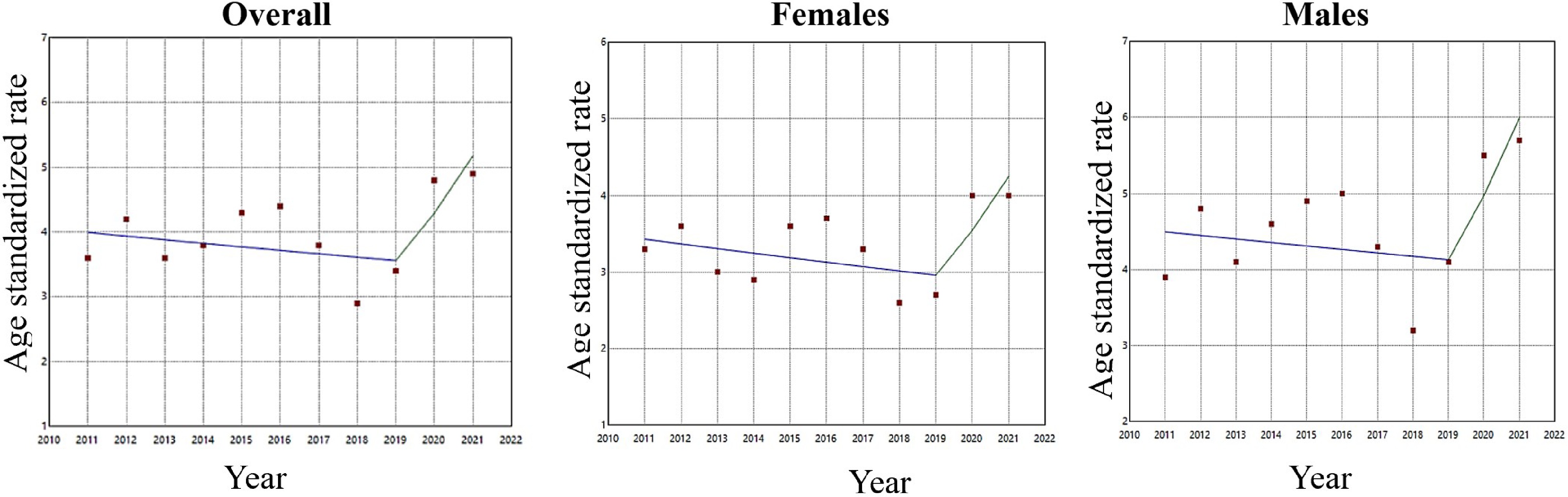
Figure 1.
Age-standardized rate of leukaemia incidence of males, females, and overall, from 2011–2022.
Leukaemia trend in different age groups
-
An upsurge in leukaemia incidence was observed in both males and females in the 0–19 age group post-2019 (two-fold and 1.5-fold rise, respectively), followed by a 1.3-fold decline. Among males, the APC during 2019–2022 for this age group was 22.6% (95% CI: −14.5 to 76.05), while it was 16.5% (95% CI: 3.35–49.4) for females. Among females, leukaemia incidence dropped in other age groups, whereas in males, leukaemia incidence increased slightly, but not significantly. However, the highest incidence was reported among males ≥ 60 years. (Table 1; Fig. 2).
Table 1. Age-specific incidence rate by sex (2011–2022).
2011 2022 2011–2022 Count Rate Count Rate Count AAPC (%) 95% CI Age group (years): male 0–19 110 2.9 174 4.7 1,675 3.1 −6.1 to 13.4 20–39 66 2.0 76 2.4 982 0.3 −4.3 to 5.1 40–59 91 4.0 105 4.1 1,262 0.4 −2.0 to 2.8 ≥ 60 107 11.8 129 10.6 1,708 1.5 −1.3 to 4.4 Age-standardized for male 374 3.9 484 4.6 5,627 1.2 −2.3 to 4.9 Age group (years): female 0–19 101 2.7 116 3.2 1,131 3.6 −0.4 to 7.2 20–39 49 1.4 43 0.6 702 −4.6 −15.9 to 8.2 40–59 75 3.2 100 1.9 1,176 −2.7 −7.8 to 2.5 ≥ 60 98 9.6 136 5.0 1,551 −0.3 −4.6 to 4.0 Age-standardized for female 323 3.3 395 3.3 4,560 0.5 −2.9 to 4.1 Overall age-standardized 697 3.6 879 4.0 10,187 0.9 −3.5 to 5.6 Histological type of leukaemia: male Lymphoid (C91) 176 1.7 188 1.7 2,196 2.3 −8.0 to 3.6 Myeloid (C92–C94) 188 1.8 245 2.3 2,917 1.5 −2.1 to 5.5 Leukaemia unspecified (C95) 10 0.1 58 0.5 518 22.4 5.4–42.2* (p < 0.008) Histological type of leukaemia: female Lymphoid (C91) 106 1.0 135 0.7 1,379 −2.0 −8.8 to 4.9 Myeloid (C92–C94) 197 1.9 212 1.1 2,783 −2.1 −9.8 to 6.1 Leukaemia unspecified (C95) 16 0.2 45 0.2 394 10.2 −1.9 to 23.8 Histological type of leukaemia: overall Lymphoid (C91) 282 1.3 316 1.1 3,575 −1.2 −11.7 to 10.7 Myeloid (C92–C94) 385 1.8 457 1.6 5,696 −0.2 −6.8 to 6.9 Leukaemia unspecified (C95) 26 0.1 103 0.4 912 20.2 0.2–44.8* (p < 0.000001) AAPC, average annual percent change; CI, confidence interval. Age-standardized rates are presented as point estimates. AAPCs are presented with 95% CIs. * p < 0.05 is considered significant. 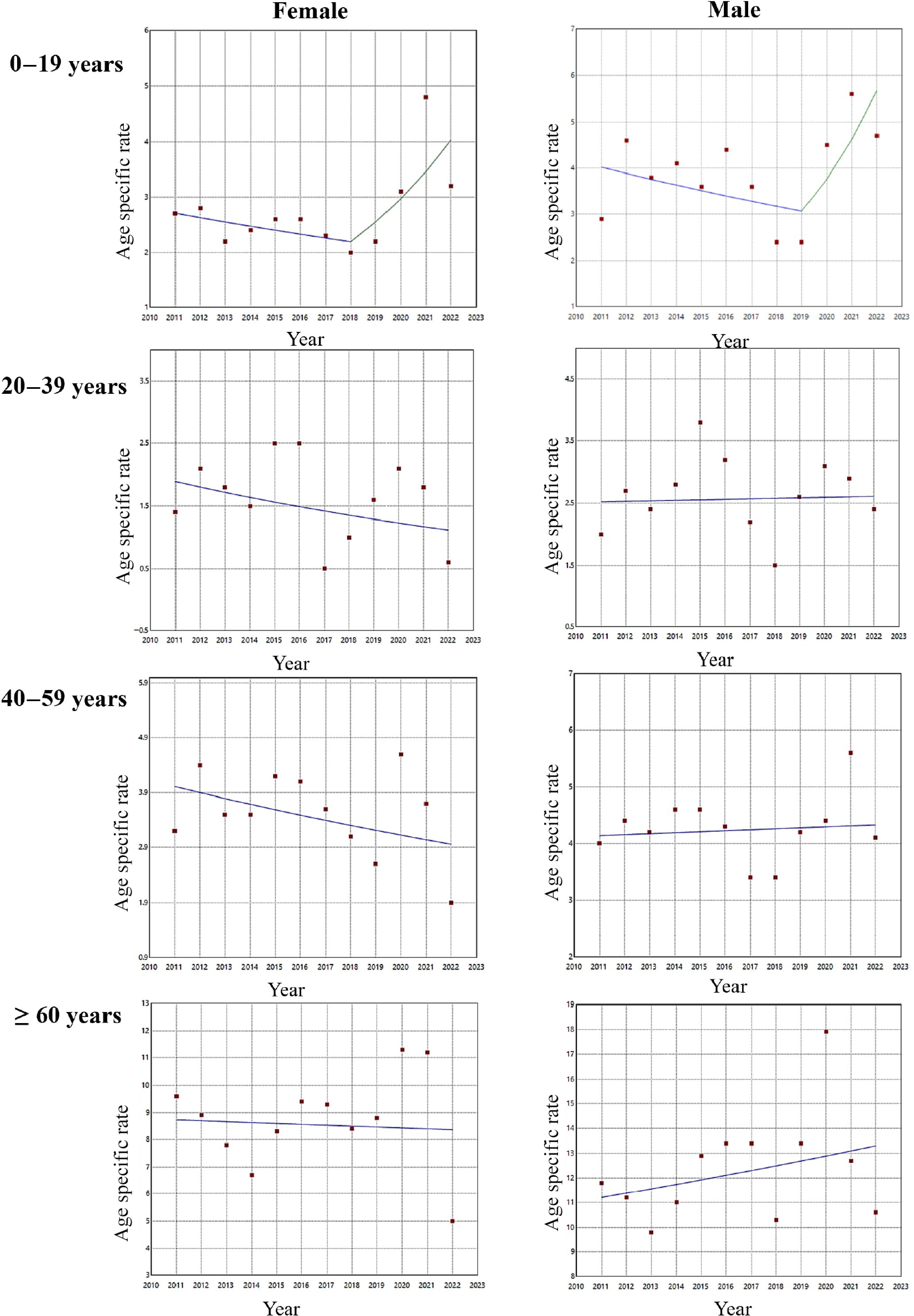
Figure 2.
Age-specific rate of leukaemia by sex for different age groups (2011–2022).
Trends in histology of leukaemia
-
During the considered period, the most common histological type was myeloid leukaemia (n = 5,700, 55.9%). Lymphoid leukaemia was reported in 35.1% of patients (n = 3,575), but in 9% (n = 912) the type of leukaemia was not specifically identified. The proportion of both myeloid and lymphoid leukaemia was higher in males (51.1%; n = 2,917 and 61.4%; n = 2,196, respectively) than in females (48.9%; n = 2,783 and 38.6%; n = 1,379, respectively) (Fig. 3).
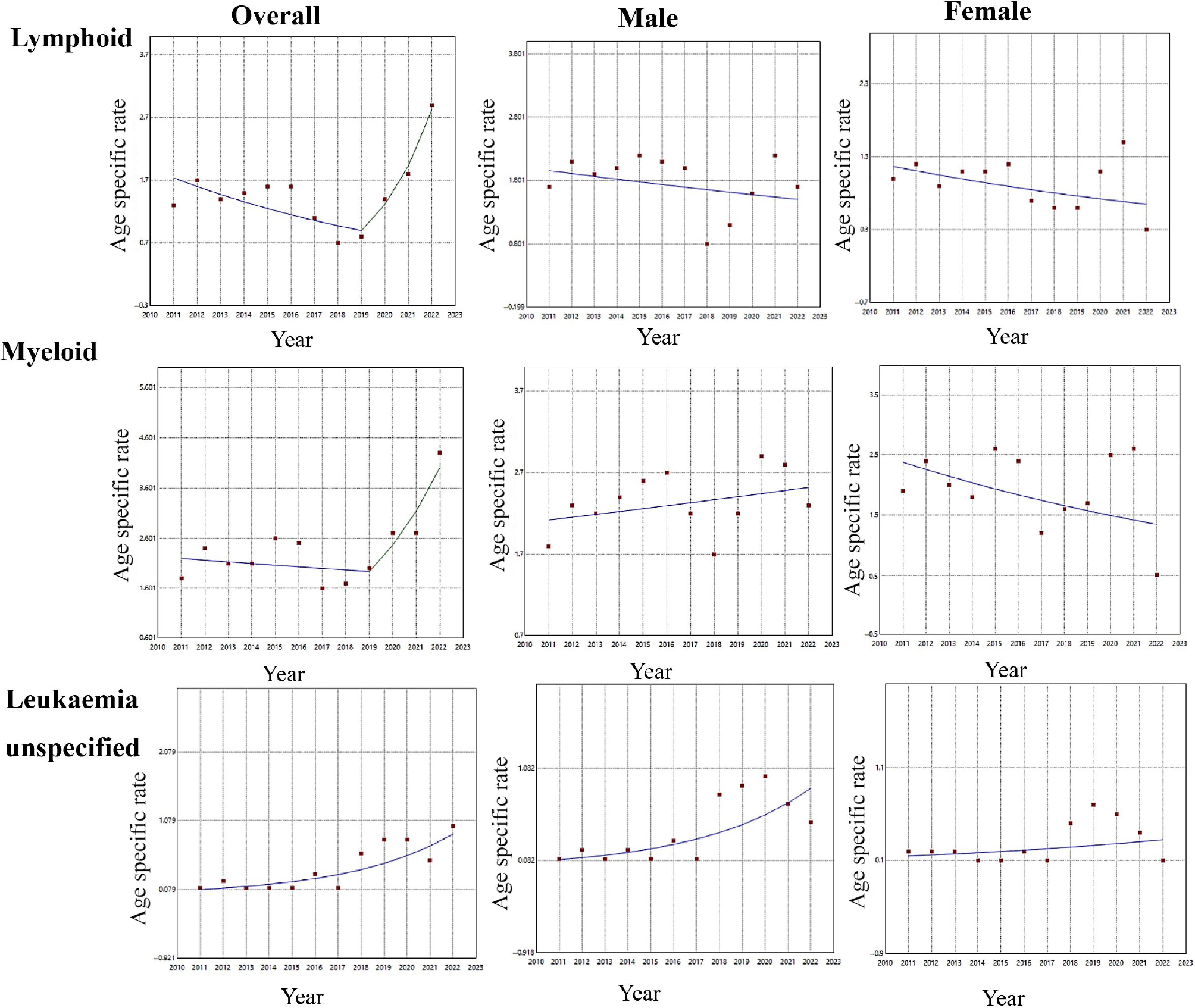
Figure 3.
Age-specific incidence for histological types of leukaemia (2011–2022).
Lymphoid leukaemia (C91)
-
Lymphoid leukaemia showed a sex-specific difference in the overall age-specific incidence trends, although the overall AAPC was not statistically significant in either males or females. In contrast, when both sexes were considered together, the trend demonstrated a 14.5% rise after 2019 (95% CI: −25.7 to 76.5), following an annual decline of 6.4% (95% CI: −14.8 to 2.8). Compared with myeloid and unspecified leukaemia, lymphoid leukaemia was predominantly observed among individuals aged 0–19 years, with 1,160 male and 743 female cases, indicating a greater burden among males in this age group (Table 1; Fig. 3: C91).
Myeloid leukaemia (C92 – C94)
-
Myeloid leukaemia demonstrated a contrasting pattern to lymphoid leukaemia, with no statistically significant overall AAPC and divergent trends between males and females. The incidence showed an approximately 1.3-fold increase among males, whereas females experienced a 1.7-fold decrease over the study period. However, when both sexes were considered together, there was an approximately constant trend with an AAPC of 15.4% (95% CI: −6.8 to 6.9). Unlike lymphoid leukaemia, myeloid leukaemia was predominantly observed among individuals aged ≥ 60 years, with relatively similar numbers of cases among males (n = 1,177) and females (n = 1,129) (Table 1; Fig. 3: C92–C94).
Unspecified leukaemia (C95)
-
Unspecified leukaemia demonstrated the most consistent and pronounced increasing trend among the three leukaemia groups. Unlike lymphoid and myeloid leukaemia, which showed changes in trend after 2019, unspecified leukaemia showed a significant gradual increase throughout the 2011–2022 period, with an AAPC of 20.2% (95% CI: 0.2–44.8; p < 0.000001), corresponding to an approximately four-fold increase in incidence over the study period. A total of 912 unspecified leukaemia cases were reported, comprising 518 males and 394 females, indicating a higher number of cases among males. Thus, while lymphoid leukaemia was predominantly observed in younger individuals and myeloid leukaemia in older individuals, unspecified leukaemia demonstrated a marked overall increasing incidence without the distinct age-specific pattern described for the other two groups (Table 1; Fig. 3: C95).
In the subgroup analysis of leukaemia according to the ICD-10 classification, records for certain leukaemia subtypes were unavailable in the NCCP registry for specific years during the study period. Therefore, the analysis of individual leukaemia subtypes was restricted to the period from 2015 to 2022, for which detailed ICD-10 subtype data were available.
Among the leukaemia subtypes, acute myeloblastic leukaemia (C92.0) emerged as the most common, with almost similar numbers of cases among males and females (1,155 and 1,157 cases, respectively). Except for acute promyelocytic leukaemia (C92.4), acute myelomonocytic leukaemia (C92.5), and chronic myelomonocytic leukaemia (C93.1), for which the incidence was slightly higher in females or almost equal, all other subtypes demonstrated a male predominance (Fig. 4).
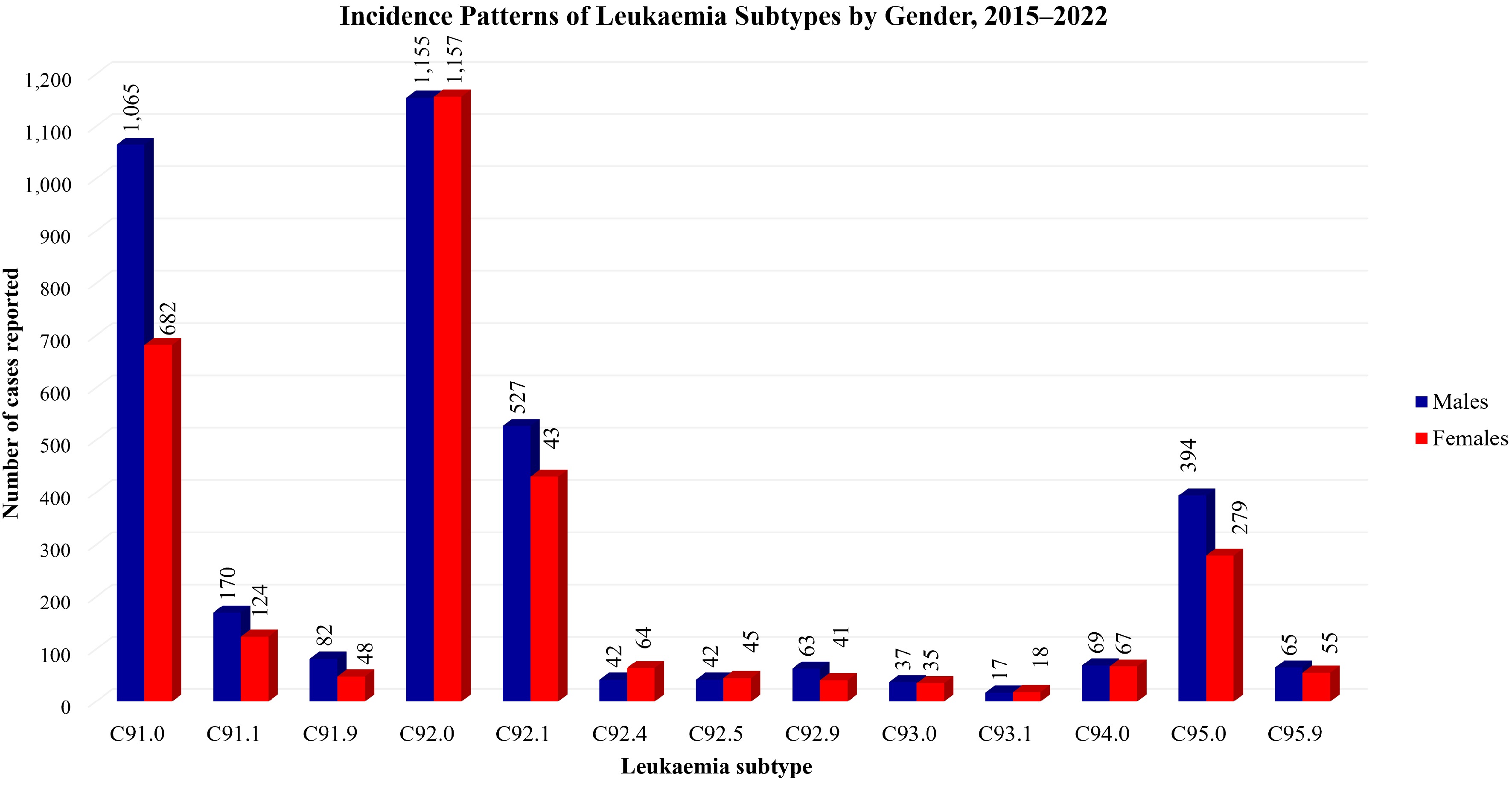
Figure 4.
Incidence patterns of leukaemia subtypes by sex (2015–2022).
Mortality of leukaemia
-
Crude mortality rates were available for selected years only (2012–2015, 2019, and 2020). Among females, the number of deaths ranged from 254 to 304, with the crude death rate ranging from 2.4 to 2.7 per 100,000 population. Among males, the number of deaths ranged from 306 to 356, with crude death rates ranging from 3.0 to 3.7 per 100,000 population. Across all available years, male mortality was consistently higher than female mortality, both in terms of the number of deaths and crude death rates. The highest number of deaths was observed among males in 2019 (n = 356), while the highest number among females was observed in 2020 (n = 304). The highest crude mortality rate was observed among males in 2014 (3.7 per 100,000), whereas the lowest was observed among females in 2012 (2.4 per 100,000). However, a continuous temporal trend could not be assessed because annual mortality data were unavailable for several years (Fig. 5).
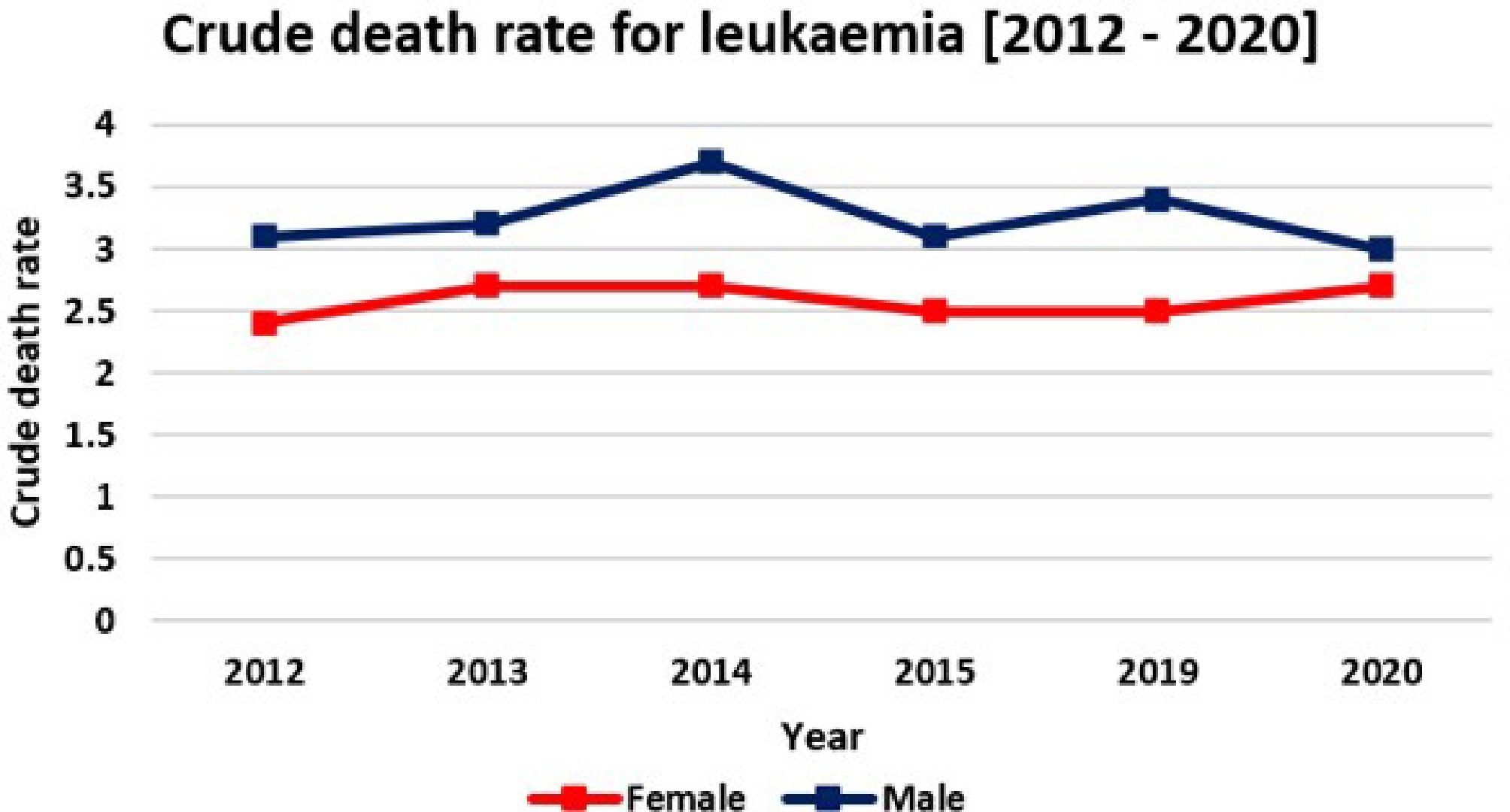
Figure 5.
Crude death rate for females and males (2012–2020).
Province-wise distribution
-
From 2015–2022, the Western Province consistently contributed a large number of leukaemia cases (a total of 1,070 cases), with the highest counts in 2015 (n = 260) and 2021 (n = 297), although its incidence rate was lower. The Northwestern Province also showed relatively high case counts (a total of 772) across most years and had comparatively high incidence rates, reaching 5.8 per 100,000 in 2021, the highest reported rate among the provinces in the dataset. The Central Province demonstrated a relatively sustained incidence burden, with rates ranging from 2.8 to 4.8 per 100,000 during 2015–2022. It recorded its highest case count in 2020 (n = 123), corresponding to an incidence rate of 4.8 per 100,000, before declining to 1.4 in 2022 (Fig. 6).
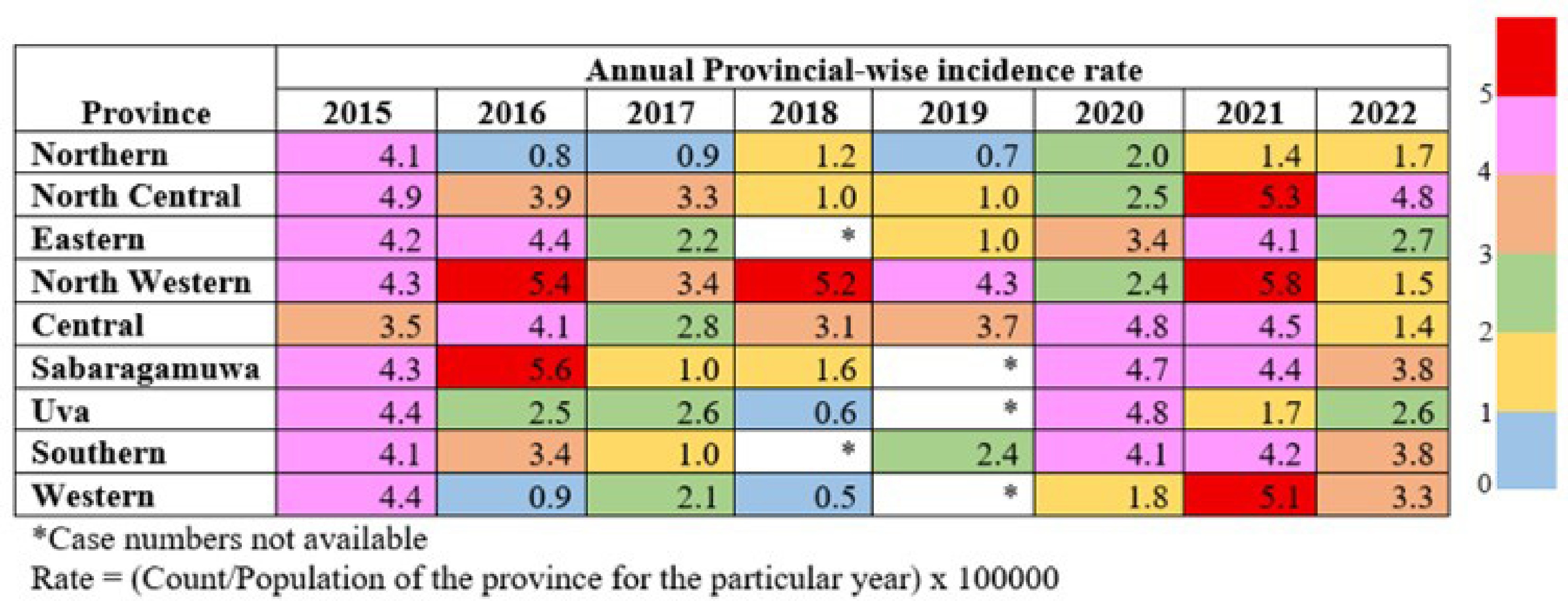
Figure 6.
Province-wise leukaemia incidence (2015–2022).
North Central and Sabaragamuwa showed notable fluctuations. In contrast, the Northern Province generally had lower incidence rates, ranging from 0.7 to 4.1 per 100,000, with particularly low rates during 2016–2019. The Eastern, Uva, and Southern Provinces also showed substantial year-to-year variation, including years when case numbers were unavailable (Fig. 6).
-
This nationwide analysis of leukaemia incidence in Sri Lanka from 2011 to 2022 revealed several important trends. Leukaemia was more frequently reported among males than females (55% vs 45%), and mortality was also higher among males. Incidence increased after 2019 in both sexes following an earlier period of decline. Age-specific analyses showed a marked post-2019 increase among individuals aged 0–19 years, while those aged ≥ 60 years had the highest incidence. Myeloid leukaemia was the predominant histological category (56%), particularly among older adults, whereas lymphoid leukaemia was more common among those aged 0–19 years. An approximately four-fold increase in unspecified leukaemia was also observed. Geographically, the Western Province contributed the largest number of cases, whereas the Northwestern Province showed the greatest increase in population-based incidence.
Leukaemia remains an important global health burden, accounting for approximately 2.5% of new cancer diagnoses and 3.1% of cancer-related deaths worldwide[16]. It is the 13th most frequently diagnosed malignancy and the 10th leading cause of cancer mortality globally[17]. Globally, myeloid leukaemia is more common than lymphoid leukaemia, and age-standardized incidence rates are approximately 40% higher in males than females[5,16]. Although incidence, mortality and disability-adjusted life-years have generally declined over recent decades, the absolute number of cases continues to increase because of population growth and ageing, with the global burden projected to increase further by 2050[18]. Mortality also remains consistently higher among males worldwide[17]. While several high-income countries and some Asian countries have reported declining mortality, increasing trends have been described in a number of low- and middle-income Asian countries, including Sri Lanka[16].
Asia accounted for 46.7% of global incident leukaemia cases and 51.8% of leukaemia-related deaths in 2022[8]. Within South Asia, India had the highest number of cases and deaths in 2020, followed by Pakistan and Bangladesh, while Pakistan and Sri Lanka reported the highest incidence rates in the region[19]. India and Sri Lanka also reported the highest leukaemia-related mortality among children aged 0–14 years in South Asia[19]. The male predominance and greater burden among older adults observed in the present study are therefore broadly consistent with international and regional patterns[5,16,19].
The age and histological distribution observed in this study have important implications for cancer care. The predominance of myeloid leukaemia among adults aged ≥ 60 years indicates a growing need for diagnostic and treatment pathways that can accommodate older patients, including appropriate supportive and multidisciplinary care. In contrast, the greater occurrence of lymphoid leukaemia among individuals aged 0–19 years, together with the marked post-2019 increase in this age group, emphasizes the importance of timely referral pathways to centres with paediatric haematology and oncology expertise. The higher incidence observed among older adults may partly reflect the accumulation of genetic and environmental exposures over the life course. Although the causes of most leukaemia remain uncertain, established risk factors include exposure to benzene, including through tobacco smoke, and ionizing radiation[17]. However, radiation exposure is unlikely in Sri Lanka due to the absence of nuclear industries and limited use of medical radiation[11]. Greater occupational exposure to hazardous environments has also been proposed as one explanation for the higher incidence observed among males[20−22]. However, these factors could not be evaluated directly because relevant exposure data were not available in the registry.
A particularly important finding was the increase in registry-reported incidence after 2019. This pattern should be interpreted cautiously because it coincided with substantial expansion of cancer diagnostic and treatment services and improvements in geographical coverage. In 2005, Sri Lanka had only five government cancer treatment hospitals, increasing to nine by 2011. By 2021, the number of treating hospitals had increased to 25, supported by additional government, private, military, and university units, with reporting increasingly incorporating the Northern and Eastern provinces[9]. Earlier cancer incidence data were also affected by the prolonged civil conflict in these regions, which may have limited healthcare access and case ascertainment[10]. Consequently, the post-2019 increase may partly reflect improved geographical coverage, cancer registration, and case ascertainment rather than a corresponding increase in underlying disease incidence. Standardization of cancer documentation and reporting in more recent years may also have contributed. Although the COVID-19 pandemic disrupted healthcare access and cancer diagnostic and treatment services from 2020 onwards, the extent to which these disruptions influenced the observed increasing trends in leukaemia incidence and mortality remains uncertain. (Supplementary Table S3). Thus, the post-2019 increase should not be interpreted solely as a true epidemiological increase.
The geographical findings have further implications for cancer service planning. Although the Western Province recorded the largest absolute number of cases, the Northwestern Province showed the greatest increase in population-based incidence. These findings indicate that service planning should consider both the absolute number of patients requiring care and population-based disease burden. Expansion of specialist haematology and oncology services, laboratory diagnostic capacity, referral networks, and trained clinical and laboratory personnel should therefore be informed by the changing geographical distribution of registered cases. This is particularly relevant as diagnostic and treatment services continue to expand beyond historically concentrated cancer centres.
The approximately four-fold increase in unspecified leukaemia warrants particular attention. Definitive leukaemia classification increasingly relies on flow cytometry, immunohistochemistry, cytogenetic and molecular investigations, including fluorescence in-situ hybridization (FISH), plymerase chain reaction (PCR), and next-generation sequencing, where available[23,24]. However, only a limited number of centres in Sri Lanka currently provide the full spectrum of these diagnostic modalities[11]. The increase in unspecified leukaemia may therefore reflect differences in diagnostic capacity, expansion of registry coverage into previously underrepresented areas, variation in coding or classification practices, incomplete diagnostic work-up, or differences in reporting and data-entry practices. Because the registry does not contain sufficient information to distinguish between these explanations, a specific causal interpretation cannot be made. Nevertheless, incomplete diagnostic classification may affect accurate epidemiological surveillance and potentially limit disease-specific treatment categorization and referral. Improving access to advanced diagnostic testing and implementing standardized diagnostic and registry reporting aligned with contemporary WHO classifications and ICD-10 coding may therefore strengthen both cancer surveillance and clinical decision-making.
The higher mortality observed among males is consistent with global patterns[17]. However, interpretation of mortality trends in the present study is constrained by limitations in the NCCP registry, including the absence of comprehensive linkage between incidence records, treatment information, and survival outcomes. Consequently, the study cannot determine whether differences in mortality reflect differences in disease biology, stage at diagnosis, treatment access, treatment response, comorbidity, or other factors. Development of integrated cancer information systems linking registration with treatment, follow-up, and mortality data would enable more robust assessment of survival and the effectiveness of national cancer-control strategies.
Several limitations should be considered when interpreting these findings. First, cancer registry coverage was inconsistent over the study period, with possible underreporting from private-sector institutions and peripheral hospitals, particularly during earlier years. The expansion of reporting facilities and inclusion of previously underrepresented regions may therefore affect temporal and geographical comparisons. Second, the NCCP registry lacks detailed information on risk factors, treatment, disease stage, survival, and leukaemia-specific outcomes, limiting assessment of potential determinants of observed trends. Third, incomplete histological subtyping prevented comprehensive subtype-specific analyses across the entire study period and limits direct comparison with studies using detailed contemporary disease classifications. The increasing proportion of unspecified leukaemia further reduces confidence in interpreting trends for individual subtypes. Retrospective recovery of subtype information from institutional pathology records, together with prospective implementation of standardized registry documentation, could improve data completeness.
Finally, the absence of national-level information on environmental exposures, infections, genetic susceptibility, and lifestyle-related factors limits interpretation of the potential causes underlying the observed patterns. The development of integrated patient tracking systems that connect cancer registry data with clinical management, laboratory, mortality, and exposure information would provide a more comprehensive understanding of leukaemia epidemiology in Sri Lanka and may improve the effectiveness of national cancer control strategies. Despite these limitations, the present study provides important national-level evidence on the changing distribution of leukaemia and highlights the need to strengthen diagnostic capacity, geographical coverage, referral pathways, and integrated cancer surveillance systems to support equitable leukaemia care across the country.
-
The findings of this study indicate a potential rise in leukaemia cases in Sri Lanka from 2011 to 2022. However, it remains unclear whether this uptick is attributed to enhanced diagnosis or an actual increase. Future studies linking registry data with clinical, treatment, survival, and mortality information, together with more complete subtype-specific diagnostic data, would be valuable for determining the underlying reasons for the observed temporal and geographical patterns and for informing evidence-based planning of leukaemia control and healthcare services.
We would like to thank Professor Harindra Jayasekara for his guidance on preparing this manuscript.
-
During the preparation of this work, the authors used ChatGPT(OpenAI GPT-5.6 Luna version) for the purposes of language refine-ment. The authors reviewed and edited all content produced with theassistance of this tool, verified its accuracy, and take full responsibilityfor the integrity and originality of the final manuscript. This workrepresents the authors’ own intellectual contribution, and no AI tool iscredited as an author. The data obtained from the National Cancer Registry were de-identified and publicly available. The study was conducted in accordance with the principles of the Declaration of Helsinki and the applicable institutional policy on secondary data use.
-
The authors confirm their contributions to the paper as follows: study conception and design: Gooneratne LV; data retrieval, analysis and interpretation of results, draft manuscript preparation: Alvitigala BY; reviewing the results and draft of the manuscript: Gooneratne LV, de Silva C. All authors reviewed the results and approved the final version of the manuscript.
-
The data that support the findings of this study are available in the National Cancer Control Programme, Sri Lanka repository. These data were derived from the following resources available in the public domain: www.nccp.health.gov.lk/en.
-
The authors declare no conflict of interest.
-
accompanies this paper online at: https://doi.org/10.48130/ejcc-0026-0019.
- Supplementary Table S1 Population denominators used for incidence – male and female for age groups.
- Supplementary Table S2 Provincial-wise population denominators.
- Supplementary Table S3 Variations in the registry coverage.
-
Copyright © 2026 by the author(s).
European Journal of Cancer Care published by Maximum Academic Press on behalf of John Wiley & Sons Ltd. This is an open access article under the terms of the Creative Commons Attribution License, which permits use, distribution and reproduction in any medium, provided the original work is properly cited. -
About this article
Cite this article
Alvitigala BY, de Silva C, Gooneratne LV. 2026. Incidence and trends of leukaemia in Sri Lanka: a retrospective, observational, registry-based analysis of National Cancer Registry data, 2011–2022. European Journal of Cancer Care 2026: e018 doi: 10.48130/ejcc-0026-0019 

Incidence and trends of leukaemia in Sri Lanka: a retrospective, observational, registry-based analysis of National Cancer Registry data, 2011–2022
- Received: 19 April 2026
- Revised: 03 September 2026
- Accepted: 29 September 2026
- Published online: 22 October 2026
Abstract: Leukaemia represents an important component of the cancer burden in Sri Lanka; however, national evidence on temporal trends remains limited. This study assessed leukaemia incidence trends in Sri Lanka from 2011 to 2022. A retrospective, observational, registry - based analysis was conducted using data on newly diagnosed leukaemia cases obtained from the annual National Cancer Control Programme (NCCP) cancer incidence publications. Age-specific and age-standardized incidence rates were assessed by sex and age group. Temporal trends were evaluated using joinpoint regression, estimating annual percent change (APC) and average annual percent change (AAPC). A total of 10,187 leukaemia cases were identified, including 5,627 (55.2%) males and 4,560 (44.8%) females. The overall age-standardized rate rose from 3.6 per 100,000 population in 2011 to 4.0 per 100,000 in 2022; however, this was not statistically significant (AAPC 0.9%, 95% CI: −3.5 to 5.6). Incidence was highest among those aged ≥ 60 years. A 1.5-fold and two-fold rise was observed in males and females, respectively, post-2019, but was not significant. Myeloid leukaemia was more prevalent than lymphoid (55.9% vs 35.1%), with lymphoid predominating among individuals aged 0–19 years and myeloid among ≥ 60 years. Unspecified leukaemia demonstrated a significant increasing trend throughout 2011–2022 (AAPC 20.2%, 95% CI: 0.2–44.8), with an approximately four-fold increase. Mortality was increasing among males, but data were incomplete, precluding assessment of temporal mortality trends. The underlying reasons for the observed non-significant increase in leukaemia incidence remain uncertain. Strengthening cancer registration, diagnostic classification, and surveillance is essential for accurately characterizing the evolving national leukaemia burden.