











-
One of the major challenges faced by the food industry is maintaining the freshness of food with less or no impact on the environment. The shelf life of highly perishable produce can be extended through proper packaging, which functions as protection, communication, convenience, and containment[1]. Recently, concern regarding the environment has paved the path for innovations in the packaging industry. The development of an appropriate alternative to synthetic or petroleum-based packaging materials is essential to prevent pollution and maintain sustainability. Biodegradable packaging films and edible coatings were developed and attracted worldwide attention[2,3].
Edible coatings are a thin layer of transparent materials with less thickness coated on the surface of food items such as fruits, vegetables, etc.[4]. The first commercial production of edible coatings started in 1992 in the form of waxes. This substance can be easily digested by humans and does not cause any health-related issues, thereby preventing the chances of gastrointestinal diseases[5]. Furthermore, these materials are biodegradable and cause no harm to the ecosystem. The edible coating can prevent the entry of moisture, gases, and microbes, which are critical factors that affect the quality and freshness of the food items, thereby enabling the coating to extend the shelf life of the food items. In addition, edible coatings contribute to maintaining the chemical and nutritional quality of the food items, by preventing chemical reactions such as enzymatic browning and lipid oxidation[6].
With the increasing concern for petroleum-derived synthetic polymers, biodegradable packaging films have also gained widespread attention in recent years[7]. This is because petroleum-derived plastics cannot be degraded by nature and have to be recycled only upon proper disposal. But recycling of these polymers is tedious, which could lead to the piling up of toxic substances in nature in the name of packaging materials. These depositions could increase the greenhouse gases in the atmosphere if not disposed of properly. Biodegradable packaging materials prove to be safe alternatives as they are highly recyclable, biodegradable, and inexpensive. These materials are derived from biopolymers, which could be easily obtained from food waste and byproducts. This not only has ecological benefits but also raises the value of a particular commodity[8,9].
Various biopolymers are utilized for the synthesis of edible coatings, among which polysaccharide substances have been widely applied due to their beneficial properties and abundance in nature. Starch, chitosan, pullulan, gum Arabic, carrageenan, etc. are the most commonly used polysaccharides for edible coatings. These materials can be easily obtained and extracted from natural sources.
Starch-based edible films and coatings have gained considerable attention in recent years as a promising solution for extending the shelf life and enhancing the quality of fresh fruits, vegetables, and other food items[8,9]. Hydrophilicity is one of the defining properties of starch that enables its application in the food packaging system; this realizes its excellent water holding capacity, swelling capacity, and complete dispersibility in aqueous media[10]. With growing consumer demand for minimally processed and environmentally friendly food products, edible films and coatings offer an attractive alternative to traditional synthetic film and coatings as packaging materials[11]. Starch is a renewable and biodegradable polysaccharide derived from various plant sources such as potato, cassava, corn, rice, and wheat that exhibits excellent film-forming properties, making it suitable for producing protective coatings that can reduce moisture loss, inhibit microbial growth, and maintain the sensory attributes of coated produce[12]. In short, starch is the most promising plant-based material to produce biodegradable packaging films and edible coatings owing to its great transparency, good barrier properties, and mechanical strength. But the retrogradation of starch plays a crucial role in determining its suitability for application in various processing conditions[13].
Starch is a complex polysaccharide composed of glucose molecules linked by glycosidic bonds. Structurally, starch contains two main components: amylose and amylopectin. Amylose, forming linear chains of α-D-glucose units connected by α-1,4-glycosidic bonds, adopts a helical structure due to the formation of intramolecular hydrogen bonds. In contrast, amylopectin, containing additional α-1,6-glycosidic bonds besides the α-1,4 linkages found in amylose, exhibits a branched structure, with branching occurring approximately every 24−30 glucose units. Starch molecules cluster into granules within plant cells, with diverse sizes, shapes, and arrangements depending on their source[14]. These granules, containing both amylose and amylopectin, are differentiated based on their amylose-to-amylopectin ratio. Starch rich in amylose tends to form compact granules and may behave differently during processing compared to amylopectin-rich starches, which have bigger granules and fixed functional properties such as enhanced gel formation and thicker textures. Due to its various properties, starch finds applications in a wide array of food and industrial processes, functioning as a gelling agent, thickener, stabilizer, and energy source. The concentration and ratio of amylose and amylopectin within starch granules significantly influence the properties of starch, including gelatinization, viscosity, texture, and digestibility[15].
The application of starch-based edible films and coatings has significant advantages, such as good barrier properties and transparency, but their hydrophilicity is a limitation. This drawback can be overcome by the addition of cross-linkers, plasticizers, copolymers, nanofillers, and chemical or biological substances, and research has found that this can modify the characteristics of starch-based edible films and coatings. The addition of bioactive compounds, natural antimicrobials, and antioxidants or plasticizers like glycerol can be adopted. In addition, a combination of biopolymers can also be found to be effective in addressing the drawbacks. The reinforcement of nanoparticles such as zinc oxide, silver nanoparticles, and nano cellulose can inhibit the growth of pathogens and improve the structural and mechanical characteristics of the starch-based edible coating[16,17].
Beginning with an exploration of the physicochemical properties of starch and its suitability for film formation, below, we will examine the chemistry, extraction, and properties of starch, its application as active and intelligent packaging, and the effects of starch-based coatings on the quality and shelf life of fresh produce. Furthermore, we will discuss the emerging trends, challenges, and prospects in the field of starch-based edible coatings, highlighting the potential for innovative and sustainable food packaging solutions. Overall, in this review, we underscore the significance of starch-based edible coatings as a promising technology for enhancing food safety, reducing food waste, and meeting the evolving needs of consumers and food industries alike.
Statement of novelty
-
As a polysaccharide and potential biodegradable material, starch has been the point of discussion recently. Numerous studies have been conducted in relation to this discipline, and starch will continue to be a material of interest for its packaging properties owing to its excellent solubility and cross-linking ability. This review provides a comprehensive and extensive study of the applicability of starch as a packaging material and also focuses on its potential application in coating of the material. In addition, the prospects of industrial scaling up and the studies associated with have been added, which have been minimally addressed in other studies on the same topic.
-
Starch is a complex long-chain polysaccharide linked together by glucose molecules, bonded through α-1,4 linkages. Starch is synthesized by all green plants as a reserve food supply during photosynthesis. It is stored in chloroplasts and other storage organs of plants such as potatoes, cassava, sago, wheat, rice, and corn. The chemical formula of starch is (C6H10O5)n, where n is the number of glucose units[18].
The structure of starch consists of two polymer components: amylose (20%−30%) and amylopectin (70%−80%), which have distinct structures, molecular weights, and properties. Amylose exhibits a comparatively low molecular weight (1.03−4.89 × 10⁵), and amylopectin has a high molecular weight (7.08−9.88 × 10⁷). Amylose is characterized by the linear chains of α-D-glucose units connected via α-(1→4) glycosidic bonds, resulting in a relatively unbranched formation that adopts a helical structure. This configuration makes amylose less soluble in water and more prone to retrogradation, where it recrystallizes upon cooling. Based on the source of starch, the length of the branch chain varies. In contrast, amylopectin is highly branched due to the presence of α(1→6) glycosidic bonds at the branching points, alongside the linear α(1→4) bonds. This extensive branching makes amylopectin more soluble and results in the formation of more stable gels, preventing retrogradation[19]. These differences in the structure and solubility between amylose and amylopectin significantly affect the gelatinization and pasting characteristics of starch, thereby affecting its functionality in various industrial applications. Together, they define the unique properties of starch, essential in food preparation and processing. Amylose and amylopectin are the components of starch in its granule form. They exist in different shapes and sizes, based on the sources at different concentrations, particularly spherical or disc shapes. Starch granules are divided into A, B, and C types based on the polymorphism, and researchers have found that cereal crops mostly contain A- and B-type granules[20,21].
The granules are chemically composed of lipids, moisture, proteins, and phosphorylated residues, respectively. The outer surface of the granule is composed of polar lipids, while the remaining parts are non-polar lipids. The major polar lipids present in starch granules are phospholipids and the surface contains pores and channels formed due to the non-reducing ends of amylose and amylopectin. These pores and channels connect to the outer environment and help to acquire reagents during chemical modification and pave the path for the entry of certain molecules[21,22].
The chemical structure of starch is sensitive to various physical and chemical factors. Physical factors such as high and low pH, high temperature, high pressure, osmotic pressure, light, radiation, mechanical stress, and ultrasound waves can alter the structure and properties of starch, while chemical modifications such as oxidation, hydroxylation, carboxylation, and cross-linking can modify its structure and reactivity. These alterations can improve the functionalities of starch, making it suitable for various industrial applications such as biodegradable hydrogels and transdermal drug delivery systems[23].
The molecular weight distribution and crystalline structure of starch can be analyzed using techniques such as gel permeation chromatography (GPC) and X-ray diffraction. The short-range ordered structure of starch can be studied using attenuated total reflectance–Fourier transform infrared (ATR–FTIR) spectroscopy. The thermal properties of starch can be determined using differential scanning calorimetry (DSC)[24].
-
Starch is an abundant polysaccharide and a primary energy source. It is easily digested by human beings and can be obtained from plant sources. In addition, starch is considered a better choice for preparing edible films and coatings due to its abundance and beneficial properties. As mentioned above, several plants are chosen for the extraction of starch for commercial purposes. Traditional and widely cultivated cereal crops like rice, wheat, and corn and tuber and root crops like cassava, potato, yams, sweet potato, and taro are significant sources of starch[25]. In addition, certain fruit crops such as green bananas are known to have a high starch content. Furthermore, agricultural wastes like fruit and vegetable peels, seeds, stems, and kernels of mangoes and other parts can be used to extract starch, thereby reducing food wastage and environmental damage. Several studies focused on the extraction of starch from different plant parts such as seeds of mangoes and jackfruit[26,27], peels of plantain[28], stems of pineapple and cassava[29,30]. Starch obtained from these sources can be used to develop eco-friendly packaging films and edible coatings, which provide sustainable and eco-friendly biopolymers. In practical terms, starch utilization from agro-waste can provide a potential solution for waste management and offers a wide range of properties[31]. Starch extracted from pineapple stem is a good source of thermoplastic and resistant plastic starch and shows unique properties in comparison to commercial starch, and research revealed that it contains a high amount of amylopectin (34.4%).
Extraction of starch
-
Different methods are used for the extraction of starch from different sources, including conventional methods such as wet and dry methods and novel extraction methods such as ultrasound, microwave, and pulse electric methods. Conventional methods are less efficient and time-consuming, while novel techniques result in a higher yield of starch. Therefore, researchers are focusing on nonconventional methods for the extraction of starch[32].
Wet milling
-
Wet milling is a commonly used technique to extract starch from wheat, rice, corn, etc. This method combines various substages including cleaning, peeling, processing, and drying. The starch sources such as grains are soaked in warm water for 24−48 h. Before soaking, sulfur dioxide is added to the water to soften the kernel and easily separate starch from the protein matrix by reacting with the disulfide bonds. This critical step is known as steeping[33], which is followed by mechanical grinding to break the kernels, resulting in the formation of a starch slurry. The obtained slurry was centrifuged for 20−30 min, and then the supernatant was washed with fresh water multiple times to eliminate the impurities attached. The obtained clear supernatant was subjected to drying to remove the moisture content, and the resulting powder starch was stored for later use. The main objective of the extraction process is to maximize the starch yield. Researchers have used different alternatives to enhance the yield. Addition of enzymes was found to be one of the significant methods to improve the starch yield. In wet milling, cellulase-xylanase and protease resulted in better starch extraction from corn[34].
Dry milling
-
The extraction of starch can be carried out through a mechanical process, with minimal usage of water, whereas wet milling requires water. The starch source is subjected to drying, size reduction (milling), sifting, and sieving to separate the starch. The operational cost of dry milling is lower than that of wet milling. Thus, dry milling is commonly used for the extraction of starch from cereals such as corn, rice, wheat, and sorghum. The process starts by cleaning the grain, followed by conditioning by the addition of a small amount of water. Then, the starch-rich endosperm is isolated using mechanical degermer mills, followed by grinding and sieving. Machines such as roller mills and/or hammer mills are used to grind and sieve to obtain starch[35].
Ultrasound extraction
-
Ultrasound-assisted extraction (UAE) is a proven green technology due to its high extraction efficiency and less time and cost requirements. The principle of this technique is based on cavitation bubbles produced by ultrasound energy. Breakdown of these bubbles results in microjet turbulence that generates intense localized temperature and pressure, which disrupt the plant membrane aiding the release of starch. The increased mass transfer rate aids in the reduction of extraction time. Moreover, ultrasound extraction requires minimal solvent and reduces heat-sensitive compound degradation[36].
Compared to conventional extraction methods, ultrasound extraction is more efficient, significantly reducing extraction times while elevating the yield of starch. In addition, it is more energy-efficient and eco-friendly, as it reduces the requirements of high temperatures, extensive mechanical grinding, and huge volumes of solvents. One of the advantages of using ultrasound extraction is that the starch extracted exhibits higher purity and advanced functional properties due to the simpler conditions of the extraction process. The ultrasound-assisted extraction of starch from sago pith waste produced a higher-yield and highly pure starch compared to the control sample[37]. Ultrasonic power, frequency, extraction time, temperature, and solvent type are the parameters that need to be optimized for maximum yield and quality. The typical procedure involves cleaning and possibly pre-treating the plant material, suspending it in a suitable solvent, and subjecting the suspension to ultrasonic waves using an ultrasonic bath or probe. The ultrasound treatment is followed by separating the solvent containing extracted starch from solid residues, purifying the starch, and drying to collect it as a powder[38]. Ultrasound extraction exhibits several advantages, including higher extraction efficiency, reduced energy consumption, lower processing time, and minimal thermal degradation of starch. Ultrasound-extracted starch is widely used in the food industry, pharmaceuticals, bioplastics, and bioethanol production, highlighting its improved the sustainability and efficiency of starch production in various sectors. Various studies have shown the effect of ultrasound on starch extraction from different sources like pulses and tubers. Studies were conducted by extracting starch from yam using ultrasound treatment. Increased amplitude and longer time increased the yield, but exposure to a very high amplitude for a very long time resulted in starch damage, hence it is not recommended.
Microwave extraction
-
Microwave extraction of starch involves the utilization of microwave radiation to accelerate the extraction process of starch from various plant sources. This methodology utilizes the rapid and uniform heating capabilities of microwaves, which effectively disrupt cellular structures, facilitating the delivery of starch into the chosen extraction solvent. Initially, the sample is ground or chopped into smaller pieces to augment the surface area available for extraction, thereby enhancing contact between the solvent and starch-laden cells[39]. The selection of a suitable solvent, its concentration, power, and time are the critical factors of the extraction process that can affect the physical and functional properties of starch. The microwave extraction of starch from lotus seed flour at a low intensity at different treatment times was studied. An increase in treatment time has significantly influenced the functional properties of the starch and increased the crystallinity and pore volume of starch granules[40]. The prepared sample is immersed in the solvent in a microwave-safe vessel. Increasing power above a certain level can reduce the quality of the starch. After the microwave treatment, the extract cools to room temperature before undergoing filtration to isolate starch from residual plant matter and solvent, thereby purifying the extract. If needed, the more concentrated starch form can be obtained through freeze-drying or evaporation. Additional purification steps, such as precipitation, centrifugation, or chromatography, may be used based on the application. Ultimately, the extracted starch is characterized using various analytical techniques to evaluate its purity, yield, and properties, ensuring the quality of the final product. Microwave extraction presents numerous advantages over traditional methods, including minimal extraction time, high efficiency, and reduced solvent usage. Nevertheless, scrupulous optimization of extraction parameters is crucial to achieve optimal results while preventing starch degradation[41].
Pulse electric field
-
The use of pulse electric field (PEF) for starch isolation represents a cutting-edge approach, wherein short bursts of high-voltage electrical pulses are used to disrupt cellular structures within plants, facilitating the release of starch granules. The principle behind this method is electroporation, which induces transient pore formation in cell membranes, thereby facilitating the extraction of intracellular components, including starch, from the solvent. To prepare for PEF treatment, the sample is typically processed by grinding or chopping to increase its surface area, thereby optimizing starch release during the electrification process. Uniform application of electric field across the sample is ensured through the configuration of electrodes in parallel plates or co-axial arrangements[42]. The intensity and duration of the electrical pulses can be modified by changing the parameters such as pulse amplitude and frequency to specific extraction requirements. When the pulses are applied, rapid changes in electric potential disrupt cell membranes and result in the release of starch granules into the chosen solvent, i.e., water or organic solvents. Extraction efficiency depends on various factors, including pulse characteristics, the type of solvent and its conductivity, and the nature of the source, necessitating optimization for maximal yield. After extraction, the starch is separated from the residual source and solvent through either filtration or centrifugation[43]. Subsequent characterization of the extracted starch ensures evaluation of purity, yield, and properties using advanced analytical techniques like microscopy and spectroscopy. PEF extraction exhibits several advantages, including low processing time, reduced solvent utilization, and high extraction efficacy, while concurrently preserving the functional and nutritional characteristics of the extracted starch[44].
Supercritical fluid extraction
-
Supercritical fluid extraction (SFE) is a novel and efficient approach to extract starch from various plant sources. This method utilizes the unique characteristics of supercritical fluids, with carbon dioxide (CO2) commonly selected for its attributes, including low toxicity and ease of removal after extraction. Operating at conditions beyond the critical temperature and pressure, supercritical CO2 behaves as a versatile solvent, penetrating solid matrices to dissolve target compounds like starch[45]. Sample preparation is the first step where the grinding or pulverization of the starch source amplifies its surface area, thus optimizing its extraction efficiency. Then, the introduction of CO2 into the extraction vessel at the controlled condition of temperature and pressure facilitates its infiltration into the matrix and subsequent dissolution of starch. The obtained extract, enriched with dissolved starch, undergoes separation in a special separator, where conditions are adjusted to revert the supercritical CO2 to its gaseous state, leaving behind the extracted starch. The main advantages of SFE are selectivity, minimal temperature conditions, and reduced thermal degradation, which ensure the preservation of starch quality. Furthermore, the environmentally friendly nature of CO2, coupled with its facile removal post-extraction, underscores the sustainability of this extraction method[46]. The extraction of starch from peas using SFE influenced its structural and physical properties and also improved its digestibility[47]. A summary of the various extraction techniques is shown in Fig. 1, and extraction features of different extraction techniques are presented in Table 1.
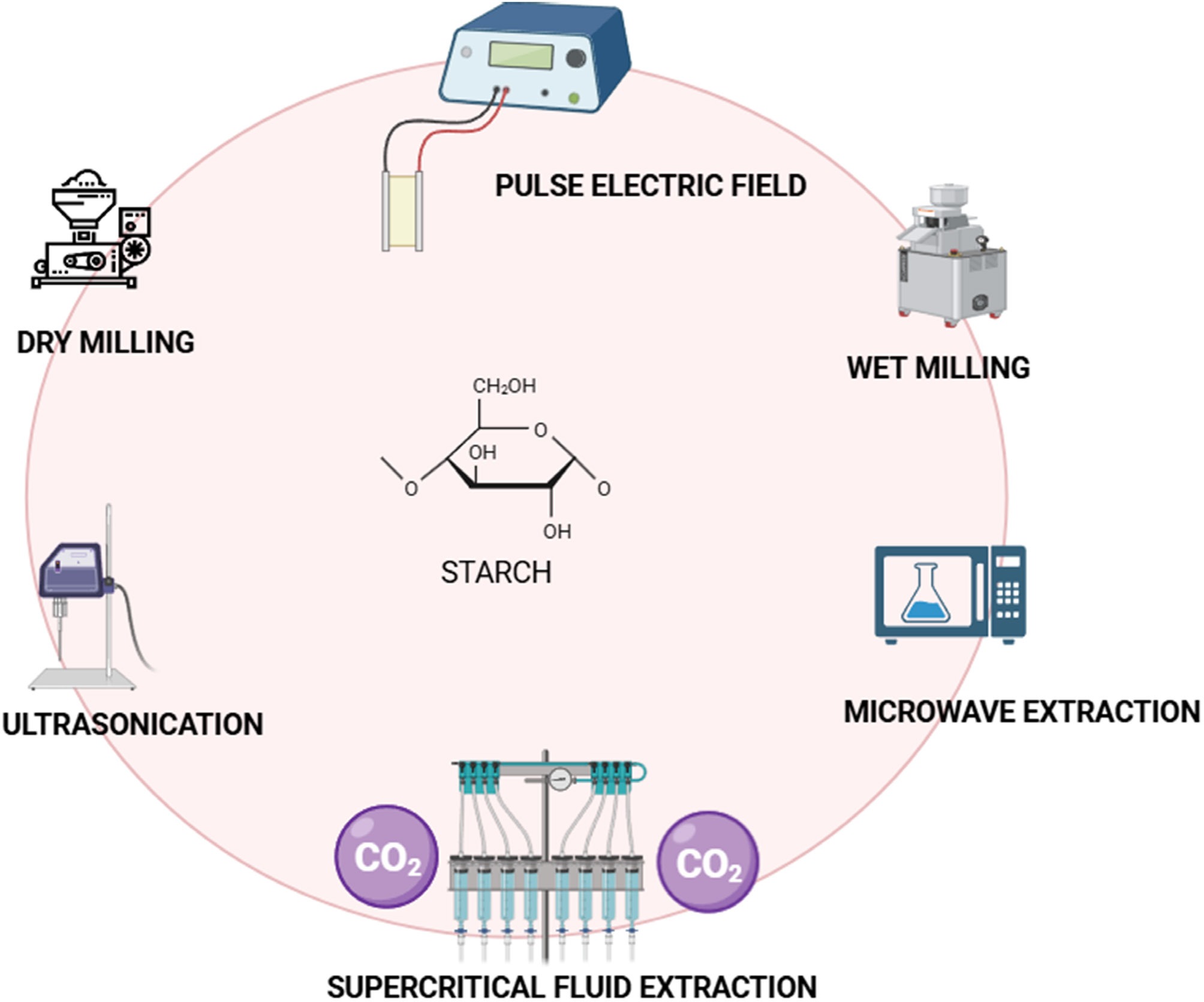
Figure 1.
Different techniques for the extraction of starch.
Table 1. Comparative analysis of different extraction techniques for starch.
Extraction method employed Features Advantages Disadvantages Ref. Wet milling The efficiency of wet milling process depends on various factors like types of solutes used (acid/alkali), source of starch, nature of starch, amylose and amylopectin content, etc. In general, acid extraction yields lower than the corresponding alkaline steeping extraction with higher protein residues. Water stepping yields better than acid steeping, but is inferior to alkaline method. Compared to dry milling technique, they produce the purest form of starch, but needs more time and water. Compared to dry milling, the purity of the extracted starch is higher. Water requirement is high and needs more time for the extraction purposes. [48−50] Dry milling Dry milling involves the mechanical separation of starch from its outer covering by the usage of abrasions and size reduction tools. This is devoid of any aqueous medium, and the starch is then mechanically sieved out by the use of vibrating screens. Compared to wet milling technique, it is quick and easy to carryout. The extracted starch will be of lower purity than that from wet milling. [50,51] Supercritical fluid extraction As with other nonthermal techniques, SCF yields high-quality starch with a marginal difference in the yield as compared to the conventional wet and dry milling techniques. As it involves less vigorous treatment compared to milling, the starch morphology and the amylose-to-amylopectin ratio always remain unchanged. Solvents such as ethanol and isopropanol can be used along with the CO2 for better extraction efficiency. Provides higher-purity starch than other techniques. Expensive as well as limited scalability. [52] Ultrasonication The sonication time and its type (bath type or probe type) can alter the morphological and physical properties of the food product. They could improve the digestibility of the extracted starch as well as alter the morphological characteristics of the starch. Normally, probe-type sonication produces more profound effects on the starch than bath-type sonication. Ultrasonication has the advantages of very short extraction time and the ability to produce porous structure that can affect the water-related properties. It can also modify the functional properties. Excess power by ultrasonication during the process can cause cracks and fissures in the material. It can also cause gelatinization due to localized temperature elevations in the solution [53] Microwave-assisted extraction (MAE) Granule size and structure could be significantly affected by the duration and frequency of the microwave. The water- and oil-holding capacities of the starch also significantly increase as it undergoes the treatment. Other functional properties like gelling ability, swelling capacity, etc. could be significantly enhanced upon treatment with microwave. The longer the exposure, the weaker the starch will be. Rapid technique for extraction and could potentially improve the functional properties. Chances of fragmentation and scalability issues. [40] Pulse electric field (PEF) As PEF is generally a surface treatment, the morphology of the grains and starch that underwent the treatment shows significant changes. This is attributed to the electroporation effect exerted by the PEF whose effect could drastically increase as the duration and power of the electric current increase. They could increase the digestibility of the starch and also augment the functional properties like gelatinization temperature, pasting behavior, etc. Enhanced functional properties and digestibility are the pronounced advantages of the method as compared to conventional techniques. Like some nonthermal techniques, they also help in manufacturing clean label products. Like other nonthermal techniques, PEF also has scalability issues, and the high cost of the equipment again limits its applicability. Considering the other nonthermal methods, the yield of starch is also less. [54,55] -
Starch gelatinization is a process by which the granular structure of starch is disrupted by the thermal application and moisture, causing the starch granules to swell, absorb water, and eventually burst, losing its birefringence, resulting in the formation of colloidal dispersion. This transformation is crucial in cooking and food processing, as it affects the texture, viscosity, and digestibility of starchy foods. Initially, as the temperature of a starch–water mixture increases, water penetrates the starch granules, resulting in swelling. Prolonged heating breaks down the ordered crystalline regions within the granules, a phase change known as gelatinization, during which the granules collapse the crystalline structure and become amorphous[56]. As the granules swell and burst, the mixture thickens because amylose and amylopectin molecules leach out into the water, causing increased viscosity. When the mixture cools, the gelatinized starch can form a gel-like network, especially if amylose is present, through a process called retrogradation, where starch molecules realign to form a semisolid structure, affecting the texture of the final product. Several factors influence starch gelatinization, including source, temperature, moisture content, and the presence of additives like acids, sugars, fats, and salts. Different starches gelatinize at different temperatures, typically between 60 and 80 °C (140 to 176 °F), and the presence of an adequate amount of water is essential for complete gelatinization[57]. The variation in the quantity of amylose and amylopectin in various sources of starch, such as corn, potato, wheat, or rice, impacts gelatinization. Stirring while heating can ensure uniform gelatinization and prevent clumping, while additives can modify the process by interacting with starch molecules. In culinary applications, gelatinization is critical for thickening sauces, making puddings, and baking, while in industrial food processing, it is used to produce food products like instant noodles, breakfast cereals, and snack foods. Understanding starch gelatinization is fundamental for controlling the texture and consistency of various food products, making it an essential concept in both home cooking and industrial food production.
Different methods like Kofler hot-stage microscopy, X-ray diffraction, differential scanning calorimetry (DSC), and pulsed nuclear magnetic resonance are used to estimate the gelatinization of starch. Among them, DSC is a reliable and accurate method for the above purpose. DSC measures the gelatinization transition temperature, midpoint, conclusion, and enthalpy of gelatinization, which are essential for understanding the gelatinization process.
Retrogradation
-
Retrogradation of starch is a process by which gelatinized starch molecules, which have been heated and swelled in the presence of water, undergo reassociation and recrystallization upon cooling. This phenomenon is commonly observed in cooked starchy foods such as bread, pasta, rice, and potatoes when they cool down[58].
During retrogradation, realignment of amylose and amylopectin molecules forms hydrogen bonds, resulting in the formation of an ordered structure. This process depends on temperature and time. This results in the formation of a semicrystalline network, causing the food to become firmer and lose some of its moisture. Retrogradation is responsible for the firming of stale bread, and the gritty texture is sometimes observed in refrigerated cooked rice or pasta[59].
Understanding the phenomenon of retrogradation holds paramount importance for both food manufacturers and culinary professionals, as it profoundly influences the texture and quality of starchy foods over their shelf life. Retrogradation entails the intricate process whereby starch molecules, having undergone gelatinization during heating, reassociate and recrystallize upon cooling. This reassociation, occurring as the temperature decreases, prompts the formation of a semicrystalline network within the food matrix, trapping water molecules and imparting textural changes such as firmness or hardness. The reorganization of amylose and amylopectin molecules, the primary constituents of starch, plays a pivotal role in this process, with amylose molecules aligning parallel to each other to form double helices, while amylopectin molecules interconnect between these helices[59]. Moreover, retrogradation can affect other quality attributes such as flavor and shelf life, alter the sensory perception of foods, and cause moisture loss, which results in dryness or toughness. To counteract these effects, food scientists use various strategies, including the addition of additives, modification of processing conditions, and optimization of storage conditions, aiming to inhibit or delay retrogradation and thus maintain the desired texture and quality of starchy foods.
Solubility
-
Solubility refers to the extent to which starch molecules disperse or dissolve into water or any other solvent. Starch molecules are insoluble in cold water and require partial heat treatment for dispersion. Heating starch in the presence of excess water can break the hydrogen bonds in it, resulting in the linkage of water molecules with the hydroxyl groups of amylose and amylopectin. This causes the absorption of moisture and an increase in volume, which is referred to as swelling. Various factors such as starch source, time, temperature, granule size, and shape affect the swelling ability of starch. Swelling of starch causes its dispersion in aqueous medium, which is known as solubility[60,61]. However, complete solubilization of starch is difficult, as the interior of the granules remains unchanged, comprising densely packed amylose and amylopectin molecules. Partially solubilized starch can be used in the food industry as a thickening agent or stabilizer, while insoluble starch is used for the preparation of edible coating[62].
Film-forming properties
-
Starch is one of the cheapest and most abundant polysaccharides used largely for the preparation of edible films and coatings. Starch exhibits good film-forming properties and can form a strong and flexible film attributed to its high amylose content and crystalline structure, compared to amylopectin. A previous study[63] found that the presence of amylose showed a significant effect on the film characteristics of starch due to the formation of helical structure and aggregation. In addition, residual water helps to reduce the glass transition temperature, thereby modifying the mechanical properties of the film. However, the application of starch biopolymers has certain limitations due to their hydrophilic nature. These drawbacks can be overcome by using modified starch or by the addition of another biopolymer. The addition of plasticizers can further modify the film in terms of flexibility. The chemical, physical, or enzymatic modification of starch can reduce the gelatinization temperature and molecular weight and improve the transparency of the film[64]. The various properties of starch are illustrated in Fig. 2.
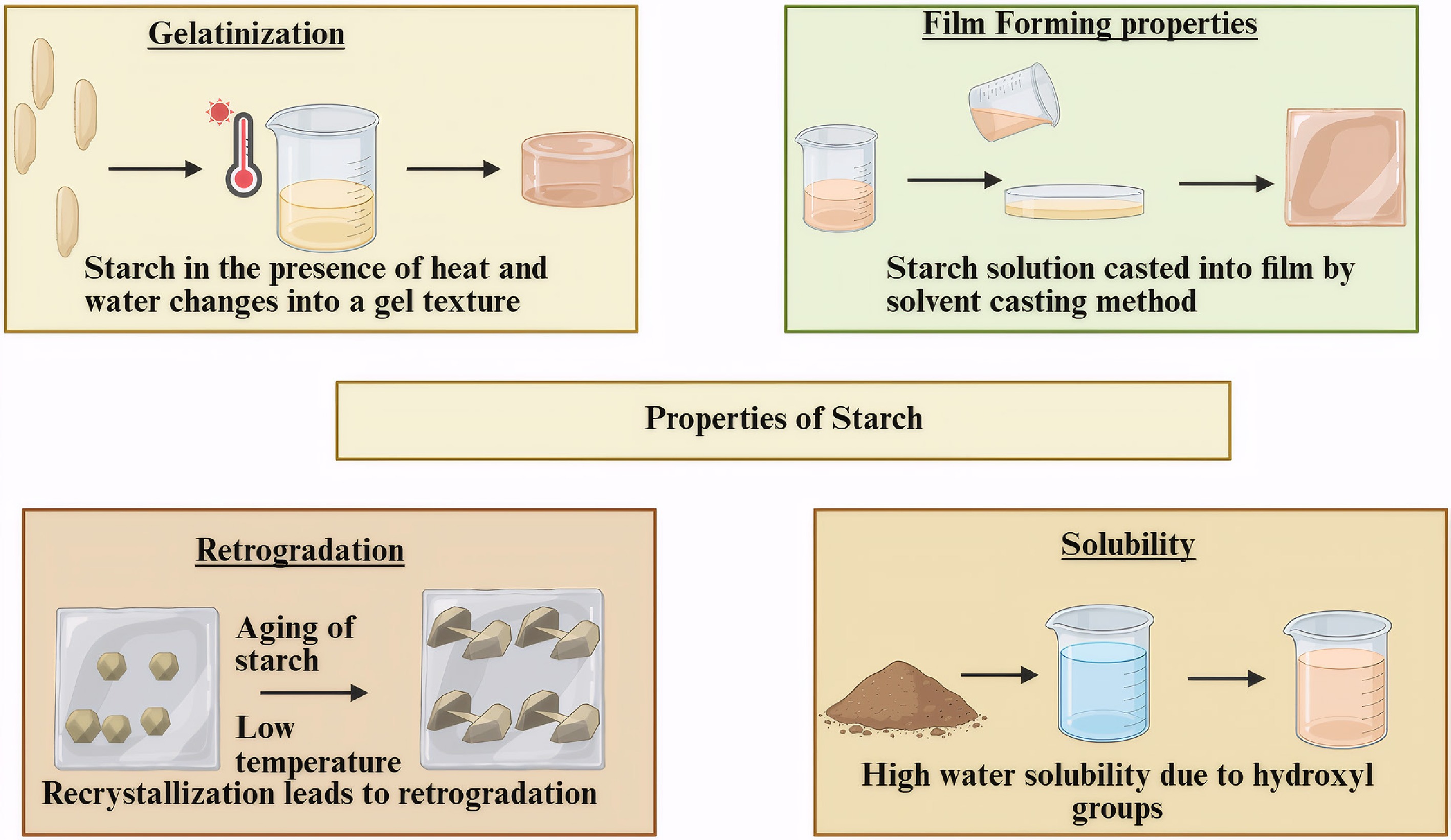
Figure 2.
Schematic representation of different properties of starch.
-
Starch extracted from different materials, ranging from cereals to vegetables, could be an ideal source for the fabrication of biodegradable packaging film materials and edible coatings. Various factors like biodegradability, edibility, low cost, and abundance could make starch an excellent material for producing these materials. In addition to this, other properties like barrier properties, mechanical properties, antioxidant properties, and antimicrobial properties, which could be enhanced by the addition of other compounds, also contribute to its versatility in application. Fig. 3 schematically illustrates the development of starch-based films and coatings for food applications.
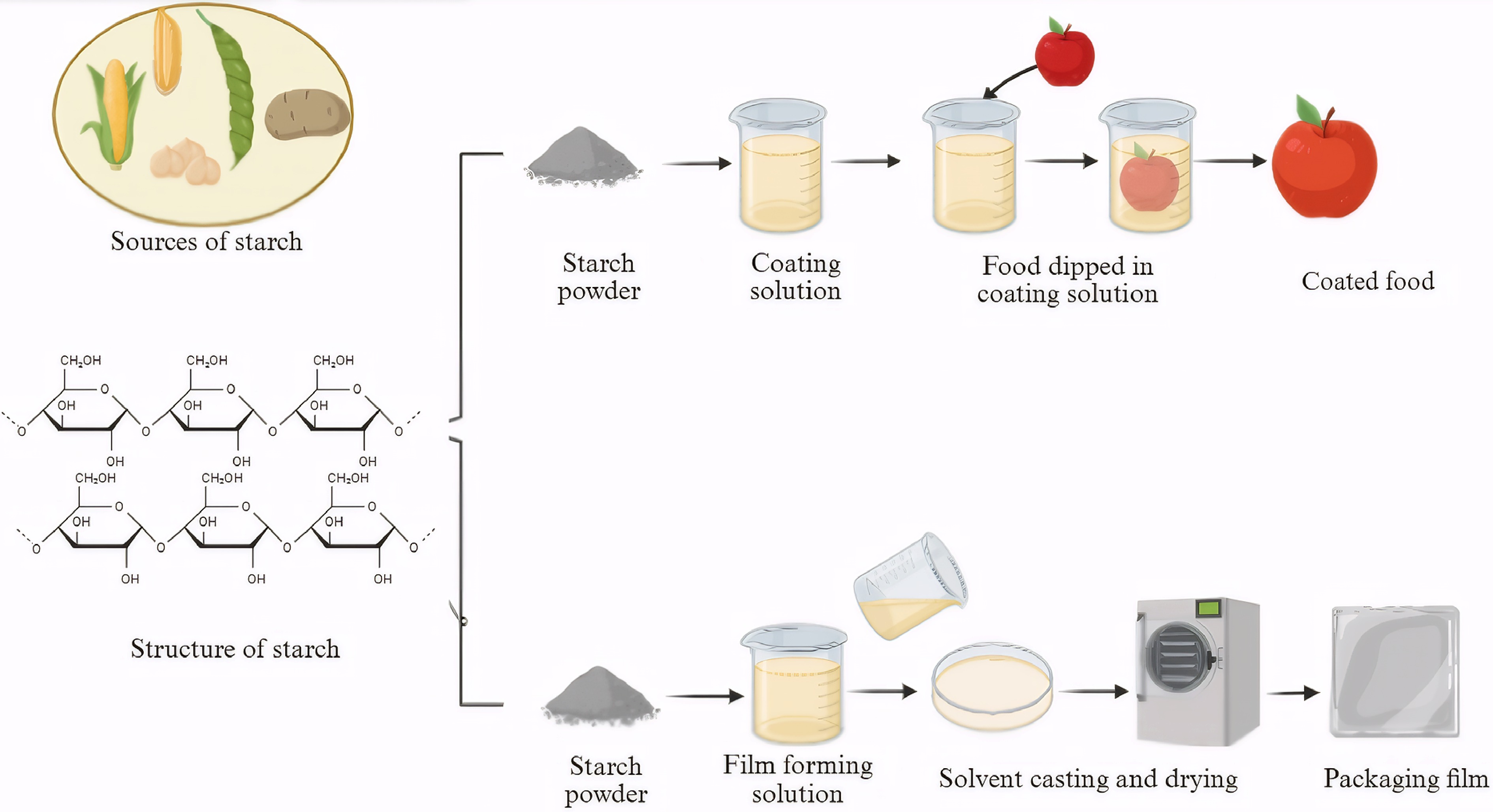
Figure 3.
Fabrication of starch-based coating and film for food application.
Development of starch-based films and coatings
-
Starch-based films could be developed by different methods based on the availability of materials, technology, and time constraints. The film developed by these different methods vary in the properties determined by the manufacturer. Starch-based films could be developed using solvent casting, tape casting, compression molding, injection molding, extrusion treatment, electro-spraying, and dry casting methods. These methods of fabrication of films and coatings are briefly discussed in the following sections.
Solvent casting is one of the most preferred methods to fabricate packaging films in a laboratory-scale setup, due to its ease and low cost. This method involves dissolving the polymer into a suitable solvent and then evaporating the solvent to peel off the film[65]. Additives like crosslinkers and plasticizers are also used to improve the strength and flexibility of the film, respectively. Solvent evaporation is carried out using a dryer. Otherwise, the solvent will be kept at room temperature according to the temperature requirement for its evaporation[66]. The evaporation process solidifies the polymer, which results in the formation of film.
Another method is dry casting, in which the solvent is not used for the polymerization of the film, instead compression and stirring are carried out to initiate the polymerization of the film. The polymer powder is then fed into a hopper and then compressed and stirred using a screw, which facilitate the polymerization process. Then, a plasticizer was added. The resultant mixture is then heated at 75–100 °C[67].
Tape casting is another method of fabricating packaging films, which is also known as spread casting or knife coating. The procedure for tape casting is almost similar to that of solvent casting. In the tape casting method, the suspension is made in the form of a slurry and kept in a reservoir, which is in turn equipped with height-adjustable blades. The height of these blades is adjusted using a micrometric screw. The slurry is deposited onto a glass or a polished metal surface, and this deposition is called a tape. The slurry is mixed evenly using a doctor's blade. The plate in which the slurry is deposited should be heat-resistant as the slurry may be heated depending on the type of material. It is then allowed to dry at room temperature or by a fan. The resultant film is then peeled off from the glass surface. Tape casting finds extensive application in producing thin films, tapes, or sheets utilized in electronics, energy storage, sensors, and advanced materials. It is specifically suitable for manufacturing ceramic tapes employed in electronic substrates, fuel cells, sensors, and membranes. Solvent casting for film preparation is used for lab-scale purposes, while tape casting is used for large-scale production of flexible films. As the name indicates, the thermo-compression method involves both temperature and pressure for the synthesis of packaging films. In this method, the starch is mixed with cross-linkers and plasticizers to form solid pellets. These pellets are then placed onto a plate, and then heat is applied. The plate is equipped with rollers that can compress the material. During this operation, thermal bonding of the components of starch takes place, which will lead to film formation[68]. The above-described four methods are commonly used to fabricate films from starch. Extrusion and molding are usually carried out for industrial purposes.
The formation of edible coatings involves several methods like film formation, dipping, spraying, brushing, fluidized bed coating, panning, overhead dripping spin coating, electrospraying, and film coating. Among them, dipping is the most common method, followed by spraying. This is because dipping is simple and inexpensive, as well as achieves high contact surface with the food. Spraying is mainly done for commercial purposes[69].
As mentioned earlier, dipping is a common method for producing edible coating, where fruits and vegetables are dipped in the coating solution for a specific time, usually between 30 s and 5 min. The excess solution is then drained off and used for further processing[70]. Dip coating offers several advantages: complete coverage, high efficiency, potential for automation, eco-friendliness, cost-effectiveness, enhanced durability, corrosion resistance, etc. It also has few disadvantages like chances of coating material buildup, requirement of careful monitoring of dipping time and temperature, etc.[71].
The coating technique has long been used in the food industry for various applications like battering, candy preparation, etc. This technique could be successfully implemented for packaging material applications. In this method, the coating solution is optimized and prepared for spraying before feeding into the reservoir. The solution should be able to disperse into fine droplets in order to prevent uneven and imperfect coating. As the food material passes through the conveyor, the solution is sprayed onto the food. This method also offers several advantages such as possible automation, easy monitoring, uniform coating, and possible multilayer coating. The major disadvantage is that it is suitable for industrial purposes as it may need sophisticated spraying equipment[72].
Electro-spraying is another novel method for producing edible coatings that depends on an electric field for coating. First, the food ingredient is dissolved in a solution. Then, a needle with a high voltage is used to pump this solution through it, which functions as an atomizer. Therefore, as the solution leaves the needle tip, the high voltage produces an electric field that causes the solution to atomize. The charged solution fragments into tiny droplets as it thins even further. The deposition pattern of these charged droplets onto food can be controlled by adjusting the airflow as they travel through the air toward a grounded collector. The size and properties of these solutions could be successfully adjusted by adjusting the voltage and the solution properties. This allows for a variety of applications, such as the protection or targeted delivery of food components enclosed in ultrathin films for preservation-controlled release, or even complex food design. Some major types of edible coating are schematically shown in Fig. 4.
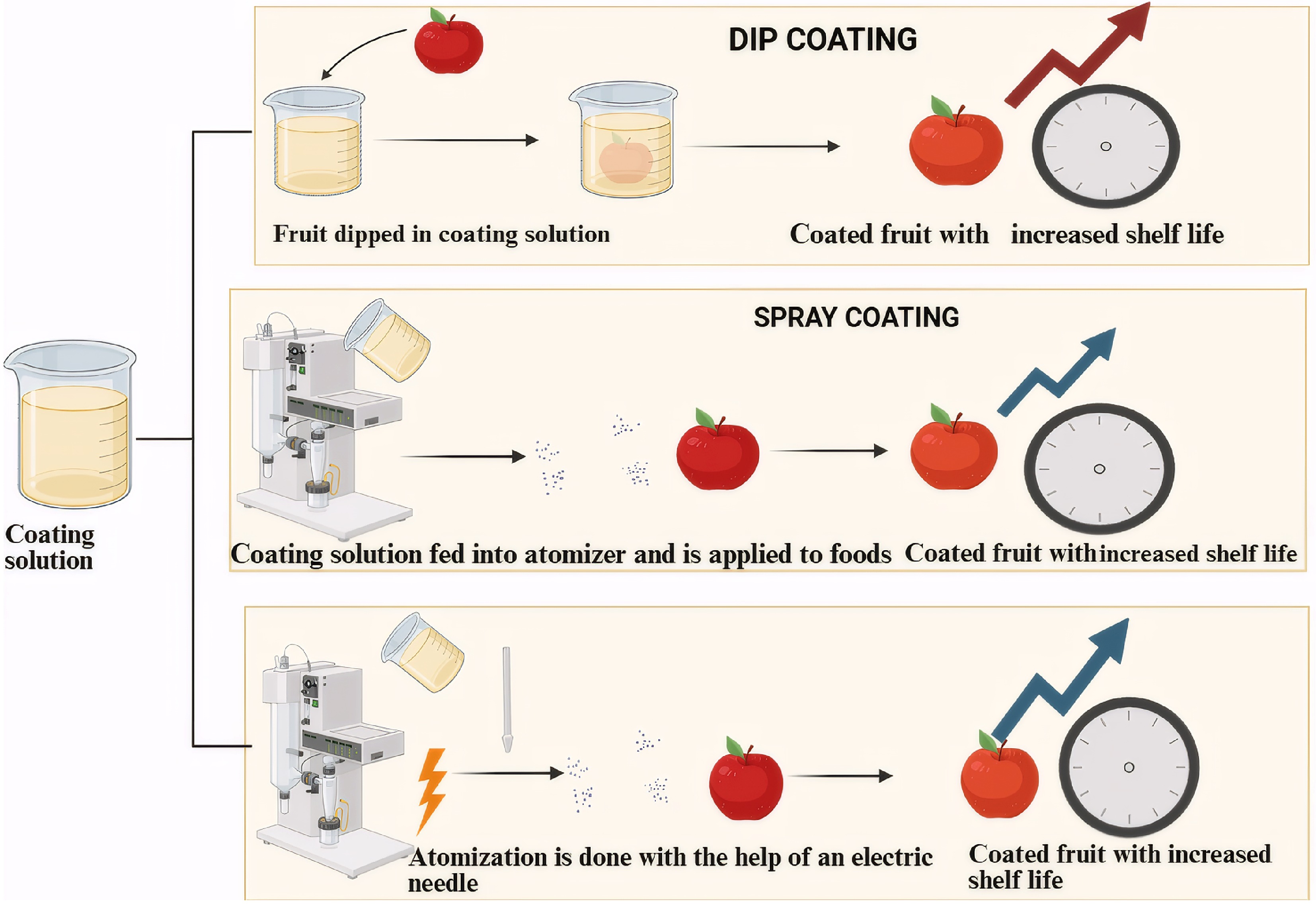
Figure 4.
Schematic illustration of some major methods of edible coating.
Properties of starch-based film and coatings
-
As food packaging materials, all the biopolymers must meet certain criteria that make them suitable for food packaging applications. These criteria may also depend on the intended application and the processing of food[73]. The starch, for the packaging application, could be obtained from different sources like potato, corn, wheat, millet, etc.[74], and all these starches may slightly differ from each other in their properties. Even when they are applied in edible coating formulations, the properties of the coatings could vary from one another depending primarily upon their sources and the food in which they are applied. The properties that are of concern for packaging films are mechanical properties, barrier properties, biodegradability, UV barrier properties, etc., while in the case of edible coatings, the major concern will be barrier properties and the compatibility of the film.
Dai et al.[75] studied the effect of different botanical sources of starch on the properties of the packaging film. In this study, starch was extracted using the chemical method from sources such as maize (MS), oats (OS), rice (RS), potato (PS), and tapioca (TS). The extracted starches were used to fabricate packaging films via solvent casting, where the starch is dispersed in water along with a plasticizer (glycerol) to form a solution. This solution is then cast onto a Teflon plate or a metal surface and then dried for an appropriate duration. After drying, the films are peeled off and analyzed for different properties. Before casting the starch, the solution should be gelatinized as required because gelatinization of starch is essential to achieve desired properties of the packaging film, including mechanical properties, surface properties, appearance, water vapor transmission rate (WVTR), and moisture content. In terms of appearance, films made from oat starch and rice starch show a slight yellow color, while films made from maize, tapioca, and potato show excellent transparency. In terms of tensile strength (TS), starch from potatoes shows the highest value (around 3 MPa), while oat starch exhibits the lowest strength (0.38 MPa). The tapioca film exhibits the highest EAB value (137% ± 5%), while the oat film has the lowest value (27% ± 5%). In terms of moisture content, the potato film has the lowest moisture content of 9.74% ± 2.22% and shows signs of low flexibility and film breakage. The maize film has the highest moisture content, measuring 22.26% ± 2.33%. For the WVTR, no statistical difference is obtained for different forms of starch. Oat starch shows a higher water contact angle (66.91°), while maize starch shows the lowest water contact angle (23.18°).
Not only the source of the starch but also the modifications it undergoes while processing play a crucial role in deciding the properties of the starch. Żołek-Tryznowska & Kałuża[76] also analyzed the properties of the starch with its changing sources and the kind of modifications it undergoes. Based on this, the starches analyzed in this study were waxy corn, cassava, sweet potato, potato, wheat, corn starch, esterified, cross-linked, and oxidized cassava starch (CS). In this study, all the starches were commercially procured from different sources and all the films were produced by the solvent casting method with glycerol as the plasticizer. The properties of the film, such as thickness, mechanical properties, transparency, amylose content, and barrier properties, were analyzed. In terms of amylose content, corn starch has the highest value, while waxy corn exhibits the lowest. The mean particle diameter was highest for potato starch and lowest for waxy corn starch. In terms of transparency, potato starch films were the most clear ones. In the case of modified starches, crosslinked starches exhibit better transparency than all the other modified starches. Films made from PS exhibit the best mechanical properties among the native starches, with TS, Young's modulus (YM), and EAB being 2.83 MPa, 7.65 MPa, and 51.66%, respectively.
As plasticizers could be a crucial factor in determining the properties of the film, the type of plasticizers used in the film preparation also plays a crucial role in determining the strength and properties of the film. Nguyen Vu & Lumdubwong[77] studied the effect of different plasticizers on the properties and behavior of the starch film prepared from mung bean starch (MBS) and CS. They used two major plasticizers, glycerol and sorbitol, to study their impending effect on the polymer properties. Various properties like mechanical properties, thermal properties, and morphological properties of the film were analyzed. These films were prepared by solvent casting. Mechanical properties such as TS, EAB, and YS were determined. Thermal properties were determined by DSC, and the molecular weight of the starch film was also determined. In the case of films using sorbitol as a plasticizer, despite having less moisture content than glycerol, it exhibits more thickness. The TS of the MBS film was found to be 45 MPa, while that of the CS film was about 15 MPa. This difference in TS is due to the higher amylose content in MBS. The sorbitol films also show a TS about 4 times higher than the glycerol films. A dynamic mechanical analyzer (DMA) indicated the presence of amorphous regions in plasticized films. Two glass transition temperatures were determined by the DSC: the first glass transition temperature (Tg1) corresponds to the plasticizer–rich phase, while the second (Tg2) corresponds to the starch-rich phase. The Tg1 of the glycerol film was −58.5 °C, while that of sorbitol was around −17 °C. The Tg2 of glycerol films ranges from −0.40 to −13.6 °C, while that of the sorbitol film was around −15 °C.
The prevailing pH condition of the starch could also significantly affect the properties of the film as pH conditions could influence gelatinization, viscosity, transparency, mechanical strength, water vapor permeability, and biodegradability of starch films. The characteristics of starch films can be modified for specific purposes by varying the pH levels at the time of film formation[78]. Sakkara et al.[79] conducted a study to examine the effect of pH on the physicochemical properties of the starch films. Maize starch was used to fabricate films via solvent casting. In this study, the varying properties of the films at different pHs of 3, 5, 7, 9, and 11, including thermal properties, mechanical properties, and surface characteristics, were analyzed. The strength of the films increases from pH 3 to 5, while showing a lower value at extreme acidic conditions (pH 3) and at extreme alkaline conditions (pH 9−11). A higher elongation at break was observed at alkaline pH, while lower pH limits the extendibility of the film. The water sorption was lower at pH 3, and it gradually increased as the pH increased. This trend continues until the pH reached 9. Then, it gradually decreased as the pH increased. There was a nearly 50% decrease in viscosity from 300 to 150 cP with an increase in pH of the starch solution from 3 to 11. The water contact angle was also measured to determine the hydrophobicity of the film. In general, films with a higher contact angle are considered more hydrophobic, while films with a lower contact angle are considered more hydrophilic. A contact angle larger than 65° is regarded as hydrophobic. Starch films fabricated with pH 3 and 11 solutions had larger contact angles than those made with pH 7, indicating that the hydrophilicity of the films varied with pH, as observed in the studies on swelling and moisture absorption. The thermal properties of the film were measured by DSC. The starch films made with pH 11 solution exhibit a peak temperature at about 110 °C, while that of the untreated powder is about 90 °C. The reason for the melting behavior of starch is the proportion of amylose and amylopectin present in it, as well as the molecular weights and moisture content. Compared to native starch, the starch at pH 11 exhibits a significantly higher peak temperature, which leads to greater stability.
From the above studies, it is clear that the properties of the starch could be affected by the existing conditions in the packaging films as well as different additives used in it. Moreover, the properties of the packaging films could also be enhanced by the addition of functional compounds such as essential oils, natural colors, antimicrobial substances, etc. These compounds could not only convert these substances into an active/intelligent packaging agent but also affect the properties of the films. Kumar et al.[5] studied the effect of oregano essential oil (OEO) on the antibacterial activity and the morphological, optical, mechanical, and barrier properties of corn starch films. The properties measured were moisture content, solubility, thickness, mechanical property, and water vapor permeability (WVP) of the film. OEO was added at different concentrations into the film-forming solution (FFS). The concentrations added were 0.3, 0.5, and 0.7 μL g−1, and the films were fabricated by solvent casting. After the addition of OEO, the opacity of the film increases from 10.86% in the control film to 16.82% in films with 0.7 μL g−1 concentration. The thickness of the films was lower for the control film (0.084 mm), and it increases with increasing concentration of OEO. The TS of the film, on the other hand, decreases with an increase in the OEO concentration. The control film exhibited a higher TS of 5.11 MPa, while it is lowest for the 0.7 μL g−1 OEO concentration films, i.e., 2.4 MPa. According to this study, the EAB of the film showed a drastic reduction; the control film showed an EAB of 64%, while the 0.3 μL g−1 concentrated film showed an EAB of 9%. The EAB gradually increases as the concentration of OEO increases, as the film with 0.7 μL g−1 concentration shows about 15% EAB. The WVP of the film also increases with an increase in oil content, with the films with a higher oil content showing an increase of almost 75% compared to the control film. The moisture content and solubility of the film also increase with the increase in the OEO concentration. Both the solubility and moisture content show a maximum difference of 3% between the control film and the film with a higher oil content. More examples of this modification are given in Table 2.
Table 2. Modifications of properties of starch by the addition of various compounds.
Type of starch Co-biopolymer Plasticizer Gelatinization temperature (°C) Remarks Ref. Corn starch -gelatin Citric acid Sorbitol 60 The fabricated film shows excellent film properties like solubility, swelling index, and water vapor permeability and mechanical properties as compared to other films. Based on the findings, it was observed that using a composite film-forming solution as a coating formulation could potentially increase the cucumbers' shelf life by up to 16 d. [80] Sago starch − Glycerol 70 The film with the highest transparency and thermal resistance was produced by the longest duration of ultrasonication. In comparison to nonsonicated film, the film's tensile strength increased by 227% and its moisture absorption decreased by 27.39% during the 5-min 25-s duration. In comparison to the nonsonicated film, the melting temperature rose by 7% following a 10-min ultrasonication. [81] Potato starch Titanium dioxide Glycerol 90 The findings showed that TiO2 nanoparticles significantly reduced the values of properties related to water (moisture uptake: 2.15%−11.18%), water solubility: 1.88%−9.26%, and water vapor permeability: 11%−34%. TiO2 incorporation resulted in a minor increase in tensile strength and contact angle as well as a decrease in elongation at film breakage. Over 90% of UV light was successfully blocked by TiO2, improving the films' opacity and white index in the process. The addition of TiO2 nanoparticles had a positive effect on the films' melting point and glass transition temperature. [82] Cassava starch Tetraethyl
orthosilicateGlycerol 70 Films made with 1.25% glycerol produced the best results; in these films, the maximum increase in tensile strength was 109%. Opacity reached a 414% increase, while water vapor permeability fell by 24%. The Young's modulus was very high for the films made with the addition of 0.50% plasticizer, indicating the formulation's potential for development in rigid biodegradable packaging. [83] Pea starch Maize starch Glycerol 85−90 The tensile strength of the composite films was enhanced by the addition of starch nanocrystals, and the highest value of tensile strength was achieved when the starch nanocrystal content was 5% (w/w). As the content of starch nanocrystals increased, there was a significant decrease in the composite films' moisture content (%), water vapor permeability, and water-vapor transmission rate. When the amount of their starch nanocrystals was 1%−4%, the starch nanocrystals were evenly distributed throughout the composite films, producing a comparatively compact and smooth film surface as well as improved thermal stability. [84] Rice starch (RS) Carboxymethyl chitosan (CMCh) Glycerol 85−90 When 50% w/w of CMCh was added to the RS matrix, the tensile strength and elongation at break of the RS–CMCh blend film increased by 35% and 28%, respectively. The RS–CMCh films' thermal stability was enhanced by the addition of CMCh, including 12%, 33%, and 50%. When compared to the RS film, the w/w CMC h in the blend films increased the swelling ratio by approximately 850%, 3985%, and 3404% at 24 h, respectively. With an increase in relative humidity, all of the films' oxygen permeability increased. [85] -
The application and utilization of starch in food packaging have garnered significant attention recently owing to its biodegradability, renewability, nontoxicity, and low cost. In the domain of packaging, starch is successfully emerging as a sustainable solution for the burgeoning plastic waste crisis due to its excellent eco-friendly attributes. By incorporating starch into the packaging film formulations, researchers worldwide have successfully developed biodegradable and compostable packaging films. These starch-based films exhibit excellent barrier, mechanical, and optical properties, as well as compatibility with different food products, making them an excellent alternative to petroleum-derived plastic films offering both product protection and sustainability. Starch film has found excellent applications in both intelligent and active packaging[79].
Starch also finds extensive application in the production of edible coating solutions responsible for increasing the quality and safety of food, ultimately leading to the extension of its shelf life. Edible coatings, which consist of starch and other natural compounds, could act as a protective barrier for perishable food against different contaminating agents like microbes and oxidative deterioration. This novel approach in food preservation and packaging not only extends the shelf life but also minimizes the usage of synthetic preservatives in the food. This also increases the visual appeal of the food that could ultimately lead to customer satisfaction.
Even though starch exhibits several properties that could be used in conjunction with packaging and edible coating applications, it has many drawbacks due to factors such as those contributing to its excellent film-forming properties, e.g., hydrophilicity. The high hydrophilic nature of the starch due to its extensive hydroxyl groups in its structure could also contribute to high WVP as well as external moisture absorption. This could sometimes lead to weight loss of the product as well as moisture absorption in high-moisture foods that could lead to shrunken and soggy products, respectively. The modification of the starch by the addition of various substances may not substantially overcome this limitation, which might limit the applicability of starch to low-moisture products[86]. In addition, starch has inherently weak mechanical properties, which limit its application without any modification by the addition of fillers. These disadvantages could be serious if native starch films are handled without prior care. The retrogradation while cooling also increases the structural incompetency of native starch in its active and intelligent packaging applications[87,88]. The edible coating application also faces structural challenges as the structure of starch could vary according to the processing condition that is employed in the extraction of starch. This could potentially lead to various deformities and nonuniformity when starch solution is applied in the form of edible coating[89]. As mentioned earlier, to convert the starch into an FFS, it has to be gelatinized first, which includes application of heat. This, when applied on a large scale, could lead to a significant change in energy consumption compared to other polysaccharide counterparts of starch, such as carrageenan, pectin, etc. These substances are readily soluble in water in contrast to starch, which needs temperature aid for its proper dispersion in water. Added to this, the mandatory structural modification also increases the cost of fabrication of a biodegradable starch film with desirable and ideal properties.
Some of the real-time studies regarding the application of starch-based films and coatings in the packaging studies are given below. As mentioned earlier, starch is used in both active and intelligent packaging applications.
Active packaging applications
-
Based on European Regulation (EC) No. 450/2009, active packaging is the deliberate addition of substances that interact with the food and release or absorb compounds to and from the packaging material (European Commission, 2009). Active packaging technology originates from the idea that the packaging should not only serve traditional passive purposes such as protection but also actively improve the performance of the food material such as shelf life enhancement and additional functional properties[90]. Active packaging makes the packaging purpose more natural and recyclable. Hence, the use of naturally occurring substances such as starch could enhance the performance of the packaging material without compromising the ecological constraints. They could also increase the scope of minimally processed food as well as substantially reduce the use of synthetic preservatives. Starch could act as an excellent polymer matrix for the fabrication of biodegradable packaging films[91]. These properties make starch an excellent source of biopolymer for the synthesis of packaging material. It also finds wide applications in the form of edible coatings that could also function as an active packaging source[92].
Babapour et al.[93] incorporated zinc oxide nanoparticles and fennel essential oils into the packaging film fabricated using potato starch as the base matrix. The packaging film was fabricated by the solvent casting method using different concentrations of fennel essential oil (1%, 2%, and 3 % w/v) and different concentrations of ZnO nanoparticles (1%, 3%, and 5%). Pistachio spices were used to evaluate these films' applicability to extend the products' shelf life. The sensory properties, physiochemical properties, functional properties, and the shelf life of the pistachios were evaluated. A 7-point hedonic scale was used to evaluate the sensory profile of pistachios on the 1st day and 5th day of storage. In both the sensory and antifungal tests, control pistachios show inferior quality, while the starch-packaged pistachios show superior quality. In an antifungal study conducted by the well diffusion method, the control sample shows the highest fungal growth with 3.31 log cfu/g, whereas the starch film loaded with 3% oil and 5% ZnO nanoparticles showed the lowest count of 1.67 log cfu/g (almost 50% reduction in the fungal load). Also in the sensory tests, control pistachios scored lowest, while the starch film loaded with 3% oil and 5% ZnO nanoparticles scored higher. As the fungal growth is proportional to aflatoxin production, the control pistachios show the highest content of aflatoxin, while the film loaded with 3% oil and 5% ZnO nanoparticles showed the lowest aflatoxin content.
Khairuddin et al.[94] explored the technology of solvent casting to synthesize a packaging film using hydroxyethyl cellulose blended with wheat starch incorporated with thyme essential oil. Different properties like the mechanical, morphological, thermal, and functional properties of the film were analyzed using different analytical tools. The enhancement of the starch film with the essential oil successfully uplifted the TS and the thermal degradation temperature. The active packaging was developed mainly to enhance the shelf life of the foods. This could be achieved by imparting antimicrobial properties to the film. Thyme essential oil consists of compounds like thymol which exhibit strong inhibiting effect against certain microorganisms. The films were impregnated with 0.5%, 1%, 1.5%, 2%, and 2.5% w/v of thyme essential oil. The antimicrobial activity of the modified film against Gram-negative microbe Escherichia coli and Gram-positive strain Bacillus subtilis was tested. The antifungal activity of the film against fungi Aspergillus niger was also monitored. This activity was quantified by measuring the diameter of zone of inhibition. As expected, the antimicrobial activity increases with an increase in oil concentration. As a result, the film loaded with 2.5% thyme oil shows the largest diameter of inhibition for both E. coli and B. subtilis (43.7 and 48.7 mm, respectively). In the case of fungi, 1.5% loaded oil shows the largest diameter (10 mm) of zone of inhibition.
Hiremani et al.[95] examined the different properties of packaging films fabricated from a combination of matrix made by polyvinyl alcohol-oxidized maize starch (PVA/OMS) incorporated with piper betel leaf extract (BLE). The films were fabricated by solvent casting. The impact of BLE on the PVA/OMS blend's structural, thermal, mechanical, morphological, optical, antibacterial, and antioxidant properties was effectively investigated using various characterization techniques. The interaction of hydrogen bonds between the blend films' constituent parts improved the mechanical characteristics, thermal stability, miscibility, smooth surface morphology, and UV-blocking capabilities of the latter. In addition, the produced films exhibited hydrophilicity, solubility in water, and biodegradability. After adding BLE, the oxygen permeability and WVTR of the blend films increased. The functional properties such as antioxidant and antimicrobial properties of the films were also analyzed using the DPPH method and agar well diffusion method, respectively. The results suggested that the addition of BLE could substantially increase the antimicrobial activity of the film, especially with increasing concentration of the BLE. The antimicrobial activity was higher against Gram-positive bacteria, as indicated for Staphylococcus aureus, than against Gram-negative bacteria. The antioxidant activity of the film also shows increasing activity with increased BLE content. With the increasing concentration of the BLE, the antioxidant activity also shows an increase of 5%, where 2% BLE shows 18% activity, while 4% shows 36% activity.
Thakur et al.[96] formulated an edible coating with starch as the base material. This edible coating is applied to extend the shelf life of Cripps pink apple under different temperature conditions. The edible coating solution was formulated by blending rice starch, glycerol, fatty esters, and sucrose to form a coating solution, which is then sprayed onto the apple. The coated apple is then analyzed for various parameters such as titratable acidity, total soluble solids (TSS), weight loss, and sensory properties. The weight loss in the fruits is severely affected by temperature in coated fruits. The coated fruits show better retention in weight at 5 °C storage temperature (about 1% weight loss in 5 weeks) than the apples kept at 20 °C with coating (about 2% weight loss in one week). The firmness of the coated fruit was higher than that of the control fruit, which could be attributed to the controlled moisture loss from the coated fruit. The firmness shows a difference of 2 N/m and was also dependent on the temperature conditions. There were no significant changes in the total phenolic content (TPC) concerning coated and control fruits as it is tightly linked to the inherent content of the fruit. The antioxidant activity of the coated fruit was also higher than the control fruit irrespective of the temperature conditions.
Yadav et al.[97] utilized mango kernel starch extracted by chemical methods, which is then incorporated with lemongrass essential oil to produce an active edible coating. This coating extends the shelf life of the guavas and helps monitor various chemical, physical, and sensory changes that took place in guavas. Different concentrations of essential oil (0.25%, 0.5%, and 1%) are applied into a solution of 2% mango kernel starch. The coating was applied to guava by dipping method. The coated samples and control samples were investigated for properties such as acidity, TSS, firmness, TPC, and antifungal activity. The fruit was monitored visually for the changes in appearance. Regarding yeast and mold count, the control samples show a higher yeast load of about 7.62 CFU/g at the 6th day of storage, while the coated sample with 1% oil and 0.5% shows no sign of yeast and mold count even on the 6th day of storage. In terms of visual appearance and acceptability, the uncoated control guavas were unacceptable and developed a black colour on the 6th day of storage, while the guavas coated with 0.5% oil and 2% starch were acceptable even on the 9th day of storage. This study also extends the possibility that starch could be an ideal material to formulate edible coating for fruits.
Intelligent packaging applications
-
In short, intelligent packaging means packaging that performs intelligent functions. Intelligent packaging enables the packaging material to monitor and communicate the conditions of food inside it to the end consumer. This system not only benefits the end consumer but also the personnel involved in quality assurance, supply chain, and manufacturing[98]. According to Jang & Won[99], intelligent packaging could technically be defined as the packaging system that senses, communicates, and monitors the conditions of packaged food to give information about food quality, safety, and the history of a product during transport and storage. The novelty behind intelligent packaging lies in its ability to communicate the consumer about the prevailing condition of the food inside the package, history of the package, and the shelf-life of the food. Ultimately, this type of package could successfully reveal the conditions prevailing inside the headspace of the package[100]. Different starches that could be extracted from different sources like cassava, potato, corn, etc. could be used to formulate FFS with natural color indicators that could indicate the freshness of the food. These indications could be in the form of a color change, the relative position of certain dyes, etc.[101].
Starch could be an ideal material for incorporation to detect color-based changes occurring in the food matrix. This is attributed to its transparent nature coupled with its solubility in water[102]. In addition, it is odorless and tasteless, facilitating its application in edible coating. The studies regarding the application of starch as a matrix for the fabrication of intelligent packaging films usually involved the incorporation of a colorimetric indicator extracted from a natural source into the starch matrix by different methods, particularly solvent casting. However, the incorporation of these indicators may reduce the mechanical and barrier properties of the film that in turn affects the structural integrity of the developed films. This can be overcome by the addition of materials such as nanofillers, essential oils, etc. These not only improve the above-mentioned properties but also impart functions like antimicrobial and antioxidant capacities. Some examples of these are cellulose nanocrystals, thyme essential oils, bacterial nanocellulose, chitosan nanoparticles, etc.[103,104].
Choi et al.[105] developed an intelligent packaging system with agar/potato starch as the base material. The color-indicating capability of the film is achieved by the addition of natural dye extracted from purple sweet potato. The extract from purple sweet potato consists of anthocyanin, which is an excellent indicator that could change the color on its own based on the prevailing pH conditions inside the package. The applicability of the package in the intelligent packaging application is validated by using the packaging film for packing pork meat. Pork, upon spoilage, undergoes proteolysis that could release nitrogenous compounds inside the meat. The cumulative buildup in the nitrogenous compounds could increase the pH of the package, which could be reflected by a color change in the natural indicator. This could serve as a direct indicator of the spoilage of meat. In this study, anthocyanins extracted from the purple sweet potato act as a natural indicator that could change color upon exposure to elevated pH conditions. The packaging film was fabricated by the solvent casting method, where the starch and agar are blended to form FFS, and different quantities of anthocyanin extract were added into the FFS. Initially, when the pH is normal for pork (5.2), the indicator shows its natural red color. As the pH increases above 6.1 after 20 h of storage, the red color of the indicator turns pink. As the storage continues up to 48 h, the pH of the pork also increases to 7.2, making the pork basic. This change in pH is reflected by the color of the indicator, which changes from pink to green, that clearly indicates the spoilage of pork meat.
Koshy et al.[106] developed an intelligent packaging film by incorporating Chinese bayberry extract, which is rich in anthocyanins, to the film made by using CS. Varied concentrations of bayberry extracts (1%, 2%, 3%, and 4%) were added into the FFS of CS and is cast to form the film. This film is then used to monitor the freshness of pork. As mentioned earlier, pork undergoes drastic pH changes during spoilage, due to the breakdown of proteins. This breakdown of protein could result in the piling up of nitrogenous compounds that makes the pork basic. The total volatile base nitrogen value (TVB-N) increases from an initial level of 8 to 17 mg/100 g in 24 h, which is unacceptable as per Chinese standards. This is visually indicated by a color change in the film from purple to pink. As the TVB-N value reaches 34 mg/100 g, which is an indicator of critical spoilage in pork, the color of the indicator changes from pink to brownish.
Erna et al.[107] synthesized an intelligent packaging film from corn starch with incorporated anthocyanin extracted from dried roselle calyx. The film undergoes color change under different pH conditions, i.e., under acidic conditions (pH 2−6), the film appears bright red in color; for pH 7−11, the film exhibits bluish-gray in color, while above 11, it appears yellowish-green. Therefore, films made using the solvent casting method could be a prospective applicant in the meat spoilage monitoring system. All these experimental evidences suggest that starch could be a potent tool in developing intelligent packaging system, especially because of its high compatibility and biodegradability. Some important studies and their details regarding the application of starch in packaging and edible coating application is given in Table 3, and an illustration regarding the application of starch in intelligent packaging is given in Fig. 5. On the other hand, the overview of starches in food application is schematically illustrated in Fig. 6.
Table 3. Some applications of starch-based film and coatings in active and intelligent packaging.
Base polymer Type of modification Type of packaging Applied food system Functional compound/
indicatorRemarks Ref. Yam starch Active packaging Packaging film Pork Eugenol Yam starch was used as a base material for the synthesis of an active packaging film, where eugenol is used as the functional component. The incorporation of eugenol imparts antibacterial function to the film. This packaging film is used to pack fresh cuts of pork. The shelf-life study showed that the film could enhance the shelf life of pork by 50%. [106] Corn starch Active packaging Packaging film Ground beef Red cabbage extract (Anthocyanin) and sweet whey from bovine milk. Solvent casting method was used to fabricate packaging films using corn starch with glycerol as the plasticizer. This packaging film is used to pack ground beef meat. Red cabbage extract consists of anthocyanin, which acts as a functional material and transforms the normal starch film into an active packaging system. Film blended with 64% red cabbage extract and 4% sweet whey was found out to be most effective in preserving the freshness of beef as the beef covered with the film shows minimal difference in pH. [107] Cassava starch Active packaging Packaging film Food packaging application Rosemary extract (RE) RE was added at varying concentrations into the cassava starch film-forming solution. As the RE are rich sources of polyphenols, the antioxidant activity of the film also increases substantially, which could lead to a potential extension in the film's shelf life. [108] Potato starch Active packaging Packaging film Beef Green tea extracts The green tea extract and the synthetic antioxidant agent butylated hydroxy toluene (BHT) were added into the film made from the potato starch. One of the major indicators of the oxidation of meat is the formation of metmyoglobin, as these pigments are the oxygenated form of myoglobin. The metmyoglobin formation was monitored along with the TBARS (thiobarbituric acid reaction assay) value as the latter is an indicator of lipid oxidation. The meat packed with the modified starch film shows a lower value for both metmyoglobin and TBARS value. The meat with normal packaging shows 50% metmyoglobin formation, where the modified packaging shows 44% metmyoglobin formation. The results were obtained after the meat was stored for 10 days. [109] Potato starch Intelligent packaging Packaging film Banana Tea polyphenol Commercially acquired tea polyphenols were added into the film-forming solution containing potato starch as the base polymer. The polyphenols could impart antioxidant properties to the packaging film, which when used to pack bananas could inhibit the browning process. The browning process in bananas could severely affect the sensory properties like color, smell, and flavor. In this study, the browning for the fresh cut bananas covered with the starch film was significantly lower as compared to the control. The L value as measured by the LAB colorimeter shows that packed bananas have a higher L value due to the reduced browning. [110] Cassava starch-chitosan Intelligent packaging Packaging film Shrimp Anthocyanin The extract from the peel of the red dragon fruit consists of anthocyanin, which has the potential to change its color according to the change in pH condition of the film. The extract was incorporated into the film by solvent casting. The film is then used to monitor the freshness of the shrimp. As the pH of the shrimp increases upon storage, the color of the film changes from red to pinkish-yellow. [111] Cassava starch-PVA Intelligent packaging Packaging film Pork Anthocyanin Natural color indicators were extracted from mangosteen rind (MRE) and grape seed extract (GSE). Both these are rich sources of anthocyanin, and these anthocyanins could change the color upon change in the pH. The starch/PVA film was incorporated with GSE, and MRE was fabricated by the usage of solvent casting method. These films were used to pack shrimps, and the corresponding color changes were monitored. As the pork undergoes spoilage, the protein compounds will be broken down, increasing the nitrogen content of the pork. This makes the pork basic, and this drastic change in pH is being reflected in the film. [112] Sago starch Intelligent packaging Packaging film Food packaging Red cabbage anthocyanin extract Different pH buffers were used to study the pH responsiveness of the smart film fabricated by the usage of sago starch with incorporated red cabbage anthocyanin (RCA). The film shows excellent color responses to the changing pH according to the changing buffers. The color response of the film was tested against different pH 3, 5, 9, 11, and 13. The red color of the film changes from red to reddish-purple as the pH increases from 3 to 7. The purplish color also changes to a blueish hue as the pH attains a high basic value. [113] Mango kernel starch Active packaging Edible coating Tomato Sorbitol and glycerol Edible starch extracted from mango kernel was used as an edible coating material, which is incorporated with sorbitol and glycerol as the plasticizer. The starch edible coating could delay the ripening process of tomatoes by 20 d when kept at 20 °C. The edible coating could create a semipermeable membrane around the tomato that could alter the respiration rate of the tomato, thus delaying the ripeness. [114] Rice starch Active packaging Edible coating Cavendish banana Sucrose esters Edible coating for the Cavendish bananas could successfully enhance the shelf life of the bananas by 6 d. The control sample, with bananas without the coating, shows a shelf life of 6 d before it deteriorates by showing changes in texture, color, and taste. The bananas coated with the starch show a shelf life of 12 d as it could substantially reduce the respiration rate of bananas. [115] Rice starch Active packaging Edible coating Plum fruit i-carrageenan with sucrose esters The rice starch blended with sucrose esters and
carrageenan was used to formulate edible coating to prolong the shelf life of the plums. The plums without the coating show a shelf stability for 2 weeks and the spoilage starts. Meanwhile, the plums with starch edible coating display a shelf stability of around 3 weeks.[116] Cassava starch Active packaging Edible coating Cagaita and manga Babbassu flour The edible coating that is fabricated from the starch solution was applied to two Brazilian tropical fruits, cagaita and mangaba. The coated fruits show a decrease in the shrinking rate of 20% compared to the uncoated ones. The coated fruits also show better color retention than the uncoated ones when measured in a LAB color system. [117] Avocado seed starch Intelligent packaging Packaging film Chicken breast meat Chokeberry pomace extract The film-forming solution was prepared from mixing of starch extracted from Avocado seeds as the base matrix and glycerol as the plasticizer. Chokeberry extract was added at varying concentrations (2.5%, 5%, and 7.5 %), and the extract was used as a colorimetric indicator to monitor the freshness of the chicken. The colorimetric indicator shows good response to the change in pH conditions, and this property could be effectively utilized in the spoilage monitoring of chicken. As the chicken deteriorates, the microbial load increases and there will be a drastic change in the pH of the chicken. During the spoilage, the pH of the chicken changes from 5.65 to 7.27, and this is clearly indicated by the shift in the color of the film from red to yellow color, which is visible to the naked eye. [118] Sago starch Active packaging Packaging film Bell pepper Tannic acid along with nanocellulose An active biodegradable packaging was developed with the starch extracted from the sago as the base material. The different properties like mechanical, physical, and functional properties are altered by the addition of nanocrystals fabricated from cellulose, and the antimicrobial feature could also be enhanced by the addition of tannic acid at varying concentrations of 0, 0.25, 0.5, 0.75, and 1.0 % w/w. The fabricated packaging film was used to monitor the shelf life of bell peppers, and it was observed that the bell peppers wrapped with tannic acid-nanocellulose-incorporated starch film show significant enhancement in the color retention and the weight loss of bell peppers. The control film could only preserve the freshness of the packaging for a duration of less than 7 days where they find significant weight loss (55%), whereas the developed active packaging film shows weight retention up to 12 days (7%). [119] Potato peel
starchIntelligent packaging Double-layered packaging films Shrimp Red plum anthocyanins and citral emulsion with bacterial nanocellulose A double-layered packaging film was developed by the incorporation of bacterial nanocellulose and citral emulsions as the first layer. The outer layer is fabricated using potato peel starch and red plum anthocyanin, in which anthocyanin act as the colorimetric indicator. The first layer is for augmenting properties like strength, barrier properties, etc., whereas the outer layer is for the indication of spoilage of the shrimp. The film shows excellent color-changing properties whenever there is a shift in the pH from 2 to 12. The color of the film changes from red to greenish shades when the pH changes from acidic to basic conditions. [120] 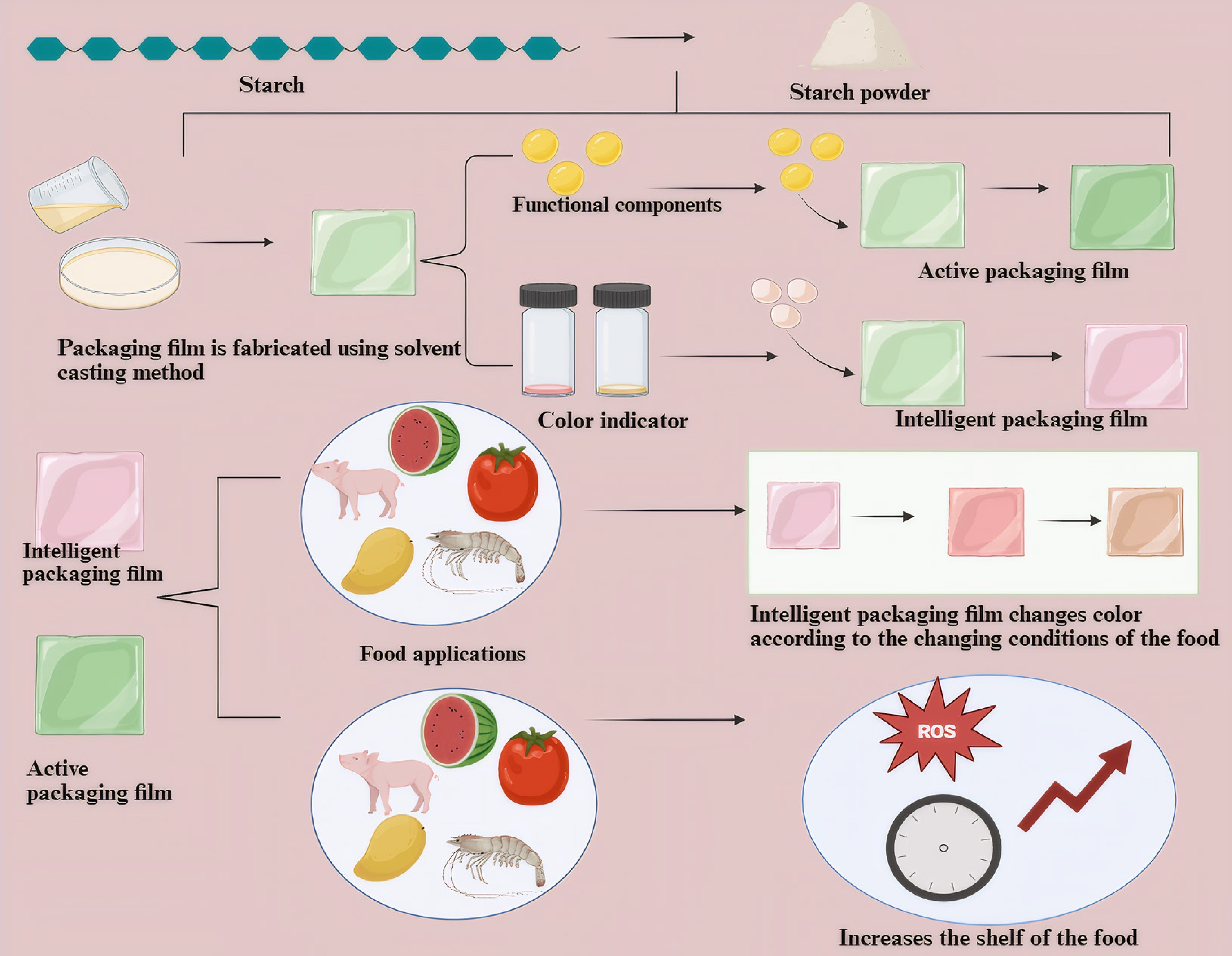
Figure 5.
Applications of starch in active and intelligent packaging technologies.
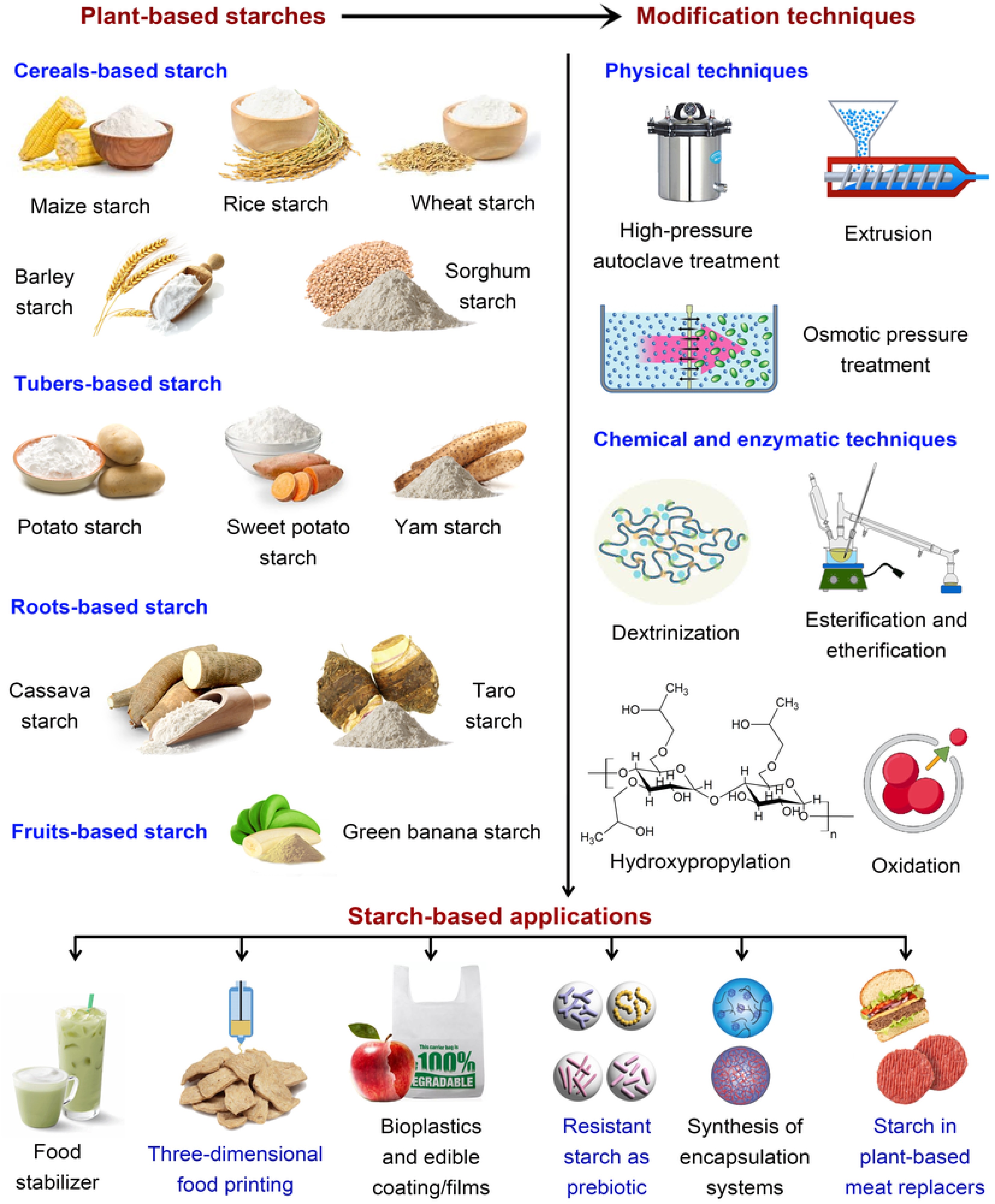
Figure 6.
Different applications of plant-based starch[121].
Prospects for scaling up and industrial applications
-
In addition to these lab-scale innovations, different companies have started to adopt starch as a viable and futuristic alternative to petroleum-based packaging materials. These innovations are mainly driven by sustainability demands and regulatory pressures. Some companies have adopted modified starch packaging materials to fabricate overwrapping films, carrier bags, food trays, and cling wrap[122]. Chi et al.[123] indicated that the solvent casting technology, which is used extensively worldwide for the fabrication of films, is limited to lab scale due to its prolonged drying time, which is not feasible for a packaging manufacturer. This scaling-up issue could be partially tackled by the extrusion technology where the starch could be modified by the addition of the matrix compounds like Poly lactic Acid (PLA) to form a mixture that could be extruded to form a packaging film and could be carried out industrially. But the uniformity and transparency of this film should be optimized for its future applications. The shear thinning property and molecular weight also play an important role in ensuring transparency and continuity in producing films in larger quantities. At low shear rates, high viscosity of starch could prevent sagging, which could ensure a smooth film formation, while at high rates, the viscosity substantially reduces, which makes it easy to pump, spray, and be used in edible coating lines. Thus, shear rate balancing is one of the most critical factors in determining the suitability in scaling-up of the packaging film. The study also demonstrates that high-molecular-weight starches could produce uniform, strong films, whereas low-molecular-weight starches could produce fragile, disoriented films. Thus, balancing out these factors could affect the scaling-up of the starch.
As mentioned in the literature, one of the most antagonistic properties of starch that could hinder its large-scale application is the significant hydrophilic property. If the hydrophilicity can be compromised by the addition of certain hydrophobic additives, there will be a partial reduction in packaging difficulties upon using starch as a primary packaging material. Cheng et al.[124] have effectively combined the hydrophilic property of the CS with the hydrophobic property of the beeswax in order to fabricate a cohesive film, which shows excellent potential for scaling-up of the production of a biodegradable film. The beeswax-starch film was manufactured using the extrusion technology, where the mixture along with glycerol is fed into a twin screw extruder and is extruded. The extruded film with 9% beeswax at 130 °C shows a water contact angle of 106 °C coupled with excellent hydrophobicity and barrier properties. The behavior of starch-beeswax complex shows variability along with temperature fluctuations. At lower temperatures, they stabilized inside the applied gelatin to derive lower hydrophobicity, whereas at elevated temperatures, starch plasticization increased and gelatin interactions destabilized beeswax, which led to the migration of beeswax toward the surface of the film. This led to the enrichment of the surface of the film with waxy beeswax coatings, which enhanced the hydrophobicity of the starch-based packaging material. The study concluded that co-extrusion with the hydrophobic beeswax will be promising in the future for starch films in packaging applications.
-
As mentioned earlier, starch as a packaging material faces several challenges owing to its several inherent functional properties especially related to its reaction with water. The hydrophilic nature of the starch with its abundant reactive hydroxyl group can serve as a site of moisture absorption that could lead to soggy products. This could limit its applications in low-moisture foods. Compared to others, starch is a mechanically weak polysaccharide, which leads to the production of weak and brittle packaging films. They also have poorer tensile properties compared with conventional plastics, limiting load-bearing and sealing performance. This elevates the risk of fractures and fragmentation while handling the packaging materials synthesized from starch-based materials. This leads to the mandatory cross-linking and filler modification in starch, which could again lead to amplified expenditure for starch-based packaging films[122,123]. Starch also has a tendency to crystallize and retrograde when subjected to different processing temperatures. The variability of starch with source has also been considered a potential challenge that needs to be resolved for using it as a futuristic packaging material[124].
In addition, similar to all other biodegradable natural packaging materials, the extraction of starch as well as the fabrication of the packaging film is still popular on a laboratory scale. This scalability issue has been criticized for biodegradable packaging materials, including starch, when they are being compared with the low-cost petroleum-based packaging plastics. All these challenges have to be addressed in order to condition starch as a prospective and feasible material for packaging applications[125].
-
Starch-based biodegradable packaging is emerging as a promising alternative to conventional petroleum-based plastics. These materials are recommended for their environmental friendliness, originating from renewable sources and being biodegradable, which could help mitigate plastic pollution. Despite their good film-forming abilities, challenges such as cost-competitiveness with traditional plastics and limitations in water vapor barrier properties persist. The future of starch-based packaging is promising, with ongoing research aiming to enhance its functionality through blending with other biopolymers, forming composites, and exploring innovative preparation methods. These advancements seek to improve mechanical strength, water resistance, and overall performance. In addition, there is potential to develop effective and sustainable bio-based coatings for starch-based packaging. Such coatings could enhance water vapor barrier capabilities, thus prolonging shelf life and improving functionality. As consumer demand for sustainable packaging increases and regulatory pressures on traditional plastics increase, starch-based biodegradable packaging is poised for significant expansion. Continued research and development efforts focused on reducing costs, enhancing performance, and developing efficient bio-coatings will be crucial in driving widespread use of this technology, leading to a more sustainable future for packaging.
None.
-
The authors confirm their contributions to this study as follows: data collection, investigation, and preparation of the initial manuscript draft: Ramadas BK; literature review and preparation of the initial manuscript draft: Pillai ARS; conceptualization, project administration, validation, visualization, supervision, reviewing, and editing: Roy S. All authors reviewed the results and approved the final version of the manuscript.
-
The data generated or analyzed during this study are included in the published article, and further inquiries can be directed to the corresponding author.
-
The authors declare that they have no conflict of interest.
- Copyright: © 2026 by the author(s). Published by Maximum Academic Press on behalf of Nanjing Agricultural University. This article is an open access article distributed under Creative Commons Attribution License (CC BY 4.0), visit https://creativecommons.org/licenses/by/4.0/.
-
About this article
Cite this article
Ramadas BK, Pillai ARS, Roy S. 2026. Advances in starch-based edible films and coatings for food packaging applications: a review. Food Materials Research 6: e011 doi: 10.48130/fmr-0026-0011 

Advances in starch-based edible films and coatings for food packaging applications: a review
- Received: 31 December 2025
- Revised: 30 March 2026
- Accepted: 07 May 2026
- Published online: 20 August 2026
Abstract: Recently, food preservation and food quality have received increasing attention worldwide. There is growing interest in edible food packaging for preserving food. Edible films and coatings are better alternatives to synthetic fossil fuel-based packaging materials. Bio-based polymers originated from natural sources are considered environmentally friendly. In this context, starch as a suitable naturally produced polysaccharide-based biopolymer is considered one of the potential alternatives to synthetic polymers. Starch is abundantly available, cheap, water-soluble, nontoxic, and biodegradable, and is also known for its good gel- and film-forming properties. Starch-based film and coating activated with functional ingredients find application in modern (active and intelligent) food packaging. In addition to the several reports published on bioactive compound-added starch-based packaging, in this review, we focus on starch-based edible films and coatings. The extraction process of starch and its important properties are briefly discussed. Furthermore, the preparation and properties of starch-based edible films and coatings were also debated. Moreover, the application of starch-based films in active and intelligent food packaging application is also discussed.
-
Key words:
- Edible packaging /
- Films and coatings /
- Starch /
- Food preservation /
- Shelf life, Smart packaging