












-
The world population is estimated to hit 9.7 billion in 2050, a demographic change that poses a major challenge to global food availability and requires the urgent adoption of sustainable food production practices[1]. Dependence on conventional animal proteins is increasingly associated with severe ecological degradation, such as major greenhouse gas (GHG) emissions, deforestation, and inefficient use of natural resources[1]. To illustrate, producing 1 kg of animal protein requires roughly 100 times more water than producing an equivalent amount of grain protein[2,3]. In addition to these environmental costs, intensive livestock production is linked to elevated health risks, including the emergence of zoonotic diseases (e.g., COVID-19 and Nipah virus) and the growth of antimicrobial resistance (AMR), which together were linked to over 1 million deaths in 2021 alone[4].
Edible insects (EIs) have been developed as an alternative, sustainable protein source for both humans and animals in response to these challenges[5]. Insects are the most abundant animals on Earth, with an evolutionary history dating back to more than 400 million years[6]. Their exceptional adaptability allows them to thrive in nearly every ecosystem, including deserts and polar regions, and an estimated 5−8 million species have yet to be identified[7]. The order Coleoptera (beetles) alone accounts for roughly 38% of all described insects and 10% of all known animal species, illustrating the scale of biodiversity still to be explored[8].
Insect farming represents a fundamentally different approach to food production, with substantially reduced environmental impacts relative to traditional livestock. Insects convert feed into protein efficiently; for example, mealworms have been reported to produce 6−13 times less CO2 per gram of protein than beef cattle[9]. In addition, many species can be reared on organic waste streams, enabling a circular economy in which food waste is converted to high-quality nutrients without substantial additional land and water use[10,11].
EIs are considered a nutritional powerhouse, providing high-quality protein, essential fatty acids, and micronutrients, including vitamin B12, iron, zinc, and magnesium[12]. Their protein content can match or exceed that of conventional meat such as beef or chicken[13]. Certain species, including grasshoppers and crickets, have also been reported to contain more than three times the antioxidant concentration of orange juice, suggesting potential benefits for the management of non-communicable diseases[14,15].
Although entomophagy (the consumption of insects) is a time-honored dietary practice for an estimated 2 billion people across roughly 128 countries, it faces considerable resistance in Western markets[16,17]. Psychological barriers such as neophobia and disgust remain common[18]. However, processing technologies, including the development of insect-based flours, protein isolates and snack products, are beginning to shift consumer perceptions by reducing the visual and sensory salience of the insect origin[19]. In India, entomophagy is a well-established cultural tradition among several tribal communities, with approximately 255 edible species recognized nationally, especially in the northeast states of Assam, Nagaland, and Manipur[20]. While the potential of EIs is evident, the industry must contend with fragmented regulatory systems and safety concerns, particularly allergenicity in individuals with shellfish allergies owing to protein cross-reactivity[21,22].
Rationale and novelty of the present review
-
The present review distinguishes itself from previous work in three ways. First, rather than summarizing nutritional, environmental, and economic evidence in isolation, it applies an integrated six-dimension analytical framework linking nutritional quality, environmental sustainability, economic viability, regulatory frameworks, consumer acceptance, and technology readiness (Fig. 1) to evaluate EIs as a coherent food-system innovation rather than as a set of disconnected research topics. Second, it explicitly foregrounds food-safety hazards (microbial, chemical, and parasitic) and regulatory heterogeneity as commercialization bottlenecks, rather than treating them as secondary considerations. Third, it provides a critical, India-centric analysis of entomophagic diversity and regulatory readiness that is largely absent from the existing review literature, while explicitly identifying where the underlying primary literature is inconsistent, methodologically limited, or insufficient to support strong conclusions.
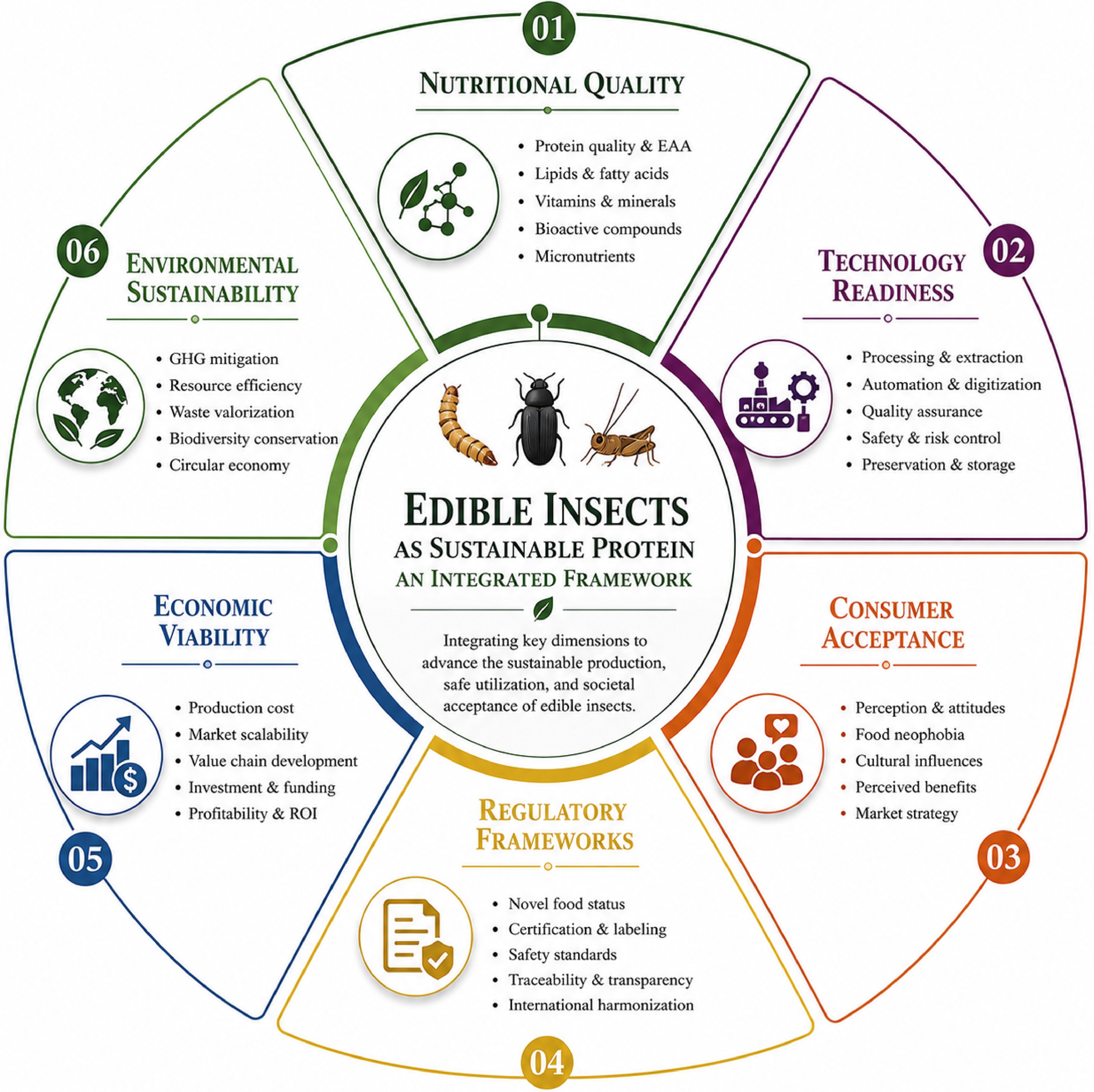
Figure 1.
Integrated six-dimensional framework applied in this review to synthesize the nutritional, environmental, economic, regulatory, sociocultural, and technological determinants of EI valorization, in place of treating these as independent bodies of literature.
Aims and scope
-
Guided by this framework, the present review aims to: (i) critically evaluate the nutritional composition and techno-functional properties of EIs relative to conventional protein sources; (ii) assess the environmental performance and circular-economy potential of insect farming, including the limitations of existing life-cycle assessment (LCA) evidence; (iii) examine food-safety hazards, allergenicity, and the regulatory landscape governing insect-based food and feed across major jurisdictions, with particular attention to India; (iv) analyze the psychological, cultural, and market-related determinants of consumer acceptance; and (v) identify specific, prioritized research gaps and a forward-looking research roadmap rather than a generic call for 'more research'.
-
This review combines a systematic, criteria-based literature search with a framework-guided narrative synthesis. The identification and screening stages therefore followed the Preferred Reporting Items for Systematic Reviews and Meta-Analyses (PRISMA 2020) reporting standard, adapted for a critical, multi-dimensional narrative review rather than a single-outcome meta-analysis; the resulting body of evidence was then organized around the integrated six-dimensional framework shown in Fig. 1.
Selection criteria
-
Records were considered eligible if they: (a) reported primary data, peer-reviewed review-level synthesis, or authoritative institutional guidance (e.g., FAO, EFSA, WHO/FAO Codex Alimentarius, India's Food Safety and Standards Authority [FSSAI]) on EIs as human food or animal feed; (b) addressed at least one of the six review dimensions—nutritional composition and techno-functional properties, environmental/life-cycle performance, economic viability, regulatory status, consumer acceptance and sociocultural context, or processing technology; (c) were published in English between 2013 (the year of the seminal FAO Forestry Paper 171 report) and 2026; and (d) were peer-reviewed journal articles, peer-reviewed reviews, or grey literature issued by a recognized international or national regulatory body. Sources were excluded if they: (a) did not concern EIs or insect-derived ingredients; (b) were editorials, conference abstracts, or commentaries without extractable primary or synthesized data; (c) duplicated a dataset already captured by an included, more complete source; or (d) could not be retrieved as full text.
Search strategy and study selection process
-
Four sources were searched for records published between January 2013 and March 2026: Scopus, PubMed, Web of Science Core Collection, and Google Scholar. Search strings combined controlled vocabulary and free-text terms for the exposure ('edible insect*' OR 'entomophagy' OR 'insect protein' OR 'insect meal' OR 'insect flour' OR named taxa such as 'Tenebrio molitor', 'Hermetia illucens', 'Gryllus bimaculatus', or 'Locusta migratoria') combined, using the Boolean operators AND/OR, with terms specific to each of the six review dimensions (e.g., 'amino acid score' OR 'digestibility' OR 'DIAAS' OR 'PDCAAS'; 'life cycle assessment' OR 'greenhouse gas' OR 'carbon footprint'; 'food safety' OR 'allergen*' OR 'mycotoxin' OR 'heavy metal'; 'regulation*' OR 'novel food' OR 'FSSAI'; 'consumer acceptance' OR 'neophobia' OR 'willingness to eat'), adapted to the syntax of each database. Reference lists of retrieved reviews and their citing articles were hand-searched, and the websites of FAO, EFSA, WHO, and FSSAI were searched directly for regulatory and grey literature not indexed in the databases above. The complete study selection process is summarized in the PRISMA flow diagram (Fig. 2).
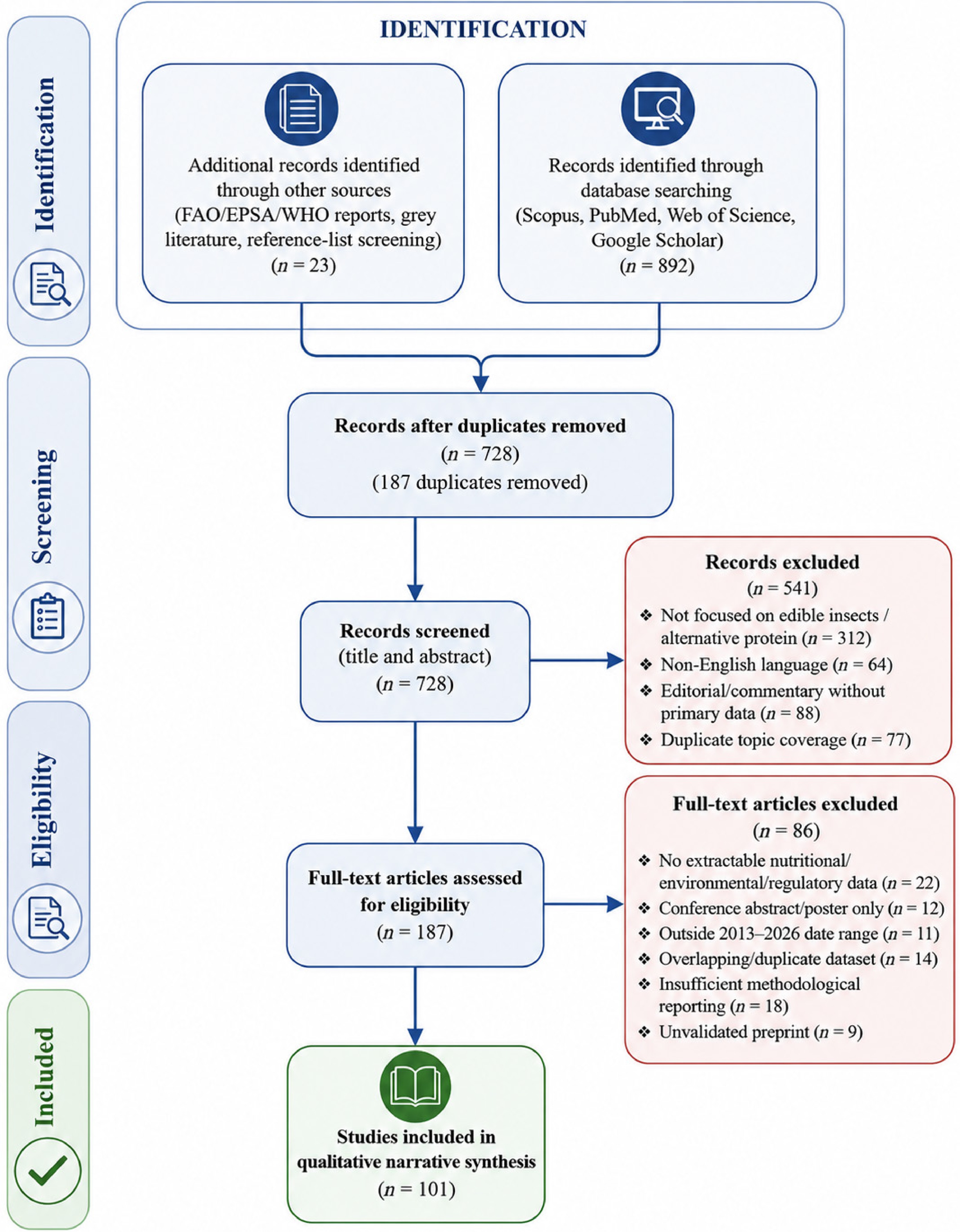
Figure 2.
PRISMA flow diagram summarizing the literature search.
Data extraction and synthesis
-
For each included source, data were extracted on the species/taxa studied, nutritional and compositional values, environmental performance metrics, regulatory jurisdiction and status, consumer-acceptance outcomes, and processing/technology readiness, together with study design, geographic setting, and any explicitly stated limitations. Because units, digestibility metrics, and system boundaries varied substantially across sources (e.g., DIAAS vs PDCAAS vs in vitro protein digestibility; cradle-to-farm-gate vs cradle-to-plate LCA boundaries), the extracted data were synthesized narratively within each of the six review dimensions rather than pooled quantitatively, and cross-dimension linkages (e.g., between nutritional promise and regulatory or food-safety constraints) were mapped explicitly using the framework.
-
Nutritional profiles of EIs reveal a nutrient-dense food source that, in many cases, exceeds or matches the nutritional quality of traditional animal proteins such as beef, chicken, and pork[23]. The average energy content of an insect meal has a wide range between 290 and 750 kcal/100 g across different insect species and processing methods[24].
Protein and amino acid profiling
-
The main macronutrient in a majority of the EIs is protein[25]. Comparative analyses show that the crude protein contents in insects are often higher than in traditional livestock (Table 1).
Table 1. Comparison of average protein content among different animal groups and insects.
Sources Common name Protein
(g/100 g wt.)Mode of consumption Edible stage Insects Cricket 13−20 Raw Adult Locusts 14−18 Grasshopper 13−21 Termites 13−28 Silkworm 10−17 Caterpillar Caterpillar 9−28 Larvae Yellow mealworm 24−25 Cattle Beef 22−27 Adult Reptile Turtles 20−24 Cooked Fish Salmon 20.5 Raw Cod 28.5 Catfish 17−28 Crustaceans Lobster 19−20 Prawn 20−21 Shrimps 18−21 Molluscs Mussels 9−12 Clams 12−15 Oysters 10 UNICEF/UN review sources[26]. Based on taxonomic distribution (Fig. 3), the order Orthoptera (crickets, grasshoppers, and locusts) has the highest average protein content of around 65% on a dry weight basis, with Coleoptera (56.2%) and Blattodea (54.5%) coming second and third, respectively[24].
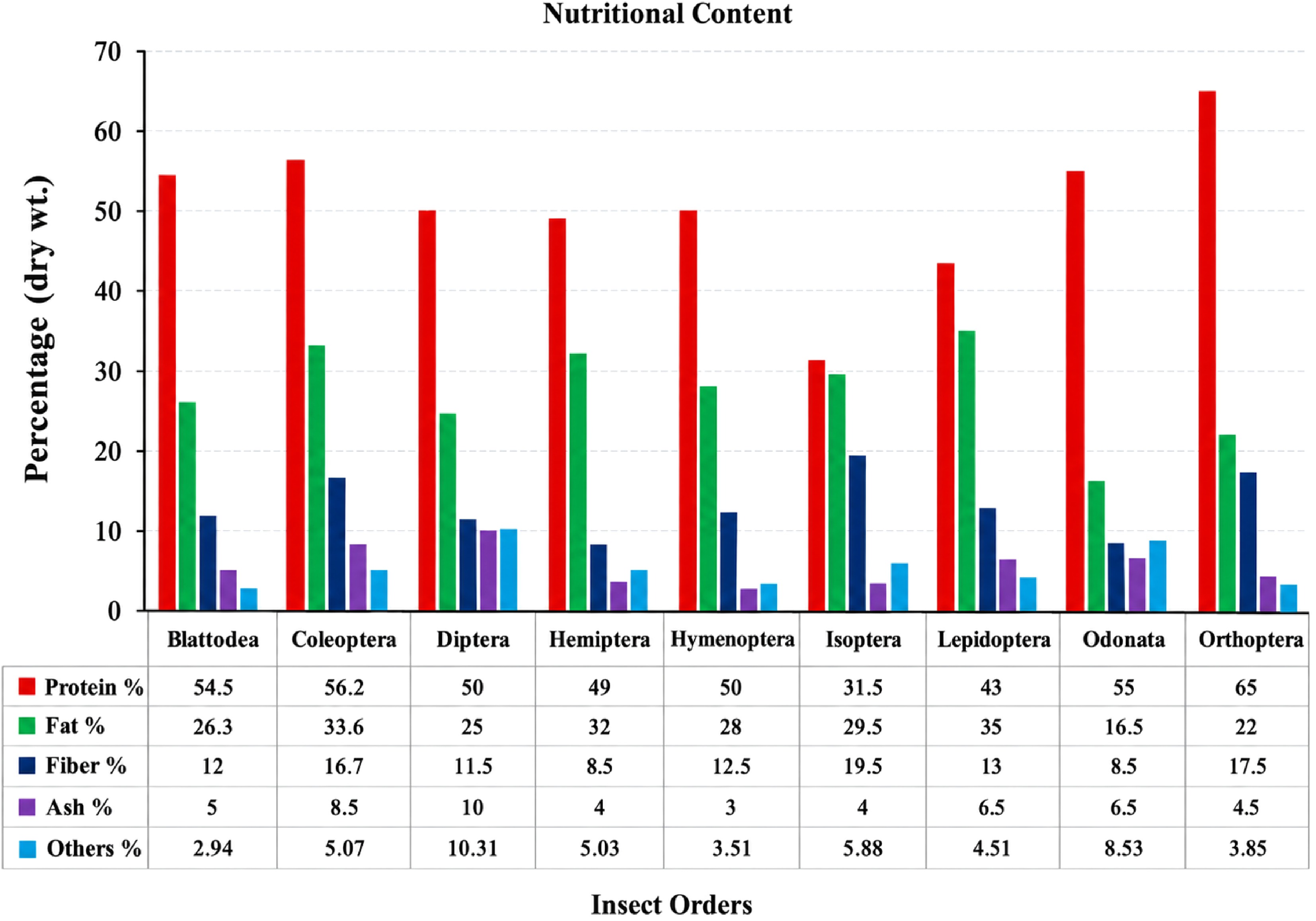
Figure 3.
A comparison of nutritional value (dry weight basis) of different insect among orders.
In addition to quantity, the quality of the insect protein is also emphasized by Essential Amino Acid (EAA) scores[27]. Many farmed species, like Gryllodes sigillatus (banded cricket) and Locusta migratoria (migratory locust), had EAA profiles that were well above the FAO reference patterns, with significant values of lysine, threonine, and valine[26]. In particular, Orthopteran species are lysine-rich, cysteine-rich, and methionine-rich, and the clade Blattodea is characterized by high arginine and tyrosine levels. Nonetheless, according to certain studies on pig models (DIAAS), sulfur amino acids (SAA) have the potential to be the constraining essential amino acids in species such as house crickets and mealworms[28,29].
Lipid content and fatty acid composition
-
Fat is the second most important nutritional element, and its content varies widely, ranging from 7 to 77 g/100 g dry weight between species. One of the most common caterpillars, termite larvae, and palm weevils maintain high lipid levels[30]. EI fatty acids contain a healthy balance of saturated (SFA), monounsaturated (MUFA), and polyunsaturated fatty acids (PUFA) that are similar to oils of high quality[31]. As an example, Brachytrupes orientalis and Chondacris rosea are known to be rich in omega-6 and MUFA that can be used as a healthier substitute for red meats that contain saturated fats[32].
Micronutrients and bioactive compounds
-
EIs are important sources of essential micronutrients such as vitamin B12, vitamin A, riboflavin, iron, zinc, calcium, and magnesium[33]. These minerals are also highly bioavailable such that they are easily used within the human body. Moreover, some species such as grasshoppers, silkworms, and crickets have been observed to have a higher level of antioxidants, three times higher than orange juice, which could provide possible defense against oxidative cellular damage[34].
Factors of variability: the nutritional content of EIs is not fixed but varies with various biological and environmental aspects:
• Life Stage: the larval and pupal stages tend to have a high concentration of proteins and fats relative to the adult stage[35].
• Diet and Rearing: the type of substrate or feed that the insects are fed on the farm has a great influence on the nutrients and fatty acids they will end up with[36].
• Taxonomic Order: fiber is the most abundant in Isoptera (19.5) and Orthoptera (17.5), and ash is the most abundant in Diptera (10%)[24].
Critical appraisal of the nutritional evidence
-
The nutritional superiority of EIs reported across the literature has several limitations. First, protein content is frequently reported as 'crude protein' derived from total nitrogen using a Jones factor of 6.25, which is known to overestimate true protein content in insects because it does not correct for non-protein nitrogen contributed by chitin; several analyses therefore consider reported values at the upper end of the 30%−85% dry-weight range to be inflated relative to true amino-acid-based protein content[27,28]. Second, digestibility findings are inconsistent across studies because they rely on different models and metrics (in vitro protein digestibility assays, pig-based DIAAS, and human ileal digestibility studies are not directly comparable), and the finding that sulfur amino acids are limiting in house crickets and mealworms under DIAAS scoring has not been consistently replicated across rearing substrates or processing methods[28,29]. Third, the wide ranges reported for energy, lipid, and micronutrient content (e.g., 290−750 kcal/100 g; 7−77 g fat/100 g dry weight) partly reflect genuine species- and stage-dependent biology, but are also driven by non-standardized analytical methods, rearing substrates, and reporting units across the underlying studies, which limits direct comparability and should temper confident quantitative claims of 'superiority' over conventional animal protein. These inconsistencies point to a clear methodological gap: standardized, substrate-controlled comparative trials using harmonized digestibility metrics are needed before species-specific nutritional claims can be considered established rather than indicative.
Insects as human food and animal feed
Human consumption (entomophagy)
-
The practice of entomophagy, or the consumption of insects by humans, is a long-standing tradition for approximately 2 billion people across 128 countries[37]. Globally, over 2,205 EI species have been identified, with the taxonomic distribution dominated by the orders Coleoptera (31.2%), Lepidoptera (17.1%), Hymenoptera (15.2%), and Orthoptera (13.2%)[38]. In India, there is a tremendous variety of entomophagous species, especially among the aboriginals known to eat insects[39]. Figure 4 depicts the EIs' eating state in India as a traditional practice. In the northeastern states, namely Assam, Nagaland, and Manipur, the range of EI species is around 16−40, while southern states like Kerala, Karnataka, and Tamil Nadu have a lower diversity with only 6 species reported[40]. Indigenous tribes, such as the Bodo and Rabha communities in the northeast region, consume insects including termites, bees, wasps, woodborer larvae, grasshoppers, silkworm larvae, and palm weevils, among others[41].
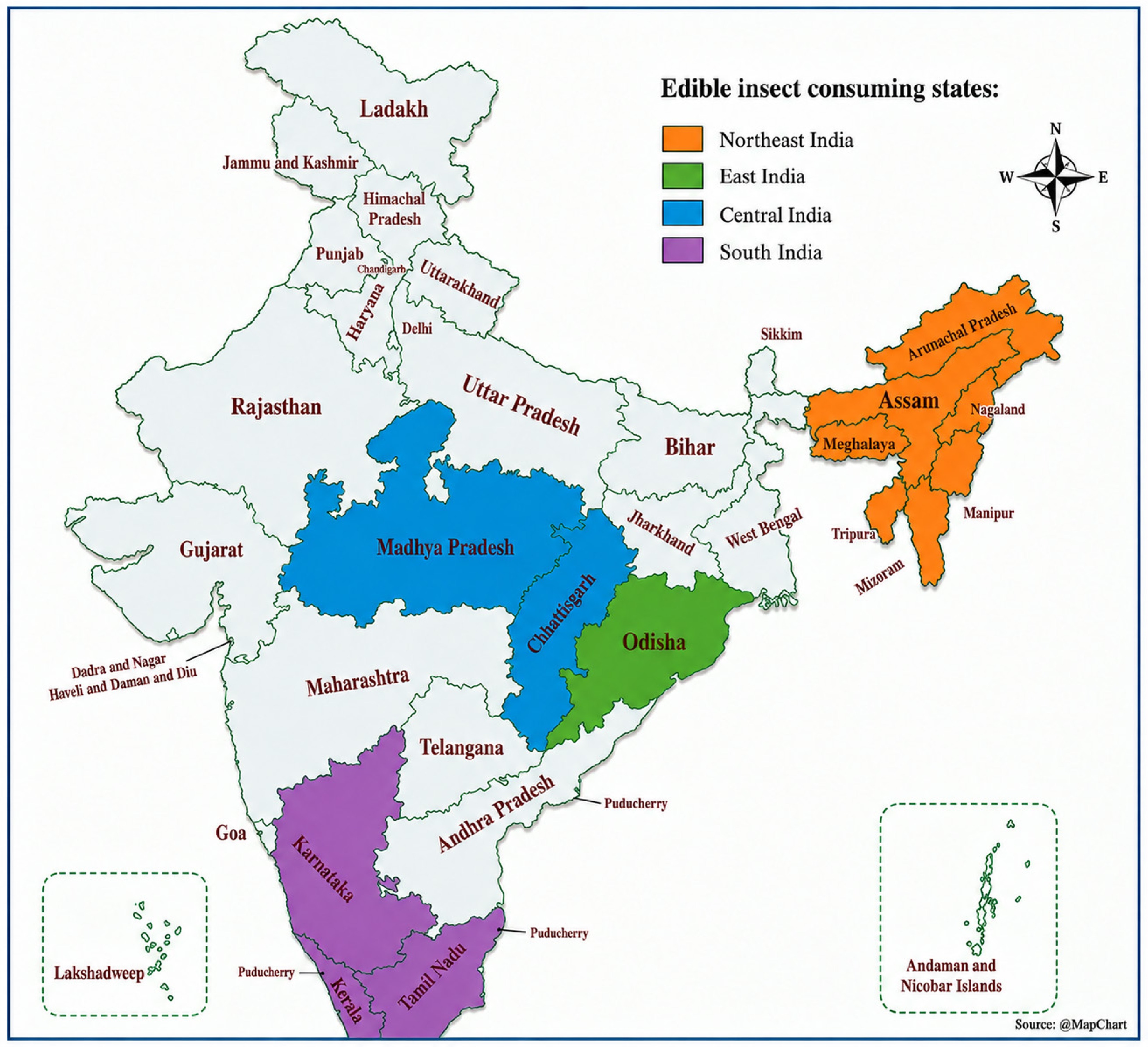
Figure 4.
EIs consuming states in India. Base map sourced from
www.mapchart.net/india.html .Figure 5 summarizes the EI orders reported as human food in India, showing the number of families, species/taxa, and represented genera. A total of 176 species-level records across eight orders and 43 families were compiled from regional ethnobiological surveys[42−49]. The complete species-by-species listing, including seasonal availability and edible life stage for each of the taxa, is provided as Supplementary Table S1.
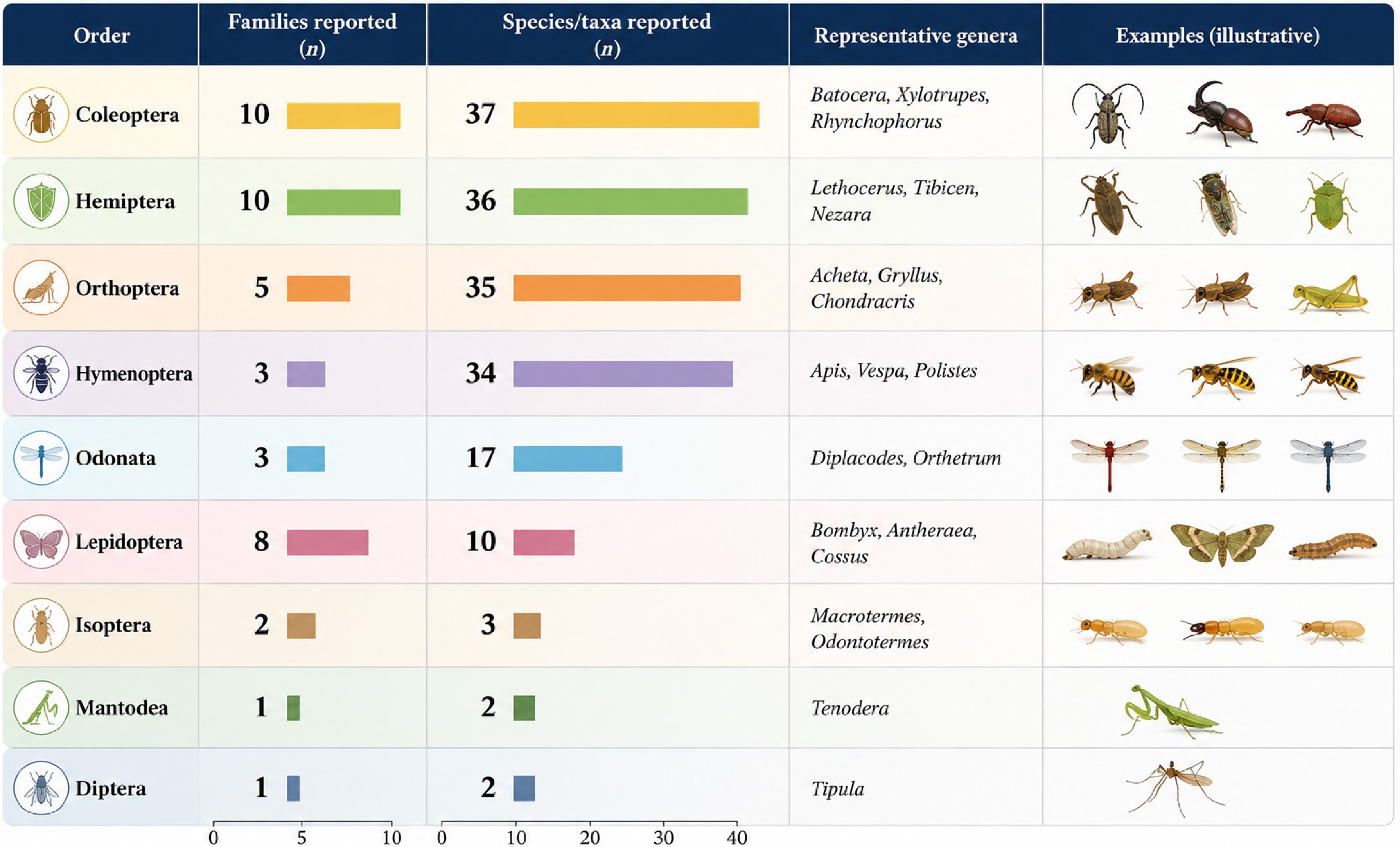
Figure 5.
Diversity of EI orders reported as human food in India.
Nutritionally, insects serve as a high-quality protein source, containing EAAs that often meet or exceed FAO reference patterns[27]. Beyond macronutrients, they are rich in micronutrients such as vitamin B12, iron, zinc, and magnesium, and possess antioxidant levels that can be three times higher than those found in orange juice[15]. The properties have potential therapeutic advantages in the treatment of non-communicable diseases such as diabetes and cardiovascular disorders[50]. Nevertheless, Western markets cannot embrace them due to psychological obstacles such as neophobia, disgust, and complex regulatory systems, such as EU regulations on novel food. Safety is another crucial issue, which is the cross-reactivity of allergens to those people who are sensitive to shellfish and the danger of microbial contamination in case of improper processing[51,52].
Animal feed applications
-
Insects are becoming known as a better, eco-friendly alternative to conventional animal feed sources, such as fishmeal and soybean meal[53,54]. Insects like black soldier fly (BSF) larvae, mealworms, or crickets are preferable because of their great digestibility and capacity to feed on organic waste, which fosters a closed economy and decreases the environmental impact of livestock production[55]. Against the backdrop of the Indian market that is set to become 18.74 billion USD by 2027, insect-based feed is a large opportunity in bridging the gaps in green and dry fodder that are projected to be experienced[56,57]. Studies mentioned in Table 2 have shown that using insect protein as a dietary supplement in poultry and aquaculture feeds may increase growth rates, meat quality, and egg quality, as well as reduce feed ratios[58]. Additionally, BSF larvae are used in ruminant feeds as a substitute for milk in pre-weaning animal formula and to supply the necessary prebiotics[59].
Table 2. Commercially available insect species used as animal feed in India.
Insect species Stage used Crude protein (%) Crude fat (%) Crude fiber (%) Ash (%) Animal-feed application Ref. Hermetia illucens (Black soldier fly) Larvae 30−35 25−30 7−10 9−11 Poultry, shrimp, aquaculture [60,61] Hermetia illucens (Black soldier fly) Larvae meal 45−55 10−20 10−15 10−12 Poultry, aquaculture, fisheries [62,63] Musca domestica (House fly) Maggot 43−47 20−25 6−8 6−7 Poultry, fish, small ruminants [64,65] Tenebrio molitor (Mealworm) Whole larvae 45−55 20−35 6−10 4−6 Poultry, aquaculture [66] Tenebrio molitor (Mealworm) Low-fat mealworm 45−50 8−12 8−12 4−5 Lower-fat poultry and aqua feeds [67] Acheta domesticus (House cricket) Powder 55−75 6−10 5−8 4−6 Poultry, fish, pet feed [68] Chorthippus oxya (Grasshopper) Adults 45−60 10−18 4−8 4−6 Poultry, small ruminants, aquaculture [69] Bombyx mori (Silkworm pupae) Pupae 45−55 20−30 4−6 4−6 Poultry, fish, livestock [70] Technological developments and processing
-
In order to reduce the disparity between nutritional possibilities and consumer acceptance, there must be modern processing methods. Such developments include freeze-drying, supercritical CO2 extraction, and chitin removal to create insect-based flours and protein isolates that retain functional characteristics whilst hiding undesirable sensory characteristics[71]. Additional automation and genetic improvement in insect farming are necessary to increase production and enable insect-based proteins to be economical with alternative feed sources[72]. Finally, the shift to insect-based systems is the key to improving food security in the world and creating a stable, sustainable food future.
Food safety hazards and allergenicity
-
Food safety, rather than nutrition, is increasingly recognized as the principal technical barrier to the commercialization of EIs, and the hazards involved are heterogeneous rather than limited to microbial contamination. Microbiological risk is the best-characterized hazard: insects reared on organic substrates can carry pathogenic bacteria (e.g., Salmonella spp., Listeria monocytogenes, and pathogenic Escherichia coli) and spore-forming bacteria that survive standard drying, so hazard-analysis-and-critical- control-point (HACCP)-based hygiene controls during rearing, harvesting, and processing are essential rather than optional[73,74]. Chemical hazards include heavy metals and mycotoxins. Systematic evidence indicates that heavy metal accumulation is species-, metal-, and life-stage-dependent, with cadmium accumulation documented in black soldier fly larvae and arsenic accumulation documented in yellow mealworm larvae, whereas the limited mycotoxin data available so far have not shown consistent bioaccumulation, although the authors of that review caution that this partly reflects a paucity of studies rather than a demonstrated absence of risk[75]. Pesticide residues, veterinary drug residues, and persistent organic pollutants can likewise be transferred from contaminated rearing substrates, reinforcing that substrate sourcing and monitoring are as important to food safety as downstream processing[74]. There is also emerging concern regarding antimicrobial resistance (AMR), because insect-rearing substrates that include manure or food waste streams could plausibly harbor resistant bacteria or resistance genes, although this remains an underexplored area relative to the mycotoxin and heavy-metal literature and is flagged here as a specific research gap rather than an established risk[21]. Parasitic contamination (protozoan and helminth agents associated with unhygienic organic substrates) is similarly under-quantified. Finally, allergenicity is a well-documented and clinically important hazard: insect proteins, particularly tropomyosin, show cross-reactivity with crustacean and dust-mite allergens, meaning that individuals with shellfish or house-dust mite allergy are at elevated risk of reaction to insect-based foods, and this risk is not eliminated by processing methods such as freeze-drying or milling[22]. Collectively, these hazards indicate that food safety risk in EIs is substrate- and species-specific rather than generic, which argues against blanket safety claims and in favor of hazard-specific monitoring frameworks tailored to each production system.
Consumer acceptance and sociocultural determinants
-
Consumer acceptance is shaped by overlapping psychological, cultural, and market-design factors rather than by disgust alone. Food neophobia and disgust sensitivity are the most frequently cited psychological barriers in Western markets, but acceptance research increasingly distinguishes between categorical rejection (refusal to consider insects as food at all) and conditional rejection (willingness to consume insects only in processed, 'invisible' forms such as flours, protein isolates, or extruded snacks in which the insect origin is not visually apparent)[76,77]. Framing and messaging strategies, including emphasizing environmental benefits, novelty/adventurousness, or nutritional value, produce inconsistent effects on acceptance across studies, and some framing strategies (e.g., emphasizing sustainability alone) have shown only modest or context-dependent effects on actual purchase intent, indicating that education-based interventions alone are unlikely to overcome deep-seated disgust responses[77]. Regional and cultural differences are substantial: entomophagy is an established dietary practice for an estimated 2 billion people across roughly 128 countries, particularly in parts of Asia, Africa, and Latin America, whereas in Europe and North America it is a genuine novel-food adoption challenge[16,17,78]. Within India itself, acceptance is not culturally uniform: entomophagy is well established among many northeastern indigenous communities but is far less accepted, or actively taboo, in several other regions and among communities for whom insect consumption is associated with low socioeconomic status or religious prohibition[79,80]. Religious and ethical certification (halal, kosher) represents an additional, distinct acceptance barrier in some markets that is rarely addressed in the nutritional or environmental literature on EIs, and where entomophagy promotion strategies for India and other multi-religious markets will need explicit engagement with these considerations rather than a single generic 'consumer education' strategy[81].
Regulatory and commercialization landscape
-
Regulatory heterogeneity, rather than the absence of regulation per se, is the dominant global pattern. The European Union has the most developed framework: under the Novel Food Regulation (EU) 2015/2283, insect species require pre-market safety authorization, and as of the present review, the European Food Safety Authority has authorized a small number of species for human consumption, including the yellow mealworm (Tenebrio molitor), migratory locust (Locusta migratoria), house cricket (Acheta domesticus), and lesser mealworm (Alphitobius diaperinus) larvae, with additional applications under review[82,83]. Singapore and a small number of other Asian jurisdictions have established their own novel-food pathways for insect products, including approvals for cricket-based ingredients. In India, by contrast, there is no insect-specific food safety standard: the Food Safety and Standards Authority of India (FSSAI) has neither explicitly prohibited nor formally approved commercial insect food ingredients, so applications for products such as cricket flour and black soldier fly protein fall under the general Food Safety and Standards (Approval for Non-Specified Food and Food Ingredients) Regulations rather than a purpose-built framework, creating de facto regulatory uncertainty for prospective manufacturers[80,83]. In the absence of a national standard, Codex Alimentarius guidance is the most relevant reference point for India's international trade in insect-based products, and harmonization with any future Codex guidelines on EIs is likely to shape eventual FSSAI standards[82,83]. This regulatory gap compounds, rather than operates independently of, the food-safety and consumer-acceptance barriers described above: without a defined safety-assessment and labeling pathway, manufacturers face disincentives to invest in the hazard-monitoring infrastructure needed to address the concerns raised, which in turn limits the availability of certified, safety-verified products that could shift consumer perceptions. Economic scalability is similarly constrained: production costs for insect protein (roughly USD 3.75−5.90 kg−1 for black soldier fly meal) remain substantially higher than for soybean meal (USD 0.50−0.90 kg−1), so regulatory clarity and economies of scale are interdependent preconditions for competitiveness rather than separate problems[73,84,85].
-
This discussion instead interprets that evidence, asks why findings are sometimes inconsistent across studies, and identifies where the dimensions interact rather than operate independently. The shift to EIs as a protein source for humans and animals is motivated by the resource intensity of conventional livestock[86,87], including a substantially lower energy-in / protein-out ratio than insect systems typically achieve[88]. The sections below examine how robust the corresponding evidence for EIs actually is.
Nutritional evidence: promise tempered by methodological heterogeneity
-
The finding that several insect orders match or exceed conventional livestock in crude protein and essential amino acid content is well-replicated across independent studies[89−92], and is not, in itself, in serious doubt. What is inconsistent across the literature is the practical, digestible value of that protein: DIAAS-based studies identify sulfur amino acids as limiting in some farmed species[28,29], nitrogen-to-protein conversion factors likely overstate true protein content in chitin-rich taxa, and reported ranges for energy and lipid content are wide enough that they may reflect inconsistent methodology as much as genuine biological variation. The practical implication is that nutritional 'superiority' claims should currently be read as species- and processing-specific rather than as a property of EIs as a category, and that comparative claims against beef, poultry, or fish protein are only as strong as the weakest link in the chain: reported content, digestibility method, and processing method must all be held constant for a fair comparison, which is rarely the case across the studies compiled here.
Environmental sustainability: consistent direction, uncertain magnitude
-
The direction of the environmental evidence is consistent: insect farming outperforms ruminant and, in most comparisons, monogastric livestock production on GHG emissions, land use, and water use per unit of protein[93−96]. The magnitude of that advantage, however, varies considerably across studies because life-cycle assessments differ in system boundary (farm-gate vs full value chain), functional unit (per kg live weight vs per kg protein vs per kg edible protein), and whether energy-intensive climate control, feed transport, and processing/drying steps are included. Most published LCAs are also derived from small-scale or laboratory-scale rearing operations rather than from commercial-scale facilities, so the environmental performance of EIs at the production volumes needed for meaningful food-security impact remains comparatively unvalidated. This is not a reason to discount the environmental case for EIs, but it is a reason to treat specific multiplier claims (e.g., '6−13 times less CO2 than beef') as indicative of a favorable direction rather than as precise, generalizable figures.
Consumer acceptance: why education alone has a limited effect
-
Consumer acceptance and sociocultural determinants distinguished categorical from conditional rejection of entomophagy. This distinction helps explain a pattern in the consumer literature that is otherwise puzzling: information- and education-based interventions reliably increase stated willingness to try insect-based products in surveys, but produce much smaller and less consistent effects on actual purchasing behavior[97−99]. This gap between attitude and behavior suggests that disgust and neophobia operate at a more automatic, less cognitively mediated level than purely informational campaigns can reach, which is consistent with the observation that 'invisibilized' products (flours, isolates, extruded snacks) tend to outperform whole-insect products in acceptance research. For India specifically, the existing entrenched entomophagic tradition in the northeast is a genuine asset, but it does not straightforwardly generalize to national acceptance given the religious, regional, and socioeconomic heterogeneity; treating 'India' as a single acceptance context in future consumer research would likely obscure more than it reveals.
Regulation, safety, and economics as an interdependent system
-
Regulatory status, food safety assurance, and production economics are frequently discussed as separate barriers in the literature, but the evidence compiled here suggests they function as a linked system rather than as independent bottlenecks. The EU's novel-food pathway is comparatively burdensome but, by requiring standardized safety dossiers, has generated the hazard-characterization data that in turn supports consumer-facing safety claims and premium pricing; India's absence of an insect-specific standard removes that up-front cost but also removes the safety-verification signal that could accelerate consumer acceptance and justify investment in cost-reducing automation[76,82,83]. High production costs relative to soybean meal and fishmeal[73,84] are therefore not purely a technology problem to be solved by automation in isolation[100,101]; without a regulatory pathway that lets producers credibly signal safety and quality, there is limited market incentive to make the capital investments that would bring costs down.
Technological readiness
-
Processing technologies (freeze-drying, supercritical CO2 extraction, chitin removal) are reasonably mature at the laboratory and pilot scale[71], but automation, genetic improvement of farmed strains, and substrate optimization for large-scale rearing are comparatively early-stage[72]. This asymmetry matters because downstream processing cannot compensate for upstream production costs and substrate-safety limitations; scale-up therefore depends on simultaneous progress in rearing technology, substrate safety monitoring, and regulatory clarity rather than on processing innovation alone.
Roadmap towards an integrated research
-
Rather than a generic call for 'more research', the identified gaps point to a small number of specific, prioritized research directions:
• Standardize digestibility and protein-quality reporting: Harmonize the use of DIAAS or an equivalent method, and report nitrogen-to-protein conversion factors explicitly, so that nutritional claims across species and studies become directly comparable.
• Move from laboratory-scale to commercial-scale life-cycle assessment: future LCAs should report system boundaries and functional units explicitly and should prioritize data from operating commercial facilities over extrapolated laboratory data.
• Characterize antimicrobial resistance and parasitic contamination risk: these hazards are comparatively unstudied relative to heavy metals and mycotoxins and should be prioritized given their public-health significance.
• Develop an India-specific regulatory pilot framework: informed by the EU novel-food dossier structure and Codex Alimentarius guidance, rather than waiting for a fully harmonized international standard.
• Move consumer research from stated preference to revealed behavior: use field trials and repeat-purchase data rather than single-exposure survey designs, and disaggregate 'India' and other large, heterogeneous markets by religion, region, and socioeconomic status rather than treating them as a single acceptance context.
• Report techno-functional properties (solubility, emulsification, gelation) alongside nutritional composition, so that formulation-relevant data are available at the same time as nutritional data, rather than in a separate literature stream.
Evidence-driven research roadmap for transitioning EIs from emerging alternative protein sources to safe, sustainable, and commercially viable food ingredients. The framework integrates standardized nutritional assessment, industrial-scale sustainability evaluation, emerging food safety risks, context-specific regulation, real-world consumer behavior, and techno-functional characterization to guide future research and translation into practice (Fig. 6).
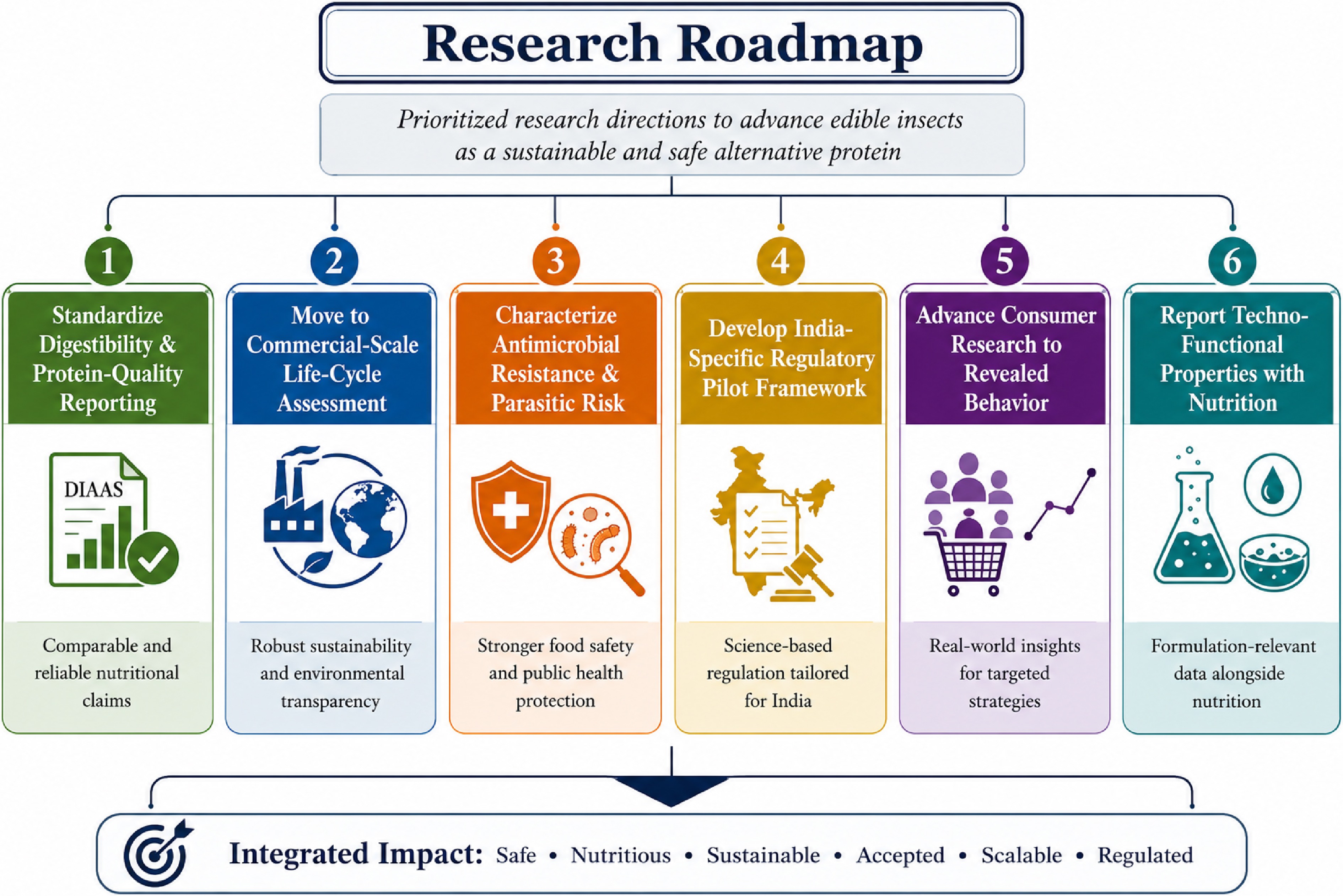
Figure 6.
Integrated research roadmap identifying six priority areas for advancing EIs as safe, sustainable, nutritionally valuable, and commercially viable alternative proteins.
-
EIs remain a genuinely promising, but not yet fully proven, contributor to global and Indian food and feed security. The nutritional, environmental, and feed-substitution evidence reviewed here is directionally consistent, and supports continued investment in the sector, but this review has also identified specific methodological limitations, most notably non-standardized digestibility and protein-quantification methods, laboratory-scale rather than commercial-scale environmental data, and an evidence base for consumer acceptance that reflects stated preference more than revealed behavior, which should temper the strength of any single quantitative claim. As above argued, food safety assurance, regulatory clarity, and production economics are best understood as an interdependent system rather than as three separate barriers, which means that partial interventions (for example, automation without a safety-assessment pathway, or consumer education without certified products to purchase) are unlikely to achieve mainstream adoption on their own. Realizing the sector's potential, particularly in India, where a rich entomophagic tradition coexists with an absence of insect-specific food safety standards, will require the coordinated research and policy priorities outlined in discussion, rather than a generic call for further study. With that coordinated investment, EIs can plausibly become a meaningful, evidence-based component of a more resilient and sustainable protein supply; without it, the gap between demonstrated laboratory-scale potential and verified commercial-scale performance is likely to persist.
Not applicable.
-
The authors confirm their contributions to this study as follows: conceived the general idea: Badotra P; wrote the manuscript, collected and analyzed the data: Kumari P; developed the framework and analogies: Badotra P, Kumari P. Both authors reviewed the results and approved the final version of the manuscript.
-
All the data generated or analyzed during this study are included in this published article and its supplementary information files.
-
The authors state that no known competing financial interests or personal relationships could have influenced any of the work described in this study.
-
accompanies this paper online at: https://doi.org/10.48130/fmr-0026-0021.
- Supplementary Table S1 Species-level listing of EIs reported as human food in India.
- Copyright: © 2026 by the author(s). Published by Maximum Academic Press on behalf of Nanjing Agricultural University. This article is an open access article distributed under Creative Commons Attribution License (CC BY 4.0), visit https://creativecommons.org/licenses/by/4.0/.
-
About this article
Cite this article
Kumari P, Badotra P. 2026. Small bites, big benefits: insects as potential sustainable alternative protein feed for animals and humans. Food Materials Research 6: e022 doi: 10.48130/fmr-0026-0021 

Small bites, big benefits: insects as potential sustainable alternative protein feed for animals and humans
- Received: 18 April 2026
- Revised: 30 July 2026
- Accepted: 04 August 2026
- Published online: 14 October 2026
Abstract: As the global population approaches 9.7 billion by 2050, the environmental and energetic inefficiency of traditional livestock, evidenced by unfavorable protein conversion ratios (up to 40:1) and excessive resource consumption, renders current production models unsustainable. This review evaluates edible insects (EIs) as a transformative 'nutrient powerhouse' for global food security. Systematic analysis confirms EIs provide superior nutritional profiles, with the order Orthoptera exhibiting the highest protein density (~ 65% dry weight), complemented by essential amino acids and antioxidant levels exceeding common functional foods. Environmentally, insect farming is significantly more efficient; for example, mealworms emit 6–13 times less CO2 than beef cattle while facilitating a circular economy through organic waste upcycling. In the animal feed sector, insect proteins mitigate environmental pressures like overfishing by providing highly digestible substitutes for fishmeal. Despite these merits, the study critically identifies substantial hurdles: persistent neophobia and disgust in Western markets, high production costs relative to soy, and significant safety risks, specifically microbial contamination and protein cross-reactivity for shellfish-allergy sufferers. Furthermore, the absence of standardized regulatory frameworks, particularly in high-potential markets like India (hosting ~255 edible species), restricts industrial scalability. The review concludes that while EIs are a sustainable 'game-changer', their global integration is contingent upon technological automation, harmonized international safety standards, and cross-disciplinary collaboration to transition from traditional practices to a resilient, nutritionally secure food system.
-
Key words:
- Edible insect /
- Nutrient powerhouses /
- Functional food /
- Circular economy /
- Neophobia