











-
Community health is a top priority because it significantly contributes to the overall quality of life of the general population. It is not only the government's responsibility but also that of all individuals within a community or area. Community health can also serve as a measure for assessing the quality of life in a particular region, determining whether it meets standards. A high quality of life enhances people's productivity and can lower medical costs[1]. One way to achieve a good quality of life is to improve the body's immune system, which helps prevent disease[2]. The immune system is the body's first line of defense, protecting the entire body. The body's immunity can be boosted by eating nutritious foods, one of which is meat products[3].
The demand for meat products rises each year with human population growth and increasing prosperity[4]. Meat products, such as sausages, meatballs, nuggets, sliced meat, and cured meats, are essential sources of nutrients for a balanced diet. In addition to micronutrients (iron, zinc, and selenium), meat products also contain vitamins (B6, B12, and folic acid) and bioactive compounds (taurine, carnitine, carnosine, ubiquinone, glutathione, and creatine), all of which are important for various metabolic functions. Moreover, meat products are more easily absorbed than other foods[5,6]. Essential amino acids in meat products are very beneficial for cell regeneration and the body's growth[7]. The high demand for meat products requires strong safety measures to ensure product quality for consumers. Food safety guarantees that meat products like sausages, meatballs, nuggets, sliced meat, and cured meats are free from chemical, microbiological, and non-halal contaminants[8]. Chemical contamination, such as cadmium and lead, in meat products poses a food safety risk. Additionally, exposing meat to microorganisms like Salmonella spp. during slaughtering compromises its sterility. Meanwhile, exposure to non-halal compounds, such as adding pork and lard to processed meat products to improve flavor, can render the food non-halal[9]. This causes meat products to fail to meet food safety standards for Muslims, because processed meat products that are permissible for Muslims can also be safely consumed by non-Muslims. Lipids that function to enhance flavor in meat products are MG(22:2)+NH4, DG(4:0/15:2)+NH4, and MG(13:1)+NH4[10]. Analyzing the composition of compounds, including volatile compounds, can ensure the safety of meat products[11].
Meat products, such as sausages, meatballs, nuggets, sliced meat, and cured meats, contain volatile organic chemicals that readily evaporate[12]. These include alcohols (1-penten-3-ol, 1-octen-3-ol, and 1-hexanol), aldehydes (butanal, 2- and 3-methyl, propanal, 2-methyl, hexanal, octanal, and nonanal), acids (acetic acid, butanoic acid, and 2- and 3-methylbutanoic acid), furans (2-pentylfuran), and ketones (acetoin), which are considered beneficial to health[13]. The compound 1-penten-3-ol in meat products is often linked to health and environmental benefits[14]. Meanwhile, the compound 1-octen-3-ol can suppress some bacteria that are part of the body's natural flora[15]. In addition to their health benefits, volatile compounds also add flavor to meat products, making them tasty to many people[16].
Given the explanation above, this study will examine the volatile compound composition of meat products to highlight the food safety of these products for community health. This review is also expected to serve as a reference for identifying potential volatile compounds to help establish safety standards for processed meat products.
-
This review was conducted using the Google Scholar, PubMed, and Scopus databases. The keywords included "food safety, meat, meat products, volatile compounds, health, and community health." This study selected references from 2015 to 2025 to obtain updated information. The total number of references was 250, but only 90 references were relevant to the review's theme. The selected references concern volatile compounds in meat and processed meat products that affect community health. The references used are publications indexed in Scopus. References that do not address the health effects of meat or meat products were excluded. A flowchart of the review method is shown in Fig. 1.
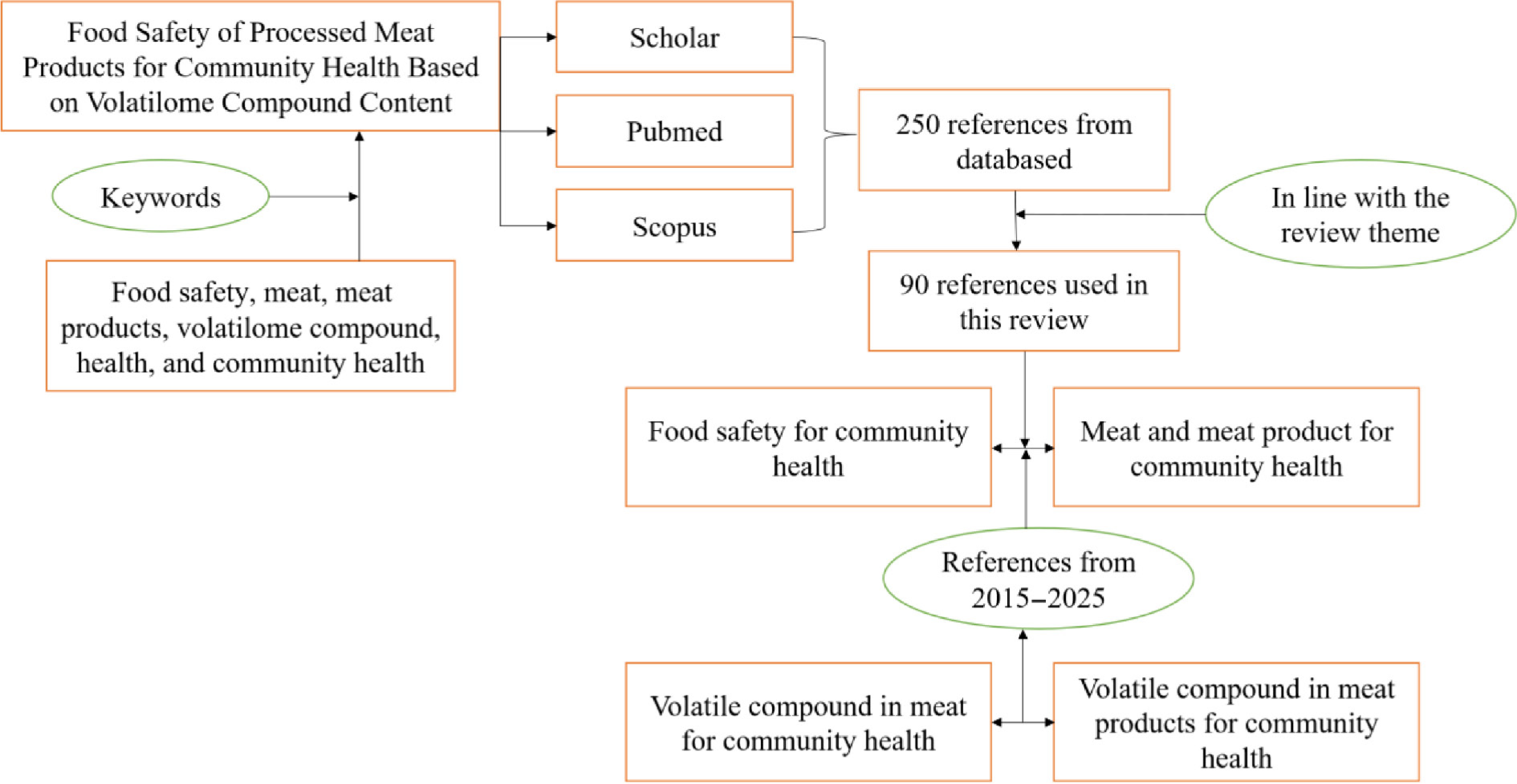
Figure 1.
The process of searching, analyzing, and selecting references from the databases for the review.
-
Community health efforts focus on disease prevention, such as consuming foods with balanced nutrition[17]. Consuming a variety of foods with balanced nutrition helps protect the body from various cardiovascular diseases and metabolic system disorders, such as diabetes mellitus[18]. Cardiovascular diseases, such as coronary heart disease, can be caused by high blood cholesterol. While the body itself can produce cholesterol, it can also be obtained from animal-based foods such as meat. Hyperglycemia, or elevated blood glucose levels, is a sign of diabetes mellitus, a metabolic disease that happens when insulin activity declines. An unbalanced diet between protein and carbohydrates disrupts the metabolic system[19]. Therefore, consuming nutritious food is essential for improving health[20].
Nutritious foods, such as meat or meat products (sausages, meatballs, nuggets, and cured meats), can lose their nutritional content if not properly processed[21]. Meat and meat products that are not correctly processed are also unsafe to consume. Food safety for meat and meat products begins at the slaughterhouse and is followed by processing, packaging, distribution, and storage[22]. To ensure safety, each stage must be performed according to hygiene standards and remain uncontaminated. For example, beef products should be kept separate from non-halal meat during processing, packaging, distribution, and storage to prevent cross-contamination that might render halal products non-halal. Although non-halal products are unsafe for Muslims, halal products are definitely safe for both Muslims and non-Muslims[23].
Ensuring the food safety of meat and meat products is crucial not only for individual health but also for the well-being of the community[24]. Several studies have revealed that the nutrients in meat and meat products have positive impacts on health. Fatty acids, protein, fiber, and lipids in several types of meat, like beef, goat, lamb, and chicken, are fundamental nutrients needed by the body[25]. Table 1 presents the nutritional content of meat and meat products that are beneficial to community health, based on several studies.
Table 1. List of meat and meat products that have an impact on community health.
No Title Meat or meat products Nutritional compound Impact of food safety on community health Ref 1 Nutritional benefits from fatty acids in organic and grass-fed beef Beef Fatty acids Fatty acids contained in beef are beneficial to human health, especially essential omega-3 fatty acids, alpha-linolenic acid. [26] 2 Contribution of village chickens in sustainable and healthy food systems for children along a rural–urban gradient: a systematic review Chicken meat Protein and low fat Consuming chicken is a key source of essential nutrition for health. [27] 3 A review of goat meat composition, quality, and health benefits Goat meat Protein, fats, cholesterol, and iron Goat farming makes a significant contribution to the global food industry with a positive impact on the production of healthy meat. [28] 4 Fish nutritional value as an approach to children's nutrition Fish Essential amino acids and polyunsaturated fatty acids Nutrients found in fish can significantly influence children's health worldwide. [29] 5 Quality test of current catfish nuggets in improving children's health Catfish nuggets High in protein quality Catfish nuggets can improve children's health
(p < 0.05).[30] 6 Sausages: nutrition, safety, processing, and quality improvement Sausage Protein Sausages provide protein nutrition for general health. [31] 7 Food safety and nutritional risks of fried sausage and chicken: consumption, risk attitudes, and malnutrition among school children Fried sausage and chicken Fiber, fat, protein, and carbohydrate Public health initiatives through healthier sausage consumption have a positive impact on children's health at school. [32] 8 The role of red meat in the diet: nutrition and health benefits Red meat Protein with all eight essential amino acids Red meat is a rich source of high-quality protein and essential nutrients, which are essential for maintaining optimal health. [33] Table 1 shows that meat and meat products have a positive impact on community health. Two very popular meat products, sausages and nuggets, are rich in essential protein that benefits individual health. Healthy individuals build a healthy community. Figure 2 illustrates the connection between food security and community health.
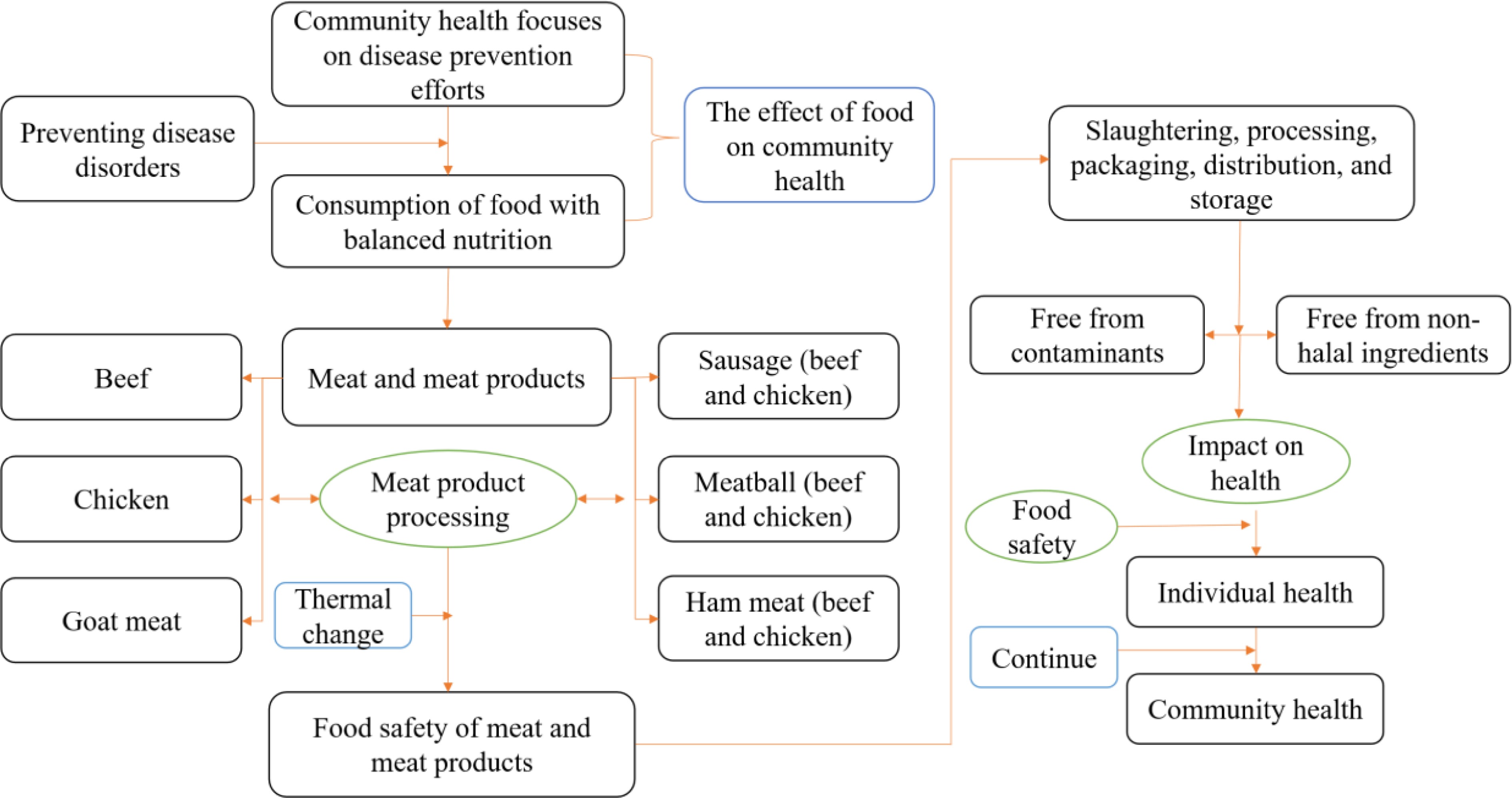
Figure 2.
Food safety of meat and meat products that impact individual and community health.
The health of both individuals and communities is directly influenced by safe meat and meat products, as shown in Fig. 2. Goat, chicken, and lamb meat can be processed into sausages, meatballs, and cured meat (specialty hams) through high-temperature heating. It is important to consider whether high temperatures affect food safety[34]. Changes in food safety will clearly pose risks to individuals' health[35]. Meat and meat products that do not meet safety standards, such as those that have been contaminated by toxic substances, are unsafe for consumption. Changes in individuals' health will directly affect community health[36]. In other words, food safety will have a significant impact on community health. Maintaining community health is important, since an unhealthy community will lead to high healthcare costs[37]. Therefore, food safety is a key factor in achieving optimal community health, which will ultimately reduce global healthcare costs[38].
-
Beef and chicken are two of the most consumed types of meat worldwide[39]. These meats are widely supplied[40] to communities because of their abundant availability, easy access, affordable prices, and high levels of macro- and micronutrients[40,41]. The main macronutrient content in beef and chicken is protein, and the micronutrients include vitamins and minerals, such as magnesium, potassium, Vitamin B, Vitamin C, and Vitamin D[42]. Beef and chicken, compared with other meats like goat and duck, are more widely accepted in many communities because they are easier to process[43,44,45]. Before cooking and being consumed, goat and duck meat require a more complicated process, such as removing the odor[46]. Meanwhile, beef and chicken are not as complicated, so people prefer these meats as a source of protein. However, the growing trend of a practical lifestyle in the community has shifted the demand for beef and chicken from raw meat to processed meat products[47].
Sausages, nuggets, meatballs, cured meats, and burger meat are popular processed products made from beef and chicken that provide protein[48]. Sausage is a processed meat product[49] that can be prepared in various ways, such as grilled or fried[49,50]. Nuggets are a favorite among children because of their tasty flavor. Meatballs are enjoyed by people of all ages. Cured meats and burgers are often served alongside a variety of dishes and can be mixed with various kinds of carbohydrates. Processed meat products are a practical choice for the public because they are easier to prepare[51]. In addition, processed meat products do not change the nutritional composition, such as protein, vitamins, and minerals[52]. This is because the meat is not processed at very high temperatures to preserve the nutritional content. In processing raw meat into processed meat, the nutrients in beef and chicken are not reduced. The safety of processed meat products can be seen from the volatile compounds[53].
-
The volatilome refers to the volatile compounds in, say, processed meat products[54]. Even though they come from the same meat source, the volatile compounds in each type of processed meat product will be different[55]. This is because meatballs, sausages, nuggets, cured meats, and burgers require different processing methods. The volatile compound content can also change with heat-based processing[56−57]. A volatilomics approach using GC-MS (gas chromatography–mass spectrometry) can be used to study the volatile compounds in meat and processed meat products[58−60]. For the detection of volatile compounds in a variety of samples, including meat and meat products, GC-MS is an extremely sensitive tool[61−62]. Volatile compounds are crucial components of meat because they add to its flavor and aroma[63]. They also change when raw meat is processed into products like meatballs, sausages, and nuggets. Volatile compounds play a crucial role in assessing meat quality, as their composition changes when raw meat is transformed into processed meat products[64−66].
Because of their benefits in enhancing aroma and savory taste, volatile compounds are indicators of the quality of meat and meat products. Goat meat contains a volatile substance called (E)-2-octenal, which gives it a savory flavor. Meanwhile, 2-pentylfuran delivers a vegetable scent, and 1-octen-3-one and 1-octen-3-ol offer a smell of mushroom. Collectively, these compounds contribute significantly to the overall flavor of goat[67]. Lipid oxidation, nonoxidative lipid thermal degradation, and dodecanoic acid are responsible for the volatile chemicals present in meat and meat products. The unique profile of each volatile compound results from differences in the concentration of these three compounds across various meat types. The volatile compound content from lipid oxidation in beef, lamb, and chicken is different, resulting in various concentrations of volatile compounds[68]. In the beef, volatile compounds not only contribute to a pleasant taste and aroma but can also cause an unpleasant taste, which is caused by benzaldehyde derived from linolenic acid[69]. Lamb's flavor has been linked to volatile substances such as aldehydes, alcohols, ketones, phenols, and others. Meanwhile, lamb's unique aroma is largely caused by its volatile compounds[70]. The unpleasant aroma of beef from the longissimus dorsi muscle can also be caused by its volatile compounds. Beef contains volatile compounds that cause unpleasant odors, such as 2- and 3-methylbutanal, 2- and 3-methylbutanol, 1-pentanol, 1-hexanol, 2,3-octanedione, 3,5-octanedione, octanal, and nonanal. Nevertheless, these compounds can be used as indicators of beef quality[71]. The flavor-enhancing volatile compounds in meat include (E)-2-octenal, 1-octen-3-one, 1-octen-3-ol, and 2-pentylfuran. Table 2 summarizes these flavor-enhancing compounds.
Table 2. Flavor-enhancing volatile compounds in meat.
Meat type Volatile compound(s) Origin/formation Aroma/flavor contribution Quality significance Goat (E)-2-octenal Lipid oxidation Savory taste Positive flavor enhancer; indicator of meat quality Goat 1-Octen-3-one Lipid oxidation Mushroom-like aroma Contributes to characteristic goat flavor Goat 1-Octen-3-ol Lipid oxidation Mushroom-like aroma Contributes to characteristic goat flavor Goat 2-Pentylfuran Lipid oxidation Vegetable aroma Enhances the overall flavor profile Beef, lamb, chicken Various volatile compounds Lipid oxidation, nonoxidative thermal degradation of lipids, and dodecanoic acid Species-dependent aroma and flavor Differences in volatile profiles distinguish meat types and quality Beef Benzaldehyde Derived from linolenic acid oxidation Unpleasant/off flavor Indicator of reduced sensory quality Lamb Aldehydes, alcohols, ketones, phenols, and other volatile compounds Primarily lipid oxidation Characteristic lamb aroma Responsible for the distinctive flavor of lamb Beef (Longissimus dorsi) 2-Methylbutanal Lipid oxidation Unpleasant aroma Marker of beef quality deterioration Beef (Longissimus dorsi) 3-Methylbutanal Lipid oxidation Unpleasant aroma Marker of beef quality deterioration Beef (Longissimus dorsi) Nonanal Lipid oxidation Unpleasant aroma Marker of beef quality deterioration Meat (general) (E)-2-octenal, 1-octen-3-one,
1-octen-3-ol, 2-pentylfuranLipid oxidation Savory, mushroom-like, and vegetable notes Major volatile compounds acting as flavor enhancers in meat -
Meat and meat products include volatile chemicals that can be used as quality indicators. Volatile compounds can produce not only pleasant aromas and tastes but also unpleasant aromas that indicate low-quality meat[72]. Volatile compounds that produce both pleasant and unpleasant aromas will directly affect health, just as those that give meat a savory taste[73]. Health is directly impacted by the type and concentration of volatile chemicals. Meat's aroma is greatly influenced by alcohols, aldehydes, and ketones. Volatile compounds that give a pleasant aroma are considered to have a positive effect on health, but those with an unpleasant aroma can have a negative impact[74]. Several publications reveal that volatile compounds affect health, as presented in Table 3.
Table 3. Volatile compounds in food products that impact health.
No. Title Food products Volatile and precursor
compounds in food productsImpact on Health Ref 1 Effect of aging on volatile compounds in cooked beef Beef 2-Formylfuran, pyrazine,
2,6-dimethylpyrazine, 2,3-dimethylpyrazine, 2-acetylthiazole, and 2-formyl-3-methylthiopheneEnhancing aroma and amino acids as a source of protein [75] 2 Fatty acid profile, oxidative status, and content of volatile organic compounds in raw and cooked meat of different chicken strains Chicken Polyunsaturated fatty acids (PUFAs) Meet the body's protein requirements [75] 3 The use of concentrates rich in orange by-products in goat feed and its effects on physicochemical, textural, fatty acids, volatile compounds, and sensory characteristics of the meat of suckling kids Goat PUFAs Performing cellular activities in the body [76] 4 Analysis of the changes in volatile compound and fatty acid profiles of fish oil in chemical refining process Fish Hexanal, nonanal, undecanal, 2-nonanone, and 2-undecanone Main compounds responsible for health benefits [77] 5 Understanding the implications of current health trends on the aroma of wet and dry cured meat products Sausage Lipid and thiamine Fat reduction reduces cardiovascular disease [78] 6 Effect of processing on volatile organic compounds formation of meat—review Meat Volatile organic compounds A positive impact on health [79] 7 Occurrence of volatile and non-volatile N-nitrosamines in processed meat products and the role of heat treatment Meat N-nitrosamines Reduces the risk of cholesterol and cancer [80] Some volatile compounds in meat (beef, goat, chicken, and fish) and meat products (such as nuggets) that offer health-promoting benefits are shown in Table 3. Biological activities, such as lowering triglyceride levels in the cardiovascular system, depend on polyunsaturated fatty acids (PUFAs). Additionally, N-nitrosamines can lower the risk of cancer and high cholesterol.
Meat and meat products include volatile chemicals that can have both beneficial and detrimental effects. For instance, there is a danger of toxicity to the body from 2- and 3-methylbutanal in meat or animal-based products[81]. Meanwhile, the presence of 1-hexanol in meat and meat products can also produce an unpleasant aroma, which indicates that the product may be harmful to health[82]. Figure 3 shows the health effects of volatile chemicals in meat and meat products.
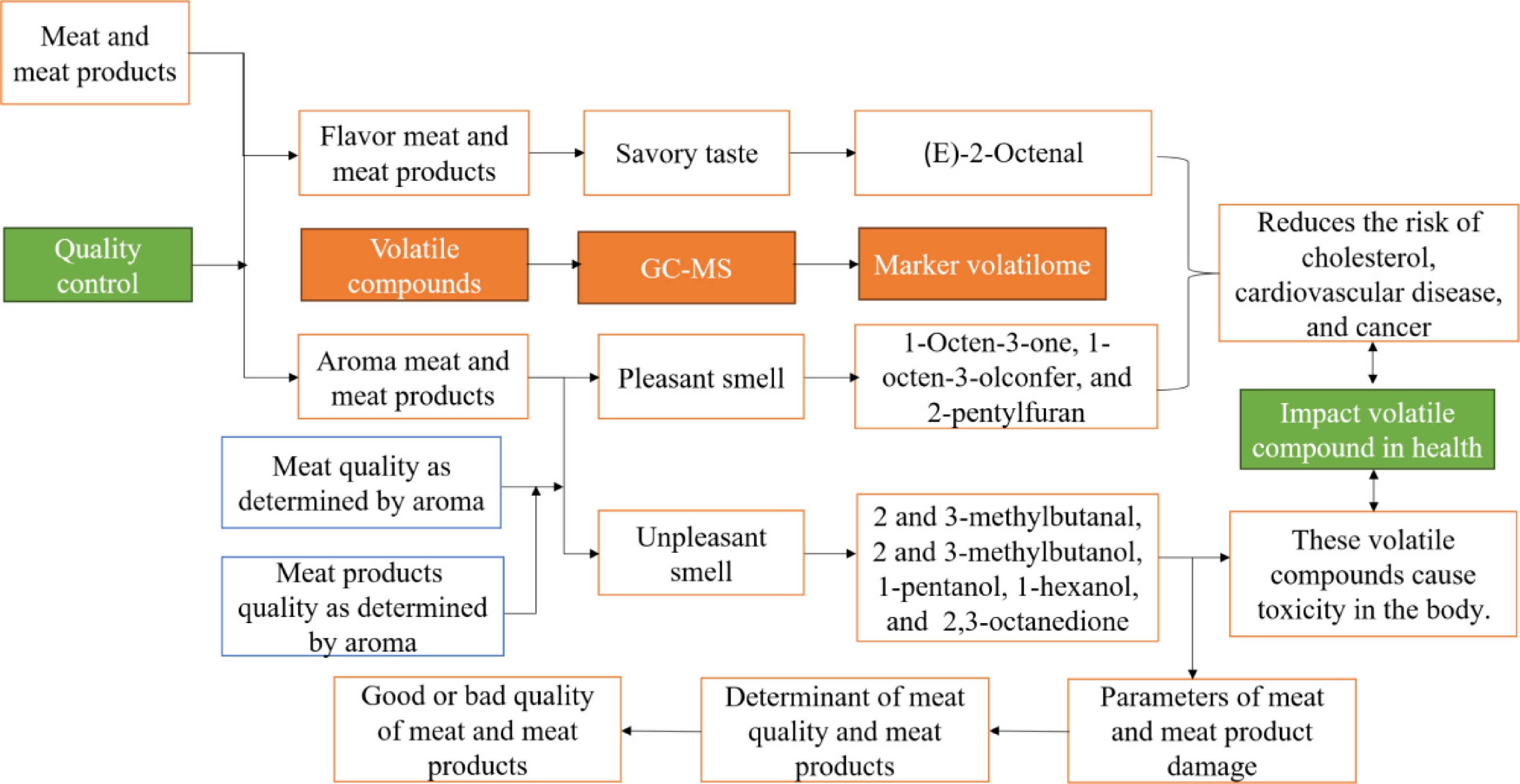
Figure 3.
The health effects of volatile compounds released from meat and meat products.
Volatile molecules can help control whether meat and meat products are fit for consumption, as seen in Fig. 3. Volatile compounds in meat and animal-based products can also significantly impact health[83]. Toxic content can trigger health problems if consumed. This is because some volatile compounds in the alcohol group in products that already have an unpleasant aroma can pose a health risk[84]. Volatile markers are helpful in assessing the safety of meat and meat products for consumption.
-
To guarantee that meat and meat products are of the highest quality for consumption, food safety procedures have been put in place[85]. Meat and meat product quality can be evaluated by analyzing their volatile compounds, which serve as key indicators. Properly extracted and analyzed, volatile compounds can indicate whether meat and meat products are edible. Analyzing these volatile compounds will help ensure food safety for individuals and communities. Individuals who consume safe meat and meat products will build communities that also do the same. Volatile compounds such as aldehydes in meat and meat products can reveal the product's freshness. Biomarkers found in pork include hexanal, 1-octen-3-ol, 4-methylphenol, and dodecane, suggesting that meat containing these substances may be unsafe for Muslim consumers[86]. Food safety not only focuses on conditions such as good taste and aroma but also ensures that the food does not contain non-halal ingredients such as pork, which Muslims are not permitted to eat. Food safety based on the composition of volatile compounds is shown in Fig. 4 below. Figure 4 below illustrates food safety based on volatile component composition.
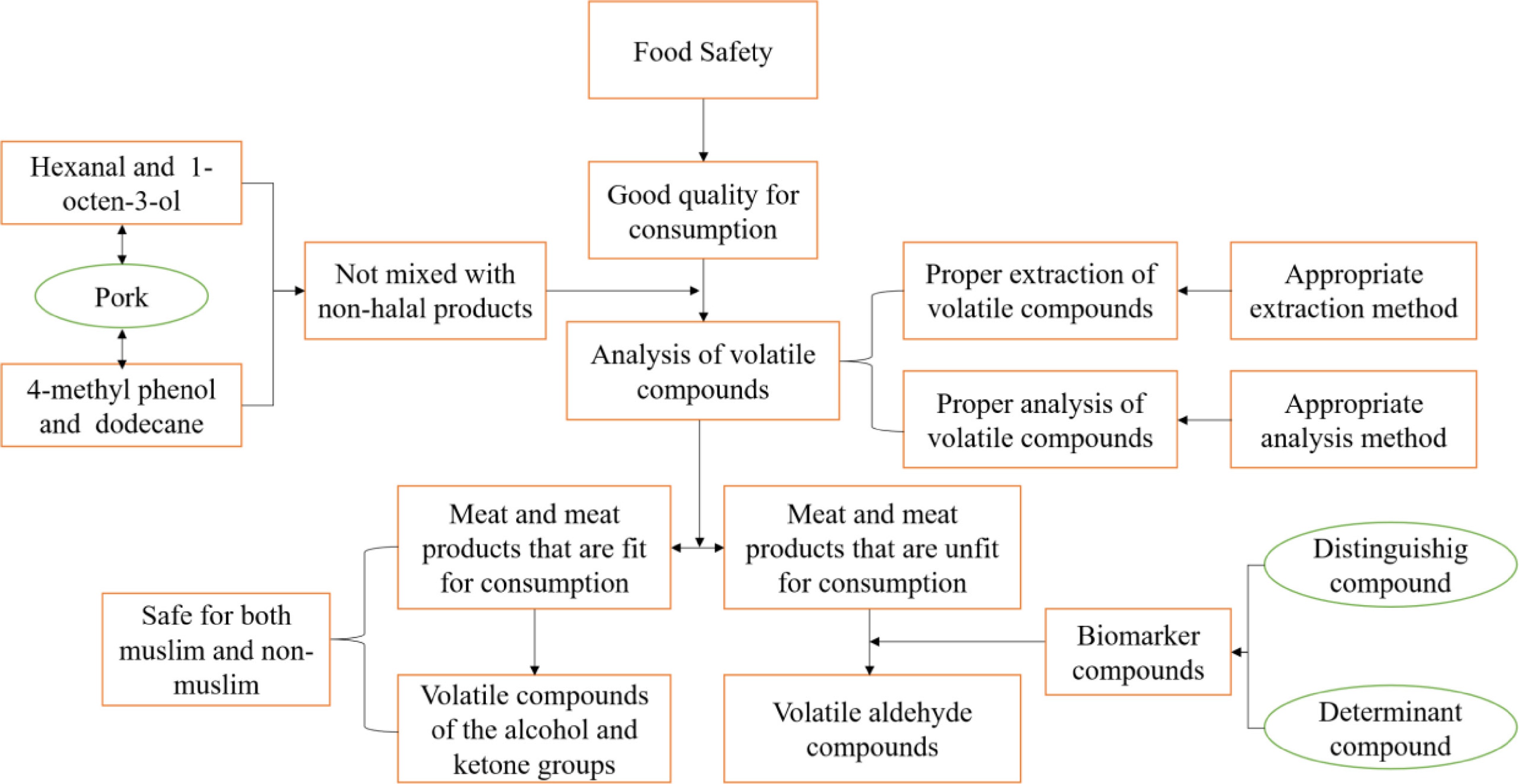
Figure 4.
Food safety of meat and meat products based on the composition of volatile compounds that are safe for consumers.
Figure 4 shows that volatile compounds have an impact on food. The correct extraction method can produce optimal volatile extracts from meat and meat products[87]. Before using GC-MS to analyze the product, the extraction step is crucial. The proper analysis method will produce accurate and precise results[88]. Volatile compounds can protect Muslims from consuming non-halal products like pork[89]. Although halal food safety is specifically intended for Muslims, non-Muslims can also verify the ingredients of the food products they eat, ultimately gaining the same level of protection. Food safety is very important to minimize the negative impacts after consuming meat and meat products[90].
-
By examining the volatile component composition of meat and meat products, it is possible to evaluate their safety, which ultimately affects community health. Volatile compounds in meat give it a savory flavor and produce both pleasant and unpleasant aromas. The savory taste of meat products comes from (E)-2-octenal. Moreover, 1-octen-3-one, 1-octen-3-ol, and 2-pentylfuran impart a pleasant aroma to meat products. The unpleasant smell in meat products originates from compounds like 2- and 3-methylbutanal, 2- and 3-methylbutanol, 1-pentanol, 1-hexanol, and 2,3-octanedione. Hexanal, 1-octen-3-ol, 4-methylphenol, and dodecane are volatile compounds present in pork, serving as markers for the identification of non-halal meats. In the future, volatile compounds can become reliable tools for ensuring the quality of different types of meat. Aldehydes, ketones, and alcohols are important functional groups that contribute to assessing the food safety of meat products. Meat products that meet safety standards benefit the health of the individuals who consume them, ultimately supporting overall community health. Volatile compounds can serve as an alternative in the authentication process for food products that affect health. High reliability in routine testing is provided by the GC-MS-based volatilomics technique for food safety. This method's price, ease of extraction, and quick analysis time all contribute to its potential for use. Food safety decisions will be easier to make by combining the GC-MS approach with chemometrics.
We would like to thank the Research and Community Service Institute (Lembaga Penelitian dan Pengabdian or LPPM) of Universitas Persatuan Guru Republik Indonesia (PGRI) Madiun (Grant number 028.a/H/LPPM/UNIPMA/2025) for funding this research.
-
The authors confirm their contributions to this study as follows: writing of the original draft: Maritha V, Kartini PR; investigation, data curation: Kusumawati D, Kurniawan A, Maritha I; funding: Kartini PR, Maritha V, Kusumawati D; conceptualization: Maritha V, Maritha I; methodology: Kartini PR; supervision, writing review, and editing: Kusumawati D, Kartini PR, Abass KS. All authors reviewed the results and approved the final version of the manuscript.
-
All data generated or analyzed during this study are included in this published review.
-
The authors declare no conflict of interest.
- Copyright: © 2026 by the author(s). Published by Maximum Academic Press on behalf of Nanjing Agricultural University. This article is an open access article distributed under Creative Commons Attribution License (CC BY 4.0), visit https://creativecommons.org/licenses/by/4.0/.
-
About this article
Cite this article
Kartini PR, Maritha V, Kusumawati D, Kurniawan A, Maritha I, et al. 2026. Food safety of processed meat products for community health based on volatilome compound content. Food Materials Research 6: e021 doi: 10.48130/fmr-0026-0022 

Food safety of processed meat products for community health based on volatilome compound content
- Received: 19 February 2026
- Revised: 10 August 2026
- Accepted: 13 August 2026
- Published online: 12 October 2026
Abstract: Community health is a top priority because it significantly contributes to the overall quality of life of the general population. It starts with addressing individual health by meeting nutritional needs. These needs can be satisfied by consuming meat products (sausages, nuggets, meatballs, ham, and sliced meat) that adhere to food safety standards. The standards guarantee that meat products are free from toxic substances and contamination by non-halal sources. The safety of meat products, which affects community health, can be assessed by analyzing their volatile compound composition. Several compounds in meat products play important roles, such as (E)-2-octenal, which provides a savory taste, and 1-octen-3-one, 1-octen-3-ol, and 2-pentylfuran, which add a pleasant aroma. Additionally, meat products might smell unpleasant because of 2- and 3-methylbutanal, 2- and 3-methylbutanol, 1-pentanol, 1-hexanol, and 2,3-octanedione. Meanwhile, the halal status of meat products is determined by whether volatile chemical compounds commonly found in pork are detected, including hexanal, 1-octen-3-ol, 4-methylphenol, and dodecane. In the future, volatile compounds might serve as dependable indicators to verify the quality of different types of meat. Meat products that adhere to safety standards benefit the health of consumers, ultimately enhancing community well-being.
-
Key words:
- Community health /
- Food safety /
- Volatilome /
- Halal /
- Meat products