












-
Branching (or tillering) represents a critical architectural trait in plants, resulting from the initiation and growth of lateral buds. This process plays a critical role in plant biomass accumulation and wood production[1,2]. Plant adaptation to environmental conditions and growth dynamics shape their fundamental structure; for instance, plants often fine-tune their growth characteristics to enhance light capture. The regulation of branching is a central strategy for plant survival and spatial occupancy, orchestrated through a sophisticated regulatory network[3]. Branching constitutes a highly complex developmental program governed by intricate interactions among multiple genes, plant hormones, and environmental cues[4]. A deeper understanding of the underlying mechanisms controlling branch/tiller formation is essential for breeding efforts and enhancing productivity.
Over the past few decades, the regulatory mechanisms governing plant architecture have been extensively investigated. Studies have reported that DNA methylation, as well as signaling pathways involving hormones, sugars, light, and water, play significant roles in regulating shoot branching[3,5]. Since the discovery of the five major hormones—auxin, cytokinin, gibberellin, ethylene, and abscisic acid—in the mid-20th century, numerous studies have demonstrated the involvement of auxin in various aspects of plant growth and development[6], including branching/tillering, somatic embryogenesis, secondary wall formation, stress responses, root elongation, and floral development[7−12]. Pathways associated with auxin biosynthesis, transport, and signaling have also been widely studied. Plants perceive and respond to auxin through three protein families-TIR1/AFB F-box, aux/IAA, and auxin response factors (ARFs)-which regulate downstream gene expression[13,14]. Furthermore, PIN-LIKES (PILS) proteins, belonging to the same family of endoplasmic reticulum-localized auxin efflux carriers as PIN-FORMED (PIN) proteins, regulate intracellular auxin transport by modulating auxin movement from the endoplasmic reticulum to the nucleus[15]. Evolutionarily older than PIN proteins, PILS proteins function through transcriptional regulation. Genetic and biochemical studies have demonstrated that members of the PILS family mediate polar auxin transport (PAT) and influence plant architecture, particularly the development of branches and roots[16]. In Arabidopsis, PILS6 negatively regulates root growth by restricting nuclear auxin availability[17], and PILSs have been shown to coordinate brassinosteroid signaling with nuclear auxin import[18]. In rice, PILS6 acts as a negative regulator of tillering[16]. HbPILS6 is involved in auxin-mediated growth regulation and stress responses, and overexpression of HbPILS6 in Arabidopsis leads to dwarfism, slender stems, and reduced lignification[19]. These findings collectively underscore the essential role of PILS proteins in regulating plant growth. However, functional studies on PILSs in woody plants, particularly gymnosperms, remain limited.
Chinese fir (Cunninghamia lanceolata) is an important coniferous timber species in China, widely utilized in construction, bridge engineering, shipbuilding, and various other industries[20]. The natural pruning ability of Chinese fir is generally limited, and trees cultivated without human intervention often develop numerous knots, which adversely affect wood utilization. In recent years, the developmental indices of lateral branches in Chinese fir have gradually gained attention from forestry professionals as key indicators for knot-free timber cultivation[21]. Existing research has demonstrated that auxin plays a significant role in the bud development of Chinese fir[22], but its specific regulatory mechanisms remain largely unexplored. This study focuses on the critical period of lateral bud activation, with an emphasis on elucidating the core pathways of auxin and sugar metabolism during this process. To this end, the role of auxin in lateral bud development was first clarified through the exogenous application of auxin and its inhibitors. Subsequently, comprehensive transcriptomic and targeted metabolomic analyses of lateral buds at different developmental stages were conducted and combined with morphological observations, leading to the identification of potential hub genes. However, the stable genetic transformation system for Chinese fir is not yet well established; therefore, we employed heterologous systems, such as tobacco and poplar, to perform functional validation of the candidate genes. This study investigates how SPL-PILS module-mediated auxin signaling regulates lateral bud and branch development, thereby providing a theoretical foundation and experimental basis for the breeding of superior Chinese fir varieties.
-
In this study, healthy 6-month-old '020' Chinese fir clone seedlings and 35-year-old mature '020' Chinese fir clone trees grown at the Baima Experimental Base of Nanjing Forestry University were selected. Lateral bud samples were collected from the 35-year-old mature trees at five distinct developmental stages (January, February, March, April 2024, and October 2023), designated as A, B, C, D, and E, respectively. The collected lateral bud tissues were utilized for transcriptomic and metabolomic analyses. Additionally, three different concentrations of IAA (indole-3-acetic acid) or NPA (N-1-naphthylphthalamic acid) were applied to '020' Chinese fir seedlings. Three biological replicates were carried out per treatment, each containing three seedlings. Following treatment, lateral bud tissues were harvested to assess both the number of lateral buds and auxin content. For genetic transformation experiments, 1-month-old seedlings of poplar (Populus davidiana × P. bolleana) and tobacco (Nicotiana tabacum) exhibiting vigorous growth were employed. Furthermore, 1-month-old tobacco (N. benthamiana) plants were cultivated in a growth chamber for use in a dual-luciferase reporter (DLR) assay.
Transcriptomic and metabolomic analysis of lateral buds in Chinese fir at different developmental stages
-
Total RNA isolated from lateral buds served as the template for cDNA library construction, with its preliminary yield quantified using a Qubit 2.0 Fluorometer. Following successful quality assessment, libraries were pooled based on effective concentration and the required sequencing depth, with subsequent transcriptome sequencing performed on the Illumina platform. Annotations were assigned to the unigenes using seven major databases (Nr, Nt, KOG, Swiss-Prot, UniProt, KEGG, and GO)[23]. Differentially expressed genes (DEGs) were computed using DESeq2, with those meeting the thresholds of |log2FoldChange| > 1 and Benjamini–Hochberg adjusted p-value (p-adj) < 0.05 being selected. The quantification of phytohormones was conducted following a standard experimental procedure[24]. Initially, metabolites were extracted using a water-methanol mixture, followed by analysis on an LC-MS/MS platform. The supernatant was separated on the LC-MS/MS system (Wekemo Tech Group Co., Ltd, Shenzhen). Quantitative analysis and data processing of the metabolites were subsequently conducted[25,26]. For the transcriptome analysis, three biological replicates were designated for each developmental stage, whereas the metabolome analysis employed five biological replicates per stage. Visualization of transcriptomic and metabolomic data was accomplished using TBTOOLS software.
Weighted gene co-expression network analysis
-
Weighted gene co-expression network analysis (WGCNA, v1.66) was employed to screen for key structural genes and transcription factors involved in the auxin signal transduction pathway, using the RNA-seq-derived gene expression matrix as input[27]. The core parameters were configured with a soft-thresholding power of 14, a minimum module size of 30, and a cut height of 0.25.
RT-qPCR of candidate genes
-
For each transgenic line of poplar and tobacco, three biological replicates were obtained, with each replicate consisting of lateral buds harvested from a separate plant grown under identical conditions. All plants were sampled at the same developmental stage, and the lateral buds were immediately frozen in liquid nitrogen and stored at −80 °C until RNA extraction. Total RNA was extracted and subsequently reverse-transcribed to synthesize cDNA (F0202, Beijing LABLEAD Inc.). The primers for RT-qPCR were designed using Primer 5.0, as detailed in Supplementary Table S1. The presence of target sequences was determined with SYBR Green (Cat#E096; Novoprotein, Shanghai, China). The internal reference gene employed for Chinese fir was ClActin. Gene expression was quantified using the comparative Ct method and normalized by the 2−ΔΔCᴛ method. Statistical analysis was performed with SPSS software (IBM, New York, NY, USA), and significance was determined by t-test (* p < 0.05, ** p < 0.01).
Self-activation of candidate genes
-
Based on the co-expression network analysis, the hub gene ClPILS5 was selected for further investigation. Using the CloneUFOTM One Step Cloning Kit (C101, ATG Biotechnology, Co., Ltd, Nanjing, China), the amplified CDS was inserted into pGBKT7, with the primers listed in Supplementary Table S1. The recombinant vector was then transformed into the AH109 yeast strain. Transformed yeast were cultured at 28 °C for 48 h on selective media, including SD/-Trp, SD/-Trp-His-Ade, and SD/-Trp-His-Ade supplemented with X-α-gal (CX11922, Coolaber, Beijing, China).
Validation of candidate genes via yeast one-hybrid and dual-luciferase reporter assays
-
In the yeast one-hybrid (Y1H) assay, the coding sequence (CDS) of ClSPL12 and the promoter sequence of ClPILS5 were cloned into the pGADT7 and pAbAi vectors (EZ-HiFi Seamless Cloning Kit, T196-20, GenStar, Beijing, China), respectively. The mixed plasmids (pGADT7-ClSPL12 and pAbAi-proClPILS5) were co-transformed into the Y1H yeast strain, and the bacterial suspension was plated on selective medium supplemented with 700 ng/mL aureobasidin A (AbA). After incubation for 3 d, protein–DNA interactions were verified by observing yeast colony growth. For the DLR assay, the ClSPL12 CDS and promoter sequences containing GTAC cis-elements were constructed into the pGreenII 62-SK (effector vector) and pGreenII 0800-LUC (reporter vector), respectively. The epidermal cells of 1-month-old tobacco leaves were infiltrated with Agrobacterium GV3101 strains carrying the effector and reporter vectors in a predetermined ratio. Firefly luciferase (LUC) and Renilla luciferase (REN) activities were quantified with the dual-luciferase assay kit (Vazyme). Supplementary Table S1 lists all primer sequences used in this study.
Genetic transformation of tobacco and poplar
-
To verify the biological functions of ClPILS5 and ClSPL12, the coding sequences of ClPILS5 and ClSPL12 were integrated into the pBI121 vector (JB101-01/JB201-01, TransGen Biotech, China) using a double-enzyme digestion method, resulting in the generation of overexpression (OE) constructs. Agrobacterium-mediated leaf disc transformation was employed to infect tobacco and poplar leaves, leading to the production of transgenic lines, with T1 generation transgenic tobacco plants and T0 generation transgenic poplar plants being obtained. Furthermore, the anthrone colorimetric method was utilized to determine the soluble sugar content[28], and auxin content was determined using a commercial kit from Hengyuan Biological Technology (Shanghai, China).
-
It has been previously reported that auxin influences branching in Chinese fir[22]. To further examine the influence of auxin on lateral bud development in Chinese fir, decapitated seedlings were subjected to treatments with varying concentrations of IAA (30, 50, and 100 mg/L) and NPA (50, 100, and 150 mg/L) (Fig. 1). After 7 d of IAA treatment, lateral bud outgrowth was significantly inhibited at concentrations of 50 and 100 mg/L compared with the CK group. By day 14, only the 100 mg/L treatment maintained a significant reduction in the number of lateral buds relative to CK (Figs 1, 2). Among these, the 50 mg/L IAA treatment was found to be the most effective, significantly suppressing bud outgrowth while maintaining normal seedling growth. Following 7 d of NPA treatment, enhanced lateral bud outgrowth was clearly observed at 50 and 100 mg/L, with both concentrations resulting in a significantly higher number of lateral buds than the CK group. The 100 mg/L NPA treatment showed the greatest promoting effect, with the number of lateral buds continuing to increase after 14 d of treatment. In contrast, the 150 mg/L NPA treatment failed to promote lateral bud outgrowth due to its excessive concentration and was observed to cause physiological damage to the plants. In summary, exogenous IAA at appropriate concentrations inhibits lateral bud outgrowth, whereas NPA treatment promotes it.
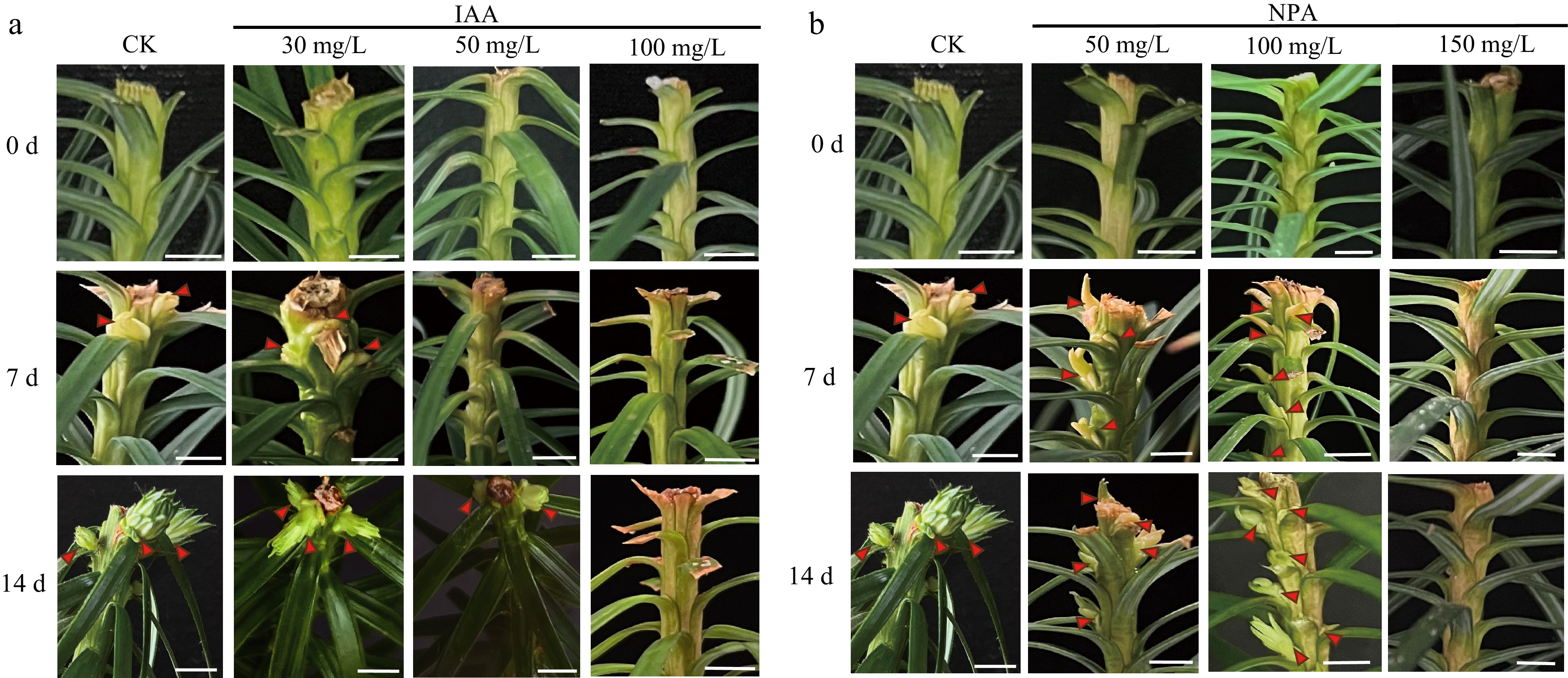
Figure 1.
Phenotype of lateral buds in half-year-old Chinese fir seedlings treated with exogenous (a) IAA and (b) NPA. Scale bars: 1 cm. Red arrows indicate the positions of lateral buds.
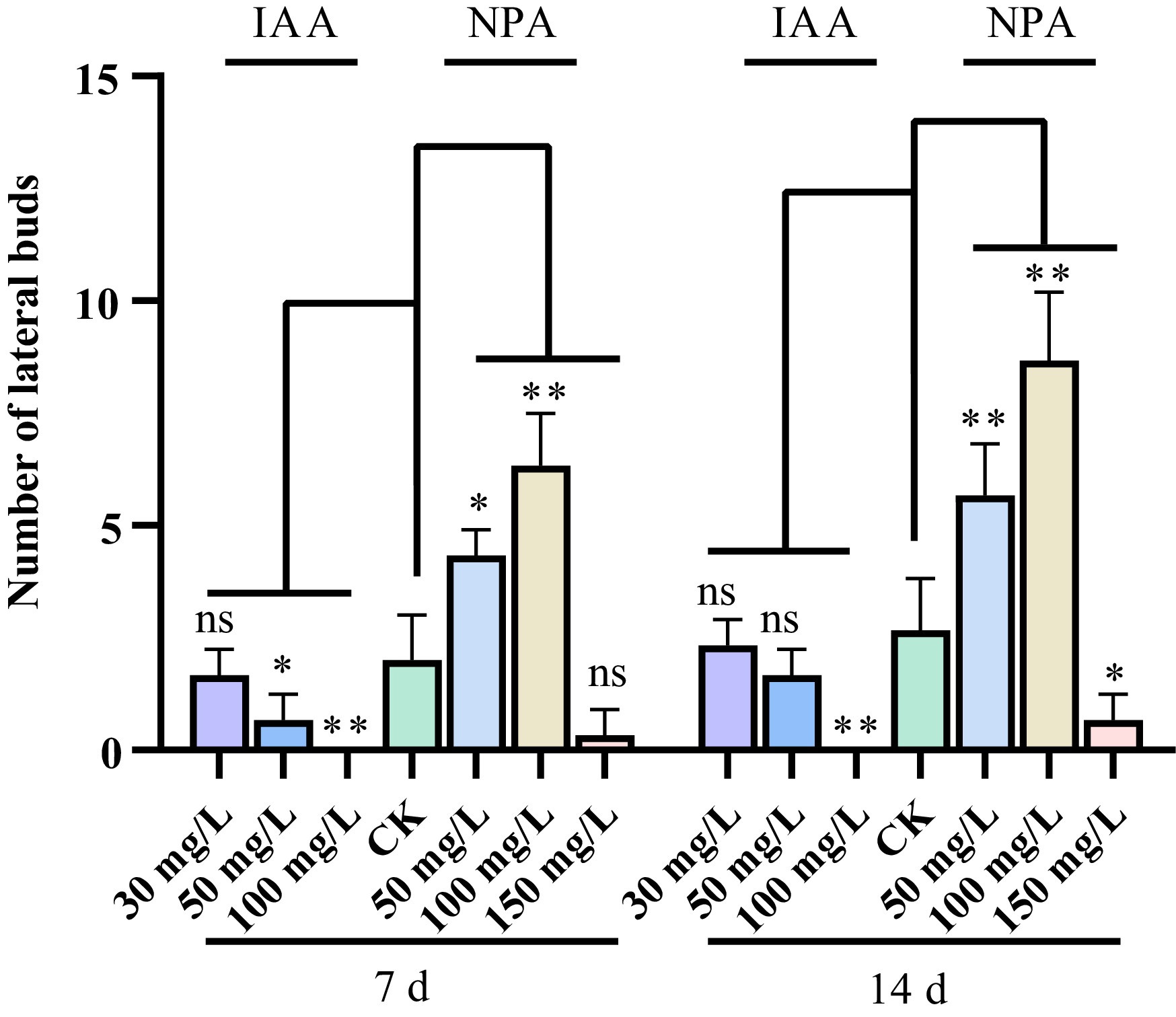
Figure 2.
Statistical analysis of the number of lateral buds in half-year-old Chinese fir treated with IAA and NPA. Error bars indicate mean ± SD (Student's t-test; * p < 0.05; ** p < 0.01).
Dynamic transcriptomic alterations in lateral buds of Chinese fir during development
-
We observed phenotypic variations in lateral buds of Chinese fir before and after overwintering (Supplementary Fig. S1a). Prior to the onset of winter, a whorl of lateral buds forms around the apical bud in Chinese fir. After a period of development, these lateral buds gradually become encased by hardened bud scales, enabling successful overwintering. By February of the following year, the development of lateral buds is progressively activated, leading to the formation of plump bud structures by March, with full development into lateral branches achieved by May. However, the key regulatory genes and transcriptional networks controlling these processes remain unknown in Chinese fir. To identify candidate genes and pathways involved in these processes, we collected lateral buds from the five representative stages and performed transcriptome sequencing analysis. Initially, low-quality raw reads obtained from transcriptome sequencing were removed to yield clean reads (Supplementary Table S2), which were then assembled into unigenes and annotated across multiple databases (Supplementary Fig. S1b). A total of 57,149 (17.86%) and 56,690 (17.71%) unigenes were respectively assigned annotations in the GO and KEGG databases. Within the 'biological process' category, the most abundant GO terms were identified as 'cellular process', 'intracellular anatomical structure', and 'catalytic activity' (Supplementary Fig. S1c). Furthermore, among the 'metabolic categories', the top three KEGG pathways were 'ribosome', 'spliceosome', and 'protein processing in endoplasmic reticulum' (Supplementary Fig. S1d). Additionally, metabolic pathways associated with bud development, including 'plant hormone signal transduction', 'tryptophan metabolism', and 'MAPK signaling pathway', were ranked 4th, 13th, and 15th, respectively. This indicates that plant hormone signals, including auxin, play a critical role in the seasonal activity changes of bud tissues.
The reliability of the transcriptome sequencing and lateral bud samples across different periods was demonstrated by inter-sample correlation analysis (Supplementary Fig. S2). It has been previously established that January (A), February (B), and March (C) represent critical transitional phases for Chinese fir lateral buds shifting from dormancy to activation[22]. Accordingly, these three stages were defined as dormant, activated transition, and activated, respectively, and DEGs were further identified. DEGs were identified and visualized through pairwise comparisons (Supplementary Figs S3, S4). These DEGs across the three periods were clustered (Fig. 3a), and all DEGs were grouped into nine clusters (Fig. 3b). Among them, DEGs in Cluster 1 showed a continuous increase, while those in Cluster 2 and Cluster 4 exhibited typical patterns of initial increase followed by a decrease, and initial decrease followed by an increase, respectively. These expression dynamics suggest that these DEGs may regulate the dormancy and reactivation processes in bud tissues. To further investigate the regulatory mechanisms of these DEGs in Chinese fir lateral buds, pairwise comparisons were conducted among groups A, B, and C. A total of 12,456, 23,013, and 24,536 DEGs were identified in the comparisons of A vs B, B vs C, and A vs C, respectively, with 780 DEGs common to all three comparison sets (Fig. 3c). KEGG enrichment analysis of these 780 shared DEGs highlighted pathways such as 'carbohydrate metabolism', 'phenylalanine, tyrosine and tryptophan biosynthesis' and 'photosynthesis-antenna proteins', while GO analysis revealed terms including 'photosynthetic membrane', 'cellular response to far red light', and 'cellular response to red light' (Fig. 3d, e). These results indicate that auxin, carbohydrates, and photosynthesis may participate in lateral bud development in Chinese fir.
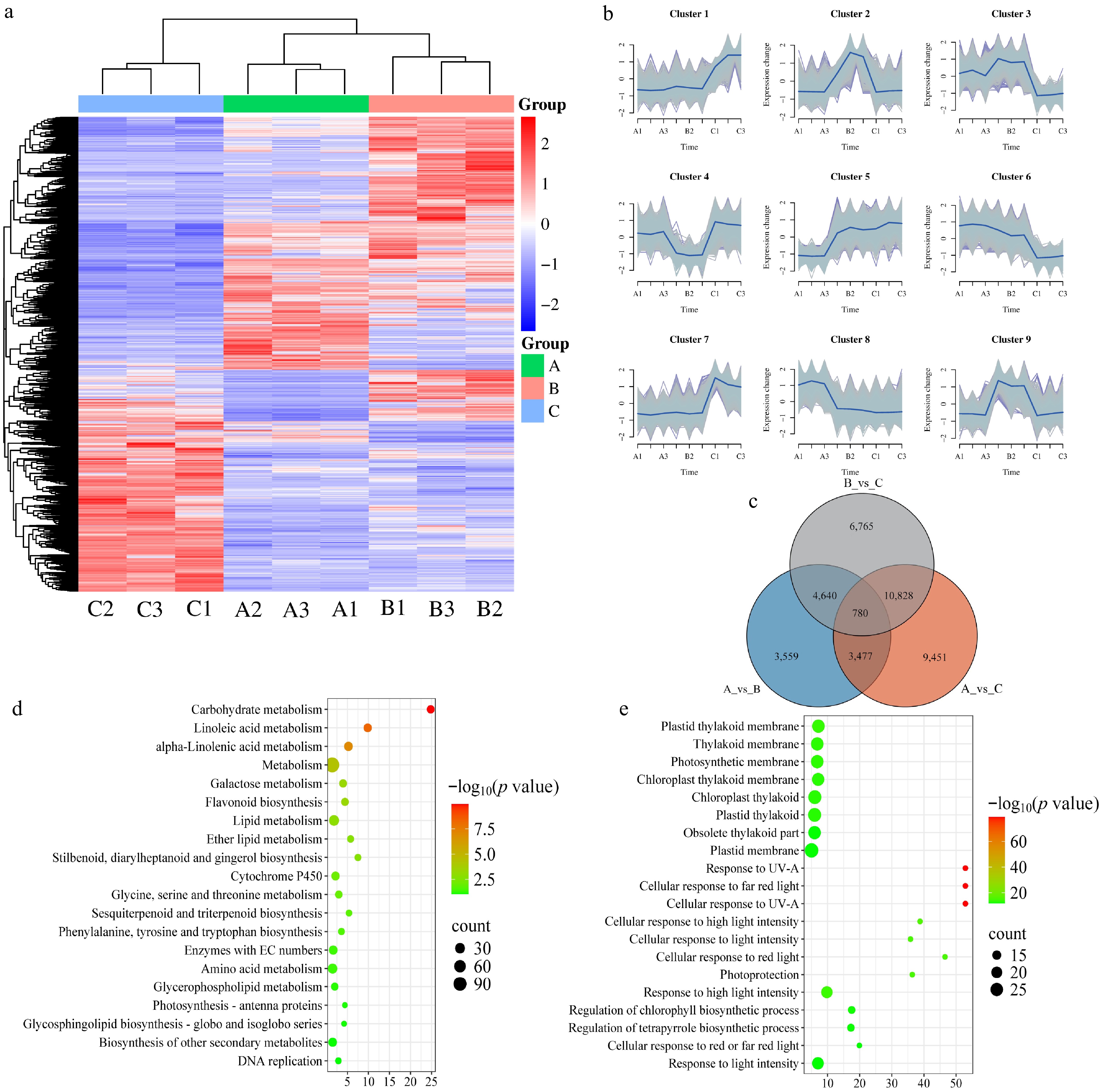
Figure 3.
Clustering and enrichment analysis of DEGs in three developmental stages. (a) Cluster heatmap, with red and blue colors in the heatmap indicating genes with high and low expression levels, respectively; (b) expression trend analysis (clustering performed using TPM values of each biological replicate as independent input; Mfuzz package in R, fuzzy C-means algorithm, k = 9); (c) Venn diagram; (d) KEGG enrichment; and (e) GO enrichment of DEGs.
Integrated analysis of auxin content and gene expression in the auxin signaling pathway
-
To investigate the roles of plant hormones, particularly auxin, in lateral bud development and further elucidate the regulatory mechanisms of genes under endogenous hormone signaling, targeted metabolomic analysis of plant hormones was conducted on Chinese fir lateral buds at three developmental stages in this study. Initially, the gene expression profiles of enzymes involved in the auxin biosynthesis and signal transduction pathways were analyzed based on transcriptomic data (Fig. 4). The results demonstrated that multiple key genes exhibited distinct stage-specific expression patterns from stage A to C during the metabolic process from tryptophan to auxin (Fig. 4a). Among these, the expression profiles of AROK, TRP3, and TRPD showed an upward trend and peaked at stage C (activated). In the pathway synthesizing auxin from tryptophan through various intermediates, most genes, such as DDC, TDC, TAA1, and Nitrilase, were expressed at significantly higher levels during stage C compared to stages A and B. Notably, several other enzyme genes directly associated with auxin biosynthesis, including AMI and AAO, were downregulated during stage C. Regarding auxin signal transduction, the expression patterns of the receptor TIR1 and transcription factors in the ARF family also displayed significant variations across stages. TIR1 was highly expressed during stage B, whereas multiple ARF members were downregulated during stage C. Additionally, genes such as GH3, Aux/IAA, and SAUR were specifically highly expressed during stage C.
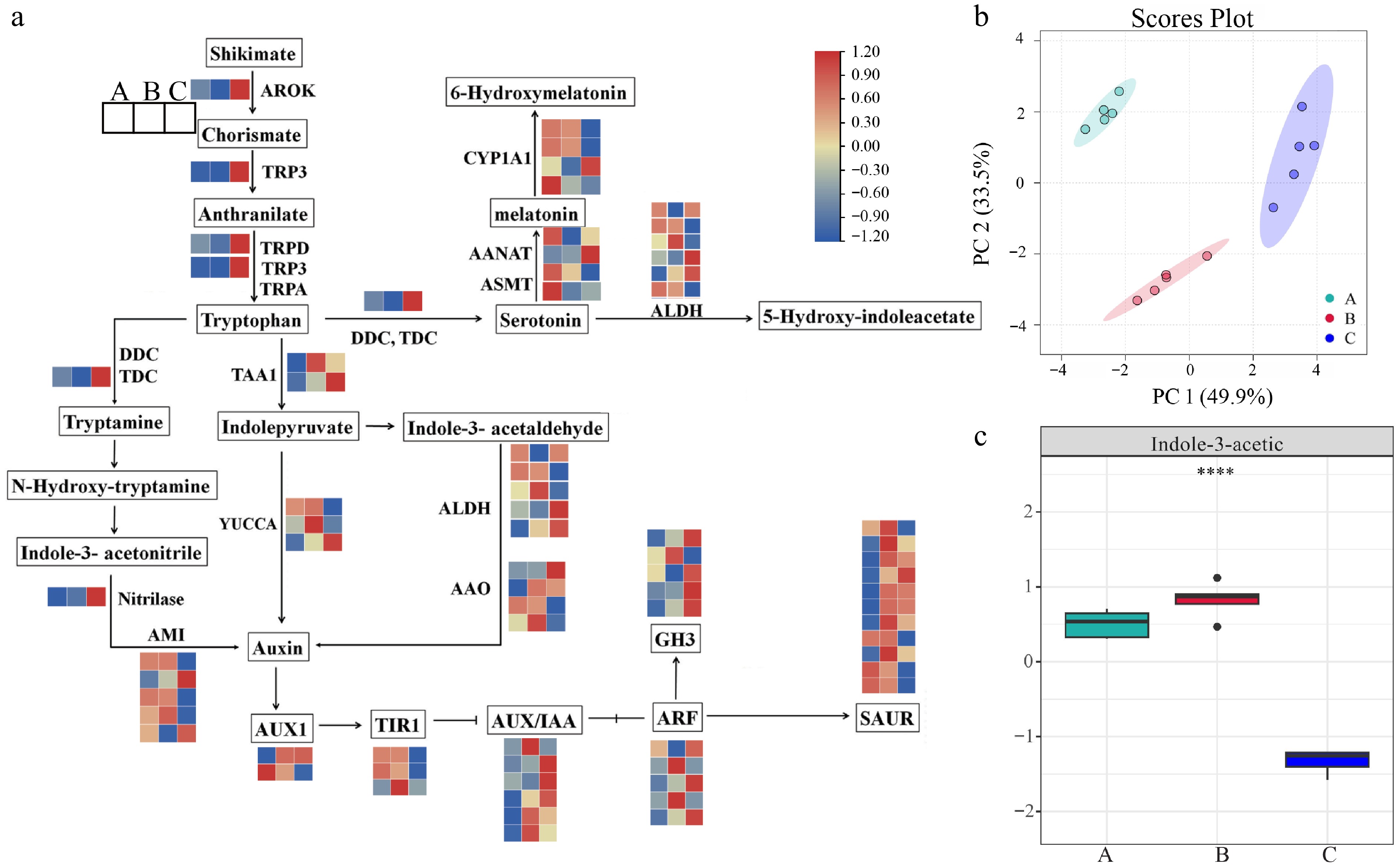
Figure 4.
Comprehensive analysis of auxin biosynthesis and signaling pathway gene expression and IAA content. (a) Auxin biosynthesis and signaling pathway. Expression levels of genes involved in auxin biosynthesis and signal transduction pathways based on RNA-seq data. (b) Orthogonal partial least squares discriminant analysis. (c) Dynamic changes in auxin content. ****p < 0.0001. Different colors represent different developmental stages.
Further analysis of lateral bud metabolites using OPLS-DA and hierarchical clustering demonstrated varied concentrations of key phytohormones—including auxin, cytokinin, gibberellin, and abscisic acid—at different developmental phases (Fig. 4b, c; Supplementary Figs S5, S6). As one of the key hormones involved in lateral bud development, endogenous auxin content was observed to initially increase and subsequently decrease from stage A to stage C, reaching its lowest level at stage C (Fig. 4c).
The identification of hub genes mediating auxin signal-regulated lateral bud development
-
To systematically analyze transcriptional changes, a WGCNA was performed, leading to the identification of 14 distinct gene co-expression modules, each designated by a unique color (Fig. 5a). Correlations between these modules and endogenous hormone levels were calculated (Fig. 5b). The results revealed that multiple gene modules exhibited significant correlations with hormone levels, indicating that the developmental transition in lateral buds involves complex transcriptional and hormonal regulation. Among these, auxin was particularly prominent. The MEturquoise module showed a highly significant negative correlation with IAA levels (correlation coefficient = −0.93, p = 3 × 10⁻⁴), representing one of the most significant associations in the dataset. Meanwhile, the MEblue module exhibited a strongly significant positive correlation with IAA levels (correlation coefficient = 0.84, p = 0.005), suggesting a central role for auxin signaling in regulating lateral bud development. Additionally, other hormones were significantly associated with specific modules. For example, jasmonic acid (JA) exhibited a strong negative correlation with the MEbrown module (r = −0.93, p = 2 × 10⁻⁴), while salicylic acid (SA) was strongly positively correlated with the same module (r = 0.94, p = 2 × 10⁻⁴). Abscisic acid (ABA) content was significantly positively correlated with the MEtan module, and trans-zeatin riboside (tZR) content was positively correlated with the MEturquoise module.
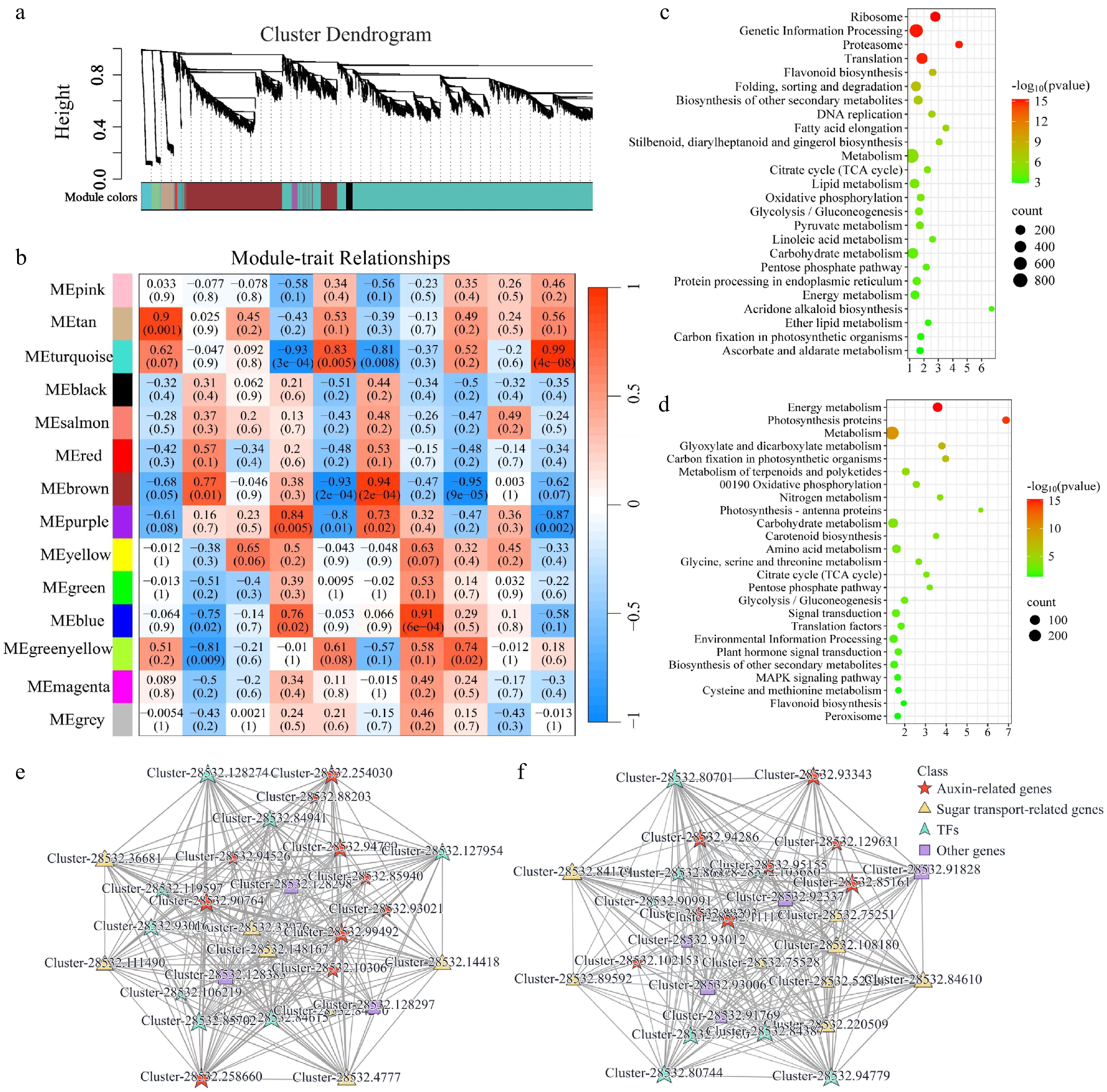
Figure 5.
WGCNA of the gene expression matrix based on RNA-seq data. (a) Cluster dendrogram of 14 modules. (b) Module-trait relationships between modules and phytohormone contents. KEGG enrichment analysis of DEGs in the (c) MEturquoise and (d) MEblue modules. The co-expression networks in the (e) MEturquoise and (f) MEblue modules.
Subsequently, a KEGG pathway enrichment analysis was performed on the key co-expression modules (MEturquoise and MEblue) (Fig. 5c, d). The MEturquoise module was significantly enriched in fundamental metabolic and energy production pathways, including 'glycolysis/gluconeogenesis', 'carbohydrate metabolism', and 'protein processing in endoplasmic reticulum', which are closely associated with protein synthesis and processing. The MEblue module exhibited significant enrichment in core metabolic pathways such as 'energy metabolism', 'photosynthesis proteins', and 'glycolysis/gluconeogenesis'. More importantly, the 'plant hormone signal transduction' pathway was found to be significantly enriched in the MEblue module. On this basis, a co-expression network was constructed in the MEturquoise and MEblue modules, and multiple genes related to auxin signaling involved in plant growth and development were identified in both modules (Fig. 5e, f). Among them, Cluster-28532.94526 and Cluster-28532.88203 encode auxin transporters of the PILS family, Cluster-28532.103680 encodes an SPL transcription factor, Cluster-28532.106219 encodes an ARF transcription factor, and additional transcription factors from the MYB and NAC families were also identified. To validate the reliability of the transcriptomic data, 16 genes were selected for quantitative PCR. The results showed consistent expression trends across the three developmental stages between the RT-qPCR and transcriptomic data (Supplementary Fig. S7).
ClPILS5 promotes branching in transgenic tobacco and poplar
-
The ClPILS5 from the MEturquoise module was selected for further investigation to explore its role in lateral bud development. Sequence alignment and phylogenetic analysis revealed that ClPILS5 is closely related to OsPILS5, PtPILS5, and AtPILS5, with high sequence similarity (Fig. 6a, b). Transcriptional self-activation assays demonstrated that ClPILS5 possesses transcriptional activation activity (Fig. 6c). Quantitative results indicated that ClPILS5 is highly expressed in buds, particularly in lateral buds of Chinese fir (Fig. 6d). Under IAA treatment, its expression increased rapidly initially and subsequently declined, whereas irregular fluctuations were observed under NPA treatment (Fig. 6e). Additionally, ClPILS5 expression initially decreased and then increased during the transition from dormancy to activation (Fig. 6f).
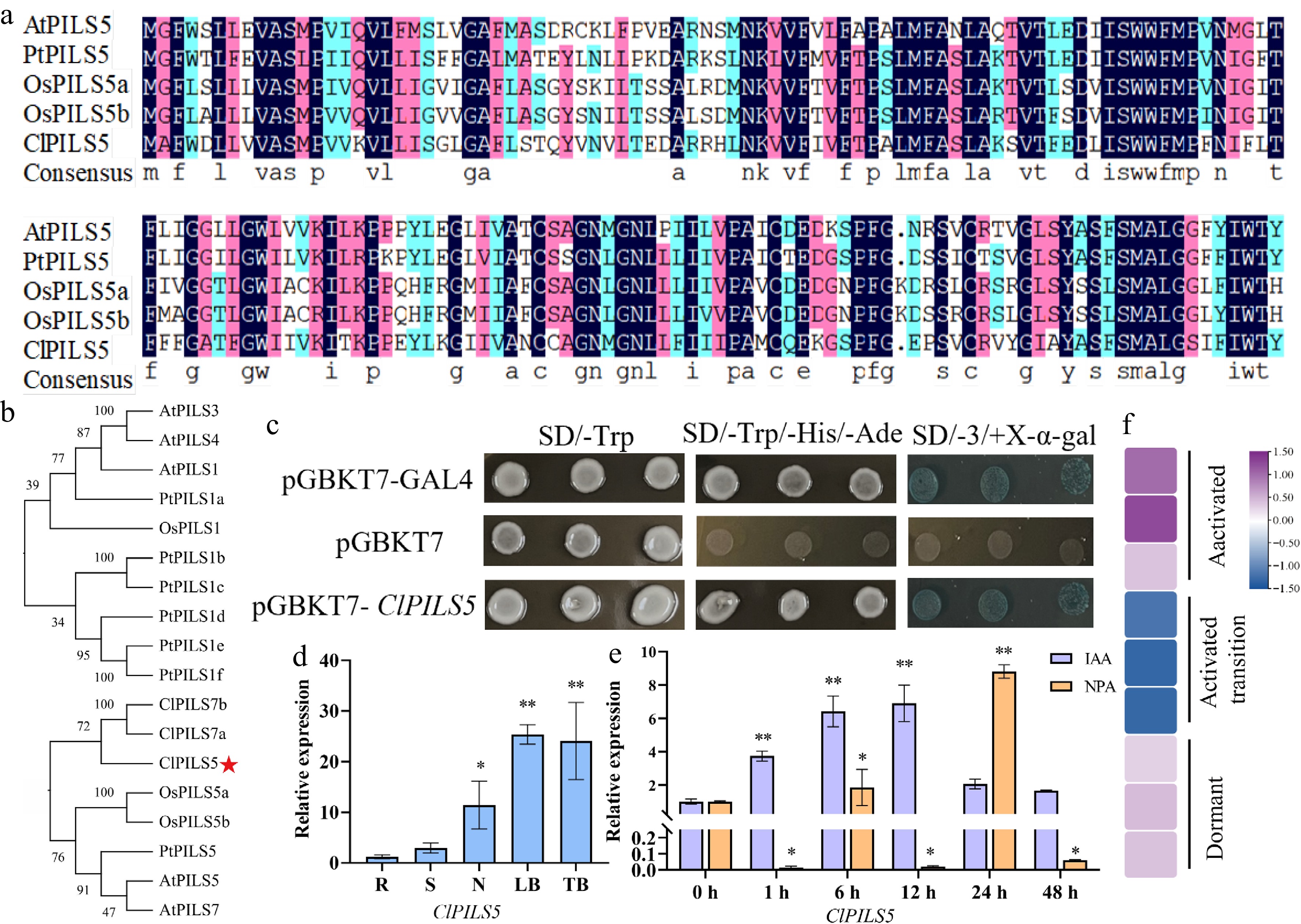
Figure 6.
Functional characteristics of ClPILS5. (a) PILS5 protein sequence alignment; At, Arabidopsis thaliana; Ptr, Populus trichocarpa; Os, Oryza sativa. (b) Phylogenetic tree of PILS proteins. The asterisk indicates the position of ClPILS5. (c) Yeast self-activation assay of ClPILS5. (d) Tissue-specific expression of ClPILS5. (e) ClPILS5 expression under IAA and NPA treatments. IAA: 50 mg/L, NPA: 100 mg/L. (f) Expression of ClPILS5 during different stages of lateral bud development (RNA-seq; dormant, activation-transition, and activated stages). The bars represent log2 (TPM + 1) values. Error bars: ± SD, n = 3. Asterisks indicate significance (* p < 0.05, ** p < 0.01, Student's t-test).
To further confirm the biological function of ClPILS5, transgenic tobacco lines overexpressing ClPILS5 under the control of the CaMV35S promoter (OE-3 and OE-5) were obtained (Fig. 7a−e). The results showed that, compared with WT plants, the number of lateral meristems did not change significantly in the two overexpression lines (Fig. 7f). However, an increased number of branches and a dwarf phenotype were observed (Fig. 7c, d, g, and h). Gene expression in tobacco was analyzed (Fig. 7i). In overexpression lines, several lateral branch-related genes (NtARF5, NtSWEET, NtSUT1, NtYUC1) were significantly upregulated. In contrast, the expression of NtBRC1, NtMAX4, NtTIR1, and NtTAA1 was significantly reduced in the overexpression lines. Soluble sugar and auxin contents in lateral buds were also measured. The results showed that soluble sugar content was significantly higher (Fig. 7j), while auxin content was significantly lower in the overexpression lines compared with the WT (Fig. 7k). Additionally, three transgenic poplar lines overexpressing ClPILS5 were obtained (Supplementary Fig. S8a, S8b). Similarly, these poplar overexpression lines exhibited dwarfism and increased branching compared to the WT (Supplementary Fig. S8c, S8d). In summary, ClPILS5 functions to promote plant branching.
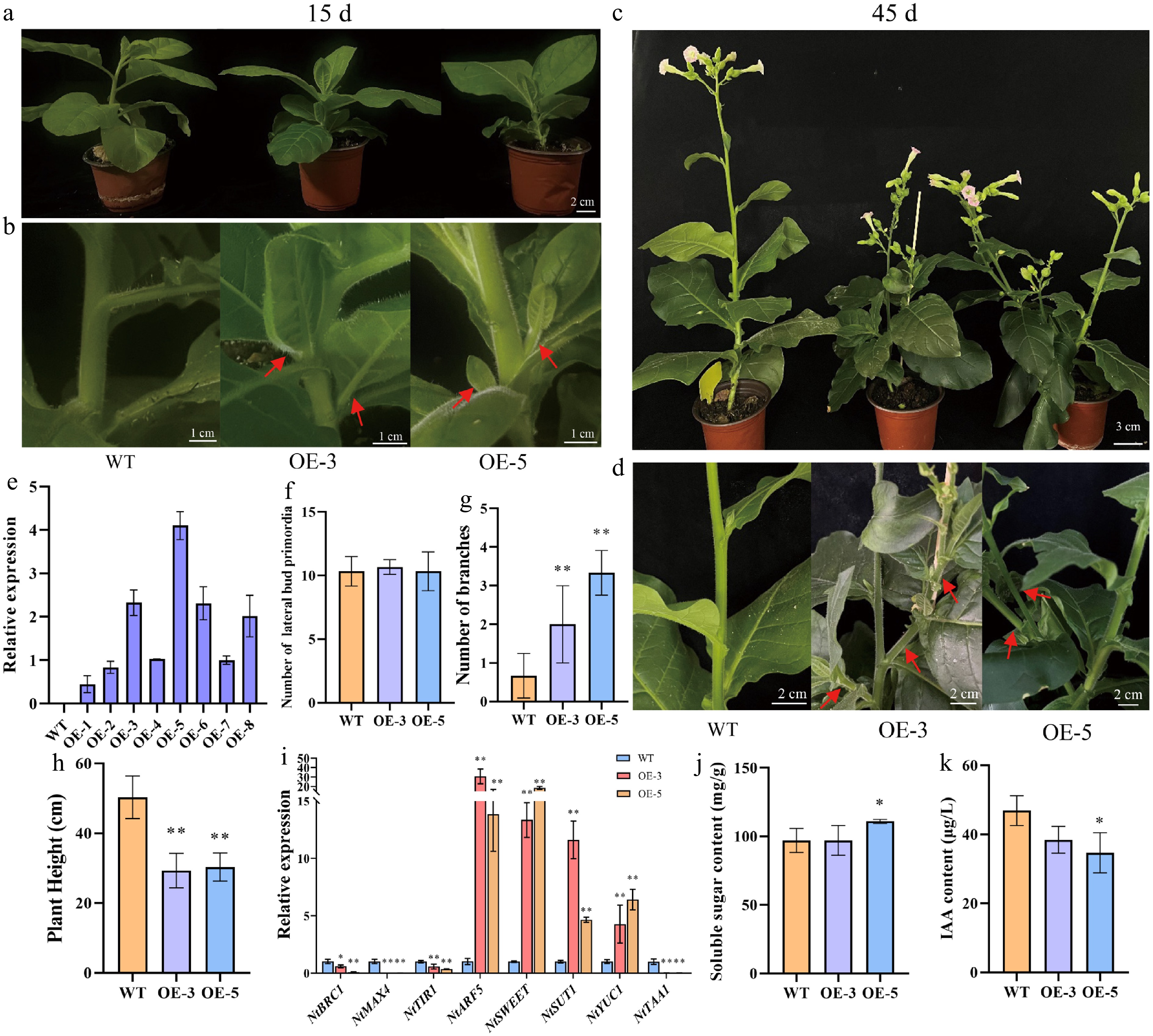
Figure 7.
Phenotypic and quantitative analyses of WT and ClPILS5-overexpressing tobacco. Overall phenotype at (a) 15 days and (b) partial enlargement, as well as overall phenotype at (c) 45 d and (d) partial enlargement of WT and transgenic tobacco soil-grown seedlings, with red arrows indicating the positions of lateral buds and lateral branches. Scale bars: (a) 2 cm; (b) 1 cm; (c) 3 cm; and (d) 2 cm. Red arrows indicate the positions of lateral buds and branches. Statistical analysis of (e) ClPILS5 expression, (f) lateral bud meristem number, (g) branch number, (h) plant height, (i) relative gene expression, (j) soluble sugar content, and (k) auxin content in WT and transgenic tobacco. Error bars: ± SD, n = 6. Asterisks indicate significance (* p < 0.05, ** p < 0.01, Student's t-test).
ClSPL12 negatively regulates the expression of ClPILS5
-
Sequence analysis of ClPILS5 revealed the presence of three GTAC-boxes within its 2.0 kb promoter region (Supplementary Table S3). The GTAC box has previously been reported as a motif specifically bound by SPL transcription factors[16]. Furthermore, several SPL transcription factors were identified within co-expression modules. Therefore, the SPL transcription factor family was systematically characterized based on RNA-Seq data from Chinese fir, leading to the identification of 10 ClSPLs. Among these, the expression trends of ClSPL12, ClSPL8, and ClSPL14 across different developmental stages were observed to be opposite to that of ClPILS5 (Fig. 8a), and correlation analysis indicated significant associations between ClPILS5 and ClSPL12, ClSPL8, and ClSPL11 (Fig. 8b). Results from sequence alignment and phylogenetic analysis demonstrated that ClSPL12 is closely related to OsSPL12, PtSPL12, and AtSPL2, with high sequence similarity and a conserved SBP domain among them (Fig. 8c, d).
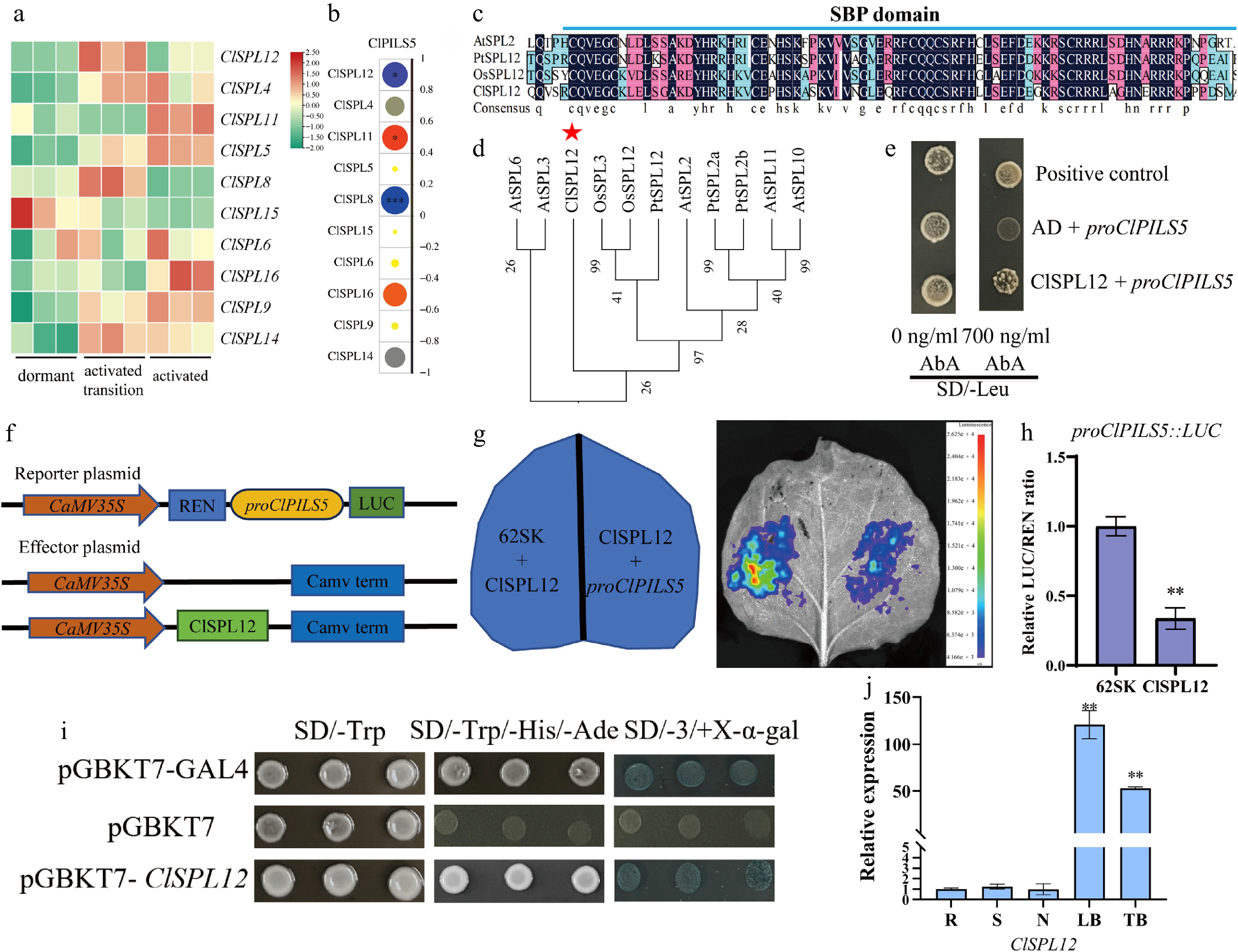
Figure 8.
ClSPL12 represses ClPILS5 transcription. (a) Expression of ClSPLs during lateral bud development (RNA-seq). The bars represent log2 (TPM + 1) values. (b) Pearson correlation between ClSPLs and ClPILS5. (c) SPL12 protein sequence alignment (At, Arabidopsis thaliana; Ptr, Populus trichocarpa; Os, Oryza sativa). (d) Phylogenetic tree of SPL proteins. The asterisk indicates the position of ClSPL12. (e) Y1H assay of ClSPL12 binding to the ClPILS5 promoter (700 ng/ml AbA; p53-promoter/Rec-P53 as a positive control). (f) Reporter and effector gene structures. (g) DLR assay fluorescence imaging. (h) Luciferase activity quantification. (i) Yeast self-activation assay of ClSPL12. (j) Tissue-specific expression of ClSPL12. Asterisks indicate significance (* p < 0.05, ** p < 0.01, Student's t-test)
The interaction between ClSPL12 and the ClPILS5 promoter was confirmed by Y1H assays (Fig. 8e), and this regulatory relationship was further validated through a DLR assay (Fig. 8f–h). Relative luciferase activity analysis indicated that ClSPL12 significantly suppressed the promoter activity of ClPILS5 (Fig. 8h). Additionally, transcriptional self-activation assays revealed that ClSPL12 possesses transactivation activity (Fig. 8i). Expression quantification showed that ClSPL12 transcript levels in lateral buds were more than 50-fold higher than those in roots, stems, and needles (Fig. 8j).
ClSPL12 inhibits lateral shoot growth in transgenic tobacco and poplar after decapitation
-
Similarly, to validate our hypothesis regarding the biological function of ClSPL12, transgenic tobacco lines overexpressing ClSPL12 were generated and subjected to decapitation (Fig. 9a−d). Two T1 overexpression lines (OE-3 and OE-4) were selected for further investigation (Fig. 9e). Compared to the WT, both OE lines exhibited suppressed growth and significantly reduced plant height (Fig. 9f). Neither WT nor overexpressing (OE) plants exhibited lateral bud outgrowth under standard cultivation conditions at 15 and 45 d post-planting, despite observed variations in lateral meristem number (Fig. 9g). Following decapitation at 15 d, lateral branches emerged in both WT and OE lines. However, lateral branch growth in the OE lines was slower, and their length was significantly shorter than that of the WT 30 d after decapitation (Fig. 9h). Additionally, soluble sugar content in the lateral buds of the OE-4 line was significantly reduced (Fig. 9i), while auxin content was markedly increased (Fig. 9j). Furthermore, the expression levels of NtBRC1, NtMAX4, NtARF5, NtSWEET, and NtSUT1 were significantly upregulated in the OE lines compared to the WT, whereas the expression of NtTAA1 and NtPILS5 was significantly downregulated (Fig. 9k). Three transgenic poplar lines overexpressing ClSPL12 were also obtained and decapitated (Supplementary Fig. S9a−S9c). Under normal developmental conditions, the plant height of the overexpression lines was significantly lower than that of the WT (Supplementary Fig. S9d), and the lateral branch length after decapitation was also shorter (Supplementary Fig. S9e).
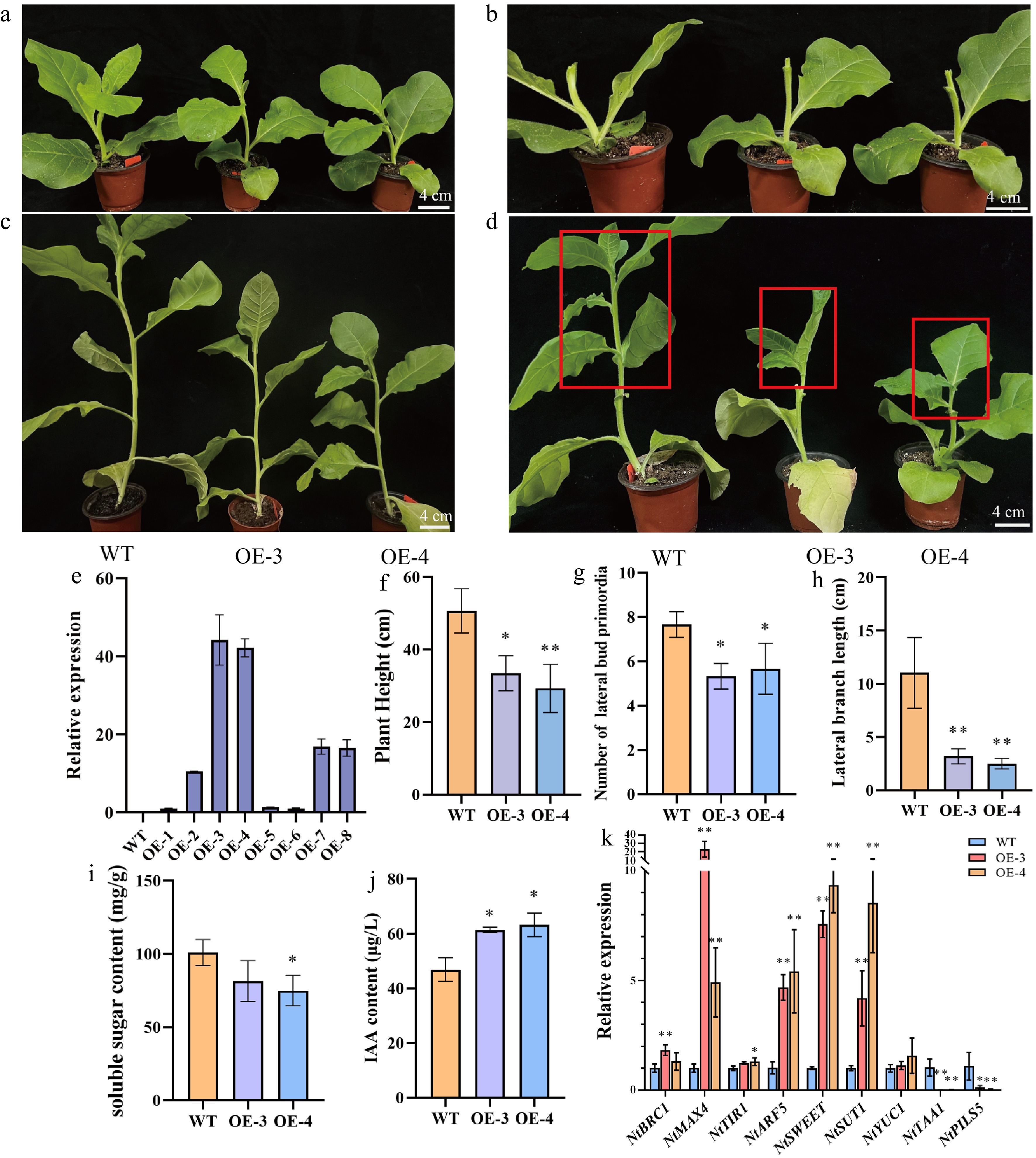
Figure 9.
Phenotypic and quantitative analyses of WT and ClSPL12-overexpressing tobacco. (a) Phenotype of untreated soil-grown WT and transgenic tobacco plants at 15 d. (b) Decapitation treatment performed on tobacco plants at 15 d. (c) Phenotype of untreated soil-grown WT and transgenic tobacco plants at 45 d. (d) Phenotype of soil-grown WT and transgenic tobacco plants 30 d after decapitation, with red boxes indicating the lateral branch regions after decapitation. Scale bars: (a)−(d), 4 cm. The red box in (d) indicates the lateral branch region after decapitation. Statistical analysis of (e) ClSPL12 expression, (f) plant height, (g) lateral meristem number, (h) lateral branch length, (i) soluble sugar content, (j) auxin content, and (k) relative gene expression in tobacco. Error bars: ± SD, n = 6. Asterisks indicate significance (* p < 0.05, ** p < 0.01, Student's t-test).
Based on the aforementioned results, a working model is proposed in which ClSPL12, by negatively regulating the transcriptional level of ClPILS5 during different periods, modulates auxin homeostasis in lateral buds. Together, they coordinately regulate the development of lateral buds and branching (Fig. 10).
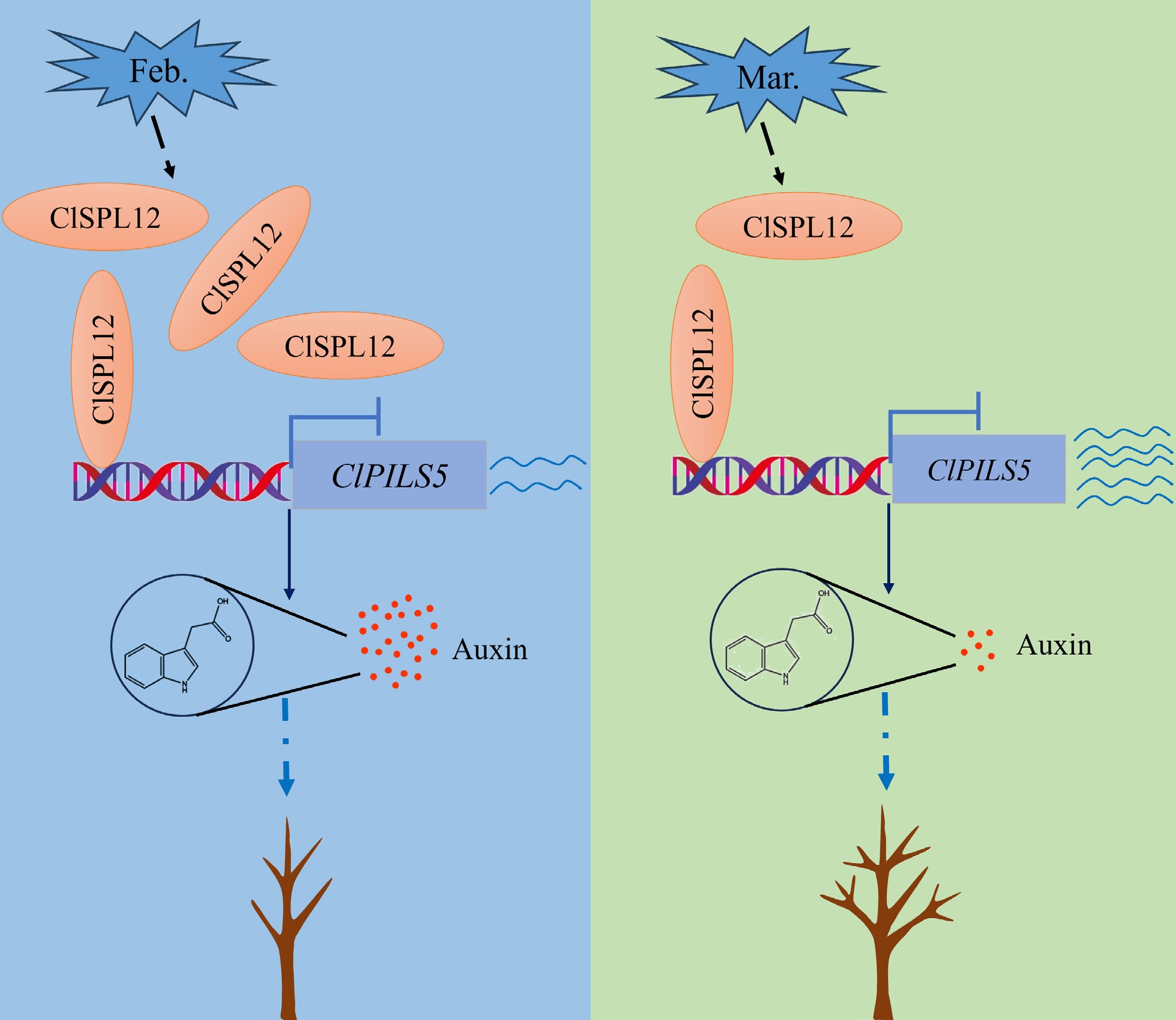
Figure 10.
A working model of the ClSPL12-ClPILS5 transcriptional module regulating lateral bud and branch development.
-
Branches in Chinese fir develop from lateral buds, and branching is recognized as one of the critical factors determining wood quality. Due to the trait of persistent branches in Chinese fir, a high number of knots significantly reduces timber value, making it particularly important to investigate the dynamic changes of lateral buds. In this study, integrated high-throughput transcriptomic and metabolomic data from lateral buds at different developmental stages, along with phenotypic data, demonstrated the central role of auxin and identified a key gene, ClPILS5, involved in branch development, whose biological function in promoting branching was validated. Furthermore, ClSPL12, located upstream of ClPILS5, was found to negatively regulate its expression, thereby inhibiting growth and lateral branch development in transgenic tobacco and poplar. Collectively, ClSPL12 and ClPILS5 are candidate regulators associated with lateral bud development in Chinese fir, and their functions were supported by heterologous assays in tobacco and poplar. These findings establish a foundation for further exploration of the regulatory mechanisms governing lateral buds in gymnosperms.
Transcriptome profiles of lateral buds in Chinese fir at different developmental stages
-
Previous studies have revealed that the lateral buds of Chinese fir transition gradually from dormancy to an activated state in February, with lateral buds located on the stem tissue becoming fully activated by March[22]. RNA sequencing was performed on lateral bud tissues collected across five consecutive developmental stages (January, February, March, April, and October), among which the January, February, and March stages were selected and defined as dormant, activation transition, and activated, respectively, for further investigation. In the pairwise comparisons of A vs B, A vs C, and B vs C, a total of 12,456 (3,841 up- and 8,615 downregulated), 24,536 (11,329 up- and 13,207 downregulated), and 23,013 (13,113 up- and 9,900 downregulated) DEGs were identified, respectively (Supplementary Figs S3, S4). Among all comparisons, A vs C showed the highest number of DEGs, and more upregulated DEGs were observed during the gradual activation of lateral buds from stage A to C. A similar pattern was reported in strawberry, where more upregulated DEGs were detected in the branching-activated line P1 during lateral bud activation[29], indicating that bud activation is generally accompanied by the upregulation of numerous genes. Furthermore, in comparative studies of poplar bud development, the starch and sucrose metabolism pathway was annotated[30], while KEGG enrichment analysis of DEGs from different developmental stages of walnut buds identified pathways such as 'plant hormone signal transduction', 'tryptophan biosynthesis', and 'flavonoid biosynthesis'[31]. Transcriptome analysis of a multi-branching strawberry phenotype also revealed that upregulated DEGs were associated with 'plant hormone signal transduction', 'amino acid biosynthesis', 'starch and sucrose metabolism', and 'flavonoid biosynthesis'[29]. These findings align with those of our study, where KEGG enrichment analysis of DEGs from different comparison groups similarly identified the auxin-related 'phenylalanine, tyrosine and tryptophan biosynthesis' pathway, as well as 'carbohydrate metabolism,' which is associated with sugars (Fig. 3d). Furthermore, in the GO pathways, the 'cellular response to red and far-red light' was significantly enriched (Fig. 3e). It has been demonstrated that far-red light regulates lateral bud growth by enhancing apical dominance, and a low red-to-far-red ratio promotes auxin signaling, thereby inhibiting plant branching[32,33]. Further investigations may focus on the light-responsive mechanisms involved in lateral bud development in Chinese fir. Collectively, this evidence strongly supports the conclusion that lateral bud development extensively involves auxin and light responses and requires an energy supply.
Auxin plays a central role in the development of lateral buds in Chinese fir
-
The pivotal role of auxin in lateral bud development has been extensively documented in previous studies. For instance, auxin has been shown to participate in regulating lateral bud development in Pinus massoniana[34], and auxin efflux from buds accelerates dormancy release in pear buds[35]. Accordingly, targeted metabolomic analysis of phytohormones in lateral buds across different developmental stages was conducted in this study. The results revealed that auxin, as a key regulator, exhibited highly significant variations across stages (Fig. 4c). Specifically, a marked decrease in auxin content was observed during stage C (activated), indicating that auxin efflux also accompanies the activation process of lateral buds in Chinese fir. Furthermore, exogenous auxin application serves as a critical approach for investigating its functional mechanisms. Previous studies have demonstrated that exogenous auxin suppresses lateral bud growth in decapitated broad bean shoots[36], and high concentrations of NAA (1-naphthaleneacetic acid) inhibit floral bud burst by increasing auxin accumulation in buds. Similarly, exogenous NAA application delays the formation of shoot apical meristem (SAM) in protocorms[37], while auxin treatment reduces the number of inflorescences and retards bud development in alternate-bearing citrus cultivars[38]. Consistent with these findings, the present study observed that after 7 d of IAA treatment, lateral bud emergence in Chinese fir was significantly inhibited at concentrations of 50 and 100 mg/L relative to the CK group (Figs 1, 2). In addition, exogenous application of the auxin transport inhibitor NPA was found to significantly increase the number of emerging lateral buds. This phenomenon has been previously reported: NPA can offset the inhibitory action of GR24 on lateral buds[39], and it enhances the germination rate of lateral buds in biennial pseudobulbs from 0% to 85%[40]. Collectively, these results underscore the indispensable function of auxin in regulating lateral bud development in plants.
The development of plant lateral buds and branches often involves not just the action of a single hormone, but rather the balanced interaction of multiple hormones[41]. Auxin, cytokinin, and strigolactone are three key hormonal regulators that modulate branch and tiller number. However, in the present study, the trends in auxin and cytokinin content changes were largely similar rather than completely antagonistic (Fig. 4c; Supplementary Figs S5, S6). It has been reported that an increased auxin-to-cytokinin ratio directly contributes to the formation of double lateral buds[42] and is a critical factor influencing the ability to form adventitious buds. Based on this, it is hypothesized that during development from stage A to B, although the absolute contents of both auxin and cytokinin increased, the increase in cytokinin was substantially greater than that of auxin (Fig. 4c; Supplementary Figs S5, S6), leading to a significant rise in the auxin-to-cytokinin ratio. The underlying molecular mechanism may involve a reduction in the dominant inhibitory signal, which relieves repression of cytokinin biosynthetic genes such as IPT[43], resulting in a burst of local cytokinin biosynthesis that reverses the auxin-cytokinin balance and ultimately triggers lateral bud growth. This finding reveals that lateral bud development is not governed by the absolute concentration of a single hormone but depends on a dynamic process co-regulated by multiple hormones. Abscisic acid acts synergistically with auxin in regulating lateral branch development; for instance, SlTCP26 promotes branching by inhibiting auxin signaling and suppressing abscisic acid signaling[44]. In Chinese fir, across three developmental stages, the changes in auxin and abscisic acid content showed a similar pattern of first increasing and then decreasing (Fig. 4c; Supplementary Figs S5, S6), with both reaching very low levels at stage C, further supporting their synergistic interaction. Strigolactone is involved in auxin-mediated regulation of plant branching and is thought to control lateral bud growth by modulating auxin efflux from buds[45,46], indicating a synergistic relationship between auxin and strigolactone in branching regulation. To better elucidate the mechanisms by which hormonal signals regulate lateral bud and branch development in Chinese fir, future studies should measure strigolactone content in lateral buds and investigate how hormonal crosstalk regulates bud outgrowth and branching. In summary, the development of lateral buds in Chinese fir involves dynamic changes in genes and hormones, along with other external environmental factors, which collectively control the process of bud growth.
ClPILS5 promotes branching in transgenic tobacco and poplar
-
The distribution of auxin within the shoot SAM and lateral meristem, both critical to meristematic growth, is primarily mediated by plasma membrane-localized auxin influx and efflux carriers[2,47]. Among these transporters, PIN and PILS, as two major classes of auxin efflux carriers, are acknowledged for their contribution to plant growth through the maintenance of auxin homeostasis[15]. However, although the expression patterns and functions of PILSs have gradually been characterized, their roles in gymnosperms such as Chinese fir remain unexplored. Through integrated transcriptomic, metabolomic, and phenotypic analyses, a key PILS involved in lateral bud development, ClPILS5, was identified. Transcripts of ClPILS5 were detectable across various tissues, with the highest transcriptional level observed in lateral buds (Fig. 6d). Additionally, its expression peaked during the activated stage (Fig. 6f), suggesting a biological role for ClPILS5 in lateral bud and branch development. The sequestration of auxin within the endoplasmic reticulum by PILS proteins, such as PILS2, PILS3, and PILS5, results in the restriction of auxin signaling[48,49]. Following IAA treatment, the expression of ClPILS5 showed a consistent initial increase followed by a decline (Fig. 6e). In contrast, under NPA treatment, ClPILS5 expression sharply decreased at 1 h, followed by irregular fluctuations, indicating that ClPILS5 may respond to IAA and NPA via distinct mechanisms, and that NPA alters normal auxin distribution and signaling gradients[50,51]. Previous studies have demonstrated that PILS5 influences pollen development by modulating intracellular auxin signaling and mediates biological processes involving brassinosteroid signaling[24,52]. In this study, transgenic tobacco and poplar overexpressing ClPILS5 showed a multi-branching phenotype (Fig. 7; Supplementary Fig. S8), with altered auxin homeostasis in lateral buds (Fig. 7k). Similar findings were reported in rice, where overexpression of miR529a increased tiller number and concurrently reduced auxin levels in lateral buds[53]. The expression analysis of the WT and OE lines further demonstrated that lateral bud development is often accompanied by changes in the expression of auxin-related genes (Fig. 7i). Among these, genes such as ARF, Aux/IAA, and SWEET have been proven to be involved in the process of lateral bud and branch development[54−56]. In our results, elevated soluble sugar content was detected in lateral buds of two OE lines (Fig. 7j), suggesting a correlation between ClPILS5 overexpression and altered sugar allocation in lateral buds. These findings provide new evidence for the functional role of PILS5, suggesting that ClPILS5 may regulate branching by modulating auxin homeostasis, and that the altered sugar allocation is closely correlated with the branching changes.
ClSPL12 negatively regulates ClPILS5 transcription and inhibits lateral shoot growth in transgenic tobacco and poplar
-
Regarding how PILS functions within the auxin-mediated regulatory module, it has been previously reported that TGA7 specifically binds to the PILS2 promoter and activates its transcription, thereby regulating shoot and root growth in tomato[15]. Similarly, OsSPL14 binds the OsPILS6b promoter and activates its expression[16]. Consistent with these findings, our study demonstrates that ClSPL12 binds to the ClPILS5 promoter and represses its transcription (Fig. 8e−h). These results indicate a certain degree of conservation of this regulatory module across species, although the specific regulatory direction and biological function may vary depending on the species and the characteristics of the transcription factors involved. SPL transcription factors, which are known to participate in multiple developmental processes in plants[57], have been widely confirmed to play key roles in regulating plant branching/tillering. For instance, loss of SPL9 and SPL15 function in Arabidopsis leads to shortened plastochrons during vegetative growth, altered inflorescence architecture, and enhanced branching[58]. In maize, TSH4 suppresses the growth of lateral organs and promotes the initiation of lateral meristems, thereby increasing tassel branching[59]. Transient overexpression of PpSPL1 and PpSPL15 in peach seedlings inhibits branching[60], and DWARF53 physically binds to transcription factors UB2/UB3/TSH4, thereby controlling tillering and tassel branching in maize[61]. In the present study, ClSPL12 was found to be highly and specifically expressed in lateral buds (Fig. 8j), suggesting its importance in lateral bud development and branch establishment. Interestingly, the expression pattern of ClSPL12 across different developmental stages is opposite to that of ClPILS5, exhibiting an initial increase followed by a subsequent decrease (Fig. 8a). Both tobacco and poplar plants overexpressing ClSPL12 showed inhibited branch development (Fig. 9; Supplementary Fig. S9). Compared with WT plants, the soluble sugar content in lateral buds of overexpression lines was decreased (Fig. 9i), while auxin content was increased (Fig. 9j). In summary, ClSPL12 negatively regulates ClPILS5. Simultaneously, the expression patterns of the two genes and the phenotypic characteristics of the corresponding overexpression plants-including branching traits and changes in auxin and sugar contents-showed opposite trends. These multiple lines of evidence indicate a negative regulatory relationship between the two within the branching regulation pathway of Chinese fir, suggesting that the ClSPL12-ClPILS5 module may influence lateral bud outgrowth, potentially through auxin homeostasis, with concurrent alterations in sugar accumulation being closely linked to the branching phenotypes observed during bud activation (Fig. 10). Future studies using CRISPR/Cas9-generated knockout lines or genetic complementation with overexpression/rescue constructs in transgenic backgrounds are required to establish the genetic epistasis of this pathway, and homologous transformation in Chinese fir is also needed to further verify the functions of these genes and clarify their regulatory mechanisms.
-
This study integrates transcriptomic, targeted metabolomic, and phenotypic analyses to identify candidate regulators associated with lateral bud development in Chinese fir. The results demonstrate that exogenous IAA application inhibits lateral bud outgrowth. A total of 780 common DEGs were identified across three key developmental stages, which were predominantly enriched in pathways related to auxin signal transduction, carbohydrate metabolism, and light response. During the lateral bud activation stage, auxin content decreased significantly. Overexpression of ClPILS5 was associated with altered auxin homeostasis and soluble sugar allocation in lateral buds, which correlated with enhanced lateral branch formation. In contrast, ClSPL12 acts as a negative regulator during lateral branch development. These findings provide new theoretical insights into the morphological architecture of gymnosperms. Further direct genetic validation in Chinese fir is required to establish the functional relationship between ClSPL12 and ClPILS5 and to confirm the proposed regulatory module.
-
The authors confirm their contributions to the paper as follows: designed the research: Yang Y, Liu X, Xu J; performed the experiments and data analysis: Yang Y, Liu X, Guo H, Luo Y; wrote the manuscript: Yang Y, Xu J. All authors reviewed the results and approved the final version of the manuscript.
-
Data sharing is not applicable to this article, as all newly generated data are already contained within this article.
-
The authors declare that they have no conflict of interest.
-
accompanies this paper online at: https://doi.org/10.48130/forres-0026-0032.
- Supplementary Table S1 Specific primers.
- Supplementary Table S2 Statistical analysis of transcriptome sequencing data.
- Supplementary Table S3 Cis-regulatory GTAC boxes in the ClPILS5 promoter.
- Supplementary Fig. S1 Functional annotation of unigenes in the transcriptomic data of Chinese fir lateral buds at different periods.
- Supplementary Fig. S2 Heat map of correlation coefficients among samples at different stages.
- Supplementary Fig. S3 Volcano plots of DEGs in A vs B, A vs C, and B vs C.
- Supplementary Fig. S4 Statistical histogram of DEGs in different pairwise comparisons.
- Supplementary Fig. S5 Box plot of hormone level differences across various periods.
- Supplementary Fig. S6 Heatmap of phytohormone contents.
- Supplementary Fig. S7 The analysis of expression patterns of candidate genes. Error bars indicate mean ± SD, n = 3.
- Supplementary Fig. S8 Phenotypic and quantitative analyses of WT and ClPILS5-overexpressing poplars.
- Supplementary Fig. S9 Phenotypic and quantitative analyses of WT and ClSPL12-overexpressing poplars.
- Copyright: © 2026 by the author(s). Published by Maximum Academic Press, Fayetteville, GA. This article is an open access article distributed under Creative Commons Attribution License (CC BY 4.0), visit https://creativecommons.org/licenses/by/4.0/.
-
About this article
Cite this article
Yang Y, Liu X, Guo H, Luo Y, Xu J. 2026. Combined omics and functional assays identify ClSPL12-ClPILS5 as candidate regulators associated with branching of Cunninghamia lanceolata. Forestry Research 6: e033 doi: 10.48130/forres-0026-0032 

Combined omics and functional assays identify ClSPL12-ClPILS5 as candidate regulators associated with branching of Cunninghamia lanceolata
- Received: 30 March 2026
- Revised: 14 September 2026
- Accepted: 08 October 2026
- Published online: 28 October 2026
Abstract: Cunninghamia lanceolata (Chinese fir) is a major fast-growing timber species in China, and its branching trait directly determines wood yield and timber quality. Auxin plays a central role in regulating plant branching, yet the molecular mechanisms mediated by auxin during lateral bud development in Chinese fir remain poorly understood. This study characterized the dynamic regulatory network of lateral bud development in Chinese fir by integrating transcriptomic, targeted metabolomic, and phenotypic data. The results showed that exogenous IAA suppressed lateral bud outgrowth, whereas NPA promoted it. Consistent with this, lateral bud activation during natural development was accompanied by a significant decrease in endogenous auxin levels. A total of 780 genes showed differential expression among the three stages (dormant stage A, activated-transition stage B, and activated stage C), with significant enrichment in auxin signal transduction and carbohydrate metabolic routes. A hub gene, ClPILS5, was further identified, and functional studies demonstrated that its overexpression promotes branching, accompanied by altered auxin homeostasis and increased sugar content in lateral buds. Further yeast one-hybrid and dual-luciferase reporter assays verified that ClSPL12 directly binds to the ClPILS5 promoter and represses its transcription. Overexpression of ClSPL12 suppresses branching, accompanied by altered auxin homeostasis and decreased soluble sugar content. This study is the first to elucidate the role of the ClSPL12-ClPILS5 module in lateral bud and branch development in Chinese fir, providing a theoretical foundation for molecular breeding in gymnosperms.