













-
Drought and extremely high temperatures are major abiotic stresses that adversely affect plants' growth and development[1,2]. These conditions primarily disrupt cellular integrity by damaging cell membranes, which, in turn, compromise physiological functions and ultimately lead to reduced yields[3,4]. Extremely high temperatures exert detrimental effects on the growth and productivity of temperate plants by disrupting metabolic homeostasis and key biochemical processes, such as photosynthesis, respiration, and stress defense mechanisms[5]. During drought stress, plants close their stomata to minimize water loss; however, this stomatal closure comes at the cost of reduced gas exchange, which subsequently results in reduced growth and a significant decline in yield and quality[6]. In natural field environments, drought stress often co-occurs with heat stress during summer, and their combination exerts synergistic detrimental effects that are far more severe than individual stress alone[7].
Perennial ryegrass is a cool-season grass species that is widely cultivated in temperate regions and is valued for its exceptional quality, high productivity, and rapid establishment. However, this grass is sensitive to both heat and drought stresses[8,9]. Heat stress impairs cellular components by generating reactive oxygen species (ROS) and inducing protein denaturation, thereby disrupting photosynthetic capacity and causing metabolic imbalance. When exposed to heat stress, plants activate diverse defense mechanisms, including the synthesis of heat shock proteins (HSPs) that act as molecular chaperones to prevent the denaturation and aggregation of proteins[10]. In addition, heat stress increases leaf electrolyte leakage and abscisic acid (ABA) content while reducing chlorophyll content, photosynthesis, and the key endogenous hormones auxin (IAA), gibberellin (GA3), and cytokinin (CTK)[11]. Drought stress induces cellular dehydration primarily by increasing cellular osmolality, which disrupts turgor pressure and mechanical support within the cell wall, which are key factors for maintaining plants' growth and developmental integrity[12]. Drought stress primarily reduces the leaf water content and photosynthetic rate of perennial ryegrass[13]. However, the combined effects of drought and heat stresses on plants can be complex and more severe than either of stress alone. For instance, reduced transpiration caused by stomatal closure under drought stress diminishes the transpirational cooling effect, which is essential for cooling the grass under heat stress[14]; meanwhile, heat stress amplifies cellular water losses and ROS bursts, leading to more severe membrane lipid peroxidation and metabolic disorder than either stress independently[15]. Accumulating evidence in cool-season grasses has confirmed that combined heat and drought stress causes greater inhibition of plant growth, photosynthetic efficiency, and antioxidant capacity, and has become a key abiotic stress complex limiting summer turf and forage production[16].
Cytokinin is an essential plant hormone that promotes cell division, stimulates shoot proliferation, modulates root formation, and slows the aging process[17,18]. Cytokinin can also serve as a signaling molecule, regulating physiological and molecular responses to stress and enhancing stress tolerance[19]. The cytokinin signal is transduced via the conserved two-component phosphorelay system, in which Type B response regulators function as core transcription factors to modulate genome-wide transcriptional regulatory networks, coordinating multiple biological processes including chlorophyll metabolism, antioxidant defense, and stress-responsive gene expression during stress acclimation and post-stress recovery[20]. Zeatin, a naturally occurring cytokinin initially purified from Zea mays L., regulates various biological functions in plants, and its biological activity is attributed to its stability[21,22]. As one of the predominant bioactive cytokinin species in planta, trans-zeatin riboside (t-ZR) acts as an endogenous signaling molecule to trigger downstream transcriptional reprogramming under abiotic stress conditions[23]. Meanwhile, exogenous t-ZR has been shown to enhance plants' stress tolerance by enhancing growth performance and physiological adaptation under various stress conditions. For instance, exogenous application of t-ZR alleviates the decline in turf quality and chlorophyll content in creeping bentgrass (Agrostis stolonifera L.), improves turf quality, and delays leaf wilting symptoms under heat stress[24,25]. Application of t-ZR has also been shown to enhance the activities of the key antioxidant enzymes, i.e., superoxide dismutase (SOD), ascorbate peroxidase (APX), catalase (CAT), and guaiacol peroxidase (POD), to promote recovery of plant growth following abiotic stress[25,26].
Post-stress recovery is a critical biological stage that determines the final regrowth capacity and productivity of plants after stress relief. During the recovery process, plants need to repair damaged cellular structures, restore photosynthetic and metabolic homeostasis, and re-establish cellular redox balance, which involves regulatory mechanisms distinct from those underlying stress tolerance[27,28]. To date, most relevant studies have focused solely on the role of t-ZR in alleviating stress or promoting plants' recovery under a single stress condition. However, plants in natural or agricultural settings are frequently exposed to combined abiotic stresses. Therefore, this study aimed to assess whether exogenous application of t-ZR can enhance the recovery of perennial ryegrass exposed to combined heat and drought stress, and to explore the underlying mechanisms of this recovery. The findings of this research will provide valuable insights into the physiological and molecular basis of plants' recovery under stress conditions, thereby enhancing their stress tolerance and recovery capacity. Additionally, this work will facilitate the development of effective management strategies to improve the summer performance of cool-season grasses.
-
Perennial ryegrass (cv. 'Esquire') seeds were germinated evenly in plastic containers (20 cm in length, 15 cm in width, and 5 cm in depth) filled with quartz sand. Each container was sown with 2 g of seeds to ensure uniform plant density. Throughout the experiment, the containers were maintained in a growth chamber under a 16-h light/8-h dark photoperiod, with a constant day/night temperature regime of 20 °C/15 °C. Relative humidity was maintained at 70%, and photosynthetic photon flux density (PPFD) was set at 750 μmol·m−2·s−1. Once the plants reached a height of 5 cm, they were irrigated with half-strength Hoagland's nutrient solution (Shanghai Yuanye Bio-Technology Co., Ltd., Shanghai, China).
Treatments and experimental design
-
Plants were subjected to stress treatments at 28 d after sowing, with four biological replicates per treatment group. Six treatment groups were established: Heat + control (CK), heat + t-ZR, drought + CK, drought + t-ZR, heat + drought + CK, and heat + drought + t-ZR. High-temperature stress was imposed by transferring plants to a growth chamber set at 38 °C/30 °C (day/night). Drought stress was simulated by irrigating plants with 20% polyethylene glycol (PEG)-6000 dissolved in half-strength Hoagland's nutrient solution. It should be acknowledged that PEG-induced osmotic stress differs from natural soil drought in its dehydration kinetics and environmental complexity. Natural soil drought is typically a gradual process characterized by spatial heterogeneity of soil water potential, altered soil nutrient availability, and mechanical impedance to root growth, whereas PEG treatment imposes a constant and homogeneous osmotic stress on roots without recapitulating the edaphic context of drought conditions in the field. Each stress treatment (drought, heat, and combined drought + heat) lasted for 7 d. Following stress treatment, all plants were returned to the pre-stress standard growth conditions (20 °C/15 °C day/night temperature, 16-h light/8-h dark photoperiod, 70% relative humidity, 750 μmol·m−2·s−1 PPFD) for the recovery phase. The 15 μmol·L−1 t-ZR concentration was selected in line with previously published studies and our preliminary experimental screening[29]. At the onset of the recovery period, 150 mL of a 15 μmol·L−1 t-ZR solution (solvent: half-strength Hoagland's nutrient solution) was applied to each container as a single dose via root irrigation. In contrast, CK plants were treated with half-strength Hoagland's nutrient solution (without t-ZR). To analyze the physiological parameters and gene expression patterns, leaf samples were collected at 0, 3, 5, 7, and 14 d after the initiation of the hormone treatment.
Physiological measurement
-
To assess plant size, plant height was measured with a ruler for 10 randomly selected plants. After height measurement, leaf samples were collected for physiological analyses. For determining the relative water content (RWC), the fresh weight (FW) of leaves was first measured. The leaves were then immersed in distilled water for 4−6 h to reach full saturation. Subsequently, the surface moisture of leaves was blotted dry with filter paper, and their saturated fresh weight (SFW) was recorded. The leaves were then oven-dried, first at 105 °C for 30 min to deactivate enzymes, then at 60 °C until a constant dry weight (DW) was reached. RWC was calculated using the following formula:
$ (FW-DW)/(SFW-DW)\times 100\% $ To assess relative electrical conductivity (REC), about 0.1 g of fresh leaves was placed in centrifuge tubes with 30 mL of distilled water, ensuring that the leaves were fully submerged. The tubes were incubated at room temperature for 24 h, after which the initial electrical conductivity (S1) was measured using a conductivity meter. To obtain the final electrical conductivity (S2), leaf samples were first autoclaved at 121 °C for 20 min (standard autoclaving conditions) and then cooled to room temperature; S2 was measured immediately afterward. Relative electrical conductivity was calculated using the following formula:
$ (S1/S2)~\times 100\% $ Chlorophyll content was measured using a moisture-free mixed solvent of 80% acetone and 95% ethanol (1:1, v/v) and quantified via spectrophotometry. Free proline content was determined using the previously described acid ninhydrin method[30]. For determining the MDA content and antioxidant enzyme activities, 0.1 g of fresh leaves was quickly frozen in liquid nitrogen and ground into a fine powder. The powder was then mixed with 1.5 mL of a 150 mmol·L−1 phosphate buffer (pH 7.0) to prepare crude enzyme extracts. The homogenate was centrifuged at 12,000 × g for 20 min at 4 °C, and the supernatant was collected on ice for subsequent measurements of MDA and enzyme activity. MDA content was determined via the thiobarbituric acid (TBA) reaction method[31]. The activities of CAT and APX were measured using ultraviolet spectrophotometry. For assessing CAT activity, the reaction mixture contained 0.95 mL of 50 mmol·L−1 phosphate-buffered saline (PBS, pH 7.0), 0.5 mL of 45 mmol·L−1 H2O2, and 50 µL of the enzyme extract. CAT activity was determined by monitoring the decomposition of H2O2 at 240 nm[32]. APX activity was measured by monitoring the decrease in absorbance at 290 nm, following the previously described method[33]. SOD activity was assessed by measuring the photoreduction rate of nitroblue tetrazolium (NBT) at 560 nm, as previously described[34]. POD activity was evaluated using the guaiacol method[35]. For this, a reaction mixture containing 0.95 mL of 0.1 mol·L−1 acetic acid (HAc)–sodium acetate (NaAc) buffer (pH 5.0), 0.5 mL of 50% (v/v) guaiacol solution, and 25 µL of the enzyme extract was used. The reaction was initiated by adding H2O2, and subsequent absorbance changes caused by guaiacol oxidation were measured at 460 nm.
Gene expression detection
-
Total RNA was extracted from leaf samples using the FastPure Universal Plant Total RNA Isolation Kit (Vazyme, Nanjing, China). The extracted RNA was used to synthesize first-strand cDNA with the PrimeScript Reverse Transcription Kit (TaKaRa Bio, Beijing, China). Quantitative real-time PCR (qRT-PCR) analysis was performed on the Bio-Rad CFX96 Touch qPCR System (Bio-Rad, Hercules, CA, USA). Among the eight selected candidate genes, primers for LpUROD1 were designed using Primer Premier 5.0 software, whereas primers for the remaining genes were obtained from previously published studies[13,36−39]. The eIF4A gene was selected as the housekeeping (reference) gene to normalize gene expression. All primer sequences are listed in Supplementary Table S1. Each qRT-PCR assay included three biological replicates, with three technical replicates per biological replicate. Relative gene expression levels were calculated using the 2−ΔΔCᴛ method[36].
Statistical analysis
-
IBM SPSS Statistics 20.0 (IBM Corp., Armonk, NY, USA) was used to perform analysis of variance (ANOVA) and compare the effects of exogenous t-ZR on perennial ryegrass during the 14-d recovery period. All data are expressed as the mean ± standard deviation (SD). Four biological replicates (n = 4) were set for physiological index determinations, and three biological replicates (n = 3) were adopted for gene expression analysis. One-way ANOVA, followed by the Student–Newman–Keuls (SNK) post hoc test, was conducted to evaluate differences between the control and treatment groups. Differences were considered statistically significant at p < 0.05. All figures were generated using SigmaPlot 12.5 (Systat Software, San Jose, CA, USA).
-
Phenotypic observations showed that 7 d of stress exposure caused varying degrees of leaf injury in perennial ryegrass, with distinct recovery dynamics between t-ZR-treated and control plants (Fig. 1). At the onset of the recovery period (Day 0), all stress-treated plants exhibited leaf chlorosis and growth inhibition. The combined heat and drought stress led to the most severe damage, characterized by extensive leaf yellowing and withering; heat stress alone caused moderate leaf chlorosis, whereas drought stress alone resulted in the mildest phenotypic injury. During the recovery period, plant growth in all groups exhibited a time-dependent pattern, irrespective of exogenous t-ZR application. However, under the same prior stress regime, plants receiving exogenous t-ZR exhibited an earlier onset of recovery and more robust recovery performance compared with the nontreated control group, with notable differences observed on Days 3 and 5 of recovery.
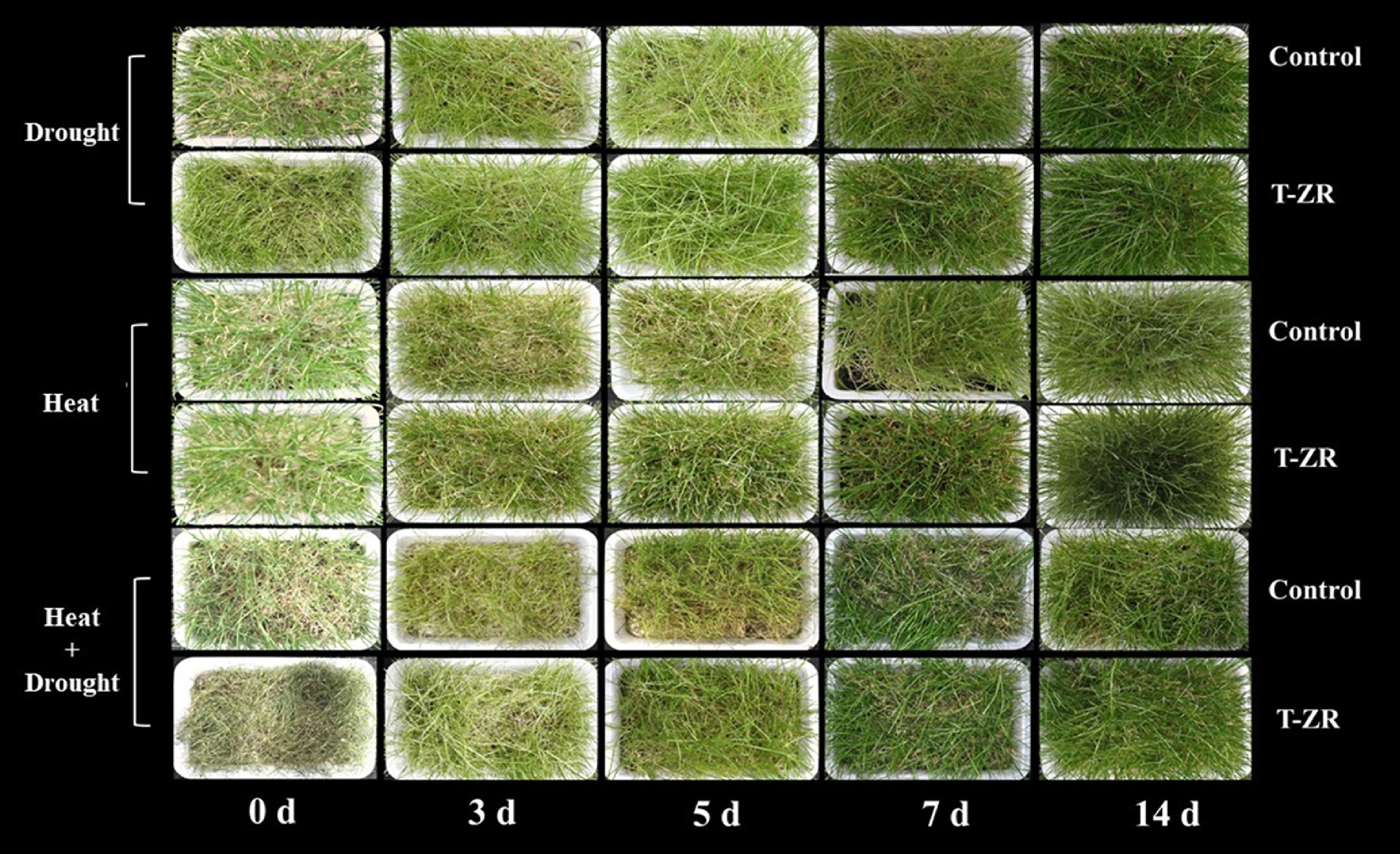
Figure 1.
The phenotypic responses of perennial ryegrass in the recovery period between the exogenous t-ZR and control groups after stress.
Across all stress conditions, plant height increased significantly with recovery time after the stress period (Fig. 2a), and t-ZR-treated plants achieved notably greater height than those in the nontreated control group (Table 1). At the beginning of the recovery period, all groups displayed slow growth after 7 d of stress, with plants subjected to combined stresses showing the most significant impact. After 14 d of recovery from heat stress, plant height in the t-ZR treatment group reached 22.48 ± 0.32 cm, which was significantly higher than the 19.92 ± 0.03 cm observed in the control group. For plants recovering from drought stress, t-ZR-treated plants reached a height of 21.86 ± 0.30 cm at Day 14 of recovery, significantly greater than 19.24 ± 0.11 cm in the control group. Under combined heat and drought stress, t-ZR application resulted in a final plant height of 21.56 ± 0.17 cm after 14 d of recovery, whereas the control group only reached 18.31 ± 0.38 cm. These results show that t-ZR treatment significantly enhanced recovery compared with the control. Notably, after 14 d of recovery, plant height was lowest in the control group exposed to combined drought and heat stress, followed by the groups subjected to drought and heat stress alone, indicating that water deficit had a more significant effect on perennial ryegrass growth than extended heat stress (Table 1).
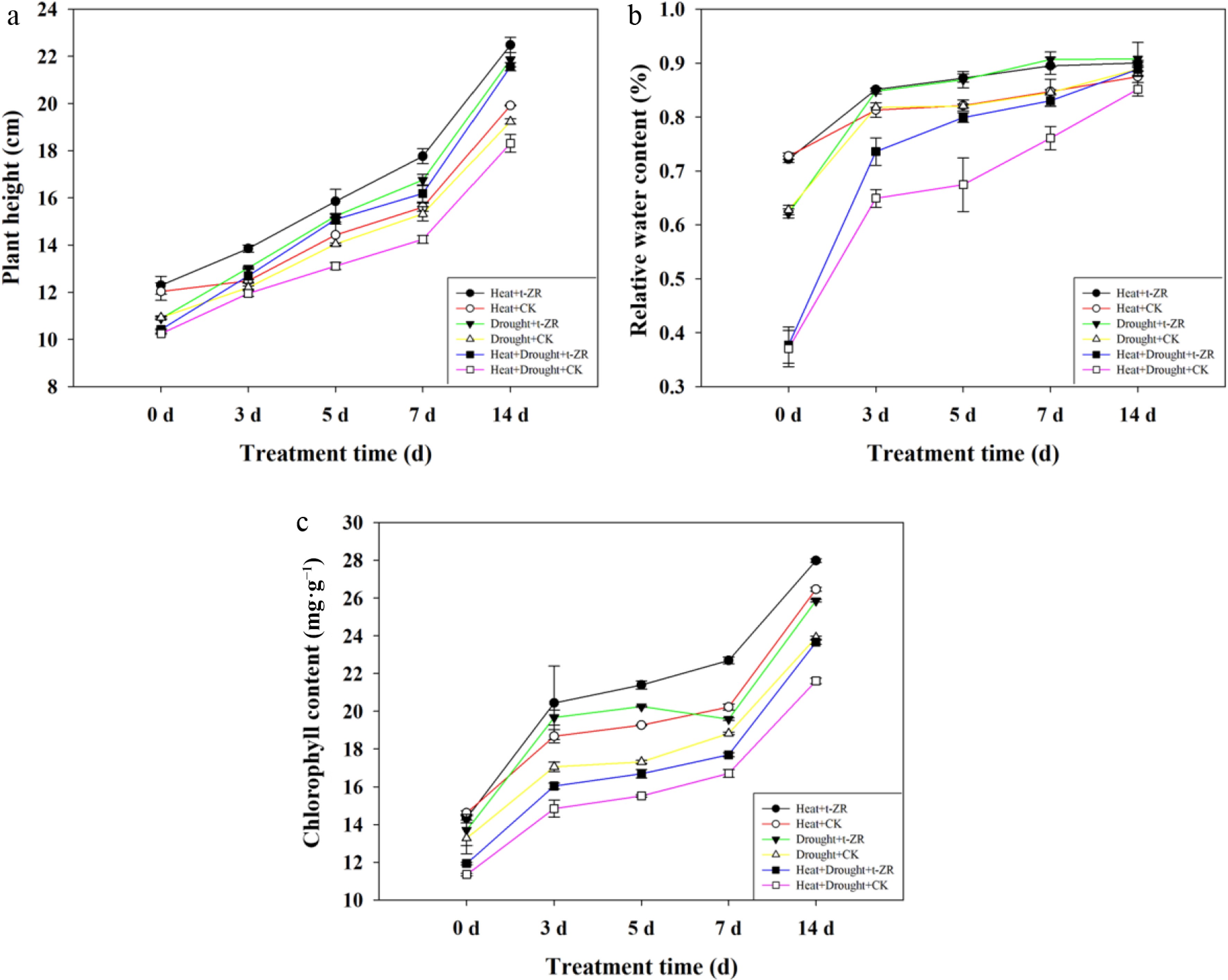
Figure 2.
Effect of exogenous t-ZR on the growth of perennial ryegrass during the post-stress recovery period in the treatment and control groups. (a) Plant height; (b) relative water content; (c) chlorophyll content. Data are presented as the mean ± SD, error bars represent standard deviation (SD); n = 4 biological replicates. One-way ANOVA followed by the Student–Newman–Keuls (SNK) post hoc test was used for statistical analysis.
Table 1. Effects of exogenous t-ZR on plant height, relative water content, and chlorophyll content of perennial ryegrass between the treatment and control groups after 14 d recovery.
Treatment Plant height (cm) Relative water content (%) Total chlorophyll content (mg·g−1) Heat t-ZR 22.48 ± 0.320a 90.01 ± 0.47ab 27.98 ± 0.092a CK 19.92 ± 0.025c 87.48 ± 1.10bc 26.46 ± 0.105b Drought t-ZR 21.86 ± 0.300b 90.79 ± 3.06a 25.86 ± 0.064c CK 19.24 ± 0.110d 88.87 ± 0.37ab 23.90 ± 0.081d Heat and drought t-ZR 21.56 ± 0.169b 88.84 ± 1.29ab 23.66 ± 0.116e CK 18.31 ± 0.375e 85.14 ± 1.26c 21.61 ± 0.143f Note: Data are presented as the mean ± SD of four biological replicates (n = 4). Within each column (for the same measurement index), values followed by different lowercase letters indicate significant differences among all treatments at the p < 0.05 level; values followed by the same lowercase letter indicate no significant difference. The t-ZR treatment also enhanced the RWC of plants after stress, mainly during the first 7 d of recovery (Fig. 2b, Table 1), indicating that the effect of t-ZR on RWC varies over time. On Day 14 of recovery from heat stress, the RWC of t-ZR-treated plants reached 90.01% ± 0.47%, significantly higher than 87.48% ± 1.10% in the control group. For drought-stressed plants, t-ZR treatment elevated RWC to 90.79% ± 3.06% after 14 d of recovery, compared with 88.87% ± 0.37% in the untreated control. Under combined stress conditions, application of t-ZR increased RWC to 88.84% ± 1.29% at the end of the recovery period, whereas the control group maintained a lower RWC of 85.14% ± 1.26% (Table 1).
The t-ZR treatment also significantly increased chlorophyll content during recovery, with clear differences observed between t-ZR-treated and untreated plants across all stress groups, especially in the early stage of recovery (Fig. 2c, Table 1). After 14 d of recovery from heat stress, total chlorophyll content in t-ZR-treated plants reached 27.98 ± 0.09 mg·g−1, significantly higher than the 26.46 ± 0.11 mg·g−1 in the control group. For plants exposed to drought stress, t-ZR treatment increased chlorophyll content to 25.86 ± 0.06 mg·g−1 at day 14 of recovery, compared with 23.90 ± 0.08 mg·g−1 in the control group. Under combined heat and drought stress, t-ZR application resulted in a chlorophyll content of 23.66 ± 0.12 mg·g−1 after 14 d of recovery, which was significantly higher than the 21.61 ± 0.14 mg·g−1 observed in the control group (Table 1).
Effect of t-ZR on free proline, MDA content, and relative conductivity during recovery of perennial ryegrass after stress
-
Across all stress conditions, the results showed different patterns of free proline buildup between plants treated with t-ZR and the control group that was not treated (Fig. 3a, Table 2). A significant accumulation of free proline was observed across all stress groups, with the lowest level seen in plants exposed to heat stress, highlighting the crucial role of osmotic regulation in maintaining intracellular water balance. Free proline content gradually decreased in all treatment groups over time, and by the fifth day of the recovery period, the level of free proline was nearly the same across all treatments. By the end of the recovery period, free proline levels in the t-ZR treatment group were 33.3% and 23.9% lower than those in the control group for plants subjected to heat and drought stress, respectively, with significant differences observed. However, in plants subjected to combined drought and heat stress, there was no significant difference in free proline content between t-ZR treated and untreated plants by the end of the recovery period (Table 2).
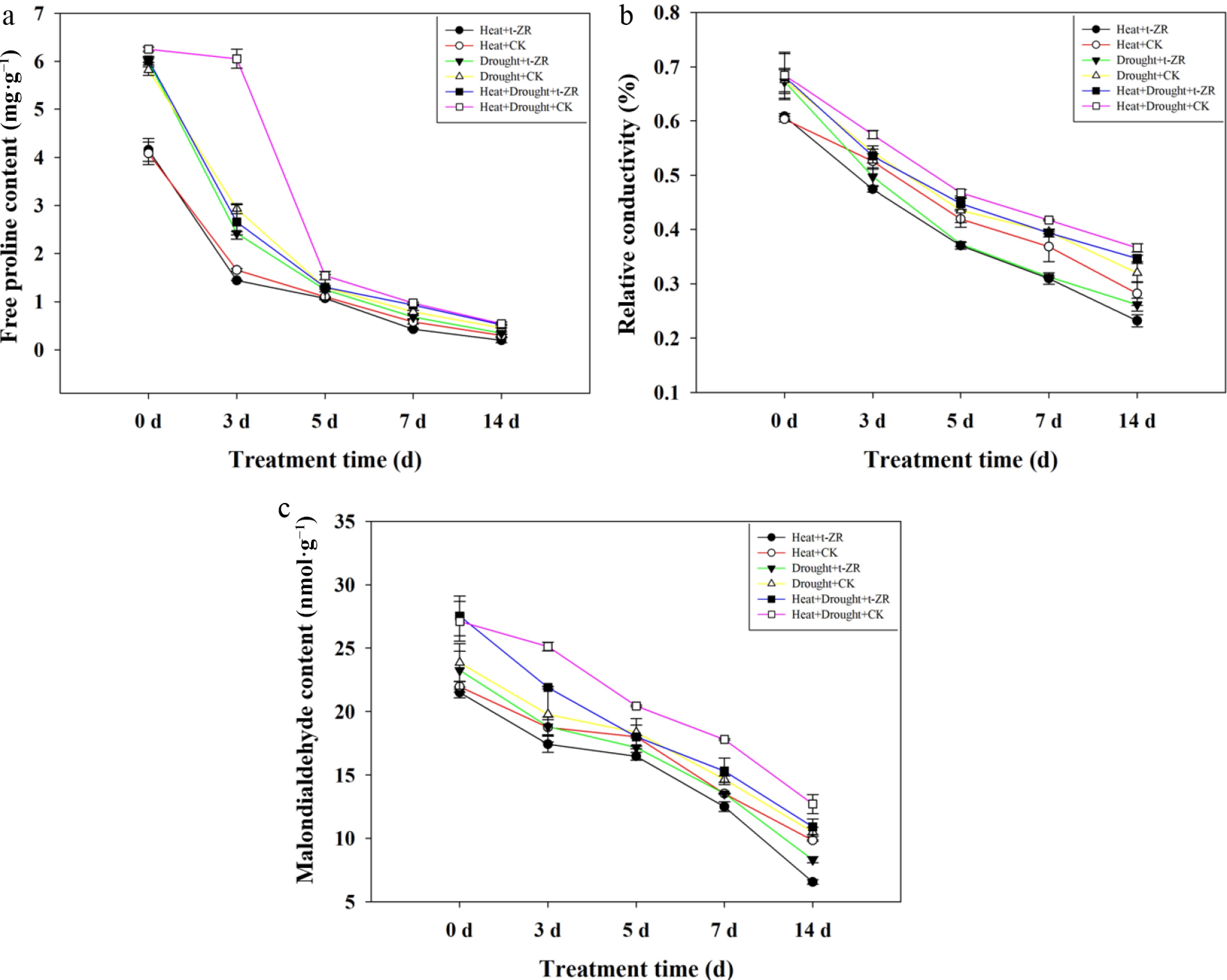
Figure 3.
Effect of exogenous t-ZR on free proline content, relative conductivity, and MDA content of perennial ryegrass during the post-stress recovery period in the treatment and control groups. (a) Free proline content; (b) relative conductivity; (c) MDA content. Data are presented as the mean ± SD; error bars represent the SD; n = 4 biological replicates. One-way ANOVA followed by the Student–Newman–Keuls (SNK) post hoc test was used for statistical analysis.
Table 2. Effects of exogenous t-ZR on free proline content, relative conductivity, and MDA content of perennial ryegrass between the treatment and control groups at 14 d recovery.
Treatment Relative conductivity (%) Free proline content (mg·g−1 FW) MDA content (nmol·g−1 FW) Heat t-ZR 23.18 ± 1.11d 0.20 ± 0.051d 6.56 ± 0.184e CK 28.18 ± 2.19c 0.30 ± 0.028c 9.84 ± 0.059c Drought t-ZR 26.15 ± 1.18c 0.35 ± 0.026c 8.31 ± 0.237d CK 31.99 ± 1.73b 0.46 ± 0.001b 10.50 ± 0.363b Heat and drought t-ZR 34.64 ± 0.60a 0.52 ± 0.013a 10.90 ± 0.620b CK 36.60 ± 0.76a 0.54 ± 0.037a 12.70 ± 0.754a Note: Data are presented as the mean ± SD of four biological replicates (n = 4). Within each column (for the same measurement index), values followed by different lowercase letters indicate significant differences among all treatments at the p < 0.05 level; values followed by the same lowercase letter indicate no significant difference. The application of t-ZR reduced relative conductivity during the recovery period; however, significant differences were observed only in the heat and drought treatments by the end of this period (Fig. 3b, Table 2). Relative conductivity in plants decreased quickly throughout the recovery period. In plants exposed to heat stress, the t-ZR treatment lowered relative conductivity by 61.8% by the end of recovery, compared with a 53.3% reduction in the control group. In plants under drought stress, the t-ZR treatment decreased relative conductivity by 61.1%, whereas the control group exhibited a 52.6% decline by the end of the recovery period. For plants exposed to combined drought and heat stress, the t-ZR treatment reduced relative conductivity by 49.2%, compared with a 46.5% decrease in the control group. Additionally, in plants subjected to both drought and heat stress, there was no significant difference in relative conductivity between t-ZR-treated and control plants at 14 d after the stress, indicating that recovery from simultaneous drought and heat stress was more difficult.
The reduction in MDA content during the recovery period was significantly different between t-ZR-treated and control plants across all stress conditions (Fig. 3c, Table 2). In plants under heat stress, the t-ZR treatment decreased MDA content by 69.5% by the end of the recovery period, compared with a 55.2% decrease in the control group. In plants exposed to drought stress, the t-ZR treatment lowered MDA content by 64.3%, whereas the control group showed a 55.9% decline. For plants under combined drought and heat stress, t-ZR-treated plants exhibited a 60.4% reduction in MDA content, whereas the control group demonstrated a 53.2% decrease.
Effect of t-ZR on antioxidant enzyme activity of perennial ryegrass in the recovery period after stress
-
During the recovery period, CAT, APX, SOD, and POD enzyme activities gradually decreased under all stress conditions (Fig. 4a−d). SOD activity declined gradually over the recovery period, but t-ZR-treated plants under combined stress maintained higher SOD activity levels, especially from Day 3 onward. In contrast, differences between t-ZR and the control treatments were minimal under individual heat and drought stresses (Fig. 4a). POD activity showed a pattern similar to that of SOD, with significantly higher levels in plants under combined stress, whereas differences between t-ZR and control treatments remained small under individual stresses (Fig. 4b). CAT and APX activities were notably higher under combined drought and heat stress than under individual stresses, suggesting a longer recovery period under combined stress. Furthermore, t-ZR-treated plants showed significantly higher APX and CAT activities than the control group, especially under combined stress conditions (Fig. 4c, d).
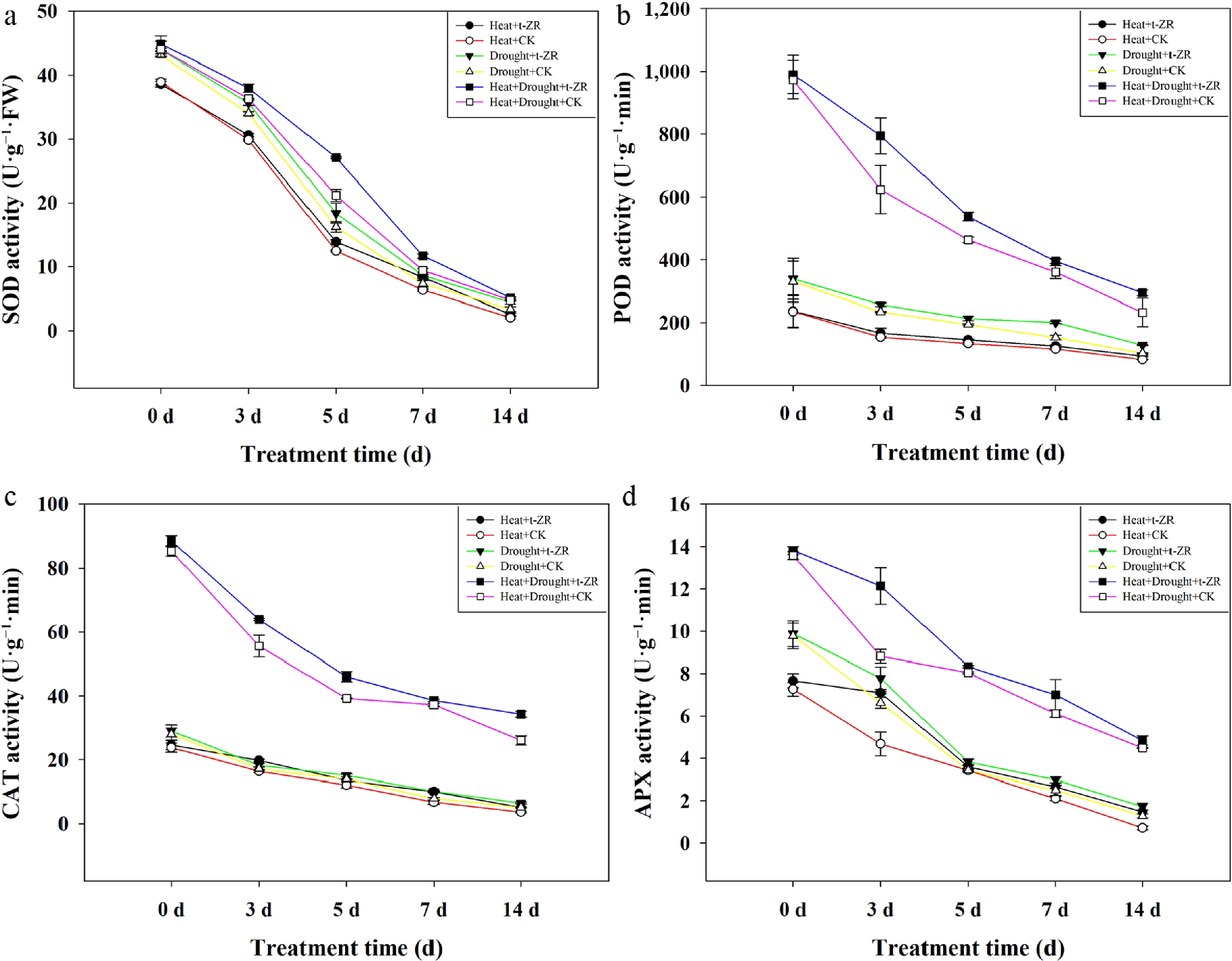
Figure 4.
Effect of exogenous t-ZR on antioxidant enzyme activities of perennial ryegrass during the post-stress recovery period in the treatment and control groups. (a) SOD activity; (b) POD activity; (c) CAT activity; (d) APX activity. Data are presented as the mean ± SD; error bars represent the SD; n = 4 biological replicates. One-way ANOVA followed by the Student–Newman–Keuls (SNK) post hoc test was used for statistical analysis.
Effect of t-ZR on gene expression of perennial ryegrass in the recovery period after stress
-
To further investigate the effects of t-ZR on perennial ryegrass during recovery period following heat and drought stress, the expression levels of genes involved in chlorophyll synthesis and degradation, antioxidant enzymes, heat shock proteins, and transcription factors were analyzed using qRT-PCR. Following exposure to heat and drought stress, the expression level of the chlorophyll synthesis gene LpUROD1 showed dynamic changes (Fig. 5a). According to the results, the expression of LpUROD1 initially increased and then decreased during the recovery period. Notably, the t-ZR treatments accelerated the changes in the expression of LpUROD1, helping plants regain their green color more quickly. However, under combined drought and heat stress, the expression level of LpUROD1 remained low in both the control and t-ZR treatment groups, indicating severe damage caused by combined stress. Conversely, the expression levels of chlorophyll degradation genes, such as LpNYC1 and LpHCAR, decreased during the recovery period in both the CK and t-ZR groups (Fig. 5b, c). In particular, the expression pattern of LpNYC1 in plants exposed to drought stress was similar to LpUROD1, showing an initial increase followed by a decline. Additionally, it was noted that t-ZR treatments further promoted the rapid expression of LpNYC1 compared with the CK group.
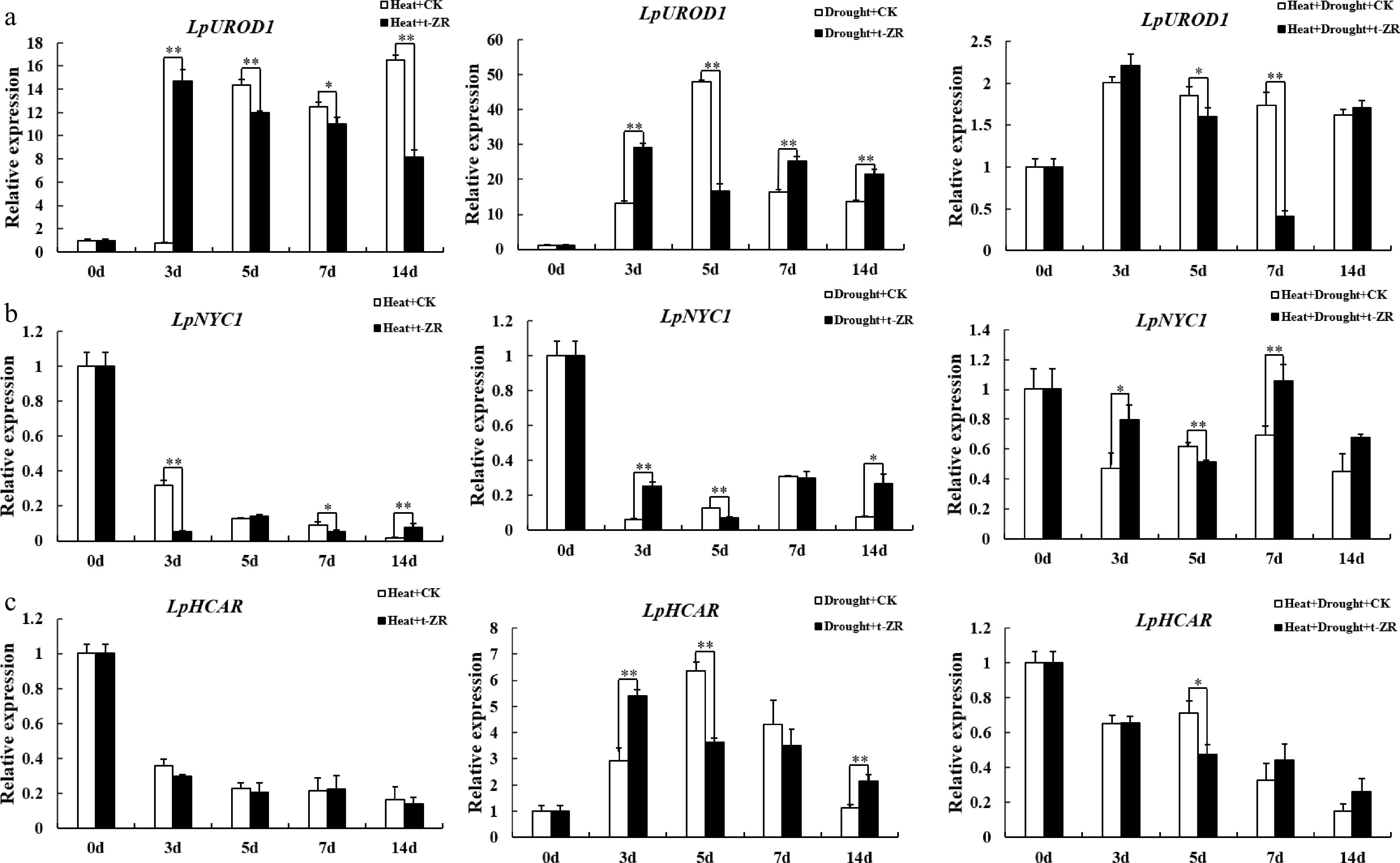
Figure 5.
Effect of exogenous t-ZR on the expression of (a) LpUROD1, (b) LpNYC1, and (c) LpHCAR genes in perennial ryegrass during the post-stress recovery period in the treatment and control groups. Data are presented as the mean ± SD, error bars represent the SD; n = 3 biological replicates. One-way ANOVA followed by the Student–Newman–Keuls (SNK) post hoc test was used for statistical analysis. * indicates a significant difference at the p < 0.05 level; ** indicates a highly significant difference at the p < 0.01 level.
Following heat stress, all assessed antioxidant enzyme-related genes exhibited a similar expression pattern, characterized by an initial increase followed by a decline (Fig. 6). Specifically, their expression levels declined more rapidly after 5 d of recovery in the t-ZR-treated group compared with the CK group. Under drought stress, however, the expression patterns varied significantly among the three selected antioxidant enzyme genes. The LpFeSOD gene initially increased, reaching its peak at 7 d post-recovery before declining. In t-ZR-treated plants, the LpMnSOD gene showed a rapid increase in expression within the first 3 d of recovery, then decreased, a pattern that was not observed for the CK group under drought stress. Following combined drought and heat stress, plants sustained severe damage, leading to generally low expression levels of these antioxidant enzyme genes. However, the t-ZR treatment significantly upregulated the expression of LpMnSOD at Day 3 of recovery compared with the CK group.
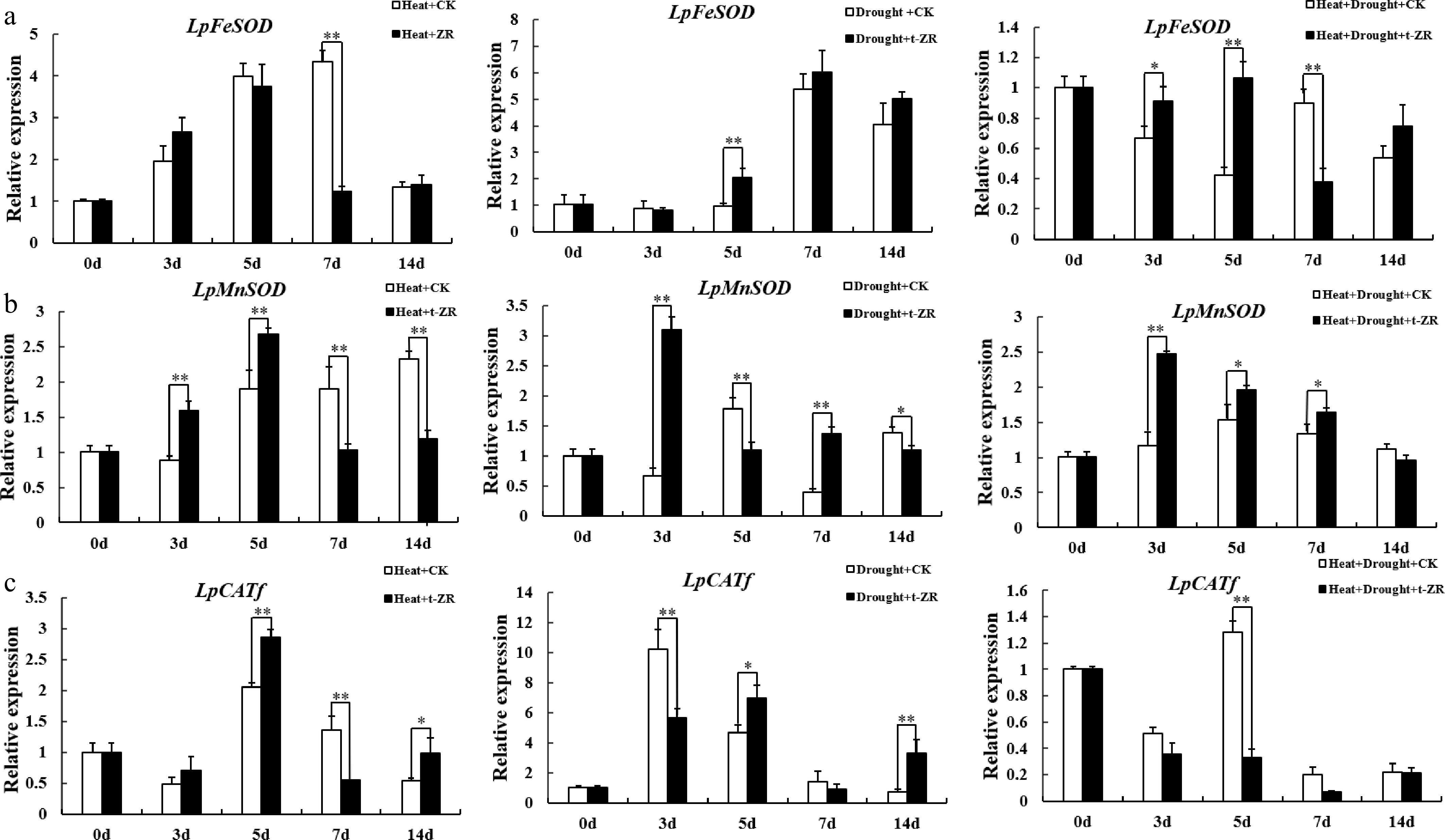
Figure 6.
Effect of exogenous t-ZR on the expression of (a) LpFeSOD (b) LpMnSOD and (c) LpCATf in perennial ryegrass during teh recovery period after stress in the treatment and control groups. Data are presented as the mean ± SD, error bars represent the SD; n = 3 biological replicates. One-way ANOVA followed by the Student–Newman–Keuls (SNK) post hoc test was used for statistical analysis. * indicates a significant difference at the p < 0.05 level; ** indicates a highly significant difference at the p < 0.01 level.
Following heat and combined drought and heat stress, the expression of LpHSP90-5 significantly decreased during the recovery period, whereas it first increased and then decreased in plants under drought stress (Fig. 7a). Interestingly, compared with the CK group, t-ZR treatment further suppressed the expression of LpHSP90-5. In contrast, the LpNAC019 gene was significantly upregulated in plants subjected to heat and combined stress (Fig. 7b). The t-ZR treatment further enhanced the expression of this gene in plants under heat stress, though no significant effect was observed in plants under combined stress. However, in plants subjected to drought stress, the expression of LpNAC019 was downregulated, indicating that this gene acts as a heat stress-responsive gene during the recovery period. Overall, these genes responded differently to heat or drought stress, showing variations in gene expression levels and regulatory pathways. Combined drought and heat stress had an additive effect on plant damage, increasing the negative impact of both abiotic stresses.
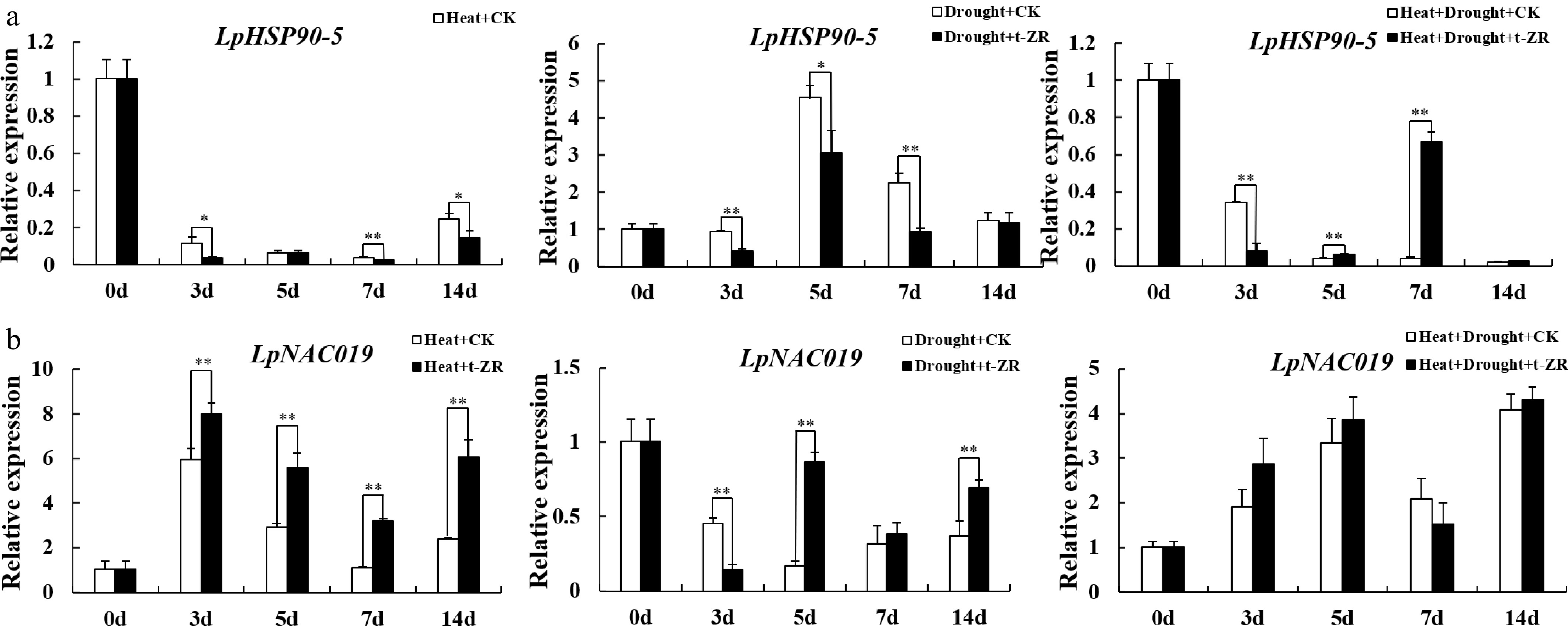
Figure 7.
Effect of exogenous t-ZR on the expression of (a) LpHSP90-5 and (b) LpNAC019 in perennial ryegrass during the recovery period after stress between the treatment and control groups. Data are presented as the mean ± SD, error bars represent the SD; n = 3 biological replicates. One-way ANOVA followed by the Student–Newman–Keuls (SNK) post hoc test was used for statistical analysis. * indicates a significant difference at the p < 0.05 level; ** indicates a highly significant difference at the p < 0.01 level.
-
Most perennial ryegrass populations are highly susceptible to drought, which limits its growth and persistence as a cool-season perennial grass by greatly reducing photosynthesis[37−39]. Damage to perennial ryegrass under combined heat and drought stress is more severe than when each stress is applied individually[16]. A previous study showed that seaweed extracts containing cytokinin and humic acid could raise endogenous cytokinin levels, thereby enhancing drought resistance in creeping bentgrass and delaying declines in turf quality and photochemical efficiency[40]. In this study, we explored the recovery process of plants treated with t-ZR and investigated whether t-ZR can enhance the recovery of perennial ryegrass exposed to combined heat and drought stress, conditions that commonly occur during summer. The results showed that t-ZR treatments significantly accelerated the recovery of plants exposed to heat, drought, or their combination over a 14-d recovery period, notably reducing leaf wilting and promoting plant regrowth at 3 and 5 d post-recovery.
RWC and chlorophyll retention are key physiological factors that determine plants' stress resilience, as they are essential for maintaining cellular hydration and supporting photosynthesis under adverse environmental conditions[41]. Cytokinin levels have been reported to positively correlate with high RWC[24]. Drought stress reduces the ZR content in maize leaves, whereas exogenous cytokinin application following rehydration enhances leaf ZR content and promotes the post-rehydration growthof maize[42]. In this study, the t-ZR treatment significantly accelerated the recovery of RWC, particularly under combined heat and drought stress. However, differences in RWC recovery rates were most significant during the first 7 d, indicating that the effect of t-ZR on RWC is especially important in the early stages of recovery.
Heat stress and drought stress cause ultrastructural damage to chloroplasts and thylakoid lamellae, with the severity of damage increasing under combined heat and drought stress[43]. This damage to chloroplasts' ultrastructure greatly decreases chlorophyll content, which limits the plant's ability to absorb photosynthetically active light and ultimately results in yield losses[44,45]. We observed that t-ZR significantly enhanced the recovery of chlorophyll content during the recovery period. Notably, plants exposed to combined heat and drought stress recovered their chlorophyll content more quickly after the t-ZR treatment. The positive effects of t-ZR on RWC and chlorophyll content align with previous research reporting a positive role for cytokinin in water retention, chlorophyll synthesis, and chlorophyll stability[46,47].
Free proline accumulation acts as a metabolic indicator of drought or heat resistance[48−50]. The accumulation of free proline in plants under abiotic stress has physiological importance, especially in osmotic regulation and free radical scavenging[51]. Previous research showed that free proline concentration in cotton leaves (Gossypium spp.) increased under drought stress and returned to control levels after rewatering[52], indicating a compensatory effect during plant recovery. MDA, a principal product of polyunsaturated fatty acid peroxidation, is a highly toxic molecule that contributes to oxidative damage beyond lipid peroxidation[53]. Under stress, unsaturated fatty acids in the plasma membrane undergo peroxidation, leading to the accumulation of MDA, which disrupts membranes' integrity and increases electrolyte leakage[54]. Previous studies showed that t-ZR treatment significantly inhibited MDA accumulation under heat stress[29]. In our study, the t-ZR treatment significantly reduced the MDA content, free proline levels, and relative conductivity compared with the control across all stress conditions, suggesting that t-ZR promotes cellular recovery and membrane stability. Over time, MDA, free proline, and relative conductivity levels remained higher under combined heat and drought stress than under individual stress conditions, confirming that recovery from simultaneous stress was more difficult. Plants have evolved enzymatic mechanisms to neutralize ROS, repair oxidative damage, and enhance antioxidant defenses[55,56]. The activation of antioxidant systems consisting of multiple enzymes enables plants to survive in stress-prone environments and protects membranes from ROS-induced injury[57]. Heat stress often induces the synthesis and activities of these antioxidant enzymes, making them key indicators of plants' stress tolerance[29]. A previous study showed that exogenous application of cytokinin enhanced antioxidant enzyme activity under abiotic stress[58]. Similarly, cytokinin treatment has been shown to significantly enhance antioxidant enzyme activities in the leaves of creeping bentgrass under drought stress[59]. In this study, antioxidant enzyme activity under combined heat and drought stress was significantly higher than under individual stress conditions, except for SOD activity. This suggests that combined stress had a more pronounced impact on perennial ryegrass than either prolonged high-temperature stress or a water-deficit stress alone. As recovery progressed, antioxidant enzyme activities decreased rapidly across all groups before stabilizing at lower levels. However, the t-ZR treatment maintained significantly higher enzyme activities compared with the control group, even as the overall activity declined over time. The activities of POD and CAT remained low, except in the combined stress group, and by Day 5, no significant difference was observed between plants under the individual stress treatments and the control group. Meanwhile, differences in other enzyme activities between groups also decreased significantly over time, suggesting that the recovery benefit provided by the t-ZR treatment gradually became less noticeable.
Gene expression analysis revealed that t-ZR promoted recovery by regulating chlorophyll metabolism, antioxidant systems, and stress-responsive transcriptional pathways. Application of t-ZR upregulated the chlorophyll biosynthetic gene LpUROD1 but downregulated the chlorophyll catabolic genes LpNYC1 and LpHCAR in the early recovery stage under heat or drought stress, indicating the quick recovery of chlorophyll in plants treated with t-ZR. In contrast, the expression of LpUROD1 remained consistently low under combined heat and drought stress treatment, suggesting that combined stress caused more severe and less reversible damage to chloroplasts. In agreement with our findings, Gujjar et al.[44] reported that cytokinin maintains chlorophyll's stability under abiotic stress by coordinating the expression of genes involved in chlorophyll metabolism. Application of t-ZR also altered the expression pattern of LpFeSOD, LpMnSOD, and LpCATf. Under heat stress, these genes were initially upregulated and then declined more rapidly in t-ZR-treated plants than in control plants by 5 d of recovery. Under drought stress, t-ZR significantly induced the expression of LpMnSOD during the first 3 d of recovery. Under combined stress, although the overall expression of antioxidant genes remained low, t-ZR still triggered a significant increase in the expression of LpMnSOD expression at 3 d. These transcriptional changes were consistent with the corresponding changes in antioxidant enzyme activities and MDA content observed in our physiological assays. They are also consistent with previous research that found that exogenous cytokinin enhanced antioxidant capacity under abiotic stress by upregulating SOD and CAT family genes[60]. Our findings showed that LpHSP90-5 was continuously downregulated during recovery from heat and combined stress, and t-ZR further suppressed its expression. This pattern suggests a reduced requirement for molecular chaperone activity as stress-induced protein damage was repaired, and it is consistent with the expression patterns of HSP family genes during stress recovery in perennial ryegrass reported by Appiah et al.[61]. Additionally, LpNAC019 was notably upregulated under heat and combined stress, with t-ZR treatment further enhancing its expression under heat stress, whereas it was downregulated under drought stress. This pattern suggests that LpNAC019 functions primarily as a heat-responsive transcription factor, which is consistent with the results of Nie et al.[9]. Notably, this study only validated a limited set of candidate genes rather than profiling genome-wide transcription. Given that physiological phenotypes are co-regulated by transcriptional, translational, and post-translational processes, the transcript level of a single gene does not have a simple linear relationship with the corresponding physiological index. Nonetheless, the concordant dynamic patterns between gene expression and physiological traits provide transcriptional-level evidence for t-ZR-mediated promotion of recovery. Overall, these findings suggest that t-ZR facilitates post-stress recovery in perennial ryegrass by modulating the transcription of key genes involved in chlorophyll metabolism, antioxidant defense, and stress responses.
-
This study examined the physiological responses and expression profiles of eight stress-related candidate genes in perennial ryegrass during recovery from heat, drought, and combined heat–drought stress, and characterized the regulatory effects of exogenous t-ZR. Combined heat and drought stress imposed more severe damage on plant growth, cell membrane integrity, and photosynthetic pigments than individual stresses, leading to a slower recovery trajectory. Exogenous t-ZR consistently accelerated post-stress recovery across all stress conditions by improving leaf RWC and chlorophyll levels, mitigating membrane lipid peroxidation and electrolyte leakage, and enhancing antioxidant enzyme activities. Candidate gene expression analysis showed that t-ZR modulated the expression dynamics of genes involved in chlorophyll metabolism, antioxidant defense, and heat response. These expression patterns aligned with the observed physiological recovery trends, providing molecular-level evidence for t-ZR-mediated growth rehabilitation. Notably, the regulatory effects of t-ZR differed across stress types. Under single stresses, t-ZR exerted stronger regulatory effects on both physiological parameters and gene expression. Under combined stress with more persistent damage, t-ZR primarily alleviated cumulative oxidative injury by upregulating LpMnSOD at the early recovery stage to enhance antioxidant capacity. The findings of this study provide experimental evidence for hormonal regulation of post-stress recovery in perennial ryegrass under abiotic stress, and offer an optional management strategy for the maintenance and restoration of turf in regions suffering from summer heat and drought. Nevertheless, drought stress was simulated with PEG-6000 in the present experiment, which is not equivalent to authentic soil drought. Further field trials are required to verify the practical efficacy of exogenous t-ZR under natural field stress conditions.
-
The authors confirm contribution to the paper as follows: study conception and design: Yang H, Nie G; data collection: Yang H, Liu Y, Yang K; analysis and interpretation of results: Yang H, Liu Y, Yang X, Yang K; draft manuscript preparation: Yang H; supervision, resources, funding acquisition: Ghanizadeh H, Zhang X, Nie G. All authors reviewed the results and approved the final version of the manuscript.
-
All data generated or analyzed during this study are included in this published article, and are available from the corresponding author upon reasonable request.
-
The authors declare that they have no conflict of interest.
-
accompanies this paper online at: https://doi.org/10.48130/grares-0026-0027.
-
# Authors contributed equally: Hechuan Yang, Hossein Ghanizadeh
- Supplementary Table S1 The primers of RT-qPCR.
- Copyright: © 2026 by the author(s). Published by Maximum Academic Press, Fayetteville, GA. This article is an open access article distributed under Creative Commons Attribution License (CC BY 4.0), visit https://creativecommons.org/licenses/by/4.0/.
-
About this article
Cite this article
Yang H, Ghanizadeh H, Liu Y, Yang X, Yang K, et al. 2026. Trans-zeatin riboside enhances the physiological and transcriptional recovery of perennial ryegrass following heat and drought stress. Grass Research 6: e033 doi: 10.48130/grares-0026-0027 

Trans-zeatin riboside enhances the physiological and transcriptional recovery of perennial ryegrass following heat and drought stress
- Received: 20 May 2026
- Revised: 20 September 2026
- Accepted: 22 September 2026
- Published online: 03 November 2026
Abstract: The degree of damage caused by high temperatures and drought during the progress of production is often unpredictable. Perennial ryegrass (Lolium perenne L.), which is a common cool-season grass species, was used for detecting restoration effects with exogenous application of trans-zeatin riboside (t-ZR) after exposure to high temperature, drought, and combined stresses in this study. The results indicated that the combined impact of high temperature and drought stress was more damaging to plants than each stress individually. Additionally, the study showed that applying t-ZR could quickly promote post-stress recovery, significantly enhance the chlorophyll content, and decrease malondialdehyde (MDA) content in the leaves after stress. The t-ZR treatment also improved relative water content, lowered relative conductivity, and boosted antioxidant enzyme activity. At the molecular level, the t-ZR treatment modulated the transcriptional expression of key genes involved in chlorophyll metabolism, antioxidant defense, heat shock response, and stress-related transcription factors, which coordinately contributed to the enhanced post-stress recovery of perennial ryegrass. Understanding the growth and physiological responses of different grass species would help develop effective management programs to improve the summer performance of cool-season grasses in the future.
-
Key words:
- Drought stress /
- Heat stress /
- Perennial ryegrass /
- Trans-zeatin riboside