











-
Cytokinins (CKs) are a class of purine-derived phytohormones that play essential roles throughout the plant life cycle. They regulate a wide range of physiological processes, including root and shoot growth, leaf senescence, and chloroplast development, and are critical for plant responses to both biotic and abiotic stresses[1]. Current knowledge of CK biology encompasses biosynthesis, metabolism, transport, and signal perception. Classical forward and reverse genetics have been instrumental in establishing the existing framework, which forms the conceptual basis for our understanding of CK signaling. However, many cytokinin-related processes remain unresolved. For example, does the subcellular localization of CK receptors at the plasma membrane compared to the endoplasmic reticulum lead to distinct signaling outputs and physiological outcomes? To what extent do the expanded gene families involved in CK biosynthesis, metabolism, transport, and signaling exhibit functional redundancy versus specialized roles? Additionally, how is CK homeostasis precisely balanced to sustain normal plant growth and development? These unresolved questions largely arise from the inherent limitations of conventional genetics, wherein functional redundancy among paralogs and the lethality of higher-order mutants often obscure gene function and impede mechanistic dissection.
Chemical genetics complements conventional genetic approaches by facilitating temporally controlled, tunable, and concentration-dependent perturbation of hormone pathways. This level of control allows for the use of compound sensitivity or resistance as selectable traits in genetic screens and subsequent mechanistic studies. A typical example is brassinazole, a specific biosynthesis inhibitor of brassinosteroid (BR) that induces BR-deficient phenotypes, which can be reversed by the application of exogenous brassinosteroids[2]. Genetic screening for brassinazole-tolerant mutants identified the dominant resistant allele bzr1-1D, which led to the characterization of BZR1 as the central transcriptional regulator of BR signaling[3]. The selective ABA agonist pyrabactin was employed to screen for pyrabactin-insensitive mutants, resulting in the identification of the ABA receptor PYR1[4]. These precedents demonstrate that chemical sensitivity or resistance can serve as a selectable trait to isolate signaling components that are masked by gene redundancy and developmental compensation. Bioactive small molecules function as modulators of hormonal pathways and serve as potent tools for elucidating key regulatory factors and mechanisms in plant hormone signal transduction. In this context, chemical genetics has the potential to enhance our understanding of CK biology by revealing regulatory mechanisms that remain inaccessible to traditional genetic approaches. In this review, we summarize the current knowledge of CK biosynthesis, metabolism, transport, and signaling, highlight unresolved mechanistic questions, and discuss both reported and emerging chemical modulators related to CK pathways from a chemical genetics perspective. Together, these advances provide valuable insights for both fundamental research and future agricultural applications of CKs.
-
In Arabidopsis, CK biosynthesis occurs through two primary pathways: the de novo pathway and the tRNA-dependent pathway (Fig. 1). The Arabidopsis genome encodes nine isopentenyltransferases (IPTs), which include seven adenylate IPTs (AtIPT1 and AtIPT3–AtIPT8) and two tRNA-IPTs (AtIPT2 and AtIPT9)[5]. The de novo pathway initiates with the action of adenylate IPTs that catalyze the transfer of an isopentenyl group from dimethylallyl diphosphate (DMAPP) to adenosine triphosphate (ATP) or adenosine diphosphate (ADP), resulting in the formation of N6-(Δ2-isopentenyl)adenine (iP)-type CK nucleotide precursors[5,6]. These precursors are subsequently trans-hydroxylated by the cytochrome P450 monooxygenases CYP735A1 and CYP735A2 to produce trans-zeatin (tZ)-type CK nucleotides[7]. Consistent with the predominant contribution of the plastidial MEP pathway to the prenyl side chains of iP- and tZ-type CKs, several adenylate IPTs, including AtIPT1, AtIPT3, AtIPT5, and AtIPT8, have been identified in plastids[8]. In contrast, the tRNA-IPTs AtIPT2 and AtIPT9 are important for the biosynthesis of cis-zeatin (cZ)-type CKs, as they catalyze the isopentenylation of tRNA, with the turnover of modified tRNAs recognized as a significant source of cZ-type CKs[5,8]. CK nucleotide precursors are subsequently converted into bioactive free bases through the action of LONELY GUY (LOG) proteins, which are CK riboside 5′-monophosphate phosphoribohydrolases that directly hydrolyze CK riboside 5′-monophosphates to release bioactive CK free bases and ribose 5′-phosphate[9]. In Arabidopsis, the iP- and tZ-type CKs are generally regarded as the two major forms, with their corresponding free bases, iP and tZ, representing the principal bioactive species[5,10]. Despite substantial progress in elucidating the enzymatic framework underlying CK biosynthesis and activation, the precise developmental functions of individual members of the IPT and LOG families remain incompletely understood due to extensive genetic redundancy. Most single ipt mutants and double-mutant combinations involving IPT1, IPT3, IPT5, and IPT7 exhibit no obvious developmental abnormalities. In contrast, higher-order mutants, including ipt3 ipt5 ipt7 and ipt1 ipt3 ipt5 ipt7, display reduced shoot growth along with enhanced lateral root formation, indicating substantial functional overlap among IPT family members in regulating cytokinin-dependent plant development[5]. These genetic data indicate that multiple IPT family members act redundantly while retaining spatially and developmentally differentiated functions. Such redundancy can obscure the contribution of individual enzymes in conventional loss-of-function analyses.
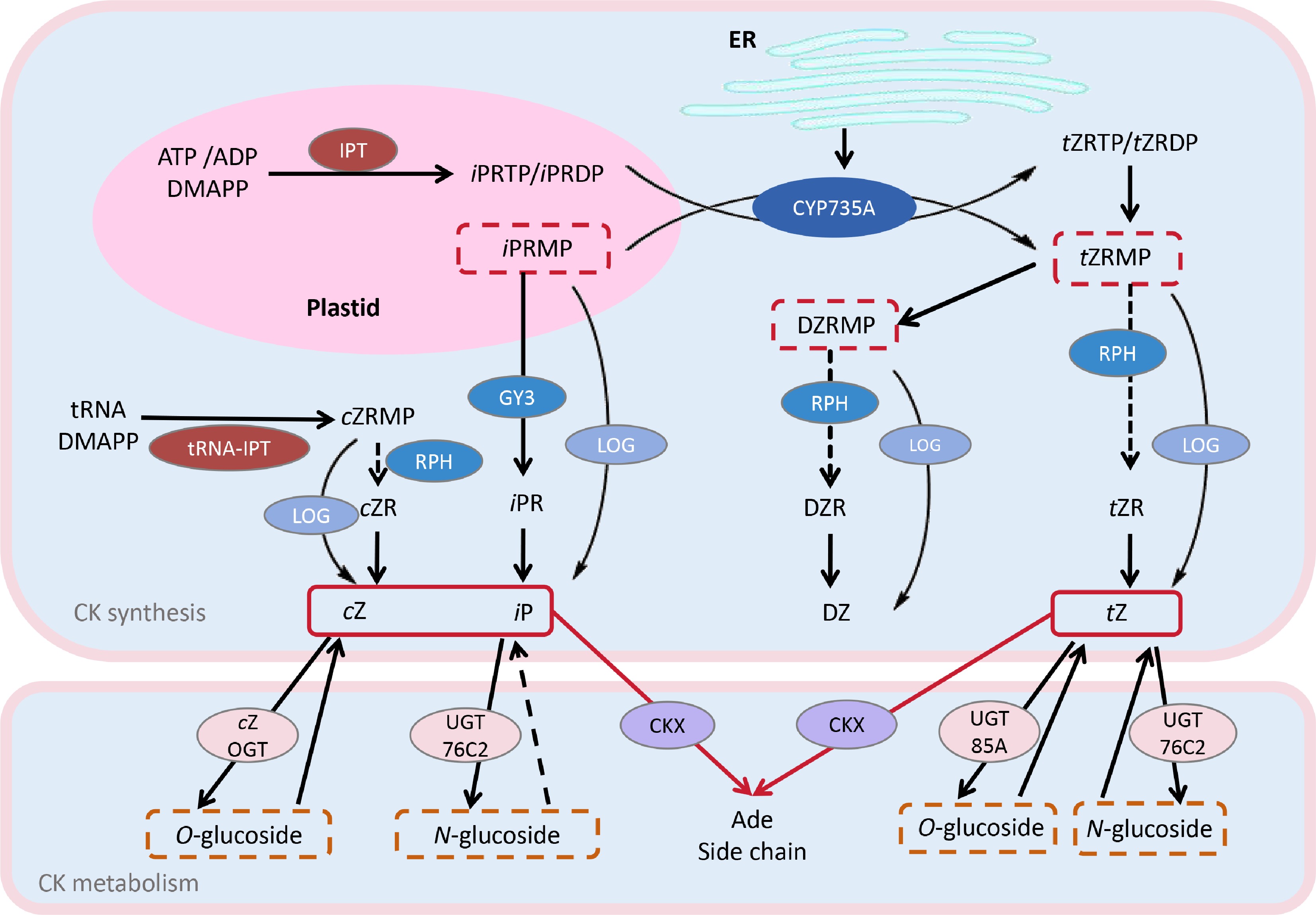
Figure 1.
Overview of cytokinin biosynthesis and metabolism in Arabidopsis. In the de novo pathway, IPTs catalyze the transfer of an isopentenyl group from DMAPP to ATP or ADP, generating iP-type nucleotide precursors (iPRTP and iPRDP). In Arabidopsis, this initial step is predominantly associated with plastid-localized IPTs. The resultant iP-type nucleotides enter the isopentenyl ribonucleotide monophosphate (iPRMP) pool and are either directly converted to active iP by LOG phosphoribohydrolases or hydroxylated by ER-associated CYP735A enzymes to yield tZ-type nucleotides (tZRTP, tZRDP, tZRMP), which are subsequently activated by LOG to form tZ. In parallel, tRNA-IPTs prenylate specific tRNAs using DMAPP; subsequent tRNA turnover is the primary source of cZ-type CKs. Active cytokinin free bases, including iP, tZ, cZ, and DZ, are further inactivated through O-glucosylation or N-glucosylation by UDP-glycosyltransferases (UGTs), or irreversibly degraded by CKXs into adenine and side-chain products. Solid arrows indicate established metabolic conversions, whereas dashed arrows indicate proposed or less well-defined routes. Plastid and endoplasmic reticulum (ER) compartments are indicated according to the reported subcellular localization of the corresponding biosynthetic enzymes.
This genetic redundancy provides a compelling rationale for employing complementary chemical-genetic approaches to dissect CK biosynthesis and activation. Genetic strategies, including tissue-specific or inducible expression systems, can effectively address certain aspects of spatial and developmental regulation. In contrast, chemical perturbations offer distinct advantages by enabling rapid, reversible, and dose-dependent modulation of protein activity. Such temporal control may assist in distinguishing primary biochemical effects from secondary developmental consequences. In principle, paralog- or pathway-selective inhibitors and activators could be employed to modulate IPT- or LOG-mediated CK biosynthesis and activation, offering greater temporal flexibility than stable genetic perturbations. However, this potential is critically dependent on the specificity of the compounds. Given that the IPT and LOG families comprise multiple functionally overlapping paralogs, broadly acting compounds are likely to affect multiple family members simultaneously, thereby failing to delineate paralog-specific functions. Currently, selective chemical probes that target CK biosynthesis or activation are still limited. This scarcity is likely due to the conserved catalytic features of these enzymes, the complexity of CK metabolism, and the pleiotropic developmental effects associated with global CK perturbation. Therefore, the development of isoform-, paralog-, or pathway-selective chemical regulators, along with rigorous target validation, will be essential to minimize off-target effects and facilitate more precise modulation of CK biosynthesis in planta.
-
The abundance and activity of bioactive CKs are dynamically regulated by two primary metabolic pathways: the degradation mediated by cytokinin oxidase/dehydrogenase (CKX) and conjugation, particularly glycosylation (Fig. 1). CKX enzymes serve as crucial regulators of irreversible CK degradation by cleaving the N6-isoprenoid side chain of CK free bases and ribosides, which results in the generation of adenine- or adenosine-derived products and side-chain aldehydes[11,12]. The CKX enzyme family consists of seven members in Arabidopsis (AtCKX1–AtCKX7) and multiple homologs in maize. Most CKX enzymes preferentially target isoprenoid CKs (iP, tZ) and their ribosides. Several natural and synthetic CKs, such as dihydrozeatin (DZ), benzyladenine (BA), and kinetin, are known to be relatively resistant to CKX-mediated degradation[13,14]. Genetic analyses further support the central role of CKX-mediated degradation in regulating CK homeostasis and plant development. The ckx3 and ckx5 single mutants exhibit relatively modest reproductive phenotypes, whereas the ckx3 ckx5 double mutant displays enlarged reproductive meristems, increased ovule number, and enhanced seed yield, revealing substantial functional overlap between CKX3 and CKX5 in regulating CK homeostasis and reproductive development[15]. Consistent with the central role of CKX in CK homeostasis, substantial efforts have been dedicated to the development of CKX inhibitors. Reported CKX inhibitors include various structural classes, such as diphenylurea-, thiadiazolylurea-, pyridylurea-, and adenine-derived compounds[16] (Fig. 2; Table 1).
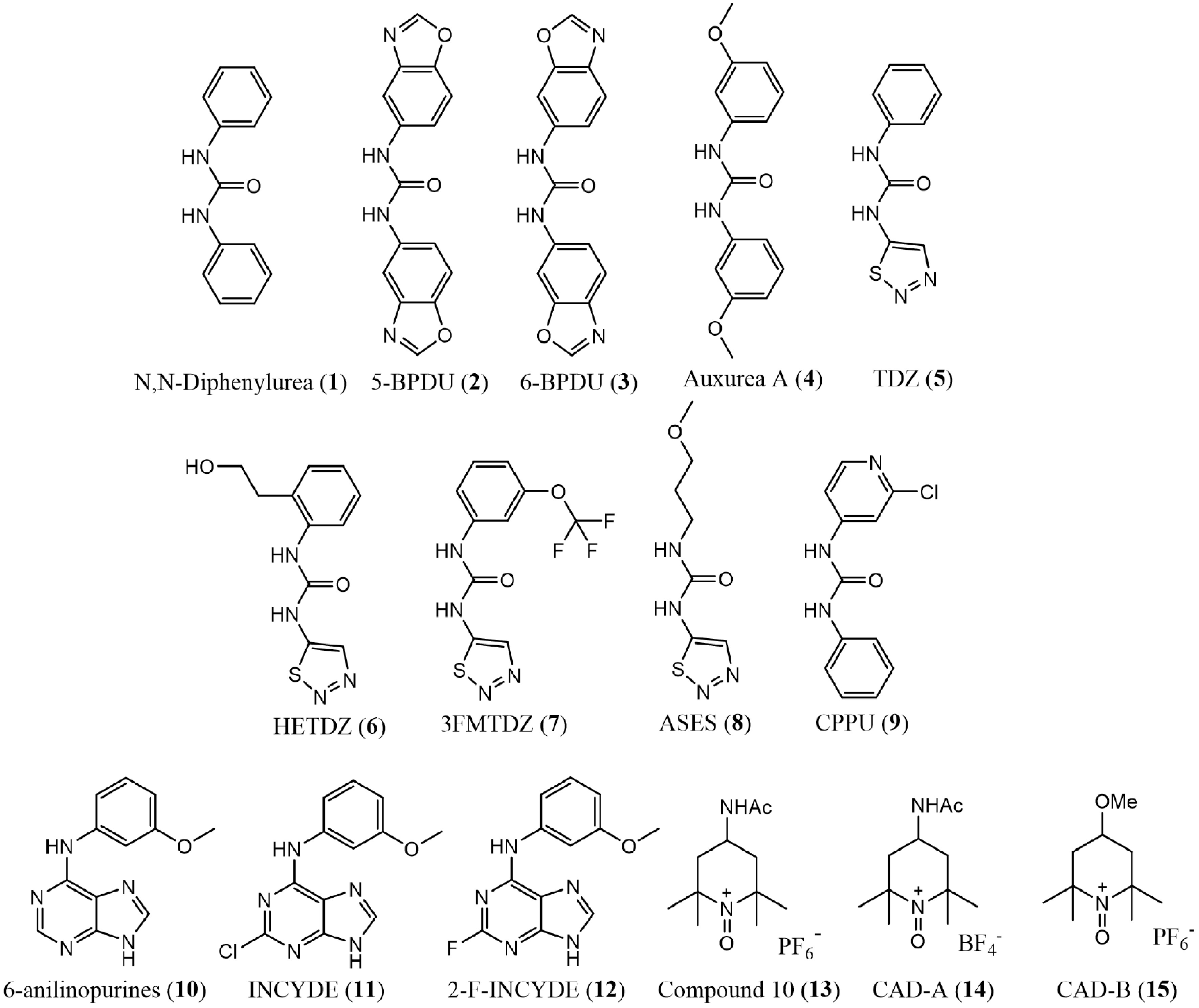
Figure 2.
Available chemical tool structures for investigating cytokinin metabolism in plants. Compounds 1–3 are diphenylurea derivatives that primarily inhibit cytokinin oxidase/dehydrogenase (CKX). Compound 4, which shares the same diphenylurea backbone, competitively inhibits GH3 enzymes by occupying the auxin-binding pocket. Compounds 5–8 are classified as thiadiazole-type CKX inhibitors; several of these compounds exhibit weak CK receptor agonism, thus possessing intrinsic cytokinin activity. Compound 9 is a compound that delays endogenous CK catabolism by suppressing CKX expression. Compounds 10–12 are adenine-type modulators, with INCYDE in this group exhibiting strong CKX inhibition and binding to AHK receptors, while structural optimization may further enhance its selectivity toward CKX. Compounds 13–15 function as CK scavenger reagents. Rather than targeting enzymes in the cytokinin pathway, these compounds modulate endogenous cytokinin abundance through two mechanisms: directly modifying the N6-isopentenyladenosine (i6A) moiety, which is identical to that of endogenous iP-type cytokinins, and mimicking CKX activity. The CAS numbers and PubChem CIDs of all compounds are summarized in Table 1 for reference.
Table 1. Available chemical tool information for investigating cytokinin metabolism in plants.
ID Compound name Identification Description Ref. 1 N,N-Diphenylurea 102-07-8 CKX inhibitor [16] 2 1,3-di(benzo[d]oxazol-5-yl)urea (5-BDPU) PubChem CID 102147930 CKX inhibitor [17] 3 1,3-di(benzo[d]oxazol-6-yl)urea (6-BDPU) PubChem CID 102147931 CKX inhibitor [17] 4 1,3-bis(3-methoxyphenyl)urea (Auxurea A) 16460-28-9 GH3 inhibitor [18] 5 Thidiazuron (TDZ) 51707-55-2 CKX inhibitor [19] 6 1-[2-(2-hydroxyethyl)phenyl]-3-(1,2,3-thiadiazol-5-yl)urea (HETDZ) 2454498-77-0 CKX inhibitor [19] 7 1-[1,2,3]thiadiazol-5-yl-3-(3-trifluo romethoxy-phenyl)urea (3FMTDZ) 2454498-76-9 CKX inhibitor [19] 8 1-(2-methoxy-ethyl)-3-1,2,3-thiadiazol-5-yl-urea (ASES) N.A. CKX inhibitor [20] 9 N-(3-chloro-pyridin-4-yl)-N-phenylurea (CPPU) 68157-60-8 CKX inhibitor [23] 10 6-anilinopurines 6296-91-9 CKX inhibitor [24] 11 2-chloro-6-(3-methoxyphenyl)aminopurine (INCYDE) 190654-89-8 CKX inhibitor [24] 12 2-fluoro-6-(3-methoxyphenyl)aminopurine. (2-F-INCYDE) 1089014-47-0 CKX inhibitor [24] 13 Compound 10 N.A. Deisopentylation [31] 14 CAD-A N.A. Cytokinin scavenger [32] 15 CAD-B N.A. Cytokinin scavenger [32] Numerical identifiers in parentheses correspond to the bolded compound numbers in the text and to those shown in Fig. 2. N.A., not applicable. Diphenylurea-type regulators
-
N,N-Diphenylurea (1), an inhibitor of CK oxidase/dehydrogenase, can significantly suppress CKX-mediated degradation of endogenous CKs, thereby enhancing both agricultural performance and the efficiency of plant tissue culture[16]. Compounds 5-BDPU (2) and 6-BDPU (3) effectively inhibit CKX-mediated degradation of natural CKs by stably occupying the active sites of ZmCKX1 and AtCKX2[17]. Interestingly, Auxurea A (4), a diphenylurea-based inhibitor, acts by competitively occupying the IAA site in the GH3–ATP complex. The resulting inhibition elicits high auxin phenotypes exclusively in dicots, while showing no effect in monocots[18]. This functional divergence from structurally related diphenylurea-type CK modulators highlights the critical role of subtle structural modifications in determining pathway specificity, providing valuable insights for the design of future auxin- and cytokinin-specific modulators.
Thiadiazolylurea-type regulators
-
Thidiazuron (TDZ, 5) is a widely used synthetic plant growth regulator that exhibits dual biological activities. It possesses intrinsic CK activity[19] and functions as a potent CKX inhibitor at higher concentrations, which complicates its regulatory effects. HETDZ (6) and 3FMTDZ (7) are structural derivatives of TDZ that maintain the CKX-targeting mechanism of TDZ; however, they differ in their interactions with receptors. Specifically, they weakly activate CRE1/AHK4 and demonstrate significantly reduced affinity for AHK3, indicating diminished CK receptor agonism[19]. This phenotype contrasts with the well-established inhibitory effect of high CK levels on root elongation, suggesting that these compounds may modulate root development through an as-yet-unknown mechanism. 1-(2-Methoxyethyl)-3-(1,2,3-thiadiazol-5-yl)urea (ASES, 8), a novel thiadiazolylurea anti-senescence compound, operates via a mechanism distinct from that of the classical regulator TDZ. While TDZ exhibits potent CK activity and anti-senescence effects in leaves, it significantly inhibits root development. In contrast, ASES effectively delays senescence in aerial tissues without suppressing root growth and even promotes root elongation in Arabidopsis. Consequently, ASES represents a highly promising tool for investigating cytokinin regulation[20].
Pyridylurea-type regulators
-
N-(3-chloro-4-pyridyl)-N′-phenylurea (CPPU, 9) is widely utilized to promote fruit enlargement and modify floral morphology[21,22]. It functions primarily by suppressing CKX expression, which reduces CK catabolism and sustains bioactive CKs such as tZ. By coordinately upregulating CYCD3 to drive cell division and expansion, this regulatory mode appears phylogenetically conserved, as validated in both apple and tobacco[23].
Adenine-type regulators
-
Currently, urea derivatives are the predominant small-molecule modulators targeting cytokinin oxidase to maintain CK homeostasis; however, their limited target selectivity constrains their application and necessitates further structural refinement. In addition to urea derivatives, modified adenine analogs can also function as effective CKX inhibitors. These compounds typically contain a purine ring bearing an amino substituent at the N6 position, a structural feature shared by many CKs. Through structure-activity relationship (SAR) analysis and related methodologies, researchers have established that the chemical properties and substitution patterns at the 6-position amino group are pivotal for recognition by various receptors within the CK signaling pathway. Several derivatives of 6-anilinopurines (10) have been reported as effective inhibitors of CKX. INCYDE (11), an aminopurine-type CKX inhibitor[24], exhibits a clear preference for inhibiting CKX rather than activating CK receptors. Researchers conducted SAR dissection and found that an electron-withdrawing substituent at the C2 position of the purine ring is essential for achieving high inhibitory potency against AtCKX2[24]. Guided by these findings, researchers designed 2-F-INCYDE (12), a C2-halogenated INCYDE analog that further improves CKX inhibitory activity and provides a blueprint for the development of next-generation anilinopurine regulators[24]. Among them, 2-F-INCYDE demonstrates beneficial effects on various physiological processes, including the delay of senescence, promotion of stomatal opening, and enhancement of transpiration and photosynthetic efficiency[25]. In rice field trials, it significantly alleviated yield losses induced by heat stress by safeguarding pollen development and increasing the seed setting rate, thereby enhancing grain yield[26].
In parallel with CKX-mediated oxidative degradation, conjugation serves as a second major pathway for regulating CK activity and metabolic stability. Glycosylation, a predominant form of CK conjugation, produces metabolites with distinct metabolic fates and varying degrees of reversibility. O-glucosylation of hydroxylated CKs at the side-chain hydroxyl group typically yields reversible storage forms, which can be hydrolyzed by β-glucosidases to regenerate active CKs[27]. In contrast, N-glucosylation at the N7 or N9 position has traditionally been considered a largely irreversible mechanism of CK inactivation[28]. However, metabolic studies in Arabidopsis have demonstrated that tZ N7- and N9-glucosides can be converted back to free tZ, thus challenging the notion that CK N-glucosylation is universally irreversible[29]. Despite the significance of glycosylation in CK metabolism, there is a scarcity of selective small-molecule modulators that directly target CK glycosyltransferases or glucosidases. The development of these tools may be hindered by the extensive size of the plant UDP-glycosyltransferase (UGT) and β-glucosidase families, the overlapping substrate recognition among certain family members, and the limited structural information regarding CK-specific enzyme-substrate interactions. Future development of such modulators could be pursued through structure-guided design of small-molecule inhibitors or activators that specifically target UGTs or β-glucosidases. Moreover, the differential reversibility of O-glycosylation and N-glycosylation presents additional opportunities for the design of modulators.
In addition to modulators acting on CKX and CK conjugation enzymes, two classes of novel compounds have been developed to directly target CKs by converting iP into inactive forms. One strategy originates from advances in the precise chemical manipulation of RNA epigenetic modifications. Through rational small-molecule design and bioorthogonal chemistry, diverse RNA modifications can be selectively erased, labeled, converted, or repaired[30]. Notably, RNA-located i6A shares an identical N6-isopentenyladenine core with free iP-type cytokinins. Leveraging this conserved structure, reagents designed to remove the isopentenyl group from RNA i6A are repurposed to directly deactivate free iP, presenting an alternative to traditional strategies that merely target cytokinin metabolic enzymes. Compound 10 (13), a 4-NHAc oxoammonium salt, serves as a typical example. It specifically cleaves the shared isopentenyl side chain at the levels of nucleosides, oligoribonucleotides, and cells, thereby reducing endogenous i6A levels and reconfiguring overall cytokinin metabolism[31]. Recent studies have reported another strategy employing small-molecule CKX mimetics to drive oxidative degradation of endogenous iP. CAD-A (14) and CAD-B (15) have been identified as effective iP/iPR scavengers, capable of mimicking cytokinin dehydrogenase activity, particularly evident in root branching assays. However, the precise mechanisms by which CADs influence root and shoot growth remain to be elucidated[32]. These examples highlight that direct chemical regulators targeting iP constitute a highly promising research avenue for modulating CK biology.
Overall, the available small-molecule regulators of CK metabolism demonstrate multiple agronomic benefits, including the retardation of leaf senescence, stimulation of stomatal opening, and improvement of seed setting. These compounds hold significant promise for future development as precisely controllable agricultural agents, playing important roles in enhancing crop stress tolerance and improving the postharvest quality of horticultural products.
-
CK transport serves as an additional regulatory layer that influences CK homeostasis at both local and whole-plant levels. Grafting experiments and genetic analyses of CK biosynthetic pathways have demonstrated a clear distinction between the major forms of CK. iP-type CKs are closely associated with shoot-derived CK production and phloem-mediated transport toward the roots, while tZ-type CKs are predominantly synthesized in the roots and transported upward to the shoots via the xylem[33−35]. Several ATP-binding cassette (ABC) transporters play a significant role in the systemic and local redistribution of CKs[36] (Fig. 3). In terms of domain organization, membrane-integrated ABC transporters can be broadly categorized into full transporters and half transporters. Full transporters consist of two transmembrane domains (TMDs) and two cytosolic nucleotide-binding domains (NBDs) within a single polypeptide, while half transporters contain one TMD and one NBD, functioning after homo- or heterodimerization with another half transporter[37,38]. In eukaryotes, ABC transporters have been classified into eight subfamilies, designated ABCA through ABCH[37], although the ABCH subfamily is absent in a subset of plant lineages[39]. Among plant ABC transporters, members of the ABCB, ABCC, ABCD, and ABCG subfamilies are best characterized and known to participate in the transport of plant hormones[40]. Accordingly, multiple plant ABC transporters have been shown to regulate the spatiotemporal distribution of auxin and CK[40].
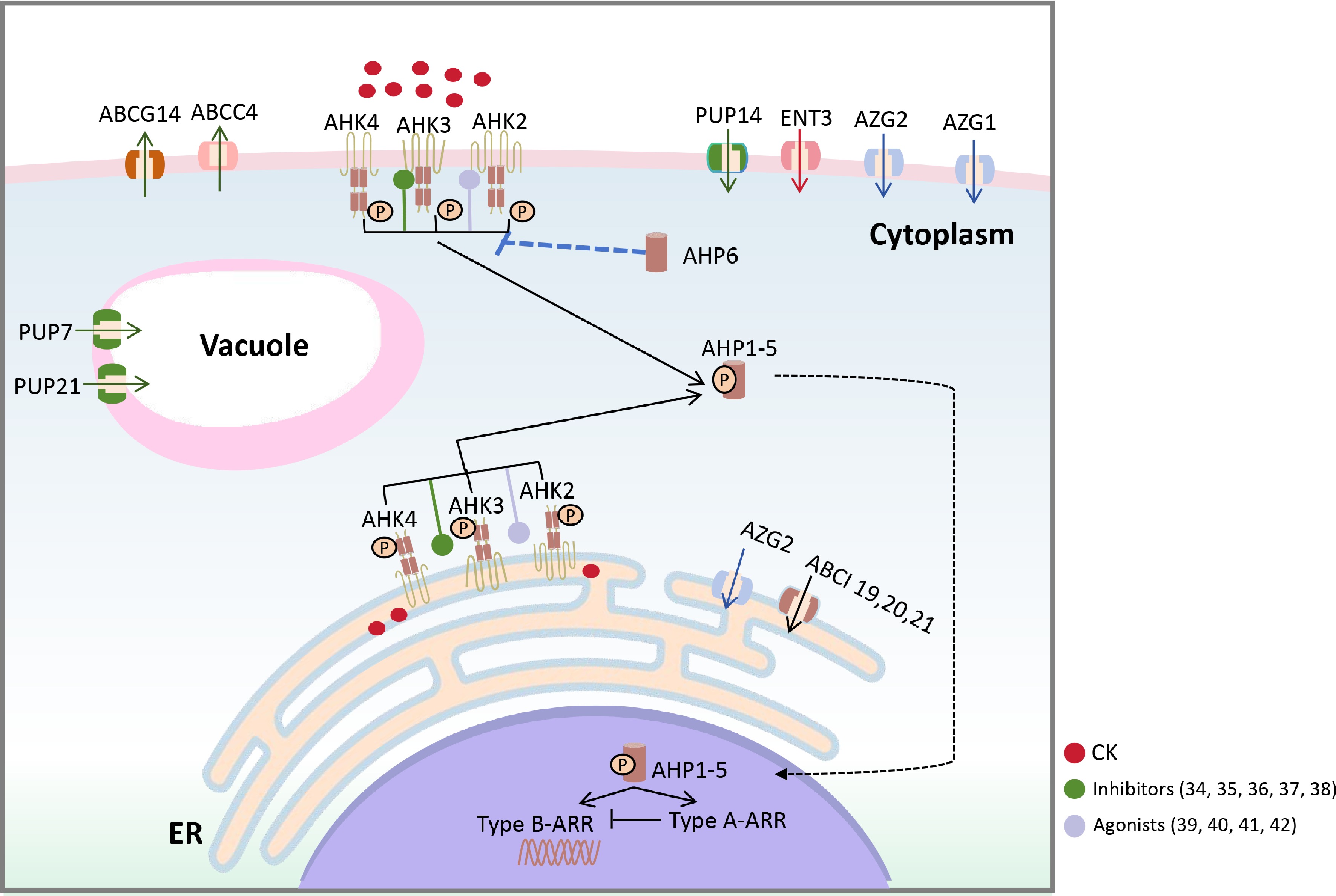
Figure 3.
Schematic representation of cytokinin signaling and transport. The perception and signal transduction of CK are mediated by membrane-localized histidine kinase receptors (AHK2, AHK3, and AHK4/CRE1) situated on the plasma membrane and ER. Upon the binding of CK, these receptors activate histidine phosphotransfer proteins (AHP1–AHP5), which then translocate into the nucleus to regulate type-B and type-A response regulators (ARRs). Various transporter families work in concert to maintain CK homeostasis. A comprehensive description of these processes is available in the preceding sections.
Given that multiple ABC transporters play crucial roles in CK transport, a key question is whether small-molecule modulators targeting these ABC transporters could enable fine-tuned regulation of CK levels. Evidence from studies on other plant hormones indicates that plant hormone ABC transporters are amenable to chemical modulation. Sodium orthovanadate (16) is a widely used ABC transporter inhibitor that significantly suppresses the strigolactone-extruding activity of ABCG36 and ABCG48, thereby reducing the germination and parasitism of the pernicious field weed Striga[41]. Glibenclamide (17), a reported inhibitor of animal MRP1/ABCC1[42], markedly reduces cytokinin accumulation in tobacco leaves transiently expressing[43]. Furthermore, two classic mammalian ABC transporter inhibitors, Verapamil (18) and Cyclosporin A (19), have also been reported to participate in the regulation of plant ABC transporters. Verapamil inhibits ABCG40-mediated ABA transport into guard cells[44], while Cyclosporin A suppresses the IAA efflux activity of ABCB1[45]. These findings further suggest that mammalian ABC transporter modulators may have potential applications in plants. Accordingly, screening available ABC inhibitors could identify compounds that target ABC transporters involved in modulating CK transport. Additionally, strategies established for the discovery of animal ABC inhibitors could guide the development of plant-specific ABC transporter modulators.
These observations establish the pharmacological tractability of plant ABC transporters and raise the possibility of developing chemical tools for CK transport. However, despite these pharmacological precedents, selective small-molecule probes specifically designed to target individual CK-transporting ABC proteins are still unavailable. Given that mammalian ABC transporters are associated with various human diseases, they have emerged as highly promising targets for drug discovery and development[46]. Consequently, numerous ABC transporter inhibitors have been developed and characterized in animal systems (Table 2; Fig. 4). These compounds modulate ABC transporter activity through two direct binding mechanisms, targeting either the ATP-binding pocket within the NBDs or the substrate-binding sites embedded in the TMDs.
Table 2. Available chemical tool information for investigating ABC transporters.
ID Compound name Identification Direct target
in animalsDirect target
in plantsRef. 16 Sodium orthovanadate 13721-39-6 − ABCG36, ABCG48 [41] 17 Glibenclamide 10238-21-8 MRP1/hABCC1 ABCC4 [43] 18 Verapamil 52-53-9 P-gp/hABCB1 ABCG40 [44] 19 Cyclosporin A 59865-13-3 PGP1 ABCB1 [45] 20 SN202 31383-66-1 P-gp/hABCB1 − [48] 21 AICAR 38183-45-8 P-gp/hABCB1 − [48] 22 Compound 1 − P-gp/hABCB1 − [49] 23 Compound 2 − P-gp/hABCB1 − [49] 24 Compound 4 − P-gp/hABCB1 − [49] 25 Compound 10 − P-gp/hABCB1 − [49] 26 Compound 13 − P-gp/hABCB1 − [49] 27 Ivacaftor 873054-44-5 MDR3/ABCB4 − [50] 28 Prazosin 19237-84-4 P-gp/hABCB1 − [51] 29 KS176 1253452-78-6 hABCG2 − [52] 30 Avapritinib 1703793-34-3 hABCG2/hABCB1 − [53] 31 Elacridar 143664-11-3 hABCG2/hABCB1 − [54] 32 A-803467 944261-79-4 hABCG2 − [55] 33 Ko 143 461054-93-3 hABCG2/hABCB1/
hABCC1− [56] Detailed descriptions of these regulators are provided in the section on CK transportation and its potential. Numerical identifiers in parentheses correspond to the bolded compound numbers in the text and to those shown in Fig. 4. 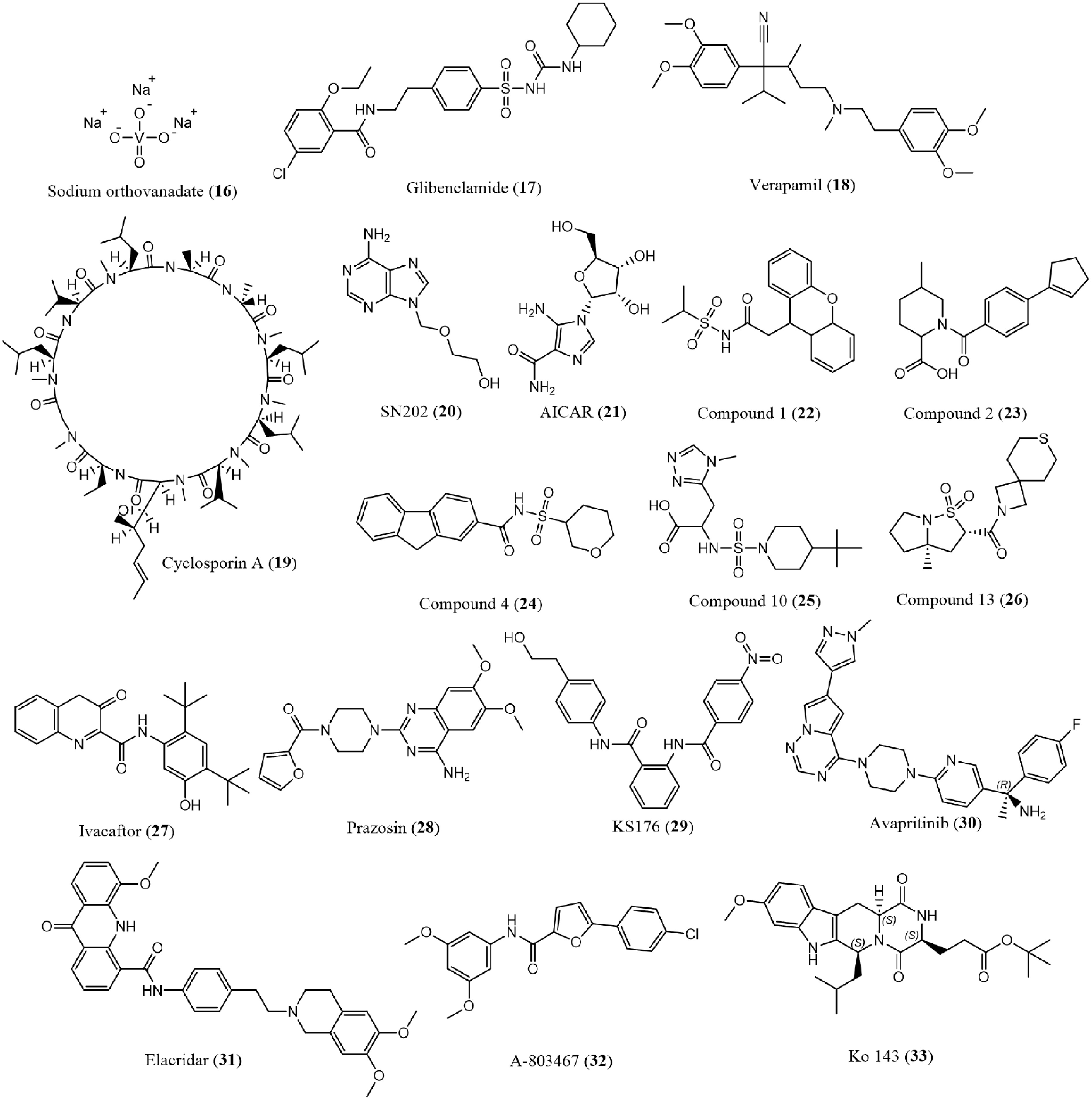
Figure 4.
Available chemical tool structures for investigating cytokinin transport in plants. Detailed descriptions of these modulators are provided in the section on CK transport regulation. Numerical identifiers in parentheses correspond to the bolded compound numbers in the text and those listed in Table 2. All aforementioned modulators (compounds 16–33) have also been reported in studies on mammalian ABC transporters. Among these compounds, compounds 16–19 have been reported to act as chemical modulators of diverse plant ABC transporters. Compounds 20–27 target the NBD, whereas compounds 28–33 target the TMD. We further compiled the target sites of these modulators across both mammalian and plant systems. All relevant information is summarized in Table 2, which lists the corresponding CAS Registry Numbers for detailed reference and retrieval.
Nucleotide-binding domain-targeted chemical regulators
-
The NBDs, which bind and hydrolyze ATP to drive the transport cycle, are highly conserved across ABC proteins in both sequence and structure, making them attractive targets for chemical modulation[38,47]. SN202 (20) and AICAR (21) are two reported ATP structural mimics that form stable complexes with the transporter by targeting the NBD of P-glycoprotein (P-gp/ABCB1), thereby inhibiting its ATPase activity. Notably, both compounds also suppress drug resistance mediated by breast cancer resistance protein (BCRP/ABCG2)[48]. Compounds 1, 2, 4, 10, and 13 (22, 23, 24, 25, 26) also represent five small molecules that target the NBD of P-gp/ABCB1, exhibiting an affinity for the ATP-binding site comparable to that of ATP. These compounds exert strong inhibition of both P-gp ATPase activity and substrate efflux at low concentrations, binding to the NBD of P-gp through shared pharmacophoric features, thereby providing substantial structural guidance for the future design of P-gp NBD inhibitors with novel molecular scaffolds[49]. Beyond direct NBD-targeting inhibitors, a distinct class of rescue-type modulators has been identified to specifically address NBD functional deficiencies. Ivacaftor (27) is a unique ABC transporter potentiator that significantly rescues the impaired phosphatidylcholine efflux activity caused by MDR3/ABCB4 missense mutations[50]. Taken together, direct NBD-targeted inhibitors and NBD functional rescue modulators represent two complementary strategies for manipulating ABC transporter-mediated CK transport in plants, with broad implications for both functional genomic research and potential agronomic applications.
Transmembrane domain-targeted chemical regulators
-
The TMD typically comprises at least six transmembrane α-helices and serves as the principal substrate-recognition and translocation region of ABC transporters. It exhibits significantly greater sequence divergence than the NBD, thereby contributing to substrate specificity[37,38]. Prazosin (28) is identified as a positive allosteric modulator of P-gp/ABCB1 that promotes the transport of two substrates and enhances P-gp ATPase activity by binding to an allosteric site within the TMD[51]. KS176 (29), referred to as Compound 9 in the original report, is a specific inhibitor of BCRP/ABCG2 that interacts noncompetitively with the BCRP substrate pheophorbide A, and potently suppresses BCRP-mediated transport[52]. Avapritinib (30) functions as a multi-target modulator that accesses the substrate binding pockets of both ABCB1 and ABCG2, reversing multidrug resistance mediated by either transporter, increasing intracellular substrate accumulation, and stimulating the ATPase activity of both transporters[53]. Elacridar (31) acts as an inhibitor of ABCB1. By occupying the access unnel surrounded by five TM helices, it blocks the outward conformation required for substrate efflux and significantly reduces ATPase activity[54]. A-803467 (32) and Ko143 (33) are also two reported modulators of BCRP/ABCG2, both targeting the substrate-binding site of the TMD. However, A-803467 exhibits substrate transport-inhibiting and ATPase-activating activity, whereas Ko143 demonstrates strong inhibition of both substrate transport and ATPase activity[55,56]. Collectively, these TMD-targeting modulators illustrate that the drug-binding machinery of ABC transporters can be manipulated through allosteric stimulation, competitive inhibition, or noncompetitive inhibition to regulate efflux across transporter subfamilies.
ABCI complexes as potential targets for chemical modulation of cytokinin responsiveness
-
Unlike canonical ABC transporters, ABCI19, ABCI20, and ABCI21 lack intrinsic transmembrane domains, making it unlikely that they function as stand-alone transmembrane transporters. In Arabidopsis, ABCI19, ABCI20, and ABCI21 are localized to the endoplasmic reticulum, where they interact to form a large protein complex[57]. Although direct evidence for the role of ABCI19/20/21 in CK transport is currently lacking, both the abci19 abci20 abci21 triple mutant and the abci20 abci21 double mutant exhibit CK hypersensitivity without pronounced responses to other phytohormones[57]. These observations suggest that ABCI19/20/21 may influence CK responsiveness indirectly, rather than functioning as direct CK transporters. The mechanism by which this complex influences CK homeostasis or signaling remains unresolved, but its defined genetic association with CK responses makes it an intriguing target for chemical biology approaches. The development of small molecules that stabilize or disrupt specific protein–protein interactions within the ABCI19/20/21 complex may provide a means to test its function and, ultimately, to modulate CK responsiveness with greater specificity.
Non-ABC cytokinin transporters as potential targets for chemical regulation
-
Beyond the ABC-family proteins, the PUP, ENT, and AZG families play important roles in the local distribution and transmembrane homeostasis of CK (Fig. 3). However, selective small-molecule modulators of these transporters remain largely unavailable. PUP14 is localized to the plasma membrane and attenuates CK perception by limiting extracellular CK availability[58]. Other members of the PUP family, such as the tonoplast-associated PUP7 and PUP21, have also been implicated in intracellular CK distribution[59]. Since PUP transporters recognize CKs as well as structurally related purines[60], CK-derived substrate analogues could potentially be explored as competitive modulators. However, achieving selectivity among individual PUP family members and over other purine substrates remains a significant challenge. Additionally, because PUP-mediated transport relies on proton gradients, indirect regulation can be achieved by interfering with proton-coupling efficiency or modulating ion channels[60]. The ENT3 transporter regulates the local distribution of endogenous CKs by promoting their uptake into root cells while restricting xylem-mediated shootward transport[61]. The conserved residues Tyr61 and Asp129 within AtENT3 are essential for CK binding and transport[62], thus enabling the design of substrate analogues to competitively inhibit ENT3 transport function. Recent studies have established AZG1 and AZG2 as cytokinin transporters with closely related structures but distinct transport properties. Both transporters form homodimers and utilize proton gradients to facilitate substrate transport, although AZG1 appears to be more strongly proton-dependent than AZG2[63−65]. This difference provides a basis for designing differential proton-dependent modulators to achieve selective regulation in specific tissues or organelles.
-
Canonical CK signaling is mediated by a plant-adapted multistep phosphorelay that is related to bacterial two-component systems. The core components of this signaling pathway include sensor histidine kinases (HKs), histidine phosphotransfer proteins (HPs), and response regulators (RRs)[66]. AHKs, which function as the principal CK receptors, initiate the canonical multistep phosphorelay signaling pathway, which has been thoroughly characterized and reviewed in the literature[34,67]. The majority of Arabidopsis CK receptors are localized in the ER, with their CHASE ligand-binding domains exposed to the ER lumen, indicating that the ER serves as a major site for CK perception[68]. However, a functional fraction of AHK receptors is also found at the plasma membrane, where extracellular CKs can initiate signaling[69]. Collectively, these findings support a model in which CK perception occurs at multiple membrane compartments rather than being confined to a single cellular site. Despite substantial progress in defining the canonical CK signaling cascade, the functional significance of this spatially distributed receptor system remains poorly understood. Key questions include whether ER- and plasma membrane-localized receptor pools perceive distinct CK pools, whether receptor distribution is dynamically regulated across various cell types, developmental stages, or environmental conditions, and whether spatially separated receptor populations generate distinct signaling outputs. Addressing these questions will require tools capable of monitoring or perturbing specific receptor populations with subcellular precision. Existing CK receptor agonists and antagonists provide reversible chemical tools for probing the function of AHK, while the development of probes selective for receptors and compartments could enable the direct dissection of the contributions of spatially distinct receptor pools. Below, we summarize the currently available chemical modulators that have facilitated the mechanistic dissection of CK signaling.
CK signaling regulators target the Arabidopsis CK receptors (AHK2, AHK3, CRE1/AHK4) or their downstream signaling components. Through structural modifications, such as substituent engineering, chiral control, and scaffold optimization, these regulators achieve selective activation or inhibition of CK signaling, serving as valuable tools for mechanistic research as well as potential candidates for agricultural applications (Fig. 5; Table 3). Receptor antagonists, which block CK signaling by interfering with receptor-ligand binding or activation, include competitive antagonists like PI-55 (34), the first AHK4-preferring inhibitor derived from 6-benzylaminopurine. This compound has been shown to effectively antagonize CK-mediated suppression of lateral root formation while also promoting lateral root initiation independently[70]. BOMA (35) exhibits superior selectivity for the CRE1/AHK4 receptor over the structurally related AHK3 receptor, inhibiting the former but not the latter[71]. Although these compounds demonstrate clear mechanisms and high specificity, some still exhibit partial agonist effects or are limited to a single target. In contrast to competitive strategies, the non-competitive antagonist S-4893 (36), which binds to the non-canonical pocket of CRE1/AHK4, avoids competitive displacement. CK inhibits root hair formation and induces greening in callus. While S-4893 increases the CK requirement for greening, it fails to promote callus formation on its own, confirming its lack of cytokinin agonist activity. However, it is hindered by complex synthesis and potential off-target effects[72]. Additionally, N6-(5-phenylpentyl)adenine (37) is proposed to target a previously unrecognised allosteric site on AHK4[73], providing a novel regulatory strategy, albeit with unvalidated mechanisms. The signal transduction inhibitor TCSA (38), which broadly suppresses AHK3/AHK4 autophosphorylation[74], suffers from poor selectivity. Receptor agonists and functional probes that activate CK signaling or facilitate pathway research include natural template agonists, such as topolin (39) and its hydroxylated derivatives[75]. Chiral-specific agonists like S-MBA (40), S-FMBA (41), and S-CMBA (42)[76] demonstrate exceptional receptor subtype selectivity; however, they present challenges in terms of stereoselective synthesis and chiral stability. Cycl-iP (43) exhibits both structural and functional similarity to natural cytokinins such as iP and zeatin, and its ability to stimulate shoot and root growth suggests that it may effectively serve as a cytokinin mimic[32].
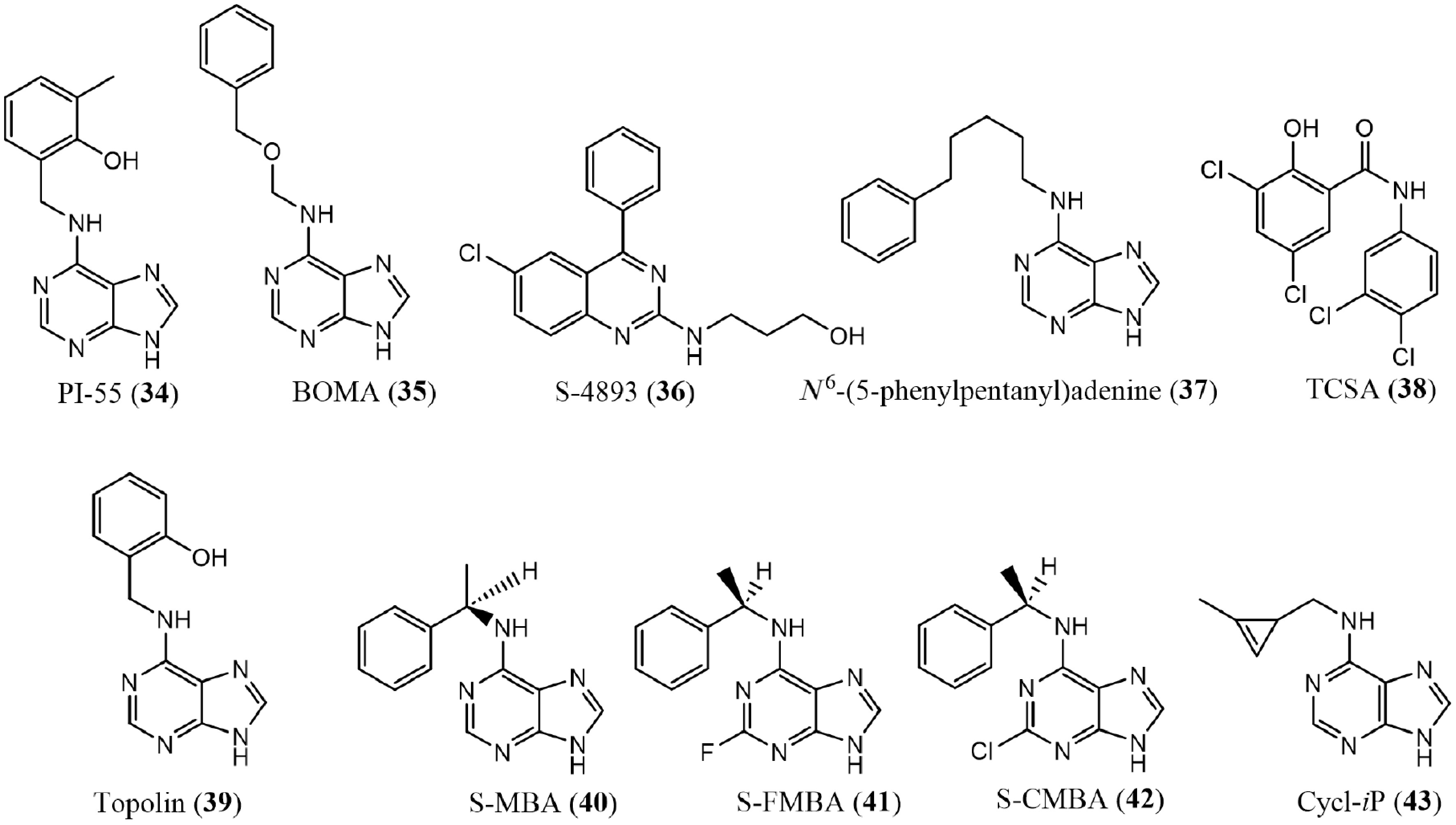
Figure 5.
Available chemical tool structures for investigating cytokinin signaling in plants. These modulators are described in detail in the section on CK signal transduction. The numbers in parentheses correspond to the bolded compound identifiers found in the text and in Table 3. Compounds 34 and 35 serve as competitive antagonists of AHK targeting the extracellular CHASE domain and competing with cytokinins for ligand binding. In contrast, Compounds 36 and 37 function as non-competitive antagonists; specifically, S-4893 has been reported to bind to a non-canonical pocket of AHK, while N6-(5-phenylpentyl)adenine is proposed to engage a previously unrecognized allosteric site. Compound 38 acts as a signal transduction inhibitor. Although its precise mechanism of action remains elusive, it is hypothesized that it exerts its activity by targeting the intracellular histidine kinase domain, thereby antagonizing AHK autophosphorylation. Compounds 39–42 are all receptor agonists of AHK, differing from one another in their structural features. Additionally, Compound 43 has been previously reported as a CK analog. Detailed information on all these modulators, including CAS numbers and PubChem CIDs, is provided in Table 3 for further inquiry and retrieval.
Table 3. Available chemical tool information for investigating cytokinin signaling in plants.
ID Compound name Identification Description Ref. 34 6-(2-Hydroxy-3-methylbenzylamino)purine (PI-55) 1122579-42-3 CRE1/AHK4 inhibitor [70] 35 N-((benzyloxy)methyl)-9H-purin-6-amine (BOMA) 1357291-96-3 CRE1/AHK4 inhibitor [71] 36 N-(3-Hydroxypropyl)-6-chloro-4-phenylquinazolin-2-amine (S-4893) 51443-54-0 CRE1/AHK4 inhibitor [72] 37 N6-(5-phenylpentan-1-yl)adenine PubChem CID 154390047 CRE1/AHK4 inhibitor [73] 38 3,5-dichloro-N-(3,4-dichlorophenyl)-2-hydroxybenzamide (TCSA) 1154-59-2 AHK3/CRE1/AHK4 inhibitor [74] 39 6-(2-Hydroxybenzylamino)purine (Topolin) 20366-83-0 CRE1/AHK4 agonist [75] 40 N-(1-phenylethyl)-9H-purin-6-amine (S-MBA) 55553-54-3 AHK3 agonist [76] 41 2-fluoro-N-(1-phenylethyl)-9H-purin-6-amine (S-FMBA) 3082493-88-4 AHK3 agonist [76] 42 2-chloro-N-(1-phenylethyl)-9H-purin-6-amine (S-CMBA) 1212416-09-5 AHK3 agonist [76] 43 Cycl-iP N.A. Cytokinin analog [32] The chemical modulators listed in this table are described in detail in the section: Cytokinin signal transduction and its chemical regulation. The numerical identifiers in parentheses correspond to the bolded compound numbers in the text and to the structures presented in Fig. 5. N.A., not applicable. In addition to targeting the CK-binding domain of AHKs, focusing on their kinase domain presents a promising alternative for modulating CK signaling. AHKs possess functional kinase domains that are essential for initiating CK-TCS cascades. Although small-molecule inhibitors targeting the kinase domains of AHKs have yet to be developed, the feasibility of this strategy has been experimentally validated in the ethylene signaling pathway, wherein two inhibitors specifically directed against the kinase domains of ETR1 and CTR1 have been successfully generated, specifically PFT-α (44) and MBZ (45)[77,78] (Fig. 6). PFT-α is a small-molecule compound known to target the C-terminal kinase domain of the ethylene receptor ETR1, thereby inactivating the receptor and mimicking ethylene action; it has been suggested to play a role in the potential modulation of shade avoidance syndrome (SAS) in agricultural practice. MBZ targets the kinase domain of CTR1 and has been demonstrated to alter root system architecture and promote lateral root development in crops, thereby holding substantial promise for agricultural applications. By targeting the kinase domains for the development of chemical regulators, this strategy circumvents direct competition with endogenous CKs and addresses AHK subtype redundancy, thereby expanding the toolkit for CK signaling research and holding promise for furnishing agricultural and biotechnological applications with complementary tools of enhanced stability and precision.
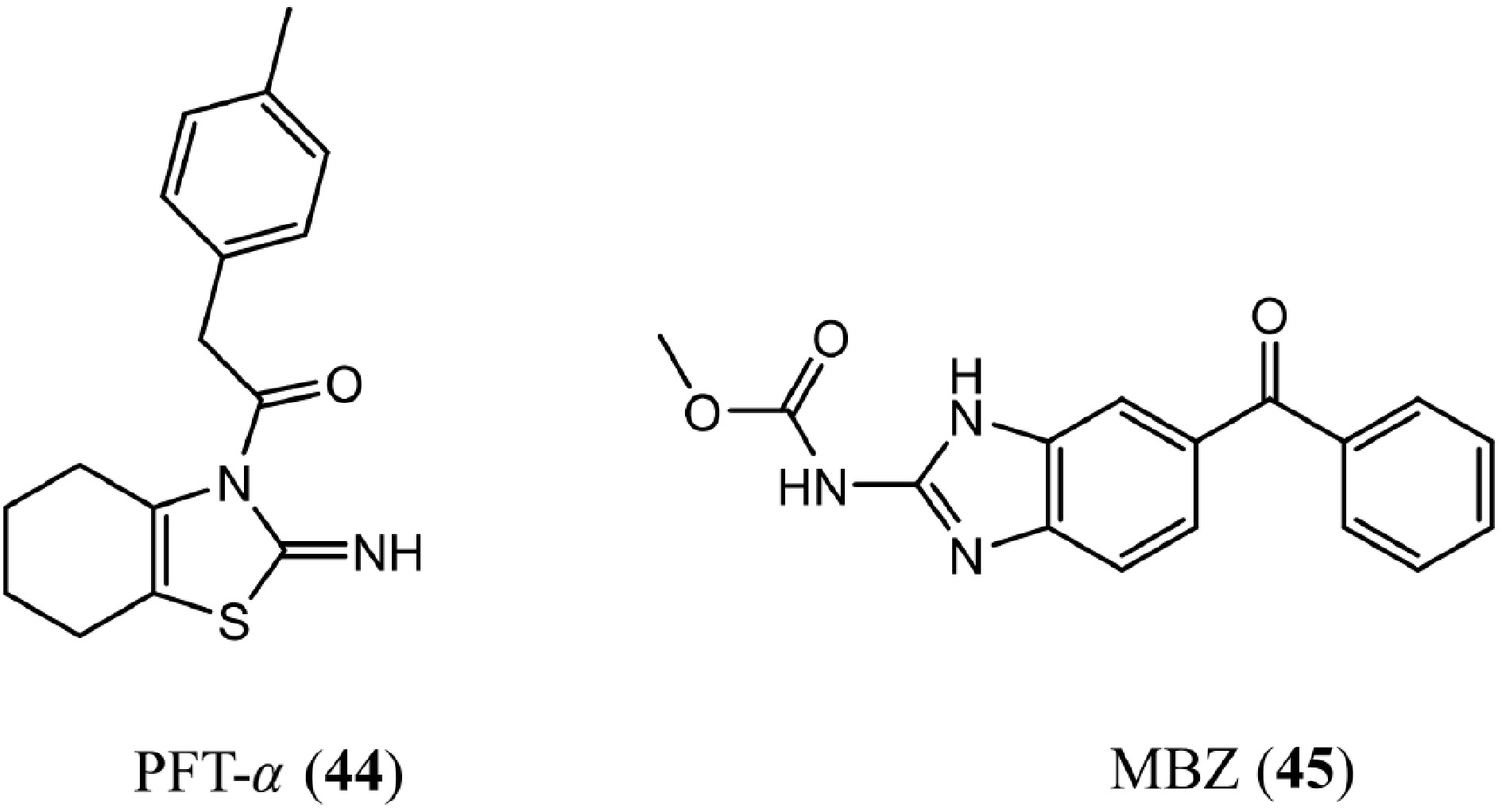
Figure 6.
Two chemical regulators targeting ETR1 and CTR1 in ethylene signaling. These modulators are described in detail in the section on CK signal transduction. Numbers in parentheses correspond to the bolded compound identifiers in the text.
-
Over the past several decades, research on CK has significantly enhanced our understanding of CK biosynthesis, metabolism, transport, and signaling. These advancements, along with earlier chemical discovery efforts, have facilitated important experimental and agricultural applications. Notably, they have led to the development of synthetic cytokinin and cytokinin-like compounds, such as 6-benzylaminopurine and thidiazuron, as well as molecular tools like PI-55 for mechanistic studies[19,70,79]. From a chemical genetics perspective, the available chemical toolkit for CK research remains limited and unevenly developed. A relatively broad range of CKX inhibitors, along with CK receptor agonists and antagonists, has been developed to manipulate CK degradation and receptor activity. This progress may partly reflect the presence of well-defined catalytic pockets in CKXs and ligand-binding sites in AHK receptors. In contrast, selective chemical tools targeting CK biosynthesis, activation, and transmembrane transport are still scarce. Their development is likely complicated by the extensive functional redundancy among paralogous members of enzyme families such as IPT and LOG, as well as by the diversity of CK transporters in terms of substrate recognition and subcellular localization. These factors present substantial challenges for achieving subtype selectivity. Accordingly, CK-active compounds should not be evaluated solely based on endpoint phenotypic changes. Instead, their direct molecular targets, modes of action, effective dosage ranges, and cross-species applicability should be systematically characterized. Moving forward, chemical biology research on CK is expected to advance through two complementary directions. The first is the development of precise chemical tools to dissect fundamental biological processes underlying CK biosynthesis, metabolism, transport, and signal transduction. The second involves translating laboratory-effective CK regulators into tissue-selective, conditionally tunable, and crop-adapted regulators for agricultural applications.
A key challenge in basic CK research is resolving paralog-specific functions within CK-related gene families, which are often obscured by genetic redundancy. IPTs, LOGs, CKXs, and AHKs are encoded by multigene families, in which loss of individual members frequently leads to subtle, context-dependent, or undetectable phenotypes. In contrast, higher-order mutants can display severe developmental defects, complicating the functional dissection of individual paralogs. Therefore, a primary goal is the development of isoform- or paralog-selective chemical modulators. Such efforts could exploit experimentally determined structures or high-confidence structural models by integrating computer-assisted molecular design with molecular docking and molecular dynamics simulations. Particular attention should be directed toward non-conserved residues within ligand- or substrate-binding pockets, which may enable improved paralog selectivity through structure–activity relationship analysis and iterative analogue synthesis. Lead compounds should undergo rigorous validation through enzyme activity assays, direct target-binding measurements, and genetic analyses in suitable mutant backgrounds. Furthermore, chemical perturbation can be complemented by time-resolved transcriptomic, proteomic, phosphoproteomic, and targeted CK metabolomic profiling, alongside comparative analyses across CK-related mutant lines. These integrated approaches can connect early molecular and metabolic responses to subsequent developmental outcomes and facilitate identification of the primary CK regulatory module influenced by each compound, including biosynthesis, metabolism, transport, or signal transduction.
In agricultural applications, the primary challenge is not merely to sustain or enhance CK signaling, but to effectively harness beneficial CK responses within the appropriate tissue, developmental stage, and environmental context while minimizing undesirable effects on other traits. CKs influence various processes, including leaf senescence, root growth, stomatal function, and reproductive development; thus, broad or sustained elevation of CK activity rarely results in a uniformly favorable phenotype. Existing compounds indicate that desirable cytokinin-associated phenotypes may be pharmacologically separated from some of the growth penalties typically associated with extensive CK activation. For instance, TDZ exhibits strong cytokinin activity and anti-senescence effects but also significantly inhibits root growth. In contrast, ASES delays leaf senescence without suppressing root elongation and can even promote root growth[20]. These contrasting phenotypes suggest that anti-senescence activity can be pharmacologically dissociated from root growth inhibition. However, it remains unresolved whether this separation is due to differential engagement of CK signaling, receptor-subtype selectivity, or CK-independent targets. Therefore, TDZ and ASES, along with related analogues, could serve as valuable comparative mechanistic probes. Profiling their CKX inhibitory activity, AHK-binding properties, CK metabolic signatures, ARR responses, and root- vs shoot-specific molecular effects may help identify the structural and mechanistic features underlying the desirable combination of delayed senescence without a penalty to root growth. Such knowledge could facilitate a transition from maximizing a single CK-responsive trait to the coordinated optimization of multiple agronomic traits. However, before advancing candidate compounds for agricultural use, it is essential to evaluate dose–response relationships and phenotypic effects across genetically diverse crop germplasm to establish robust compound–genotype–phenotype relationships. These studies should then be extended from controlled-environment stress assays to field trials, incorporating an integrated evaluation of yield, seed set, root vigor, senescence progression, water-use traits, and maturity, rather than relying solely on a single laboratory phenotype to predict agronomic performance.
Looking ahead, the enduring significance of CK chemical biology will not be assessed solely by the accumulation of novel compounds, but rather by the depth of mechanistic and translational evidence surrounding each candidate molecule. By integrating compound screening with multi-omics profiling, systematic target identification and validation, structure-guided molecular design, and field-based evaluation, CK-related small molecules can be progressively developed from broad-spectrum CK mimetics or homeostatic modulators into next-generation agricultural regulators characterized by well-defined action windows and crop-specific adaptability.
-
During the preparation of this manuscript, the authors used ChatGPT in 2026 for language polishing and proofreading. All AI-assisted outputs were carefully reviewed, edited, and verified by the authors. The authors take full responsibility for the accuracy, integrity, and originality of the final manuscript. This work represents the authors’ own intellectual contribution, and no AI tool has been listed or credited as an author.
-
The authors confirm their contributions to the paper as follows: study conception and design, critical revision: Jiang K, Yang Y, Yu Y; draft manuscript preparation: Huang P, Sun X, Meng X, Li R. All authors reviewed the results and approved the final version of the manuscript.
-
Data sharing is not applicable to this article, as no datasets were generated or analyzed during the current study.
-
The authors declare that they have no conflict of interest.
-
# Authors contributed equally: Pumei Huang, Xinyu Sun
- Copyright: © 2026 by the author(s). Published by Maximum Academic Press on behalf of Chongqing University. This article is an open access article distributed under Creative Commons Attribution License (CC BY 4.0), visit https://creativecommons.org/licenses/by/4.0/.
-
About this article
Cite this article
Huang P, Sun X, Meng X, Li R, Yu Y, et al. 2026. Chemical tools for cytokinin research: regulators, action modes, and perspectives. Plant Hormones 2: e026 doi: 10.48130/ph-0026-0024 

Chemical tools for cytokinin research: regulators, action modes, and perspectives
- Received: 02 June 2026
- Revised: 24 August 2026
- Accepted: 03 September 2026
- Published online: 28 October 2026
Abstract: Cytokinins (CKs) are essential phytohormones that orchestrate plant growth, development, and stress responses. Cumulative studies have enhanced our understanding of CK biosynthesis, metabolism, transport, and signal transduction. Nevertheless, many fundamental regulatory mechanisms remain poorly defined, particularly the spatiotemporal patterning of CK signaling and the ways in which diverse regulatory factors specifically and cooperatively shape distinct plant phenotypes. Conventional genetic approaches face three significant bottlenecks. First, the widespread functional redundancy of genes obscures the phenotypic contributions of individual genes. Second, higher-order mutants created to circumvent redundancy often display severe developmental defects or lethality. Third, a notable gap persists in translating the characterized mechanisms of CK regulation into practical agricultural applications across various crop species. As an alternative, chemical genetics facilitates reversible and spatiotemporally precise chemical perturbation, providing unique advantages for elucidating the multilayered CK regulatory network. In this review, we discuss recent advancements in CK biosynthesis, metabolism, transport, and signaling, and summarize the currently available small-molecule modulators along with their mechanisms of action. Furthermore, we discuss prospective strategies for developing next-generation CK-targeted chemical probes. These chemical genetic tools complement traditional genetic approaches, address existing research gaps, enable mechanistic dissection of CK regulation, and promote future crop improvement and agricultural applications.