











-
The global expansion of nuclear energy capacity, underpinned by international initiatives such as the COP28 pledge to triple its output by 2050, is driving a substantial increase in uranium demand[1,2]. Uranium, as a pivotal nuclear fuel, concurrently represents a significant environmental contaminant in high-level radioactive waste[3]. In natural aqueous systems, it predominantly exists in the hexavalent U(VI) form[4], which poses considerable risks because of its chemical toxicity, radiological hazard, and bioaccumulative potential, leading to severe health impacts including nephrotoxicity and carcinogenesis upon human exposure[5,6]. Consequently, the selective enrichment and recovery of U(VI) have become an urgent imperative that is essential for advancing sustainable nuclear energy, ensuring resource security, and mitigating environmental and public health risks.
A principal scientific challenge lies in achieving highly selective U(VI) sorption from complex aqueous matrices, which is inherently governed by the interaction mechanisms at the materials' interfaces[7,8]. This challenge has driven extensive research into advanced sorbent materials[9], including inorganic frameworks[10], hyperporous networks such as covalent and metal–organic frameworks (COFs and MOFs)[3−5,11], porous carbons[12], and functionalized nanomaterials. The efficacy of these materials hinges on their surface chemistry, specifically the incorporation of functional groups (e.g., O-, N-, and S-containing moieties) with high U(VI) affinity, which is critical for enhancing adsorption capacity and selectivity[13,14]. Previous studies have demonstrated that the incorporation of amino groups onto acid-resistant MOFs and thiol groups onto humic acids can significantly enhance U(VI) uptake performance[15,16]. Similarly, hybrid materials leveraging oxygen-rich platforms have shown promise for efficient extraction. Nevertheless, a systematic and fundamental understanding of how specific functional group types govern U(VI) selectivity, particularly under environmentally relevant conditions, remains inadequately resolved[17]. This knowledge gap hinders the rational design of next-generation sorbents.
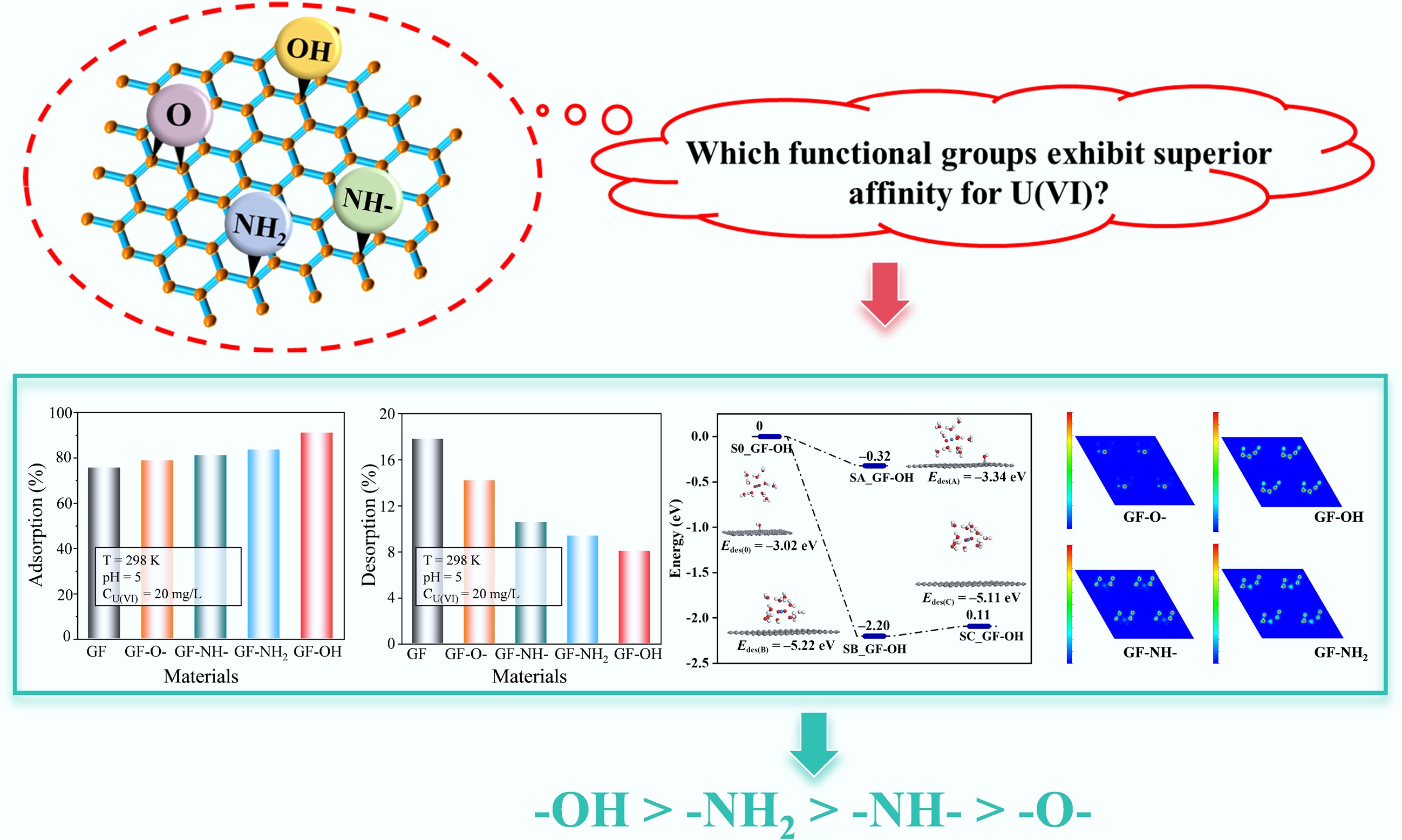
Identifying which surface functional groups exhibit superior affinity for U(VI) and which can be effectively modified to enhance selective uranium enrichment remains a central challenge. Resolving this question is critical for advancing U(VI) pollution mitigation and resource recovery. To address this, the present study used graphene as a model platform to systematically investigate the role of surface functionality in U(VI) adsorption. Graphene's sp2-hybridized carbon lattice, high specific surface area (2,630 m2/g), and modifiable surface chemistry establish it as an ideal substrate, whereas its inherently low native functional group content minimizes background interference and provides a near-ideal platform for controlled functionalization[18,19].
In the present work, we introduced a series of defined oxygen- (-O-, -OH) and nitrogen-containing (-NH-, -NH2) functional groups onto a graphene framework (GF) through plasma-induced modification and precise chemical strategies. A systematic comparison of U(VI) adsorption–desorption and selectivity performance was conducted across graphene materials functionalized with different groups. The experimental strategy is schematically illustrated in Fig. 1. The influence of specific functional groups on U(VI) uptake behavior was thoroughly analyzed, enabling the establishment of an affinity order among the four functional groups examined. The underlying sorption mechanisms, connecting macroscopic behaviors with electronic-level insights, were elucidated by combining multiple characterization techniques, such as scanning electron microscopy (SEM), X-ray diffraction (XRD), X-ray photoelectron spectroscopy (XPS), and Fourier transform infrared (FT-IR) with density functional theory (DFT) calculations. This study investigated the affinity of functional groups for U(VI) from a mechanistic perspective. It provides a theoretical foundation for understanding the variation in affinity among different functional groups toward U(VI) and elucidated the underlying mechanisms of selectivity, thereby offering guidance for the design and development of high-performance U(VI) enrichment materials.
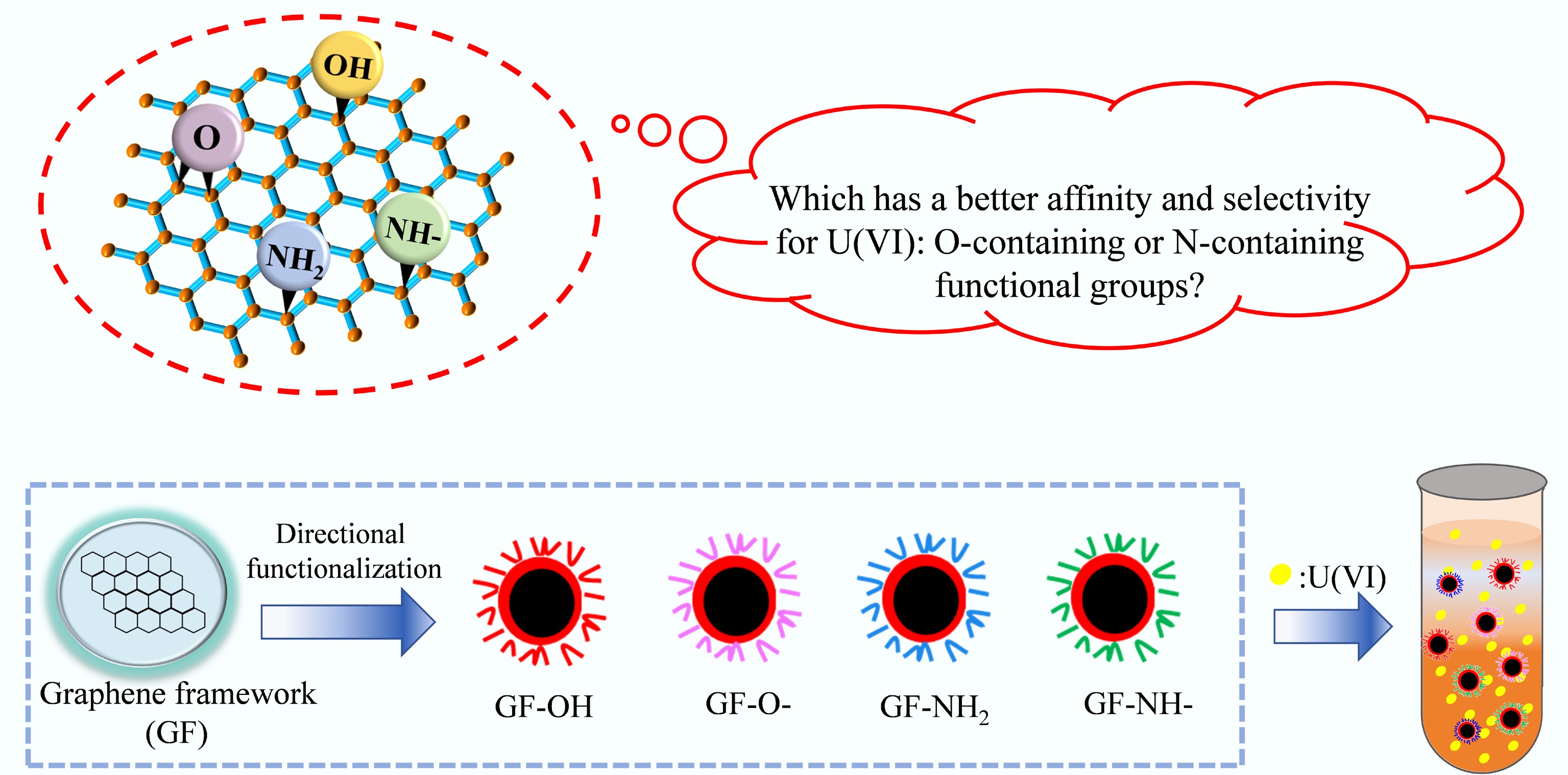
Figure 1.
Schematic illustration of this research approach.
-
The GF was synthesized by the reduction of highly oxidized graphene oxide (GF-OH), which was synthesized from flake graphite using a modified Hummers method[20]. Briefly, expanded graphite and NaNO3 were added to a concentrated H2SO4 ice-water bath, and then KMnO4 was slowly added under constant mechanical stirring for 24 h. The mixture was then diluted with Milli-Q water and heated up to 98 °C with stirring for an additional 4 h. Finally, an H2O2 solution was added to remove excess MnO4− anions. The highly oxidized GF-OH was collected by centrifugation, washed repeatedly with Milli-Q water, and finally dried in an oven at 60 °C for 24 h.
Subsequently, the bare GF (Supplementary Fig. S1) was prepared by a simple thermal reduction method[21,22]. The as-prepared GF-OH was heated from room temperature to 300 °C in an oven, maintaining the peak temperature for 1 h, followed by cooling to room temperature, and finally the GF powder was collected. This process effectively removed oxygen-containing functional groups via thermal decomposition, thereby facilitating the formation of a mechanically robust GF.
Synthesis of GF-O-, GF-NH-, and GF-NH2 materials
-
These three functionalized graphene composites were prepared using plasma grafting technology. Graphene powder was placed in a customized plasma reactor with argon (Ar) as the working gas. A high-voltage pulsed direct current (100 W) was applied to the plasma coil under a controlled vacuum of 25 Pa. The graphene surface was activated by Ar ion bombardment for 10 min, significantly enhancing its reactivity to provide active sites for subsequent functional group grafting. The activated GF was then rapidly transferred to solutions containing the target monomers (e.g., furan, pyrrole, aniline) and stirred at a constant temperature of 60 °C for 12 h to achieve covalent grafting of O- and N-containing functional groups. After the reaction, the products were repeatedly washed with Milli-Q water, subjected to centrifugation to remove the unreacted monomers, and dried in a vacuum oven at 60 °C, yielding graphene composites modified with diverse functional groups.
-
GFs were synthesized via high-temperature reduction of GF-OH. The SEM image shows that the resulting GF exhibited distinct two-dimensional graphene structural features[23], namely ultrathin, curled and overlapping layers, which formed a porous network (Fig. 2a) with pore sizes ranging from 25 to 700 nm. Quantitative analysis of the O content (Fig. 2h) revealed a marked decrease from 22.64 wt% in GF-OH to 9.07 wt% in GF following thermal reduction treatment, confirming the effective removal of O-containing functional groups. The crystallographic transformation was further elucidated by XRD. As shown in Fig. 3a, the reduction process completely eliminated the sharp characteristic peak of GF-OH at 10.9°, a signature (001) reflection of graphene oxide resulting from oxygenated functional groups[24]. Consequently, a new broad peak appeared at 23.6° (d-spacing = 0.376 nm), which was attributed to the (002) plane of graphitic carbon[22,25]. This clear shift indicated the restoration of a compact, sp2-hybridized graphene structure, directly resulting from the extensive stripping of oxygen-containing functional groups during thermal reduction. This is consistent with the characteristic band at 1,585 cm−1 in the FT-IR spectrum (Fig. 3c), attributed to the C=C stretching vibration of sp2-hybridized carbon atoms in the graphitic structure[26].
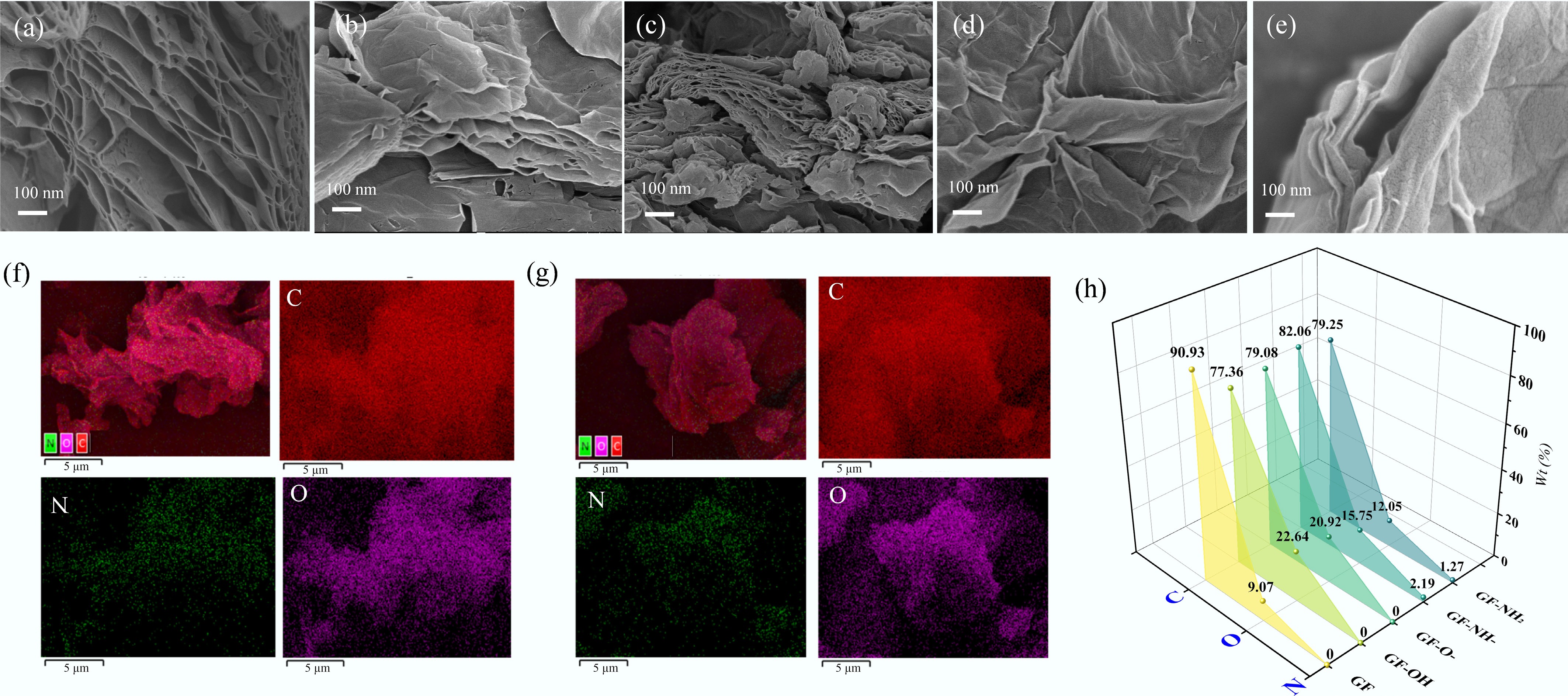
Figure 2.
SEM images of (a) GF, (b) GF-OH, (c) GF-O-, (d) GF-NH-, and (e) GF-NH2. EDS mapping of (f) GF-NH2, (g) GF-NH-, and (h) energy-dispersive X-ray spectroscopy (EDS) spectra of element content ratios of different composites.
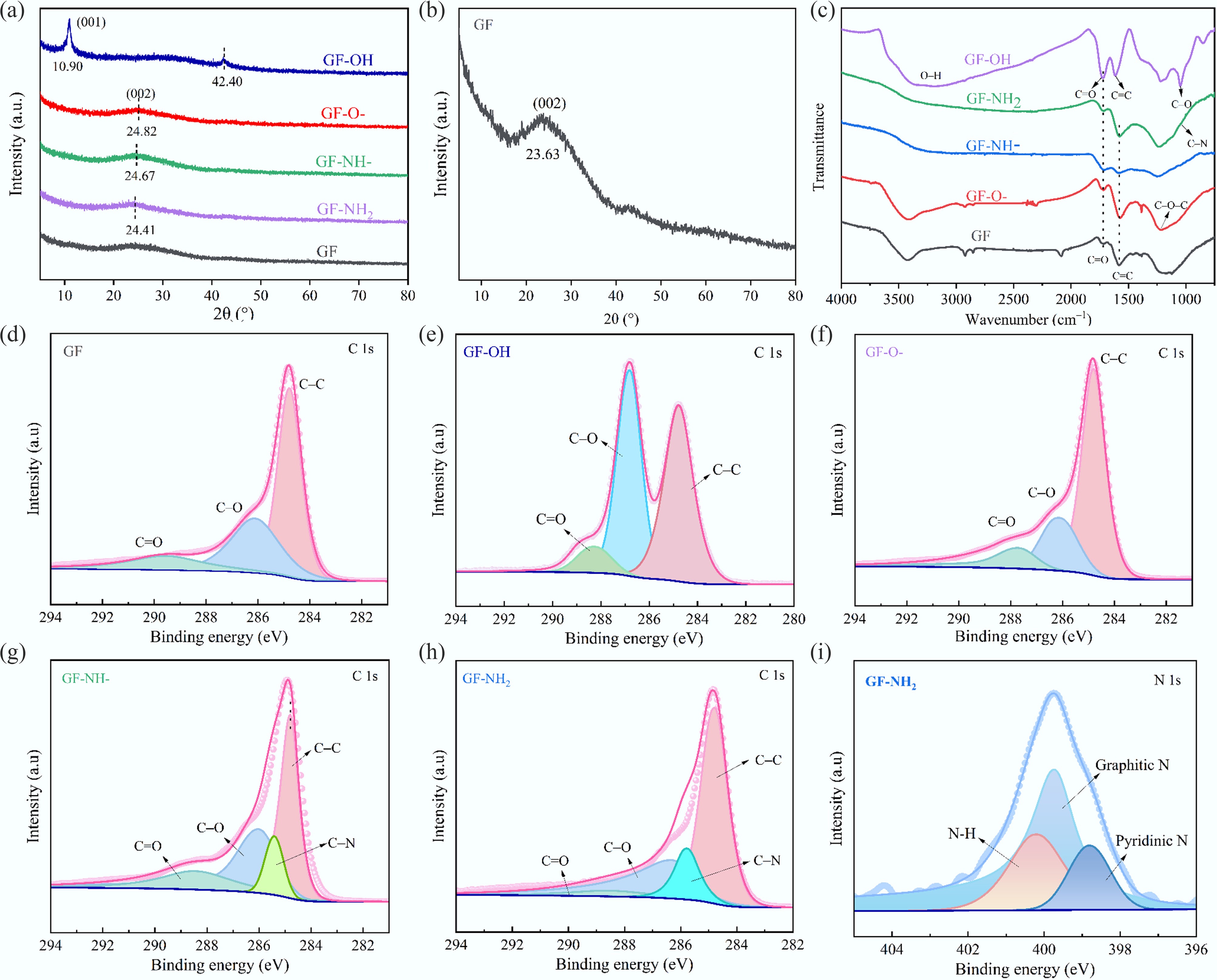
Figure 3.
(a, b) XRD patterns, (c) FT-IR spectra, (d–h) XPS C 1s, and (i) N 1s of GFs.
The surface chemistry of GF-OH was unequivocally governed by hydroxyl groups. This was unambiguously confirmed by FT-IR spectroscopy (Fig. 3c), which showed a strong and broad absorption band at 3,200–3,600 cm−1, characteristic of O–H stretching vibrations[27]. This peak was significantly stronger than those of other graphene-based materials (GFs). Furthermore, a distinct C–O vibration (1,050 cm−1) signal was evident (Fig. 3c) and was further definitively corroborated by the dominant C–O peak (Fig. 3e) in the XPS O 1s spectrum and the dominant O 1s peak in the wide-scan survey (Supplementary Fig. S2). These findings collectively verify the hydroxyl-rich nature of the GF-OH surface. In addition, multiple characteristic bands at 1,612 cm−1 (C=C vibration)[26], and 1,720 cm−1 (C=O vibration) were observed in GF-OH, which were obviously different from those of GF.
Targeted functionalization of the GF scaffold
-
The drastic decrease in oxygen content, coupled with the evolution of the XRD profile, provides cohesive evidence of successful deoxygenation, thereby yielding the GF framework. The GF scaffold served as a platform for the targeted introduction of specific functional groups via plasma grafting modification.
All plasma-modified GFs displayed a similar nanosheet-like morphology with a rough surface (Fig. 2c–e) and exhibited a broadened diffraction peak near 24° (Fig. 3a), confirming their core graphene nature[28,29] and indicating that the plasma process did not alter the material's skeleton structure[30]. Notably, compared with GF, the diffraction peaks of GF-NH2, GF-NH-, and GF-O- shifted toward higher angles, accompanied by a decrease in interlayer spacing from 0.367 nm to 0.358 nm, which can be attributed to the grafting of different functional groups[31,32]. The effective grafting of -O- groups onto GF was confirmed by a pronounced increase in the oxygen content from 9.07 wt% in GF to 20.92 wt% in GF-O- (Fig. 2h, Supplementary Fig. S2), alongside a notably enhanced C–O peak in the corresponding C 1s XPS spectrum (Fig. 3f). For N-functionalized composites (GF-NH2, GF-NH-), successful functionalization was confirmed by a uniform nitrogen distribution in the energy dispersive X-ray spectroscopy (EDS) mapping (Fig. 2f–g) and distinct C–N and N–H peaks in the high-resolution N 1s and C 1s XPS spectra (Fig. 3g–i, Supplementary Fig. S2). This was true even though only a weak C–N vibration (1,036 cm−1) was observed in the FT-IR spectrum of GF-NH2 (Fig. 3c). Thermogravimetric analysis (TGA, Supplementary Fig. S3) revealed the grafting ratios for GF-OH, GF-O-, GF-NH2, and GF-NH- to be approximately 8.11%, 4.99%, 7.53%, and 7.72%, respectively.
Influence of functional group diversity on U(VI) sorption
-
To elucidate the impact of functional group diversity on U(VI) adsorption performance and affinity, we compared graphene functionalized with oxygen-containing (-OH, -O-) and nitrogen-containing (-NH-, -NH2) groups. Their adsorption and desorption behaviors were systematically evaluated through combined experimental and DFT approaches.
The effects of various environmental factors, including pH, temperature, competing ions, U(VI) concentration, and reuse cycles, on U(VI) sorption by GFs were investigated. As shown in Supplementary Fig. S4a, pH played a crucial role in regulating U(VI)'s adsorption onto GF materials, indicating that the adsorption process is primarily governed by surface complexation[27], with optimal enrichment efficiency observed at around pH 5.0. The background electrolyte concentration exhibited a relatively minor influence on U(VI) sorption by GF-OH (Supplementary Fig. S4e), as it primarily affects the ionic strength. The U(VI) adsorption efficiency followed the order GF-OH > GF-NH2 > GF-NH- > GF-O- > GF (Fig. 4a, Supplementary Fig. S4a, S4b), indicating that the effectiveness of the functional groups decreases in the sequence -OH > -NH2 > -NH- > -O-. The isotherm parameters describing the adsorption process are presented in Supplementary Fig. S4b, S4c and Supplementary Table S1. Consistent with our experimental observations, comparisons with various graphene-based materials confirm that surface functional groups, particularly -OH or -NH2, are critical for high U(VI) adsorption performance (Supplementary Table S2). As shown in Supplementary Fig. S4d and Supplementary Table S3, the adsorption kinetics were better described by the pseudo-second-order model than by the pseudo-first-order model, indicating that the adsorption process of U(VI) onto GFs is primarily governed by chemisorption[18,19]. This further suggests that surface complexation between U(VI) and GFs plays a dominant role in the adsorption mechanism[13,14]. The thermodynamic parameters, including ΔH, ΔS, and ΔG, were derived from the slope and intercept of the linear plot of lnKd versus 1/T (Supplementary Table S4). The positive value of ΔH confirms the endothermic nature of U(VI) sorption.
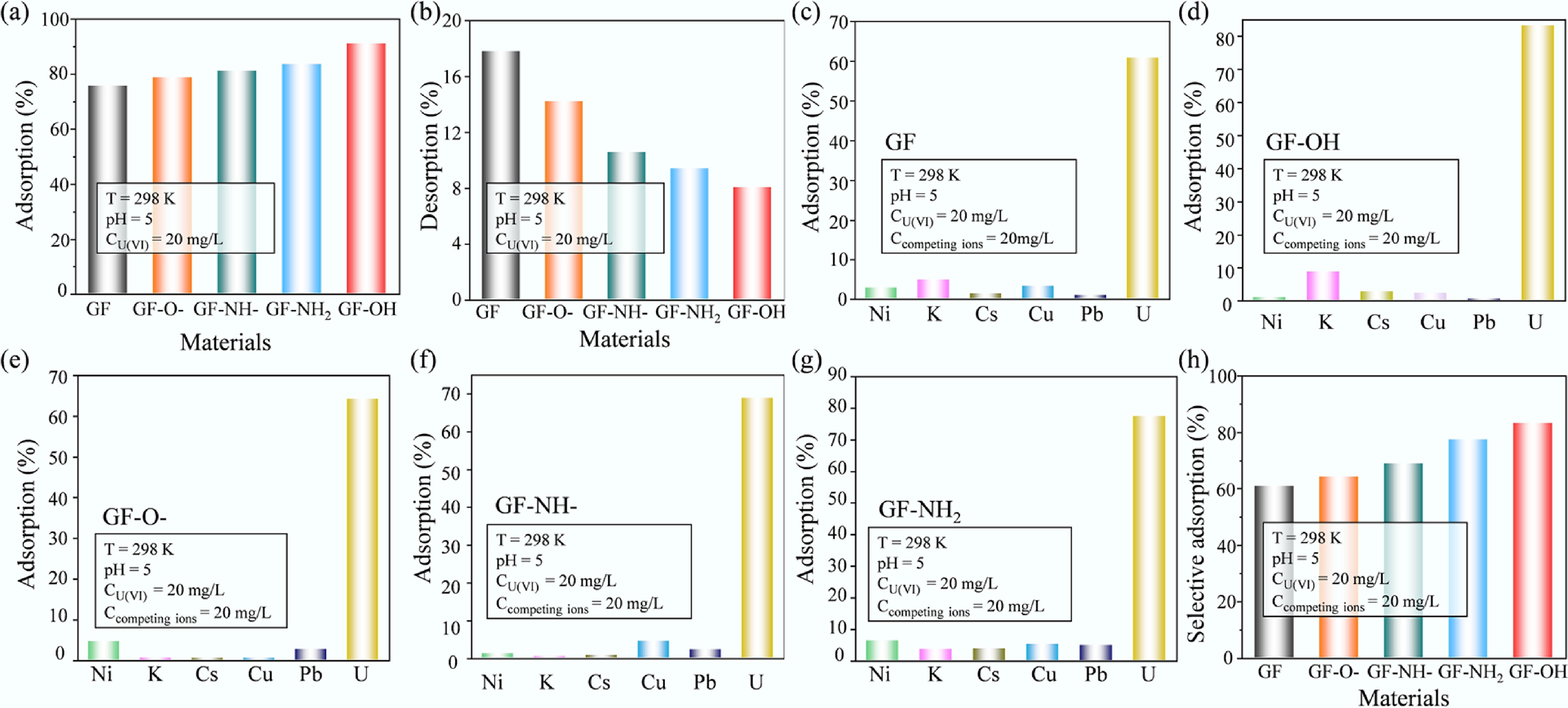
Figure 4.
(a) Adsorption, (b) desorption, and (c–h) selective adsorption of U(VI) onto GFs.
Following adsorption, U(VI) desorbed more readily from pristine GF than from any of the functionalized GFs, with GF-OH exhibiting the greatest difficulty in desorption. Consistent with this trend, stronger adsorption corresponded to higher desorption energy, whereas weaker adsorption favored desorption under identical experimental conditions (Fig. 4b). Even after five cycles, GF-OH maintained a high adsorption efficiency (Supplementary Fig. S4f), confirming its excellent reusability. Selective U(VI) adsorption was further evaluated through competitive experiments in multi-ion systems with identical concentrations (Fig. 4c−g). The selectivity order of GFs toward U(VI) was revealed to be GF-OH > GF-NH2 > GF-NH- > GF-O- > GF (Fig. 4h), which was consistent with the adsorption efficiency trend discussed above (Fig. 4a). This consistency confirms that the affinity order -OH > -NH2 > -NH- > -O- governs both adsorption–desorption behavior and selectivity. The superior adsorption and high selectivity of GF-OH are attributed to the OH abstraction mechanism involving the -OH groups on the graphene oxide (GO) surface. In this process, U(VI) abstracts the -OH group to form a more stable [GOs-OH┈U(OH)O2]2+ complex[13]. A detailed mechanistic discussion is provided in the DFT calculation section. Collectively, these observations demonstrate that the affinity of the functional groups toward U(VI) follows the order -OH > -NH2 > -NH- > -O-, which governs both adsorption–desorption behavior and selectivity. These findings underscore the critical role of functional groups and chemical environment in governing the sorption and selectivity of U(VI) on functionalized GFs.
The sorption mechanism was further investigated through experimental and theoretical calculations. Material characterization via SEM, XRD, FT-IR, and XPS was conducted before and after U(VI) adsorption. Post-adsorption SEM imaging (Fig. 5a) revealed increased surface roughness and irregularity, indicative of functional group attachment onto the graphene's surface[33], which suggests the active participation of these groups in interactions with U(VI). XRD analysis (Fig. 5b) showed discernible shifts in characteristic diffraction peaks after adsorption: GF-O- (24.82º to 24.93º), GF-NH- (24.67º to 24.72º), and GF-NH2 (24.41º to 24.62º). These shifts are related to the complexation of U(VI) with the different functional groups. Following U(VI) adsorption, a new absorption band appeared at 913 cm−1 in the FT-IR spectra of all functionalized GFs (Fig. 5c), characteristic of the asymmetric stretching vibration of the O=U=O moiety in UO22+[34]. This finding was consistent with the XPS observations, where a set of U(VI) spin-orbit splitting peaks (U4f7/2 and U4f5/2) was detected, although no U(IV)-related peaks were observed (Supplementary Fig. S5). This indicates that U(VI) ions are bound to the material without chemical reduction during adsorption. Furthermore, in the C 1s spectra, the C–O peak shifted significantly toward higher binding energies after U(VI) sorption (Supplementary Fig. S6a), indicating a change in the chemical bonding state or environment, whereas the C–C and C=O peaks remained relatively stable. This positive shift confirms the complexation of C–O bonds with U(VI). Combined with the O 1s spectra (Supplementary Fig. S6b) after adsorption, these results make it evident that the adsorption of U(VI) on GF-OH primarily involves interactions with C–O bonds, dominated by the role of C–OH.
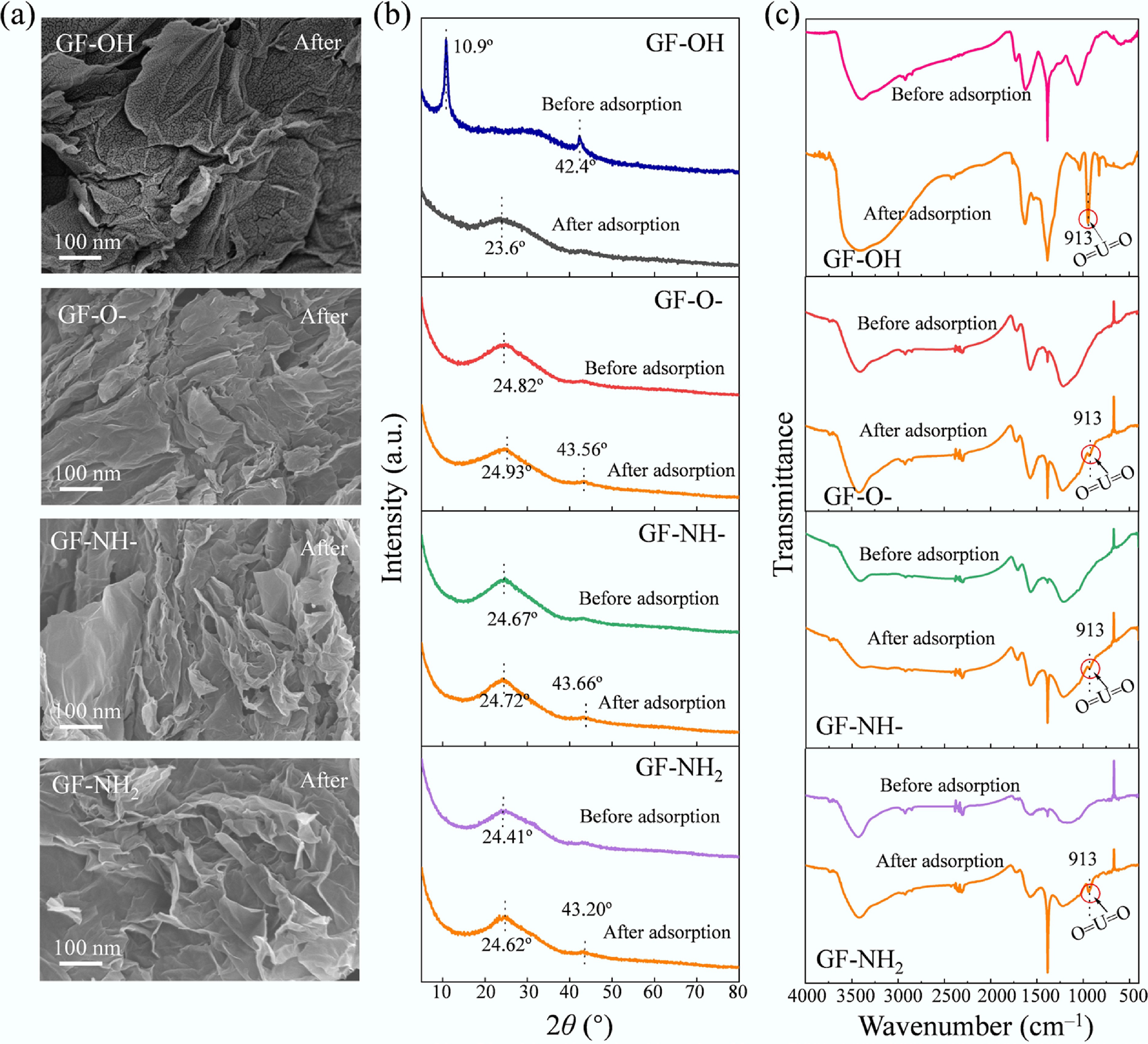
Figure 5.
Characterization of GFs after U(VI) adsorption: (a) SEM images, (b) XRD patterns, and (c) FT-IR spectra.
Theoretical study of functional group diversity on adsorption selectivity
-
To investigate the influence of functional group diversity on selective enrichment mechanisms, DFT calculations were performed to study the interaction of U(VI) with the bare GF and with GFs functionalized with oxygen-containing (-O-, -OH) and nitrogen-containing (-NH-, -NH2) groups at the molecular level. The initial stable structures used in the calculation are shown in Supplementary Figs S1 and S7. Molecular electrostatic potential (ESP) analysis[35] was used to study the influence of functional groups on the surface reactivity of GFs. In the ESP maps, nucleophilic regions are depicted in blue, indicating stronger repulsive forces; electrophilic regions are shown in red, signifying greater attraction[36]. The pristine GF surface exhibits a uniform electron density with an extensive delocalized π-electron system (Fig. 6a), which is known to facilitate noncovalent interactions such as π–π stacking and van der Waals forces[37]. The ESP diagrams revealed that the introduction of O- and N-containing groups imparted stronger electrophilic ability and higher chemical reactivity to the functionalized GFs compared with the bare GF (Fig. 6b–e), thereby enhancing their binding affinity toward electrophilic species such as UO22+.
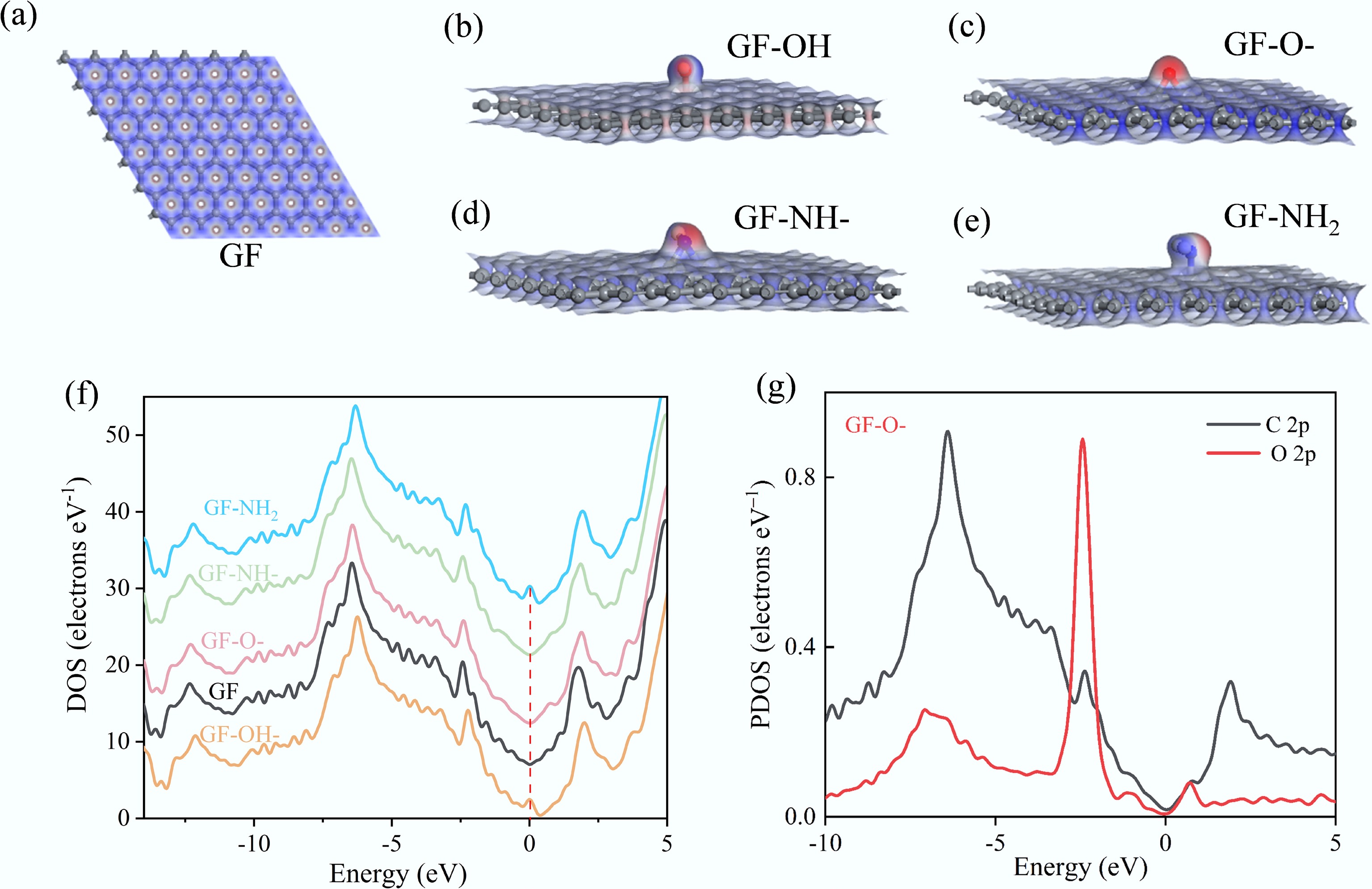
Figure 6.
(a–e) The ESP distribution of GFs, (f) the calculated total density of states (DOS) for GFs, and (g) the partial density of states (PDOS) for the labeled C atoms (2p orbital) and O atoms (2p orbital) in GF-O-.
Density of states (DOS) analyses further elucidated the electronic interactions between functional groups and the graphene's basal plane. DOS spectra of the functionalized GFs with O-containing and N-containing groups exhibited similarities to those of GF, indicating certain electronic structural similarities (Fig. 6f). This is attributed to their common graphene skeleton structure. The introduction of O-containing functional groups was observed to shift the conduction band toward higher energies near the Fermi level, suggesting that the addition of functional groups enhanced the conductivity of GF[38,39]. In contrast, the DOS profiles of GF-NH- and GF-NH2 remained largely unaltered with no significant shifts, indicating that the N-containing groups caused minimal perturbation of the GF. Notably, both GF-OH and GF-NH2 exhibited a distinct peak near the Fermi level, suggesting the formation of strongly localized states introduced by -NH2 and -OH modifications. These localized states are expected to facilitate charge transfer between the adsorbate and the GF substrate. In addition, partial density of states (PDOS) analysis of the GFs revealed strong C 2p–O 2p and C 2p–N 2p hybridizations across a wide energy range (Fig. 6g and Supplementary Fig. S8), indicating covalent bonding between the functional groups and the graphene basal plane. This hybridization underpins the modified electronic structure and enhanced reactivity of O- and N-functionalized GF systems[40].
In the calculation, the hydration energy reached a stable value of about 3.5 eV when more than five water molecules were present (Supplementary Fig. S1a). Accordingly, the [UO2(H2O)10]2+ complex was adopted as the uranyl model for further calculations. For GF-O-, when the [UO2(H2O)10]2+ ion moved from infinity to a position 10 Å from the material's z-axis, the calculated interaction energy was −2.78 eV (Fig. 7a), and this state (S0_GF-O-) served as the zero-point reference for evaluating the adsorption energy. When the uranyl ion ([UO2(H2O)10]2+) interacted with the graphene plane while staying far from the -O- group (SA_GF-O- state in Fig. 7a), the adsorption energy was only about −0.45 eV, suggesting weak van der Waals interactions. As the ion approached the -O- group, coordination-driven structural reorganization occurred, yielding a new uranyl complex (SB_GF-O-). This process lowered the system energy to −3.37 eV (adsorption energy: −0.59 eV), confirming the stabilizing effect of -O- coordination.
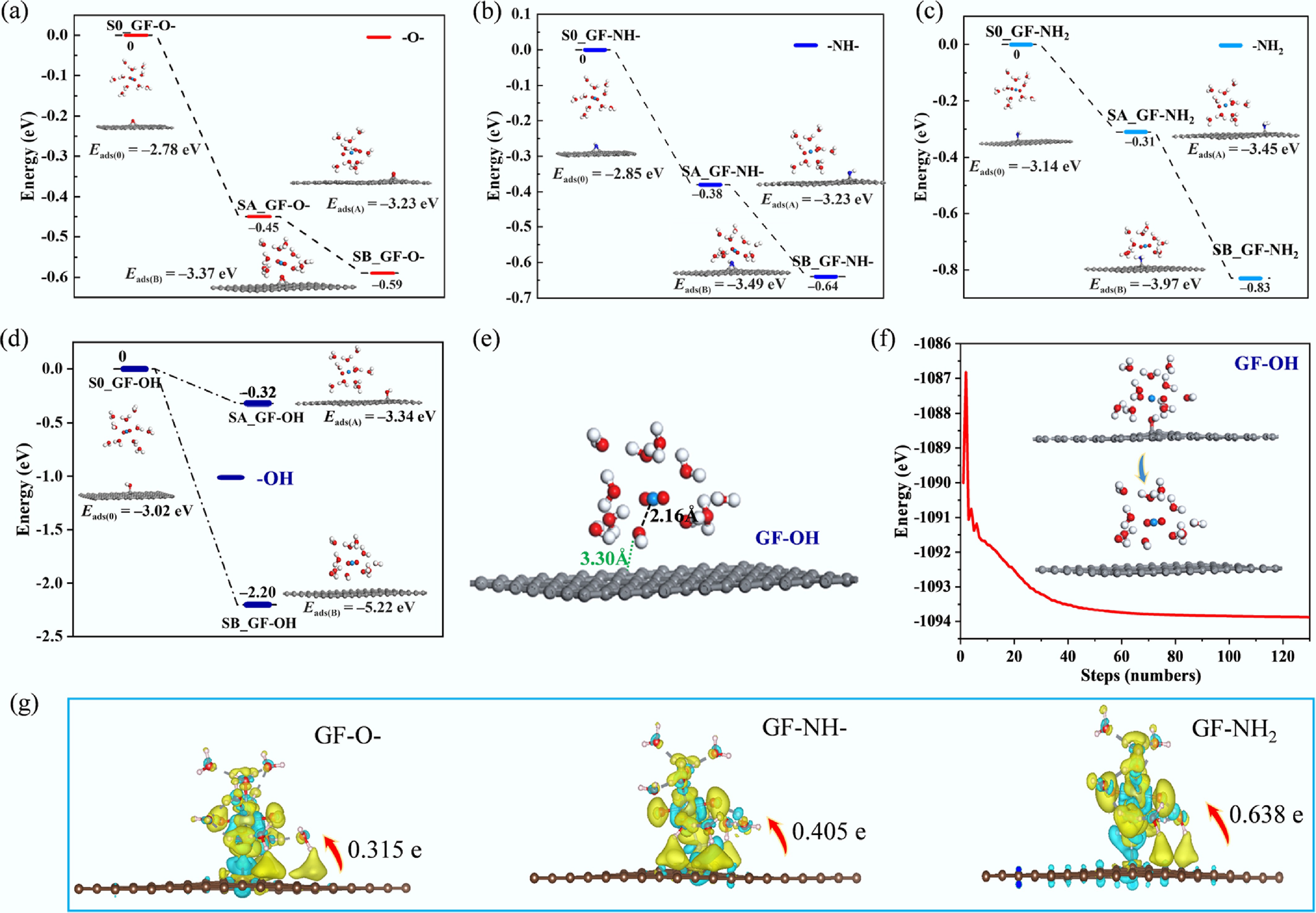
Figure 7.
(a) Charge density differences of GF-O-, GF-NH-, and GF-NH2 for U(VI) adsorption. (b−e) Energy changes during U(VI) adsorption: (b) GF-O-, (c) GF-NH-, (d) GF-NH2, and (e) GF-OH. (f) The structure of GF-OH after U(VI) sorption. (g) Energy profile of the optimized adsorption process of U(VI) on GF-OH.
For N-containing groups, the adsorption energies of the [UO2(H2O)10]2+ ion far from the -NH- and -NH2 groups on graphene were −0.38 eV (SA_GF-NH-) and −0.31 eV (SA_GF-NH2), respectively. In the adduct formed between the uranyl ion and the -NH- group on GF-NH- (SB_GF-NH-), the adsorption energy was −0.64 eV (Fig. 7b). In contrast, in the adduct with the -NH2 group on GF-NH2 (SB_GF-NH2), the adsorption energy was −0.83 eV (Fig. 7c), which was considerably higher than those of SB_GF-NH- and SB_GF-O-. This suggests that SB_GF-NH2 was more stable than both SB_GF-NH- and SB_GF-O-, consistent with the higher adsorption capacity of GF-NH2 relative to GF-O- and GF-NH-. When the [UO2(H2O)10]2+ ion approached the -OH group, a hydroxyl abstraction reaction took place. In the optimized adduct of the uranyl ion and GF-OH (SB_GF-OH state in Fig. 7d), the distance between the U atom and the hydroxyl O atom was 2.16 Å (Fig. 7e), whereas the distance between the hydroxyl O atom and the carbon atom of GF-OH was 3.30 Å. This indicates that the hydroxyl O atom coordinated with the U atom, and the original C–O(H) bond in GF-OH was broken. The SB_GF-OH state was more stable than the S0_GF-OH state by −2.20 eV. The hydroxyl abstraction reaction was likely barrierless, as the C–O(H) bond was broken during geometry optimization (Fig. 7f). A comparison of the adsorption energies of [UO2(H2O)10]2+ on the stable functionalized GFs, namely GF-OH (−2.20 eV) < GF-NH2 (−0.83 eV) < GF-NH- (−0.64 eV) < GF-O- (−0.59 eV), showed that the functional groups followed the order -OH > -NH2 > -NH- > -O- in terms of affinity. This order is consistent with the adsorption–desorption behavior and selectivity observations presented in Fig. 4.
An analysis of the difference in charge density was conducted to elucidate the charge redistribution upon U(VI) adsorption. As illustrated in Fig. 7g, accumulation (yellow, electron-rich) and depletion (blue, electron-deficient) of charge were observed around the functional groups[41]. This was further confirmed by the planar colored maps of the difference in charge density (Fig. 8), where red and blue denote the accumulation and depletion of charge, respectively. In both cases, pronounced electron accumulation was evident near the functional groups, indicating their crucial role in facilitating U(VI) adsorption. Bader charge analysis showed a transfer of approximately 0.638 e from GF-NH2 to the U(VI) ion, indicating a stronger interaction than for GF-NH- (0.405 e) and GF-O- (0.315 e). These electron transfer trends were consistent with the adsorption energies, confirming effective charge transfer and strong interactions between the functionalized GFs and U(VI). These findings demonstrate that functional group configuration, coordination activity, and the chemical environment critically govern U(VI) adsorption.
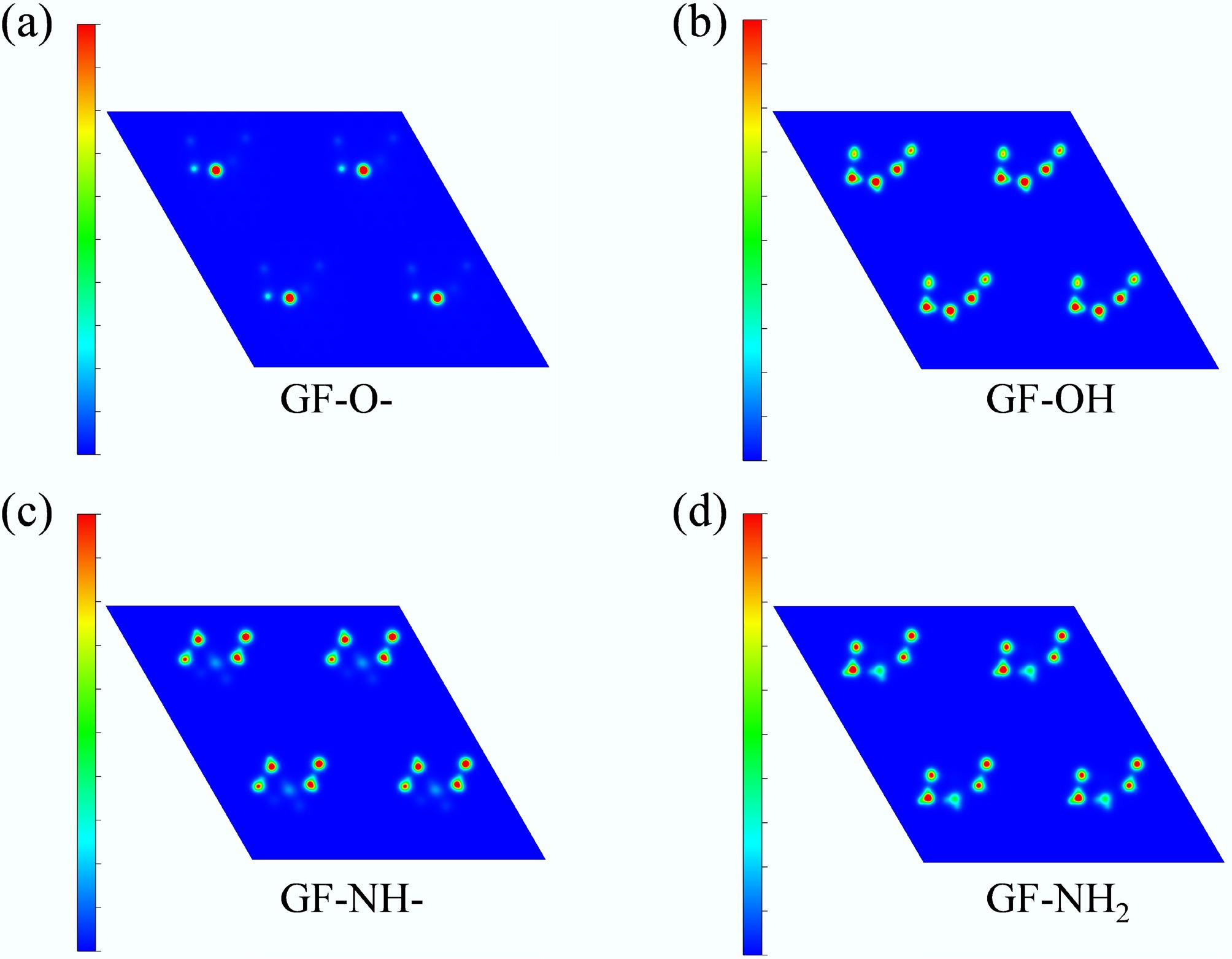
Figure 8.
Planar colored contour maps of charge density difference for (a) GF-O-, (b) GF-OH, (c) GF-NH-, and (d) GF-NH2.
-
In conclusion, this study systematically investigated the affinity and selectivity of oxygen- and nitrogen-containing functional groups toward U(VI). Through combined experimental and theoretical approaches, including enrichment experiments, advanced characterization, and ESP and DOS analyses, we demonstrated that the affinity order follows -OH > -NH2 > -NH- > -O-, which governs the adsorption, selectivity, and desorption behavior of functionalized GFs. An analysis of the difference in charge density confirmed effective charge transfer to and strong interactions with U(VI), whereas the superior performance of GF-OH was attributed to a barrierless OH abstraction mechanism that leads to a stable complex (SB_GF-OH). These findings bridge a persistent gap in the rational design of highly selective U(VI) adsorbents and establish a clear affinity hierarchy among key functional groups. This work provides a theoretical foundation for understanding functional group–U(VI) interactions and offers practical guidance for developing high-performance uranium enrichment materials. Future research will focus on evaluating the mechanistic roles of a broader range of functional groups.
Not applicable.
-
It accompanies this paper at: https://doi.org/10.48130/scm-0026-0029.
-
Not applicable.
-
The authors confirm their contributions to the paper as follows: Yuanyuan Zhu: original draft, visualization, validation, methodology, investigation, formal analysis, data curation; Wenbo Dong, Yue Chen: methodology, software; Xiaolong Zhang: conceptualization, review and revision; Xuemei Cui: original draft, investigation, formal analysis, data curation; Shubin Yang: supervision, resources, project administration, writing – review and editing. All authors reviewed the results and approved the final version of the manuscript.
-
The datasets generated and/or analyzed during the current study are available from the corresponding author on reasonable request.
-
The authors declare that they have no known competing financial interests or personal relationships that could have appeared to influence the work reported in this paper.
-
Full list of author information is available at the end of the article.
- The supplementary files can be downloaded from here.
- Copyright: © 2026 by the author(s). Published by Maximum Academic Press, Fayetteville, GA. This article is an open access article distributed under Creative Commons Attribution License (CC BY 4.0), visit https://creativecommons.org/licenses/by/4.0/.
-
About this article
Cite this article
Zhu Y, Cui X, Dong W, Chen Y, Zhang X, et al. 2026. Affinity and selectivity of oxygen- and nitrogen-containing functional groups toward U(VI). Sustainable Carbon Materials 2: e034 doi: 10.48130/scm-0026-0029 

Affinity and selectivity of oxygen- and nitrogen-containing functional groups toward U(VI)
- Received: 15 May 2026
- Revised: 27 July 2026
- Accepted: 26 August 2026
- Published online: 22 October 2026
Abstract: Identifying which surface functional groups exhibit superior affinity for U(VI) and how they can be rationally engineered to enhance selective uranium enrichment remains a fundamental challenge. In this study, oxygen-containing (-O-, -OH), and nitrogen-containing (-NH-, -NH2) functional groups were grafted onto a graphene framework (GF) via plasma technology to systematically investigate their U(VI) sorption performance and mechanisms. Adsorption experiments show that functionalization significantly enhances U(VI) enrichment, with their performance strongly depending on the functional group type. Molecular electrostatic potential and density of states analyses reveal that O- and N-containing groups impart stronger electrophilic ability and chemical reactivity, and form strong C 2p–O 2p and C 2p–N 2p hybridizations with the graphene basal plane, indicating covalent bonding. The calculated adsorption energies follow the order GF-OH (−2.20 eV) < GF-NH2 (−0.83 eV) < GF-NH- (−0.64 eV) < GF-O- (−0.59 eV), consistent with experimental adsorption–desorption and selectivity trends. Thus, the functional group affinity toward U(VI) follows the order -OH > -NH2 > -NH- > -O-. The superior performance of GF-OH is attributed to a barrierless OH abstraction mechanism, in which the C–O(H) bond is broken to form a stable complex (SB_GF-OH state). An analysis of the difference in charge density confirms effective charge transfer and strong interactions between functionalized GFs and U(VI). These findings demonstrate that the functional group type and coordination activity critically govern U(VI) adsorption. This study establishes a correlation between functional group type and enrichment performance, providing theoretical support for designing efficient uranium adsorbents and advancing nuclear wastewater treatment.
-
Key words:
- U(VI) sorption /
- Functional group affinity /
- DFT calculation /
- Selectivity