












-
Tyrosine kinase inhibitors (TKIs) are targeted agents that play a pivotal role in the treatment of hepatocellular carcinoma (HCC). Donafenib tosilate (donafenib) is a novel multi-targeted TKI with potent antitumor activity. It inhibits multiple receptor tyrosine kinases, such as vascular endothelial growth factor receptor (VEGFR) and platelet-derived growth factor receptor (PDGFR), while directly suppressing Raf kinase and the downstream Raf/MEK/ERK signaling pathway, thereby inhibiting both tumor angiogenesis and tumor cell proliferation (Fig. 1). Donafenib is a deuterated analogue of sorafenib, structurally modified with a trideuterated N-methyl group. This structural modification improves metabolic stability across multiple pathways, including oxidation, amide hydrolysis, demethylation, and glucuronidation, enhancing in vivo antitumor activity[1,2].
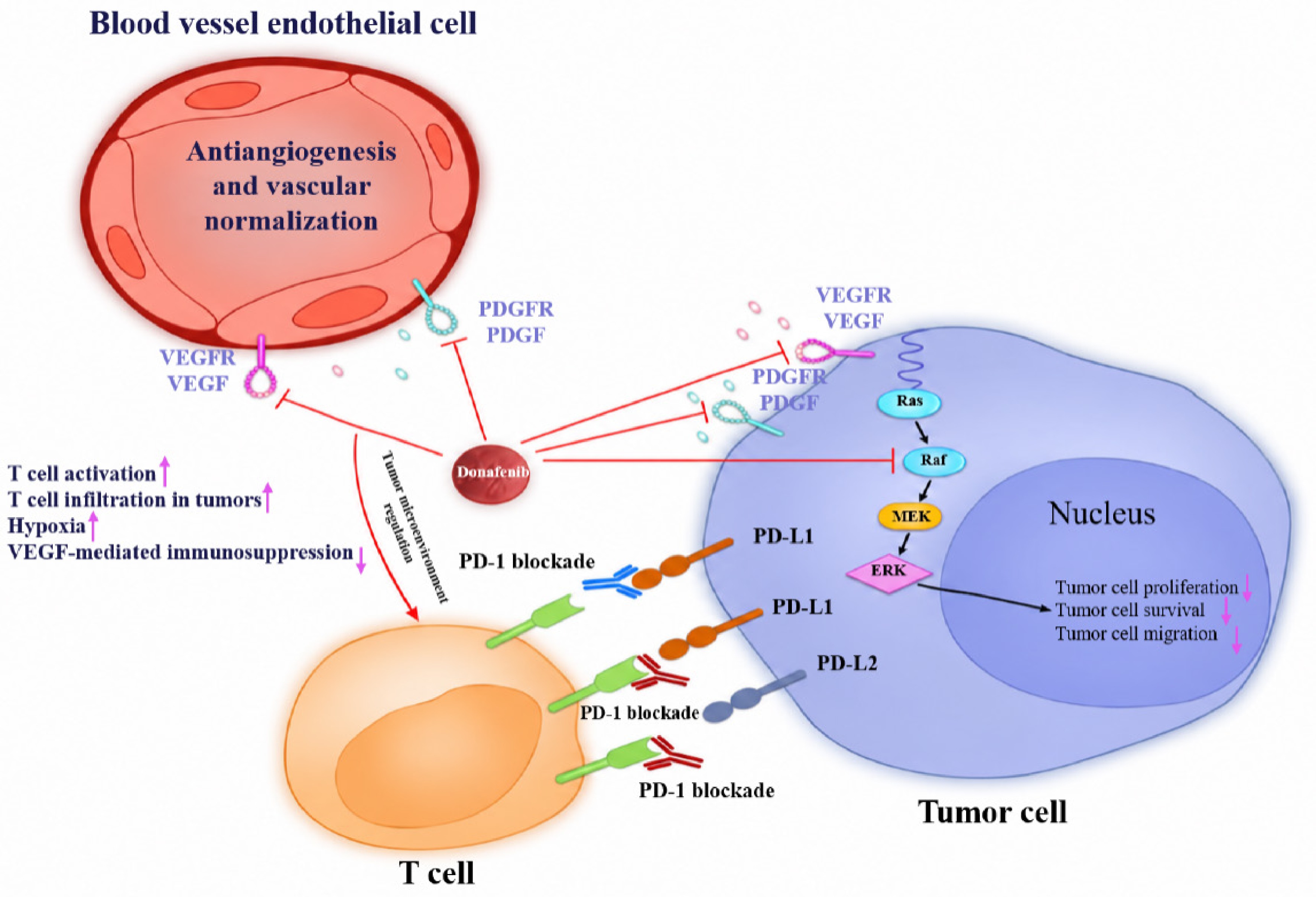
Figure 1.
Mechanism of action of donafenib.
In the pivotal head-to-head phase III trial (ZGDH3) comparing donafenib with sorafenib as first-line treatment for unresectable HCC, donafenib achieved superiority in the primary endpoint of overall survival (OS) and demonstrated a more favorable safety profile and better tolerability than sorafenib[3]. Based on these findings, the National Medical Products Administration (NMPA) approved donafenib on June 8, 2021, as a Class 1 innovative drug for patients with unresectable HCC who had not previously received systemic therapy. Subsequently, on August 12, 2022, based on the results of the DIRECTION study[4], the NMPA approved donafenib for the treatment of progressive, locally advanced, or metastatic radioiodine-refractory differentiated thyroid cancer (RAIR-DTC).
In recent years, substantial advances have been made in therapeutic strategies and treatment options for HCC. Since the approval of donafenib, multiple phase II clinical trials and real-world studies (RWS) have been conducted, providing new evidence to support its clinical application. To promote the rational, standardized, safe, and effective use of donafenib, the Expert Committee on Liver Cancer and the Expert Committee on Antitumor Drug Safety Management of the Chinese Society of Clinical Oncology (CSCO) organized a multidisciplinary panel of experts from medical oncology, hepatobiliary surgery, interventional radiology, radiation oncology, and clinical pharmacy. Following multiple rounds of discussion and revision, this consensus was developed to serve as an important reference for clinicians.
-
A systematic literature search was conducted in PubMed, Embase, China National Knowledge Infrastructure (CNKI), and the Chinese Biomedical Literature Service System (SinoMed) using the keywords 'donafenib' and 'hepatocellular carcinoma' from database inception to February 1, 2026 (Fig. 2; Supplementary Table S1).
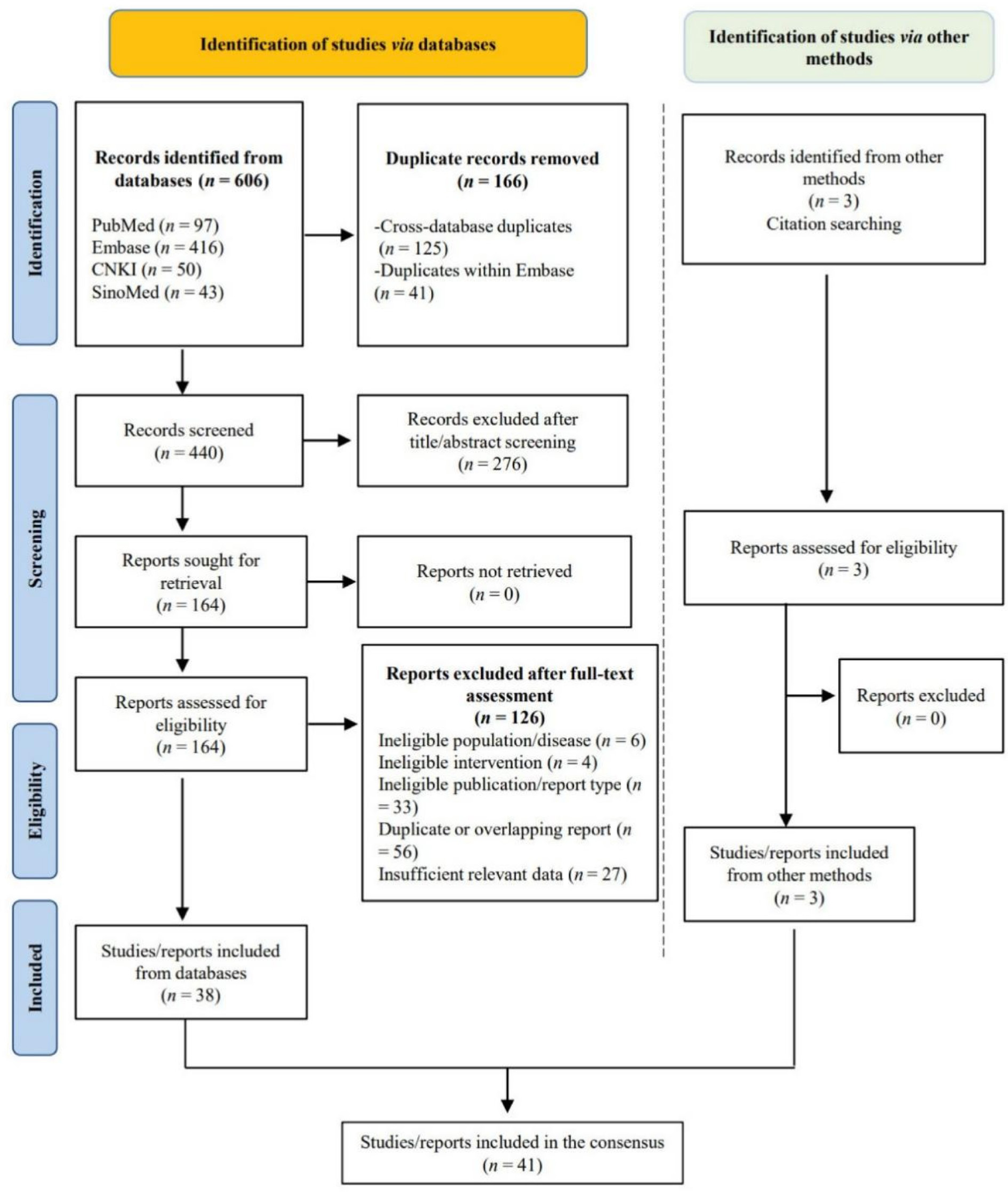
Figure 2.
PRISMA_flow diagram.
Methodology and evidence evaluation
-
The consensus was developed using the consensus conference method. The process included: (1) selection of the conference chair and panel members; (2) establishment of the agenda and identification of speakers; (3) pre-meeting review of the draft consensus by experts; and (4) evaluation of the consensus content through voting, ranking, or discussion to formulate the final recommendations[5]. Consensus was defined as agreement among ≥ 80% of panel members. Recommendations failing to reach consensus were revised based on expert feedback and submitted to the next round of voting (Supplementary Table S2).
Evidence was graded according to the 2011 Oxford Centre for Evidence-Based Medicine (OCEBM) levels of evidence (levels 1−5). Recommendation strength was based on the Grading of Recommendations Assessment, Development and Evaluation (GRADE) framework[6] and aligned with the American Society of Clinical Oncology (ASCO) and CSCO guidelines[7], with recommendations classified as strong (Grade A), moderate (Grade B), or weak (Grade C).
-
Primary liver cancer remains a major global health burden, particularly in China, where it poses a significant threat to public health. In 2022, China recorded 367,700 new cases and 316,500 deaths from primary liver cancer, ranking fourth and second among all cancers in incidence and mortality, respectively[8,9]. HCC accounts for 85%−90% of primary liver cancers[10,11]. Systemic treatment for HCC has advanced rapidly and includes chemotherapy, targeted therapy, immunotherapy, and combination regimens. These advances have improved patient survival. Donafenib has been studied in several treatment settings, including first-line therapy for unresectable HCC, conversion therapy for potentially resectable HCC, and adjuvant therapy in HCC patients at high risk of recurrence. These studies have provided new evidence for its clinical application.
First-line treatment of unresectable HCC
Donafenib monotherapy
-
ZGDH3 was a randomized, open-label, multicenter phase II/III trial (NCT02645981) evaluating donafenib vs sorafenib as first-line treatment for advanced HCC[3]. A total of 668 patients were enrolled at 37 centers across China and randomized in a 1 : 1 ratio to receive donafenib 200 mg twice daily or sorafenib 400 mg twice daily. Median overall survival (mOS) was significantly longer in the donafenib group than in the sorafenib group (12.1 vs 10.3 months; HR = 0.831, 95% CI: 0.699−0.988; P = 0.025). Compared with sorafenib, donafenib was associated with lower rates of grade ≥ 3 adverse events (AEs) (57.4% vs 67.5%; P = 0.008), grade ≥ 3 adverse drug reactions (ADRs) (37.5% vs 49.7%; P = 0.002), AEs leading to treatment interruption (30.3% vs 42.5%; P = 0.001), and ADRs leading to treatment interruption (25.2% vs 36.1%; P = 0.003). Hand-foot skin reaction, diarrhea, and rash were less common in the donafenib group. Based on these findings, the NMPA approved donafenib on June 8, 2021. Donafenib was included in the National Reimbursement Drug List (NRDL) in 2022.
Consensus 1: Donafenib is a standard first-line treatment for advanced HCC. It is currently the only TKI monotherapy to demonstrate both superior overall survival and a better safety profile compared with sorafenib (evidence level 1, recommendation A).
Donafenib combined with immune checkpoint inhibitors
-
Combination therapy with anti-angiogenic agents and PD-1/L1 immune checkpoint inhibitors (ICIs) has become a standard first-line treatment for unresectable HCC. Several clinical studies of donafenib combined with ICIs have explored the potential synergistic effects.
A prospective phase II study evaluating donafenib plus sintilimab as first-line treatment for patients with Barcelona Clinic Liver Cancer (BCLC) stage C HCC[12] enrolled 30 patients, including 80.0% with macrovascular invasion and 63.3% with extrahepatic metastases. According to mRECIST criteria, the objective response rate (ORR) was 23.3%, and the disease control rate (DCR) was 76.7%. Median progression-free survival (mPFS) was 6.2 months (95% CI: 4.4−8.0), and mOS was 16.0 months (95% CI: 13.5−18.5). Treatment-related adverse events (TRAEs) occurred in 93.3% of patients, including 30.0% with grade 3 TRAEs, and no grade 4−5 TRAEs were observed. Another single-center retrospective study[13] enrolled 28 patients with unresectable BCLC stage C HCC. According to RECIST v1.1, the ORR was 21.4%, and the DCR was 89.2%; two patients achieved complete response (7.1%), and four patients achieved partial response (14.2%). These preliminary findings suggest that donafenib combined with ICIs may offer encouraging efficacy with manageable safety.
Consensus 2: Donafenib combined with ICIs as first-line treatment for advanced HCC may provide synergistic therapeutic effects with manageable safety (evidence level 3, recommendation C).
Donafenib combined with hepatic arterial interventional therapy
-
Hepatic arterial interventional therapy includes two major modalities: transcatheter arterial chemoembolization (TACE) and hepatic arterial infusion chemotherapy (HAIC). TACE is the most widely used locoregional therapy for HCC. The CSCO Guidelines for the Diagnosis and Treatment of Primary Liver Cancer (2024 Edition)[14] recommend TACE for stage IIb and IIIa HCC (grade I recommendation). HAIC has demonstrated clinical benefit in patients with high tumor burden or macrovascular invasion[15−17]. The guidelines also recommend HAIC for stage IIIa HCC (grade I recommendation) and for stage Ia-IIb HCC with tumors > 7 cm in patients who decline or are unsuitable for surgical resection (grade III recommendation).
In a retrospective study[18] of 93 patients with unresectable HCC, donafenib plus TACE (Dona-TACE, n = 49) was compared with lenvatinib plus TACE (LEN-TACE, n = 44). mPFS was 7.37 months in the Dona-TACE group vs 5.77 months in the LEN-TACE group (HR = 0.785, 95% CI: 0.46−1.33, P = 0.354). ORR was 55.1% in the Dona-TACE group and 61.4% in the LEN-TACE group (P = 0.541), and DCR was 75.51% vs 81.82% (P = 0.460) according to mRECIST. No significant differences were observed for any of these endpoints. Compared with the control group, patients receiving Dona-TACE experienced a lower incidence of both any-grade AEs (85.7% vs 100.0%, P = 0.013) and grade ≥ 3 AEs (22.5% vs 45.5%, P = 0.027). The differences were observed for proteinuria (0% vs 18.18%, P = 0.011), hypertension (2.0% vs 36.4%, P < 0.001), gastrointestinal bleeding (0% vs 13.6%, P = 0.009), elevated aspartate aminotransferase (AST) (24.5% vs 56.8%, P = 0.015), and diarrhea (6.1% vs 25.0%, P = 0.011). Another retrospective study[19] yielded consistent results after 1 : 1 propensity score matching.
A study investigating TACE combined with TKIs in patients with HCC[20] reported an mPFS of 10.9 months and an mOS of 24.3 months with donafenib plus TACE. This regimen was also associated with remodeling of the immunosuppressive tumor microenvironment and enhancing antitumor immune responses. A prospective phase II study[21,22] enrolled 36 patients treated with donafenib plus TACE, with an mPFS of 10.7 months and a 1-year OS rate of 77.6%. Based on the Albumin–Bilirubin Index (ALBI) assessment, liver function remained stable in 58.3% of patients and improved in 25.0%, with ALBI grade changing from 2 to 1.
A retrospective study[23] compared TACE plus donafenib with TACE alone in patients with ruptured HCC. The combination group achieved a higher ORR according to mRECIST (55.6% vs 25.7%, P = 0.008), and longer mPFS (13.6 vs 4.6 months, P = 0.003) and mOS (17.4 vs 7.6 months, P = 0.012), without increasing rebleeding risk.
A study evaluating donafenib plus HAIC in unresectable HCC[24] observed favorable preliminary outcomes with longer mPFS (9.0 vs 5.0 months, P < 0.001) and higher ORR (62.9% vs 31.4%, P = 0.008; mRECIST) than HAIC alone. Donafenib plus HAIC also reduced laminin, hyaluronic acid, and type IV collagen levels, suggesting a potential anti-fibrotic effect. A preclinical study[25] showed that donafenib could inhibit the proliferation and activation of hepatic stellate cells, induce their apoptosis, and ameliorate thioacetamide-induced liver fibrosis in rats.
Consensus 3: Donafenib combined with TACE as first-line treatment for HCC may improve ORR and PFS. Donafenib has a limited impact on liver function and may contribute to the preservation of hepatic functional reserve (evidence level 3, recommendation C).
Donafenib combined with ICIs and TACE/HAIC
-
EMERALD-1[26], LEAP-012[27], and TALENTACE[28] demonstrated that TACE combined with targeted therapy plus immunotherapy reduced the risk of disease progression and prolonged mPFS compared with TACE alone in intermediate-stage HCC. Similar results have been observed with donafenib combined with TACE and ICIs.
A nationwide multicenter retrospective cohort study (CHANCE 2410)[29] enrolled 364 patients with BCLC stage B HCC. After propensity score matching, mPFS was 19.6 vs 15.3 months in the TACE plus donafenib and ICIs group (n = 127) and the TACE group (n = 127), respectively (HR = 0.647, 95% CI: 0.464−0.903, P = 0.010), with a 35.3% reduction in the risk of disease progression or death. ORR by mRECIST was 78.9% vs 62.5% (P = 0.002). One- and two-year OS rates were 94.8% vs 83.5% and 76.4% vs 64.8% (HR = 0.542, 95% CI: 0.327−0.989, P = 0.016).
HAIC has shown clear benefit in patients with high tumor burden or macrovascular invasion. A retrospective study[30] enrolled 49 patients with unresectable HCC, of whom 89.8% had BCLC stage C disease, 73.5% had portal vein tumor thrombus (PVTT), and 51.0% had extrahepatic metastases; the mean maximum tumor diameter was 9.9 cm. Treatment with FOLFOX-HAIC combined with donafenib and camrelizumab achieved an ORR of 57.1% and a DCR of 79.6% according to RECIST v1.1 criteria. The mPFS and mOS were 12.1 and 26.0 months, respectively. The THEME study was a retrospective cohort analysis incorporating inverse probability of treatment weighting (IPTW), enrolling 195 patients with BCLC stage C HCC[31]. Following stabilized IPTW adjustment, the group receiving TACE-HAIC plus donafenib and ICIs demonstrated favorable survival outcomes over TKIs or bevacizumab combined with ICIs, with extended mOS (29.4 vs 18.0 months; HR = 0.530, 95% CI: 0.340−0.850; P = 0.041) and mPFS (16.4 vs 10.0 months; HR = 0.480, 95% CI: 0.310−0.750; P = 0.012), and higher ORR by mRECIST (68.4% vs 28.2%, P < 0.001).
Several clinical studies of donafenib in combination with TACE/HAIC and ICIs have consistently shown favorable efficacy and a manageable safety profile (Table 1).
Table 1. Clinical studies of donafenib combined with TACE/HAIC and ICIs as first-line therapy for HCC.
Treatment regimen Study design Sample size ORR DCR PFS (months) OS (months) Safety TACE + donafenib + PD-1 inhibitor vs
TACE + donafenib[32]Retrospective cohort study 166 vs 157 50.6% vs 41.4%
(mRECIST, P = 0.019)89.2% vs 82.8%
(mRECIST, P = 0.010)10.6 vs 7.9
P < 0.00118.1 vs 13.2
P < 0.001Grade ≥ 3 AEs: 33.8% vs 37.3%, P = 0.253 TACE + donafenib + tislelizumab vs
TACE + sorafenib[33]Retrospective cohort study 81 vs 88 66.7% vs 38.6%
(mRECIST, P < 0.001)82.6% vs 68.2%
(mRECIST, P = 0.033)10.9 vs 7.0
P < 0.00119.6 vs 10.9
P < 0.001Grade ≥ 3 AEs: 4.9% vs 14.8%, P = 0.041 TACE + donafenib + ICIs vs
TACE + donafenib[34]Retrospective cohort study 28 vs 41
(26 vs 26 after PSM)53.8% vs 50.0%
(mRECIST, P = 0.781)96.2% vs 73.1%
(mRECIST, P = 0.021)13.1 vs 7.2
P = 0.01723.1 vs 14.7
P = 0.021Grade ≥ 3 AEs: 10.7% vs 7.3%, P = 0.623 TACE + donafenib + ICIs vs
TACE + lenvatinib + ICIs[35]Retrospective cohort study 70 vs 36
(50 vs 30 after PSM)64.0% vs 40.0%
(mRECIST, P = 0.037)96.0% vs 80.0%
(mRECIST, P = 0.047)9.0 vs 4.62
P = 0.005NA vs 12.9
P = 0.004No significant difference in overall adverse events(P = 0.84) TACE + donafenib + ICIs[36] Retrospective single-center study 30 60.0% (mRECIST) 93.3% (mRECIST) 11.8 NA Grade ≥ 3 AEs: 40% TACE + donafenib + sintilimab[37] Prospective single-center study 30 56.7% (RECIST v1.1)
90.0% (mRECIST)93.3% (RECIST v1.1)
93.3% (mRECIST)10.2 12-month OS rate: 87.2% Grade ≥ 3 AEs: 46.7% TACE + donafenib + PD-(L)1 inhibitor[38] Retrospective single-center study 40 65.0% (mRECIST) 97.5% (mRECIST) 12.5 12- and 18-month OS rates: 91.7%, 66.8% Grade ≥ 3 AEs: 7.5% D-TACE + donafenib + atezolizumab vs
D-TACE + Lenvatinib[39]Retrospective cohort study 51 vs 54 62.7% vs 40.7% (mRECIST, P < 0.05) 84.3% vs 64.8%
(mRECIST, P < 0.05)8.7 vs 5.7
P < 0.00119.2 vs 12.3
P < 0.001Grade ≥ 3 AEs: no significant difference between groups HAIC + donafenib + atezolizumab vs
TACE[40]Retrospective cohort study 270 vs 151
(151 vs 151 after PSM)33.8% vs 11.3%
(RECIST v1.1, P < 0.01)77.9% vs 65.3%
(RECIST v1.1, P < 0.03)10.3 vs 4.9
P < 0.001NA vs 10.9
P < 0.001Grade ≥ 3 AEs: 36.4% vs 48.3%, P = 0.04 HAIC + donafenib + sintilimab[41] Prospective single-center study 36 58.3% (RECIST v1.1)
80.6% (mRECIST)94.4% (RECIST v1.1)
94.4% (mRECIST)EFS: 15.3 24-month OS rate: 59.6% Grade ≥ 3 AEs: 33.3% HAIC + donafenib + PD-1 inhibitor[42] Retrospective single-center study 64 73.4% (mRECIST) 93.8% (mRECIST) 12.3 12-month OS rate: 93.2% Grade ≥ 3 AEs: 32.8% TACE + HAIC + donafenib + PD-1 inhibitor[43] Retrospective single-center study 89 75.3% (mRECIST) 100% (mRECIST) 18.5 12- and 18-month OS rates: 81.6%, 72.4% Grade ≥ 3 AEs: 30.3% TACE/HAIC + donafenib + PD-1 inhibitor[44] Retrospective single-center study 105 58.1% (RECIST v1.1)
61.0% (mRECIST)87.6% (RECIST v1.1)
87.6% (mRECIST)11.7 12-month OS rate: 89.9% Grade ≥ 3 AEs: 77.1% Consensus 4: Donafenib combined with TACE and ICIs as first-line treatment for HCC offers promising efficacy over TACE alone and has a manageable safety profile (evidence level 2, recommendation B).
Consensus 5: Donafenib combined with HAIC and ICIs as first-line treatment for HCC, including in patients with high tumor burden or macrovascular invasion, could improve ORR and DCR, with a manageable safety profile (evidence level 3, recommendation C).
Donafenib for conversion therapy in HCC
-
Conversion therapy is defined as active treatment for patients with HCC who are initially unsuitable for surgical resection, with the goal of enabling subsequent resection. It mainly includes future liver remnant (FLR) volume conversion and oncological conversion. The target population primarily comprises patients with China Liver Cancer (CNLC) stage Ib–IIIa HCC who are unsuitable for upfront resection but have the potential to become resectable after treatment[45].
Donafenib combined with ICIs and TACE/HAIC has shown promising results in conversion therapy for HCC. In a prospective single-arm study (DoHAICs)[41], donafenib combined with sintilimab and HAIC for unresectable HCC achieved an ORR of 58.3% and 80.6% by RECIST v1.1 and mRECIST criteria, respectively, with a DCR of 94.4% under both criteria. The 24-month OS rate was 59.6%, and the median event-free survival (mEFS) was 15.3 months. A total of 21 patients (58.3%) achieved successful conversion, and 18 underwent hepatectomy, with a conversion resection rate of 50.0%. Among them, seven patients (38.9%) achieved pathological complete response (pCR), and nine patients (50.0%) achieved major pathological response (MPR). Patients who underwent surgery had better survival than those who did not (NA vs 14.3 months, P = 0.035). Grade 3−4 treatment-emergent adverse events (TEAEs) occurred in 33.3% of patients.
Another prospective study[46] showed that donafenib combined with camrelizumab and TACE enabled conversion resection in 70.0% (14/20) of patients with potentially resectable HCC, of whom 7 (50.0%) achieved MPR. By mRECIST criteria, ORR was 75.0%, and DCR was 95.0%. The mEFS was 9.5 months, and the mOS was 19.5 months. Grade 3 TRAEs occurred in 25.0% of patients, and no grade 4−5 adverse events were reported. A retrospective cohort study[47] showed that, compared with TACE plus a PD-1 inhibitor and bevacizumab, TACE plus a PD-1 inhibitor and donafenib/lenvatinib was associated with a shorter preoperative treatment discontinuation interval (7 vs 35 d, P < 0.001) and a higher postoperative pCR rate (39.1% vs 8.3%, P < 0.001).
Consensus 6: For conversion therapy in patients with potentially resectable HCC, donafenib combined with TACE or HAIC and ICIs may enhance conversion resection potential through high ORR and rapid response, while preliminary findings suggest low bleeding risk and short preoperative treatment discontinuation interval (evidence level 3, recommendation C).
Donafenib for postoperative adjuvant therapy in HCC with high-risk recurrence factors
-
Tumor recurrence and metastasis remain the major barriers to long-term survival after surgical resection for HCC. Postoperative adjuvant therapy aims to prevent recurrence and metastasis and improve tumor-free survival.
Donafenib has been evaluated as postoperative adjuvant therapy in patients with HCC at high risk of recurrence. In the multicenter retrospective real-world AHEAD study[48], adjuvant therapy with donafenib (n = 49) was associated with improved 1- and 2-year recurrence-free survival (RFS) rates compared with active surveillance (n = 147) after IPTW adjustment (86.6% vs 64.8% and 72.5% vs 45.0%, respectively; P = 0.004). The corresponding 1- and 2-year OS rates were 97.9% vs 89.5% and 95.6% vs 77.9%, respectively (P = 0.043). Multivariate analysis identified adjuvant donafenib as an independent prognostic factor for RFS.
In a retrospective cohort study[49], adjuvant donafenib plus sintilimab showed an association with reduced recurrence risk. Median RFS (mRFS) was not reached in the adjuvant therapy group and was 11.1 months in the active surveillance group (HR = 0.339, 95% CI: 0.138−0.835, P = 0.014), with a 66.1% reduction in the risk of recurrence or death. In a retrospective single-arm study (n = 44)[50] of patients with HCC at high risk of recurrence after curative resection, TACE combined with donafenib reported a 1-year RFS rate of 81.8%, an mRFS of 17 months, and 1- and 2-year OS rates of 97.7% and 88.6%, respectively.
Multiple clinical studies have suggested that adjuvant donafenib may prolong RFS in patients with HCC at high risk of recurrence (Table 2).
Table 2. Clinical studies of adjuvant donafenib in HCC patients at high risk of recurrence.
Adjuvant therapy Sample size High-risk factors Efficacy Donafenib + toripalimab[51] 30 Microvascular invasion (MVI); satellite nodules; ≥ 3 lesions; PVTT invading hepatic segment or portal vein branches (left or right), with or without hepatic vein invasion 1-year RFS rate: 81.6% TACE + donafenib + tislelizumab[52] 30 Single tumor > 5 cm and MVI, with or without satellite lesions 1-year RFS rate: 89.6% TACE + donafenib[53] 40 Single lesion > 5 cm; multiple lesions; MVI; satellite lesions; resection margin < 1 cm 1-year RFS rate: 78.8% TACE + donafenib
donafenib[54]69
70Maximum tumor diameter > 5 cm; multiple lesions; MVI; major vessel invasion mRFS: 29.2 months
mRFS: 24.5 monthsHAIC + donafenib[55] 18 Single tumor > 5 cm with MVI 1-year RFS rate: 64.9% Donafenib[56] 47 Tumor > 5 cm; multiple lesions; MVI; preoperative AFP > 400 ng·mL−1 1-year RFS rate: 73.3%;
2-year RFS rate: 63.6%Consensus 7: For patients with HCC at high risk of recurrence, adjuvant donafenib, alone or in combination with other therapies, may prolong RFS and is generally well tolerated; further validation in large-scale studies is warranted (evidence level 3, recommendation C).
-
Monotherapy: The recommended dose of donafenib is 200 mg orally twice daily on an empty stomach and administered continuously.
Combination therapy: When combined with ICIs, with or without transarterial therapies (TACE or HAIC), donafenib may be initiated at a dose of 100 mg orally twice daily. If well tolerated after 1−2 weeks, the dose may be increased to 200 mg twice daily based on individual tolerance. This recommendation is primarily based on expert clinical experience and consensus; pharmacokinetic data supporting this regimen are currently lacking. Close monitoring of patient tolerability is recommended in clinical practice, with dose adjustments made flexibly according to individual circumstances.
-
The most common adverse reactions of donafenib included hand-foot skin reaction (HFSR), rash, thrombocytopenia, diarrhea, hypertension, and elevations of AST and alanine aminotransferase (ALT). These findings were based on safety data from 761 patients with solid tumors (including 444 with HCC) receiving donafenib monotherapy and 1,759 patients with primary liver cancer (including 1,680 with HCC) receiving donafenib-based combination therapy[3,57−59]. These events are generally manageable with appropriate monitoring and supportive care. No new safety signals have emerged from post-marketing clinical studies. Patients should be closely monitored during treatment, and doses adjusted according to individual safety and tolerability. Symptomatic management should be initiated promptly for any adverse reactions. When clinically indicated, treatment interruption, dose reduction, or permanent discontinuation may be required. When dose modification is required, donafenib should be temporarily withheld before dose reduction (Table 3).
Table 3. Principles of dose modification for donafenib in patients with HCC.
Dose modification strategy Temporary drug interruption Dose reduction Permanent discontinuation HCC • Grade 3 HFSR*
• Grade ≥ 3 diarrhea
• Grade 3 hypertension despite optimal antihypertensive therapy
• Grade 3 hepatic dysfunction
• Grade 3 proteinuria
• Grade 2 gastrointestinal bleeding
• Grade 3 QT interval prolongation
• Any grade ≥ 3 non-hematologic adverse event (except those requiring permanent discontinuation)
• Grade 4 hematologic adverse event (except those requiring permanent discontinuation)First interruption: If the adverse event recovers to normal or grade ≤ 1 within 1 week, resume donafenib at the original dose. If recovery to grade ≤ 1 occurs within 2 weeks, reduce the dose to 200 mg once daily and continue treatment. Subsequent interruption: If recovery to grade ≤ 1 occurs within 2 weeks after dose reduction, further reduce the dose to 200 mg every other day and continue treatment • Grade 4 hypertension
• Grade 4 hepatic dysfunction
• Grade 3 gastrointestinal bleeding
• Grade 4 QT interval prolongation
• Life-threatening (grade 4) adverse events requiring emergency intervention, including but not limited to acute hemorrhagic shock, gastrointestinal perforation, or hypertensive crisis
• Failure to recover to grade ≤ 1 within 2 weeks of treatment interruption
• Requirement for a third treatment interruption* Grade 3 HFSR (classified as palmar-plantar erythrodysesthesia syndrome in MedDRA) is characterized by desquamation, blistering, and hyperkeratosis of the hands and feet, typically accompanied by pain. Severe cases may present with bleeding, fissures, and edema, resulting in limitations in activities of daily self-care. HFSR
-
In the ZGDH3 study, HFSR occurred in 50.5% of patients receiving donafenib (grade ≥ 3, 5.7%) and 66.9% of those receiving sorafenib (grade ≥ 3, 12.3%)[3]. The median time to onset was 11 d (range, 1−445), and the median duration was 116.5 d (range, 3−1,274), with most cases being grade 1 or 2. Post-hoc analysis suggested that the occurrence of HFSR may predict improved efficacy of donafenib (HR = 0.498, 95% CI: 0.384−0.648, P < 0.001)[60].
Clinically, HFSR usually develops 2–4 weeks after treatment and manifests as numbness, hypoesthesia, paresthesia, tingling, painful or painless sensations, swelling, erythema, desquamation, fissures, indurated blisters, and severe pain. Management involves maintaining skin integrity, preventing infection, applying emollients, wearing soft cotton clothing and socks, and minimizing friction or pressure on affected areas.
Rash
-
In the ZGDH3 study, rash occurred in 20.4% of patients receiving donafenib (grade ≥ 3: 0.3%) vs 26.5% with sorafenib (grade ≥ 3: 2.1%)[3]. The median time to onset was 15 d (range, 2−449), and median duration was 57.5 d (range, 2−875), with most cases being grade 1 or 2. Post-hoc analysis indicated that the occurrence of rash may predict better efficacy of donafenib (HR = 0.644, 95% CI: 0.459−0.901, P = 0.0097)[60].
Rash most commonly occurs on the face, neck, and upper extremities. Treatment consists of oral or topical antihistamines, with medium- to high-potency topical corticosteroids used as needed. For rash occurring during combination therapy with ICIs, management should be guided by severity and may include topical corticosteroids, oral prednisone, or intravenous methylprednisolone. Recommendations may be guided by the CSCO Guidelines for the Management of Immune Checkpoint Inhibitor-Related Toxicities (2023)[61] and the NCCN Guidelines for Management of Immunotherapy-Related Toxicities (v2.2024)[62]. Secondary infections should be treated with antibiotics, and pruritus may be relieved with topical calamine lotion, zinc oxide, or baicalin ointment.
Liver function abnormalities
-
Clinical safety data from 598 patients with solid tumors indicated that HCC patients experienced higher rates of AST elevation (24.8% vs 18.2%) and serum bilirubin elevation (18.7% vs 9.1%) compared with non-HCC patients[3,57−59]. As most HCC patients have underlying liver disease, these abnormalities are often associated with advanced disease progression and severe hepatic impairment.
Elevated AST/ALT
-
In the ZGDH3 study[3], AST elevation occurred in 23.4% of patients receiving donafenib (grade ≥ 3: 2.4%) compared with 27.1% receiving sorafenib (grade ≥ 3: 4.8%). ALT elevation occurred in 15.6% (grade ≥ 3: 1.8%) and 21.1% (grade ≥ 3: 2.7%) of patients, respectively. The incidence of both events was lower with donafenib, and most cases were grade 1 or 2. Patients with AST and/or ALT elevation should be advised to rest and maintain a light diet. Marked aminotransferase elevation warrants close monitoring for hepatic injury and prompt treatment with hepatoprotective and liver enzyme-lowering agents. Hepatic tumor progression should also be considered as a potential cause of AST and/or ALT elevation.
Elevated serum bilirubin
-
In the ZGDH3 study[3], serum bilirubin elevation occurred in 18.9% of patients receiving donafenib (grade ≥ 3: 1.2%) and 19.9% receiving sorafenib (grade ≥ 3: 1.8%). Bilirubin elevation should be evaluated in the context of clinical symptoms, other liver function parameters, and overall patient condition. In patients with isolated bilirubin elevation (grade ≤ 2), donafenib may be continued under close monitoring, together with choleretic therapy such as ursodeoxycholic acid, S-adenosylmethionine, or traditional Chinese medicine preparations (e.g., Kuhuang).
Dose modification for abnormal liver function
-
In patients with severe hepatic impairment, donafenib should be temporarily interrupted regardless of causality. Management should include hepatoprotective therapy (e.g., antiviral and choleretic treatment), treatment of the underlying cause, and supportive measures such as nutritional and immune support, as well as infection control. Resumption of donafenib may be considered after recovery of liver function. Treatment interruption is recommended for grade 3 liver function abnormalities, and permanent discontinuation is required for grade 4 abnormalities (Table 3).
Thrombocytopenia
-
Thrombocytopenia is common in patients with chronic liver disease and cirrhosis, particularly in advanced HCC with cirrhosis and hypersplenism.
In the ZGDH3 study[3], donafenib-related thrombocytopenia occurred in 27.9% of patients (grade ≥ 3, 3.9%). When thrombocytopenia occurs, bleeding risk and platelet counts should be closely monitored. Hemostatic agents such as etamsylate may be used prophylactically. Platelet transfusion is recommended for platelet counts < 25 × 109·L−1 with active bleeding or for counts < 10 × 109·L−1. When appropriate, glucocorticoids and thrombopoietic agents, including recombinant human thrombopoietin (rh-TPO), recombinant human interleukin-11 (rh-IL-11), and TPO receptor agonists, may be administered.
Donafenib should be temporarily withheld for grade 3 thrombocytopenia and may be resumed at half dose once platelet counts recover to grade 1 or normal levels. Permanent discontinuation is recommended after recurrent grade 4 thrombocytopenia (≥ 2 episodes) (Table 3). Management may be guided by the CSCO Guidelines for the Diagnosis and Treatment of Antitumor Therapy-Induced Thrombocytopenia[63].
Consensus 8: Donafenib is associated with a low incidence of grade ≥ 3 adverse events in patients with HCC, particularly liver function abnormalities, proteinuria, hypertension, and gastrointestinal bleeding (evidence level 1, recommendation A).
-
Donafenib is a next-generation antiangiogenic molecularly targeted agent. Supported by evidence from the pivotal ZGDH3 and DIRECTION studies, it has been approved by the NMPA for the treatment of unresectable HCC in patients who have not received prior systemic therapy, as well as for progressive, locally advanced, or metastatic RAIR-DTC. Subsequent post-marketing studies have further shown that donafenib-based combination regimens can improve tumor response and survival in patients with HCC while maintaining a favorable safety profile.
This consensus was developed on the basis of evidence from donafenib registration trials, post-marketing studies, and clinical practice, and was refined through expert panel discussions and review. It is intended to provide guidance for clinical practice, multidisciplinary team (MDT) decision-making, and individualized treatment. Ongoing studies are evaluating donafenib as neoadjuvant therapy for HCC (NCT06512467 and ChiCTR2300074183) and in combination with JAK inhibitors as second-line treatment (NCT07157306). However, this consensus is based predominantly on evidence from Chinese patients with HBV-related HCC and Child–Pugh ≤ 7. Its applicability to patients with Child–Pugh scores of 8−9, renal impairment, non-HBV etiologies, or advanced age/frailty remains uncertain. For these populations, the consensus framework may inform but should not replace individualized clinical judgment. This consensus will be updated as new evidence and clinical experience become available.
-
Not applicable.
-
The authors confirm their contributions to the paper as follows: principal guidance, conception and design for this consensus, data collection and assembly, analysis and interpretation, manuscript writing, final approval of the manuscript for publication: Qin SK, Fan J, Zhou J. All authors reviewed the results and approved the final version of the manuscript.
-
Data sharing is not applicable to this article, as no datasets were generated or analyzed during the current study.
-
The authors declare that they have no conflict of interest.
-
accompanies this paper online at: https://doi.org/10.48130/targetome-0026-0056.
- Supplementary Table S1 Full database search strategies.
- Supplementary Table S2 Voting results.
- Copyright: © 2026 by the author(s). Published by Maximum Academic Press on behalf of China Pharmaceutical University. This article is an open access article distributed under Creative Commons Attribution License (CC BY 4.0), visit https://creativecommons.org/licenses/by/4.0/.
-
About this article
Cite this article
Qin SK, Fan J, Zhou J. 2026. Expert consensus on the clinical application of donafenib tosilate for hepatocellular carcinoma (2026 edition). Targetome 2(6): e054 doi: 10.48130/targetome-0026-0056 

Expert consensus on the clinical application of donafenib tosilate for hepatocellular carcinoma (2026 edition)
- Received: 29 June 2026
- Revised: 14 September 2026
- Accepted: 24 September 2026
- Published online: 04 November 2026
-
Key words:
- Expert consensus;
- Donafenib;
- Hepatocellular carcinoma