











-
passion fruit (Passiflora edulis) is an important horticultural crop valued for its unique flavor, nutritional value, and commercial opportunities[1−3]. Cultivated widely in many tropical and subtropical regions, passion fruit is severely affected by abiotic stresses[4]. Drought, salinity, high temperature, low temperature, and hyperosmotic stresses severely affect its vegetative growth, flowering, fruit set, and yield stability[4−6]. Because of the alarming rate of climate change, the frequency and intensity of such streses are increasing, and there will be a definite need for cultivars with enhanced resilience against abiotic stresses.
In plants, the perception of abiotic stresses and the occurrence of adaptive responses are governed by complex signaling networks, each providing the potential for very rapid perception of the environmental change[7−10]. The ability of a protein kinase to transmit signals in phosphorylation cascades is at the core of these networks. It regulates downstream transcription factors (TFs), ion channels, metabolic enzymes, and stress-responsive genes. Among these, the Sucrose nonfermenting-1-related protein kinase (SnRK) family has emerged as a master regulator that integrates energy homeostasis, hormonal signaling, and environmental stress responses[11−13].
The SnRK family is evolutionarily conserved in plants and includes three major subfamilies: SnRK1, SnRK2, and SnRK3 (calcineurin B-like [CBL]-interacting protein kinase genes [CIPKs])[14,15]. SnRK1 functions as a core metabolic sensor coordinating growth and carbon allocation under energy-limiting conditions[16−18]; in contrast, SnRK2 and SnRK3 are more directly involved in abiotic stress and hormone-mediated signaling cascades[15,19]. SnRK2 kinases, in particular, represent core positive regulators of the abscisic acid (ABA) signaling pathway, a phytohormone that plays a vital role in plant responses to abiotic stresses, e.g., drought, salinity, and osmotic stress.
Emerging transcriptomic evidence in P. edulis indicates that key components of ABA-responsive signaling pathways, including ABA-regulated TFs and stress-inducible genes, are differentially expressed under drought, temperature, and osmotic stress conditions, suggesting that ABA-mediated signaling is an important regulatory mechanism in passion fruit's stress adaptation. Given the conserved role of SnRK2 kinases as central mediators of ABA signal transduction in plants, it is highly plausible that SnRK-dependent pathways contribute to abiotic stress resilience in passion fruit.
Genome-wide characterization and functional identification of the SnRK genes have been performed in a variety of plant species in recent decades, including Arabidopsis thaliana, rice (Oryza sativa), maize (Zea mays), bamboo (Phyllostachys edulis), poplar (Populus sp.), and barley (Hordeum vulgare)[14,20−23]. Despite an available chromosome-scale reference genome for passion fruit and an increase in the associated transcriptomic resources, a review synthesis of SnRK-related knowledge in the context of passion fruit has not been published[24]. This review aims to summarize the current understanding of the SnRK gene family's structure, signaling mechanisms, and roles in abiotic stress responses, with a focus on their potential relevance to improving passion fruit.
-
The SnRK family derives its name from the yeast sucrose nonfermenting-1 (SNF1) kinase and its mammalian homolog, AMP-activated protein kinase (AMPK), reflecting evolutionary conservation across eukaryotes. They have subsequently diversified into three distinct subfamilies in plants, namely SnRK1, SnRK2, and SnRK3/CIPKs[11,15,25].
SnRK1 is an ancestral branch that shares functional features with SNF1/AMPK in acting as a central energy sensor regulating metabolic balance under carbon starvation/stress conditions[18]. In contrast, the subfamilies SnRK2 and SnRK3 have expansions predominantly in plants and mostly function in environmental stress and hormone signaling. Phylogenetic analyses across various species have established lineage-specific expansions of SnRK2 and SnRK3 genes, which demonstrates adaptive diversification towards the challenges of the terrestrial environment[20,26]. The details of SnRK gene family are given in Table 1.
Table 1. Classification, structural features, and core functions of the SnRK gene family in plants
SnRK subfamily Alternative name Conserved structural features Primary biological functions Representative genes SnRK1[13,16−18,20,25] SNF1-related kinase 1 N-terminal kinase domain; regulatory C-terminal region Energy sensing; carbon metabolism; growth–stress balance AtSnRK1.1, AtSnRK1.2 SnRK2[12,15,19,27−38] Stress-activated protein kinases (SAPKs) Kinase domain; SnRK2 box; ABA box ABA signaling; drought and osmotic stress response; transcriptional regulation OST1/SnRK2.6, SAPK8 SnRK3[13,20,21,39,40] CIPKs (CBL-interacting protein kinases) Kinase domain; NAF/FISL motif for CBL binding Calcium signaling; ion homeostasis; salinity tolerance CIPK23, CIPK16 Phylogenetic classification of the SnRK gene family across crop species
-
Comparative phylogenetic analysis (Fig. 1) of SnRK family members in passion fruit, together with representative crop and model species including[41], Citrus sinensis[42], Carica papaya, Vitis vinifera (grape)[43], Musa acuminata (banana), Mangifera indica (mango), and A. thaliana[36,44,45], revealed a conserved subdivision of the SnRK gene family into three major subfamilies: SnRK1, SnRK2, and SnRK3 (CIPKs). Phylogenetic analysis was performed using the maximum likelihood method in MEGA11 with 1,000 bootstrap replicates, based on ClustalW-aligned full-length SnRK protein sequences. SnRK1 members formed a tightly conserved clade across all analyzed species, consistent with their central role in energy sensing and metabolic regulation. SnRK2 proteins clustered into distinct stress-activated protein kinase (SAPK) groups within the phylogenetic tree, supporting their functional specialization in ABA signaling and abiotic stress responses in crops. In contrast, SnRK3 genes displayed broader and more diverse clade expansion, which was particularly evident in perennial fruit crops such as passion fruit, grape, banana, and mango, reflecting lineage-specific diversification associated with calcium-dependent signaling pathways. The presence of all three SnRK subfamilies in both monocot and dicot crops indicates that SnRKs' diversification occurred early in plants' evolution, with subsequent species-specific expansion patterns observed in the phylogenetic tree during the adaptation and domestication of cropts.
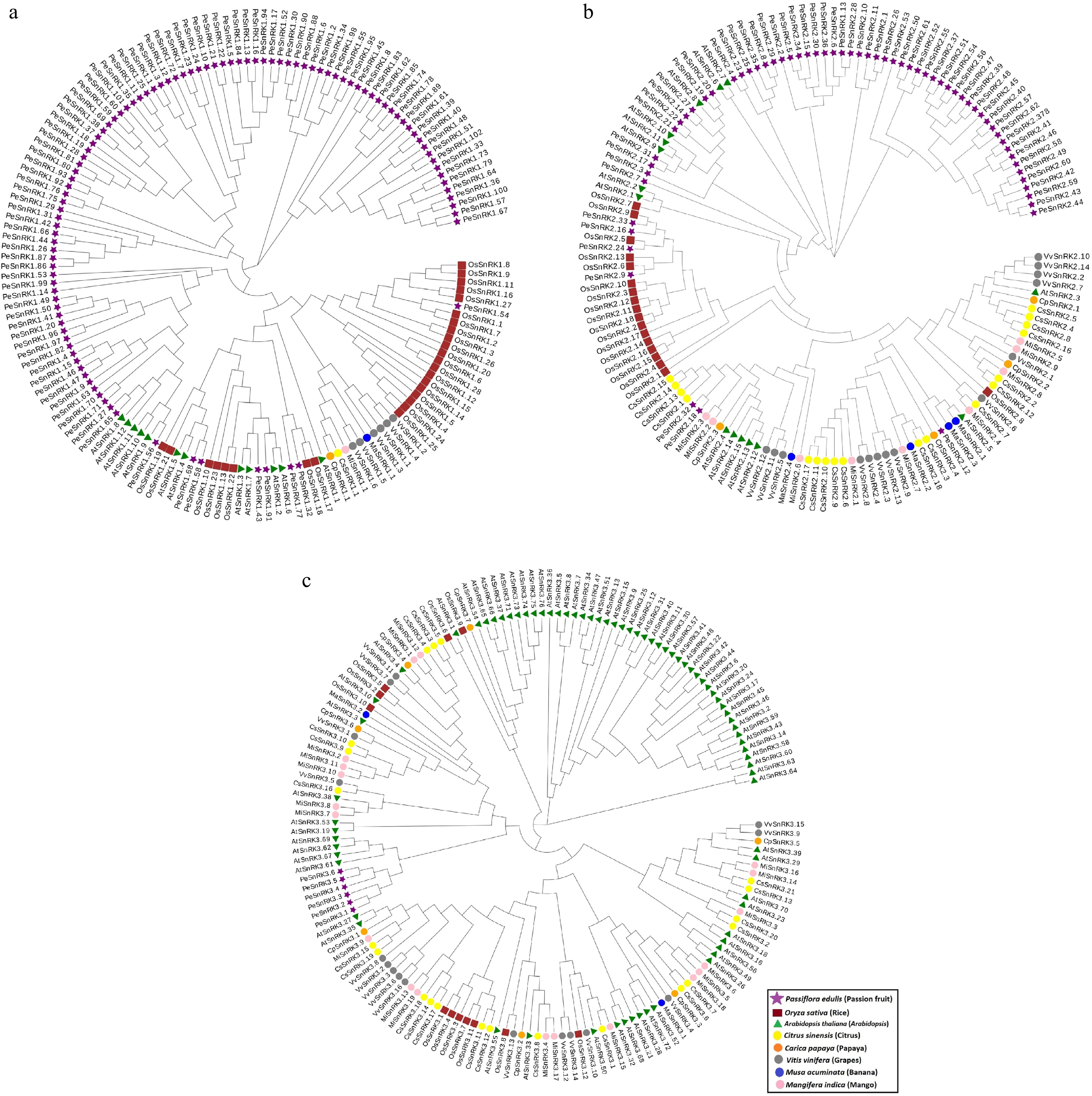
Figure 1.
SnRK proteins' phylogeny across plant lineages. Phylogenetic trees of SnRK proteins were constructed using the maximum likelihood method based on full-length amino acid sequences and visualized in a circular layout. The SnRK gene family is divided into three distinct subfamilies: (a) SnRK1 (SNF1-related kinases), (b) SnRK2 (stress-activated protein kinases, SAPKs), and (c) SnRK3 (CBL-interacting protein kinases, CIPKs). Each panel represents one subfamily: (a) SnRK1, (b) SnRK2, and (c) SnRK3. Distinct colors and symbols denote different plant species as follows: P. edulis (purple stars), O. sativa (red squares), A. thaliana (green triangles), C. sinensis (yellow circles), C. papaya (orange circles), V. vinifera (gray circles), M. acuminata (blue circles), and M. indica (pink circles). The clustering pattern reveals clear subfamily segregation and highlights both conserved evolutionary relationships and lineage-specific expansion of SnRK genes across monocot and dicot species.
Structural features
-
The members of all SnRKs contain a well-conserved N-terminal serine/threonine kinase domain, which possesses catalytic activity[34,46]. Nevertheless, their C-terminal domains display considerable variation among subfamilies, which exhibit specialized functions[47,48]. The domain structures with conservation and variation among SnRK subfamilies are graphically represented in Fig. 2, which specifies the specialized motifs underlying the distinct functions. The regulatory domains of SnRK1 play pivotal roles in complex formations and metabolic regulations. The SnRK2 kinase enzymes possess special motifs within their C-termini, which include the SnRK2 box and ABA box, which are vital for the activation and interactions of SnRK2 with regulatory phosphatases. SnRK3 or CIPKs are differentiated by the existence of a special Asparagine–alanine–phenylalanine/Phenylalanine–isoleucine–serine–leucine (NAF/FISL) motif within their C-terminal domain, which is responsible for interactions between calcineurin B-like calcium sensors and is instrumental in coupling calcium signaling with stress responses[21,39].
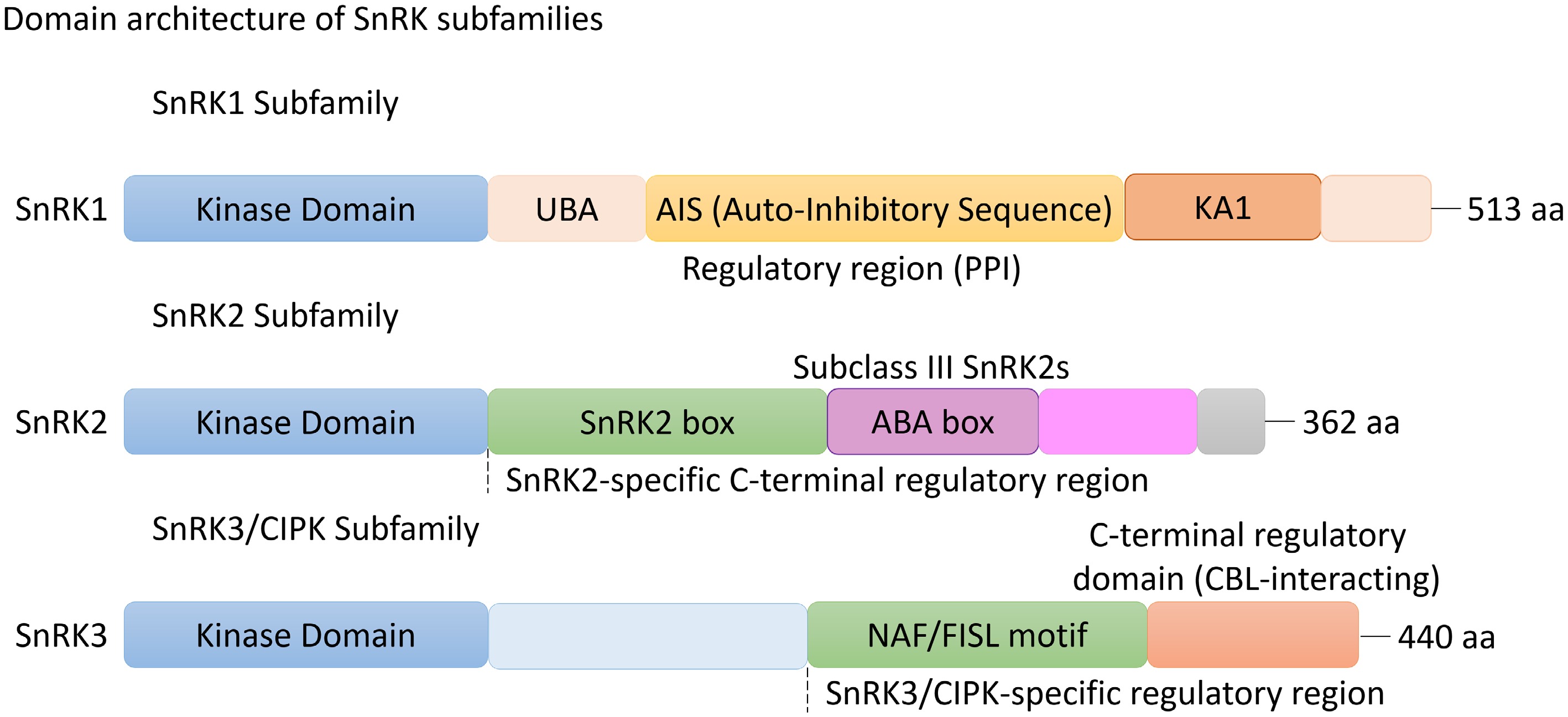
Figure 2.
Schematic representation of the conserved domain organization of plant Sucrose nonfermenting-1-related protein kinase (SnRK) family. All subfamilies share a conserved N-terminal serine/threonine kinase domain but differ markedly in their C-terminal regulatory regions. SnRK1 contains a ubiquitin-associated (UBA) domain, an autoinhibitory/ regulatory sequence (AIS), and a kinase-associated 1 (KA1) domain involved in protein–protein interactions and complex assembly. SnRK2 proteins possess a SnRK2-specific C-terminal regulatory region containing the SnRK2 box required for kinase activation and, in Subclass III SnRK2, an ABA box mediating the interaction with PP2C phosphatases during ABA signaling. SnRK3/CIPKs harbor a conserved NAF/FISL motif within a SnRK3/CIPK-specific regulatory region that facilitates interactions with calcineurin B-like (CBL) calcium sensors and regulates kinase activity. Approximate protein lengths are indicated for each subfamily.
-
SnRK1 is a key player in energy homeostasis; it regulates metabolic pathways under conditions of energy deficiency. On activation, SnRK1 suppresses anabolic processes while stimulating catabolic pathways to restore energy homeostasis under stress conditions. Though SnRK1 is not strictly a stress-specific protein, it indirectly aids tolerance to abiotic stresses by coordinating growth–stress trade-offs and interactions with hormone signaling networks[49].
SnRK3 (CIPKs): calcium-mediated stress signaling
-
SnRK3/CIPKs, along with their interacting CBL calcium sensors, decode stress-induced calcium signatures[20]. Upon stress, calcium influx causes the association of CBLs with CIPKs, which results in the recruitment of CIPKs to specific cellular membranes, where they modulate the activity of ion transporters and channels. Numerous recent studies have reported teh roles of CIPKs in salt tolerance, potassium homeostasis, and ionic balance[49,50]. Specific functional analyses, including transgenic studies, demonstrate that some CIPKs confer salinity tolerance by maintaining Na+/K+ homeostasis and modulating the activity of transporters[39].
SnRK2: central regulators of ABA and abiotic stress responses
-
Among the SnRK subfamilies, SnRK2 kinases are the most directly implicated in abiotic stress signaling. SnRK2s are classified into two groups, namely ABA-dependent (Subclasses II and III) and ABA-independent (Subclass I), on the basis of their activation profiles and structural features (e.g., the presence of the ABA box in Subclass III)[51]. ABA-responsive SnRK2s, particularly Subclass III SnRK2s, are positive regulators of ABA signaling and become rapidly activated under osmotic stress and drought conditions[31].
-
The ABA signaling pathway represents a central regulatory network through which plants perceive and respond to diverse abiotic stresses, including drought, salinity, cold, and osmotic stress (Fig. 3). Under nonstress conditions, intracellular ABA levels remain low, and Subclass III SnRK2s such as OST1/SnRK2.6 are maintained in an inactive state via direct interaction with Clade A protein phosphatase 2Cs (PP2Cs), including ABI1 and ABI2[52,53]. These PP2Cs effectively dephosphorylate the activation loop residues of SnRK2, thereby repressing the expression of ABA-responsive genes.
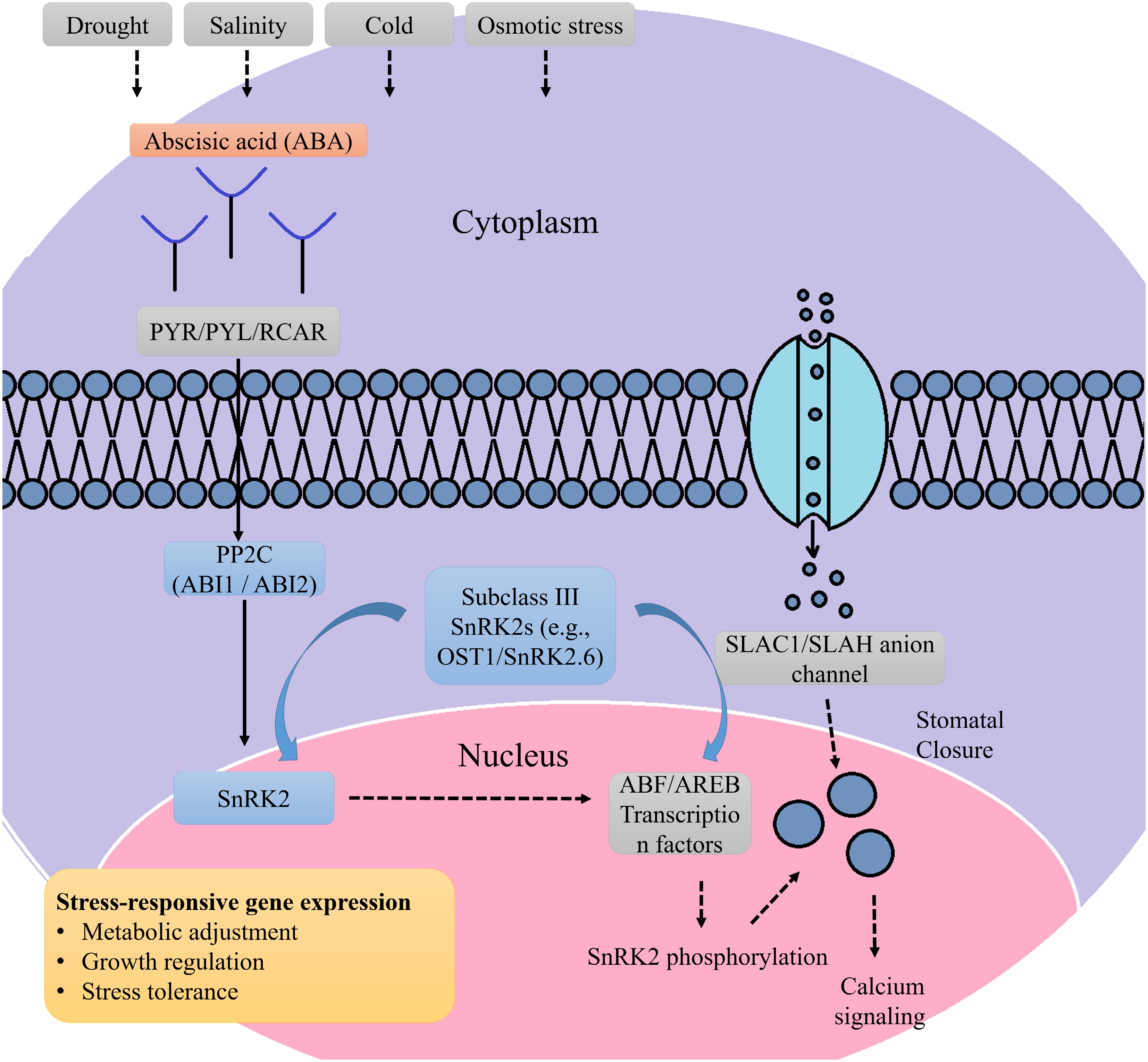
Figure 3.
Schematic overview of the ABA–PP2C–SnRK2 signaling cascade under abiotic stress conditions. Abiotic stresses, including salinity, cold, drought, and osmotic stress, promote the accumulation of ABA. ABA is perceived by PYR/PYL/RCAR receptor proteins, which subsequently inhibit Clade A protein phosphatases 2C (PP2Cs; ABI1/ABI2). Relief of PP2C-mediated repression enables the activation of Subclass III SnRK2 kinases (e.g., OST1/SnRK2.6). Activated SnRK2s phosphorylate plasma membrane anion channels, such as SLAC1/SLAH, leading to anion efflux and stomatal closure. In parallel, SnRK2 translocates to the nucleus, where they phosphorylate ABA-responsive bZIP TFs (ABF)/ABA-responsive element binding (AREB) transcription factors, inducing the expression of ABA-responsive genes involved in metabolic adjustment, growth regulation, and stress tolerance. Calcium signaling acts as an additional regulatory component, integrating with ABA–SnRK2 signaling to fine-tune downstream responses.
In response to these stresses, the accumulation of ABA is very swift and sensed by Pyrabactin Resistance/Pyrabactin Resistance 1-Like/Regulatory Component of ABA Receptor (PYR/PYL/RCAR) soluble receptors in the cytoplasm and nucleus. Binding of ABA triggers a conformational change in PYR/PYL receptors and allows them to establish stable ternary complexes with PP2Cs. This encounter results in a reduction in the activity of PP2C phosphatase through masking of their catalytic sites, causing derepression of SnRK2 proteins. Without dephosphorylation by PP2Cs, SnRK2 proteins undergo autophosphorylation or trans-phosphorylation and become fully activated[52,53].
Activated SnRK2 proteins function as central hub modules, which phosphorylate various downstream targets. In guard cells, SnRK2 proteins phosphorylate slow-anion channel proteins like Slow Anion Channel-Associated 1 (SLAC1) and SLAC1 Homologue (SLAH) proteins, leading to the efflux of anions, depolarization, secondary Ca2+ influx, and consequent stomatal closure, which is an important adaptive mechanism that prevents water loss in drought conditions[54]. Concurrently, SnRK2s modulate calcium signaling pathways, further amplifying ABA responses and integrating hormonal and ionic signals.
In the nucleus, activated SnRK2 phosphorylates ABA-responsive bZIP TFs (ABFs), which interact with the ABA-responsive elements (ABREs) in the promoter regions of the target gene, thereby triggering the transcriptional reprogramming[30]. The transcriptional response regulates a broad spectrum of stress adaptation functions such as the biosynthesis of osmoprotectins and antioxidants, growth regulation, and enhancement of stress tolerance. The PYR/PYL–PP2C–SnRK2 module forms a very conserved ABA-dependent pathway that allows plants to quickly transform environmental stresses into physiological or molecular responses[29].
SnRK-centered ABA signaling and transcriptional regulation under abiotic stress
-
To provide a conceptual synthesis of the molecular function of SnRK signaling pathways in abiotic stress response, we developed a conceptual regulatory map (Fig. 4). Abiotic stresses, drought, salt, cold, or osmotic stress trigger the production of ABA, which is sensed by the PYR/PYL/RCAR receptor complex, resulting in the inhibition of Clade A PP2Cs. Relieving the inhibition of PP2Cs relief leads to the activation of Subclass III SnRK2s[52]. Activated SnRK2 phosphorylates downstream targets, which include ion channel-regulating factors, as well as ABA-regulated TFs, such as ABF/ABA-responsive element binding (AREB), NAC, MYB, and basic helix–loop–helix (bHLH), which mediate large-scale transcriptomic changes[31]. Concurrent with these responses, Ca2+-mediated signaling pathways trigger the activation of the CBL–CIPK (SnRK3) complex, which regulates Na+/K+ transporters, among other ion transport mechanisms, in response to salinity. These signaling pathways provide upstream inputs to stress-responsive genes encoding osmoprotectants, reactive oxygen species detoxification enzymes, late embryogenesis abundant (LEA) proteins, and aquaporins, which ultimately culminate in increased stress tolerance in plants. The conceptual model helps to inform prioritization strategies related to candidate SnRKgenes, which may be used as targets in passion fruit[39,49].
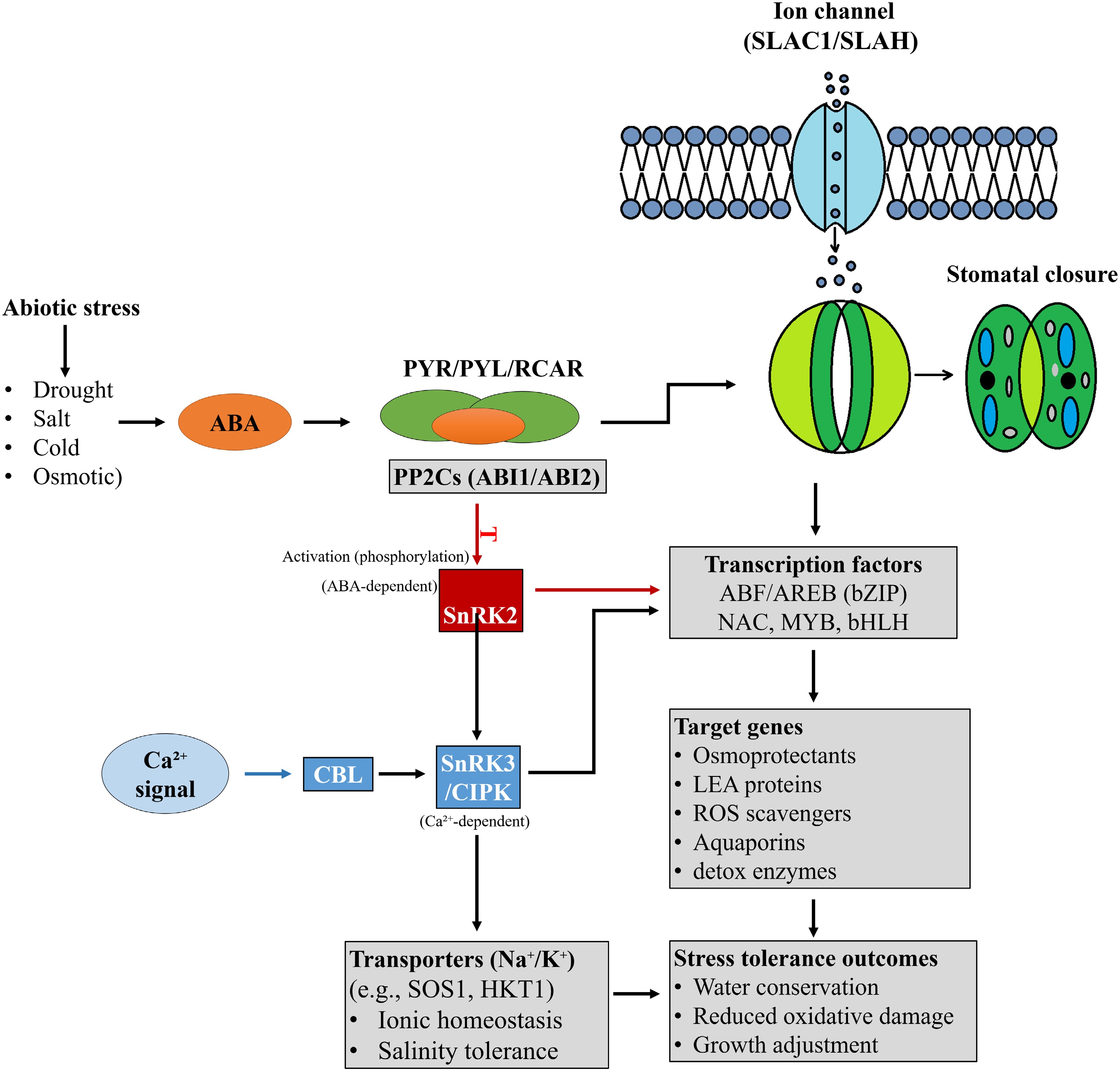
Figure 4.
SnRK2-mediated regulatory network integrating the ABA pathway with the regulation of abiotic stress responses at the transcriptional level. ABA accumulation is caused by abiotic stress, leading to the activation of SnRK2 protein kinases through the inhibitory effect of PYRs/PYLs on the activity of PP2Cs. SnRK2 act on ion channels and ABA-responsive TFs, whereas the Ca2+-regulated CBL-CIPK pathway is responsible for the regulation of ion homeostasis.
Downstream targets and physiological responses
-
Activated SnRK2 phosphorylates a wide array of downstream targets, including ABF/AREB TFs, thereby inducing the induction of stress-responsive genes[55]. In guard cells, SnRK2.6 directly phosphorylates the ion channels of SLAC1, thereby facilitating anion efflux and stomatal closure under drought stress. This constitutes a direct mechanistic link between the activation of SnRK2 and physiological adaptation to drought.
Beyond transcriptional regulation, SnRK2 take part in post-transcriptional and translational regulation. Recent studies have shown that SnRK2 regulates the decapping and stability of mRNA under salinity, displaying an ABA-independent function that widens the functional repertoire of SnRK2 kinases[31].
-
The SnRK gene family has been identified on a genome-wide scale in a number of plant species, exhibiting highly conserved structural features with species-specific expansions. Systematic characterization of SnRK gene numbers, their chromosomal distribution, gene duplication events, and expression in response to a series of abiotic stresses has been performed in bamboo[56], barley[20], tobacco (Nicotiana tabacum)[38,57], poplar, maize[58], and rice[13,21].
These studies consistently illustrate that SnRK2 genes are strongly induced by drought, salinity, and ABA treatments, whereas SnRK3 genes respond predominantly to ionic and calcium-related stresses. Such comparative analyses thus provide valuable frameworks for predicting SnRK genes' functions in passion fruit, where direct functional studies remain limited. Comparative genome-wide analyses of SnRK gene families in diverse crops such as barley, bamboo, and tobacco have established conserved structural features and stress-induced expression patterns that provide a useful framework for investigating SnRK genes in passion fruit[20,24].
-
The availability of the chromosome-scale reference genome of P. edulis has enabled systematic investigation of the gene families involved in abiotic stress responses[59,60]. Recent genome-wide studies in passion fruit have characterized multiple TF families in stress adaptation, which include the MYB, bHLH, NAC, and basic leucine zipper (bZIP) proteins[61−63]. Zhang et al. identified stress-responsive MYB transcription factors associated with drought and temperature stresses[59]. Xu et al. demonstrated that bHLH TFs are involved in regulating cold and osmotic stress responses[62]. Similarly, NAC TFs in passion fruit were found to participate in cold stress tolerance through transcriptional regulation of downstream genes that are responsive to cold stress. Ma et al. provided integrative evidence at the transcriptomic and metabolomic levels that bZIP TFs play critical roles in the coordination of hormone signals and metabolic adjustment under abiotic stresses[64]. In other plant systems, SnRK2 kinases directly phosphorylate ABA-responsive bZIP TFs (ABF/AREB), while also indirectly modulating MYB, NAC, and bHLH TFs' activity through transcriptional reprogramming and stress-responsive signaling cascades, a regulatory mechanism that is likely conserved in passion fruit. Considering the well-documented role of SnRK kinases in modulating TF activities in other plant species, these findings strongly point toward the involvement of SnRK-mediated signaling networks in the abiotic stress adaptation of passion fruit. A summary of SnRK-centered regulatory networks and the associated genes involved in abiotic stress responses across diverse plant species, including downstream TFs and signaling components, is provided in Table 2.
Table 2. SnRK-centered regulatory networks and associated genes involved in abiotic stress responses across plant species.
Species SnRK gene/subfamily Abiotic stress Experimental evidence Key findings A. thaliana[65] SnRK2.6 (OST1) Drought Mutant + kinase assays Phosphorylates SLAC1; induces stomatal closure A. thaliana[35] SnRK2 ABA/osmotic stress Biochemical reconstitution Core PYR/PYL–PP2C–SnRK2 signaling module A. thaliana[66] SnRK2 ABA signaling Genetic + molecular studies PP2Cs act as gatekeepers of SnRK2 activity A. thaliana[37] SnRK2 kinases Stress signaling Structural biology SnRK2 box and ABA box regulate autoactivation A. thaliana[33] SnRK2 Salinity Genetic + transcriptomic Regulate mRNA decapping and stress adaptation Rice[67] SAPK family (SnRK2) Salinity, drought Expression profiling Enhanced stress tolerance and ABA response Populus spp.[68] CIPKs (SnRK3) Salinity Genome-wide + expression Ion homeostasis and stress adaptation Wheat[69] CIPK16 Salinity Transgenic validation Improves Na+/K+ balance and salt tolerance Bamboo[56] SnRK Abiotic stress Genome-wide + functional analysis Stress-induced SnRK expression Tobacco[38] SnRK2 family Salinity Comparative genomics Conserved SnRK2 expansion patterns passion fruit[59] Stress-responsive TFs (MYB). No PeSnRK genes characterized to date Drought, temperature RNA-seq TF networks associated with stress passion fruit[62] bHLH TFs (no PeSnRK genes characterized to date) Cold, osmotic stress Genome-wide + expression TF-mediated stress regulation passion fruit[63] NAC TFs (no PeSnRK genes characterized to date) Cold stress Transcriptomics Stress-responsive NAC regulation passion fruit[64] bZIP TFs (no PeSnRK genes characterized to date) Multiple stresses Transcriptomics + metabolomics Hormone and metabolic coordination This table summarizes both SnRK kinases and functionally associated downstream regulatory genes, including TFs and signaling components, which participate in abiotic stress responses. -
Despite the extensive progress made in other plant species, several gaps still remain regarding SnRKs' function in passion fruit. Direct genome-wide identification and functional validation of the SnRK genes have not yet been reported in passion fruit. Therefore, a combination of transcriptomics, proteomics, and functional genomics (e.g., quantitative real-time polymerase chain reaction, yeast two-hybrid assays, clustered regularly interspaceds hort palindromic repeats [CRISPR]/CRISPR-associated protein 9) will be required to unravel SnRK-centered regulatory networks. Given the central role of SnRK2 in ABA signaling, the targeted manipulation of SnRK pathways may offer promising strategies for the improvement of drought and salinity tolerance in passion fruit[31]. In the future, functional investigations of passion fruit should focus on integrating the identification of SnRK genes with TF-associated regulatory networks previously characterized in the same species, such as the MYB, bHLH, NAC, and bZIP families, to further illustrate SnRK-centered modules of stress signaling[59,64].
SnRK gene applications in crop improvement (transgenic and gene-edited approaches)
-
Transgenic and gene-editing studies in model plants and crops provide practical evidence that SnRK-centered pathways can be leveraged to improve abiotic stress resilience[70]. In multiple species, manipulation of SnRK2 Subclass III kinases (regulators of the central ABA pathway) has been associated with enhanced drought or osmotic stress tolerance through improved stomatal control, ABA-responsive transcriptional activation (e.g., ABF/AREB modules), and stress-responsive gene expression[31,65]. Similarly, engineering components of the CBL–CIPK (SnRK3) network has been used to modulate ionic homeostasis (Na+/K+ balance) and salt tolerance, consistent with the established roles of CIPKs as calcium-decoding kinases that regulate transporters and channels[39,49]. These examples provide a translational rationale for passion fruit: Once PeSnRK candidates are prioritized by stress-inducible expression and phylogenetic placement, functional testing via overexpression or CRISPR-based modulation can be used to validate different drought/salinity phenotypes and downstream transcriptional effects.
For P. edulis, a feasible pipeline is to (i) identify PeSnRK2/PeCIPK candidates with strong induction under drought/salinity/ABA stress, (ii) confirm their subcellular localization and protein–protein interactions (PP2C–SnRK2; CBL–CIPK), and (iii) evaluate edited/overexpression lines using standardized physiological endpoints (stomatal conductance, leaf water potential, electrolyte leakage) alongside transcript markers (ABF/AREB targets, osmoprotectant and reactive oxygen species-detox genes). Collectively, cross-species application evidence strengthens the argument that SnRK engineering is a realistic strategy for developing stress-resilient passion fruit cultivars.
-
SnRK genes encode a family that has emerged as an important integrative module connecting the plant metabolism, hormones, and abiotic stress adaptations. Recent advances in model and crop plants have confirmed the functional diversification of SnRK gene subfamilies: SnRK1 acts as a core energy sensor, SnRK3/CIPKs mediate Ca2+-dependent stress signaling, and Subclass III SnRK2 kinases function as central hubs in abiotic stress signaling, integrating ABA perception with transcriptional reprogramming and physiological adaptations such as stomatal closure.
Despite these achievements, the bulk of what has been inferred about SnRK signaling in passion fruit (P. edulis) has come from observations in other plants. The present availability of a reference chromosome-scale genome, as well as growing transcriptomic data, presents an opportune moment in which to help close the gap. Genome-wide gene identification, expression profiling, protein interaction analyses, and functional validation will be critical for uncovering SnRK-related regulatory modules in passion fruit.
As the rising susceptibility of tropical and subtropical fruit crops like passion fruit to stresses triggered by climate change, elucidating the roles of SnRK-mediated stress signaling has immense potential and implications for crop improvement programs. The manipulation of stress signaling via the SnRK2-mediated ABA signaling pathway and the SnRK3/CIPK-mediated ion homeostasis pathway may provide immense potential for the development of passion fruit with high resistance to drought, salt, and osmotic stress. Future research work, therefore, that integrates the fields of genomic research, biotechnology, and passion fruit may provide immense contributions not only towards understanding stress signaling, but also towards the development of stress-tolerant passion fruit varieties.
-
The authors confirm their contributions to this study as follows: Xu Y and Song S jointly conceived and supervised this study and revised the manuscript. Hussain M was responsible for experimental operations and drafted the manuscript. Ma F and Huang D were responsible for revising the manuscript. Xing W and Wu B were responsible for data verification. All authors reviewed and approved the final manuscript for publication.
-
Data sharing is not applicable to this article as no datasets were generated or analyzed during the current study.
-
This work was supported by Sanya Yazhou Bay Science and Technology City (Grant Nos. SKJC-JYRC-2025-66 and SKJC-JYRC-2024-82), Hainan Province Science and Technology Special Fund (ZDYF2025XDNY107, ZDYF2024XDNY154, ZDYF2025XDNY109, ZDYF2024XDNY281), the State Key Laboratory of Tropical Crop Breeding (NKLTCBCXTD34), and The Sanya Science and Technology Innovation Special Project (2022KJCX81).
-
The authors declare that they have no competing interests. The authors declare that the research was conducted in the absence of any commercial or financial relationships that could be construed as a potential conflict of interest.
-
Received 9 February 2026; Accepted 3 June 2026; Published online 31 July 2026
- Copyright: © 2026 by the author(s). Published by Maximum Academic Press on behalf of Hainan University. This article is an open access article distributed under Creative Commons Attribution License (CC BY 4.0), visit https://creativecommons.org/licenses/by/4.0/.
-
About this article
Cite this article
Hussain M, Ma F, Huang D, Xing W, Wu B, et al. 2026. The SnRK gene family in passion fruit: evolution, abscisic acid signaling, and roles in abiotic stress responses. Tropical Plants 5: e028 doi: 10.48130/tp-0026-0027 

The SnRK gene family in passion fruit: evolution, abscisic acid signaling, and roles in abiotic stress responses
- Received: 09 February 2026
- Revised: 28 April 2026
- Accepted: 03 June 2026
- Published online: 31 July 2026
Abstract: Drought, salinity, high temperatures, and cold are major constraints to crops' productivity worldwide. In tropical and subtropical fruit crops like passion fruit (Passiflora edulis), the increasing climate variability exacerbates the yield's instability and threatens sustainable production. Plants have evolved complex signaling networks to perceive environmental cues and activate adaptive responses. Among these, protein kinases are central regulators. One of the conserved gene families of serine/threonine kinases is the Sucrose nonfermenting-1-related protein kinase (SnRK) family that integrates energy status, hormonal signaling, and stress responses. The SnRK family is divided into three subfamilies: SnRK1, SnRK2, and SnRK3 (also known as calcineurin B-like [CBL]-interacting protein kinase genes [CIPKs]). Each of these subfamilies has distinct but interconnected biological functions. Among the three subfamilies, SnRK2 kinases are core components of the abscisic acid (ABA) signaling pathway and play pivotal roles in the regulation of stomatal movement, transcriptional reprogramming, and physiological adaptation in response to abiotic stress. Though extensive functional and genome-wide studies of SnRK genes have been carried out in model plants and major crops, integrated syntheses regarding this aspect in passion fruit are presently sparse. This review aims to summarize the current knowledge and gaps on the classification, evolution, structural features, and molecular functions of the SnRK gene family, with a particular emphasis on SnRK2-mediated ABA signaling and abiotic stress responses. We integrate evidence from mechanistic studies, genome-wide analyses, and comparative research across plant species for relevance in passion fruit biology.