










-
Cowpea is a drought-tolerant legume staple crop. It provides abundant dietary protein, animal feed, and economic income for tropical and subtropical regions[1]. Beyond its significant agronomic value, cowpea exhibits efficient rhizobial nitrogen fixation capacity[2]. The release of a high-quality cowpea reference genome has unlocked abundant genetic resources. Research focus has accordingly shifted to cowpea functional genomics. Its core aim is to identify and characterize key genes regulating agronomic traits and stress tolerance[3].
Previous studies have successfully achieved gene overexpression in cowpea. For instance, overexpression of NAC1/NAC2 transcription factors significantly enhanced drought and heat tolerance in transgenic cowpea lines[4]. In addition, researchers have developed an efficient genetic transformation system based on cowpea hypocotyl explants. This platform provides a robust technical basis for stable genetic modification of cowpea[5]. Nevertheless, stable transformation carries notable drawbacks. It demands elaborate explant preparation, involves lengthy screening periods, and exhibits strong genotype dependency. Such constraints render the approach incompatible with high-throughput, rapid gene functional characterization. Therefore, a convenient transient gene research tool is urgently needed for cowpea genetic studies.
Virus-induced gene silencing (VIGS) is a classic reverse genetics research tool. It inserts target gene fragments into viral vectors to trigger post-transcriptional gene silencing (PTGS), thereby downregulating endogenous target gene expression[6]. VIGS overcomes the cumbersome and time-consuming drawbacks of stable genetic transformation. At present, multiple VIGS vector systems have been developed for legume crops. Yet their silencing efficiency differs drastically across legume species. For example, the bean pod mottle virus (BPMV)-based VIGS system reaches a silencing efficiency of 90% in soybean[7]. In contrast, silencing efficiency only ranges from 40% to 60% in common bean[8]. Currently, no mature and stable VIGS protocol has been reported for cowpea. Tobacco rattle virus (TRV) represents the most extensively used universal VIGS vector. Early efforts sought to adapt TRV for gene silencing in cowpea[9]. Subsequent studies, however, have demonstrated that TRV performs poorly in cowpea and several other legume species. Its main drawbacks include weak systemic spread and strong host genotype dependency[10]. Other VIGS vectors for legumes, such as BPMV for soybean (Glycine max), pea (Pisum sativum), and common bean (Phaseolus vulgaris)[11,12], pea early browning virus (PEBV) for pea[13], and apple latent spherical virus (ALSV) for soybean[14], have not been tested in cowpea.
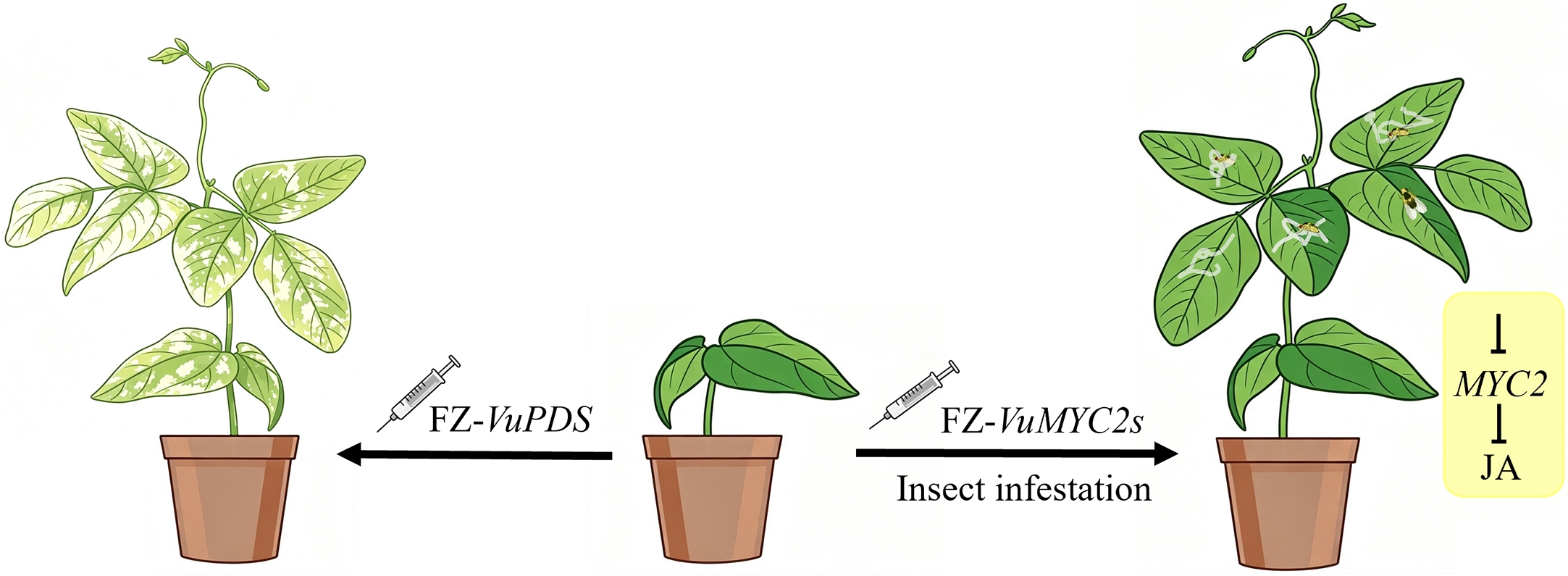
A recently developed VIGS vector based on cowpea severe mosaic virus (CPSMV) has been developed for soybean. This vector effectively silences the PDS (phytoene desaturase) gene in diverse soybean varieties[15]. In this study, we constructed a cowpea VIGS system using the CPSMV vector and optimized the Agrobacterium infiltration method. Silencing assays across multiple cowpea varieties demonstrated that our method enables efficient, reproducible, and robust systemic gene silencing in cowpea seedlings. By silencing VuMYC2, a core transcription factor in the jasmonic acid (JA) signaling pathway, we observed a significant reduction in JA levels in cowpea, confirming that the VIGS system can be used for functional validation of cowpea genes. This newly established cowpea VIGS system is simple to operate. It provides a rapid and reliable approach for cowpea gene function analysis, which will facilitate the identification of trait-related key genes and accelerate cowpea molecular breeding.
-
Seven cowpea varieties were used: 'Haiyate' (Jiangxi Huanong Seed Co., Ltd), 'Fengjiangqingyou' (Tianjin Kerun Agricultural Technology Co., Ltd), 'Huashouchangdibai' (Shandong Shouguang Xinxinran Horticulture Co., Ltd), 'Huajiangjun' (Sichuan Guanghan Longsheng Seed Co., Ltd), 'Lvruyi' (Shandong Shouguang Lvzhou Seed Co., Ltd), 'Hongmanyuan' (Hebei Nanjixing Seed Co., Ltd), and 'Fei5' (provided by National Mid-term Genebank for Vegetables). Seeds were sown in pots containing substrate and grown in a growth chamber under the following conditions: 16-h light/8-h dark photoperiod; 25 °C daytime temperature; 24 °C nighttime temperature; and 65% relative humidity. The agronomic traits of the cowpea varieties are listed in Table 1.
Table 1. Agronomic traits of cowpea.
Variety Seed coat color Pod types Pod color Growth habit Haiyate Brown Long Green Vining Fengjiangqingyou Brown Long Dark green Vining Huashouchangdibai Brown Long White Vining Huajiangjun Brown Long Bicolor Vining Lvruyi White Long Dark green Vining Hongmanyuan Brown Long Red Vining Fei5 Brown Short Green Erect Plasmid construction
-
The CPSMV-based FZ vector was obtained from Addgene (Addgene #184268). To construct the recombinant FZ vector for VIGS analysis, 300 bp target regions of VuPDS (LOC114194529), VuMYC2-1 (LOC114178057), VuMYC2-2 (LOC114169516), VuMYC2-3 (LOC114195218), and VuMYC2-4 (LOC114187497) were selected using the SGN-VIGS tool (
https://vigs.solgenomics.net ). The target fragments were inserted into the Eco72I sites to replace the original NbPDS fragment in the FZ vector. All primer sequences are listed in Table 2.Table 2. Sequences of primers.
Primer name Primer sequence PDS-F TCAGATACGATGCACATGGCTGCTTCTGGATATATATCTG PDS-R GGTATCGAACGTCACCGGTTGTAGTGGACGCGG GFP-F TCAGATACGATGCACAAGTTCAGCGTGTCCGGC GFP-R GGTATCGAACGTCACCACCTTGATGCCGTTCTTCTGC MYC2-1-F TCAGATACGATGCACATGACAGAGTACCGCTCGC MYC2-1-R GGTATCGAACGTCACGGAGTAGTCATAAGAAGATTGCC MYC2-2-F TCAGATACGATGCACAGCTAAAGCCACCTCCGCC MYC2-2-R GGTATCGAACGTCACATGCAGACTAGGGTTTGGAGGC MYC2-3-F TCAGATACGATGCACATGGAGGCCTCTGGTCCG MYC2-3-R GGTATCGAACGTCACAACTAATAAATTGAGTAACCG MYC2-4-F TCAGATACGATGCACAAGCCACCAAAGACAGCG MYC2-4-R GGTATCGAACGTCACATGTCTGGATCCCATGCCTCC PDS-qF GATGAGGATGGAGACTGGTATGA PDS-qR ACGGGGATGGAAGGATTT MYC2-1-qF GGCGATGCCATATCCTACAT MYC2-1-qR TTCTTATCATAGCGTCCCACC MYC2-2-qF TGATGAACAAGGTCAAGGTGC MYC2-2-qR GGGGAACAGAAACGGATACAG MYC2-3-qF TTGCGGGAGTTTGGGCTT MYC2-3-qR TGGTATGATTTGGTGAGAGGTTAGG MYC2-4-qF TTATAGATTCGGCATCCTCATCG MYC2-4-qR GCATACACCCACCATTCCTGAC Agrobacterium infiltration
-
Recombinant plasmids (FZ-VuPDS/FZ-GFP/FZ-VuMYC2s) and the Quin plasmid (Addgene #184267) were transformed into competent Agrobacterium tumefaciens GV3101 cells via heat shock. Single colonies were inoculated into 10 mL liquid LB medium with the same antibiotics and incubated overnight. The cultures were centrifuged at 4,000 × g for 20 min, and the pellets were resuspended in infiltration buffer (10 mmol/L MgCl2, 10 mmol/L MES-K (pH 5.6 adjusted with KOH), and 100 μmol/L acetosyringone). The resuspended cultures were diluted to OD600 = 1.0 and incubated in the dark for 2–3 h. Agrobacterium cultures containing recombinant FZ plasmids and the Quin plasmid were mixed in equal volumes before use.
Vacuum infiltration: Cowpea seedlings with fully expanded cotyledons and unemerged true leaves (5–7 d after sowing) were selected. Parallel wounds were made on the abaxial leaf surface with a surgical blade. Treated seedlings were inverted and submerged in the mixed Agrobacterium suspension and held under 0.7 MPa pressure for 5–10 min until the abaxial leaf surface was fully infiltrated.
Needleless injection: Seedlings at the same stage as above were used. The mixed Agrobacterium suspension was injected into the abaxial side of cowpea cotyledons using a needleless syringe until full infiltration.
Infiltrated seedlings were incubated in darkness for 1 d, then transferred to a growth chamber under a 16-h light/8-h dark photoperiod; 25 °C daytime temperature; 24 °C nighttime temperature; and 65% relative humidity.
Liriomyza sativae infestation
-
Twenty adult Liriomyza sativae (female : male = 1:1) were starved for 8 h, then introduced into insect cages (50 × 50 × 50 cm) containing cowpea plants at 4 weeks post-VIGS infiltration. Plants were exposed to L. sativae infestation for 7 d as the herbivory treatment. Each treatment included three biological replicates with one plant per replicate.
Gene expression analysis
-
Total RNA was extracted from cowpea leaves using the FastPure® Universal Plant Total RNA Isolation Kit (Vazyme) following the manufacturer's instructions. One microgram of RNA was used for reverse transcription with the PrimeScript™ RT Reagent Kit with gDNA Eraser (Takara) according to the manufacturer's protocol.
The expression levels of VuPDS and four VuMYC2 genes were analyzed by real-time quantitative PCR (RT-qPCR). The 10 μL reaction mixture contained 5 μL TB Green® Premix Ex Taq™ (Tli RNaseH Plus, 2×), 1 μL three-fold diluted cDNA, and 0.4 μL of 10 μmol/L gene-specific primers. PCR was performed on a Roche LightCycler 480 instrument with the following program: 30 s pre-denaturation at 95 °C, followed by 40 cycles of 5 s denaturation at 95 °C and 20 s annealing/extension at 60 °C. Gene expression was normalized to the internal reference gene VuCYP2 using the 2−ΔΔCᴛ method. All experiments were performed with three biological replicates. Primer sequences are listed in Table 2.
Plant hormone extraction and analysis
-
Frozen plant samples were ground in liquid nitrogen, and 300 mg of powder was transferred to a 15 mL centrifuge tube. Three millilitres of ethyl acetate containing 20 ng of each internal standard (D5-JA) were added. The mixture was vortexed for 30 s, sonicated in an ice-water bath for 20 min, and centrifuged at 12,000 × g for 5 min. A 2.5 mL sample of the supernatant was collected and evaporated to dryness under nitrogen gas. The residue was resuspended in 200 μL methanol, filtered through a 0.22 μm membrane, and analyzed by UPLC-MS/MS (X500R, SCIEX). Mobile phase A was water with 0.025% (v/v) formic acid, and mobile phase B was methanol with 0.025% (v/v) formic acid. The injection volume was 2 μL, using an ACQUITY UPLC® CSHTM C18 column (1.7 μm, 2.1 × 100 mm; Waters) maintained at 50 °C with a flow rate of 0.25 mL/min. The gradient program was: 0–16 min, 30%–80% B; 16–17 min, 80%–30% B; 17–20 min, 30% B. Source parameters: temperature 500 °C, ion source gases 1 and 2 both 55, curtain gas 35, ion spray voltage 4,500 V.
Phylogenetic analysis of cowpea MYC2 genes
-
Four candidate MYC2 genes were identified from the cowpea transcriptome by BLAST using the Arabidopsis MYC2 sequence. A phylogenetic tree was constructed using the maximum-likelihood method in MEGA11 with default parameters and visualized on the iTOL website (
https://itol.embl.de ). Protein sequences used for tree construction: VuMYC2-1 (XP_027919540.1), VuMYC2-2 (XP_027910504.1), VuMYC2-3 (XP_027941413.1), VuMYC2-4 (XP_027931558.1), AtMYC2 (NP_174541.1)[16], BnMYC2 (QCH03329.1)[17], GhMYC2 (XP_016721309.2)[18], GmMYC2 (XP_003531962.1)[19], IbMYC2 (QCA42656.1)[20], LjMYC2 (AIQ80964.1)[21], MtMYC2 (XP_003628791.2)[22], NaMYC2 (AGL98101.1)[23], NtMYC2 (GQ859161.1)[24], PvMYC2 (AAB00686.1)[19], SlMYC2 (AGZ94789.1)[25], StMYC2 (CAF74714.1)[26], and VvMYC2 (NP_001267974.2)[27].Statistical analysis
-
All experiments were performed with three biological replicates, and data are presented as mean + standard error of the mean (SEM). Statistical analyses were conducted using GraphPad Prism 8. Comparisons between two groups were performed using a two-tailed Student's t-test. Significance levels were set as follows: * p < 0.05, ** p < 0.01, *** p < 0.001.
-
A suitable infiltration method ensures Agrobacterium entry into plant tissues. Common methods include vacuum infiltration after wounding the abaxial leaf surface and needleless syringe injection. We first compared the two methods in cowpea variety 'Haiyate' (Fig. 1a). Due to the thinness of cowpea leaves, wounding followed by vacuum infiltration caused severe tissue damage and incomplete infiltration (Fig. 1b). Needleless injection delivered more bacterial solution into leaf tissues with less damage (Fig. 1b). In terms of operation time, vacuum infiltration took 10–15 min per seedling, whereas needleless injection took only 3–5 min. Thus, needleless injection was superior to vacuum infiltration for cowpea VIGS.
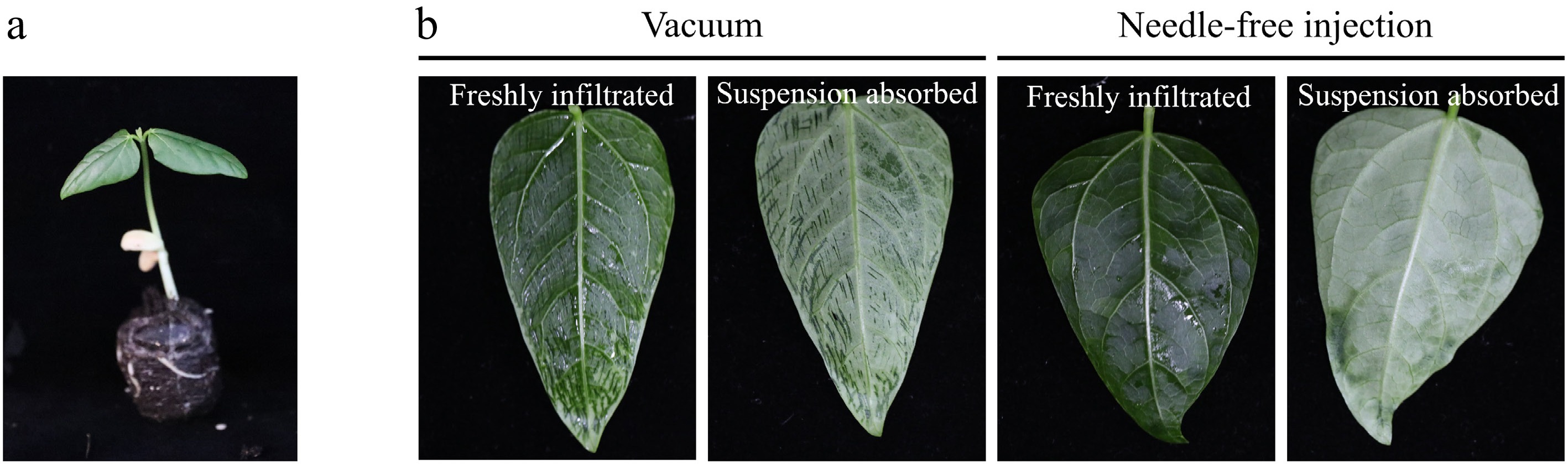
Figure 1.
Agrobacterium infiltration of cowpea seedlings. (a) Cowpea seedlings suitable for infiltration. (b) Leaves after infiltration using two methods.
CPSMV-mediated VuPDS silencing in cowpea leaves
-
To evaluate the VIGS efficiency of the FZ vector in diverse cowpea varieties (varying in seed coat color, pod type, pod color, and growth habit), we silenced the VuPDS gene using FZ-VuPDS in seven varieties with contrasting agronomic traits (Table 1). FZ-GFP was used as a control. Plants inoculated with FZ-GFP or FZ-VuPDS developed systemic CPSMV symptoms (curling, mottling) at 10–14 d post-inoculation. Photobleaching emerged in new leaves at 2–3 weeks post-inoculation. The extent of photobleaching varied among varieties: 'Haiyate' and 'Fei5' showed the strongest photobleaching; 'Hongmanyuan', 'Lvruyi', 'Huashouchangdibai', and 'Fengjiangqingyou' showed moderate photobleaching; and 'Huajiangjun' showed the weakest, limited to partial leaf areas (Fig. 2a). Photobleaching persisted for at least 8 weeks post-inoculation. Further RT-qPCR confirmed downregulation of VuPDS in these leaves (Fig. 2b). Therefore, the CPSMV-based vector enables efficient and long-lasting VIGS across diverse cowpea varieties.
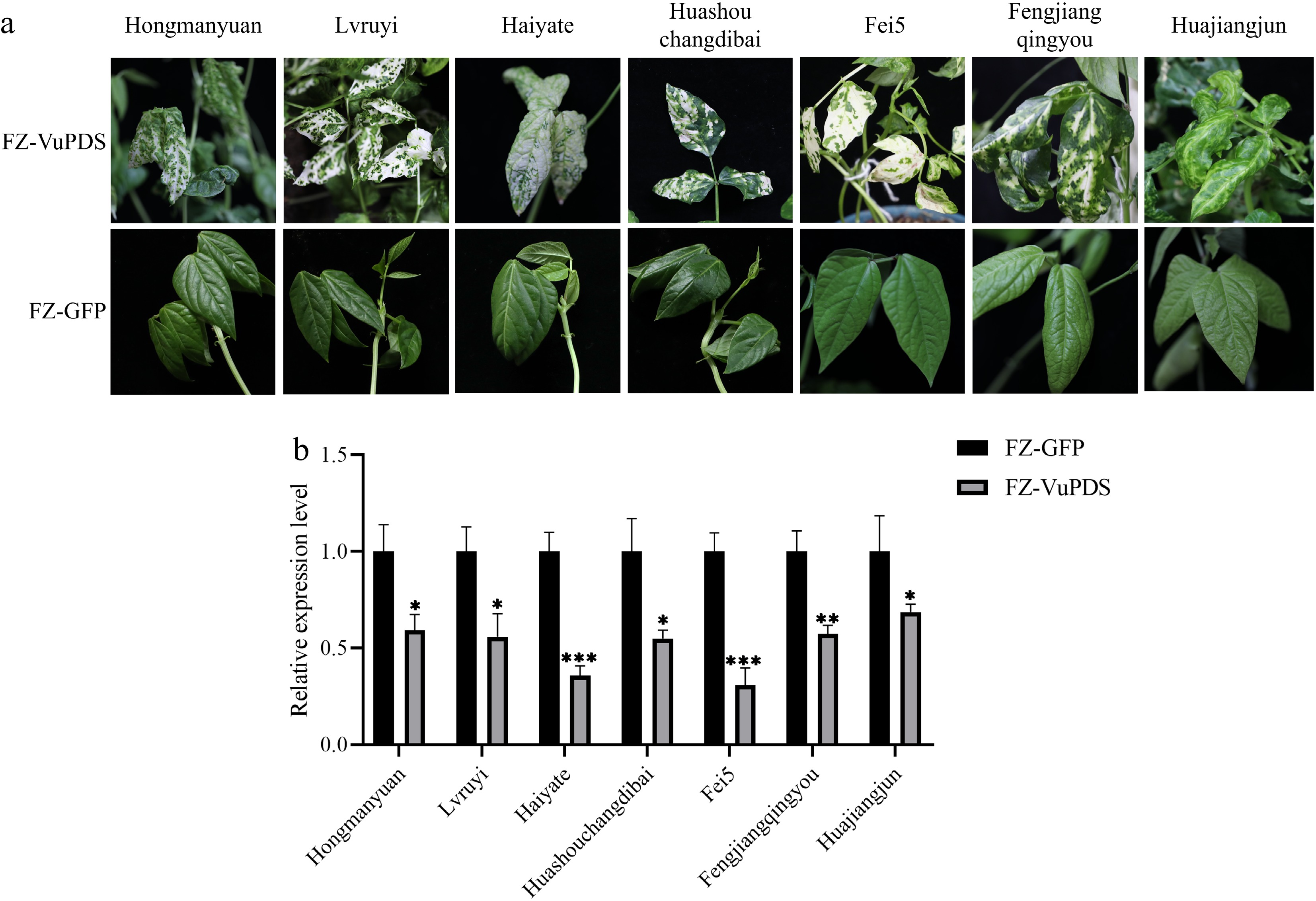
Figure 2.
Silencing of the VuPDS gene in cowpea. (a) Silencing phenotypes of the VuPDS gene in different cowpea varieties. (b) Analysis of VuPDS silencing efficiency in different cowpea varieties. Data are presented as mean + standard deviation of three biological replicates. Asterisks indicate significant differences between silenced lines and control plants determined by Student's t-test (* p < 0.05, ** p < 0.01, *** p < 0.001).
CPSMV-mediated VuMYC2 silencing in cowpea leaves
-
To validate the utility of the FZ-mediated VIGS system for cowpea gene function analysis, we silenced cowpea MYC2 to characterize its role in JA regulation using the variety 'Haiyate'. MYC2 is a well-documented core transcription factor in JA signaling[28−30]. Four VuMYC2 homologs in cowpea were identified using characterized MYC2 sequences from other plant species (Fig. 3a). Subsequently, we individually silenced each of these four MYC2 homologs using FZ-based VIGS technology. At 4 weeks post-VIGS, plants were infested with 10 pairs of L. sativae. After 7 d, compared with plants inoculated with FZ-GFP control, VuMYC2-1 expression was reduced by ~77.7% in plants inoculated with FZ-VuMYC2-1, VuMYC2-2 by ~77.4% in plants inoculated with FZ-VuMYC2-2, VuMYC2-3 by ~51.0% in plants inoculated with FZ-VuMYC2-3, and VuMYC2-4 by ~65.5% in plants inoculated with FZ-VuMYC2-4 (Fig. 3b–e). Hormone measurements revealed that silencing each of the four VuMYC2 genes significantly reduced JA levels in insect-infested cowpea leaves (Fig. 3f). Notably, plants inoculated with FZ-VuMYC2-4 also exhibited reduced levels of the upstream precursor 12-oxophytodienoic acid (OPDA) and the downstream conjugate JA-Ile (Fig. 3g, h). We conclude that silencing of VuMYC2s markedly disrupts jasmonic acid biosynthesis in cowpea.
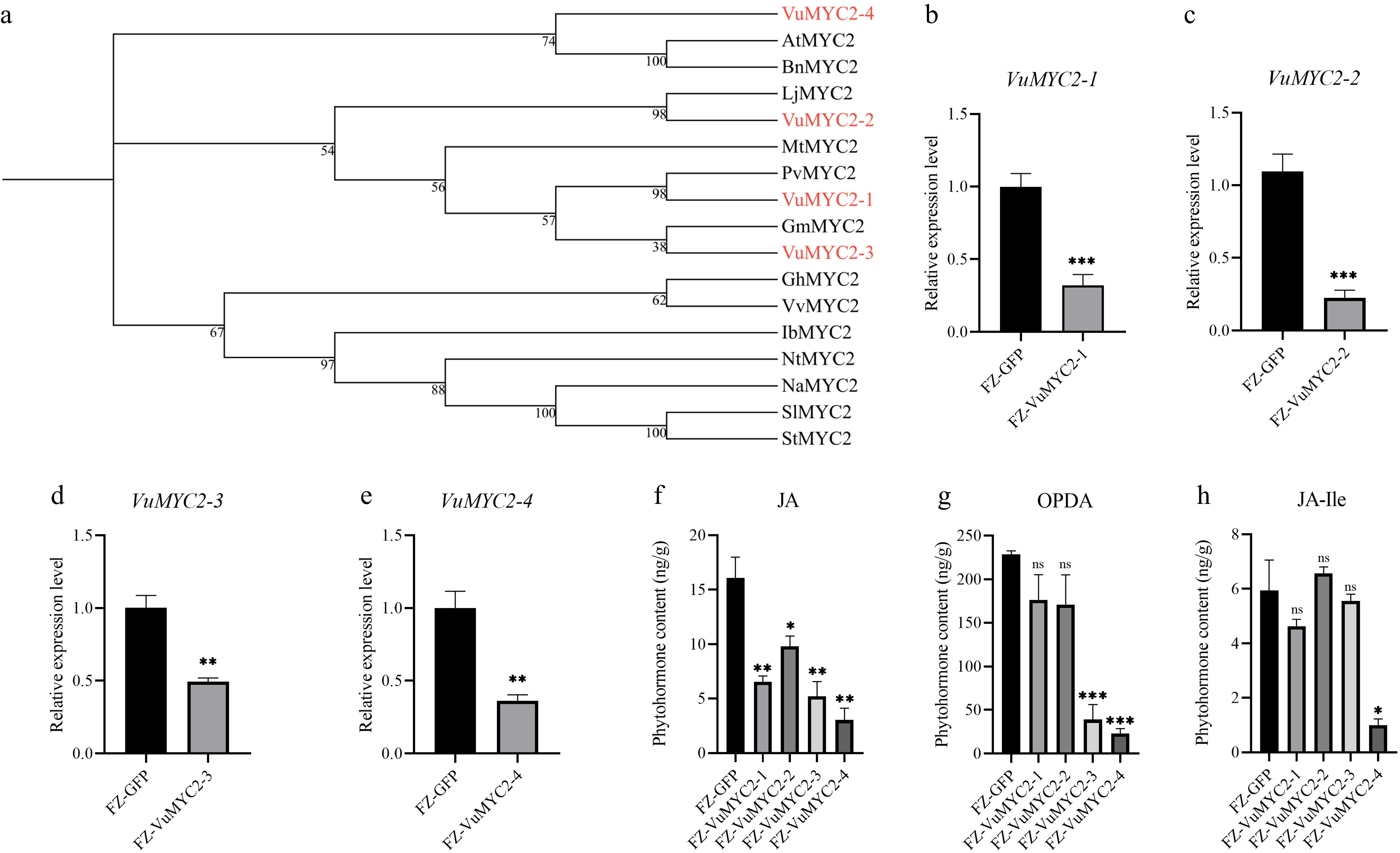
Figure 3.
Functional characterization of four VuMYC2 genes. (a) Phylogenetic tree of MYC2 genes. (b)–(e) Relative expression levels of VuMYC2 genes in leaves after VIGS treatment. (f)–(h) Phytohormone contents in insect-infested leaves after VIGS treatment. Data are presented as mean + standard deviation of three biological replicates. Asterisks indicate significant differences between silenced lines and control plants determined by Student's t-test (* p < 0.05, ** p < 0.01, *** p < 0.001).
-
VIGS has become an essential reverse genetics tool in plant functional genomics. Robust and standardized VIGS systems have been established in model plants (Nicotiana benthamiana[31], Arabidopsis[32]) and major crops (tomato [Solanum lycopersicum][31], pepper [Capsicum annuum][33], and soybean[34]), enabling high-throughput loss-of-function screening and rapid gene validation. In legumes, reliable VIGS systems have been developed for selected soybean, common bean, and chickpea (Cicer arietinum) varieties, using vectors based on BPMV and PEBV to characterize genes involved in rhizobial symbiosis, abiotic stress tolerance, and disease resistance[35]. Despite these advances in major legumes, functional genomic research in cowpea remains constrained by the lack of a stable, efficient, and broadly applicable VIGS protocol.
Tobacco rattle virus (TRV) is a widely used VIGS vector in Solanaceae crops[36] and has been reported in Arabidopsis and cotton[37,38]. Our preliminary attempts to apply TRV-based VIGS in cowpea did not produce obvious silencing phenotypes. In this study, we established a stable cowpea VIGS system using a high-efficiency CPSMV-based soybean VIGS vector. We validated the broad applicability of this system using seven cowpea varieties with contrasting growth habits (vining and erect), as well as diverse seed coat and pod colors. Using VuPDS as a reporter gene, stable and uniform systemic silencing was achieved in all varieties. Clear photobleaching appeared at 2–3 weeks post-inoculation and persisted for at least 8 weeks—this durable silencing outperforms many legume VIGS systems, which often suffer from short or uneven silencing. For example, TRV-based VIGS in soybean shows inconsistent PDS silencing with variable phenotypes (complete albino, yellowing)[39]. In infiltration optimization, needleless injection outperformed vacuum infiltration by reducing mechanical damage to young leaves, improving Agrobacterium infection efficiency and viral titer, while being simpler, faster, and suitable for batch processing in routine laboratories.
Notably, the degree of VuPDS photobleaching varied significantly among cowpea varieties, a common observation in plant VIGS studies. Expression levels and tissue specificity of PDS might underlie phenotypic variation[13]. VIGS-derived siRNAs move long distances primarily through the vascular system and preferentially trigger efficient silencing in rapidly dividing tissues such as new leaf primordia[40]. Thus, varieties with high PDS expression in vascular tissues and young leaves respond more rapidly and completely to silencing, showing uniform photobleaching due to strongly inhibited carotenoid biosynthesis. In contrast, varieties with low PDS expression or expression restricted to old leaves/epidermal cells exhibit weak, patchy silencing. These factors collectively cause phenotypic variation in the same VIGS system across varieties.
To further demonstrate practical utility, we individually silenced four VuMYC2 homologs in cowpea using a CPSMV-based vector. RT-qPCR showed significant downregulation of all four VuMYC2 genes, with silencing efficiencies ranging from 51.0% to 77.7%. Phytohormone assays revealed that VuMYC2 silencing markedly reduced accumulation of JA in insect-infested leaves. Notably, silencing of VuMYC2-4 also suppressed OPDA and JA-Ile, whereas the other homologs primarily reduced JA levels. These results confirm that the CPSMV-based VIGS system allows efficient and specific silencing of endogenous cowpea genes. It enables reliable gene functional characterization through phenotypic observation combined with physiological and molecular detection. This system is therefore suitable for functional studies involving disease resistance, insect resistance, hormone signaling, and stress responses.
In summary, the CPSMV-based cowpea VIGS system developed here effectively silences target genes in cowpea. Its broad applicability across genetically and morphologically diverse cowpea germplasm overcomes the genotype dependence commonly encountered in cowpea stable transformation and existing VIGS methods. This method can be widely applied to cowpea gene functional characterization, promoting the identification of elite genes and accelerating genetic improvement in this important legume crop.
-
This study established an efficient, CPSMV-based VIGS system for cowpea. Using the VuPDS as a visual reporter, we achieved stable, long-term systemic gene silencing across seven cowpea accessions with diverse genetic backgrounds and agronomic traits. We further validated the practical utility of this VIGS tool by individually silencing four VuMYC2 homologs. Upon herbivory by Liriomyza sativae, silencing of individual VuMYC2 genes reduced JA accumulation in cowpea, suggesting their critical roles in JA biosynthesis. The VIGS system we established provides a rapid and reliable reverse-genetics toolkit for characterizing gene functions.
-
The authors confirm their contributions to the paper as follows: study conception and design: Zhou Y, Zhu ZR; data collection: Chen Q, Shi ZR, Shi ZY; analysis and interpretation of results: Chen Q; draft manuscript preparation: Chen Q, Zhou Y. All authors reviewed the results and approved the final version of the manuscript.
-
The datasets generated during and/or analyzed in the current study are available from the corresponding author upon reasonable request.
-
The authors declare that they have no conflict of interest.
-
Received 26 April 2026; Accepted 28 August 2026; Published online 8 October 2026
- Copyright: © 2026 by the author(s). Published by Maximum Academic Press on behalf of Hainan University. This article is an open access article distributed under Creative Commons Attribution License (CC BY 4.0), visit https://creativecommons.org/licenses/by/4.0/.
-
About this article
Cite this article
Chen Q, Shi ZR, Shi ZY, Zhou Y, Zhu ZR. 2026. Construction of an efficient cowpea virus-induced gene silencing system based on cowpea severe mosaic virus (CPSMV). Tropical Plants 5: e036 doi: 10.48130/tp-0026-0035 

Construction of an efficient cowpea virus-induced gene silencing system based on cowpea severe mosaic virus (CPSMV)
- Received: 26 April 2026
- Revised: 06 August 2026
- Accepted: 28 August 2026
- Published online: 08 October 2026
Abstract: Cowpea (Vigna unguiculata [L.] Walp.) is an important legume crop worldwide. The lack of a reliable virus-induced gene silencing (VIGS) system severely hinders the functional verification of key agronomic trait regulatory genes in cowpea. Here, we established a cowpea VIGS system based on cowpea severe mosaic virus (CPSMV). We achieved stable and systematic silencing of the VuPDS gene in seven cowpea varieties with distinct genetic and morphological backgrounds. Obvious leaf photobleaching phenotypes appeared in FZ-VuPDS-inoculated plants 2 to 3 weeks after agroinfiltration. This silencing phenotype remained stable for at least 8 weeks. To verify the applicability of this CPSMV-VIGS system, we silenced four homologous VuMYC2 genes that function in the jasmonic acid (JA) signaling pathway. After insect infestation, silencing of VuMYC2 markedly decreased the accumulation of JA, JA-Ile, and OPDA in cowpea leaves. The established CPSMV-derived VIGS system has wide adaptability to various cowpea cultivars. It provides a reliable tool to screen genes associated with valuable agronomic traits and will accelerate molecular breeding efforts in cowpea.
-
Key words:
- Cowpea;
- Cowpea severe mosaic virus;
- Virus-induced gene silencing;
- PDS;
- MYC2