












-
Aspergillus fumigatus is a saprophytic mold that acts as an opportunistic human fungal pathogen capable of causing fatal infections. A. fumigatus is also ubiquitous, with worldwide distribution across all continents[1]. In fact, A. fumigatus infections have been reported from over 120 countries[2]. A. fumigatus typically causes infections through the inhalation of its asexual spores[3]. It is hard to avoid inhaling these spores, as the average global abundance in the air ranges from 1,000 to 10,000 A. fumigatus spores per m3 of outdoor air[4]. Because of these factors, as well as the high prevalence of triazole resistance in A. fumigatus, the World Health Organization (WHO) has identified A. fumigatus as a fungal pathogen with critical priority (Table 1)[5].
Table 1. World Health Organization (WHO) fungal priority pathogen list.
Critical priority group High priority group Medium priority group Cryptococcus neoformans Nakaseomyces glabratus (Candida glabrata) Scedosporium spp. Lomentospora prolificans Candidozyma (Candida) auris Histoplasma spp. Coccidioides spp. Eumycetoma causative
agentsPichia kudriavzeveii (Candida krusei) Aspergillus fumigatus Mucorales Cryptococcus gatti Fusarium spp. Talaromyces (Penicillium) marneffei Candida albicans Candida tropicalis Pneumocystis jirovecii Candida parapsilosis Paracoccidioides spp. The WHO has identified 19 organisms as priority fungal pathogens. These 19 priority pathogens have been grouped into three groups: Critical priority, high priority, and medium priority. Aspergillus fumigatus is listed in the critical priority group, along with Cryptococcus neoformans, Candida albicans, and Candidozyma auris[5]. Aspergillosis burden and treatment
-
Immunocompromised individuals may have difficulties clearing inhaled spores of A. fumigatus, resulting in the development of aspergillosis[1,6]. The most common forms of aspergillosis include allergic bronchopulmonary aspergillosis, aspergilloma, chronic pulmonary aspergillosis, and invasive aspergillosis[7]. Each year, approximately 6.5 million individuals are affected either by invasive aspergillosis or chronic pulmonary aspergillosis[8]. Typically, invasive aspergillosis is considered to be the most serious type, as it spreads from the respiratory organs to other areas of the body[9]. Invasive aspergillosis can be fatal, especially when paired with other infections. For example, invasive aspergillosis has demonstrated an incidence of 18%−39% in individuals with COVID-19, and a mortality rate up to 50% in these individuals[10].
Several antifungals in the azole, echinocandin, and polyene classes are available to treat aspergillosis. Triazoles are a specific type of azole and are the recommended first line treatments for A. fumigatus infections[6]. Triazoles are structurally characterized by the presence of at least one triazole group, which is a five-membered aromatic ring containing three nitrogen atoms[11]. The triazole antifungals inhibit the cytochrome P450-dependent enzyme lanosterol 14α-demethylase, preventing the demethylation of lanosterol and halting the synthesis of ergosterol, a key part of the fungal cell membrane[6,12,13]. In clinical settings, fluconazole, isavuconazole, itraconazole, posaconazole, and voriconazole are commonly used to treat fungal infections[14]. However, fluconazole is not active against A. fumigatus and instead is used to treat infections by Candida spp. and Cryptococcus spp. members[15,16]. Regarding clinical guidelines for treating aspergillosis, a diverse range of monotherapy or combination therapy triazole treatments have been recommended, depending on the form of aspergillosis[17].
Rising rates of triazole resistance
-
In agriculture, triazole fungicides are commonly used to control fungal infections and maintain crop health. Frequent exposure to these fungicides on crops has facilitated A. fumigatus strains to develop resistance to these drugs[6,18]. The abundance of A. fumigatus in agricultural sites is substantial because of its saprophytic nature[19]. Increasing temperatures may indirectly contribute to this resistance, as these conditions may be expected to increase fungicide use, intensifying selection for resistance in environmental A. fumigatus strains[20]. In clinical settings, although triazoles are typically effective first-line treatments against A. fumigatus infections, prolonged treatments can lead to the development of resistance. Clinical observations of triazole resistance can be dated back to the 1980s, specifically from itraconazole treatment. Although the emergence of triazole-resistant A. fumigatus in clinical settings is usually attributed to prolonged triazole treatments, some individuals with A. fumigatus infections have presented with triazole-resistant isolates without prior triazole treatments. This suggests that various patient factors combined with the increase in triazole-resistant A. fumigatus isolates in the environment may be responsible[21]. One study analyzed clinical isolates from medical centers worldwide and determined that about 5.8% of the samples were resistant to itraconazole, voriconazole, posaconazole, or combinations of the three[22]. Additionally, a longitudinal study conducted in the Netherlands from 1994 to 2022 identified 1,979 triazole-resistant isolates after screening 12,679 clinical isolates throughout the time period. This study demonstrates a clinical rate of triazole resistance of 15.6%[23]. Another study assessing medical triazole resistance among agricultural soil isolates (specifically for itraconazole, posaconazole, and voriconazole) found rates which varied from 5% to 12%, depending on the country[24]. Additionally, significantly elevated triazole resistance has been found in several niche-specific A. fumigatus populations, including tulip (Tulipa spp.) bulbs and greenhouse soils[18].
The importance of understanding how resistance evolves
-
Although many triazole resistance-associated genetic variants have been identified in A. fumigatus, these observations are mainly derived from clinical and environmental surveillance[22,25]. Such surveillance only reveals what variants exist but provides limited insight into how they arise and spread[26]. To prevent and control the emergence and spread of drug resistance, it is important to understand the complete process of how triazole resistance develops. Experimental evolution is a powerful tool which provides a framework to address this gap by enabling the controlled and iterative exposure of A. fumigatus populations to triazoles. This approach allows researchers to observe the emergence of resistance in real time, revealing not only resistance-associated genetic mutations, but also their order of acquisition, associated fitness effects, and evolutionary trajectories[27−29]. Notably, this tool also enables direct comparisons of how resistance develops across a diverse range of strain backgrounds[27,29]. Such comparisons can uncover strain-specific evolutionary responses to antifungal exposure, providing insights into appropriate region-specific treatments for triazole-resistant A. fumigatus infections[30,31]. Likewise, evolving replicates under a range of different triazoles can identify drug-specific mutational pathways, as well as patterns and mechanisms associated with cross-resistance[21,32,33]. Overall, experimental evolution can offer critical insights into the dynamics and predictability of the development of antifungal resistance which surveillance cannot capture[27,29]. Since triazole resistance rates in clinical A. fumigatus populations are increasing, using experimental evolution to assess evolutionary trajectories, strain-dependent responses, and the predictability of adaptation can provide insights to improve the detection and the development of effective personalized treatments[25,27,29].
-
Antifungal resistance can emerge readily and rapidly. Experimental evolution can assess many factors that influence the development of drug resistance, such as the specific drugs, drug concentrations, mechanisms of action, population size, and variations in the strain background[27,29]. Drug adaptation pathways must also be considered. Typically, antifungal drugs act in either a cidal or static manner, which may differ depending on the organism. Cidal drugs kill susceptible cells and may present a linear pathway of developing drug resistance, where stepwise drug increases induce the accumulation of sequential mutations. Alternatively, static drugs inhibit the growth and metabolism of susceptible isolates, which may allow a large proportion of cells to survive under drug stress, leading to the selection of tolerant cells and facilitating the development of drug resistance. Understanding these pathways can inform experimental design when assessing the evolution of resistance[27].
In experimental evolution, different approaches may be taken to induce drug resistance (Fig. 1). In one approach, susceptible fungal replicates are grown and then exposed to consistent drug concentrations over multiple cycles. Alternatively, stepwise increases in the drug concentration are carried out with initially susceptible replicates. For example, the drug concentration is increased after growth, often by a factor of two, where the initial drug concentration is usually half the minimum inhibitory concentration (MIC)[27]. Drug exposure typically is induced through media either on agar plates or with broth microdilution. However, experimental evolution studies utilizing agar plates for drug exposure may yield different results from studies using broth microdilution assays[34]. Environmental factors, such as media type, can influence the dynamics of growth and the development of resistance development. Variations in how resistance develops arising from environmental differences can provide insight into preferential environments for experimental evolution to successfully model the evolution of drug exposure in vivo, which can be used to improve medical treatment procedures[35].
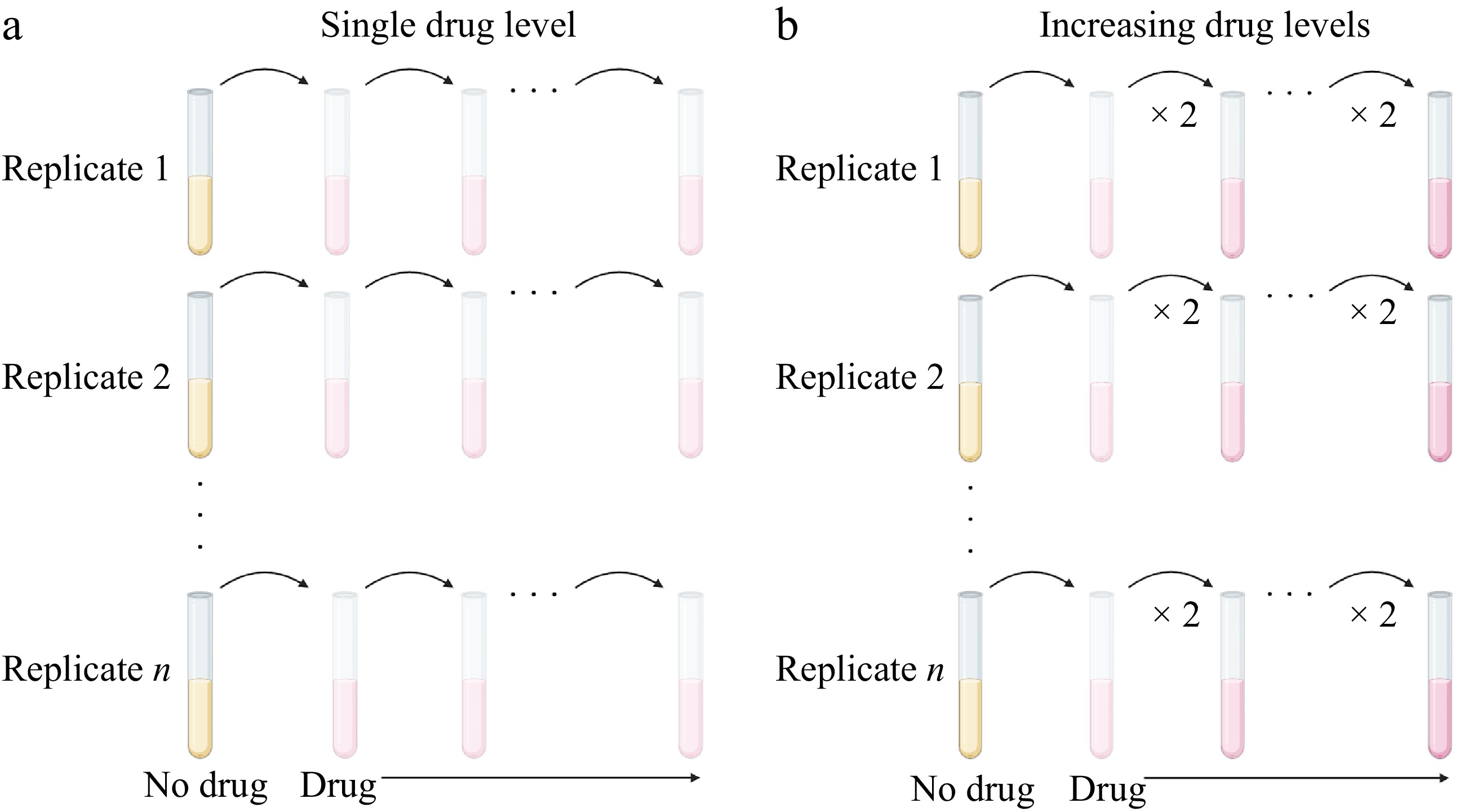
Figure 1.
Common broth microdilution drug exposure protocols for experimental evolution. Note that for both experimental evolution protocols, n represents the total number of replicate populations utilized. (a) The procedure using a single drug level exposes n susceptible fungal replicates to drug solutions with the same concentration over multiple growth periods. (b) The procedure with increasing drug levels exposes n susceptible fungal replicates to increasing concentrations, typically increasing by a factor of two[27].
As well as the drug exposure design, it is crucial to consider replicate numbers in experimental evolution procedures. A large number of replicates is important for analyses to identify evolutionary patterns with statistical confidence[36]. For experimental evolution studies in fungal pathogens like A. fumigatus, it is common to use at least six replicates per strain–environmental condition combination, as suggested by some current studies[28,37]. If the replicates develop identical mutations independently, then parallel evolution is implied to have occurred[38,39]. Prevalent parallel mutations would suggest predictability in the development of drug resistance. Alternatively, divergent mutations may accumulate among replicate lines, which would be consistent with divergent evolution patterns and limited predictability[38]. Cell population size should also be considered when designing the procedure. Typically for fungal pathogens like A. fumigatus, it is common to use replicates which contain between one million and ten million spores as the inoculum in experiments on the evolution of resistance[40,41]. Because mutations are random, larger cell counts can lead to an increased mutation supply, contributing to more occurrences of both unique and parallel evolution and enhancing the deterministic nature of evolution's predictability[42]. In contrast, small population sizes lead to more stochastic patterns among replicates. Additionally, the strain background can influence the development of resistance. For more impactful experimental evolution studies, the use of multiple strain backgrounds should be considered. Incorporating replicates of distinct strain backgrounds may enable the observation of strain-specific adaptation pathways[27,29]. Likewise, observing the development of resistance to multiple antifungals can provide insights into the development of drug-specific resistance and treatments' effectiveness[21,32,33].
Phenotype and genotype analyses
-
In experimental evolution studies, the phenotypes of resistant isolates are typically identified by determining the minimum inhibitory concentration (MIC). Usually, MIC tests are conducted by a broth microdilution assay. Both the Clinical Laboratory and Standards Institute and the European Committee on Antimicrobial Susceptibility Testing have recommended growth breakpoint values for interpretations, which deem fungal organisms to be either susceptible, intermediate, or resistant to specific drugs, allowing for easy experimental categorization[43,44]. Alternatively, epidemiological cut-off values (ECVs) can be utilized. ECVs are the greatest susceptibility end point of the MIC distribution for wild-type isolates, where values past the ECV categorize strains as non-wild-type[45].
Analyzing MIC values for multiple antifungals can provide further inferences on possible cross-resistance. This occurs when resistance to one antifungal also confers resistance to another antifungal agent[27]. Cross-resistance is relatively common between various triazoles, but not between triazoles and other antifungal classes, such as echinocandins and polyenes, likely because of differences in their drug resistance mechanisms[28,33]. Notably, multi-triazole resistance seems more likely to emerge from exposure to agricultural triazoles than to medical triazoles. In general, triazole resistance in A. fumigatus is more common to originate in the environment than in clinical settings, so it logically follows that cross-resistance is more likely to result from agricultural triazoles as well. To support the idea that agricultural triazoles can induce cross-resistance in medical triazoles, one study utilized experimental evolution to expose A. fumigatus replicates to bromuconazole, tebuconazole, epoxiconazole, difenoconazole, and propiconazole, which are agricultural triazoles. Following experimental evolution, widespread medical triazole cross-resistance was observed for itraconazole, posaconazole, and voriconazole, indicating that cross-resistance to medical triazoles can arise from agricultural triazole pressure, and supporting the concept that agricultural and medical triazoles are molecularly similar and share the same binding site at the target enzyme[28]. Experimental evolution provides freedom to assess multiple forms of triazole cross-resistance, originating either from agricultural triazoles used in environmental settings or from medical triazoles administered in clinical settings[28,29].
Alternatively, collateral sensitivity may be identified by following experimental evolution procedures. This phenomenon occurs when resistance to one antifungal results in increased susceptibility to a distinct uncontacted antifungal[29]. Collateral sensitivity has not been commonly observed in A. fumigatus. However, in other fungal pathogens like Candidozyma auris, amphotericin B resistance has been associated with collateral sensitivity to anidulafungin, caspofungin, micafungin, flucytosine, and geldanamycin[46]. Observing the process of experimental evolution can also identify fitness tradeoffs related to growth or sporulation, which is not uncommon in resistant isolates[47−49]. Variations in the biofilm production and virulence of A. fumigatus may also be assessed in relation to triazole resistance[48,50].
Experimentally evolving A. fumigatus in the presence of triazoles can lead to both resistance-associated and resistance-unassociated genetic changes[28]. Consequently, experimental evolution studies are often paired with sequencing techniques to map the genetic basis of newly developed resistance[27,29]. In particular, whole-genome sequencing (WGS) is a powerful tool for identifying single-nucleotide variants as well as small-scale insertions and deletions. Although unlikely in A. fumigatus, WGS can also be used to karyotype samples with the goal of identifying aneuploidies through analyzing read mapping counts for distinct chromosomes or chromosomal segments[27]. Aneuploidy has been frequently associated with drug resistance in yeast pathogens such as Candida albicans, Candidozyma (Candida) auris, and Cryptococcus neoformans[51]. Overall, WGS can be used to help pinpoint genetic variants accumulated from antifungal exposure during experimental evolution. However, it is worth mentioning that in many experimental evolution studies, typically, only selected genes of interest are analyzed after WGS. As a result, many other putative resistance-associated variants and genes may remain undiscovered, which repeated experimental evolution studies may be able to uncover[27].
Both phenotypic and genotypic changes accumulated during experimental evolution can be assessed among replicates to determine similarities in adaptation or to reveal a diverse range of responses[27−29]. Furthermore, when replicates with distinct strain backgrounds are utilized, more comprehensive comparisons can be made. Comparing diverse strain backgrounds can reveal a degree of homogeneity in the development of resistance which strains in a population may possess[27,29]. Phenotypic and genotypic similarities after drug exposure amongst multiple strain backgrounds can indicate evolutionarily conserved resistance development pathways[27]. Additionally, diversity in the resulting genotype and phenotype changes among various strain backgrounds can provide insights into variations in the drug response, informing personalized treatment strategies[30,31].
Insights from experimental evolution
-
Experimental evolution is a powerful tool which provides insights into antifungal resistance dynamics. These crucial insights extend far beyond the identification of resistance-associated mutations. By providing a platform to observe adapting populations in real-time, this tool reveals not only which mutations arise, but also how resistance evolves throughout each step of the drug exposure process[27,29]. The information obtained from experimental evolution studies are critical for understanding the mechanisms, constraints, and predictability of the development of resistance to triazoles in A. fumigatus[27−29] (Table 2).
One of the most substantial contributions which experimental evolution provides is the ability to model how resistance evolves in a stepwise manner[27]. Typically, resistance develops through the sequential accumulation of genetic changes instead of through single mutational events, where earlier mutations may shape later evolutionary outcomes[40,52]. Consequently, this temporal resolution can provide insight into the order of mutation acquisition. Furthermore, possible evolutionary dependencies can be highlighted that otherwise would not be identifiable from analyzing the endpoint clinical isolates alone[27−29].
Experimental evolution can also reveal patterns to assess a diverse range of evolutionary trajectories leading to adaptation[27]. In some scenarios, replicate populations which are exposed to identical conditions can acquire similar or identical mutations caused by strong and consistent selective pressures, demonstrating a parallel evolution trajectory[38,39]. Alternatively, replicate populations can follow distinct genetic pathways which still manage to achieve similar resistance outcomes. This evolution model follows a divergent evolution trajectory which reflects the influence of stochastic events or underlying genetic variation on adaptation[38]. These contrasting evolutionary patterns can imply important details about the degree to which the development of antifungal resistance is deterministic or contingent. It is also crucial to consider how distinct A. fumigatus strains differ in evolutionary responses under identical stresses, as genetic backgrounds play a significant role in shaping resistance outcomes[27,29]. Using experimental evolution to model replicates of various strain backgrounds is especially important, considering the high genetic diversity of A. fumigatus[30,31,53]. This strain-dependent variability highlights the limitations of single-strain designs and suggests that using a wide range of strain backgrounds is necessary to capture the full landscape of the evolution of resistance[54].
Increased MICs from drug exposure during experimental evolution may lead to tradeoffs in other traits such as growth and sporulation[47−49]. Indeed, certain genetic variants which confer an increased MIC and triazole resistance in A. fumigatus have been found to entail fitness costs[15,55,56]. However, compensatory mutations can accumulate over time to mitigate these potential fitness costs, allowing resistant strains to persist in environments in the absence of specific antifungals without any reduced survival or growth[49,57]. Understanding resistance-associated fitness tradeoffs is crucial for predicting how resistance spreads in both clinical and environmental settings, and its stability[27,29].
Overall, these insights collectively demonstrate that antifungal resistance can evolve in complex ways which are governed by a combination of deterministic selection pressures and stochastic mutational processes. These factors may result in predictable patterns but also context-dependent genetic variation. Through revealing the mechanisms, constraints, and trajectories underlying the development of resistance, experimental evolution emerges as a powerful tool for anticipating this phenomenon[27,29]. The patterns of how resistance develops derived from this tool are crucial for informing effective therapeutic strategies[25].
Table 2. Summary of experimental evolution studies on A. fumigatus. The key findings of each article are summarized along with the limitations.
Article Key findings Limitations Zhang et al., 2015 [37] Experimentally evolved susceptible A. fumigatus replicates with and without sporulation to five sterol-synthesis-inhibiting agricultural triazoles and found that (i) sporulation accelerates adaptations to triazole stress; (ii) sporulation likely increases the mutation supply because of the number of mitotic divisions which occur during spore production; (iii) resistance with asexual sporulation increases the mycelial growth rate, indicating potential fitness benefits over resistance without asexual sporulation; and (iv) agricultural triazoles select for resistance. This study (i) utilized replicates from only one starting strain and (ii) did not appear to perform sequencing to identify the candidate mutations linked with resistance. Zhang et al., 2017 [28] As follow-up research using the replicates from Zhang et al., 2015, this study demonstrated that
(i) agricultural triazoles can induce cross-resistance to medical triazoles; (ii) strong evidence supports that medical triazole resistance primarily originates from resistance in environmental settings; and (iii) WGS at multiple timepoints determined the mutation acquisition order, revealed 10 genes possibly linked to triazole resistance, and showed that multiple genetic routes to resistance are possible.This study improved on Zhang et al. (2015) by performing WGS on the evolved samples, but is still limited since it utilized replicates from only one starting strain. Handelman
et al., 2026 [40]Experimentally evolved A. fumigatus replicates from a wild-type starting strain and a cyp51A knockout strain with exposure to voriconazole with stepwise concentration increases and (i) generated voriconazole-resistance in the A. fumigatus replicates; (ii) used WGS to identify mutations in the cyp51A, cyp51B, hmg1, abcC, erg25B, ptaB, and srbA genes, and successfully identified an evolutionary acquisition timeline of these mutations by collecting and analyzing evolved isolates at each stage of the experimental evolution procedure; and (iii) determined some novel candidate mutations linked to triazole resistance, such as the G368W and L493P substitutions in the hmg1 gene. The evolved replicates in this study appear to come from the same starting strain, with the exception of some lacking cyp51A, limiting the genetic diversity of the replicates, and it is unclear how long experimental evolution was carried out for, possibly limiting the emergence of other mutations linked to resistance if the timeframe was too short. Kowalski et al., 2016 [58] Instead of triazole stress, this study assesses experimental evolution under low-oxygen stress to mimic host environments and found that (i) A. fumigatus strains which grow better in low-oxygen conditions tend to display increased virulence; (ii) there was a high degree of phenotypic heterogeneity in hypoxic growth and virulence, which was likely possible because of the diversity of starting strains utilized; and (iii) prolonged low-oxygen stress induced via experimental evolution improved hypoxia fitness and virulence in the utilized strains. This study is limited, as it (i) provides no genetic basis for the observed adaptations and (ii) only partially mimics the host environment, which is a step in the right direction, but could be improved in additional studies. Limitations of experimental evolution
-
Experimental evolution is a valuable tool for studying evolutionary trajectories. However, there are some shortcomings of the technique which must be considered. In the presence of antifungal stresses, it is expected that mutations conferring resistance will emerge and be selected, but it is unlikely that all the accumulated mutations will be directly related to antifungal resistance. Some of these mutations will have randomly accumulated but have hitchhiked to resistance-conferring genetic variants. In nature, many environmental and biological factors can result in the accumulation of specific genetic variants, which experimental evolution in the lab can fail to account for. Another limitation is the lack of complexity in most experimental evolution procedures: The environments used in experimental evolution studies often lack multiple stressors, niche diversity, and host conditions. To mitigate these issues, experimental evolution can be conducted in multi-drug environments, by mimicking host conditions, or by inducing environmentally relevant conditions[29]. Furthermore, many current experimental evolution studies in fungi only utilize one distinct starting strain, limiting the diversity of adaptations which can evolve in the presence of antifungals. As a result, future experimental evolution studies can improve their experimental design by including replicates from multiple genetically distinct starting strains[27,29].
-
In A. fumigatus, two genes encode lanosterol 14α-demethylase, which are cyp51A and cyp51B. Although there is limited evidence regarding a link between cyp51B mutations and triazole resistance, this is not the case for cyp51A[21]. Mutations present in cyp51A represent the most researched and observed pathways to triazole resistance in A. fumigatus, providing valuable insights into how strong selective drug pressures shape predictable evolutionary outcomes[23]. Typically, cyp51A mutations linked to triazole resistance are proposed to result from amino acid switches, likely lowering the binding affinity of triazoles to lanosterol 14α-demethylase, or altering its structure to maintain ergosterol biosynthesis[21]. The most commonly identified cyp51A amino acid substitution mutations conferring triazole resistance encode switches at the G54, P216, F219, and M220 residues along the ligand access channels; at the Y121 and G138 residues located near the catalytic site; and at the L98 and T289 residues[6,21]. Furthermore, the G448S mutation has been seen to elicit resistance to itraconazole and possible-cross resistance to other triazoles[33]. These aforementioned cyp51A mutations are the most common missense mutations associated with triazole resistance[49,57].
The TR34, TR46, and TR53 tandem repeats found in the cyp51A promoter region have also been linked to overexpression of cyp51A[21]. Some of these tandem repeats co-occur with single nucleotide polymorphisms (SNPs) specific to the cyp51A coding sequence. Specifically, the TR34/L98H and TR46/Y121F/T289A promoter expansion and nonsynonymous substitution combinations have been widely observed in triazole-resistant A. fumigatus isolates[18]. The TR34 and TR46 tandem repeats generate duplicated binding sites for AtrR and SrbA, two transcription factors which upregulate cyp51A's activity[59]. The overexpression of cyp51A ultimately results in an increased amount of lanosterol 14α-demethylase being available for ergosterol biosynthesis, meaning greater amounts of triazole are needed to prevent ergosterol biosynthesis, making standard triazole doses less effective[60]. The TR34/L98H variant is the most common variant associated with triazole resistance in A. fumigatus, followed by TR46/Y121F/T289A[6,23,61]. It is important to mention that the TR34/L98H and TR46/Y121F/T289A variants have been heavily linked to environmental triazole-resistant A. fumigatus samples. One study conducted in Ohio (USA) concluded that in the regions they assessed, the TR34/L98H and TR46/Y121F/T289A variants were the environmental signatures which primarily drove resistance in their subset of A. fumigatus samples[62]. Indeed, the links between these two variants and triazole resistance, particularly in environmental A. fumigatus isolates, also explain why they are the two most common variants observed in patients with triazole-resistant A. fumigatus infections. The data could also suggest that the TR34/L98H and TR46/Y121F/T289A variants each emerged only once and then, by mating and sexual recombination, spread through both the global environmental and clinical populations. A genomic analysis of the global population is needed to test this hypothesis[63].
Some cyp51A mutations have also been linked to cross-resistance between triazoles. Overall, the G54 and P216 cyp51A amino acid substitutions confer cross-resistance between itraconazole and posaconazole[33]. For G54, the glycine residue is converted to an arginine, glutamate, lysine, tryptophan, or valine residue, whereas the proline residue for P216 will change to a leucine residue[21]. Furthermore, the M220 cyp51A amino acid substitution is linked to itraconazole resistance and possible cross-resistance to isavuconazole, posaconazole, and voriconazole, as this mutation induces variable MIC changes for these triazoles[33]. With the M220 mutation, the methionine residue converts to either an arginine, isoleucine, lysine, threonine, tryptophan, or valine residue[21]. In addition, the G448S point mutation has demonstrated cross-resistance between isavuconazole and voriconazole, with possible further cross-resistance and varying MIC changes to itraconazole and posaconazole. Tandem repeats in the cyp51A promoter region may also result in multi-triazole cross resistance[33]. Overall, the repeated emergence of cyp51A mutations across both clinical and environmental settings highlights the immense selective advantage they confer and suggests a degree of predictability in the evolution of resistance and the development of cross-resistance under triazole pressure. Establishing resistance to various antifungals through experimental evolution paves a path for further identification of these commonly identified mutations associated with triazole resistance[27−29].
Non-cyp51A mutations
-
Although cyp51A mutations currently dominate the triazole resistance mechanisms, clinical and experimental evolution studies have revealed a diverse set of additional resistance mechanisms, highlighting the flexibility of A. fumigatus to adapt to triazole stress. One such mutation is the hapEP88L mutation in the hapE gene. This mutation has demonstrated decreased susceptibility in strains that were initially susceptible to isavuconazole, itraconazole, voriconazole, and posaconazole through the use of gradient diffusion strips, and decreased susceptibility to isavuconazole, itraconazole, and voriconazole via a broth microdilution assay. The hapE gene encodes one of three CCAAT box binding complex (CBC) subunits[64]. The CBC is found in the promoter region of many eukaryotic genes, and acts as a transcription factor binding site to enhance gene expression[65]. The CBC represses various genes involved in ergosterol biosynthesis, including cyp51A. When the hapEP88L mutation is present, the binding affinity of the CBC to the promoter region of cyp51A may decrease. Because of this lack of gene repression, cyp51A is more likely to become overexpressed, increasing the amount of lanosterol 14α-demethylase available, leading to greater amounts of triazole being required for inhibition[64]. Mutations in the hmg1 gene have also been linked to triazole resistance. This gene encodes 3-hydroxy-3-methylglutaryl-coenzyme A (HMG-CoA) reductase, which catalyzes the conversion of HMG-CoA to mevalonate[64]. The production of mevalonate is crucial for the ergosterol biosynthesis process[66]. In addition, hmg1 contains a sterol-sensing domain (SSD), which may be involved in regulating HMG-CoA reductase activity. However, amino acid switches at the S269, S305, G307, and I412 residues have been identified to occur in the SSD of hmg1. These mutations may impair the ability of hmg1 to sense the accumulation of sterols, such as lanosterol, meaning that HMG-CoA reductase will not be inactivated, thus continuing ergosterol biosynthesis. The hmg1F262del mutation has demonstrated decreased susceptibility to isavuconazole, itraconazole, voriconazole, and posaconazole in initially susceptible strains through the use of both gradient diffusion strips and a broth microdilution assay[64]. A mutation in the cox10 gene has also been identified to potentially contribute to triazole resistance. Heme acts as a binding site on lanosterol 14α-demethylase, and cox10 is required for the production of heme, so a mutation in cox10 can result in the absence of heme on lanosterol 14α-demethylase, preventing triazole from binding[12,21]. Overall, this cox10 mutation has been seen to substantially reduce itraconazole susceptibility in A. fumigatus[21].
Another contributor to triazole resistance in A. fumigatus is the overexpression of drug efflux pumps linked to the adenosine triphosphate (ATP)-binding cassette (ABC) or the major facilitator superfamily (MFS)[21]. ABC- and MFS-related multidrug transporter overexpression decreases intracellular triazole concentrations[64]. Regarding ABC efflux pumps, the abcA and abcC genes have been seen to contribute to triazole resistance. Specifically, abcA has conferred triazole resistance when overexpressed in susceptible A. fumigatus isolates. Furthermore, abcC has demonstrated a crucial role in contributing to clinical triazole resistance, as disrupting this gene in resistant isolates has lowered itraconazole's MIC values by over fourfold, substantially increasing itraconazole susceptibility. Other ABC genes such as atrF and atrI, as well as the MFS genes mdrA and mdr1, contribute to increased triazole susceptibility when disrupted, and may play a role in resistance[21]. Alternatively, reduced efflux pump efficiency may lead to collateral sensitivity, but more research must be conducted regarding this claim[29].
Evolutionary trajectories of genetic resistance
-
Although many specific mechanisms of triazole resistance in A. fumigatus have been well characterized, experimental evolution studies provide valuable insights into the acquisition of these mutations and how they interact over time. Instead of occurring as isolated instances, resistance usually emerges through stepwise evolutionary trajectories shaped by selective drug pressures, genetic background, and functional constraints[27]. In numerous cases, resistance can develop through the sequential accumulation of genetic mutations. In these cases, early adaptations tend to confer survival advantages in the presence of the tested drugs, which can lead to the development of further mutations which confer resistance[40,52]. For instance, early stress response pathways and adaptations may promote survival under antifungal stresses and enable the later development of stable mutations, such as those in cyp51A[67,68]. Consequently, stepwise trajectories underscore the role of the mutation history, where the order of accumulating mutations can influence evolutionary outcomes, as the emergence and persistence of later mutations may be contingent on prior ones[69]. Experimental evolution has also revealed the possibility of multiple resistance-associated genetic pathways competing within populations. In the case of A. fumigatus, though cyp51A variants typically dominate triazole resistance because of their strong selective advantage, efflux pump overexpression or mutations in other genes may arise under different conditions or in distinct genetic backgrounds. The possibility of various resistance mechanisms introduces a view of the evolution of resistance which is not strictly linear, reflecting a diverse and dynamic landscape of competing adaptive changes[27,29].
The extent to which these genetic trajectories are predictable remains an important inquiry. Strong deterministic selection is indicated by replicate populations acquiring the same cyp51A mutations, especially if confirmed by independent studies. However, the emergence of non-cyp51A mutations and variation in responses caused by the strain background highlights the role of stochastic processes and the genetic context in determining responses to the evolution of resistance. The balance between predictability and contingency is a defining component of the evolution of triazole resistance in A. fumigatus. Overall, triazole resistance in A. fumigatus has shown a substantial degree of multifactorial complexity[70]. Importantly, the genetic background is a key factor in determining which evolutionary trajectories are possible to follow. Distinct A. fumigatus strains can differ in their ability to accumulate specific mutations, leading to variation in the rate and nature of the development of resistance. The importance of the genetic background further emphasizes the limitations that single-strain experimental evolution studies present, highlighting the need to consider large-scale genetic diversity when interpreting the results[27,29]. Collectively, these findings demonstrate that the evolution of triazole resistance in A. fumigatus is influenced by the interplay of selection, constraint, and contingency in a complex manner. Understanding these genetic trajectories resulting from the evolution of resistance provides an essential context for determining resistance mechanisms, offering insights into the predictability of antifungal resistance[27,29,67,68].
Epigenetic resistance
-
Most research regarding the development of triazole resistance in A. fumigatus has identified genetic mechanisms of resistance. However, some findings on epigenetic resistance in fungal pathogens have identified possible epigenetic pathways[71,72]. Epigenetic mechanisms may contribute to drug response adaptations by enabling fungal strains to survive these stresses through altered gene regulation. Becaus eof the reversible nature of such responses, removing antifungal stresses may restore the initial susceptible phenotype. This framework provides a useful conceptual basis for outlining emerging epigenetic contributors to triazole resistance[71,73].
Several potential epigenetic contributors to triazole resistance in A. fumigatus have been identified. For instance, histone deacetylation may be associated with the development of triazole resistance[71,72]. The deacetylation of heat shock protein 90 (Hsp90) is necessary for the protein to carry out its proper molecular chaperone functions towards its client proteins, such as governing stress responses like drug resistance[71]. Although it has not yet been seen in A. fumigatus, research with drug resistant C. auris and C. albicans has suggested the epigenetic contributions of histone-related acetylation and methylation in the development of drug resistance, especially to fluconazole[72,74]. As previously mentioned, although efflux pump overexpression is usually genetic, it can also be caused by epigenetic mechanisms[71,74]. For instance, the Swi/Snf chromatin remodeling complex can be a coactivator for Mrr1, a transcription factor that is responsible for expressing the Mdr1 efflux pump. Nevertheless, this has been seen for fluconazole resistance in C. albicans, not A. fumigatus[71].
Possible RNA-based epigenetic mechanisms behind triazole resistance in A. fumigatus have also been identified. For instance, a long noncoding RNA sequence, afu-182, has been identified as being associated with triazole susceptibility in A. fumigatus in a cyp51A-independent manner. Upregulation of afu-182 promotes triazole susceptibility in A. fumigatus. However, in the presence of subinhibitory concentrations, afu-182 levels are downregulated[75]. Consequently, continuous triazole exposure can possibly lead to the maintenance of lower afu-182 levels and decreased triazole susceptibility. In the absence of triazoles, the A. fumigatus samples can revert to a susceptible state and regain baseline afu-182 levels, as suggested by the general epigenetic resistance mechanism principles, but this may be unlikely because of the stability of triazole resistance in A. fumigatus[73,75]. Overall, research has demonstrated possible epigenetic contributors to triazole resistance in A. fumigatus, but this is still an emerging field of study. Thus, further experimental evolution studies could identify and investigate these emerging resistance mechanisms in a controlled and repeatable manner[27,29].
-
Triazole-resistant A. fumigatus isolates have been observed to display a fitness cost resulting in reduced growth or sporulation in the absence of triazoles compared with wild-type strains[47−49]. This cost may put resistant A. fumigatus isolates at a competitive disadvantage in nature. Research has shown that when voriconazole-resistant and voriconazole-susceptible A. fumigatus strains are plated together in media without drugs, susceptible isolates exhibit greater growth proportions. However, this may not occur for all A. fumigatus strains or for resistance to all triazoles, so further research should be conducted. Regarding the molecular pathways, it is proposed that efflux pump overexpression linked to triazole resistance can directly contribute to reduced fitness[55,56]. Specifically, it is proposed that overexpression of the efflux pumps responsible for expelling fungicides comes with an increased allocation of energy, which can have negative fitness effects[55]. In A. fumigatus, the ABC and MFS efflux pumps are of interest. Additionally, resistance-specific genetic alterations which overexpress cyp51A may lead to fitness costs related to growth[15].
Although some studies have observed fitness tradeoffs in triazole-resistant A. fumigatus, other sources have found there to be an insignificant effect of resistance on reducing growth, if any at all[49,76]. One study in particular found mixed results regarding fitness costs in triazole-resistant A. fumigatus isolates, where some exhibited a fitness cost and others did not. Through the construction of cyp51A mutants, that study was able to show that mutations in cyp51A are not linked to the fitness costs which are occasionally observed in triazole-resistant isolates[49]. Notably, variations in fitness effects may be attributed to compensatory mutations that develop from further evolution in triazole-resistant A. fumigatus isolates, negating fitness tradeoffs[49,57,74]. It has been proposed that for triazole-resistant A. fumigatus, once in the absence of triazoles, these triazole-free environments could result in the selection of compensatory mutations which overcome the growth costs predicted to occur from the development of resistance[77]. Although unlikely, triazole-resistant A. fumigatus strains with increased competitive fitness have also been observed, which deserve attention because of their increased risk of spreading[49].
Variations in biofilm formation have also been linked to the development of triazole resistance in A. fumigatus. In general, it has been demonstrated that triazole-resistant strains can develop greater amounts of biofilm, with higher cell densities, compared with the A. fumigatus Af293 reference strain, which is triazole-susceptible. One study assessed biofilm biomass via optical density at 490 nm. The readings indicate that five A. fumigatus strains resistant to various triazoles had greater optical densities at 490 than the Af293 reference[50]. However, the strains differed genetically, presenting a confounding variable, as genetic changes among different strain backgrounds can lead to variations in virulence[50,78]. In addition, other studies suggest the opposite effect, claiming that genetic alterations linked to triazole resistance may lead to impaired biofilm formation. Because of the confounding nature of strain-specific genetic variations and discrepancies regarding the effects of triazole resistance on biofilm formation, further studies should be conducted, which experimental evolution can be useful for[15,50,78].
The pathogen virulence of triazole-resistant A. fumigatus strains can also be assessed. Overall, it has been suggested that the virulence of A. fumigatus is not significantly impacted by triazole resistance developing; if so, it is only slightly impaired[15,48]. One study compared the virulence of specific triazole-resistant and triazole-susceptible strains. This study was conducted in Galleria mellonella, a moth species which contains an immune system very similar to the human innate immune system. After infection with all A. fumigatus strains, most led to fatalities in the moth specimens after 3−5 d. Notably, a susceptible strain led to the quickest fatalities, whereas one of the triazole- resistant strains only eliminated 10% of the moth specimens after 9 d. However, the differences in virulence between triazole-resistant and triazole-susceptible strains were not significant, indicating no substantial link between triazole resistance and virulence[48].
Overall, the evolution of triazole resistance may be linked to fitness-associated phenotypic changes in A. fumigatus. Specifically, triazole resistance may induce reductions in growth and sporulation, although multiple studies have conflicting results[47−49,76]. However, these conflicting studies may be explained by the development of compensatory mutations[57,74]. Opposite to overall growth, evidence has suggested that triazole-resistant A. fumigatus produced greater biofilm biomass[50]. We note that the effect of increased biofilm production on virulence in triazole-resistant A. fumigatus has not yet been established, as no significant differences in virulence have been determined between triazole-resistant and triazole-susceptible isolates[48]. Although some of these findings demonstrate the possibility that the evolution of resistance may be constrained by fitness costs, further research should be conducted. Determining substantial links between resistance and fitness could limit the viability of certain variants and determine which resistance pathways persist in A. fumigatus populations. Experimental evolution can be used to confirm fitness-associated findings, providing further insights into responses and phenotypes related to the evolution of resistance[27,29].
Species-specific comparisons and constraints
-
The most studied fungal species through an experimental evolution lens is baker's yeast (Saccharomyces cerevisiae). However, S. cerevisiae is not classified as a critical priority fungal pathogen and generally demonstrates low virulence[79,80]. The three yeasts which the WHO designates as critical priority fungal pathogens are Candida albicans, Candidozyma (Candida) auris, and Cryptococcus neoformans[5]. Substantial research has been conducted into the experimental evolution of Candida spp. members to antifungals[27,29]. Both C. albicans and C. auris have demonstrated resistance to azoles, polyenes, and echinocandins, with C. auris often being multi-drug-resistant[51,81]. There is limited experimental evolution research on C. neoformans, but this pathogen can develop resistance to drugs in each major antifungal class[82].
In experimental evolution studies with C. albicans and C. auris, fluconazole acts as the preferred triazole to treat infections by these pathogens. For both species, experimental evolution studies have successfully cultivated fluconazole resistance[51,83,84]. In C. albicans, cross-resistance to multiple triazoles has been observed in replicates which developed fluconazole resistance[83]. Experimental evolution of C. auris has also demonstrated this triazole cross-resistance. Additionally, amphotericin B resistance has been seen to induce cross-resistance to fluconazole in C. auris. This is proposed to occur from mutagenesis of the ERG3, ERG11, FLO8, and MEC3 genes. It is suggested that fluconazole may not be the only triazole in which this cross-resistance can occur in C. auris, although these other cross-resistance combinations have not been researched extensively[84]. Additionally, through experimental evolution, collateral sensitivity in C. auris was demonstrated, where amphotericin B resistance was observed to increase susceptibility to flucytosine, geldanamycin, and three echinocandins[46]. Aneuploidy has also been linked to fluconazole resistance in C. auris, particularly for chromosome V. Stresses from antifungal exposure and the environment are key drivers for this aneuploidy. A link between aneuploidy and antifungal resistance has also been observed in C. albicans and C. neoformans, with at least 50% of the identified fluconazole-resistant C. albicans isolates being aneuploid[51]. Aneuploidy resulting from drug exposure in yeast pathogens is a major difference compared with A. fumigatus. Generally, A. fumigatus is affected by triazole stresses through the development of point mutations and alterations to the promoter region, typically in the cyp51A gene. Alternatively, Candida spp. members and C. neoformans often demonstrate aneuploidy resulting from fluconazole resistance, specifically with the chromosome bearing ERG11, the homologous gene of cyp51A[51,85,86]. Aneuploidy can lead to an increased gene copy numbersand thus increased expression of the drug's target gene in these organisms, thus conferring drug resistance, especially to triazoles[86].
The differences in the quantity of experimental evolution studies conducted on yeasts in the Candida genus compared with A. fumigatus may be attributed to the fact that Candida spp. members are typically easier to work with. Molds, such as those in Aspergillus spp., undergo more complex reproduction, as they can reproduce both asexually (through hyphal extension and sporulation) and sexually, where sexual reproduction can lead to greater genetic diversity and substantially impact evolution. The complexity of reproduction in A. fumigatus can make it difficult to pinpoint the drivers of specific adaptations, as variants which appear to have resulted from drug exposure may instead be caused by complex reproductive processes. In addition, the response to selective pressurs like drug resistance in each reproductive stage may vary. Another factor is the time duration of generations, which are typically shorter in yeasts than in molds. This advantage allows the opportunity for more adaptations to occur in shorter periods of time, which is crucial when accounting for the vast range of possible adaptations which may occur in response to antifungal stresses[29]. Ploidy shifts also vary between A. fumigatus and yeast pathogens. Yeasts such as C. albicans, C. auris, C. neoformans, and S. cerevisiae have been seen to exist in polyploid forms compared with their initial haploid or diploid forms, especially after antifungal treatments[87,88]. A. fumigatus differs, as ploidy shifts are more unlikely compared with yeast pathogens. However, an uncommon haploid to diploid shift mediated by parasexual recombination has been suggested to be possible in A. fumigatus and related species such as Aspergillus nidulans[89]. Morphologically, A. fumigatus takes on a filamentous form, generating vast hyphal networks[90]. Notably, the formation of a filamentous network can lead to heterokaryosis, where multiple distinct nuclei are contained within the same mycelial cytoplasm[91]. Alternatively, C. albicans and C. auris are budding yeasts which rarely form hyphae or pseudohyphae[92,93].
Genetic diversity and the importance of strain background
-
The high degree of genetic diversity that A. fumigatus demonstrates represents a substantial constraint on the predictability and generalizability of the evolution of triazole resistance in this pathogen. This genetic diversity has been demonstrated in multiple ways, including the construction of an A. fumigatus pan-genome. Pan-genomic studies have identified that each strain contains 12,798−15,476 genes, many of which are not core genes. Studies have classified 3,344−6,501 of these genes as accessory, which contribute to high genetic variation among A. fumigatus strains and populations[30,31,53]. Notably, there has been a proposed link between accessory genes and triazole resistance[30,31]. The high recombination rate may also be linked to high genetic diversity. A. fumigatus is the organism with the highest recombination rate, averaging 29.9 crossovers per chromosome, supporting this possibility[94].
Even within geographic locations, there is high genetic diversity between various samples in nearby regions. For example, in A. fumigatus specimens retrieved from respiratory samples from cystic fibrosis patients at the Hospital of Porto Alegre in Brazil over a 2-year period, a wide range of genotype diversity was observed. This suggests the possibility that A. fumigatus may be intrinsically capable of adapting to a wide range of stressors, such as coinfection, because of the substantial occurrence of genetic diversity in samples being taken from individuals living in similar climates[95]. Another study investigated A. fumigatus samples from nine distinct sites in the Guizhou province in China. Significant genetic differences were observed between most of the local population pairs within the province. In addition, that study shone light on genetic differences between populations which substantially vary in geographic location. Specifically, the presence of private alleles was noted to be shared by each of the nine Guizhou populations, which differed from populations outside of the province[96].
One critique of current experimental evolution studies in human fungal pathogens is the common use of only one ancestral strain background. This is the case for multiple studies in C. albicans and C. auris, where replicates are taken from colonies of identical strain backgrounds[51,83,84]. As a result, strain-specific differences in the development of drug resistance cannot be assessed. However, one study on the experimental evolution of drug resistance in C. albicans used replicates from multiple strain backgrounds. This study demonstrated the importance of assessing the genetic background in the development of drug resistance, as it was concluded that the strain background influences the heterogeneity of drug responses during evolutionary processes[54]. Additionally, one experimental evolution study in A. fumigatus regarding hypoxic stress used replicates from multiple genetically distinct starting strains. Although no genetic basis of the observed adaptations was determined, substantial phenotypic variation following experimental evolution was observed, indicating an influence of strain background on evolution[58].
-
Exposure to multiple antifungals represents a complex selective environment which can detrimentally alter the process of how resistance evolves through the introduction of interacting selective pressures. Experimental evolution can model preferential treatment combinations which work around the rising issue of antifungal resistance. For instance, combining antifungal drugs of different drug classes may be effective for treating invasive aspergillosis, especially triazoles and echinocandins[97,98]. One study tested this form of combination therapy in a population of 277 individuals with invasive aspergillosis. The study administered voriconazole monotherapy to 142 of the individuals and a combination of voriconazole and anidulafungin to the remaining 135 patients. After 6 weeks, the mortality rate of the monotherapy group was 27.5%, whereas the rate was 19.3% for the combination therapy group. This difference in mortality was not statistically significant (p = 0.087), but further research with a larger sample size or in different populations may identify statistically significant differences in mortality[98]. Although this study suggests that triazole and echinocandin combinations can work additively to reduce mortality rates, experimental evolution could be used to determine specific changes in susceptibility to the drugs used, as well as further combinations[29].
Typically, combinations of multiple triazoles are not given as treatments. In general, high doses of triazole monotherapy can be toxic, so combination therapies of triazoles may increase this risk[99]. Though triazoles have shown synergistic effects with other categories of drugs in vitro, caution must be considered to avoid in vivo toxicity[97,99]. Some such combinations are triazoles and immunosuppressive agents like cyclosporine, sacrolimus, and tacrolimus, where, if the dose is not appropriately adjusted, immunosuppression or toxicity may occur[97]. Additionally, some drug–drug interactions have been seen to accelerate the metabolism of triazoles, leading to the negation of antifungal activity. Some such drugs that promote this unfavorable outcome when in combination with triazoles are carbamazepine, phenytoin, rifabutin, and rifampicin[100]. Assessing these drug combinations in an experimental evolution context could confirm the negation of antifungal activity at a larger and more consistent scale and potentially discover further combinations where this occurs[29].
Although combinations of multiple triazoles are typically not appropriate as treatments, one study used a novel triazole, PC945, to assess synergistic effects with other triazoles. One test compared the survival rate of mice given PC945 alone, posaconazole alone, or a combination of both triazoles, with six mice in each group infected with triazole-susceptible A. fumigatus. After 7 d, the infection was fatal for all mice in both monotherapy groups. However, 83% of the mice in the combination therapy group survived (p < 0.01)[101]. This suggests that with proper dosing, combination therapies with multiple triazoles may be effective. Although it is difficult to assess safe doses for humans through experimental evolution, the possible synergistic effects of triazole combinations can be assessed[29].
In general, synergistic drug combinations are expected to improve treatment outcomes, whereas antagonistic drug combinations decrease the treatments' efficacy[29,102]. Interestingly, by analyzing epistasis among mutations related to drug resistance in bacteria, one study demonstrated that synergistic drug combinations promoted the development of resistance compared with antagonistic combinations. After calculation of the the mutant selection window, the window size decreased as the drug combinations became less synergistic. This means that there is a smaller potential to develop resistance drug combinations as the epistasis becomes more antagonistic[102]. Although that study used models which were based on bacteria and drugs not commonly used for fungal infections, experimental evolution can assess the effects of synergistic and antagonistic antifungal combinations in the development of resistance in fungal species[29]. This tool can provide a platform to confirm the possible link of synergy to stronger selection and faster development of resistance, as well as antagonism to weaker selection and slower development of resistance. These findings highlight that antifungal combinations not only influence treatment efficacy but also may reshape the evolutionary landscape of resistance, with crucial implications for the emergence of antifungal resistance and long-term management strategies[102].
Host-derived stresses
-
Research has demonstrated that A. fumigatus can grow at pH values ranging from 2.1 to 8.8 and in environments with temperatures ranging across 12−65 °C, with optimal growth occurring at around 37 °C. Both the pH and temperature ranges include physiological pH and temperature conditions in humans, explaining the ease with which A. fumigatus survives and reproduces in the human respiratory tract[103]. Another host-derived stress which infectious A. fumigatus may encounter revolves around oxygen abundance. Typically, the infected tissues in the respiratory tract will become hypoxic. Although A. fumigatus is an obligate aerobe, hypoxic conditions have been seen to trigger the activation of SrbA through the depletion of ergosterol, caused by the lack of oxygen[104]. As previously mentioned, upregulation of SrbA can lead to the overexpression of cyp51A, allowing for enhanced survival and possible development of resistance to triazoles[59]. Human host environments also limit the amount of iron and glucose available for A. fumigatus. In environments with reduced amounts of these nutrients, oxidative stress responses can be upregulated. To adapt to low-iron conditions, siderophores are produced to extract iron from the host's compounds. In low-glucose conditions, A. fumigatus tends to shift to metabolize other carbon-based compounds, such as amino acids. Studying the responses of A. fumigatus to physiological glucose and iron conditions may substantially contrast with laboratory-based experimental evolution, as strains are typically grown on high-glucose and high-iron media in these settings[105]. Immune responses to A. fumigatus infections can also be considered, although in immunocompromised individuals, immune responses are typically not effective for fully clearing the pathogen. However, immune cells can affect the pathogen through phagocytic measures, cytokine release, and inducing oxidative stress by releasing reactive oxygen species[106−108]. As a future research direction, using laboratory specimens to mimic these conditions may be useful. In particular, the moth species Galleria mellonella has been observed to have an immune system which closely reflects human innate immunity, so performing experimental evolution in these specimens at 37 °C could accurately model the evolution of drug resistance for fungal pathogens in humans[48]. Overall, mimicking physiological conditions during experimental evolution can provide insights into the adaptability of A. fumigatus in human hosts, which is currently limited in many experiments[109]. Although one experimental evolution study evolved A. fumigatus strains in host-like low-oxygen conditions, other host factors were missing[58]. This indicates the need for additional host-like stresses to be incorporated into experimental evolution designs to further understand how A. fumigatus adapts to these stresses in biologically relevant environments.
Environmentally relevant temperature conditions
-
Environmental A. fumigatus strains adapt to survive in a wide range of temperatures, with an optimal growth temperature around 37 °C[103]. As temperatures slowly rise, A. fumigatus strains are able to adapt to survive at higher temperatures. Additionally, fungicide use may increase with temperature to combat thermotolerant plant pathogens. This can indirectly allow A. fumigatus residing in nearby soils to become exposed to an increased amount of triazoles. Therefore, agricultural A. fumigatus strains may experience selection for thermal adaptations and the development of triazole resistance simultaneously under these warm environmental conditions. Consequently, these environmental triazole-resistant isolates may grow better at higher temperatures compared with strains that have not been exposed to these temperatures, triazoles, or both[20]. Experimental evolution can be used to model how A. fumigatus adapts to various temperatures. A wide range of environmentally relevant temperatures can be simulated in experiments to observe the influence of temperature on survival and the development of triazole resistance in A. fumigatus. Experimental evolution provides a platform to model the effects that temperature has on the evolution of resistance, and if the development of resistance is linked to thermal adaptations at intermediate evolutionary stages of the process[27]. Considering the vast geographic distribution of A. fumigatus, this information is crucial for informing clinical decisions, given the wide range of environmental temperatures this pathogen thrives in[20].
-
The predictability of the evolution of antifungal resistance is heavily influenced by the balance between parallel and divergent evolution trajectories. Parallel evolution is the occurrence of multiple independent specimens accumulating identical genetic changes[38,39]. These parallel changes could be accrued through selective pressures like drug exposure[88]. Since exposure to various triazoles have the potential to lead to the development of similar cyp51A variants, parallel mutations in this gene can be seen in distinct populations. On a global scale, it has been demonstrated that distinct geographic A. fumigatus populations have developed the same cyp51A variants[110]. Currently, studies investigating the use of experimental evolution to determine genetic parallelism in A. fumigatus are sparse. However, genetic parallelism resulting from experimental evolution has been demonstrated with C. albicans, where parallel aneuploidy between distinct isolates was observed following the evolution of fluconazole resistance[88]. Further experimental evolution studies, especially those conducted in A. fumigatus, can be utilized to determine the presence of parallel evolution resulting from the development of triazole resistance. Models can also be developed by analyzing patterns among replicate populations to predict the distribution of mutation counts and thus, potentially, the occurrence of parallel evolution[38]. Alternatively, divergent evolution is the occurrence of progeny sprouting from a common ancestor and acquiring distinct genetic changes over time or because of adaptation to the same stress by different mechanisms[38]. Divergence can occur in triazole-resistant A. fumigatus populations, but it can be difficult to determine this evolutionary trajectory when looking at genes linked to triazole resistance, since clonal populations may exhibit similar resistance-specific variants, regardless of subsequent divergent evolution. To support this claim, there is evidence suggesting an increase in clonal A. fumigatus populations which are triazole-resistant[63]. Overall, experimental evolution can capture evolutionary trajectories, which can inform the predictability of the evolution of resistance[27,29]. Typically, a parallel evolution trajectory indicates high predictability, whereas divergent evolution reduces the predictability of how antifungal resistance evolves[38].
Predictive insights and models
-
Experimental evolution has the ability to provide clinicians and researchers with vital information to improve predictions regarding the adaptability of strains to drug treatments. Differences in the development of resistance can also be observed with variations within and between species, genetic backgrounds, pH, nutrient availability, temperatures, and immune status. Paired with sequencing techniques, experimental evolution studies will also be able to uncover mutational pathways associated with resistance to various drugs[27,29]. Assessing growth tradeoffs and virulence in evolved strains may provide predictive insights into the impact of these strains in clinical settings. Understanding how resistance to different drugs affects fitness and virulence can also provide valuable insights into superior treatments[29]. Furthermore, the ability for experimental evolution to result in collateral sensitivity can be important. If resistance to one drug increases susceptibility to another, then treatments with these newly susceptible drugs could be effective for dealing with clinical triazole-resistant A. fumigatus isolates[46]. Overall, although predictive models are challenged by the complex nature of how resistance evolves, experimental evolution can effectively test factors that shape resistance trajectories, such as the strain background, environmental pressures, and selective pressures, in a repeatable manner[27,29].
One study performed stochastic analyses by assessing the survival probability of resistant bacteria by combining analytic predictions with simulations for theoretical biostatic and biocidal bacteria populations[111]. Although these models were developed for bacteria, the principles behind them may be applicable to fungal species to predict the development of resistance. The limitations behind such models must also be considered. On one hand, deterministic models often negate random effects and will assume a large population, which is typically uncharacteristic of isolated populations in the early stages of experimental evolution procedures. Alternatively, stochastic models account for randomness but require extensive computational complexity and resources. To address these limitations, it may be beneficial to develop hybrid models for experimental evolution analyses, where a stochastic structure can be used to assess smaller populations, and deterministic equations can be utilized for larger populations[29].
Overall, models for predicting evolution are of increasing importance, as experimental evolution studies have emerged as useful tools for studying antifungal resistance. Currently, accurately predicting genotype adaptations to stresses remains an issue, presenting the need for models capable of predicting genomic adaptations[112]. One challenge with modeling predicted variations in genotypes and phenotypes is epistasis. However, global patterns which arise surrounding the epistasis of an organism of interest, where fitness effects resulting from mutations are adequately predicted by the genetic background's fitness, may be useful for reconstructing and developing fitness landscapes which can predict evolutionary blueprints[112,113]. Some research has also been conducted on epistasis in budding yeasts like S. cerevisiae, where genotypic and phenotypic variation in these yeasts suggests the possibility of a bottom-up phenotype modeling approach, illustrating how rare evolutionary trajectories can become more accessible for predictions[112,114]. Although uncommon, another possible limiting factor for predictive models is the occurrence of heteroresistance. This occurs when subpopulations have decreased susceptibility to a drug, meaning that the entire population may not be represented by a single susceptibility profile, and this has been documented in A. fumigatus[115]. Moving forward, models that are relevant to evolution can also be designed to predict gene regulation networks. This is particularly useful for assessing heritable variation in gene expression levels, which has been demonstrated in several species, contributing to phenotypic diversity. Although challenging, models based on numerous experimental evolution studies may be able to predict evolutionary patterns on population scales, particularly for the evolution of antifungal resistance in fungal pathogens like A. fumigatus[112].
-
As previously discussed, a common limitation of many current experimental evolution studies is the use of a single-strain design, which fails to capture the potential effect of natural genetic diversity on observed phenotypic changes accumulated during experimental evolution. This is the case for multiple experimental evolution studies in C. albicans and C. auris, where the replicates were taken from colonies of identical strain backgrounds, eliminating the ability to identify strain-specific differences in the development of resistance[51,83,84]. However, one study on the experimental evolution of drug resistance in C. albicans which utilized multiple ancestral strains demonstrated the importance of assessing the genetic background in the evolution of drug resistance because of its influence on the heterogeneity in the drug response[54]. For the case of A. fumigatus, because of the high genetic diversity of the species, using multiple strain backgrounds for experimental evolution studies can provide substantial insights into how different strains may vary in developing resistance to triazoles[30,31]. Being able to predict how specific A. fumigatus strains develop resistance can provide predictive insights into appropriate treatments, which may differ according to the geography. Experimental evolution studies utilizing multiple strains can also provide virulence details to further inform treatment options and patient outcomes[29]. Another avenue of interest may arise with mixed-strain infections. It is often assumed that infections containing pathogen populations are clonal, which is not always the case. Regarding A. fumigatus, isolates recovered from a single aspergilloma patient have been noted to contain multiple different genotypes, suggesting the occurrence of mixed-strain A. fumigatus infections[116]. Further research has also identified the possibility of coinfection with related fungal species. For instance, the simultaneous infection with A. fumigatus and Aspergillus lentulus has been studied[117]. An intriguing possibility for mixed-strain infection research is its potential to identify its influences on the development of resistance. Although Pseudomonas aeruginosa is a type of bacteria, mixed-strain P. aeruginosa populations have demonstrated accelerated development of antibiotic resistance in infected patients[118]. Currently, experimental evolution with mixed-strain populations is an underexplored research area. However, this approach may provide valuable insights into how diverse strains interact and influence the evolution of antifungal resistance, which can expand the applications of experimental evolution studies to ecological and clinical contexts[27,29].
Technological advances
-
Although experimental evolution is a powerful and useful tool for studying how an organism evolves from exposure to stresses like drugs, it can be time-consuming. Automating experimental evolution provides the opportunity to study an increasing number of factors in substantially shorter amounts of time. Being able to generate as much data as possible determines antifungal resistance patterns to a higher degree. Additionally, automated experimental evolution processes can allow for reproducibility in evolution. Being able to conduct the exact same experiment multiple times can provide insights into evolutionary patterns, such as parallel or divergent evolution, in numerous conditions and environments[119]. High-throughput methods can also allow for novel mutations linked to resistance to be identified at a substantially increased rate[120]. Overall, automated experimental evolution is beneficial because of the reduced time requirements, increased data collection, and replicability. High-throughput models and other automated technologies, such as morbidostats, are valuable to clinical research, accelerating insights into the development of personalized treatments, especially for triazole-resistant A. fumigatus infections[29].
WGS with high-throughput next-generation sequencing platforms is a useful tool for sequencing the entire genome of fungal species[121]. Typically, these methods utilize short-read Illumina sequencing protocols. The problem is that these short Illumina reads are often around 250 base pairs in length[121−123]. Two emerging tools to improve on short reads are Oxford Nanopore and PacBio HiFi long-read sequencing[123,124]. Long-read sequencing can produce reads up to a megabase in length, allowing the inference of chromosomal structural rearrangements. Depending on the context, long-read sequencing can be less time-consuming and cheaper, which is beneficial for large-scale experimental evolution studies[123]. Overall, WGS plays a vital role in complementing the results of experimental evolution. Utilizing optimal strategies improves accuracy in identifying genetic adaptations from resistance evolution[27,29].
-
Overall, experimental evolution allows for meaningful analyses into the process of how resistance evolves at each step, which surveillance fails to achieve. Regarding triazole resistance in A. fumigatus, many mutations linked to triazole resistance have been characterized[6,21]. However, this powerful tool allows researchers to identify the order of mutation acquisition, mutational contingencies, and evolutionary trajectories[27,29]. Furthermore, the repeatable nature of experimental evolution makes it valuable for informing predictive models of how resistance develops[27,29,112]. Resistance-specific phenotypes related to growth, thermal adaptability, biofilm formation, and virulence can also be assessed to inform the identification of resistant isolates[15,20,47−50]. Additionally, susceptibility testing following experimental evolution procedures can identify instances of cross-resistance and collateral sensitivity[27−29]. In the case of an organism like A. fumigatus, which displays high genetic diversity, utilizing replicates of multiple strain backgrounds in experimental evolution procedures is necessary[27,29−31,53]. Considering the genetic variation among strain backgrounds allows this tool to identify strain-specific trajectories of the evolution of resistance, which would otherwise fail to be captured from the single-strain designs that many current experimental evolution studies on fungal pathogens incorporate. This tool also provides the opportunity to assess the development of triazole resistance in complex environments through exposure to multiple antifungals, host-like stresses, and environmental conditions[27,29]. To achieve as many insights from experimental evolution as possible, automated systems like morbidostats and high-throughput technologies can be used. Automating experimental evolution would allow the possibility to identify more mutations linked to triazole resistance, further insights into the effects of genetic diversity on the development of resistance, and synergistic drug combinations on a larger scale and in a more time-efficient manner[29,119,120]. In conclusion, experimental evolution is a critical tool for modeling the evolution of resistance in fungal pathogens, especially triazole resistance in A. fumigatus, and has further potential to expand current knowledge on resistance, informing treatment decisions that work around triazole resistance[27−29]. When combined with surveillance data, strain-based predictions of mutational tendencies to drug resistance can become an important component of personalized treatment for patients with invasive fungal infections, and measuring the diversity of such pathogens can inform treatment outcomes[118].
-
Not applicable.
-
The authors confirm their contributions to the paper as follows: study conception and design: Xu J, Farruggia GA; data collection, draft manuscript preparation: Farruggia GA; analysis and interpretation of results: Farruggia GA, Xu J; manuscript review: Xu J. All authors reviewed the results and approved the final version of the manuscript.
-
Data sharing not applicable to this article as no datasets were generated or analyzed during the current study. All data reported in this manuscript were from published literature.
-
This research was funded by the Natural Science and Engineering Research Council (NSERC) of Canada, Grant RGPIN-2026-07808 (J.X.), and an NSERC graduate scholarship (G.F.).
-
The authors declare no conflicts of interest. The funders had no role in the design of the study; in the collection, analyses, or interpretation of data; in the writing of the manuscript; or in the decision to publish the results.
- Copyright: © 2026 by the author(s). Published by Maximum Academic Press on behalf of Jilin Agricultural University. This article is an open access article distributed under Creative Commons Attribution License (CC BY 4.0), visit https://creativecommons.org/licenses/by/4.0/.
-
About this article
Cite this article
Farruggia GA, Xu J. 2026. Triazole resistance in Aspergillus fumigatus: Current status with an experimental evolution perspective. Panfungi 1: e009 doi: 10.48130/panfungi-0026-0004 

Triazole resistance in Aspergillus fumigatus: Current status with an experimental evolution perspective
- Received: 07 May 2026
- Revised: 24 June 2026
- Accepted: 29 June 2026
- Published online: 23 July 2026
Abstract: Aspergillus fumigatus is a critical human fungal pathogen, infecting millions of individuals annually. A rising concern regarding this pathogen is its ability to develop resistance to antifungal treatments, typically triazoles. Although surveillance has identified many genetic variants linked to triazole resistance, the patterns of resistance development remain largely unknown. Here, we argue that experimental evolution can help address this knowledge gap, including revealing the sequential order of acquiring mutations caused by stepwise triazole exposure, inferring parallel and divergent evolution trajectories, and identifying mutational contingencies. Modeling evolution that allows for experimental repetition is critical for developing predictive models to counter drug resistance. Other medically important phenotypes can also be assessed to identify potential tradeoffs, including susceptibility to other classes of drugs, thermal adaptability, biofilm production, and virulence. Though many experimental evolution studies have been conducted in yeasts like Candida albicans and Candidozyma auris, most such studies used only one starting strain. Performing experimental evolution with genetically diverse strains is crucial to determine potential strain- and genotype-specific variations in the process of developing resistance, especially for a highly genetically diverse organism like A. fumigatus. Furthermore, experimental evolution can simulate the effects of complex environments on the development of drug resistance, such as multidrug interactions, host conditions, and agricultural environments. Overall, experimental evolution can be a powerful tool to assess how A. fumigatus develops drug resistance, and its value will be greatest when more studies move beyond single-strain and simplified designs towards genetically diverse models, as well as under biologically and ecologically relevant conditions.