












-
Ginger (Zingiber officinale Roscoe) is a perennial herbaceous plant belonging to the Zingiberaceae family, native to Asia. Since ancient times, ginger has been valued for both its medicinal properties and its use as a spice, prized for its distinctive flavor, aroma, and health benefits[1]. The underground stem or rhizome of ginger is most commonly used, known for its intense spicy aroma and flavor[2]. It is a source of various bioactive compounds and minerals, such as sodium, potassium, calcium, magnesium, and phosphorus[3,4]. However, the bioavailability and efficacy of these nutrients may vary with the processing methods used[2,5]. Different ginger processing techniques yield various ginger derivatives, including dried ginger powder, extracts, fermented products, and ginger oil[2].
Ginger is known for its diverse pharmacological effects, and its main active components are gingerols and their dehydration products, shogaols[6]. According to their order of abundance, gingerols include 6-, 8-, and 10-gingerols, whereas the shogaols are 6-, 8-, and 10-shogaols[7]. The primary compound responsible for the pungency (strong flavor) of fresh ginger rhizome is 6-gingerol[8]. Because gingerols are thermally sensitive, they convert to shogaols at high temperatures[9]. These biological properties of gingerols and shogaols are recognized for their pharmacological activities, including anti-oxidative, antimicrobial, anti-apoptotic, and anti-inflammatory effects[1,4,8]. These bioactive compounds mainly exhibit antioxidant activity through their chemical structures, which include multiple hydroxyl groups attached to aromatic rings, thereby neutralizing free radicals or binding metal ions, thereby reducing oxidative stress[10,11]. These beneficial effects of ginger's bioactive compounds have attracted industrial interest as a natural alternative to synthetic antibiotics[2,9].
In dietary supplementation for poultry, ginger is used in various forms, including ginger powder, extracts, dried fermented products, and ginger oil, as a natural alternative to antibiotics owing to its pharmacological properties[2,5,12]. For example, supplementation of hens' diet with ginger powder (10 g/kg) was reported to enhance their productivity and overall health[13]. Similarly, the positive synergistic effect of dietary supplementation with ginger powder (500 mg/kg) and frankincense (200 mg/kg) on the productive and reproductive performance of Japanese quails has been reported[14]. On the other hand, supplementing broiler chickens' diets with 1.5% ginger root extract has been reported to improve growth performance, reduce oxidative stress, and enhance mucosal development[15]. Similarly, researchers noted the beneficial effects of ginger root extract on poultry's productivity and overall health[16−18]. Additionally, supplementing the diet with dried fermented ginger (10 g/kg) was reported to enhance productivity, egg quality, and antioxidant status and to influence the dominant intestinal bacteria in egg-laying hens[19]. Furthermore, administering ginger oil orally (100–150 µL/kg of body weight) to Japanese quails also increased egg weight and egg serum cholesterol[20].
Therefore, a well-organized presentation of information on the use of ginger and its derivatives in poultry production and reproduction should be initiated to promote a better understanding of its role as a natural alternative to synthetic antibiotics and to support sustainable poultry production practices. We systematically reviewed the relevant, up-to-date literature on dietary ginger, covering its various forms, main bioactive compounds, and proposed mechanisms of action, and we use diagrams and a table to illustrate them.
The manuscript systematically covers the different forms of ginger (powder, extract, oil, and fermented), their major bioactive compounds (gingerols, shogaols, etc.), and their proposed mechanisms of action, supported by a substantial table summarizing the key studies.
-
Ginger powder is made from the dried rhizome (root), obtained either through a simple drying process (sun or oven drying)[13,21] or through a more complex method (solvent extraction, steam distillation, fermentation, or enzymatic treatment) and then ground into a fine powder[22]. The drying temperature is a key factor in retaining ginger's nutrients, as temperatures above 60 ºC compromise its physicochemical qualities[23]. It is the most commonly used ginger derivative in poultry feed due to its low cost, easy processing, and ease of inclusion in the diet[13,24].
Ginger powder retains all the natural compounds found in fresh ginger; however, as a result of dehydration, it mainly contains shogaols, the most potent bioactive and anti-inflammatory compounds in ginger[25]. Its bioavailability and efficacy depend on its processing methods and dosage levels[23]. Therefore, an animal's digestive system must process it to release the bioactive compounds[26]. The dose of ginger powder in poultry nutrition is relatively higher than that of other ginger derivatives, typically ranging from 5 to 15 g/kg of the diet[13]. Additionally, unlike other ginger derivatives, the potency of ginger powder depends on its origin[25,27], age, and drying methods[21].
Ginger root extracts
-
Ginger root extract is processed by soaking ginger in solvents like water or alcohol to extract active compounds, which are then concentrated. In this case, using water as a solvent yields a higher volume of extract than using alcohol[28,29]. The primary ginger extraction methods include conventional extraction (Soxhlet) and advanced extraction (ultrasound-assisted extraction, supercritical fluid extraction, and pressurized liquid extraction). Soxhlet extraction is a simple, traditional method that uses water and ethanol as solvents at high temperatures[28]. This technique takes longer and can cause thermal degradation of the compounds. The ultrasound-assisted extraction method uses ultrasonic waves to enhance the solvent's penetration into plant cells, thereby reducing the time and temperature requirements[29]. Supercritical fluid extraction uses supercritical CO2, often with ethanol as a cosolvent, to extract compounds at low temperatures, avoiding thermal degradation. It is highly effective in extracting volatile oils and gingerols compared with the Soxhlet method[28]. Conversely, the pressurized liquid extraction method uses high pressure and temperature to improve the extraction efficiency[8].
The chemical composition of ginger extract mainly includes α-zingiberene, β-sesquiphellandrene, β-bisabolene, zingerone, gingerol, α-curcumene, and γ-muurolene[28]. These compounds exhibit antioxidant activity and affect microbial activity by stimulating digestive enzymes in poultry[30]. Ginger extracts, both as pure powder and a liquid, have higher potency than dried ginger powder, with the liquid form showing higher concentrations of specific bioactive compounds, particularly gingerol and shogaols[26]. Therefore, when supplemented at 0.1% in layers' diets, ginger extract was reported to enhance serum antioxidant capacity, thereby increasing the laying rate and egg weight, reducing the feed-to-egg ratio, increasing lysozyme activity, and reducing plasma prostaglandin E2[31]. Similarly, in broiler chickens, ginger extract at 1.5% was reported to enhance growth and mucosal development, reduce oxidative stress, and improve intestinal morphometrics[15].
Ginger essential oils
-
Essential oils of ginger, also called volatile oils, mainly contain volatile compounds like α-zingiberene and β-sesquiphellandrene, which exhibit strong effects at lower doses[2,32]. To obtain essential oils, fresh ginger rhizomes are steam-distilled to capture the volatile aromatic compounds. Essential oils have more potent antimicrobial and antioxidant activity than raw powder and are rich in terpenoids (aromatic compounds), which exhibit antimicrobial properties[33]. Ginger essential oil contains various phytochemicals, including sesquiterpenes and monoterpenes, and can be a potential poultry feed supplement[5,34]. Compounds like cineole, zingiberene, and camphene contribute to ginger's antioxidant and antibacterial effects, with zingiberene being the main component[35−37]. Essential oils are known to enhance poultry's performance by improving weight gain, feed efficiency, egg fertility, and hatchability. However, the incorporation of essential oils in poultry feed is hindered by their low water solubility, storage instability (high volatility), and low bioavailability[38]. To address these problems, innovative strategies, such as essential oil nanoformulations, were developed to enhance their bioavailability and stability[39]. The low water solubility of essential oils limits their uniform incorporation into feed formulations, potentially leading to inconsistent intake and reduced efficacy. Additionally, their volatility reduces their stability for storage and incorporation into feeds, and they are sensitive to environmental conditions[40]. Essential oils are considered to be growth promoters in poultry because they exhibit antioxidant and antimicrobial effects, and have other effects on gut integrity[34,41].
Fermented ginger
-
Among the oldest biotechnological processes, fermentation plays a vital role in both food and medicine. However, fermentation requires various microbial starters[42], which act as initiators of the process, metabolizing carbohydrates to produce bioactive substances and breaking down large molecules into smaller ones, thereby enhancing digestion and absorption[43]. During processing, gingerols are converted to 6-shogaols, which are more potent antioxidants[44]. Fermentation also enhances the flavor and aroma of foods, destroys toxic substances, improves digestibility, and increases the nutritional value by producing essential vitamins[45−47]. Furthermore, the fermentation process inhibits the growth of spoilage bacteria, thereby enhancing the shelf life and safety of fermented foods[42].
Fermented ginger contains more bioavailable anti-inflammatory compounds than regular ginger because the probiotic conversion turns gingerols into more potent forms[48]. Furthermore, the fermentation process enhances the efficiency of gingerol extraction compared with traditional heat-based methods. Fermented ginger has higher levels of bioactive compounds than fresh ginger[48]. The process creates a unique synergy where probiotic strains metabolize ginger's compounds into more potent bioactive forms[48].
Ginger derivatives combined with other additives (synergy)
-
To achieve positive synergistic effects, ginger derivatives are often used alongside other phytogenic plants to enhance overall efficacy compared with any single additive alone[14,49−51]. Such combinations are also used as multifunctional antioxidant and enzyme-inhibitory agents[52]. For instance, the synergistic effects of ginger and probiotics (yeast) improve hatchability and immunity in poultry[53]. Ginger derivatives can also be combined with Chinese herbal medicine to enhance resistance to heat stress and eggshell strength in poultry[54]. Generally, synergy offers a comprehensive, multidimensional approach to strengthening poultry's health and productivity through the use of natural alternatives to antibiotics.
-
The chemical components of ginger include volatiles (zingiberol, α-Farnesene, α-sesquiphellandrene, α-zingiberene, β-phellandrene, etc.) and nonvolatiles (gingerols, shogaols, zingerone, and paradols). These nonvolatile phytochemicals, which have pungent odors and flavors, are the characteristic bioactive constituents of ginger[2]. Ginger's phytochemicals, particularly gingerol, shogaol, and zingerone, contribute to its functional benefits in poultry, including antimicrobial, antioxidant, and immunomodulatory effects[13,55]. The application of ginger in poultry diets shows promise for sustainable health management and improved growth performance (Table 1).
Table 1. Key studies on the positive effects of adding ginger derivatives and/or their combinations with other additives to poultry diets.
Derivatives Dose and route of administration Species Outcomes Ref. Ginger powder (GP) 2 and 4 g/kg of diet Turkey The 2 g/kg diet increased feed conversion ratio (FCR), improved growth performance, and hepatic enzyme activity [56] Ginger extract (GE) 0.1% Laying chickens Enhance laying rate, egg weight, and FCR;
Increased SOD, reduced malondialdehyde (MDA), increased lysozyme activity, and reduced plasma prostaglandin E2[31] Ginger oil (GO) + cinnamon oil (CO) GO (0.5 mL and 1.0 mL/kg diet), CO (0.5 mL and 1.0 mL/kg diet) Japanese quails Reduced cholesterol levels, increased serum antioxidant capacity, enhanced hepato-intestinal morphology [34] GO, cinnamon oil (CO), turmeric Oil (TO), garlic oil (GRO) 30 mL of CO, GO, TO, GRO in drinking water Broiler chickens Decreased lipid peroxidation and increased total antioxidant activity [57] Garlic (GrP) + GP 0.25% GP, 0.25 GrP, 0.25% GP + 0.25% GrP, 0.50% GP + 0.50% GrP Broiler chickens The 0.25% GP + 0.25% GrP enhanced feed intake and weight gain [58] GP or frankincense oil (FO) GP (250 and 500 mg/kg diet) or FO (200 and 400 mg FO/kg diet) Japanese quails No effect on egg laying rate, feed intake, and FCR;
Enhanced egg weight, blood serum properties, and productive and reproductive performance[14] Phytogenic premix (PP) (ginger, lemon balm, oregano, and thyme substances) 500, 750, 1,000, and 1,500 mg/kg diet Laying chickens The PP750 and 1,000 mg/kg improved laying rate and egg mass in the ovaries;
Downregulated AhR pathway genes
Positive cytoprotective effects on Nrf2 pathway genes in the ovaries[59] Blended ginger and stevia extracts 0.5%, 1.0%, and 1.5% diet Japanese quails Improved laying performance, egg fertility, and hatchability;
Enhanced biochemical parameters[60] GP + Chinese herbal medicine (CHM) 3.32 g CHM, 10 g GP, and 10 g GP + 3.32 g CHM/kg of diet Laying chickens Increased feed intake and laying rate;
Decreased glucose level, triglycerides, and serum cholesterol
Improved fungal catalase (CAT) levels, nitric oxide, and antioxidant enzymes[54] Blended ginger extract, Onion, and onion extract 10, 100, and 1,000 mg/kg diet Broiler chickens The 1,000 mg/kg maintained growth and carcass quality;
Reduced the fecal microbial load in experimentally infected broiler chickens[61] GP + turmeric powder (TP) 1.0% TP + 0.5% GP, 0.5% TP + 1.0% GP, 0.75% TP + 0.75% GP Laying chickens The 0.75% TP and GP enhanced laying rate and egg weight;
Decreased total cholesterol and serum lipid profile[62] Spent ginger 5, 10, 20, and 40 h/kg diet Laying chickens Enhanced egg yolk color and antioxidative defenses;
Influenced the dominant intestinal bacteria[19] GP 5, 10, or 15 g/kg diet Broiler chickens Increased body weight, antioxidant enzymes in the serum and liver;
Increased white blood cells and % heterophils
Improved dry matter's digestibility and utilization of crude protein, crude fiber, and ether extract[63] GE 0.375%, 0.75%, 1.5%, 3% Broiler chickens The 1.5% enhanced growth and mucosal development;
Reduces oxidative stress and intestinal morphometrics[15] GP 3, 6, and 9 g/kg diet Broiler chickens Enhanced growth performance and gut morphology;
Positive impact on cholesterol, triglycerides, and gut microbes[64] GE Oral administration of 300, 450, and 600 mg Broiler chickens The 600 mg dose increases sperm concentration, motility, and viability and lowers lipid peroxidation;
Enhanced fertility and hatchability
Enhanced morphological structure of the testis[65] GP 5 and 10 g/kg diet Laying chickens Increased laying rate, egg mass, FCR, egg quality, serum antioxidant status, and hepato-intestinal morphology [13] GE 0.375%, 0.75%, 1.5%, and 3% Broiler chickens The 1.5% enhanced the immune system. Suppressed E. coli and positively influenced the fecal and cecal total bacterial concentrations. [16] GP 2% Broiler chickens Increased IgA expression and IgY in the spleen;
Decreased tissue damage in the cecum and ileum of Salmonella enteritidis-challenged birds[66] GO 50, 100, and 150 μL/kg body weight Japanese quails The 100 and 150 μL/kg body weight on feed intake and body weight gain;
Decreased serum and egg cholesterol levels[20] GP 1 g/kg Broiler breeders Enhances sperm motility, seminal antioxidant status, and testicular permeation index;
No effect on sperm concentration, and a tendency towards a lower embryonic mortality rate[67] GP 0.5, 1.0, 1.5 g/kg diet Japanese quails Increased feed efficiency, albumen height, and Haugh units;
Enhanced albumen pH composition
Reduced blood triglyceride levels[24] GP 20 g/kg diet Laying chickens Enhanced egg weight and egg quality parameters [68] Gingerols
-
Gingerols are active constituents of fresh ginger (Fig. 1) and its primary bioactive compounds. They are phenolic compounds with a hydroxyl group and a long alkyl chain, and include 6-gingerol, 8-gingerol, and 10-gingerol, characterized by pungency[6,69]. Gingerol is the spicy component of ginger and is predominantly found in fresh ginger at a higher concentration than in dried forms[69,70]. They exhibit antioxidant[25], anti-inflammatory[69], and anticancer properties[69] and are sensitive to heat; they convert to shogaols upon heating or drying[69]. Both gingerols and shogaols are homologous series with varying unbranched alkyl chain lengths[71]. Furthermore, in vivo studies show that 6-gingerol enhances the activity of superoxide dismutase (SOD), glutathione peroxidase (GPX), and reduced glutathione (GSH); downregulates key proteins in the nuclear factor kappa B/mitogen-activated protein kinase (NF-κB/MAPK) signaling pathways; and reduces procaspase-3 and procaspase-9[10,72].
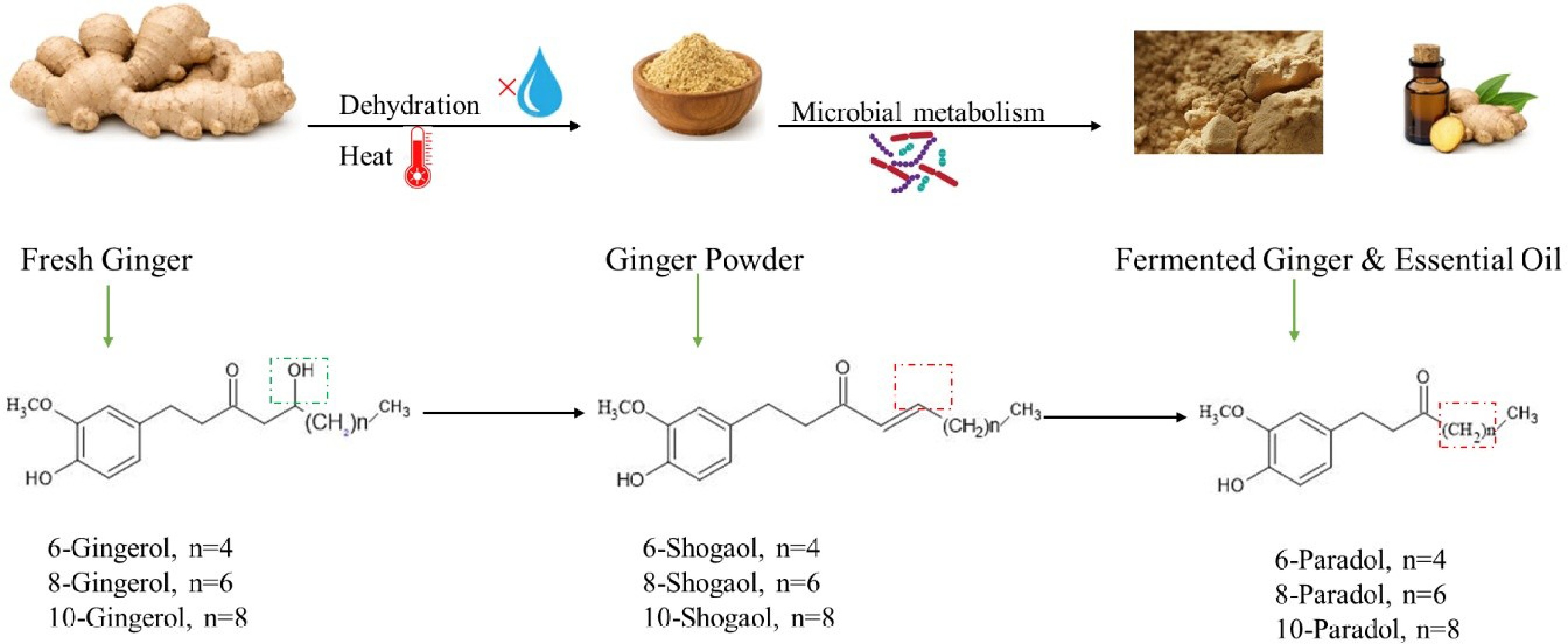
Figure 1.
Effect of ginger processing on the chemical structures of its major bioactive compounds.
Shogaols
-
Shogaols are dehydration products of gingerols, like 6-shogaol and 8-shogaol, which are formed when ginger is dried or cooked[69] (Fig. 1), as a result of the instability of the β-hydroxyl ketone found in ginger when exposed to heat and/or acidic conditions[9]. Consequently, they are more abundant in dried or thermally processed ginger products. They are recognized for their greater pungency, bioavailability, and biological potency compared with gingerols, and are also heat-stable[70,73]. Their anti-inflammatory activities are more potent than those of gingerols[7,25]. Additionally, shogaols exhibit heat stability, allowing them to retain their beneficial properties even after cooking, making shogaol-rich ginger products valuable functional ingredients in human diets and animal nutrition[71].
In addition to their enhanced sensory properties, shogaols exhibit stronger anti-inflammatory and antioxidant activities than gingerols, primarily by suppressing NF-κB signaling and pro-inflammatory cytokines such as tumor necrosis factor-alpha (TNF-α), interleukin-1 beta (IL-1β), and interleukin-6 (IL-6). These compounds also demonstrate superior cellular uptake and metabolic stability, allowing them to exert prolonged biological effects in vivo[7,25].
Furthermore, shogaols serve as powerful activators of the Nrf2 pathway, encouraging the transcription of antioxidant response element (ARE)-regulated genes, including heme oxygenase-1 (HO-1), NAD(P): quinone oxidoreductase 1 (NQO1), SOD, and GPX, thereby boosting the body's natural antioxidant defense systems[9,11] (Fig. 2). Through this mechanism, shogaols play a crucial role in protecting tissues from oxidative stress-induced damage, particularly in metabolically active organs such as the liver and intestines[74,75]. Current evidence also indicates that shogaols provide cytoprotective and anti-apoptotic effects by regulating mitochondrial function, decreasing lipid peroxidation, and maintaining redox homeostasis under stress conditions[76,77]. Furthermore, 6-shogaol was reported to ameliorate liver inflammation in methionine- and choline-deficient model mice by inhibiting oxidative stress[74]. Similarly, 6-shogaol is also known for preventing hepatotoxicity through modulating the NF-κB/MAPK signaling pathway[75].
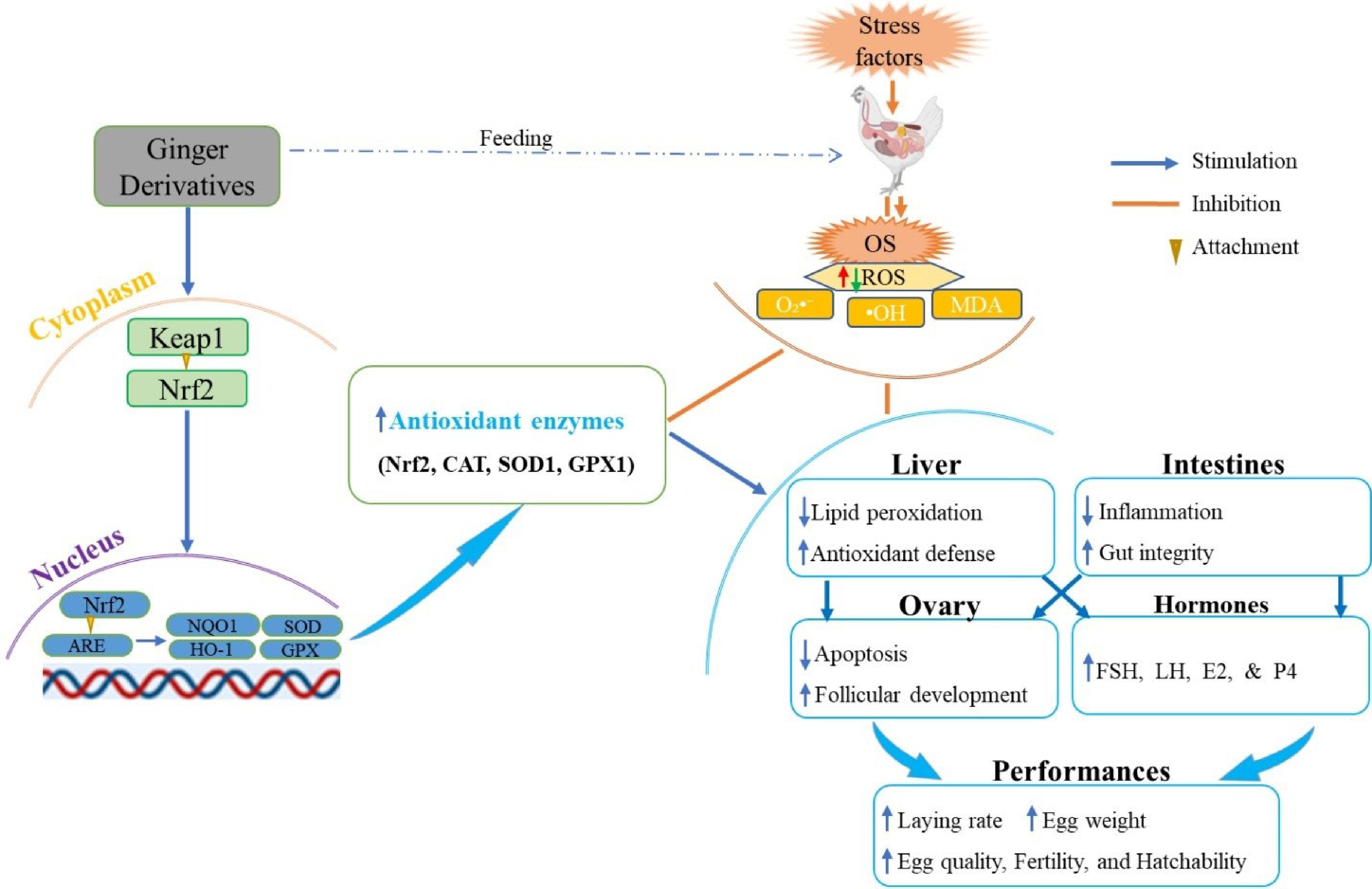
Figure 2.
Schematic diagram showing the multiple biological activities exhibited by supplementary ginger derivatives in the diet of poultry. Abbreviations: ARE, antioxidant response element; E2, estradiol; FSH, follicle-stimulating hormone; GPX, glutathione peroxidase; HO-1, heme oxygenase-1; Keap1, kelch-like ECH-associated protein 1; LH, luteinizing hormone; MDA, malondialdehyde; NQO1, NAD(P)H: quinone oxidoreductase 1; Nrf2, nuclear factor erythroid 2-related factor 2; O2•−, superoxide anion; •OH, hydroxyl radical; OS, oxidative stress; P4, progesterone; ROS, reactive oxygen species; SOD, superoxide dismutase.
Paradols
-
Paradols are hydrogenated derivatives of shogaols, like 6-paradol[69] (Fig. 1). They are produced during the fermentation or processing of ginger; exhibit antioxidant, antimicrobial, and anticancer properties; and contribute to its good flavor[78,79]. Paradol is a hydrogenated form of shogaol and can upregulate the Nrf2 pathway (increasing Nrf2 mRNA/HO-1 and other antioxidant defenses), acting as an Nrf2 activator in specific contexts[72]. The significant advantage of paradols lies in their strong antioxidant properties, which enhance the immune response and improve overall health[80]. Its antimicrobial properties help inhibit pathogen growth, thereby enhancing health status. Furthermore, these hydrogenated forms of shogaols upregulate the Nrf2 pathway, thereby inhibiting oxidative stress[25].
Zingerone
-
Zingerone is a degradation product of gingerols/shogaols and is formed during cooking or processing (Fig. 1). Zingerone is thermally stable, retaining its bioactive properties even at high temperatures, making it a valuable ingredient in culinary applications[81]. It exhibits numerous beneficial properties, including anti-inflammatory, anticancer, and antioxidant effects. For example, in model mice, orally administered zingerone (25 and 50 mg/kg diet) was reported to stimulate ovarian steroidogenesis and folliculogenesis and to upregulate the expression of steroidogenic markers[82]. Similarly, in another model mice, an in vivo study reported that zingerone stimulates androstenedione and estrogen secretion and also up-regulates the expression of CYP19A1 and luteinizing hormone receptor (LHR). An in-silico study also revealed that zingerone has a binding affinity for steroidogenic markers, suggesting that it modulates testicular steroid biosynthesis in normal mice[83].
-
Ginger and its derivatives have been investigated as phytogenic feed additives in poultry to improve production performance, egg quality, antioxidant status, gut health, nutrient absorption, immunity, and resistance to pathogens[54] (Table 1). Recent studies show consistent benefits for layers, especially in improved feed conversion, egg weight, and egg-quality traits[13]. The mechanistic themes include antioxidant and cytoprotective actions (activation of endogenous antioxidant systems and the Nrf2 pathway), modulation of the gut morphology to improve nutrient utilization, and anti-inflammatory and immunomodulatory effects[64,59].
Studies have shown the positive effects of dietary ginger and its synergistic effects on poultry's production performance[18]. On the contrary, some findings also report no impact, which may depend on the product's form and inclusion level, as well as the birds' genetics, production phase, and baseline diet composition[63]. Both alone and in combination with other phytogenic plants, ginger derivatives have consistently shown promising results in poultry research. For example, ginger oil alone or in combination with cinnamon oil at 0.5 mL and 1.0 mL/kg in the diet of Japanese quail was reported to reduce cholesterol levels, increase serum antioxidant capacity, and enhance hepato-intestinal morphology[34].
In many cases, dietary ginger and its derivatives have been reported to improve egg-quality parameters, including albumen height, Haugh units, and reduced yolk cholesterol (Table 1). Even yolk color is often reported to be enhanced, likely by pigments and antioxidant protection of yolk lipids, which affect the marketability and shelf-life of the egg[13,18]. This being the case, hens' responses vary with the dose of dietary ginger[84].
Across layer and broiler studies, ginger supplementation, particularly concentrated extracts, has been reported to elevate endogenous antioxidant enzymes, including SOD, GSH-Px, CAT, and total antioxidant capacity (T-AOC), while reducing the lipid peroxidation marker MDA in poultry[31,60]. These changes correlate with improved oxidative stability in the egg and, in some cases, with production metrics[18].
Recent studies have shown that ginger bioactive compounds activate the Nrf2 antioxidant pathway, a central mechanism that induces the expression of cytoprotective enzymes, modulates inflammatory signaling (e.g., NF-κB/Akt-related axes), and regulates detoxification genes[25]. A phytogenic premix, when supplemented to layers' diet at 750 and 1,000 mg/kg, was reported to improve laying rate and egg mass, downregulate AhR pathway genes in the ovaries, and have positive cytoprotective effects on Nrf2 pathway genes[59]. In addition, ginger reduced serum transaminases and markers of hepatic stress in several experiments, supporting a hepatoprotective role that can preserve metabolic capacity for egg synthesis[18] and, in turn, enhance egg production and quality[25]. Furthermore, dietary ginger supplementation has been reported to improve intestinal morphology and digestive enzyme activity, thereby enhancing feed utilization and production[84].
Enhanced reproduction performance
-
Mechanistically, the key proposed modes of action of ginger are its antioxidant and antioxidative stress effects[11] (Fig. 2). This suggests that oxidative damage in the reproductive organs, gut, and other metabolic tissues is mitigated by ginger supplementation, helping maintain the optimal function of the organs involved in egg production[13,34]. The same is true for male poultry species, in which dietary ginger is more often reported to enhance antioxidant capacity and thus protect reproductive tissues, such as testes, from lipid peroxidation and oxidative stress[57,85].
In the previous reports, dietary ginger was reported to improve egg fertility and hatchability traits in poultry[86,87], which was believed to be attributed to the antioxidative effect of ginger[78] and also the positive impact of ginger bioactives on nutrient digestion and absorption[88], leading to better reproductive performance, egg quality, and thus increased fertility and hatchability[86]. In general, phytogenic feed additives and their synergy are commonly used to enhance the reproductive performance of poultry, including egg fertility and hatchability[50,51] (Table 1). However, several factors, including nutritional status, breed type[89], egg size[90], age[91], incubation conditions, and egg storage duration, influence egg fertility and hatchability[92]. For example, administering 600 mg of ginger extract orally has been shown to boost sperm production and effectively preserve rooster semen for up to 48 h, thereby improving fertility and egg hatchability[65].
Previous reports indicated that dietary ginger in combination with vitamin E enhances reproductive hormone levels in chickens[93]. In general, phytogenic feed additives are reported to enhance the production of reproductive hormones in both normal and stressed poultry[93,94], attributed to their antioxidative effects that reduce oxidative stress[95,96]. Mechanistically, these phytogenic feed additives are known to reduce oxidative stress in the reproductive organs, thereby supporting reproductive organs' growth and development and reproductive hormone production[49,97] (Fig. 2).
Furthermore, previous reports found that supplementing ginger essential oil (100–150 µl/kg body weight) to the diet of Japanese quails increases their relative uterus weight and follicular development[87], which is likely caused by ginger's bioactive compounds, which may reduce oxidative stress in ovarian tissue and follicular atresia, thereby safeguarding developing follicles from oxidative damage[59]. Therefore, most scholars suggest that dietary ginger powder may enhance the development of reproductive organs, thereby improving reproductive performance in poultry[59,98].
-
Dietary ginger derivatives provide promising alternatives to synthetic feed additives in the poultry industry. They have been shown to improve productivity and reproductive performance in poultry by increasing reproductive hormone levels, promoting reproductive organ development, and reducing oxidative stress. Among the different forms of ginger derivatives, ginger powder is the most commonly used in poultry feed supplements due to its low cost, ease of processing, and ease of inclusion in the diet at an optimal dosage range (5–10 g/kg of the diet). Although promising alternatives to synthetic antibiotics are available in the poultry industry, the molecular mechanisms by which dietary ginger derivatives regulate productive and reproductive performance remain to be investigated. In addition, a separate study is needed on different breeds and environmental conditions, as they may affect the responsiveness of poultry species to dietary ginger derivatives to support standardized feeding and supplementation.
The authors would like to acknowledge some of the Ambo University staff members for their valuable comments and constructive suggestions during the preparation of this manuscript. This review work did not receive any funding.
-
Not applicable.
-
The authors confirm their contributions to the paper as follows: conceptualization and writing – original draft: Debela BD; visualization: Hirpassa KE, Dejene TB, Kebede HB; data curation: Debela BD, Hirpassa KE, Dejene TB, Kebede HB; investigation: Debela BD, Hirpassa KE; validation: Debela BD; writing – reviewing and editing: Hirpassa KE, Dejene TB, Kebede HB. All authors reviewed the results and approved the final version of the manuscript.
-
Data sharing is not applicable to this review work.
-
The authors declare that they have no conflict of interest.
- Copyright: © 2026 by the author(s). Published by Maximum Academic Press on behalf of Nanjing Agricultural University. This article is an open access article distributed under Creative Commons Attribution License (CC BY 4.0), visit https://creativecommons.org/licenses/by/4.0/.
-
About this article
Cite this article
Derese DB, Ejeta HK, Biratu DT, Beshaha KH. 2026. Ginger and its derivatives as natural feed additives to enhance productive and reproductive performance in poultry: a review. Animal Advances 3: e023 doi: 10.48130/animadv-0026-0009 

Ginger and its derivatives as natural feed additives to enhance productive and reproductive performance in poultry: a review
- Received: 04 March 2026
- Revised: 23 March 2026
- Accepted: 24 April 2026
- Published online: 06 August 2026
Abstract: Ginger (Zingiber officinale Roscoe) has attracted attention in poultry production and reproduction because of its pharmacological properties and numerous bioactive compounds. This review explores the use of ginger derivatives, including ginger powder, extracts, oils, and fermented ginger, as natural alternatives to synthetic antibiotics in poultry diets. It also highlights their main bioactive compounds, such as gingerols, shogaols, paradols, and zingerone, which are known for their antioxidant, antimicrobial, anti-inflammatory, and anti-apoptotic effects. This review is based on recent studies focusing on the roles of ginger and its derivatives, and/or ginger combined with other phytogenic additives, in poultry feed supplements. Additionally, it emphasizes the benefits of dietary supplementation with ginger derivatives for improving productive and reproductive performance, including laying rate, reproductive hormone production, egg production and quality, fertility, hatchability, and overall immunity and health in poultry. The findings suggest that adding ginger derivatives and/or combining them with other phytogenic feed additives to poultry diets could provide economic benefits and support sustainable poultry farming, aligning with the increasing demand for antibiotic-free products. In conclusion, dietary ginger and its derivatives, when supplemented at an optimal rate, are a promising natural alternative to synthetic antibiotics in poultry production. Therefore, a comprehensive understanding of its role in poultry production is crucial.