












-
The flower is the main ornamental organ in flowering plants. The floral organs of typical angiosperms are composed of four whorls from the outside to the inside, which are divided into the sepal, petal, stamen, and pistil in turn[1]. The number and morphology of petals are the key factors to determine the ornamental characteristics[2]. Double-flower is popular with the public because of its ornamental value, making it an important goal of breeding. Extensive research has established the ABC (DE) model as a classical theoretical framework for explaining floral organ development, and has shown that floral organs formation are regulated by A-, B-, C-, D-, and E-class genes, with the corresponding relationships: sepal (A + E-Class), petal (A + B + E-Class), stamen (B + C + E-Class), pistil (C + E-Class), ovule (D + E-Class)[3−6]. The ABCE model was initially established in Arabidopsis and is relatively conserved in most species[7−10]. Kanno et al.[11] and van Tunen et al.[12] proposed the expansion of class B gene expression from the second and third whorl into the first whorl and explained why the first two rounds of floral organs in lily are petal-like structures. In the ABC model, class A and class C genes acted antagonistically[9]. Extension of Class A gene expression into the third whorl caused stamens to undergo homeotic transformation into petal-like structures, resulting in double-flower[13]. Cai et al.[14] found that the expression levels of the PpAP1 and PpAP3 genes were significantly upregulated in double-flowered ornamental peach cultivars compared to single-flowered cultivars, whereas PpAG expression exhibited the opposite pattern. The AtAP1 mutant exhibited a petal-loss phenotype, but heterologous expression of the chestnut CmAP1 gene not only accelerated flowering but also fully rescued the loss of petals[15]. Additionally, Zhang et al.[16] found that the downregulation of the TeAG1 gene in marigold led to the transformation of stamens and carpels into corolla-like structures[16].
In addition to genetic regulation, nutritional status also affected petal number, because more petals required a greater nutrient supply. For example, sequential flowers in Cardamine hirsuta differ in organ number, with early-stage flowers generally bearing more petals than later flowers[17,18]. Tooke & Battey[19] found that the number of normal petals increased after removing part of the leaves in Impatiens. In Syringa vulgaris L., the soluble sugar content of double flowers was significantly higher than that of single flowers during flower bud differentiation[20]. Together, these studies implied that nutritional status or the leaf source signal may affect petal number. Although both the ABC model and nutritional status can affect floral organ number, the relationship between the two remained unclear, as no related research has been reported to date.
Lilies, known as the 'king of bulbous flowers', are highly prized for their ornamental value. Double-flowered lilies have become a market focus due to their unique flower type. Single-flowered lilies have two whorls consisting of six petals, six stamens, and one pistil. In contrast, double-flowered lilies have a more complex floral structure with a significantly greater number of normal petals. Most double-flowered lilies also exhibit a transitional structure(petaloid stamens) between petals and stamens, suggesting that the double-flowered phenotype arises from homeotic transformation. Akita et al.[21] isolated the C-class gene LelAG1 from the double-flowered lily cultivar 'Elodie' and confirmed that this gene was closely associated with the degree of stamen petaloidy. Li et al.[22] obtained two Class C genes from the 'Red Twin' lily cultivar and found that the expression level of LrtAG1 was affected by temperature, and lower temperature promoted the staminal petalization process. Chen et al.[23] found that ectopic expression of three AP1-like genes (LMADS5, LMADS6, LMADS7) in lilies led to the transformation of Arabidopsis sepals into carpel-like structures and petals into stamen-like structures.
Many types of double-flowered lilies are available on the market. Some are relatively stable in terms of petal number and petaloid stamens, whereas others, such as the Asiatic hybrid cultivars 'Annemarie's Dream' and 'Tiny Double You', show variable performance depending on bulb circumference. This suggests that the instability of the double-flowered phenotype may be related to the nutritional status in lilies. This also provides suitable material for us to study the relationship between the ABC model gene expression and nutritional status.
To investigate whether nutritional status affects the degree of doubleness in 'Tiny Double You' lily and how it influences different floral structures, this study used bulbs of four circumference grades as experimental materials. Supplementary fertilizer was applied to small-grade bulbs, and their growth and floral traits were measured. Given that flower induction occurred during cold storage, the contents of soluble sugars, reducing sugars, and soluble proteins were quantified during this period[24]. In addition, we examined the expression patterns of ABCE genes in 'Tiny Double You' under different bulb sizes and fertilizer treatments, as well as in the single-flowered lily L. davidii var. unicolor. This study aimed to elucidate whether nutritional status is associated with changes in the expression of floral development genes and thereby to provide a theoretical basis and practical guidance for maintaining the double-flowered trait during commercial cultivation of 'Tiny Double You'.
-
Healthy, disease-free, and undamaged bulbs of the 'Tiny Double You' were harvested in autumn from the lily germplasm of Beijing Forestry University (Beijing, China) and graded into four categories based on their circumference: 8–10, 10–12, 12–14, and 14–16 cm (Fig. 1). The 14–16 and 12–14 cm groups consisted of 21 and 30 bulbs. For the fertilization experiment, 55 and 52 bulbs were treated in the 10–12 and 8–10 cm groups, with 50 and 47 bulbs serving as their unfertilized controls.
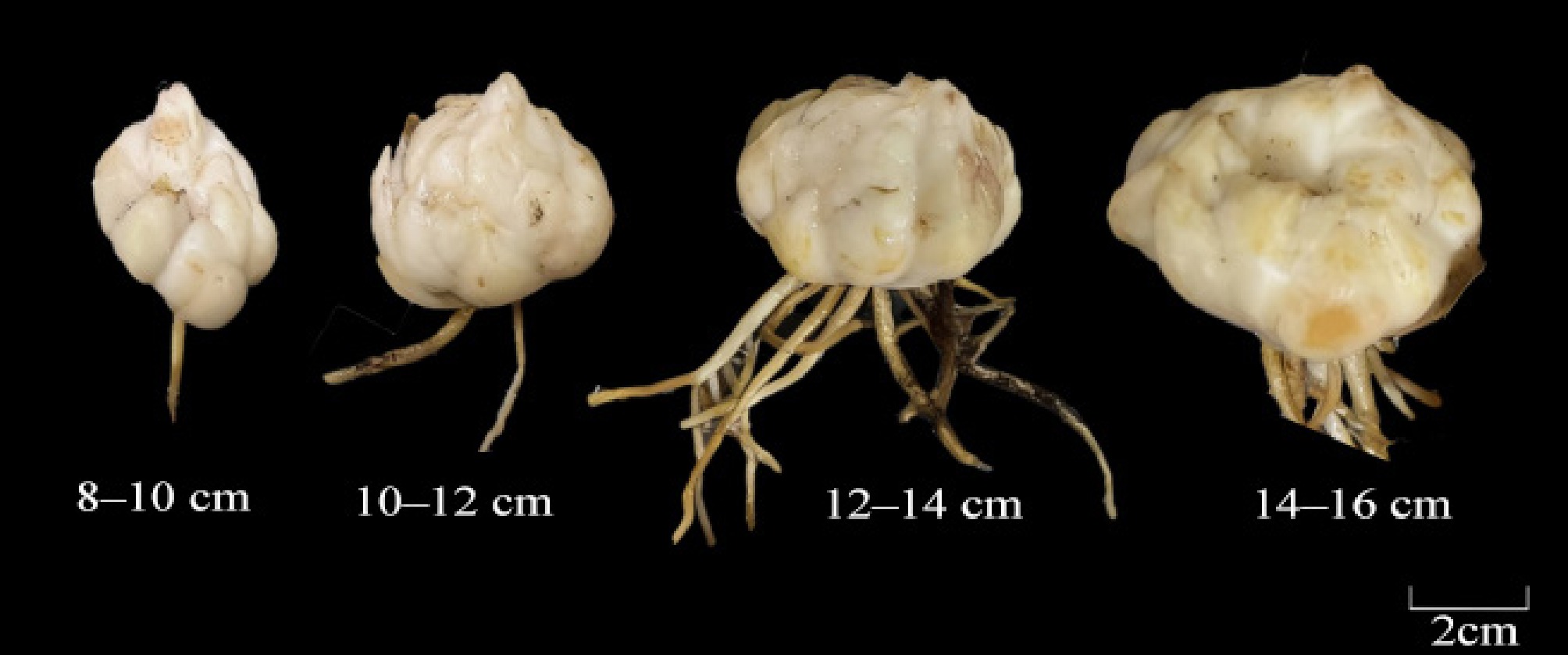
Figure 1.
Bulbs with different circumferences.
The bulbs of all four grades were immersed in a 1,000-fold diluted aqueous solution of 50% carbendazim wettable powder for 30 min to prevent fungal infection, then rinsed thoroughly with water and air-dried at room temperature. The bulbs were packed with moist sterilized peat soil and stored in a 4 °C room for 12 weeks to fulfill their chilling requirements.
Cultivation and fertilization treatments
-
Following the completion of cold storage, bulbs of four grades were planted in the greenhouse located in Shunyi District, Beijing, China. The cultivation substrate consisted of peat moss (Pindstrup) and perlite at a volume ratio of 3:1, with the pH adjusted to 5.5. All bulbs were cultivated under identical environmental conditions. The planting density was 20–25 plants m−2, and the planting depth was 10–15 cm. After shoot emergence, supplementary fertilizers comprising a microbial fertilizer and a water-soluble fertilizer were applied to plants of small-sized bulbs (8–10 cm and 10–12 cm) every 10 d at an amount of 30 g/m2[25] sustained until anthesis. The microbial fertilizer (Shandong Zhengneng Agricultural Development Co., Ltd., China) contained beneficial microorganisms, primarily Bacillus subtilis and Bacillus licheniformis, with a viable count of ≥ 2 × 10⁸ CFU/g. Additionally, the primary nutrient composition of the water-soluble fertilizer (Gat Fertilizers, Israel) was N : P2O5 : K2O = 20:20:20, supplemented with essential micronutrients.
Investigation of morphological traits
-
Commercial bulbs of 'Tiny Double You' larger than 12 cm in circumference typically produce flowers comprising normal tepals (three whorls comprising nine tepals in total), petaloid stamens, normal stamens, and a single pistil, as illustrated in Fig. 2.
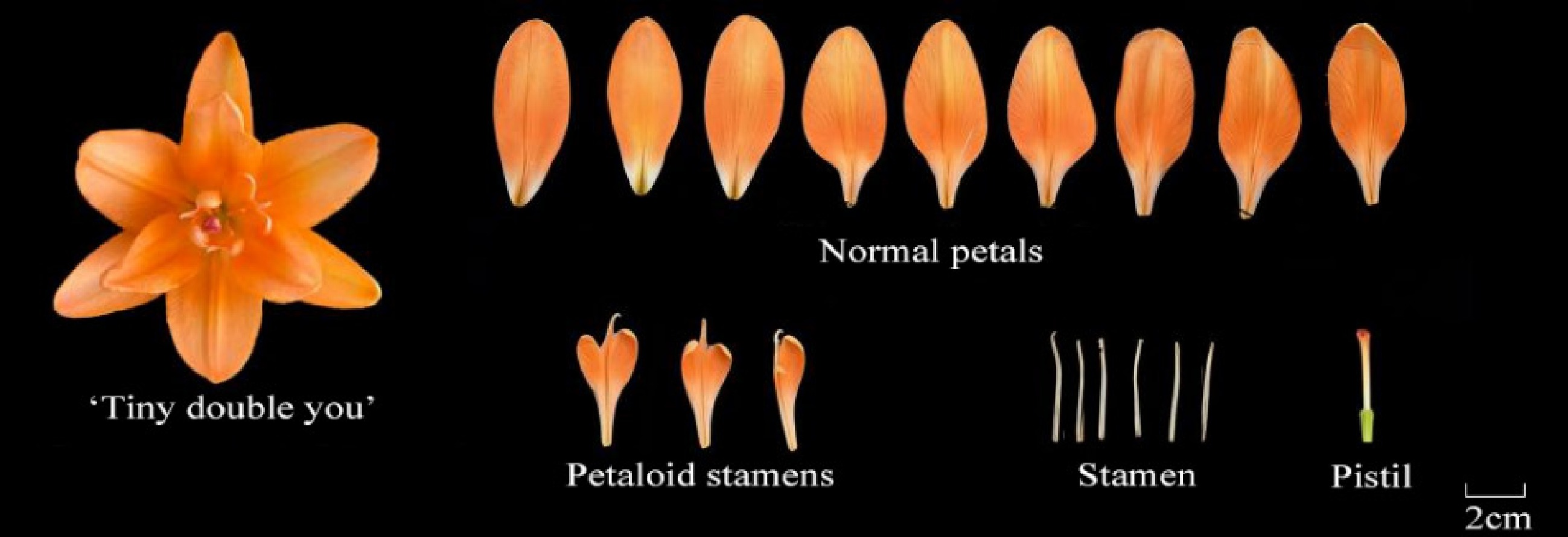
Figure 2.
Typical floral organs of 'Tiny Double You'.
During the flowering period in May 2025, the flower structure of different bulb sizes was investigated, including the number of petals, petaloid stamens, normal stamens, pistils, and the total number of floral organs, normal stamen number, and the total number of floral organs. Furthermore, other morphological data, including vegetative growth and floral traits, were collected. Vegetative growth traits contain plant height, stem diameter, leaf length and width, leaf number, and total flower number per plant. Floral morphological traits comprised flower diameter, outer tepal length and width, inner tepal length and width, style length, filament length, and ovary length and width. All measurements were replicated three times, and data are expressed as mean values.
Measurement of soluble sugar, reducing sugar, and soluble proteins during cold storage
-
The reducing sugar content was determined using the 3,5-dinitrosalicylic acid (DNS) method, while the total soluble sugar content was quantified via the anthrone colorimetric assay[26]. The soluble protein content was measured according to the Coomassie brilliant blue G-250 method[27]. All treatments were performed in triplicate.
RT-qPCR assays of ABCE genes at the floral organ development stage
-
The floral buds (approximately 0.5 cm in length) were collected from plants in four grades of bulbs and fertilization treatments and immediately frozen in liquid nitrogen and stored at –80 °C. Floral buds of the same size from the single-flowered L. davidii var. unicolor (14–16 cm bulb grade) were utilized as the single-flowered lily control. Each circumference and control consisted of three independent biological replicates. Total RNA was extracted using the EASY spin Plus Plant RNA Extraction Kit (Aidlab Biotechnologies, Beijing, China) according to the manufacturer's protocols. The extracted RNA was subsequently reverse-transcribed into first-strand cDNA. Quantitative real-time PCR (RT-qPCR) assays were performed to determine the expression levels of floral development-related genes using a CFX96 Real-Time PCR Detection System (Bio-Rad, Hercules, CA, USA). Gene-specific quantitative primers were designed using Primer 3 software; the specific primer sequences used for RT-qPCR are listed in Supplementary Table S1. The Aquaporin TIP4-1 gene was employed as the internal reference control for normalization. The relative expression levels of the target genes were calculated using the 2−ΔΔCt method.
Statistical analysis
-
Data processing and preliminary organization were conducted using Microsoft Excel 2018. All statistical analyses were performed utilizing IBM SPSS software (v23.0, IBM Corp., Armonk, NY, USA). Data were analyzed by one-way ANOVA, and mean comparisons were performed using Tukey's HSD test at p < 0.05.
-
We measured the vegetative growth traits and average number of flowers of 'Tiny Double You' lilies across different bulb circumference grades and fertilization treatments during the flowering period. As shown in Table 1, the 14–16 and 12–14 cm bulb circumference groups exhibited the highest growth performance (Table 1); the average stem diameter, leaf number, and flower number per plant were significantly greater than those of the smaller bulb groups, and their average plant heights reached 67.79 and 67.56 cm, respectively. In contrast, the groups with bulb circumferences of 8–10 and 10–12 cm showed significantly lower growth traits (Table 1). Additionally, higher morphological variations were observed within these smaller-circumference bulbs compared to the bigger groups (Supplementary Fig. S1). Notably, the 8–10 cm group had an average plant height of just 53.60 cm, a stem diameter of 5.03 mm, 43.26 leaves, and only 1.30 flowers per plant (Table 2), indicating that inadequate nutritional reserves severely restrict their flowering capacity. After supplementary fertilization, a growth-promoting effect was observed, especially in the 8–10 cm group (Table 1).
Table 1. Growth traits and number of flowers under different bulb circumferences and fertilization treatments.
Bulb circumference (cm) Plant height (cm) Stem diameter (mm) Leaf length (mm) Leaf width (mm) Number of leaves Number of flowers 14–16 67.79 ± 3.98a 8.62 ± 0.54a 94.80 ± 11.75a 12.06 ± 1.72a 74.48 ± 5.23a 5.14 ± 0.79a 12–14 67.56 ± 4.44a 7.50 ± 0.39b 95.64 ± 7.85a 10.70 ± 0.99ab 64.16 ± 6.18b 4.23 ± 0.94b 10–12 54.40 ± 4.31b 5.94 ± 0.87c 93.68 ± 9.00a 10.30 ± 1.38bc 45.10 ± 4.59c 2.35 ± 1.25c 8–10 53.60 ± 6.36b 5.03 ± 0.55d 83.34 ± 12.22b 9.30 ± 0.89d 43.26 ± 4.42c 1.30 ± 0.56d 10–12* 45.37 ± 4.49d 5.77 ± 0.57c 91.25 ± 12.33a 10.18 ± 1.16bc 44.66 ± 5.47c 2.16 ± 1.03c 8–10* 48.77 ± 6.30c 5.01 ± 0.69d 82.13 ± 12.71b 9.78 ± 1.38cd 44.24 ± 6.77c 1.37 ± 0.51d Note: asterisks indicated the fertilization treatments. Data were mean ± SD, different letters indicated significant differences (p < 0.05). Table 2. The flowering rate and flower number of different bulb sizes and treatments.
Bulb circumference (cm) Flowering (%) 1 flower rate (%) 2 flowers rate (%) 3 flowers rate (%) > 4 flowers rate (%) 14–16 100 0 0 9.5 90.5 12–14 100 0 0 33.3 66.7 10–12 94 34 34 25.6 6.4 8–10 48.9 78.3 17.4 4.3 0 10–12* 100 27.3 49.1 20 3.6 8–10* 71.2 81.1 16.2 2.7 0 Asterisks indicate the fertilization treatments; data are means. Flowering capacity was strongly correlated with both bulb circumference and nutrient supplementation (Table 2). The flowering rate was 100% for the 14–16 and 12–14 cm groups, 94% in the 10–12 cm group, and only 48.9% in the 8–10 cm group. Moreover, all plants of the 14–16 and 12–14 cm groups had three or more flowers, while for the 8–10 cm group, only 48.9% of plants had flowers and 78.3% of plants had a single flower. After fertilization, improved flowering capacity was observed in bulbs with circumferences of less than 12 cm. Specifically, the flowering rate of the 8–10 cm bulbs increased to71.2%, and among the 10–12 cm bulbs, the proportion of plants producing two flowers increased markedly to 49.1%.
Morphological traits of the first flower in response to bulb size and fertilization treatments
-
The floral structure of the first flower was examined for four groups and two treatments. As shown in Table 3, larger-circumference bulbs (14–16 and 12–14 cm) exhibited relatively stable double floral traits. As bulb circumference decreased, the degree of doubleness decreased with fewer normal petals and petaloid stamens (Table 3). For the total number of floral organs, there were significant differences between the bulbs above 12 cm and the 10–12 and 8–10 cm bulb groups, which were mainly reflected in the number of normal petals and petaloid stamens, especially the number of normal petals. The 14–16 cm group had a mean of 9.24 normal petals, whereas the 8–10 cm group averaged only 7.61 (Table 3). Likewise, the 14–16 and 12–14 cm groups averaged 3.95 and 4.20 stamens, respectively, whereas the 8–10 cm group averaged only 2.91, indicating a tendency toward single flowers (Table 3). With the increase in bulb circumference, flower size traits such as flower diameter and outer petal length were higher (Table 3). However, no significant differences were detected among treatments in reproductive organ traits such as stamen number, style length, filament length, ovary length, and width (Table 3). This suggested that nutritional status was more strongly associated with petal-related structures than with the core reproductive organs. Fertilization of smaller-circumference bulbs improved their floral traits to a certain extent. Specifically, in 8–10 cm bulbs, increased nutrient supply was associated with an increase in the number of petaloid stamens from 2.91 to 4.02, while no significant change was observed in the number of normal petals. Furthermore, for 10–12 cm bulbs, a slight increase in normal petals was observed (Supplementary Fig. S2).
Table 3. Flower morphological traits of the first flower under different bulb size and fertilization treatments.
Traits Bulb circumference(cm) 14–16 12–14 10–12 8–10 10–12 * 8–10* Total number of floral organs 18.05 ± 1.17a 17.77 ± 1.34ab 16.74 ± 1.56c 15.13 ± 1.57d 16.95 ± 1.48bc 15.37 ± 2.02d Number of normal petals 9.24 ± 0.44a 9.00 ± 0.00a 8.28 ± 1.15bc 7.61 ± 1.44cd 8.65 ± 0.84ab 7.51 ± 1.43cd Number of petaloid stamens 3.95 ± 1.02a 4.20 ± 1.42a 3.96 ± 1.33a 2.91 ± 1.44b 4.24 ± 1.29a 4.02 ± 1.52a Number of stamens 4.86 ± 1.53a 4.57 ± 1.57a 4.51 ± 1.49a 4.60 ± 1.56a 4.06 ± 1.47a 3.84 ± 1.66a Flower diameter (cm) 10.19 ± 9.67a 9.24 ± 10.4bc 9.32 ± 10.63bc 8.63 ± 9.01c 9.60 ± 12.24ab 9.000 ± 9.16bc Outer perianth length (mm) 62.11 ± 4.69a 60.92 ± 3.54ab 57.42 ± 4.93c 56.72 ± 3.04c 58.66 ± 4.78bc 57.32 ± 4.52c Outer perianth width (mm) 25.52 ± 1.74a 23.17 ± 1.76b 21.96 ± 2.06bc 21.55 ± 1.79c 21.80 ± 1.71c 21.59 ± 2.30c Inner perianth length (mm) 62.45 ± 4.89a 58.58 ± 6.17ab 56.74 ± 6.59b 56.26 ± 3.28b 57.64 ± 7.74b 57.45 ± 5.87b Inner perianth width (mm) 29.90 ± 2.60a 28.14 ± 2.41b 28.67 ± 2.43ab 27.13 ± 3.03b 27.92 ± 2.68b 27.46 ± 2.59b Stylus length (mm) 24.90 ± 3.52a 23.71 ± 2.42ab 22.38 ± 3.74b 22.23 ± 2.84b 22.50 ± 2.67b 22.00 ± 2.99b Filament length (mm) 33.98 ± 2.97a 32.76 ± 3.52a 32.60 ± 3.60a 32.38 ± 2.80a 32.00 ± 4.28a 33.32 ± 3.62a Ovary length (mm) 14.44 ± 1.26ab 14.52 ± 1.00ab 14.68 ± 0.92a 13.80 ± 1.23b 14.67 ± 1.00a 14.34 ± 1.16ab Ovary width (mm) 4.76 ± 0.37a 4.69 ± 0.52a 4.88 ± 0.58a 4.93 ± 0.34a 4.83 ± 0.54a 4.84 ± 0.52a Asterisks indicate the fertilization treatments; data are mean ± SD. Different letters indicated significant differences (p < 0.05). Floral traits with flowering sequences in two large bulb circumference groups
-
Since smaller bulbs (8–10 and 10–12 cm) typically produce only one or two flowers, the analysis of flowers at different flowering orders within the inflorescence was exclusively conducted on larger bulbs (12–14 and 14–16 cm).
For 14–16 and 12–14 cm circumference bulbs, floral characteristics changed progressively with flowering sequence (Fig. 3; Table 4). In the 14–16 cm circumference bulbs, the first three flowers exhibited relatively stable double-flowered characteristics, with approximately nine normal petals. However, the average number of normal petals in the fourth flower decreased significantly to an average of 7.63 (Table 4). The width of the outer petals gradually decreased from 25.52 mm in the first flower to 23.11 mm in the fourth flower (Table 4). Similar to the 14–16 cm circumference bulbs, the flowering sequence of 12–14 cm circumference bulbs also mainly influenced the number of normal petals, with significant differences between the first two flowers and the third and fourth flowers. Notably, the average number of normal petals decreased significantly to 6.7 in the fourth flower, approaching the floral morphology of a single flower. In contrast, the number of petaloid stamens and stamens did not show significant differences, with each flower typically possessing three to four petaloid stamens (Fig. 3; Table 4).
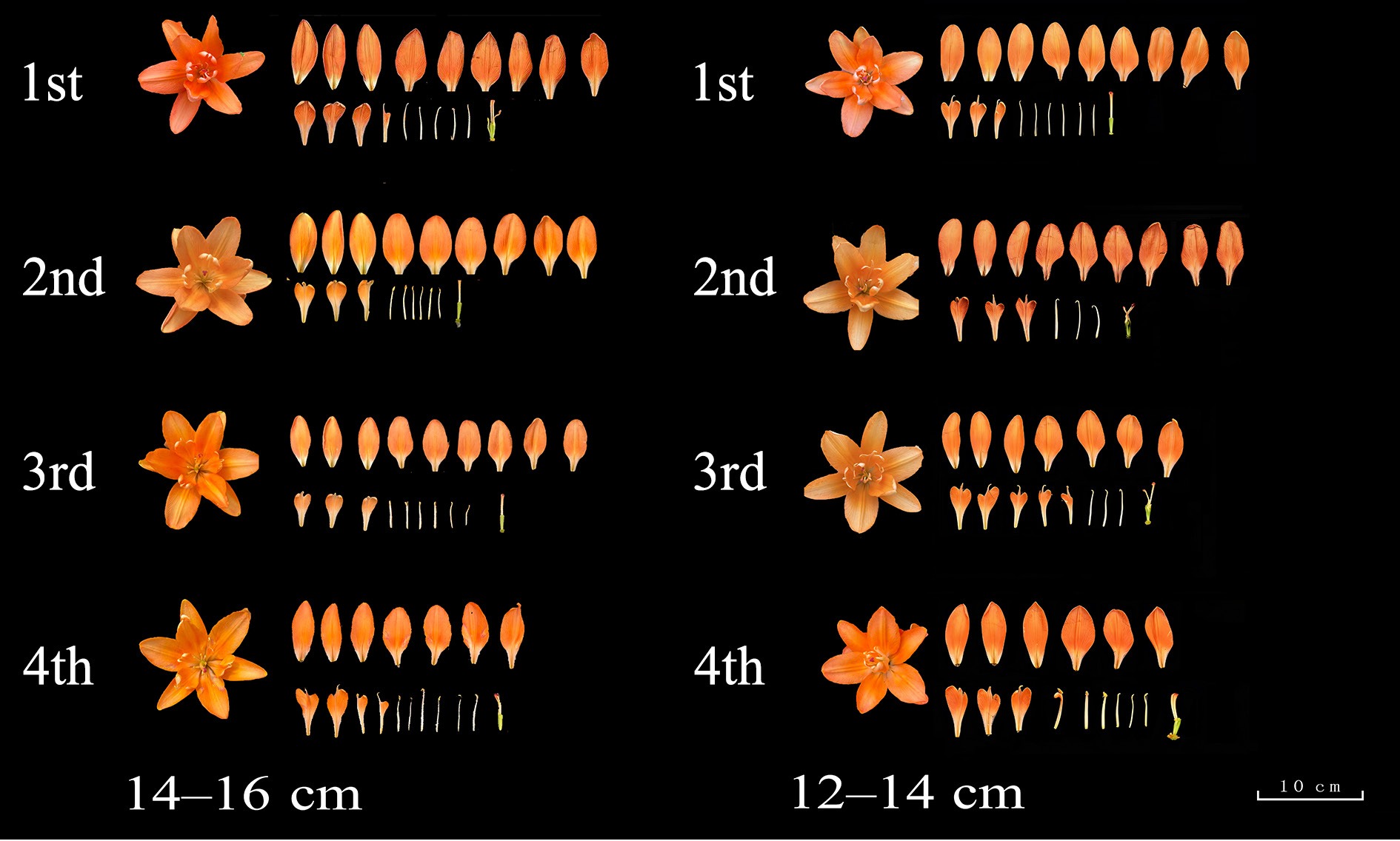
Figure 3.
Floral traits with different flowering sequences for 14–16 cm and 12–14 cm bulbs. Note: 1st, 2nd, 3rd, and 4th represented the first, second, third, and fourth flowers, respectively.
Table 4. Floral traits with four blooming sequences in 14–16 cm and 12–14 cm bulb circumferences.
Traits Flowering sequence for 14–16 cm Flowering sequence for 12–14 cm 1st 2nd 3rd 4th 1st 2nd 3rd 4th Total number of floral organs 18.05 ± 1.17a 17.71 ± 1.01ab 17.52 ± 0.87ab 16.79 ± 1.65b 17.77 ± 1.14a 17.50 ± 1.20a 16.93 ± 1.80a 15.85 ± 1.39b Number of normal petals 9.24 ± 0.44a 9.19 ± 0.40a 8.57 ± 1.08a 7.63 ± 1.38b 9.00 ± 0.00a 9.00 ± 0.74a 8.10 ± 1.37b 6.70 ± 1.17c Number of petaloid stamens 3.95 ± 1.02a 3.95 ± 1.32a 3.48 ± 1.08a 3.58 ± 1.17a 4.20 ± 1.42a 3.93 ± 1.28a 3.83 ± 1.09a 3.75 ± 1.48a Number of stamens 4.86 ± 1.53a 4.57 ± 1.47a 5.48 ± 1.25a 5.58 ± 1.21a 4.57 ± 1.57a 4.57 ± 1.28a 5.00 ± 1.23a 5.40 ± 1.31a Flower diameter (cm) 10.19 ± 9.67a 10.14 ± 9.15a 9.92 ± 9.75a 9.64 ± 11.61a 9.24 ± 10.40ab 9.46 ± 8.89a 9.02 ± 11.19ab 8.70 ± 10.54b Outer petal length (mm) 62.11 ± 4.69a 61.70 ± 5.04a 61.09 ± 6.92a 60.06 ± 4.07a 60.92 ± 3.54a 60.40 ± 4.15a 58.92 ± 3.84a 58.28 ± 5.04a Outer petal width (mm) 25.52 ± 1.74a 25.26 ± 1.81ab 24.04 ± 1.87bc 23.11 ± 2.11c 23.17 ± 1.76a 22.87 ± 1.85ab 22.36 ± 1.64ab 21.78 ± 2.22b Inner petal length (mm) 62.45 ± 4.89a 60.97 ± 4.15a 61.46 ± 4.00a 59.10 ± 4.32a 58.58 ± 6.17a 59.87 ± 4.35a 57.32 ± 7.09a 57.30 ± 5.10a Inner petal width (mm) 29.90 ± 2.60a 29.02 ± 2.71a 28.55 ± 2.18a 28.94 ± 2.84a 28.13 ± 2.41a 27.93 ± 1.91a 27.68 ± 3.20a 28.16 ± 2.74a Stylus length (mm) 24.90 ± 3.52a 22.90 ± 3.61a 22.90 ± 3.54a 22.03 ± 3.48a 23.89 ± 2.40a 23.46 ± 3.13a 22.93 ± 3.41a 22.23 ± 3.36a Filament length (mm) 33.98 ± 2.97a 32.00 ± 3.78a 32.15 ± 3.19a 32.56 ± 4.30a 33.01 ± 3.34a 32.52 ± 3.27a 31.50 ± 3.16a 31.82 ± 3.38a Ovary length (mm) 14.44 ± 1.26a 14.17 ± 1.17a 14.81 ± 1.13a 14.52 ± 1.00a 14.56 ± 0.99a 14.56 ± 1.10a 14.28 ± 1.28a 14.55 ± 1.48a Ovary width (mm) 4.76 ± 0.37a 4.69 ± 0.60a 4.91 ± 0.52a 4.70 ± 0.49a 4.70 ± 0.53a 4.91 ± 0.51a 4.83 ± 0.57a 4.81 ± 0.47a 1st, 2nd, 3rd, and 4th represented the first, second, third, and fourth flowers, respectively. Data are mean ± SD. Different letters indicated significant differences (p < 0.05). Changes in soluble sugars, reducing sugars, and soluble proteins in bulbs of different circumferences during cold storage
-
Since 'Tiny Double You' completed flower bud differentiation during cold storage, and its apical meristems enter the floral transition stage after 8 weeks of cold storage, the nutrient-related indices in bulbs of different circumferences were measured during this period. As shown in Fig. 4a, soluble sugar content showed an upward trend from 0 weeks to 4 weeks, followed by a marked decline thereafter, in four different circumference grades (Fig. 4a). Notably, the timing of the peak concentration varied with bulb size: larger bulbs (14–16 and 12–14 cm) attained maximum soluble sugar content at 6 weeks, whereas smaller bulbs (8–10 and 10–12 cm) peaked earlier, at 4 weeks. In addition, the soluble sugar content in larger bulbs was consistently higher than that in smaller bulbs. During the floral induction phase (8–12 weeks), the disparity between the two size groups widened further, with soluble sugar levels in larger bulbs remaining relatively stable at approximately 65 mg/g while those in smaller bulbs declined sharply to 52 mg/g.
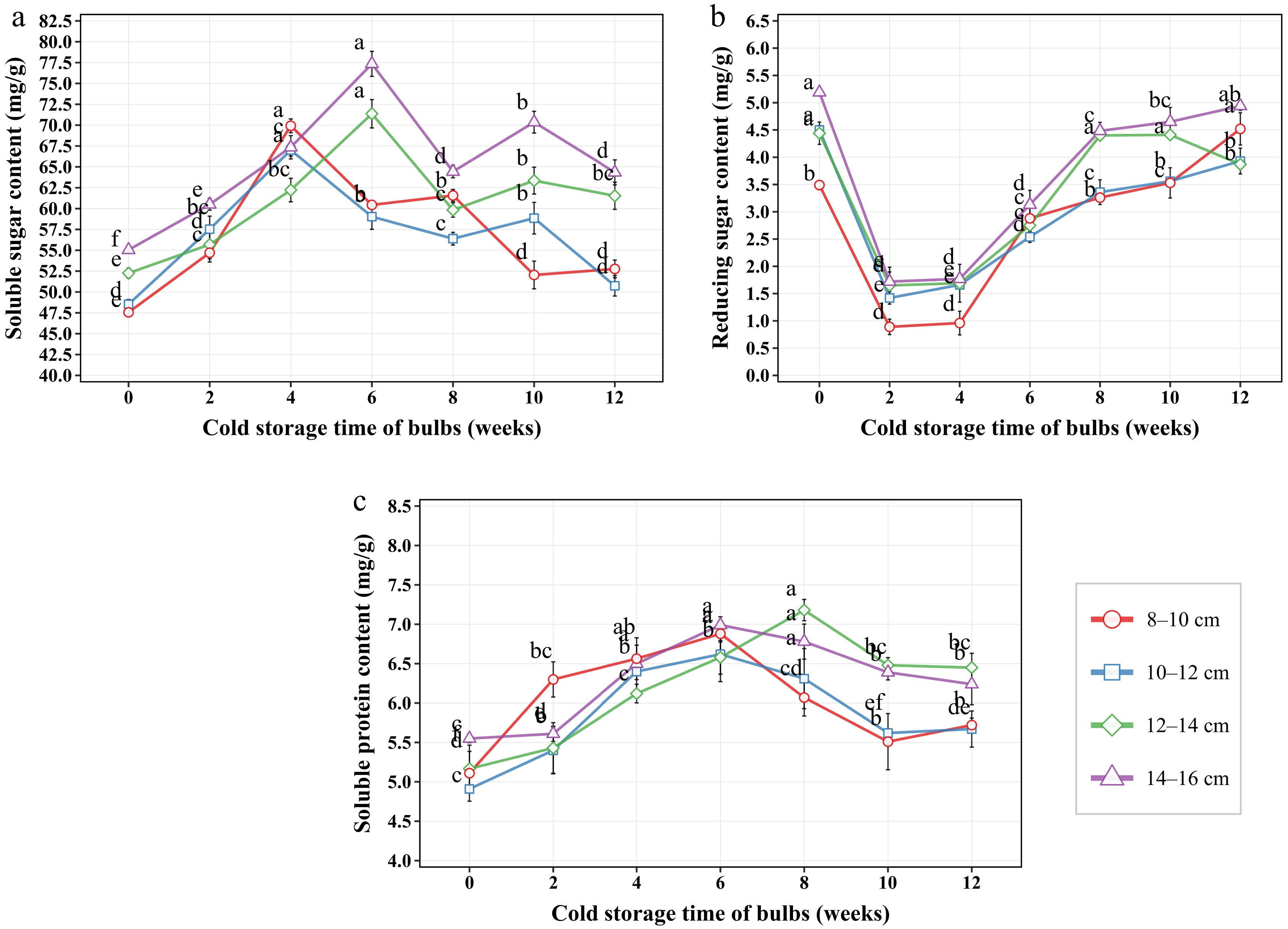
Figure 4.
Changes of soluble sugar, reducing sugar, and soluble protein content in bulbs of different circumferences during cold storage.
For bulbs in all four circumference grades, sugar content decreased first and then increased. Furthermore, the differences among them were relatively small, ranging from 1 to 2 mg/g (Fig. 4b). Additionally, during the floral induction period, larger bulbs had slightly higher reducing sugar levels than smaller bulbs.
The soluble protein content followed a similar trend across all four circumferences grades, increasing from 0 to 6, or 8 weeks (Fig. 4c). Then, protein content decreased gradually. During the flowering induction stage, larger bulbs exhibited significantly higher soluble protein levels (approximately 6.2 mg/g) than smaller bulbs (around 5.7 mg/g), which was similar to the patterns of soluble sugar and reducing sugars.
Expression patterns of floral organ identity genes in 'Tiny Double You' across different bulb sizes
-
Previous research data showed that the petal number varies among bulbs of different circumferences. Fertilization significantly increased the number of stamens and petaloid petals in smaller-circumference bulbs. To further elucidate how nutrition status was associated with double-flowered characteristics in 'Tiny Double You', we analyzed the expression patterns of floral organ identity genes, using the single-flowered L. davidii var. unicolor as a control. As shown in Fig. 5, LtdyAP1, LtdyAP3, LtdyAG1, and LtdySEP3 exhibited significantly higher expression levels in 'Tiny Double You' bulbs of different circumferences than in the control. Among these genes, only LtdyAP1, a Class A gene, showed significantly higher expression in every 'Tiny Double You' group (Fig. 5a). Furthermore, the LtdyAP1 expression level gradually declined with decreasing bulb circumference (Fig. 5a). Notably, fertilization treatment significantly reversed the downregulation of LtdyAP1 expression in smaller bulbs (Fig. 5a). In contrast, the expression levels of the Class B gene LtdyAP3, the Class C gene LtdyAG1, and the Class E gene LtdySEP3 all gradually decreased as bulb circumference decreased; however, fertilization had little effect on the expression levels of these three genes (Fig. 5c, e, h).
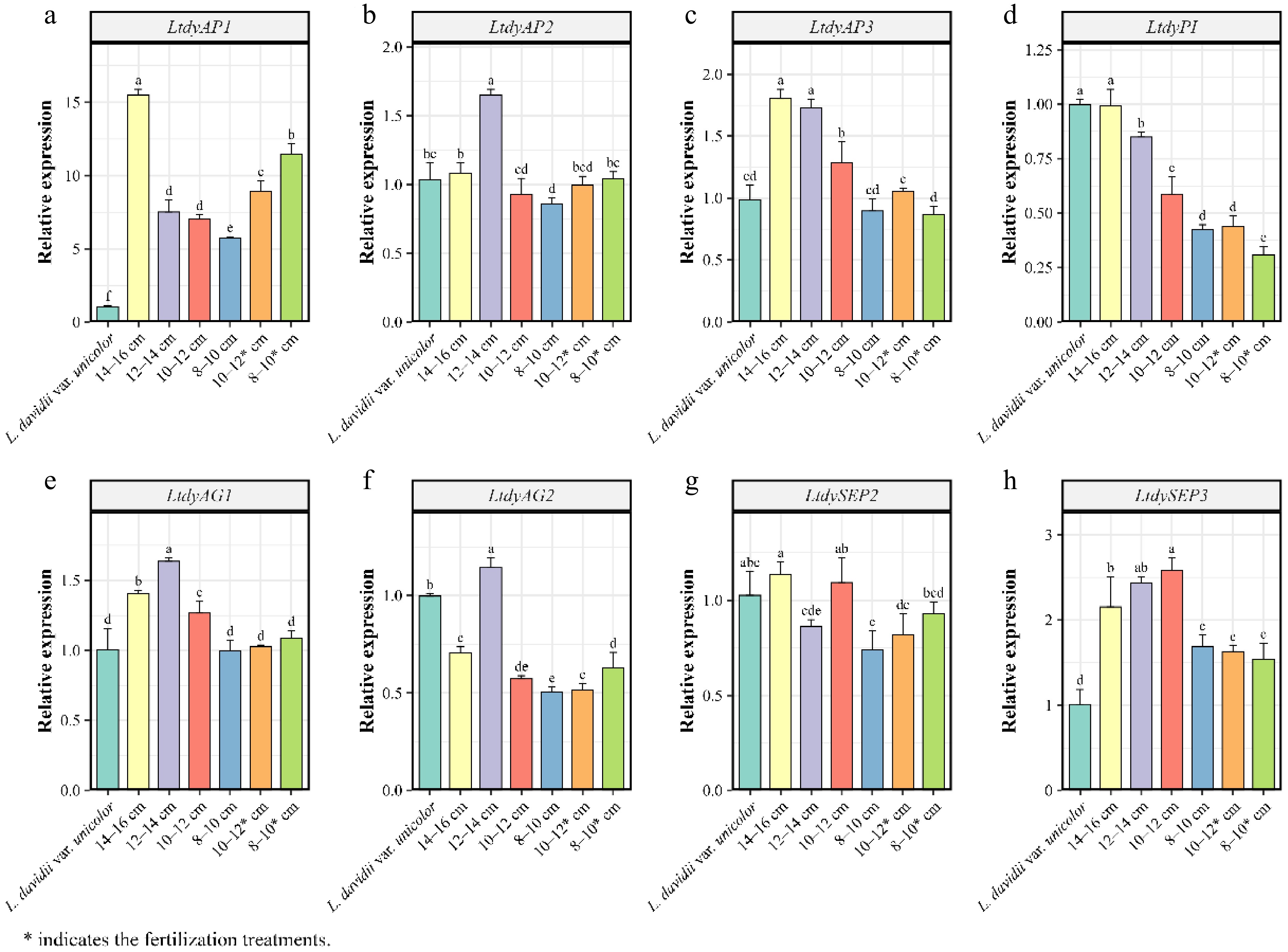
Figure 5.
Expression patterns of ABCE genes for different size bulbs and fertilization treatments. Error bars indicate means ± SDs (n = 3). Different letters above the columns indicate significant differences (p < 0.05).
The remaining genes in the ABCE family exhibited relatively conserved or specific expression patterns. LtdyAP2 was highly expressed only in bulbs with 12–14 cm circumference (Fig. 5b). No obvious difference in LtdyPI and LtdySEP2 expression was observed between L. davidii var. unicolor and larger-circumference 'Tiny Double You' bulbs (Fig. 5d, g).
-
Bulb circumference and flowering order affected the degree of doubleness of 'Tiny Double You' (Tables 3, 4). According to the results, bulb size mainly influenced the number of petals (Table 3). Larger bulbs generally had nine normal petals, which was significantly more than smaller bulbs. Meanwhile, flowers at different opening positions exhibited a similar pattern: flowering order mainly affected the number of normal petals in the large bulb groups (Table 4). With the process of opening, the normal petals decreased significantly, especially in the 12–14 cm bulbs, while there was no significant difference in the number of petaloid stamens. Supplementary fertilization increased the number of petaloid stamens in 8–10 cm bulbs but did not improve the number of normal petals. These findings suggest that the nutritional status was closely related to the flower organ differentiation.
The results for soluble sugars, reducing sugars, and soluble proteins showed that large-circumference bulbs exhibit a significantly stronger nutrient accumulation capacity than small-circumference bulbs (Fig. 4). This more abundant nutrient supply may provide a more favorable physiological basis for floral bud differentiation and subsequent organogenesis. Similar associations between nutrient status and bud quality have been reported in Acca sellowiana[28], Nanguo pear[29], and blueberry[30,31].
Notably, despite the nutritional limitations in small bulbs or late-opening flowers, the development of core reproductive structures remained largely unaffected (Tables 3, 4). This may reflect a resource-allocation strategy in Lilium; under nutrient-limited conditions, plants prioritize ensuring basic reproductive success, while investment in floral attractive structures fluctuates according to current nutritional status[32,33]. This prioritization strategy may help explain why small-circumference bulbs can flower but exhibit a reduced degree of doubleness.
LtdyAP1 expression may be associated with nutritional status
-
The expression of floral organ identity genes in 'Tiny Double You' lily was associated with nutritional status (Fig. 5a). Specifically, the expression level of LtdyAP1 was positively correlated with bulb circumference, with significantly higher expression in 14–16 cm circumference bulbs. Consistent with the phenotypic observations, larger bulbs produced more petals, and fertilization of small-circumference bulbs was accompanied by LtdyAP1 expression (Fig. 5a). These patterns suggest that LtdyAP1 may be associated with maintenance of petal number and doubleness under different nutritional status. Du et al.[34] found that exogenous sucrose application during apple floral induction upregulated SPL and AP1 genes, and other studies have shown that SPL genes promote the expression of AP1 and SEP3[35−37]. Considering the high soluble sugar content in larger bulbs during cold storage and the observed upregulation of LtdyAP1 following nutrient supplementation, it is reasonable to speculate that the higher soluble sugar content may be linked to upstream regulatory pathways affecting LtdyAP1 transcription. However, further research is required to elucidate how nutritional status regulates petal whorl number through LtdyAP1.
-
The present result shows that nutritional status is associated with the stability of double-flower traits in 'Tiny Double You' lily. Bulb circumference and flowering sequence significantly affect the number of petals. The analysis of the contents of soluble sugar, reducing sugar, and soluble protein in different circumference bulbs showed that the larger-circumference bulbs contained higher nutrients. At the molecular level, expression of floral development identity genes, particularly LtdyAP1, varied consistently with bulb size and nutrient supplementation. These findings support an association between nutritional status, petal number, and LtdyAP1 expression, while further functional studies are needed to determine whether LtdyAP1 plays a direct regulatory role.
-
The authors confirm contribution to the paper as follows: study conception and design: Jin Z, Kong X, Jia G; data collection: Zheng R, Chen N; analysis and interpretation of results: Gong T, Gao L; draft manuscript preparation: Jin Z, Kong X, Jia G. All authors reviewed the results and approved the final version of the manuscript.
-
All data generated or analyzed during this study are included in this published article and its supplementary information files.
-
This work was supported by the National Key Research and Development Project of China (Grant No. 2023YFD1200105), and the Key R&D Program of Hebei Province (Grant No. 21326317D).
-
The authors declare that they have no conflict of interest.
-
accompanies this paper online at: https://doi.org/10.48130/opr-0026-0018.
-
# Authors contributed equally: Zongyang Jin, Xiangfeng Kong
- Supplementary Table S1 Primer sequences for RT-qPCR analysis of floral organ development-related genes.
- Supplementary Fig. S1 Phenotypic variation in growth and flower number of different bulb circumferences and fertilization treatments.
- Supplementary Fig. S2 The number of floral organs of the first flower for differrent bulb circumferences and fertilization treatments.
- Copyright: © 2026 by the author(s). Published by Maximum Academic Press, Fayetteville, GA. This article is an open access article distributed under Creative Commons Attribution License (CC BY 4.0), visit https://creativecommons.org/licenses/by/4.0/.
-
About this article
Cite this article
Jin Z, Kong X, Gong T, Gao L, Zheng R, et al. 2026. Nutritional status is associated with petal number variation and LtdyAP1 expression in double-flowered lily. Ornamental Plant Research 6: e028 doi: 10.48130/opr-0026-0018 

Nutritional status is associated with petal number variation and LtdyAP1 expression in double-flowered lily
- Received: 01 May 2026
- Revised: 26 May 2026
- Accepted: 28 May 2026
- Published online: 06 August 2026
Abstract: Double-flowered lilies possess considerable economic and ornamental value. In the Asiatic hybrid cultivar 'Tiny Double You', we observed that both the number of normal petals and petaloid stamens were reduced in small bulbs and later-opening flowers, which may be related to nutritional status. To investigate this relationship, phenotypic traits were assessed across four circumference grades, with supplementary fertilization treatments also applied to small-circumference bulbs. The results showed that bulb circumference significantly influenced the degree of doubleness, with large bulbs producing markedly more petals and petaloid stamens in the first-opening flower in the 14–16 cm group, whereas in the 12–14 cm bulbs, a significant decline in petal number was already evident in the third flower. Fertilization substantially enhanced stamen petaloidy formation in small bulbs, particularly in the 8–10 cm group. Since flower bud differentiation occurred during cold storage, we further quantified soluble sugars, reducing sugars, and soluble proteins at multiple time points throughout the storage period. Large bulbs consistently accumulated higher levels of these nutrient contents. Moreover, the relative expression of LtdyAP1 was markedly elevated in all bulb sizes compared to a single-flowered control and increased with bulb size. Fertilization application significantly upregulated LtdyAP1 expression in small bulbs. Collectively, these findings indicated an association between nutritional status and both the maintenance of the double-flower phenotype and variation in LtdyAP1 expression. LtdyAP1 may be involved in this process, but further functional validation is required. This study provides a foundation for cultivation strategies aimed at preserving doubleness in lilies.
-
Key words:
- Lilium /
- 'Tiny Double You' /
- Bulb circumference /
- Floral structure /
- Floral organ development genes