












-
Species diversity refers to the different varieties of organisms, such as animals, plants, mushrooms, and microorganisms, living within a particular habitat. It is often measured based on the relative abundance and the species richness[1]. Being a global biodiversity hotspot, the Philippines is endowed with high levels of floral and faunal diversity[2] and is very rich in terms of fungal diversity[3]. The country’s diverse forest formations[4] and ideal climate create perfect conditions essential for mushroom growth. Mushrooms are eukaryotic, non-photosynthetic macrofungi that belong to Basidiomycota or Ascomycota and are ubiquitous in the environment. These macrofungi have reproductive structures that are above ground and are visible to the naked eye[5,6]. Basidiomycota stands as the second-most speciose phylum within the Kingdom Fungi, bearing basidiospores that are produced on spore-bearing structures called basidia[7]. Common forms of basidiomycetes are mushrooms, bracket fungi, shelf fungi, toadstools, coral fungi, and puffballs. These basidiomycete species are found in soil organic matter, decaying wood, and leaf litter. Some basidiomycetes develop advantageous mycorrhizal associations with the roots of their host, while others are pathogenic to different species of trees[8]. Based on various research conducted, several mushroom species exhibit antioxidant, antibacterial, and antidiabetic properties and contain various mycochemicals[9,10]. Thus, the Philippines harbors naturally occurring mushrooms that are found to have nutraceuticals and therapeutic qualities[11]. Nowadays, mushrooms are being explored by mycologists and mushroom enthusiasts because of their growing interest. There were about 140,000 mushroom species all around the globe, and about 14,000 to 22,000 mushroom species remained unidentified and underexplored[12].
In the Philippines, there have been about 4,000 fungal species discovered through different surveys and species listings[4]. Based on the available reports from the year 2001 to 2021, there were about 2,371 identified mushrooms with 447 species, 193 genera, and 72 families[6]. Macrofungal surveys from Central Luzon State University[13−15], Cuyapo, Nueva Ecija[11], Angat Watershed Reservation, Bulacan[16], Botolan, Zambales[17], Mt. Makiling, Los Baños, Laguna[18−20], Nueva Vizcaya[21,22], Molave Forest at La Union[23], Echague, Isabela[24], Northeastern Catanduanes[25], San Clemente, Tarlac[26] and Mt. Arayat Protected Landscape, Arayat, Pampanga[27] documented rich macrofungal diversity. Out of the many mushroom families, the most abundant is the family Polyporaceae, which is represented by 72 species. These polypores maintain forest health and ecosystem balance by forming associations with trees[4]. The majority of the fungi that cause wood to decay are the bracket fungi, which have shelf-like growths that are found on tree trunks and stumps. They can either live on dead wood as saprophytes or parasitize living trees[23].
Another perfect site for mushroom collection is in the province of Nueva Vizcaya, in Northern Luzon, Philippines, situated at the southernmost point of the region, and is known as 'The Gateway to Cagayan Valley'. Roughly 79% of the province is a mountainous area with elevations from 200 up to 2,920 m above sea level. Temperatures range from 21 to 29 °C, and the average yearly precipitation falls between 131.32 and 274.43 mm, with a mean volume of 191.75 mm. Type II and Type III climates prevail in the province. There is no dry season from March to May in the Type II climate, while for the Type III climate, there is a short dry season that lasts only 1 to 3 months and lacks a noticeable maximum rainfall period[28]. The rich biodiversity, varied habitat, and ambient climate of Nueva Vizcaya make the place ideal for mushroom exploration.
Despite extensive research establishing the ecological and economic importance of macrofungal species, there is still a significant portion of global fungal diversity that remains to be understudied. The Lower Magat Ecotourism Park (LMET) in Diadi, Nueva Vizcaya, represents a critical gap in these efforts, as despite its diverse forest types and varied topography, to the best of our existing knowledge, no formal macrofungal documentation currently exists for the area. As a transition zone between different types of forest ecosystems, LMET offers a unique landscape to investigate how habitat types and seasonal fluctuations influence the macrofungal community structure.
Consequently, this study provides baseline information regarding the macrofungal community within the Lower Magat Ecotourism Park at Diadi, Nueva Vizcaya, across three distinct habitats over a 3-month period. Hypothetically, macrofungal richness and composition would vary significantly among the secondary forest, reforestation area, and riparian forest due to differences in microhabitat structure and microclimatic conditions. Furthermore, seasonal precipitation patterns were expected as a potential primary driver of fruiting phenology. By documenting and identifying macrofungal species across spatial and temporal differences, the study will contribute to the understanding of the diversity and ecology in the area. This preliminary taxonomic inventory of macrofungal species serves as an essential reference for biodiversity assessment, conservation planning, and ecological monitoring in the region.
-
A Wildlife Gratuitous Permit for the scientific study No. 2025-07 was secured from the Department of Environment and Natural Resources (DENR) in Region 2, Cagayan Valley, Philippines, before any mushrooms were collected at the Lower Magat Ecotourism Park (LMET) at Brgy. San Luis, Diadi, Nueva Vizcaya, Philippines.
Study area
-
The study area was located at LMET in Brgy. San Luis, Diadi, Nueva Vizcaya, Philippines. Three distinct study sites, which include a riparian forest, a secondary forest, and a reforestation area, were selected (Figs 1 and 2). The selection of these sites was based on their accessibility. A single visit to each site was conducted monthly from July to September 2025 for the sampling and collection of wild macrofungi.
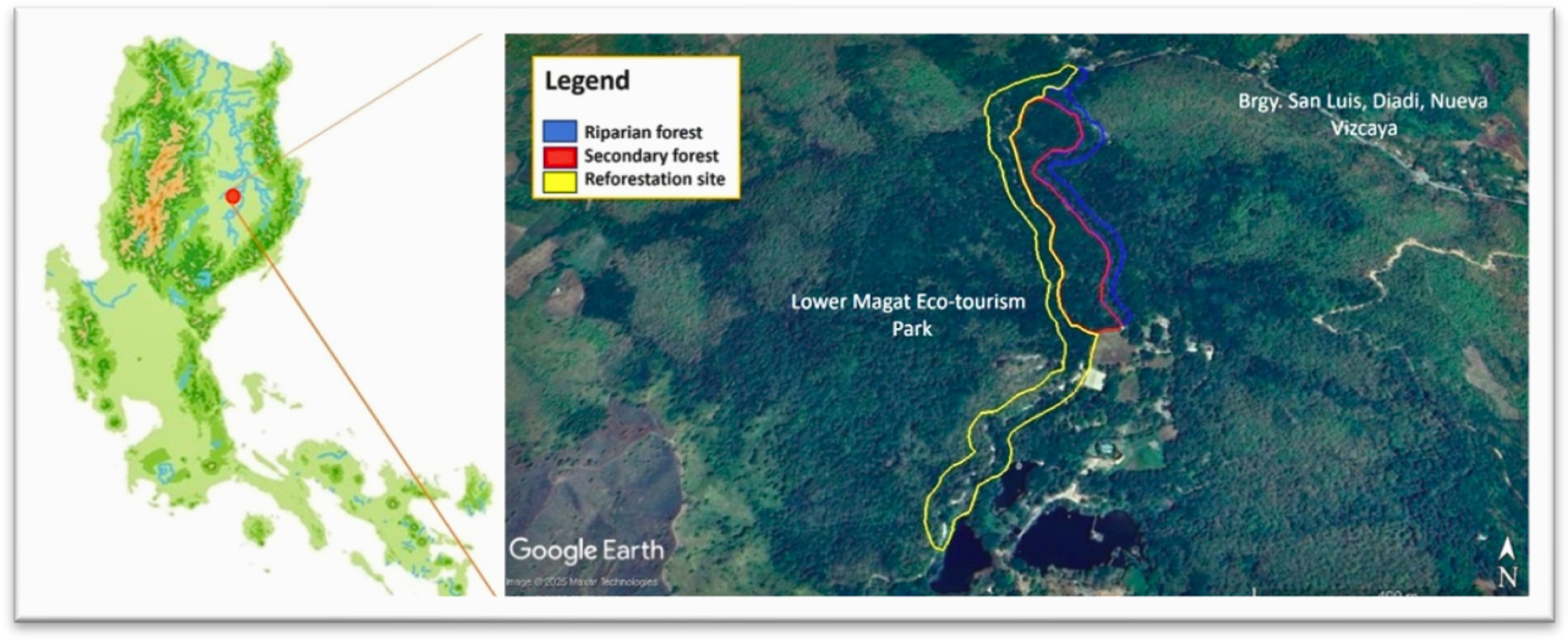
Figure 1.
Map of the study site at the LMET in Brgy. San Luis, Diadi, Nueva Vizcaya, Philippines, showing the three collection habitats: riparian forest, secondary forest, and reforestation area (Source: imagery obtained from Google Earth).
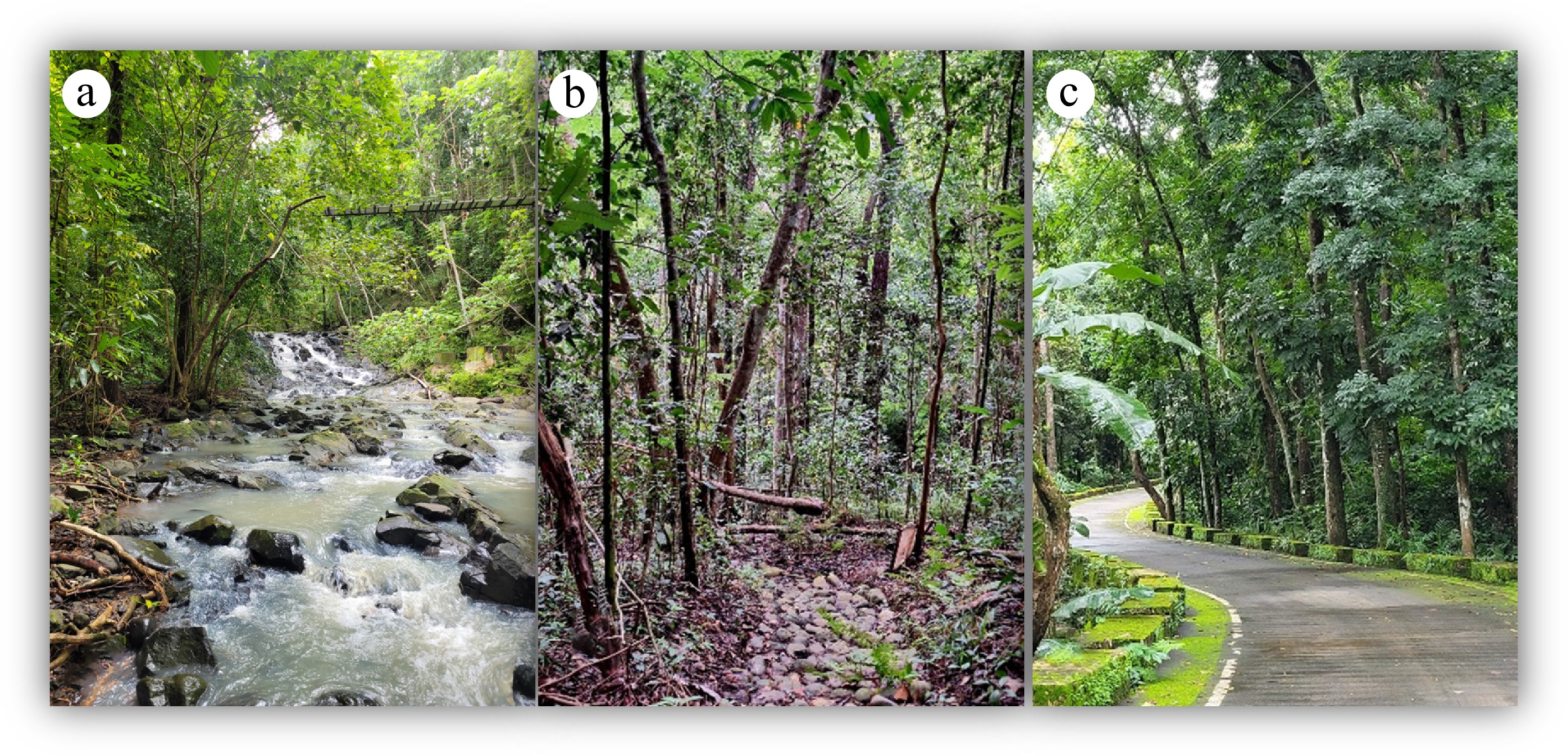
Figure 2.
Photographic view of the three study sites at the LMET in Brgy. San Luis, Diadi, Nueva Vizcaya, Philippines: (a) riparian forest, (b) secondary forest, and (c) reforestation area.
Sampling and collection of wild macrofungi
-
The collection of macrofungi spanned three consecutive months using opportunistic and purposive sampling techniques, with a survey team composed of eight persons during each survey. Samples were collected along a 1,000 m trail in each collection site. All macrofungal species were counted. Photographs of the top view, side view, and underside view (if possible) of the fruiting bodies were taken in situ prior to the collection of voucher specimens. A ruler was placed beside each specimen to provide initial measurements. Abiotic factors, including temperature, relative humidity, and soil pH, were measured and obtained using a hand-held device. The precise coordinates and elevation of the collected macrofungi were noted using the Locus Map application software (© Asamm Software, s.r.o.), and their natural habitat was photo-documented. Collected macrofungi were placed in a clean brown paper bag and transported to the laboratory for characterization, identification, and possible mycelial rescue through tissue culture[26].
Morphological identification
-
Collected macrofungal specimens were identified based on the macromorphological features of the pileus, hymenophore, and stipe. These assessments were cross-referenced with authoritative literature and regional taxonomic keys. The 'cf.' (confer) qualifier was applied to species-level designations to indicate provisional assignments. However, for a selected group of taxa, definitive names were retained without the qualifier for species whose macro-morphological characteristics are sufficiently common, distinct, and diagnostic to permit reliable identification. All identifications were subsequently authenticated by a specialist mycologist to ensure morphological accuracy[17,26,29−34].
Data analysis
-
Species-by-site abundance and species-by-month matrices were used to determine variation in species composition between habitat type and sampling period, respectively. Rare taxa occurring in fewer than 5% of samples were excluded to reduce noise and improve ordination stability[35−36]. To reduce the dominance effect, the remaining abundance data underwent a square-root transformation.
Non-metric Multidimensional Scaling (NMDS) was utilized to visualize overlap in fungal community structure. The Bray–Curtis distance matrix was used. A stress value of ≤ 0.20 was considered a good fit. One-Way Permutational Multivariate Analysis of Variance (PERMANOVA) was employed to test for a significant difference at a 5% level of significance in macrofungal species occurrence between the various collection months and across sites. Prior to analysis, the species-by-site abundance matrix and species-by-month matrix were checked for homogeneity of multivariate dispersion. The Bray–Curtis distance matrix with 9,999 permutations was used.
Different diversity indices, such as abundance, Shannon–Weiner Diversity Index (H’), richness, and evenness, were also computed to assess the species diversity and evenness using Paleontological Statistics (PaST v4.17).
-
LMET is an ecotourism park located in Nueva Vizcaya province. It is a vast area within the larger Lower Magat Forest Reserve, made up of natural and man-made forest areas with common hardwood species like mahogany (Swietenia macrophylla) and teak (Tectona grandis). Macrofungi were sampled on a monthly basis from July to September 2025 across the three established collection sites: the riparian forest (RF), the secondary forest (SF), and the reforestation (RE) area (Fig. 3). The RF is situated along a stream, the SF is dominated by various trees and grasses, and the RE is dominated by mahogany and teak trees. The average temperature measured during the time of collection ranges from 25 to 31 °C, with a relative humidity of 85% to 95%, and a soil pH of 6.5 to 7.0. A total of 129 morphospecies were identified from the 1,126 individuals across three collection sites and three collection months at various elevations (see Supplementary Table S1 for full distribution data). Based on macrofungal occurrence, RF recorded 64 species, SF has 73 species, and RE has 81 species (Fig. 4). In terms of temporal variation, the months of July and September showed a high level of macrofungal presence (n = 89, 88, respectively). Meanwhile, it was observed that August only had 34 species, which may be due to observed drier conditions in the area, which inhibited fruiting body formation for most of the species. Apioperdon pyriforme, Auricularia auricula-judae, Cerrena cf. hydnoides, Collybiopsis cf. subpruinosa, Coprinellus disseminatus, Cymatoderma caperatum, Filoboletus manipularis, Gymnopus cf. foetidus, Marasmius cf. sullivantii, Microporus xanthopus, Schizophyllum commune, Stereum ostrea, Trametes hirsuta, Trametes versicolor, Tremella fuciformis, Xylaria hypoxylon, Xylaria cf. longipes, and Xylaria polymorpha were recorded in all 3 months, which may indicate the high resilience of these macrofungi and adaptability to the varying abiotic monthly conditions. As for the influence of elevation, the highest species richness was recorded between 271–290 m asl with 90 species; the 291–310 m asl zone with 85 species; and a low species count was recorded between 251–270 m asl and 311–330 m asl. Based on these findings, it may suggest that mid-elevational ranges are optimal for macrofungal distribution in the study area. It can be observed that among all the species collected, only S. commune is recorded across all collection sites in the 3-month collection period, and at all four elevation bands. This indicates the widespread status of the said species.
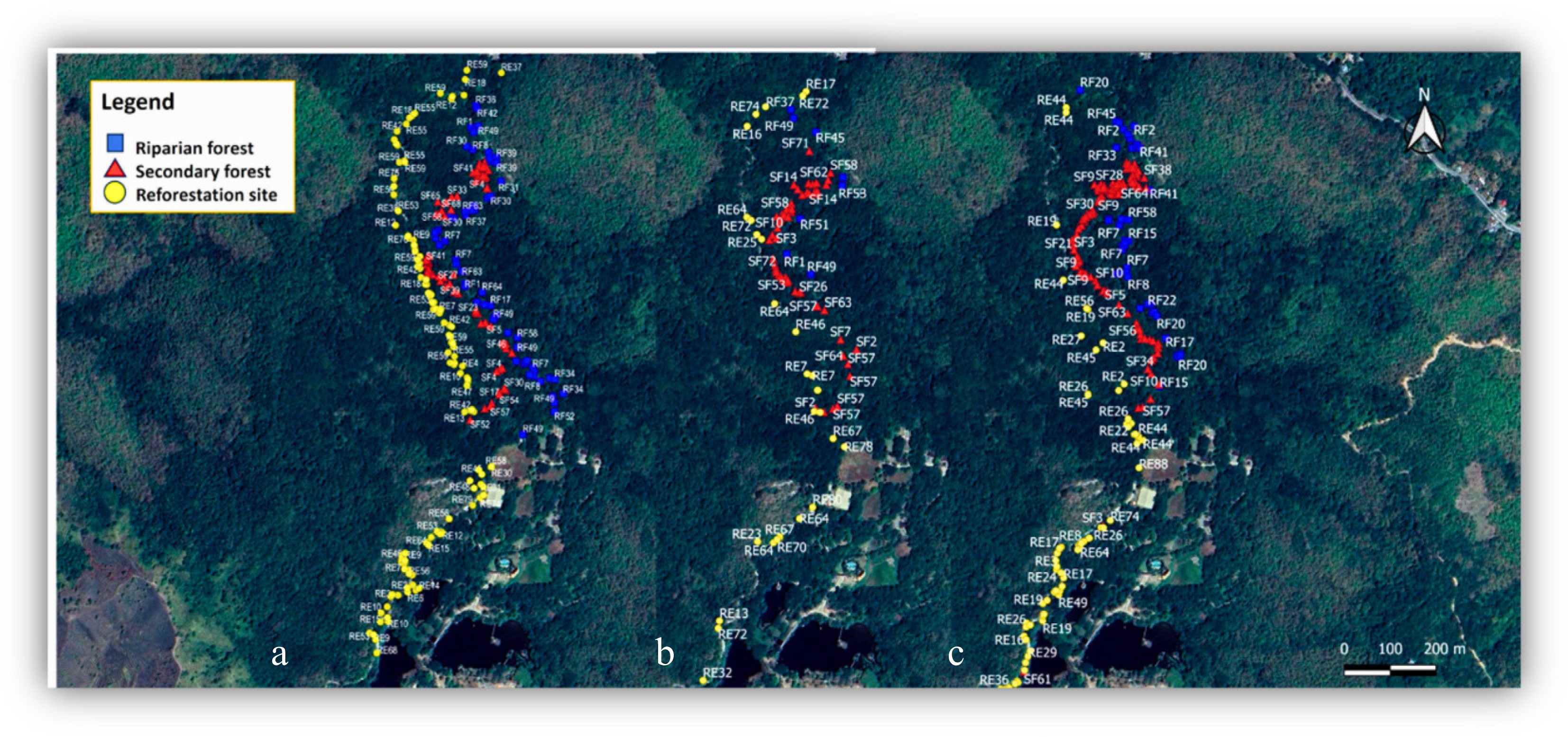
Figure 3.
Distribution of 129 morphospecies collected in the three habitat types in the months of: (a) July, (b) August, and (c) September.
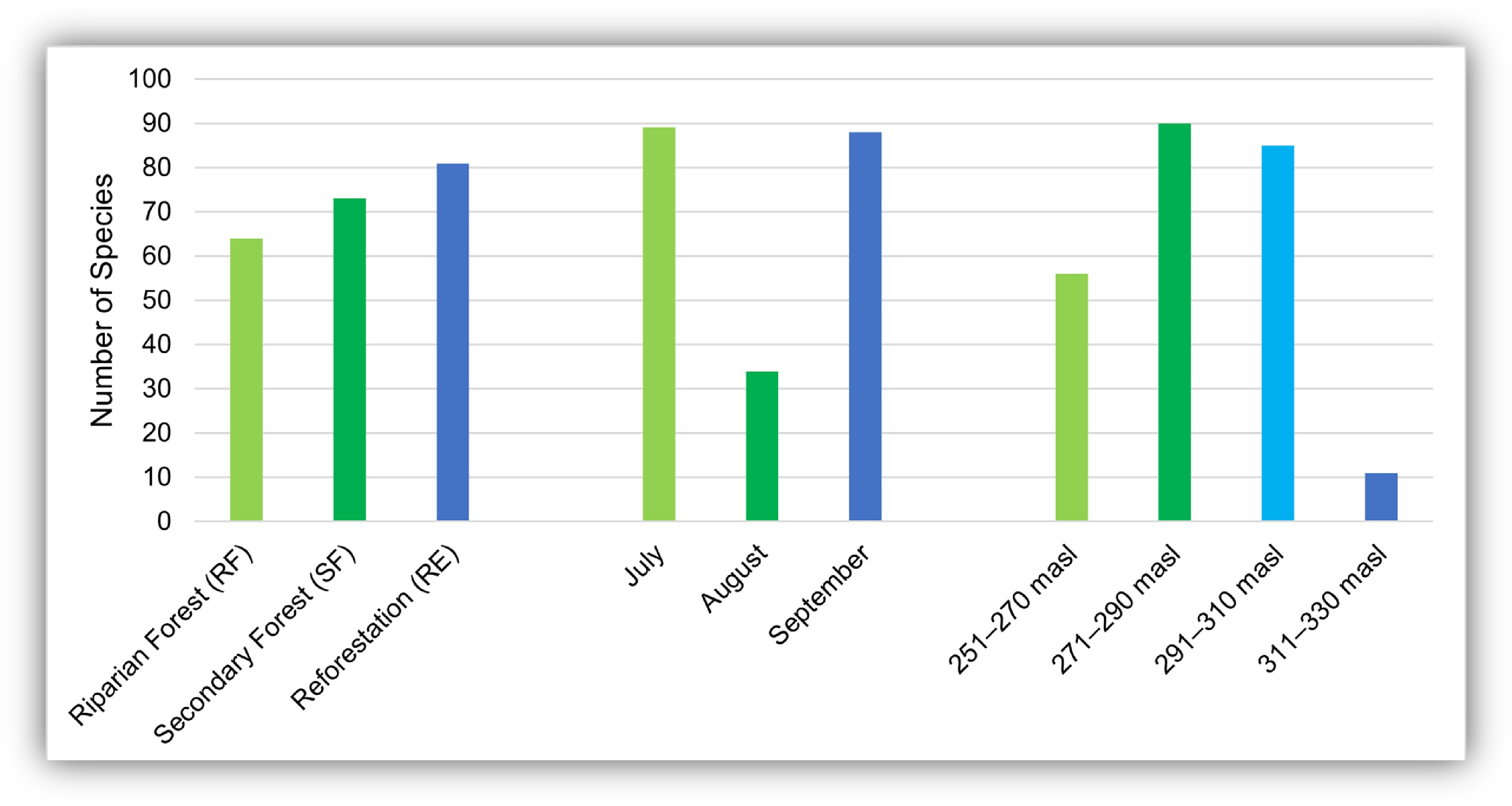
Figure 4.
Number of macrofungal species across different ecological variables at LMET, Diadi, Nueva Vizcaya, Philippines.
Morpho-ecological profile and edibility status
-
The majority of the species documented have fleshy fruiting bodies, which include the gilled mushrooms (Agaricus, Mycena, Russula), puffballs (Bovistella), and jellies (Tremella), while a minority exhibit a woody texture like the polyporous macrofungi (Ganoderma and Trametes) (Table 1). Meanwhile, decaying wood is the most common substrate for growth, hosting most of the recorded species such as Pleurotus djamor, A. auricula-judae, and T. versicolor, followed by soil with leaf litter. Further, gregarious was the most frequently recorded growth form represented by Auricularia and Coprinellus species compared with solitary and scattered. Regarding edibility status, several taxa were identified as edible based on established literature, including Lentinus sajor-caju, Macrolepiota cf. procera, and S. commune. Conversely, Agaricus cf. moelleri, Ganoderma applanatum, and Psilocybe cf. cubensis were classified as inedible.
Table 1. Fruiting body characteristics, substrate, and edibility of the collected macrofungal species at LMET, Diadi, Nueva Vizcaya, Philippines.
Species Fruiting body Substrate Growth form Reported edibility Abortiporus cf. biennis Fleshy Decaying wood Gregarious Edible[37] Agaricus cf. augustus Fleshy Soil with leaf litter Solitary Edible[38] Agaricus cf. moelleri Fleshy Soil with leaf litter Solitary Inedible[27,39] Agaricus sp. Fleshy Soil with leaf litter Scattered ND Agaricus cf. subrutilescens Fleshy Soil with leaf litter Solitary Edible[38] Amanita sp. Fleshy Soil with leaf litter Solitary ND Apioperdon pyriforme Fleshy Soil with leaf litter Gregarious Edible[38] Auricularia auricula-judae Fleshy Decaying wood Gregarious Edible[22,27,34,38,40] Auricularia cf. cornea Fleshy Decaying wood Gregarious Edible[41] Auricularia nigricans Fleshy Decaying wood Gregarious Edible[34] Bovistella utriformis Fleshy Soil Gregarious ND Byssomerulius sp. Woody Decaying wood Gregarious ND Calocybe cf. ionides Fleshy Soil with leaf litter Solitary ND Candolleomyces cf. candolleanus Fleshy Soil with leaf litter Gregarious ND Cerioporus cf. leptocephalus Fleshy Decaying wood Solitary ND Cerrena cf. hydnoides Woody Decaying wood Solitary ND Clitocybe cf. fragrans Fleshy Soil with leaf litter Solitary Edible[38] Collybia sp. Fleshy Soil with leaf litter Gregarious ND Collybiopsis sp. Fleshy Soil with leaf litter Gregarious ND Collybiopsis cf. subpruinosa Fleshy Decaying wood Gregarious ND Cookeina tricholoma Fleshy Decaying wood Solitary Edible[38] Coprinellus disseminatus Fleshy Decaying wood Gregarious Inedible[22,34] Coprinellus cf. micaceus Fleshy Decaying wood Gregarious Edible[27,42] Crepidotus cf. applanatus Fleshy Decaying wood Gregarious Edible[38] Crepidotus cf. epibryus Fleshy Decaying wood Gregarious ND Crepidotus cf. mollis Fleshy Decaying wood Gregarious Edible[38] Cruentomycena cf. viscidocruenta Fleshy Soil with leaf litter Scattered ND Cyathus striatus Woody Decaying wood Gregarious Inedible[17,27] Cymatoderma caperatum Woody Decaying wood Solitary ND Cytidia cf. salicina Fleshy Decaying wood Gregarious ND Daedaleopsis confragosa Woody Decaying wood Gregarious Inedible[17,34,43] Earliella scabrosa Woody Decaying wood Gregarious ND Entoloma cf. strictius Fleshy Decaying wood Gregarious ND Ephemerocybe cf. impatiens Fleshy Soil with leaf litter Gregarious ND Favolus sp. Fleshy Decaying wood Solitary ND Filoboletus manipularis Fleshy Decaying wood Gregarious ND Fuscoporia cf. gilva Woody Decaying wood Solitary ND Ganoderma applanatum Woody Decaying wood Solitary Inedible[34,44] Ganoderma neojaponicum Woody Decaying wood Solitary Inedible[34] Geastrum saccatum Woody Soil with leaf litter Gregarious ND Gerronema cf. strombodes Fleshy Decaying wood Gregarious ND Gymnopilus cf. luteofolius Fleshy Decaying wood Gregarious ND Gymnopus cf. dryophilus Fleshy Soil with leaf litter Gregarious ND Gymnopus cf. foetidus Fleshy Soil with leaf litter Solitary ND Gymnopus cf. iocephalus Fleshy Decaying wood Solitary ND Hexagonia sp. Woody Decaying wood Scattered ND Hygrocybe coccinea Fleshy Soil with leaf litter Solitary Edible[38] Hymenopellis cf. furfuracea Fleshy Decaying wood Solitary ND Infundibulicybe cf. gibba Fleshy Soil Scattered ND Inocybe sp. Fleshy Soil with leaf litter Gregarious ND Laccaria laccata Fleshy Decaying wood Gregarious Edible[34,38,45] Lacrymaria cf. lacrymabunda Fleshy Soil with leaf litter Scattered ND Lentaria cf. surculus Fleshy Soil with leaf litter Gregarious ND Lentinus sajor-caju Fleshy Decaying wood Scattered Edible[17,34,38,46] Lepiota cf. atrodisca Fleshy Soil with leaf litter Solitary ND Lepiota cf. castanea Fleshy Soil Solitary Inedible[47] Lepiota cf. cristata Fleshy Soil with leaf litter Scattered Inedible[48] Lepiota cf. phaeosticta Fleshy Stone with moss Scattered ND Lepiota cf. rubrotinctoides Fleshy Soil with leaf litter Solitary ND Leucocoprinus birnbaumii Fleshy Soil with leaf litter Solitary Inedible[34] Leucocoprinus cf. cepistipes Fleshy Soil with leaf litter Solitary Inedible[27] Leucocoprinus cf. fragilissimus Fleshy Soil with leaf litter Solitary Inedible[27] Leucocoprinus cf. rubrotinctus Fleshy Soil with leaf litter Solitary ND Leucocoprinus sp. Fleshy Soil with leaf litter Solitary ND Macrolepiota cf. mastoidea Fleshy Soil with leaf litter Solitary ND Macrolepiota cf. procera Fleshy Soil with leaf litter Solitary Edible[38,49] Macrolepiota sp. Fleshy Soil with leaf litter Solitary ND Marasmiellus candidus Fleshy Decaying wood Gregarious Inedible[27,34] Marasmiellus sp. Fleshy Decaying wood Solitary ND Marasmius cf. capillaris Fleshy Soil with leaf litter Solitary ND Marasmius cf. haematocephalus Fleshy Soil with leaf litter Scattered ND Marasmius cf. oreades Fleshy Decaying wood Scattered Edible[38,50] Marasmius cf. rotula Fleshy Soil with leaf litter Solitary Inedible[17] Marasmius sp. Fleshy Soil with leaf litter Scattered ND Marasmius cf. sullivantii Fleshy Soil with leaf litter Scattered ND Microporus sp. Woody Decaying wood Scattered ND Microporus xanthopus Fleshy Decaying wood Scattered Edible[34] Mucidula cf. mucida Fleshy Decaying wood Solitary ND Mycena cf. galericulata Fleshy Decaying wood Scattered ND Mycena sp. 1 Fleshy Decaying wood Scattered ND Mycena sp. 2 Fleshy Decaying wood Scattered ND Nigroporus sp. Woody Decaying wood Solitary ND Nigroporus cf. vinosus Woody Decaying wood Solitary ND Parasola cf. plicatilis Fleshy Soil with leaf litter Solitary ND Phellinus sp. Woody Decaying wood Solitary ND Phleogena cf. faginea Woody Decaying wood Gregarious ND Pleurotus djamor Fleshy Decaying wood Gregarious Edible[34,38,51] Pleurotus ostreatus Fleshy Decaying wood Gregarious Edible[38,52] Pleurotus sp. Fleshy Decaying wood Solitary ND Pluteus cervinus Fleshy Decaying wood Scattered Edible[34,38,53] Pluteus cf. plautus Fleshy Soil with leaf litter Scattered ND Pluteus sp. Fleshy Decaying wood Scattered ND Polyporus sp. Fleshy Decaying wood Scattered ND Protohydnum cf. pululahuanum Fleshy Soil on rocks Scattered ND Psathyrella cf. patialensis Fleshy Soil with leaf litter Scattered ND Pseudofavolus tenuis Fleshy Decaying wood Scattered Inedible[34] Psilocybe cf. cubensis Fleshy Soil with leaf litter Solitary Inedible[54] Psilocybe sp. Fleshy Soil with leaf litter Solitary ND Pterula cf. multifida Fleshy Soil with leaf litter Gregarious ND Pycnoporus sp. Woody Decaying wood Solitary ND Resupinatus sp. Fleshy Decaying wood Solitary ND Russula cf. betularum Fleshy Soil with leaf litter Solitary ND Russula cf. sanguinea Fleshy Soil with leaf litter Solitary Edible[38] Schizophyllum commune Fleshy Decaying wood Scattered Edible[17,27,34,55] Stereum lobatum Woody Decaying wood Gregarious Edible[22] Stereum ostrea Woody Decaying wood Gregarious Inedible[22,27,56] Stereum cf. versicolor Woody Decaying wood Scattered ND Termitomyces cf. cartilaginous Fleshy Soil Solitary Edible[57] Termitomyces microcarpus Fleshy Soil with leaf litter Gregarious Edible[38,58] Termitomyces sp. Fleshy Soil with leaf litter Solitary ND Trametes cf. cinnabarina Woody Decaying wood Scattered ND Trametes cf. coccinea Woody Decaying wood Solitary ND Trametes cf. gibbosa Woody Decaying wood Scattered ND Trametes hirsuta Woody Decaying wood Gregarious Inedible[27,34] Trametes sp. 1 Woody Decaying wood Scattered ND Trametes sp. 2 Woody Decaying wood Gregarious ND Trametes versicolor Woody Decaying wood Scattered Edible[38,59] Tremella fuciformis Fleshy Decaying wood Solitary Edible[38,60] Trichaleurina javanica Fleshy Soil with leaf litter Scattered ND Typhrasa cf. gossypina Fleshy Soil with leaf litter Solitary ND Vitreoporus cf. dichrous Fleshy Decaying wood Gregarious ND Volvopluteus sp. Fleshy Soil with leaf litter Solitary ND Xeromphalina cf. campanella Fleshy Decaying wood Scattered Edible[38] Xylaria cf. cubensis Woody Decaying wood Solitary ND Xylaria hypoxylon Woody Decaying wood Scattered ND Xylaria cf. longipes Woody Decaying wood Scattered ND Xylaria polymorpha Woody Decaying wood Scattered ND Xylaria sp. 1 Woody Decaying wood Scattered ND Xylaria sp. 2 Woody Decaying wood Scattered ND ND: not determined due to uncertain taxonomic placement at the species level or the absence of authoritative data within a comprehensive database search. Disclaimer: edibility classifications are based on established mycological literature and reported regional use; however, they are provided for informational purposes only. This survey is not intended as a guide for foraging, and the authors assume no liability for the consumption of any macrofungi listed herein. Taxonomic position of identified macrofungi
-
Identification of the collected macrofungal samples was established by evaluating their morphological characteristics, and they were assigned to the various taxonomic positions (see Supplementary Table S2 for full taxonomical classification). The 129 morphospecies were classified into two phyla, five classes, 12 orders, 37 families, and 91 genera. The collection successfully identified the macrofungi from the two major phyla, phylum Ascomycota (sac fungi) and the phylum Basidiomycota (club fungi). The group of sac fungi is identified by a sac-like structure called an ascus that produces spores. Cup fungi such as Cookeina and Trichaleurina, and wood decay fungi specifically Xylaria or the dead man’s finger, represent the phylum Ascomycota. Meanwhile, the vast majority of the identified macrofungal species, such as the polypores, puffballs, and jellies, belong to the Phylum Basidiomycota. Among the five classes identified, the class Agaricomycetes dominated with the order Agaricales as the most diverse, which includes the numerous families such as Agaricaceae, Marasmiaceae, Mycenaceae, Psathyrelllaceae, and Pluteaceae. Moreover, among the 91 genera, the genus Lepiota (five), Trametes (five), Marasmius (five), Leucocoprinus (four), and Xylaria (four) recorded the largest number of species.
Spatial and temporal variability of macrofungi
-
The variability and dissimilarity of macrofungal communities across the sampling areas (RF, SF, and RE) and sampling months (July, August, and September) were assessed using NMDS and PERMANOVA. The results of NMDS (Fig. 5a) showed that there is an overlap in species composition among surveyed sites (stress value = 0.20). PERMANOVA revealed that there is no significant difference in species composition between sites (p value = 0.62). There is also no significant difference in multivariate dispersion (p value = 0.67). In terms of species composition across sampling months, species composition during September is markedly different compared to species composition during July and August, based on the result of the NMDS (stress value = 0.20) (Fig. 5b). But still, PERMANOVA revealed that there is no significant difference in species composition across the sampling period (p value = 0.47). Similarly, multivariate dispersion showed no statistical difference (p value = 0.23), indicating within-group similarity. This suggests that species composition between sites and between sampling months was similar in both composition and dispersion.
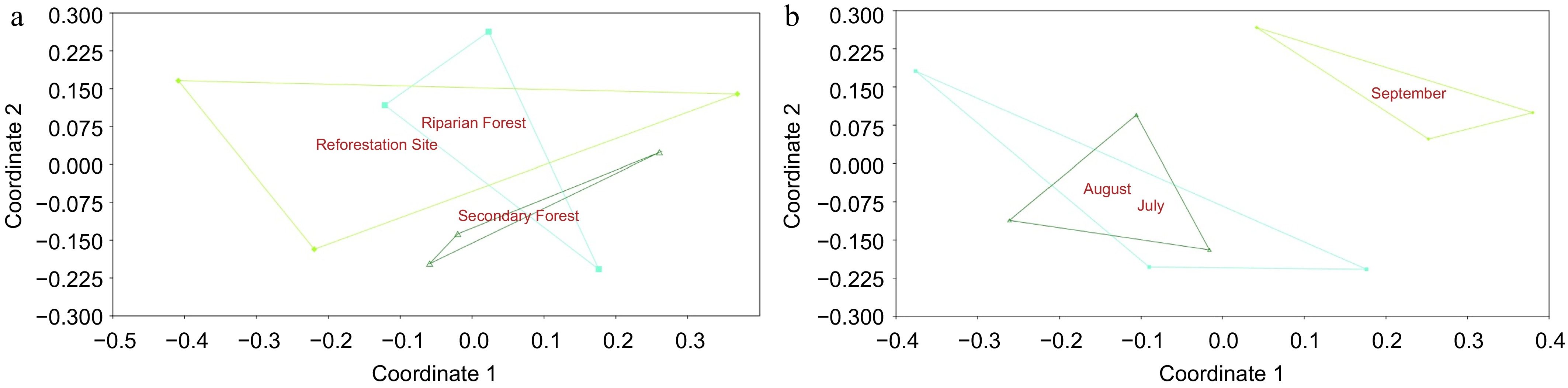
Figure 5.
Non-metric Multidimensional Scaling (NMDS) ordination plots illustrating macrofungal community composition across (a) sampling areas and (b) collection months.
Measures of diversity among spatial and temporal variation
-
Abundance, richness, diversity, and evenness were computed to assess the level of diversity of the collected macrofungi between collection sites and months. RE yielded the highest number of individuals (abundance = 452) and the highest number of species (richness = 82), resulting in the highest diversity value (H’ = 5.70) among surveyed sites (Table 2). In terms of collection month, September recorded the highest abundance (521), and July recorded the highest richness (89). August recorded the lowest diversity (H’ = 4.58), likely due to the smaller number of species and individuals recorded during this month. Despite the differences observed based on either spatial or temporal variation, the levels of diversity remained very high based on the computed values of diversity and evenness. Some images of the collected macrofungi are shown in Fig. 6.
Table 2. Measures of diversity using the Shannon–Weiner Diversity Index (H’) between collection sites and months.
Abundance Richness Diversity (H') Evenness Collection site RF 295 64 5.26 0.88 SF 379 74 5.60 0.90 RE 452 82 5.70 0.90 Overall 1,126 129 6.03 0.86 Collection month July 466 89 5.84 0.90 August 139 35 4.58 0.89 September 521 87 5.58 0.86 Overall 1,126 129 6.03 0.86 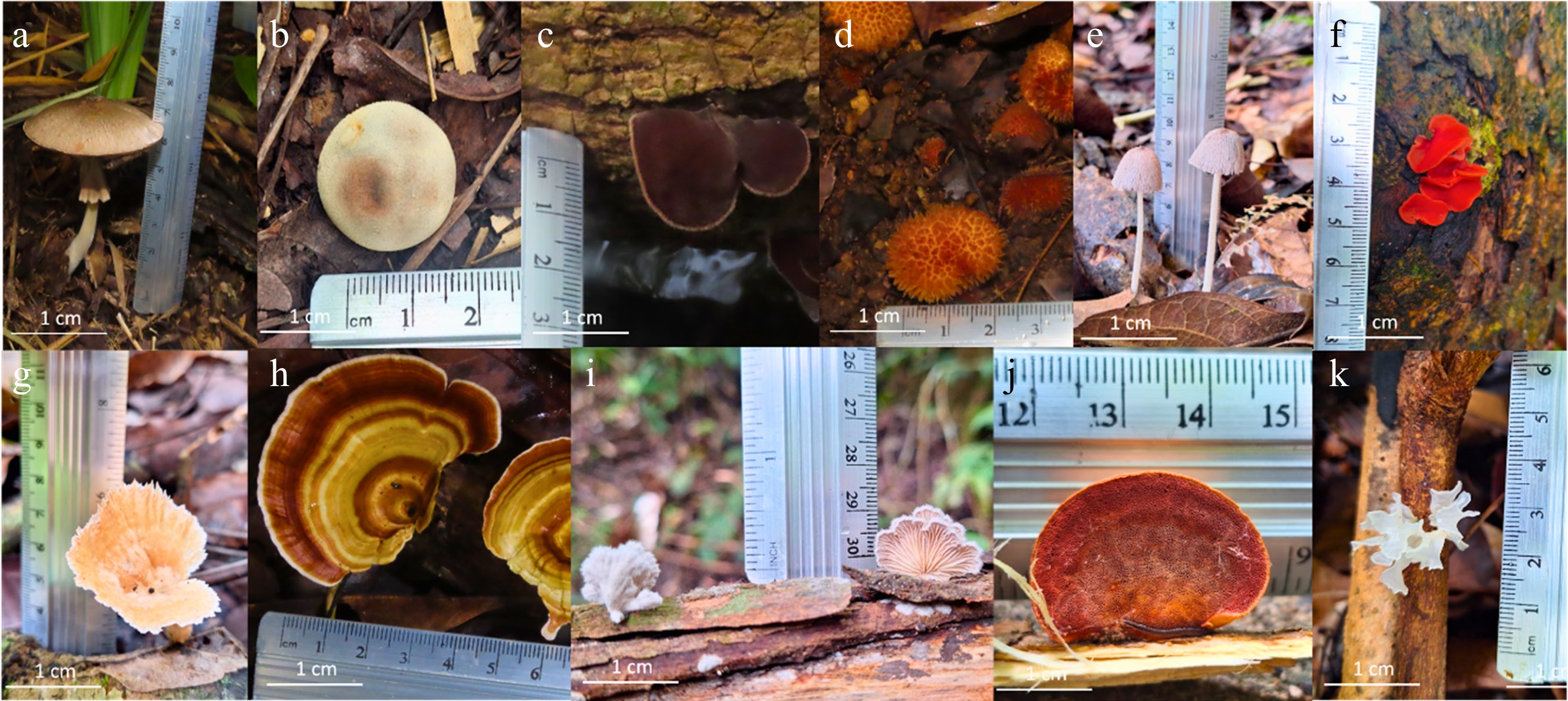
Figure 6.
Representative specimens of the collected macrofungi: (a) Agaricus cf. moelleri, (b) Apioperdon pyriforme, (c) Auricularia auricula-judae, (d) Bovistella utriformis, (e) Ephemerocybe cf. impatiens, (f) Cytidia cf. salicina, (g) Cymatoderma caperatum, (h) Microporus xanthopus, (i) Schizophyllum commune, (j) Trametes cf. cinnabarina, and (k) Tremella fuciformis.
-
Mushrooms play a very crucial role in maintaining ecological balance by providing support in various functions in the ecosystem, such as in nutrient cycling, mycoremediation, maintenance of soil moisture levels, habitat, and carbon sequestration[61]. The LMET supports numerous species of macrofungi due to favorable microclimatic conditions and microhabitat structures necessary for their growth, development, and dispersal. The various data presented on species listing and ecological distribution of the macrofungi collected at the LMET provide an overview of the present structure of the macrofungal community.
Although NMDS and PERMANOVA analyses indicated no statistically significant differences in fungal community composition across collection habitats and months, several observed trends offer valuable insights for future investigation. The relatively higher species richness recorded in reforestation areas suggests a potential link to increased substrate availability; a pattern previously noted in similar Philippine forest types[26,61,62]. Furthermore, the decline in taxa observed during August may tentatively reflect localized drier conditions, which can significantly influence moisture-dependent fruiting dynamics[26,27]. Meanwhile, the richness noted in the mid-elevational zone is suggestive of a possible optimal range for macrofungal diversity in the region[27,63]. However, given the sampling limitations, specifically with the 3-month duration (July–September) and the accessibility-based site selection of the area, these patterns are presented strictly as preliminary hypotheses rather than confirmed ecological inferences. These findings provide a necessary baseline for future studies utilizing randomized designs to further evaluate these environmental drivers.
The taxonomic positions of the collected macrofungal species reveal a highly diverse and ecologically active macrofungal community across the various habitat types at LMET, dominated by Basidiomycetes. Abundant wood-degrading saprobes, particularly from the Polyporales, Xylariales, and Agaricales, were observed. This dominance of Phylum Basidiomycota aligns with findings from several macrofungal surveys in the Philippines, including those conducted in Tarlac[26], Bulacan[16], Catanduanes[25], Pampanga[27], Aurora[64], Cagayan de Oro City[65], and Palawan[66]. Such dominance suggests that the collection sites provide a continuous supply of decaying wood and a diverse range of plant hosts. Notably, families such as the Polyporaceae, Auriculariaceae, Xylariaceae, Hymenochaetaceae, and Pleurotaceae are largely composed of saprobic species that function as principal decomposers of wood. The presence of dead organic materials, such as decaying wood and leaf litter, provides resources that these saprobic species may utilize. The macrofungal community’s reliance on dead organic matter confirms its predominantly saprophytic nature, with most species growing on decaying wood either solitary or in groups. These results are consistent with previous studies, which also reported saprophytic macrofungal species inhabiting dead logs, rotten trees, fallen logs, and other decomposing substrates[25−27].
The functional composition of macrofungal communities at LMET reveals a pronounced dominance of saprotrophic guilds, particularly the wood-decay fungi such as Pleurotus, Xylaria, Auricularia, and Trametes species. This prevalence may be due to the presence of suitable substrates within the study areas. The high species richness of wood-inhabiting taxa is likely facilitated by the availability of woody debris, including fallen logs, stumps, and discarded branches at various stages of decomposition. These substrates create a complex niche for both white-rot and brown-rot fungi, which possess the enzymatic capacities to degrade lignin and cellulose, respectively[67,68].
The taxonomic profile of LMET is marked by the dominance of families such as Polyporaceae and Agaricaceae; a pattern consistent with other lowland forest inventories in the Philippines, including those from Mt. Arayat[27], Bulacan Angat Water Shed[16], and Mt. Cleopatra Needle Forest Reserve on Palawan Island[45]. In contrast, the relatively low abundance of mycorrhizal taxa such as Russula and Amanita, compared to primary forest inventories[69] suggests that habitats in the LMET may support saprotrophic generalists over specialized forest-floor symbionts. The prevalence of saprophytic macrofungi, along with the presence of litter and soil saprotrophs, is crucial for driving the decomposition process, which maintains soil fertility and supports a healthy ecosystem. By decomposing organic matter, these mushrooms release essential nutrients for plant growth, while also contributing to carbon sequestration and soil formation[70].
Understanding the edibility of the macrofungi present in the areas is also crucial for both bioprospecting and understanding the park's local resource potential. The possible occurrence of edible species suggests that the park could provide important food sources and opportunities for sustainable harvesting by nearby communities. However, since the edibility status of the documented species was based primarily on literature reports, accurate identification and caution among those engaged in wild mushroom foraging are crucial. This dynamic not only highlights the ecological complexity but also emphasizes the potential risks associated with the area’s diverse macrofungal community.
Mushroom diversity is exceptionally high and greatly influenced by a complex interplay of various factors such as climatic, ecological, and soil factors[71,72]. Although the species composition did not show significant variation across collection sites and months, this suggests a relatively uniform distribution of species throughout the Lower Magat Ecotourism Park. The very high level of diversity with no single species overwhelmingly dominating any site can be attributed to the healthy and diverse ecosystems that are present in the LMET. Thus, conservation efforts of the biodiversity present in the LMET park should be continued to ensure the persistence of existing species and enable future exploration and sustainable utilization of their ecological functions.
However, this study was conducted over a limited timeframe, which may have led to an underrepresentation of species diversity. Therefore, long-term monitoring is recommended to obtain a more comprehensive inventory of the macrofungal community at LMET and accurately assess their spatial and temporal distribution patterns. Additionally, the identification of the mushrooms in this study relied solely on morphological characteristics. Future research should incorporate molecular-based approaches, such as DNA barcoding and DNA metabarcoding, to achieve more robust and definitive identification and classification of macrofungal species.
-
This preliminary survey confirms a high level of macrofungal diversity within the LMET in Brgy. San Luis, Diadi, Nueva Vizcaya, which documented a robust fungal community comprising two phyla, five classes, 12 orders, 37 families, 91 genera, and 129 morphospecies. The majority of surveyed macrofungi were fleshy saprotrophs, primarily inhabiting decaying wood. Analysis of the overall community structure revealed a relatively uniform species composition across various habitats and sampling months, despite differences in abundance. While the absence of microscopic and molecular data necessitated a cautious taxonomic approach, the use of 'cf.' qualifier for most provisional assignments and providing definitive names for taxa with distinctive macro-diagnostic features, this checklist offers an important baseline for assessing the fungal biodiversity in the region. The identification of reported edible species further highlights the park’s potential for bioprospecting and sustainable resource management, emphasizing the need for continued conservation efforts and future biofunctional studies for biotechnological applications.
-
The authors confirm their contributions to the paper as follows: study conception and design: Waing KGD, Gojo Cruz PHP, Dulay RMR; data collection: Waing KGD, De Leon AM, Celestino AB, Corpuz KDF, Dela Cruz AP, Mendoza WC, Waing FP, Gojo Cruz PHP: analysis and interpretation of results: Waing KGD, Gojo Cruz PHP, Dulay RMR; draft manuscript preparation: Waing KGD, Gojo Cruz PHP, Dulay RMR. All authors reviewed the results and approved the final version of the manuscript.
-
The datasets generated during and/or analyzed during the current study are not publicly available due to proprietary reasons, but are available from the corresponding author on reasonable request.
-
The authors declare that they have no conflict of interest.
-
accompanies this paper online at: https://doi.org/10.48130/sif-0026-0029.
- Supplementary Table S1 Distribution of 129 macrofungi collected at LMET, Diadi, Nueva Vizcaya, in the three collection sites, in three collection months and four elevation ranges.
- Supplementary Table S2 Taxonomical classification of 129 collected morphospecies at different habitat types for three consecutive months at LMET, Diadi, Nueva Vizcaya, Philippines.
- Copyright: © 2026 by the author(s). Published by Maximum Academic Press, Fayetteville, GA. This article is an open access article distributed under Creative Commons Attribution License (CC BY 4.0), visit https://creativecommons.org/licenses/by/4.0/.
-
About this article
Cite this article
Waing KGD, De Leon AM, Celestino AB, Corpuz KDF, Dela Cruz AP, et al. 2026. Ecological distribution and species listing of wild macrofungi from the Lower Magat Ecotourism Park, Diadi, Nueva Vizcaya, Philippines. Studies in Fungi 11: e031 doi: 10.48130/sif-0026-0029 

Ecological distribution and species listing of wild macrofungi from the Lower Magat Ecotourism Park, Diadi, Nueva Vizcaya, Philippines
- Received: 15 October 2025
- Revised: 20 May 2026
- Accepted: 15 June 2026
- Published online: 09 October 2026
Abstract: Macrofungi play a crucial role in forest ecosystems as primary decomposers and recyclers of nutrients. However, many valuable species in many areas remain under-documented. The unexplored biodiversity, varied habitats, and ambient climate of the Lower Magat Ecotourism Park (LMET) in Diadi, Nueva Vizcaya, make it an ideal site for mushroom exploration. Thus, this study aimed to provide a preliminary inventory of macrofungal composition and ecological distribution in the LMET to serve as baseline information, with identifications based primarily on morphological characterization. Purposive and opportunistic sampling was done on three identified collection sites: the riparian forest (RF), secondary forest (SF), and reforestation (RE) areas for three consecutive months, July, August, and September 2025. Recorded environmental conditions showed an average temperature ranging from 25 to 31 °C, relative humidity from 85% to 95%, and soil pH between 6.5 and 7.0. Results showed that the identified macrofungi belong to 2 phyla, 5 classes, 12 orders, 37 families, 91 genera, and 129 morphospecies. The RE area recorded the highest number of species (n = 81). Temporally, July and September showed high species presence, while a decline was observed during the month of August. The mid-elevational ranges (271–310 masl) hosted the highest species count. NMDS and PERMANOVA revealed that the variations in community structure revealed no significant difference (p > 0.05) across the three collection sites and sampling months. The computed Shannon index (H’ = 6.03) reveals a very high level of macrofungal diversity, highlighting a complex ecosystem that necessitates sustained conservation efforts to ensure the preservation of these vital ecological resources.