











-
Transcription factors (TFs) are key regulatory proteins that coordinate plant adaptation to abiotic stress by regulating stress-responsive genes[1]. The helix-loop-helix (HLH) family of transcription factors plays important roles in a range of developmental processes[2,3]. The bHLH proteins are characterized by a conserved domain consisting of a DNA-binding basic region and a helix-loop-helix dimerization region[4−6]. The combined effects of these elements result in the specific binding of DNA at particular sequences[4,6−8].
Previous studies have shown that bHLH transcription factors are involved in plant stress responses, development, and signal transduction[9−13]. Among these functions, the regulation of anthocyanin biosynthesis has attracted considerable attention[12,14−16]. Anthocyanins are major pigments responsible for flower coloration and play important roles in plant adaptation and ornamental value.
Anthocyanin biosynthesis is regulated by a complex transcriptional network, primarily controlled by the MYB-bHLH-WD40 (MBW) regulatory complex. In this complex, bHLH transcription factors interact with MYB proteins to activate the expression of structural genes such as CHS, DFR, and UFGT. For example, in Arabidopsis thaliana, the MBW complex (comprising AtTT2/AtMYB123, AtTT8/AtbHLH42, and AtTTG1) coordinately activates proanthocyanidin biosynthesis in seed coats by upregulating BAN/ANR gene expression[17,18]. Previous studies have investigated bHLH transcription factors associated with anthocyanin accumulation in grapes[19], plums[20], and phalaenopsis[21]. In Camellia nitidissima, bHLH79 was identified as a hub gene whose expression was associated with petal flavonoid accumulation[22]. Thus, elucidating how bHLH-mediated networks drive floral color diversity across species remains a critical research frontier.
Orchidaceae, one of the most diverse angiosperm families, shows a cosmopolitan distribution pattern excluding Antarctica[23]. The family encompasses in excess of 31,000 species, categorized into approximately 800 genera, and stands as the most extensive family within the monocotyledons[24]. C. sinense, a traditional Chinese orchid with centuries of cultural significance, is highly valued for its elegant floral morphology, fragrance, and diverse flower coloration[25,26]. One of the most significant ornamental features of C. sinense is its floral coloration. The bHLH transcription factors represent one of the largest transcription factor families in plants and play crucial roles in regulating flavonoid and anthocyanin biosynthesis[27,28]. However, despite its horticultural importance, the bHLH gene family in C. sinense has not been systematically characterized, and its roles in anthocyanin biosynthesis remain largely unclear. Therefore, a systematic investigation of bHLH transcription factors is essential for understanding the molecular mechanisms underlying flower coloration in C. sinense.
In this study, we performed a comprehensive genome-wide analysis of the bHLH gene family in C. sinense. A total of 136 CsbHLH genes were identified and analyzed in terms of phylogenetic relationships, gene structures, conserved motifs, chromosomal distribution, and duplication patterns. Furthermore, expression profiling combined with anthocyanin content analysis was conducted to identify candidate genes associated with floral pigmentation. These results provide a foundation for understanding bHLH genes associated with flower coloration in C. sinense.
-
Floral organs (petals, sepals, lips, columns) were collected from C. sinense cultivars at the Orchid Germplasm Resource Nursery of Fujian Agriculture and Forestry University, in Fuzhou, Fujian Province, China. Samples were collected at three floral developmental stages: S1, closed floral buds with visible pigmentation; S3, half-open flowers with partially expanded floral organs; and S5, fully open flowers with fully expanded floral organs. For each developmental stage and floral organ, three independent biological replicates were collected, immediately frozen in liquid nitrogen, and stored at −80 °C until analysis. Each biological sample was divided for RNA extraction and anthocyanin determination.
Characterization and profiling of CsbHLHs
-
The complete genome sequence information of C. sinense was originally obtained by Yang et al.[25] and was registered in the NCBI database (NCBI: PRJNA743748, 2021). A comprehensive collection of 162 AtbHLHs was obtained using the TAIR database (
www.arabidopsis.org , accessed on 1 March 2025). Using the conserved domains of AtbHLHs as a benchmark, we performed bidirectional BLAST comparisons with TBtools and removed any redundant sequences identified[29]. Subsequently, the curated bHLH gene family sequences underwent further verification and confirmation using the Protein BLAST functionality provided by NCBI (https://blast.ncbi.nlm.nih.gov/Blast.cgi , accessed on 4 April 2025). The physicochemical properties associated with the CsbHLHs were meticulously evaluated through the utilization of an online tool from ExPASy (https://web.expasy.org/protparam , accessed on 24 May 2025).CsbHLHs phylogeny and molecular evolution
-
The amino acid sequences were aligned using MUSCLE in MEGA12[30]. A phylogenetic tree was constructed, with CsbHLHs, CebHLHs, and AtbHLHs selected as the subjects of study. Phylogenetic reconstruction was performed under the ML criterion with 1,000 bootstrap replicates. iTOL (
https://itol.embl.de , accessed on 12 June 2025) was further employed to refine the visualization of the evolutionary tree.Conserved motif, domain, and sequence conservation analyses of CsbHLHs
-
Predictions regarding the protein motifs conserved in CsbHLHs were conducted using the MEME server (
https://meme-suite.org/meme , accessed on 3 April 2025), while the protein domains of CsbHLHs were predicted using the CDD function in NCBI (www.ncbi.nlm.nih.gov/cdd , accessed on 22 June 2025). TBtools was used to integrate and visualize the protein conserved motifs, conserved domains, and their phylogenetic trees.Multiple sequence alignment of CsbHLH proteins and representative bHLH homologs was visualized using Jalview software[31]. Conserved amino acid residues, especially within the bHLH domain, were identified based on the alignment. Sequence logo analysis was subsequently performed to evaluate the conservation of amino acid residues across aligned sequences, including both conserved motifs and the bHLH domain. The sequence logos provided a graphical representation of residue conservation at each position.
Promoter analysis of CsbHLHs
-
Through TBtools analysis, 2,000 bp upstream sequences from 136 CsbHLHs were identified as promoter regions using genome structure annotations. The prediction of regulatory elements within the promoter regions was conducted using PlantCARE (
https://bioinformatics.psb.ugent.be/webtools/plantcare/html , accessed on 25 April 2025), and the results were visualized for graphical representation. The image was created using Excel 2021.Chromosome mapping and collinearity patterns of CsbHLHs
-
Based on the GFF annotation file of C. sinense, the chromosomal positions of CsbHLH genes were obtained and visualized using TBtools. The distribution of CsbHLH genes on different chromosomes was illustrated to analyze their genomic organization.
Intraspecies collinearity analysis was performed to identify duplicated gene pairs within the C. sinense genome. The collinearity relationships were analyzed and visualized using the Advanced Circos function in TBtools. Ka and Ks values of duplicated gene pairs were obtained from the collinearity analysis output, and Ka/Ks ratios were subsequently calculated in Microsoft Excel.
To further investigate the evolutionary relationships of CsbHLH genes, interspecies collinearity analysis was conducted among C. sinense, A. thaliana, and Cymbidium ensifolium. Syntenic gene pairs were identified, and the collinearity relationships were visualized using TBtools.
Transcriptional patterns of CsbHLHs
-
Total RNA was extracted from different floral organs at S5, including petals, sepals, lips, and columns, using the RaPure Total RNA Plus Kit (Magen, China) following the manufacturer's instructions. Raw sequencing data were processed using SOAPnuke v1.4.0 (BGI-Shenzhen, China) to remove low-quality reads, adapter sequences, and reads containing more than 5% unknown bases (poly-N). Clean reads were then aligned to the reference genome using HISAT2 v2.1.0.
Gene expression levels were calculated as FPKM (Fragments Per Kilobase of exon per Million mapped reads) using RSEM v1.2.8. (Supplementary Table S1). The expression profiles were visualized using Chiplot (
www.chiplot.online , accessed on 20 March 2025).To identify anthocyanin biosynthesis-related genes in C. sinense, homologous genes were screened based on known anthocyanin structural genes from A. thaliana. Expression profiles were generated using log2-transformed FPKM values to facilitate comparison among samples (Supplementary Table S2).
Determination of anthocyanin content
-
Anthocyanin content in different floral organs, including petals, sepals, lips, and columns at S1, S3, and S5, was determined using an anthocyanin assay kit based on the pH differential method. Briefly, approximately 0.05 g of fresh tissue from each sample was extracted, and the absorbance of the extracts was measured at 530 nm and 700 nm using a microplate reader. Anthocyanin content was calculated based on the absorbance difference (A530−A700), and anthocyanin content was expressed as mg g-1 FW. All measurements were performed with three biological replicates. Data are presented as the mean ± SD of three biological replicates.
Reverse transcription quantitative PCR (qRT-PCR) profiling of CsbHLHs
-
To evaluate the developmental expression patterns of CsbHLH43 and CsbHLH110, qRT-PCR was performed using samples from the four floral organs collected at S1, S3, and S5. A stably expressed actin gene (Mol022529) from C. sinense was used as the internal reference gene[32]. Using Primer Premier 5.0[33], we developed primers targeting both the constitutive actin control and two candidate genes (Supplementary Table S3).
Reverse transcription was performed with 1 µg of total RNA using the HiScript II 1st Strand cDNA Synthesis Kit (with gDNA wiper). The synthesized cDNA was diluted to 10 ng/µL, and 2 µL of this dilution was used as the template in each qPCR reaction. Amplifications were carried out in 20 µL volumes containing ChamQ Blue Universal SYBR qPCR Master Mix on a Bio-Rad CFX96 system arranged in a 96-well format. Fluorescence was recorded at the end of the extension step in each amplification cycle.
Quality control comprised: (i) melting-curve analysis to confirm amplicon specificity; and (ii) extraction of threshold cycle (Ct) values. Transcript abundance was normalized against the actin reference gene and expressed as −ΔCt values, calculated as Ct_reference – Ct_target[34]. Higher −ΔCt values indicate greater transcript abundance. Associations between −ΔCt values and total anthocyanin content across the 36 paired biological samples were evaluated using Spearman's rank correlation in R. p < 0.05 was considered statistically significant.
Subcellular localization analysis
-
The coding sequences of CsbHLH43 and CsbHLH110 without the stop codon were amplified and cloned into the Super1300-GFP vector via homologous recombination after linearization with XbaI and HindIII, generating the constructs CsbHLH43-GFP and CsbHLH110-GFP. The primers used for subcellular localization analysis are listed in Supplementary Table S4. The recombinant plasmids, together with the empty vector control (Super1300-GFP), were transformed into Agrobacterium tumefaciens strain GV3101 and transiently expressed in leaves of Nicotiana benthamiana. After infiltration, plants were incubated under dark conditions for 48 h. Leaf samples were collected and stained with DAPI to visualize nuclei. Fluorescence signals were observed using a laser scanning confocal microscope, and GFP and DAPI channels were used to determine the subcellular localization of the fusion proteins.
-
A total of 136 CsbHLH proteins were identified in the C. sinense genome, and their physicochemical properties were subsequently predicted. As shown in Supplementary Table S5, the amino acid lengths of CsbHLH proteins ranged from 99 aa (CsbHLH56) to 999 aa (CsbHLH87), with a median length of 328 aa. The molecular weights (MWs) of the CsbHLHs exhibited substantial variation, ranging from 10.90 kDa (CsbHLH56) to 111.68 kDa (CsbHLH87), with an observed mean MW of 36.39 kDa. Predicted pIs varied substantially across the family (4.39–11.63), with CsbHLH112 being the most acidic (4.39) and CsbHLH73 the most basic (11.63).
To investigate the evolutionary relationships of CsbHLHs, a phylogenetic tree was constructed on the basis of 136 CsbHLHs, 94 CebHLHs, and 162 AtbHLHs. Phylogenetic reconstruction was performed using the Maximum Likelihood method, yielding the evolutionary relationship depicted in Fig. 1. Based on the classification of AtbHLHs[35], all members were grouped into 23 subfamilies. Furthermore, the XII subfamily exhibited the maximum number of CsbHLHs (14 members), with the VIII (b + c) subfamily following closely behind (13 members). Conversely, the Ib, IVb, and XIV subfamilies demonstrated the lowest number of CsbHLHs, with each subfamily having only two such gene members. Notably, several CsbHLH proteins were clustered within the IIIf subfamily, which includes well-characterized bHLH regulators involved in anthocyanin biosynthesis in A. thaliana.
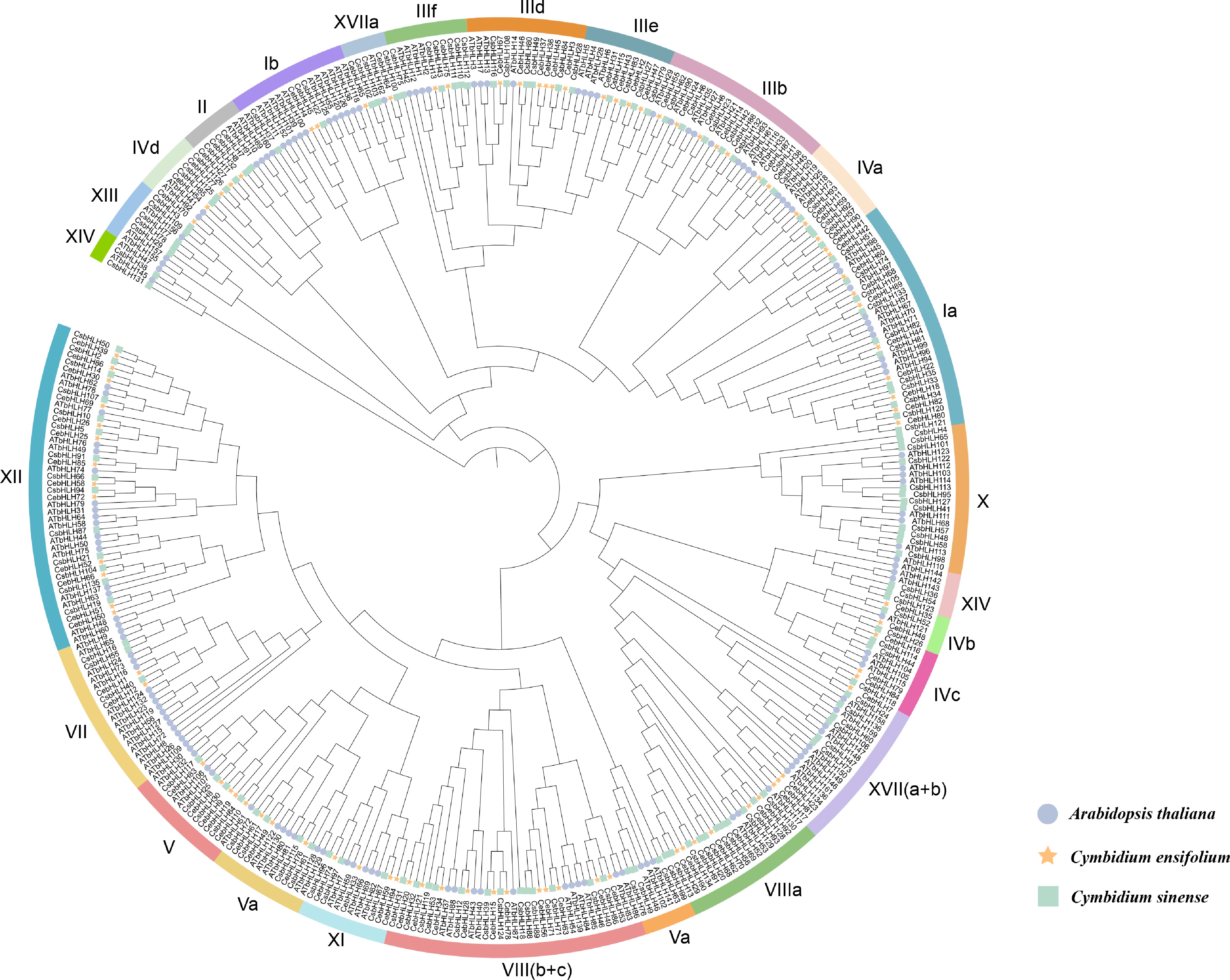
Figure 1.
Comparative phylogeny of bHLH protein families across C. sinense (136), C. ensifolium (94), and A. thaliana (162). Circle: AtbHLHs. Pentagram: CebHLHs. Square: CsbHLHs. Color-coded bands represent the 23 subfamilies.
Gene structure, conserved motifs, and sequence logo analysis of CsbHLHs
-
To investigate the structural features of CsbHLH proteins, conserved motifs were identified using the MEME program, and a total of 15 motifs were detected (Fig. 2). Among these, motifs 1, 2, and 3 were widely distributed among most CsbHLH proteins, suggesting that they represent core conserved elements of the bHLH family.
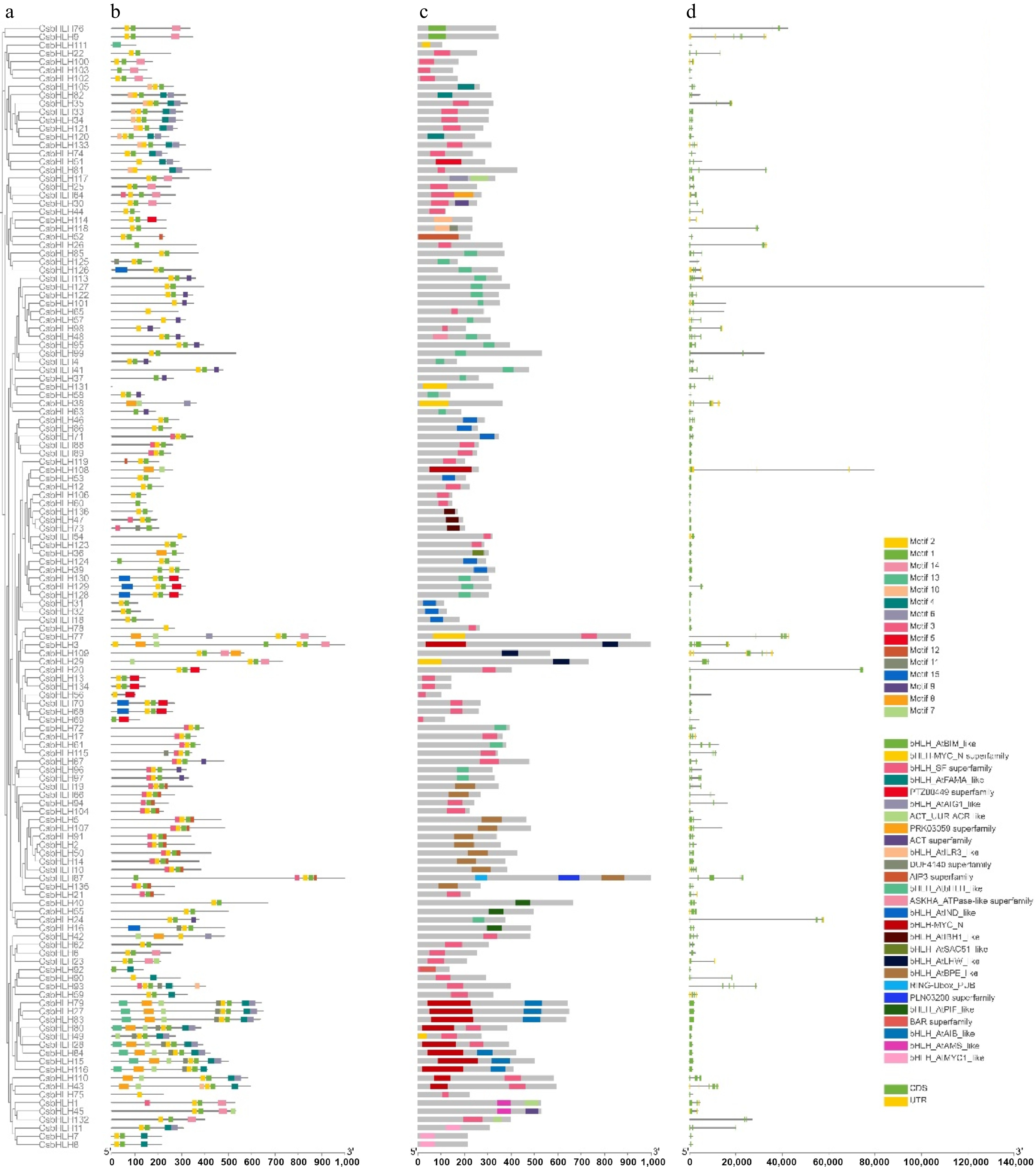
Figure 2.
Motif map, gene structure, and conserved motifs of bHLH gene family members in C. sinense. (a) Motifs of CsbHLHs; (b) domains of CsbHLHs; (c) gene structure of CsbHLHs. The legend is on the right.
Sequence logo analysis revealed that motifs 1 and 2 contained highly conserved basic amino acid residues, which are characteristic of the DNA-binding region of bHLH transcription factors, whereas motif 3 corresponded to the helix-loop-helix (HLH) region associated with protein dimerization (Fig. 3a). These conserved sequence features indicate that CsbHLHs possess the typical structural characteristics of bHLH proteins (Fig. 3b). In addition, CsbHLH members within the same subfamily exhibited similar motif compositions, while certain motifs were specific to particular subfamilies, suggesting potential functional divergence during evolution.
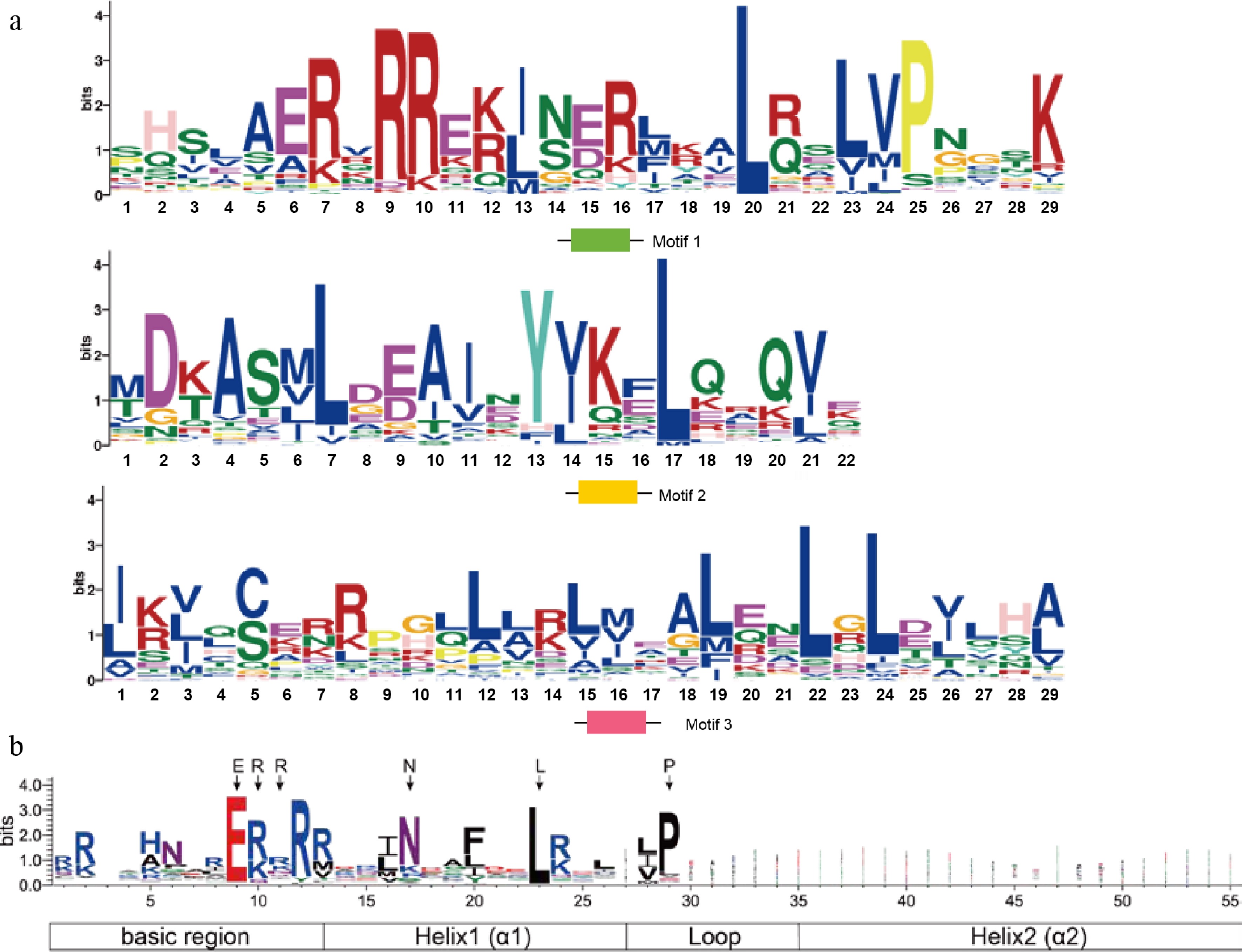
Figure 3.
Sequence logo analysis of conserved motifs in C. sinense bHLH proteins. (a) Sequence logos of the major conserved motifs identified by MEME analysis, highlighting conserved residues within the bHLH domain. (b) Sequence logo of the representative bHLH domain, showing the characteristic basic region and helix-loop-helix structure.
Gene structure analysis showed that all CsbHLHs contained introns, with intron numbers ranging from 1 to 12. Notably, 11 CsbHLHs contained only a single intron, indicating structural variation within the gene family.
Chromosomal distribution, gene duplication, and synteny analysis of CsbHLHs
-
The chromosomal distribution of 136 CsbHLH genes in C. sinense was analyzed to investigate their genomic organization. These genes were unevenly distributed across 20 chromosomes (Fig. 4). The number of CsbHLHs on individual chromosomes ranged from 1 to 15, indicating substantial variation. Chr 2 harbored the highest number of CsbHLHs (15), followed by Chr 5 (14), whereas Chr 15 contained only one gene.
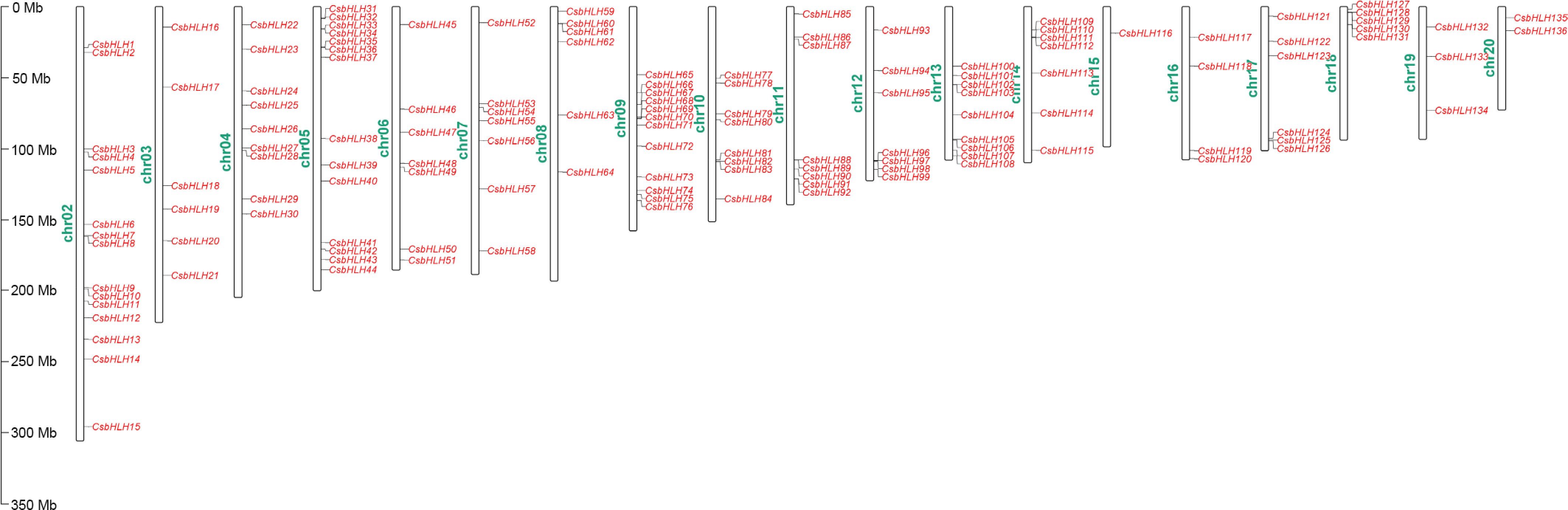
Figure 4.
Distributions of 136 CsbHLHs on chromosomes.
In addition, except for chromosomes 3, 15, 19, and 20, most chromosomes exhibited clustered distributions of CsbHLHs, suggesting possible gene duplication events. Intraspecific synteny analysis identified a total of 18 segmentally duplicated gene pairs in C. sinense (Fig. 5a). Duplication analysis further revealed 24 duplicated gene pairs, including 18 segmental duplication events and six tandem duplication events.
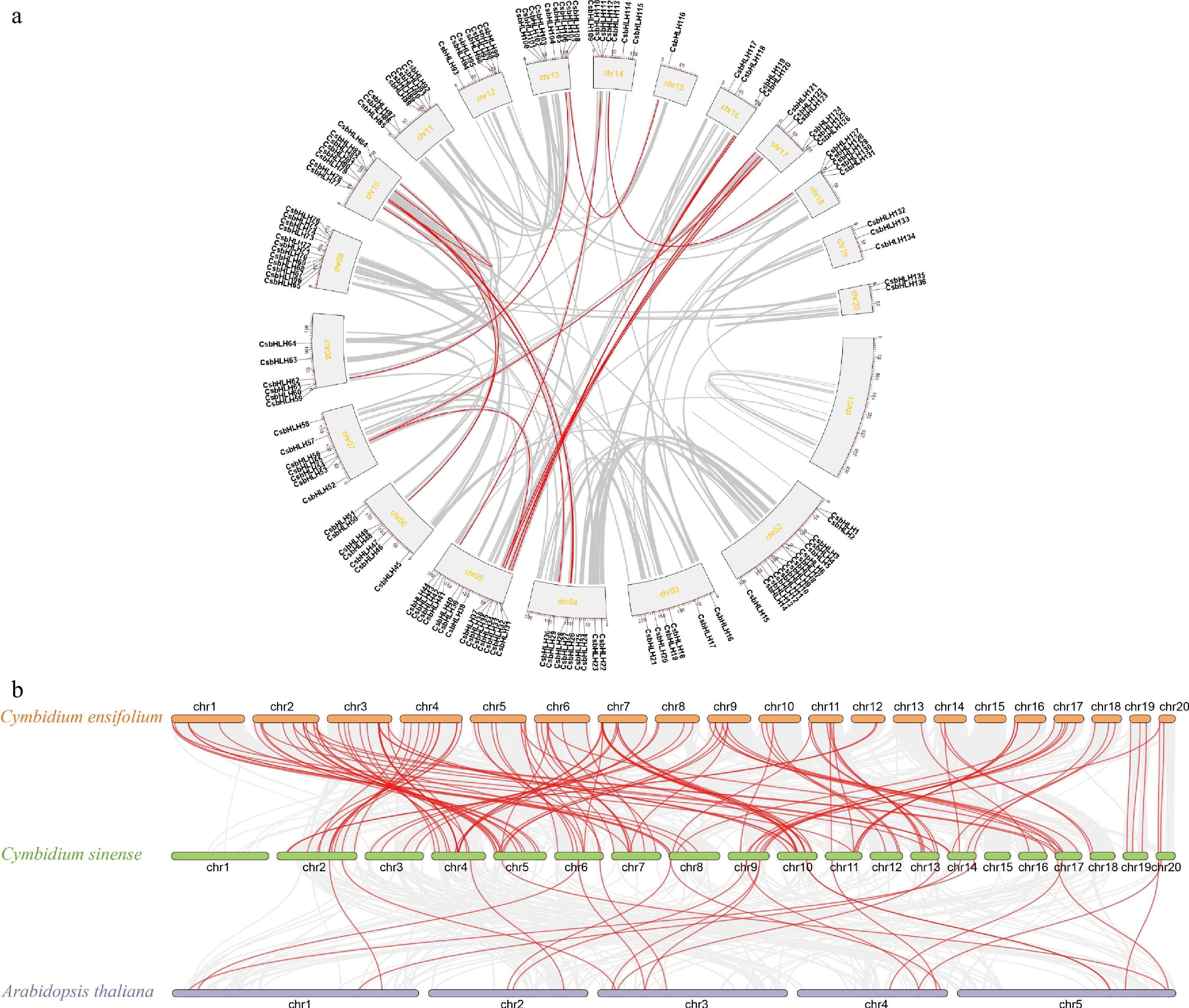
Figure 5.
Synteny analysis of CsbHLH genes within C. sinense and among C. sinense, C. ensifolium, and A. thaliana. (a) Intraspecific synteny analysis of CsbHLH genes in C. sinense. (b) Interspecific synteny analysis of bHLH genes among C. sinense, C. ensifolium, and A. thaliana.
Consistent with these results, several clusters of CsbHLH genes were observed on multiple chromosomes in the chromosomal distribution map (Fig. 4), supporting the presence of tandem duplication events. In contrast, segmental duplication events were primarily inferred from collinearity relationships across different chromosomal regions. These findings indicate that both tandem and segmental duplication contributed to the expansion of the CsbHLH gene family, with segmental duplication playing a major role. To further evaluate the evolutionary constraints on duplicated genes, the Ka/Ks ratios of duplicated CsbHLH gene pairs were calculated. All Ka/Ks values were less than 1, indicating that these genes have undergone strong purifying selection during evolution (Supplementary Table S6).
To further explore the evolutionary conservation of CsbHLH genes, synteny analysis was performed between C. sinense and other plant species, including C. ensifolium and A. thaliana (Fig. 5b). Numerous collinear gene pairs were identified between C. sinense and C. ensifolium, indicating a high level of conservation between these closely related species. In contrast, fewer collinear gene pairs were detected between C. sinense and A. thaliana, suggesting a more distant evolutionary relationship. These results suggest that CsbHLH genes are relatively conserved during evolution, particularly among closely related species.
Cis-acting element analysis of CsbHLH promoters
-
To explore the potential regulatory features of CsbHLH genes, cis-acting elements in their promoter regions were analyzed (Fig. 6). The identified elements were classified into four categories: light-responsive elements, growth and development-related elements, stress-responsive elements, and hormone-responsive elements. Among these, hormone-responsive elements were the most abundant (1,463), followed by light-responsive elements (910), indicating that CsbHLHs may be widely involved in hormone signaling and light response pathways. MBSI elements were identified in the promoters of CsbHLH3 and CsbHLH55, indicating the presence of potential MYB-binding sites. Overall, the diversity of cis-acting elements in CsbHLH promoters suggests complex regulatory patterns that may contribute to the functional diversification of this gene family.
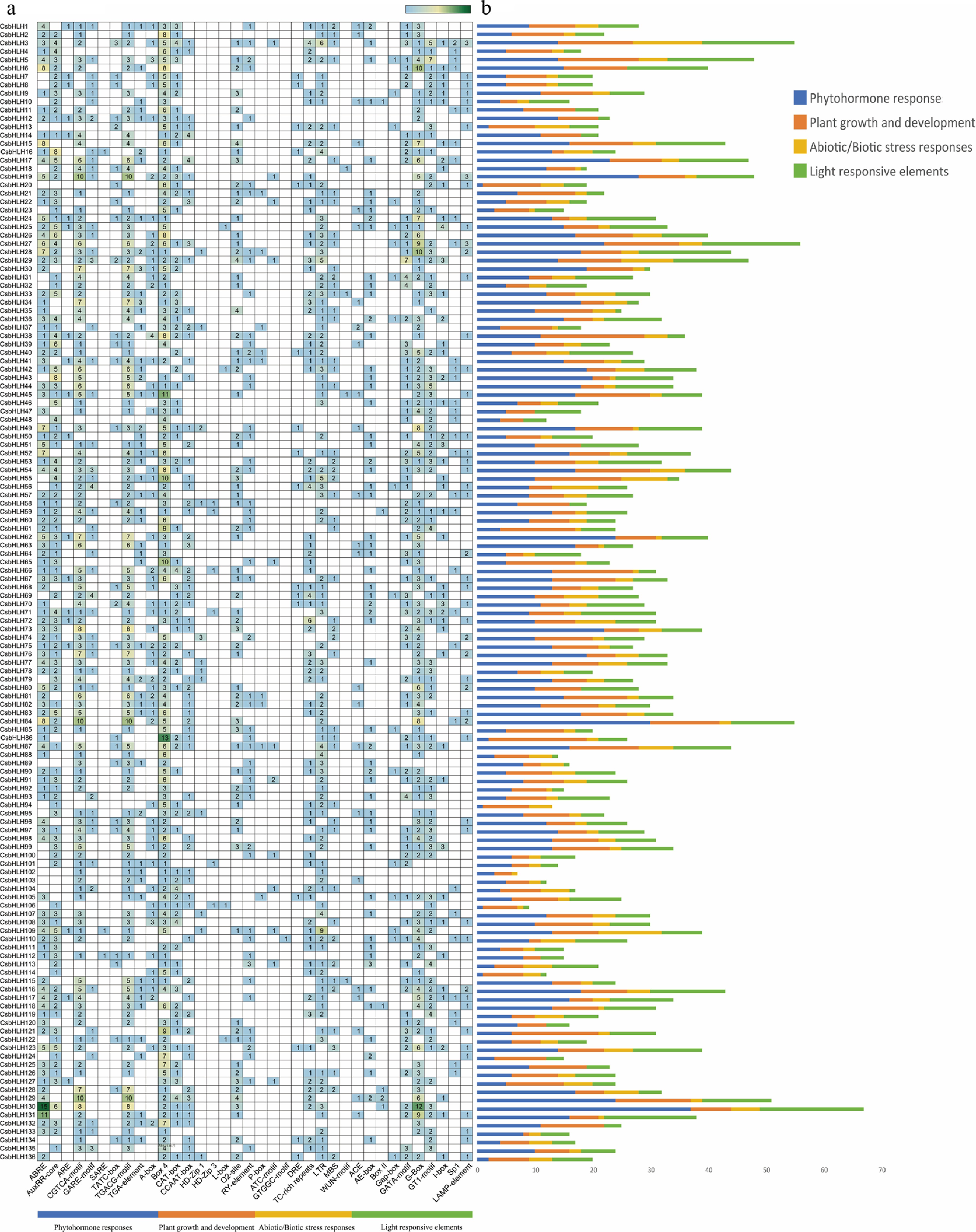
Figure 6.
Promoter cis-element profiling of CsbHLHs. (a) Census of cis-elements in CsbHLHs. (b) The four major cis-element categories are color-coded: blue (phytohormone responses), green (light-responsive elements), orange (plant growth and development), and yellow (abiotic/biotic stress responses).
Expression profiling of CsbHLHs and prioritization of anthocyanin-associated candidate genes
-
To identify candidate CsbHLH genes potentially associated with floral anthocyanin accumulation, transcriptome analysis was performed across four floral organs, including columns, petals, sepals, and lips, at S5 (Fig. 7a). The results showed that CsbHLHs exhibited diverse expression patterns, indicating potential functional divergence among family members. Among these genes, CsbHLH43 and CsbHLH110 showed organ-dependent expression patterns in floral tissues. Based on their phylogenetic placement within subgroup IIIf and their floral-organ expression patterns, these genes were prioritized for further evaluation. Their expression patterns partially overlapped with those of representative anthocyanin biosynthesis-related genes, including UFGT (particularly Mol014948), CHI, and F3'H (Fig. 7b), further supporting their candidacy as anthocyanin-associated bHLH genes.
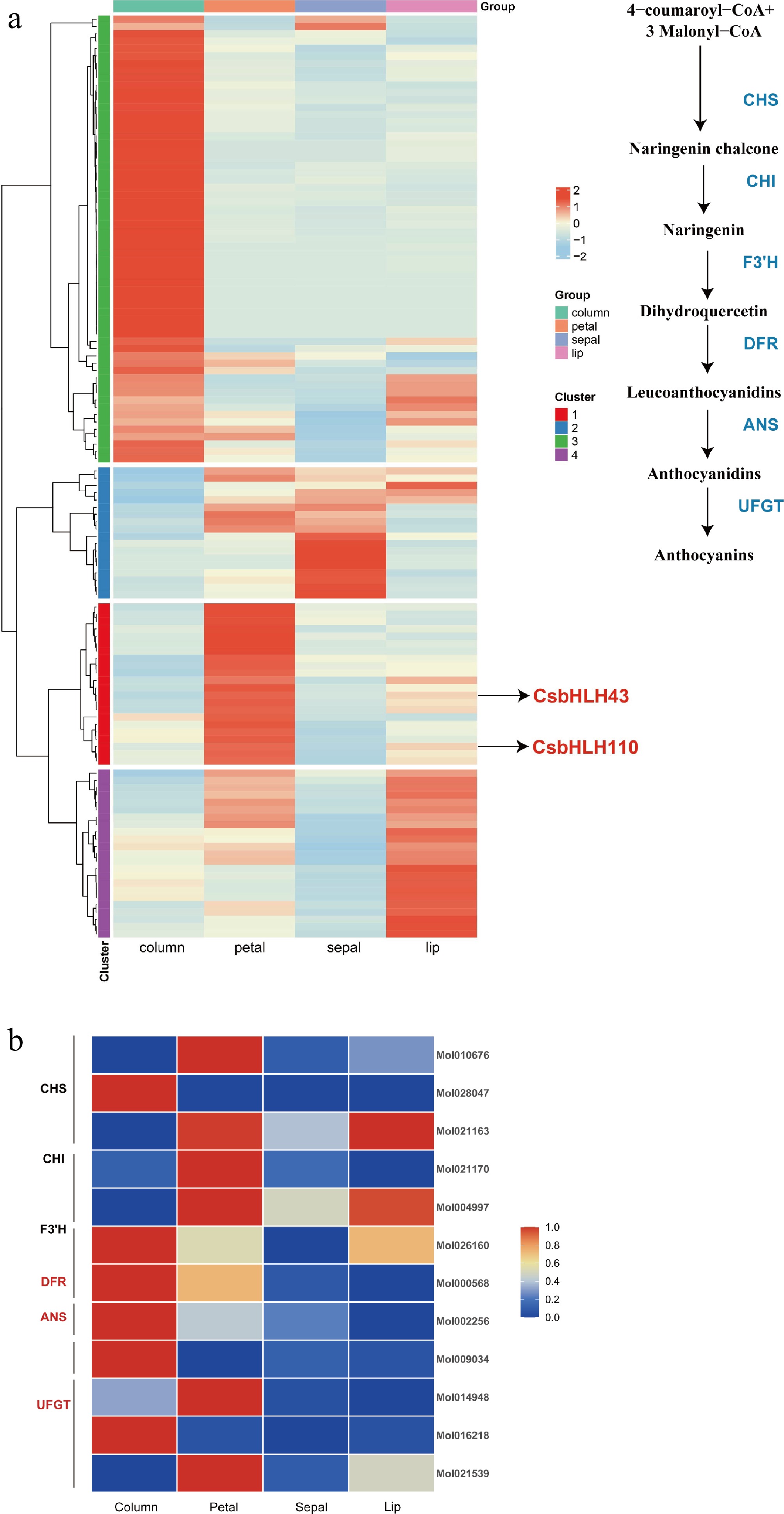
Figure 7.
Expression analysis of bHLH transcription factors and representative flavonoid biosynthesis-related genes. (a) Expression heatmap of bHLH transcription factors across different floral organs. (b) Expression of flavonoid biosynthesis genes.
Developmental expression patterns of candidate genes and their associations with anthocyanin accumulation
-
Total anthocyanin content increased progressively from S1 to S5 in all four floral organs. Sepals consistently showed the highest anthocyanin content, followed by petals, lips, and columns (Fig. 8a).
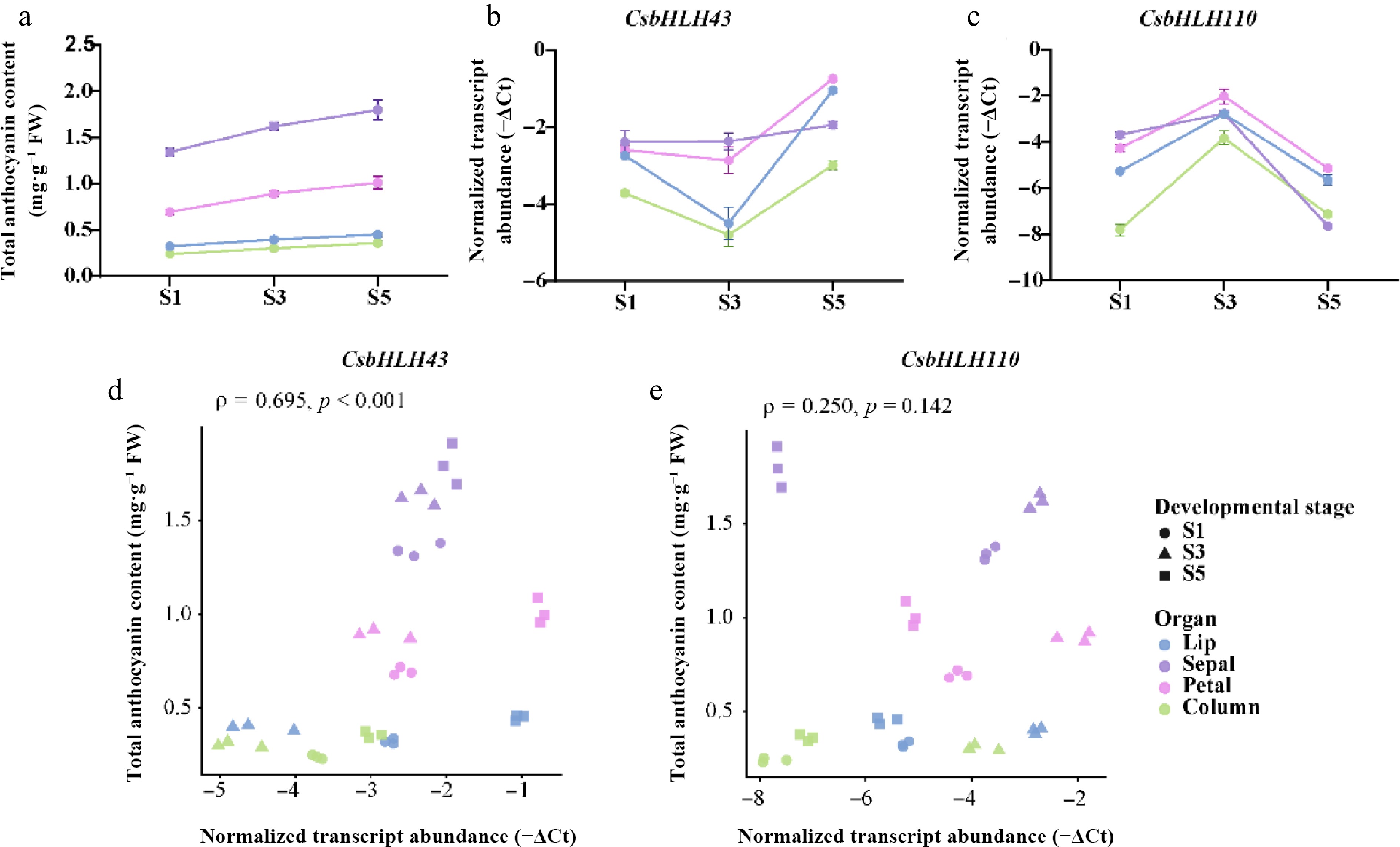
Figure 8.
Developmental changes in anthocyanin content and expression of candidate CsbHLH genes. (a) Total anthocyanin content in four floral organs at S1, S3, and S5. Transcript abundance of (b) CsbHLH43 and (c) CsbHLH110, expressed as −ΔCt values, with higher values indicating greater transcript abundance. Values in (a)–(c) are means ± SD of three biological replicates. (d), (e) Spearman correlations between anthocyanin content and transcript abundance across 36 biological samples.
CsbHLH43 and CsbHLH110 exhibited distinct developmental expression patterns. Transcript abundance of CsbHLH43 increased at S5 in the lip, petal, and column, whereas relatively limited developmental variation was observed in the sepal. In contrast, CsbHLH110 generally showed increased transcript abundance at S3 followed by a reduction at S5 (Fig. 8b, c).
Across the 36 pooled biological samples, CsbHLH43 transcript abundance was positively associated with total anthocyanin content (Spearman's ρ = 0.695, p < 0.001). In contrast, the association between CsbHLH110 transcript abundance and anthocyanin content was not significant (ρ = 0.250, p = 0.142; Fig. 8d, e). These results provided stronger developmental correlative support for CsbHLH43 than for CsbHLH110.
Sequence features and subcellular localization of candidate CsbHLHs
-
Phylogenetic analysis showed that CsbHLH43 and CsbHLH110 clustered within the IIIf subfamily, which contains several previously characterized bHLH proteins associated with anthocyanin regulation in other plant species. Multiple sequence alignment further showed that both proteins contained the conserved basic region and helix-loop-helix domain characteristic of bHLH transcription factors, together with conserved amino acid residues shared with representative anthocyanin-associated homologs (Fig. 9).
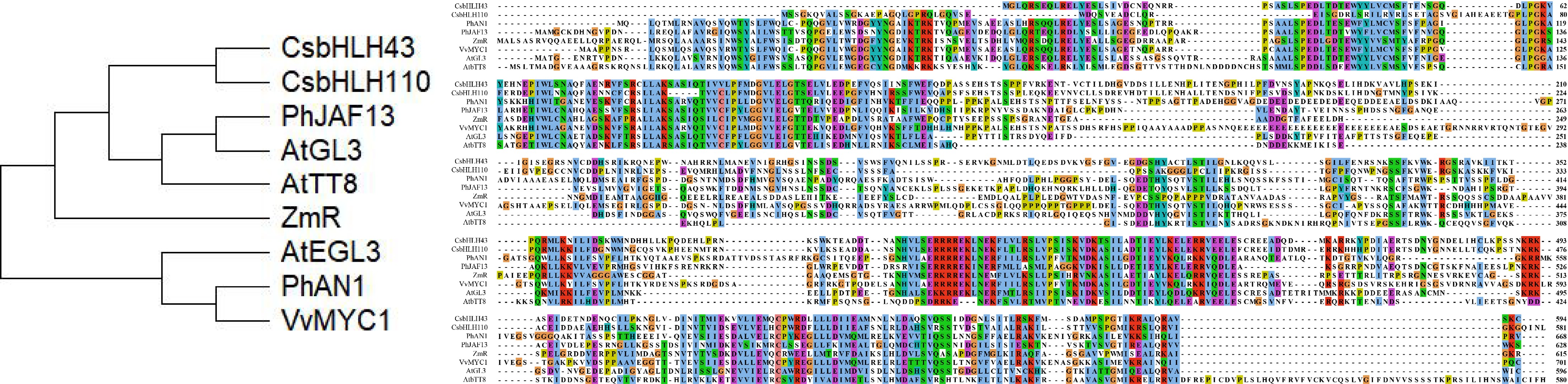
Figure 9.
Phylogenetic analysis and conserved domain alignment of candidate CsbHLHs. Multiple sequence alignment of CsbHLH43 and CsbHLH110 with bHLH amino acid sequences from other species: At: A. thaliana (AtGL3, AT5G41315; AtEGL3, AT1G63650; AtTT8, AT4G09820), Ph: Petunia hybrida (PhJAF13, AAC39455.1; PhAN1, AAG25928.1), Zm: Zea mays (ZmR, NP_001105339.2), Vv: Vitis vinifera (VvMYC1, ACC68685.1).
To further characterize CsbHLH43 and CsbHLH110, their subcellular localization was investigated using a transient expression system in N. benthamiana (Fig. 10). In leaves expressing the empty vector Super1300-GFP, GFP fluorescence was observed in both the nucleus and cytoplasm. In contrast, GFP signals from CsbHLH43-GFP and CsbHLH110-GFP were exclusively detected in the nucleus and showed strong colocalization with DAPI-stained nuclear signals. No obvious GFP fluorescence was observed in the cytoplasm or plasma membrane. These results indicate that CsbHLH43 and CsbHLH110 are nucleus-localized proteins, consistent with their predicted roles as transcription factors.
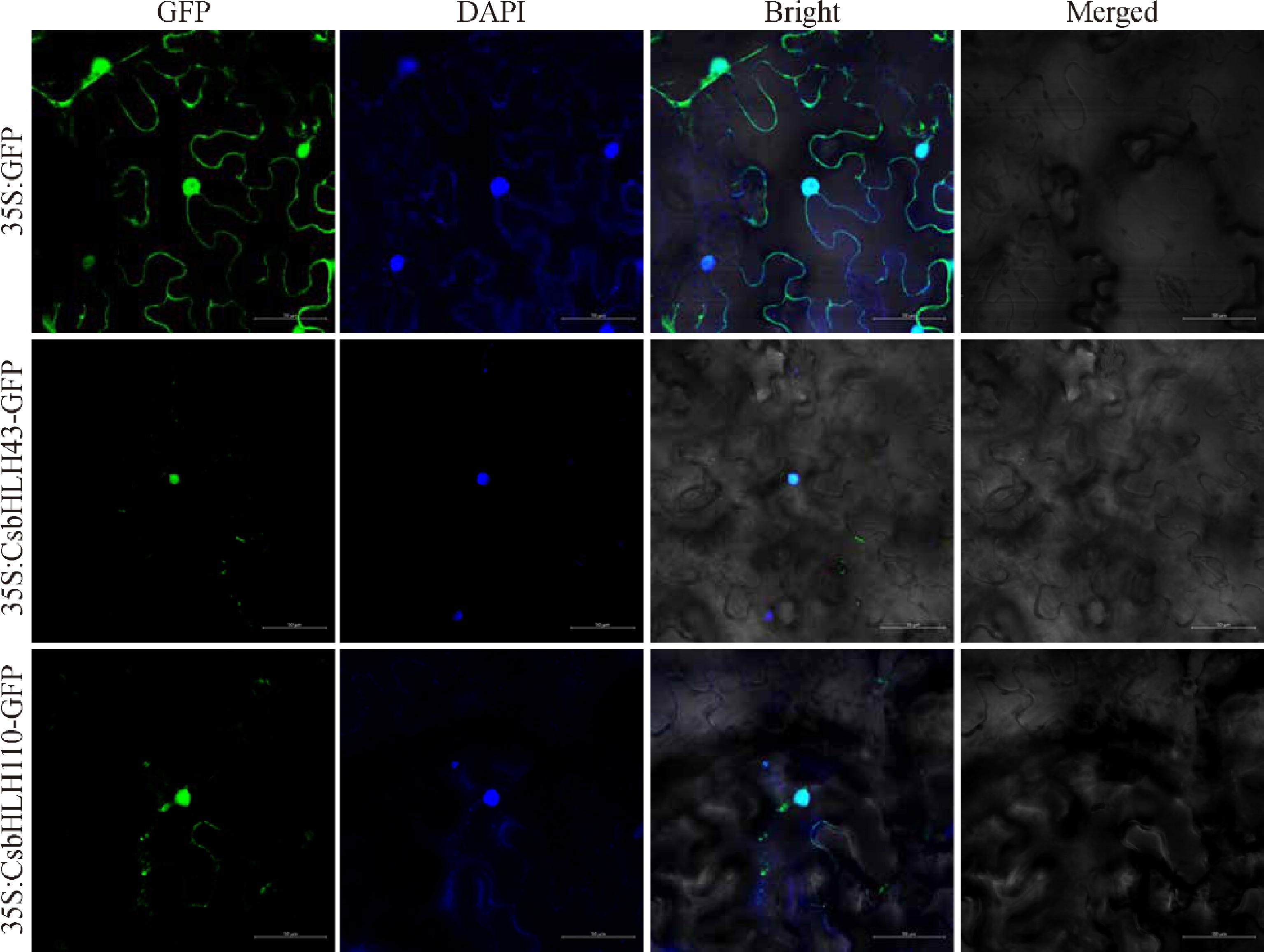
Figure 10.
Subcellular localization of CsbHLH43 and CsbHLH110. CsbHLH43-GFP and CsbHLH110-GFP fusion proteins were transiently expressed in N. benthamiana leaves. GFP signals were predominantly detected in the nucleus, as evidenced by their colocalization with DAPI staining. Bright-field images provide cellular context, and merged panels integrate the GFP, DAPI, and bright-field channels. Scale bar = 50 μm.
-
The bHLH transcription factor family plays important roles in plant development, stress responses, and secondary metabolism[27,36]. Previous studies have mainly focused on the roles of bHLH transcription factors in stress responses, plant development[37,38], and signal transduction. Within these areas, the regulatory mechanisms governing anthocyanin synthesis, as exemplified by the function of bHLH, have emerged as a pivotal subject of study[19]. However, the composition, evolution, and potential roles of bHLH transcription factors in C. sinense, particularly in floral pigmentation, remain poorly understood.
Phylogenetic analysis showed that CsbHLH proteins were distributed across multiple bHLH subfamilies, indicating broad diversification of this gene family in C. sinense. Members within the same subfamily generally exhibited similar structural features, supporting their evolutionary conservation. Notably, CsbHLH43 and CsbHLH110 clustered within the IIIf subfamily, which includes several anthocyanin-associated bHLH regulators reported in other plant species. In A. thaliana, IIIf members such as AtGL3, AtEGL3, and AtTT8 have been functionally characterized as regulators of anthocyanin accumulation. The clustering of CsbHLH43 and CsbHLH110 with these proteins suggests that they share evolutionary and sequence features with anthocyanin-associated bHLHs, making them suitable candidates for further functional investigation. Duplication and Ka/Ks analyses further indicated that gene duplication contributed to the expansion of the CsbHLH family and that duplicated genes were mainly subject to purifying selection, suggesting functional conservation during evolution[39].
Structural analysis showed that CsbHLHs within the same subfamily shared similar motif compositions and exon–intron structures, indicating conserved sequence features. Conserved motifs corresponding to the basic region and helix-loop-helix domain highlight their roles in DNA binding and protein dimerization. Variations in exon–intron organization may contribute to functional divergence among CsbHLH members.
Cis-element analysis revealed that the promoters of CsbHLHs contain abundant hormone-responsive and stress-related elements, suggesting their involvement in complex regulatory networks. The presence of MYB-related cis-elements suggests that some CsbHLH genes may be connected with MYB-mediated regulatory pathways. In other species, bHLH proteins participate in anthocyanin regulation through MBW complexes[40]. The phylogenetic placement of CsbHLH43 and CsbHLH110 within subgroup IIIf provides a basis for future examination of their potential interactions with MYB and WD40 proteins. In maize, petunia, and grape, bHLH proteins have been shown to regulate anthocyanin biosynthesis through interactions with MYB and/or WD40 partners, thereby activating structural genes such as DFR, ANS, and UFGT[41−43]. These studies provide useful references for understanding bHLH-mediated anthocyanin regulation in plants. However, whether CsbHLH43 and CsbHLH110 interact with MYB or WD40 proteins or participate in an MBW complex in C. sinense remains to be experimentally validated.
In the expression analysis, CsbHLH43 and CsbHLH110 showed organ-dependent expression patterns that partially overlapped with those of representative anthocyanin biosynthesis-related genes, including UFGT, CHI, and F3'H[44].
Interestingly, although anthocyanin content was highest in sepals, the expression levels of these genes were not strictly proportional to pigment accumulation. This discrepancy suggests that anthocyanin biosynthesis is regulated by complex mechanisms beyond transcriptional control, such as temporal gene expression, metabolite transport, and coordinated regulation by multiple transcription factors. Developmental profiling further distinguished the evidence supporting the two candidates. CsbHLH43 transcript abundance showed a significant positive association with total anthocyanin content across the pooled floral samples, providing developmental correlative support for its association with pigment accumulation. However, the clear clustering of samples according to floral organ and developmental stage indicates that this overall association may partly reflect differences among tissues and stages and should not be interpreted as evidence of direct regulation. In contrast, CsbHLH110 exhibited a distinct stage-dependent expression pattern, with relatively high transcript abundance at the half-open stage followed by reduced expression at full opening. Its transcript abundance was not significantly associated with total anthocyanin content in the pooled contemporaneous analysis. Because anthocyanin content reflects accumulated pigment, whereas qRT-PCR measures transcript abundance at the sampling time, a simple contemporaneous correlation may not capture all temporal relationships. Nevertheless, the present results do not establish a regulatory role for CsbHLH110 in anthocyanin biosynthesis.
In addition, subcellular localization analysis showed that CsbHLH43 and CsbHLH110 are localized in the nucleus, which is consistent with their predicted roles as transcription factors. Combined with phylogenetic and expression evidence, these results support CsbHLH43 and CsbHLH110 as candidate anthocyanin-associated bHLH genes for future functional investigation.
Overall, this study provides a systematic overview of the CsbHLH gene family in C. sinense and identifies candidate genes potentially associated with floral anthocyanin biosynthesis. Although phylogenetic analysis, expression profiling, qRT-PCR validation, and nuclear localization support CsbHLH43 and CsbHLH110 as anthocyanin-associated candidate bHLH genes, these results do not demonstrate direct regulatory functions. Further functional studies are required to clarify the biological roles of CsbHLH43 and CsbHLH110 in floral pigmentation.
-
A total of 136 CsbHLH genes were identified and systematically characterized in C. sinense. Duplication and Ka/Ks analyses indicated that segmental duplication contributed substantially to the expansion of the gene family and that the duplicated genes were mainly subjected to purifying selection. Phylogenetic, sequence, expression, and subcellular localization analyses prioritized CsbHLH43 and CsbHLH110 as candidate genes associated with floral anthocyanin accumulation. Developmental expression and correlation analyses provided stronger correlative support for CsbHLH43, whereas the association between CsbHLH110 and anthocyanin accumulation remained unclear. These findings expand our understanding of bHLH genes associated with flower coloration in C. sinense and provide candidate genetic resources for future studies of ornamental color traits, germplasm evaluation, and flower-color improvement in Cymbidium breeding.
-
The authors confirm their contributions to this study as follows: conceptualization: Lan S and Liu ZJ; writing of the original draft preparation: Zhao X; formal analysis: Zhao X and Fan X; methodology: Zhang W, Chen Y, and Wang L; writing, review, and editing: Zhao X and Wang L. All authors reviewed the results and approved the final version of the manuscript.
-
The genomic data of Cymbidium sinense are derived from NCBI: PRJNA743748. Additional data supporting the article can be found in the supplementary materials.
-
The authors declare that they have no conflict of interest.
-
accompanies this paper online at: https://doi.org/10.48130/opr-0026-0027.
- Supplementary Table S1 Expression profiles of CsbHLH genes in different floral organs.
- Supplementary Table S2 Expression profiles of flavonoid biosynthesis genes across different floral tissues in Cymbidium sinense.
- Supplementary Table S3 Primers of qRT-PCR.
- Supplementary Table S4 Primers of subcellular localization.
- Supplementary Table S5 The characteristics of 136 CsbHLH proteins.
- Supplementary Table S6 Ka, Ks, and Ka/Ks values of duplicated CsbHLH gene pairs in Cymbidium sinense.
- Copyright: © 2026 by the author(s). Published by Maximum Academic Press, Fayetteville, GA. This article is an open access article distributed under Creative Commons Attribution License (CC BY 4.0), visit https://creativecommons.org/licenses/by/4.0/.
-
About this article
Cite this article
Zhao X, Wang L, Fan X, Zhang W, Chen Y, et al. 2026. Genome-wide characterization of the bHLH gene family and developmental evaluation of anthocyanin-associated candidate genes in Cymbidium sinense. Ornamental Plant Research 6: e036 doi: 10.48130/opr-0026-0027 

Genome-wide characterization of the bHLH gene family and developmental evaluation of anthocyanin-associated candidate genes in Cymbidium sinense
- Received: 10 April 2026
- Revised: 05 July 2026
- Accepted: 10 August 2026
- Published online: 14 October 2026
Abstract: Flower coloration is a key ornamental trait that largely determines the aesthetic and commercial value of Cymbidium sinense. Anthocyanins are major pigments underlying floral color variation, and their biosynthesis is regulated by transcription factors, including basic helix-loop-helix (bHLH) proteins. However, the bHLH gene family and its role in anthocyanin accumulation and flower coloration in C. sinense remain poorly understood. Here, 136 CsbHLH genes were identified and classified into 23 subfamilies. Gene duplication analysis identified 24 duplicated gene pairs, including 18 segmental and six tandem duplications. Cis-regulatory element analysis revealed diverse hormone- and stress-responsive elements in CsbHLH promoters. Transcriptome-based expression profiling revealed distinct expression patterns across floral organs. CsbHLH43 and CsbHLH110, which belong to the IIIf subfamily, were selected as anthocyanin-associated candidate genes based on their phylogenetic relationships and organ-dependent expression patterns. Developmental qRT-PCR and anthocyanin measurements provided stronger correlative support for CsbHLH43, whose transcript abundance was significantly associated with anthocyanin content. In contrast, CsbHLH110 exhibited a distinct stage-dependent expression pattern without a significant overall association. Both proteins were localized in the nucleus. Overall, these findings identify CsbHLH43 as a more strongly supported anthocyanin-associated candidate, whereas the relationship between CsbHLH110 and anthocyanin accumulation remains unclear.