










-
As soil salinization intensifies, salt stress has emerged as a major environmental threat to global food production[1]. Therefore, elucidating plants' or crops' salt tolerance mechanisms is essential for improving stress resistance and developing salt-tolerant cultivars. In response to environmental changes, adaptive adjustments are primarily mediated by plant hormones[2−4]. Among them, abscisic acid (ABA), gibberellic acid (GA), ethylene (ET), salicylic acid (SA), auxin, cytokinins (CKs), and brassinosteroids (BRs) play important roles in salt stress responses and in balancing growth[3,5−7]. Beyond these recognized hormones, accumulating evidence has also highlighted the involvement of JA in plant adaptation to saline environments[8−10]. To systematically synthesize these findings, this review summarizes advances in existing research, introduces potential processes underlying salt-induced JA synthesis, and specifically focuses on elucidating how the resulting JA signaling functions in plant adaptation to salt stress. To date, many regulators of JA signaling involved in plant salt responses have been identified (Table 1). For more comprehensive reviews of JA's other functions and diversity, we refer readers to other excellent reviews[11,12].
Table 1. Summary of the components involved in JA-mediated responses to salt stress.
Name Species Type Function Reference JAZs Arabidopsis thaliana
Salvia miltiorrhizaJasmonate-ZIM-domain protein Under salt stress, JAZ proteins are degraded via the 26S proteasome, thereby releasing transcription factors like MYC2 to activate JA-responsive genes. The expression of some JAZs are induced by salt stress. [9,29,73,76,
77,80,87,89]FER Arabidopsis thaliana receptor-like kinase Under salt stress, FER binding of RALF inhibits JA synthesis and signaling by accumulating active ABA. [25,57] RALF22/23 Arabidopsis thaliana Rapid alkalinization factor Peptide Under salt stress, they are cleaved from LRX and bind to FER to activate downstream responses that inhibit excessive JA synthesis. [25,57] LRX3/4/5 Arabidopsis thaliana Leucine-rich repeat/extensin Under salt stress, RALF release from LRX3/4/5 initiates downstream responses that affect JA synthesis. [25,57] MBW Complex (MYB75, TTG8/EGL3, WD40) Arabidopsis thaliana Transcriptional complex (MYB-bHLH-WD40) The complex is a crucial activator of anthocyanin biosynthesis under salt stress. [29] TPR2 Arabidopsis thaliana Transcriptional co-repressor TPR2 is recruited by ECAP to form a repression complex that suppresses the MBW complex, inhibiting anthocyanin biosynthesis. [29,45] COI1 Arabidopsis thaliana,
Nicotiana tabacum,
Oryza sativaF-box protein COI1 forms the core co-receptor complex with JAZ proteins for JA perception. Its activity leads to JAZ degradation and the initiation of JA signaling under salt stress. [29,35,38,43,74] ECAP Arabidopsis thaliana EAR motif-containing adaptor protein It interacts with JAZ6/8, TPR2 and MYB75 to suppress the MBW complex, fine-tuning anthocyanin biosynthesis under salt stress [29,45] MYC2 Arabidopsis thaliana,
Caragana korshinskii,
Solanum lycopersicumbHLH transcription factor MYC2, the core transcription factor of the JA signaling pathway, activates JA-responsive genes to suppress root growth under salt stress in Arabidopsis, promotes ABA accumulation and inhibits stomatal development in Caragana, and collaborates with SlWRKY42 in tomato to regulate downstream stress responses. [38,48,74,78,
80,84]PLTs Oryza sativa, Arabidopsis thaliana AP2-domain transcription factor JA signaling inhibits their expression,which is related to cell division and elongation, repressing root growth to adapt to salt stress. [38,74] ACX Arabidopsis thaliana Acyl-CoA oxidase Under salt stress, ACX is involved in JA biosynthesis to enhance JA signaling. [46] AOC Arabidopsis thaliana,
Zea maysAllene Oxide Cyclase Under salt stress, ZmEREB57 enhances tolerance by binding the ZmAOC2 promoter to regulate OPDA synthesis.. [46,53,54,62] AOS Arabidopsis thaliana,
Ipomoea batatasAllene Oxide Synthase AOS, a key JA biosynthetic enzyme, is directly activated by IbNAC087 and indirectly regulated by ABF3 to enhance JA signaling under salt stress. [46,60,77] LOX Arabidopsis thaliana,
Ipomoea batatas
Glycine maxLipoxygenase Under salt stress, it is a key enzyme, directly activated by IbNAC087 to enhance JA accumulation and salt stress tolerance. In soybean, the expression of GmLOX6 is suppressed by GmRWP-RK11. [46,52,60] CkCYP70A4 Caragana korshinskii Cytochrome P450 enzyme Under salt stress, the CkMYC2-CkPYL4-CkPP2C complex suppresses CkCYP70A4 activity, leading to ABA accumulation. [48] CkPP2C Caragana korshinskii Phosphatase Under salt stress, CkPP2C forms a complex with CkMYC2 and CkPYL4 to suppress the inhibitory function of CkPP2C, contributing to ABA accumulation. [48] CkPYL4 Caragana korshinskii ABA receptor Induced by JA, it forms a complex with CkMYC2 and CkPP2C to inhibit CkCYP70A4, leading to ABA accumulation under salt stress. [48] GmRWP-RK11 Glycine max RWP-RK TF family It is a transcriptional repressor of GmLOX6 under salt stress in soybean. [52] OPR Arabidopsis thaliana cis-12-oxo-phytodienoic acid reductase Under salt stress, OPR is involved in JA biosynthesis to enhance JA signaling. [53,54] PAO5 Arabidopsis thaliana Polyamine oxidase PAO5 catalyzes polyamine oxidation. Its loss-of-function increases tSpm levels, enhancing salt tolerance via promotion of JA biosynthesis. [59] IbNAC087 Ipomoea batatas NAC transcription factor It boosts JA accumulation by activating JA synthesis genes under salt stress, enhances ROS scavenging, and improves salt tolerance. [60] IbNIEL Ipomoea batatas E3 ubiquitin ligase It negatively regulates plant salt tolerance by weakening the activation of JA synthesis genes through the degradation of IbNAC087. [60] IbGATA24 Ipomoea batatas GATA zinc finger transcription factor Salt stress induces the expression of IbGATA24, which in turn affects JA accumulation. [61] ZmEREB57 Zea mays AP2/ERF transcription factor It is induced by salt stress and directly binds to the ZmAOC2 promoter, enhancing salt tolerance by regulating OPDA and JA synthesis. [62] GPX6 Arabidopsis thaliana Glutathione peroxidase Under salt stress, JA enhances the expression of GPX6, thereby aiding GSH-mediated ROS scavenging. [63] RBOH Glycine max NADPH oxidase JA activates these genes that induce H2O2 production in roots under salt stress, leading to growth inhibition. [70] TaTIFY3B Triticum aestivum Jasmonate-ZIM-domain protein Under moderate salt stress, its overexpression enhances seed germination and root growth, but intensifies germination inhibition under high salinity. [73] TaTIFY10A Triticum aestivum Jasmonate-ZIM-domain protein Its overexpression promotes root growth under salinity. [73] OsbHLH089/OsbHLH094 Oryza sativa Class C bHLH transcription factors They form a ternary complex with RSS3 and JAZ proteins to modulate JA responses and maintain root cell elongation under salt stress. [76] RSS3 Oryza sativa Transcriptional co-repressor RSS3 forms a ternary complex with class C bHLH factors and JAZ proteins, and its mutation enhances JA-responsive gene expression and inhibits root growth under salt stress. [76] ABF3 Arabidopsis thaliana bZIP transcription factor Under salt stress, ABF3 enhances JA signaling by competitively binding to JAZ1, thereby preserving MYC2 activity. [77] MKK3-MPK6 module Arabidopsis thaliana MAP kinase cascade Under salt stress, it cascade phosphorylates and activates MYC2 to suppress P5CS1, reducing proline accumulation and inhibiting growth. [78] P5CS1 Arabidopsis thaliana 1-pyrroline-5-carboxylate synthetase Under salt stress, the MKK3-MPK6 pathway-activated MYC2 suppresses its expression, reducing proline accumulation and inhibiting growth. [78] CYP94C2b Oryza sativa Cytochrome P450 enzyme It inactivates JA-Ile, reducing JA signaling to alleviate growth inhibition under salt stress. [79] RCA Arabidopsis thaliana Rubisco activase Under salt stress, JA signaling activates its expression via MYC2 to improve photosynthetic efficiency. [84] SlWRKY42 Solanum lycopersicum WRKY family transcription factor Under saline-alkali stress, it binds to the SlSPDS2 promoter with SlMYC2 to promote spermidine synthesis and enhance plant tolerance. [86] SlWRKY80 Solanum lycopersicum WRKY family transcription factor Released from SlJAZ1 inhibition, it activates the promoters of SlSPDS2 and SlNHX4 to regulate Spd synthesis and Na+/K+ homeostasis, enhancing salt tolerance. [87] NF-Y complex (NF-YA1-YB2-YC9) Arabidopsis thaliana NF-Y transcription factor complex Under salt stress, this complex is released, thereby regulating the expression of salt stress-related genes. [89] -
Salt stress, an abiotic constraint caused by elevated concentrations of ions such as Na+ and Cl- in the soil[13], poses a formidable challenge to plant growth and development (Fig. 1). Initially, elevated ion concentrations in the soil impose osmotic stress by lowering soil water potential, thereby impairing water uptake by plant cells and ultimately leading to cellular dehydration[14]. Subsequently, excessive salt ions that enter the root and accumulate within plant tissues disrupt ion homeostasis across the plasma membrane, alter electrochemical gradients, and interfere with the uptake and transport of other essential ions, thereby causing substantial damage to plant growth and physiology[15]. Salt stress also triggers secondary stresses, including oxidative stress: the accumulation of ROS, such as hydroxyl radicals (•OH), hydrogen peroxide (H2O2), superoxide anion radical (O2•−), and singlet oxygen (1O2), damages cellular structures like membranes and compromises the stability of macromolecules and small metabolites[16,17].
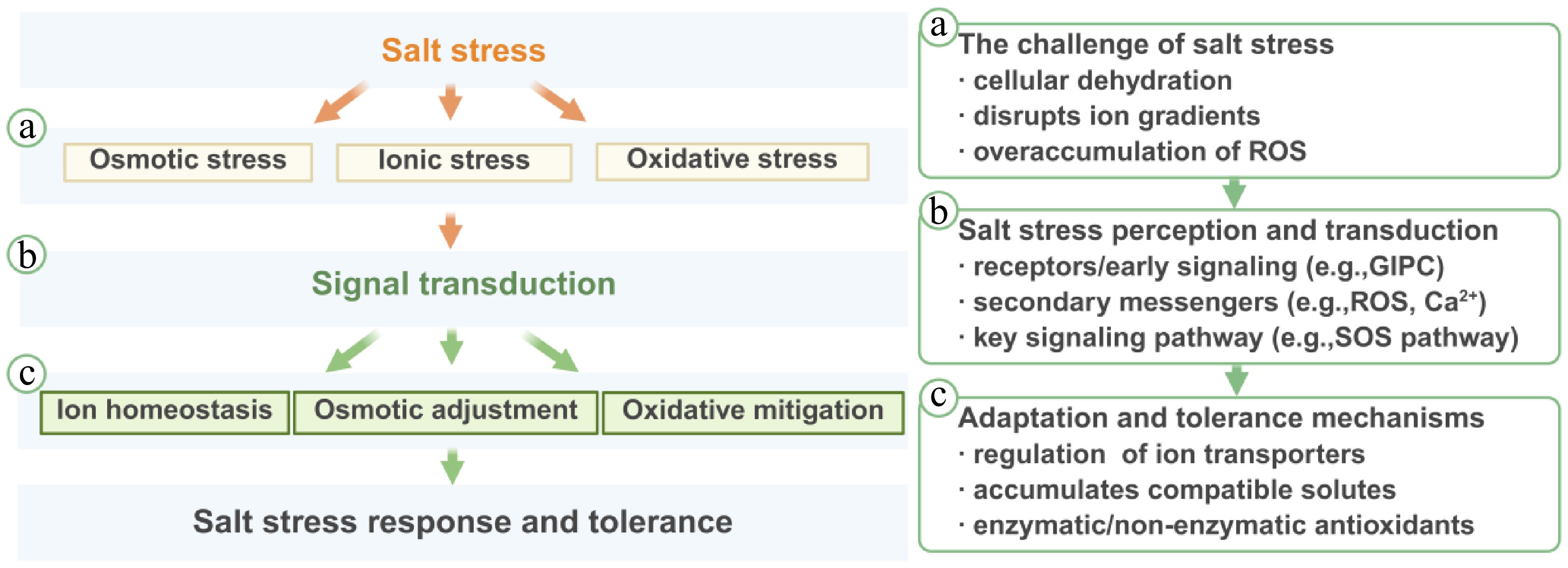
Figure 1.
A simplified overview of how plants perceive and respond to salinity. In the left panel, orange arrows indicate the process by which salt stress induces osmotic, ionic, and oxidative stress and affects the normal functioning of plants, while green arrows represent the perception, signal transduction, and adaptive responses of plants to salinity. The right panel details three key aspects: (a) the negative impacts of salt stress on plant growth and development; (b) the signal transduction pathway activated by salt stress. In the figure, GIPC refers to the sodium ion receptor glycosyl inositol phosphorylceramide; (c) multiple regulatory mechanisms operating at the transcriptional and protein levels to facilitate adaptive responses. This figure was created using
https://BioRender.com .Plants employ a sophisticated network of mechanisms to perceive and translate salt stress signals into physiological and molecular responses (Fig. 1). Glycosyl inositol phosphorylceramide (GIPC), localized in the plasma membrane, acts as a Na+ receptor by directly binding Na+, thereby regulating Ca2+ influx and triggering downstream signaling pathways[18]. As a key second messenger in salt stress, a rapid surge in cytosolic Ca2+ concentration is orchestrated by both osmotic and ionic stimuli[19]. This Ca2+ signal subsequently activates the Salt Overly Sensitive 2 (SOS2) kinase, initiating the downstream SOS pathway within hours to facilitate ionic homeostasis[20,21]. Concurrently, ROS generated under salinity also function as secondary messengers in salt signal transduction[19,22] (Fig. 1). In addition, it is possible that additional salt receptors remain to be discovered in plants[23].
Under salt stress, the plant cell wall functions not only as a physical apoplastic barrier and Na+ reservoir, but also as an active participant in early stress responses through dynamic changes in its integrity[24]. Cell wall integrity sensors, such as leucine-rich repeat receptor kinases (LRR-RKs), mediate the transduction of signals arising from cell wall perturbations caused by salt stress through interacting with downstream signaling partners[24,25]. Together, these events represent an early component of signal transduction and adaptive cellular restructuring in response to salinity stress.
Building upon these initial signaling and cellular adjustments, plants activate a suite of coordinated physiological and molecular mechanisms to establish systemic tolerance. For instance, plants rely on the SOS2 kinase to regulate ion transporter systems involved in Na+ homeostasis, including activation of Salt Overly Sensitive 1 (SOS1) at the plasma membrane. Recent evidence indicates that SOS1 is also localized to late endosomal/prevacuolar and vacuolar membranes, where it may contribute to intracellular Na+ compartmentation in addition to plasma-membrane Na+ extrusion, thereby reducing Na+-induced interference with cellular functions[26,27]. Plant cells also undergo osmotic adjustment by accumulating compatible solutes such as proline, glycine betaine, polyols, polyamines, and certain soluble sugars, which help lower cellular osmotic potential and maintain turgor pressure under stress. Late embryogenesis abundant (LEA) proteins contribute by stabilizing cellular components during dehydration[21,28]. Concurrently, to mitigate the oxidative stress inevitably generated during salt stress, plant cells must tightly regulate ROS levels through a coordinated system encompassing their synthesis, translocation, and scavenging[1,17,20]. Both enzymatic and non-enzymatic systems are induced to detoxify ROS[2,17]. Key enzymes involved include superoxide dismutase (SOD), glutathione peroxidase (GPX), and glutathione S-transferase (GST). Non-enzymatic antioxidants comprise reductive compounds like alkaloids, carotenoids (Car), glutathione, and flavonoids (e.g., anthocyanins)[17,20].
Previous studies indicate that salt stress affects plants differently depending on both its intensity and the developmental stage of the plant: moderate salt levels primarily inhibit seed germination, plant growth, and development, while severe salt stress can lead to negligible growth or compromise plant survival[29]. Recently, many studies have shown that JA plays important roles in these differential responses across salt concentrations. In this review, we focus on JA-mediated plant response strategies under moderate and severe salinity stress. Here, moderate stress refers to sublethal conditions that primarily inhibit plant growth and development, whereas severe stress refers to lethal conditions that severely suppress growth and ultimately lead to plant death. Mechanisms beyond JA signaling that underlie plant responses to salt stress have been extensively reviewed elsewhere (e.g., Cao et al.[1], Ma et al.[4], Ismail et al.[13], and Yang & Guo[20]) and will not be discussed in detail here.
-
JA regulates various biological processes, including seed germination[30], flowering time[31], stamen development[31], fruit development[32], trichome development[32,33], leaf senescence[34], and responses to biotic and abiotic stresses[35−37]. The JA receptor CORONATINE INSENSITIVE 1 (COI1) was identified as an F-box protein[38], structurally similar to the auxin receptor TRANSPORT INHIBITOR RESPONSE 1 (TIR1)[39,40]. COI1 mediates degradation of jasmonate ZIM-domain (JAZ) transcriptional repressors via the Skp1/Cullin/F-box (SCF) complex[35,41,42]. Analysis of the receptor structure reveals that the COI1-JAZ co-receptor complex specifically recognizes bioactive (3R, 7S)-jasmonoyl-L-isoleucine (JA-Ile) through an open pocket, with inositol pentakisphosphate stabilizing co-receptor interaction[43]. Under some specific developmental signals or environmental stimuli, elevated JA levels enhance COI1-JAZ binding[29,39−43], triggering JAZ degradation and releasing the master transcription factors, such as myelocytomatosis protein 2 (MYC2) and MYC3, which activate downstream JA responses[34,36,41,43] (Fig. 2).
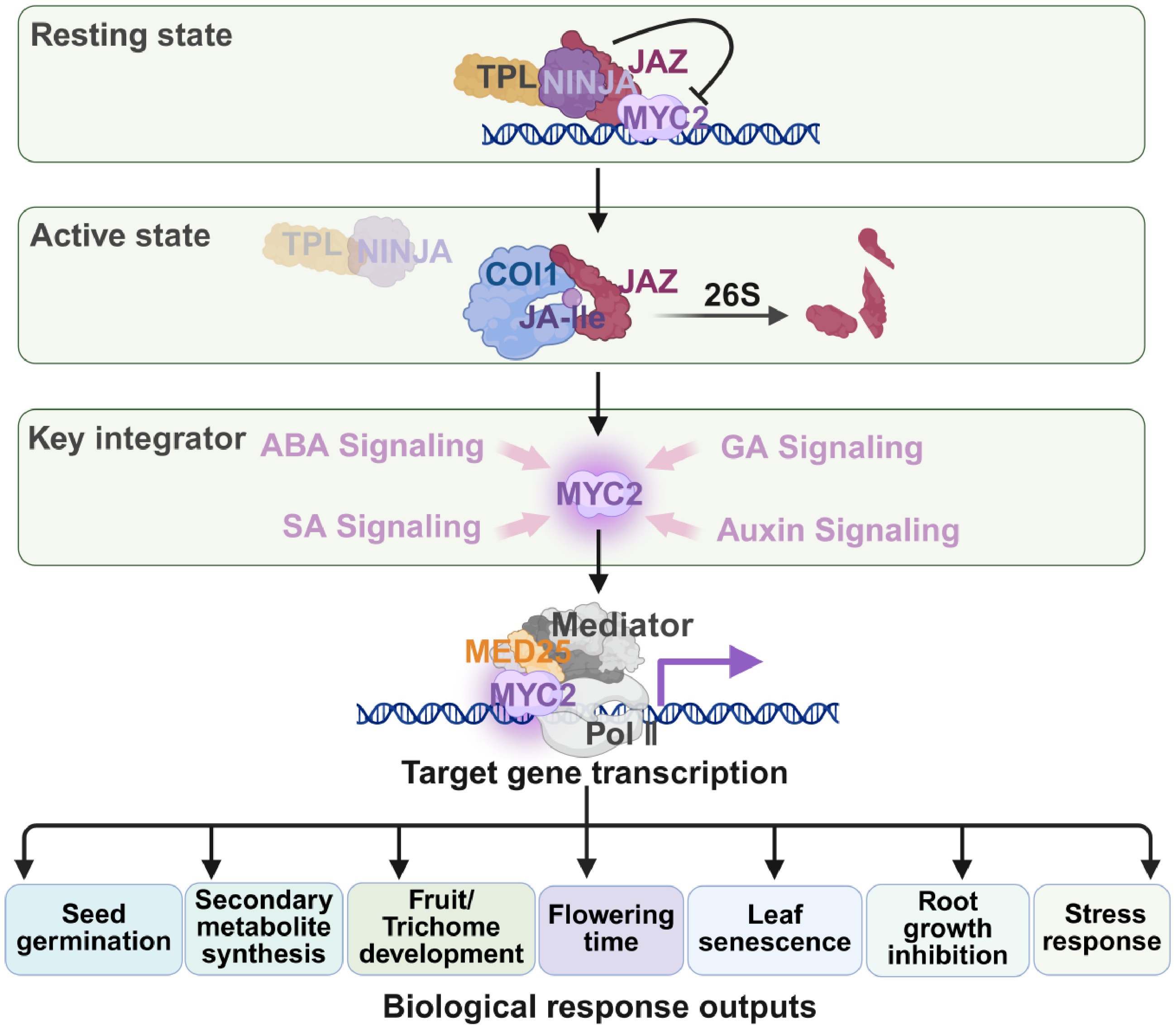
Figure 2.
A simplified overview of JA signaling transduction in plants. In the resting state, JAZ recruits a transcriptional repressor complex (JAZ–NINJA–TPL) to inhibit the activity of core transcription factors (e.g., MYC2). When plants sense specific developmental signals or experience stress conditions, the bioactive JA-Ile level increases. Upon binding to COI1, JA-Ile promotes the degradation of JAZ proteins via the 26S proteasome pathway, thereby activating the expression of downstream response genes. This process involves multiple proteins. For example, the key transcription factor MYC2 directly interacts with the Mediator subunit MED25 and recruits Pol II to initiate transcription. As indicated by the pink arrows, MYC2 acts as a key integrator that mediates crosstalk among multiple signaling pathways, including various phytohormone signaling pathways. The JA signaling pathway regulates diverse aspects of plant growth and development, as well as responses to both biotic and abiotic stresses. The seven colored boxes at the bottom of the figure represent processes regulated by JA signaling. '26S' is the abbreviation of the 26S proteasome degradation pathway. This figure was created using
https://BioRender.com .In the basal state, JAZ proteins interact with transcription factors (e.g., MYC2, MYB75) and recruit adaptors (e.g., novel interactor of JAZ, NINJA; EAR motif-containing adaptor protein, ECAP) and co-repressors (TOPLESS, TPLs; TOPLESS-related proteins, TPRs) for transcriptional repression. NINJA interacts with JAZ proteins and recruits TPLs via its ERF-associated amphiphilic repression (EAR) motif[44,45]. Similarly, ECAP binds JAZ6/8 and recruits TPR2 to inhibit the WD-repeat/bHLH/MYB complex, modulating anthocyanin biosynthesis[29,45] (Fig. 2).
As a central bHLH transcription factor, MYC2 activates target genes by binding to G-box (5'-CACGTG-3') motifs in their promoters. Through this mechanism, it regulates diverse processes including root growth inhibition, secondary metabolite synthesis, defense responses, and circadian rhythms[34−36,41,43,46] (Fig. 2). Furthermore, MYC2 serves as a key integrator, mediating crosstalk between JA signaling and other pathways, including light signaling and multiple hormone networks such as ABA, SA, GAs, and indole-3-acetic acid (IAA)[37,46–48] (Fig. 2). Recent studies have elucidated another core component in the JA signaling pathway: MEDIATOR25 (MED25), a subunit of the transcriptional co-activator complex Mediator. MED25 interacts directly with MYC2 and recruits histone acetyltransferase HAC1, members of the Gro/Tup1 family of transcriptional co-repressors like LEUNIG HOMOLOG (LUH), and RNA polymerase Pol II to facilitate transcriptional activation and initiation[49,50] (Fig. 2). Additionally, it plays a precise regulatory role in terminating JA signaling by modulating JAZ splice variants via pre-mRNA-processing factor 39 and 40 (PRP39a and PRP40a), thereby preventing excessive JA response or desensitization[49]. In tomato, the SlMYC2-SlMED25-MTB feedback loop serves as a key mechanism that balances JA-mediated defense with growth, preventing excessive inhibition, which underscores its central role in JA signaling[49]. For extensive coverage of the expanding JA signaling paradigm, including its diverse physiological outputs, please see the excellent review by Hu et al.[11], Howe & Yoshida[36], and Zhai et al.[49].
-
Early studies have revealed a close link between JA and salt stress[51]. It has been demonstrated that salt stress induces JA biosynthesis, a process that relies on multiple enzymes, including lipoxygenase (LOX), allene oxide synthase (AOS), allene oxide cyclase (AOC), cis-12-oxophytodienoic acid reductase (OPR), and acyl-CoA oxidase (ACX)[46,52]. Under salt stress, the expression of key JA biosynthetic genes is upregulated, as demonstrated by an increase in AOC (in wheat), LOX (in rice and soybean), and OPR (in rice and Arabidopsis)[29,52,53,54]. The synthesized JA subsequently activates the JA signaling pathway, which mediates the expression of salt stress-responsive genes[29,53]. In addition, substantial overlap exists between genes regulated by salt stress and those modulated by JA treatment, further supporting JA's involvement in salt stress responses[51]. Furthermore, exogenous application of JA has been shown to enhance plant salt tolerance[51]. For instance, JA pretreatment in barley significantly reduced Na+ accumulation under salt stress and partially alleviated the salt-induced inhibition of photosynthesis[51].
Building upon this established link, recent research has focused on deciphering the upstream molecular mechanisms that activate JA biosynthesis under salt stress[46,54−62]. Emerging evidence suggests that other hormonal signals can act as critical intermediates in this process. For example, in rice, salt stress rapidly promotes ethylene biosynthesis in primary roots. This ethylene signal then contributes to JA induction, as salt stress triggers JA biosynthesis through both ethylene-dependent and independent pathways, which jointly mediate the growth inhibition of primary roots[35] (Fig. 3). Reduced glutathione (GSH) enhances Arabidopsis tolerance to salt stress by acting as an antioxidant to scavenge ROS and also regulates the translation of genes involved in JA biosynthesis[55]. GPXs are an enzyme family that utilizes GSH to catalyze the reduction of peroxides and other harmful molecules[63]. Under salt stress, AtGPX6 is specifically upregulated following JA treatment[56]. This crosstalk suggests that plants employ a complex and sophisticated regulatory network between JA and GSH (Fig. 3). GSH stimulates JA biosynthesis, and JA signaling further upregulates the expression of AtGPX6 to consume GSH. This process enhances ROS scavenging efficiency and optimizes energy allocation in plants under salt stress.
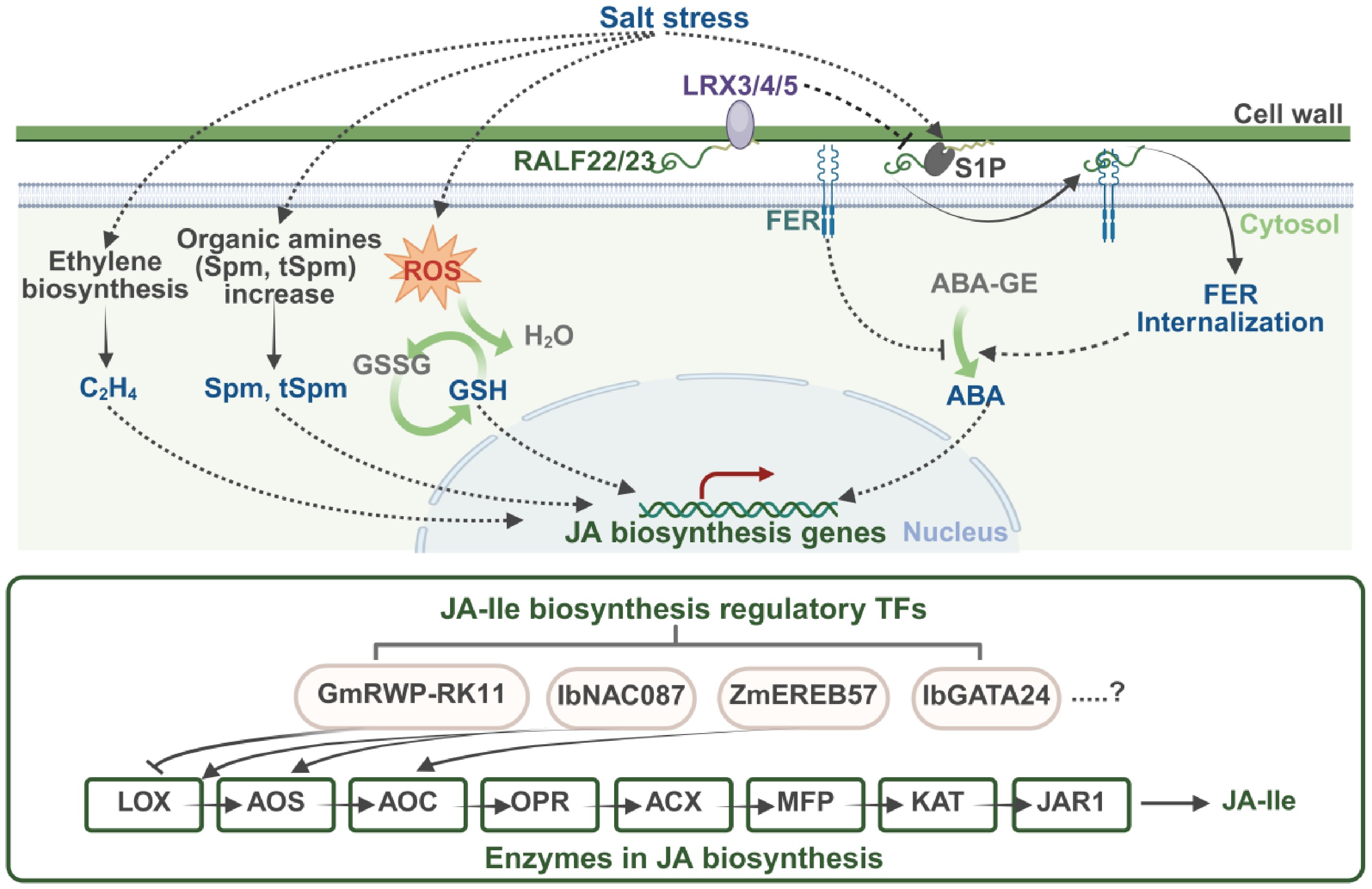
Figure 3.
Mechanisms of salt stress-induced JA biosynthesis in plants. Salt stress induces JA biosynthesis through multiple pathways, with ethylene, ABA, ROS, and polyamines acting as upstream regulators. Blue text marks known triggers/events that promote JA biosynthesis under salt stress. Among them, the membrane receptor FER inhibits the accumulation of the active form of ABA, but under salt stress, the RALF–LRX–S1P module triggers FER internalization. The accumulation of JA under salt stress is primarily achieved by upregulating the expression of enzymes involved in JA biosynthesis. Several transcription factors have been reported to directly participate in this process. Solid arrows indicate direct regulatory relationships between transcription factors and their target genes that are supported by evidence, while IbGATA24 is involved in this process but lacks identified direct target genes. Enzymes are presented in the order of the JA biosynthetic pathway to show the regulatory points of transcription factors. Dashed lines in the figure indicate a causal relationship that is not direct or lacks more concrete evidence, while solid lines represent well-established and more direct regulatory interactions. This figure was created using
https://BioRender.com .As the outermost structure of plant cells, the cell wall plays a critical role in mediating plant responses to salt stress[24]. A signaling module, consisting of leucine-rich repeat extensins (LRX3/4/5), rapid alkalinization factor peptides (RALF22/23), and the receptor kinase FERONIA (FER), has been identified as a key regulator in this process[57]. LRX3/4/5 proteins localize in the cell wall and bind RALF22/23. Under salt stress, the S1P protease cleaves and releases the RALF22/23 peptides, which then interact with FER and trigger its internalization[25,57]. This module indirectly upregulates the expression of JA biosynthetic genes (e.g., AOS, AOC2/3, LOX3/4, and OPCL1) by promoting ABA accumulation under salt conditions, thereby facilitating JA biosynthesis[46,57] (Fig. 3).
Recently, organic amines such as spermine (Spm) and thermospermine (tSpm), whose production is directly induced by salt stress in Arabidopsis, have also been found to play important roles in the salt stress-induced biosynthesis of JA[58,59] (Fig. 3). The level of free organic amines depends on the balance between their biosynthesis and oxidation[59]. In Arabidopsis, loss of the polyamine oxidase gene Polyamine Oxidases 5 (AtPAO5) leads to tSpm accumulation, which enhances salt tolerance by promoting the biosynthesis of JA and related compounds under lethal salinity stress[59].
Collectively, the signaling pathways described above converge to regulate the transcription of JA biosynthetic genes under salt stress. The salt-induced expression of these genes is regulated by several transcription factors. For example, the RWP-RK transcription factor GmRWP-RK11 was identified as a transcriptional repressor of GmLOX6 under salt stress in soybean[52]. In sweet potato, the NAC transcription factor IbNAC087 is upregulated in salt-tolerant germplasms, where it directly activates JA biosynthesis genes such as IbLOX and IbAOS, leading to increased JA accumulation and enhanced ROS scavenging, thereby improving tolerance to salinity and drought[60]. In addition, the E3 ubiquitin ligase NAC087-INTERACTING E3 LIGASE (IbNIEL) negatively regulates salt-alkali and drought tolerance by ubiquitinating and degrading IbNAC087, thereby attenuating its activation of JA biosynthesis genes[60]. Another salt-induced transcription factor, the GATA transcription factor IbGATA24, also promotes JA accumulation. It interacts with constitutive photomorphogenesis 9-5a (COP9-5a). COP9-5 also shows comparable salt tolerance functions[61]. This evidence may suggest that IbGATA24 and COP9-5a integrate light signaling with JA signaling. In maize, the AP2/ERF transcription factor ethylene-responsive element binding factor 57 (ZmEREB57), which is induced under abiotic stress, directly binds to the promoter of ZmAOC2 to regulate the synthesis of 12-oxophytodienoic acid (OPDA), a JA precursor, and enhance salt tolerance by modulating both OPDA and JA signaling pathways[62] (Fig. 3).
While substantial progress has been made in characterizing the activators involved in salinity-induced JA biosynthesis, the precise regulatory mechanisms by which salt stress triggers JA biosynthesis in plants are not fully understood.
-
Under salt stress, excessive ROS accumulation leads to oxidative stress, while JA signaling plays a critical role in regulating ROS scavenging[45,55,56,64]. This process typically occurs in mature tissues or at later stages of the stress response[45,55,56,64]. It has been reported in various crops, such as sweet potato and Phaseolus vulgaris L., that JA enhances salinity tolerance by boosting the plant’s overall antioxidant defense capacity[61]. Studies have shown that JA signaling partially regulates plant antioxidant defenses by upregulating the expression of key enzymes such as SOD, POD, CAT, ascorbate peroxidase (APX), and increasing the concentrations of antioxidant compounds like GSH, chlorophyll b (Chl b), and Car, and promoting the accumulation of protective metabolites like anthocyanin, thereby bolstering cellular antioxidant capacity under stress[9,45,64]. The underlying molecular mechanisms are well characterized in the model plant Arabidopsis. For instance, anthocyanins, an important class of secondary metabolites, serve as a key example of a JA-induced antioxidant response (Fig. 4). Their biosynthesis is primarily regulated by the master transcriptional complex MYB–bHLH–WD40 (MBW)[65]. Under control conditions, JAZs can competitively bind members of MBW and repress MBW activity[66]. In addition, ECAP can interact with specific JAZ proteins and recruit the co-repressor TOPLESS-related protein 2 (TPR2) to form the JET (JAZs–ECAP–TPR2) complex, which epigenetically represses the expression of anthocyanin biosynthetic genes[45]. Under salt stress, elevated JA levels trigger JAZ protein degradation, which releases the MBW transcription complex from inhibition and promotes the expression of anthocyanin biosynthetic genes[29,45]. Interestingly, ECAP can also directly interact with and inhibit the transcriptional activity of MYB75, a core member of the MBW complex. Under lethal salt stress (e.g., 200 mmol/L NaCl), ECAP is degraded via the 26S proteasome pathway, thereby releasing MYB75, which promotes anthocyanin accumulation for enhanced ROS scavenging and stress adaptation. Notably, this regulatory pathway is likely JA-independent. Collectively, these findings suggest that plants employ distinct strategies (e.g., JA-dependent vs JA-independent) to cope with varying intensities of salt stress, yet the precise mechanisms that differentiate responses to moderate vs severe salinity require further investigation[29,45].
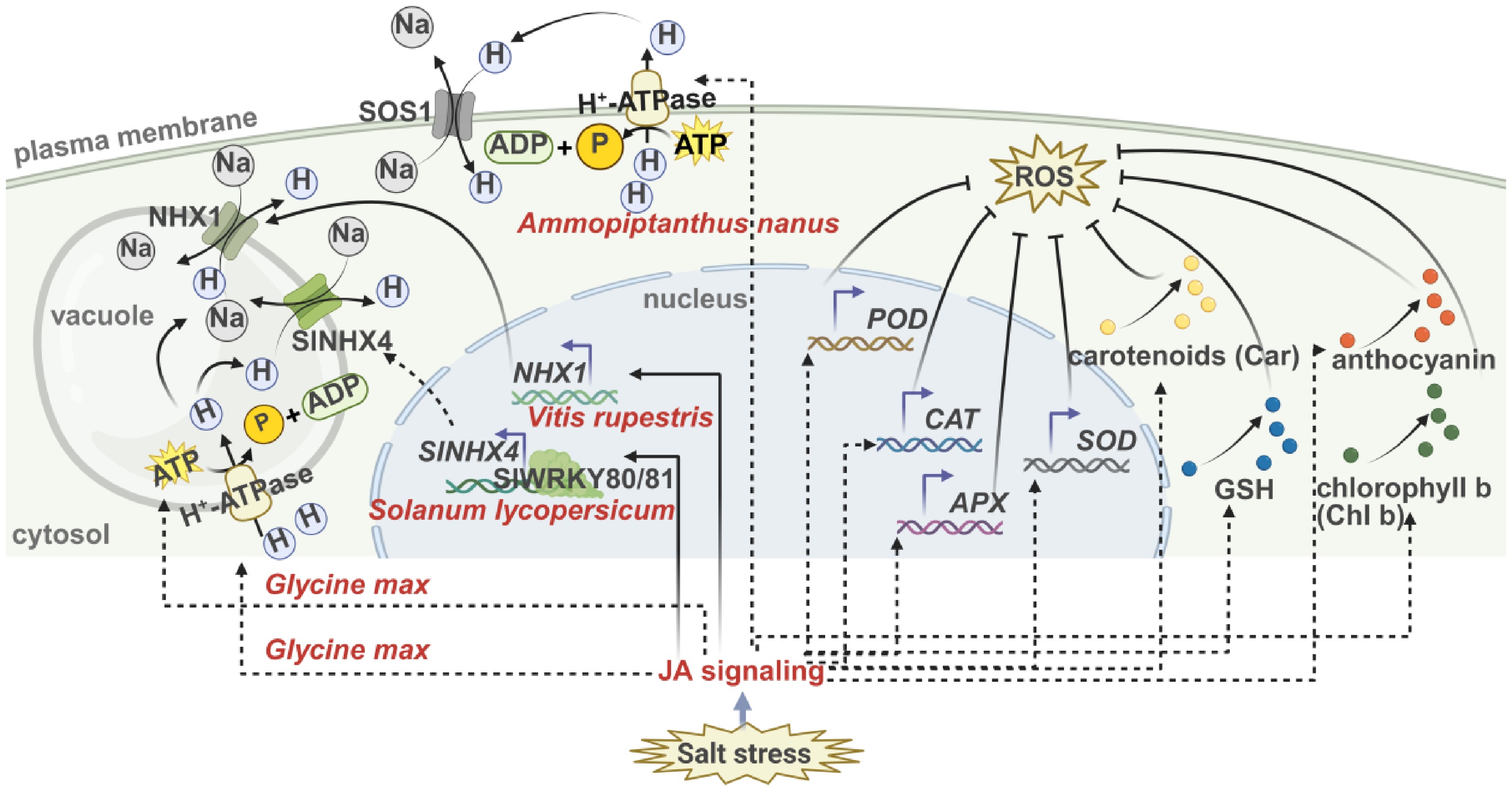
Figure 4.
Mechanisms of JA signaling in plant adaptation to salt stress. Salt stress induces JA signaling, which subsequently enhances plant salt tolerance. According to current reports, such tolerance mainly centers on responding to ionic and oxidative stress. The left panel shows JA-mediated regulation of ion homeostasis under salt stress, with red text indicating the species in which each pathway has been reported. Under salt stress, JA mainly regulates ion homeostasis by activating key transcriptional regulators (e.g., SlWRKY80/81), which in turn modulate the expression or activity of ion channels and proton pumps. JA signaling promotes the expression of the vacuolar membrane Na+/H+ antiporter NHX, enhances proton pump activity, and increases ATP accumulation, indirectly enabling the proton pump to provide more H+ ions required by NHX. The right panel shows the mechanisms by which JA regulates the antioxidant system under salt stress, mainly through upregulating the expression of antioxidant enzyme genes (POD, CAT, APX, SOD) and promoting the accumulation of antioxidant compounds (carotenoids, anthocyanin, chlorophyll b, GSH) to scavenge ROS. Dashed lines in the figure indicate a causal relationship that is not direct or lacks more concrete evidence, while solid lines represent well-established and more direct regulatory interactions. This figure was created using
https://BioRender.com .JA signaling regulates plant ion homeostasis under salinity
-
Recent studies have revealed that JA signaling modulates downstream transcription factors to directly or indirectly influence ion transport and Na+/K+ homeostasis, thereby contributing to the maintenance of a low cytosolic Na+/K+ ratio under salinity stress[10,67]. Salinity stress can enhance JA biosynthesis in grapevines, activate the JA signaling pathway, and promote the expression of the Na+/H+ EXCHANGER (NHX1). This process enhances grapevine salt tolerance by maintaining cellular ion homeostasis[68]. In tomato, the WRKY transcription factor SlWRKY81 responds to JA signaling and facilitates the reduction of the Na+/K+ ratio in root cells under saline-alkali stress. SlWRKY81 directly activates the expression of the Na+/H+ antiporter gene SlNHX4. SlNHX4 is closely related to AtNHX1/2 and is predicted to localize to the vacuole, where it may play a role in Na+ compartmentalization and thereby contribute to Na+/K+ homeostasis[67] (Fig. 4). Research on the desert shrub Nitraria tangutorum using Noninvasive Microelectrode Technique (NMT) analysis confirmed that pretreatment with exogenous methyl jasmonate (MeJA) significantly promotes the Na+ efflux rate at the root tip, which helps reduce the Na+/K+ ratio in the shoot[10]. Similarly, in the desert evergreen shrub Ammopiptanthus nanus, herbivory-induced JA signaling can activate the plasma membrane H+-ATPase to drive Na+/H+ antiport, promoting Na+ efflux and reducing K+ leakage, thus enhancing salt tolerance[69]. In soybean, a study has shown that treatment with JA can increase root ATP content and vacuolar H+-ATPase activity under salt stress, thereby promoting K+ uptake and Na+ compartmentalization, while effectively reducing root-to-shoot translocation of Na+. Although JA contributes to salt tolerance in soybean, it concurrently suppresses root growth[70,71]. This finding suggests that JA-mediated regulation of ion homeostasis may be species-specific.
In conclusion, JA signaling contributes to cellular ion homeostasis under salinity primarily through transcriptional regulation, with key transcription factors (e.g., SlWRKY81, SlWRKY80) orchestrating the expression of major ion transporter genes, including NHXs and H+-ATPase (Fig. 4). The coordinated action of these transporters facilitates Na+ exclusion or sequestration and K+ retention, thereby maintaining a low cytosolic Na+/K+ ratio. However, the full range of transcription factors involved, their target genes, and how these regulatory interactions are tuned across tissues and stress intensities remain important subjects for future research.
-
Under moderate salt stress, JA signaling generally suppresses seed germination, plant growth, and development, which may represent an active adaptive mechanism by which plants reallocate resources to defend against salt stress[72]. Consistently, loss of function of JASMONATE RESISTANT1 (JAR1), which is required for the biosynthesis of bioactive JA-Ile, results in a higher germination rate[72]. Further investigation revealed that the JA–MYC2 module represses the expression of the antioxidant enzyme gene CATALASE2 (CAT2), thereby increasing ROS levels and negatively impacting seed germination[72]. In addition, Arabidopsis JAZ12/TIFY3B is involved in salt stress and osmotic stress responses[73]. The Arabidopsis tify3b mutant showed a lower germination rate under salt stress and JA treatment[73]. Additionally, Arabidopsis JAZ12/TIFY3B and JAZ2/TIFY10A are implicated in salt and osmotic stress responses. The tify3b and tify10a mutants display reduced germination under combined salt stress and JA treatment, whereas overexpression of the wheat orthologs TaTIFY3B or TaTIFY10A in Arabidopsis enhances seed germination under saline conditions[73]. This inhibitory effect of JA on seed germination may function as a stress-avoidance strategy, delaying germination until conditions become more favorable, thereby ensuring seedling survival (Fig. 5).
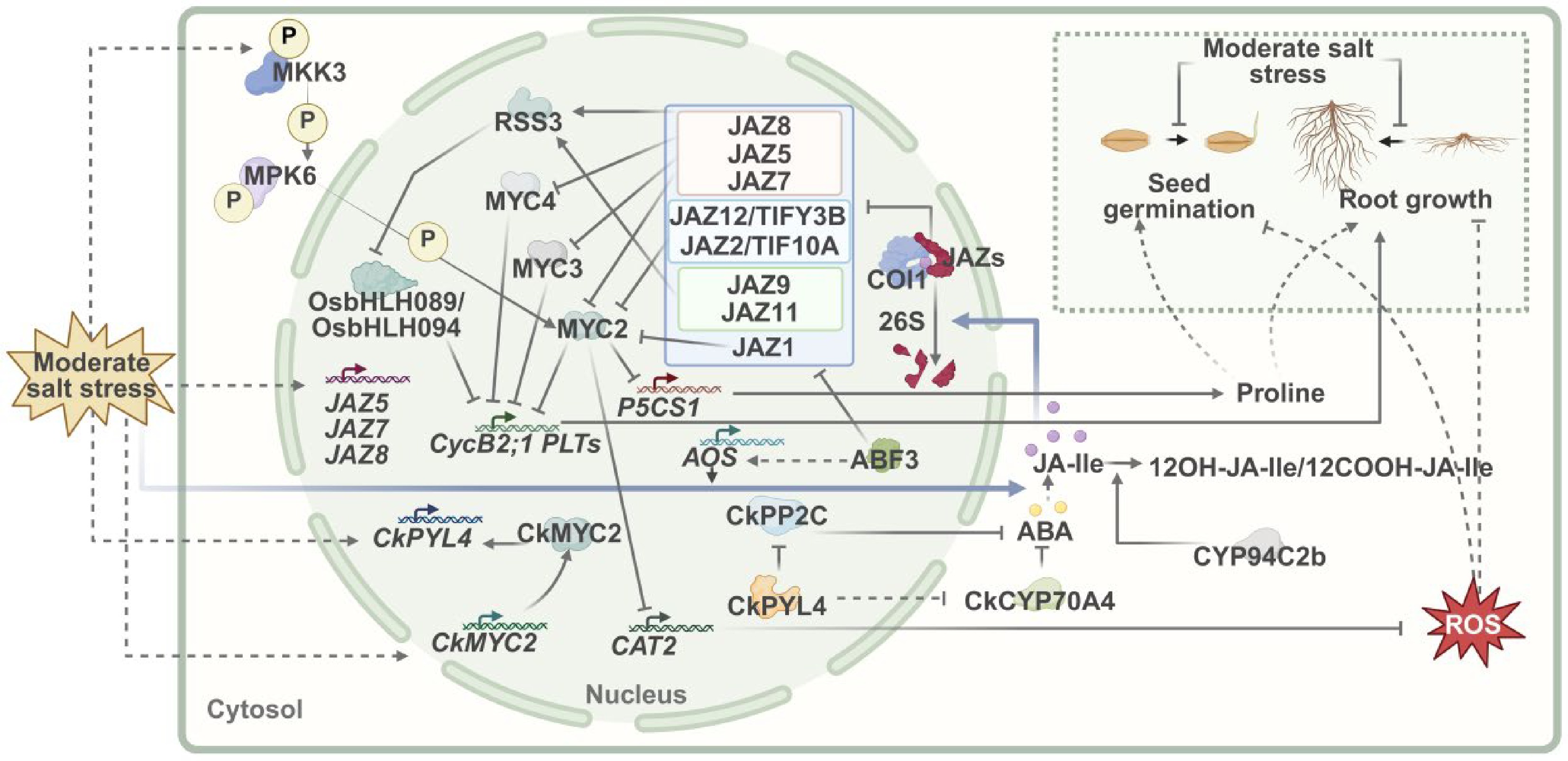
Figure 5.
Signal pathways and components involved in JA-mediated regulation of seed germination inhibition and root growth inhibition. Under moderate salt stress, JA reshapes root architecture and suppresses seed germination. Purple arrows indicate the core process of the JA-mediated salt stress response under moderate salt stress: salt stress induces JA-Ile accumulation, which further activates gene expression through degradation of JAZ proteins (JAZ1/2/5/7/8/9/11/12). JAZs inhibit the function of MYC2/3/4, but promote RSS3 to suppress the function of OsbHLH089/094. This leads to the suppression of genes regulating cell division and growth, such as CycB2;1 and PLTs, thereby inhibiting root growth. At the same time, MYC2 also suppresses the expression of P5CS1 (encodes a key enzyme in proline synthesis) and CAT2 (encodes a key enzyme in ROS scavenging). These events reduce proline accumulation and maintain ROS levels for signaling. Consequently, seed germination is inhibited, and root architecture is altered. In addition, salt stress also affects this main pathway through other signaling routes. For example, it activates the MPK cascade MKK3–MPK6, which phosphorylates MYC2 and enhances its function. Salt stress also promotes the expression of JAZ5/7/8, CkMYC2, and CkPYL4 (encodes ABA receptor CkPYL4) through mechanisms that are not yet fully understood. CkPYL4 inhibits the ABA signaling repressor CkPP2C and the key ABA metabolism enzyme CkCYP70A4, leading to ABA accumulation, which further promotes the accumulation of JA-Ile. Under salt stress, CYP94C2b catalyzes the conversion of the active form JA-Ile into the storage forms 12OH-JA-Ile/12COOH-JA-Ile, preventing overactivation of the signaling pathway. Dashed lines in the figure indicate a causal relationship that is not direct or lacks more concrete evidence, while solid lines represent well-established and more direct regulatory interactions. '26S' is the abbreviation of the 26S proteasome degradation pathway. This figure was created using
https://BioRender.com .Besides seed germination inhibition, JA also plays a role in repressing plant growth under saline conditions[74,75] (Fig. 5). In both rice and Arabidopsis, JA signaling, perceived through the COI1–JAZ co-receptor complex, promotes JAZ protein degradation and the subsequent release of transcription factors such as MYC2/3/4[38]. These TFs activate the JA-responsive genes and repress genes involved in cell division and elongation (e.g., PLETHORA, CycB2;1), thereby repressing root growth and reshaping root system architecture, which may help plants avoid high-salinity zones and optimize spatial organization under salt stress[74−76]. JA signaling was also shown to suppress root growth through MYC2-mediated inhibition of CAT2 expression[72]. A recent study has revealed that under salt stress, the bZIP transcription factor ABSCISIC ACID-RESPONSIVE ELEMENT BINDING FACTOR3 (ABF3) positively regulates JA signaling in Arabidopsis through a dual mechanism. First, ABF3 competes for JAZ1 binding, thereby preserving the transcriptional activity of the key regulator MYC2. Second, ABF3 indirectly promotes the expression of the JA biosynthetic gene AOS, elevating endogenous JA levels and further amplifying the JA-mediated signaling cascade in response to salinity[77]. Interestingly, under salt stress, the regulation of MYC2 activity extends beyond the canonical JA–COI1 pathway. For instance, the MAPK cascade MKK3–MPK6 can directly phosphorylate and activate MYC2, which subsequently suppresses the expression of the key proline biosynthesis gene δ1-pyrroline-5-carboxylate synthase1 (P5CS1). This reduction in proline accumulation contributes to the inhibition of both seed germination and root growth in Arabidopsis[78] (Fig. 5).
To prevent excessive growth inhibition under salt stress, plants have evolved multi-layered negative feedback mechanisms to finely regulate the dynamic balance of JA signaling[48,73,76,79,80]. Plants inactivate JA to directly alleviate its growth-suppressive effects under salinity. In rice, the cytochrome P450 family gene CYP94C2b inactivates JA by catalyzing the conversion of JA-Ile into 12OH-JA-Ile and 12COOH-JA-Ile (Fig. 5). This metabolic pathway directly reduces active JA levels, thereby alleviating growth inhibition under salinity stress[79]. Additionally, the accumulation of JAZ proteins provides negative feedback regulation of JA signaling and facilitates growth recovery[73,80]. Evidence from wheat shows that overexpression of JAZ proteins TaTIFY3B and TaTIFY10A promotes root growth under salinity, indicating that the JA-mediated inhibition of root growth at moderate salinity can be mitigated by JAZ protein accumulation[73]. In the COI1-dependent JA signaling pathway of Arabidopsis, salt stress significantly upregulates eight out of nine JAZ genes, with JAZ5, JAZ7, and JAZ8 showing the highest expression levels. These JAZs are proposed to act as negative feedback regulators by interacting with MYC2/3/4, playing a pivotal role in growth recovery post-stress[80]. Moreover, the JA and ABA pathways engage in reciprocal crosstalk to fine-tune the balance between growth and stress. In the drought- and salt-tolerant plant Caragana korshinskii, salt stress-induced JA signaling interacts with the ABA signaling pathway. Specifically, JA induces the expression of the TF CkMYC2 and the ABA receptor PYRABACTIN RESISTANCE 1-LIKE 4 (CkPYL4). CkMYC2 further amplifies CkPYL4 expression, while CkPYL4 forms a complex with the ABA signaling inhibitor histone A protein phosphatase 2C family (CkPP2C), thereby suppressing its function and inhibiting the activity of the key ABA catabolic enzyme CkCYP70A4. This ultimately leads to ABA accumulation[48]. ABA accumulation reciprocally inhibits JA synthesis in leaves, establishing a negative feedback loop to maintain JA homeostasis under salt stress, whereas in roots, ABA promotes JA synthesis[48] (Fig. 5). In rice, loss-of-function mutations in RICE SALT SENSITIVE3 (RSS3) mildly suppress cell elongation under normal conditions but induce severe root growth inhibition and root cell swelling under salt conditions. RSS3 forms a ternary complex with class C bHLH TFs (OsbHLH089/OsbHLH094) and JAZ proteins, and its mutation disrupts this complex, leading to upregulation of JA-responsive genes. RSS3 appears to act primarily on genes related to cell elongation rather than cell division[76] (Fig. 5).
JA mediates stomatal development and photosynthetic acclimation under salt stress
-
Salt stress significantly disrupts plant physiology by impairing stomatal development and function, which in turn limits carbon dioxide uptake and suppresses photosynthesis[81]. JA has been shown to mediate the regulation of stomatal development and photosynthetic acclimation in plants under salt stress[82]. As described above, salt stress triggers the CkMYC2–CkPYL4–CkPP2C–CkCYP70A4 cascade to elevate ABA levels. The guard-cell-specific outcome of this pathway is the inhibition of stomatal development in Caragana korshinskii[48] (Fig. 6). Furthermore, in Pisum sativum, JA effectively mitigated the salt stress-induced decline in leaf 14CO2 fixation rate and Rubisco activity[83]. Although this study did not address the underlying molecular mechanisms, findings from barley may offer partial mechanistic insight: under salt stress, JA signaling upregulates Rubisco activase A (RcaA) expression via MYC2, thereby improving photosynthetic efficiency[84]. Collectively, these findings reveal a dual role of JA under salt stress: it inhibits stomatal development, which may limit CO2 uptake, while concurrently enhancing photosynthetic efficiency by upregulating RcaA (Fig. 6). This coordinated regulation illustrates a sophisticated balancing mechanism by which JA modulates the trade-off between stress adaptation (limiting transpiration) and growth maintenance (optimizing photosynthesis) in saline environments[35−37,47].
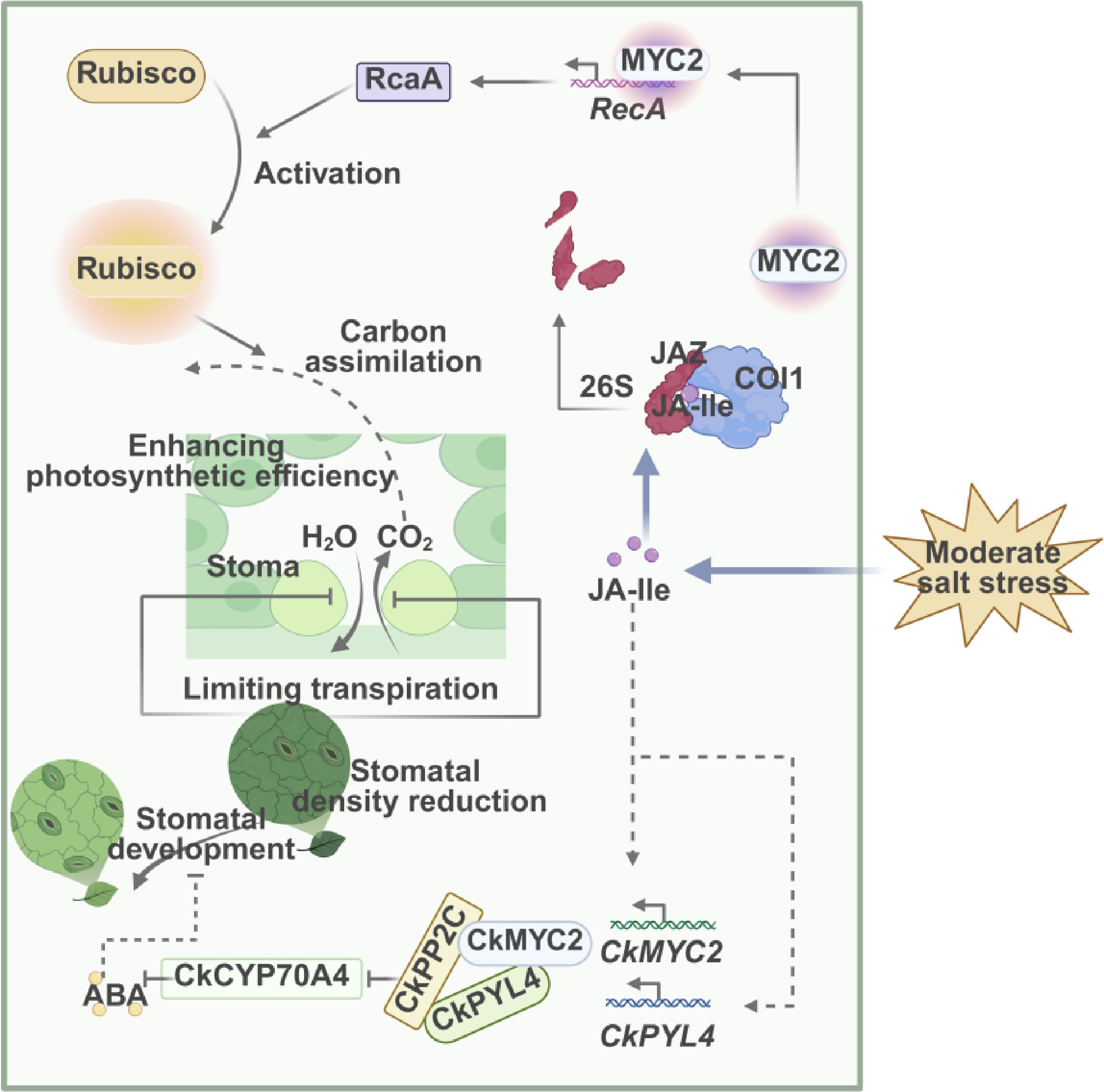
Figure 6.
Mechanisms of JA-mediated stomatal development and photosynthetic acclimation under salt stress. Under moderate salt stress, CO2 uptake and photosynthesis are limited. JA plays a dual role in this adaptive response: purple arrows indicate the core process of JA-mediated shoot physiological responses under salt stress. Salt stress induces JA accumulation, which further activates JA signaling by degrading JAZ proteins. JA signaling promotes the expression of CkMYC2 and CkPYL4. CkMYC2 and CkPYL4 facilitate the formation of the CkPP2C–CkMYC2–CkPYL4 complex. This complex inhibits the key ABA metabolism enzyme CkCYP70A4, leading to ABA accumulation. Elevated ABA levels then suppress stomatal development, reduce stomatal density, and consequently limit CO2 uptake and transpiration. Concurrently, JA enhances photosynthetic efficiency by upregulating Rubisco activase A (RcaA), illustrating a sophisticated balance between stress adaptation and growth maintenance. RcaA mediates the activation of Rubisco, the core enzyme responsible for CO2 fixation in photosynthesis, thereby facilitating efficient carbon assimilation. Dashed lines in the figure indicate a causal relationship that is not direct or lacks more concrete evidence, while solid lines represent well-established and more direct regulatory interactions. '26S' is the abbreviation for the 26S proteasome degradation pathway. A glow effect is added to elements to indicate JA-mediated activation of protein activity. This figure was created using
https://BioRender.com .Jasmonate signaling modulates plant survival under high salinity
-
When exposed to severe salt stress, plant growth is almost completely arrested. At this stage, the central physiological challenge changes from growth or adaptation to plant survival. Consequently, the molecular and physiological mechanisms employed by plants under such extreme conditions likely fundamentally differ from those under mild to moderate salinity[29,85]. Some studies have identified novel regulators under severe salinity stress. For instance, transcriptional regulatory networks involving WRKY family members highlight the complexity of JA-mediated responses to severe salt stress. In tomato, WRKY transcription fator SlWRKY42 was identified as a JA-responsive TF under saline-alkaline stress. SlWRKY42 collaborates with SlMYC2 to directly bind the SlSPDS2 promoter, thereby enhancing its transcription, promoting Spd biosynthesis, and ultimately improving plant tolerance to lethal salinity[86]. Similarly, elevated JA levels reduce SlJAZ1 expression, thereby releasing the MeJA-responsive TF SlWRKY80, which activates SlSPDS2 and SlNHX4 to regulate polyamine synthesis and Na+/K+ homeostasis[87] (Fig. 7). tSpm also induces JA biosynthesis under salt stress, suggesting a potential positive feedback regulatory strategy[86].
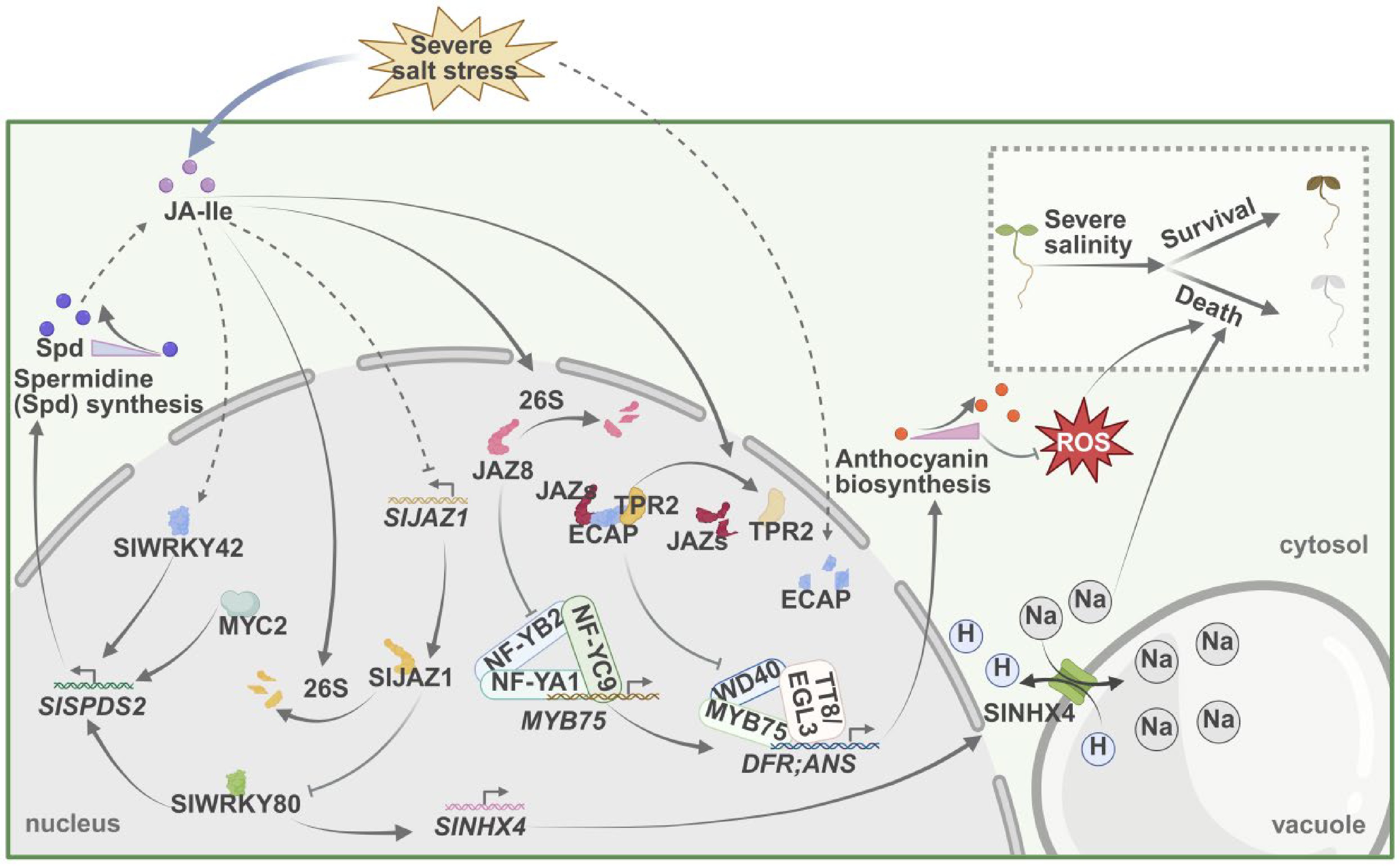
Figure 7.
Mechanisms of JA signaling in modulating plant survival under severe salinity. Under severe salinity stress, plants face a survival threat. Excessive ion accumulation and ROS production are major causes of plant death. JA promotes survival by countering ion toxicity and oxidative damage, primarily through transcriptional regulation involving the degradation pathway of JAZ proteins (JAZ8, SlJAZ1) and other poorly understood mechanisms (dashed lines from JA-Ile). On the left of this figure, JA forms a positive feedback loop with spermidine (Spd) to amplify signaling. JA signaling achieves this process by regulating the expression of the key Spd synthase SlSPDS2, which is controlled by the transcription factors MYC2 and SlWRKY42/80. SlWRKY80 is repressed by SlJAZ1; however, under salt stress, JA signaling suppresses SlJAZ1 expression and promotes SlJAZ1 degradation. On the right, JA activates JAZ8 degradation to regulate antioxidant defense and ion homeostasis, achieving multilayer regulation of anthocyanin accumulation. Degradation of JAZ8 relieves its repression on the NF-Y complex (NF-YB2–NF-YA1–NF-YC9), promoting the expression of MYB75. This facilitates the formation of the WD-repeat/bHLH/MYB complex (WD40–TT8–MYB75). Additionally, the degradation of JAZ8 also relieves the suppression of the JAZ–ECAP–TPR2 repressor complex on the WD-repeat/bHLH/MYB complex. These events collectively enhance the activation of transcription of anthocyanin biosynthesis genes by the WD-repeat/bHLH/MYB complex. '26S' denotes the 26S proteasome degradation pathway. This figure was created using
https://BioRender.com .Additionally, under severe salinity stress, which is associated with excessive ROS accumulation and severe oxidative damage in plant cells, JA signaling is often upregulated to activate antioxidant defense systems[85,88]. This response is critical for scavenging ROS and maintaining cellular homeostasis. For instance, under 200 mmol/L NaCl treatment, the JA-JAZ8 signaling module is activated. This triggers the degradation of the non-canonical JAZ repressor protein, JAZ8[29,45,89], thereby releasing the NF-YA1–YB2–YC9 transcription factor complex, which in turn activates expression of the downstream target gene, MYB75[29,89]. Concurrently, JA signaling further enhances the activity of the MYB75-containing MBW transcriptional complex. This coordinated upregulation boosts the expression of key anthocyanin biosynthesis genes (TT8, ANS, UFGT), ultimately driving anthocyanin accumulation under lethal-salt conditions[29]. This anthocyanin accumulation serves as an important non-enzymatic antioxidant mechanism that aids in ROS scavenging and helps restore cellular redox balance[29] (Fig. 7). This evidence indicates that the NF-Y family proteins interact with JAZ proteins, revealing new components of the JA signaling pathway beyond the canonical MYC2–JAZ–COI1 module.
-
JAZ proteins are key negative regulators of the JA signaling pathway[41,42]. Salt stress-induced JA accumulation triggers SCFCOI1-mediated ubiquitination and degradation of specific JAZ proteins, thereby releasing the transcription factors they repress[42]. While functional redundancy is observed among JAZ family members (e.g., in repressing MYC2 activity in Arabidopsis), these proteins also exhibit remarkable spatiotemporal, species-specific, and functional diversity[37]. Such diversity enables precise spatiotemporal adaptation, indicating that JAZ proteins have evolved context-dependent roles by engaging distinct sets of interactors in various biological contexts. For example, in Arabidopsis, JAZ8 is established as a negative regulator of salt tolerance[89]. A similar negative regulatory role was observed for the Salvia miltiorrhiza ortholog SmJAZ8 when expressed in Arabidopsis[90]. In contrast, SmJAZ3 and SmJAZ4 appear to play positive regulatory roles under salt stress[90]. In soybean, GsJAZ2 acts as a positive regulator of saline-alkali tolerance, and its overexpression enhances salt tolerance in transgenic Arabidopsis[91]. In contrast, overexpression of the cotton GhJAZ2 renders transgenic plants more sensitive to salt stress[92]. Collectively, these findings underscore remarkable functional plasticity among JAZ proteins, manifesting as significant divergence not only across distant species but also between closely related members within the same protein family. In the future, a deeper understanding of the specific molecular interactors and downstream targets that confer these divergent roles, as well as their spatiotemporal regulation, will be essential to fully unravel the complex, species-specific networks mediated by diverse JAZs in salt stress adaptation.
The cross-talk between JA and other signal pathways
-
In recent years, studies have shown that JA operates within a sophisticated signaling network through extensive cross-talk with other pathways, such as ABA, SA, ET[37,46,48], and ROS[93], to coordinate plant adaptation to salinity and other stresses[37,46]. However, the precise molecular mechanisms of JA cross-talk remain largely undefined. To advance our understanding, future research should focus on identifying key regulatory nodes that act as hubs for the convergence and relay of JA, ABA, ROS, and other signals during salt stress responses.
In natural environments, plants rarely face single stressors; instead, they often encounter multiple concurrent stresses (e.g., salinity, drought, and heat)[94]. It has been suggested that JA accumulation induced by salt stress during the vegetative growth phase may serve as a form of cross-stress memory mechanism, enabling plants to better adapt to other types of stress, such as drought[95]. Furthermore, under combined stress conditions, metabolic reprogramming becomes critical for maintaining cellular homeostasis and survival, and JA-mediated osmotic adjustment and antioxidant defense mechanisms are likely to be particularly important in this context[96,97]. For instance, it has been reported that JA enhances tomato adaptability under multifactorial stress combinations, involving salinity, paraquat, and high-light stress[98]. In addition, research on the desert shrub A. nanus demonstrates that pretreatment with herbivorous insects activates JA signaling pathways, thereby enhancing the plant’s capacity to withstand subsequent salt stress[69]. Collectively, these findings suggest that JA plays a pivotal role in orchestrating plant responses to overlapping stresses, highlighting its systemic importance in integrating abiotic and biotic stress responses.
JA signaling in future crop improvement
-
The multifaceted role of JA signaling in mediating salt stress responses, from ion homeostasis and ROS scavenging to synergistic crosstalk with pathways like ABA, positions it as a promising target for breeding climate-resilient crops. The future challenge and opportunity lie not merely in enhancing stress tolerance, but in precisely engineering this pathway to uncouple resilience from growth penalties, thereby achieving a balanced adaptation.
Recent research underscores this possibility by identifying key regulatory nodes that coordinately improve multiple traits. For example, the soybean NAC TF GmST2 exemplifies a master switch that directly activates the JA biosynthesis genes GmAOC3/4, forming a module that simultaneously enhances salt tolerance and disease resistance and promotes growth. An elite haplotype (Hap1) of GmST2 has been shown to boost soybean yield by approximately 22% in saline-alkaline fields, providing a concrete genetic target for decoupling the yield-stress resistance trade-off[99]. Furthermore, research in maize identified NLA as a key gene that enhances cold tolerance by activating JA signaling (via JAZ11 degradation) while simultaneously restricting phosphate uptake through ubiquitination-mediated degradation of PT4. Artificial intelligence (AI)-assisted targeted editing of its inositol polyphosphate (InsP) binding motif (NLAΔ12) successfully decouples this trade-off, markedly improving both cold resilience and phosphorus use efficiency in maize[100]. These results demonstrate that precision engineering of JA-associated regulators can achieve synergistic gains in both stress resistance and growth. Breeding strategies centered on such key genes will therefore be more effective.
Consequently, future crop improvement will increasingly depend on advanced genomics and precision breeding to exploit such beneficial alleles. Priorities include: (1) using genome-wide association studies (GWAS) and gene editing to deploy elite variants like GmST2-Hap1 across different genetic backgrounds; (2) engineering synthetic JA signaling circuits that are activated specifically under stress conditions to avoid constitutive growth inhibition; (3) integrating JA pathway components into a systems-based breeding framework that considers cross-talk with ROS, ABA, and developmental pathways; and (4) using AI-assisted tools to design and engineer JA signaling pathways for enhanced crop stress resistance and higher yield. Ultimately, the goal is to transform our understanding of JA as a stress-response hormone into a cornerstone for designing intelligent, high-yielding crops capable of thriving on increasingly saline soils.
-
During the preparation of this work, the authors used DeepSeek AI for language editing, grammar checking, and stylistic refinement. DeepSeek was employed solely to optimize English expression, adjust sentence structure to align with academic writing standards, and enhance the fluency and comprehensibility of the text. The conceptualization, analysis, and conclusions of this work were entirely conducted by the authors, and no AI tool was involved as an author. The authors have reviewed and edited all content generated with the assistance of this tool, verified its accuracy, and assume full responsibility for the final version of the work.
-
The authors confirm their contributions to this study as follows: conceived and designed the study: Liu Y, Xu M, Zhou J, Wang T, Li Xing, Li Xi, Fu Y, Li C; wrote and revised the manuscript: Liu Y, Shaar-Moshe L, Li C. All authors reviewed the results and approved the final version of the manuscript.
-
The data supporting the findings and conclusions of this review are derived from previously published studies and publicly available datasets. The references to these sources are provided in the reference section of this article. For any specific data or datasets used in this review, the original sources are cited directly within the text and the table. No new experimental data were generated for this review.
-
The authors declare that they have no conflict of interest.
- Copyright: © 2026 by the author(s). Published by Maximum Academic Press on behalf of Chongqing University. This article is an open access article distributed under Creative Commons Attribution License (CC BY 4.0), visit https://creativecommons.org/licenses/by/4.0/.
-
About this article
Cite this article
Liu Y, Xu M, Zhuo J, Wang T, Li X, et al. 2026. The role of jasmonate signaling in plant adaptation to salt stress. Plant Hormones 2: e025 doi: 10.48130/ph-0026-0023 

The role of jasmonate signaling in plant adaptation to salt stress
- Received: 29 July 2026
- Revised: 01 September 2026
- Accepted: 20 September 2026
- Published online: 22 October 2026
Abstract: Salinity stress is a major abiotic stress that constrains global agricultural production, severely inhibiting plant growth and leading to crop yield reduction. In response to salinity stress, plants have evolved a series of complex adaptive strategies, among which the signaling regulatory network mediated by plant hormones plays a central role. Jasmonates (JAs), as important lipid-derived hormones, not only regulate plant growth, development, and defense responses but have also recently been revealed to play a critical role in the establishment of plant salt tolerance. This review systematically outlines the activation and transduction of the JA signaling pathway in response to salinity stress and elaborates on the mechanisms by which it enhances plant salt adaptation through regulating various physiological processes, including ion homeostasis, reactive oxygen species (ROS) accumulation and scavenging, seed germination inhibition, and plant growth inhibition. Furthermore, the article summarizes key transcription factors and functional genes identified within this pathway. Finally, this review discusses current challenges in the field and prospects for molecular breeding strategies to cultivate salt-tolerant crop varieties by modulating the JA signaling pathway, along with their potential applications.
-
Key words:
- Plant hormone /
- Jasmonate /
- Salt stress /
- Salt adaptation /
- ROS