













-
Plants are continually subjected to a spectrum of environmental adversities, ranging from thermal extremes and water deficit to soil salinization, which profoundly impede their vegetative and reproductive development, productivity, and quality attributes[1,2]. To surmount these environmental adversities and secure survival, plants have developed intricate regulatory architectures[3−5]. Within these regulatory circuits, transcription factors (TFs) function as pivotal modulators that selectively recognize and bind to cis-regulatory motifs located in promoter sequences, while engaging in combinatorial interactions with additional TF family members to either activate or repress the transcription of downstream target genes[6]. TFs function as pivotal controllers of gene expression in plant ontogeny and environmental responses[7]. Up to the present, multiple transcription factors possessing distinct functional properties have been isolated and documented[8].
The homeodomain (HD), a highly conserved 60-amino-acid motif, represents a defining feature of a major TF family; this domain displays a distinctive three-helix architecture capable of mediating interactions with particular DNA sequences[9,10]. The sequence and length of the ZF domain vary significantly, governed primarily by how cysteine and histidine residues are arranged and quantified. These particular residues are critical to the process of zinc ion coordination[11]. ZF-HD proteins, unique to plants, contain a conserved zinc finger (ZF) motif at the N-terminus and a homeodomain (HD) at the C-terminus[12,13]. These proteins were initially discovered as possible regulators governing the C4 phosphoenolpyruvate carboxylase gene in the C4 photosynthetic plant Flaveria trinervia[14]. As plant-specific regulators, ZF-HD TFs bind gene promoters or interact with other proteins to control downstream gene expression, affecting plant physiology and development[15,16].
Tea plant (Camellia sinensis [L.] O. Kuntze) is an important cash crop, and leaves are processed into tea, a non-alcoholic beverage among the most widely consumed worldwide[17]. Tea plants are extensively cultivated in tropical and subtropical regions. As global climate warming intensifies, extreme weather events (high temperatures and drought) are occurring with increasing frequency, exerting severe adverse effects on tea yield and quality[18]. High temperatures disrupt membrane lipid homeostasis, trigger reactive oxygen species (ROS) bursts, and impair photosynthetic efficiency, ultimately leading to protein denaturation and leaf senescence in tea plants[19]. To cope with heat stress, plants deploy transcription factors (TFs) as master regulators that reprogram downstream gene expression to restore cellular homeostasis[3]. Members of the zinc finger-homeodomain (ZF-HD) family have been shown to participate in abiotic stress responses in several species; for example, HvZFHD1 is induced by heat stress in barley (Hordeum vulgare)[20], and multiple BnZHD genes are upregulated under high temperature in rapeseed (Brassica napus L.)[21]. While ZF-HD transcription factors are known to regulate stress-related genes across various plant species, their specific roles in tea plants under high-temperature stress remain largely unexplored.
Earlier investigations have documented the systematic, genome-wide identification of CsZF-HD factors in C. sinensis. The CsZF-HD13 gene exhibited significant transcriptional induction in response to additional abiotic stress and phytohormone treatments, suggesting that this gene is associated with abiotic stress[22]. We subjected tea plants to salt, drought, cold, heat, and GA3 treatments to systematically characterize the response pattern of CsZF-HD13 to various stress signals. The results revealed that CsZF-HD13 exhibited the highest induced expression level under heat stress among all treatments. To further confirm the roles of CsZF-HD13 in regulating high temperature tolerance in higher plants, the tea plant CsZF-HD13 gene was introduced into Arabidopsis thaliana. The high-temperature tolerance ability of the transgenic Arabidopsis plants hosting the CsZF-HD13 gene was enhanced. The results provide potential clues for understanding the role of the ZF-HD factor in the high temperature response of tea plants, and also offer candidate genes for creating heat-tolerant plant germplasm resources through genetic engineering.
-
Two-year-old cutting-grown seedlings of tea plants (C. sinensis cv. 'Shuchazao') were used as the experimental material. The seedlings were uniformly cultivated in a plant growth chamber under the following conditions: a 16-h/8-h (day/night) photoperiod, a temperature of 25 °C/16 °C (day/night), a light intensity of 300 μmol·m−2·s−1, and a relative humidity of 70% ± 10%. The cultivation substrate was a mixture of nutrient soil, vermiculite, and perlite at a volume ratio of 18:6:1, with the substrate pH adjusted to 5.6. The plants were watered once a week. During the cultivation period of the tea plant, samples were collected, including roots, tender stems, young leaves (the first leaf), mature leaves (the third and fourth leaves), old leaves (the seventh and eighth leaves), as well as flowers (bud stage and white flower stage), for RNA extraction. Tea plant seedlings were treated with PEG-6000 (20%), NaCl (200 mM), or GA3 (1 mM) for 24 h. Cold (4 °C) and heat (38 °C) stresses were applied for equal durations. Leaves were harvested at 0, 1, 3, 6, 12, and 24 h post-treatment for time-course analysis. Three independent biological replicate samples were collected. The primer information can be found in Supplementary Table S1.
Sequence analysis of CsZF-HD13
-
Fundamental parameters of the candidate CsZF-HD13 factor, including its molecular weight (MW), isoelectric point (pI), and protein hydrophobicity, were assessed using the online ExPASy platform (
www.expasy.org ). The ZF-HD protein sequences of 26 species, including Olea europaea, Coffea arabica, and Mimulus guttatus, were aligned by DNAMAN. The phylogenetic tree was constructed using MEGA 12.1[23]. Conserved motif identification was performed using the MEME tool (https://meme-suite.org/meme/tools/meme ). Visualization of the results was carried out with TBtools[24].Subcellular localization analysis of CsZF-HD13
-
Subcellular localization analysis was conducted utilizing the expression vector pCAMBIA1300-GFP. To construct the fusion vector, CsZF-HD13 was inserted into the pCAMBIA1300-GFP backbone harboring the 35S promoter. Following the removal of the stop codon, the CsZF-HD13 gene fragment was subcloned into this vector, yielding the recombinant plasmid 1300-CsZF-HD13-GFP, which was confirmed by sequencing. The 1300-CsZF-HD13-GFP recombinant plasmid was transformed into Agrobacterium tumefaciens strain GV3101 (pSoup-p19) via heat shock transformation. Agrobacterium was infiltrated into Nicotiana benthamiana leaf mesophyll for expression. The expression of the fusion protein was observed using an LSM900 laser confocal microscopy system (Zeiss, Oberkochen, Germany).
Production of transgenic Arabidopsis overexpressing lines
-
CsZF-HD13 was PCR-amplified (primers in Supplementary Table S1) and cloned into Sal I/Xba I-digested pCAMBIA2300-35S. The construct was transformed into A. tumefaciens GV3101 (AngYuBio, Shanghai, China). The floral dip technique was employed to introduce the transgene into wild type (WT) Arabidopsis (Col-0), yielding transgenic lines[25]. T1 seedlings were germinated on 1/2 MS agar containing 0.1% kanamycin for selective screening, and PCR was subsequently employed to verify positive transformants. These verified T1 plants were continuously selfed for two generations to produce T3 offspring. T3 plants were subjected to sequencing validation (Sangon Biotech, Shanghai, China). Ultimately, three transgenic lines with CsZF-HD13 overexpression were obtained and validated by RT-qPCR for further analytical work. Histochemical GUS staining was performed on T3 seeds to visually confirm transgene expression. For GUS staining, T3 seeds were incubated in GUS staining solution (100 mM sodium phosphate, pH 7.0, 0.1% Triton X-100, 0.5 mM K3(Fe[CN]6), 0.5 mM K4(Fe[CN]6), and 1 mg·mL−1 X-Gluc) at 37 °C overnight, followed by destaining in 70% ethanol[26].
Total RNA isolation and RT-qPCR analysis
-
RNA was extracted using the RNA Simple Kit (Tiangen, Beijing, China) and reverse-transcribed with the Vazyme RT kit (Nanjing, China). For data normalization, CsGAPDH and AtActin2 were employed as endogenous controls to normalize transcript abundance in tea and Arabidopsis, respectively[27−29]. Bar graphs were plotted using Origin 2021 software, with the 0 h expression data designated as the control. The transcript level of CsZF-HD13 under untreated conditions was employed as the calibrator. Primer sequences for RT-qPCR were detailed in Supplementary Table S1. Three independent biological replicates were collected.
Thermotolerance evaluation in CsZF-HD13-overexpressing Arabidopsis plants
-
For the assessment of phenotypic responses under heat stress treatment, the seeds from the WT and transgenic Arabidopsis lines hosting the CsZF-HD13 gene were plated on 1/2 MS agar medium; after a 14-d growth period, seedlings were shifted to a mixed soil substrate. The plants were cultured in a climate-controlled growth chamber at room temperature for 4 weeks, then subjected to a 38 °C high-temperature treatment for 3 d before phenotypic photography.
WT and transgenic A. thaliana seeds were surface-sterilized and sown on 1/2 MS medium. Following a 2-d stratification at 4 °C, seeds were subjected to continuous high-temperature stress at 38 °C for 8 d in a growth chamber (16 h light/8 h dark). Germination, defined as the visible protrusion of the radicle through the seed coat, was recorded daily for 8 consecutive days. All heat-treatment experiments were performed with three independent biological replicates, each consisting of at least 80 seeds.
Physiological measurements
-
Enzymatic activities of POD, SOD, CAT, and the accumulation of hydrogen peroxide (H2O2) were determined with corresponding detection kits supplied (Nanjing Jiancheng, China). Malondialdehyde content was quantified spectrophotometrically using the thiobarbituric acid (TBA) assay[30]. The soluble sugar (SS) content was measured by the anthrone method[31]. Three independent biological replicates were performed.
Transcriptome analysis and expression profile of stress-related genes
-
The OE-5 transgenic line and WT Arabidopsis were used for RNA-seq. For each biological replicate, leaves from multiple 4-week-old OE-5 plants were pooled and subjected to 38 °C heat stress for 3 h before harvest; WT plants were processed in parallel. Total RNA was extracted and sent to Personalbio (Nanjing, China) for library construction and paired-end 150 bp sequencing on the Illumina platform. Clean reads were mapped to the A. thaliana reference genome (TAIR10) using HISAT2. DESeq2 was used to identify differentially expressed genes (DEGs) with thresholds of |log2 fold change| > 1 and p-value < 0.05. KEGG enrichment analysis was performed using ClusterProfiler[32].
Statistical analysis
-
Data were statistically analyzed using SPSS 26.0 software. Comparisons among multiple groups were performed using one-way ANOVA followed by Duncan's multiple range test (p < 0.05). Comparisons between two groups (e.g., transgenic vs WT) were performed using Student's t-test (p < 0.05). Different lowercase letters above bars indicate significant differences at p < 0.05 (Duncan's test).
-
CsZF-HD13 was isolated and cloned from C. sinensis cv. 'Shuchazao'. The complete coding sequence of CsZF-HD13 was 933 bp, encoding 310 amino acids. The molecular weight (MW) derived from the amino acid sequence was 34.06 kDa. The predicted isoelectric point (pI) of the CsZF-HD13 protein was computed as 8.98. The grand average of hydropathicity (GRAVY) analysis indicated the hydrophilic character of this protein.
We constructed a phylogenetic tree of CsZF-HD13 with homologous proteins from other plant species (Supplementary Table S2). The analysis demonstrated that CsZF-HD13 was closely related to Cornus florida, and CsZF-HD13 belonged to the same branch as M. guttatus, olive, and coffee (Fig. 1c). Conserved motif analysis using MEME identified 10 motifs (Fig. 1c; Supplementary Fig. S1). Motifs 2 and 3, the core components of the ZF-HD domain, are conserved across all 26 species. Furthermore, the combination of these two motifs is located at amino acid positions 58–123 (Fig. 1a). Motif 1, which is specific to the HD domain, has been identified in all 26 species and is contained within the homeobox domain, spanning amino acids 211–267 (Fig. 1b).
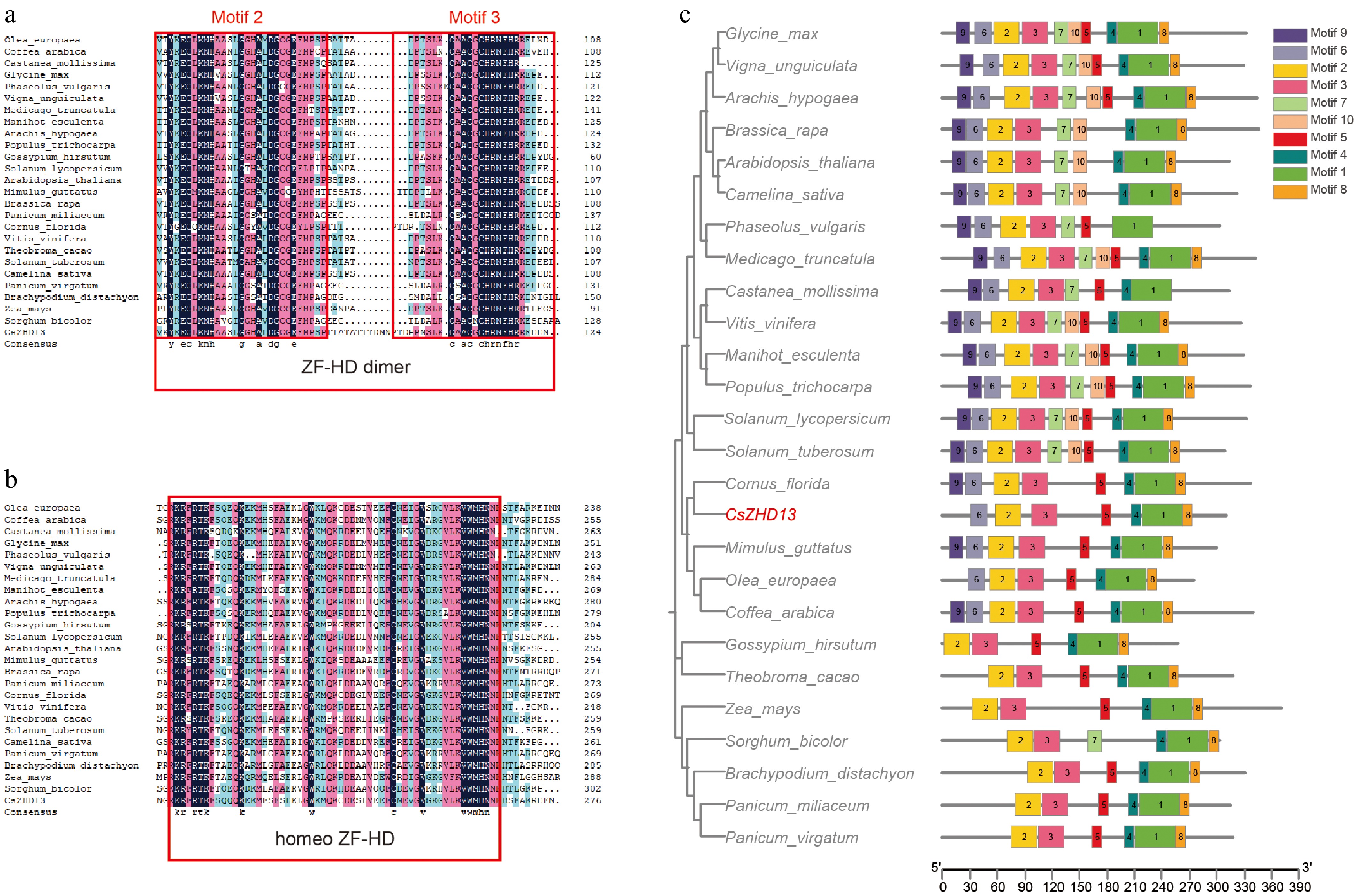
Figure 1.
Alignment of the conserved motif sequences across species. Phylogeny and motif architecture of ZF-HD13 proteins across 26 plant species. (a) ZF-HD dimer signature sequences. (b) Homeo ZF-HD signature sequences. (c) The phylogenetic tree of ZF-HD13 across species.
Transcription profiles of CsZF-HD13 under abiotic stress
-
To explore the potential functions of CsZF-HD13, tissue-specific and stress-responsive expression patterns were detected in tea plants. The analysis results show that CsZF-HD13 has the highest expression level in young leaves, shows a moderate level of expression in roots, and is detected at an extremely low level in flowers at the same developmental stage (Fig. 2a).
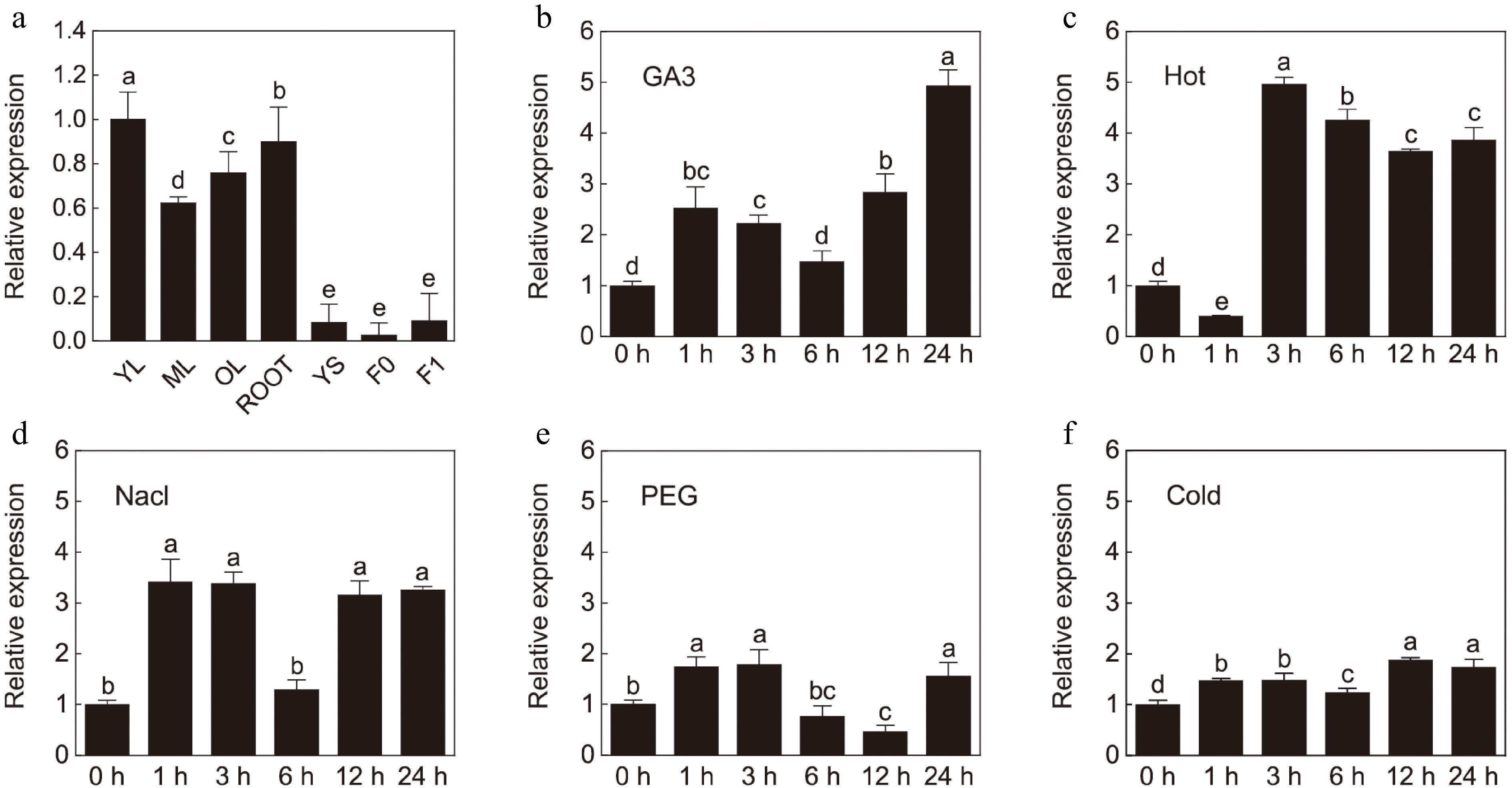
Figure 2.
CsZF-HD13 expression profiles. (a) Organ-specific transcriptional analysis of CsZF-HD13 in C. sinensis 'Shuchazao' (YL: young leaves; ML: mature leaves; OL: old leaves; YS: young stems; F0: bud stage; F1: white stage). (b) 1 mM GA3; (c) 38 °C; (d) 200 mM NaCl; (e) 20% PEG-6000; (f) 4 °C. Transcript levels at 0 h (multiple stress treatments) and in leaf samples (organ expression profiling) were assigned a relative value of 1.0 for normalization. Error bars depict standard deviations (SD). Each data point represents the mean ± SD from triplicate biological experiments. Different letters indicate significant differences (p < 0.05).
In order to study the potential functional correlation of CsZF-HD13 under abiotic stress conditions, the expression profiles of the gene were detected using RT-qPCR under PEG, NaCl (salt stress), heat, cold, and GA3 treatments. Transcription of CsZF-HD13 was induced by high temperature, GA3, and NaCl, while the transcript levels remained unresponsive to both PEG-6000 and cold stress treatments. The expression level of CsZF-HD13 peaked at 3 h after heat treatment, showing 4.96-fold higher than that of the control. Under GA3 treatment, the gene displayed a transient rise-and-fall pattern, attaining peak transcript levels at 24 h (4.89-fold). In response to NaCl, the expression level of CsZF-HD13 first increased and peaked at 1 h (3.4-fold), subsequently declining rapidly to levels comparable to the control, after which it increased again (Fig. 2b–f).
Subcellular localization of CsZF-HD13
-
Transient transformation was performed in tobacco to examine the subcellular localization of the tea plant CsZF-HD13 proteins. The CsZF-HD13-EGFP in tobacco cells exhibited superimposed localization patterns with those of markers for the nucleus. Specifically, the green fluorescence signal from the tea plant proteins in tobacco cells merged with the red signals from markers for the nucleus, resulting in a yellow overlay. The results indicated that CsZF-HD13 localized to the nucleus (Fig. 3).
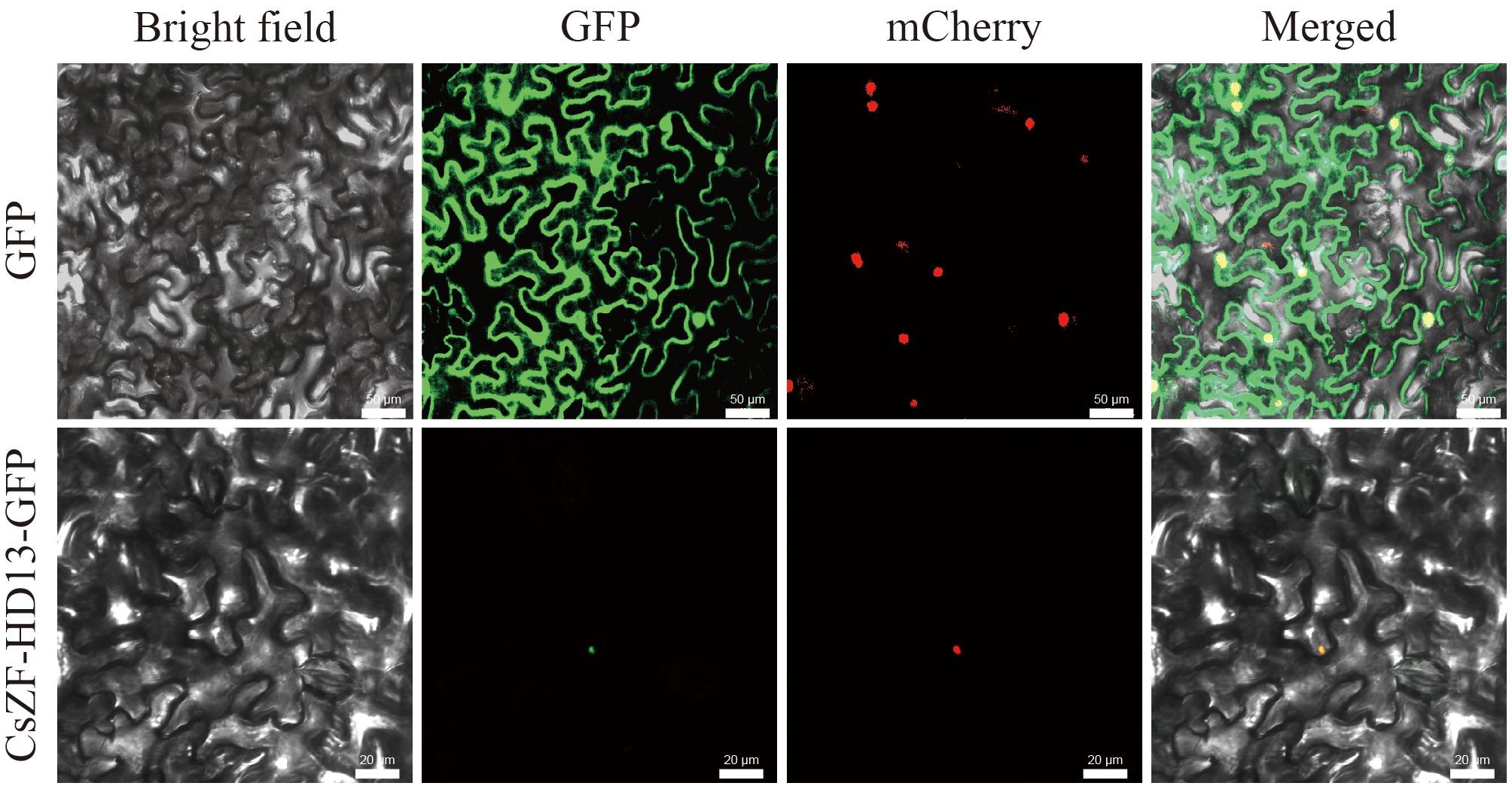
Figure 3.
Subcellular localization of CsZF-HD13-GFP. Subcellular distribution of the CsZF-HD13-GFP fusion protein and free GFP in Nicotiana benthamiana leaf cells was imaged using a confocal microscope. Nuclear localization of the p35S::NLS-mCherry marker. Scale bars indicate 20 and 50 μm.
Identification of transgenic positive Arabidopsis plants
-
For the assessment of CsZF-HD13 function in the high-temperature stress response, three separate transgenic Arabidopsis lines harboring the CsZF-HD13 overexpression construct were established and confirmed via PCR amplification (Fig. 4a). Quantitative RT–PCR indicated that CsZF-HD13 expression was absent in WT Arabidopsis. The GUS staining results also showed that the seeds of the overexpressing Arabidopsis plants turned blue, while those of the WT Arabidopsis plants remained unchanged in color (Fig. 4b). CsZF-HD13 transcript levels reached their maximum in OE-5, surpassing those in OE-4 and OE-3 by 1.06-fold and 1.92-fold, respectively (Fig. 4c).
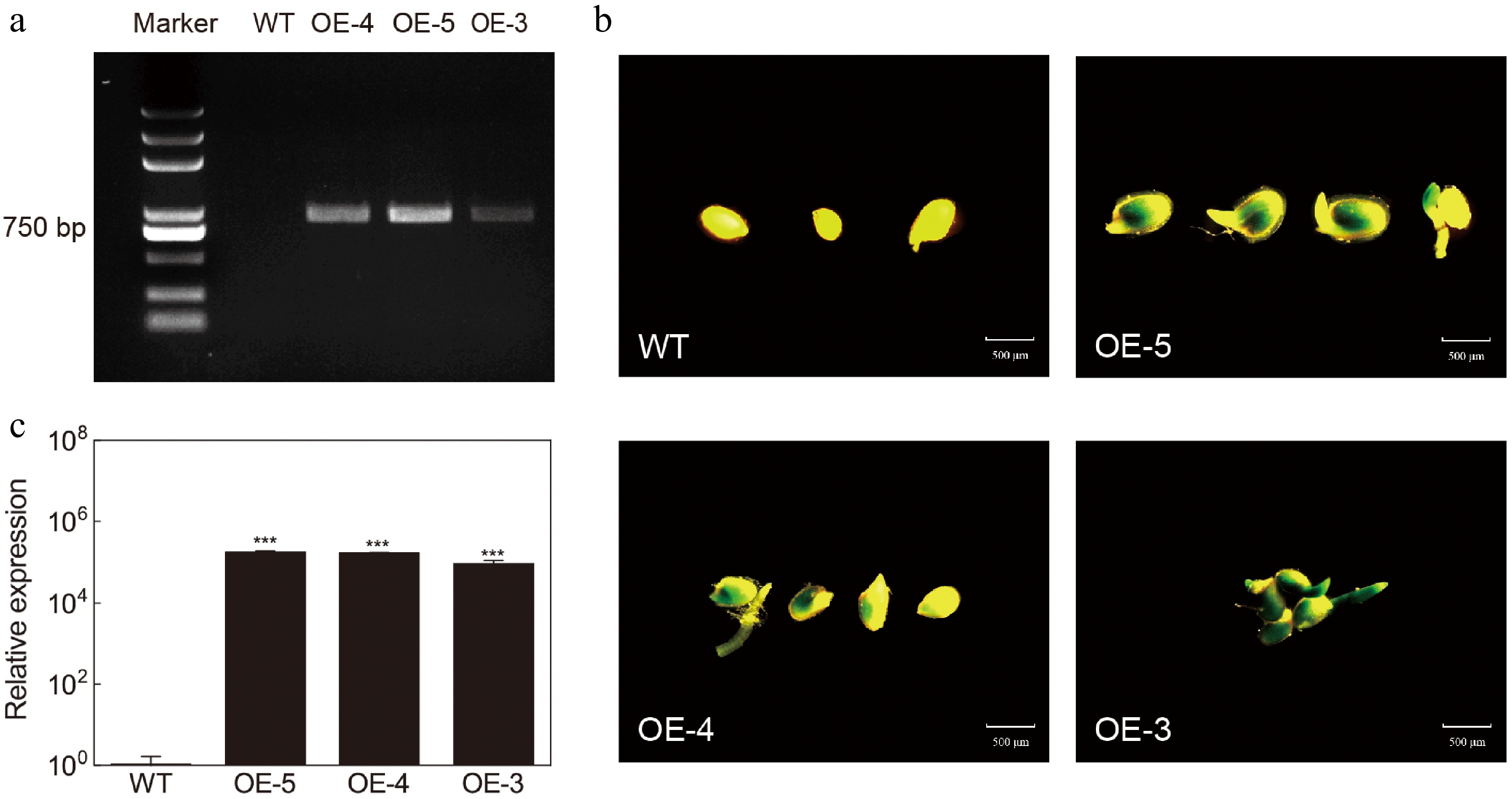
Figure 4.
Heterologous overexpression of CsZF-HD13 in A. thaliana. (a) PCR-based detection of the CsZF-HD13 transgene in cDNA templates derived from WT and three independent transgenic lines. (b) Histochemical GUS staining of T3 transgenic Arabidopsis seeds harboring the 35S::CsZF-HD13-35S::GUS overexpression construct. Scale bars indicate 500 μm. (c) Transcript levels of CsZF-HD13 in WT and transgenic Arabidopsis lines. Values represent means ± standard deviation (SD). Asterisks indicate significant deviations from the WT (* p < 0.05; ** p < 0.01; *** p < 0.001).
CsZF-HD13 enhances thermotolerance in transgenic Arabidopsis
-
Four-week-old Arabidopsis were heat-treated. As depicted in Fig. 5a, both transgenic and WT plants developed leaf-wilting symptoms following 3 d of treatment at 38 °C, with the wilting phenotype being more pronounced in WT leaves. As heat stress progressed, the plants gradually became chlorotic and necrotic, exhibiting yellowish-brown discoloration. The survival rate of transgenic Arabidopsis plants ranged from 64.58% to 81.25%, accompanied by slight stress symptoms, while the WT strain was 20.83%, lower than the transgenic Arabidopsis plants' levels (Fig. 5a).
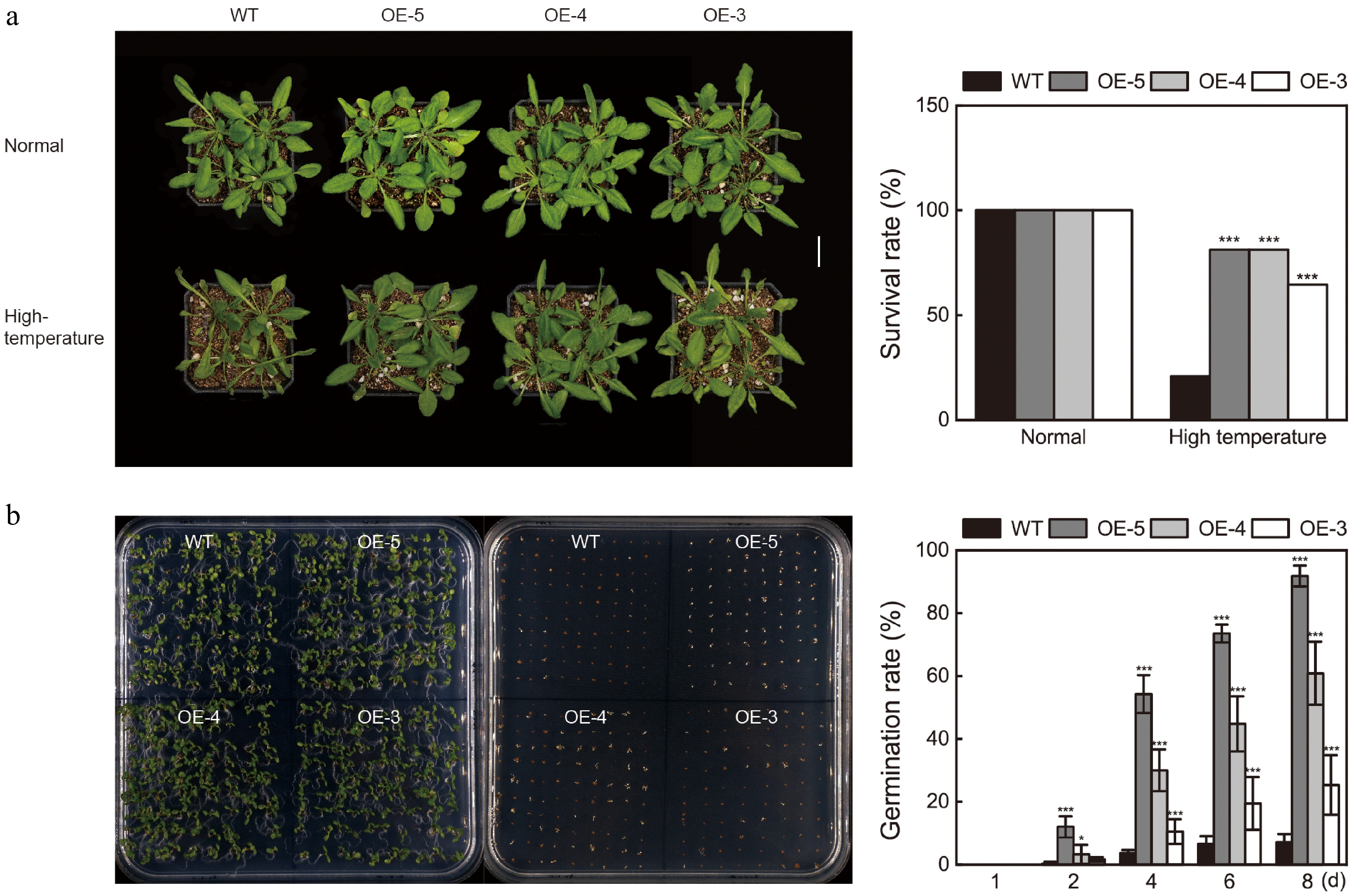
Figure 5.
The phenotypes of transgenic Arabidopsis under high-temperature stress treatment. (a) WT and transgenic Arabidopsis phenotypes and survival (pre-/post-38 °C heat). Scale bars indicate 2 cm. (b) Germination phenotypes and rates of WT and transgenic Arabidopsis seeds under high temperature and room temperature. Values represent means ± standard deviation (SD). Asterisks indicate significant deviations from the WT (* p < 0.05; ** p < 0.01; *** p < 0.001).
To further assess the thermotolerance of transgenic Arabidopsis plant lines, seeds from both WT and CsZF-HD13-overexpressing Arabidopsis were plated onto 1/2 MS medium; some were cultured at room temperature, while others were cultured at 38 °C, and seed germination rates were monitored for 8 d. The germination performance of transgenic lines did not significantly differ from that of WT plants on the same medium. Both WT and transgenic seeds showed reduced germination under heat stress treatment, but transgenic Arabidopsis lines hosting the CsZF-HD13 gene outperformed WT by 3.6- to 13-fold (Fig. 5b).
Under normal growth conditions and high-temperature stress, stress physiological indicators were measured for the WT and the plants overexpressing the CsZF-HD13 gene. The results shown in Fig. 6a–f indicated that the activities of SOD, POD, and CAT in transgenic and WT plants were similar, and the concentrations of MDA, SS, and H2O2 were also comparable under normal conditions. Under higher temperature treatments, transgenic Arabidopsis plants maintained lower MDA and H2O2 contents while sustaining elevated SS levels and greater SOD, POD, and CAT enzymatic activities than the WT. These results demonstrated that transgenic Arabidopsis hosting the CsZF-HD13 gene potentially confers thermotolerance by accumulating osmotic solutes and modulating the ROS metabolic network.
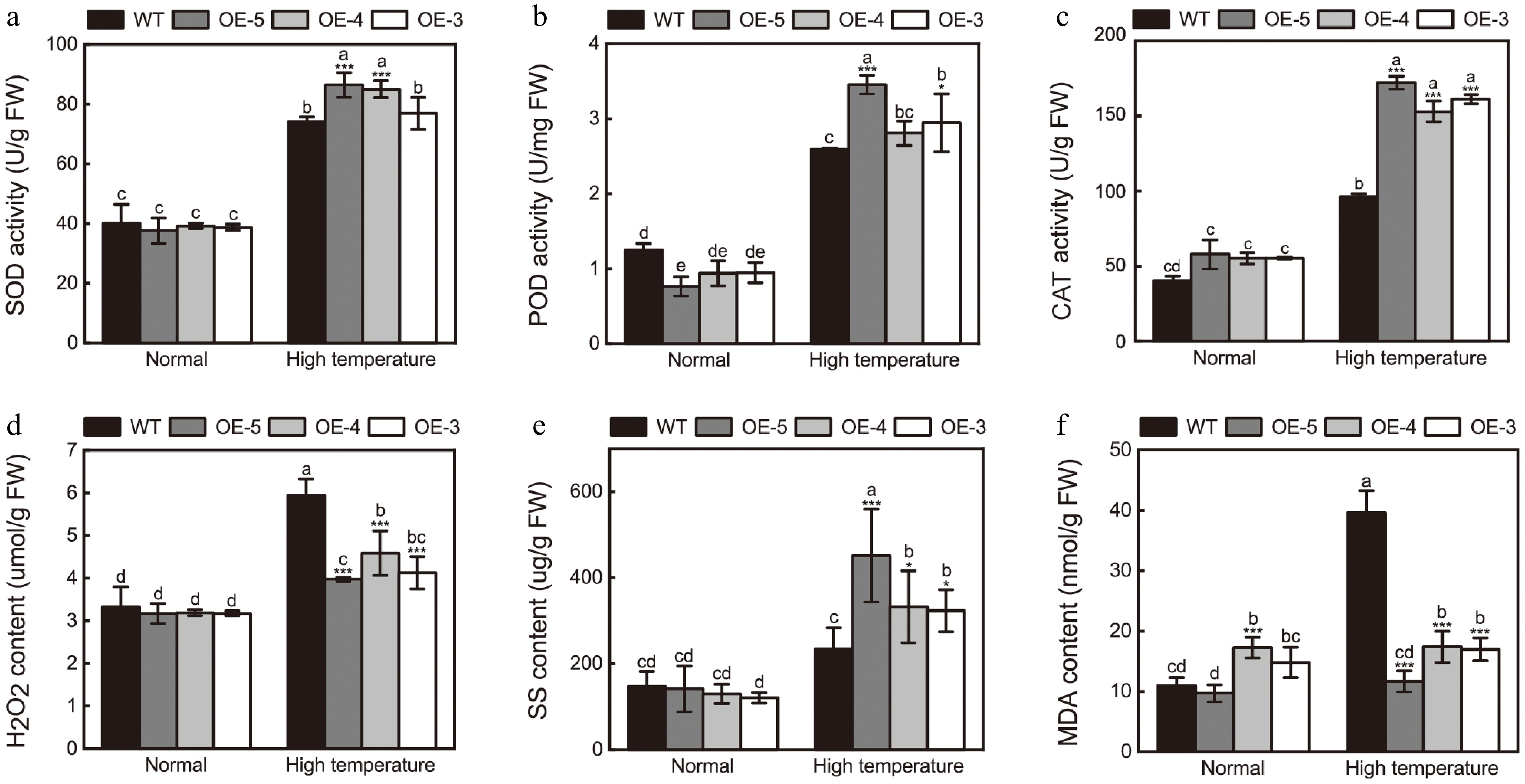
Figure 6.
Heat stress-induced physiological changes in WT and CsZF-HD13 transgenic Arabidopsis. (a)–(c) SOD, POD, and CAT activities under normal conditions and after 3 d at 38 °C. (d)–(f) MDA, H2O2, and SS levels under normal conditions and after 3 d at 38 °C. Error bars indicate SD. Asterisks mark significant WT vs transgenic differences (* p < 0.05; ** p < 0.01; *** p < 0.001); different letters indicate significant inter-line differences (p < 0.05).
CsZF-HD13 affects the expression profiles of heat stress response genes
-
A total of 848 differentially expressed genes (DEGs) were identified between transgenic Arabidopsis plants hosting the CsZF-HD13 gene and WT, including 197 upregulated and 651 downregulated genes (Fig. 7a; Supplementary Table S3). Subsequently, hierarchical clustering analysis was conducted to systematically categorize all identified DEGs, which exhibited distinct transcriptional profiles between CsZF-HD13-overexpressing and WT samples (Fig. 7b). The upregulated gene set in CsZF-HD13-overexpressing Arabidopsis was then subjected to pathway enrichment analysis in comparison with WT (Fig. 7c). Numerous metabolic pathways were enriched, especially amino acid and nitrogen metabolism (Fig. 7c).
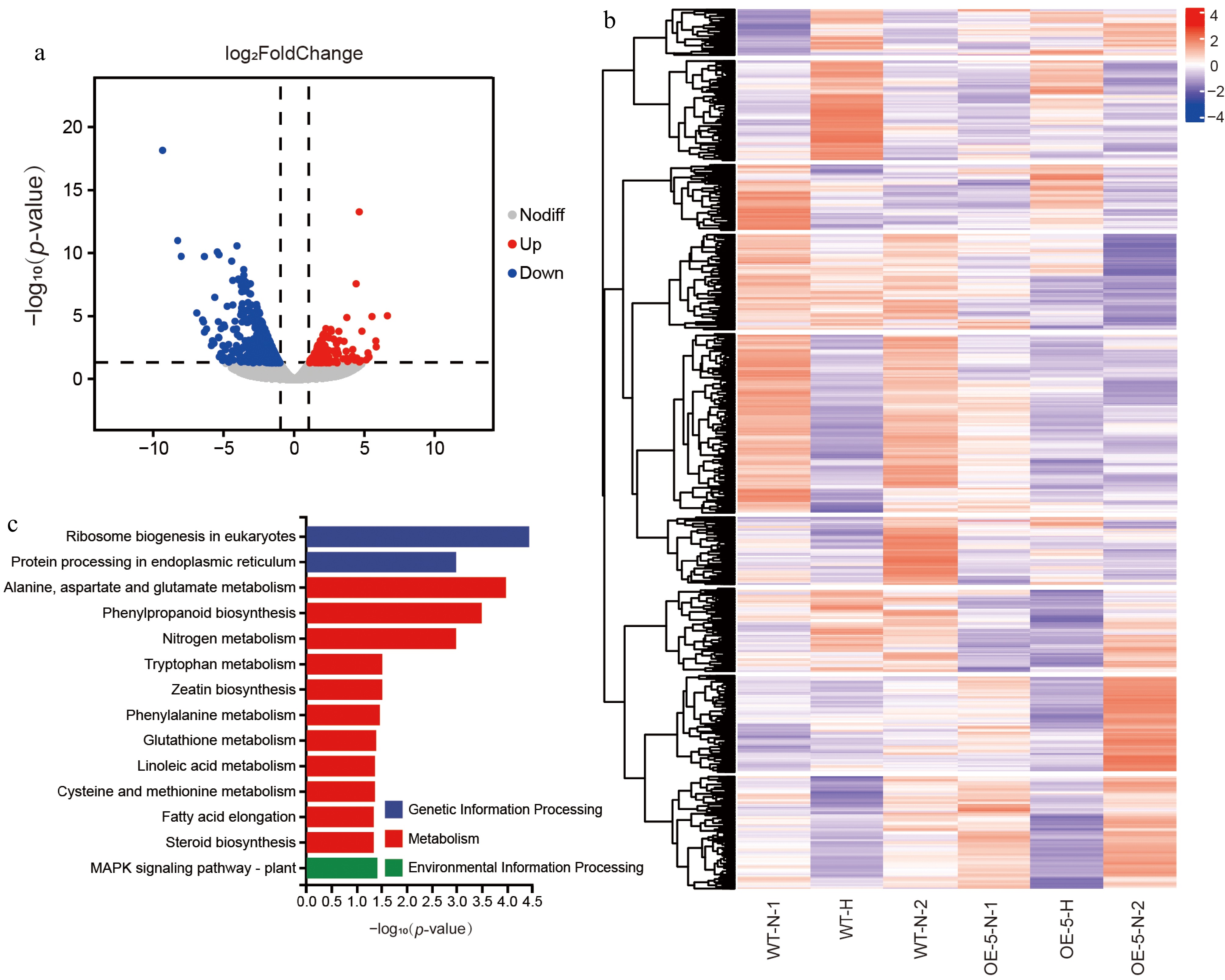
Figure 7.
Transcriptome analysis of transgenic plant and WT Arabidopsis. (a) Volcano plot of DEGs. Each point represents a gene. The two vertical dashed lines in the figure represent the thresholds for fold change in differential expression; the horizontal dashed line represents the threshold for statistical significance. Differentially expressed genes were identified using the criteria of |log2FoldChange| > 1 and p-value < 0.05. (b) Heatmap of clustered expression patterns of DEGs. (c) KEGG pathway enrichment analysis of upregulated genes.
Heat stress-related genes from Arabidopsis were screened among the upregulated differentially expressed genes. RT-qPCR was performed to compare the relative expression levels of these heat-induced genes between WT and transgenic lines under room temperature and high-temperature conditions. Overexpression of CsZF-HD13 significantly enhanced the transcription of At5G25450, AtHSP22, AtHSP23.5, AtHSP23.6, AtHSP70, and AtHSP70T-2 (Fig. 8). These results indicate that overexpression of CsZF-HD13 is associated with their increased expression.
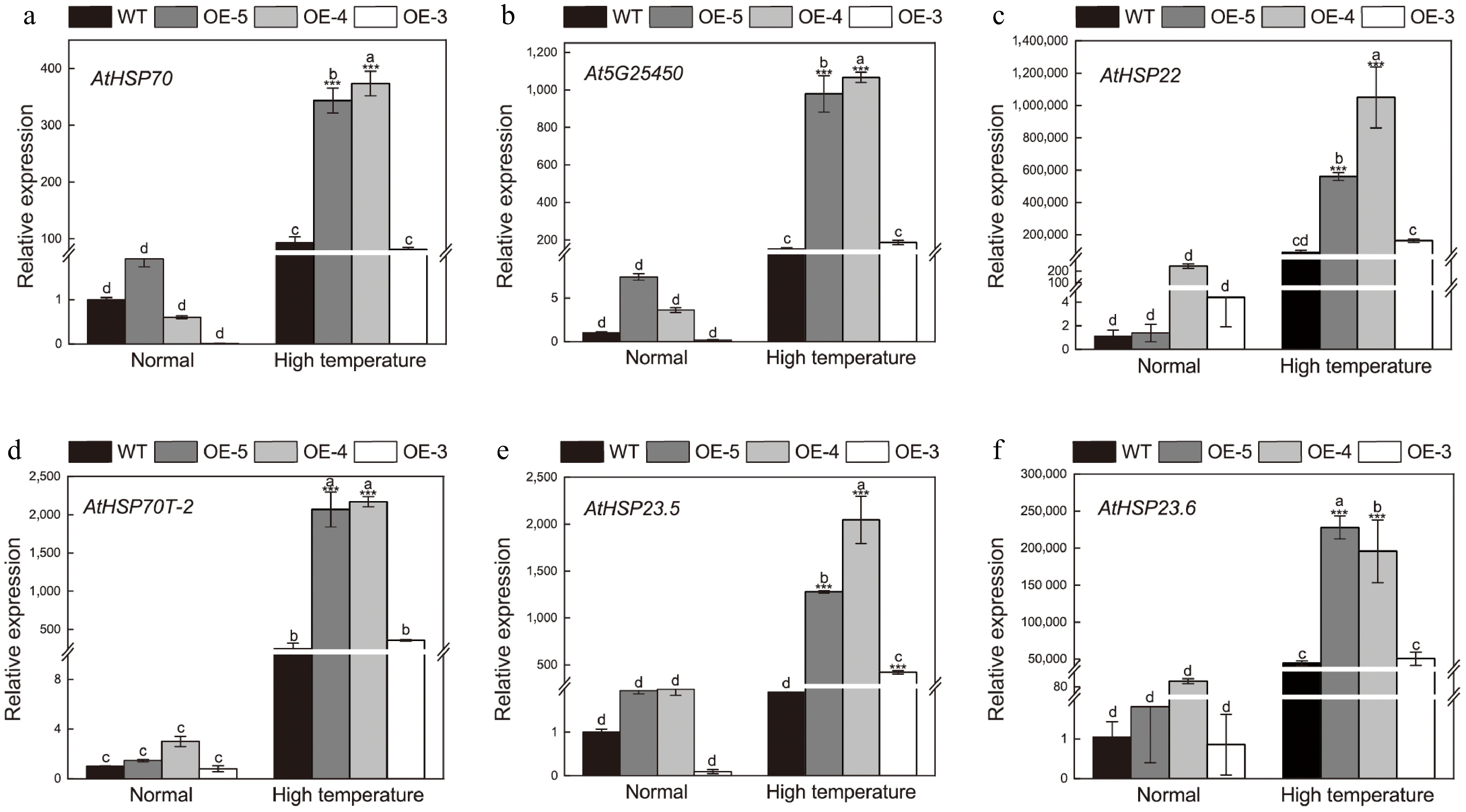
Figure 8.
Expression of heat-stress-responsive genes regulated by CsZF-HD13. Error bars indicate standard deviations (SD). Significant deviations of transgenic lines from the WT control are marked by asterisks (* p < 0.05; ** p < 0.01; *** p < 0.001).
-
As a group of transcription factors found in plants, ZF-HD TFs control plant development, stress adaptation, and quality formation[13]. The genes encoding the ZF-HD factors have been identified genome-wide across multiple plant species, including rice (Oryza sativa L.)[15], cucumber (Cucumis sativus L.)[33], rapeseed (Brassica napus L.)[21], and soybean (Glycine max)[16]. Until now, research on ZF-HD transcription factors in ornamental and horticultural species remains scarce, and the specific function of these proteins under abiotic stress conditions has yet to be elucidated in detail.
In this study, CsZF-HD13 was isolated from the tea plant cultivar 'Shuchazao'. Phylogenetic analysis showed that CsZF-HD13 was closely related to Cornus florida, and CsZF-HD13 belonged to the same branch as M. guttatus, olive, and coffee. In transient expression assays, the CsZF-HD13-GFP fusion protein was specifically confined to the nucleus of N. benthamiana. This observation concurred with its presumed role in transcriptional regulation and supported its nuclear regulatory role[22]. High temperature can disrupt metabolic homeostasis in plant cells, thereby causing protein denaturation and membrane structural damage[19]. Some of the ZF-HD factors could respond to heat stress signals. For example, expression levels of HvZFHD1 were increased by heat stress[20]. All eight CsZHD genes in cucumber exhibited markedly elevated transcript abundance following treatment at 42 °C relative to ambient temperature conditions[34]. Following heat treatment, BnZHD4, BnZHD37, BnZHD53, BnZHD59, and BnZHD60 exhibited significant transcriptional induction across root, stem, and leaf tissues within 24 h[21]. These findings indicate that the ZF-HD protein is involved in enhancing the heat tolerance of plants.
Heterologous expression of the genes encoding the ZF-HD proteins can enhance plant resilience against individual or multiple abiotic stresses. Specifically, transgenic plants harboring the HaZF3 transgene demonstrated significantly greater drought resistance[35]. Multiple ScZF-HD genes in the rye (Secale cereale) genome were upregulated following salt and cold stress treatments[36]. In the present study, heterologous overexpression of tea plant CsZF-HD13 in Arabidopsis exhibited enhanced seed germination capacity under high temperature conditions. Compared with the WT, these transgenic plants exhibited significantly enhanced heat tolerance under continuous high-temperature stress treatments. The survival rate of CsZF-HD13-overexpressing Arabidopsis plants was significantly higher than that of WT plants. These findings suggested that ectopic expression of CsZF-HD13 enhanced the thermotolerance of transgenic plants.
Plants regulate their metabolism through a series of physiological and biochemical processes in order to alleviate the damage caused by heat stress[37]. The accumulation of reactive oxygen species serves as a characteristic symptom in plants under various stress conditions, including high temperatures. Maintenance of ROS homeostasis relies substantially on the collaborative function of different enzymatic antioxidants[38]. SOD, POD, and CAT constitute pivotal enzymatic antioxidants that function in the elimination of reactive oxygen free radicals in plants[39]. Serving as the initial barrier of the plant antioxidant machinery, superoxide dismutase (SOD) mediates the conversion of superoxide anions (O2·−) into H2O2, participating in the complex orchestration of ROS equilibrium in plant cells[40,41]. Numerous studies indicated that the capacity to scavenge reactive oxygen species was intrinsically linked to the tolerance of plants toward various environmental stresses[42−45]. Among the various end products of membrane lipid peroxidation, malondialdehyde (MDA) stands out as a key biomarker frequently employed to assess oxidative damage[46]. As osmotic adjustment substances, soluble sugars (SS) play indispensable roles in plant cytoplasmic homeostasis[47]. In this study, compared with WT plants under high-temperature stress, CsZF-HD13-overexpressing plant lines possessed significantly augmented activities of SOD, POD, and CAT, coupled with higher SS contents. Transgenic plants also had lower MDA and H2O2 levels. These results collectively indicate that CsZF-HD13 may enhance heat tolerance by increasing the levels of antioxidants and accumulating osmotic solutes.
In higher plants, transcriptomics provides insights into gene structure and regulatory mechanisms[48]. Here, a total of 848 DEGs were identified between the CsZF-HD13 overexpression line and WT Arabidopsis plants, including 197 upregulated genes. The enrichment of amino acid and nitrogen metabolism among upregulated DEGs is particularly noteworthy. Under heat stress, plants accumulate compatible solutes such as proline and soluble sugars to maintain cellular osmotic homeostasis and stabilize protein structures[47]. Proline metabolism or its accumulation is believed to counteract dehydration, stabilize proteins and membranes, scavenge free radicals, maintain cellular homeostasis, and buffer the redox environment[49,50]. The upregulation of genes involved in amino acid metabolism in CsZF-HD13-overexpressing plants may facilitate proline accumulation, consistent with the elevated soluble sugar (SS) levels observed in our physiological assays. This metabolic reprogramming likely contributes to the enhanced membrane stability and reduced MDA content under heat stress. Heat shock proteins (HSPs) have been established as critical mediators of plant thermotolerance[51]. Upon exposure to elevated temperatures, HSPs are mobilized through diverse regulatory pathways, including those governed by heat shock transcription factors (HSFs) and triggered by reactive oxygen species (ROS). Functioning as molecular chaperones, these proteins safeguard cellular proteins against heat-induced denaturation and augment the activity of the plant antioxidant machinery[52].
In the present study, the transcript levels of heat-responsive genes At5G25450, AtHSP22, AtHSP23.5, AtHSP23.6, AtHSP70, and AtHSP70T-2 were significantly elevated in CsZF-HD13-overexpressing transgenic Arabidopsis, exceeding those observed in WT plants. These findings suggested that CsZF-HD13 may function as a nuclear-localized upstream transcription factor that enhances thermotolerance by upregulating the expression of a suite of stress-related genes, thereby modulating physiological processes associated with stress resilience.
In this study, we isolated and functionally characterized CsZF-HD13, a heat-responsive ZF-HD transcription factor from a tea plant. Subcellular localization confirmed its nuclear distribution. Heterologous overexpression of CsZF-HD13 in Arabidopsis significantly enhanced thermotolerance, as evidenced by improved seed germination rates (3.6- to 13-fold increase) and higher survival rates (64.58%–81.25% vs 20.83% in WT) under 38 °C heat stress. Physiological analyses revealed elevated antioxidant enzyme activities (SOD, POD, and CAT), increased soluble sugar accumulation, and reduced oxidative damage (lower MDA and H2O2 contents) in transgenic plants. Transcriptome and RT-qPCR analyses further showed that CsZF-HD13 overexpression was associated with increased expression of heat-responsive genes. These results demonstrate that the identification and functional validation of the heat-responsive transcription factor CsZF-HD13 provide engineerable genetic parts for creating heat-tolerant tea plant germplasm. However, despite its proven ability to enhance heat tolerance in transgenic Arabidopsis, the regulatory network of heat tolerance-related genes under its control and its functional role in tea plants remain to be further verified.
-
The research was supported by the Bioinformatics Center of Nanjing Agricultural University.
-
Not applicable.
-
The authors confirm their contributions to the paper as follows: conceived and designed this study, contributed reagents/materials/analysis tools: Zhuang J; performed the research and collected data: Jiang S, Zhang JQ, Gao YH, Teng YJ, Yang N; analyzed the data: Zhang JQ, Gao YH, Jiang S, Teng YJ, Li GN; wrote the manuscript: Jiang S; revised the manuscript: Zhuang J, Zhang JQ, Wang YH. All authors reviewed the results and approved the final version of the manuscript.
-
All data supporting the findings of this study are available from the corresponding author upon reasonable request.
-
The authors declare that they have no known competing financial interests or personal relationships that could have appeared to influence the work reported in this paper.
-
accompanies this paper online at: https://doi.org/10.48130/els-0026-0016.
- Supplementary Table S1 The accession numbers of ZF-HDs used in this study.
- Supplementary Table S2 Primer sequences used in this study.
- Supplementary Table S3 Differentially expressed genes (DEGs) between wild type (WT) and CsZF-HD13-overexpressing Arabidopsis.
- Supplementary Fig. S1 Motifs of ZF-HDs family members in tea and other plant species.
-
Copyright © 2026 by the author(s).
Engineering in Life Sciences published by Maximum Academic Press on behalf of John Wiley & Sons Ltd. This is an open access article under the terms of the Creative Commons Attribution License, which permits use, distribution and reproduction in any medium, provided the original work is properly cited. -
About this article
Cite this article
Jiang S, Zhang JQ, Gao YH, Teng YJ, Yang N, et al. 2026. CsZF-HD13, a Camellia sinensis ZF-HD family member, acts as a positive regulator to improve thermotolerance in heterologous transgenic Arabidopsis. Engineering in Life Sciences 26: e015 doi: 10.48130/els-0026-0016 

CsZF-HD13, a Camellia sinensis ZF-HD family member, acts as a positive regulator to improve thermotolerance in heterologous transgenic Arabidopsis
- Received: 19 July 2026
- Revised: 06 September 2026
- Accepted: 28 September 2026
- Published online: 23 October 2026
Abstract: High temperatures significantly affect plant growth and development, thereby impacting the yield and quality of crops. Understanding the molecular mechanisms of plant heat tolerance is crucial for breeding crops with heat resistance capabilities. The ZF-HD TF family is vital for plant development and abiotic stress tolerance; however, their potential roles in tea plants (Camellia sinensis) remain unclear. Here, subcellular localization assays showed that CsZF-HD13 was localized to the nucleus. Quantitative real-time PCR (RT-qPCR) assays revealed that CsZF-HD13 was induced by various stresses and phytohormones, namely salt, drought, cold, heat, and GA3, with peak transcript abundance at 3 h after heat treatment. To determine whether CsZF-HD13 could confer enhanced thermotolerance, we heterologously overexpressed this gene in Arabidopsis and evaluated multiple physiological parameters. Overexpression in Arabidopsis enhanced thermotolerance, as evidenced by significantly higher seed germination rates under high temperature compared to wild type (WT). Transgenic plants displayed elevated activities of SOD, POD, and CAT, accompanied by higher soluble sugar levels, while exhibiting lower MDA and H2O2 contents under heat stress. The transcript levels of several heat-responsive genes, including At5G25450, AtHSP22, AtHSP23.5, AtHSP23.6, AtHSP70, and AtHSP70T-2, were significantly upregulated in transgenic plants compared with WT. Identification and functional validation of the heat-responsive TFs CsZF-HD13 provide engineerable genetic parts for creating heat-tolerant tea plant germplasm.
-
Key words:
- Heat tolerance /
- CsZF-HD13 /
- Overexpression /
- Arabidopsis /
- Camellia sinensis