-
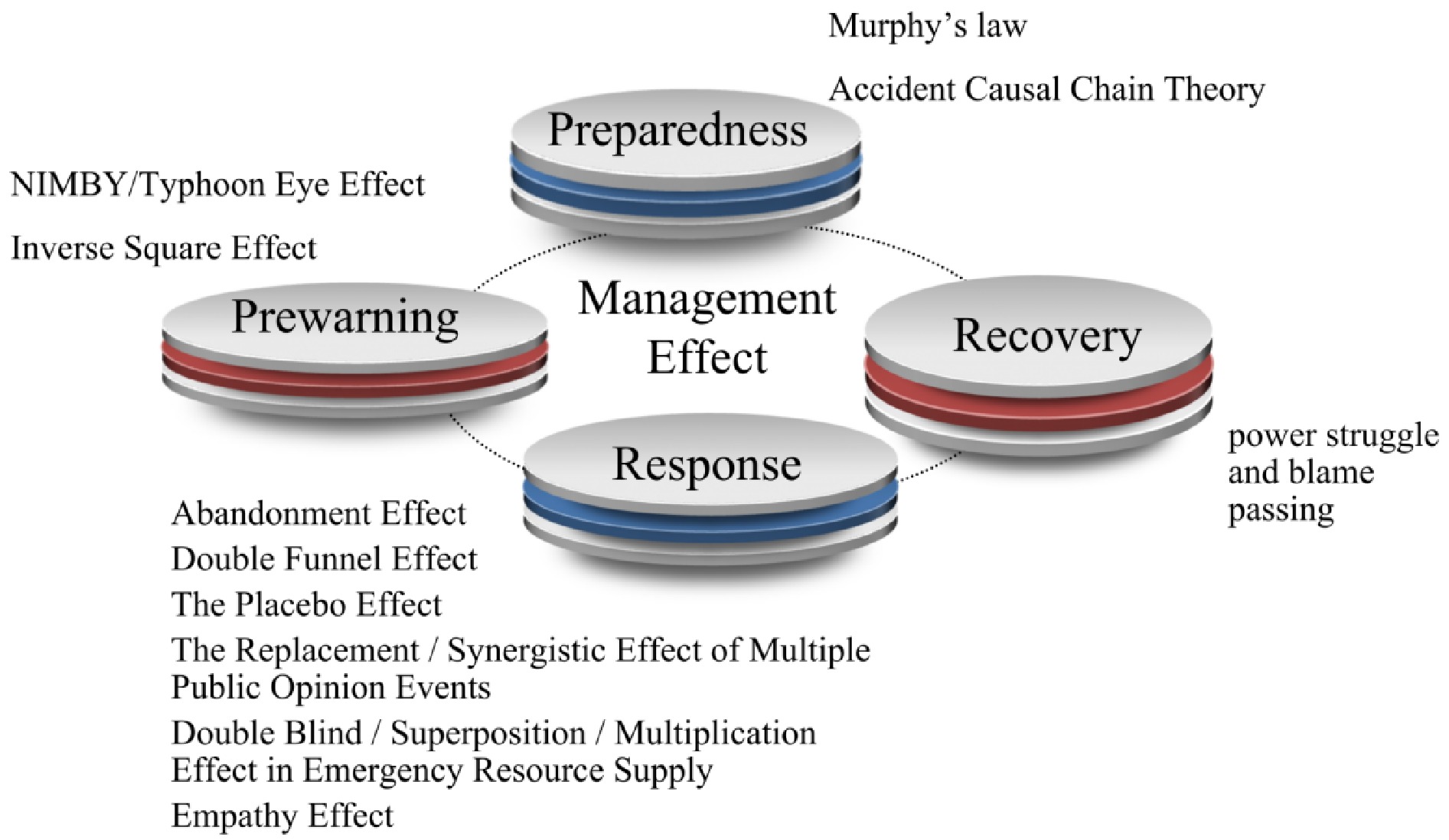
Figure 1.
Management effect in the four stages of emergency management.
-
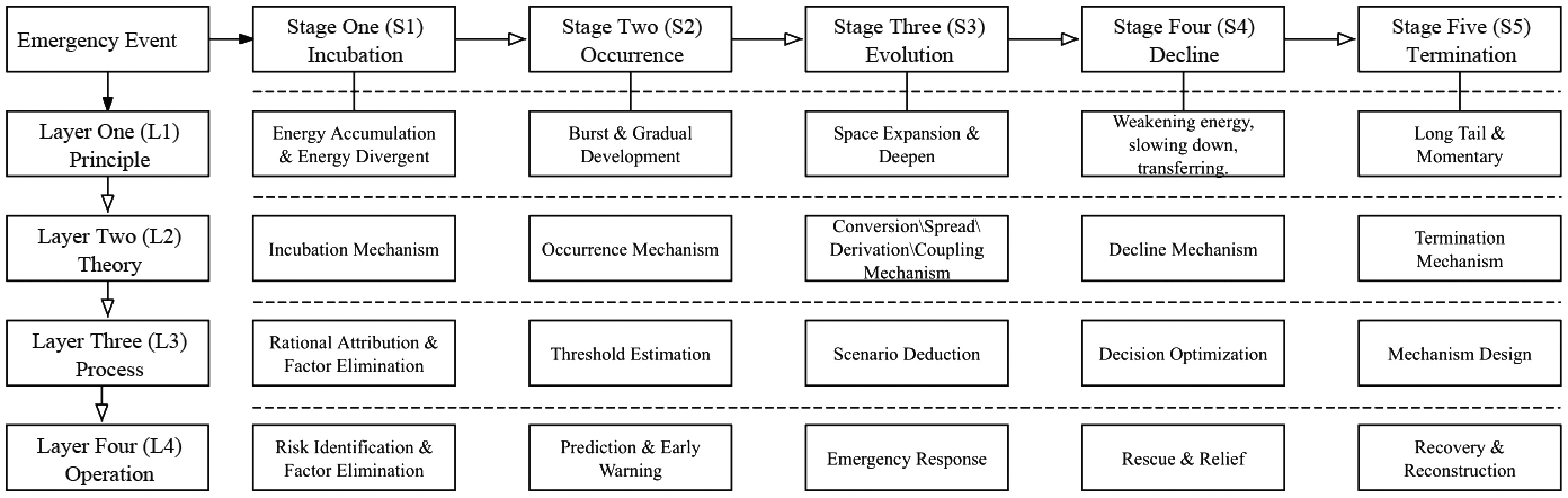
Figure 2.
The '4L-5S' analysis model of emergency management[13].
-

Figure 3.
The Risk Nine-Degree Model.
-
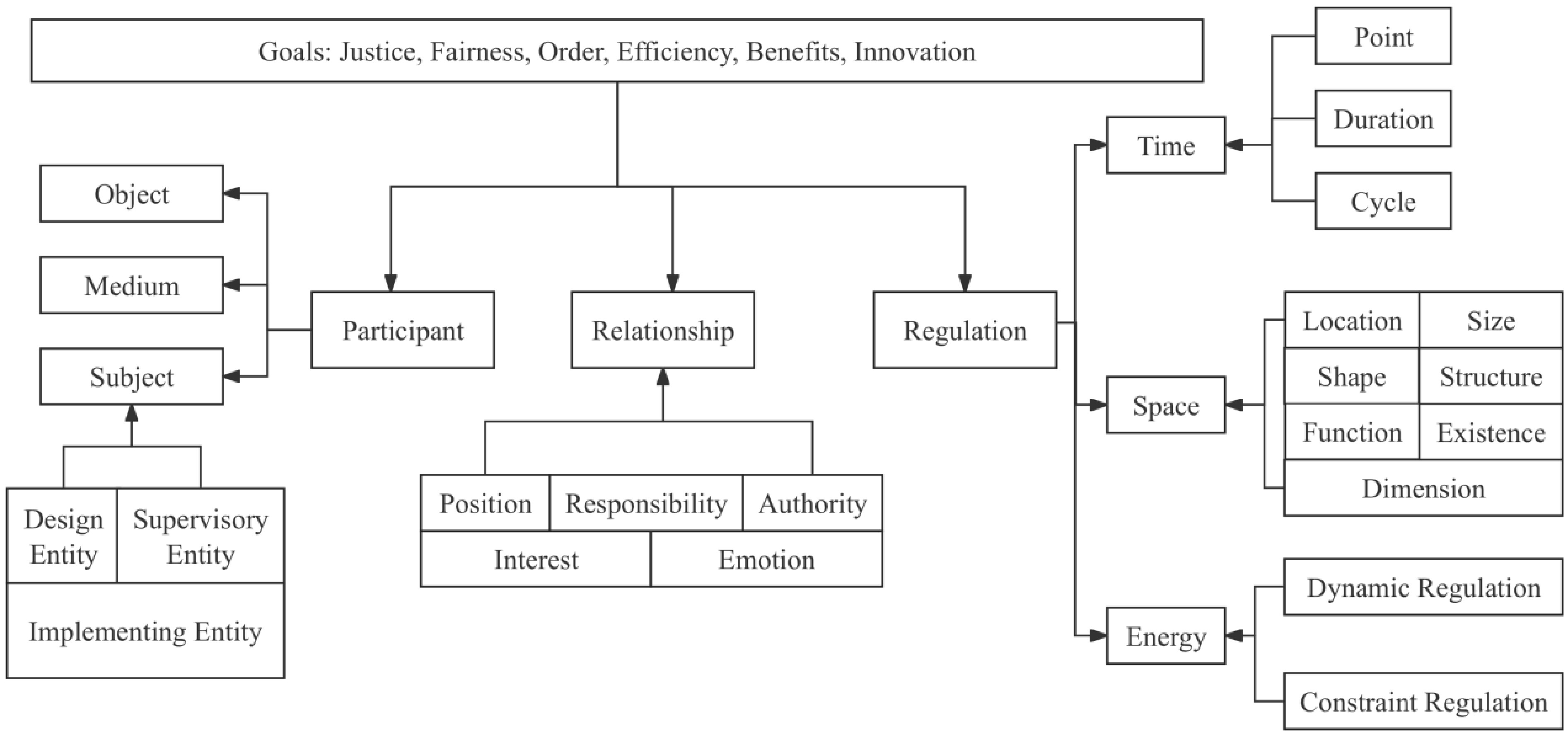
Figure 4.
The 'Seven-Component' and 'Six-Objective' frameworks.
-
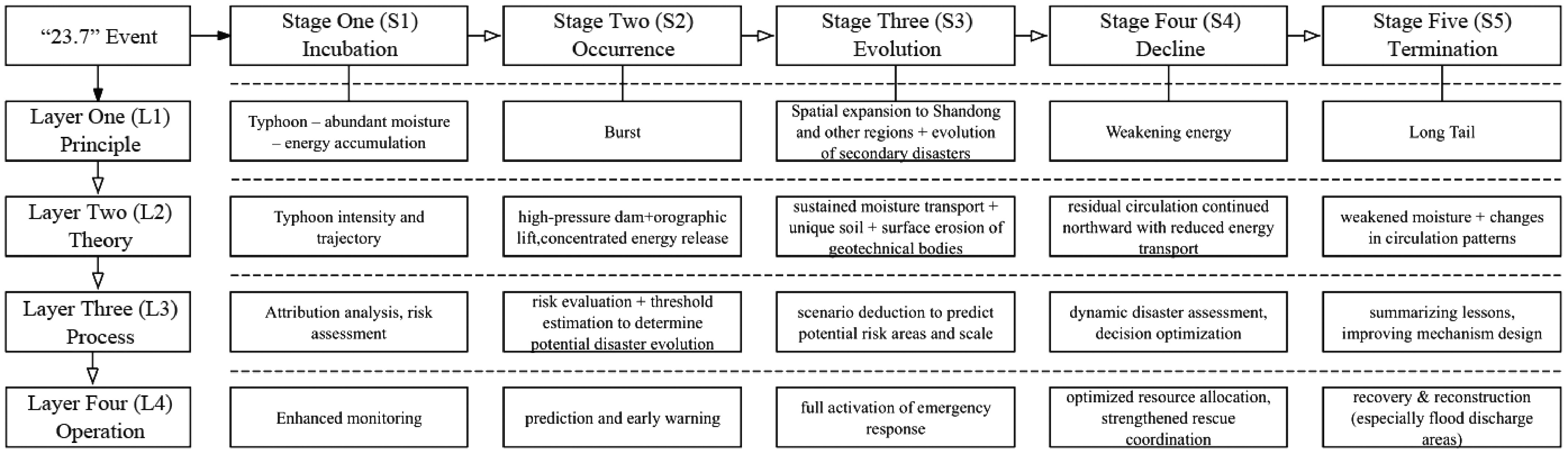
Figure 5.
Intrinsic mechanism analysis of the '23·7' event based on the 4L-5S model.
-
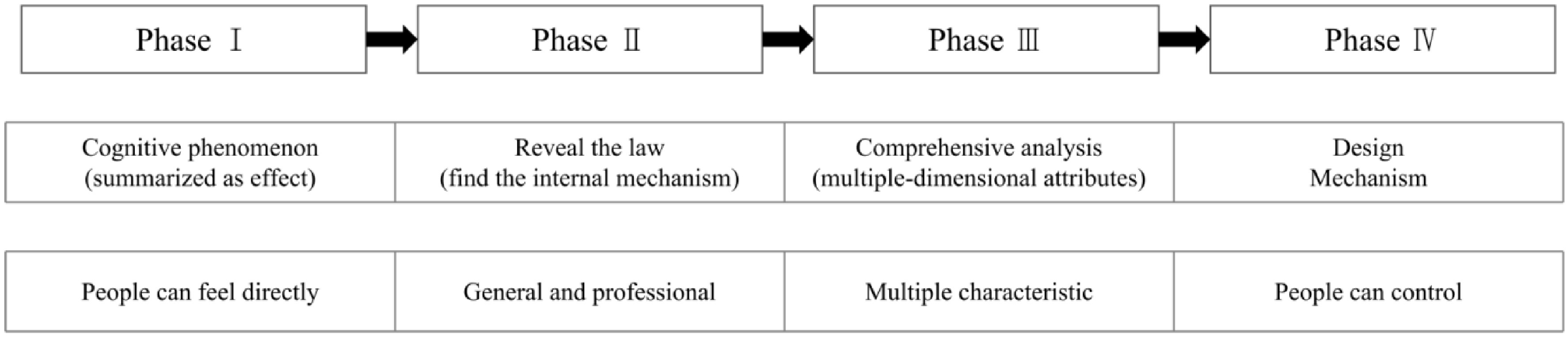
Figure 6.
E-M-A-M emergency management methodology.
-
Stage Time Key events Responses Outcomes Incubation July 28 Typhoon Doksuri makes landfall, moisture northward, risk buildup Monitoring, early warnings Risk awareness improved Occurrence July 29–31 Extreme rainfall, floods, orographic effects Real-time monitoring, threshold analysis Severe damage, timely interventions Evolution July 31–August 1 Disaster expansion, landslides, debris flows Evacuation, dynamic assessments Lives saved, worsened property loss Decline August 1–2 Rainfall weakened, disaster stabilized Resource reallocation, intensified rescue Stabilized conditions, reduced risks Termination August 2–9 Recovery, reflections, improvement Infrastructure repair, emergency plan updates Long-term recovery, enhanced readiness Table 1.
Course of the '23·7' heavy rainfall in the Beijing-Tianjin-Hebei region.
-
Aspect Intrinsic
mechanism analysisManagement
mechanism designObjective Reveal the inherent laws Design intervention measures Nature Objective and neutral Subjective and action-oriented Methodological features Scientific observation and modeling Strategic planning and institutional innovation Application stage Foundation for decision-making Implementation of decision-making Application domain Natural and scientific domains Social and policy domains Core question Explain 'why it happens' Solve 'what should be done' Table 2.
The distinction between the two 'M's
Figures
(6)
Tables
(2)