












-
This study focuses on the methodology for emergency management, which aims to clarify and standardize each stage of emergency management research, outlining how to conduct such studies in a systematic and regulated manner. It provides a comprehensive and integrated framework for researching emergency management subjects, behaviors, and related areas. This methodology deeply reflects the logical and philosophical foundations underpinning emergency management research, influencing the choice of research methods, the selection and analysis of research data, the formulation of hypotheses, and the interpretation of results.
The 'method' refers to specific practices[1], focusing on the technical and tool-oriented aspects. The 'methodology' refers to the general approach and procedures for addressing a problem, emphasizing the logical reasoning and operational processes involved. Correspondingly, 'research methods' are the approaches used to construct systematic knowledge, forming the foundation of scientific endeavors. 'Research methodology', which represents the underlying rules, principles, and systematic approaches that guide the research process.
Unlike traditional methods such as authority-based, common-sense, or speculative methods, scientific methods acquire knowledge through systematic observation. Emergency management research is also distinct from other research domains in two main aspects: first, it is closely intertwined with the state of emergencies, requiring a particular focus on the coordination between emergency and routine states. Second, its research subjects are humans with behavioral preferences and complex emotions, making it impossible to isolate the system from its environment during analysis. This necessitates that emergency management research not only adheres to scientific pathways and utilizes scientific methods but also retains a degree of 'artistry' by incorporating speculative methods.
As such, emergency management research should go beyond the operational level of methods and continuously explore the methodological dimension. Specifically, with the advent of the risk society, emergencies have become increasingly diverse, frequent, impactful, and complex[2], imposing greater demands on emergency management practices and research. In other words, in today's context of complex societal risks and technological challenges, cross-disciplinary and global issues are emerging, and a singular research perspective is no longer sufficient to address the methodological needs for managing complex risks. This calls for the development of a more comprehensive research methodology to guide the systematic conduct of emergency management research. From the perspective of knowledge production, although emergency management research has become a major focus in academia, there remains a lag in theoretical development compared to emergency practices[3]. Additionally, theoretical knowledge and methodological research in this field are fragmented. In summary, the importance of scientific methods and methodologies in emergency management research is becoming increasingly prominent.
Accordingly, in response to the evolving demands of emergency management research methodology, we propose the E-M-A-M emergency management methodology, providing a practical analytical approach for research in emergency management. The 'E-M-A-M' methodology is a four-stage analytical framework, structured as follows: it begins with an 'Effect Analysis' (E) at the phenomenological level of emergency incidents, followed by the exploration of underlying 'Intrinsic Mechanism Analysis' (M). This is succeeded by a 'Comprehensive Risk Analysis' (A), culminating in the development of a feasible 'Management Mechanism Design' (M). Through the complete 'E-M-A-M' analytical process, the methodology achieves a multi-layered understanding that encompasses phenomenological description, intrinsic mechanistic analysis, multi-dimensional comprehensive risk analysis, and management mechanism design, ultimately addressing existing challenges in emergency management.
-
An effect refers to the manifestation of a causal phenomenon or rule within a limited context and is commonly used to describe natural and social phenomena. On the one hand, in the natural sciences, effects are often utilized to describe the outcomes or rules resulting from various interactions, such as the biochemical, functional, or morphological changes induced by a drug. On the other hand, in the social sciences, effects like the Matthew Effect and the Catfish Effect possess general characteristics at the levels of phenomenon, principle, and rule. These effects often reflect relatively superficial phenomena, especially psychological phenomena, or serve as simplified descriptions and metaphors for certain patterns.
Management effect, as the subject of management research, represents an organic integration of 'management' and 'effect', referring to phenomena with specific patterns that exist within organizational systems and their related management activities. The definition of management effect encompasses three layers of meaning: an organizational system centered around 'people', management-related behaviors or operational characteristics, and detectable manifestations of phenomena. The classification of management effects varies depending on different criteria. Based on the expression model, management effects can be divided into conceptual models, framework models, and mathematical models. From the perspective of evolutionary attributes, management effects can be further categorized into independent effects, effect groups, and counter-effects.
In the field of emergency management, existing research primarily focuses on two aspects. On the one hand, it emphasizes the development of effect theories and models, such as the Accident Causation Chain Theory[4], the Swiss Cheese Model[5], the Dynamic Risk Equilibrium Theory, the STAMP System-Theoretic Accident Model[6,7]. On the other hand, it highlights the expanded application and innovation of these effects, such as the Double Funnel Effect in crisis communication[8], and the Empathy Effect in social hotspot events[9].
Each stage in the emergency management chain exhibits corresponding management effects. Taking the four phases of emergency management—Prevention and Preparedness, Monitoring and Early Warning, Emergency Response and Rescue, and Post-Event Recovery and Reconstruction—as an example, every phase, as well as the entire process, is associated with specific management effects (see Fig. 1).
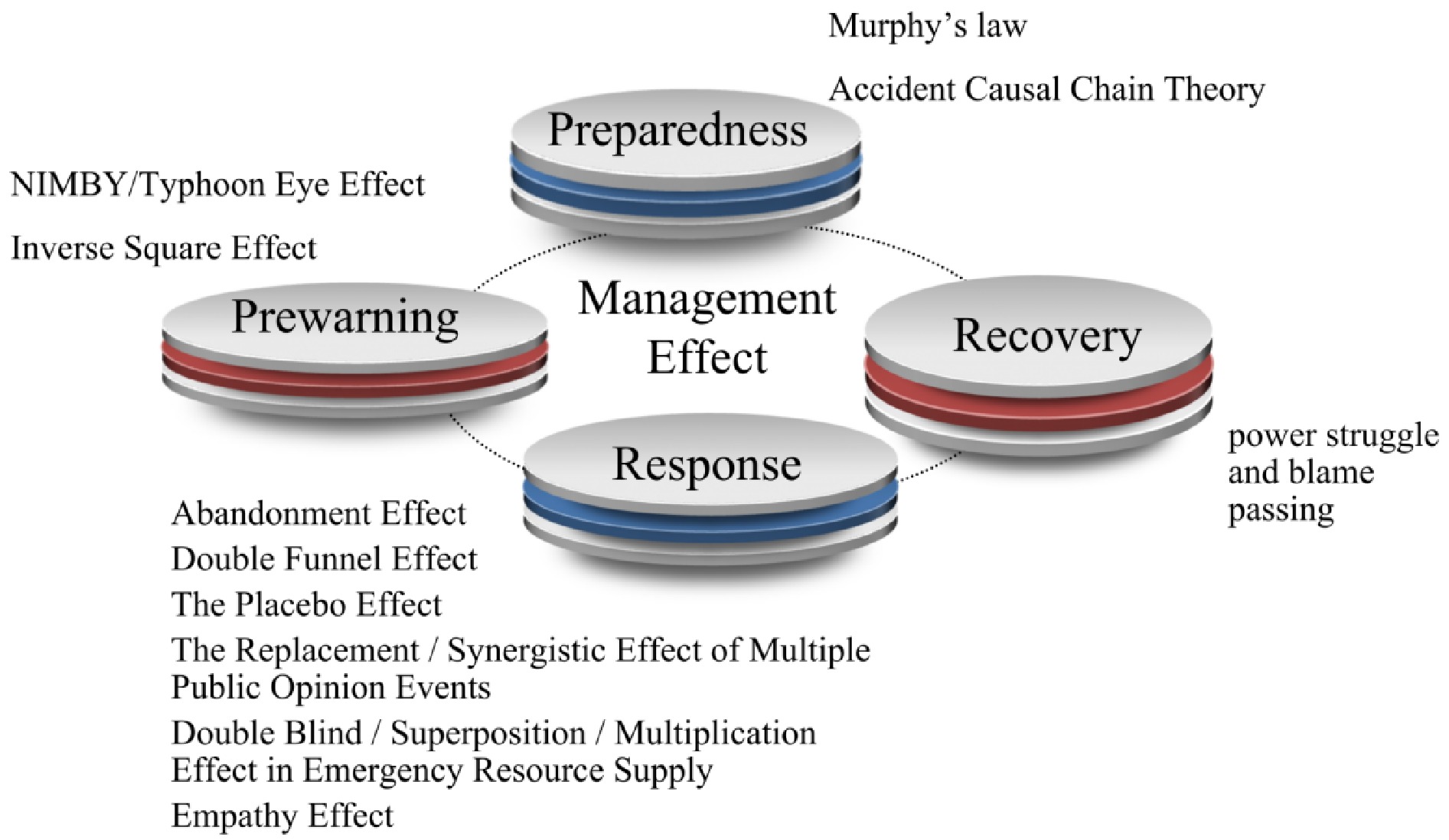
Figure 1.
Management effect in the four stages of emergency management.
In the Prevention and Preparedness phase, examples include Murphy's Law and the Accident Causal Chain Theory. In the Monitoring and Early Warning phase, the Not In My Backyard (NIMBY) Effect and the Inverse Square Effect are observed. During the Emergency Response and Rescue phase, effects such as the Abandonment Effect, Double Funnel Effect, Placebo Effect, the Replacement effect of multiple public opinion events, and the Empathy Effect, are present. Similarly, in the Post-Event Recovery and Reconstruction phase, the Power struggle and blame passing Effect can be observed.
-
Throughout the long history of China's development, numerous insightful philosophical thoughts have emerged. However, most of these ideas merely summarize real-world experiences, lacking an exploration of intrinsic mechanisms and thus remain at the phenomenological level. In contrast, recent studies have emphasized the necessity of understanding the underlying mechanisms of emergency responses, particularly in the context of extreme weather events and their management[10]. For example, the intrinsic mechanism of resource allocation in emergency management, the intrinsic mechanism during the occurrence of disasters and their impact on social resilience[11], as well as the application of information technology to assist managers in real-time monitoring and analyzing the evolution of disasters to effectively facilitate the intrinsic mechanism of emergency response[12].
An intrinsic mechanism can be defined as the inherent principles that underpin the functioning of an individual entity or system, manifesting as one or a series of observable effects. This enables the principles in question to be comprehended, regulated, and deployed. In essence, an intrinsic mechanism represents the internal logic and rules that govern the occurrence of an event. Consequently, intrinsic mechanistic analysis entails a scientific investigation of these internal mechanisms with the objective of discerning developmental patterns. In the context of today's risk society, the significance of examining the intrinsic mechanisms that precipitate sudden events has become increasingly evident, establishing it as a pivotal element of emergency management activities. At its core, emergency management strives to respond to emergencies in a systematic and effective manner. By conducting intrinsic mechanistic analysis of sudden events, it becomes possible to gain deeper insights into their underlying patterns, which in turn facilitates more accurate risk forecasting, more efficient resource allocation, and more informed decision-making. This is crucial for advancing emergency management research and enhancing overall emergency response capabilities.
The analysis of sudden event intrinsic mechanisms is comprised of two principal stages. Initially, the characteristics and patterns exhibited by the event are identified based on their external manifestations. Subsequently, the event is analyzed using the aforementioned characteristics and patterns as a foundation. These stages collectively constitute a comprehensive analytical chain. Specifically, the analysis of sudden event intrinsic mechanisms can be divided into two distinct approaches. The initial approach is the specialized mechanistic analysis, also referred to as industry-specific or domain-specific analysis, which focuses on the 'primary event–sub-event' phases of sudden events. This approach emphasizes the mapping and nesting of uncertain events according to their characteristics, elements, processes, and outcomes. This enables the construction of a procedural analytical model that can be operationally applied in conjunction with real-world environments. The second approach is the general mechanistic analysis, also referred to as management-oriented mechanistic analysis. This approach focuses on four levels: principle layer, theory layer, process layer, and operation layer. Its objective is to investigate the consistent patterns throughout the entire life cycle of sudden events by characterizing their common features. This enables the establishment of a framework applicable to mechanistic analysis. Ultimately, this approach provides theoretical and practical methods for generalized mechanistic analysis of sudden events.
In general, principle-based intrinsic mechanisms are defined as an intuitive understanding of the fundamental information associated with an entity, providing an overview of its characteristics and categories. Theory-based intrinsic mechanisms summarize the patterns observed throughout the entire life cycle of sudden events, elucidating their logical processes and hierarchical structures. Process-based intrinsic mechanisms outline the theoretical logic and optimal strategies that should be followed in handling such events. Lastly, operation-based intrinsic mechanisms represent the practical application of process-based intrinsic mechanisms under specific environmental constraints.
By integrating the four vertical levels of principle-based, theory-based, process-based, and operation-based intrinsic mechanistic analysis with the five horizontal stages of the life cycle theory—incubation, occurrence, evolution, decline, and termination—a comprehensive analytical model for sudden events can be constructed (see Fig. 2). This model is designated the '4L-5S Mechanism Analysis Model'.
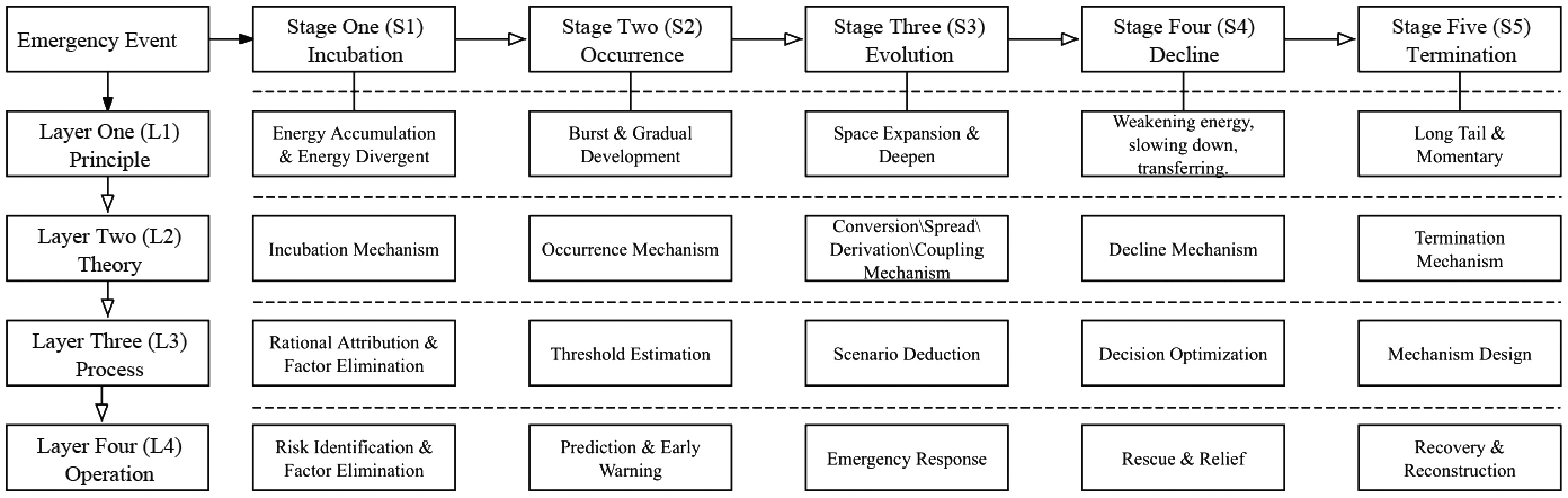
Figure 2.
The '4L-5S' analysis model of emergency management[13].
-
In recent years, emerging risks such as pipeline explosion hazards and new technology risks have continuously surfaced. Coupled with the increasing complexity of risk formation and evolution, these risks exhibit high levels of uncertainty, interconnectedness, and cross-boundary characteristics in their manifestations, occurrence modes, and impact scopes. Therefore, it is essential to conduct comprehensive risk analyses on the nature, attributes, and development trends of these phenomena.
Comprehensive risk analysis refers to a systematic and integrative evaluation of an entity's multi-dimensional and multi-level attributes through methods such as comparison and correlation, building upon mechanistic analysis. Unlike mechanistic analysis, which emphasizes exploring the intrinsic patterns of phenomena, comprehensive risk analysis focuses on assessing risks associated with the various dimensions and attributes of the entity.
At the methodological level, comprehensive risk analysis can be conducted using the Risk Nine-Degree Model—a multi-dimensional risk analysis approach[14]. As shown in Fig. 3, risks can be categorized into nine dimensions: temporal dimensions including periodicity and volatility; spatial dimensions including exposure and concentration; and state dimensions including certainty, saturation, tolerance, mitigation, and endurance. Collectively, these are referred to as the 'the Risk Nine-Degree Model'.

Figure 3.
The Risk Nine-Degree Model.
In practical applications, for various sudden events such as natural disasters and industrial accidents, suitable dimensions can be selected from the Nine-Dimensional Risk Model for comprehensive risk analysis. To ensure that the model remains scientifically robust, flexible, and appropriate across different events, objectives, and analytical needs, Chen et al. constructed an application framework for the Nine-Dimensional Risk Model based on systems theory and the Hall Model[14]. This framework includes two dimensions: the process dimension and the logical dimension. The process dimension comprises three aspects: preliminary analysis, calculation and measurement, and comprehensive evaluation, while the logical dimension corresponds to the nine dimensions of risk.
-
The management mechanism refers to a purposefully designed solution that encompasses principles, models, standards, and processes, with a certain degree of flexibility, and is aimed at achieving specific emergency management goals. It is developed based on the intrinsic mechanisms of relevant entities or events while accounting for real-world constraints.
Mechanism design theory offers valuable insights for the development of management mechanisms in the field of emergency management. Originally conceptualized in the field of economics by Leonid Hurwicz, the theory emerged from the seminal debates on the viability of planned economies. It addresses issues of top-level design and path selection, with notable contributors including Eric S. Maskin and Roger B. Myerson. However, while economic mechanism design is rooted in assumptions of 'free choice' and 'voluntary exchange', emergency management deals with inherently different conditions. The subjects of emergency management are people, and the situations often involve non-routine, crisis scenarios where irrational decision-making and coercion are prevalent. As a result, traditional economic assumptions of rationality, autonomy, and voluntariness do not fully apply. Thus, the design of management mechanisms in the field of emergency management must account for both routine and crisis conditions, while also addressing issues of coercion and constraint.
Current research has made notable strides in this area. For example, Zhang et al. suggest that building multi-channel information facilitation mechanisms can diversify knowledge dissemination while constructing an integrated emergency response information platform can enhance knowledge integration capabilities[15]. Establishing inter-city coordination mechanisms, in turn, promotes knowledge sharing, ultimately improving emergency management performance. Wang & Chen emphasize the potential of blockchain to drive innovation in emergency management systems[16]. Fogli & Guida propose a knowledge-centered design methodology for developing decision support systems that aid emergency managers in planning, coordination, and control during crisis response[17]. Wu et al. analyze the Wanzhou bus collision case following the establishment of China's Ministry of Emergency Management, highlighting the need for improved coordination among departments with newly assigned emergency responsibilities and the importance of interdepartmental relationship management[18].
Despite these advancements, existing studies in the field of emergency management often focus on isolated aspects of management mechanism without considering holistic design objectives. To address this gap, this study proposes a comprehensive design framework for management mechanisms in emergency management, grounded in the 'Seven-Component' and 'Six-Objective' frameworks (see Fig. 4).
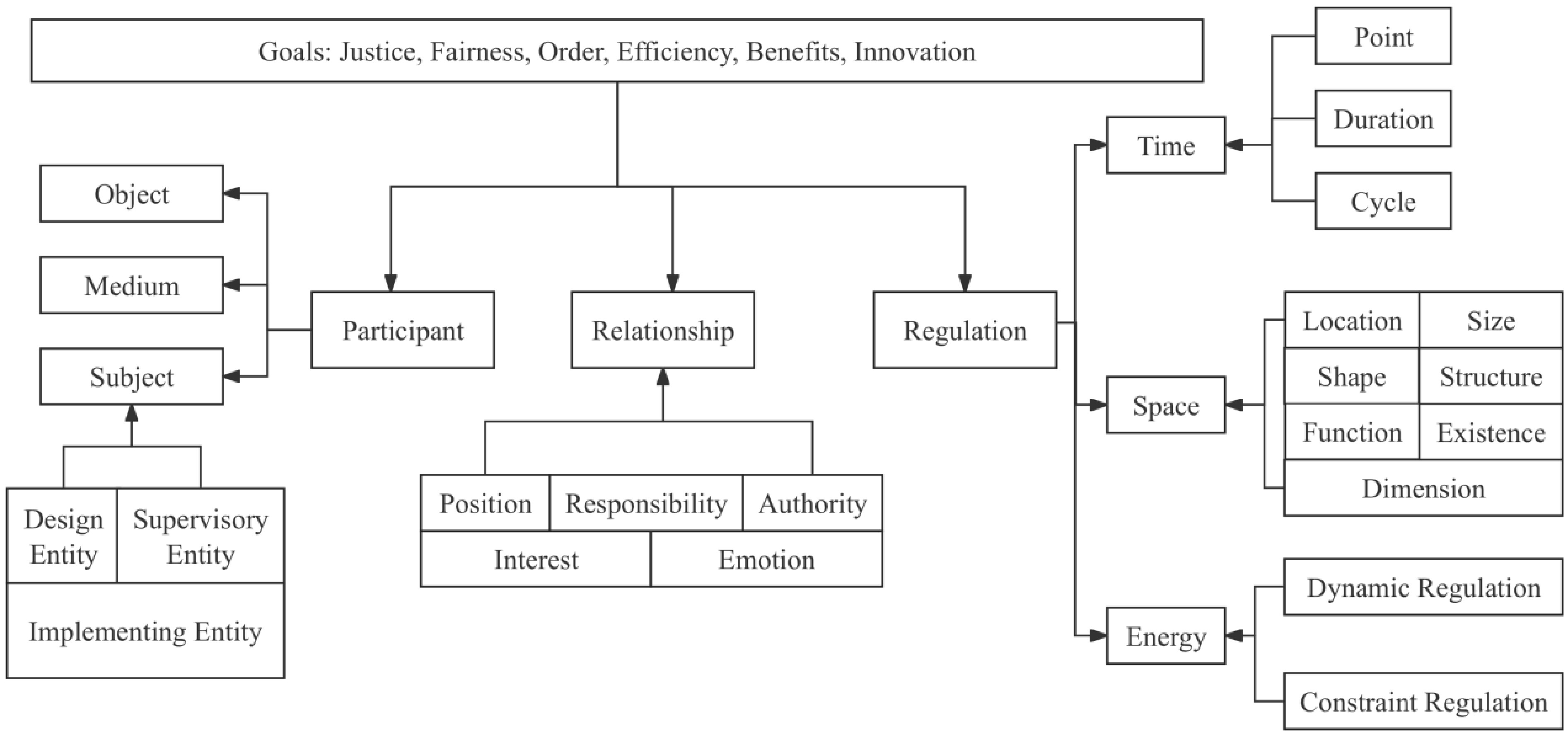
Figure 4.
The 'Seven-Component' and 'Six-Objective' frameworks.
To achieve the six key objectives—fairness, justice, order, efficiency, benefit, and innovation—management mechanism design should be grounded in the 'Seven-Component Framework', which includes: actor, object, medium, relationship, time, space, dynamics, and constraints. These components can be further condensed into three critical dimensions: participants, relationships, and regulations.
Participants consist of the actor, object, and medium elements. Actors hold the primary position and can be categorized into governing, design, implementation, and supervisory entities. Objects are the recipients of the actors' influence within the management mechanism and can exert reciprocal impacts. Mediums function as channels or bridges through which actors influence objects, with the number of mediums directly affecting the efficacy of influence. Relationships determine the status and role of each participant within the management mechanism and are influenced by both subjective factors (e.g., roles, responsibilities, authority, interests, and emotions) and objective factors (e.g., culture, social environment, organizational structure, and development stage). Establishing suitable relationships is critical to maintaining the structural integrity of the management mechanism and ensuring that constraints are properly implemented. Regulations encompass three dimensions: temporal, spatial, and energy regulations. Temporal regulations consider factors such as duration, deadlines, cycles, and sequences, influencing the design and execution of the management mechanism. Spatial regulations take into account attributes such as location, size, and structure. Energy regulations focus on balancing constraints and incentives to optimize the effectiveness of management mechanism.
By synthesizing these three dimensions, the proposed management mechanism design framework offers a scientifically sound and practically viable approach, providing a comprehensive solution for enhancing the effectiveness and robustness of emergency management activities.
-
To further understand the practical application of the E-M-A-M emergency management methodology, we select the '23·7' heavy rainfall in the Beijing-Tianjin-Hebei region as a representative case for analysis. The rationale for choosing this case is twofold.
First, this high-impact event demonstrates significant representativeness. From July 29 to August 1, 2023, the region endured record-breaking rainfall, with Lincheng County receiving 1,003 mm (two years' worth of precipitation) and Wangjiayuan Reservoir in Beijing recording 744.8 mm. The disaster caused 107 fatalities or missing persons, direct economic losses of 165.79 billion yuan, and impacted over 5.5 million people. It also triggered severe flooding, landslides, and debris flows, highlighting its typological relevance.
Second, the case underscores the complexity of large-scale disasters. While the rainfall was driven by Typhoon Doksuri's residual circulation and topographical uplift, it exposed vulnerabilities in disaster prevention, emergency response, and rescue systems, emphasizing the need for enhanced local government resilience and management capabilities.
Course of the disaster
-
From July 29 to August 1, 2023, the Beijing-Tianjin-Hebei region experienced an extreme heavy rainfall event, known as the '23·7' heavy rainfall. This disaster was driven by the northward remnants of Typhoon Doksuri, high-pressure blocking effects, and the orographic lift of the Taihang and Yanshan Mountains. It was characterized by extreme rainfall as the primary hazard, accompanied by various secondary hazards.
The rainfall exhibited high volume, prolonged duration, extreme intensity, and widespread impact. Local precipitation exceeded 600 mm, with the regional average reaching 175 mm—accounting for one-third of the annual mean. Some areas endured continuous rainfall for 83 h, while cities in Hebei recorded unprecedented precipitation over two days. The affected area covered 206,000 km2, and the Haihe River Basin experienced the worst flooding since 1963. To mitigate downstream risks, floodwaters were strategically diverted to Zhuozhou, intensifying local damages.
Secondary geological hazards, such as landslides and debris flows, further exacerbated the disaster's impact. For instance, a landslide in Mentougou District destroyed a railway bridge, highways, and residential buildings, while debris flows in Changping District caused significant damage to infrastructure. Table 1 illustrates the full progression and impact of this disaster.
Table 1. Course of the '23·7' heavy rainfall in the Beijing-Tianjin-Hebei region.
Stage Time Key events Responses Outcomes Incubation July 28 Typhoon Doksuri makes landfall, moisture northward, risk buildup Monitoring, early warnings Risk awareness improved Occurrence July 29–31 Extreme rainfall, floods, orographic effects Real-time monitoring, threshold analysis Severe damage, timely interventions Evolution July 31–August 1 Disaster expansion, landslides, debris flows Evacuation, dynamic assessments Lives saved, worsened property loss Decline August 1–2 Rainfall weakened, disaster stabilized Resource reallocation, intensified rescue Stabilized conditions, reduced risks Termination August 2–9 Recovery, reflections, improvement Infrastructure repair, emergency plan updates Long-term recovery, enhanced readiness Analysis based on the E-M-A-M methodology for emergency management research
E-abandonment effect
-
In the context of emergency rescue, the phenomenon of the 'Abandonment Effect' represents a critical management phenomenon that requires attention within the decision-making process. The term 'Abandonment Effect' is used to describe a situation in which, due to constraints such as time, resources, and capacity, decisions are made by weighing and comparing various factors in order to prioritise certain objectives over others. The objective of this trade-off is to preserve the most critical elements or to allocate the limited resources to the areas deemed the most valuable, with the ultimate goal of achieving overall optimisation.
To facilitate the process of scientific decision-making in such circumstances, it is recommended that abandonment criteria be established. Furthermore, when time allows, data-driven models can be constructed to calculate the optimal decision-making plan based on the available information.
The decision to release floodwaters into Zhuozhou during the '23·7' heavy rainfall in the Beijing-Tianjin-Hebei region is an exemplification of the 'Abandonment Effect'. In light of the dual challenges posed by the expanding impact of extreme rainfall and the limited flood control capacity of the region, the authorities ultimately opted to divert floodwaters into the Zhuozhou area. While this decision alleviated flood pressure in other regions, it had a markedly detrimental impact on Zhuozhou.
As the floodwaters spread, by 10:00 a.m. on 1 August 2023, the majority of Zhuozhou was submerged, with 133,913 residents affected and 146 villages inundated across an area of 225.38 square kilometres. The agricultural sector sustained significant losses, with 9,726 mu (approximately 648 hectares) of farmland affected. Additionally, critical infrastructure was severely damaged. In essence, this exemplification of the 'Abandonment Effect' illustrates a risk-sharing strategy in emergency management, whereby the interests of a particular area are sacrificed to achieve the greatest overall mitigation and prevention of disasters.
M-intrinsic mechanism analysis based on the '4L-5S' model
-
In the context of the '23·7' heavy rainfall in the Beijing-Tianjin-Hebei region, the mechanism analysis is conducted using the '4L-5S' Mechanism Analysis Model, focusing on five distinct stages (see Fig. 5).
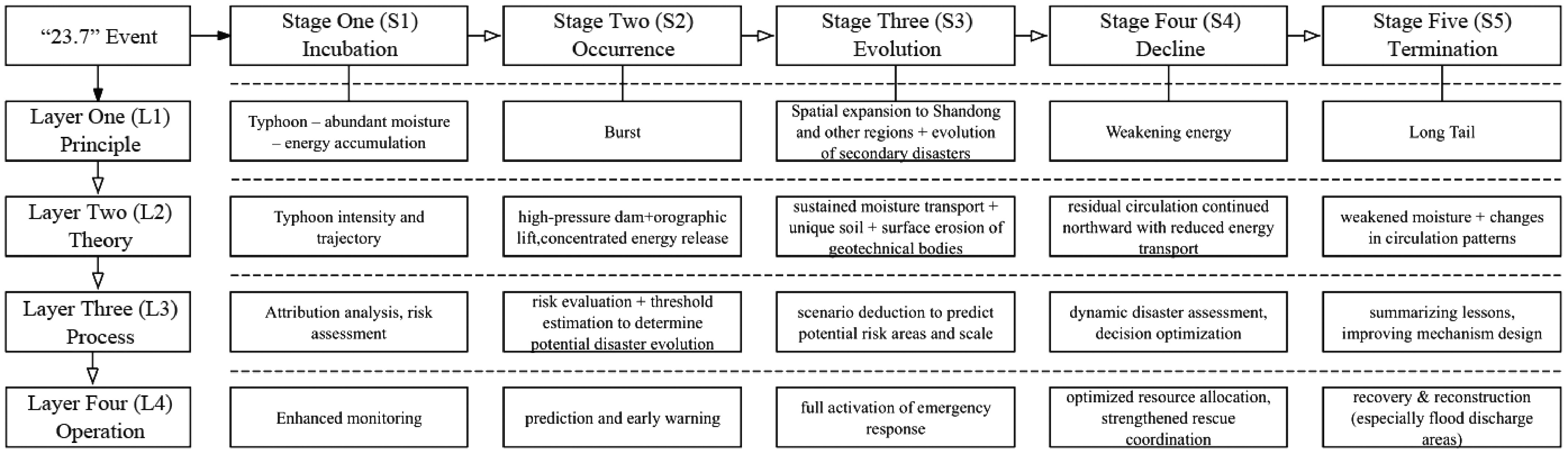
Figure 5.
Intrinsic mechanism analysis of the '23·7' event based on the 4L-5S model.
The incubation stage of the '23·7' heavy rainfall in the Beijing-Tianjin-Hebei region began around 9:55 a.m. on July 28, 2023, when Typhoon Doksuri made landfall along the coast of Jinjiang, Fujian Province. It was the second most powerful typhoon to make landfall in Fujian since 1949, affecting the provinces of Fujian, Zhejiang, Anhui, Jiangxi, and Guangdong. At the principle layer, the typhoon brought abundant moisture, which dispersed northwestward, providing the necessary energy and humidity for the formation of heavy rainfall in the Beijing-Tianjin-Hebei region. At the theory layer, the intensity and trajectory of Typhoon Doksuri were key factors in the gestation of the disaster. The residual circulation moved northward, meeting the 'high-pressure dam' in North China, which caused moisture to stagnate over the region, thereby increasing the potential risk of extreme rainfall. At the process layer, meteorological departments closely monitored the typhoon's path and intensity, conducted preliminary attribution analysis, and performed risk assessments, providing critical data for subsequent disaster response and early warning. At the operational layer, relevant authorities issued warnings for the typhoon's path and potential heavy rainfall, advising localities to prepare and mitigate casualty risks.
The occurrence stage took place between 29 and 31 July, when the Beijing-Tianjin-Hebei region was subjected to an extreme rainfall event. The intrinsic mechanism of occurrence involved the residual circulation of Typhoon Doksuri continuously supplying moisture to North China, which combined with a 'jet stream' at the intersection of the subtropical high-pressure belt. This, in conjunction with interactions with the Yanshan and Taihang Mountains through orographic lifting, resulted in enhanced moisture condensation, thereby precipitating extreme rainfall in local areas. The regional extreme rainfall resulted in the occurrence of widespread flooding and geological disasters. During this period, meteorological departments intensified their monitoring of precipitation and water levels, conducted real-time risk assessments, calculated critical thresholds, assessed the potential evolution of the disaster, and promptly issued warnings.
During the Evolution stage (July 31 to August 1), primary rainfall and secondary disasters intensified and expanded spatially, extending impacts from the Beijing-Tianjin-Hebei region to Shandong and Henan provinces. Landslides and debris flows, particularly in Zhuozhou and Fangshan, were exacerbated by prolonged rainfall and short-term heavy downpours, which destabilized slopes by eroding weathered rock and soil. Loose debris in some areas further heightened susceptibility to such disasters. Scenario simulations integrating rainfall, topography, and infrastructure are crucial for dynamic disaster assessment and risk prediction. Operationally, full emergency response was activated, mobilizing professional and volunteer rescue teams, evacuating high-risk areas, and mitigating secondary disasters.
Fourth is the decline stage. From August 1 to 2, 2023, the intensity of the heavy rainfall gradually diminished, marking the transition to the decline stage of the disaster process. During this period, 'decision optimization' became the primary focus at the process level, involving dynamic disaster assessment and risk management, as well as evaluating prior emergency measures for subsequent actions. At the operational level, the emphasis shifted to optimizing resource allocation and coordinating rescue efforts, particularly in severely affected areas like Zhuozhou.
The termination stage, from August 2 to 9, marked the end of the '23·7' heavy rainfall event. The process layer emphasizes reflection and summary of the disaster response, proposing improvements to emergency plans, management mechanisms, and future strategies for similar disasters. Operational efforts shifted towards post-disaster recovery and reconstruction, including restoring damaged infrastructure and public services and helping affected residents return to normalcy.
In summary, the intrinsic mechanism analysis of the entire process of the '23·7' heavy rainfall provides a comprehensive understanding of the incubation, occurrence, evolution, decline, and termination of the disaster. This analysis aids in providing scientific and systematic guidance for emergency management, helping government agencies enhance their ability to respond to similar future disasters.
A-three-dimensional comprehensive risk analysis
-
Based on the '4L-5S' mechanism analysis, three dimensions—time, space, and energy—are selected from the Risk Nine-Degree Model to conduct a comprehensive risk analysis. This approach aids in forming a holistic understanding of the '23·7' heavy rainfall in the Beijing-Tianjin-Hebei region and provides a scientific basis for future flood prevention and disaster mitigation efforts.
The time dimension of comprehensive risk analysis can be subdivided into periodicity and volatility. The temporal characteristics of the '23·7' heavy rainfall are particularly prominent. From July 29 to August 1, the Beijing-Tianjin-Hebei region experienced a concentrated period of heavy rainfall, with torrential rain lasting for 83 h in Beijing alone. The extreme precipitation over a short duration severely tested the flood control capabilities of local hydraulic infrastructure and the timeliness of emergency response actions, further elevating the risk of geological disasters. This cumulative temporal effect resulted in both heightened disaster risk and a widespread impact area, making the disaster difficult to alleviate in a short period and ultimately exacerbating socio-economic losses.
The spatial dimension of comprehensive risk analysis encompasses exposure and concentration. Geographically, the Beijing-Tianjin-Hebei region, bordered by the Yanshan and Taihang Mountains, is historically prone to extreme rainfall events. In terms of exposure, North China's plain terrain, limited flood control, and complex hydrogeological conditions, coupled with heavy rainfall-induced surface runoff, amplify flooding risks, as seen in Zhuozhou during the '23·7' event. Concentration factors include the 'high-pressure dam' effect from atmospheric systems, which prolonged Typhoon Doksuri's stagnation, and orographic rainfall intensification along mountain fronts. Urban flooding arises from high-density infrastructure and overburdened drainage, while rural areas face 'island effects' due to weaker defenses, highlighting spatial disparities in disaster resilience.
The energy dimension of comprehensive risk analysis involves both energy input and output. On the input side, Typhoon Doksuri carried abundant moisture, and the significant pressure gradient formed between the subtropical high and the typhoon enhanced easterly and southeasterly winds, enabling the northward transport of moisture to the Beijing-Tianjin-Hebei region. Meanwhile, Typhoon Khanun in the western Pacific provided continuous moisture to the North China Plain through strong southeasterly winds, creating dual moisture channels. This anomalously ample moisture input significantly enhanced precipitation in the region. On the output side, blocked by the high-pressure dam and influenced by the topography of the Taihang and Yanshan Mountains, the moisture carried by the typhoon rapidly condensed and released a substantial amount of energy in the form of extreme rainfall. This concentrated release of energy directly led to flooding and triggered secondary disasters, such as flash floods and landslides, expanding the disaster's destructive impact.
In summary, the three-dimensional comprehensive risk analysis of the '23·7' event, which integrates time, space, and energy, effectively highlights the multifaceted complexity of the heavy rainfall disaster. This multi-dimensional analysis provides an effective analytical tool for regional flood control and disaster mitigation, emphasizing the need for governments and relevant organizations to adopt a systematic and multi-perspective approach to emergency management and risk prevention when facing extreme weather events.
M- management mechanism design based on the seven-tuple and six objectives
-
The goal of mechanism analysis and comprehensive risk analysis is to provide a scientific foundation for the design of management mechanisms by deeply exploring development patterns and comprehensively analyzing multi-dimensional attributes. At the operational level, guided by the six objectives of management mechanism design—fairness, justice, order, efficiency, benefit, and innovation—this process integrates considerations from the 'Seven-Component Framework' (actor, object, medium, relationship, time, space, dynamics, and constraints) to develop and enhance flood management mechanism. The aim is to improve the response capacity to extreme rainfall events, effectively reduce socio-economic losses, and promote sustainable development.
First, fairness and justice are primary considerations in the design of flood management mechanisms. In the case of the '23·7' heavy rainfall in the Beijing-Tianjin-Hebei region, the decision to release floodwaters into Zhuozhou was made to minimize overall damages, but it intensified the local disaster impact in that area. Therefore, during long-term recovery and reconstruction, it is crucial to address the economic and social impacts on regions affected by such trade-offs. This also highlights the importance of pre-planning compensation mechanisms when employing measures like flood storage and retention areas to ensure that affected residents and economic activities can recover quickly post-disaster, thereby achieving a fairer and more sustainable disaster response strategy.
Order and efficiency are central objectives in flood management mechanism design. The consequences of a disaster are shaped not only by the nature of the hazard itself but also by the social response process[19]. This demands that decision-makers, in extreme situations like the '23·7' heavy rainfall event, execute rapid emergency responses under the guidance of flood control contingency plans to minimize losses. The case also underscored the importance of interdepartmental coordination. It is essential to clarify hierarchical command structures and establish multi-departmental coordination mechanism, defining specific responsibilities and roles at each level. Leveraging mediums such as information systems is crucial to building an all-encompassing, round-the-clock disaster monitoring and early warning network while enhancing information sharing among departments to reduce misjudgments and delays caused by information asymmetry. Moreover, routine disaster drills can be used to assess the operational efficiency of the designed management mechanisms, ensuring they can be promptly activated during actual disasters.
Flood management mechanisms should integrate short-term and long-term strategies. Short-term efforts prioritize reducing delays between disaster onset, monitoring, early warning, and response. Long-term plans focus on infrastructure restoration, ecological rehabilitation, and socio-economic recovery to enhance disaster resilience. Spatially, management mechanisms must adapt to local conditions: urban areas like Beijing require upgraded drainage systems, while regions near the Taihang and Yanshan Mountains need cross-regional flood prevention systems, tiered regulation, and coordinated reservoir management. Moreover, Beijing-Tianjin-Hebei collaboration should establish an integrated regional management mechanism encompassing flood protection, levee construction, and river management.
Finally, the focus of dynamics and constraints is on providing robust financial and legal support for the operation of flood management mechanisms. A dedicated flood control fund should be established to ensure the availability of financial resources for emergency supplies, infrastructure construction, and post-disaster recovery. Furthermore, comprehensive laws and regulations should be developed to restrict improper behavior and ensure that all entities fulfill their responsibilities during disaster response.
Conclusion
-
Using the E-M-A-M emergency management methodology framework, this paper conducts a comprehensive case analysis of the '23·7' heavy rainfall disaster in the Beijing-Tianjin-Hebei region. In the Management Effect (E) phase, the 'abandonment of insurance effect' helps understand how decision-makers prioritize actions under resource constraints, establishing an overall decision-making framework for disaster response, maximizing regional effectiveness through scientific trade-offs. In the Intrinsic Mechanism Analysis (M) phase, the study of the meteorological and hydrological mechanisms behind Typhoon Doksuri's heavy rainfall identifies the impact paths on flood control systems, aiding in the formulation of more targeted prevention and resource allocation strategies. Building on the results of mechanism analysis, the Comprehensive Risk Analysis (A) further evaluates the dynamic characteristics of the disaster across time, space, and energy dimensions, such as the sustained pressure on flood control systems from cumulative rainfall over time. This dynamic assessment not only tests the rationale behind prioritization decisions but also enables real-time strategy adjustments, forming a continuous logical chain with the previous phases. Finally, Management Mechanism Design (M) provides institutional guarantees for the execution of emergency actions. Through a multi-level collaboration system, the results of management effect description, intrinsic mechanism analysis, and comprehensive risk analysis are translated into executable mechanisms. Mechanism optimization further enhances overall coordination in disaster response.
Management effects anchor decision-making frameworks, intrinsic mechanism analysis deepens understanding of disaster patterns, comprehensive risk analysis facilitates dynamic evaluation and adjustment, and management mechanism design ensures execution. This systematic approach not only summarizes the lessons learned from the case but also offers a structured analytical path and improvement directions for emergency management practices.
In conclusion, the E-M-A-M emergency management methodology, exemplified by the '23·7' heavy rainfall disaster, provides a comprehensive framework for analyzing disaster occurrence and evolution, demonstrating its applicability in emergency management research, and offering strong theoretical support and practical guidance for responding to similar future disasters.
-
Much like Taylor's scientific management theory, which introduced a systematic and scientific management approach to replace experience-based management and ultimately improve labor productivity, the goal of the E-M-A-M emergency management methodology is to enhance the efficiency of emergency management research through the introduction of a scientific and systematic analytical framework. In other words, the E-M-A-M methodology addresses the fragmentation and scattered nature of existing research by emphasizing a systematic understanding of the entire process of disaster occurrence. Through rigorous research design and logical structuring, it provides a comprehensive and structured analytical framework for emergency management, making the research process more scientific and standardized while reducing arbitrary elements (see Fig. 6).
In the E-M-A-M emergency management methodology, 'E' stands for effect analysis, which can also be called phenomenological analysis. This step essentially involves delineating the disaster chain of sudden events, reflecting the researcher's understanding and summarization of such phenomena. However, these visible phenomena are just the 'tip of the iceberg' and require deeper mechanistic analysis—the first 'M'—to reveal the underlying patterns of incubation, occurrence, evolution, decline, and termination of sudden events, providing scientific evidence for both theoretical research and practical applications in emergency management. This analytical process emphasizes adherence to scientific principles, objectively describing and revealing the intrinsic mechanisms of disaster occurrence. Following intrinsic mechanistic analysis, a comprehensive risk analysis is conducted. This stage may employ methods such as risk matrices, the Nine-Dimensional Risk Model, or three-dimensional risk analysis, focusing on integrating risk characteristics from different dimensions—time, space, and energy. The goal is to form a holistic understanding of risks, assisting decision-makers and researchers in forecasting risks, and preparing appropriate emergency responses, including effective resource allocation to mitigate disaster impacts. Ultimately, the purpose of theoretical analysis is to guide practical applications. Therefore, the final step of E-M-A-M is management mechanism design. Particularly in emergency response, management mechanism design is not limited to technology and resource allocation but also includes the scientific design of governance structures, responsibility assignments, and decision-making processes. Based on the analysis of prior phenomena and patterns, managers must consider the six overarching objectives—fairness, justice, order, efficiency, benefit, and innovation—when designing and optimizing management mechanisms. This involves incorporating the 'Seven-Component Framework' (actor, object, medium, time, space, dynamics, and constraints) to develop practical solutions for future emergency management, such as establishing more robust flood control systems, cross-regional early warning frameworks, and long-term plans for post-disaster recovery.
When using the E-M-A-M emergency management methodology, it is important to note three key points.
First, in the E-M-A-M emergency management methodology, the two 'M' components, while both referring to 'Mechanism', serve distinct yet complementary purposes (see Table 2). The first 'M' emphasizes 'Intrinsic Mechanism Analysis', which focuses on uncovering the inherent, objective laws governing the evolution of events. This stage is rooted in value-neutral scientific inquiry, aiming to reveal the natural causality and progression of phenomena, such as meteorological, hydrological, or geological patterns. By contrast, the second 'M' highlights 'Management Mechanism Design', which prioritizes the deliberate, human-centered creation of institutional mechanisms to achieve desired management outcomes. Unlike the first 'M', this stage (Management mechanism design stage) emphasizes subjective initiative, creativity, and value-driven design, translating scientific insights into actionable strategies. The logical connection between the two lies in their sequential and interdependent relationship: the intrinsic mechanism analysis (the first M) provides a foundational understanding of natural processes, enabling scientifically informed decision-making, while the management mechanism design (the second M) operationalizes this understanding to enhance the effectiveness of management practices.
Table 2. The distinction between the two 'M's
Aspect Intrinsic
mechanism analysisManagement
mechanism designObjective Reveal the inherent laws Design intervention measures Nature Objective and neutral Subjective and action-oriented Methodological features Scientific observation and modeling Strategic planning and institutional innovation Application stage Foundation for decision-making Implementation of decision-making Application domain Natural and scientific domains Social and policy domains Core question Explain 'why it happens' Solve 'what should be done' Second, the E-M-A-M emergency management methodology is not limited to flood disasters; it also provides theoretical guidance for various types of sudden events, such as fires and public health emergencies. In complex and variable emergency management contexts, managers can use this systematic framework to enhance the standardization and scientific rigor of research, thereby reducing arbitrariness in decision-making. By designing scientific and standardized management mechanisms, this methodology aims to improve the efficiency of emergency management, ensuring effective responses to sudden events. Third, the E-M-A-M methodology does not require researchers to strictly follow each step in a sequential manner. Instead, it offers an integrated and systematic mindset. In specific scenarios, researchers or practitioners may choose to focus on a single stage in-depth—such as emphasizing intrinsic mechanism analysis for a particular case study or concentrating on the design and improvement of management mechanisms for sudden events. In other words, the E-M-A-M emergency management methodology presented in this paper is a guiding mindset and methodological tool. Each stage can be independently analyzed in depth or integrated into a cohesive research cycle to enhance the scientific and practical effectiveness of management decision-making.
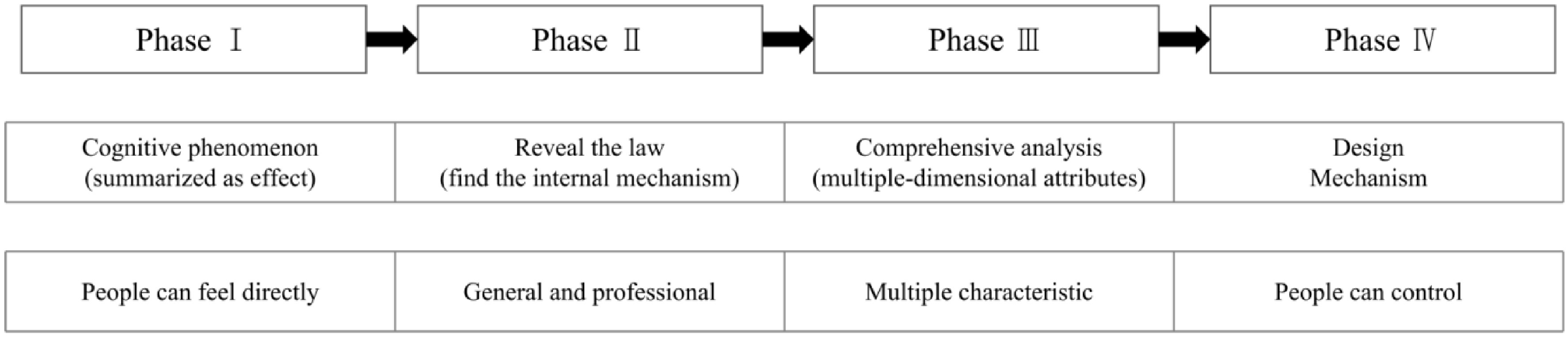
Figure 6.
E-M-A-M emergency management methodology.
In conclusion, the E-M-A-M emergency management methodology proposed in this paper makes a marginal contribution in three key areas: first, by introducing a systematic analytical framework into emergency management research; second, by providing a comprehensive 'phenomenon-intrinsic mechanism-risk' analysis chain that helps researchers and practitioners gain a deeper understanding of the intrinsic logic of disaster occurrence, thereby enhancing the foresight and proactiveness of emergency management; and third, by designing management mechanisms based on the E-M-A-M methodology that provides strong theoretical and practical support for future responses to sudden events, ultimately improving the efficiency and effectiveness of emergency responses. In summary, the E-M-A-M-based approach to emergency management research facilitates the advancement of the field towards greater scientific precision, enhancing the robustness and scientific basis of management mechanisms, and providing theoretical and practical guidance for building a safer and more resilient society.
The research is funded by the National Social Science Fund Key Program of China, 'Research on Governance of Major Technological Risks in the Contemporary Era' (19AZD019).
-
The authors confirm contribution to the paper as follows: study conception and design: Chen S, Chen A; analysis and interpretation of results: Chen S, Chen A; draft manuscript preparation: Chen S. All authors reviewed the results and approved the final version of the manuscript.
-
Data sharing not applicable to this article as no datasets were generated or analyzed during the current study.
-
The authors declare that they have no conflict of interest.
- Copyright: © 2025 by the author(s). Published by Maximum Academic Press on behalf of Nanjing Tech University. This article is an open access article distributed under Creative Commons Attribution License (CC BY 4.0), visit https://creativecommons.org/licenses/by/4.0/.
-
About this article
Cite this article
Chen S, Chen A. 2025. E-M-A-M emergency management methodology and application. Emergency Management Science and Technology 5: e006 doi: 10.48130/emst-0025-0004 

E-M-A-M emergency management methodology and application
- Received: 17 October 2024
- Revised: 15 January 2025
- Accepted: 19 February 2025
- Published online: 21 March 2025
Abstract: As risks grow increasingly complex and the field of emergency management evolves, there is an urgent need for methodological advancements. In response, this study introduces the E-M-A-M emergency management methodology, grounded in systems theory. The methodology follows a structured logical framework: (1) Effect Analysis (E) provides a phenomenological explanation of the observed phenomena; (2) Intrinsic Mechanism Analysis (M) delves into the underlying mechanisms of emergencies; (3) Comprehensive Risk Analysis (A) integrates various dimensions to construct a holistic understanding of the risk landscape; and (4) Management Mechanism Design (M), based on mechanism design theory, offers practical strategies for improving emergency management systems. To illustrate its application, the study employs the '23·7' heavy rainfall in the Beijing-Tianjin-Hebei region as a case study, detailing the operational steps of the E-M-A-M methodology. This research aims to provide a systematic and standardized approach for advancing emergency management studies and addressing real-world challenges.
-
Key words:
- E-M-A-M /
- Methodology /
- Emergency management