-
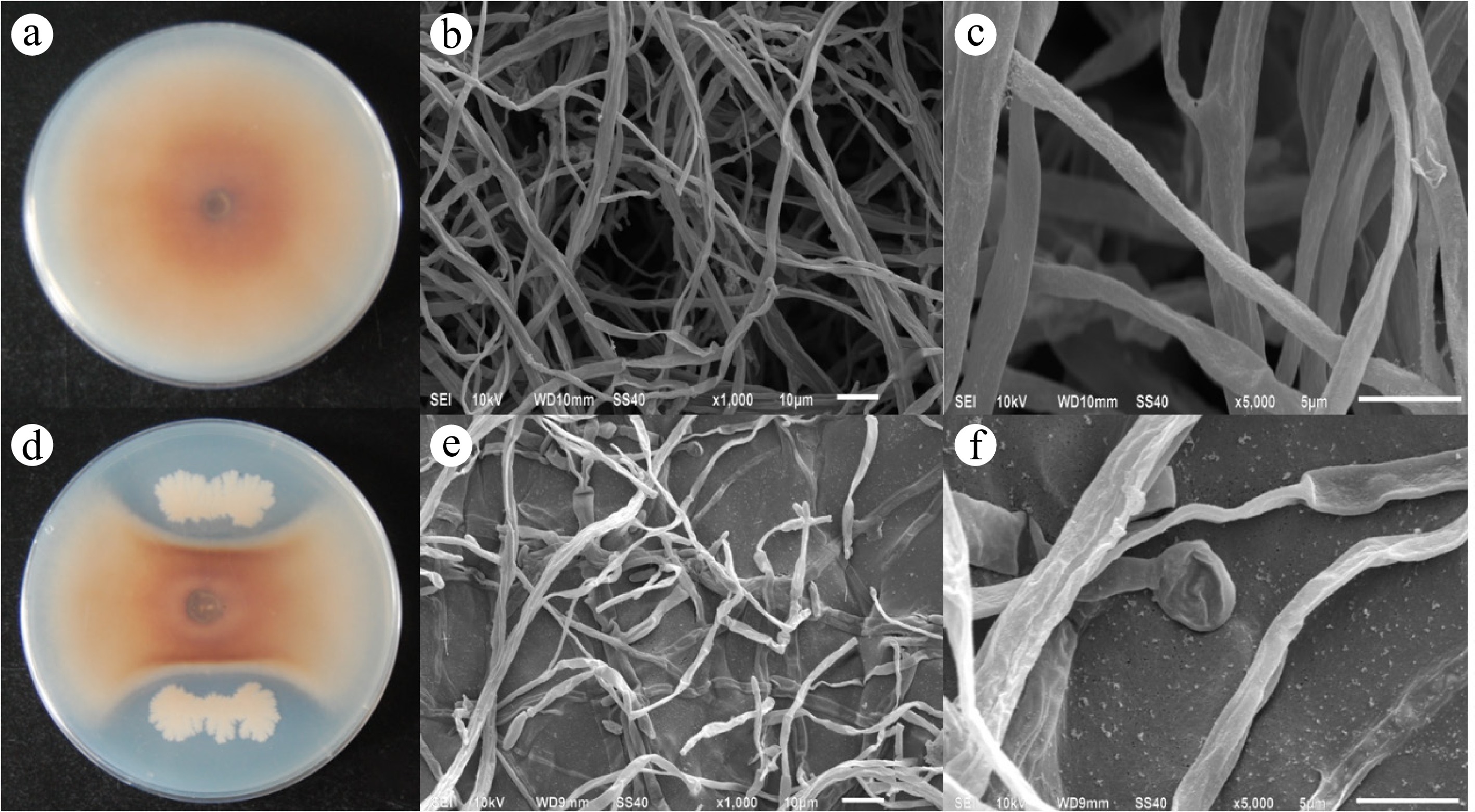
Figure 1.
Antifungal activity of ge28 against C. destructans. (a) Colony of C. destructans after 8 d of culture; (b) C. destructans grown under normal conditions (magnification 1,000×); (c) C. destructans grown under normal conditions exhibiting a smooth hyphae surface and a uniform thickness (magnification 5,000×); (d) the colony of C. destructans treated with ge28 incubated for 8 d; (e) hyphae of the C. destructans, whose growth was inhibited by ge28, exhibiting malformations, distortions, and fractures (magnification 1,000×); (f) Mycelial shrinks significantly and expands into a spherical shape at the end (magnification 5,000×).
-
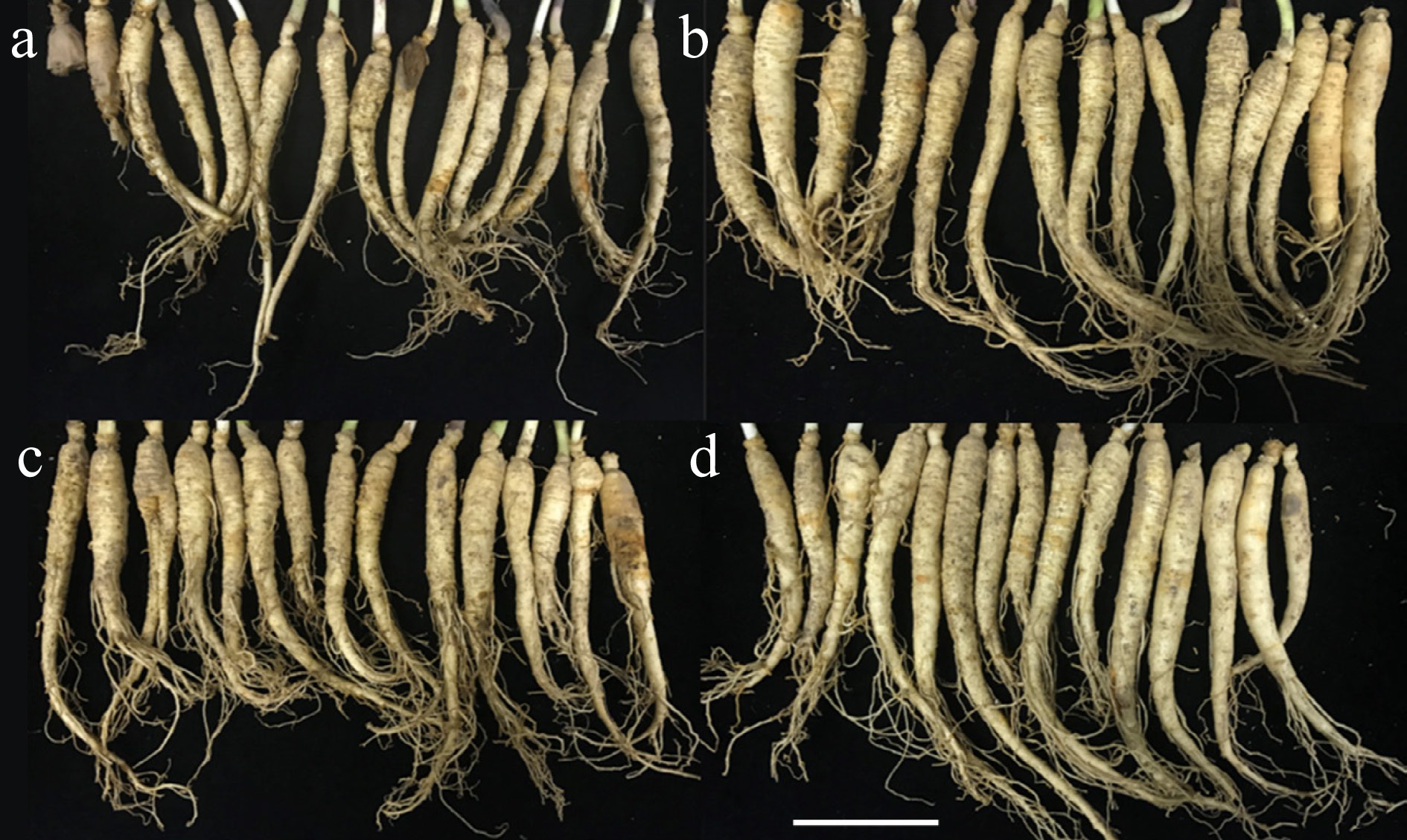
Figure 2.
Rust severity degree in ginseng plants under different ge28 inoculation solution or ge28 suspension treatments. (a) control; (b) ge28 fermentation solution (diluted 10 times); (c) ge28 suspension of 108 cfu/mL; (d) ge28 suspension of 109 cfu/mL.
-
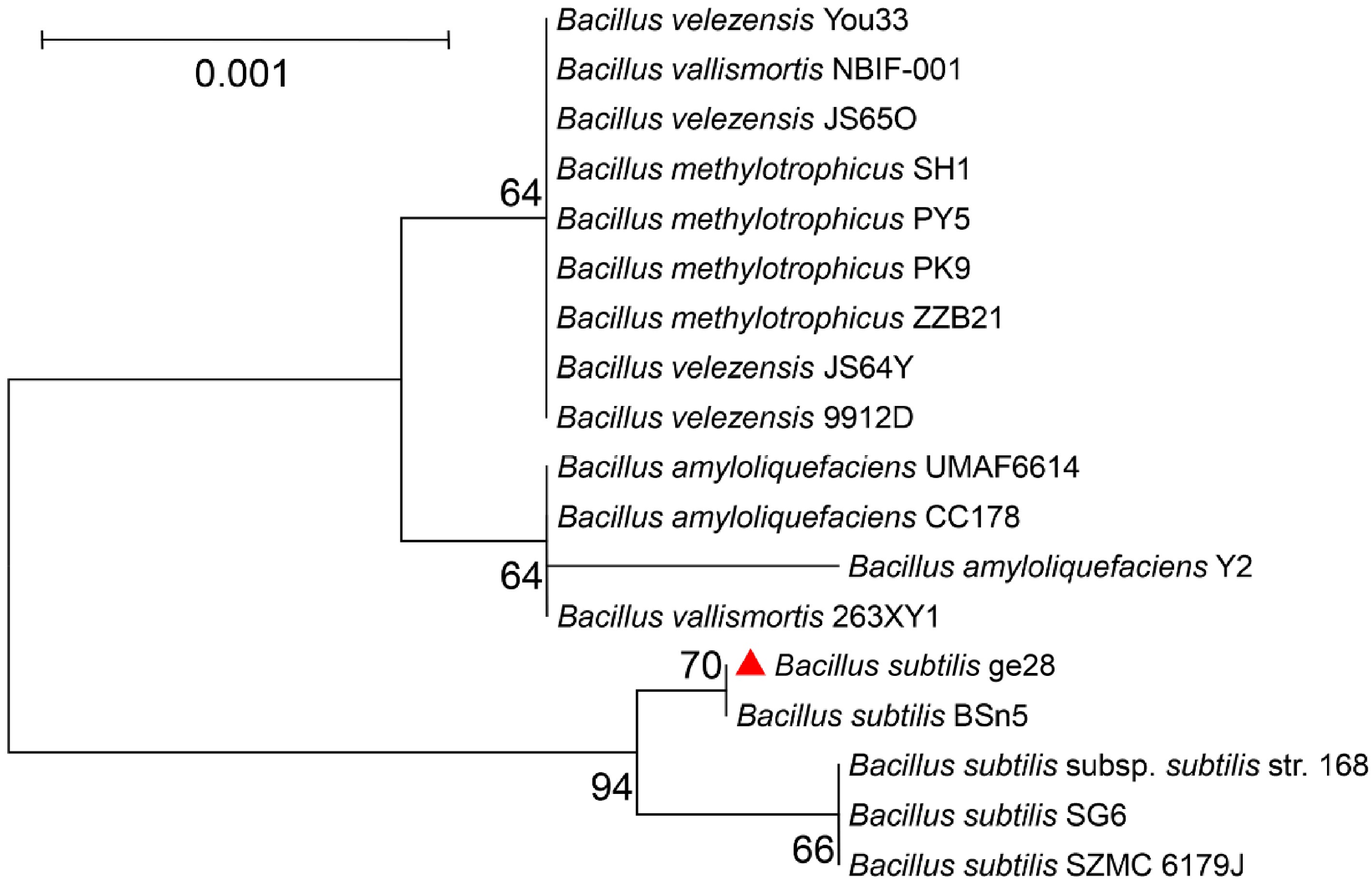
Figure 3.
Neighbor-joining (NJ) phylogenetic tree based on the 16S rRNA gene sequence of species from the genus of Bacillus illustrating their genetic relationships. The bootstrap method (1,000 resamplings) was used to construct the NJ tree. Bootstrap values > 50% are indicated at branch points. The scale bar represents 0.001 substitutions per nucleotide position.
-
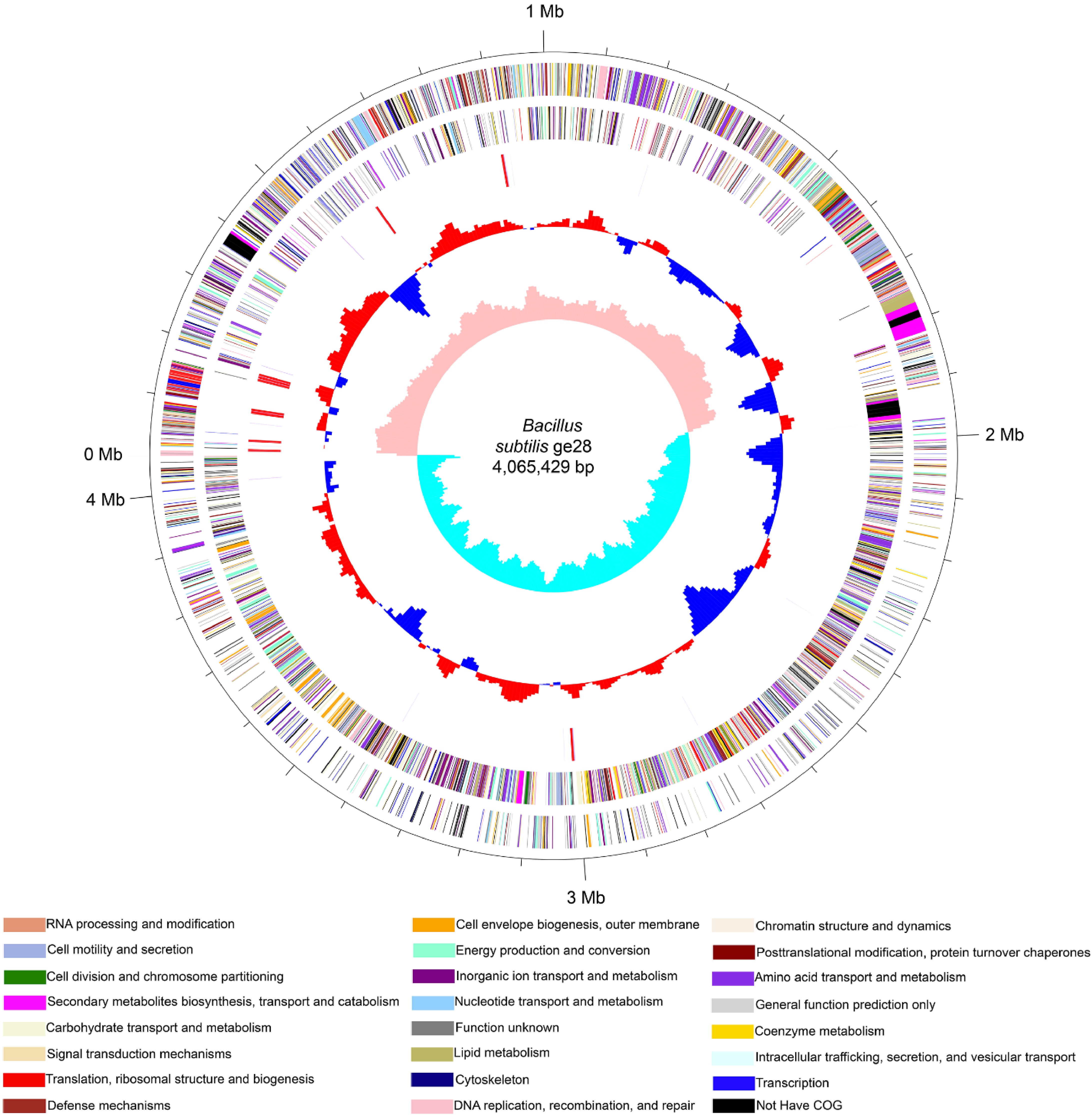
Figure 4.
Circular genome map of B. subtilis ge28. The five circles (outer to inner) represent forward-strand CDSs, reverse-strand CDSs (different colors correspond to different categories in the COG designation of CDSs), rRNA and tRNA, GC content, and GC skew.
-

Figure 5.
NRPS gene clusters involved in the synthesis of three cyclic lipopeptides (surfactin, fengycin, and bacillibactin) in B. subtilis ge28. Red-colored genes represent core biosynthetic genes. The srfAA, srfAB, srfAC, srfAD, fenA, fenB, fenC, fenD, fenE and dhbA, dhbC, dhbE, dhbB, dhbF genes were identified in these NRPS gene clusters.
-

Figure 6.
Influence of lipopeptides on the growth of C. destructans. (a) No antifungal activity was observed for PBS in Oxford cups; (b) C. destructans grown under normal conditions exhibiting smooth hyphae surface and a uniform thickness (magnification 1,000×); (c) C. destructans grown under normal conditions producing a large number of spores (magnification 5,000×); (d) Lipopeptides exhibiting antifungal activity by forming an inhibition zone; (e) hyphae of the C. destructans, whose growth was inhibited by lipopeptide, exhibiting malformations, distortions, and fractures (magnification 1,000×); (f) twisted C. destructans hyphae and only a small amount of C. destructans spores was produced (magnification 5,000×).
-

Figure 7.
Chemical structures of surfactin and fengycin families.
-
Treatment Disease index (%) Biocontrol efficacy (%) CK 46.67 ± 1.33a − ge28 fermentative liquid (10-times dilution) 22.67 ± 2.67c 51.42 ge28 suspensions (108 cfu/mL) 24.00 ± 2.31c 48.58 ge28 suspensions (109 cfu/mL) 34.67 ± 2.67b 25.71 Different lower case letters indicate significant differences at the p < 0.05 level between the treatments and control. Table 1.
Control efficacy on rust rot of P. ginseng in a pot experiment.
Figures
(7)
Tables
(1)