-
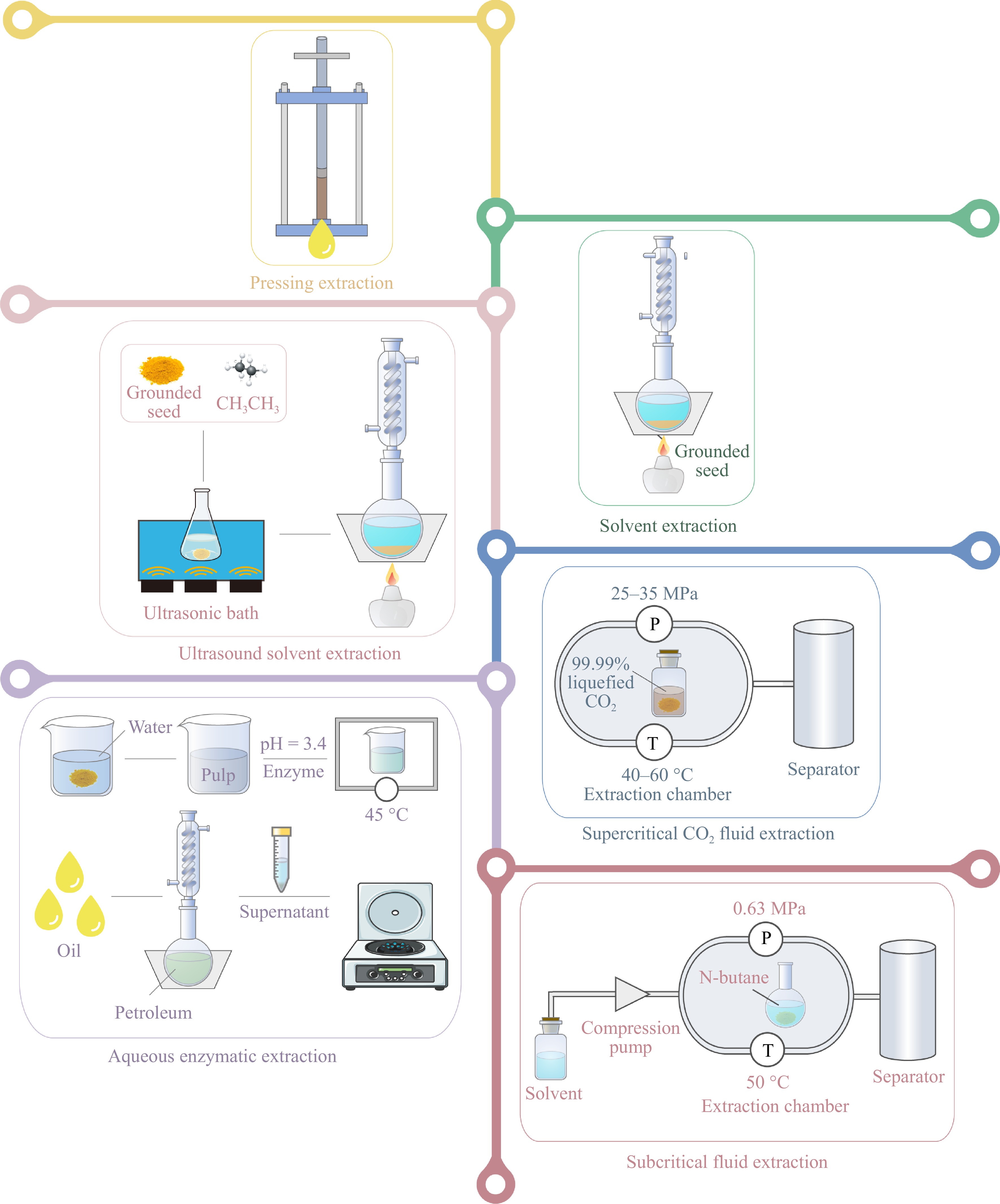
Figure 1.
Extraction method of Lycium seed oil.
-
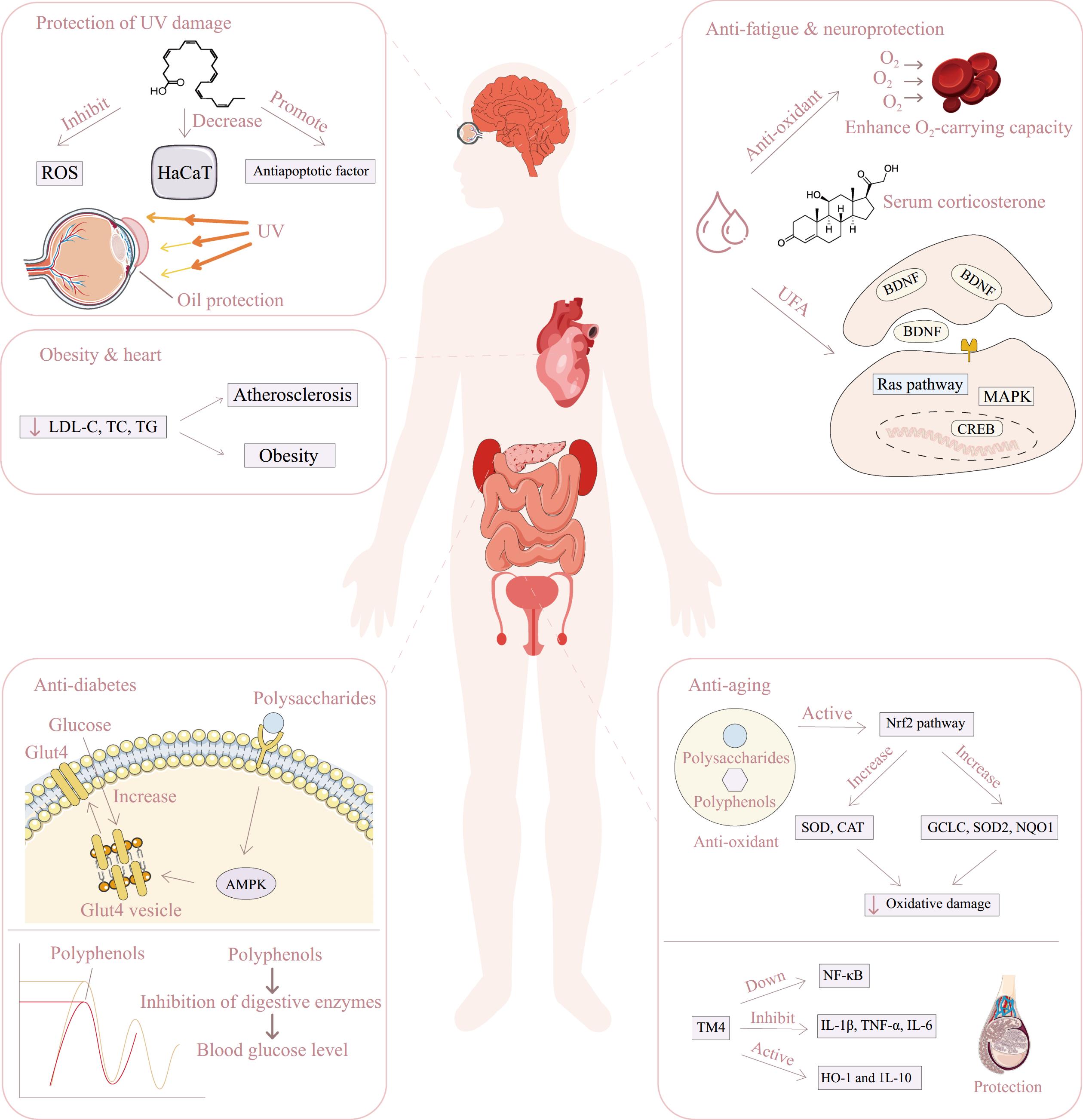
Figure 2.
Biological activities of Lycium seed extracts and potential mechanisms. ROS: Reactive Oxygen Species; HaCaT: Human Keratinocyte; UFA: Unsaturated Fatty Acids; LDL-C: Low-Density Lipoprotein Cholesterol; TC: Total Cholesterol; TG: Triglycerides; Glut4: Glucose Transporter Type 4; AMPK: AMP-activated Protein Kinase; Nrf2: Nuclear Factor Erythroid 2–Related Factor 2; SOD: Superoxide Dismutase; CAT: Catalase; GCLC: Glutamate-Cysteine Ligase Catalytic Subunit; SOD2: Superoxide Dismutase 2; NQO1: NAD(P)H Quinone Dehydrogenase 1; NF-κB: Nuclear Factor kappa-light-chain-enhancer of activated B cells; IL-1β: Interleukin 1 beta; TNF-α: Tumor Necrosis Factor alpha; IL-6: Interleukin 6; HO-1: Heme Oxygenase 1; IL-10: Interleukin 10; CREB: cAMP Response Element-Binding Protein; BDNF: Brain-Derived Neurotrophic Factor; MAPK: Mitogen-Activated Protein Kinase.
-
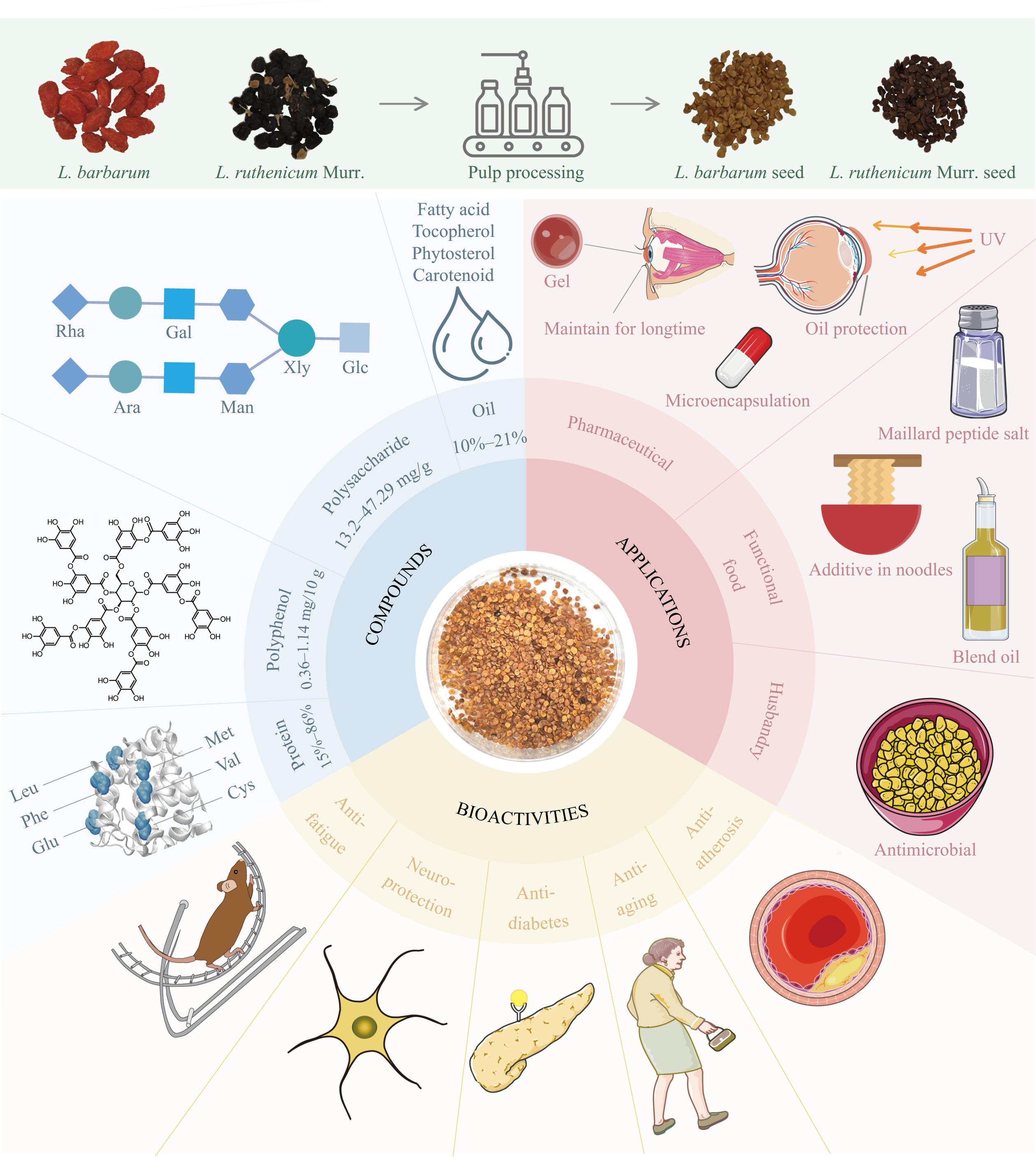
Figure 3.
The summary of composition, biological activity, and application of Lycium seeds. Rha – Rhamnose; Gal – Galactose; Xyl – Xylose; Glc – Glucose; Ara – Arabinose; Man – Mannose; Leu – Leucine; Phe – Phenylalanine; Glu - Glutamic acid; Met – Methionine; Val – Valine; Cys – Cysteine; UV - Ultraviolet.
-
Extraction method Extraction conditions Main composition of the oil Yield (%) Material Ref. Pressing extraction Use a screw-press oil expeller to press seeds below 60 °C, then purifying through centrifugation at 4,000 rpm for 15 min. C18:2, C18:1, C16, C18, C18:3 10.5−12.5 L. barbarum [15] Use a centrifugal oil extractor to press the pretreated powder seeds for 2 h and then filtrating. C18:2, C18:1, C16, C18 12.63 L. ruthenicum Murr. [17] Use a screw-press oil expeller to press seeds at 150 °C, then purifying through centrifugation at 4,000 rpm for 15 min. C18:2, C18:1, C16, C18:3, C18 11.0−13.0 L. barbarum [15] Solvent extraction Extract with hexane for 30 min, then evaporating under vacuum at 45 °C. C18:2, C18:1, C16, C18, C18:3 12.0−15.0 L. barbarum [15] Extract with n-hexane using a Soxhlet extractor for 6 h, then evaporating under reduced pressure at 40 °C. C18:2, C16:1, C22:1, C14, C18:1 20 ± 3 L. intricatum Boiss. [6] Extract with n-hexane using a Soxhlet extractor at 40−60 °C for 4 h, then evaporating under vacuum at 70 °C. C18:2, C18:1, C16, C18, C18:3 16.25 L. ruthenicum Murr. [17] Ultrasound-assisted extraction Extract with hexane for 30 min in an ultrasonic bath with 750 W and 40 kHz and repeat twice, evaporating under vacuum at 70 °C. C18:2, C18:1, C16, C18:3, C18 14.0−16.0 L. barbarum [15] Supercritical CO2 fluid extraction Extract with 99.99% CO2 with a flow rate of 1 L/min at 35 MPa and 40 °C for 90 min. C18:2, C18:1, C16, C18:3, C18 10.0−12.0 L. barbarum [15] Extract with CO2 with a flow rate of 30 g/min at 250 bar and 60 °C for 2 h, with the use of co-solvent 2% ethanol. C18:2, C18:1, C18:3 17.0 ± 0.67
(without cosolvent),
15.2 ± 0.42
(with cosolvent)L. barbarum [13] Extract with CO2 with a flow rate of 25 kg/h at 30 MPa and 45 °C for 60 min. C18:2, C18:1, C16, C18, C20:6 19.28 L. barbarum [19] Extract with CO2 with at 35 MPa and 40 °C for 90 min. C18:2, C18:1, C18:3, C16, C20 8.56 L. ruthenicum Murr. [9] Extract with CO2 with a flow rate of 80 L/h at 26 MPa and 55 °C for 60 min. C18:2, C18:1, C16, C18 19.76 L. ruthenicum Murr. [17] Subcritical fluid extraction Extract with n-butane in the form of subcritical fluid at 0.63 MPa at 50 °C for 48 min. C18:2, C18:1, C16, C18, C18:3 21.20 L. ruthenicum Murr. [17] Aqueous enzymatic extraction Enzymatic hydrolysis at pH 3.4 and 45 °C using Viscozyme L, centrifuge the obtained solution at 5,000 rpm for 30 min. Add petroleum ether to the supernatant to extract the oil, followed with rotary evaporation. — 87.6 L. barbarum [20] Table 1.
Summary of extracted methods of Lycium seed oil.
-
Material Extraction method C18:2 (%) C18:1 (%) C16 (%) C18:3 (%) C18 (%) SFA (%) UFA (%) Ref. L. barbarum PE 65.8−65.95 20.11−20.42 6.28−6.63 2.61−2.90 3.36−3.7 9.65−10.15 89.85−90.35 [15] SE 65.24 19.76 7.03 2.75 3.99 11.08 88.92 USE 65.82 20.23 6.4 2.83 3.39 9.92 90.08 SCFE 60.32−67.36 15.64−22.12 3.26−7.68 1.16−4.55 2.87−4.89 8.15−13.61 84.21−91.85 [13,15,19,121] L. ruthenicum Murr. PE 73.53 18.81 3.89 0.75 1.10 — > 92% [17] SE 68.31−72.06 17.76−19.3 4.22−5.37 1.37−4.77 1.12−2.58 8.91 91.10 [17,85] SCFE 73.31−74.56 11.82−19.55 3.93−4.88 0.55−6.6 1.22−1.4 6.70 93.31 [9,17] SFE 73.36 18.7 4.09 0.92 1.17 5.26 92.98 [17] L. dasystemnm PE 63.05 21.13 1.49 2.82 3.5 > 9.52 > 86.19 [14] SCFE 67.19 18.17 6.24 0.83 3.12 > 5.56 > 87.00 L. intricatum Boiss. SE 49.47 2.99 0.63 — — 5.93 94.04 [6] FAs: fatty acids; SFA: saturated fatty acids; UFA: unsaturated fatty acids; PE: pressing extraction; SE: solvent extraction; USE: ultrasound-assisted solvent extraction; SCFE: supercritical CO2 fluid extraction; SFE: supercritical fluid extraction. Table 2.
The relative content of fatty acids (FA) in Lycium seed oil under different extraction methods.
-
Compound Method Yield Material Ref. Polyphenol 60% ethanol and Scientz-IID ultrasonic cell disrupter for 30 min, followed by centrifugation at 5,000 rpm for 10 min. 2.23 ± 0.93 to 3.37 ± 1.33 mg GAE/g L. ruthenicum Murr. [27] 1.35 ± 0.29 mg GAE/g L. barbarum (big) 1.19 ± 0.55 mg GAE/g L. barbarum (small) Extraction using a 500 mg Sepax Generik Diol column with methanol, hexane, ethyl acetate, and Folin-Ciocalteu reagent for 2 h. HP: 113.87 ± 4.04 mg/kg L. barbarum [15] SFE: 65.89 ± 1.39 mg/kg CP: 79.19 ± 2.93 mg/kg SE: 35.65 ± 0.42 mg/kg USE: 40.47 ± 1.95 mg/kg Extract with 99.99% CO2 with a flow rate of 1 L/min at 35 MPa and
40 ºC for 90 min.5.97 ± 0.10 to 10.21 ± 0.55 mg/100 g L. ruthenicum Murr. [9] Reflux extraction with 95% ethanol for 1.5 h. ~26.7 mg/g L. barbarum [26] Total flavonoid Ultrasonicated three times with 95% ethanol. ~5.8 mg/g L. barbarum [26] 60% ethanol and Scientz-IID ultrasonic cell disrupter for 30 min, followed by centrifuge at 5,000 rpm for 10 min. 2.37 ± 0.91 to 1.79 ± 1.30 mg CAE/g L. ruthenicum Murr. [27] 1.18 ± 0.07 mg CAE/g L. barbarum (big) 0.62 ± 0.20 mg CAE/g L. barbarum (small) Polysaccharide Ether and 80% ethanol, by Soxhlet reflux method for 1 h Seed: ~28.4 mg/g L. barbarum [26] Seed dreg: ~13.2 mg/g [26] HBSS extraction with 0.05 mol/L CH3COONa at 70 ºC, pH 5.2, for 1 h. ~41.06 mg/g Rha 15.34% L. barbarum [8] Xly 64.63% Ara 4.48% Gal 9.35% Man 4.87% Glc 1.75% CHSS extraction with 0.05 mol/L (NH4)2C2O4, CH3COONa, and EDTA-2Na at 70 ºC, pH 5.2, for 1 h. ~23.04 mg/g Rha 12.59% Xly 70.00% Ara 4.68% Gal 9.93% Man 1.49% Glc 1.31% DASS extraction with 0.05 mol/L NaOH and 20 mmol/L NaBH4 at 70 ºC for 1 h. ~36.24 mg/g Rha 9.39% Xly 44.71% Ara 2.84% Gal 6.27% Man 35.04% Glc 1.76% CASS extraction with 5 mol/L NaOH and 20 mmol/L NaBH4 at 4 ºC for
2 h, then centrifuged at 7,155 rpm for 15 min.~47.29 mg/g Rha 17.23% Xly 66.67% Ara 4.55% Gal 9.75% Man 0.68% Glc 1.11% — 46.50% L. barbarum [15] Protein Isolated protein extraction at 40 ºC, pH 9−9.5, for 2 h with a ratio of 1:12, followed by pH adjustment to 4.5 and centrifugation at 3,000 rpm for 10 min. 85.67% L. barbarum [11] Seed protein extraction at 40 ºC, pH 9−9.5, for 2 h with a ratio of 1:12, then pH adjustment to 4.5 for 10 min. 22.13% L. barbarum [11] Alkali extraction and acid deposition. 15% — [12] α-tocopherol Extract with n-butane in the form of subcritical fluid at 0.63 MPa at
50 ºC for 48 min.10.84 ± 0.42 to 21.35 ± 1.64 mg/100 g L. ruthenicum Murr. [17] HP with 150 ºC; Centrifugal condition: 4,000 rpm for 15 min. 36.18 ± 0.38 mg/kg L. barbarum, [15] CP with below 60 ºC; Centrifugal condition: 4,000 rpm for 15 min. 33.49 ± 0.75 mg/kg SE: Extract with hexane for 30 min, then evaporating under vacuum at 45 ºC. 31.99 ± 1.27 mg/kg USE: Extract with hexane for 30 min in an ultrasonic bath with 750 W and 40 kHz and repeat twice, evaporating under vacuum at 70 ºC. 32.88 ± 0.70 mg/kg SCFE: Extract with 99.99% CO2 with a flow rate of 1 L/min at 35 MPa and 40 ºC for 90 min. 27.17 ± 1.02 mg/kg γ-tocopherol Extract with n-butane in the form of subcritical fluid at 0.63 MPa at
50 ºC for 48 min.2.22 ± 0.11 to 9.22 ± 0.59 mg/100 g L. ruthenicum Murr. [17] HP with 150 ºC; Centrifugal condition: 4,000 rpm for 15 min. 452.31 ± 5.54 mg/kg L. barbarum [15] CP with below 60 ºC; Centrifugal condition: 4,000 rpm for 15 min. 380.80 ± 1.18 mg/kg SE: Extract with hexane for 30 min, then evaporating under vacuum at 45 ºC. 384.19 ± 0.32 mg/kg USE: Extract with hexane for 30 min in an ultrasonic bath with 750 W and 40 kHz and repeat twice, evaporating under vacuum at 70 ºC. 385.73 ± 0.59 mg/kg SCFE: Extract with 99.99% CO2 with a flow rate of 1 L/min at 35 MPa and 40 ºC for 90 min. 265.48 ± 0.79 mg/kg Carotenoid Extract with n-butane in the form of subcritical fluid at 0.63 MPa at
50 ºC for 48 min.35.75 ± 3.66 to 49.61 ± 3.18 mg/100 g L. ruthenicum Murr. [17] HP with 150 ºC; Centrifugal condition: 4,000 rpm for 15 min. 43.57 ± 0.20 mg/kg L. barbarum [15] CP with below 60 ºC; Centrifugal condition: 4,000 rpm for 15 min. 33.71 ± 0.39 mg/kg SE: Extract with hexane for 30 min, then evaporating under vacuum at 45 ºC. 41.51 ± 0.10 mg/kg USE: Extract with hexane for 30 min in an ultrasonic bath with 750 W and 40 kHz and repeat twice, evaporating under vacuum at 70 ºC. 46.16 ± 0.15 mg/kg SCFE: Extract with 99.99% CO2 with a flow rate of 1 L/min at 35 MPa and 40 ºC for 90 min. 4.17 ± 0.05 mg/kg Stigmasterol HP with 150 ºC; Centrifugal condition: 4,000 rpm for 15 min. 826.97 ± 55.53 mg/kg L. ruthenicum Murr. [15] CP with below 60 ºC; Centrifugal condition: 4,000 rpm for 15 min. 778.40 ± 14.98 mg/kg SE: Extract with hexane for 30 min, then evaporating under vacuum at 45 ºC. 872.17 ± 53.48 mg/kg USE: Extract with hexane for 30 min in an ultrasonic bath with 750 W and 40 kHz and repeat twice, evaporating under vacuum at 70 ºC. 894.27 ± 50.52 mg/kg SCFE: Extract with 99.99% CO2 with a flow rate of 1 L/min at 35 MPa and 40 ºC for 90 min. 671.15 ± 17.93 mg/kg Solvent extraction with n-hexane, chloroform, and petroleum ether for 6 h at 40 ºC. ~18.56 mg/100 g L. intricatum [6] Extract with CO2 with at 35 MPa and 40 ºC for 90 min. 3.34 ± 0.03 mg/100 g L. ruthenicum Murr. [9] ß-Sitosterol HP with 150 ºC; Centrifugal condition: 4,000 rpm for 15 min. 1,901.48 ± 15.18 mg/kg L. ruthenicum Murr. [15] CP with below 60 ºC; Centrifugal condition: 4,000 rpm for 15 min. 1,965.72 ± 45.97 mg/kg SE: Extract with hexane for 30 min, then evaporating under vacuum at 45 ºC. 1,940.95 ± 29.62 mg/kg USE: Extract with hexane for 30 min in an ultrasonic bath with 750 W and 40 kHz and repeat twice, evaporating under vacuum at 70 ºC. 2,062.34 ± 9.40 mg/kg SCFE: Extract with 99.99% CO2 with a flow rate of 1 L/min at 35 MPa and 40 ºC for 90 min. 1,843.27 ± 39.05 mg/kg Solvent extraction with n-hexane, chloroform, and petroleum ether for 6 h at 40 ºC. ~13.04 mg/100 g L. intricatum [6] Extract with CO2 with at 35 MPa and 40 ºC for 90 min. 38.50 ± 0.09 mg/100 g L. ruthenicum Murr. [9] HP, hot pressing extraction; CP, cold pressing extraction; SE, solvent extraction; USE, ultrasound-assisted solvent extraction; SCFE, supercritical CO2 fluid extraction; Rha, rhamnose; Xly, xylose; Ara, arabinose; Gal, galactose; Man, mannose; Glc, glucose. Table 3.
Summary of the active compounds of Lycium seeds.
-
Bioactivity Method Result Mechanism Ref. Anti-fatigue Low dose (10 mg/kg body weight (BW)), Medium dose (20 mg/kg BW), High dose (40 mg/kg BW ) for 3 weeks. Significantly extended swimming time and survival time under hypoxia. Enhance blood oxygen capacity and antioxidant ability [58] Anti-fatigue LBSO (2.5, 5.0, 10.0 mg/kg BW) and fluoxetine (20 mg/kg BW) were administered daily. CUS modeling for 28 d. LBSO improved behavior in CUS mice, increasing horizontal crossing and decreasing immobility in tail suspension and forced swimming tests. Reduce serum corticosterone levels and promote hippocampal CREB-BDNF pathway [59] Anti-diabetes Low dose (2.5 mg/kg BW), medium dose (5 mg/kg BW), high dose (10 mg/kg BW) after a high-fat diet for 4 weeks. Improved antioxidant capacity and reduced blood glucose levels in T2D mice. Antioxidant capacity [69] Anti-diabetes C57BL/6J mice diabetes induced by streptozotocin injection (70 mg/kg BW). LBSO (5, 10 mg/kg BW) and metformin (300 mg/kg BW) groups were administered daily for 5 weeks. Reduced blood glucose, urine glucose, and renal tissue IL-8 in diabetic mice. Decreased blood glucose and urine protein quantity [71] Neuroprotection SD rats underwent common carotid artery ligation surgery. Five groups: sham-operated, model, and three LBSO dose groups (80, 40, 20 mg/kg BW). LBSO increased T-AOC activity and decreased MDA levels. Cognitive function improved significantly in rats, as shown by Morris water maze tests. Inhibition of acetylcholinesterase activity and antioxidants [77] Neuroprotection LBSO was administered at low, medium, and high doses (2.5, 5.0, 10.0 mg/kg BW) by gavage for 35 d. LBSO significantly improved cognitive function in CUS mice, reducing escape latency and increasing platform crossings in memory tests. Inhibition of acetylcholinesterase activity and antioxidants [59] Anti-aging The LBSO group received an additional daily dose of 1,000 mg/kg BW for 4 weeks. LBSO treatment increased INHB and testosterone levels. In vitro, LBSO upregulated SIRT3, HO-1, and SOD expression, enhancing cell proliferation. SIRT3 overexpression also increased AMPK and PGC-1α levels. Protective effects against oxidative damage and improved reproductive hormone levels [90] Anti-aging LBSO was administered in low (1,000 mg/kg BW), medium (1,750 mg/kg BW), and high (2,500 mg/kg BW) doses along with D-gal (125 mg/kg BW) for 8 weeks to establish a subacute aging model in rats. LBSO significantly increased the expression of Nrf2 pathway proteins and its downstream targets (GCLC, SOD2, NQO1) in the testes of subacute aging rats. Protective effects against oxidative damage and improved reproductive hormone levels [92] Anti-atherosclerosis Low dose group (LLSO, gavage with 1 mg/kg BW) and the high dose group (HLSO, gavage with 2 mg/kg BW) for 56 d. Decreased LDL-C, TC, and TG in serum, increased HDL-C in plasma. Blood lipid reduction [95] Lipid Metabolism Five groups (normal diet, high-fat diet, 10% insoluble dietary fiber, 10% low carboxylation degree of substitution (DS), 10% high carboxylation DS) for 8 weeks. Insoluble dietary fiber inhibited weight gain and reduced lipid levels in hyperlipidemic mice. It also improved liver function, reduced inflammation, and increased short-chain fatty acid (SCFA) levels, promoting cholesterol reduction through gut microbiota changes. IDF can improve gut function in hyperlipidemic mice by increasing SCFAs synthesis, thereby controlling lipid metabolism and preventing lipid accumulation in the body. [97] Photoprotection HaCaT cells were treated with different concentrations of LBSO (75, 150, 300, 600 mg/kg BW) and exposed to UVB (40 mJ/cm²). Cells were incubated for 24 h post-irradiation. LBSO increased the survival rate of UVB-damaged cells, promoted Bcl-2 expression, inhibited ROS generation, reduced apoptosis, and lowered levels of pro-apoptotic factors and inflammatory markers (TNF-α, IL1β, IL-6). LBSO alleviated UVB-induced photodamage by regulating apoptosis and reducing inflammation through increased Bcl-2 and decreased Bax, Caspase-3, and inflammatory markers. [98] Table 4.
Summary of Lycium seed bioactivity.
Figures
(3)
Tables
(4)