-
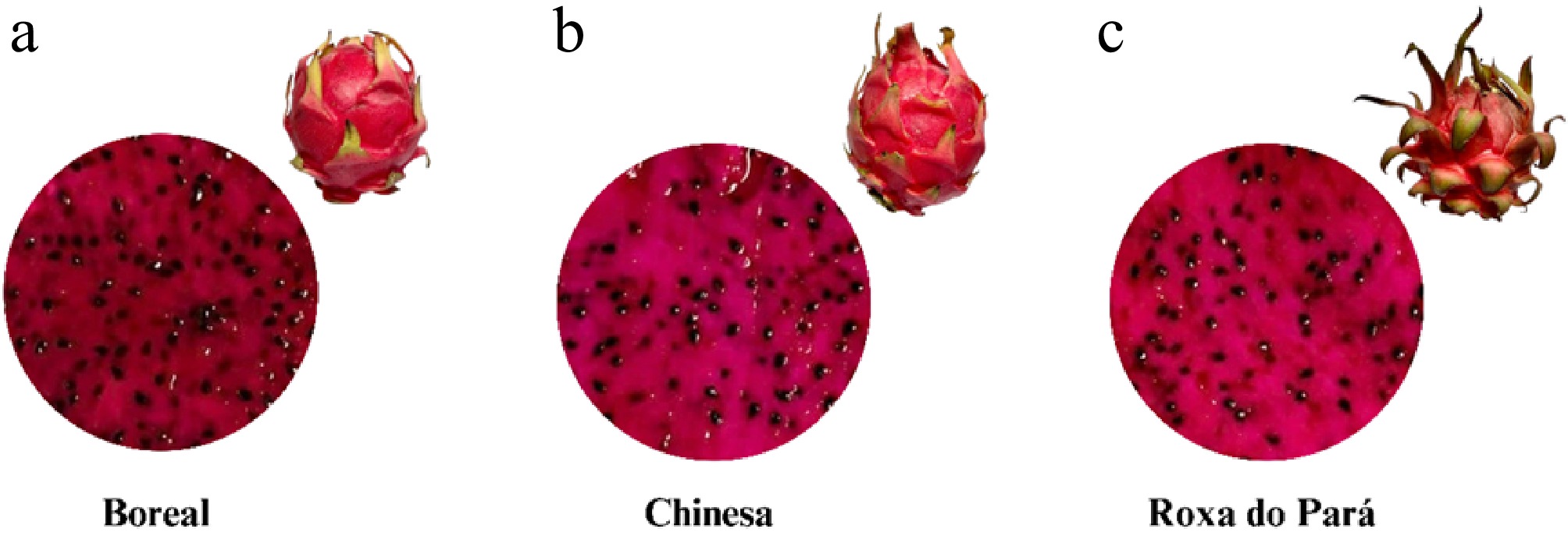
Figure 1.
Pitaya cultivars (Selenicereus sp.) (a) 'Boreal Red', (b) 'Chinesa', and (c) 'Roxa do Pará'.
-
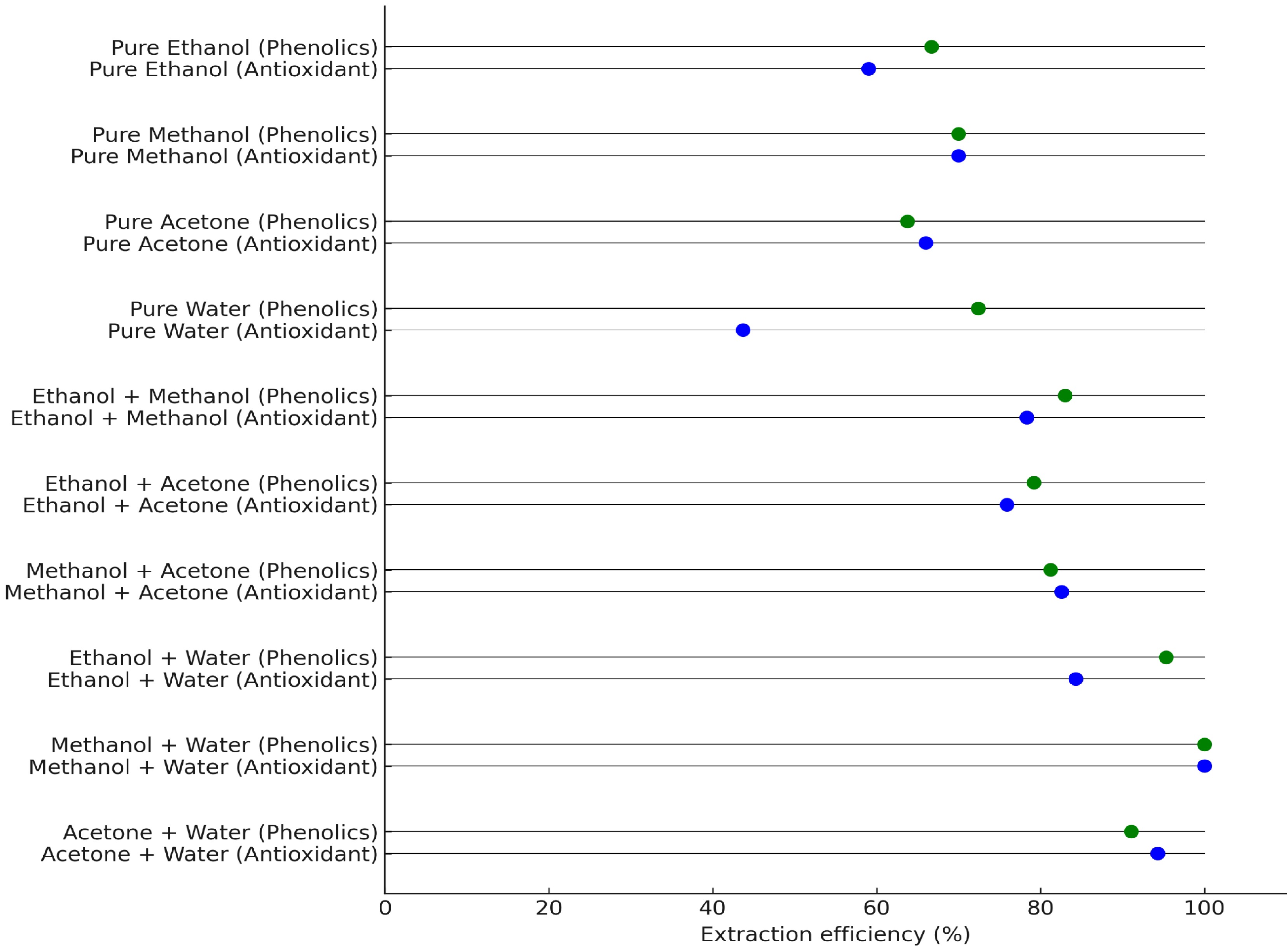
Figure 2.
Comparative efficiency scores of different solvent combinations for the extraction of phenolic and antioxidant compounds from pitaya, expressed as a percentage relative to the maximum observed efficiency.
-
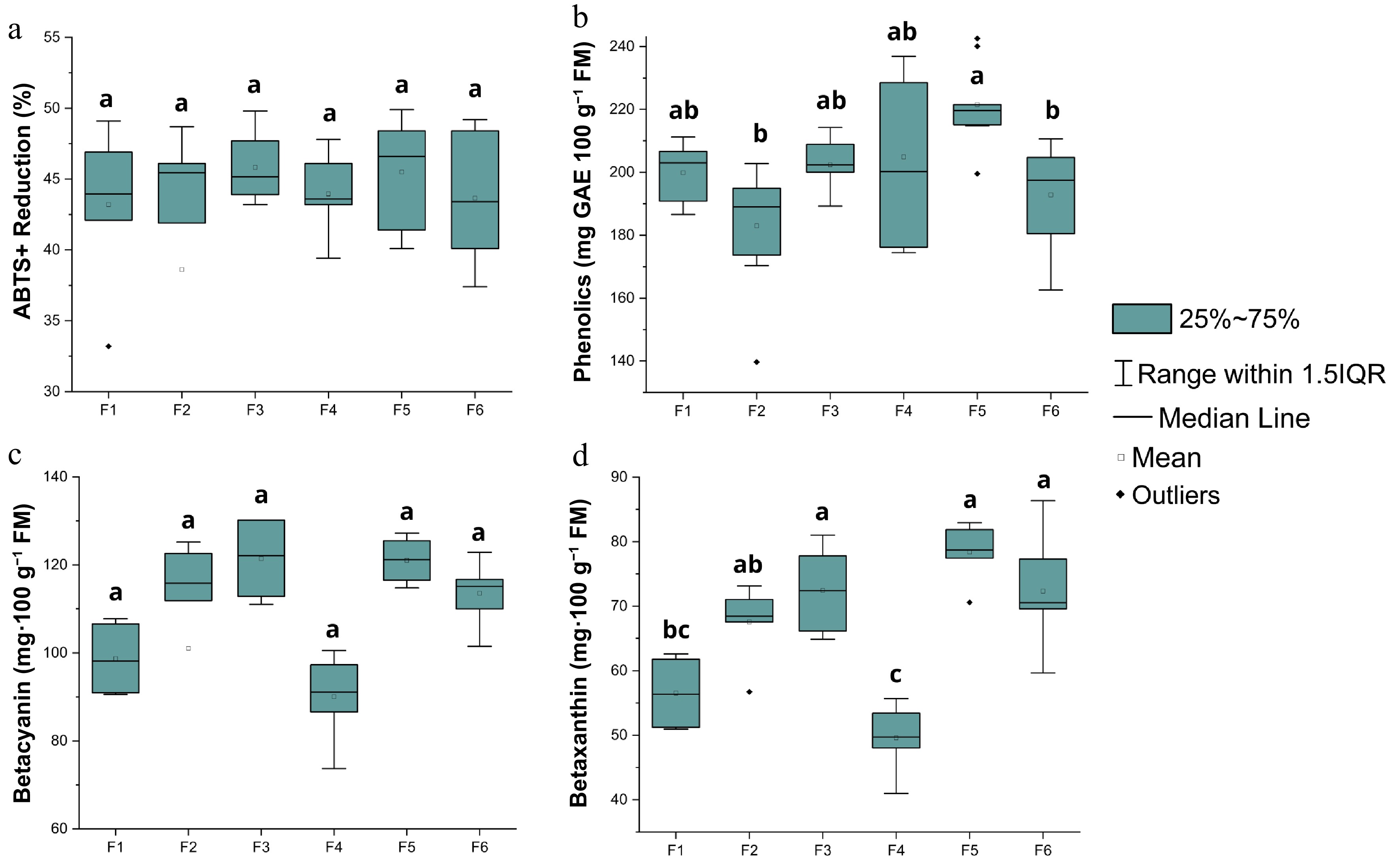
Figure 3.
(a) Antioxidant activity, (b) total phenolics, (c) betacyanin, and (d) betaxanthin of the 'Boreal Red' cultivar. Means with the same letters do not differ significantly according to Tukey's test at a 5% significance level.
-
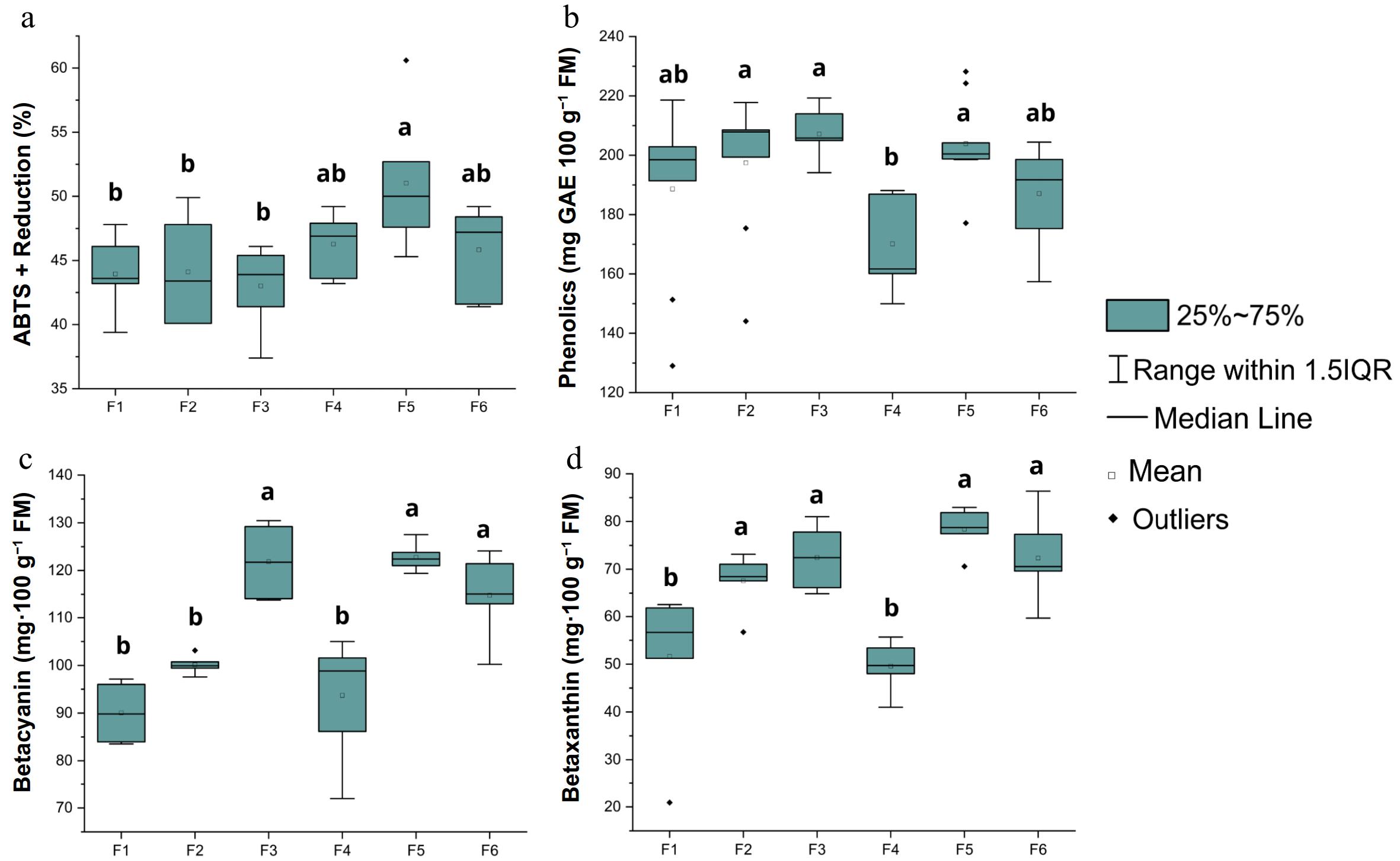
Figure 4.
(a) Antioxidant activity, (b) total phenolics, (c) betacyanin, and (d) betaxanthin of the 'Chinesa' cultivar. Means with the same letters do not differ significantly according to Tukey's test at a 5% significance level.
-
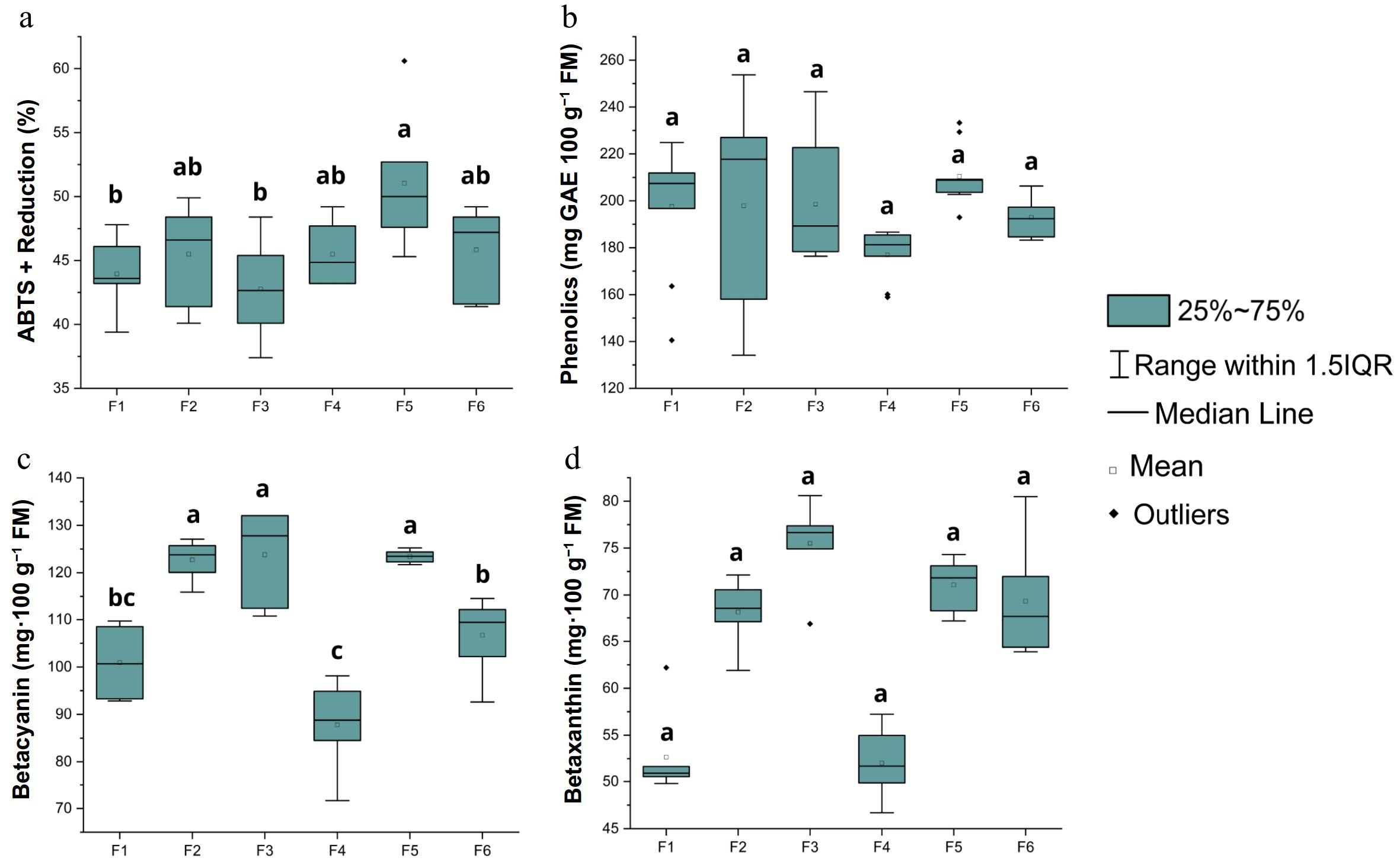
Figure 5.
(a) Antioxidant activity, (b) total phenolics, (c) betacyanin, and (d) betaxanthin of the 'Roxa do Pará' cultivar. Means with the same letters do not differ significantly according to Tukey's test at a 5% significance level.
-
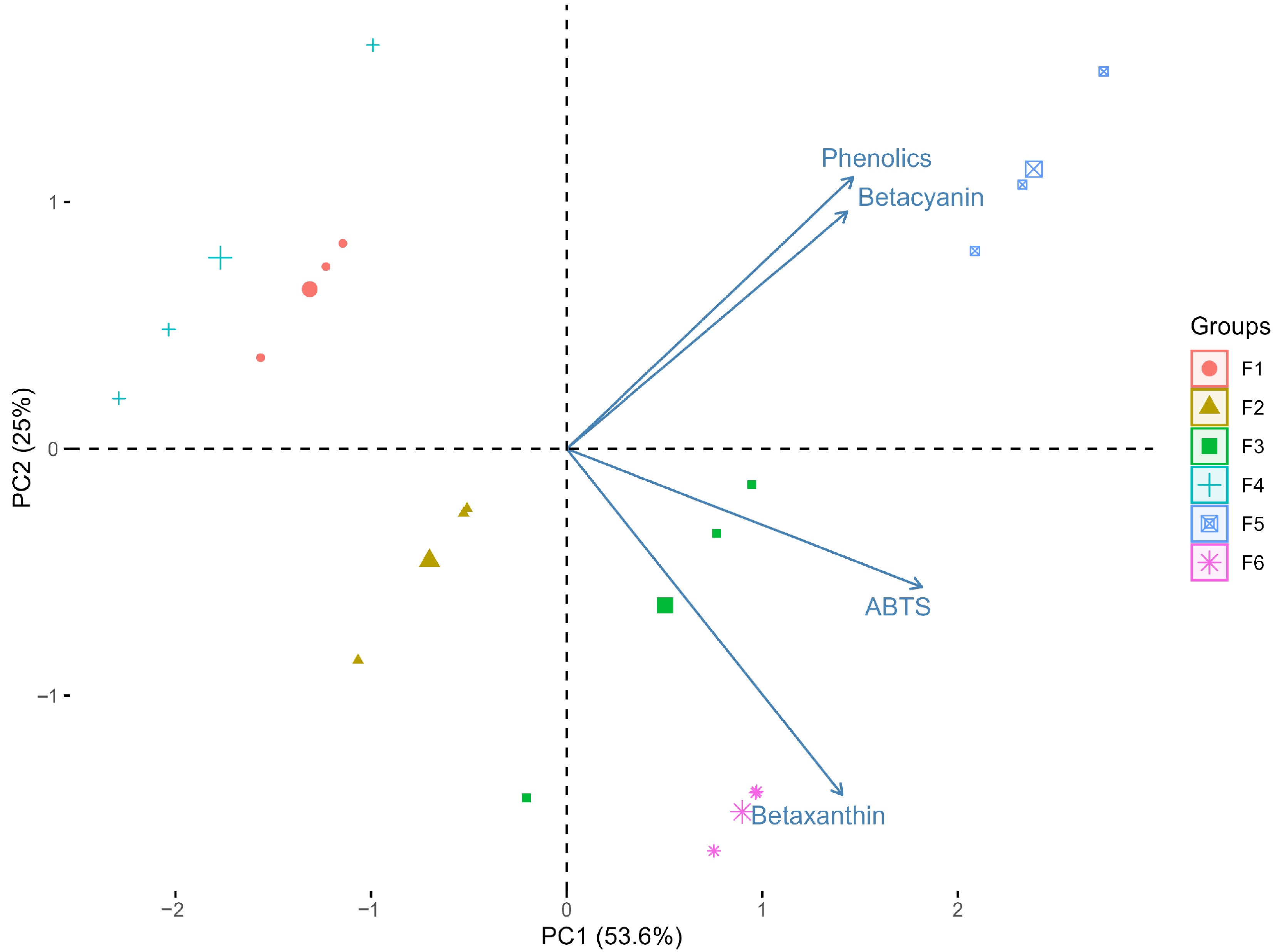
Figure 6.
PCA of solvent formulations for the extraction of bioactive compounds of pitaya. The biplot shows extraction efficiency and clustering among the formulations.
-
F Acetone (%) Ethanol (%) Methanol (%) Water (%) F1 50 0 0 50 F2 0 50 0 50 F3 0 0 50 50 F4 25 25 0 50 F5 0 25 25 50 F6 25 0 25 50 F: Formulation. Table 1.
Planning of mixtures for the extraction of bioactive compounds from pitaya.
Figures
(6)
Tables
(1)