-
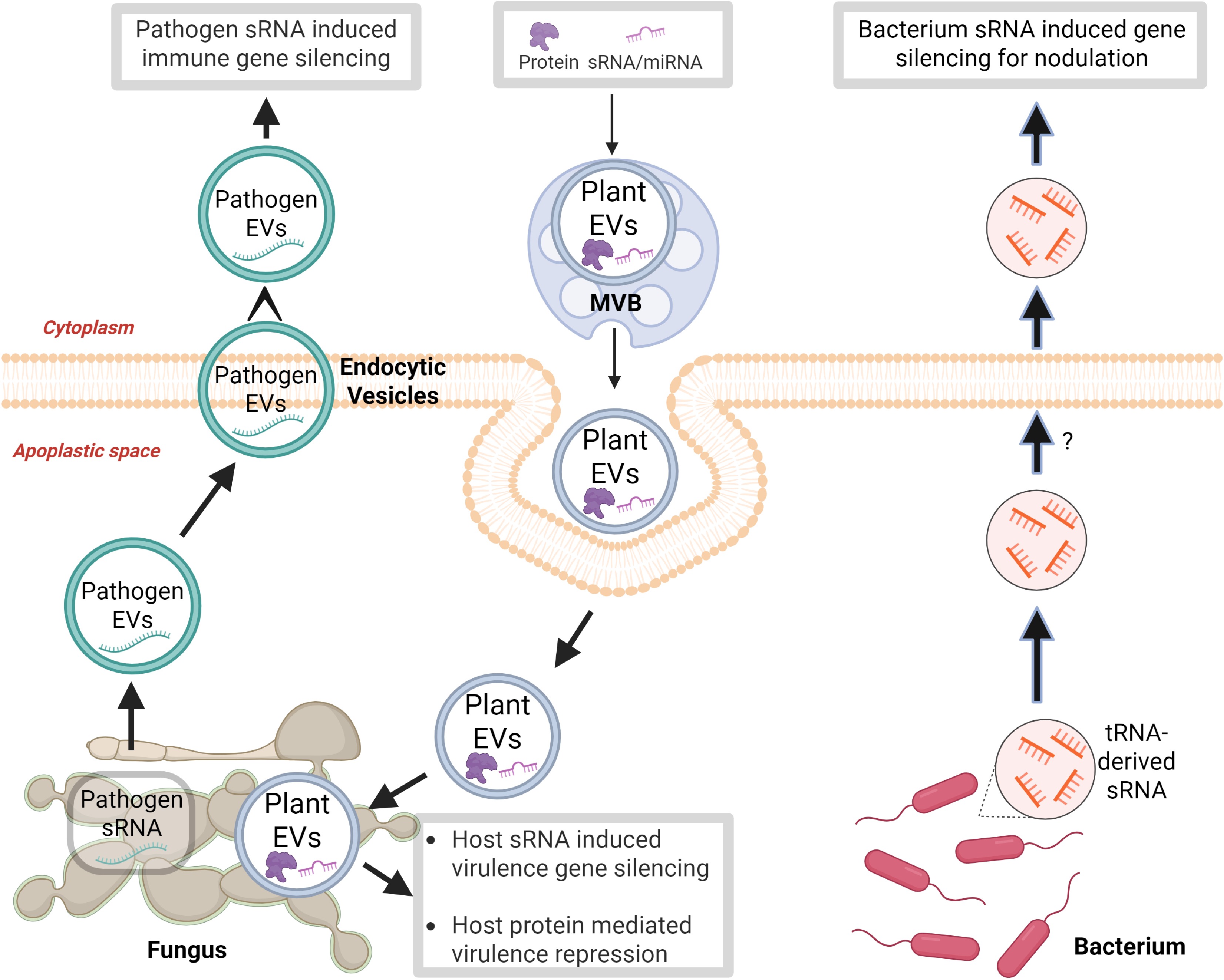
Figure 1.
RNA communication between plants and microbes. Plants deliver small RNAs (sRNAs) and proteins via extracellular vesicles (EVs) to silence virulence genes and suppress pathogenicity in microbes. In return, fungal and bacterial pathogens release EVs containing sRNAs that target and suppress plant immune genes. Additionally, rhizobial bacteria use tRNA-derived sRNAs to modulate plant gene expression for nodulation. This figure illustrates a bidirectional trans-kingdom RNA interference (RNAi) mechanism in plant–microbe interactions. This figure was created in BioRender by Zhu C, 2025,
https://BioRender.com/26gx2vx . -
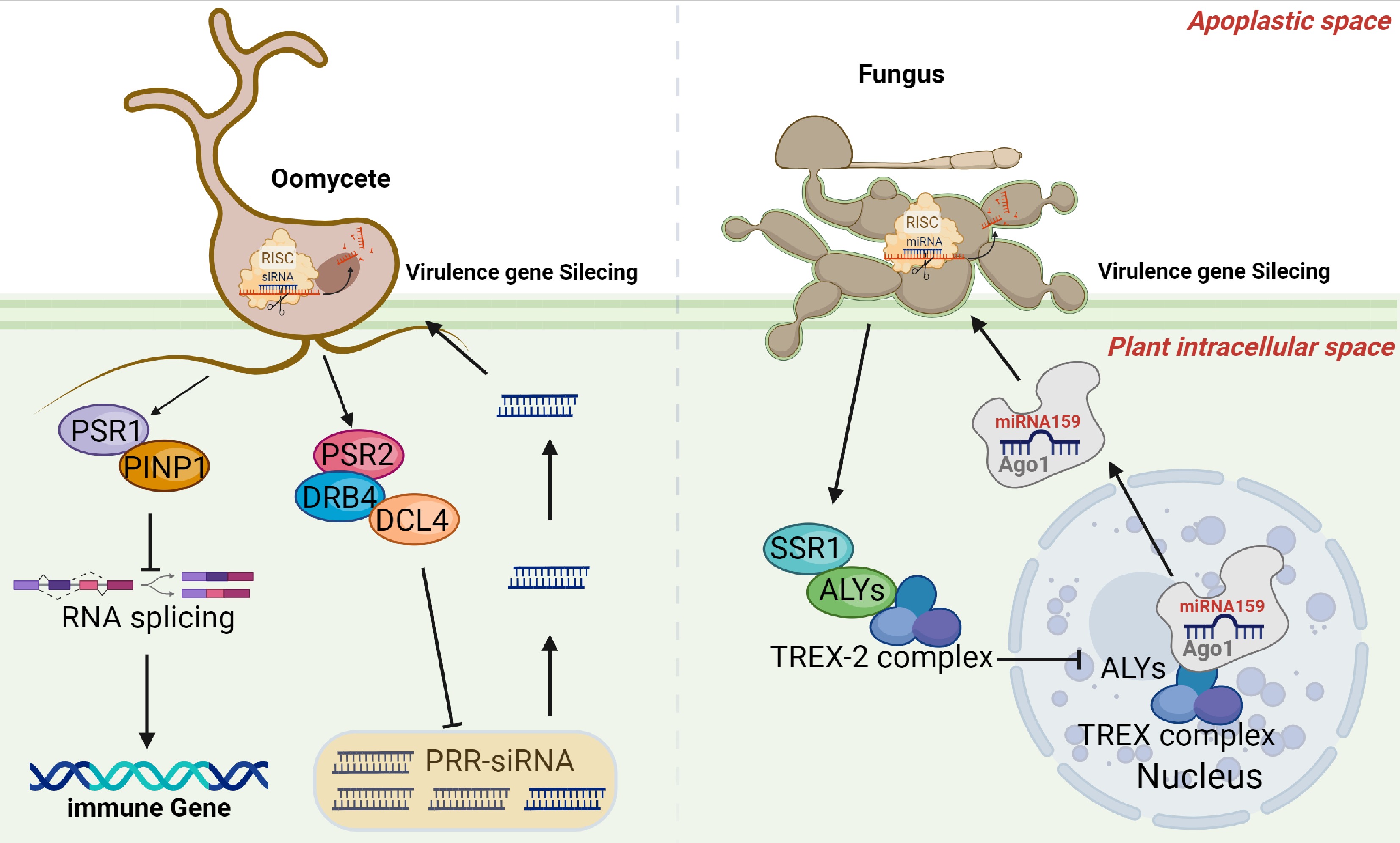
Figure 2.
Suppressor of trans-kingdom RNAi proteins. Oomycetes and fungi deploy STR proteins to block plant RNAi-based immunity. In oomycetes, PSR1 interferes with host RNA splicing, while PSR2 inhibits DRB4-DCL4 complex activity, reducing production of PRR-derived siRNAs which trigger HIGS defense. In fungi (V. dahliae), SSR1 disrupts the TREX complex by binding ALY proteins, impairing nuclear export of AGO1–miRNA complexes and reducing miRNA accumulation in fungal cells, thereby enhancing pathogen virulence. This figure was created in BioRender by Zhu C, 2025,
https://BioRender.com/s4von3m . -
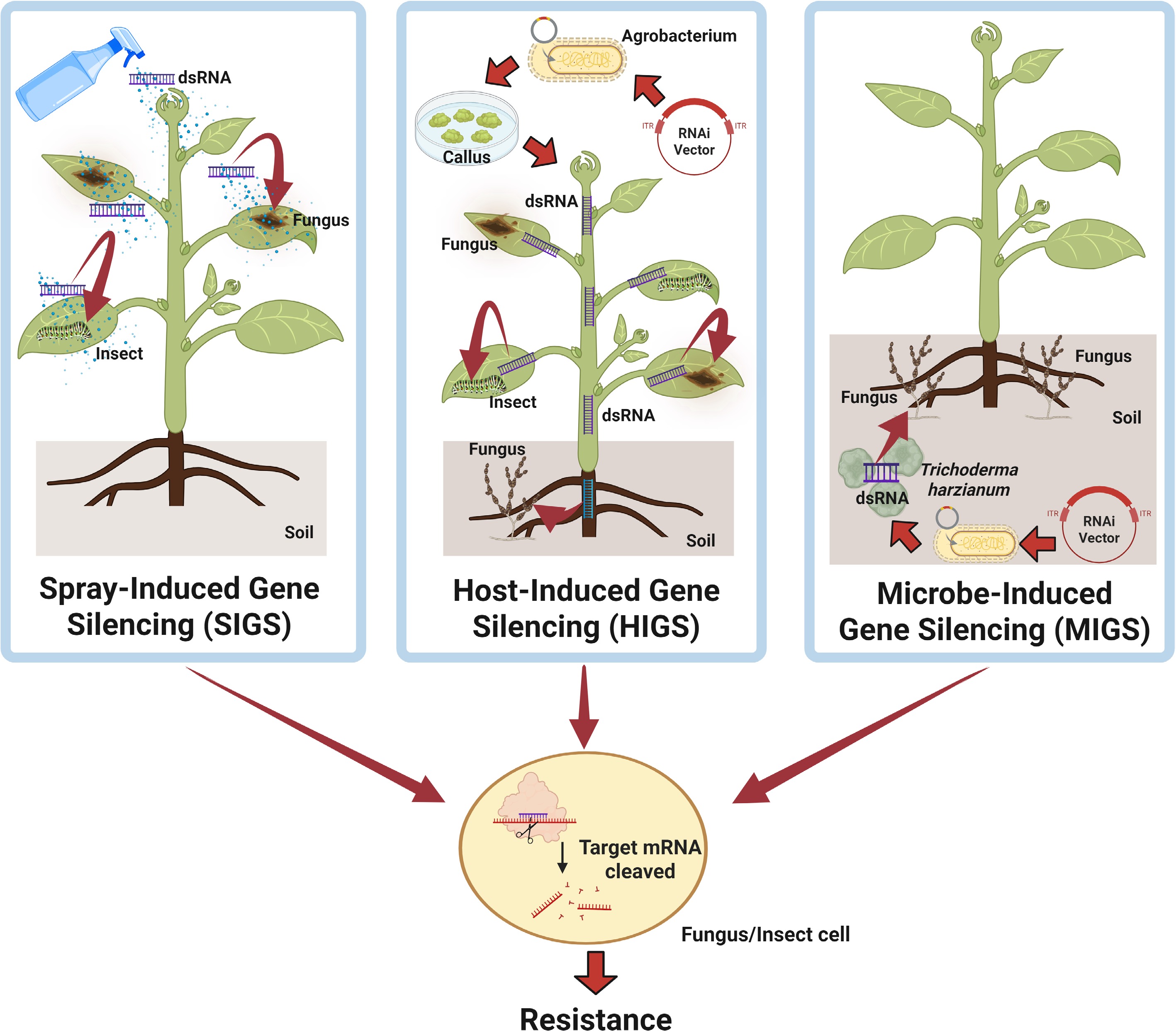
Figure 3.
Trans-kingdom RNAi in plant breeding. This diagram illustrates three RNAi-based approaches used in plant disease management: (1) SIGS: Externally applied dsRNAs or sRNAs are absorbed by pathogens on plant surfaces, leading to gene silencing without transgenic modification. (2) HIGS: Transgenic plants express dsRNAs targeting pathogen virulence genes, which are taken up by invading pathogens. (3) MIGS: Beneficial fungi such as Trichoderma harzianum deliver sRNAs into soil-borne pathogens, silencing virulence-related genes and offering a non-transgenic, environmentally friendly solution. This figure was created in BioRender by Zhu C, 2025,
https://BioRender.com/fvszcsn . -
Name Plant transgene dependent Target type Off-target effect sRNA delivery Application stage Cultivation time CRISPR-based Yes DNA/RNA Medium No Breeding Long HIGS Yes mRNA Low Yes Breeding Long SIGS No mRNA Low Yes Growth Very short MIGS No mRNA Low Yes Growth Short Table 1.
The comparison between trans-kingdom RNAi technology and CRISPR-based technology.
Figures
(3)
Tables
(1)