-
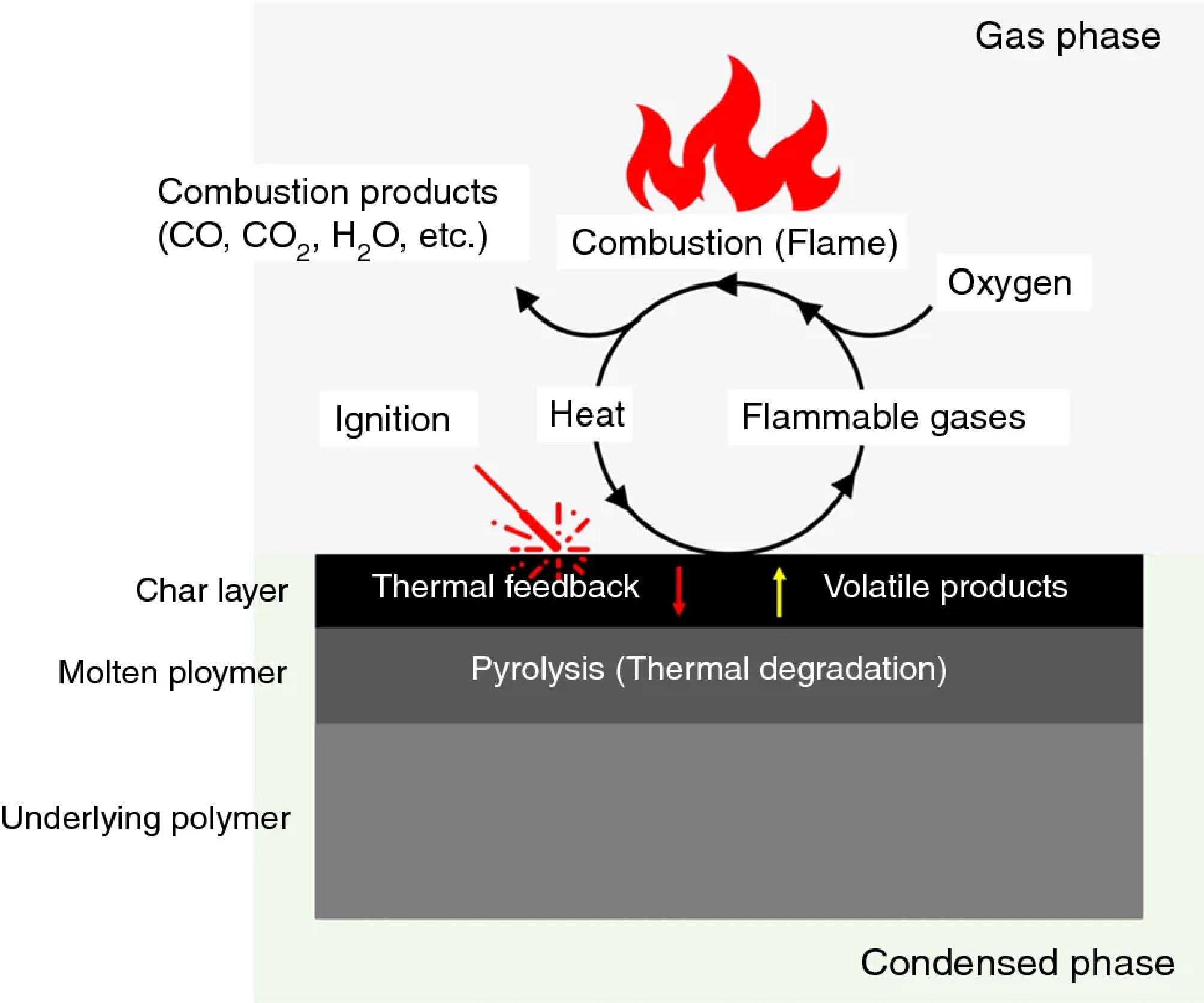
Figure 1.
Schematic representation of the polymer combustion process[6].
-
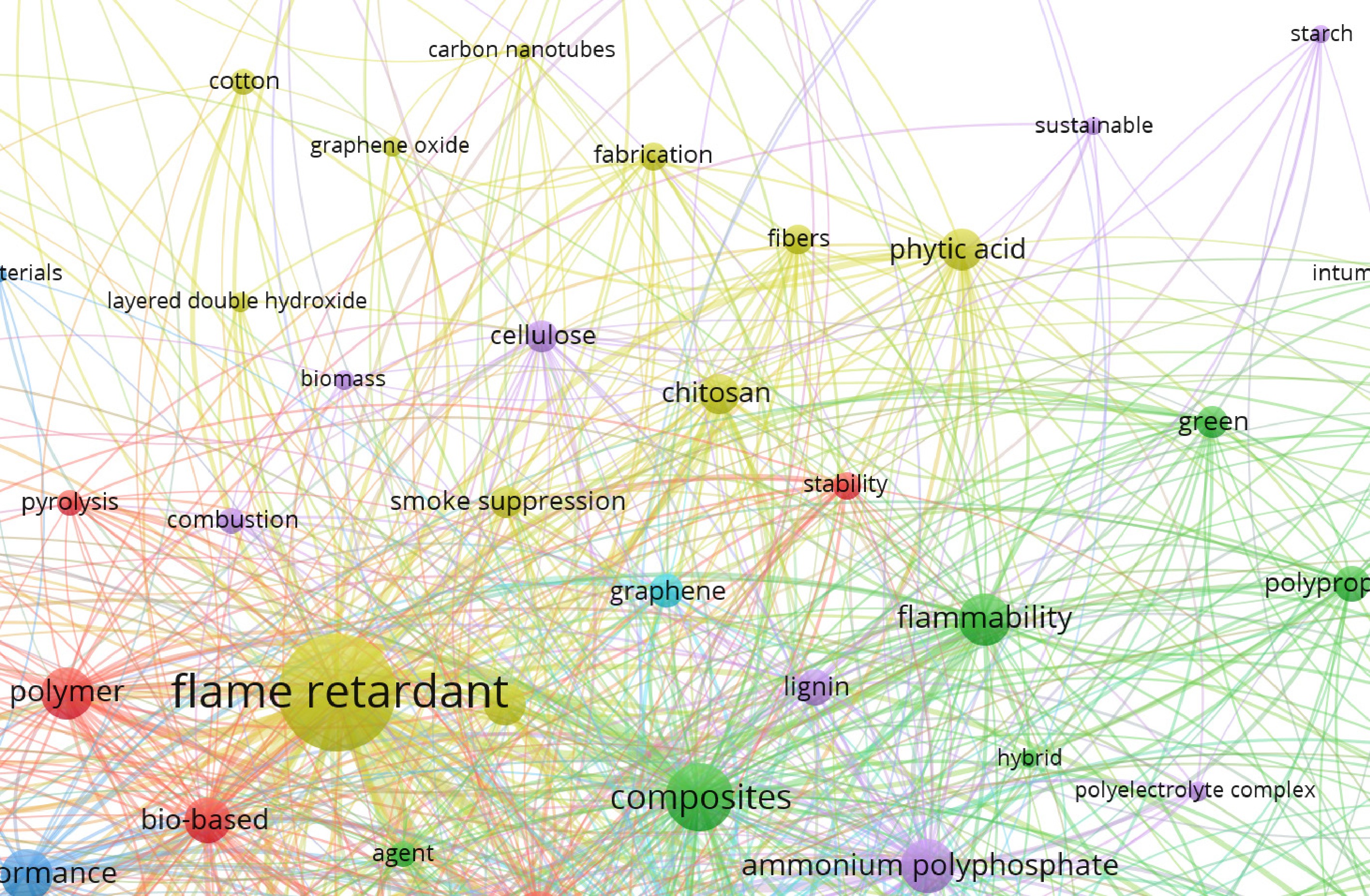
Figure 2.
Clustering analysis in VOSviewer based on the top 500 scientific publications retrieved from the Web of Science using the keywords flame retardant, polymer, and bio.
-
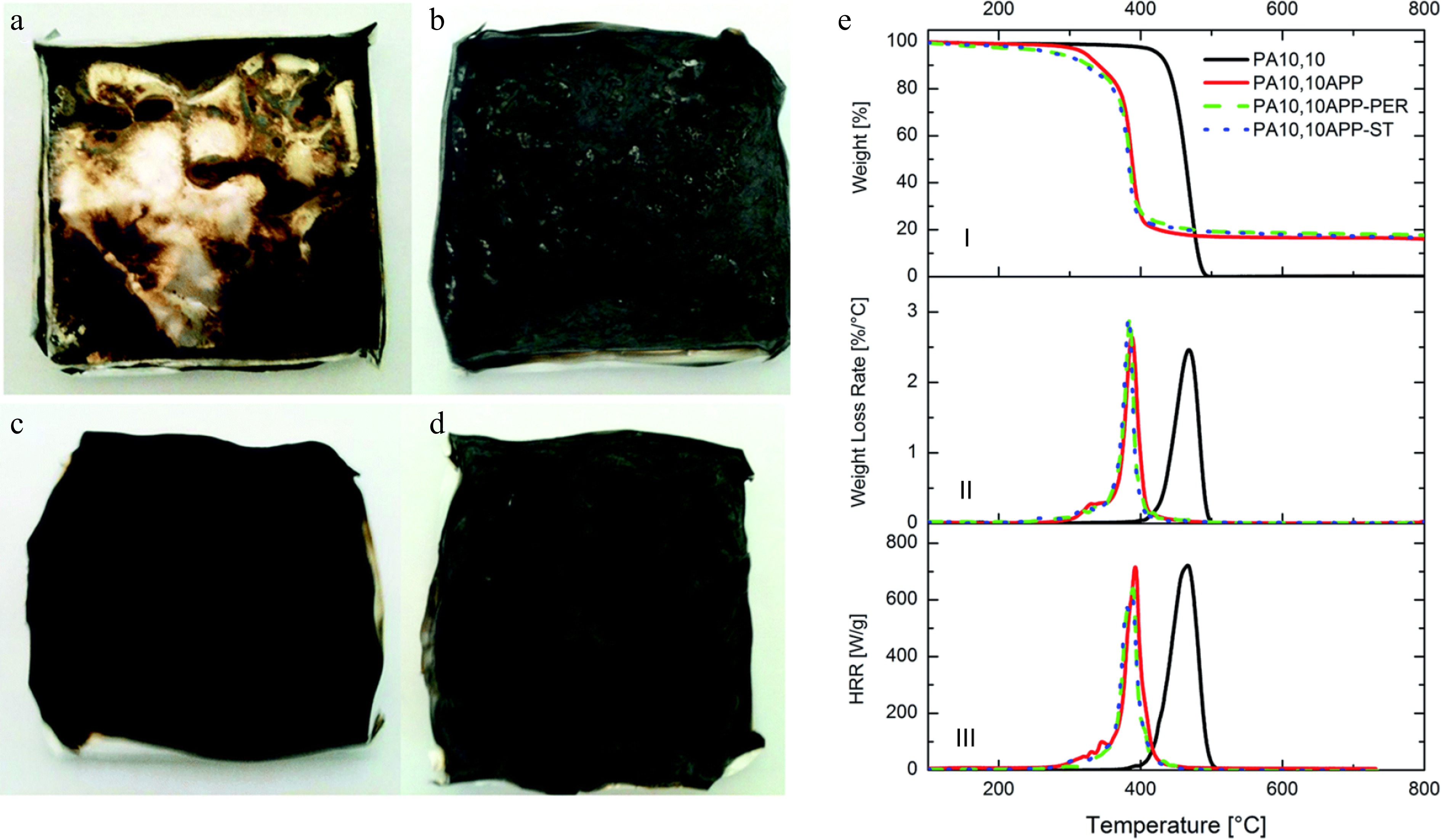
Figure 3.
Residue pictures after cone calorimetry tests for: (a) PA 10,10, (b) PA 10,10 APP, (c) PA 10,10 APP-PER, (d) PA 10,10 APP-ST, (e) TG, differential thermogravimetry and HRR curves of PA 10,10-based composites in nitrogen[47].
-
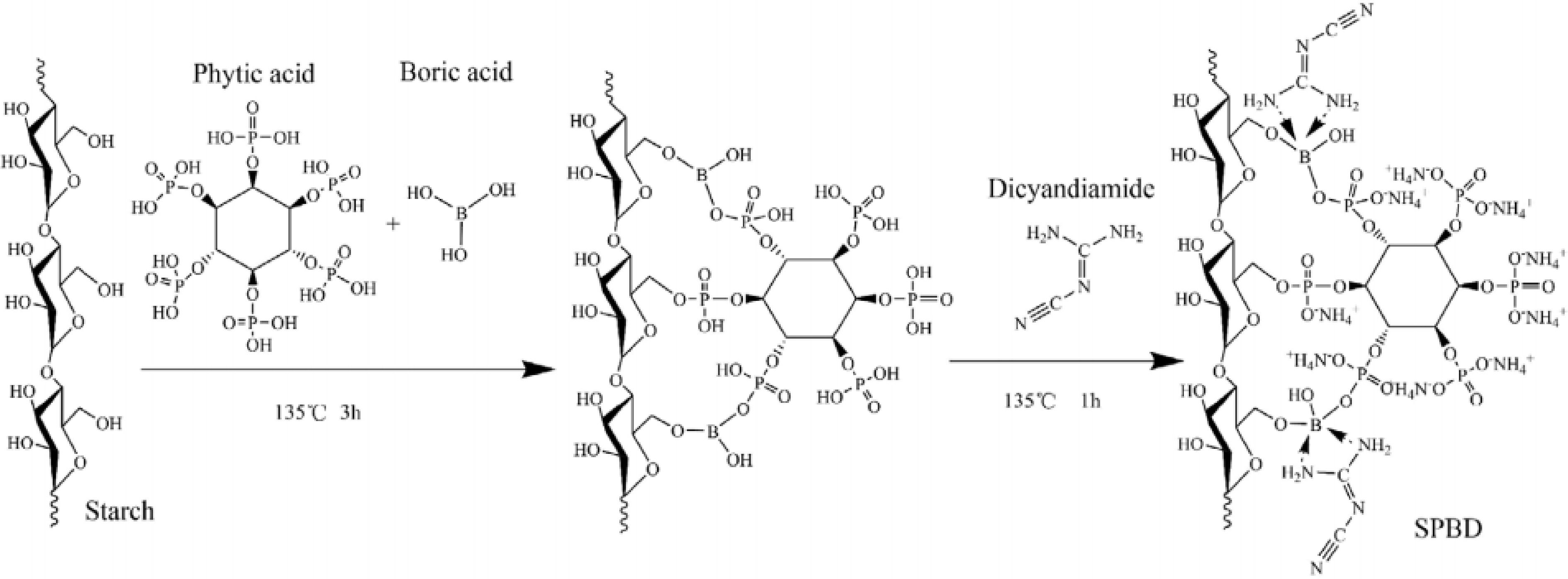
Figure 4.
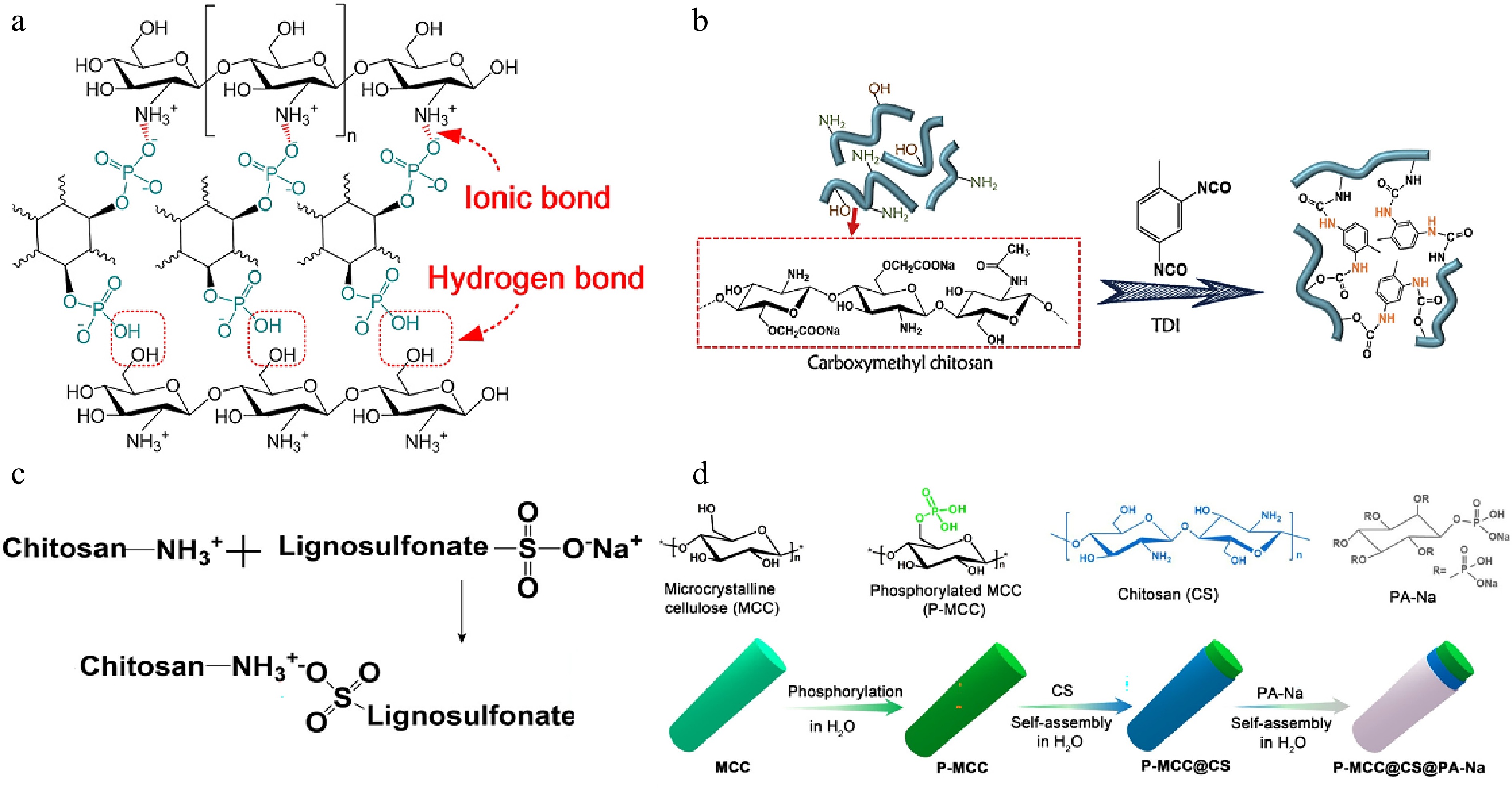
Synthetic route of starch-based flame retardants[55].
-
-
Sample TGA in nitrogen MCC Cone calorimeter T5% (°C) Tmax (°C) Residue (%) THR (kJ/g) pHRR (W/g) TpkHRR (°C) THR (MJ/m2) pHRR (kW/m2) Residue (%) PA 10,10 425 468 0 32.6 720 467 30 ± 3 1101 ± 55 0 PA 10,10 APP 322 388 16 26.9 710 392 22 ± 2 735 ± 37 18 ± 1 PA 10,10 APP–PER 283 385 18 20.6 640 388 23 ± 2 833 ± 40 17 ± 1 PA 10,10 APP–ST 279 383 17 22.0 612 389 23 ± 2 712 ± 36 18 ± 1 Table 1.
TGA and MMC data of PA 10,10-based compounds.
-
Phytate
metal saltsPolymer matrix LOI pHRR THR TSP Ref. PA-Fe PLA / −24% − 25% / [19] PA-Co Polyurethane + 4.9% − 43.2% − 24.3% − 41.2% [61] PA-Ni PLA + 12.9% − 62.4% − 10.2% / [62] PA-Cu Poly(vinyl chloride) + 5.4% − 44.9% − 5.7% − 62.6% [63] PA-Al Polyamide 66 fabric + 8.2% − 43.9% − 38.2% / [64] PA-Zn Paper / − 43% − 49% / [65] PA-Zr Polyethylene + 5.4% − 46.4% − 14.9% / [66] PA-Mg EP / − 28.6% −10.6% / [67] PA-Ba EP + 11.6% − 69.1% − 71.5% − 77.4% [68] PA-Zn Polypropylene + 13.4% − 64% − 17.6% / [69] Table 2.
List of recent studies on phytate metal salts as flame retardants.
-
Phytate ammonium Polymer matrix LOI pHRR THR TSP Ref. PLA-Furfurylamine PLA + 28.5% − 8% − 4% + 11.3 % [75] PA-Hexakis (4-Aminophenoxy) Cyclotriphosphazene PLA + 24.2% − 15.3% − 21.5% − 31% [79] PA-Trometamol PLA + 5.9% − 10.7% − 9.4% / [80] PA- Tris(hydroxymethyl)methyl aminomethane PLA 8.5% − 30.2% − 29% + 80 % [81] PA-Piperazine EP + 12% − 51.4% −35.9% / [81] PA-Phenylphosphonate-based compound EP / − 64% − 16% − 21% [82] PA-Urea Cotton + 25.4% − 94.5% − 58.0% / [77] PA-(3-piperazinylpropyl) methyldimethoxysilane Cotton + 11.0% −55.6% −58.1% / [83] PA-polyethyleneimine Wool +13.2% − 39.7% − 44.4% / [78] Table 3.
Lists of recent studies on phytate ammonium as flame retardants.
Figures
(5)
Tables
(3)