-
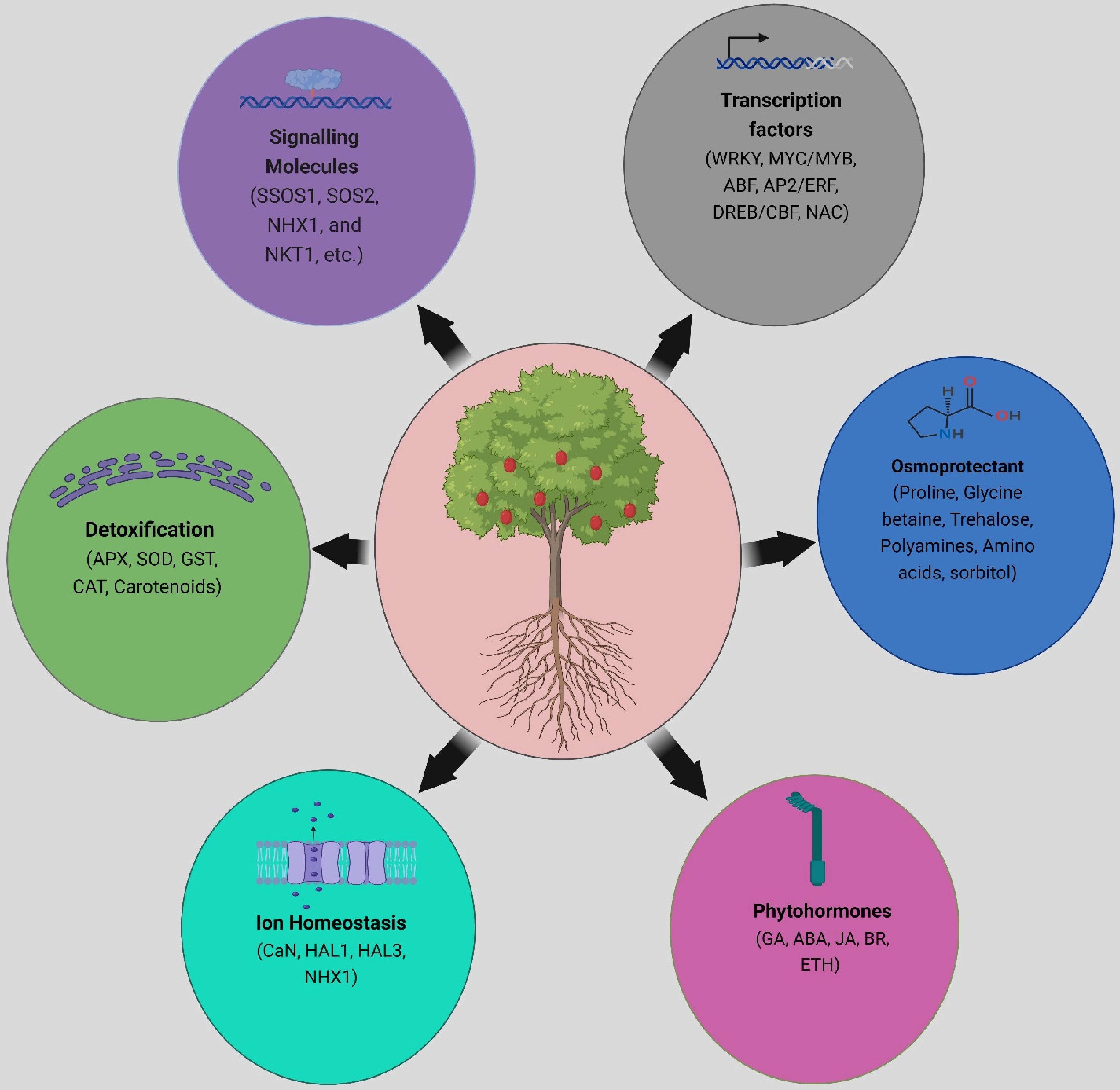
Figure 1.
Various biochemicals and their associated molecules help relieve salt stress. Plants respond to salt stress via a complex network of metabolic pathways regulated by a wide range of biomolecules. Signaling molecules such as SOS1, SOS2, NHX1, and NKT1 play critical roles in ion transport and osmotic control. Enzymes such as APX, SOD, GST, and CAT scavenge ROS, reducing oxidative damage caused by salt stress. Furthermore, the accumulation of carotenoids and osmoprotectants, including Pro, GB, GABA, and sugars, contributes to maintaining cellular homeostasis and osmotic equilibrium in saline environments. These biomolecules help plants withstand salt stress. Furthermore, the activation of TFs such as MYB, WRKY, NAC, ABF, ERF, and DREB is intimately related to the salt stress response, influencing the expression of stress-responsive genes and regulatory pathways. These TFs influence multiple cellular processes involved in salt stress adaptation, demonstrating the interconnectivity of molecular pathways that regulate plant resistance under harsh environmental situations. Created with BioRender.com.
https://BioRender.com/ujpt3z5. -
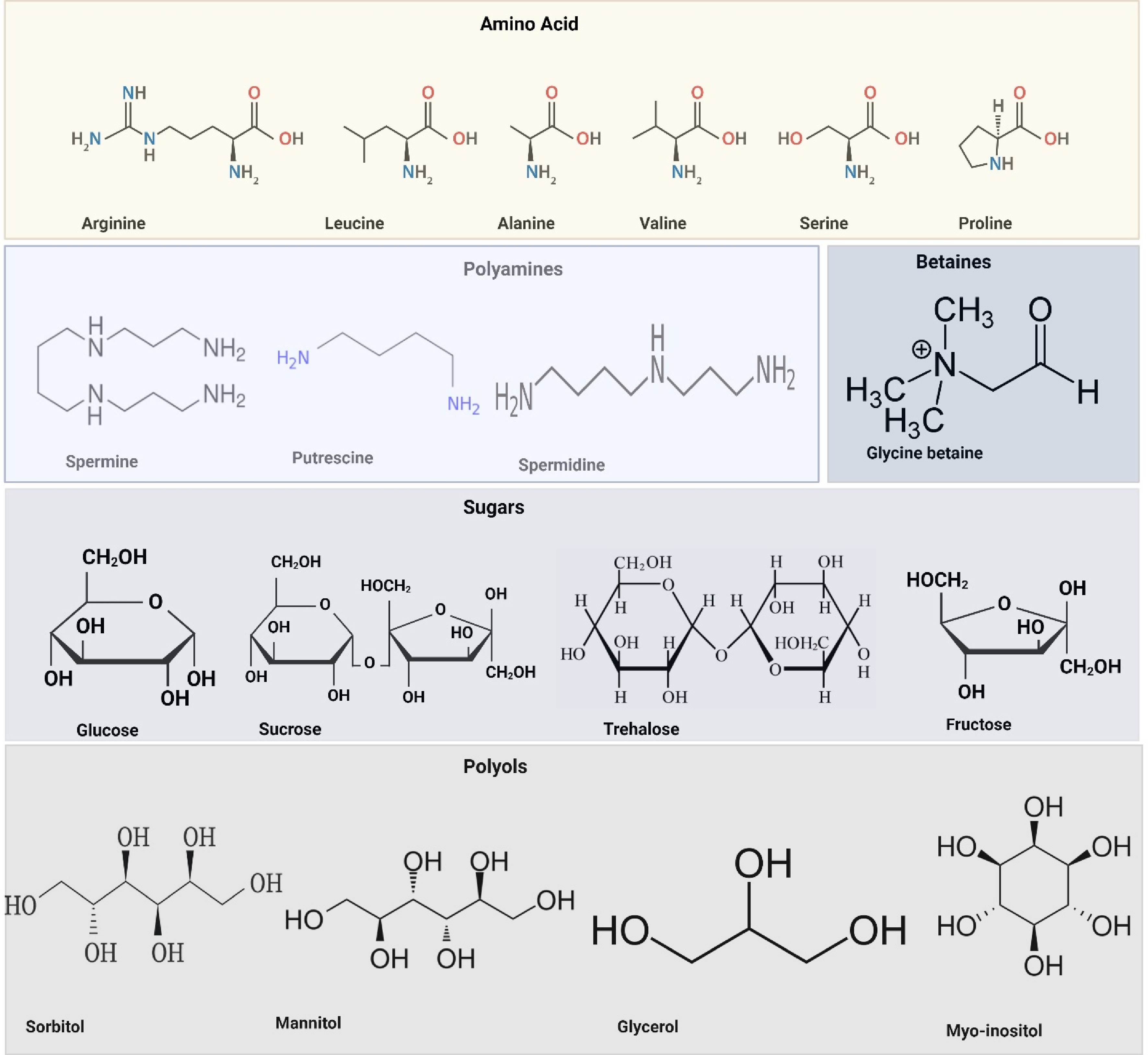
Figure 2.
Key biomolecules involved in osmoprotection and SST in plants are presented with their structural representations. Amino acids such as arginine, leucine, alanine, valine, serine, and proline play essential roles in osmotic adjustment and metabolic regulation under stress. Polyamines, including spermine, putrescine, and spermidine, contribute to ion homeostasis and oxidative stress mitigation. Betaines, such as glycine betaine, function as osmoprotectants that stabilize cellular structures under saline conditions. Sugars, including glucose, sucrose, trehalose, and fructose, serve as osmolytes and energy reserves, aiding in ROS scavenging and cellular protection. Polyols, such as sorbitol, mannitol, glycerol, and myo-inositol, help regulate osmotic balance and protect cellular integrity during abiotic stress. These biomolecules collectively enhance plant resilience by contributing to SST mechanisms. Created with BioRender.com.
https://BioRender.com/tgrndjg . -
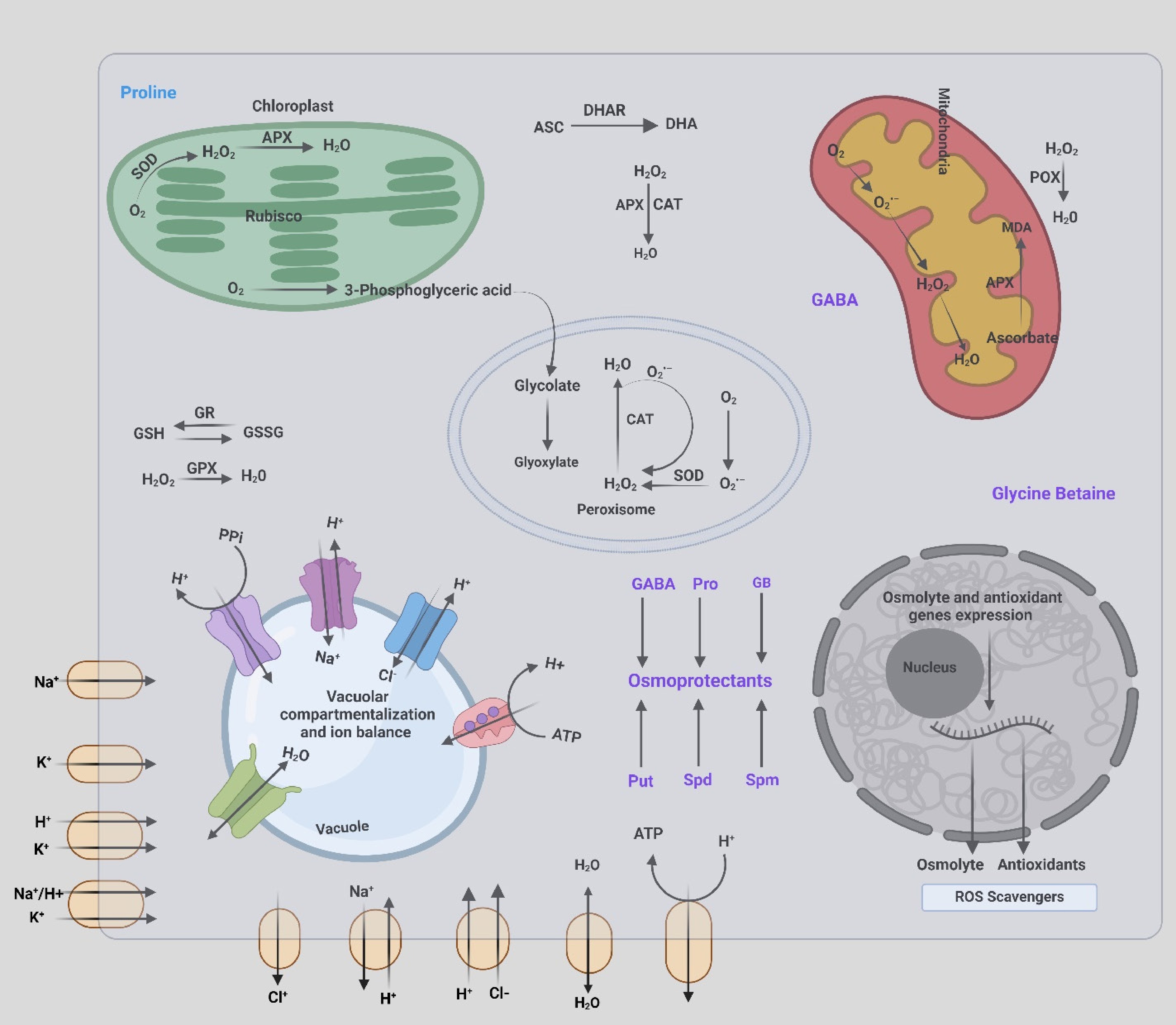
Figure 3.
Cellular mechanisms of osmoprotection, ion balance, and ROS scavenging in plant cells. The chloroplast involves SOD converting O2− to H2O2, which is further detoxified by APX to H2O. The Calvin cycle enzyme Rubisco is depicted with its substrates, O2 and 3-phosphoglyceric acid. The mitochondria show the role of ascorbate (Asc) and other antioxidants in detoxifying H2O2 through the action of POX and APX, with the production of malondialdehyde (MDA) as a marker of lipid peroxidation. In the peroxisome, CAT and SOD work together to convert glycolate to glyoxylate and detoxify H2O2 to H2O. The vacuole displays ion transport mechanisms, including Na+/H+ antiporters, K+ channels, and Cl− channels, contributing to vacuolar compartmentalization and ion balance. Vacuolar ATPase (V-ATPase) and pyrophosphatase (PPi) pump H+ into the vacuole to maintain pH and ion homeostasis. In the cytosol, the reduction-oxidation (redox) cycling of glutathione (GSH) to glutathione disulfide (GSSG) is mediated by glutathione reductase (GR) and glutathione peroxidase (GPX), with H2O2 being converted to H2O. In the nucleus, the expression of genes involved in the synthesis of osmolytes and antioxidants is regulated. Osmoprotectants such as GABA, Pro, and GB contribute to osmoprotection alongside antioxidant production. These interconnected processes integrate osmoprotection, antioxidant defense, and ion balance to maintain cellular homeostasis and protect plant cells from oxidative damage under salinity stress. Created with BioRender.com.
https://BioRender.com/8nvvmfx . -
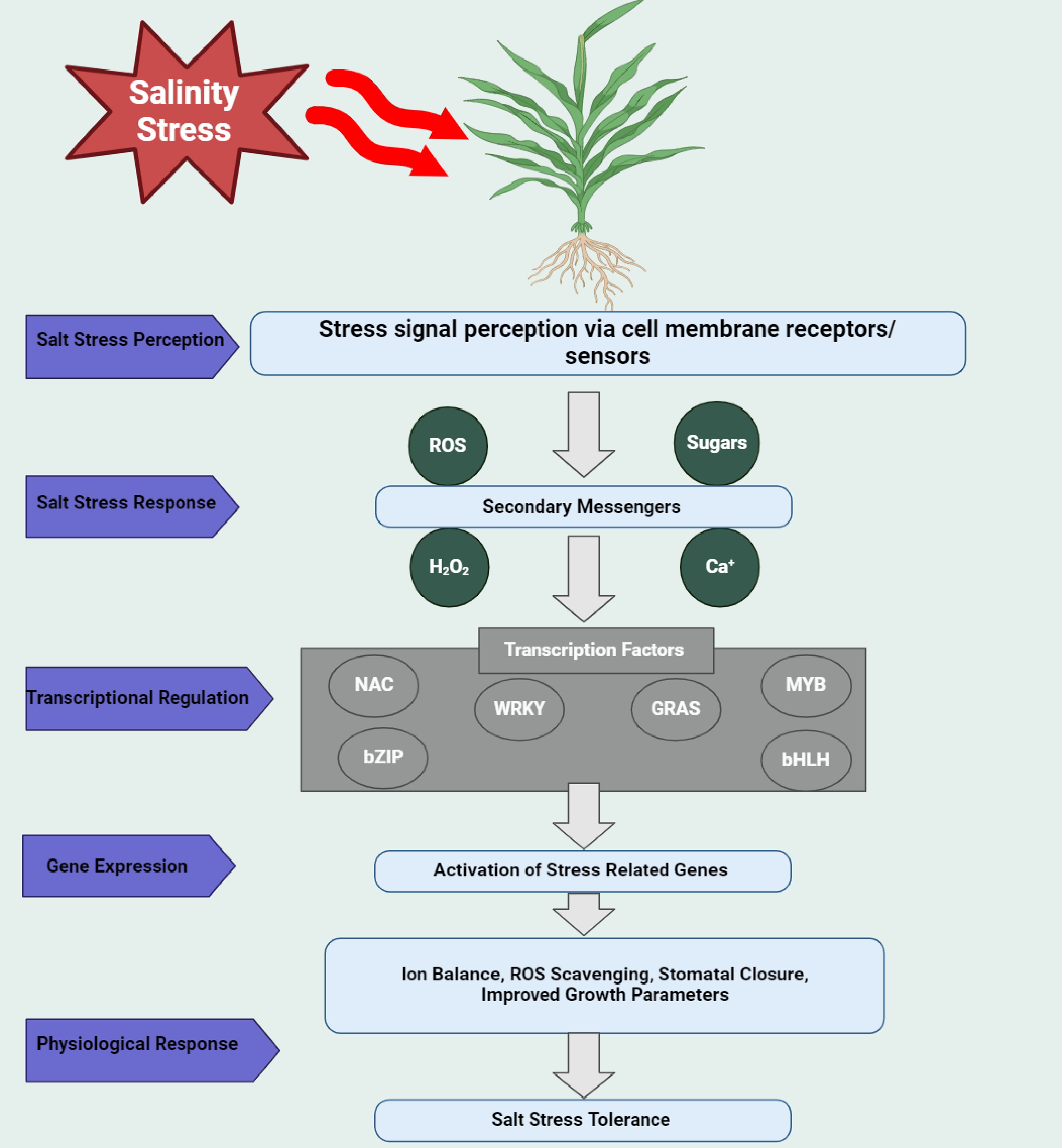
Figure 4.
Signal transduction pathway involved in saline stress response in plants. Salt stress triggers a complex signaling cascade that enables plants to perceive, respond, and adapt to high salinity conditions. The process begins with salt stress perception via membrane-bound receptors and ion transporters, including SOS3 (CBL4), NHXs (Na+/H+ exchangers), and HKT1, which detect excessive Na+ accumulation. These sensors activate secondary messengers such as Ca2+, ROS, sugars, and H2O2, which amplify the stress signal and initiate downstream responses. The SOS signaling pathway (SOS3-SOS2-SOS1) is critical for Na+ efflux, maintaining ion homeostasis, while Ca2+ signaling cascades activate MAPKs and calcium-dependent protein kinases (CDPKs) to further regulate stress responses. These signaling molecules activate TFs (NAC, WRKY, GRAS, MYB, bZIP, and bHLH), which regulate the expression of stress-responsive genes involved in ROS scavenging (e.g., SOD, CAT, POD), osmolyte biosynthesis (e.g., P5CS, RD29B), and ion transport (e.g., NHX1, HKT1;5). The coordinated activation of these genes leads to key physiological responses, including ion homeostasis, ROS detoxification, stomatal regulation, osmotic adjustment, and enhanced biomass accumulation, allowing plants to withstand salinity stress. Additionally, hormonal crosstalk, particularly with ABA, fine-tunes these responses by integrating environmental cues with developmental programs. This intricate and highly coordinated signaling network ensures plant survival in saline environments by activating molecular defense mechanisms that protect cellular integrity, maintain metabolic balance, and enhance SST. Created with BioRender.com.
https://BioRender.com/p9q2tl4 . -
Plant species Genes Gene function Ref. Ipomoea batatas IbGATA24 ROS scavenging [72] Ananas comosus AcWRKY28 Enhancing SST by upregulating the expression of AcCPK genes [73] Zea mays ZmSNAC1 Salt stress response [74] Zma001259 Involved ABA-dependent signaling pathways [75] Zma029150 Involvement in ABA-dependent signaling pathways [75] ZmMRPA6 ATP-binding cassette transporter resistance [76] Triticum aestivum TaNAC47 Salt stress response [77] TaNAC29 Reduces MDA and H2O2, increases CAT and SOD activity [78] TaNAC67 Improves chlorophyll content, sodium ion balance [79] TaNAC69 Regulation of salt stress-responsive genes [80] TaNAC13 Saline stress response [81] OsNAP Upregulation of salt stress related genes [82] OsGATA8 ROS scavenging activity and chlorophyll biosynthesis [71] Sorghum bicolor SbNAC56 Salt stress response [83] Solanum Lycopersicon SlTAF1 Accumulation of osmoprotectant Pro [84] SlNAC2 Regulation of glutathione metabolism as salt stress response [85] Glycine max GmGRAS66 Salt stress response [86] Elaeis guineensis EgAP2.25 Improve antioxidant enzyme activities [87] Mangifera indica MiCOMT genes Promote the accumulation of MeJA and ABA [88] Santalum album SaSAUR08, SaSAUR13 Respond to the auxin [89] Table 1.
Crucial transcription factors driving the plant salt tolerance mechanism.
-
Crop species Variety/line Gene(s) introduced/
modifiedBreeding/genetic
engineering approachImprovement in SST Ref. O. sativa IR64-Saltol OsHKT1;5 Marker-assisted breeding (MAB) Reduced Na+ accumulation, better root growth [96] S. lycopersicum Transgenic line SlTAF1 Agrobacterium-mediated Transformation (transgenic) Increased proline content, improved biomass [97] T. aestivum Transgenic wheat TaNAC29 CRISPR-Cas9 gene editing Increased antioxidant enzyme activity (SOD, CAT) [98] Q-18 (salt-tolerant line) Natural genotypic
variationsSelective breeding Efficient osmotic adjustment, increased ion compartmentalization [99] Gossypium hirsutum Transgenic cotton GhNAC79 Gene overexpression
(transgenic)Increased antioxidant defense, reduced oxidative stress [100] Table 2.
Some successful breeding and genetic engineering efforts to enhance salt tolerance in crops.
Figures
(4)
Tables
(2)